Nuremberg
Full City Guide, Map & 139 Things To Do
531,159 people live here.
That's 0.63% of the entire population of Germany.
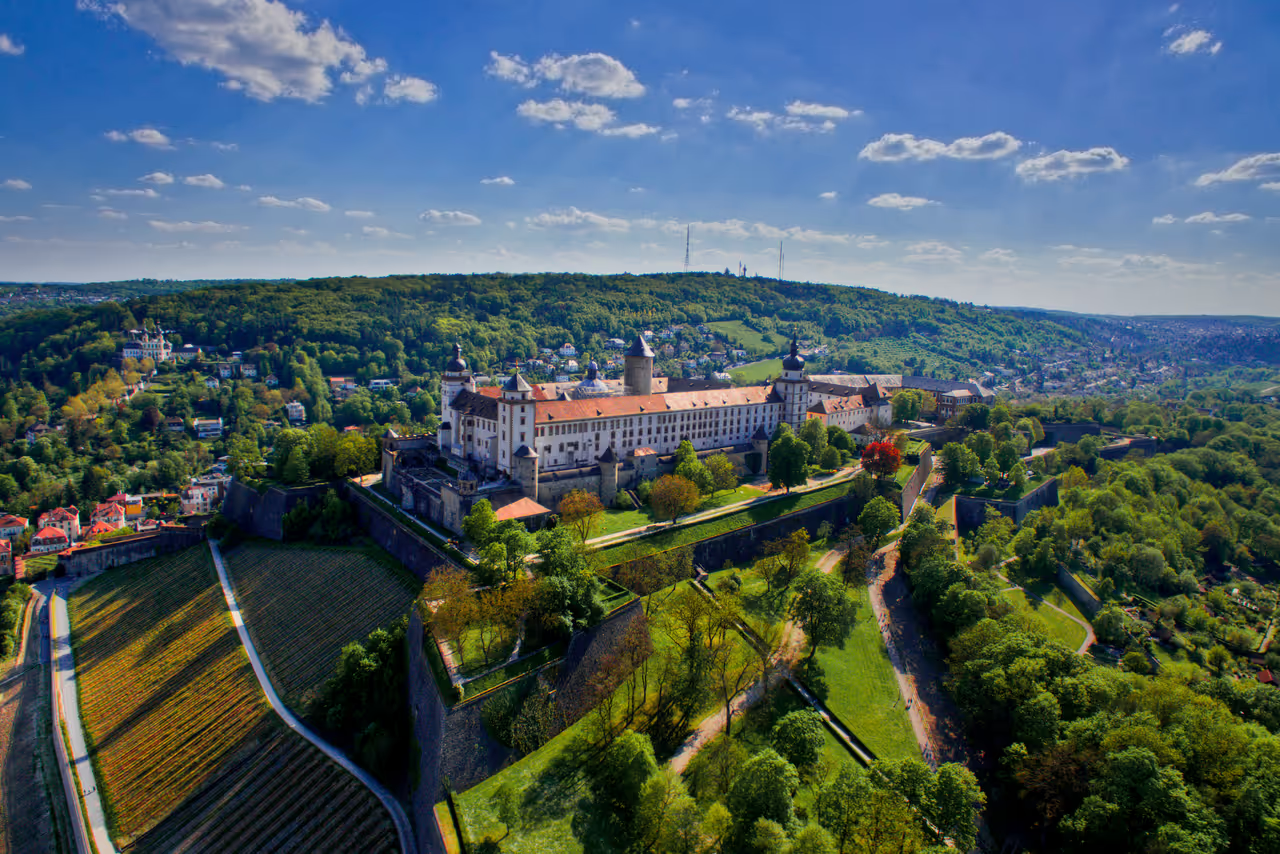
Nuremberg anchors the Franconian region with a heavy historical footprint and a remarkably restored medieval core. Half-timbered houses and soaring Gothic church spires define the skyline, all watched over by a massive imperial castle resting on a sandstone ridge. The city confronts its dark 20th-century history directly, preserving the monolithic Nazi Party Rally Grounds and the courtroom where high-ranking officials faced justice. Today, local life revolves around deep-rooted traditions, from drinking locally brewed red beer in rock-cut cellars to queuing for finger-sized sausages grilled over beechwood fires. Modern industry thrives on the outskirts, but the inner walls contain a pedestrian-friendly maze of cobbled alleys, artisan courtyards, and riverside paths.
Nuremberg DNA
History of Nuremberg
Nuremberg emerged around a rocky sandstone outcrop near the Pegnitz River, first appearing in historical records in 1050. The Hohenzollern burgraves established early dominance, but the wealthy merchant class ultimately bought out the nobility, securing the status of a Free Imperial City. Unbound from feudal lords, the municipality amassed vast wealth through trade routes connecting Italy with the north. This economic power financed a cultural golden age in the 15th and 16th centuries. During this Renaissance peak, the city produced extraordinary minds and artifacts. Martin Behaim constructed the world's first surviving globe, while Peter Henlein supposedly engineered early pocket watches. Albrecht Dürer elevated printmaking to fine art, running an industrious workshop from his multi-storey timber house near the castle walls. The local craftsmen exported precision instruments, brassware, and toys across Europe, cementing a reputation for mechanical ingenuity. The shifting of global trade to the Atlantic eventually sapped the city's wealth, plunging it into debt. Bavaria absorbed the municipality in 1806, inadvertently setting the stage for an industrial resurgence. In 1835, the 'Adler' steam locomotive chugged down the tracks to neighbouring Fürth, launching the German railway era. Heavy industry, pencil manufacturing, and bicycle production transformed the medieval shell into a smoky, working-class powerhouse. In the 1930s, the Nazi Party hijacked the city's imperial aesthetics, designating it the City of the Reich Party Rallies. Albert Speer designed monolithic arenas in the southeastern suburbs for chilling mass propaganda events, and the infamous Nuremberg Laws stripped Jewish citizens of their rights here in 1935. Allied bombing raids culminated in early 1945, reducing the historic centre to ash and rubble. The Allies subsequently chose the largely intact Palace of Justice to hold the post-war military tribunals, forever linking the city's name to the birth of international criminal law. Instead of bulldozing the ruins, civic leaders executed a painstaking reconstruction that respected the original medieval street plan. Artisans rebuilt the Gothic churches and castle towers stone by stone. Modern Nuremberg actively addresses its complex legacy, officially declaring itself a City of Peace and Human Rights. A towering outdoor sculpture dedicated to the UN Declaration of Human Rights now stands beside the Germanisches Nationalmuseum, bridging the medieval walls and the contemporary mindset.
13 events spanning 958 years
Map of Nuremberg
Interactive Destination & Itinerary Map
This map blends our curated city guides—featuring best photo spots, scenic walks, viewpoints, hidden gems and much more—with a live Wikipedia explorer. Click on our numbered pins to plan your routes, or zoom in on the surrounding neighborhoods to discover verified local landmarks, museums, and stories with dynamic Wikipedia summaries and photos!
Fun Facts
- • The first surviving terrestrial globe was made here in 1492 by Martin Behaim, though it awkwardly lacks the Americas entirely.
- • The famous bratwurst are unusually small, which local legend claims allowed tavern owners to sell them through keyholes after curfew.
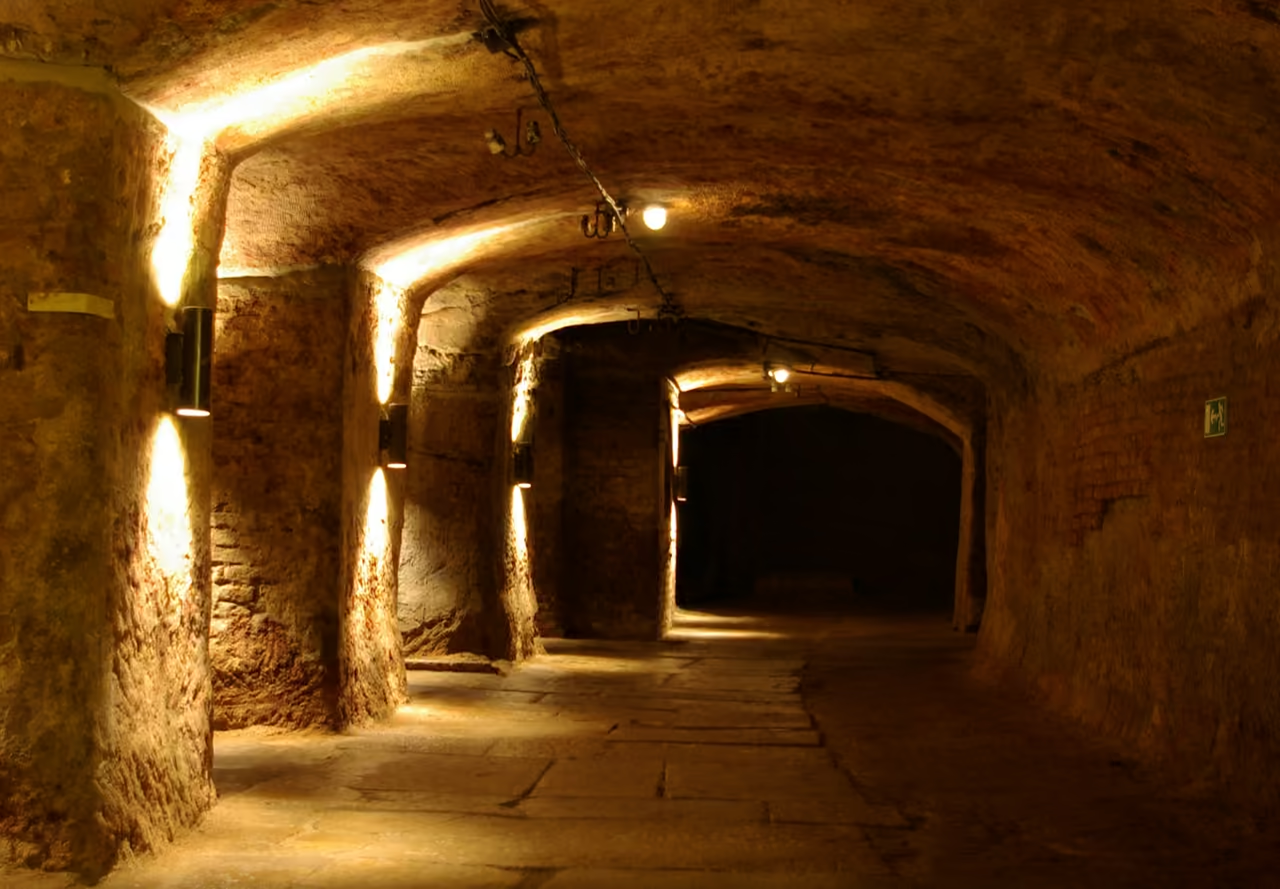
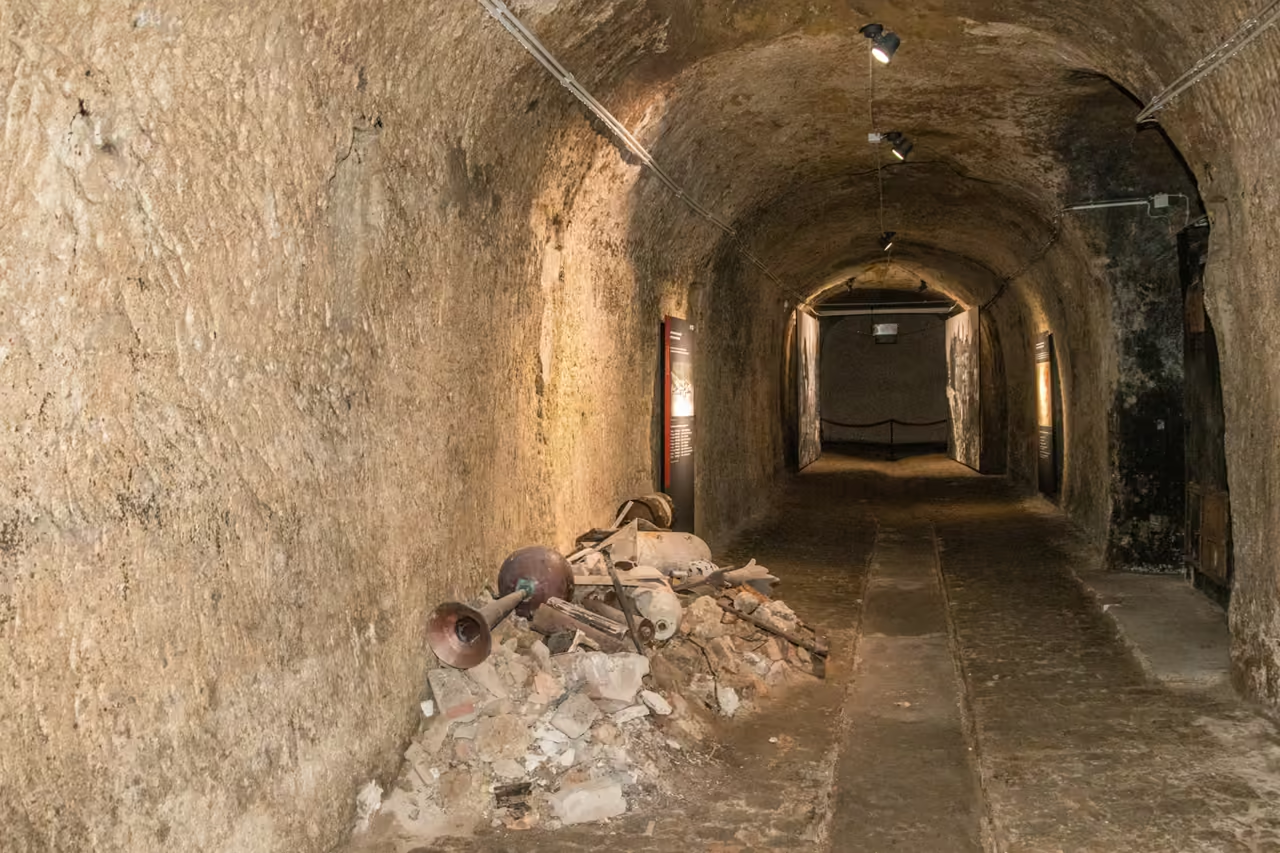
- • A massive underground labyrinth of sandstone cellars exists beneath the castle hill, originally carved out for fermenting red beer in the Middle Ages.
- • The local dialect features 'nürnbergisch', a distinct linguistic blend that straddles the border between Bavarian and East Franconian speech patterns.
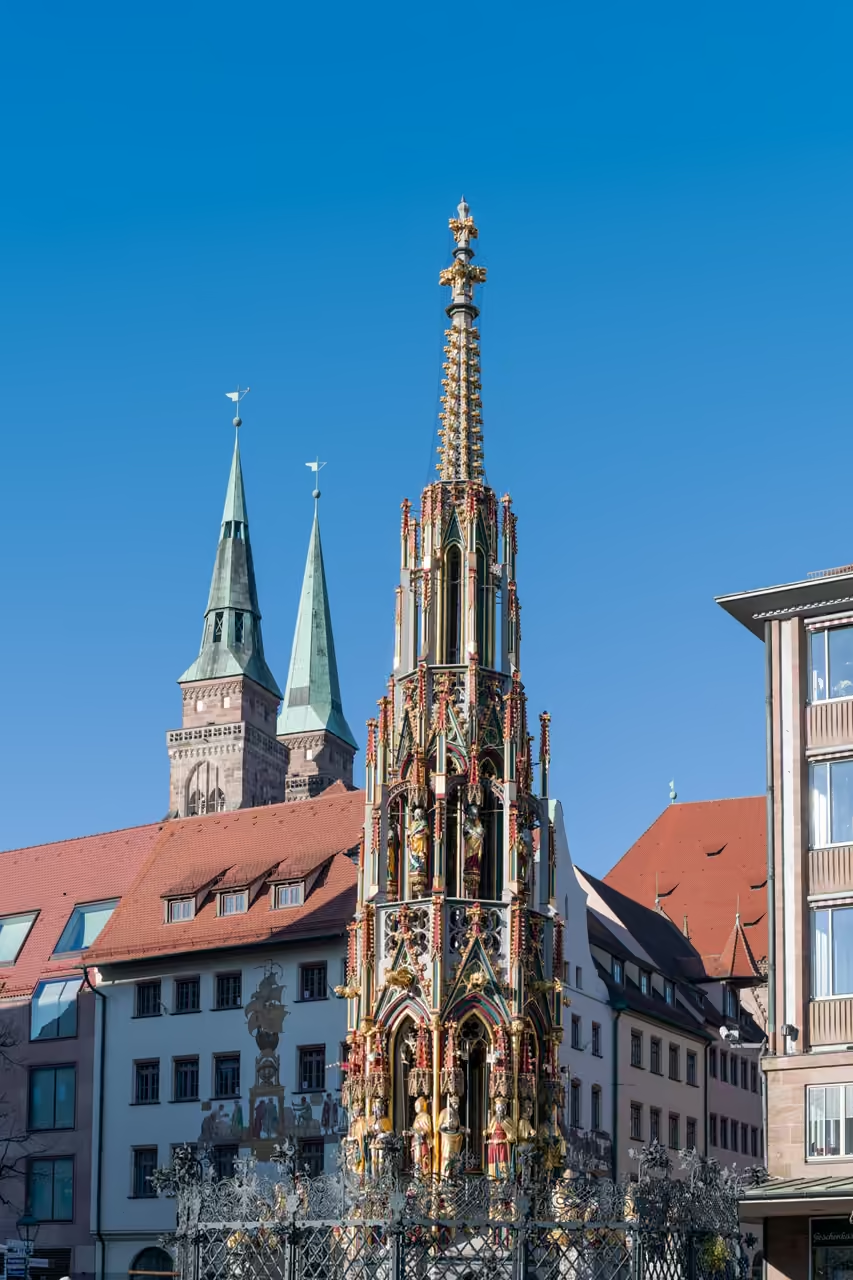
- • A golden ring hangs seamlessly on the wrought-iron fence of the Schöner Brunnen fountain, and spinning it is said to grant a wish or bless women with children.
Did You Know?
- • The post-war military tribunals held in the Palace of Justice formulated the 'Nuremberg Principles', directly paving the way for the establishment of the International Criminal Court.
- • Local patrician Peter Stromer pioneered forest management in 1343 by systematically sowing pine seeds in the Reichswald, creating one of the earliest examples of sustainable forestry.
- • The city produced Europe's first translation of the Quran into a Germanic language in 1616, published by the scholar Salomon Schweigger.
- • Due to intense Allied bombing, roughly 90 percent of the historic centre was destroyed, making the current medieval-looking skyline a masterpiece of mid-20th-century reconstructive architecture.
- • The local U-Bahn system broke global technological ground in 2008 by running fully automated, driverless trains mixed seamlessly with human-operated trains on the same physical tracks.
RESOURCES
Official WebsiteVideos of Nuremberg
Seasons
Spring
The heavy grey skies finally lift, prompting a massive migration of locals toward the Wöhrder Wiese and the Pegnitz riverbanks...
Summer
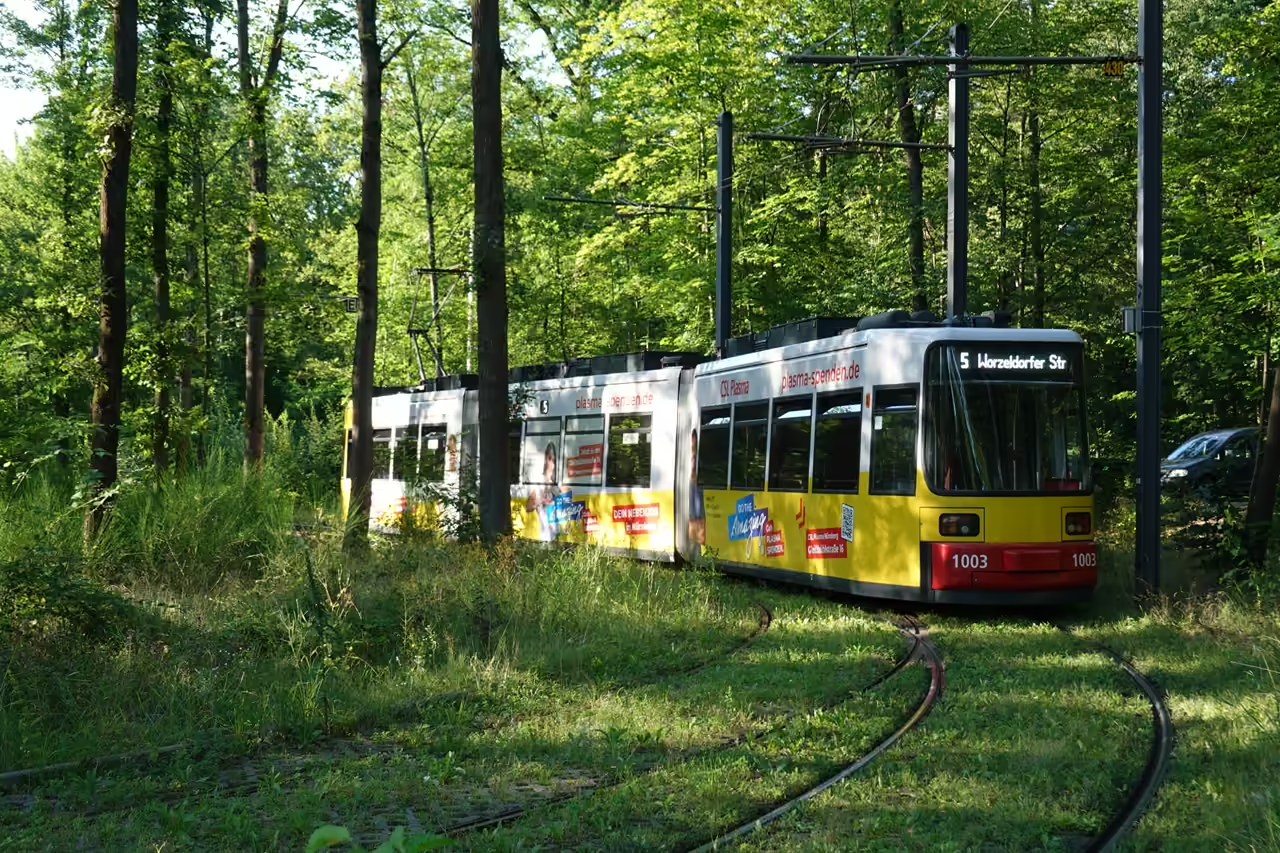
Intense heat drives crowds into the shaded, gravel-lined beer gardens hidden within the castle moats. The Bardentreffen music...
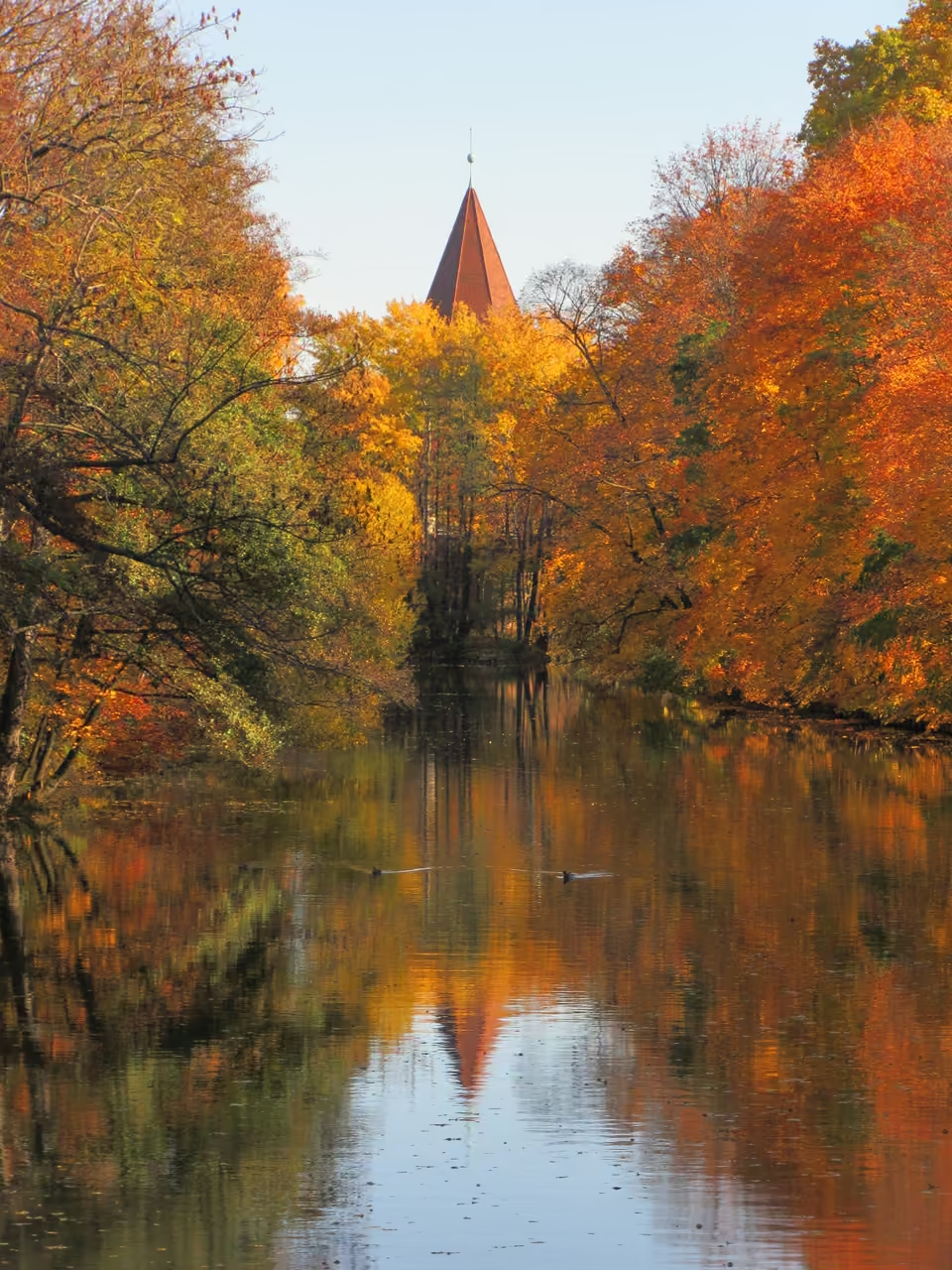
Autumn
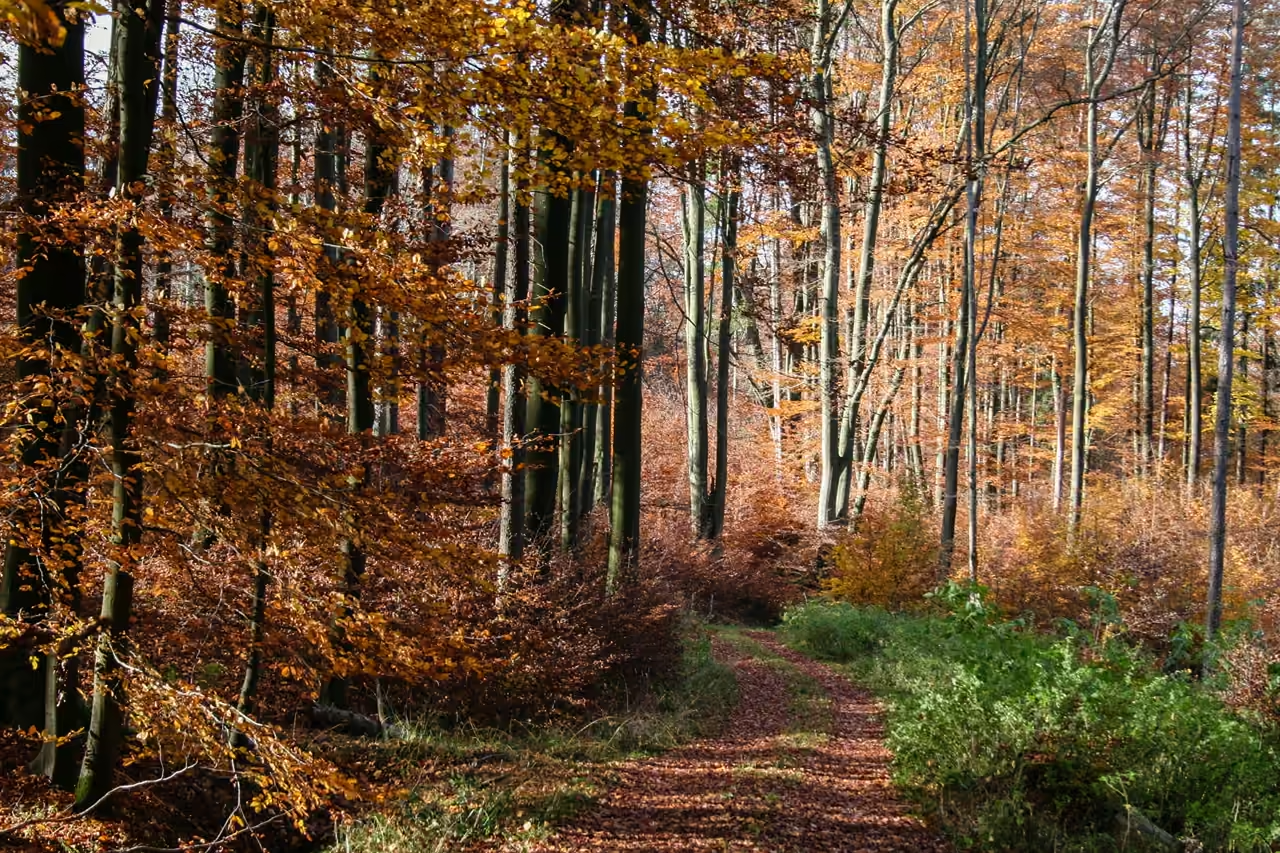
The surrounding pine forests of the Reichswald shift colours, providing a striking backdrop for hiking up the Schmausenbuck...
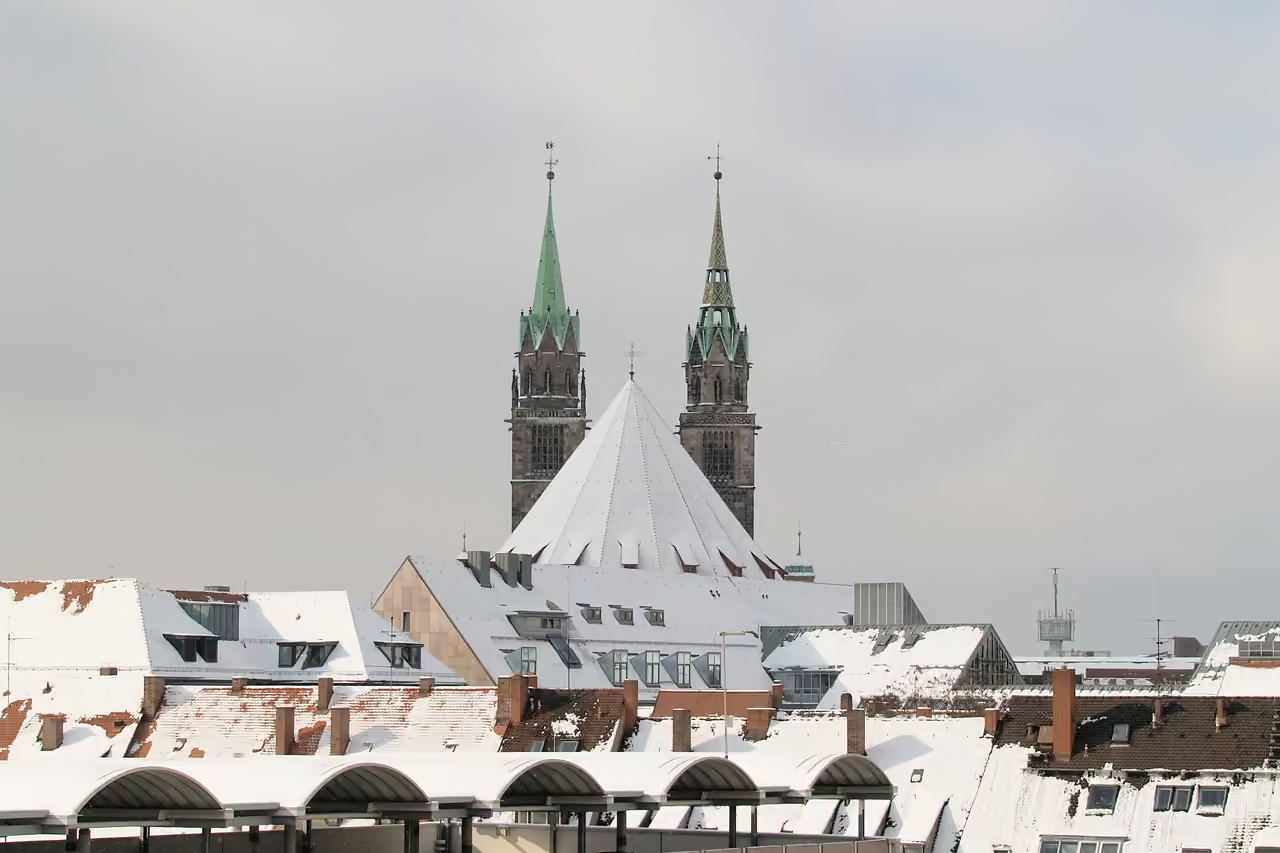
Winter
The atmosphere revolves entirely around the Christkindlesmarkt, drawing enormous crowds to the red-and-white striped stalls...
Top Attractions in Nuremberg
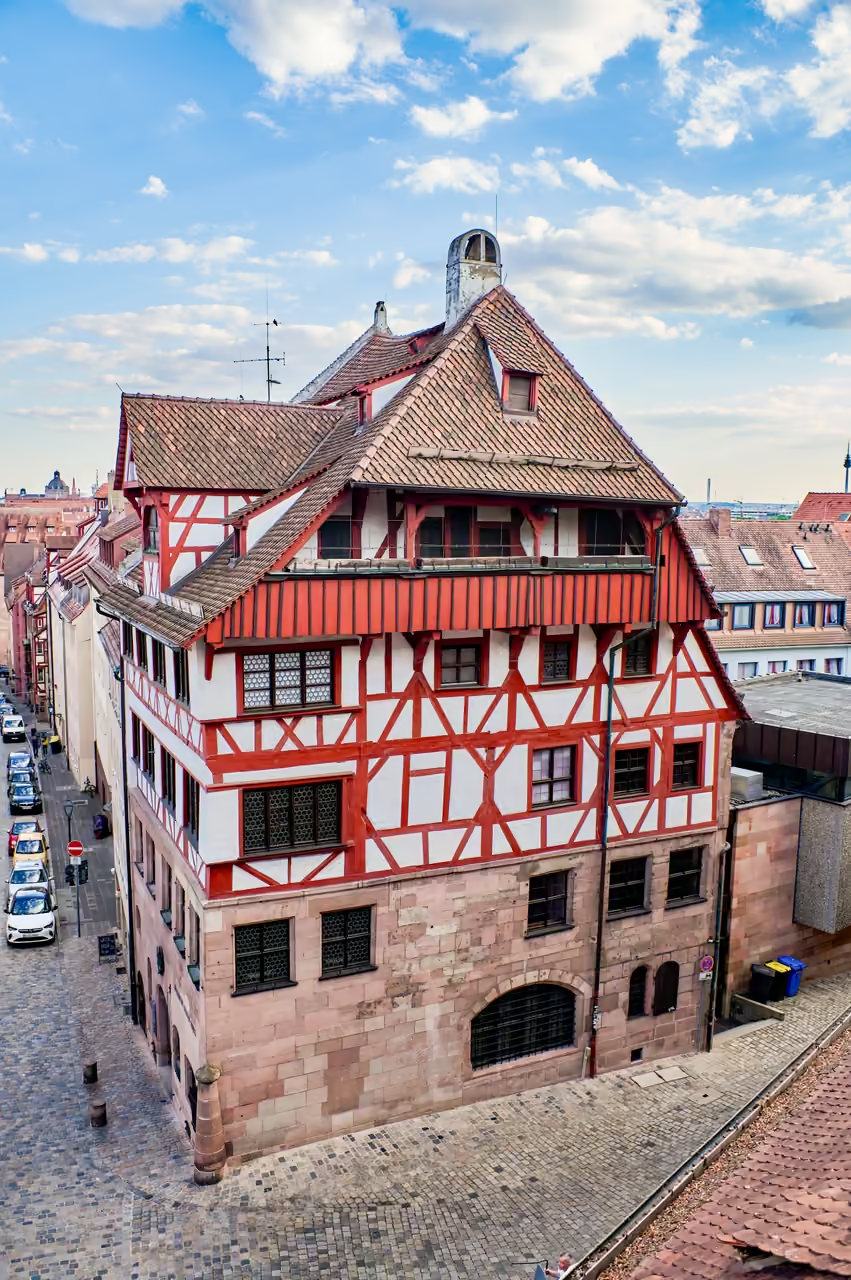
Albrecht Dürer House
Step inside the Albrecht Dürer House and walk the very floors where Germany's most celebrated Renaissance artist lived and...
view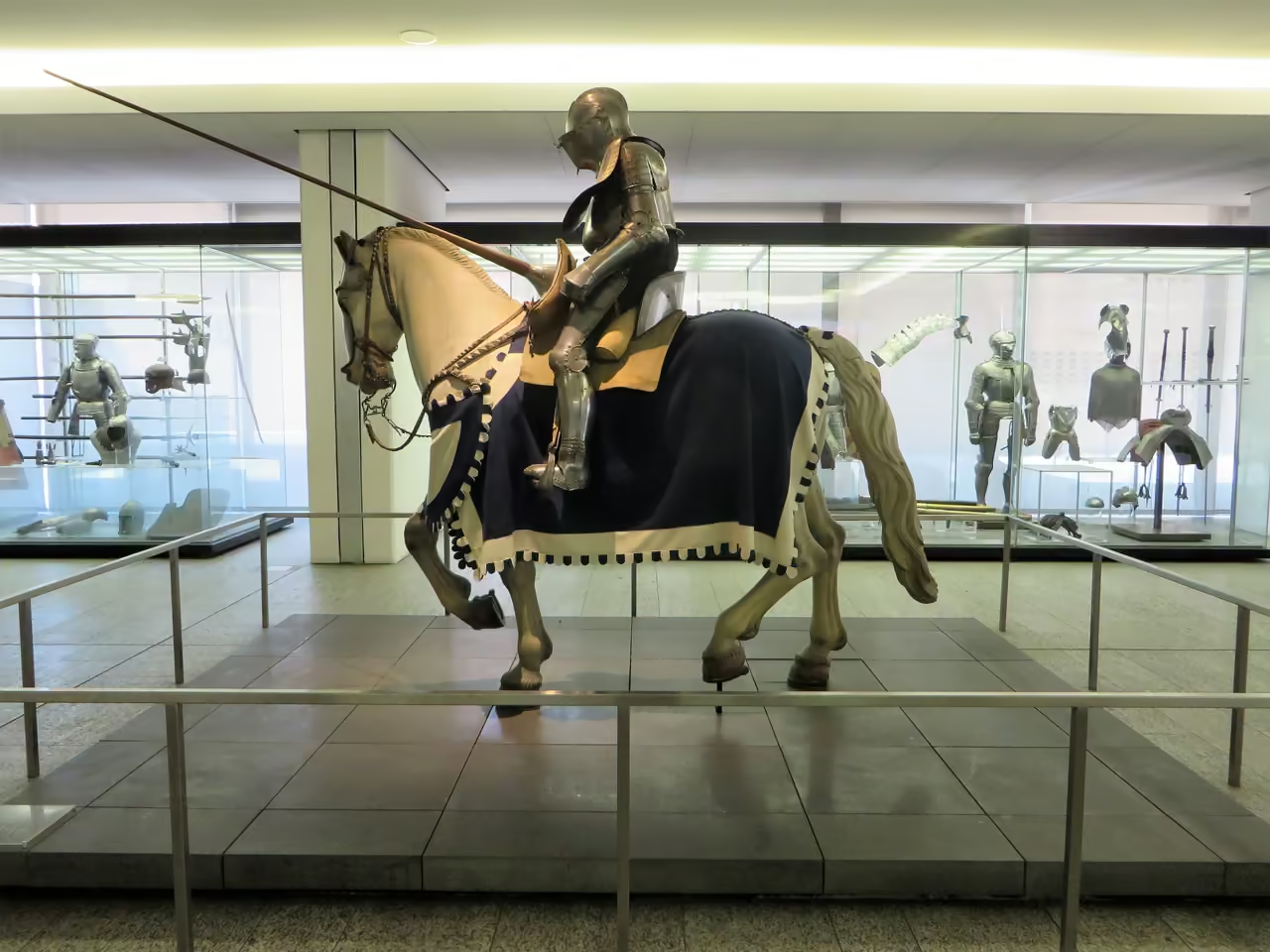
Germanic National Museum
Behind an austere modernist facade and a pathway carved with human rights declarations, the fragmented history of Central Europe...
view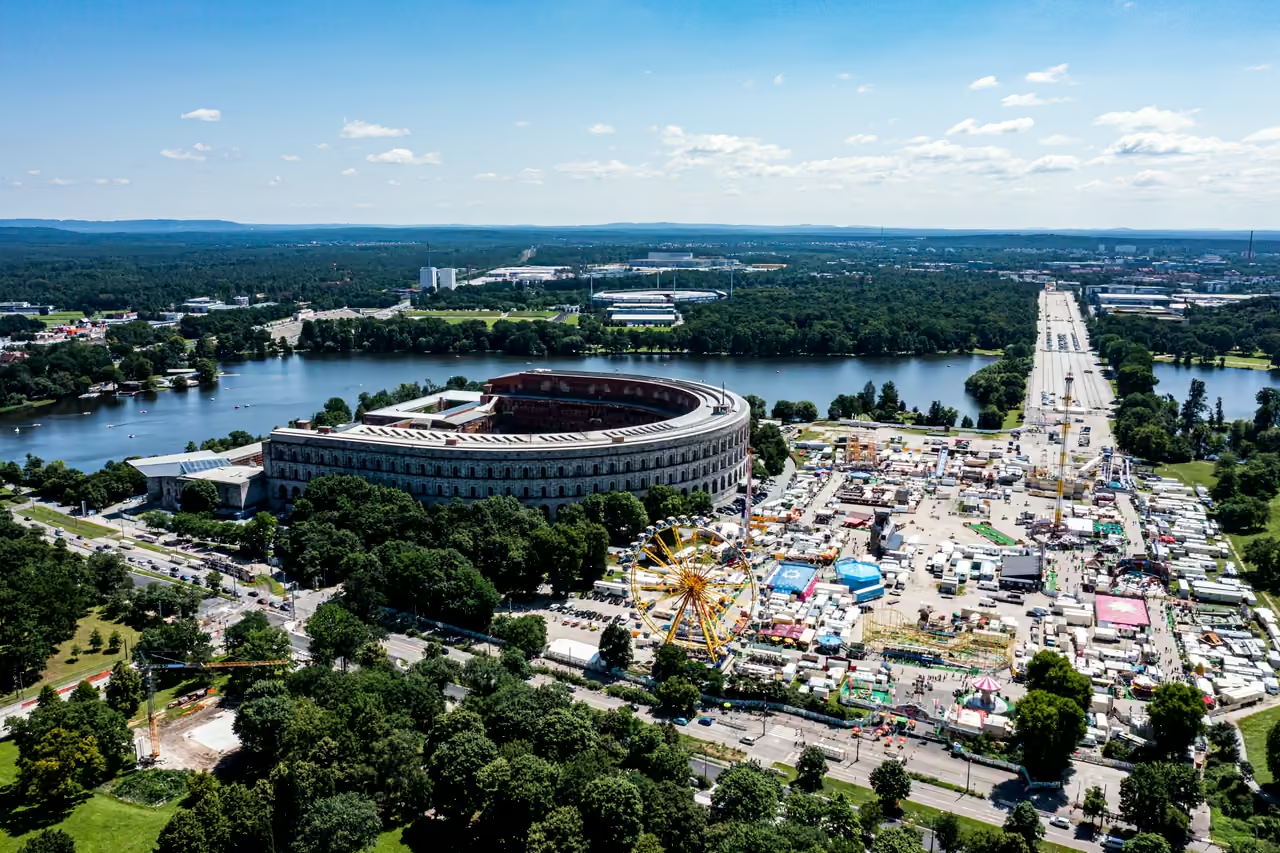
Nazi Party Rally Grounds
A grandstand with its colonnades gone, a horseshoe of granite that never received its roof, and a lakeside park where rowing...
view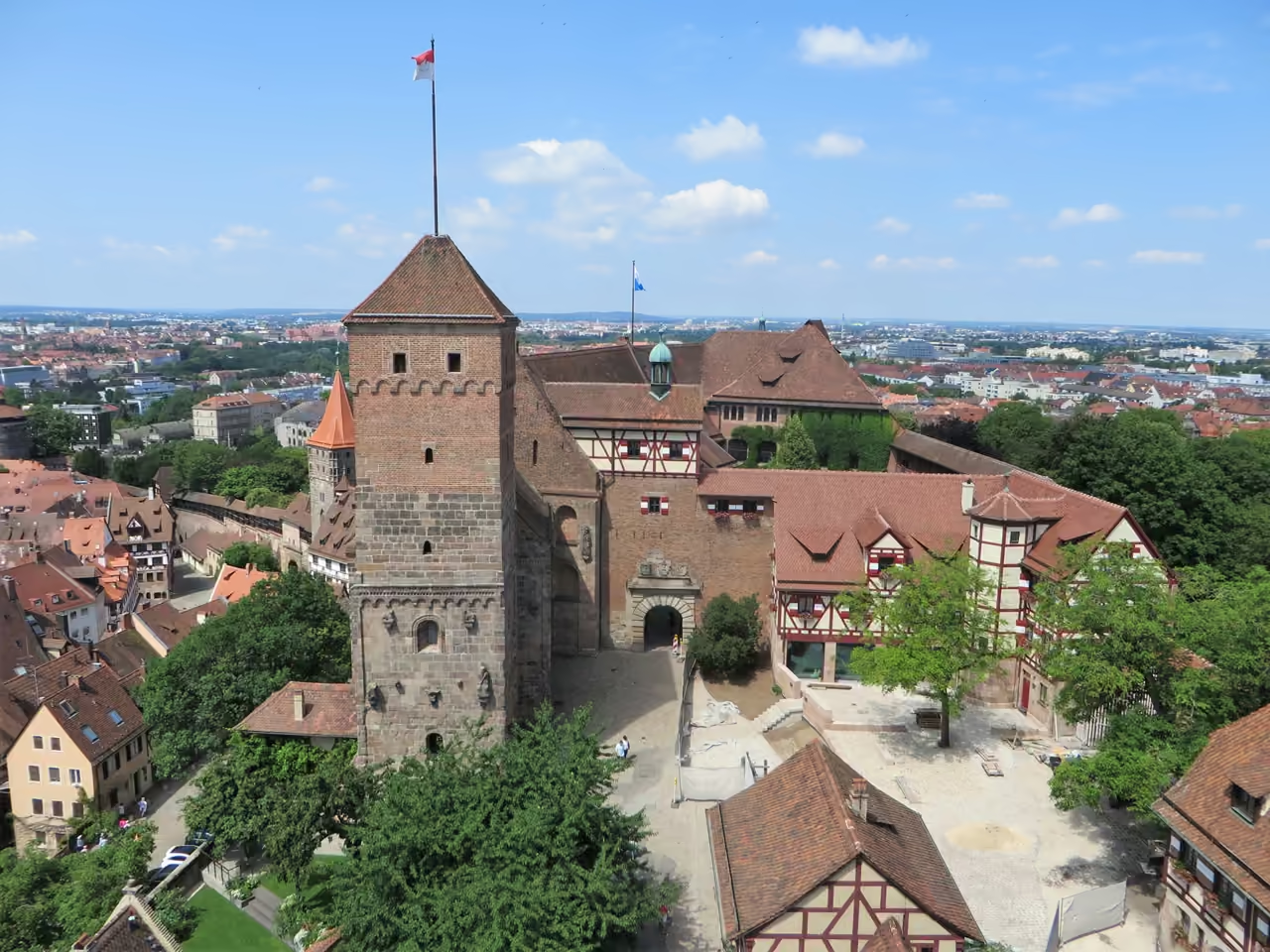
Nuremberg Castle
Nuremberg Castle is really three castles sharing one sandstone ridge: the Imperial Castle in the west, the former Burgraves...
view
Best Views
Nuremberg Itineraries
TRIP PLANNER
3 Days Recommended
Three days provides ample time to explore the medieval Altstadt, walk the expansive Nazi Party Rally Grounds, and visit key museums without rushing. It allows for leisurely evenings in local brewpubs and leaves room for a short excursion to neighbouring Fürth.
1 Day in Nuremberg
This highly condensed route focuses aggressively on the essential, iconic sights that define the city's historical extremes. It covers the medieval power of the imperial fortress in the morning, followed by the dark legacy of the 1930s in the afternoon. The pace is rapid, requiring stamina and a reliance on public transport to cover the geographical spread between the old town and the southern suburbs. It sacrifices hidden gems in favour of the absolute heavy hitters. The day concludes back within the medieval walls for traditional Franconian food.
view itinerary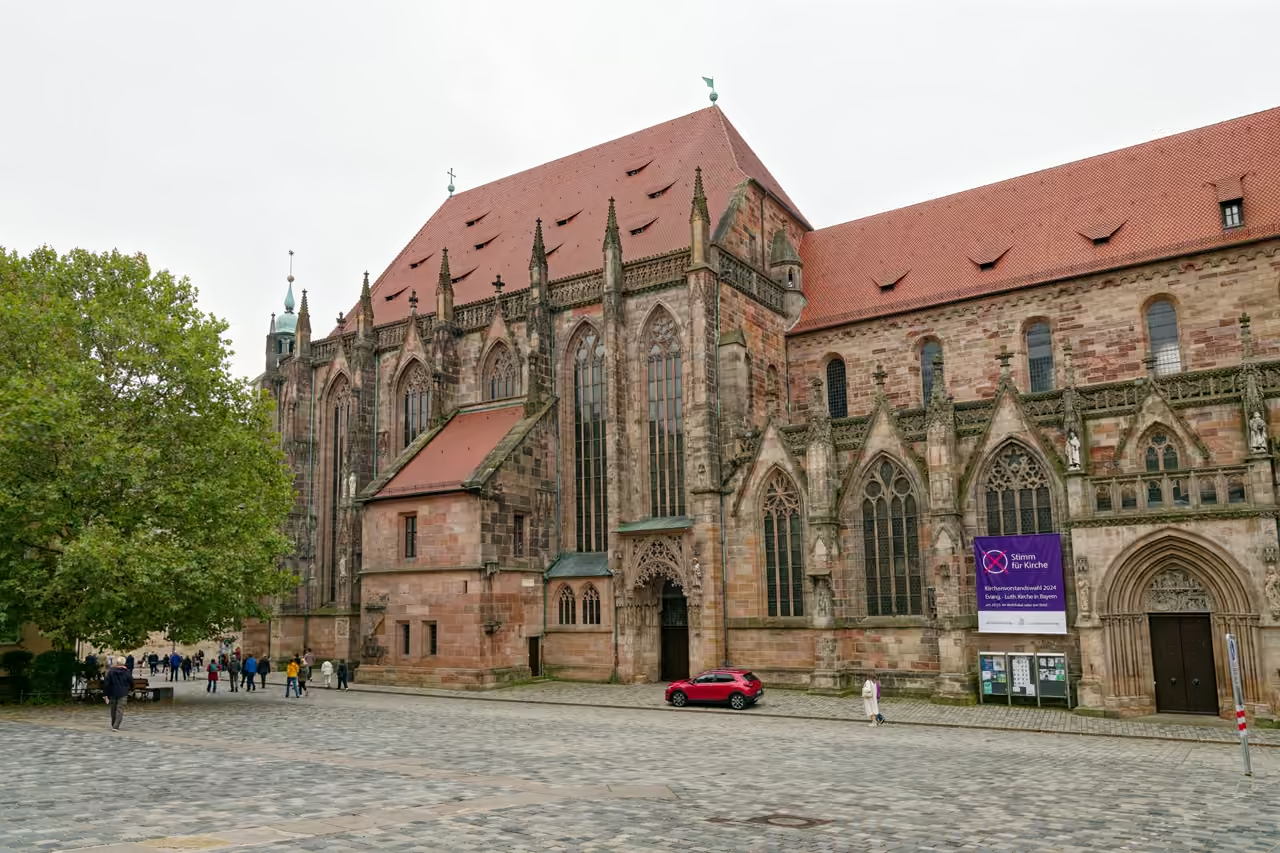
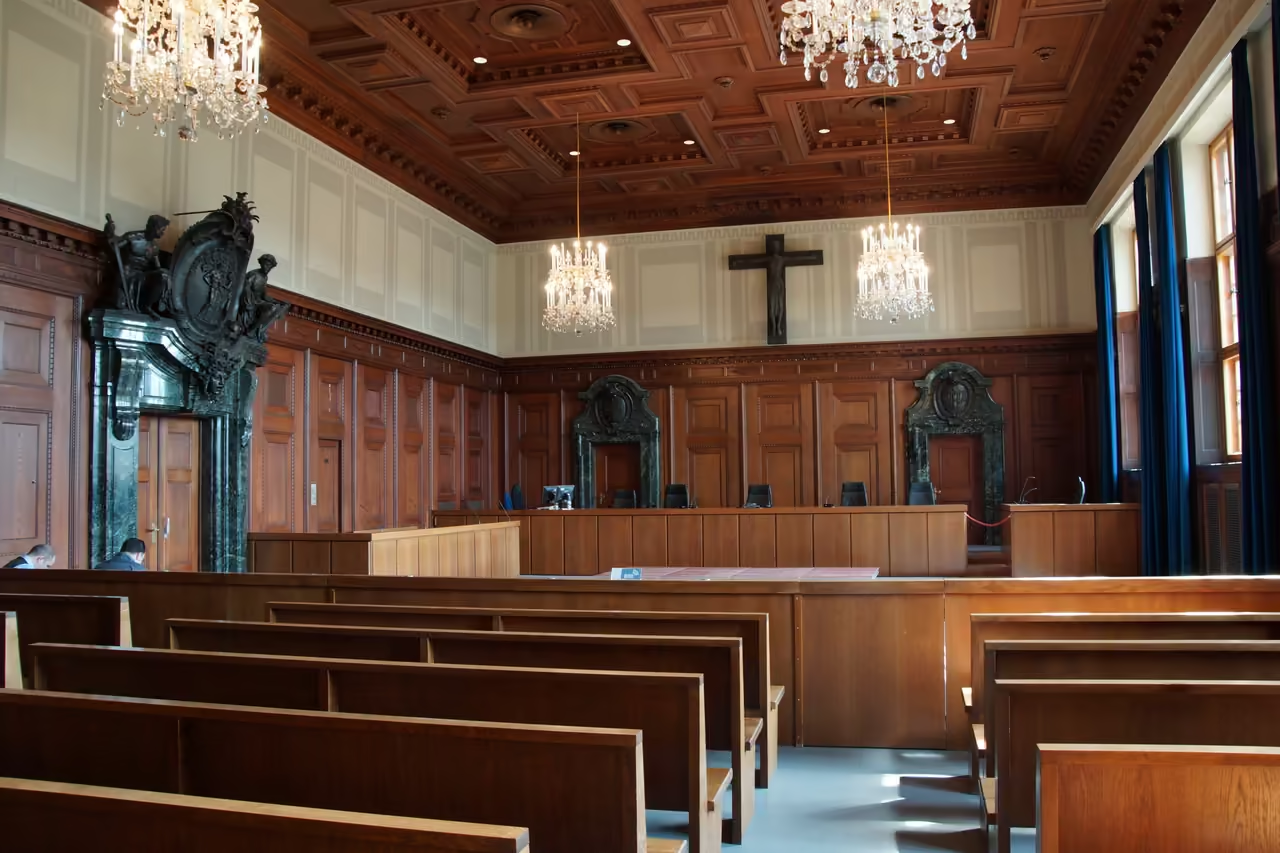
3 Days in Nuremberg
Adding two days allows the pace to relax, mixing heavy historical museums with leisurely strolls through the artisan districts and green spaces. The itinerary breaks the city down geographically, dedicating distinct days to the northern castle quarter, the southern medieval core, and the 20th-century history stretching beyond the walls. Time opens up to explore the massive art collections and sit for extended periods in traditional brewpubs. It strikes a perfect balance between education and casual exploration. Visitors leave with a comprehensive understanding of how the city layered its modern identity over its medieval bones.
view itinerary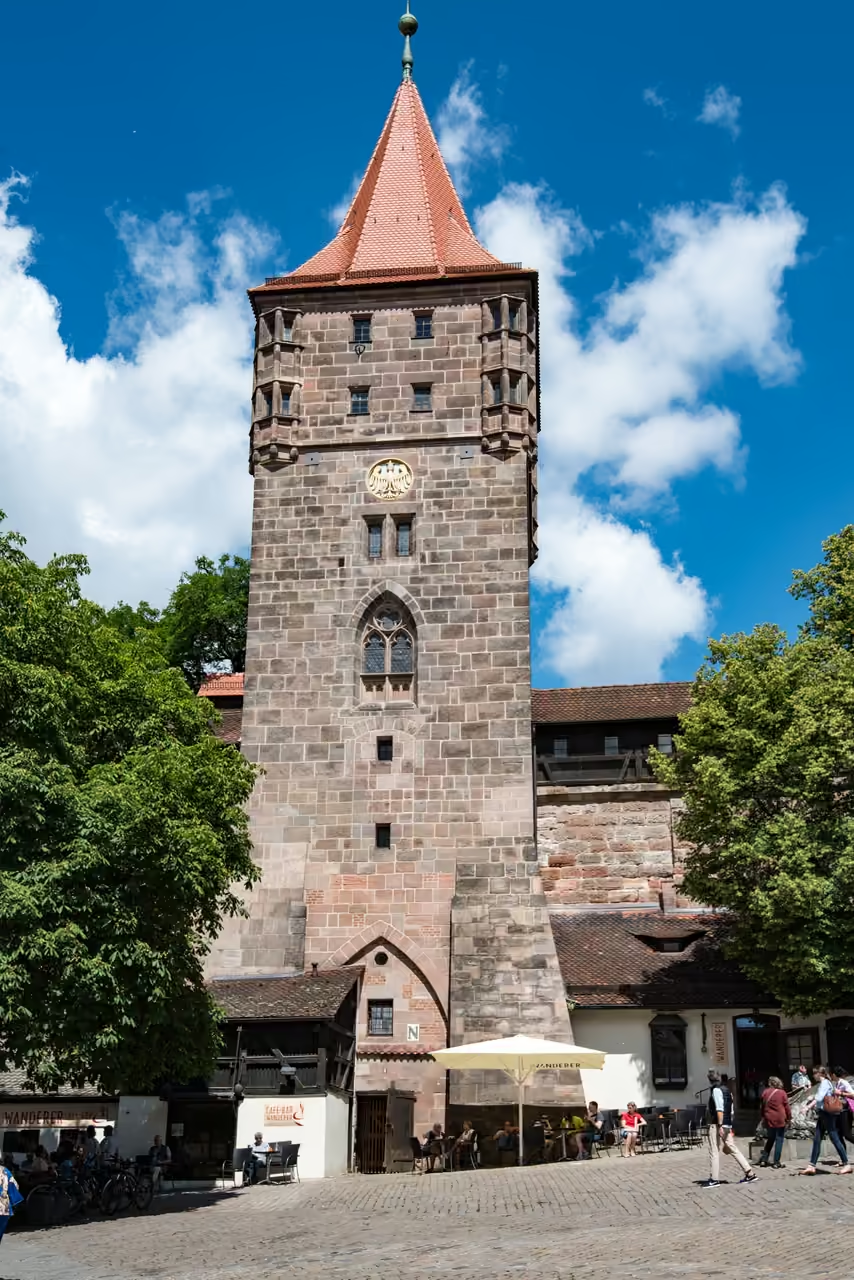
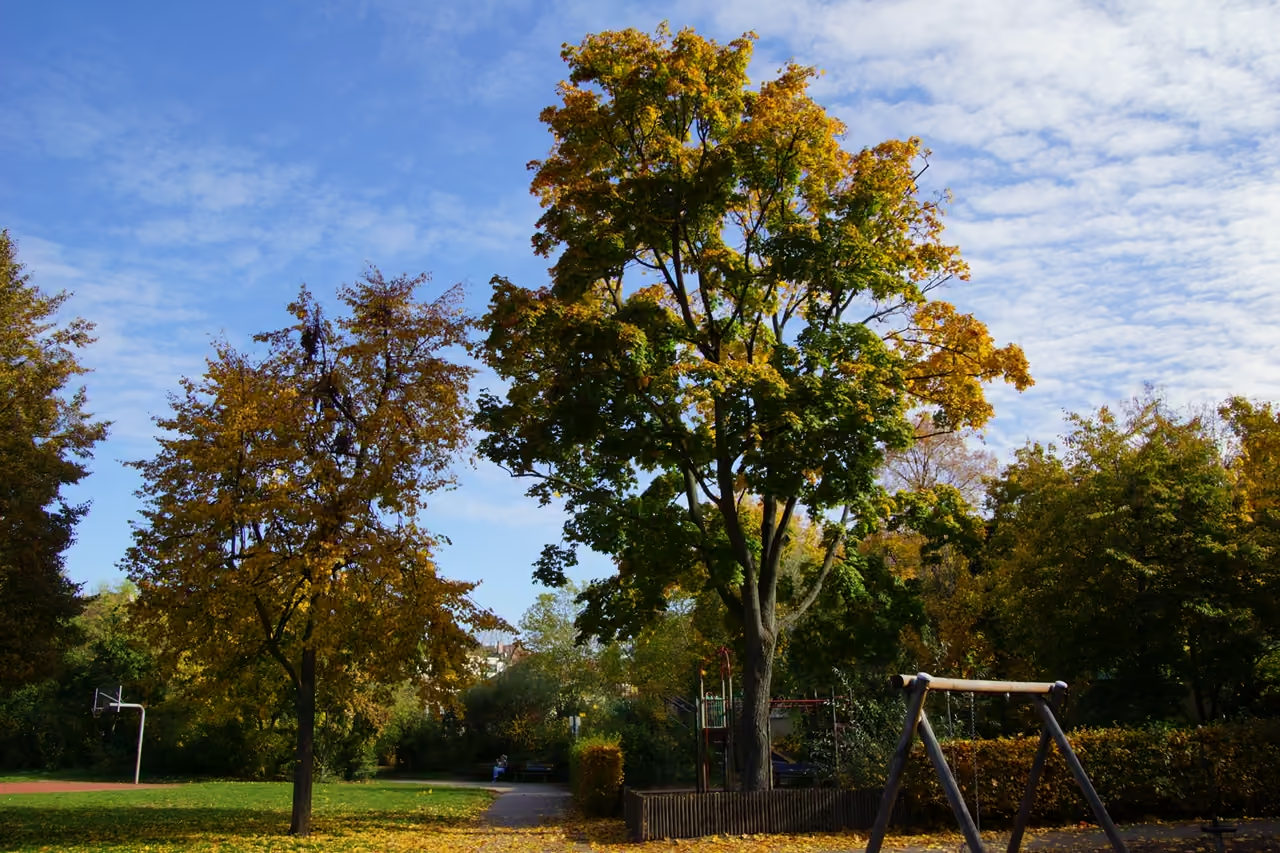
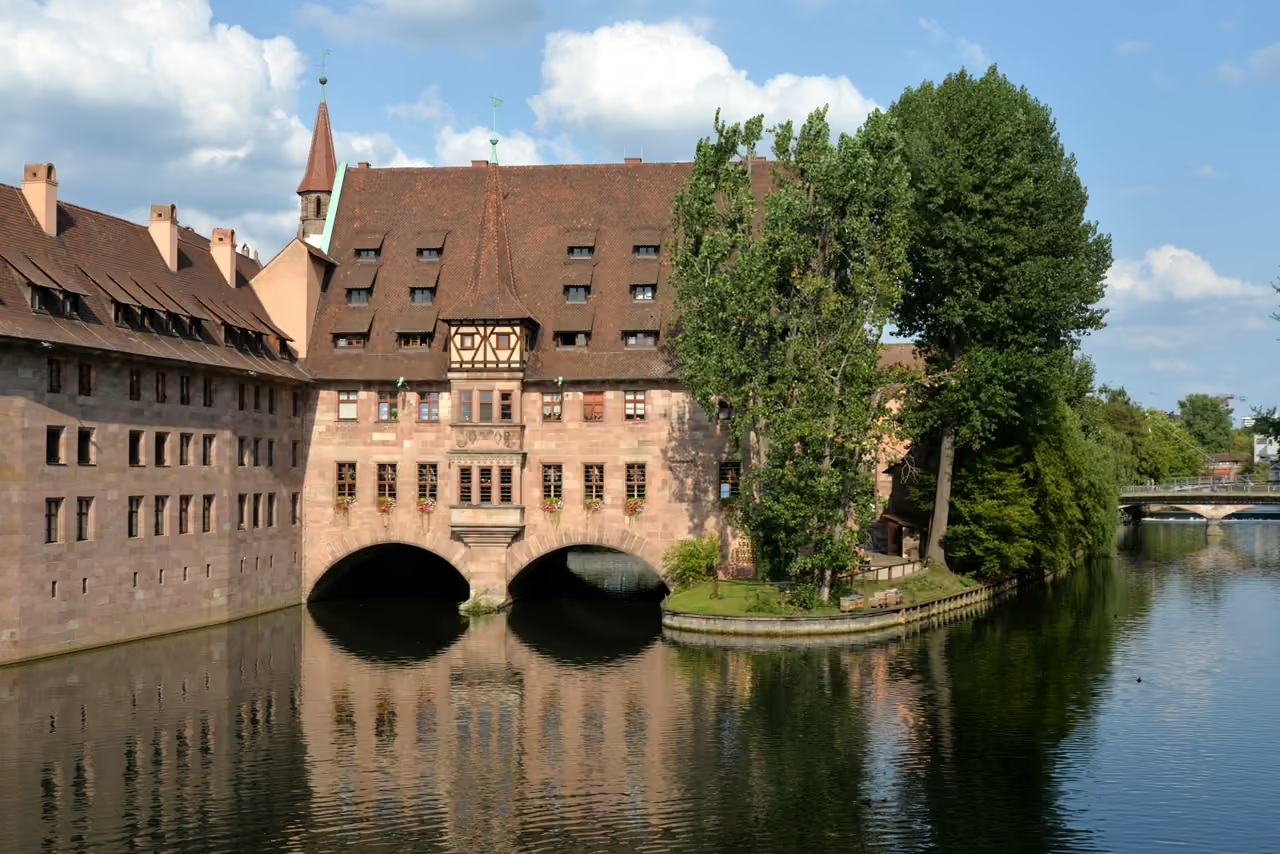
5 Days in Nuremberg
A full working week allows visitors to treat the city like a local, diving into highly specific museums and exploring the outer green belts. The schedule incorporates deep dives into the transport history and hidden patrician gardens that most tourists never see. It factors in time for long walks along the Pegnitz river and cycling trips into the vast eastern forests. The itinerary assumes a desire to experience the quiet, residential pockets of the city alongside the major monuments. This timeline transforms a rushed sightseeing trip into a relaxed cultural immersion.
view itinerary
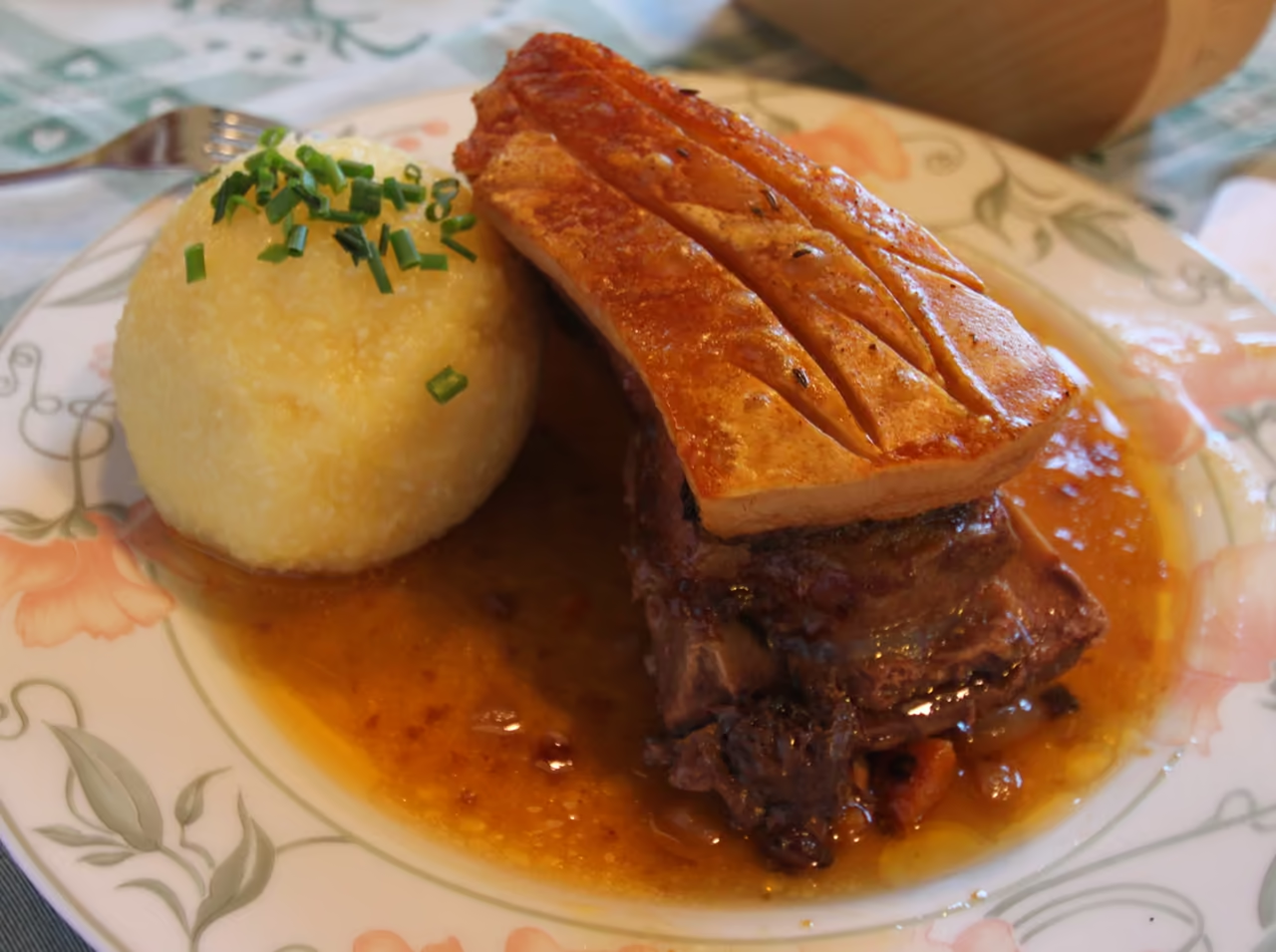
Food in Nuremberg



Free Things to do in Nuremberg
Parks & Nature
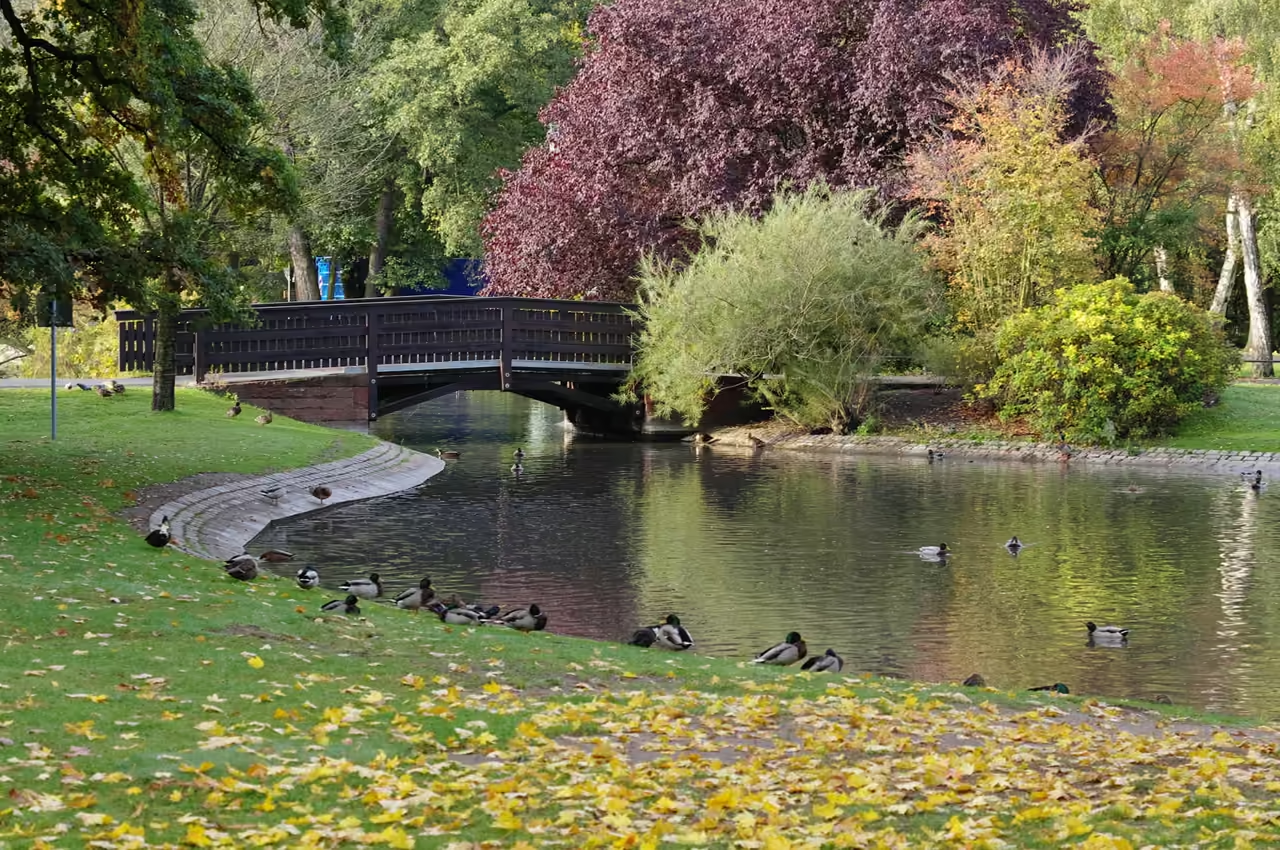
City Park
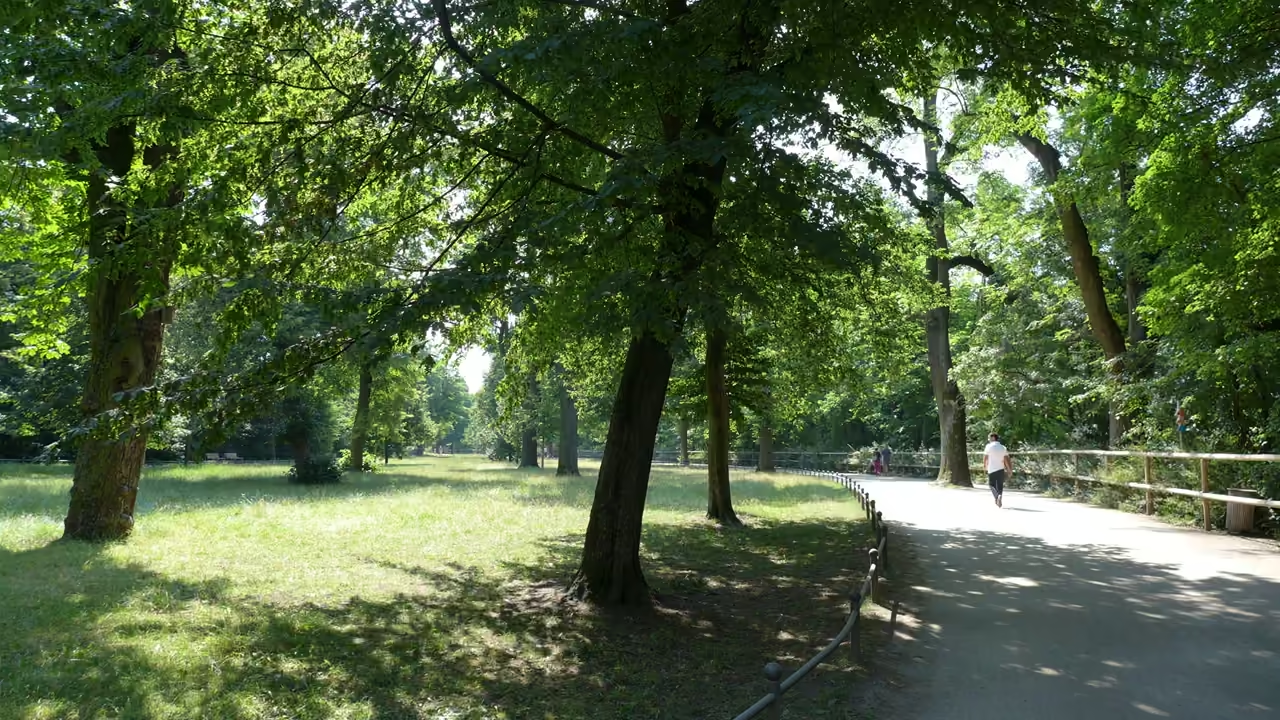
Step off the paved streets of northern Nuremberg and onto the winding, tree-lined paths of this expansive 19-hectare green...
view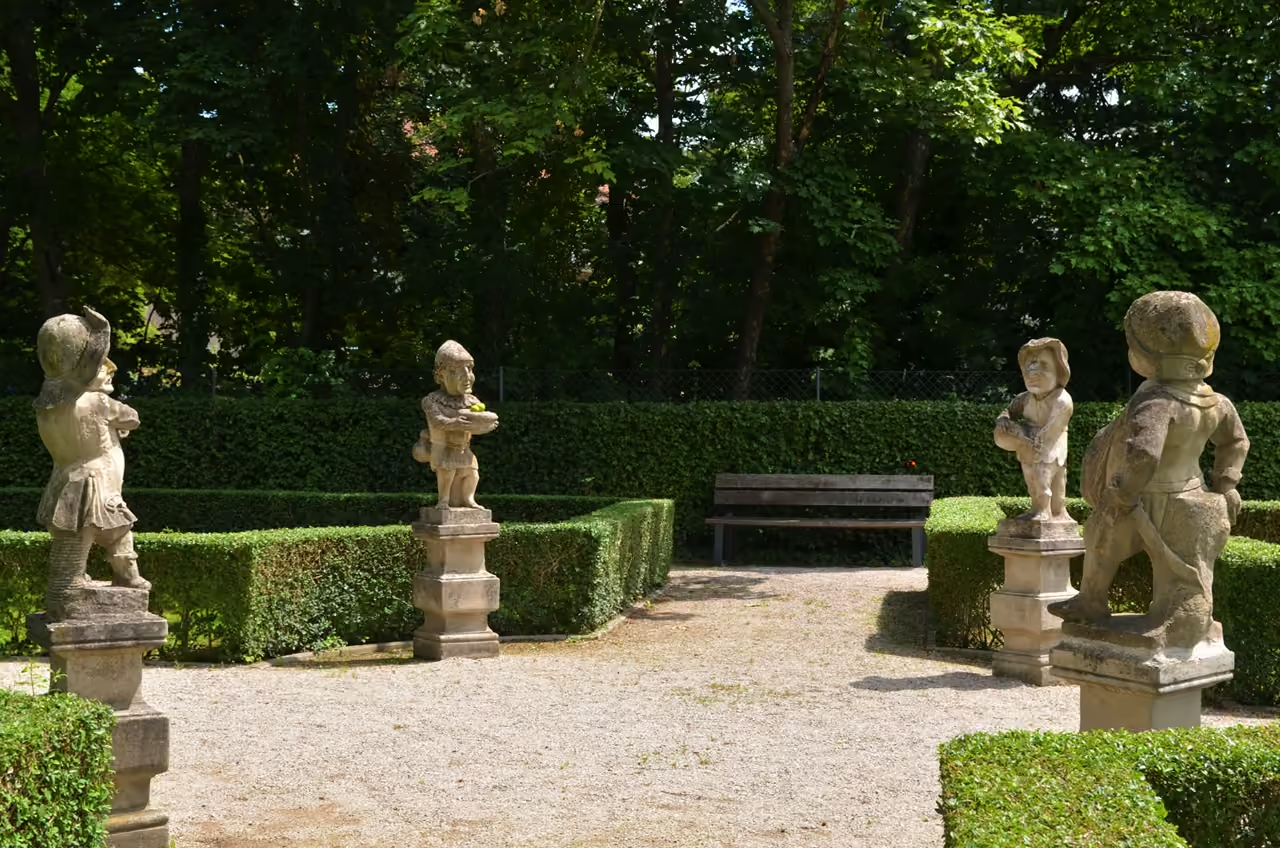
Hesperides Gardens
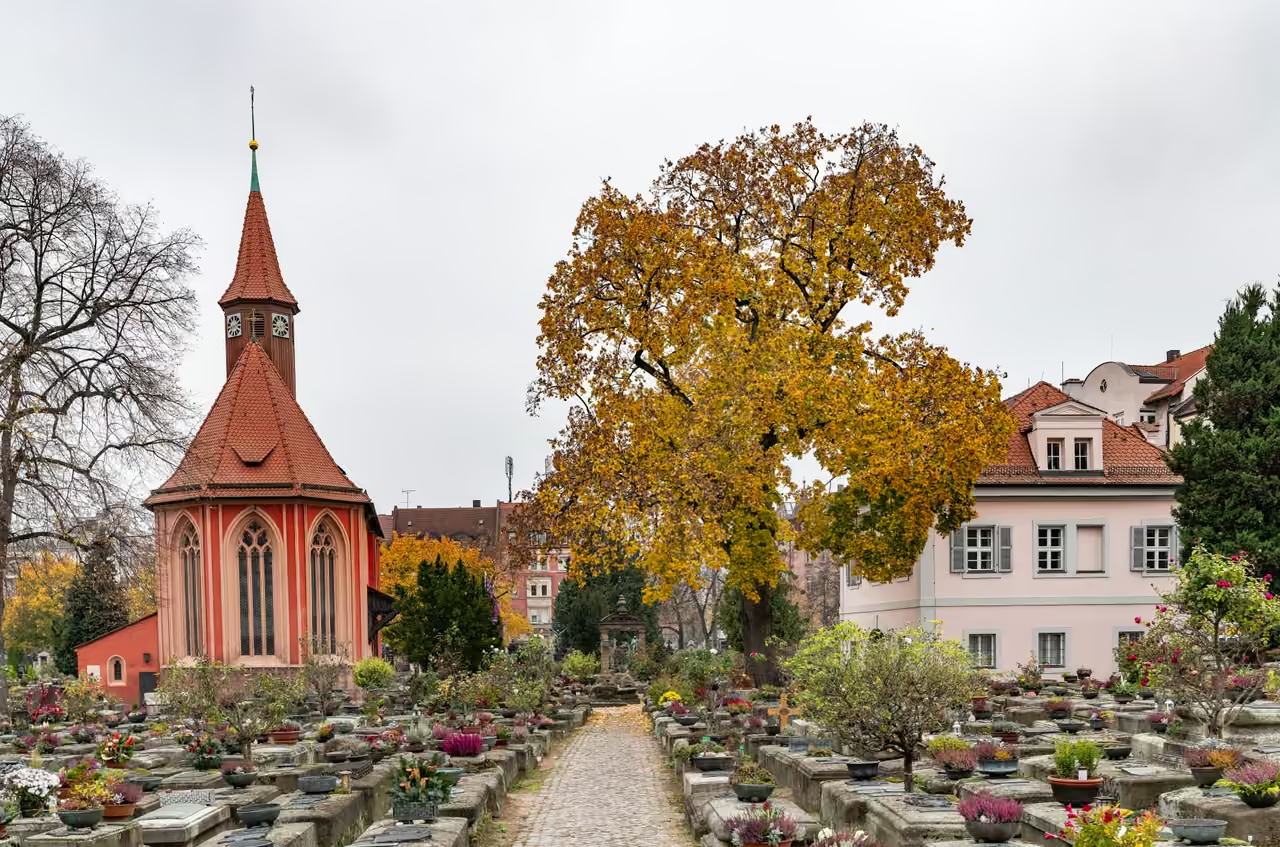
Stepping through the narrow wrought-iron gate at Johannisstraße 47 feels like trespassing on a wealthy Renaissance merchant's...
view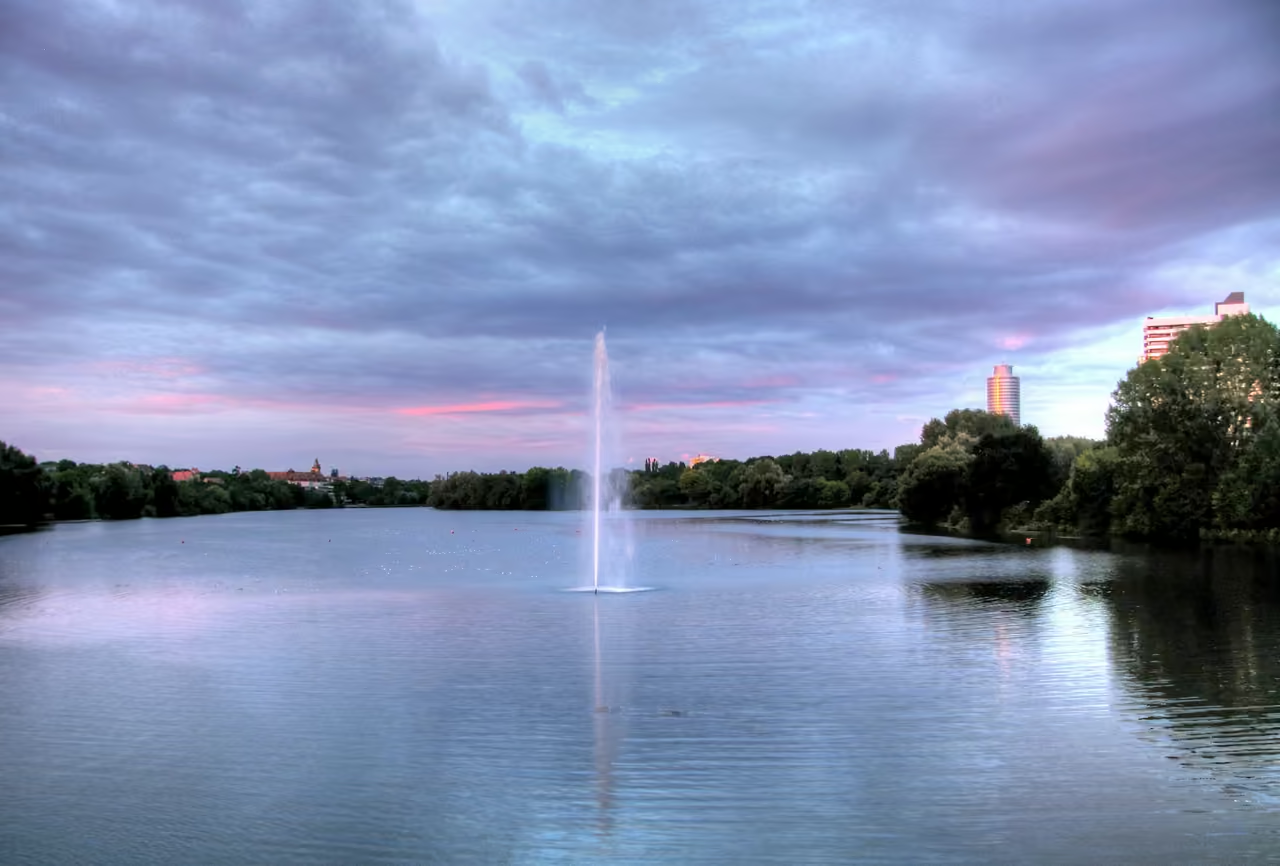
Lake Wöhrd
A wide stretch of open water slicing through Nuremberg's eastern districts, Lake Wöhrd functions as the city's outdoor living...
view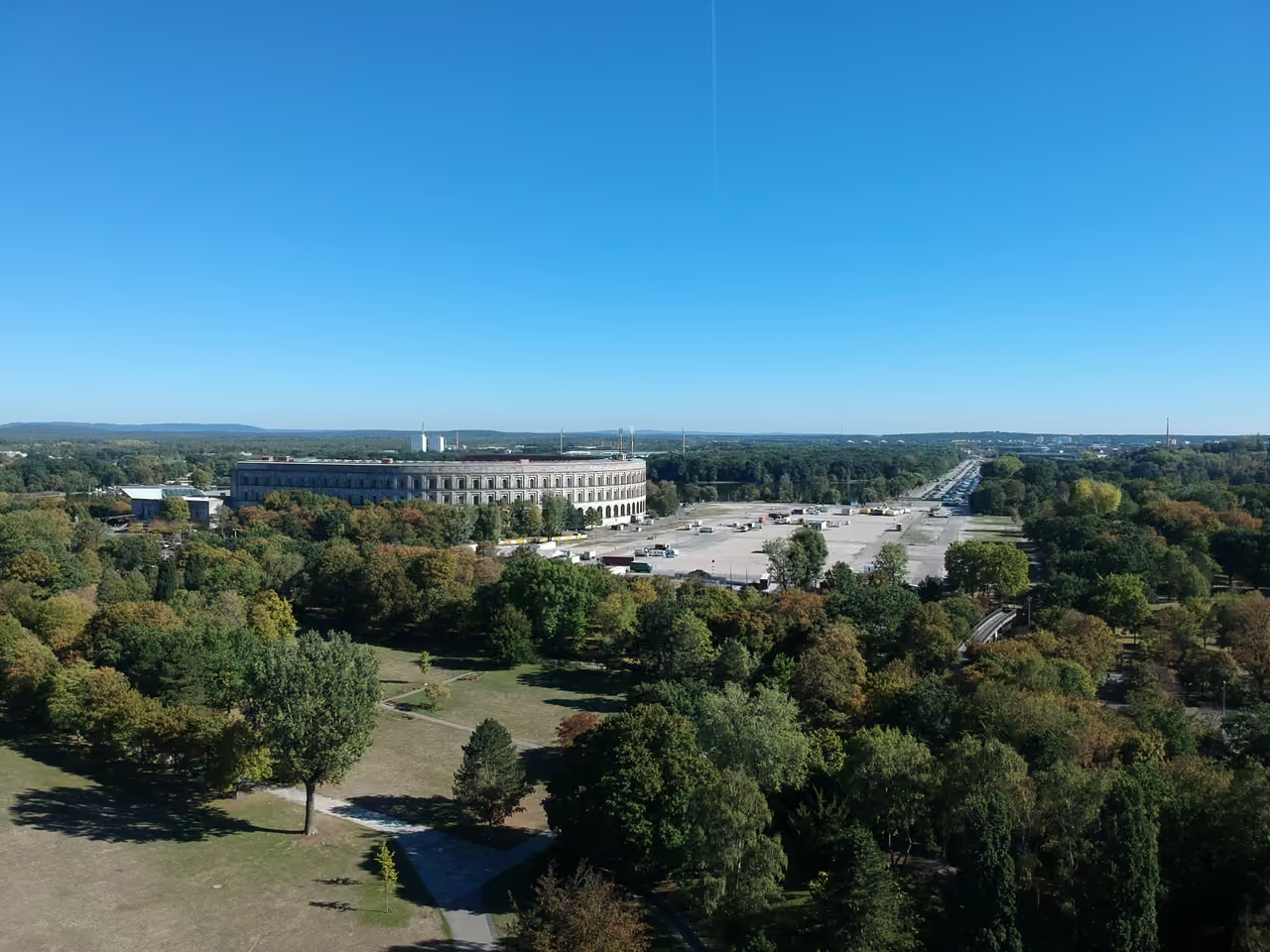
Luitpold Grove
Spreading across twenty-one hectares of south-east Nuremberg, Luitpold Grove acts as an expansive backyard for the surrounding...
view
Highlights & Must-Sees
Beautiful Fountain
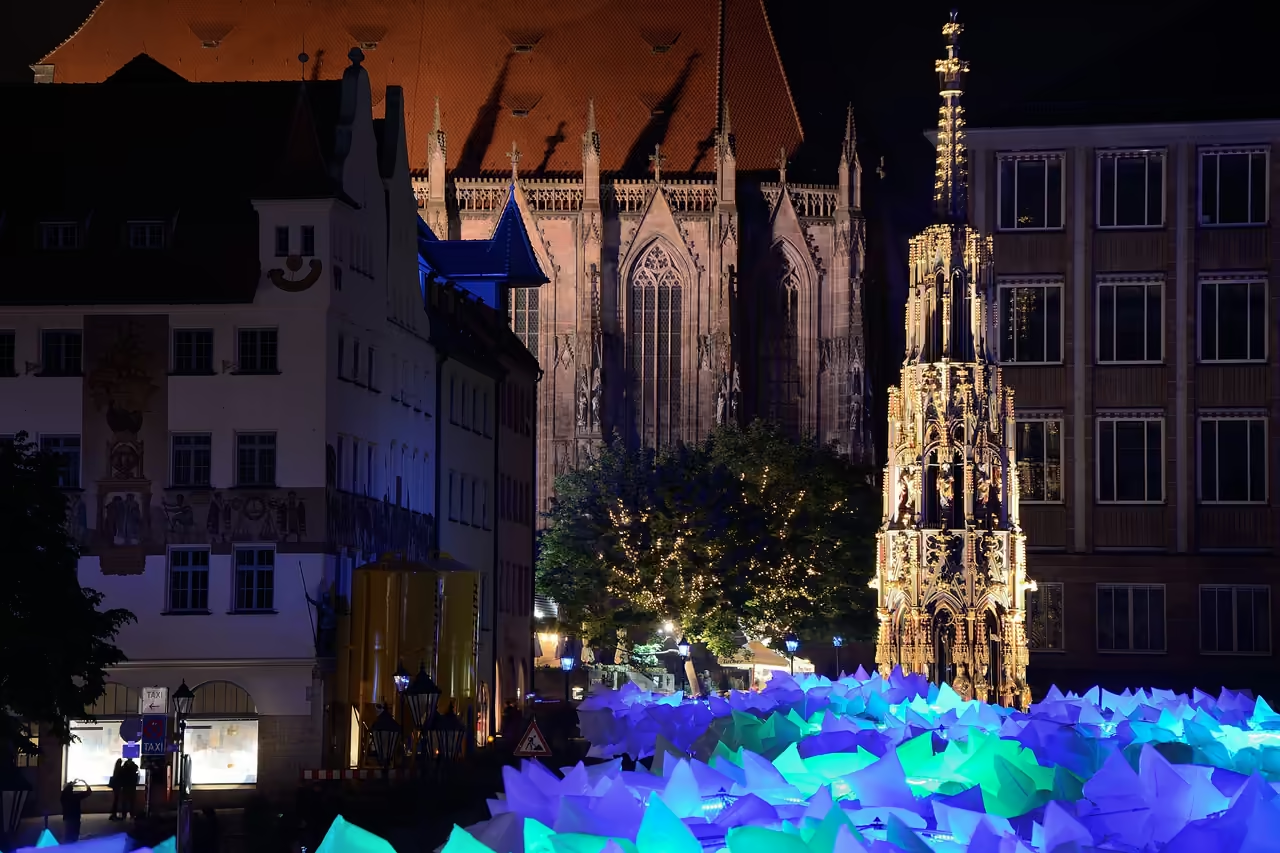
A dazzling, nineteen-metre-tall Gothic spire rises directly from the cobblestones of the main market square, painted in...
viewExecutioner's Bridge & Wine Storehouse
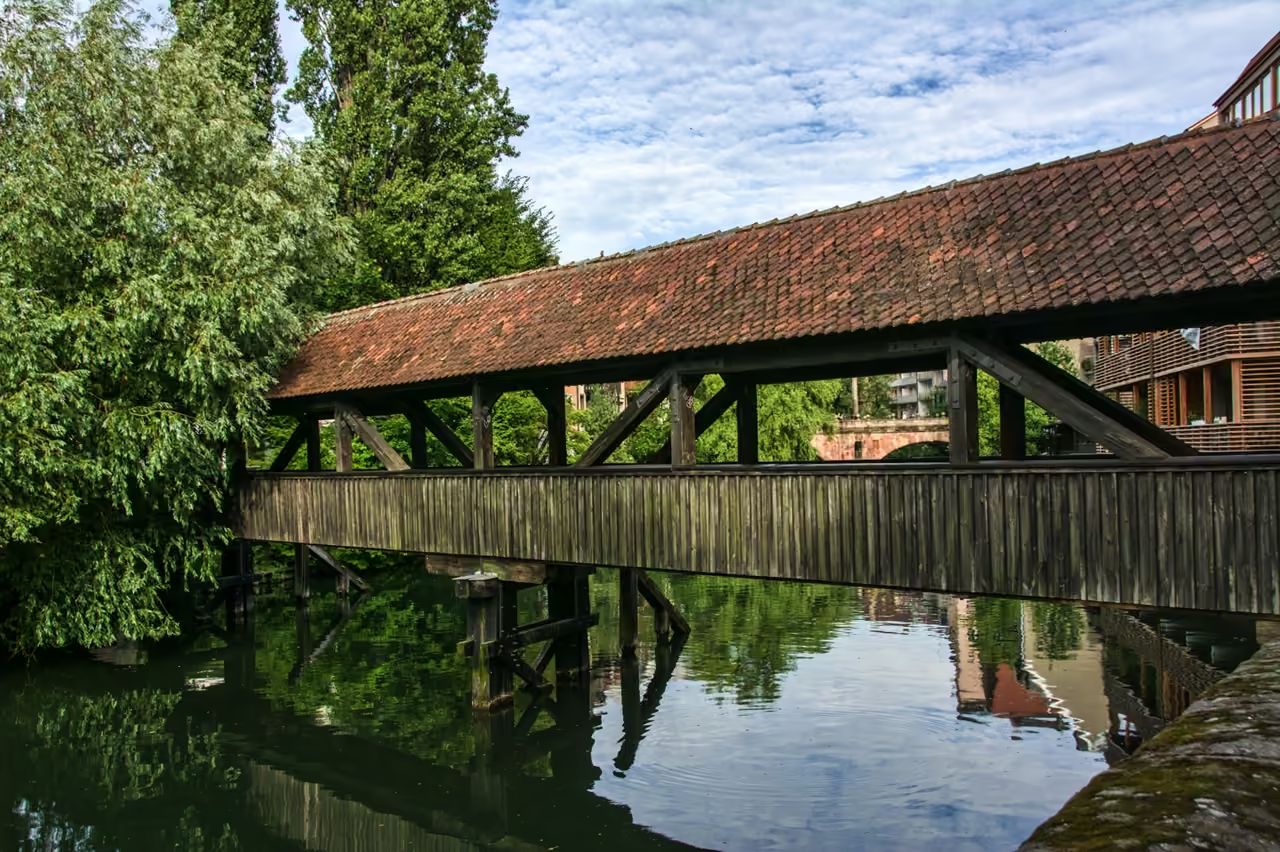
A covered wooden footbridge spans the Pegnitz river, connecting a small island to the northern bank under a sloping, tiled roof...
viewHistoric Rock-Cut Cellars
A vast, multi-level labyrinth of sandstone tunnels snakes directly underneath the imperial castle and the northern old town...
view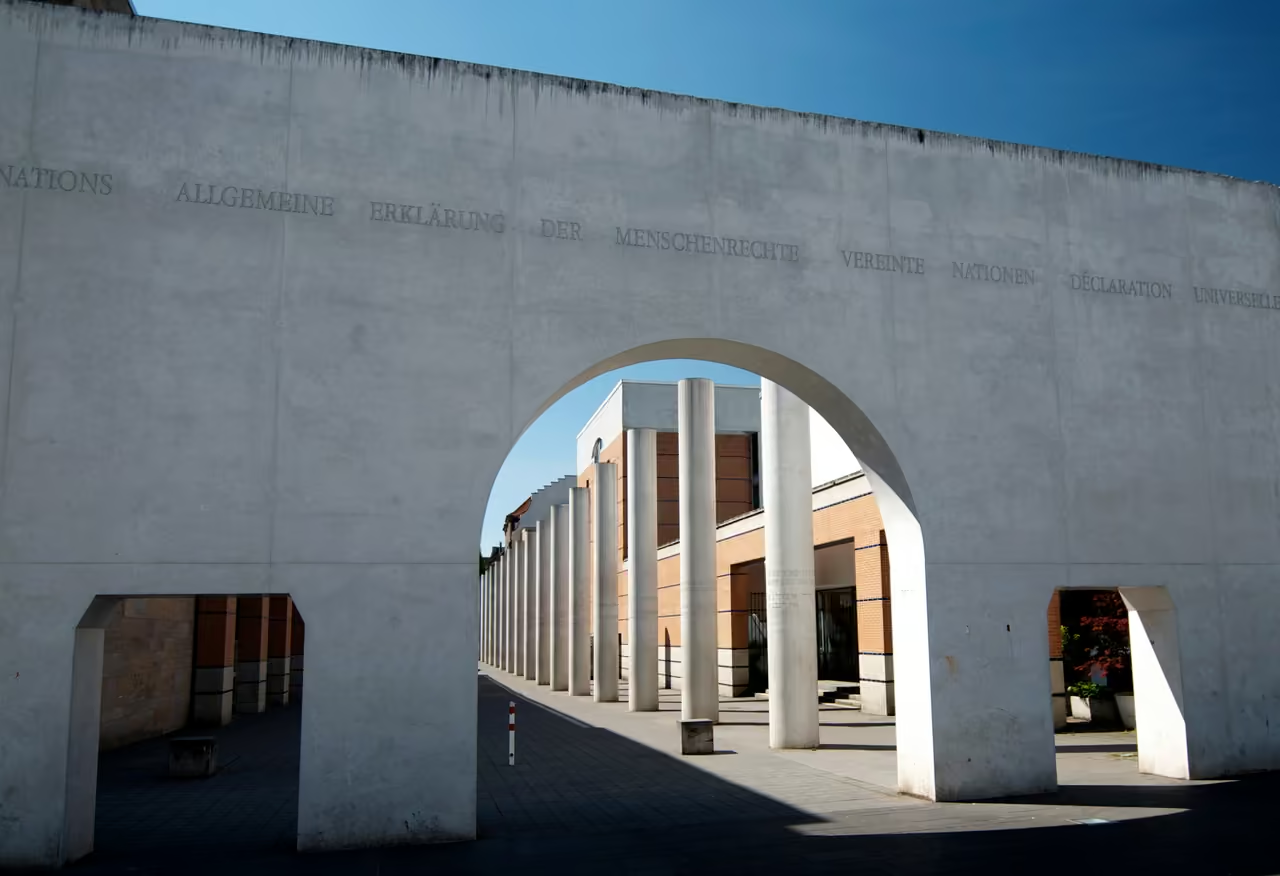
Way of Human Rights
Thirty stark white concrete pillars stand in a precise line down a pedestrian street, each engraved with an article from the...
view
Best Walks in Nuremberg
 HIGHLY RECOMMENDED
Medieval City Walls & Moat
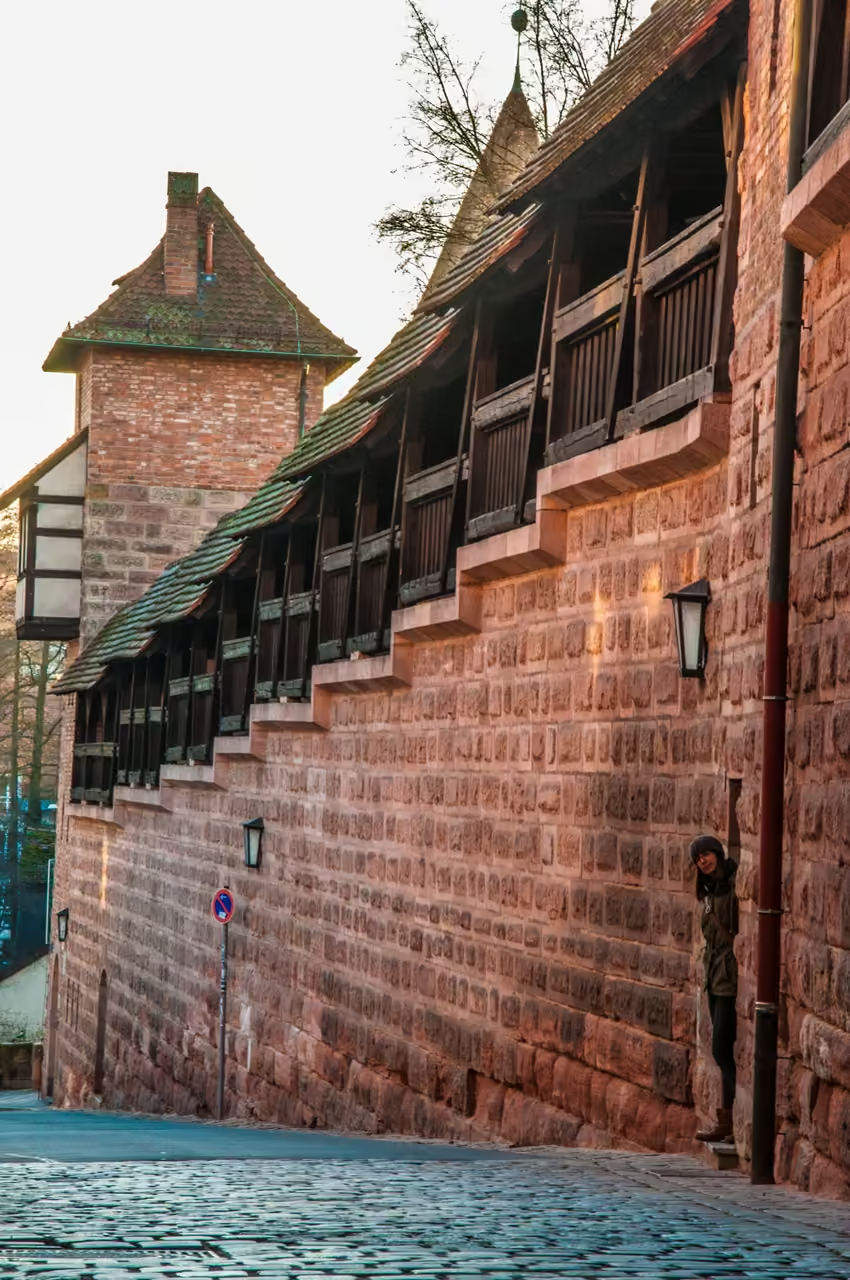
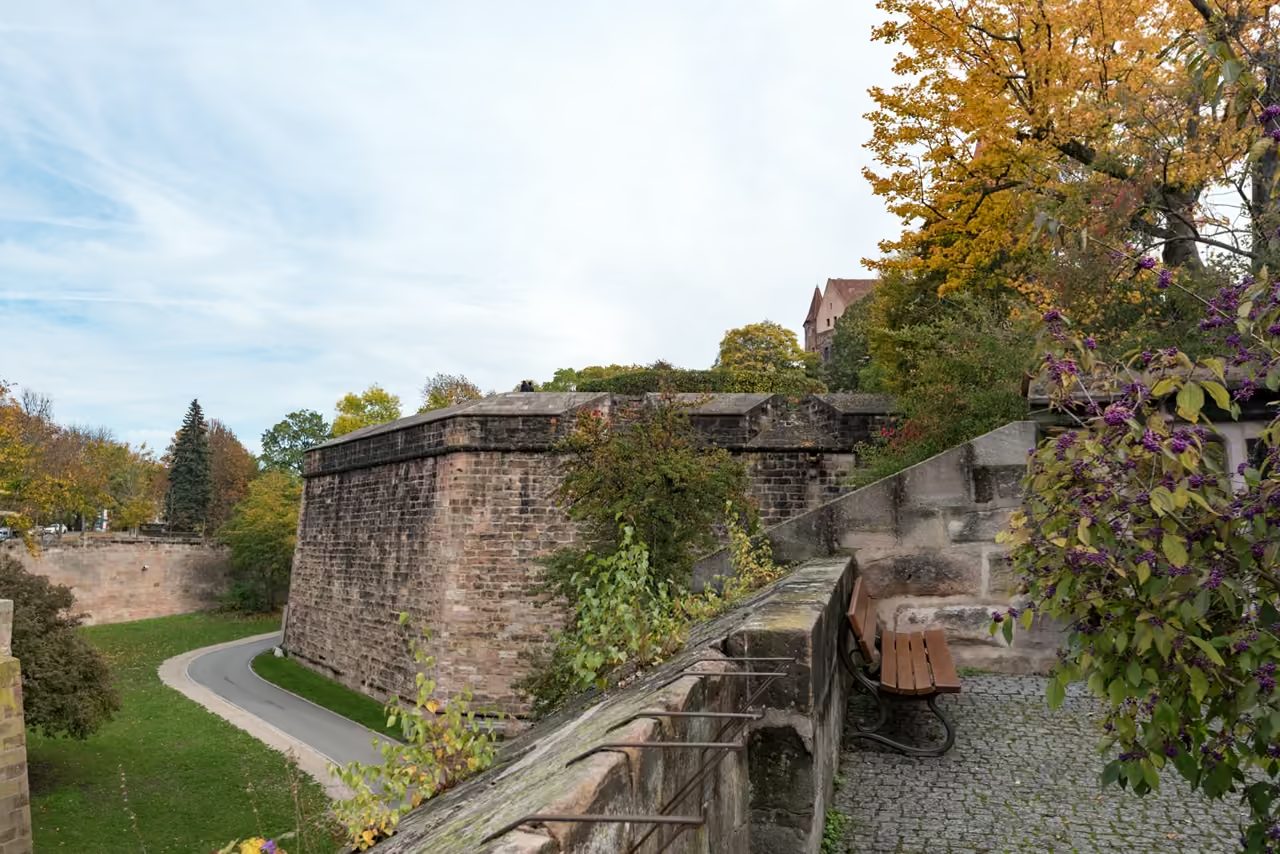
Tracing the perimeter of the medieval core, this path follows the remarkably preserved sandstone fortifications. The walk weaves between heavy defensive towers, deep dry moats, and massive wooden gates that once protected the imperial wealth inside. Certain sections allow walkers to climb up and stroll along the elevated wooden ramparts, peering down into the old town streets. The route constantly shifts perspectives, passing the imposing opera house on one side and quiet, ivy-draped residential alleys on the other. It provides a profound sense of the city's historical scale and defensive ingenuity.
Pegnitz Riverbank Walk
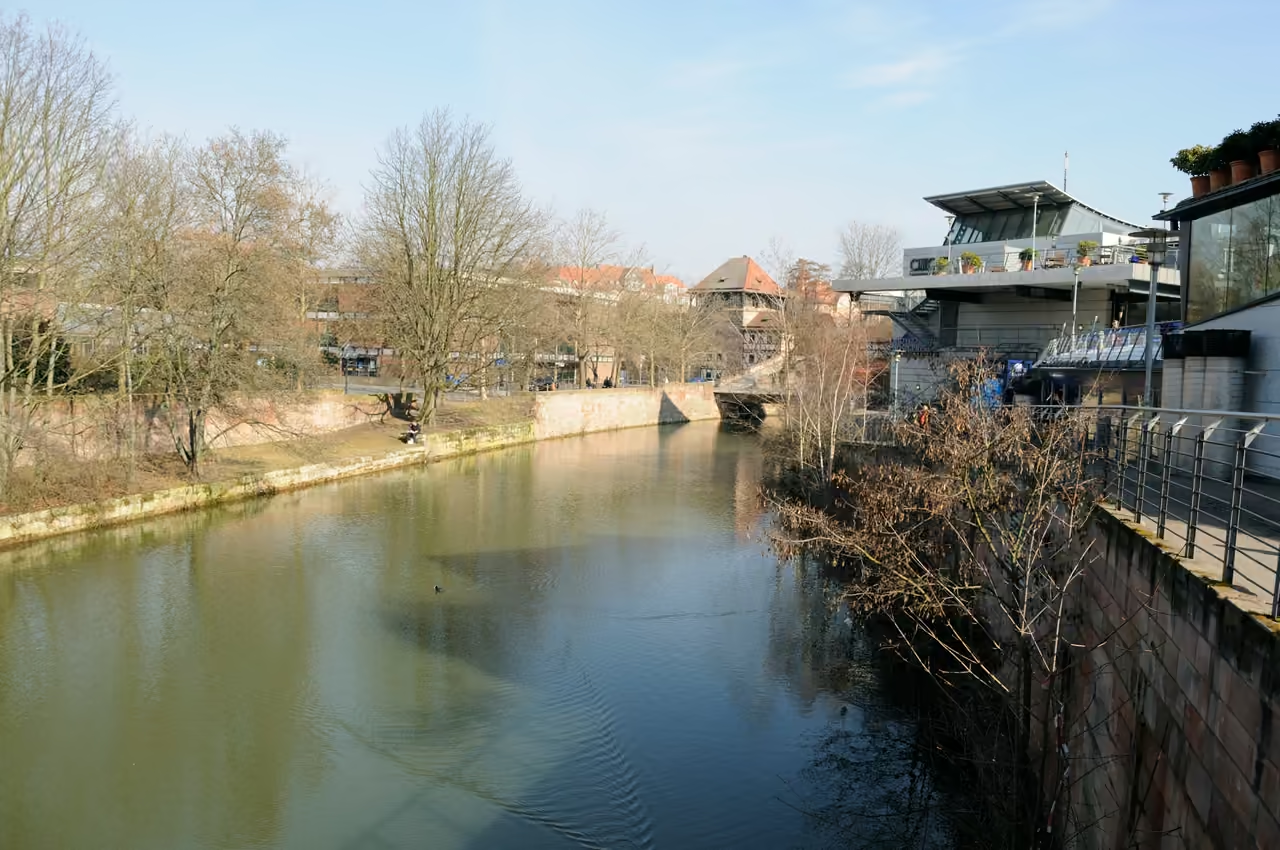
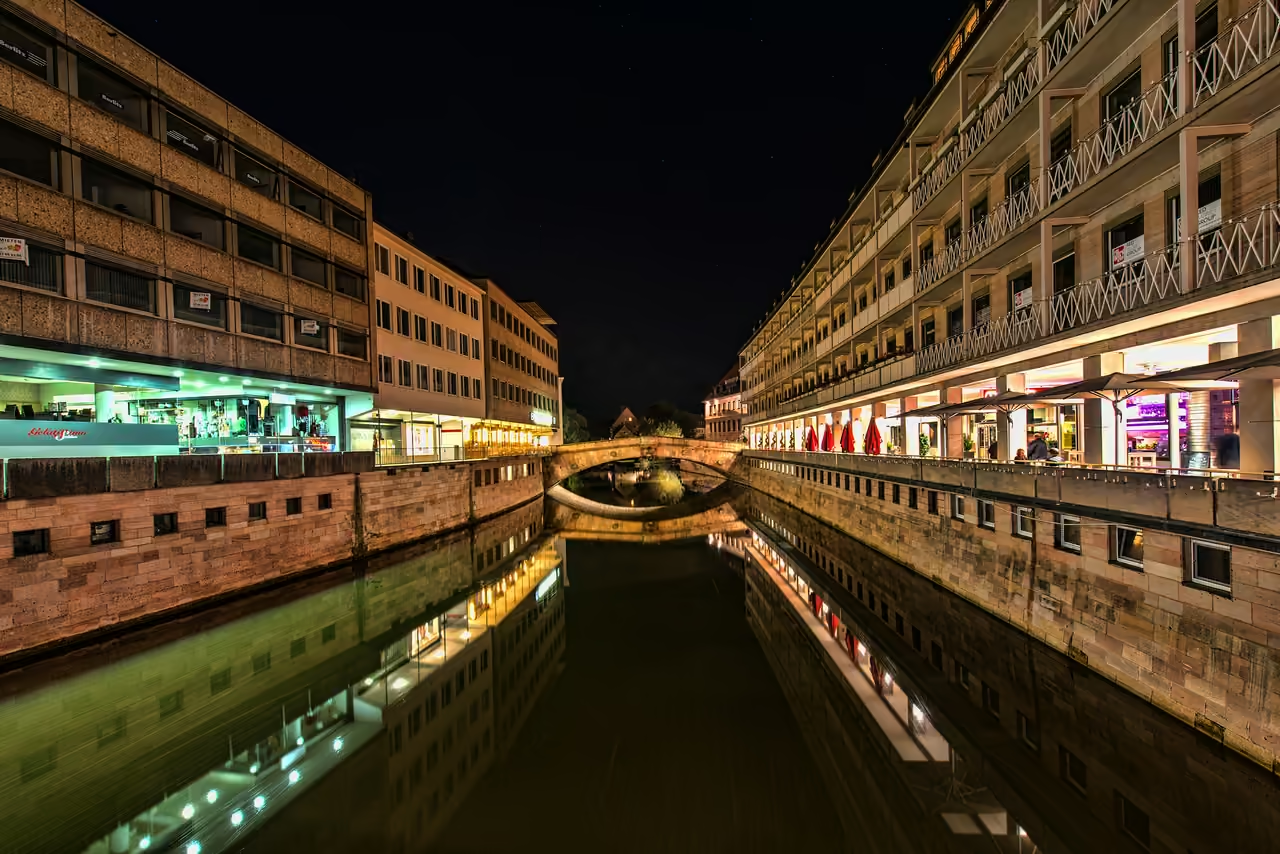
The river Pegnitz cuts a winding, picturesque path straight through the centre of the city. This stroll stays close to the water, crossing back and forth over a series of historic stone arches, iron footbridges, and wooden walkways. The architecture shifts dramatically along the route, from the heavy stone hospital straddling the water to tiny, weeping willow-draped islands holding small cafes. The sound of rushing water over small weirs masks the noise of the surrounding traffic. It feels surprisingly peaceful despite running through the busiest commercial districts.
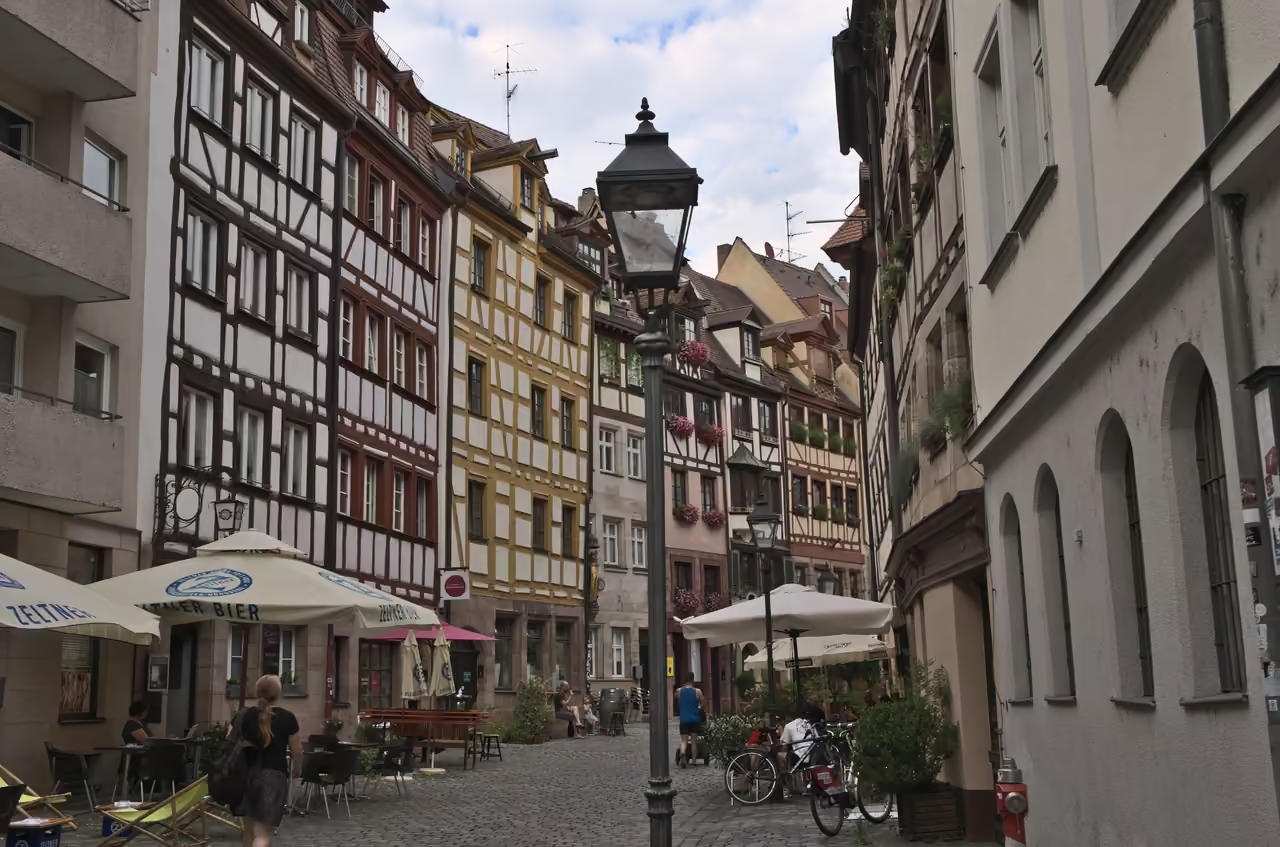
Tanners' Lane & St. Johannis Gardens
Leaving the intense half-timbered charm of the old town's most famous alley, this route pushes west through the city gates into a historic suburb. The narrow Tanners' Lane gives way to the open green spaces of the Hallerwiese park, tracing the river briefly before turning slightly north. The destination is a district historically reserved for cemeteries and summer gardens, escaping the cramped conditions inside the walls. Hidden behind unassuming stone walls are meticulous baroque gardens filled with citrus trees and statues. It provides a quiet, leafy contrast to the dense stone of the centre.
Architecture & Landmarks
Congress Hall
A colossal, horseshoe-shaped structure composed of brick and heavy granite dominates the lakeshore in the southeastern suburbs...
viewWine Storehouse
Massive wooden beams crisscross the upper storeys of this incredibly long, half-timbered building sitting directly over the...
viewHoly Ghost Hospital
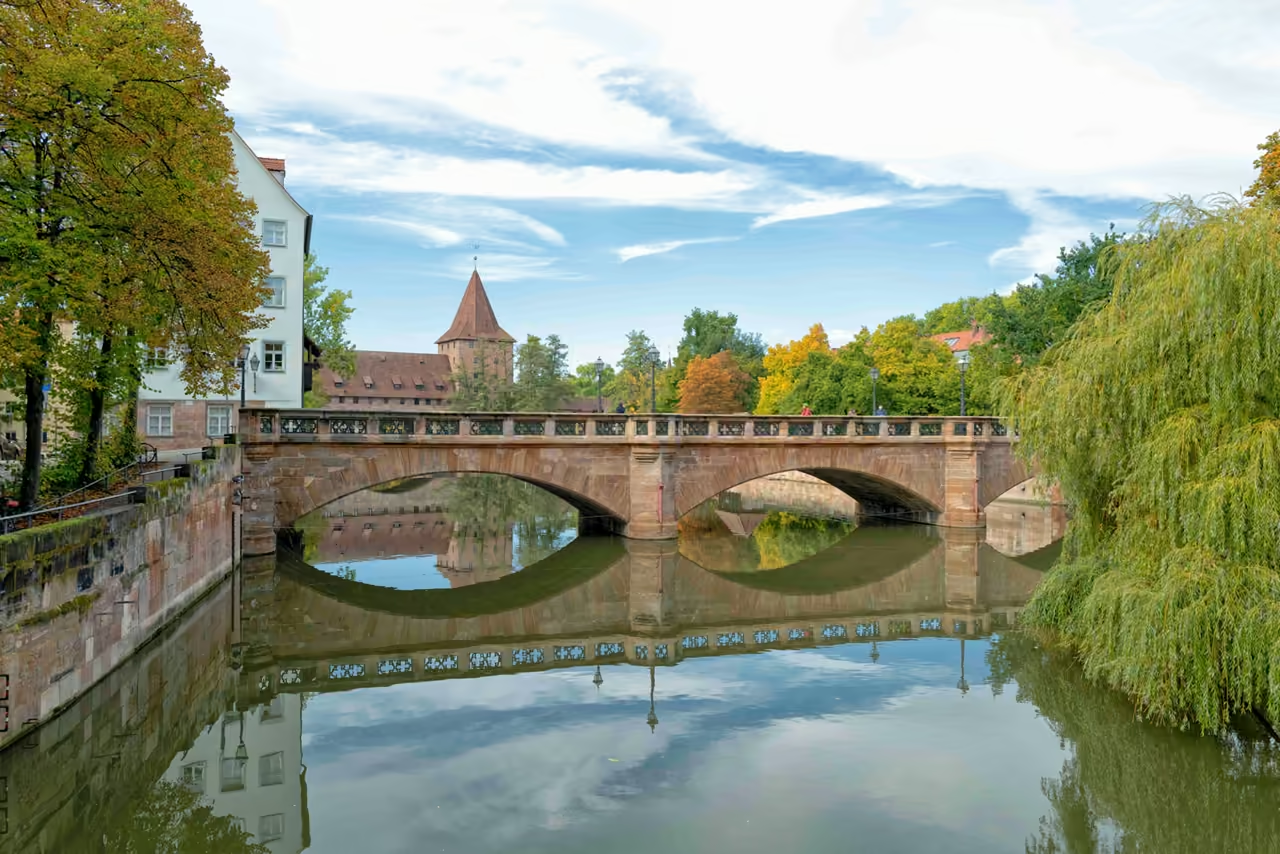
Stout sandstone arches project directly into the Pegnitz river, supporting the heavily windowed wings of this sprawling medieval...
view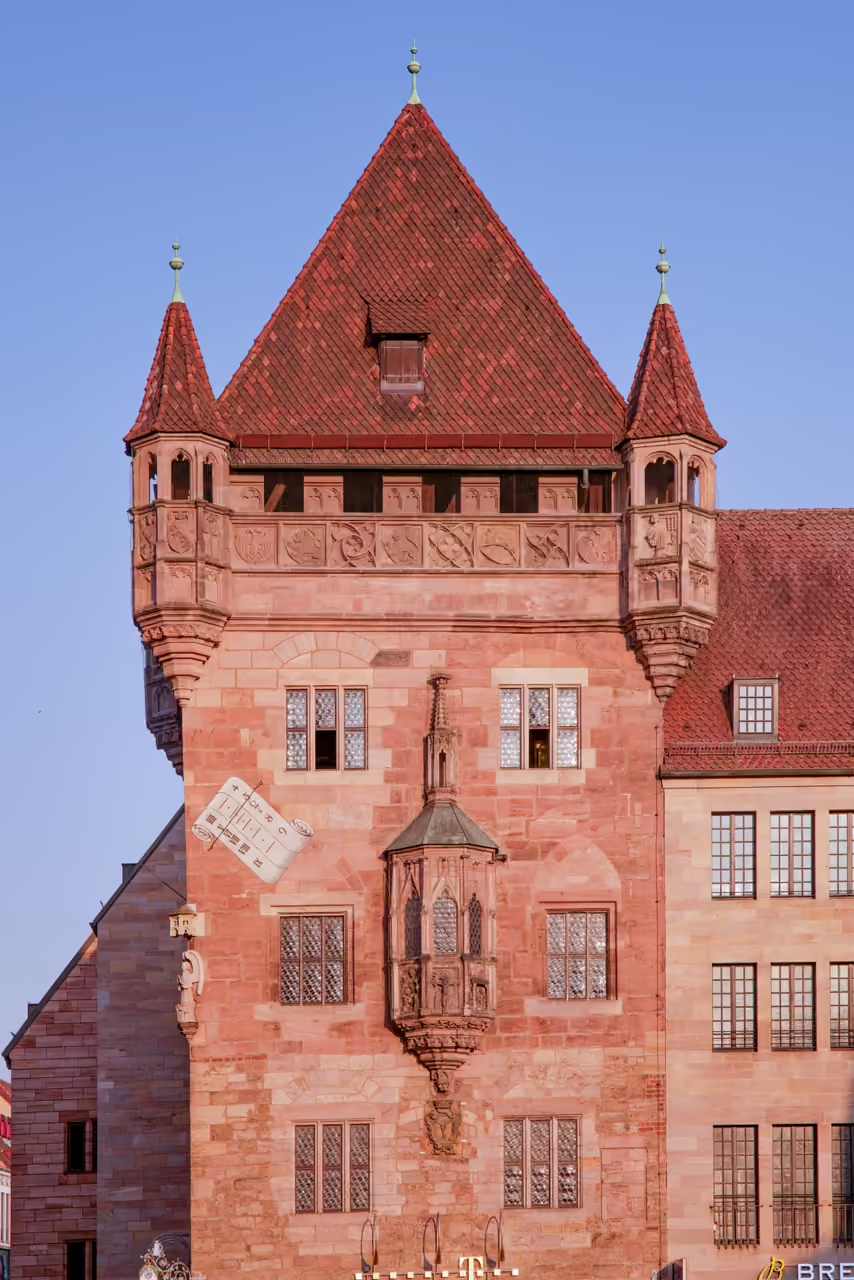
Nassau House
A striking, slender medieval tower-house faces the Lorenzkirche, boasting a heavy stone facade capped with whimsical corner...
view
Markets & Shopping
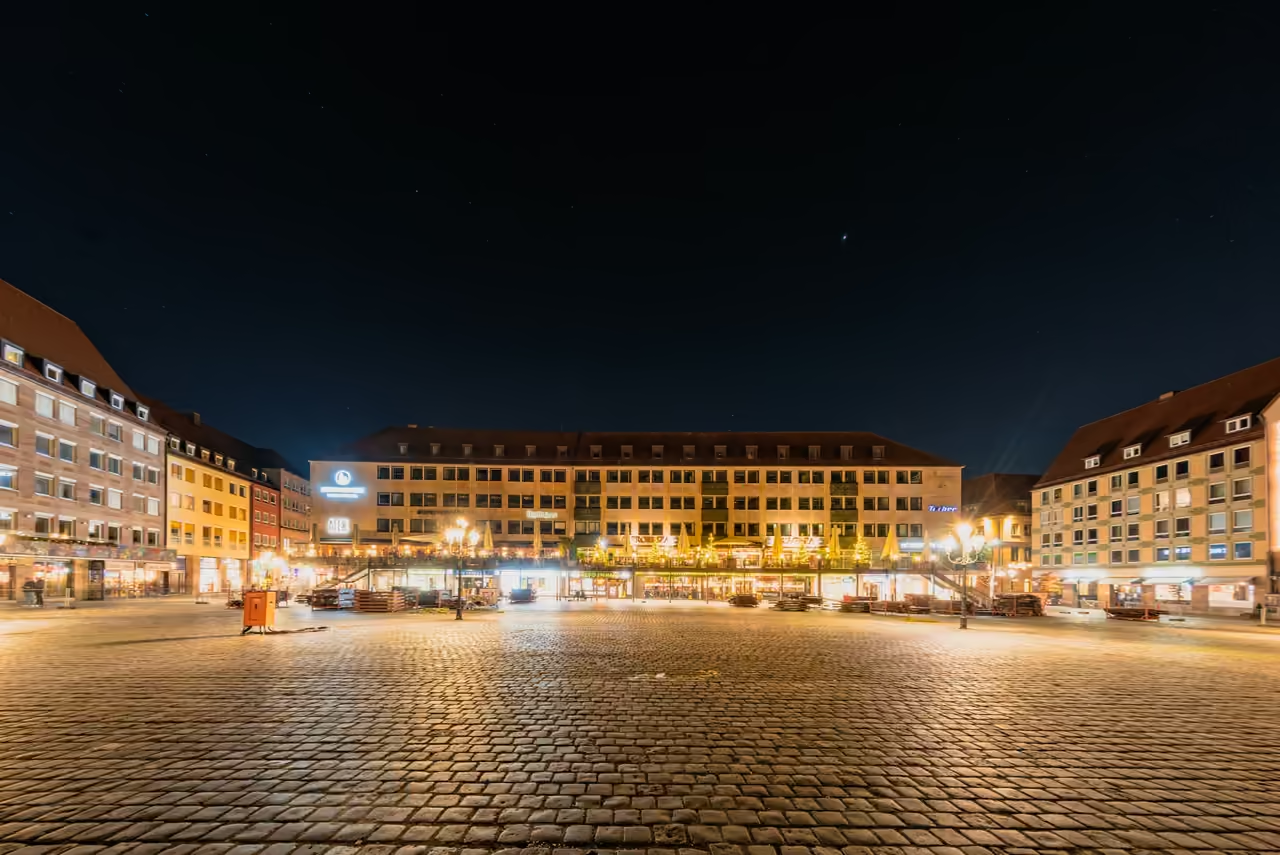
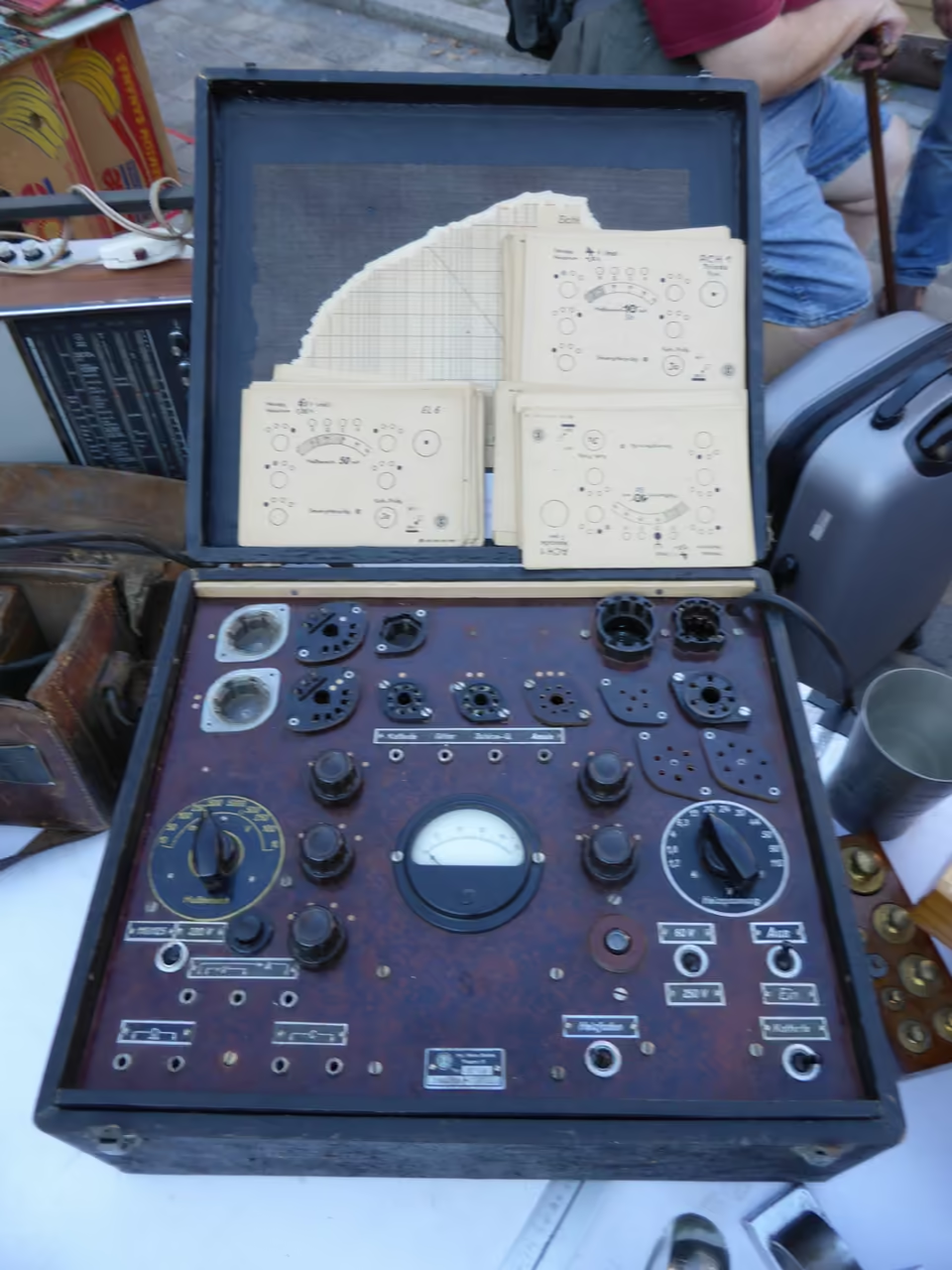
Nuremberg Nightlife
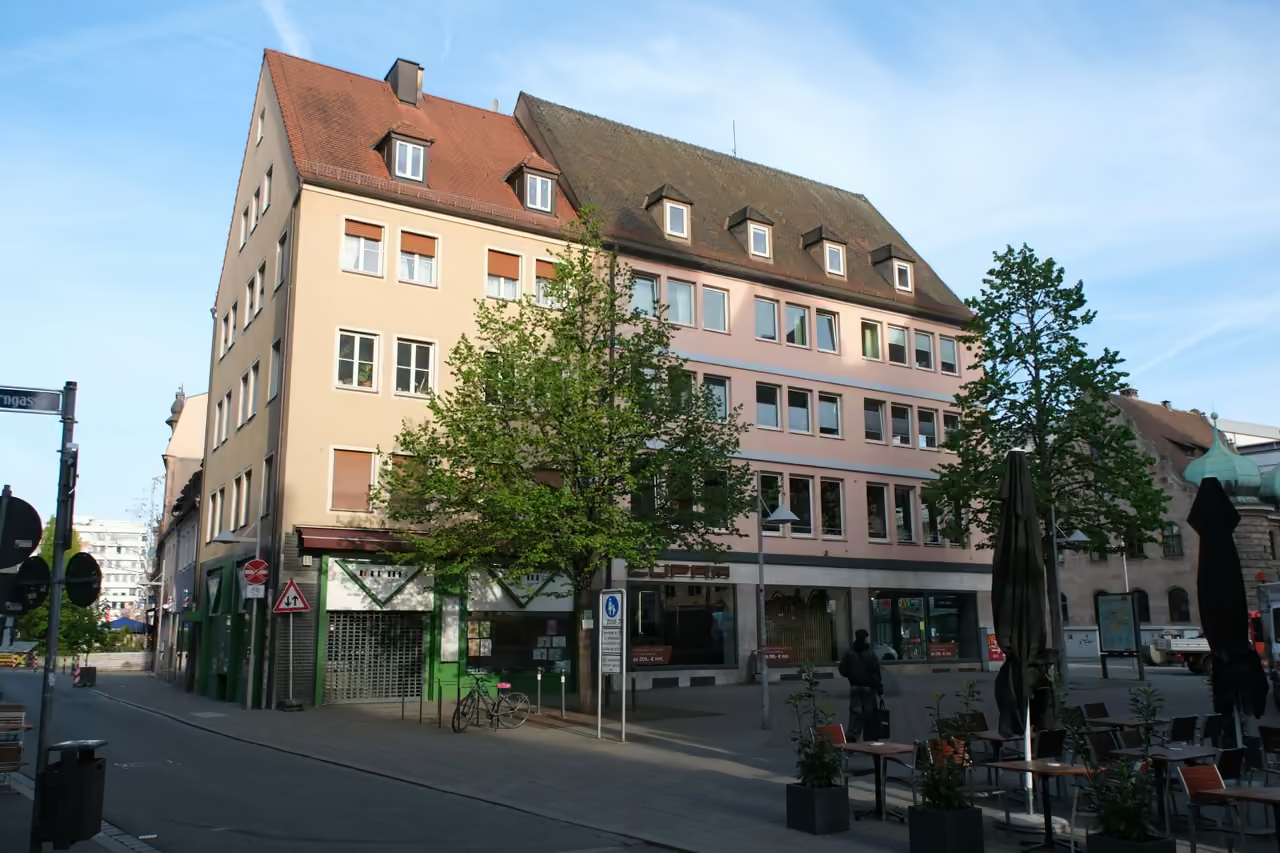
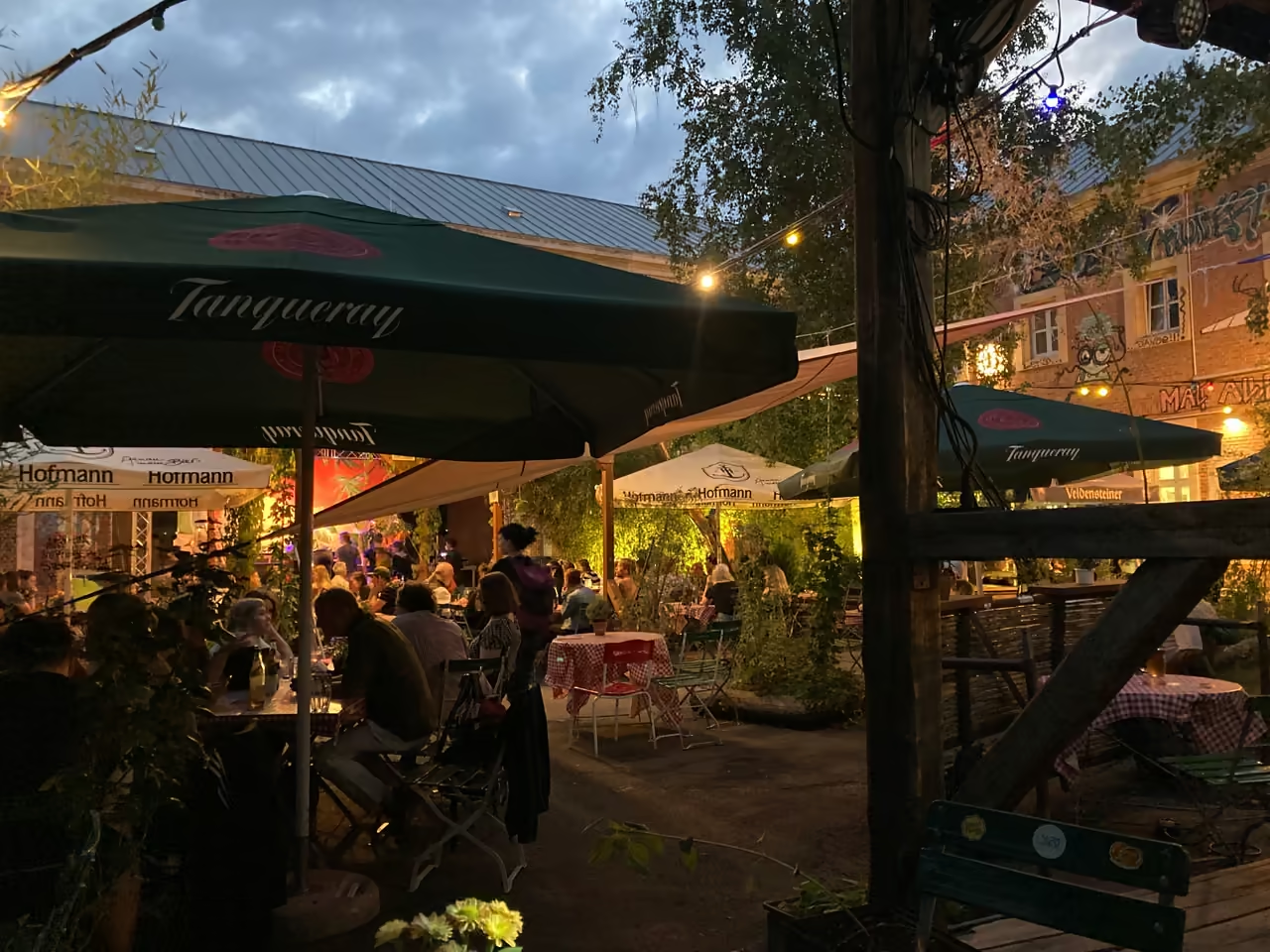
Photo Spots
Activities & Experiences
Cycling Routes
 HIGHLY RECOMMENDED
Pegnitz Meadows & River Islands
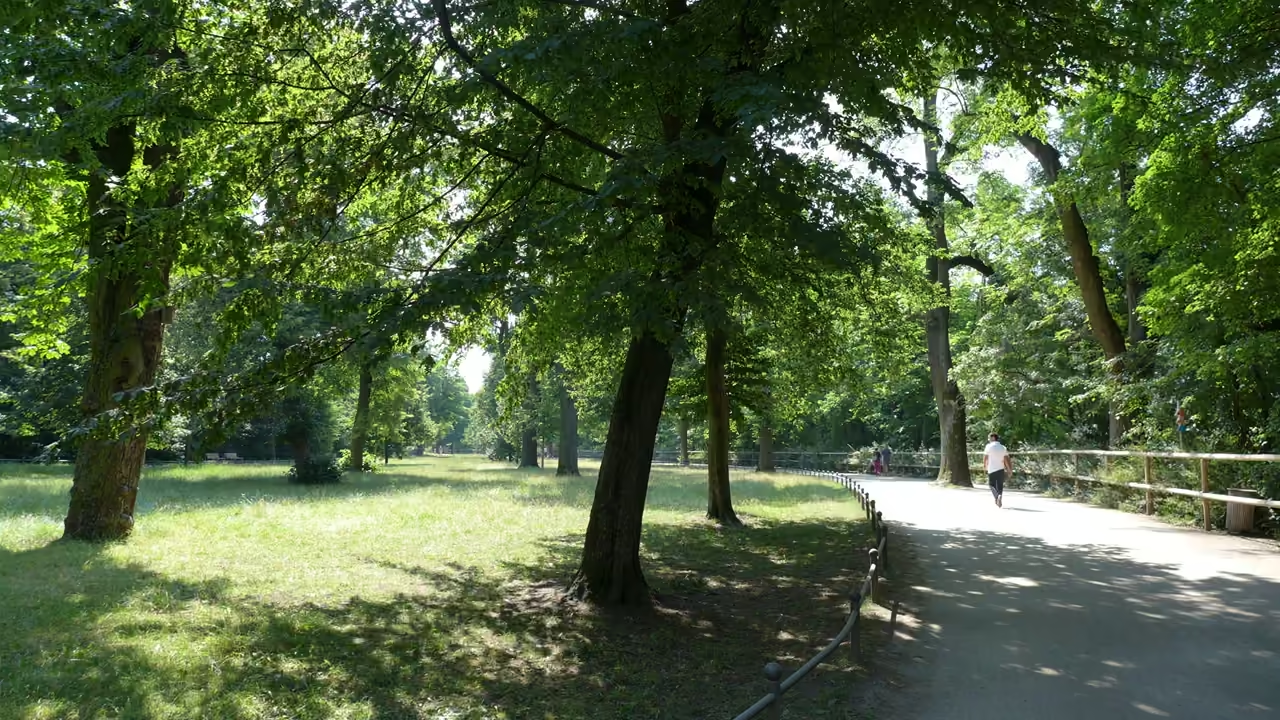
This route follows the winding course of the Pegnitz River westward out of the city centre, trading medieval stone for weeping willows and wide grassy floodplains. The paved path ducks under major roads, ensuring an almost entirely car-free experience all the way to the neighbouring city of Fürth. Cyclists share the route with joggers and dog walkers, navigating a landscape of old water wheels and small wooden footbridges. Small beer gardens pop up occasionally along the banks, providing excellent excuses to stop. The terrain remains entirely flat, making it ideal for a leisurely afternoon cruise.
Main-Danube Canal & Port
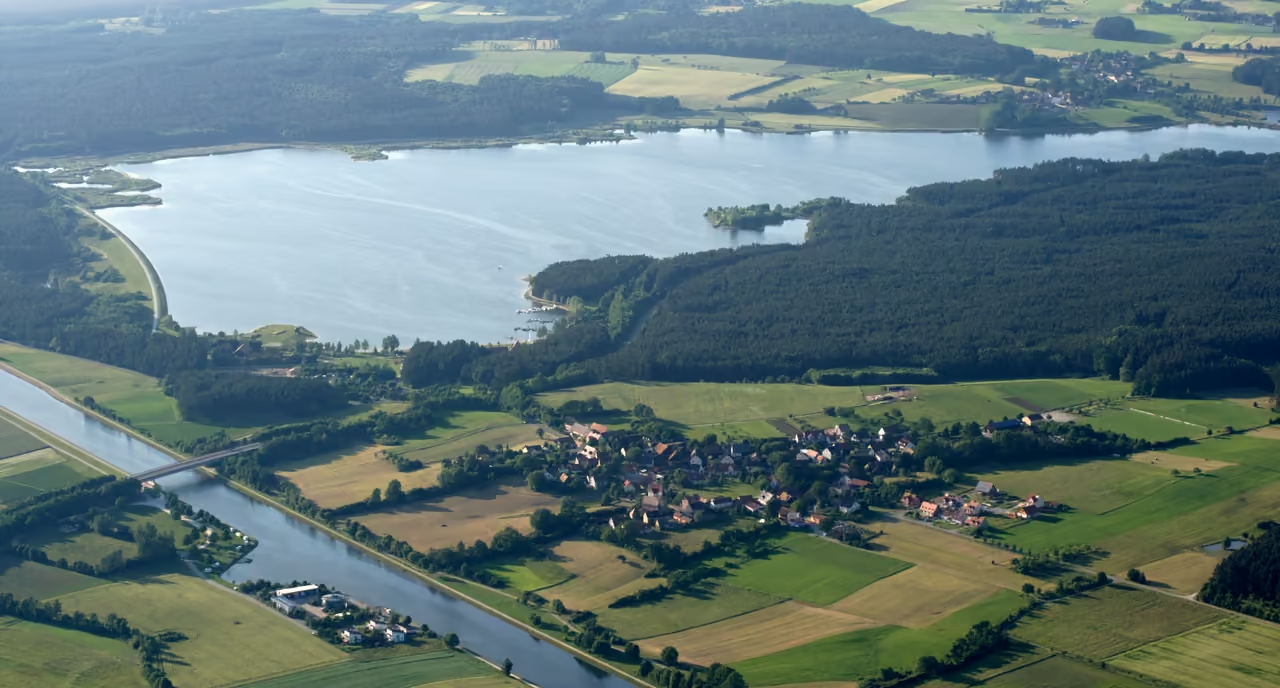
Striking southwards, this path utilizes the wide, flat service roads running alongside the massive European shipping artery. Huge cargo barges glide silently past on the water, contrasting with the dense forest pushing up against the opposite bank. The route offers long, uninterrupted straightaways perfect for picking up speed without worrying about car traffic or complex navigation. Massive concrete locks occasionally interrupt the landscape, demonstrating the brute-force engineering required to lift ships over the continental divide. The scenery shifts from industrial ports to quiet woodland the further south you ride.
Schmausenbuck Imperial Forest
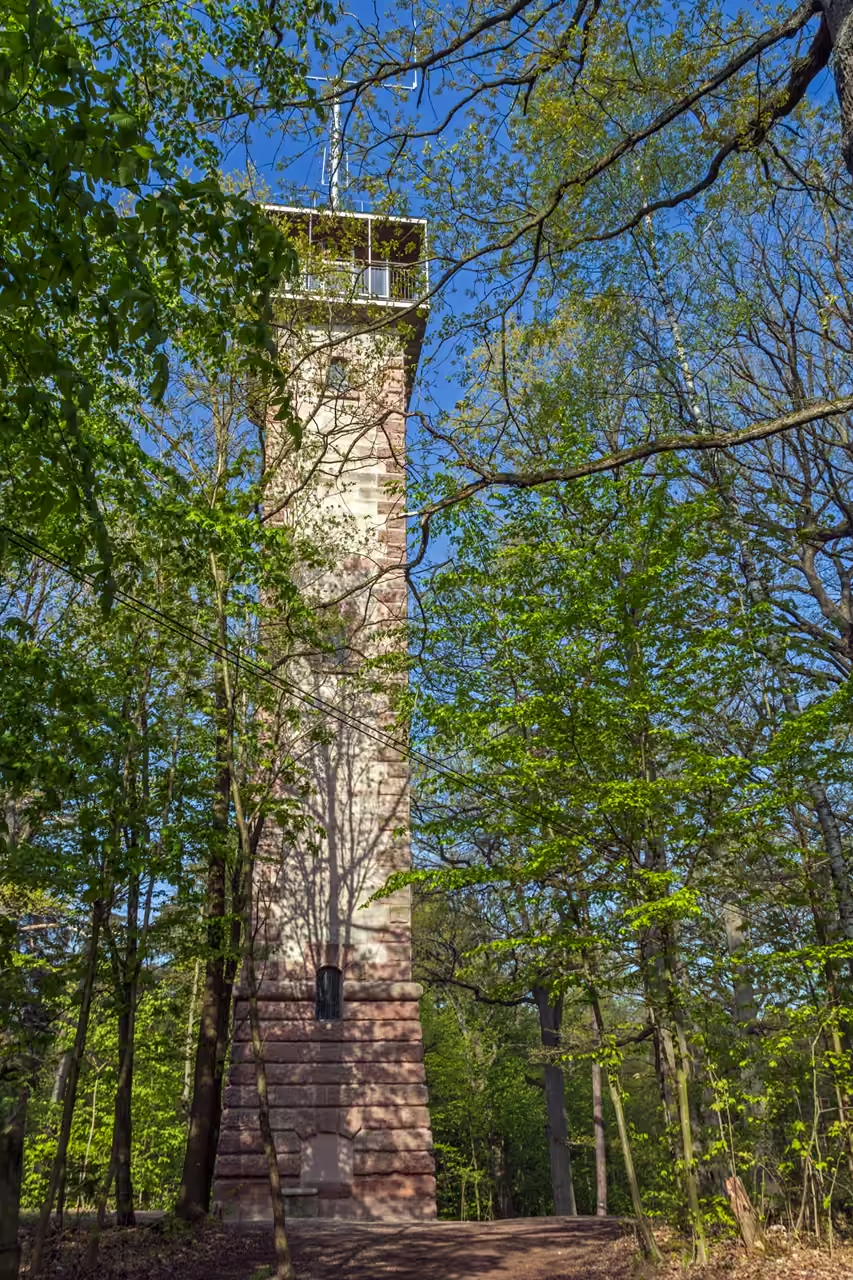
Plunging into the eastern Sebalder Reichswald, this route exchanges pavement for packed dirt and gravel trails beneath towering pine trees. The terrain rolls gently, requiring slightly more effort as it ascends the slopes of the Schmausenbuck hill. Deep shaded ravines and old sandstone quarries break up the dense woodland, creating a rugged, natural atmosphere just minutes from the urban grid. The scent of pine needles is intense, especially after rain, and the tree canopy provides excellent protection on hot summer days. The trails are wide and well-maintained, easily handled by a standard city bike with decent tires.
Self-Guided Tours
- HIGHLY RECOMMENDED
Dürer Art Trail
Tracing the footsteps of the city's most famous son, this route uncovers the environment that shaped the Northern Renaissance. The walk connects the heavily fortified northern district where Dürer lived with the churches and civic buildings that commissioned his work. It highlights the transition from late Gothic artisanship to the humanist ideals that swept through the city in the early 1500s. The path climbs steep, cobbled streets, peering into hidden courtyards that have barely changed since the 16th century. It offers a deep dive into the artistic wealth of the Free Imperial City.
- HIGHLY RECOMMENDED
Third Reich & Nuremberg Trials
This heavy but crucial itinerary links the sites most closely associated with the city's darkest era. It moves from the massive staging grounds where the party machine mesmerized the masses to the solemn courtroom where its leaders faced international justice. The route requires taking public transport between the southern suburbs and the western justice district. It confronts the deliberate architectural manipulation used for propaganda and the subsequent legal reckoning. The journey provides an unflinching look at how a city deals with an uncomfortable legacy.
Medieval Merchants & Civic Power
Focusing on the civic and economic power of the Free Imperial City, this route highlights the wealth that built the old town. It skirts the river, exploring the massive storehouses and defensive towers that protected the lucrative trade routes. The walk reveals how patrician families spent their fortunes on monumental churches, civic fountains, and fortified bridges. The sandstone architecture tells a story of civic pride and independence from the nobility residing in the castle above. It captures the essence of a booming Renaissance metropolis.
Annual Festivals & Events
 HIGHLY RECOMMENDED
Bards' Meeting Music Festival
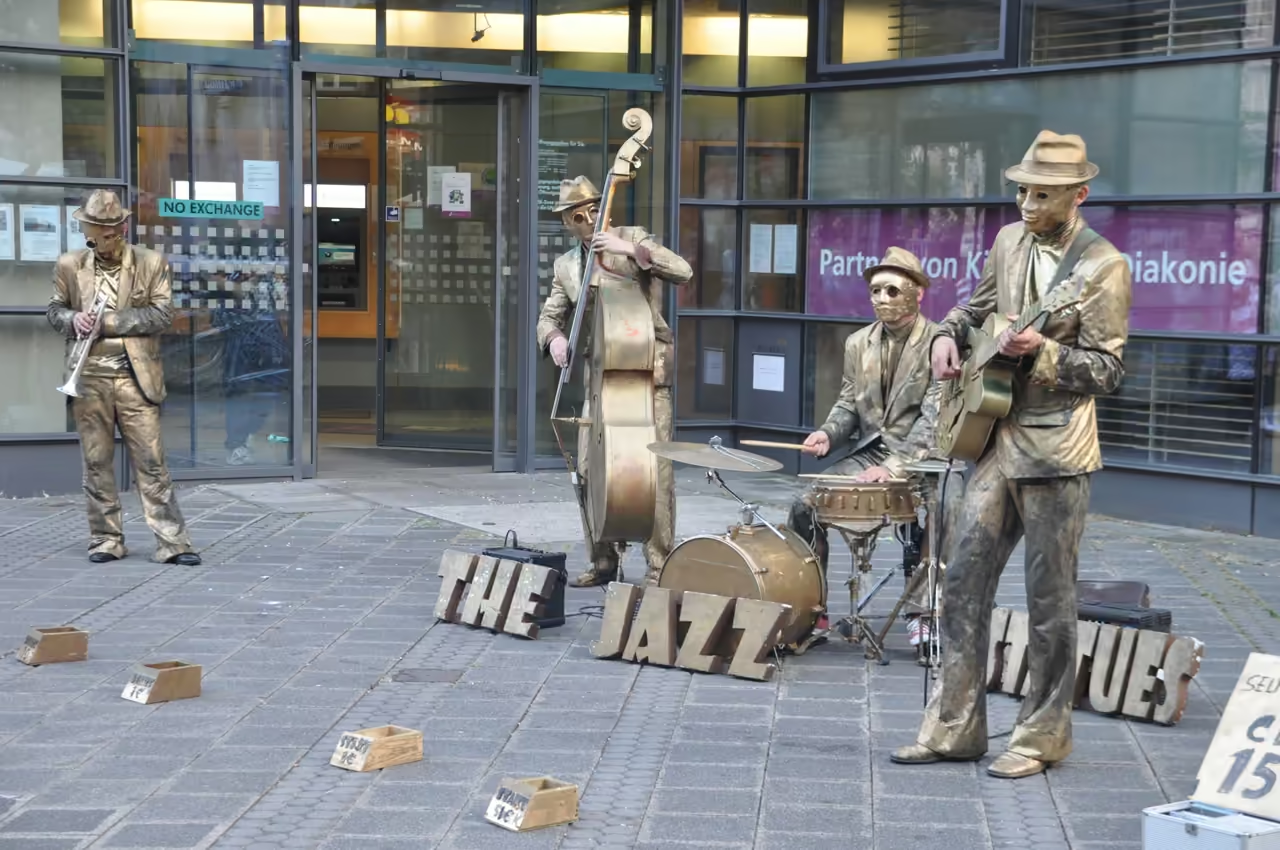
Stages sprout up across the historic squares, turning the entire Altstadt into a massive, free open-air music festival. Hundreds of songwriters, folk musicians, and world music bands perform for huge crowds sitting on cobblestones and church steps. Street musicians line the alleys between official venues, creating a continuous wall of sound. The atmosphere remains incredibly relaxed despite drawing hundreds of thousands of spectators over the weekend. Grab a beer from a local kiosk and wander between the acoustic sets.
 HIGHLY RECOMMENDED
Christmas Market
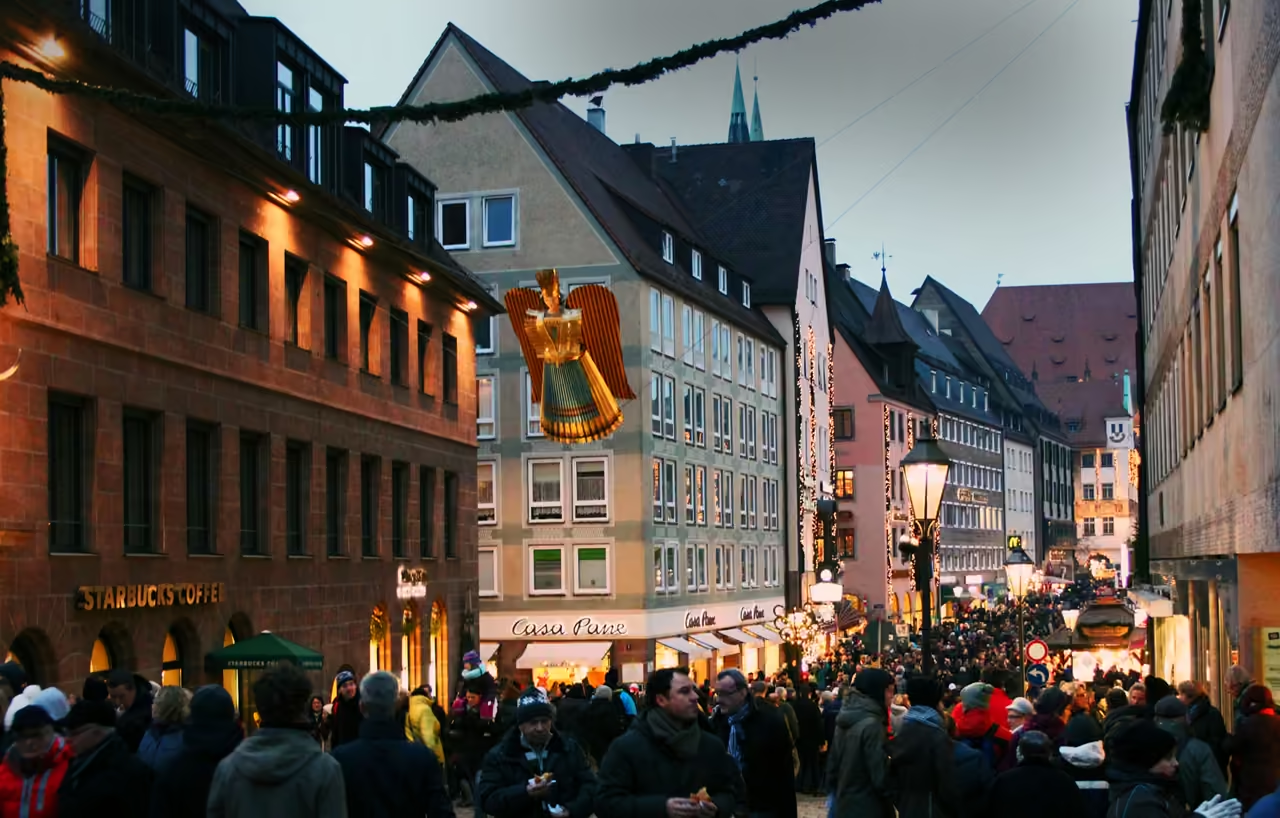
Wooden stalls with red-and-white canvas roofs take over the Hauptmarkt, filling the winter air with the scent of roasted almonds and mulled wine. The traditional 'Christkind', a young woman dressed in gold and white, officially opens the festivities from the balcony of the Frauenkirche. Vendors sell exclusively high-quality, locally produced crafts, strictly prohibiting mass-produced plastic toys. Visitors wrap their hands around warm mugs of Feuerzangenbowle while snacking on spiced gingerbread. It remains one of the oldest and most atmospheric winter events in Europe.
Blue Night
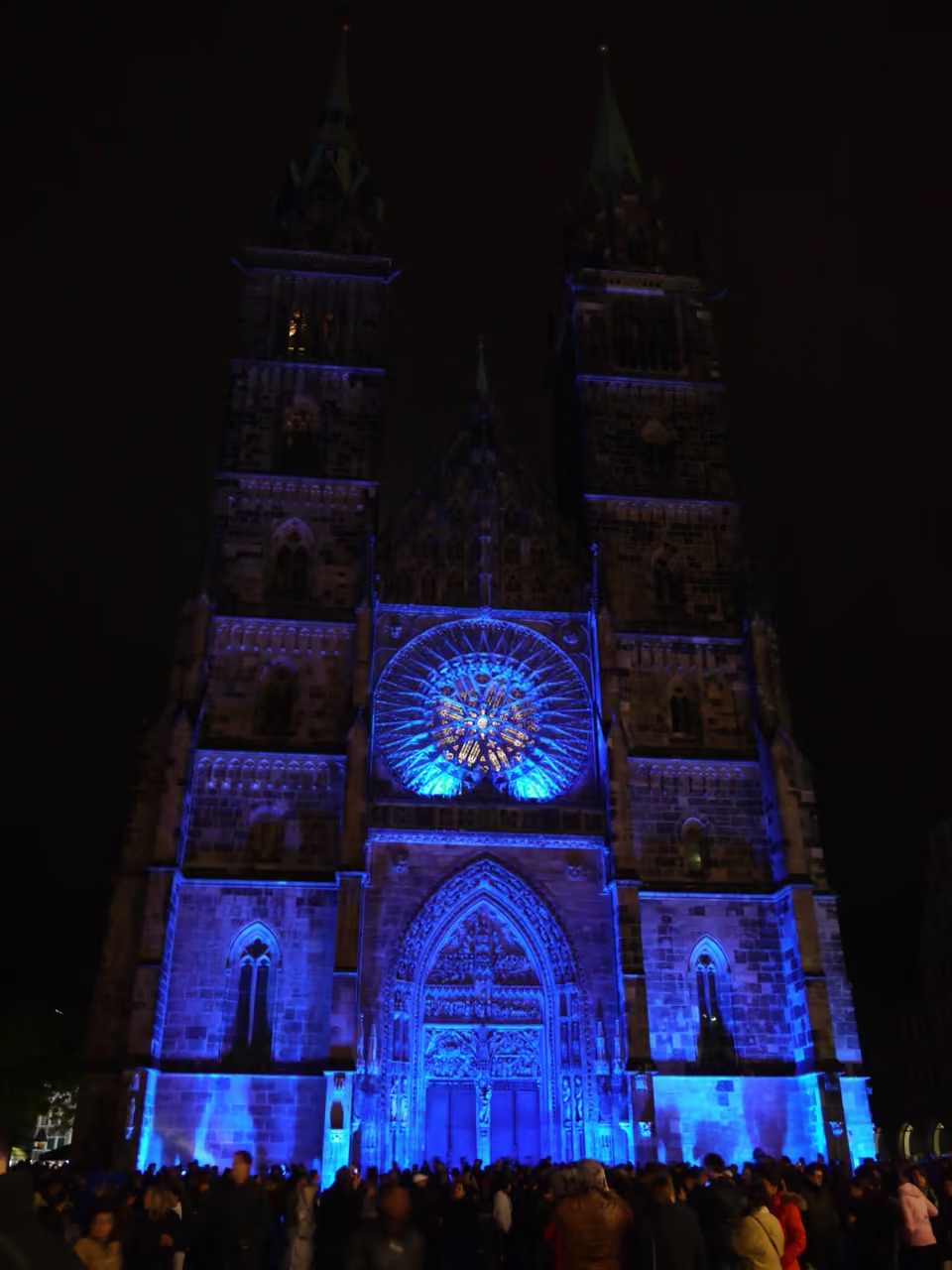
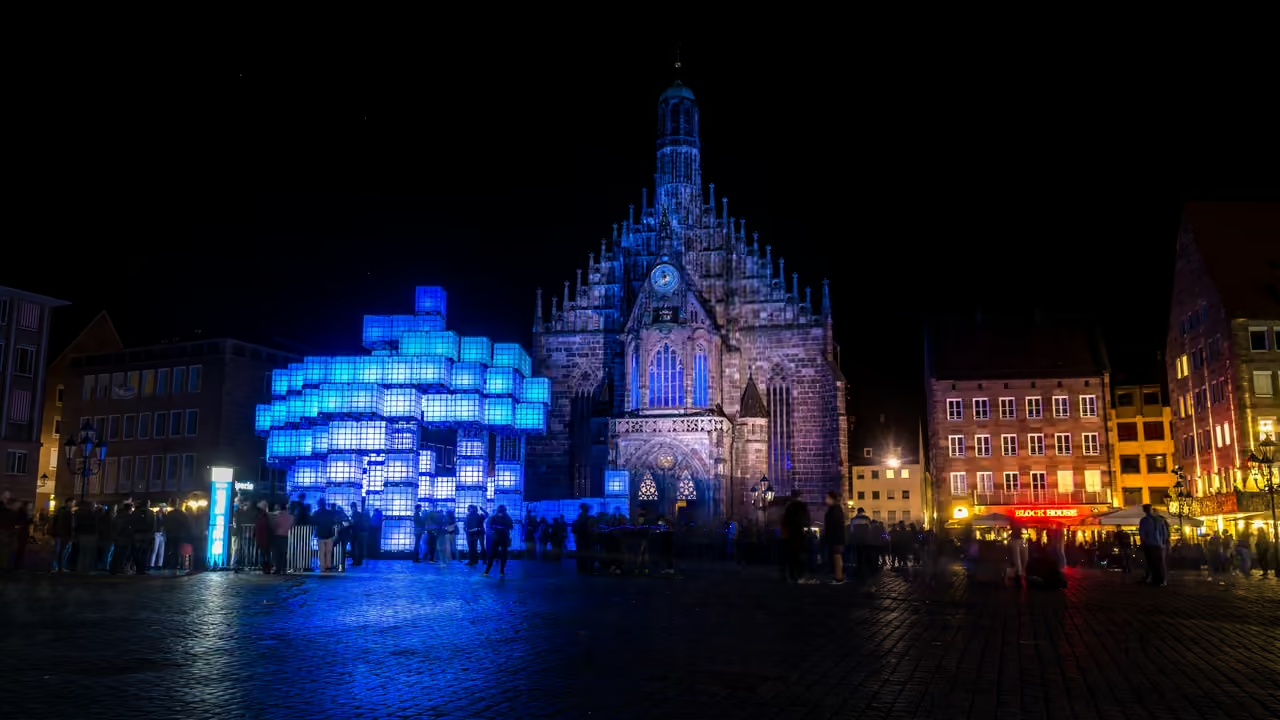
Cultural institutions, museums, and churches keep their doors open well past midnight for an immersive evening of art and light. Giant projectors bathe the Imperial Castle and historic facades in striking blue illumination. Performers and interactive art installations occupy courtyards and pedestrian zones throughout the centre. A single ticket grants access to dozens of indoor venues, creating a museum-hopping marathon. The entire population seems to spill into the streets to witness the visual transformations.
Insider Tips
Purchase the Nürnberg Card if you plan to visit multiple museums; it covers public transport and grants free entry to almost every major cultural institution for 48 hours.
Never ask a local vendor to cut a Nuremberg sausage in half. They consider it culinary sacrilege to slice the small sausages; eat them whole on a plate or bite into them inside a bread roll.
When riding the U2 or U3 subway lines, walk to the very front of the train. These lines are completely driverless, allowing you to look straight down the illuminated tunnels.
Almost all retail shops and supermarkets shut their doors completely on Sundays. Buy any necessary groceries on Saturday, or rely on the small convenience stores operating inside the main train station.
At outdoor festivals and Christmas markets, expect to pay a 'Pfand' (deposit) for your mug or glass. You will receive a token; return the token and the glass together to get your euros back.
The city walls feature open archways and gates, but cars cannot cross the old town directly. The streets form a loop system that forces vehicles back out, making walking or cycling far more efficient.
PERFECT FOR
This destination rewards history enthusiasts eager to unpack the layers of the Holy Roman Empire and the Third Reich in equal measure. Food lovers will appreciate the unpretentious, hearty Franconian cuisine and deep-rooted brewing culture. It suits travellers who prefer walkable, pedestrian-friendly environments over sprawling megacities.
VIBE
The atmosphere blends intense historical weight with Franconian pragmatism and culinary pride. Church bells echo across lively pedestrian zones smelling heavily of roasted pork and sweet gingerbread. Locals cycle purposefully past towering medieval stonework and brutalist post-war facades without missing a beat.
Frequently Asked Questions about Nuremberg
While we strive to keep this information accurate and up to date, we recommend verifying any details independently before making decisions based on them.
Similar Destination in Germany
Continue your journey. Explore this highly recommended city and uncover more of what Germany has to offer.