Germanic National Museum
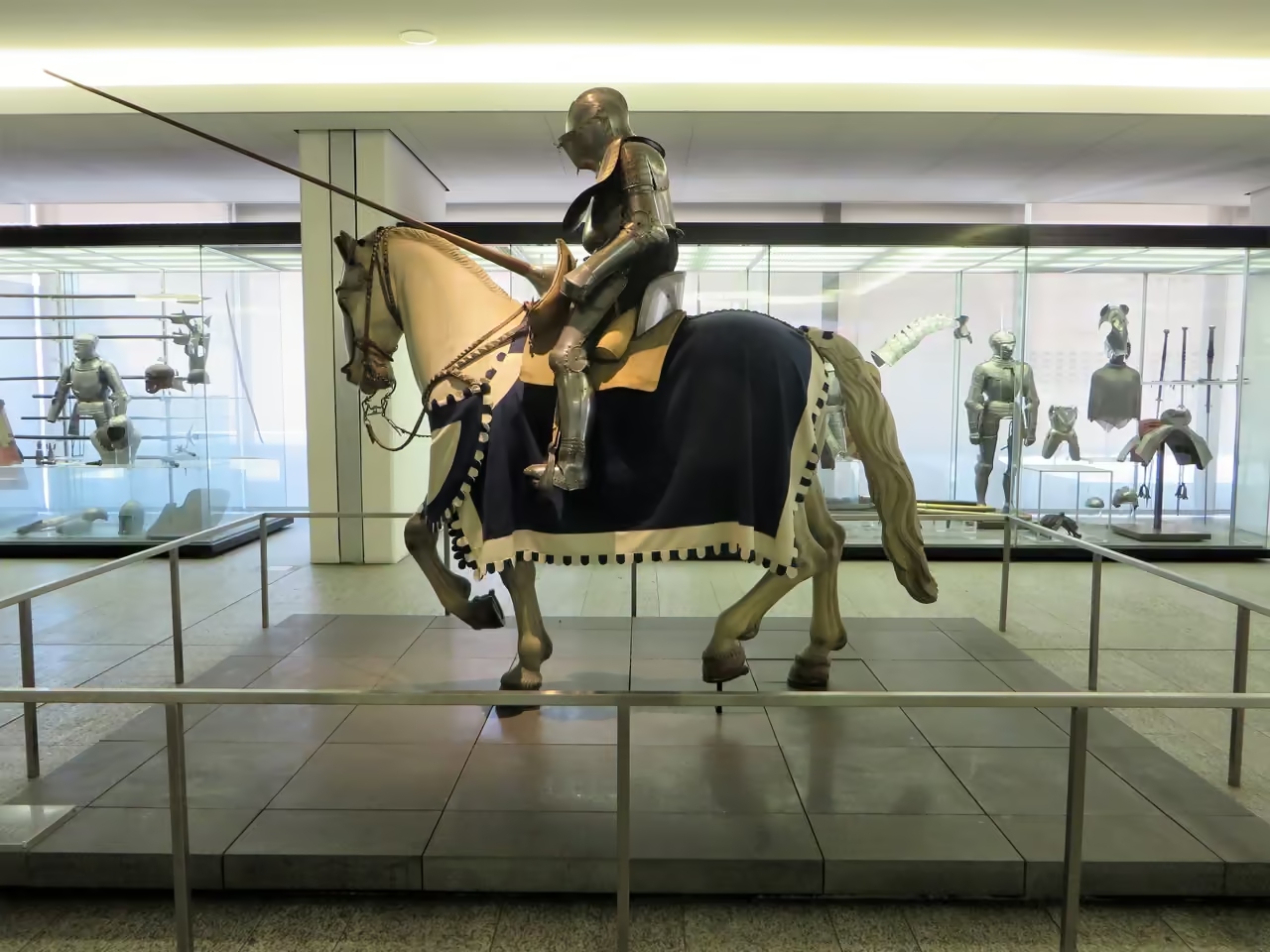
Behind an austere modernist facade and a pathway carved with human rights declarations, the fragmented history of Central Europe sits quietly in glass cases. The Germanic National Museum functions as a colossal attic for the German speaking world, housing over a million cultural artefacts. You can trace the evolution of human thought through Martin Behaim’s 1492 terrestrial globe. This spherical map was created just moments before the Americas were documented by Europeans. Finding your way around the sprawling layout can sometimes feel like solving a maze, as the contemporary architecture wraps directly around the crumbling stone arches of a medieval Carthusian monastery. The air here holds the distinct, dry scent of old paper and polished wood. The route ultimately leads past Bronze Age golden cones and Albrecht Dürer paintings to intricate seventeenth century dollhouses, built specifically to teach wealthy patrician children the harsh rules of domestic management.
Videos
History of Germanic National Museum
In the middle of the nineteenth century, Central Europe was a fractured patchwork of kingdoms, duchies, and city states. When scholars including the Brothers Grimm met in Frankfurt in 1846 to formalise the academic study of the German language, they planted the intellectual seed for a radical idea. A Franconian baron named Hans von Aufseß envisioned a central repository that would unite this linguistically connected region through its shared cultural objects. He founded his massive inventory project in 1852. Five years later, the operation moved into the abandoned cloisters of a late medieval Carthusian monastery in Nuremberg. The collection grew rapidly from a mere document archive into an immense hoard of physical history. Curators gathered everything from medieval torture devices to Renaissance astronomical tools. As the shadow of the Second World War fell over the continent, museum staff recognised the existential threat looming over their irreplaceable archive. Beginning in 1941, they orchestrated a massive logistical evacuation, quietly packing up thousands of paintings, sculptures, and scientific instruments. The treasures were smuggled out and hidden across eighteen different secret locations deep in the countryside. This frantic effort proved absolutely crucial. Allied bombing raids eventually reduced much of the museum complex and its plaster cast collections to rubble, yet the vast majority of the original artefacts survived the war completely unscathed underground. Following the collapse of the Nazi regime, the site required a complete physical resurrection. The rebuilding process merged the surviving medieval monastery ruins with austere modernist glass and concrete structures designed by architect Sep Ruf. Decades later, the Israeli artist Dani Karavan transformed the immediate exterior into a monumental artwork. He erected white concrete pillars inscribed with the Universal Declaration of Human Rights. Today, the complex operates as an enormous cultural hard drive for a linguistic region, preserving the physical evidence of centuries of human ingenuity and conflict right down to the microscopic brushstrokes of an Albrecht Dürer altarpiece.
8 events spanning 177 years
Fun Facts
- • A heavily decorated seventeenth century dollhouse built by the patrician Stromer family was kept strictly out of the hands of children. It served instead as a highly detailed educational model to teach young women how to run a complex aristocratic estate.
- • A piano crafted by the master builder Johann Andreas Stein is kept in the musical instruments wing. This represents the exact type of revolutionary hammer action mechanism that Wolfgang Amadeus Mozart explicitly praised in his personal letters.
- • An unusual bronze fountain figure from 1380 known as the Brunnenhansel depicts a young musician playing a shawm. The actual water was designed to flow directly out of his carved instrument.
- • Beneath the contemporary glass walkways of the modern expansions, visitors actually walk through the preserved stone cloisters of a medieval Carthusian monastery that was dissolved centuries ago.
- • During the Second World War, the museum staff successfully hid almost the entire original collection in rural depots. While the building was nearly destroyed in 1945, the loss of actual historical objects was kept to a mere three percent.
- • Hidden within the weapons collection is the Tannenbergbüchse. This heavy brass hand cannon was forged before 1399, making it the oldest datable firearm in the world.
- • Martin Behaim constructed his famous Erdapfel globe in 1492, just as Christopher Columbus was setting sail, meaning this spherical map of the world entirely omits the Americas and instead shows a massive ocean between Europe and Asia.
- • The art wings feature original works by Rembrandt, including a moody self portrait. He painted this canvas around 1629 while experimenting with lighting effects on metal armour.
- • The museum holds a silver and lapis lazuli eagle brooch from Domagnano, crafted around 500 AD for a wealthy Ostrogothic woman. The piece perfectly merges Roman imperial bird symbols with early Christian crosses.
- • The museum protects one of only four known Bronze Age Golden Hats in existence. This towering ceremonial gold cone is covered in intricate circular patterns that likely served as an advanced astronomical calendar.
FULL PLACE DETAILS
OVERVIEW & STATS
- Established
- In 1852, making it 174 years old
- Annual Visitors
- 405,799
ARCHITECTURE & HERITAGE
- Founders
- Hans Von Und Zu Aufseß
WEB & AMENITIES
Germanic National Museum Map & Neighborhood Explorer
This interactive map is centered on Germanic National Museum. Zoom in and move the map around to automatically discover Wikipedia photos and summaries of other nearby sights, monuments, and historical points of interest and stories in real-time!
Germanic National Museum FAQ
While we strive to keep this information accurate and up to date, we recommend verifying any details independently before making decisions based on them.
Places near Germanic National Museum
Make the most of your trip. Check out these top-rated spots located nearby.
 8m
Way of Human Rights
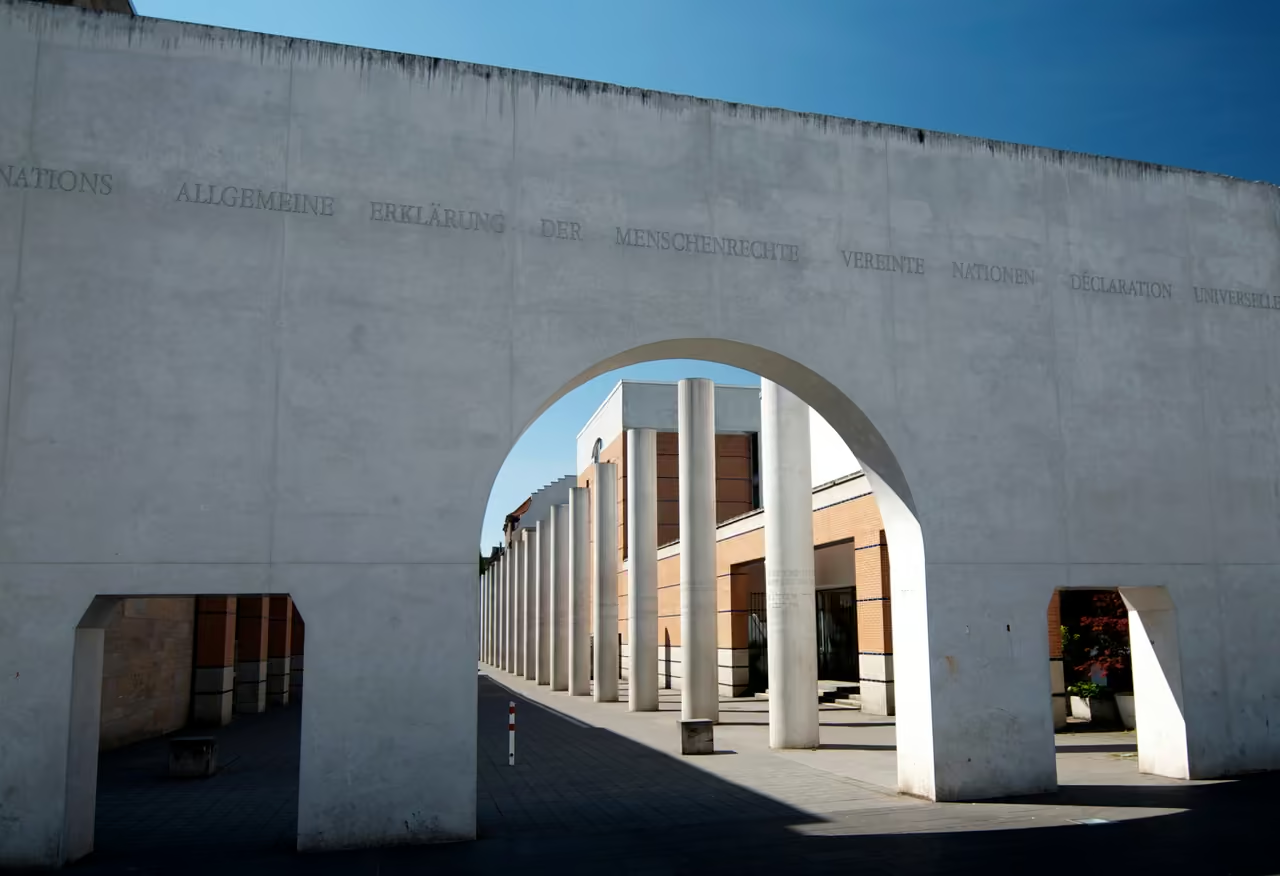
Thirty stark white concrete pillars stand in a precise line down a pedestrian street, each engraved with an article from the Universal Declaration of Human Rights. The text appears in German alongside a different international language on each column, creating a multilingual corridor of moral principles. Israeli artist Dani Karavan designed the monumental sculpture in 1993 to consciously redefine the city's identity away from its Nazi past. An ancient oak tree anchors one end of the street, while a modern glass museum facade runs along the side. It serves as a quiet, thought-provoking passage in the middle of a busy shopping district.
highlight view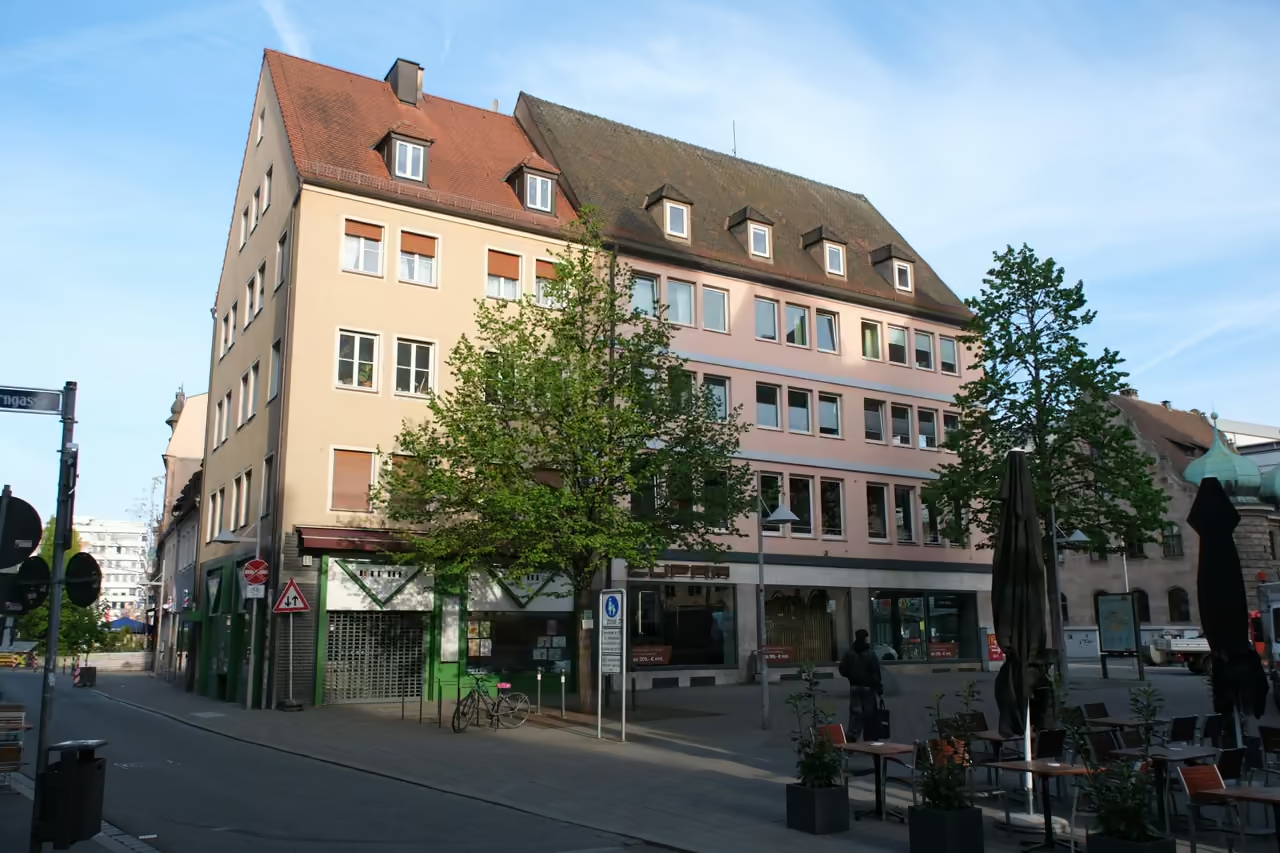 241m
Klaragasse & Lorenz Area
Tucked away behind the main shopping thoroughfares, this small street acts as a magnet for indie music fans and late-night revellers. Subterranean clubs host live gigs ranging from local indie-rock acts to travelling electronic DJs. Above ground, casual pubs cater to a younger, student-heavy demographic looking for reasonably priced drinks. The energy peaks well past midnight when the concert crowds transition into clubbing.
nightlife view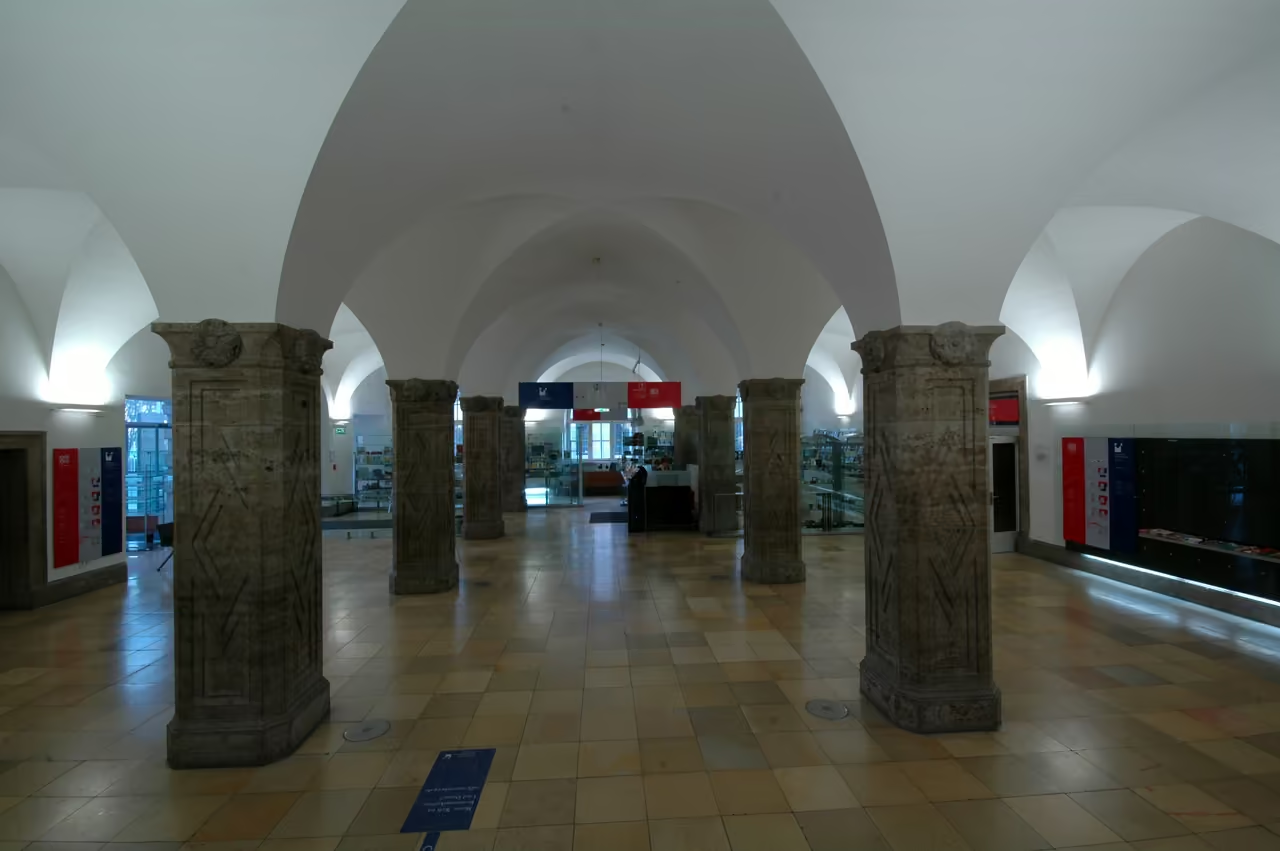 303m
DB Transport Museum
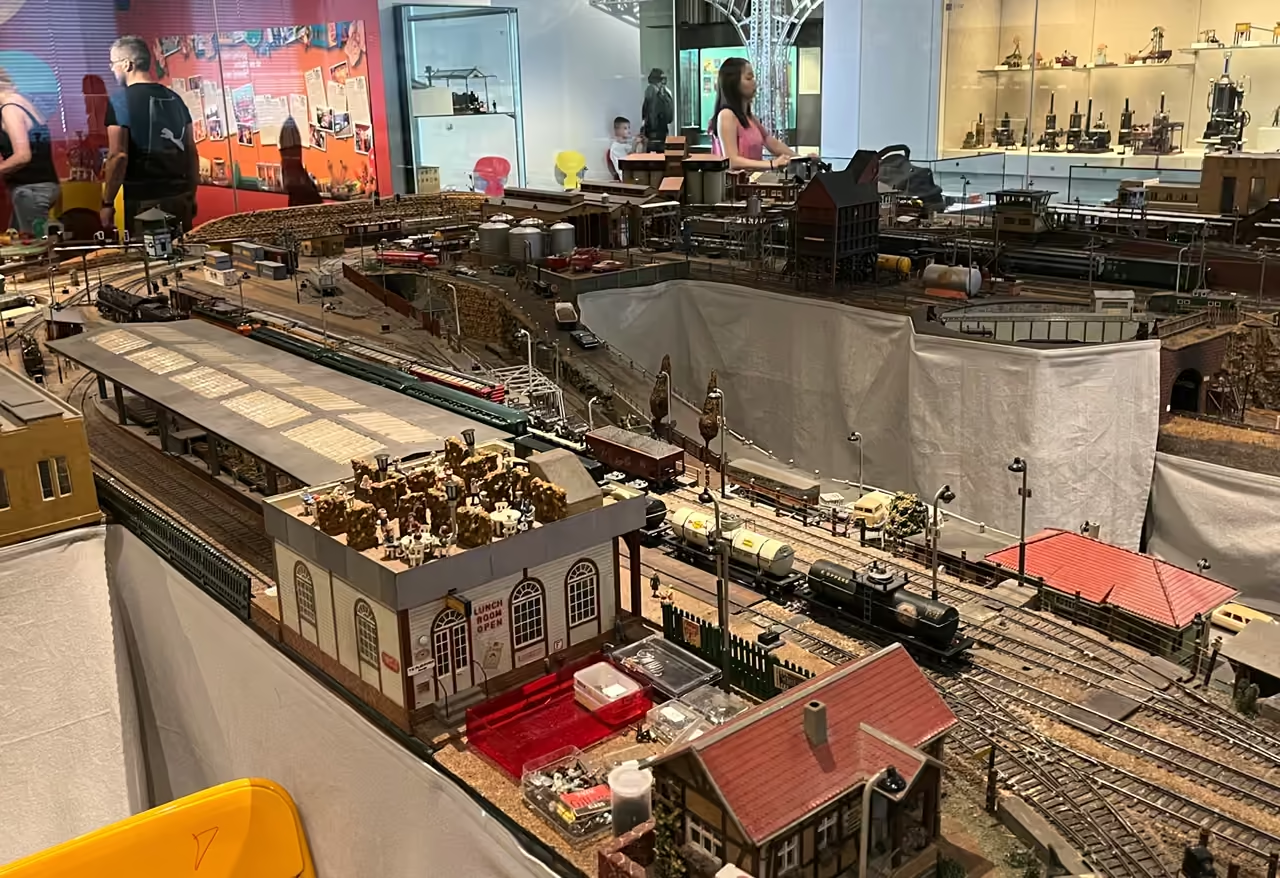
Housed in a grand 19th-century building outside the walls, this vast collection chronicles the entire history of the German railway system. The cavernous halls contain polished steam locomotives, opulent royal carriages built for King Ludwig II, and sleek mock-ups of modern high-speed ICE trains. An extensive exhibition does not shy away from detailing the railway's logistical role in the deportations during the Holocaust. The upper floors feature a massive, incredibly detailed model railway layout operated by enthusiastic technicians. It sits fittingly in the city that launched the country's very first train line.
highlight view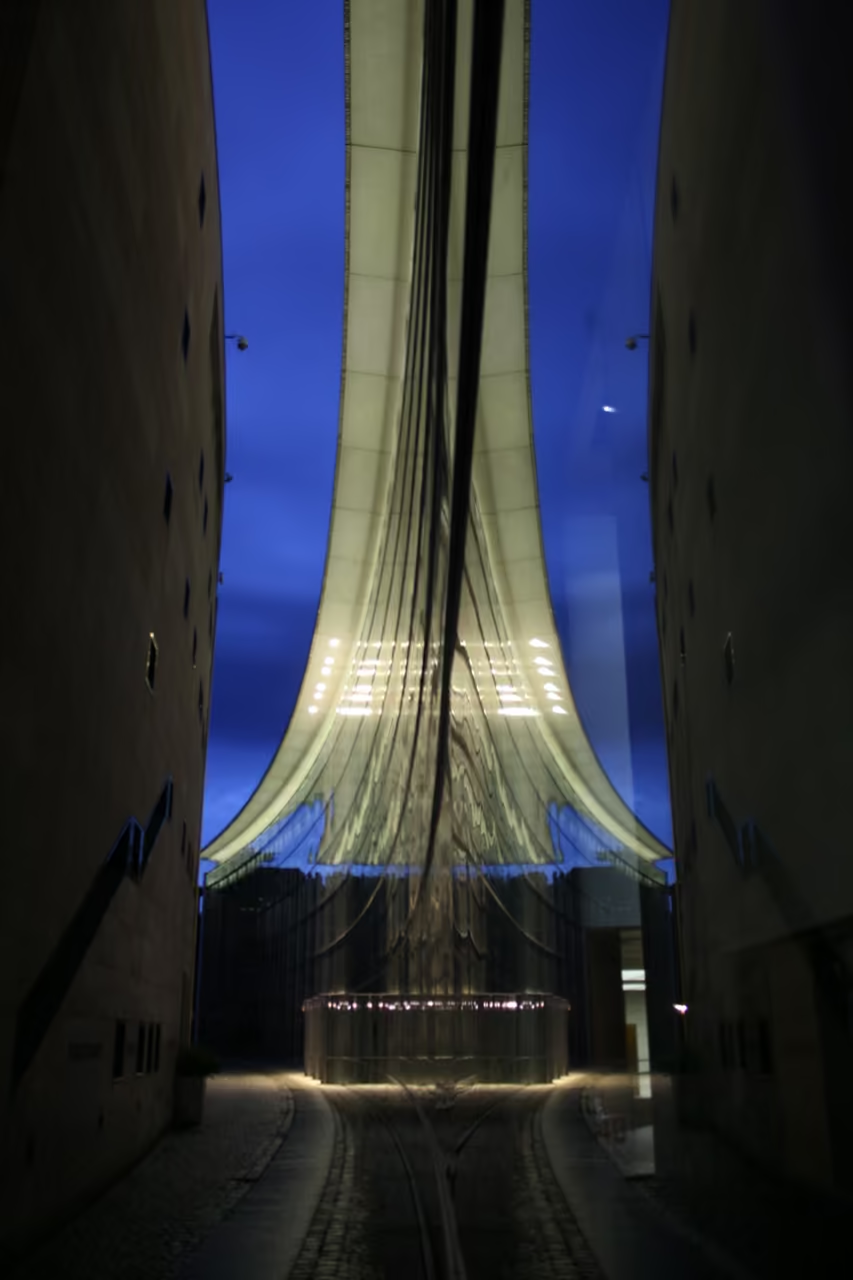 346m
New Museum
A sweeping, curved glass facade slices through the historic stone architecture of the southern old town, housing the State Museum for Art and Design. The interior features a dramatic spiral staircase cutting through stark white, minimalist galleries filled with contemporary works. The collection focuses heavily on international art from 1945 to the present, displaying striking modern sculptures and bold graphic design. The architecture purposefully contrasts with the medieval city wall visible through the massive windows. It provides a sharp, necessary break from the ubiquitous Gothic and Renaissance aesthetics.
highlight view
Explore Similar Places in This Collection
Featured on These Itineraries and Routes
3 Days in Nuremberg
Adding two days allows the pace to relax, mixing heavy historical museums with leisurely strolls through the artisan districts and green spaces. The itinerary breaks the city down geographically, dedicating distinct days to the northern castle quarter, the southern medieval core, and the 20th-century history stretching beyond the walls. Time opens up to explore the massive art collections and sit for extended periods in traditional brewpubs. It strikes a perfect balance between education and casual exploration. Visitors leave with a comprehensive understanding of how the city layered its modern identity over its medieval bones.
view itinerary
5 Days in Nuremberg
A full working week allows visitors to treat the city like a local, diving into highly specific museums and exploring the outer green belts. The schedule incorporates deep dives into the transport history and hidden patrician gardens that most tourists never see. It factors in time for long walks along the Pegnitz river and cycling trips into the vast eastern forests. The itinerary assumes a desire to experience the quiet, residential pockets of the city alongside the major monuments. This timeline transforms a rushed sightseeing trip into a relaxed cultural immersion.
view itinerary
Dürer Art Trail
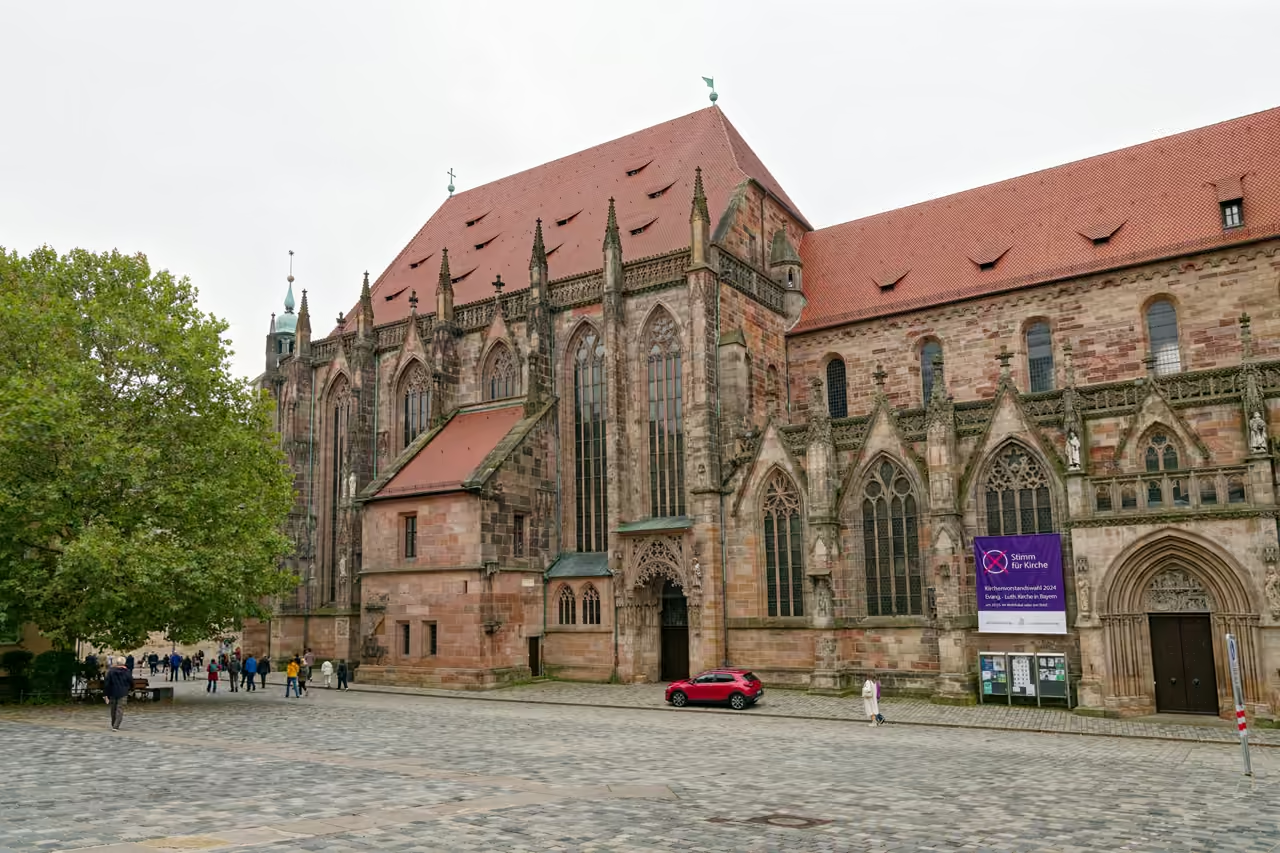
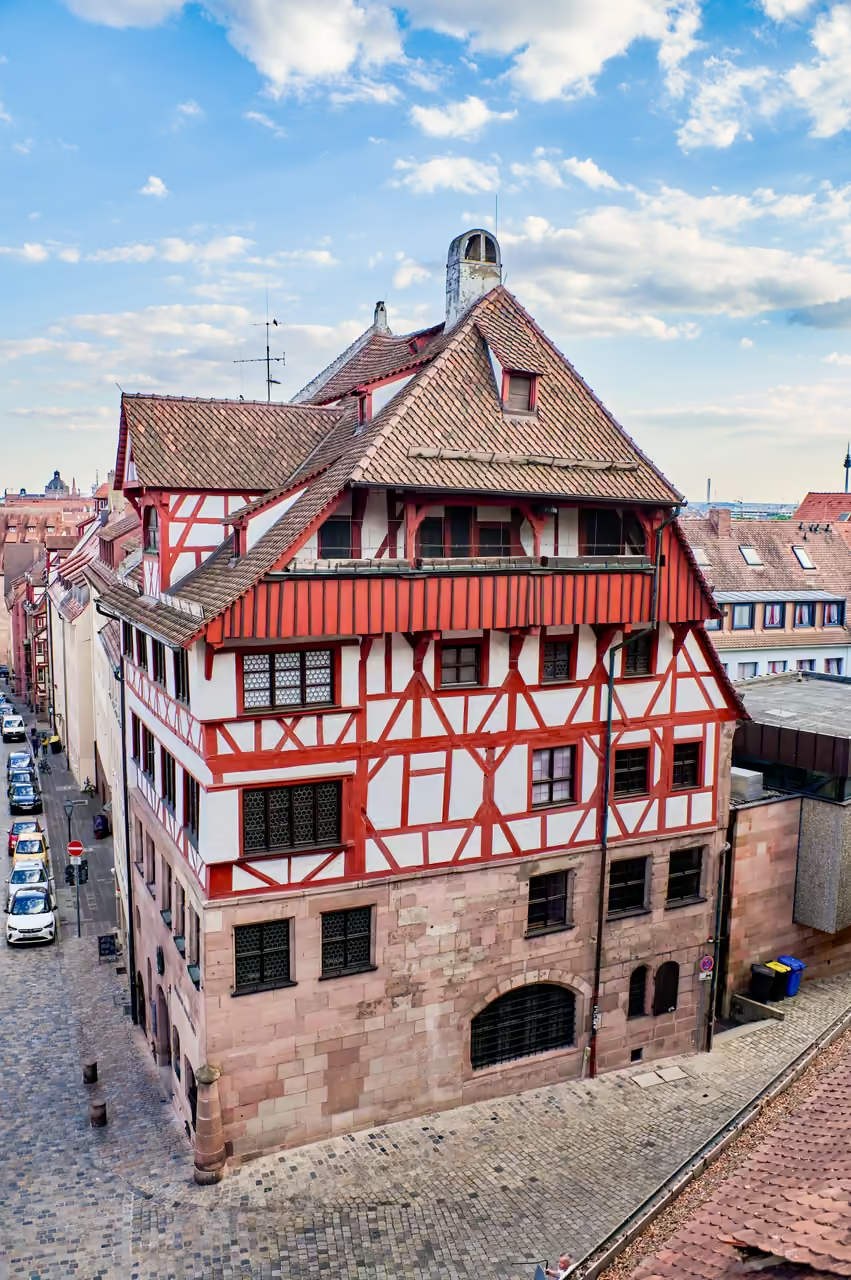
Tracing the footsteps of the city's most famous son, this route uncovers the environment that shaped the Northern Renaissance. The walk connects the heavily fortified northern district where Dürer lived with the churches and civic buildings that commissioned his work. It highlights the transition from late Gothic artisanship to the humanist ideals that swept through the city in the early 1500s. The path climbs steep, cobbled streets, peering into hidden courtyards that have barely changed since the 16th century. It offers a deep dive into the artistic wealth of the Free Imperial City.
view self-guided tour
See all attractions in Nuremberg
Including Albrecht Dürer House, Nazi Party Rally Grounds, Nuremberg Castle, and more