City Park
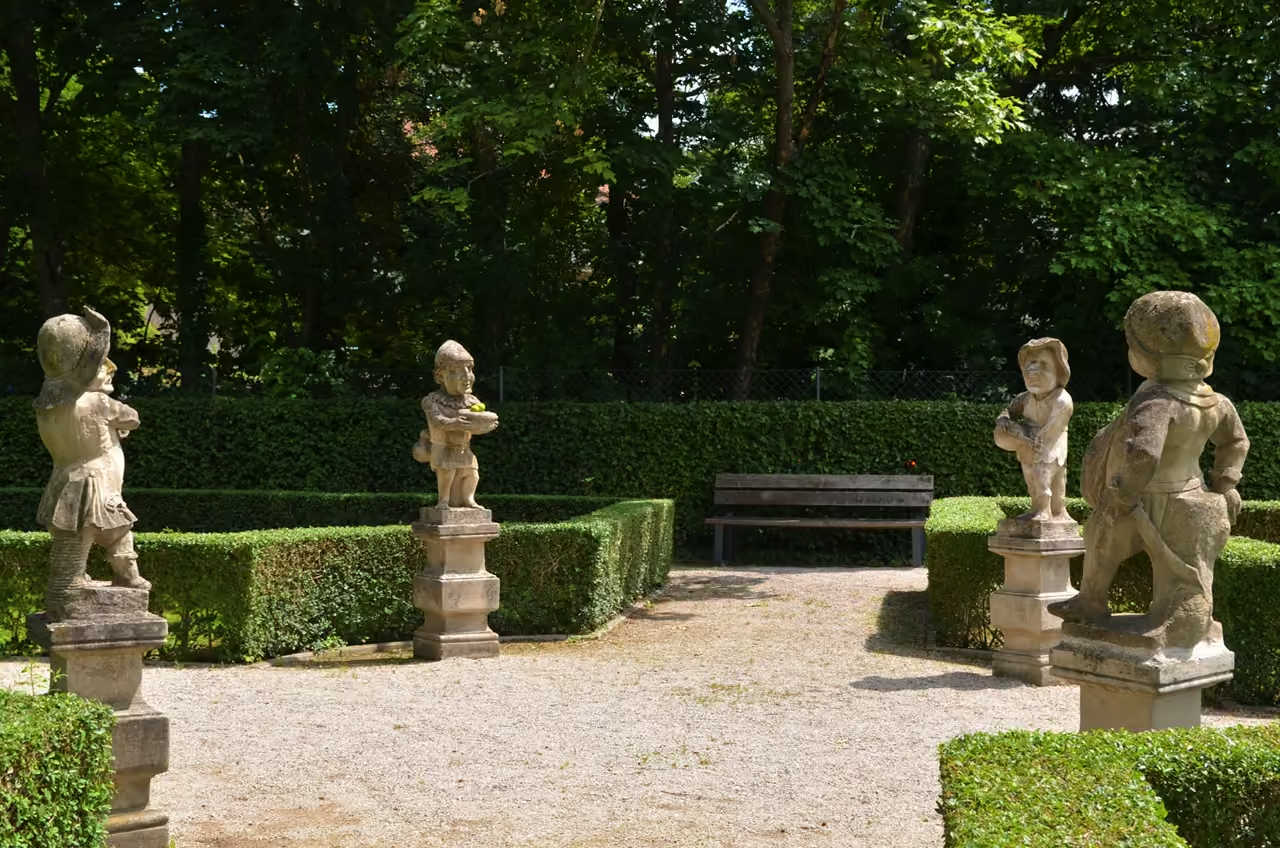
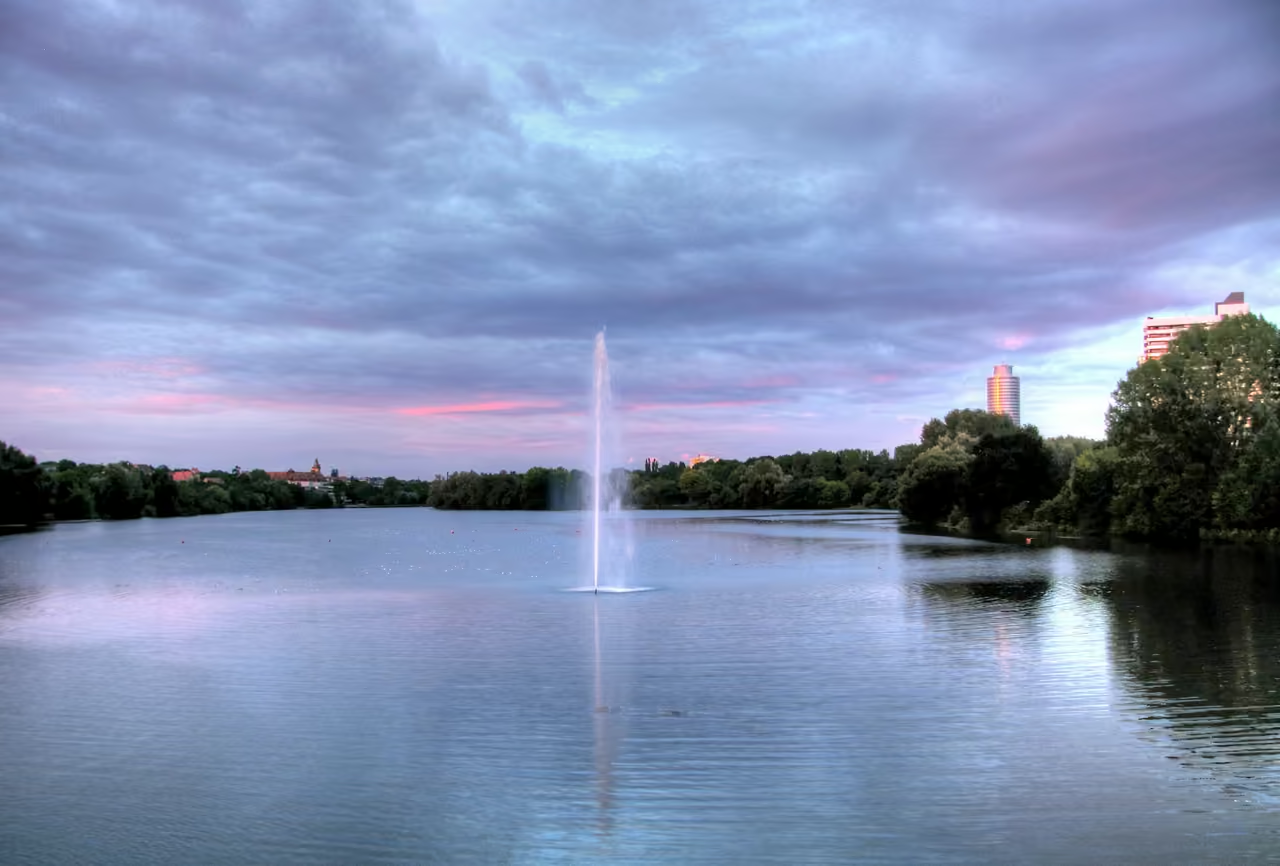
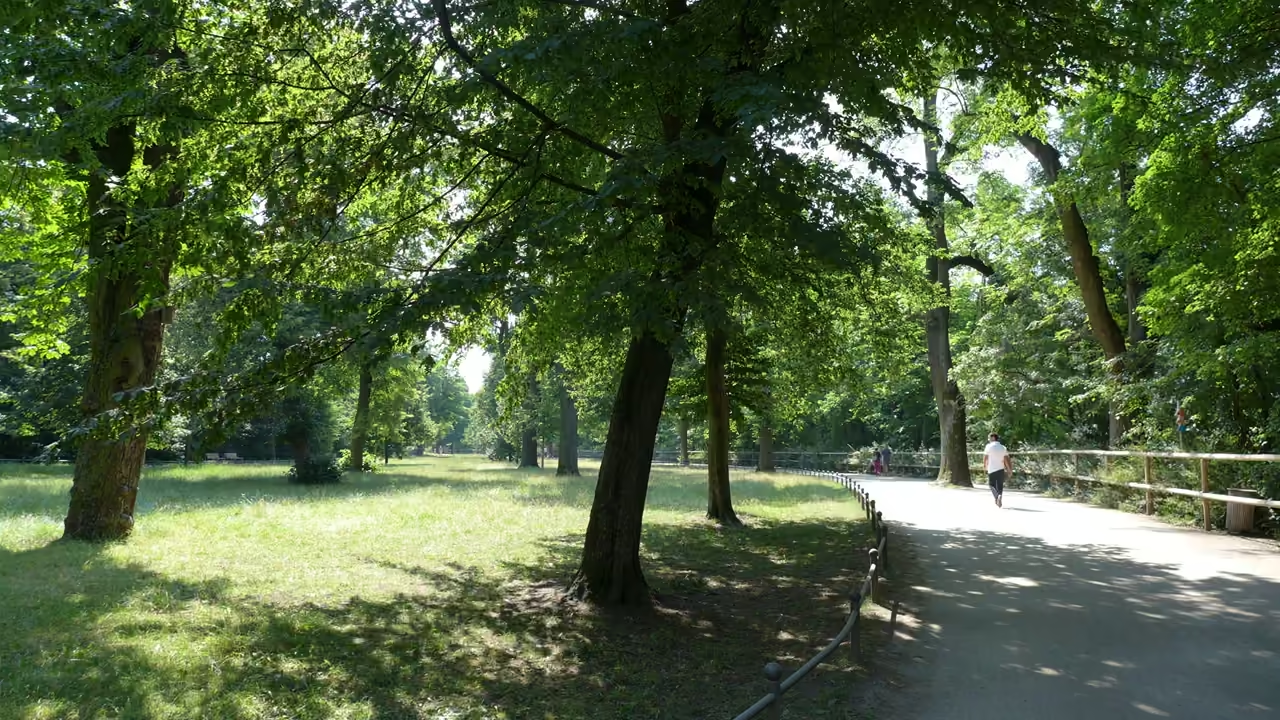
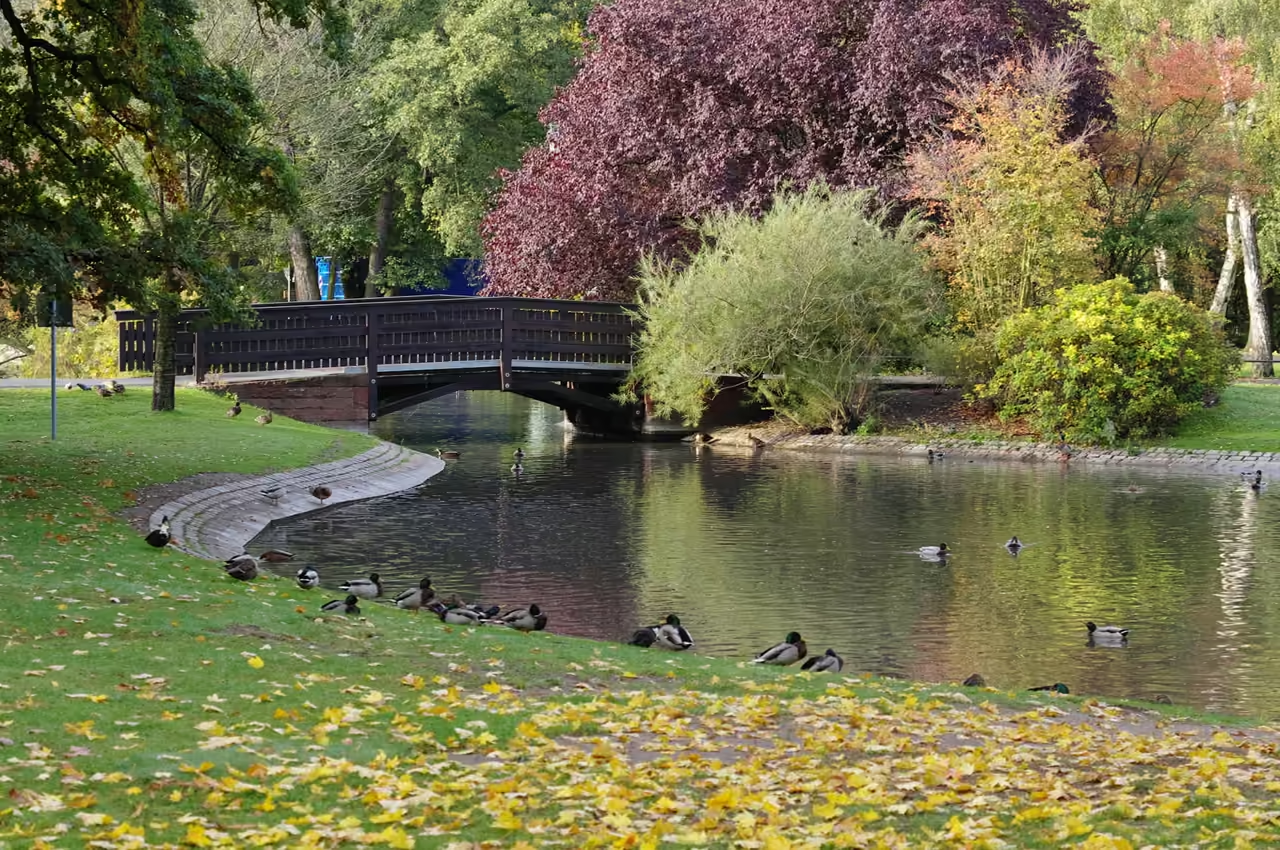
Step off the paved streets of northern Nuremberg and onto the winding, tree-lined paths of this expansive 19-hectare green space. Originally established in the eighteenth century, the park has evolved from a simple avenue of horse chestnuts into a sprawling landscape of manicured rose gardens and architectural fountains. A large pond anchors the centre, where locals often gather on sunny afternoons, occasionally competing for bench space with an assertive local mallard. You can wander past the monumental Neptune Fountain, which found its current home here in the 1960s, or seek out the whimsical bronze sculpture of a faun teasing a frog. The area hums with quiet daily rituals, from morning joggers weaving through the garden courtyards to families picnicking near the restored pergolas. End your walk near the historic marble vases, physical markers of the massive Bavarian state exhibitions that transformed this space over a century ago.
History of City Park
The ground beneath these manicured lawns holds a remarkably heavy history. For centuries, city maps labelled this area Judenbühl, a bleak reference to a devastating plague pogrom in 1349. Following the destruction of Nuremberg's Jewish ghetto and synagogue, the resulting rubble was carted out the city gates and dumped on this exact spot. The site sat as a rough, utilitarian patch of land for hundreds of years, primarily used as a firing range and a sandy expanse for military weapons drills. A dramatic shift in the area's fortunes occurred in November 1787. Around 50,000 spectators swarmed the fields to watch the French aeronaut Jean-Pierre Blanchard launch his hot air balloon into the autumn sky. This massive public spectacle awakened the city to the location's potential as a gathering space. Soon after, the wealthy local merchant Georg Zacharias Platner took a personal interest in the grounds, funding a massive transformation to carve out an elegant English landscape park complete with a newly dug artificial lake. King Maximilian II of Bavaria attended a massive folk festival here in 1859, prompting the city to formally rename the district Maxfeld in his honour. By the late nineteenth century, the park became the designated stage for the enormous Bavarian State Exhibitions, permanently shaping its layout. Grand pavilions and elaborate garden designs were installed, and locals officially adopted the name Stadtpark to describe their new civic playground. The twentieth century proved far less kind, as the intense aerial bombardments of the Second World War reduced the grounds and its grand restaurants to a wasteland of craters and shattered timber. Rather than attempting to recreate the lost Victorian grandeur, the city appointed garden director Kurt Ahles in 1958 to draft an entirely new, modern vision. He wiped away the old pathway systems, introducing mid-century garden courtyards and a prominent rose hill. The final major addition arrived a few years later when the colossal Neptune Fountain, previously evicted from the central market square during the 1930s to clear space for political rallies, was permanently settled into a custom-built concrete basin west of the main pond.
events spanning 613 years
Fun Facts
- • A whimsical bronze statue added in 1954 depicts a mythological faun gleefully teasing a frog, reflecting the lighthearted, optimistic design choices implemented during the post-war reconstruction of the city.
- • Before becoming a place of leisure, the land served as a designated shooting range where local militias practiced their marksmanship in the dust.
- • During a massive political demonstration in March 1849, thirty thousand citizens occupied the rough fields here to demand the adoption of a new imperial constitution, turning the future park into an arena for democratic revolution.
- • In 1824, a routine weapons drill on the grounds ended in tragedy when a schoolboy named J. A. Heiden was fatally wounded by a classmate; a small stone memorial still stands quietly in the southeastern corner to mark the fatal accident.
- • In 1905, the city demolished an ancient working farm called the Deumentenhof to make room for park expansions, leaving behind only a lone boulder with a bronze plaque to prove the agricultural homestead ever existed.
- • The first deliberate attempt to beautify the space occurred in 1759 when a local forest warden, Johann Burkart Volkamer, planted strict, geometric rows of linden and horse chestnut trees, mimicking the fashionable formal gardens of the era.
- • The imposing marble vases scattered along the walkways are permanent souvenirs from the massive Bavarian State Exhibitions and choral festivals of the late nineteenth century, left behind after the temporary grand pavilions were dismantled.
- • The park's signature Neptune Fountain is essentially a political refugee; it was forcibly removed from Nuremberg's central market square in 1934 because its sheer size obstructed the open space required for massive Nazi party rallies.
City Park Map & Neighborhood Explorer
This interactive map is centered on City Park. Zoom in and move the map around to automatically discover Wikipedia photos and summaries of other nearby sights, monuments, and historical points of interest and stories in real-time!
City Park FAQ
While we strive to keep this information accurate and up to date, we recommend verifying any details independently before making decisions based on them.
Places near City Park
Make the most of your trip. Check out these top-rated spots located nearby.
 906m
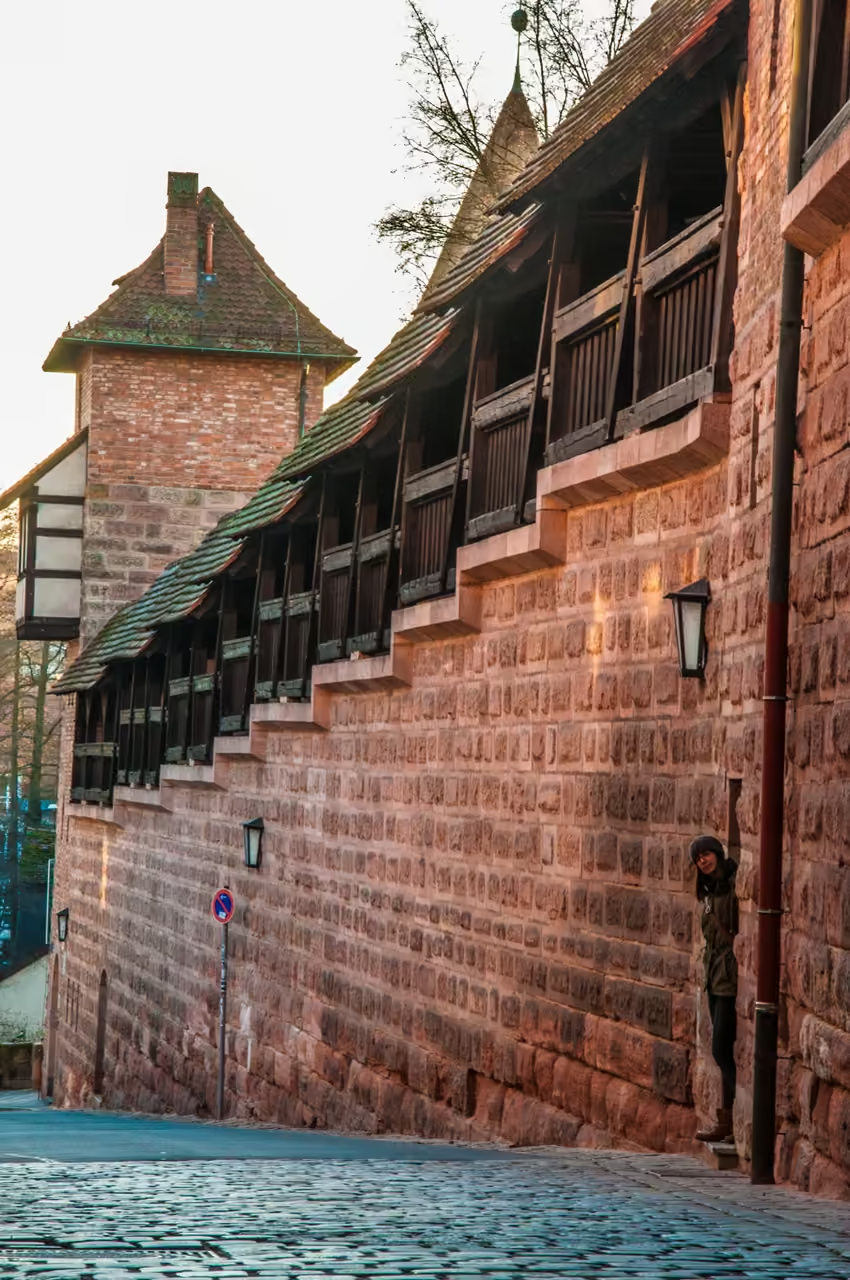
Walk the City Walls
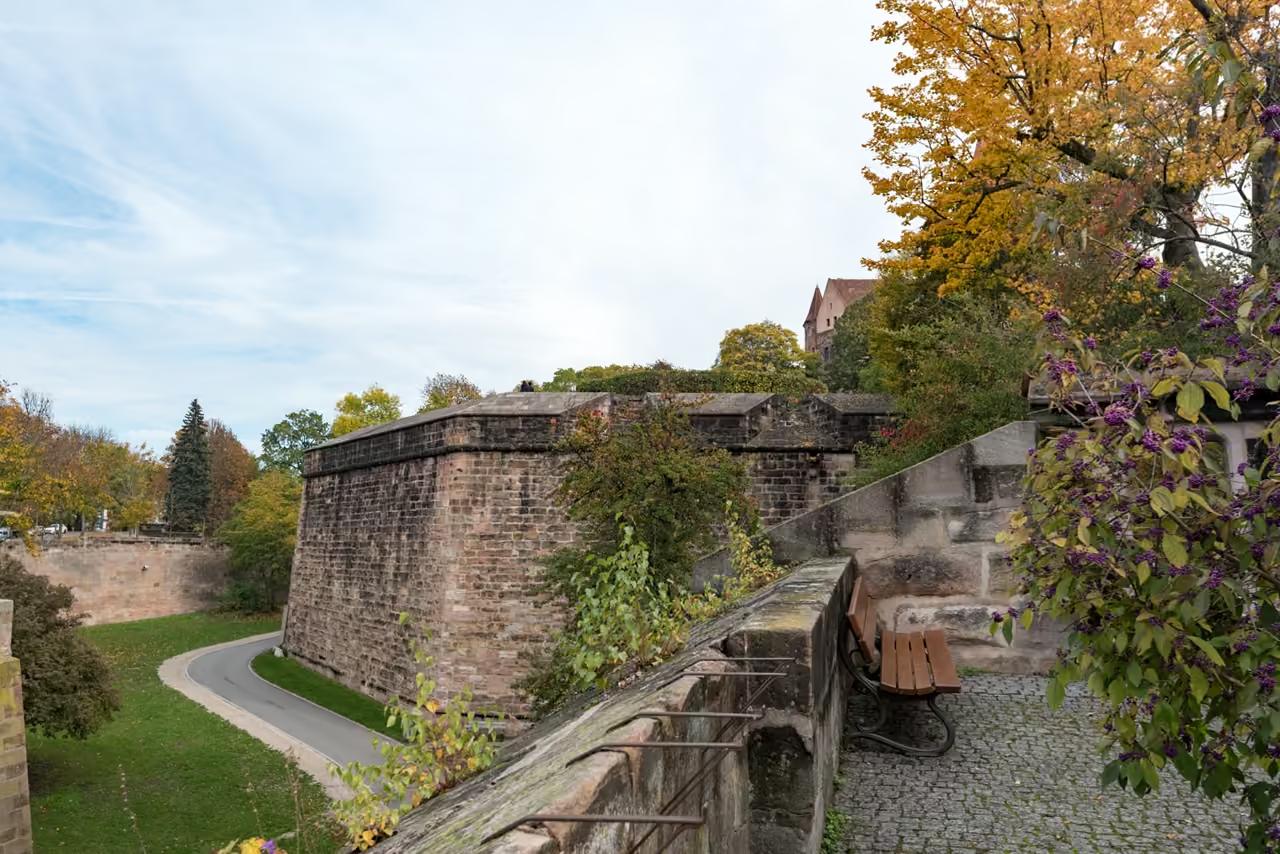
Tracing the perimeter of the medieval core requires zero euros and provides a deep understanding of the city's historical defences. The massive sandstone towers and dry moats form a harsh boundary between the busy modern ring roads and the quiet inner alleys. Certain sections behind the castle allow you to climb up onto the elevated wooden ramparts, peering down into the gardens below. It offers a physical, tactile connection to the medieval era without entering a museum.
free thing to do view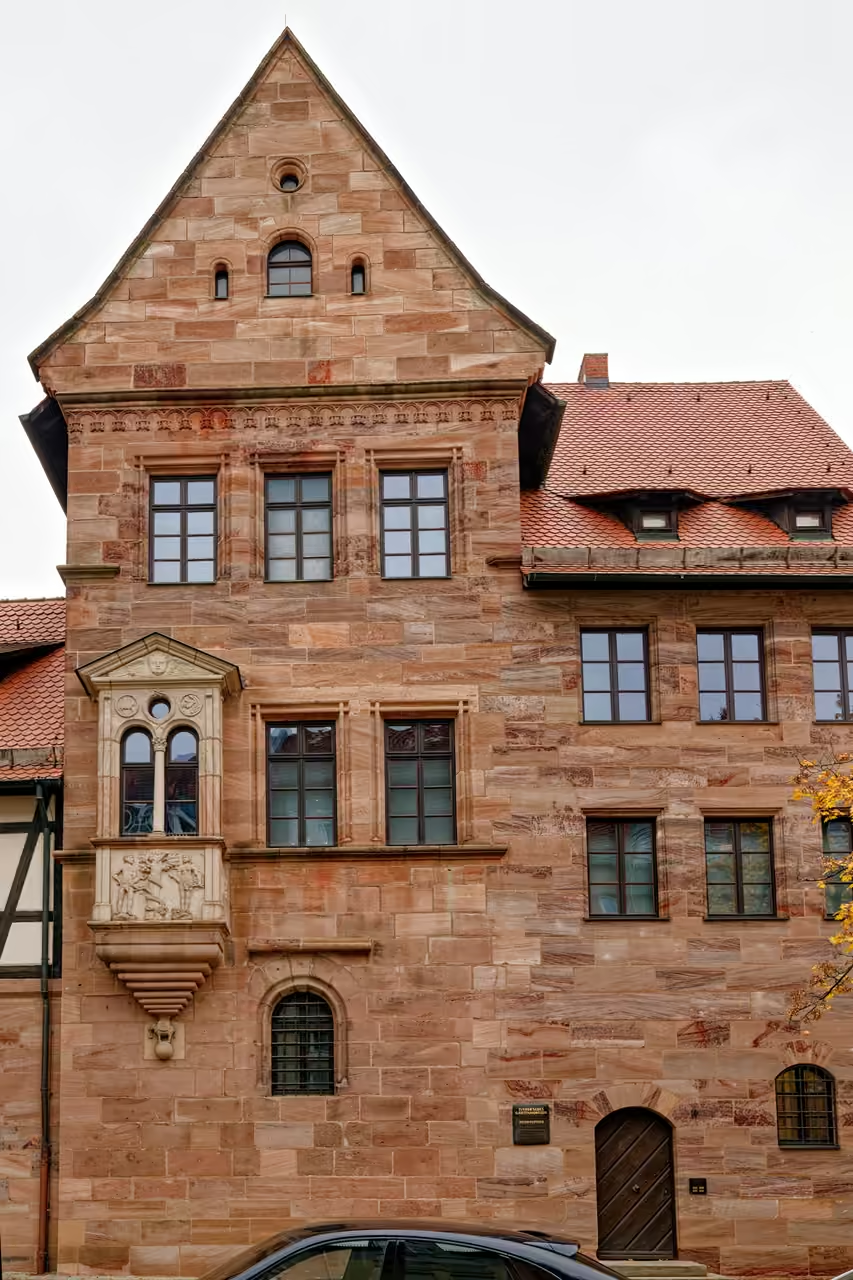 1079m
Tucher Mansion
Built in the early 16th century, this grand sandstone estate served as the private summer residence for one of the city's most powerful merchant families. The interior functions as a time capsule of patrician life, displaying heavy tapestries, ornate silver drinking cups, and intricate wooden furniture. The manicured back garden holds the reconstructed Hirsvogel Hall, an early Renaissance banquet room famous for its elaborately painted ceiling. Escaping the crowded central squares, visitors can quietly explore how the ruling elite insulated themselves from the working-class masses.
hidden gem view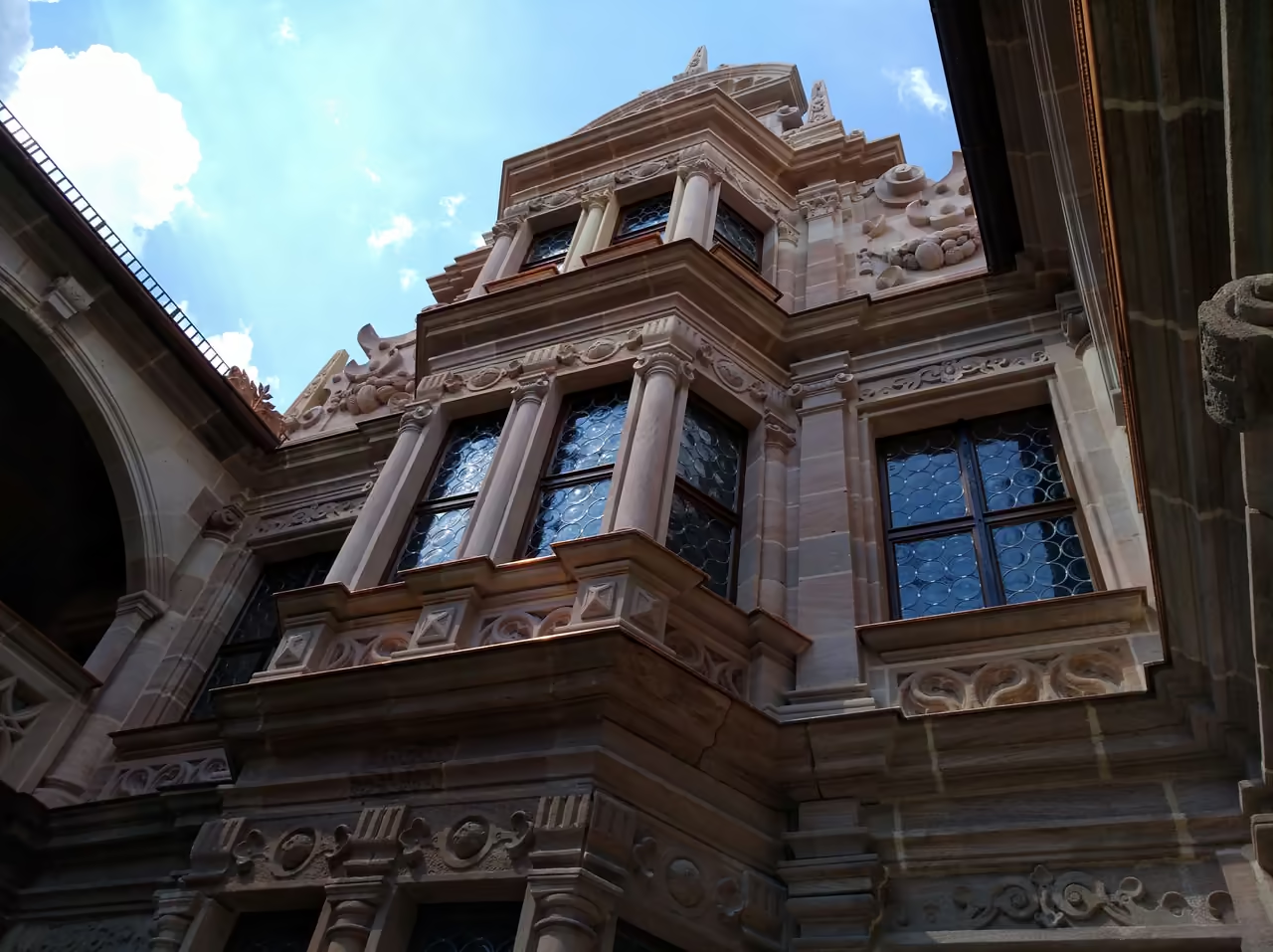 1272m
Peller House
Once considered the most magnificent Renaissance patrician home in Germany, the building suffered catastrophic damage in 1945. Instead of a full reconstruction, architects capped the surviving, ornate ground floor with a stark, modern, grid-like facade in the 1950s. The juxtaposition of delicate 17th-century masonry clashing abruptly with utilitarian post-war modernism creates a fascinating, controversial hybrid. Dedicated volunteer groups recently finished painstakingly rebuilding the intricate inner courtyard using original stone-carving techniques. It embodies the complex, layered approach the city took toward its destroyed heritage.
architecture view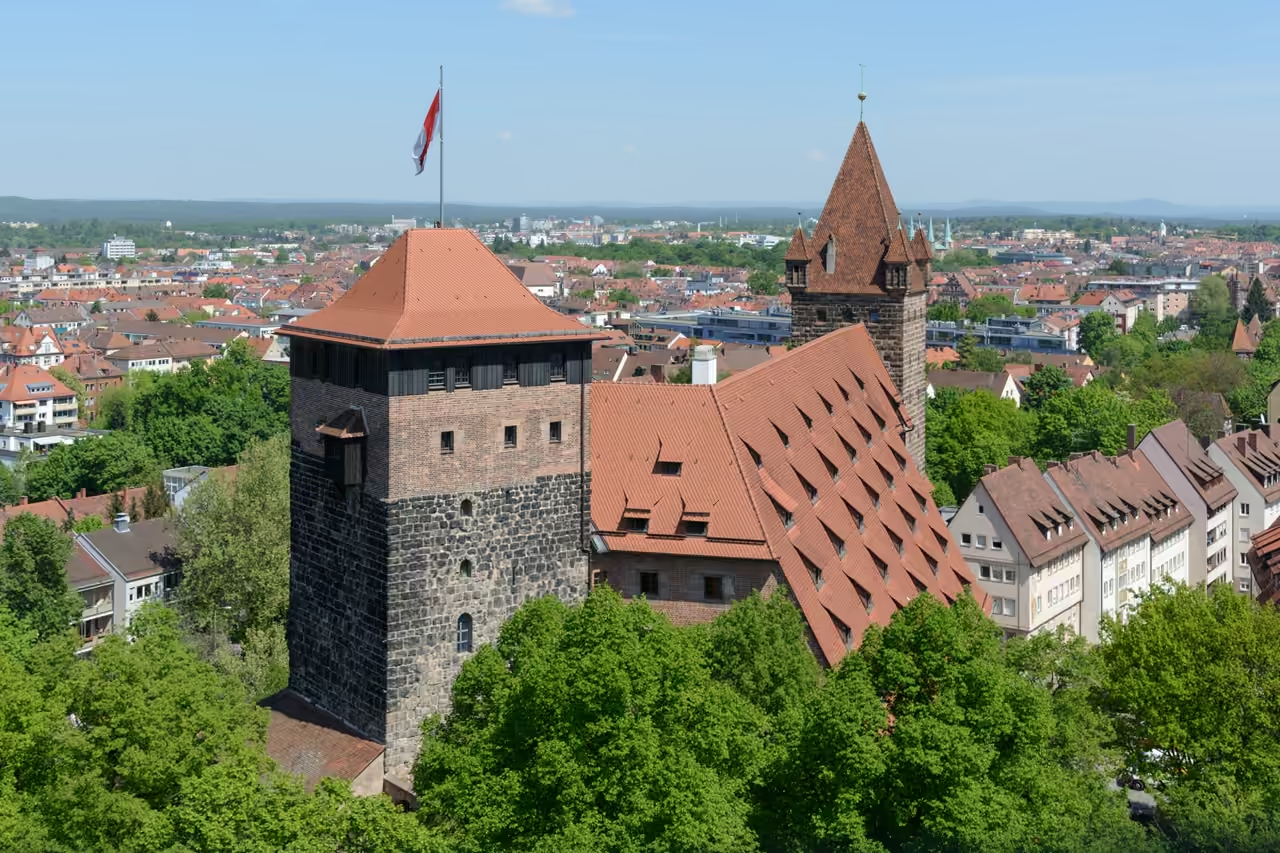 1318m
Luginsland Tower
Constructed by the city specifically to spy on the rival burgraves occupying the adjacent castle, this tower anchors the eastern fortifications. While you cannot climb the tower itself, standing at its base in the castle gardens provides a tremendous eastward view. The sightline stretches out over the green expanse of the Wöhrder Wiese and into the dense pine forests of the Reichswald beyond the city limits. It highlights how abruptly the dense urban grid transitions into the surrounding natural landscape. The area feels significantly quieter than the main castle courtyards.
viewpoint view
See all nature & parks in Nuremberg
Including Hesperides Gardens, Lake Wöhrd, Luitpold Grove, and more