Hidden Gems & Local Secrets in Nuremberg

Step off the tourist trail and experience the authentic side of the city. We've bypassed the crowded landmarks to uncover the best-kept local secrets—from quiet neighborhood courtyards to underground art scenes. Dive into the forgotten histories and unique stories that make these spots truly special.

  • Historic Rock-Cut Cellars

    HISTORISCHE FELSENGÄNGE
    1 H 30 M

    A vast, multi-level labyrinth of sandstone tunnels snakes directly underneath the imperial castle and the northern old town. Citizens originally carved these cool, dark cellars in the 14th century to ferment and store the local red beer, mandated by municipal brewing laws. During the intense bombing raids of World War II, the sprawling subterranean network saved thousands of lives by serving as emergency air-raid shelters. Water drips constantly from the low ceilings, keeping the air damp and chilly regardless of the season outside. Guided tours lead visitors through the echoing corridors, eventually exiting through the cellar of a modern brewery.

    HISTORY & HIGHLIGHTS

    The creation of this vast underground network began out of purely practical necessity. In the 14th century, the city council mandated that anyone brewing beer must possess their own cellar for fermentation and storage. Consequently, citizens began hacking away at the soft sandstone beneath their houses, eventually creating a chaotic, multi-tiered labyrinth spreading across the entire northern half of the city. For centuries, these dark, dripping corridors served their intended purpose, keeping local red beer at a stable, cool temperature. However, their true historical value emerged during the catastrophic events of the 20th century. As Allied bombers targeted the industrial city during World War II, the municipal government realized the cellars' potential. They hastily linked the fragmented private vaults, installing ventilation and basic amenities to create a massive air-raid shelter system. When the devastating bombing raid of January 1945 obliterated the medieval city above ground, tens of thousands of citizens survived solely by huddling in the sandstone depths. The cellars also functioned as secure storage, protecting the city's most valuable art treasures, including works by Albrecht Dürer, from the firestorms. Today, the tunnels stand as both a monument to medieval engineering and a stark reminder of wartime survival.

    events spanning 565 years

    YEAR 1380

    Brewing Law Passed

    The city council decreed that all brewers must have a subterranean cellar to store and ferment their beer. This sparked a massive, centuries-long digging effort into the sandstone bedrock.

    YEAR 1943

    Wartime Conversion

    As the threat of aerial bombing increased, authorities connected the private cellars to form a continuous shelter system. Thousands of bunk beds and basic sanitation facilities were installed in the damp tunnels.

    YEAR 1945

    The City Above Burns

    During the most destructive air raid of the war, the medieval city center was annihilated. An estimated forty thousand citizens survived the firestorms by taking refuge in the rock-cut cellars.

    LOCATION

    Loading map...

    FULL PLACE DETAILS

    OVERVIEW & STATS

    Elevation
    320 m

    ARCHITECTURE & HERITAGE

    Heritage Status
    Architectural Heritage Monument In Bavaria
  • Hesperides Gardens

    HESPERIDENGÄRTEN
    45 M

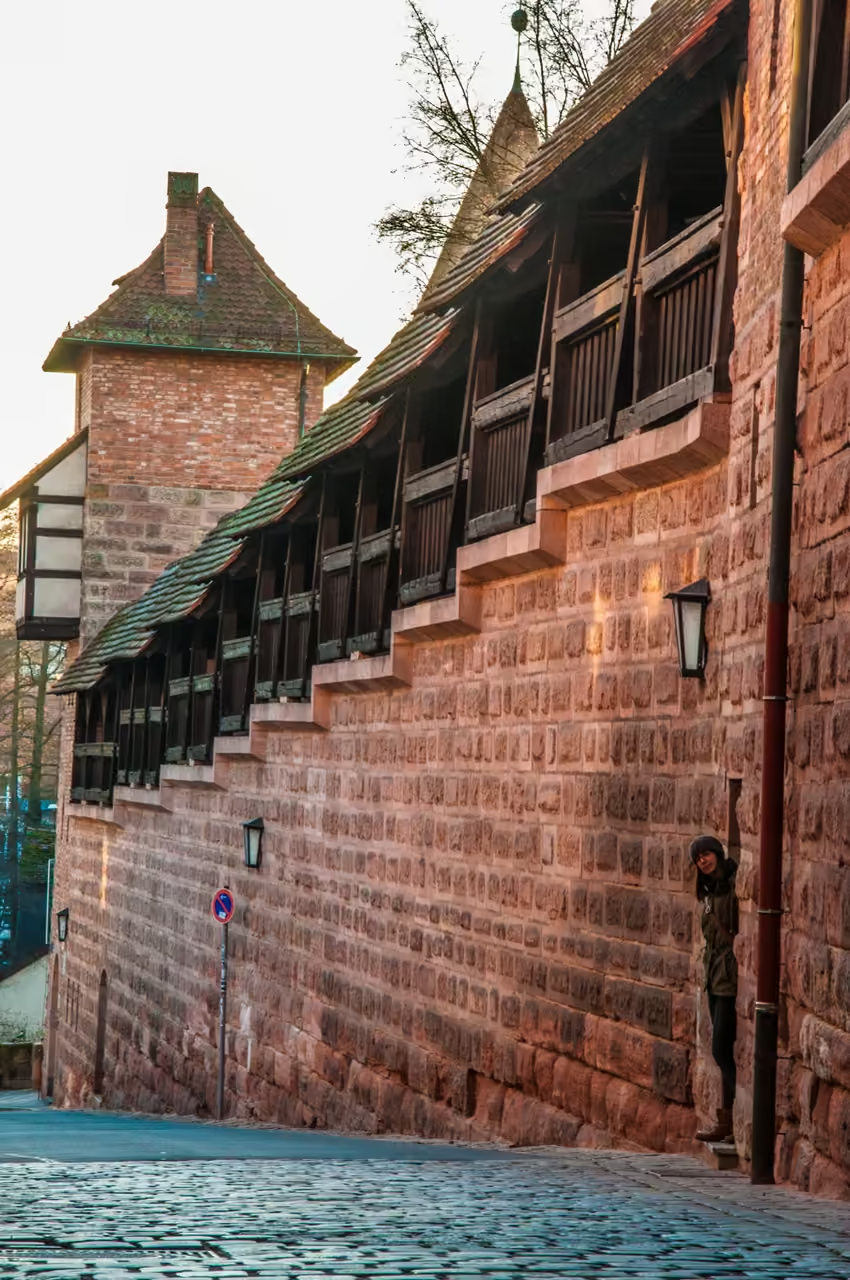
    Hidden behind high, unassuming stone walls in the St. Johannis district, these small, meticulous gardens offer an abrupt shift in atmosphere. Wealthy 17th-century merchants built them as private summer retreats, heavily inspired by the formal Renaissance gardens of Italy. Precisely trimmed boxwood hedges frame trickling fountains, classical statues, and rows of potted citrus trees. The layout deliberately isolates visitors from the surrounding urban noise, creating a highly controlled, serene environment. The entrance remains easy to miss, marked only by a simple wooden door on the main street.

    LOCATION

    Loading map...
  • Historic Art Bunker

    HISTORISCHER KUNSTBUNKER
    1 H 15 M

    Hidden directly beneath the Imperial Castle, this specific section of the medieval rock cellars was heavily upgraded during World War II with climate control and reinforced concrete. The city council secretly transferred its most priceless treasures here, including the crown jewels, medieval altarpieces, and Dürer's original works, to save them from aerial bombing. The austere, heavy vault doors remain intact, guarding the empty stone chambers. Guided tours provide a chilling perspective on the sheer bureaucratic effort required to protect culture while the city above faced annihilation. The bunker maintains a constant, chilly temperature year-round.

    HISTORY & HIGHLIGHTS

    As the threat of Allied air raids escalated in 1939, city officials recognized the extreme vulnerability of their medieval heritage. Taking radical, pre-emptive action, they selected a deep, particularly stable section of the 14th-century beer cellars located beneath the castle rock. Working in absolute secrecy, engineers transformed the medieval vaults into a state-of-the-art, climate-controlled bunker designed to withstand direct bomb strikes. Truckloads of invaluable artifacts began disappearing from the city's churches and museums in the dead of night. The famous mechanical clock from the Frauenkirche, the monumental stained glass windows of St. Lorenz, and the Imperial Regalia of the Holy Roman Empire were all lowered into the depths. The bunker featured sophisticated ventilation and heating systems to maintain the precise humidity required to prevent the wood and canvas masterpieces from rotting in the damp rock. When the devastating firestorms of January 1945 reduced the city to a smoking crater, the bunker proved impenetrable. Everything stored within survived completely unharmed. When American troops captured the city, the 'Monuments Men' famously located the bunker and secured the art, ensuring its eventual return. The empty vaults stand today as a testament to the desperate, successful effort to save a city's soul while its body was destroyed.

    events spanning 6 years

    YEAR 1939

    Bunker Construction Begins

    Anticipating heavy aerial bombardment, city engineers began outfitting a deep section of the medieval beer cellars with heavy concrete, vault doors, and climate-control systems.

    YEAR 1943

    Evacuation of Treasures

    Priceless artifacts, including the Imperial Regalia and the Annunciation sculpture by Veit Stoss, were secretly dismantled and moved into the subterranean vaults for protection.

    YEAR 1945

    The Monuments Men Arrive

    Following the city's capture, specialised Allied officers located the hidden bunker. They secured the surviving art treasures, protecting them from looting in the chaotic aftermath of the war.

    LOCATION

    Loading map...

    FULL PLACE DETAILS

    WEB & AMENITIES

  • St. John's Cemetery

    JOHANNISFRIEDHOF
    45 M

    Unlike vertical, crowded graveyards, this incredibly peaceful cemetery features hundreds of heavy, uniform sandstone blocks lying flat on the ground. Wealthy patricians established it outside the medieval walls to prevent disease from spreading within the cramped city. Almost every grave features a highly detailed, cast-bronze epitaph, showcasing the city's historical mastery of metalwork. Massive, blooming rose bushes engulf the stones during the summer months, adding vibrant colour to the solemn atmosphere. It serves as the final resting place for the city's most prominent figures, including artist Albrecht Dürer.

    HISTORY & HIGHLIGHTS

    The origins of this unique graveyard lie in a pragmatic response to repeated crises. In the late Middle Ages, the dense, walled city frequently suffered from devastating plague outbreaks. Realising that burying plague victims within the crowded churchyards exacerbated the disease, the city council took radical action in 1518. They banned all inner-city burials, forcing citizens to inter their dead outside the walls in the suburb of St. Johannis. To prevent the wealthy patricians from building ostentatious mausoleums that overshadowed their peers, strict regulations were enforced. Every grave had to use the exact same flat, rectangular sandstone block. Denied vertical monuments, the wealthy families commissioned elaborate, custom-cast bronze plaques to identify their plots. This restriction inadvertently created a booming industry for local brass founders, resulting in the thousands of intricate epitaphs that survive today. The cemetery quietly gathered the remains of the city's most brilliant minds. Albrecht Dürer, the humanist Willibald Pirckheimer, and the sculptor Veit Stoss all found their final rest beneath the flat stones. The graveyard survived the destruction of World War II largely unscathed, preserving a serene, unbroken record of the city's elite stretching back over five centuries.

    events spanning 32 years

    YEAR 1518

    Inner-City Burials Banned

    Following severe plague outbreaks, the city council mandated that all future burials take place outside the defensive walls. The existing graveyard in St. Johannis was drastically expanded to accommodate the dead.

    YEAR 1528

    Dürer Laid to Rest

    The city mourned the passing of its most famous artist, Albrecht Dürer. He was buried under a simple bronze epitaph composed by his close friend, the humanist Willibald Pirckheimer.

    YEAR 1550

    Bronze Epitaph Regulations

    Strict cemetery rules solidified the tradition of using uniform flat stones decorated solely with bronze plaques. This ensured structural uniformity while allowing families to display their wealth through metalwork.

    LOCATION

    Loading map...

    FULL PLACE DETAILS

    ARCHITECTURE & HERITAGE

    Heritage Status
    Architectural Heritage Monument In Bavaria
  • Tucher Mansion

    TUCHERSCHLOSS
    1 H 30 M

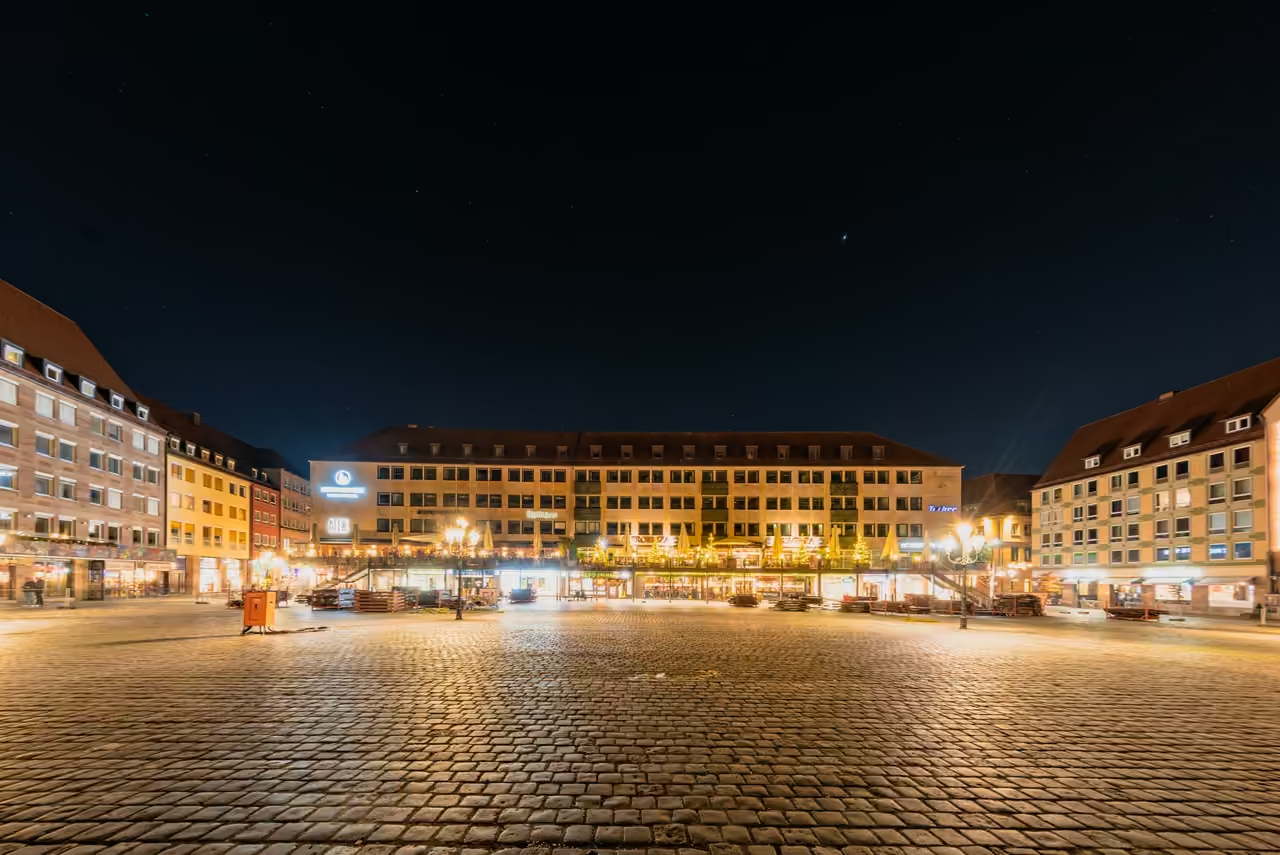
    Built in the early 16th century, this grand sandstone estate served as the private summer residence for one of the city's most powerful merchant families. The interior functions as a time capsule of patrician life, displaying heavy tapestries, ornate silver drinking cups, and intricate wooden furniture. The manicured back garden holds the reconstructed Hirsvogel Hall, an early Renaissance banquet room famous for its elaborately painted ceiling. Escaping the crowded central squares, visitors can quietly explore how the ruling elite insulated themselves from the working-class masses.

    HISTORY & HIGHLIGHTS

    The Tucher family stood among the wealthiest patrician dynasties commanding the Free Imperial City. Seeking to project their immense wealth, they commissioned this sprawling Renaissance mansion in 1533, pulling architectural inspiration straight from the Italian estates they visited on trade routes. A year later, the rival Hirsvogel family constructed an opulent festive hall nearby, an early masterpiece designed purely for extravagant banquets. When World War II bombs devastated the district, both structures suffered catastrophic damage. Post-war civic planners made the unusual decision to painstakingly reconstruct the Hirsvogel Hall and physically relocate it to the Tucher mansion's garden. Today, this combined estate functions as a museum detailing the private lives of the 16th-century ruling class. The ornate silver drinking vessels and Italianate gardens reveal a sharp contrast to the crowded, smoky reality of the medieval working city.

    events spanning 467 years

    YEAR 1533

    A Patrician Estate Rises

    The Tucher family began constructing their Renaissance-style mansion to reflect their elevated social status among the ruling merchant class.

    YEAR 1534

    The Festive Hall Opens

    The rival Hirsvogel family completed an intricately decorated festive hall nearby, featuring a massive, suspended wooden ceiling painting.

    YEAR 2000

    Relocation and Restoration

    After decades of post-war reconstruction, the heavily restored Hirsvogel Hall reopened to the public, moved into the gardens of the Tucher mansion to form a single museum.

    LOCATION

    Loading map...

    FULL PLACE DETAILS

    ARCHITECTURE & HERITAGE

    Heritage Status
    Architectural Heritage Monument In Bavaria
    WEB & AMENITIES

  • Kraftshof Fortified Church

    WEHRKIRCHE ST. GEORG
    30 M

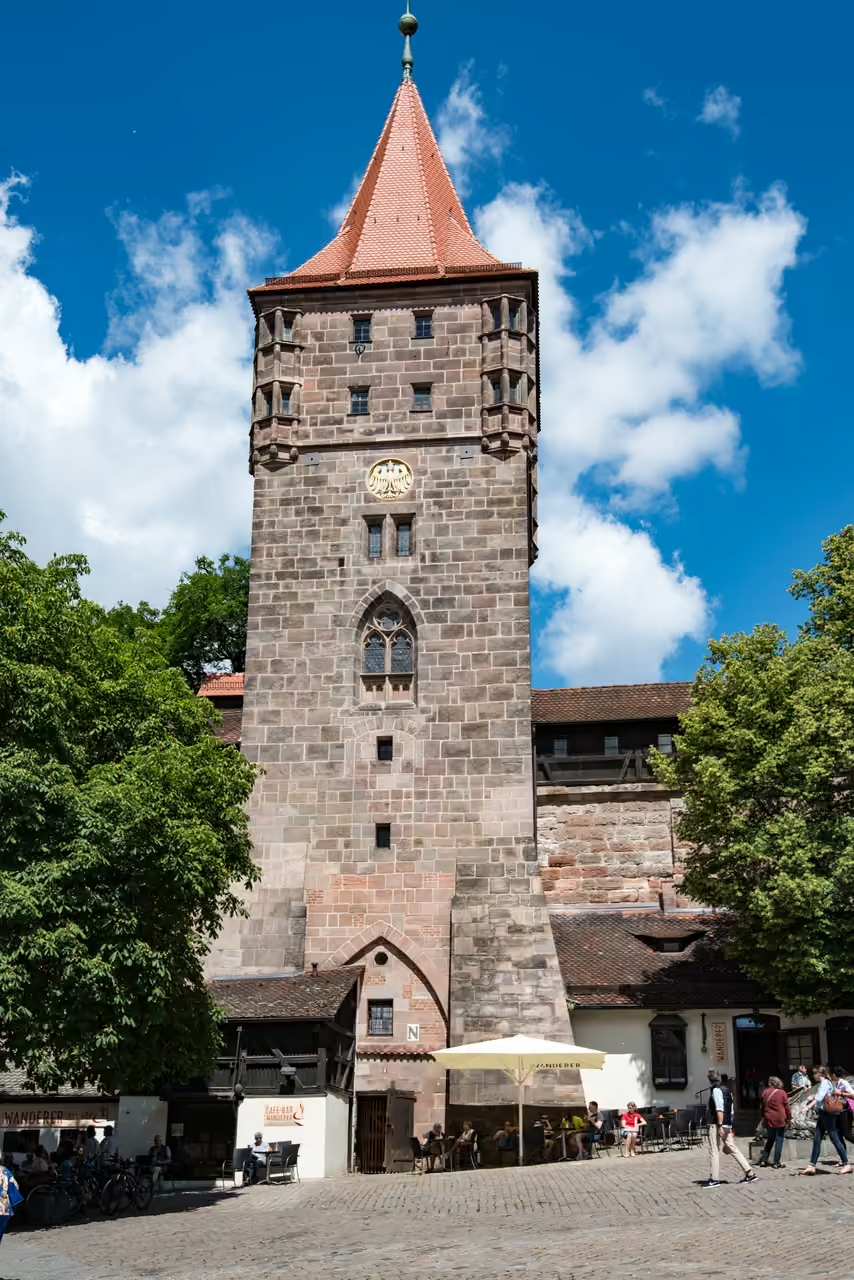
    Located in the agricultural Knoblauchsland district north of the city, this stout stone church looks more like a military outpost. High, thick defensive walls encircle the churchyard, complete with corner turrets and narrow slits for firing arrows. Because medieval villages lacked the massive fortifications of the city, peasants turned their local churches into strongholds against marauding troops. The quiet, rural atmosphere sharply contrasts with the heavy military architecture. It provides a rare glimpse into the harsh realities of rural survival in the Middle Ages.

    HISTORY & HIGHLIGHTS

    Life in the Knoblauchsland, the fertile 'Garlic Land' that fed the walled city, was notoriously precarious. During the frequent wars and feuds of the Middle Ages, marauding armies routinely pillaged undefended farming villages. The ruling city council jealously guarded the right to build true fortifications, fearing that walled villages might harbor rebels. Consequently, the farmers of Kraftshof had only one option for defence: they militarised their place of worship. In the early 14th century, the villagers erected a high, thick stone wall completely encircling St. George's Church. They added heavy corner towers and pierced the masonry with narrow arrow slits. During raids, the entire village would abandon their homes, driving their livestock into the churchyard and bolting the heavy gates. From the safety of the ramparts, they could repel attackers while the church tower served as an observation post. The fortification proved vital during the catastrophic First Margrave War in the mid-15th century, when hostile troops burned the surrounding farms to the ground. While the village was destroyed, the fortified church held firm, saving the lives of those inside. The structure survived the centuries, standing today as a stark monument to the resourcefulness and vulnerability of medieval peasantry.

    events spanning 637 years

    YEAR 1315

    Fortifications Built

    The villagers of Kraftshof constructed a thick defensive wall around St. George's Church. This transformed the religious site into the sole military refuge for the surrounding farming community.

    YEAR 1449

    First Margrave War

    Forces hostile to the city ravaged the unprotected agricultural lands, burning Kraftshof to the ground. The fortified church successfully withstood the assault, protecting the villagers sheltering inside.

    YEAR 1952

    Post-War Restoration

    After suffering damage in later conflicts, the church and its walls underwent significant restoration. The heavy defensive features were carefully preserved, maintaining its fortress-like appearance.

    LOCATION

    Loading map...

    FULL PLACE DETAILS

    ARCHITECTURE & HERITAGE

    Heritage Status
    Architectural Heritage Monument In Bavaria
  • Labyrinth Grove

    IRRHAIN
    1 H

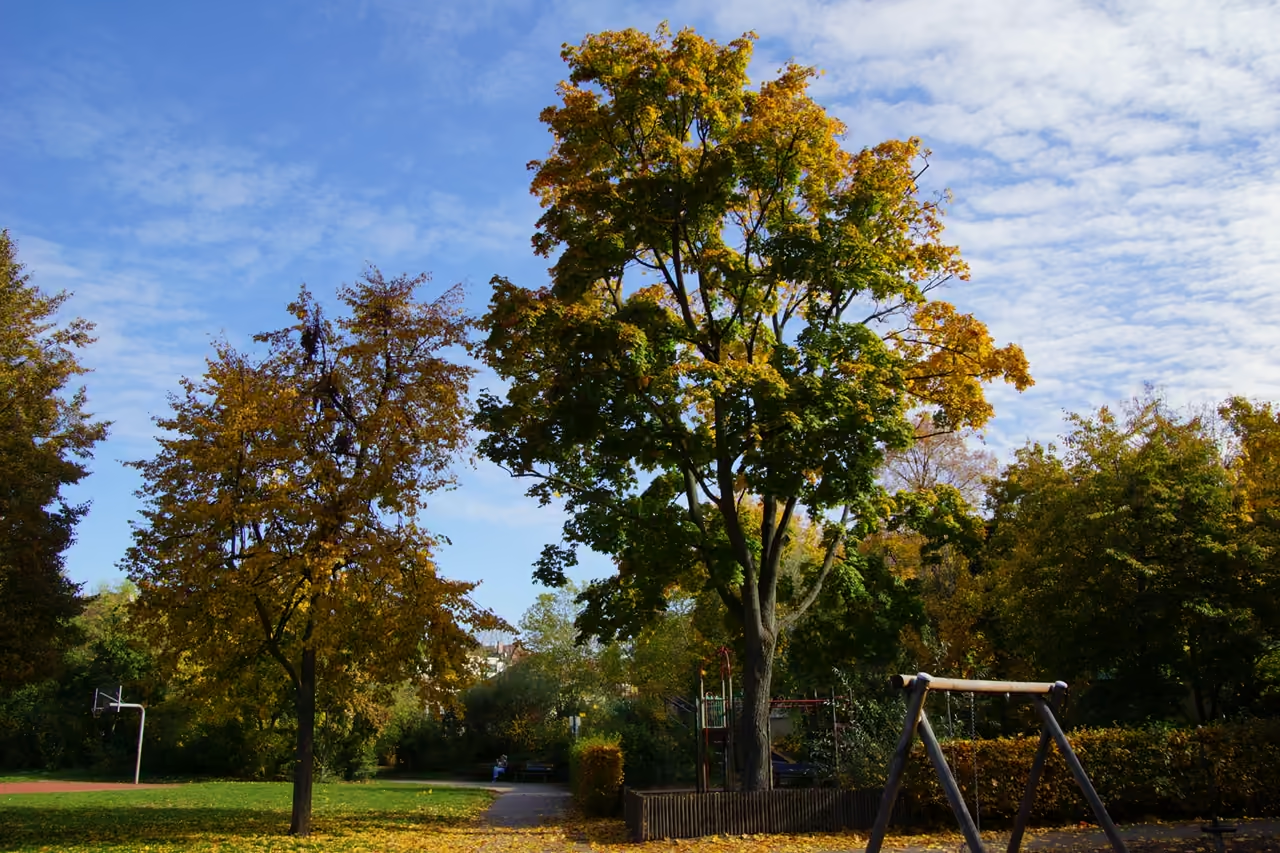
    Located deep in the forests north of the city, this overgrown, winding maze of oak trees was planted in the 17th century by a secret society of poets. The Pegnesischer Blumenorden, a baroque literary group, designed the labyrinth to symbolise the confusing, wandering path of human life. Rough-hewn stone monuments and moss-covered obelisks dedicated to obscure poets hide among the dense foliage. The atmosphere feels distinctly melancholy and slightly eerie, far removed from typical manicured parks. Navigating the narrow, dirt paths requires a sense of adventure and a tolerance for mosquitoes.

    HISTORY & HIGHLIGHTS

    Amid the devastation and despair of the Thirty Years' War, a group of local scholars and writers sought refuge in nature and poetry. In 1644, they founded the Pegnesischer Blumenorden (Pegnitz Flower Order), a literary society dedicated to purifying the German language and composing pastoral poetry. Seeking a private sanctuary away from the war-torn city, the society acquired a patch of marshy forest near the village of Kraftshof. In 1676, the order's president directed the planting of an intricate maze composed of oak trees and winding paths. They called it the Irrhain, meaning the Labyrinth Grove, designing it as a physical metaphor for the chaotic, confusing journey of earthly life that ultimately leads to divine enlightenment at the center. Members gathered here in secret to recite poetry, assigning themselves floral pseudonyms and erecting heavy stone monuments to honour deceased colleagues. Remarkably, the Pegnesischer Blumenorden still exists today, making it the oldest continuous literary society in Germany. The Irrhain itself has grown wild over the centuries, with massive oaks twisting over the original paths. The heavy, mossy monuments remain scattered in the gloom, preserving an eccentric slice of baroque intellectual history hidden deep within the woods.

    events spanning 336 years

    YEAR 1644

    The Flower Order Founded

    Scholars Harsdörffer and Klaj founded the Pegnesischer Blumenorden during the Thirty Years' War. The society focused on pastoral poetry and the purification of the German language.

    YEAR 1676

    The Maze is Planted

    The society's president, Martin Limburger, acquired a plot of forest and directed the planting of an oak labyrinth. The winding paths served as a private meeting place and a philosophical metaphor.

    YEAR 1980

    Preservation as a Monument

    The chaotic, overgrown grove was officially recognised as a natural and cultural monument. The modern iteration of the literary society continues to maintain the heavy stone memorials hidden within.

    LOCATION

    Loading map...

    FULL PLACE DETAILS

    OVERVIEW & STATS

    Established
    In 2004, making it 22 years old
KEEP EXPLORING

More to see in Nuremberg