Luitpold Grove
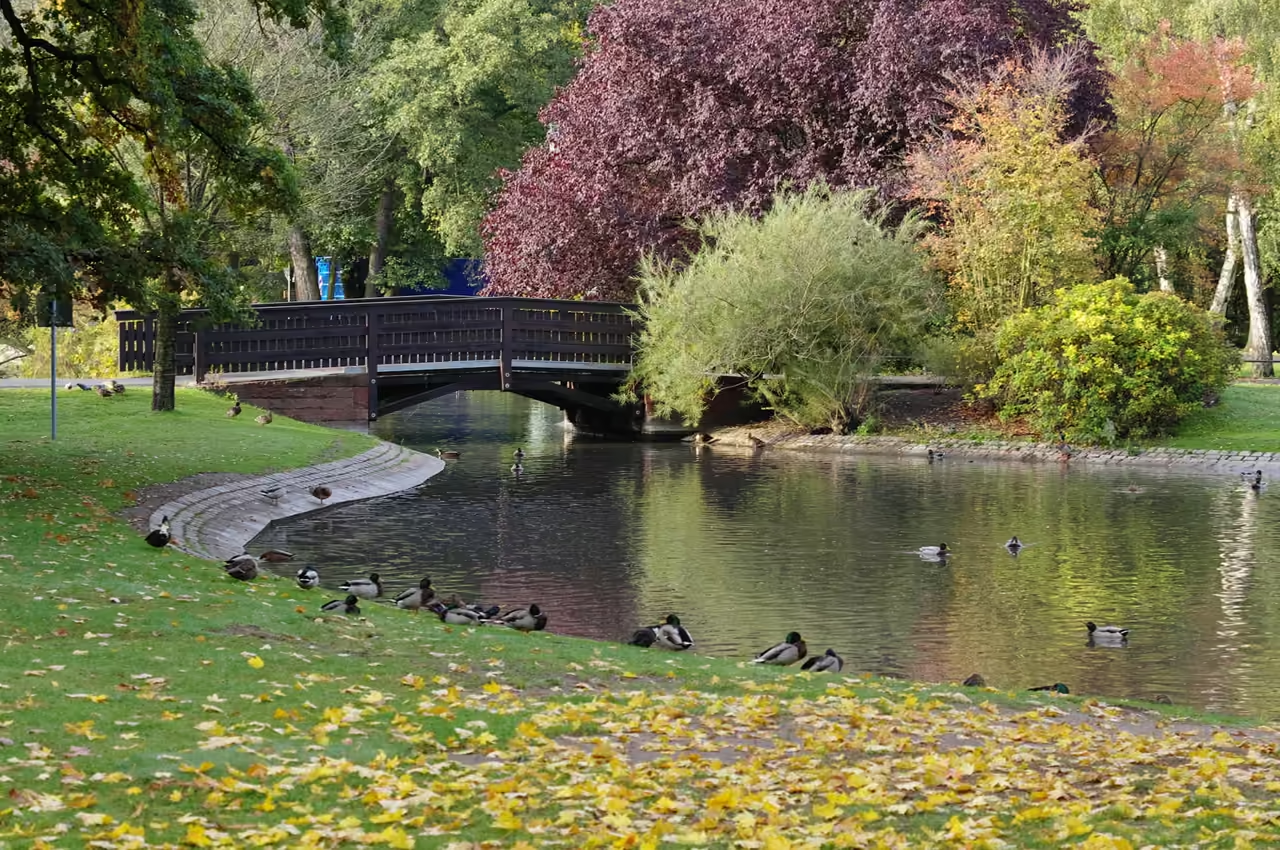
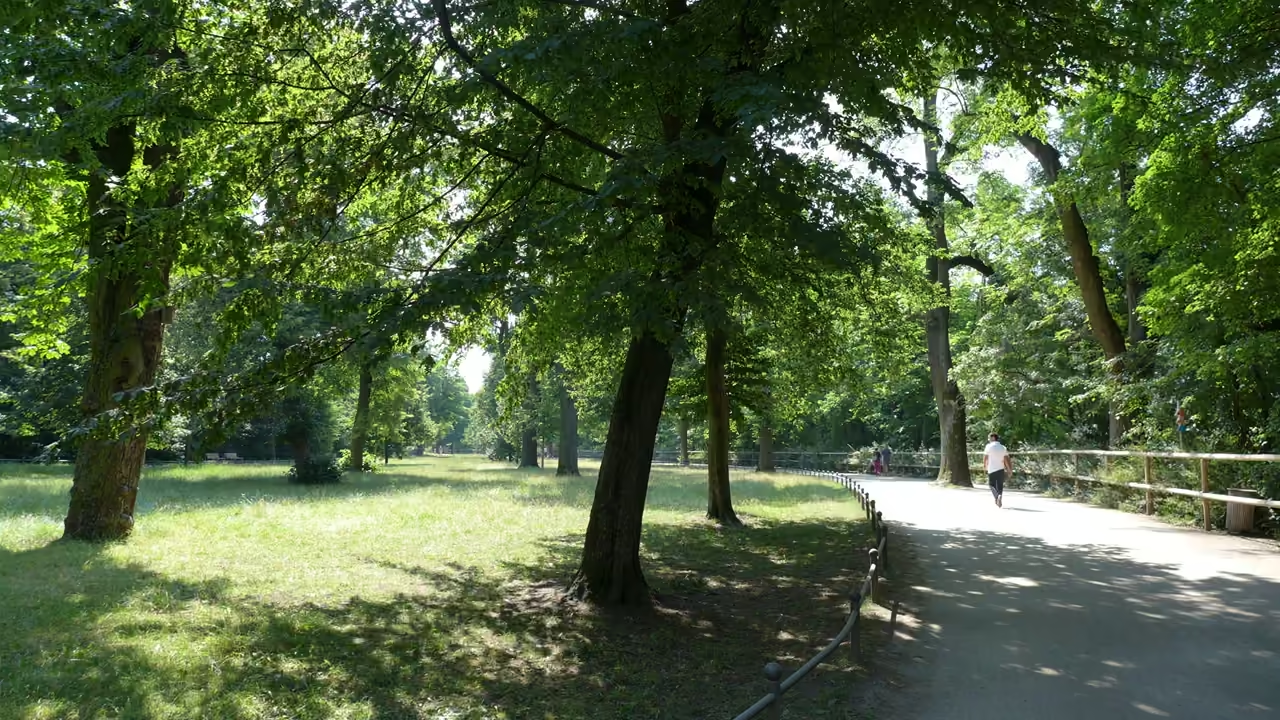
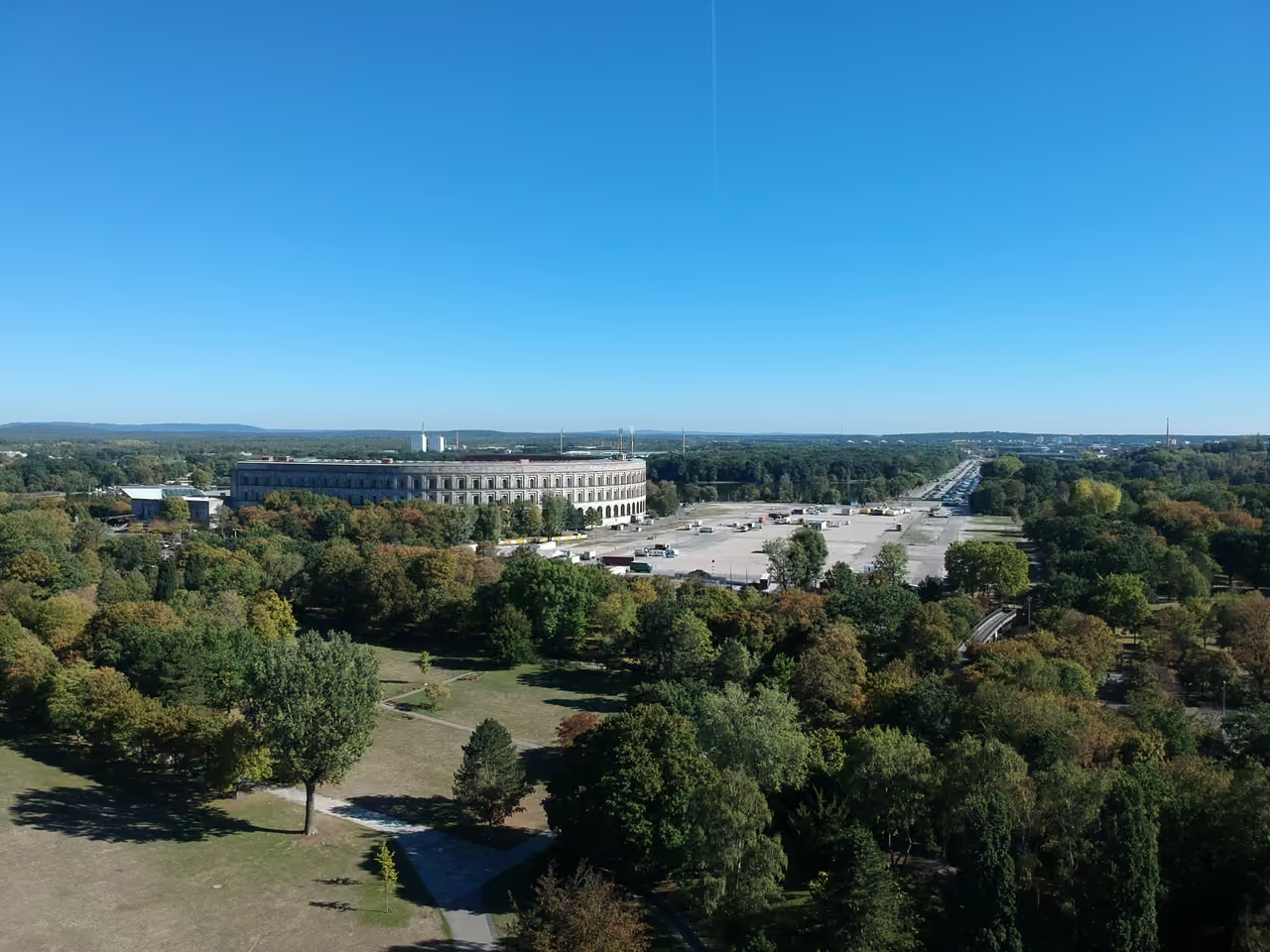
Spreading across twenty-one hectares of south-east Nuremberg, Luitpold Grove acts as an expansive backyard for the surrounding residential streets. Today it functions as a peaceful expanse of manicured turf, winding walking paths, and shady copse clusters. Most summers, picnic blankets cover the rolling lawns as audiences gather with wine baskets and fairy lights for the Klassik Open Air concerts. The neoclassical arcades of the Ehrenhalle still gaze out from the park eastern rim, providing a sober architectural backdrop to weekend joggers and dog walkers. Just across the tram tracks stands the Meistersingerhalle concert hall, while a low-key miniature golf course anchors the south-western corner. It is an honest municipal space where everyday leisure has decisively overwritten a dark mid-century legacy.
History of Luitpold Grove
Nuremberg celebrated a century of belonging to the Kingdom of Bavaria in 1906 by staging the grand Bavarian Jubilee Exhibition. Designers cleared hundreds of thousands of square metres near the Dutzendteich lakes, sculpting parkland dotted with Art Nouveau pavilions, exhibition halls, and even an incongruous inland lighthouse. The northern grounds took the name Luitpoldhain in honour of Bavaria Regent Prince Luitpold. When the gala ended, workers dismantled nearly all the temporary structures, sparing only the colossal machinery hall, which soon became a municipal event venue known as the Luitpoldhalle. Within six years, the park transformed once more when the city founded the Alter Tiergarten on the grounds in 1912. More than eight hundred animals lived beside the Nummerweiher ponds, drawing families from across Franconia to watch polar bears and leopards until the menagerie moved out to Schmausenbuck on the eve of the Second World War. Meanwhile, civic grief altered the landscape following the First World War. City architect Fritz Mayer designed the Ehrenhalle, a monumental stone arcade raised to honour fallen soldiers, which Mayor Hermann Luppe dedicated in 1930 as a solemn precinct for public mourning. That dignity proved short lived. Following the National Socialist seizure of power in 1933, party planners commandeered the park, demolishing gentle lawns to pave the eighty four thousand square metre Luitpoldarena. The Weimar war memorial was co-opted as a cult shrine for the Munich putsch casualties of 1923, linked to a massive timber and granite speaker podium by a wide stone marchway. Massive paramilitary assemblies filled the basin every September, their banners consecrated in theatrical rituals against the so called Blutfahne relic before grandstands packed with onlookers. The wartime destruction of the Luitpoldhalle during an air raid in August 1942 marked the beginning of the end for this theatrical staging ground. By 1960, postwar Nuremberg systematically cleared away the totalitarian grandstands, stripping out the granite marching path and replanting grass over the terraced slopes. The curving contours of the former rallies remain subtly visible under the lawn, yet the park identity has shifted completely. Thousands now gather on the very same ground with candelabras and corkscrews for classical symphonies, having reclaimed the soil as an enduring public common.
9 events spanning 100 years
Fun Facts
- • A nine-hole miniature golf facility operates near the park southern boundary, providing putting greens right beside the historical monumental axis.
- • Architect Fritz Mayer built the Ehrenhalle using shell limestone, deliberately framing views across the tranquil ponds rather than designing a martial fortress.
- • Landscape designers in 1959 did not completely flatten the rally arena, choosing instead to grade soil over the semicircular spectator tiers to create the curved grassy amphitheatre used today.
- • Nuremberg mayor Hermann Luppe envisioned the Ehrenhalle strictly as an anti-heroic space for quiet grief, unaware that political extremists would commandeer the terrace three years later.
- • The 1906 Bavarian Jubilee Exhibition featured a fully functioning maritime lighthouse erected far inland on dry Franconian soil to showcase modern electrical beacon technology.
- • The Alter Tiergarten operated inside the park for twenty-seven years until 1939, when keepers guided hundreds of animals through the city to their new home in the sandstone quarries of Schmausenbuck.
- • The Luitpoldhalle was among the largest indoor halls in Germany at the time of its destruction, with interior space capable of seating up to sixteen thousand people.
- • The annual Klassik Open Air festival draws over one hundred thousand music lovers who illuminate the night lawn with candelabras, tea lights, and paper lanterns.
- • The granite marching runway laid through the park in 1933 measured eighteen metres across, deliberately proportioned to magnify the sound of military boots during mass processions.
- • The so-called Blutfahne banner from the 1923 Munich putsch was kept stored under lock in Munich and brought to Luitpold Grove once a year under armed escort for consecration ceremonies.
Luitpold Grove Map & Neighborhood Explorer
This interactive map is centered on Luitpold Grove. Zoom in and move the map around to automatically discover Wikipedia photos and summaries of other nearby sights, monuments, and historical points of interest and stories in real-time!
Luitpold Grove FAQ
While we strive to keep this information accurate and up to date, we recommend verifying any details independently before making decisions based on them.
Places near Luitpold Grove
Make the most of your trip. Check out these top-rated spots located nearby.
 962m
Z-Bau Cultural Centre
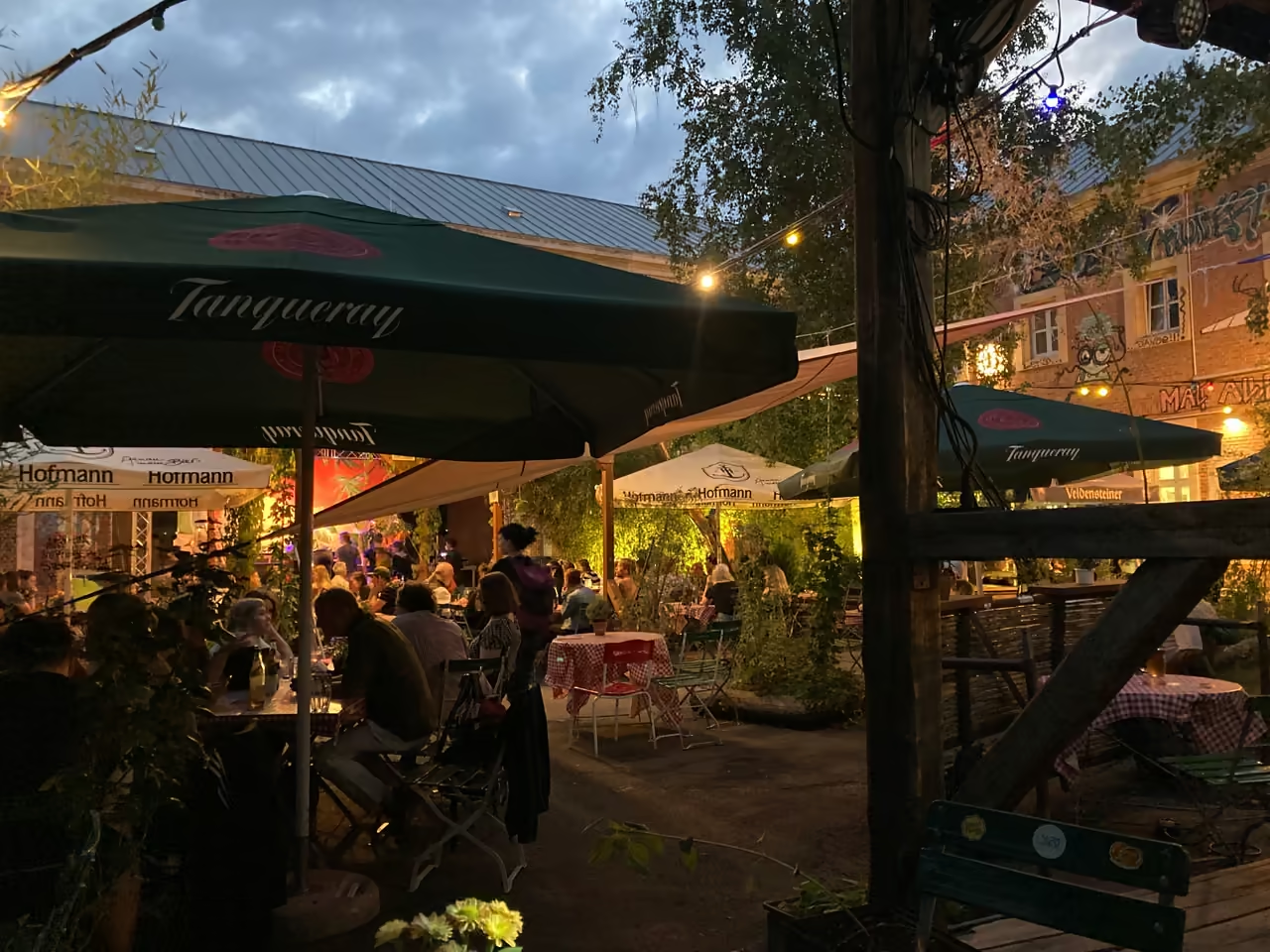
Operating out of a massive former military barracks in the southern district, this cultural hub represents the raw edge of the city's nightlife. The sprawling complex contains multiple concert halls, club spaces, and a massive outdoor beer garden. Programming bounces wildly between heavy techno nights, reggae festivals, and political art exhibitions. The massive scale of the venue allows for a truly immersive festival-like experience on weekends.
nightlife view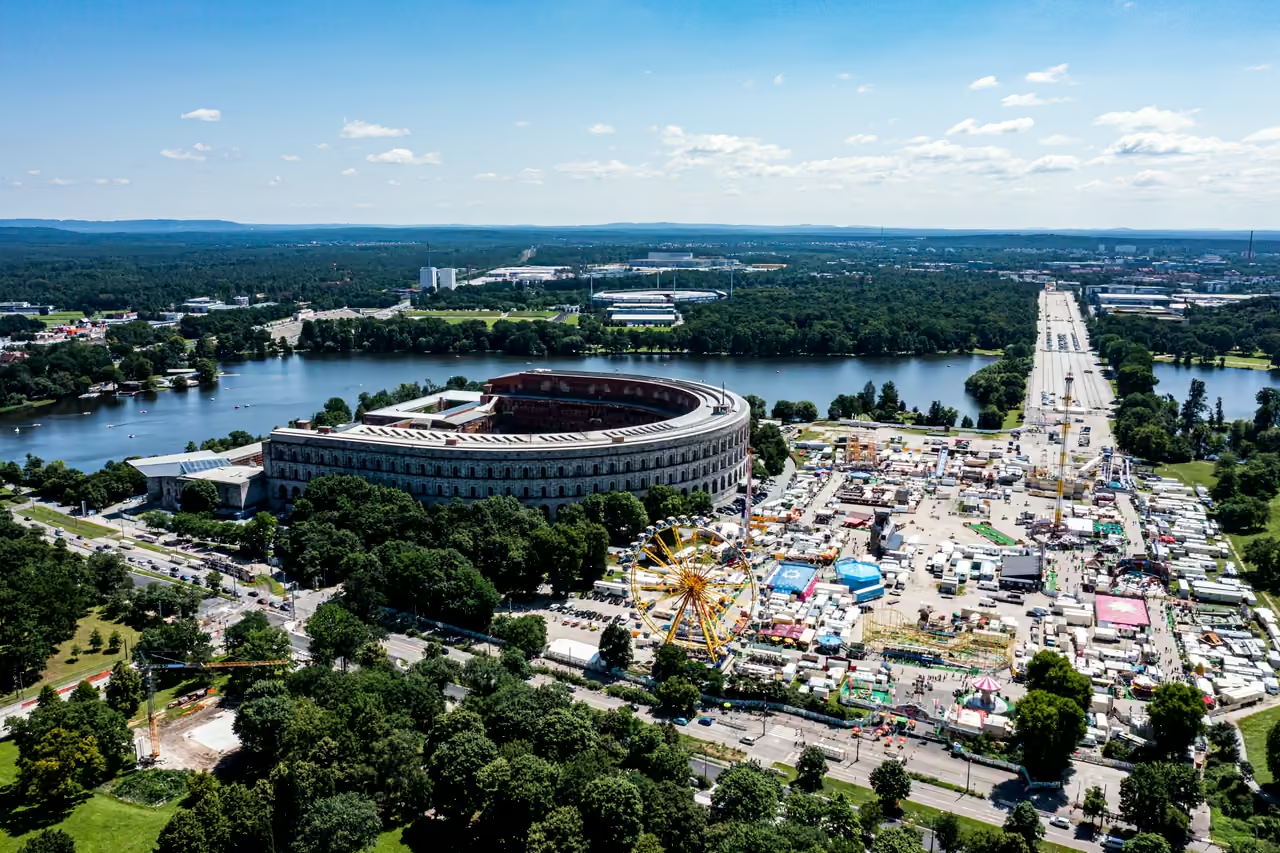 1359m
Nazi Party Rally Grounds
A grandstand with its colonnades gone, a horseshoe of granite that never received its roof, and a lakeside park where rowing boats still drift past: the old rally grounds in south east Nuremberg cover a lot of the twentieth century in one walk. Planned from 1933 as a stage for the Nazi Party's annual rallies and left unfinished when war arrived, the site is now an open air lesson in how architecture was used to stage power, and in how a city chose to face that legacy. Climb the broad front of the Zeppelin Grandstand, step into the Congress Hall's cavernous courtyard, then head into the Documentation Centre, whose glass and steel spike slices diagonally through the building's north wing. The setting adds its own contrast, because the same grounds hold joggers, festival crowds and families out for a Sunday stroll. Finish at the Dutzendteich lakeshore, where the Congress Hall's curved flank is reflected in the water.
attraction view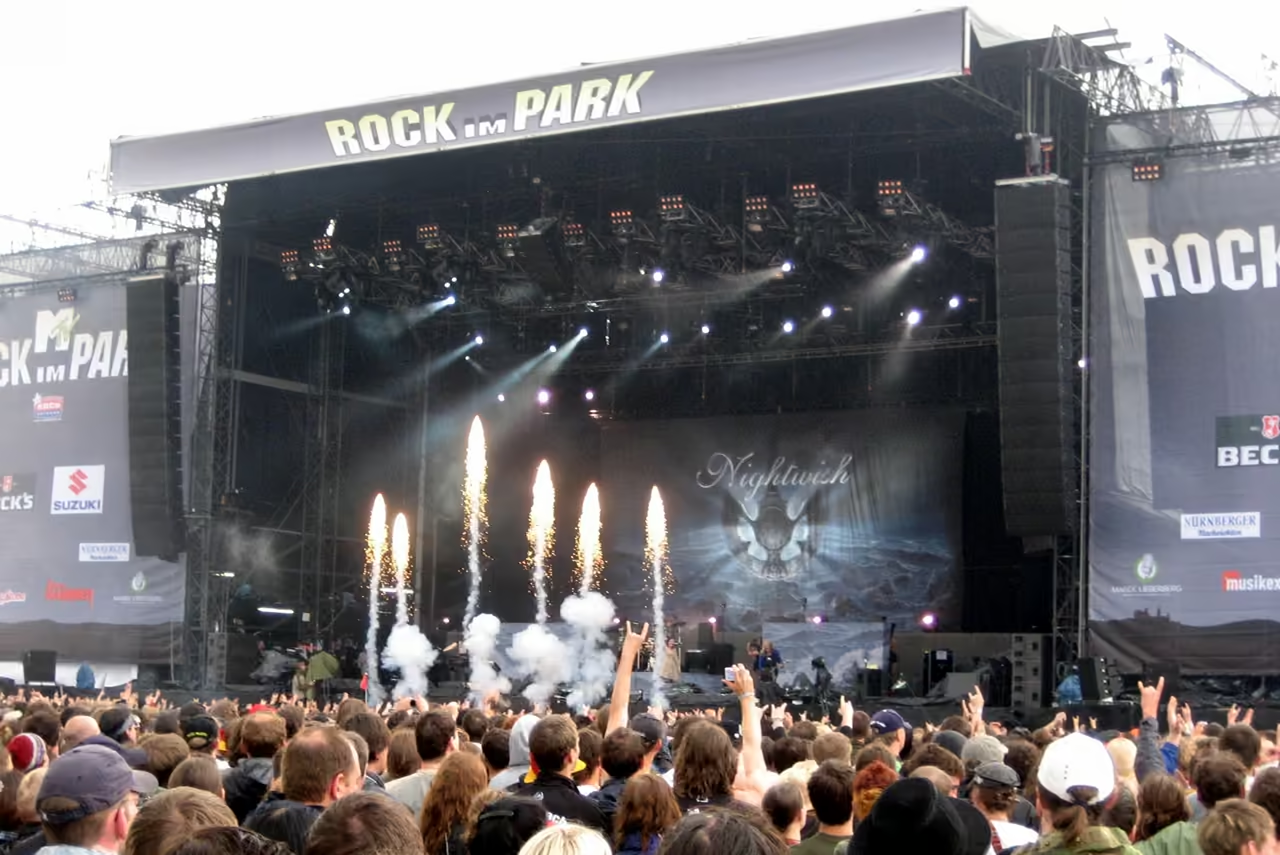 1367m
Rock in the Park
Heavy metal, punk, and alternative rock acts dominate three massive stages erected around the Zeppelinfeld and Dutzendteich lake. Tens of thousands of fans camp out in the surrounding green spaces for three days of intense, high-volume performances. The lineup mirrors the famous Rock am Ring festival, drawing major international headliners. The contrast of screaming guitars against the backdrop of monumental fascist architecture provides a surreal visual dynamic. Prepare for muddy fields, loud nights, and immense energy.
festival view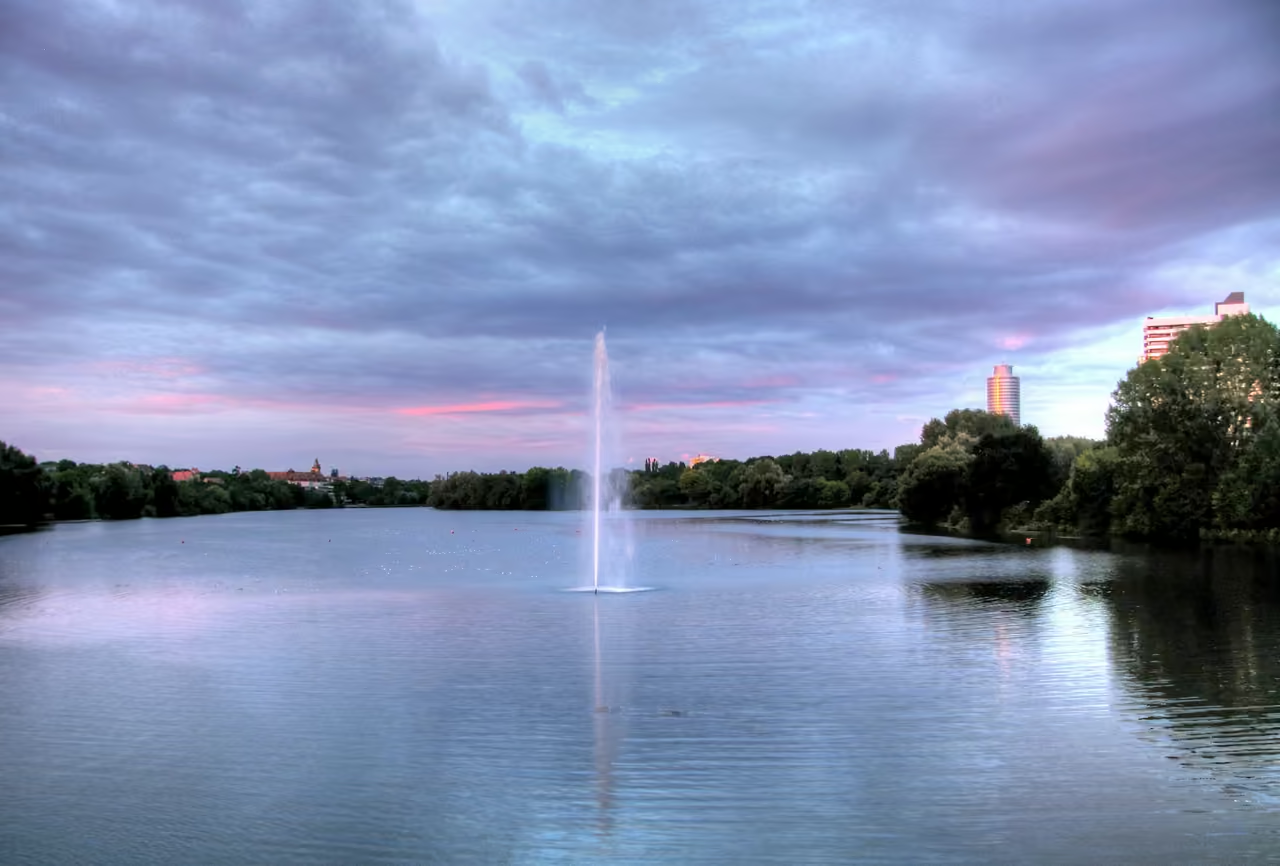 2008m
Lake Wöhrd
A wide stretch of open water slicing through Nuremberg's eastern districts, Lake Wöhrd functions as the city's outdoor living room from spring until autumn. Engineered after the war to stop the Pegnitz from swamping the historic centre, it separates into two distinct worlds: an active leisure zone downstream and a tangled nature reserve upstream. Swimmers gather at the fine sand of Norikus Bay, while pedal boats paddle across the lower basin under the silhouette of modernist high rises. Inline skaters and commuters glide down Johann Soergel Weg alongside swans drifting through the shallows. On sunny afternoons, local families unpack picnics on the grass while the gentle rumble of the S-Bahn fades behind rustling poplars.
park & nature view
See all nature & parks in Nuremberg
Including City Park, Hesperides Gardens, Lake Wöhrd, and more