Oaxaca City
Full City Guide, Map & 117 Things To Do
300,050 people live here.
That's 0.23% of the entire population of Mexico.
Oaxaca is a vibrant cultural capital nestled in a mountainous valley, widely celebrated as the culinary heart of Mexico. The city effortlessly blends its profound indigenous Zapotec and Mixtec heritage with magnificent Spanish colonial architecture. Walking through its historic streets reveals colourful facades, intricate green stone buildings, and courtyards filled with blooming bougainvillea. It offers an incredible sensory experience, from the scent of roasting cacao and rich moles in the markets to the sounds of traditional marimba music echoing through the plazas. Visitors are drawn to its artistic soul, evident in the numerous galleries, street murals, and surrounding artisan villages. This destination promises a deep, authentic connection to Mexican traditions and an unforgettable gastronomic journey.
Oaxaca City DNA
History of Oaxaca City
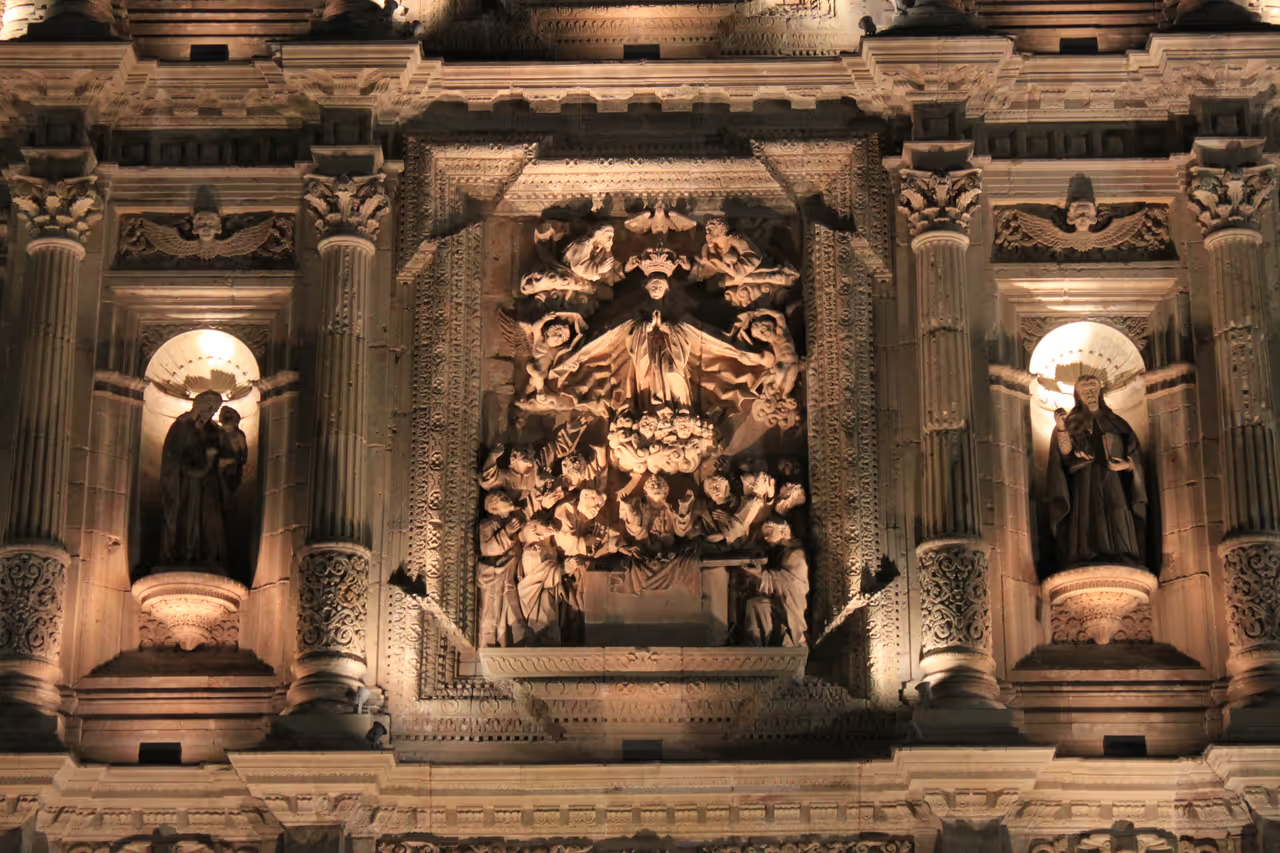
An uneasy royal marriage set the foundations of Oaxaca. The Aztec emperor Ahuízotl married his daughter to the Zapotec king Cocijoeza to seal a fragile peace. He did not actually trust his new son-in-law. In 1486, Ahuízotl dispatched a garrison of Mexica warriors to keep a watchful eye on the Zapotec court. The soldiers set up camp at the base of the elevated ridge known today as Cerro del Fortín, clearing away a thicket of pod-bearing huaje trees to build their barracks. They called their new outpost Huāxyacac, meaning at the tip of the huajes. The native trees still drop their seed pods across the valley today, and the Nahuatl term eventually morphed into the word Oaxaca. Spanish soldiers arrived in 1521 and immediately defied their superiors. Hernán Cortés had instructed his men to establish a settlement further south in Tututepec to secure its gold reserves. The troops found the coastal heat miserable. They marched right back to the Oaxaca Valley and squatted on the old Mexica military post, preferring its mild weather over their commander's greed. Once the crown finally formalised the rebellious settlement, Bishop Francisco López de Zárate uncovered deposits of green cantera stone nearby. Local builders quickly adopted the volcanic rock. They turned the expanding grid into a sea of pale olive masonry, a distinct colour still visible today across the broad facade of the cathedral. A tiny insect bankrolled the city's eighteenth-century expansion. Indigenous farmers cultivated the cochineal bug on prickly pear cacti, harvesting and crushing the insects to produce a highly prized crimson dye. The intense red pigment became the region's second most lucrative export after silver, funding massive religious complexes. The heavy, low-slung proportions of these baroque structures were born of strict survival rather than aesthetic choice. The ground here fractures constantly as the Cocos tectonic plate shifts beneath the surface. Successive earthquakes in 1727, 1787, and 1800 repeatedly cracked open the colonial grid. In response, architects built the Templo de Santo Domingo de Guzmán with fortress-like walls up to two metres thick to stop the vaulted ceilings from collapsing during the tremors. Artillery fire battered the streets in November 1812. Rebel commander José María Morelos blasted his way past royalist cannons at the Fortín de la Soledad to seize the provincial capital during the war for independence. A century later, the region's autonomous streak reached a boiling point during the Mexican Revolution. Furious with the political chaos unspooling in Mexico City, the local government simply declared Oaxaca a sovereign state in 1915. For a brief period, the city operated entirely on its own terms. Leaders minted their own revolutionary coins and printed distinct postage stamps. A federal army under Venustiano Carranza marched into the valley a year later to crush the rebellion, seizing the telegraph offices and dragging the local government back into the republic. Disaster emptied the capital in the winter of 1931. An enormous earthquake flattened almost the entire urban centre, and the resulting exodus of residents threatened to leave the broken grid a ghost town. To lift local morale and draw people back, civic leaders staged a colossal cultural festival the following year on the Cerro del Fortín. Indigenous delegations from across the surrounding valleys marched up the slopes to perform traditional dances. This gathering revived the local economy and evolved into the Guelaguetza. Every July, thousands now gather on the hill to watch dancers from the eight regions toss raw pineapples and woven palm hats directly into the cheering crowds.
13 Events spanning 2506 years
Map of Oaxaca City
Interactive Destination & Itinerary Map
This map blends our curated city guides—featuring best photo spots, scenic walks, viewpoints, hidden gems and much more—with a live Wikipedia explorer. Click on our numbered pins to plan your routes, or zoom in on the surrounding neighborhoods to discover verified local landmarks, museums, and stories with dynamic Wikipedia summaries and photos!
Fun Facts
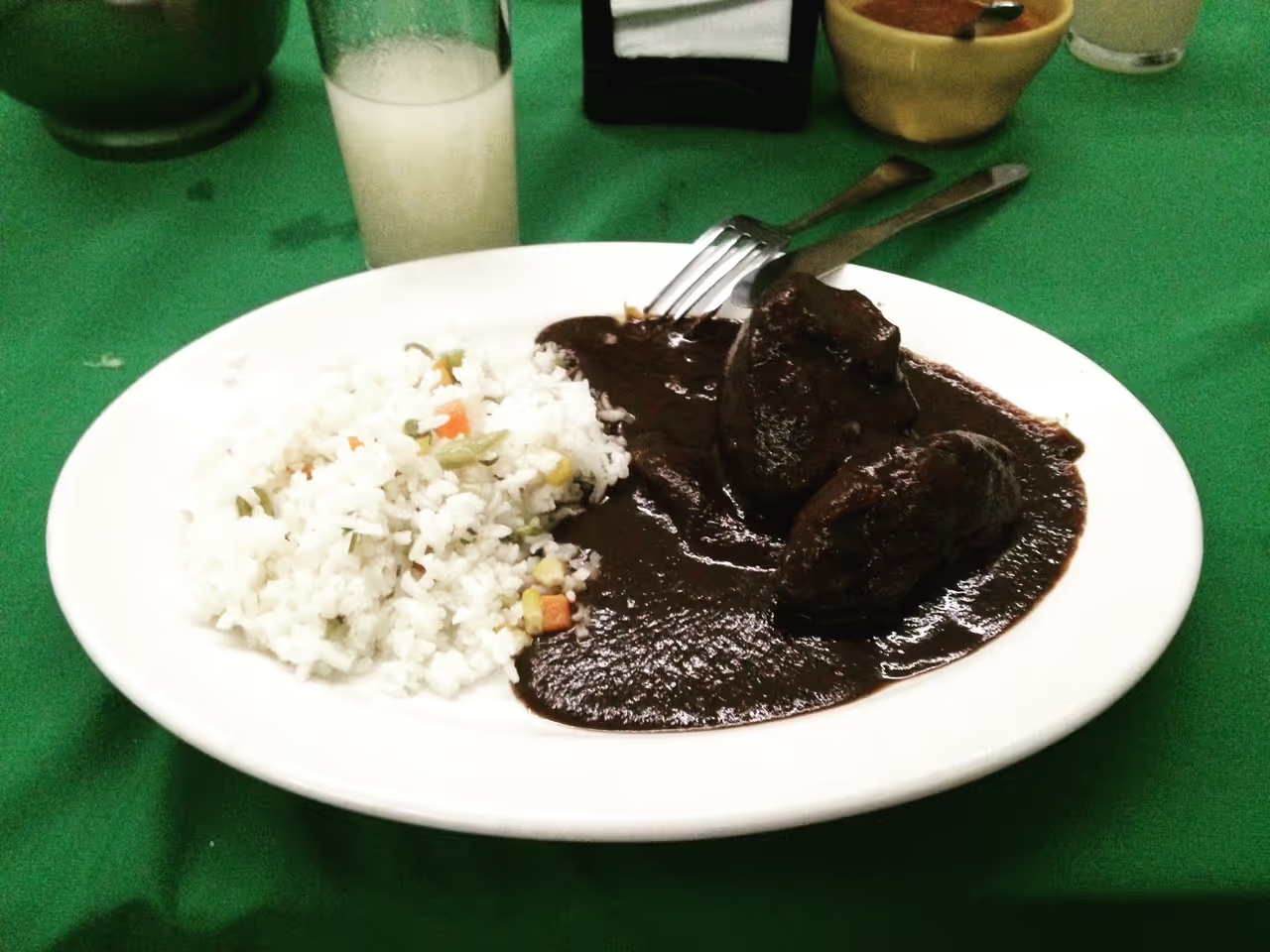
- • Oaxaca is widely considered the culinary capital of Mexico, boasting seven distinct styles of complex mole sauces that can contain upwards of thirty ingredients each.
- • The city owes its distinctive greenish hue to a local volcanic stone called 'cantera verde', which was used to construct many of its most famous colonial buildings.
- • Every December, the city hosts the Night of the Radishes, a fiercely competitive festival where local artisans carve massive, specially grown radishes into elaborate historical and religious scenes.
- • The local delicacy known as 'chapulines' consists of grasshoppers that are toasted with garlic, lime, and salt, offering a crunchy, protein-rich snack that dates back to pre-Hispanic times.
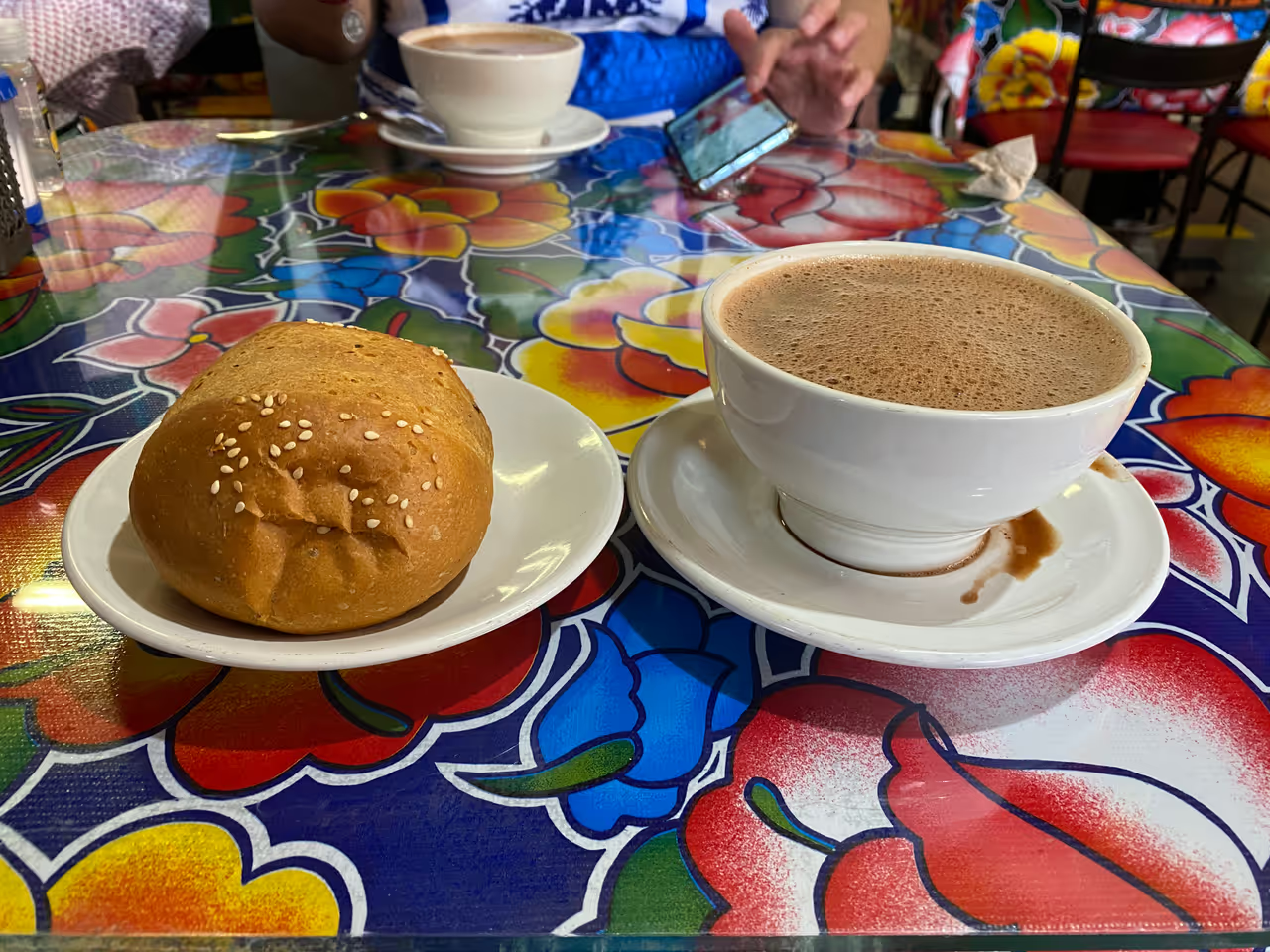
- • Hot chocolate in Oaxaca is typically consumed not as a dessert, but as a breakfast or evening staple, traditionally frothed using a carved wooden whisk called a 'molinillo'.
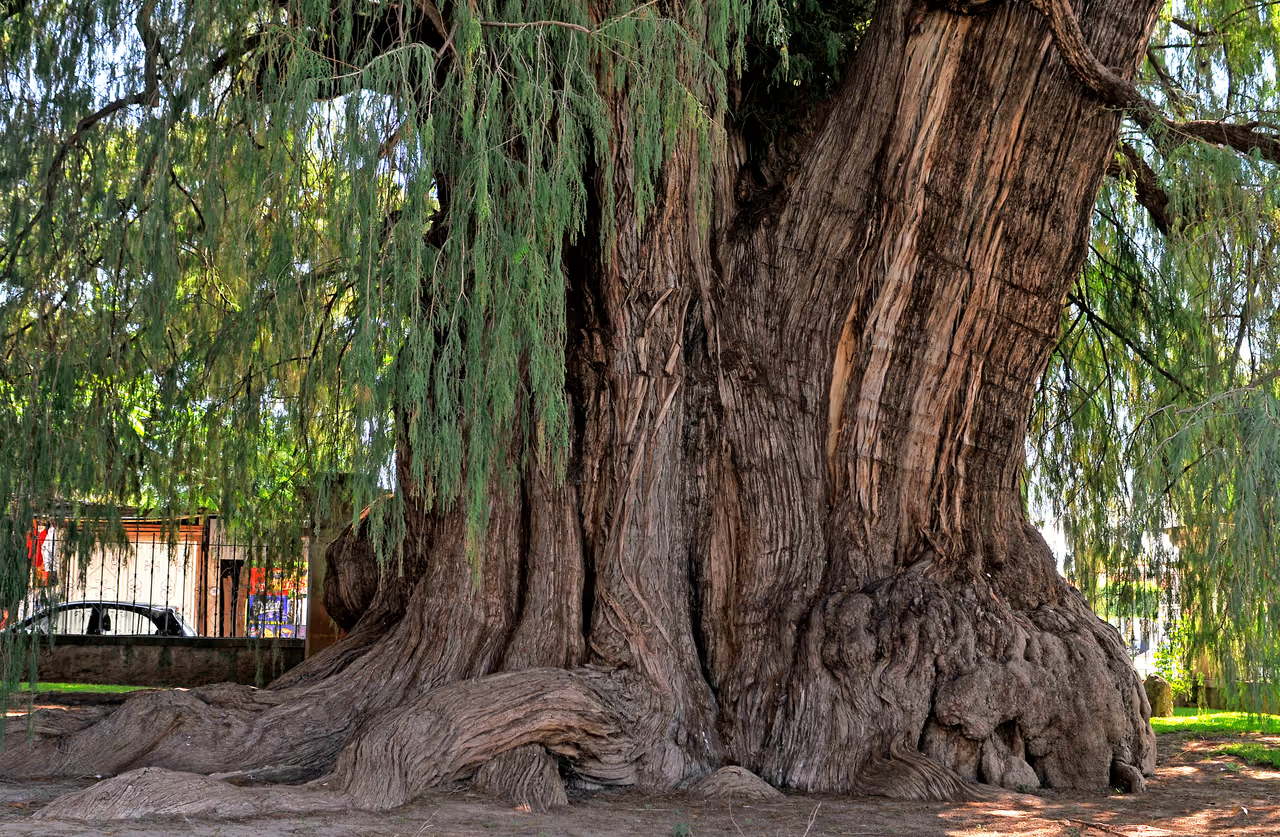
- • The towering Arbol del Tule, located just outside the city, boasts the stoutest tree trunk in the world and is estimated to be over 1,400 years old.
Did You Know?
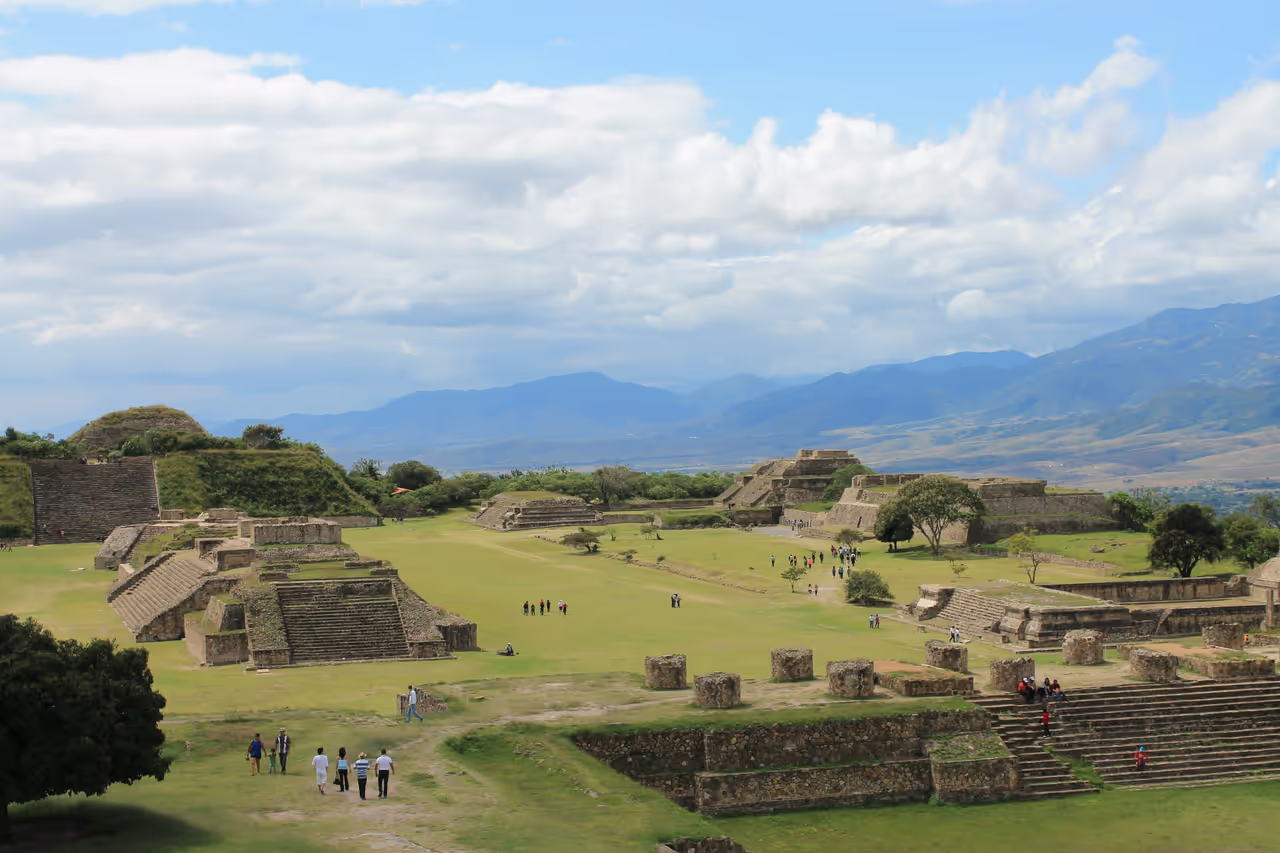
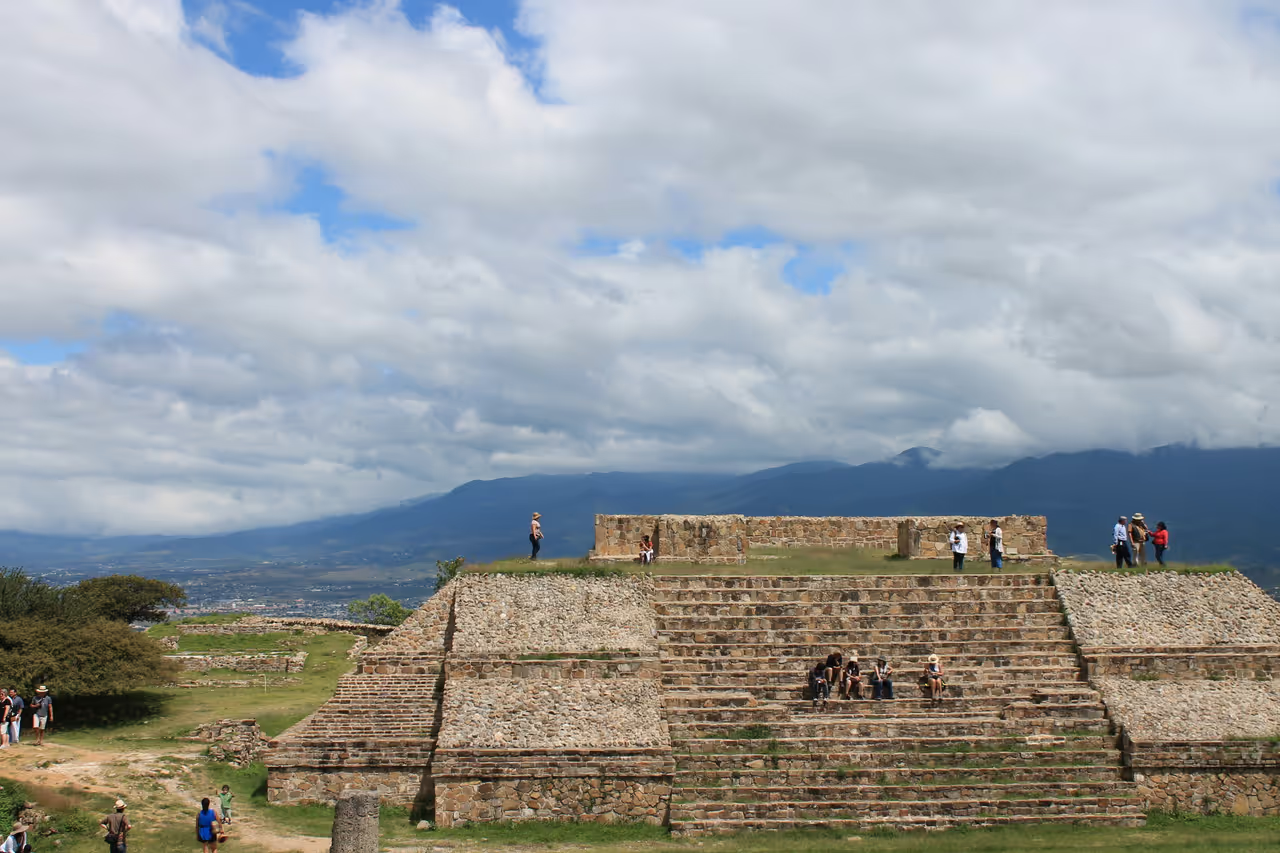
- • The ancient Zapotec capital of Monte Albán, overlooking the city, was one of the first major cities in Mesoamerica and reached a peak population of roughly 35,000 inhabitants.
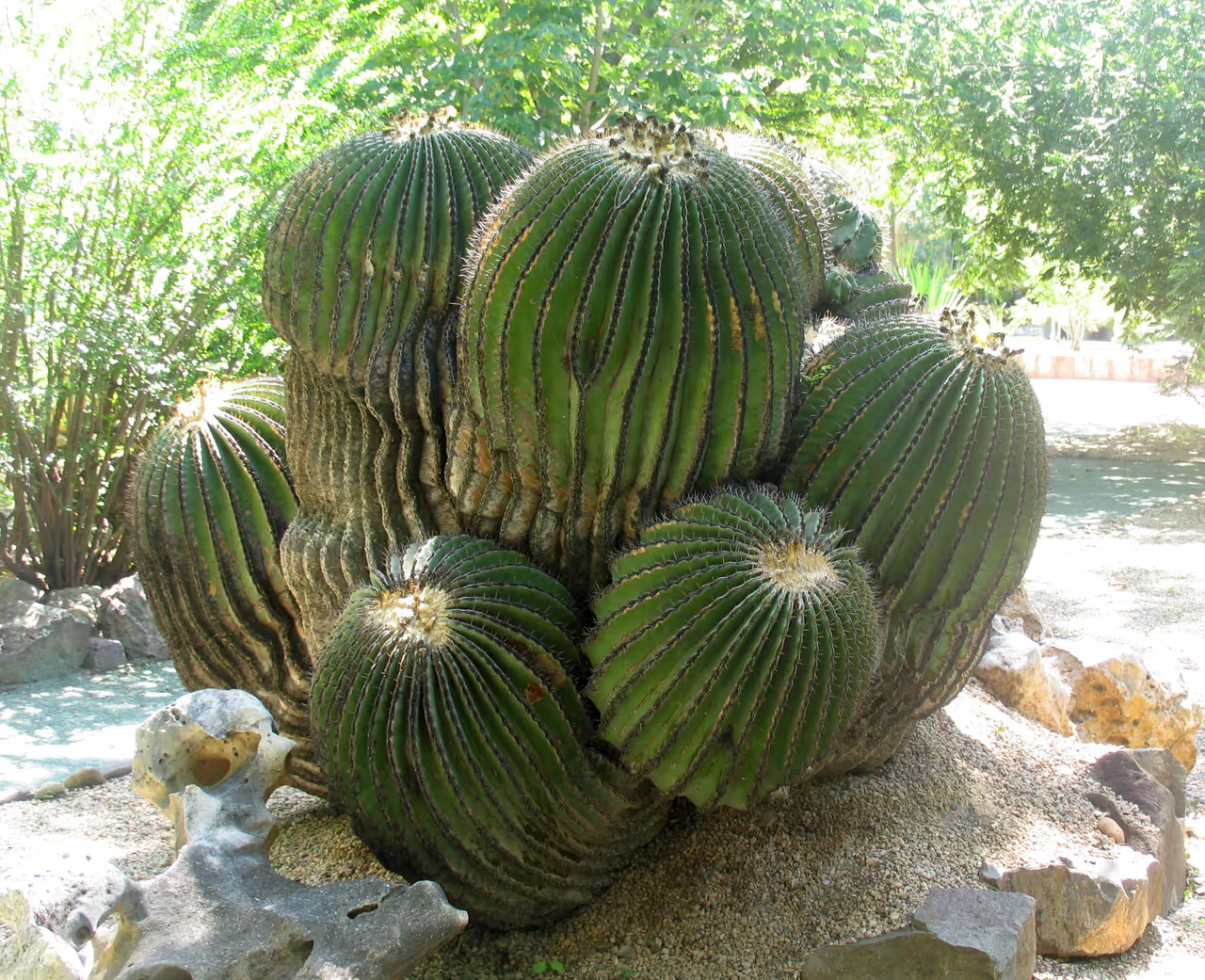
- • The state of Oaxaca is one of the most biodiverse regions in Mexico, a fact celebrated in the city's Jardín Etnobotánico, which exclusively features plant species native to the state.
- • Benito Juárez, Mexico's 26th president and a monumental figure in the country's history, was a Zapotec indigenous man who walked from his mountain village to Oaxaca city to seek an education.
- • The region was historically a massive global supplier of cochineal, a vibrant crimson dye extracted from insects living on cacti, which became one of Spain's most valuable exports after silver.
- • Oaxaca remains a stronghold of indigenous culture, with sixteen formally recognised ethnic groups in the state and dozens of distinct languages still actively spoken in the city's surrounding markets.
- • The impressive Templo de Santo Domingo took over half a century to build and survived periods of being used as a military stable before its meticulous restoration in the late twentieth century.
RESOURCES
Official WebsiteVideos of Oaxaca City
Seasons
Spring
Spring is marked by steadily rising temperatures, culminating in highly energetic, hot days just before the rains arrive. The...
Summer
Summer brings the rainy season, transforming the surrounding arid valleys into lush, vibrant green landscapes. The rain...
Autumn
Autumn is arguably the most magical time to visit, as the rains taper off and the air becomes crisp and clear. The landscape...

Winter
Winter offers pleasant, sunny days with very little rainfall, though temperatures can drop significantly during the night due to...
Top Attractions in Oaxaca City
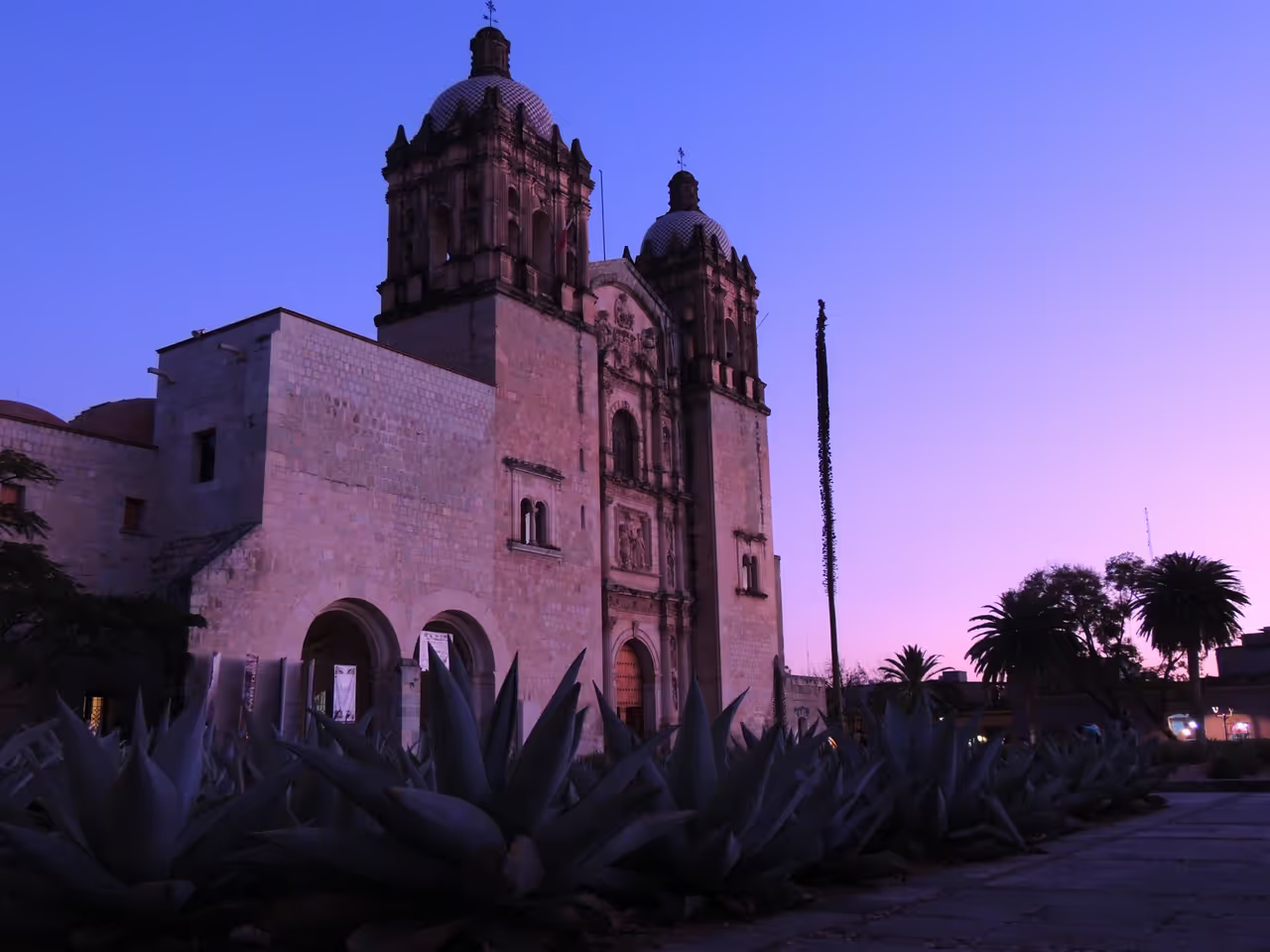
Church and Convent of Santo Domingo de Guzmán
Step inside the Templo de Santo Domingo de Guzmán and prepare to be completely mesmerised by the sheer scale and intricate...
view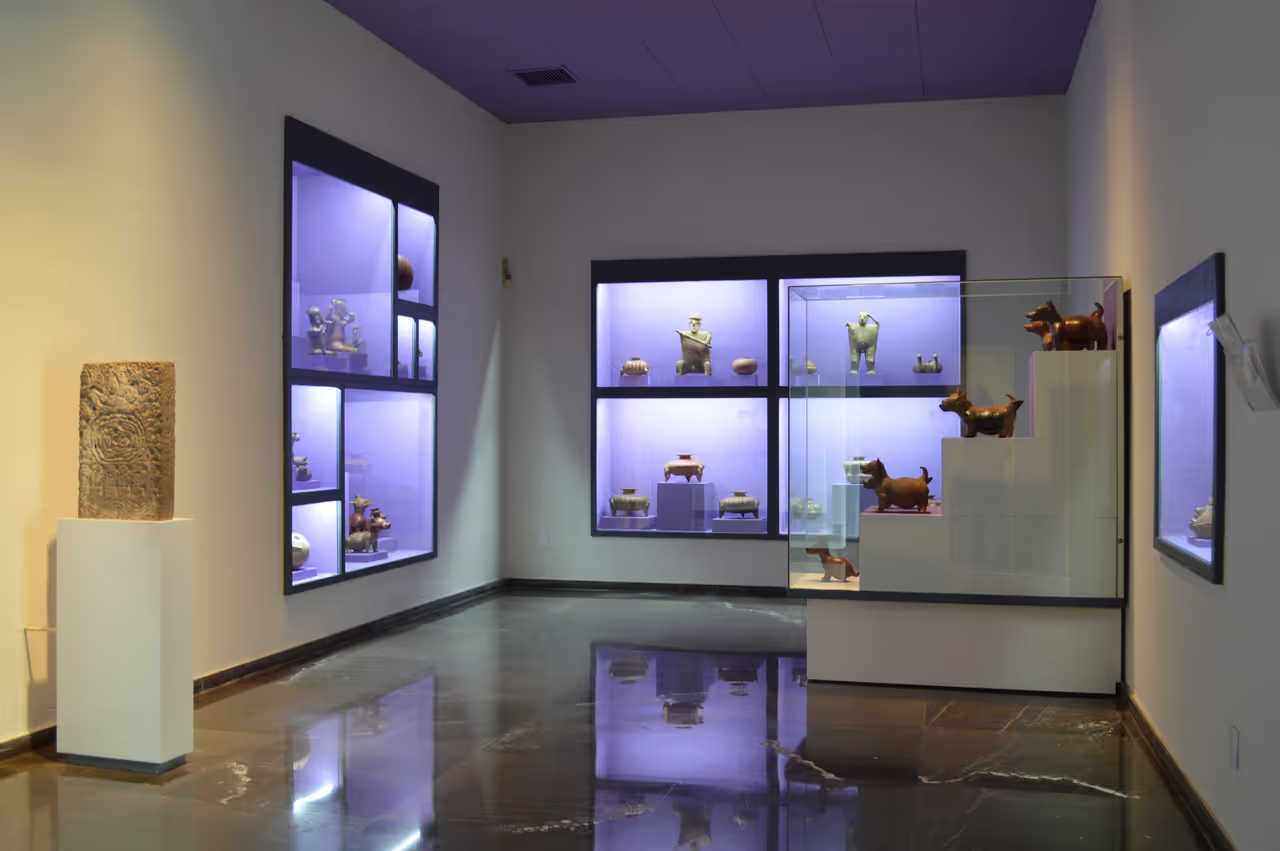
Rufino Tamayo Museum of Pre-Hispanic Art
Step into a world where history is viewed through the eyes of an artist, not an archaeologist. The Rufino Tamayo Museum of...
view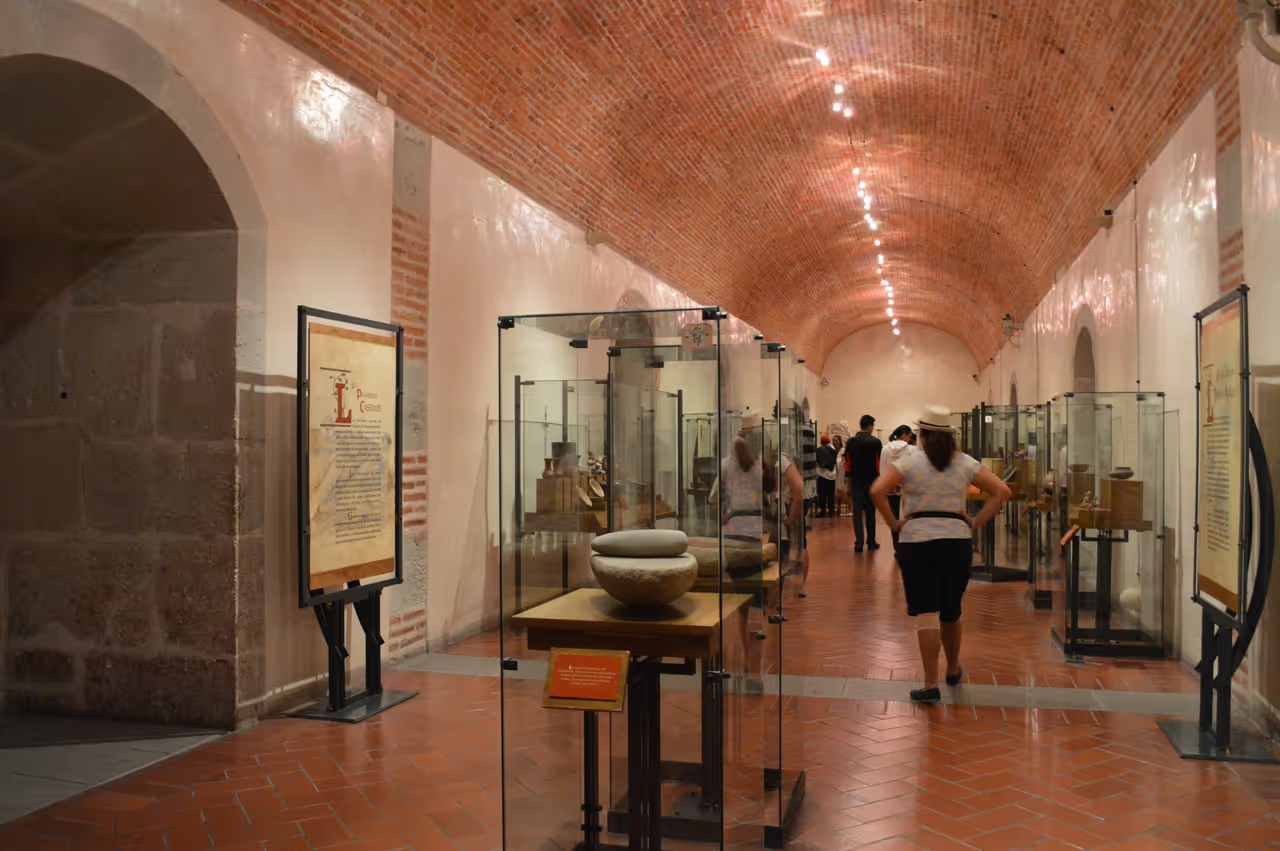
Santo Domingo Cultural Centre
Imagine walking into a place where 17th-century religious devotion meets world-class archaeology. The Santo Domingo Cultural...
view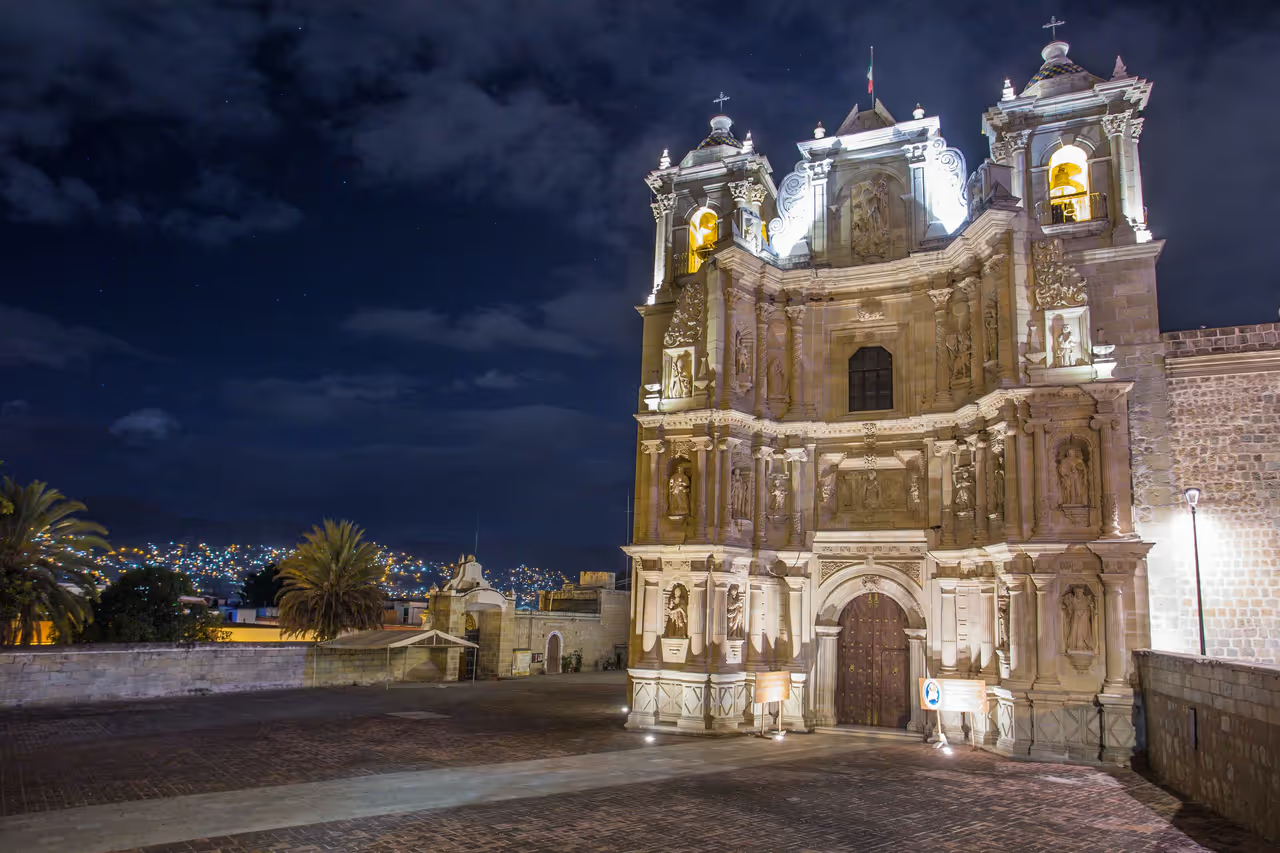
Basilica of Our Lady of Solitude
Standing as a majestic sentinel in the heart of Oaxaca City, the Basilica of Our Lady of Solitude is a masterclass in colonial...
view
Best Views

Oaxaca City Itineraries
TRIP PLANNER
4 Days Recommended
Four days allows for a comfortable balance of exploring the dense historic centre, savouring the local markets, and visiting the majestic Monte Albán ruins. It provides enough time to take a full-day excursion to nearby artisan villages and natural wonders like Hierve el Agua without feeling rushed. This duration ensures you can experience the culinary scene at a leisurely pace.
1 Day in Oaxaca: Essentials Itinerary
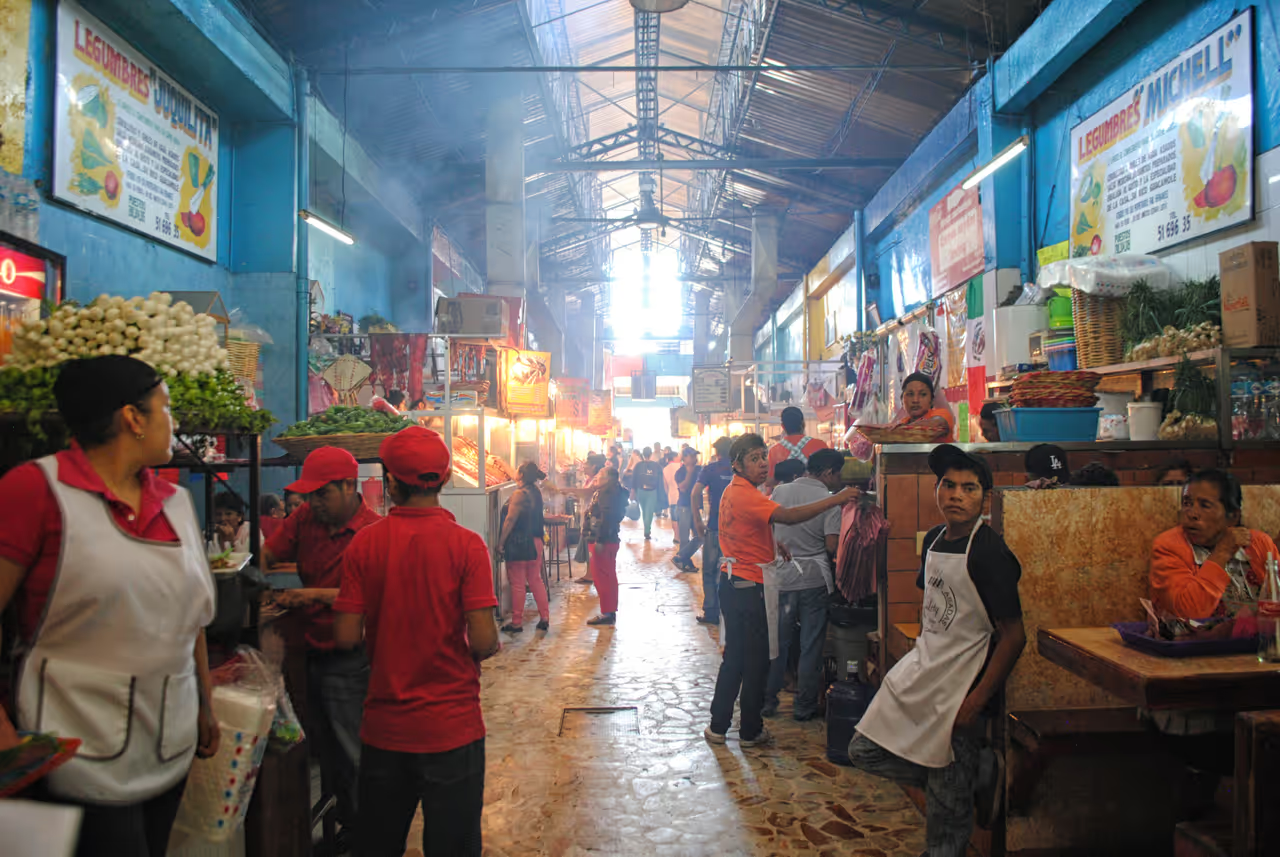
If you only have one day, this intense but rewarding itinerary hits the absolute must-see highlights of the historic centre. You will experience the monumental colonial architecture, dive headfirst into the chaotic brilliance of the local food markets, and witness the region's finest ancient treasures. It is designed to provide a rapid, sensory immersion into the city's unique blend of indigenous culture and Spanish heritage. Prepare for a full day of walking and eating.
view itinerary
3 Days in Oaxaca Itinerary
Three days allows you to venture beyond the city centre to explore the magnificent ancient ruins overlooking the valley. You will have time to appreciate the deep botanical history of the region and experience the contrasting atmospheres of different historic neighbourhoods. This itinerary balances major archaeological sites with leisurely, culturally enriching strolls and vibrant nightlife. It provides a highly satisfying overview of what makes the city so globally celebrated.
view itinerary
5 Days in Oaxaca: Deep Dive Itinerary
A five-day stay grants you the freedom to thoroughly explore both the city and the diverse, culturally rich valley that surrounds it. You will visit isolated natural wonders, wander through multiple artisan villages, and seek out hidden archaeological gems. It allows for a relaxed pace to truly absorb the art, architecture, and culinary mastery of the region. This is the ultimate, comprehensive journey through the heart of Zapotec and colonial heritage.
view itinerary
Food in Oaxaca City
UNESCO World Heritage Sites
Free Things to do in Oaxaca City
Parks & Nature
Ethnobotanical Garden of Oaxaca
This garden is a living testament to the deep relationship between the people of Oaxaca and the land. Walking through its paths...
view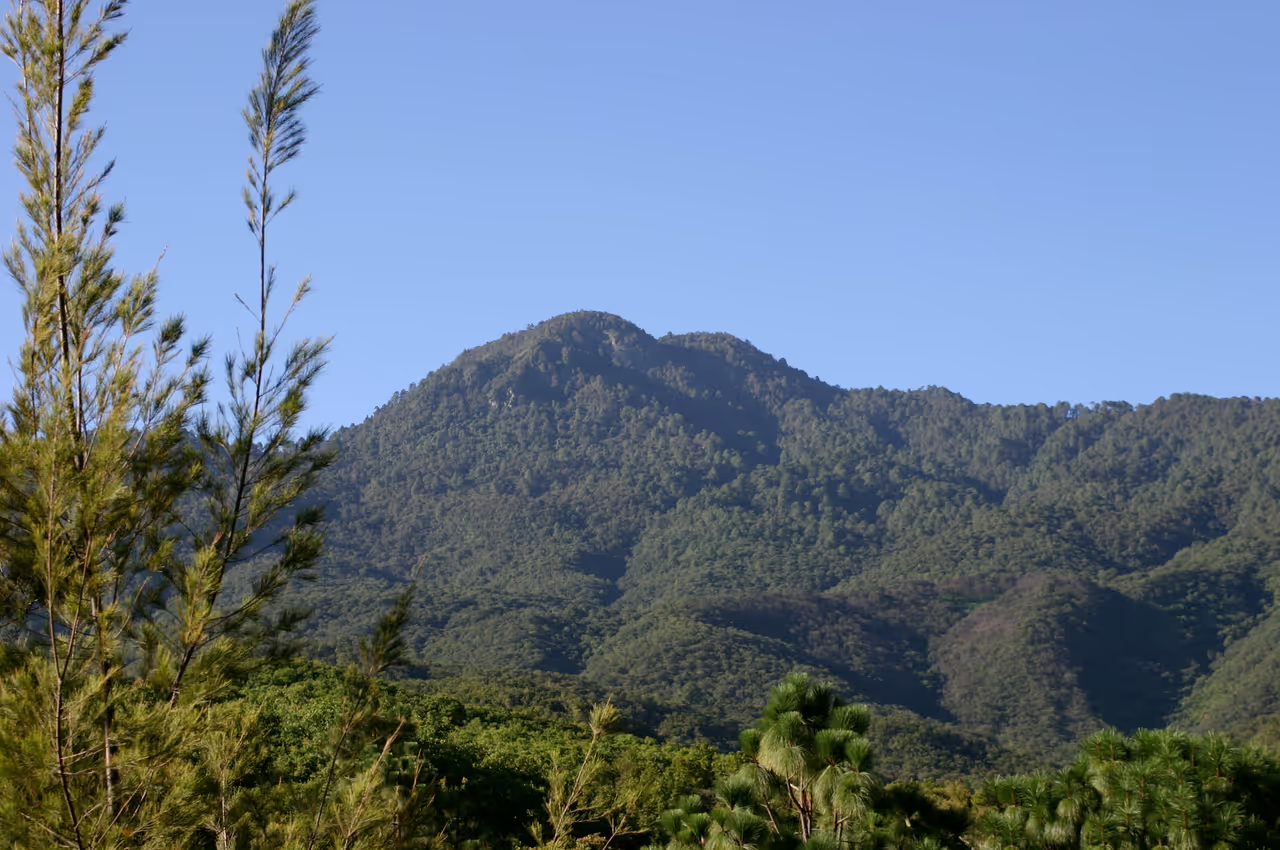
Benito Juárez National Park
Just a short journey from the vibrant streets of Oaxaca city lies a majestic sanctuary of nature, where the air turns crisp and...
view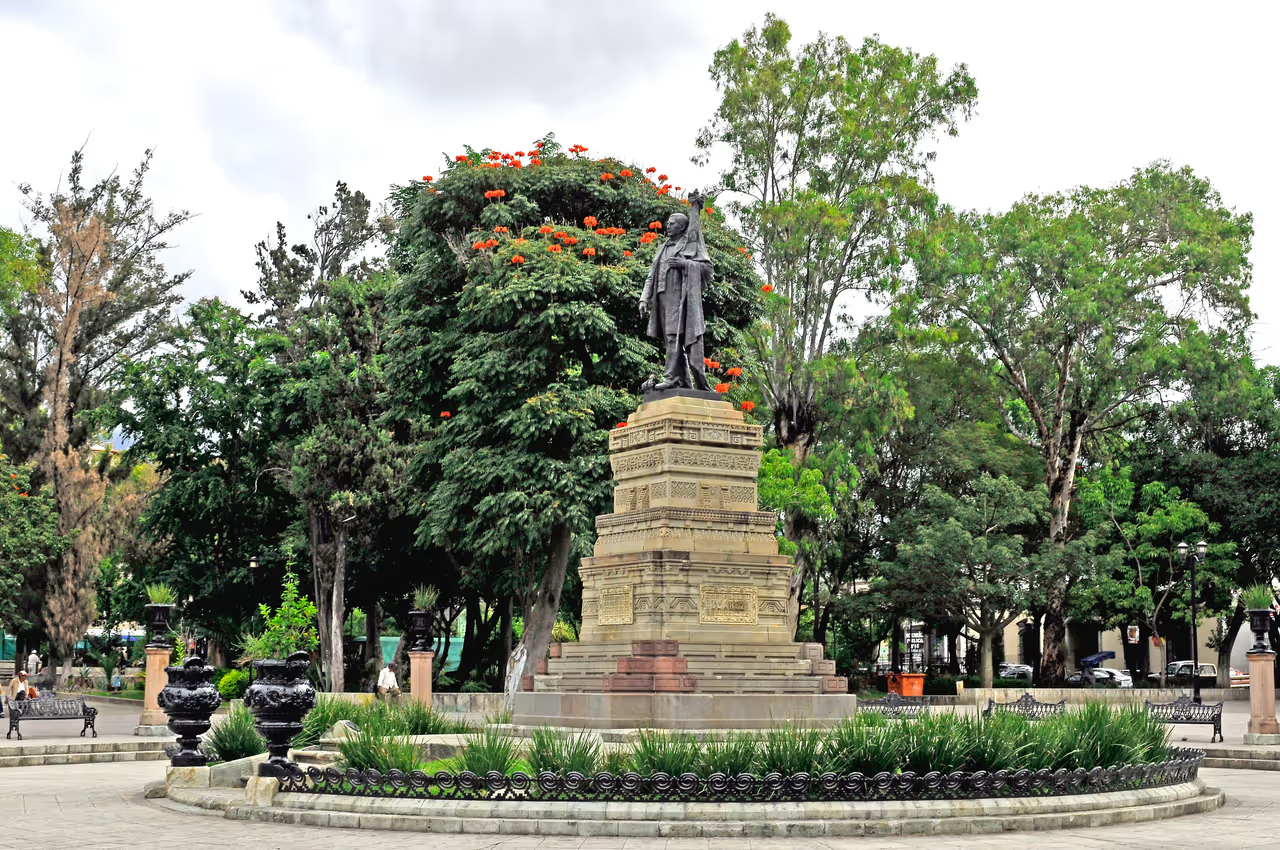
Paseo Juarez El Llano
Paseo Juarez El Llano serves as a tranquil green oasis within the historic centre of Oaxaca City, offering a peaceful retreat...
view
Highlights & Must-Sees
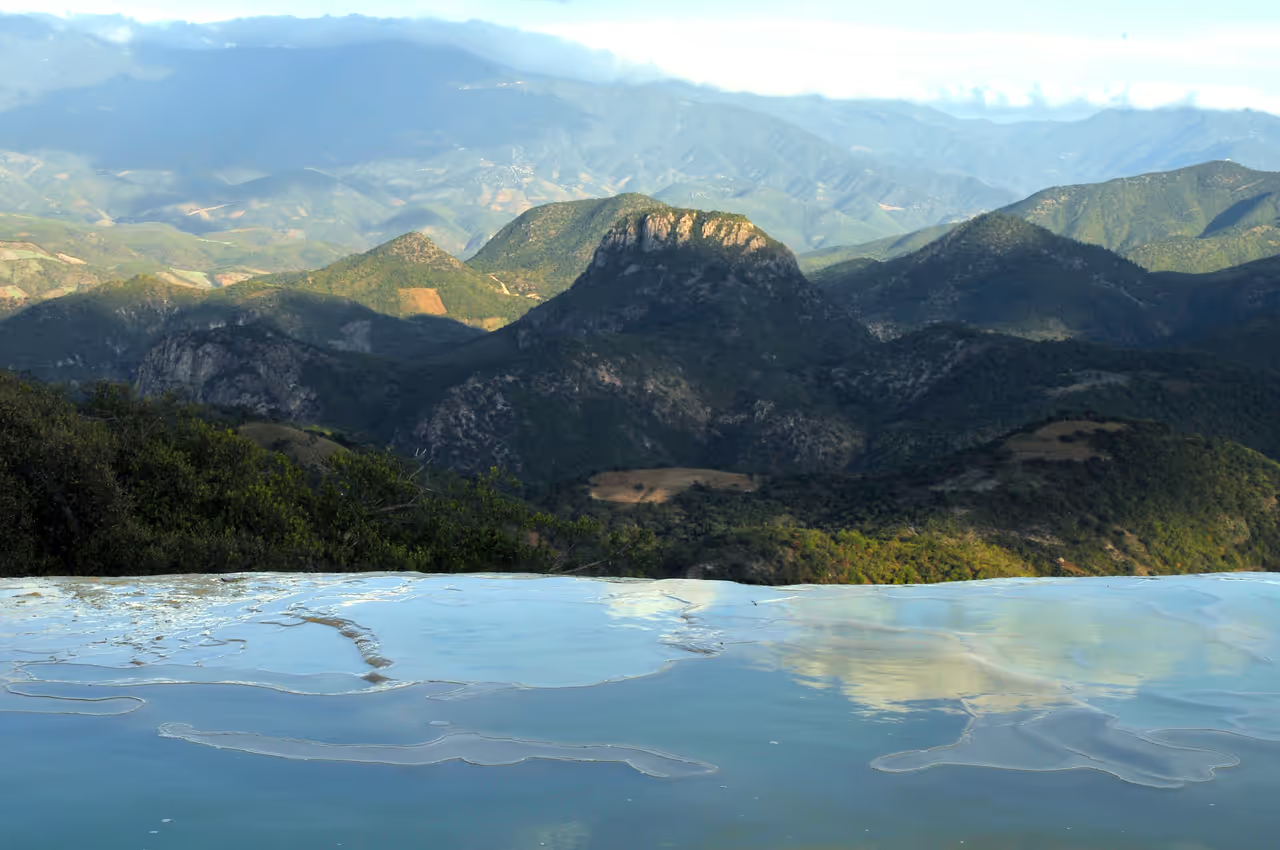
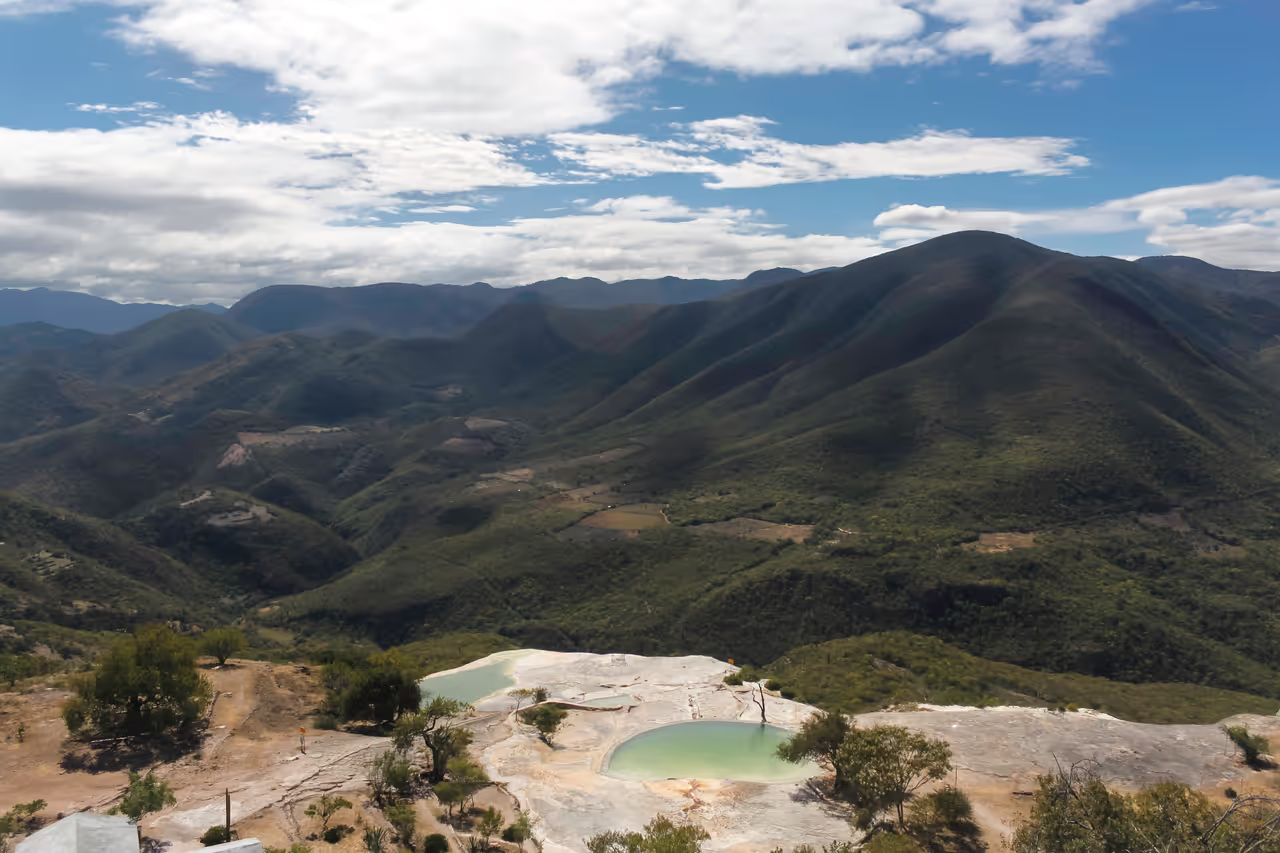
Hierve el Agua Petrified Waterfalls
Set against a dramatic mountainous backdrop, Hierve el Agua is one of only two petrified waterfall sites in the entire world...
viewRelaxing at the Zócalo
The Zócalo is the beating heart of Oaxaca, a vibrant, tree-shaded main square that perfectly captures the city's infectious...
view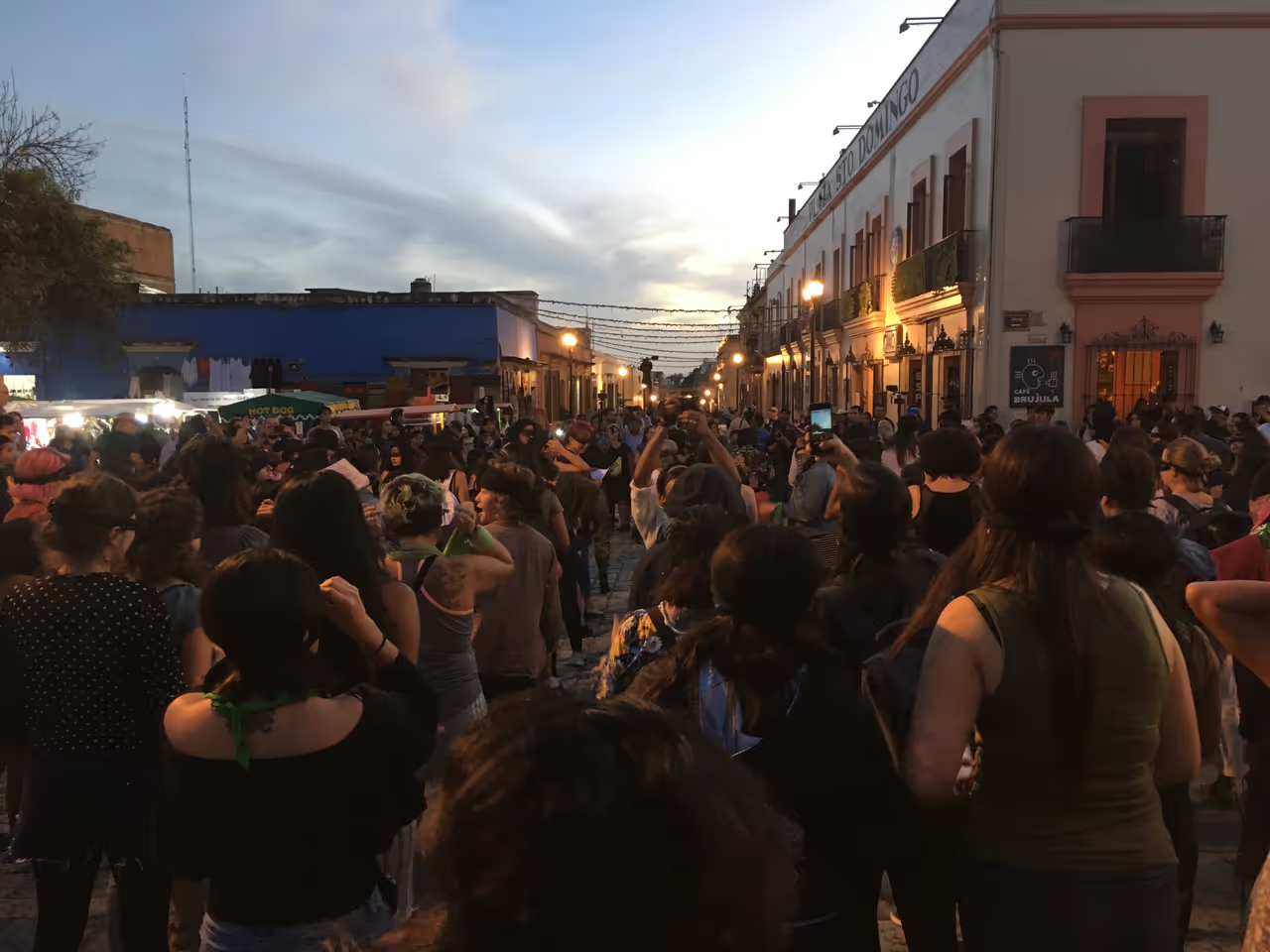
Strolling the Macedonio Alcalá Corridor
This wide, pedestrianised street is the cultural and visual spine of the historic centre, connecting the main square to the...
view
Textile Weaving in Teotitlán del Valle
For nearly five hundred years, the Zapotec village of Teotitlán del Valle has been famous for its master weavers. The artisans...
view
Best Walks in Oaxaca City
Jalatlaco Cobblestone Wander
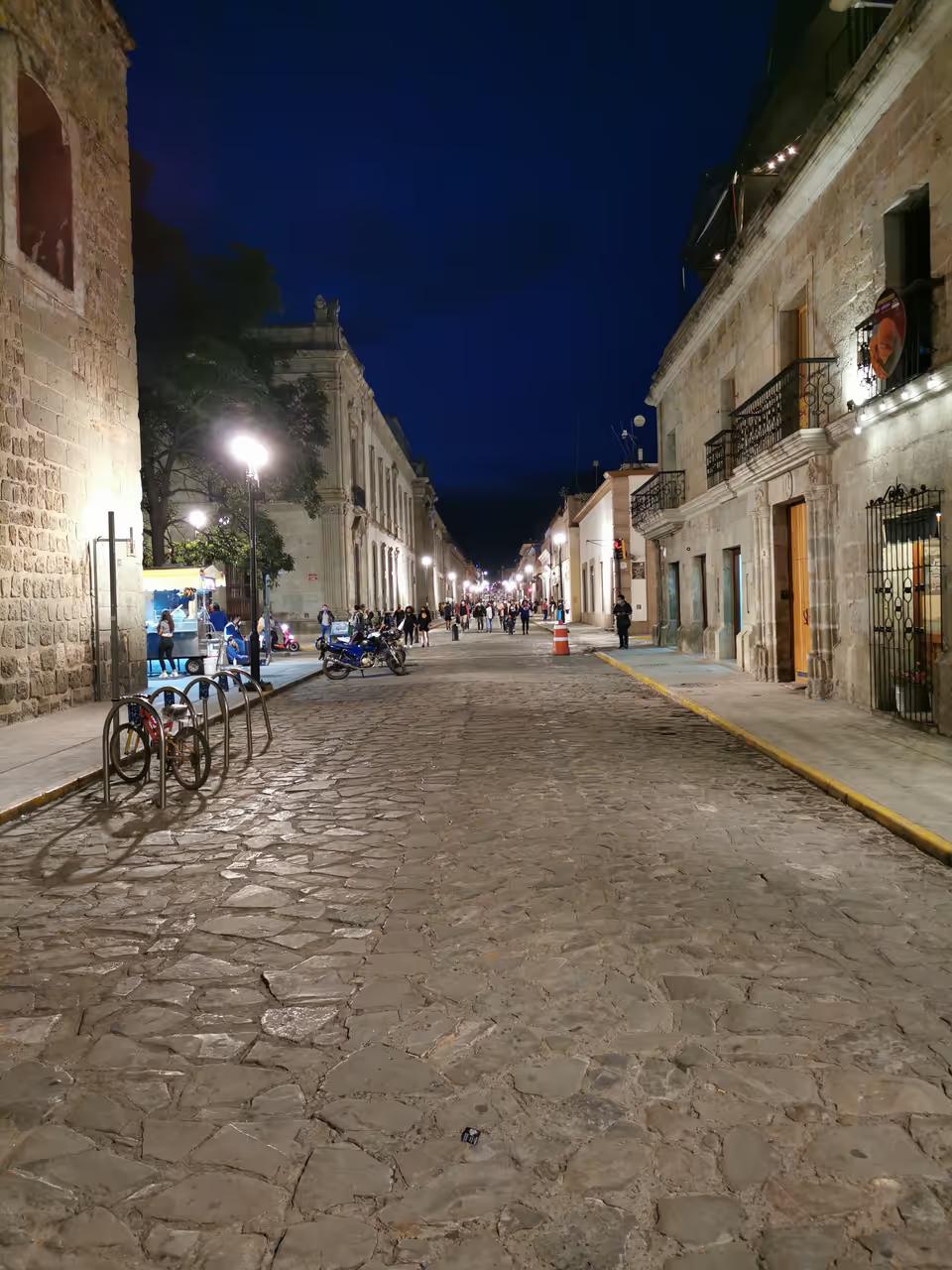
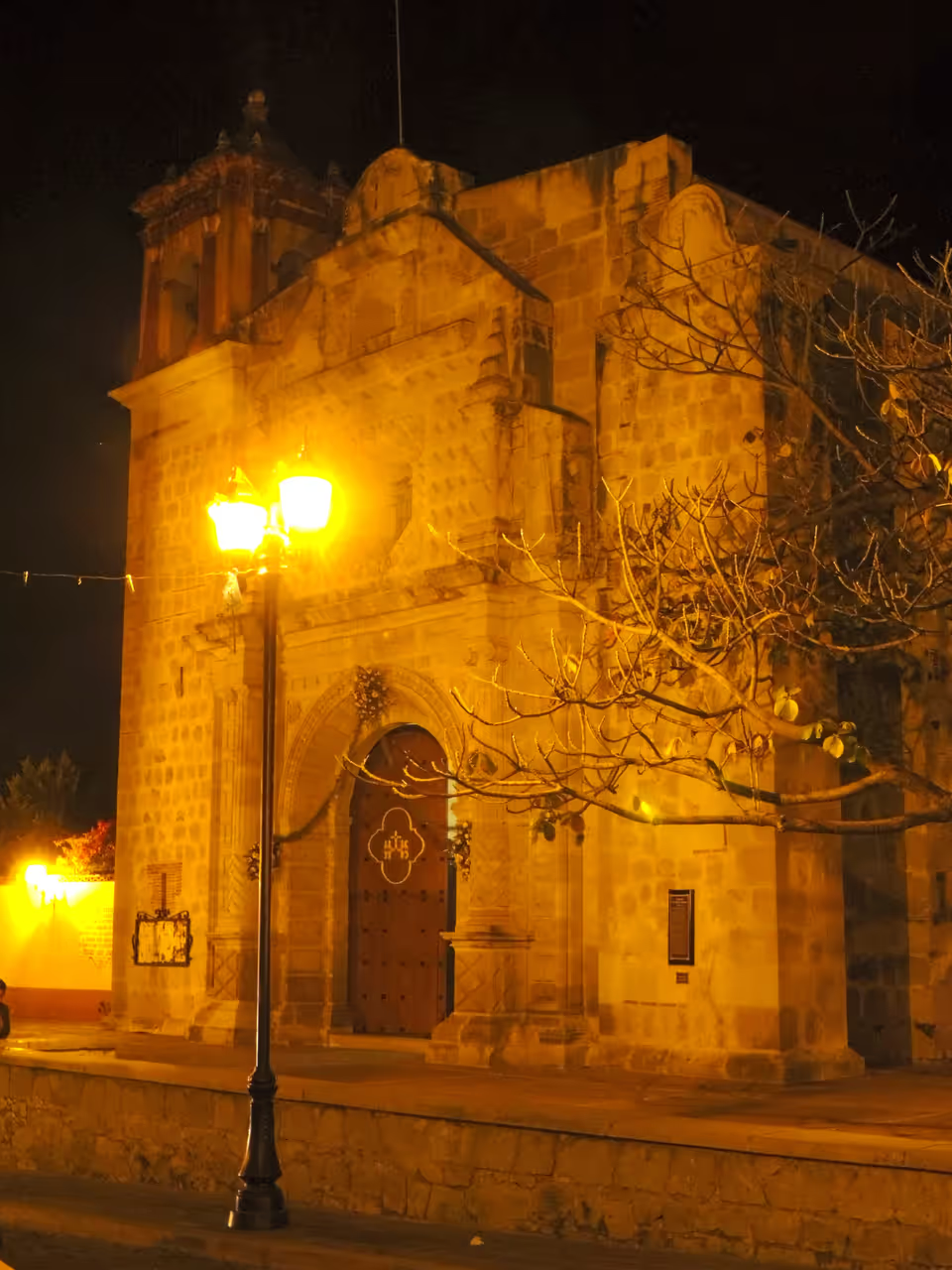
Wandering through Jalatlaco feels like stepping into a vibrant, traditional Mexican village hidden right in the middle of a city. This neighbourhood is famous for its rough cobblestone streets, brightly painted single-story houses, and an abundance of striking, colourful street murals. The atmosphere is distinctly tranquil and bohemian, offering a sharp contrast to the monumental grandeur of the historic centre. It is an area that demands aimless wandering to discover its hidden artistic corners and quiet courtyards.

Xochimilco Aqueduct Trail
This peaceful walk explores the oldest neighbourhood in the city, tracing the path of a colonial-era brick aqueduct. Xochimilco is characterised by its narrow, sloping streets, artisan workshops, and a deeply authentic residential feel. The aqueduct's arches, draped in vibrant flowering vines, provide a romantic and highly historic guiding line through the area. It is a quiet, contemplative stroll that reveals the city's ancient infrastructure seamlessly blended with modern daily life.
- HIGHLY RECOMMENDED
Alcalá Promenade
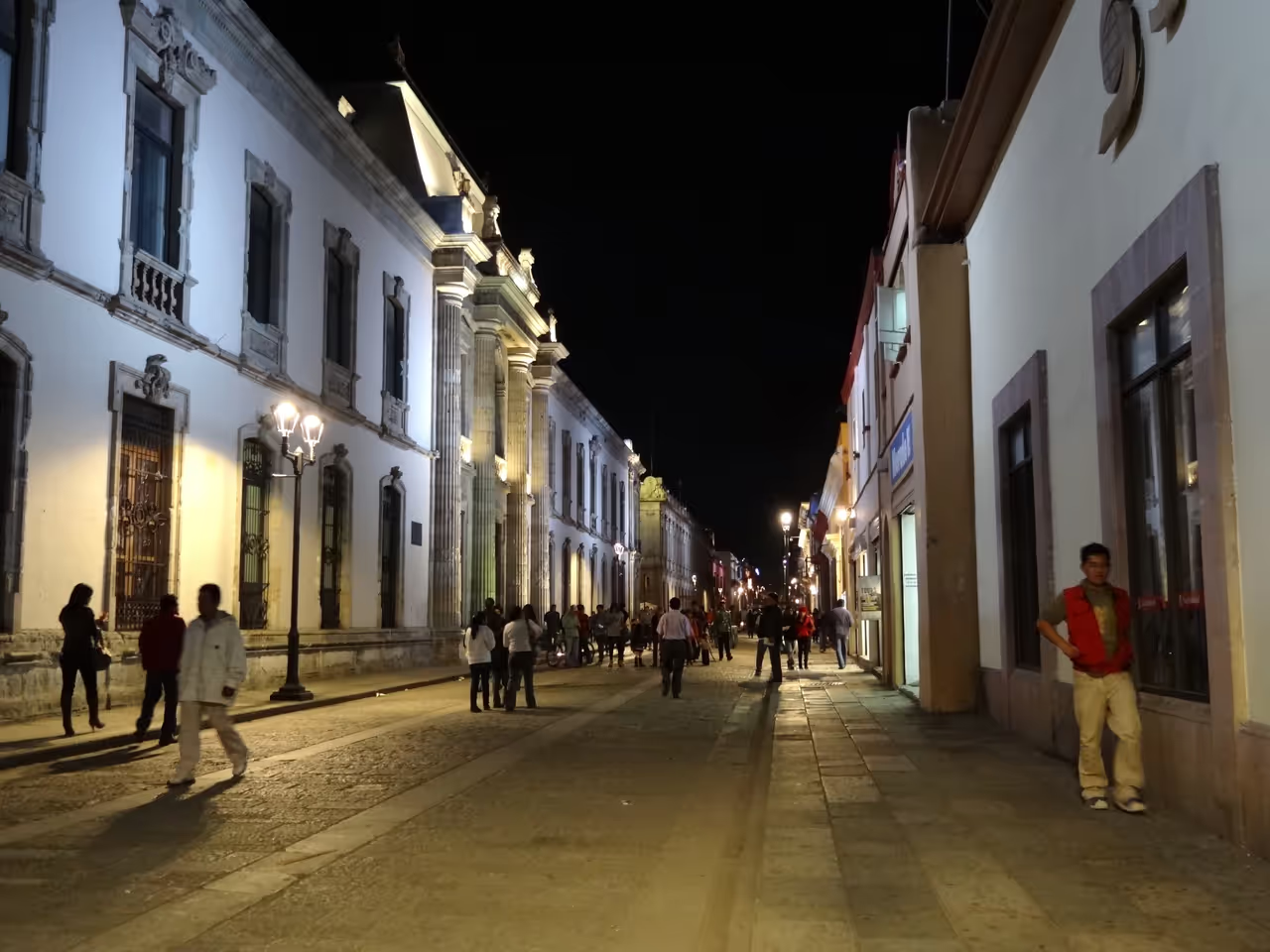
This magnificent pedestrian street is the elegant spine of the historic centre, paved in distinctive green cantera stone. Lined with meticulously restored colonial mansions, art galleries, and boutique shops, it offers a visually stunning environment free from vehicle traffic. The stroll is incredibly atmospheric, often soundtracked by classical guitarists or marimba players. It represents the polished, cosmopolitan side of the city's heritage, inviting a slow, appreciative pace.

Architecture & Landmarks
Oaxaca Cathedral
Constructed from the region's distinctive green cantera stone, the city's main cathedral is a masterpiece of adaptation...
view
House of Cortés (MACO)
Widely considered one of the oldest secular buildings in the city, this magnificent mansion is a brilliant example of Andalusian...
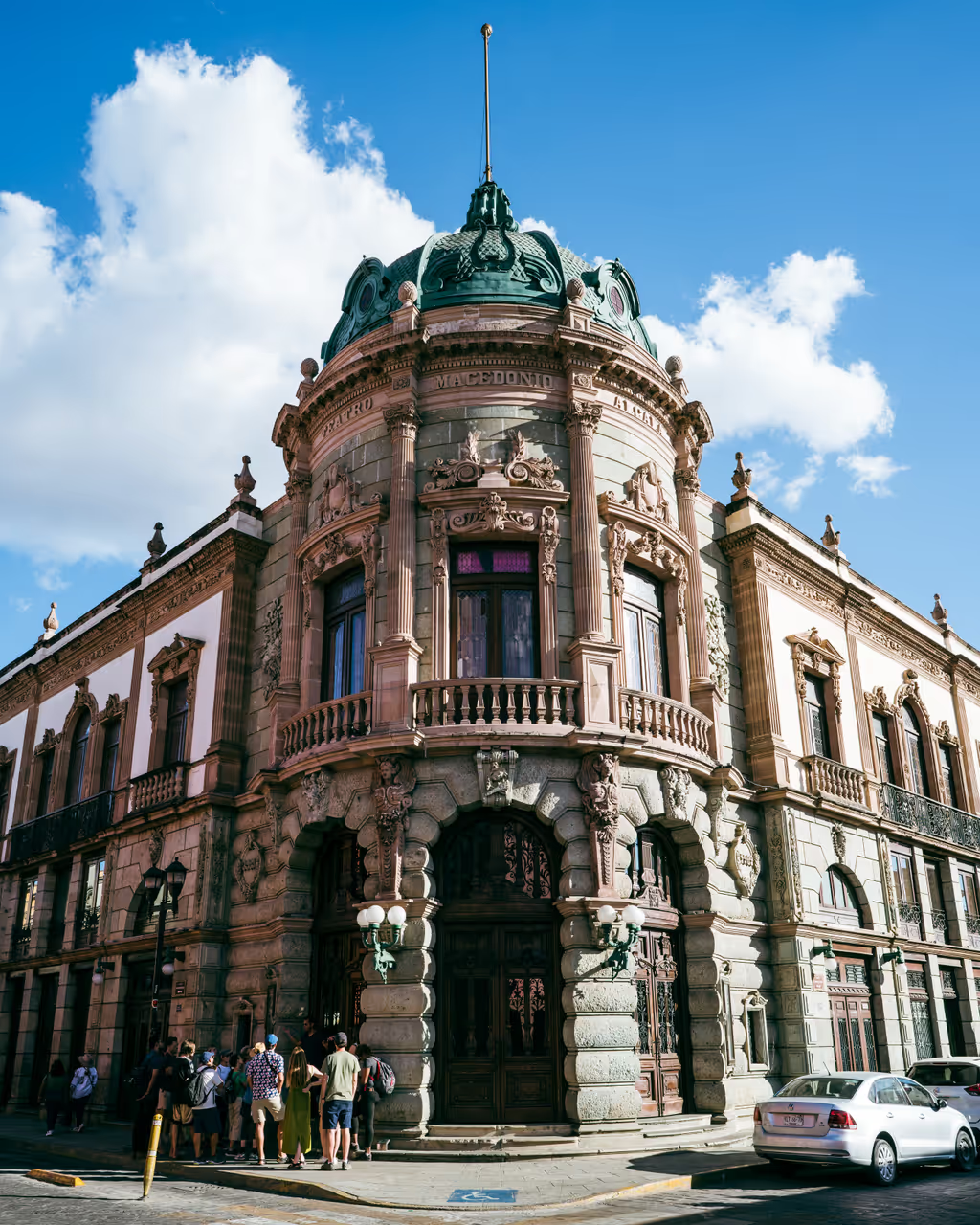
viewMacedonio Alcalá Theatre
This opulent theatre provides a dramatic visual contrast to the sturdy colonial churches found elsewhere in the city. Built...
view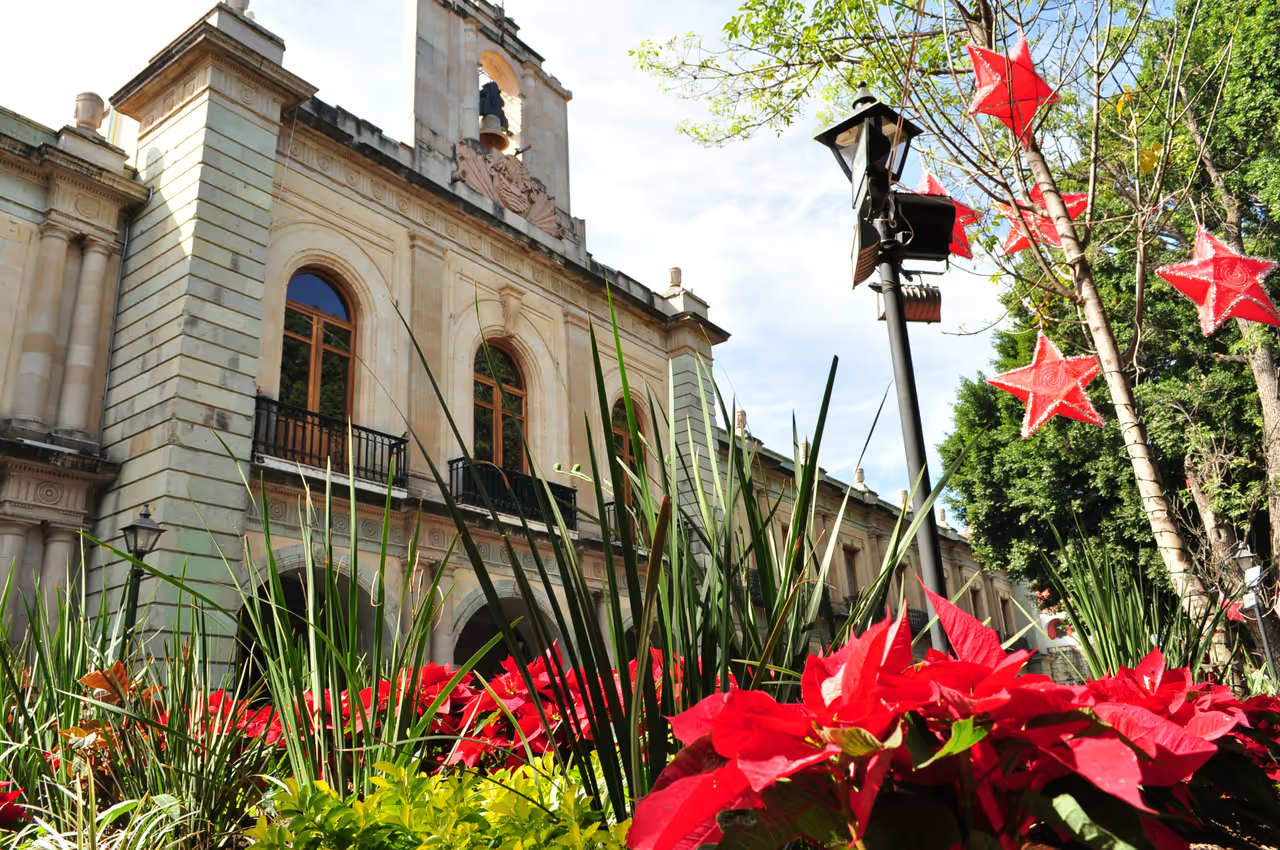
State Government Palace
Dominating the southern edge of the main square, this expansive civic building presents a strong, stately neoclassical facade...
view
Markets & Shopping
Oaxaca City Nightlife
Photo Spots
Activities & Experiences

Cycling Routes
Historic Centre Cycle Loop
This leisurely urban ride weaves through the oldest and most charming neighbourhoods of the city. While the cobblestones can be slightly bumpy, the visual rewards are immense, featuring brightly painted colonial homes, hidden plazas, and ancient aqueducts. The route is designed to stick to the quieter, narrow streets, avoiding the heavy traffic of the main arteries. It is a fantastic way to grasp the layout of the historic centre while enjoying the architectural splendour at a breezy, relaxed pace.
Ancient Cypress Greenway
This lovely, mostly flat ride takes you from the edge of the historic centre out into the sweeping agricultural lands of the Oaxaca Valley. Much of the route follows a dedicated cycle path, offering a stress-free journey away from heavy vehicular traffic. The landscape is dotted with small farms, agave fields, and distant mountain vistas. It provides a peaceful, rhythmic way to escape the urban energy and connect with the rural charm of the surrounding region.
Artisan Village Route
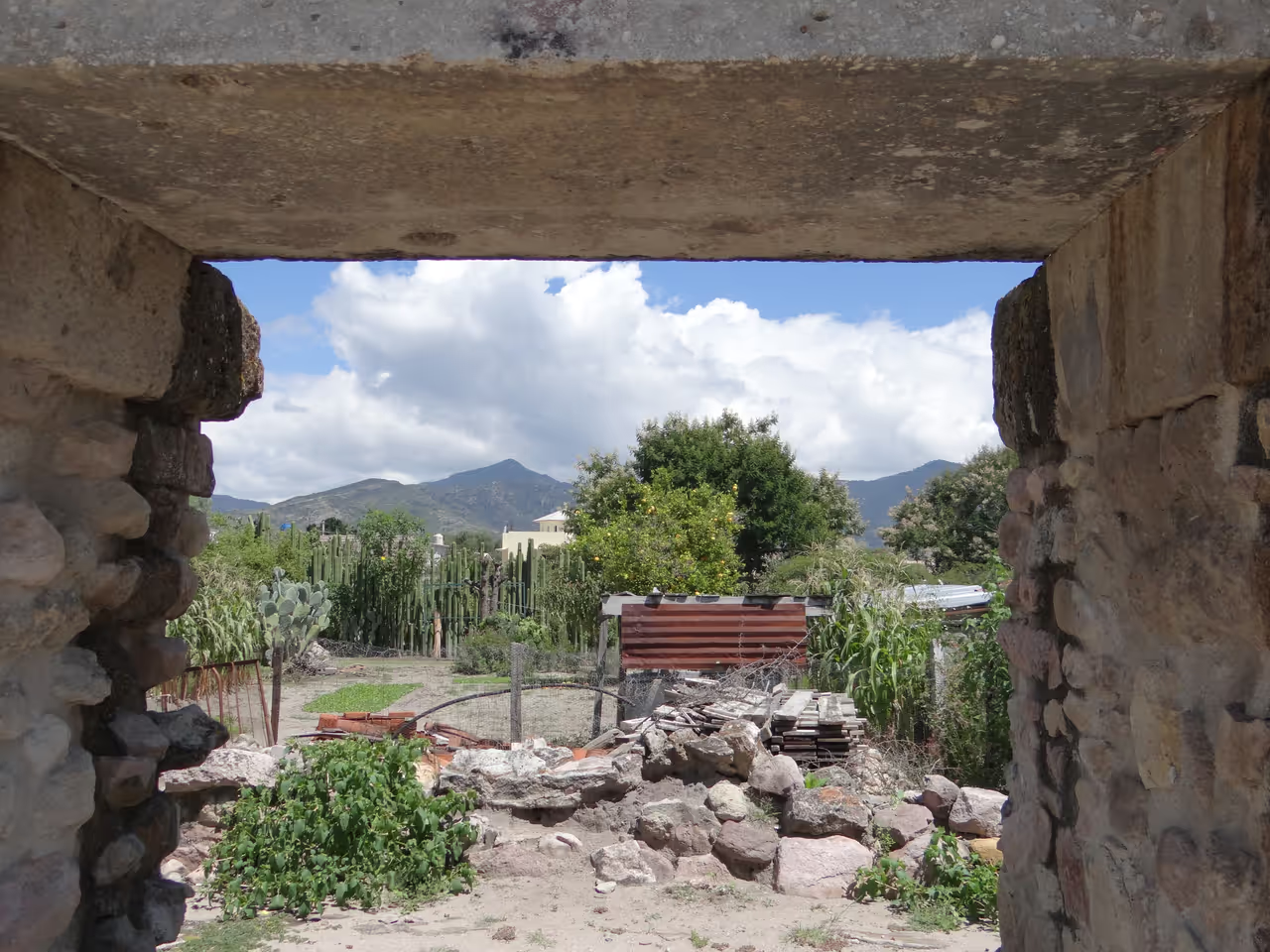
Venturing south of the city, this slightly more ambitious ride connects several distinct villages, each renowned for a specific traditional craft. The roads here are quieter, winding through dusty, sun-drenched landscapes framed by the Sierra Madre mountains. The journey offers an intimate look at the agricultural rhythms of the valley, passing by wandering livestock and vast fields of corn. It is a brilliant way to appreciate the deep connection between the land and the ancestral crafts produced in this region.
Self-Guided Tours
Colonial Grandeur Walk
This route focuses entirely on the monumental stone structures erected following the Spanish conquest. Oaxaca's specific highly seismic environment forced architects to build thick, squat, and incredibly sturdy buildings, resulting in a unique regional style of baroque architecture. The journey highlights the intricate carvings, the distinctive green volcanic stone, and the sheer scale of the religious and civic institutions. It is a visually arresting tour that reveals the immense wealth and power of the colonial era.

Art and Textile Route
Oaxaca is a globally recognised powerhouse for contemporary art, printmaking, and traditional textiles. This tour guides you through the institutions that champion the region's immense creative output. You will explore historic mansions converted into cutting-edge galleries, extensive libraries of graphic design, and museums dedicated to ancestral weaving techniques. It provides a comprehensive look at how ancient craftsmanship continually inspires modern artistic rebellion and expression in the city. The route highlights the seamless blend of history and forward-thinking creativity.
- HIGHLY RECOMMENDED
Zapotec Heritage Trail
This educational journey connects the city's most important sites related to its profound pre-Hispanic roots. Rather than focusing on colonial architecture, this route highlights the artefacts, natural environment, and living traditions of the indigenous cultures that have inhabited the valley for millennia. By moving between world-class museums and traditional markets, the tour constructs a narrative of a civilisation that survived conquest and continues to thrive. It offers a deep, contextual understanding of the region's true foundational identity.
Annual Festivals & Events
 HIGHLY RECOMMENDED
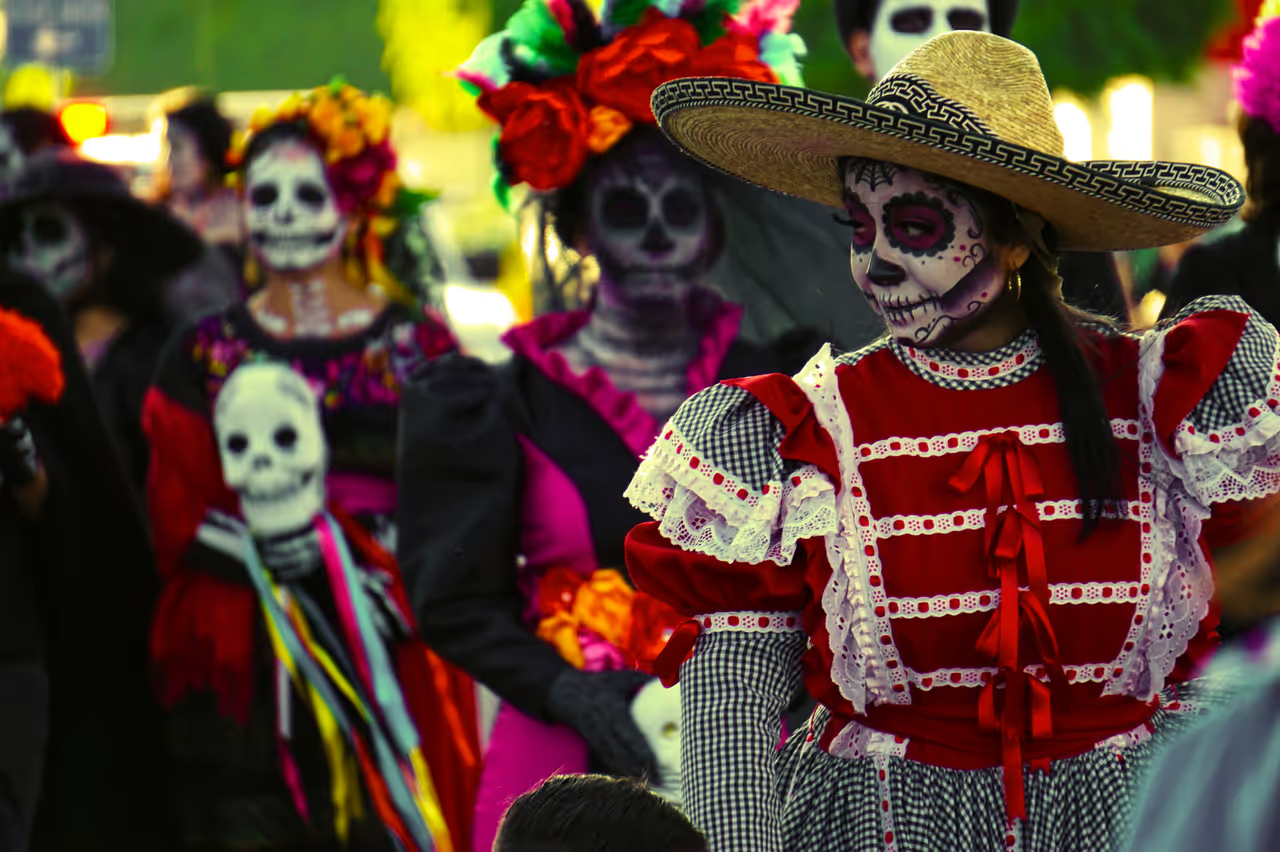
Day of the Dead
Oaxaca hosts one of the most visually stunning and deeply felt Day of the Dead celebrations in the entire country. The city transforms into a canvas of marigold flowers, elaborate sand tapestries, and candlelit altars honouring departed loved ones. Traditional 'comparsas' (parades) feature brass bands and locals dressed in spectacular, macabre costumes dancing through the cobblestone streets. Families spend the night in local cemeteries, sharing food, drink, and stories by candlelight. It is a mesmerising blend of indigenous spirituality and Catholic tradition.
 HIGHLY RECOMMENDED
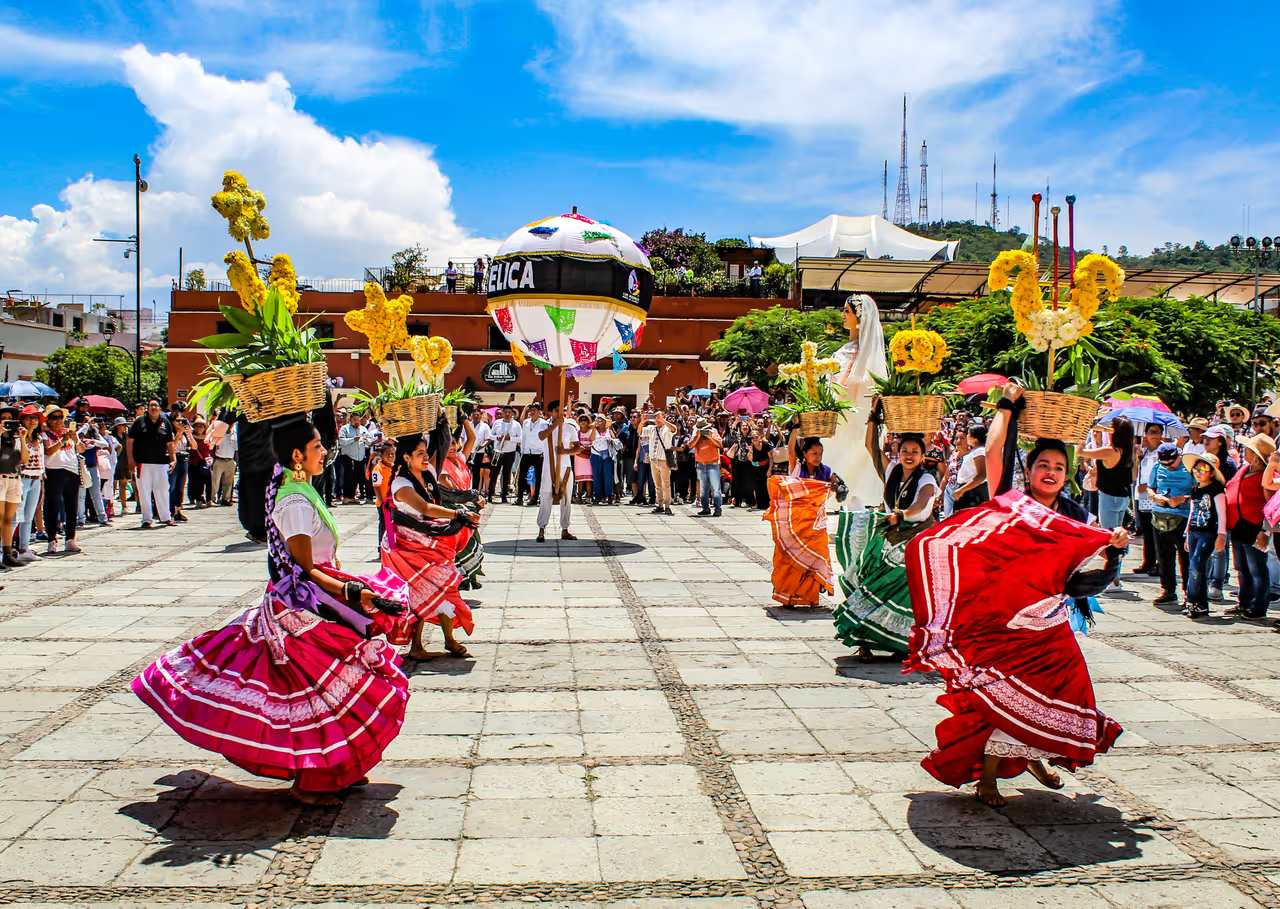
Guelaguetza Festival
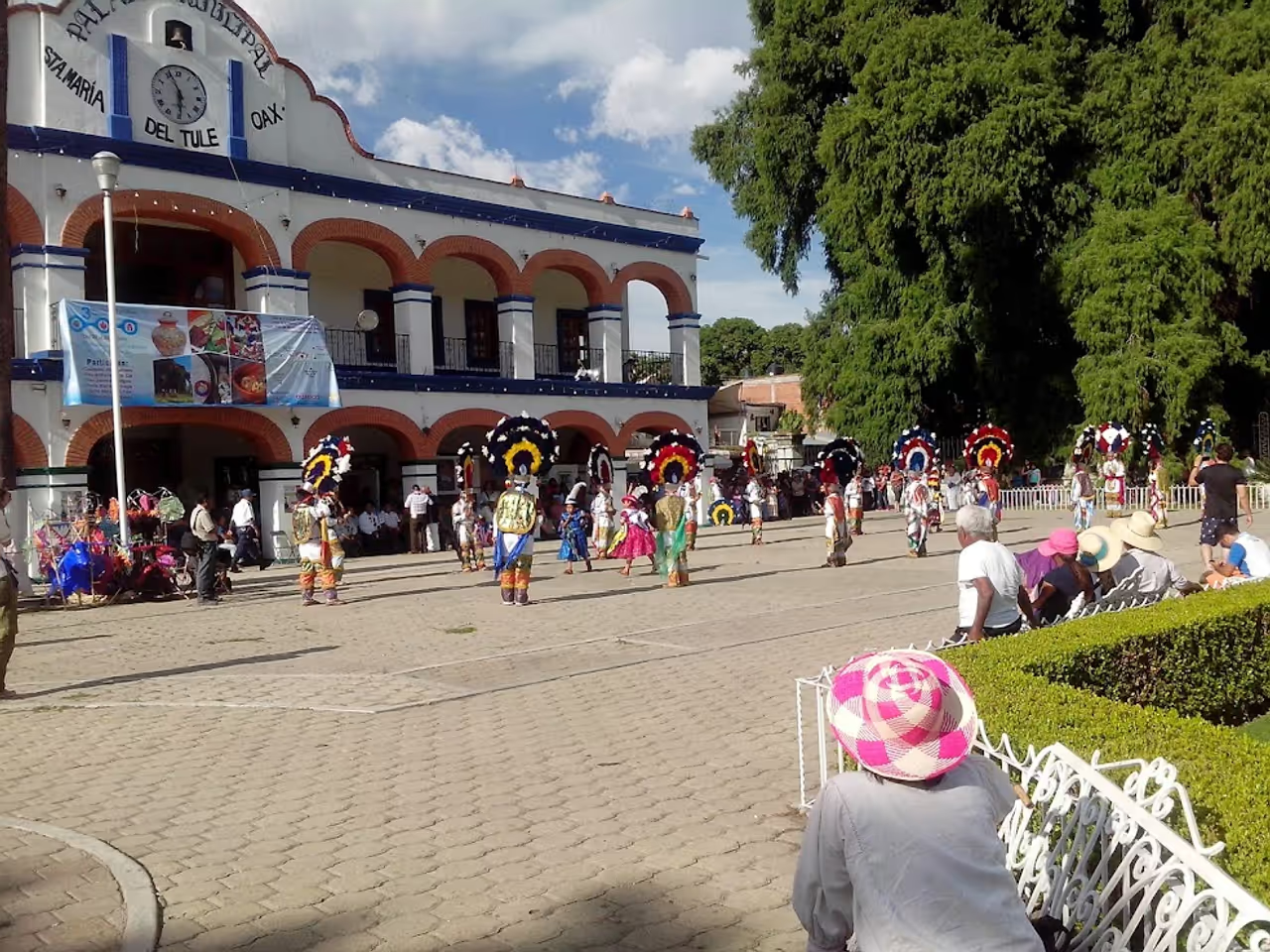
The Guelaguetza is the most significant cultural event in the state, celebrating the diverse indigenous heritage of Oaxaca. Held in a grand amphitheatre on the Cerro del Fortín, the festival features delegations from the seven regions of the state who present their traditional dances, music, and vibrant costumes. The word itself comes from the Zapotec language, meaning offering or reciprocal exchange. Beyond the main auditorium events, the entire city comes alive with parades, street food stalls, and an incredible celebratory atmosphere. It is a profound showcase of pride and cultural survival.
 HIGHLY RECOMMENDED
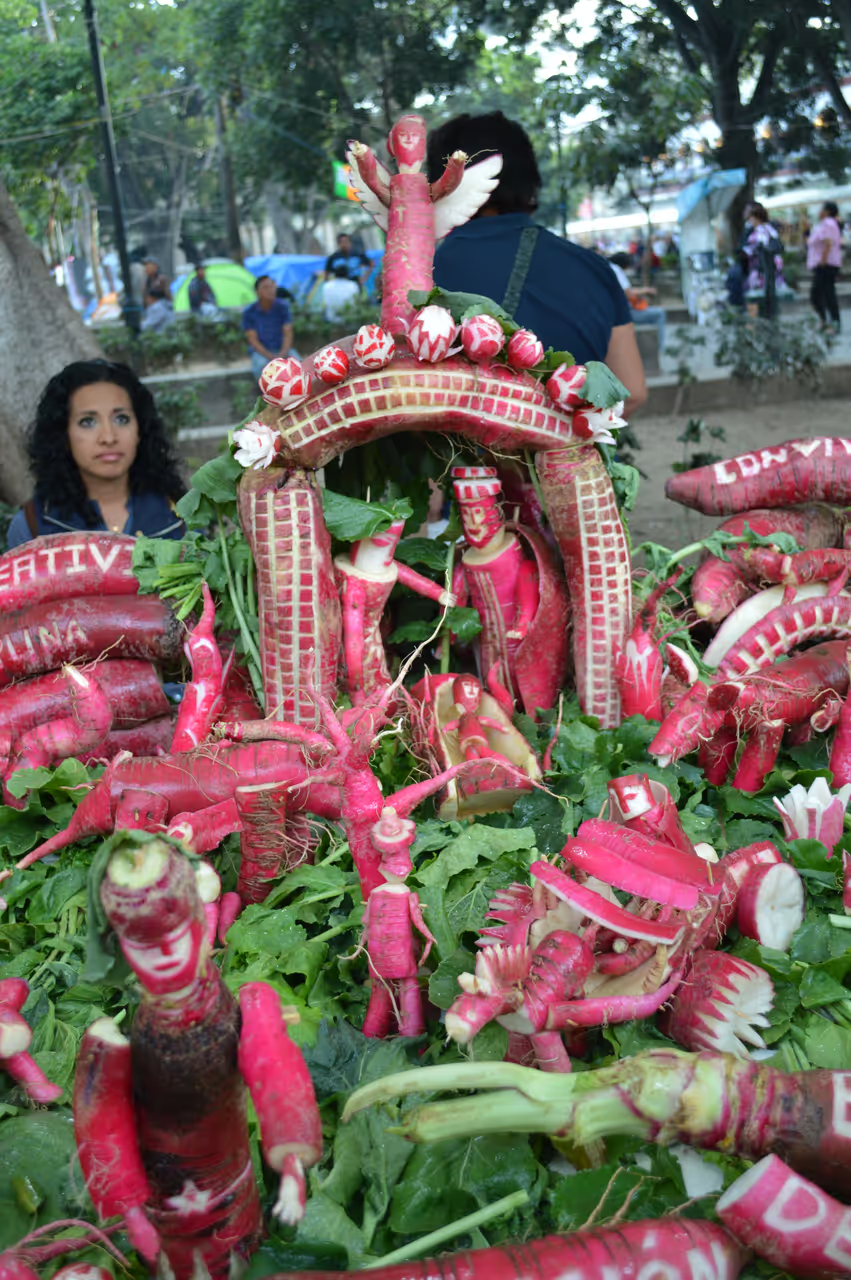
Night of the Radishes
This is undoubtedly one of the most unique and whimsical festivals in Mexico. Every December, local artisans and farmers gather in the main square to exhibit intricate sculptures carved entirely from oversized, specially grown radishes. The creations range from nativity scenes to detailed representations of local historical events and daily life. The radishes are often embellished with dried flowers and corn husks, creating stunning, albeit temporary, works of art. The event lasts only a few hours before the vegetables wilt, drawing massive crowds eager to witness the spectacle.
Insider Tips
When taking a yellow city taxi, always negotiate and agree upon the fare before getting into the vehicle, as they do not use meters.
Carry plenty of small denomination peso coins and notes; many market vendors and small artisan shops cannot easily provide change for large bills.
The city sits at an altitude of over 1,500 metres. The sun is surprisingly strong, so regular application of sunscreen and wearing a hat is highly advisable even on cooler days.
When visiting the bustling food halls, it is polite to share large communal tables with strangers. A simple 'buen provecho' (enjoy your meal) goes a long way.
Oaxaca experiences chronic water shortages, especially during the dry season. Be mindful of your water usage in hotels and guesthouses to support conservation efforts.
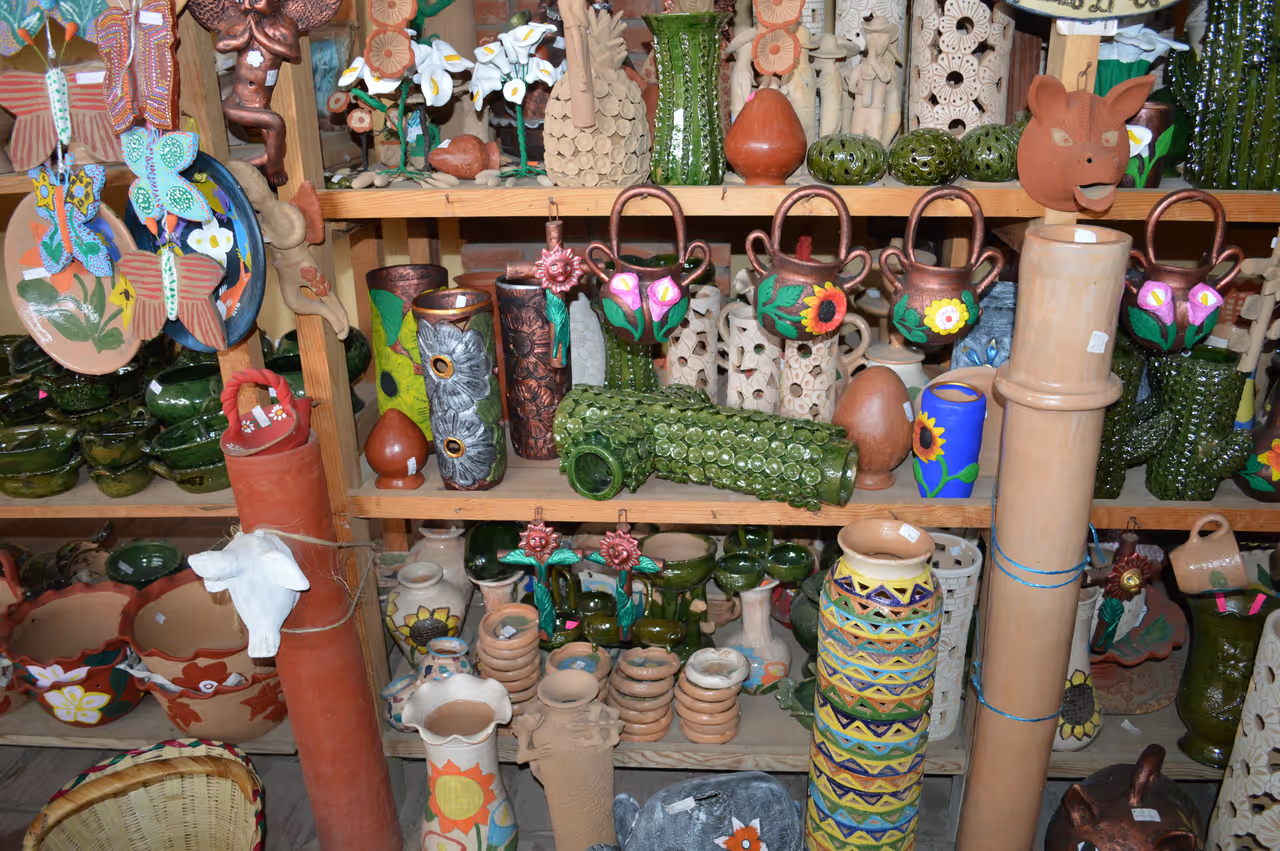
If you wish to buy authentic crafts, visit the surrounding villages directly rather than the city centre. You will get better prices and the money goes straight to the artisans.
PERFECT FOR
This city is an absolute paradise for culinary enthusiasts eager to explore complex flavours and ancient cooking techniques. It strongly appeals to culture seekers and art lovers who appreciate indigenous crafts, vibrant street murals, and rich historical narratives. Travellers looking for a relaxed pace with endless opportunities to wander through markets and plazas will find themselves entirely at home here.
VIBE
Oaxaca radiates a warm, artistic energy that feels simultaneously ancient and brilliantly alive. The cobblestone streets buzz with the scents of roasted chillies and the vibrant colours of handwoven textiles and grand colonial facades. It offers an unhurried, deeply cultural atmosphere where lingering in a sun-drenched courtyard with a cup of hot chocolate feels entirely essential.
Frequently Asked Questions about Oaxaca City
While we strive to keep this information accurate and up to date, we recommend verifying any details independently before making decisions based on them.