Alameda de León
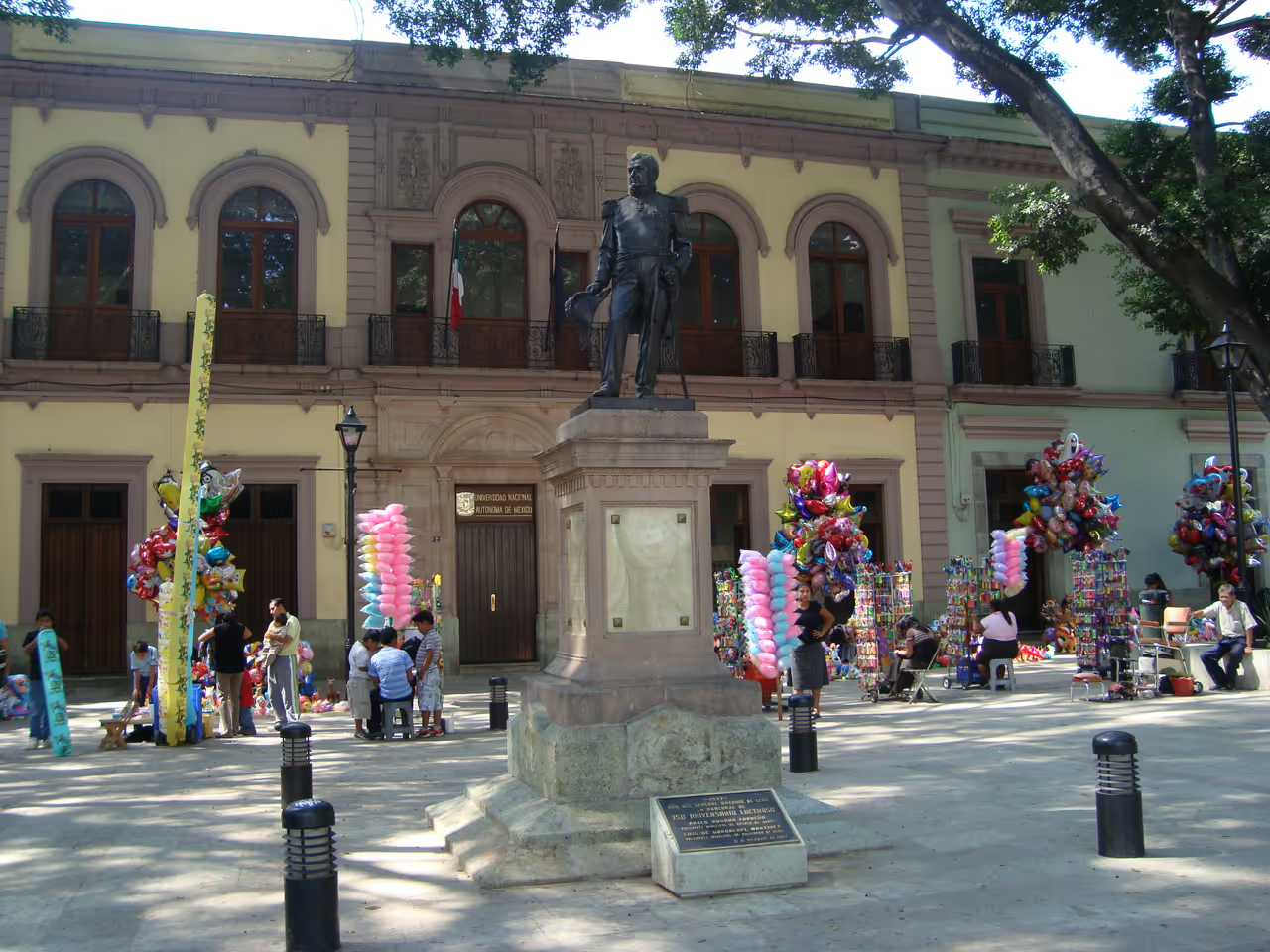
Serving as a seamless, slightly more tranquil extension to the bustling Zócalo, the Alameda de León is a beautiful, tree-lined square with a fascinating history. Originally designated in the sixteenth century for government offices that were never built, it eventually became a bustling market before the state governor transformed it into a miniature replica of Mexico City's famous Alameda Central in the 1840s. Today, it is a favoured spot for locals to sit on wrought-iron benches, get their shoes shined, and enjoy the shade of the massive Indian laurel trees. It provides a perfect, slightly set-back vantage point to admire the stunning Oaxaca Cathedral.
HISTORY & HIGHLIGHTS
The space that is now the Alameda de León has undergone several dramatic transformations since the city's founding. In 1576, the Spanish viceroy Martín Enríquez de Almanza explicitly set aside this block to construct the city's government offices. However, those grand plans never materialised, and the empty lot organically evolved into a chaotic, bustling local market. In the 1840s, Antonio de León, the governor of the state of Oaxaca, lived directly across from this noisy marketplace. Seeking a more refined view from his window, he ordered the market to be cleared and transformed the space into a structured, elegant park. He modelled his new creation directly after the famous Alameda Central in Mexico City, bringing a touch of metropolitan sophistication to the provincial capital. In 1885, a bronze statue of the governor was erected in the park, permanently linking his name to the space. Today, the Alameda seamlessly blends with the adjacent Zócalo, yet it maintains its own distinct, slightly more relaxed character, remaining a beloved gathering place under the canopy of its ancient, sprawling trees.