Bologna
Full City Guide, Map & 118 Things To Do
387,971 people live here.
That's 0.64% of the entire population of Italy.
Bologna is a captivating Italian destination that seamlessly blends mediaeval charm with a vibrant student energy. Known as the culinary capital of Italy, it offers an unparalleled gastronomic journey through its historic streets. Visitors are enchanted by the signature terracotta roofs and miles of elegant porticoes that invite leisurely exploration regardless of the weather. As home to the oldest university in the Western world, the city possesses an intellectual legacy that permeates its lively piazzas and atmospheric cafes. It provides a highly authentic Italian experience, free from the overwhelming tourist crowds found in other major hubs. Prepare to indulge your senses and discover a place where history and modern life coexist beautifully.
Bologna DNA
History of Bologna
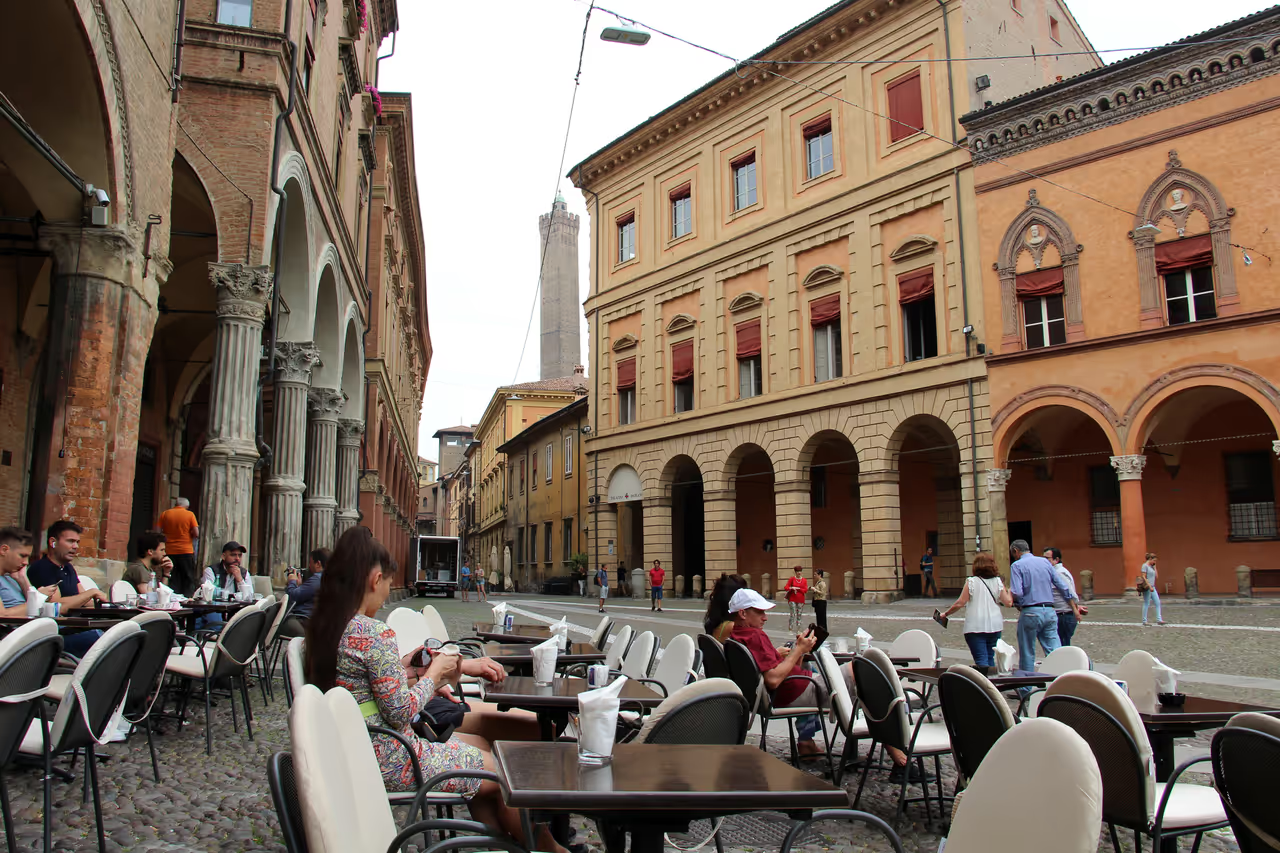
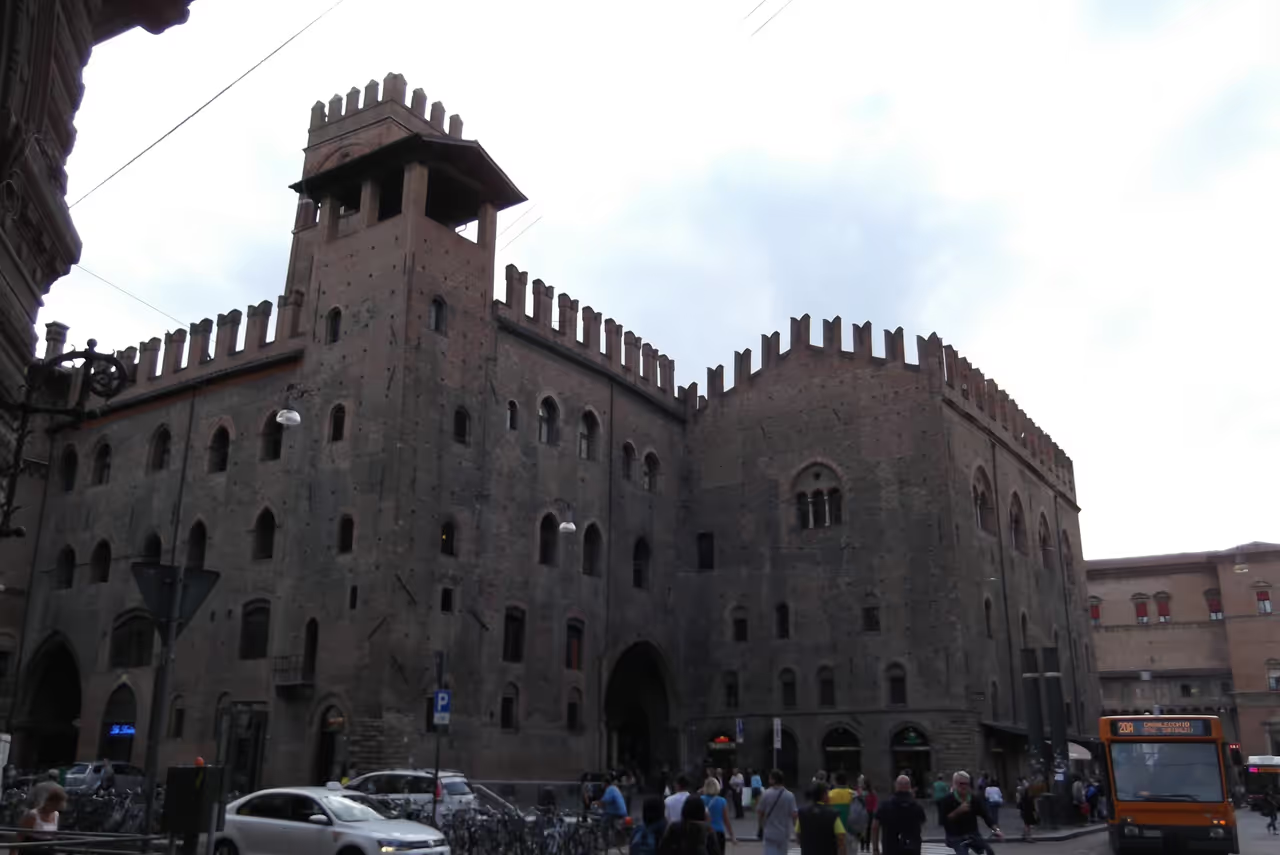
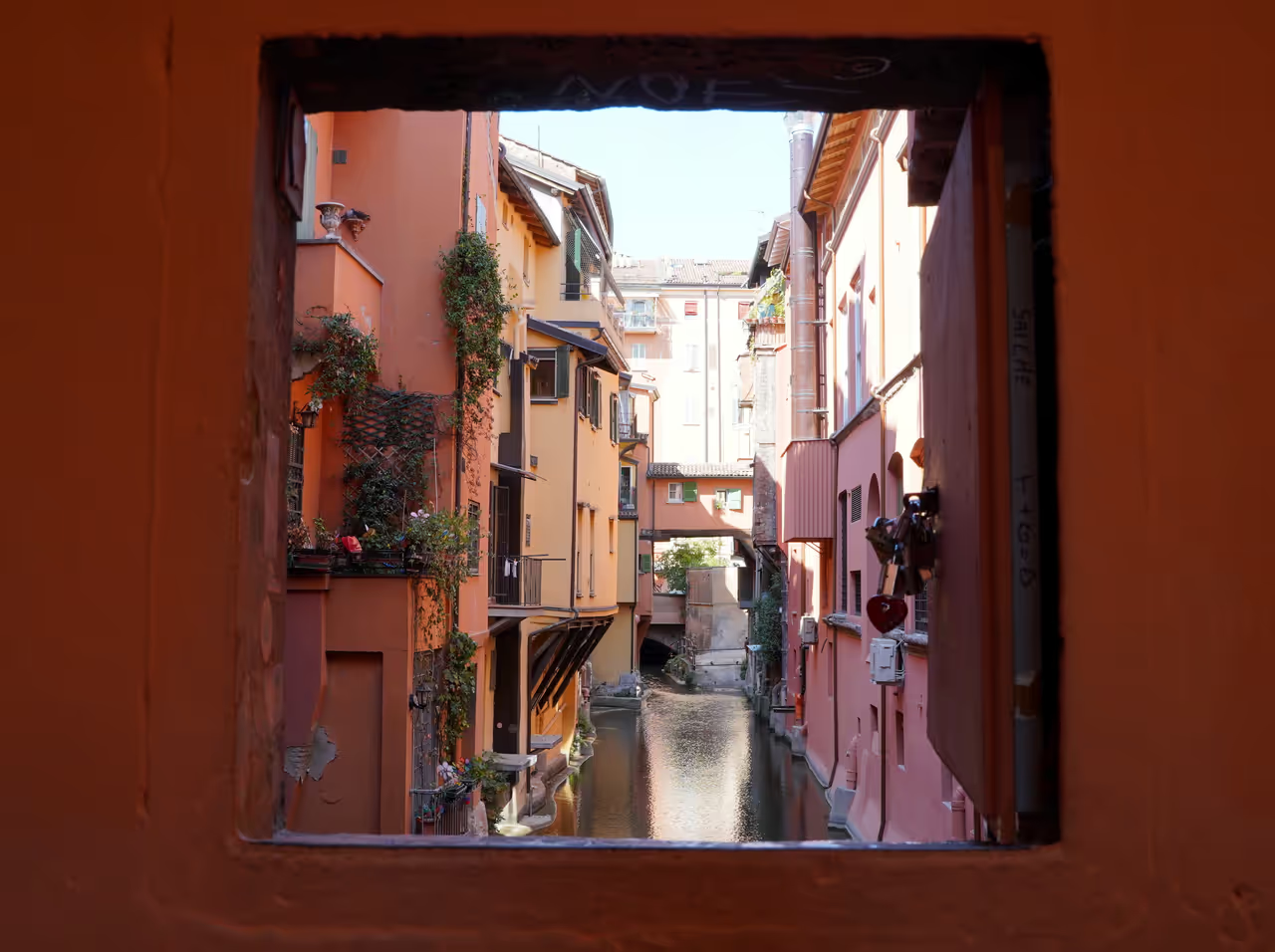
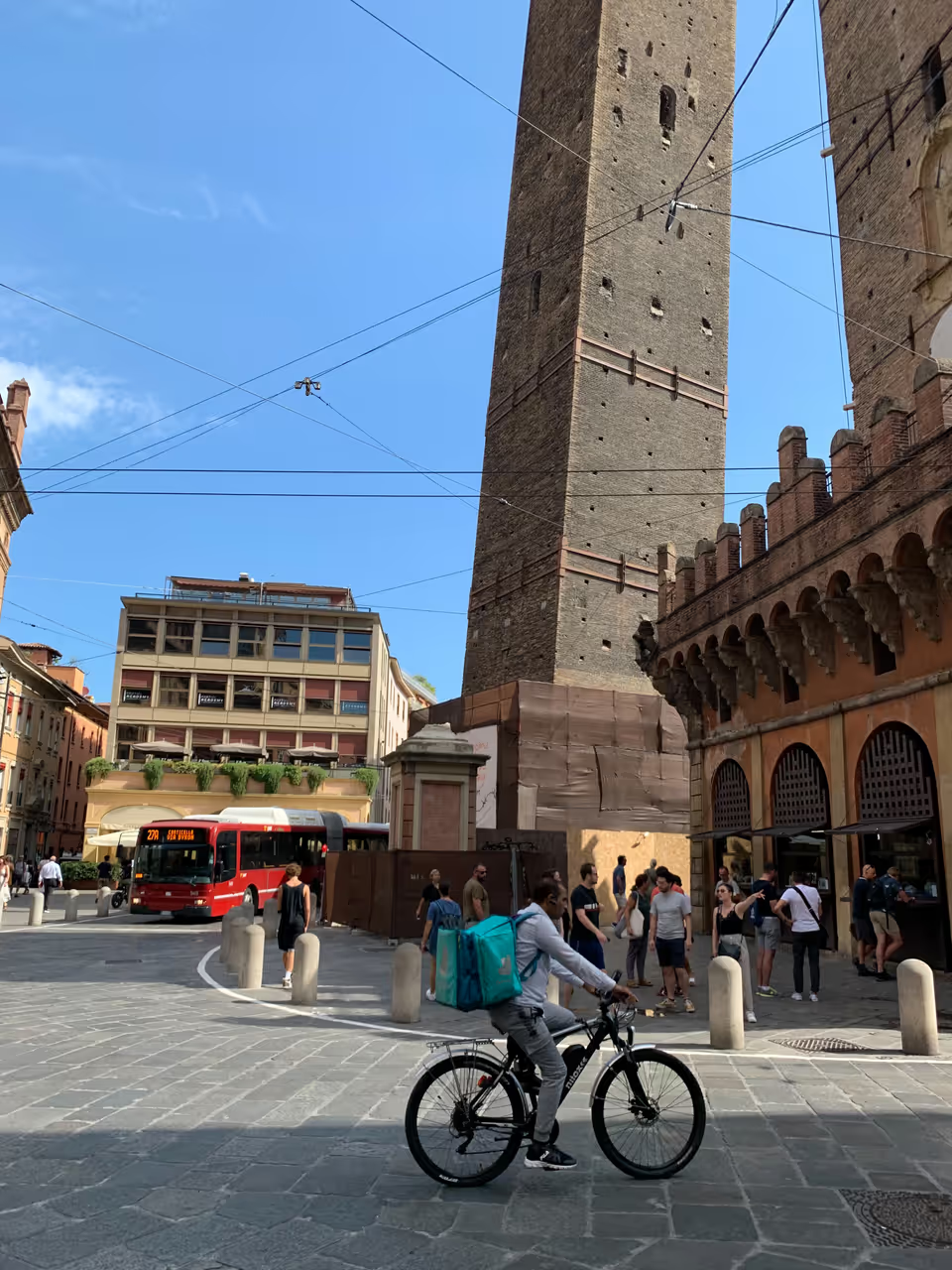
A severe housing crisis shaped the physical skeleton of this city. Scholars from across Europe were arriving in droves to study Roman law under early jurists like Irnerio, creating a sudden demand for accommodation in the twelfth century. Enterprising landlords simply pushed their upper floors outward over the street, propping them up with timber columns to rent out the extra space. This makeshift solution created a continuous, sheltered network of walkways that eventually stretched for thirty-eight kilometres. You can still spot these original wooden crutches holding up the Casa Isolani on Strada Maggiore. Inside the university halls, the academic spirit grew so fierce that by the sixteenth century, medical students were watching human dissections in the Archiginnasio's Teatro Anatomico, an amphitheatre overseen by life-sized skinless figures carved entirely from fir wood. Political theatre reached a bizarre peak here in the middle of the thirteenth century. In 1249, local forces captured King Enzo of Sardinia, the illegitimate son of the Holy Roman Emperor. Instead of executing or ransoming him, they locked the young royal inside a purpose-built palace overlooking Piazza Maggiore. He spent the next twenty-three years writing poetry and hosting lavish dinners in captivity, never allowed to leave Palazzo Re Enzo until his death. Eight years into his imprisonment, the city made a radically progressive political decision. The local government passed the Liber Paradisus, a legal document that formally abolished serfdom. They used public funds to buy the freedom of nearly six thousand serfs, declaring that every person was born entirely free. While scholars debated law and poets visited the imprisoned king, a massive industrial engine operated just out of sight. A network of artificial canals powered hundreds of mechanical silk mills, turning the area into a European textile powerhouse. You have to peer through a tiny, frequently smudged window on Via Piella to see the Canale delle Moline, one of the few uncovered stretches of water still rushing between tall residential walls. This aquatic infrastructure fueled an economic boom that funded the construction of dozens of defensive stone towers. Today, the Garisenda tower leans so drastically over Piazza di Porta Ravegnana that Dante Alighieri used its dizzying overhang as a metaphor for a giant in his Divine Comedy. Century after century of Papal rule eventually gave way to a fierce tradition of rebellion. During the Second World War, the area became a central hub for the Italian Resistance, culminating in the Battle of Porta Lame where partisan fighters famously stood their ground against occupying forces. This defiant streak evolved into a radical cultural awakening in the late twentieth century. In 1977, the pirate station Radio Alice began broadcasting political theory, poetry, and live reports of student protests from a tiny room on Via del Pratello. Three years later, local punks gathered in Piazza Maggiore to loudly interrupt a concert by The Clash, angry that the band had charged an entrance fee. That intersection of deep intellectual history and unapologetic indulgence defines the modern atmosphere. Navigating the unpredictable swarm of student bicycles around Piazza Verdi requires constant vigilance, but it drops you right into the cultural core of the city. The political graffiti sprayed on fourteenth-century walls reads less like vandalism and more like a continuation of a centuries-old conversation. Under the dim, vaulted ceilings of an osteria on Via del Pratello, locals argue about municipal politics over shallow bowls of tortellini submerged in capon broth.
15 Events spanning 2531 years
Map of Bologna
Interactive Destination & Itinerary Map
This map blends our curated city guides—featuring best photo spots, scenic walks, viewpoints, hidden gems and much more—with a live Wikipedia explorer. Click on our numbered pins to plan your routes, or zoom in on the surrounding neighborhoods to discover verified local landmarks, museums, and stories with dynamic Wikipedia summaries and photos!
Fun Facts
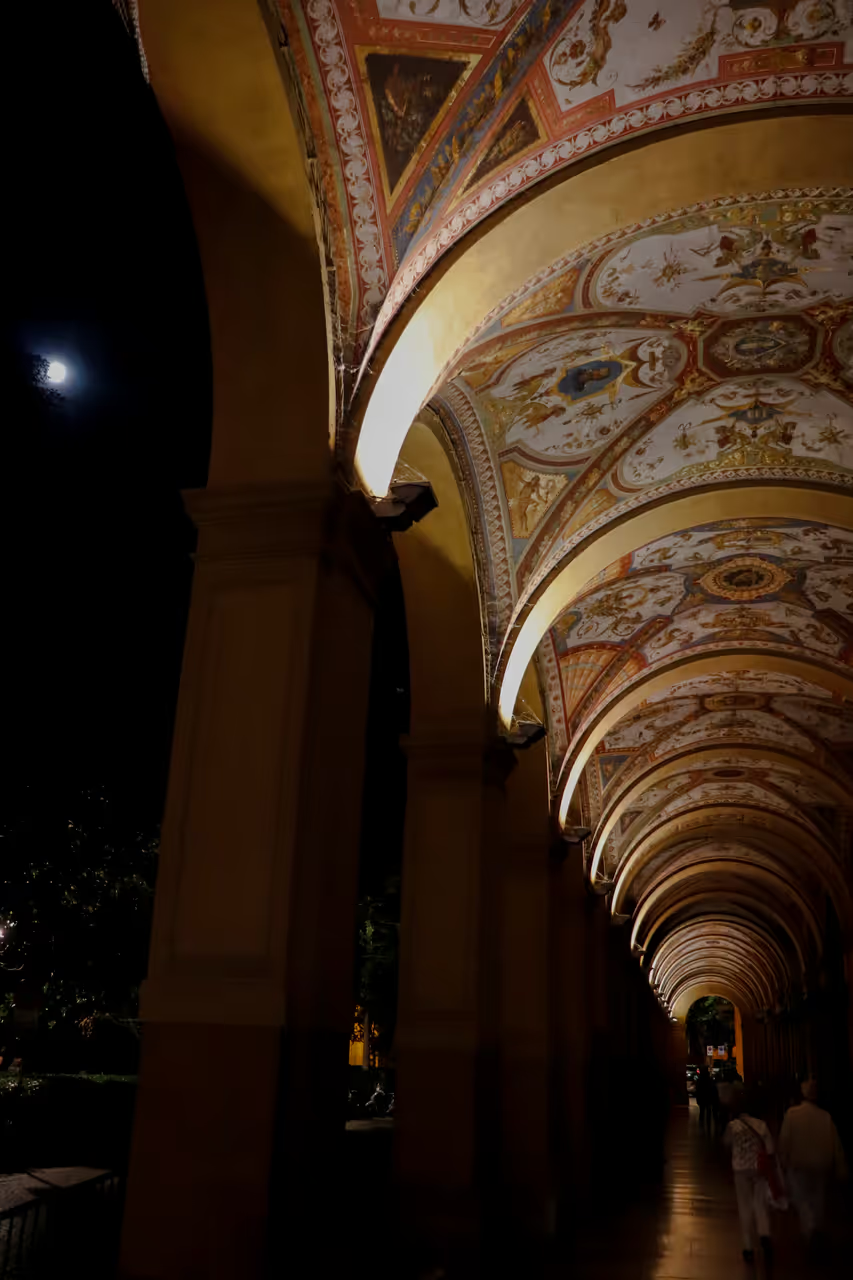
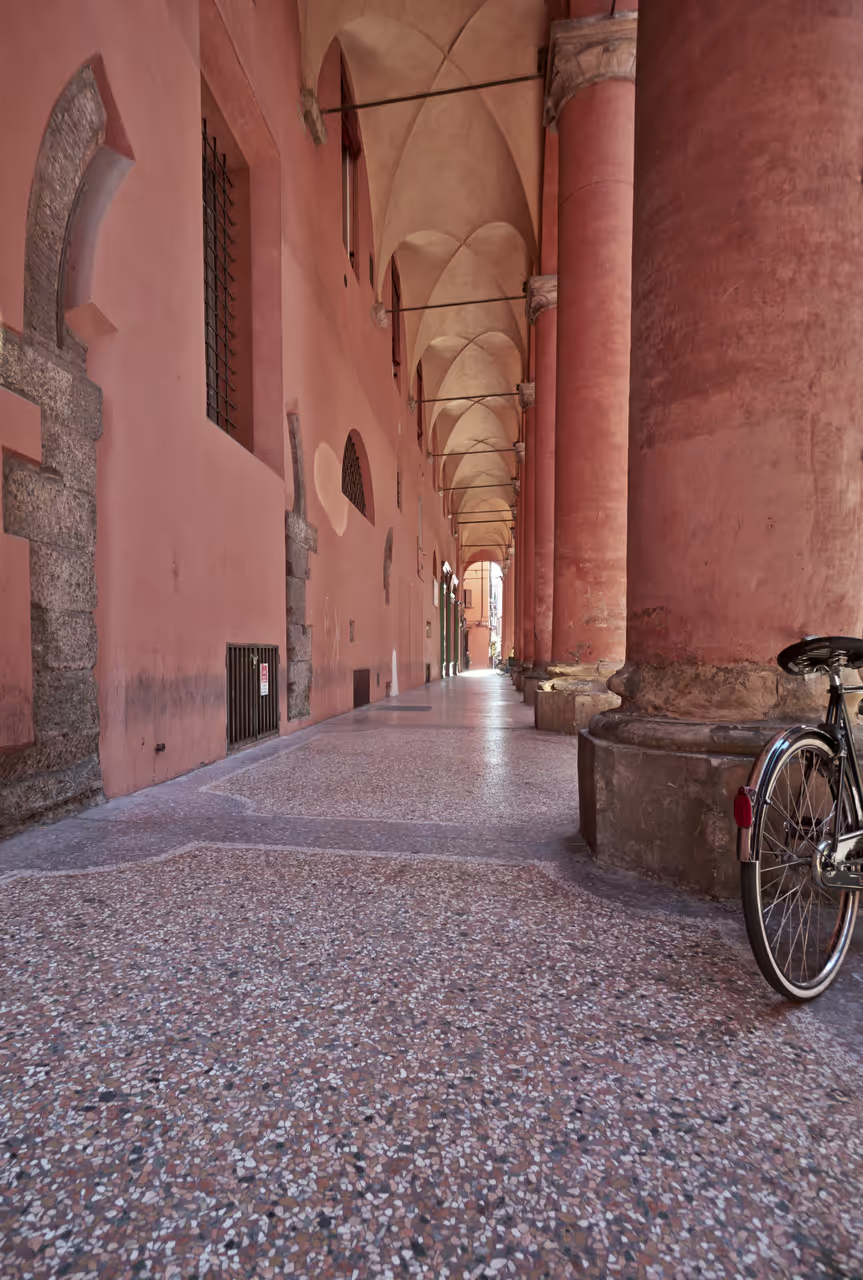
- • The iconic porticoes were originally built as illegal extensions to houses to accommodate the booming medieval student population before the city authorities finally embraced and regulated them.
- • One of the legends surrounding Leonardo da Vinci claims he painted the Mona Lisa here, adding an extra layer of mystery to the city's artistic legacy.
- • In 1256, the local government made a groundbreaking move by using public funds to buy the freedom of nearly six thousand serfs, effectively abolishing slavery centuries before other nations.
- • King Enzo of Sardinia was captured in battle and kept prisoner in a local palace for twenty two years, where he was treated like a royal guest but never allowed to leave.
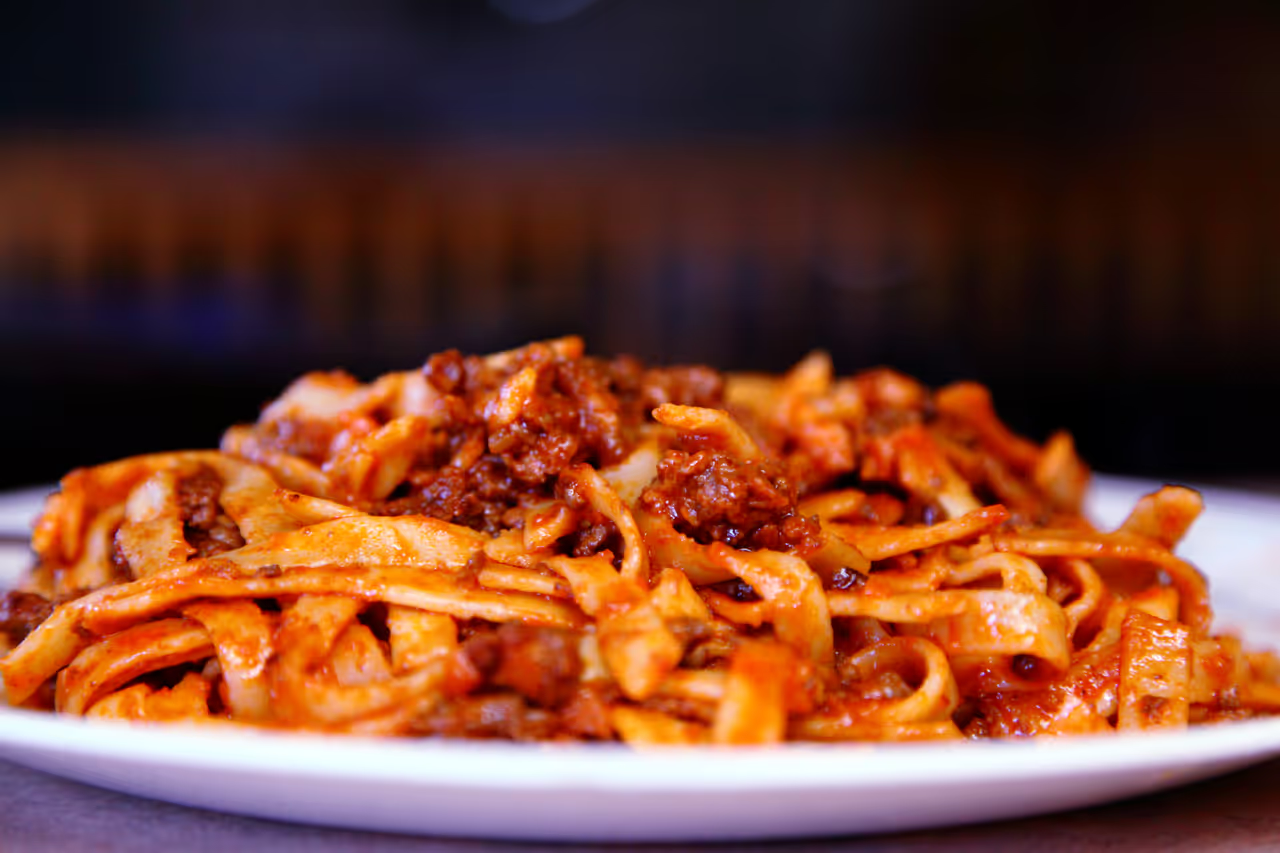
- • The famous spaghetti bolognese does not actually exist here, as locals strictly serve their rich meat ragu with flat tagliatelle ribbons or layered in lasagne.
- • During the Middle Ages, the city skyline resembled a medieval Manhattan, bristling with up to one hundred and eighty towering skyscrapers built by rival noble families.
- • The local university appointed Laura Bassi as a professor in the eighteenth century, making her the very first woman to officially teach at a university in Europe.
Did You Know?
- • The Alma Mater Studiorum, founded in 1088, is officially recognised as the oldest university in continuous operation in the Western world.
- • The Basilica of San Petronio contains the longest indoor meridian line in the world, crafted by astronomer Giovanni Cassini to accurately measure the length of the solar year.
- • With over thirty eight kilometres of porticoes in the historic centre alone, the city boasts the most extensive network of covered walkways globally, now protected by UNESCO.
- • Local scientist Guglielmo Marconi conducted his pioneering experiments in wireless telegraphy here, work that eventually won him the Nobel Prize in Physics and birthed modern radio.
- • The Anatomical Theatre within the Archiginnasio is a marvel of seventeenth century medical history, where human dissections were conducted publicly while an Inquisition priest kept watch to ensure religious rules were respected.
RESOURCES
Official WebsiteVideos of Bologna
Seasons
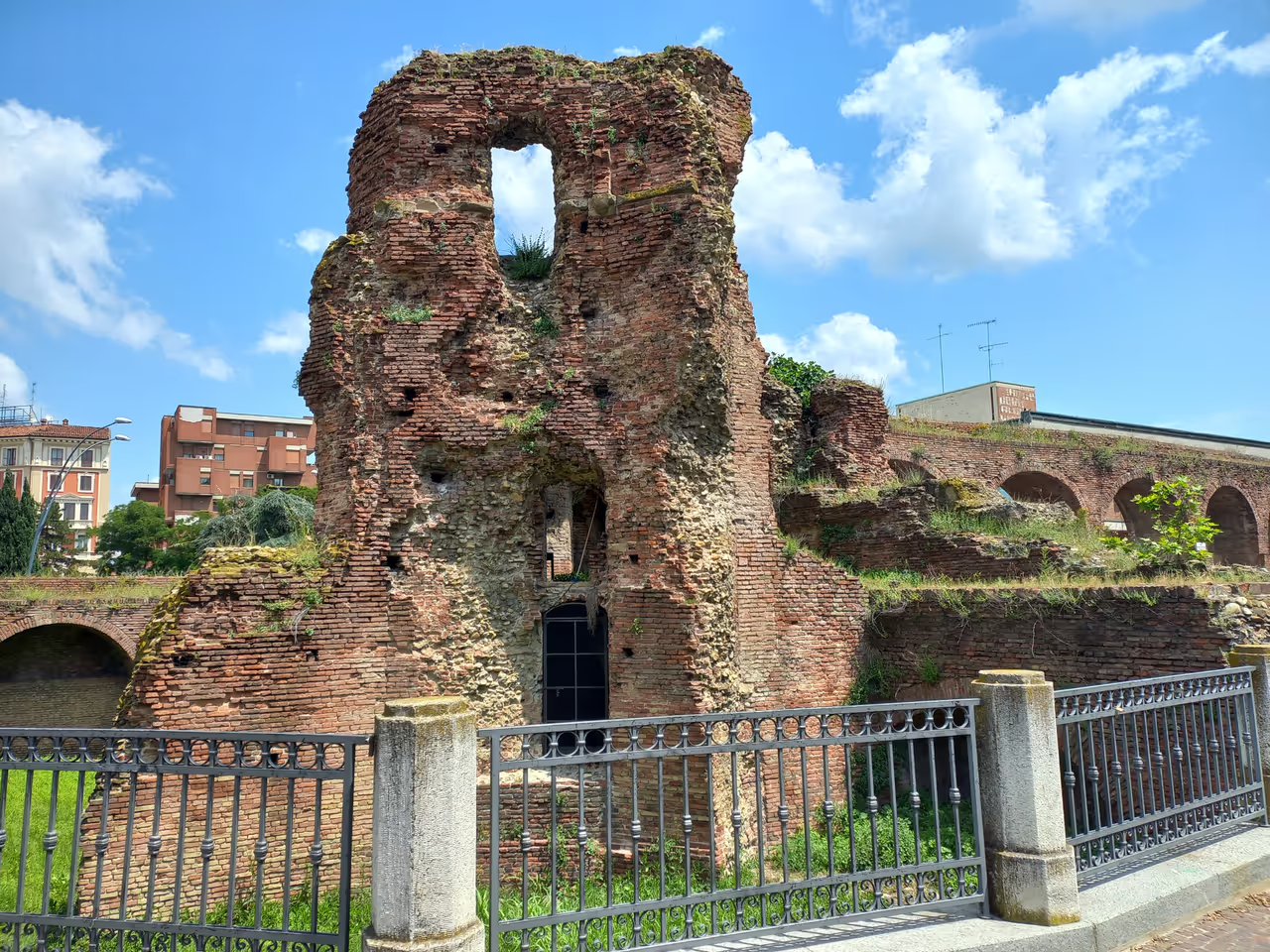
Spring
As the chill of winter fades, the city bursts into life with a wonderfully mild and pleasant climate. The outdoor seating at...
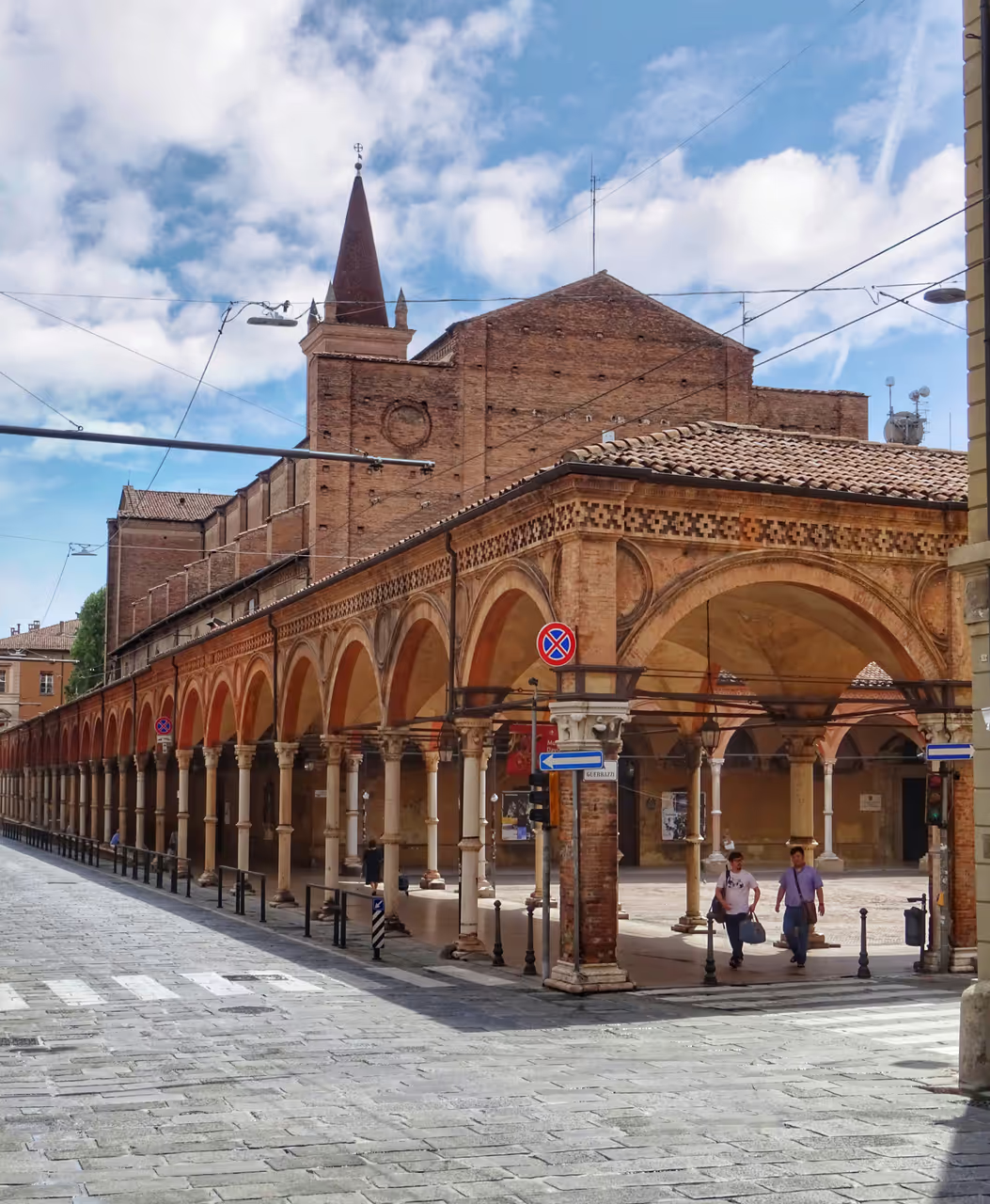
Summer
The city can become quite hot and humid, prompting a slightly slower, more relaxed pace during the middle of the day. However...
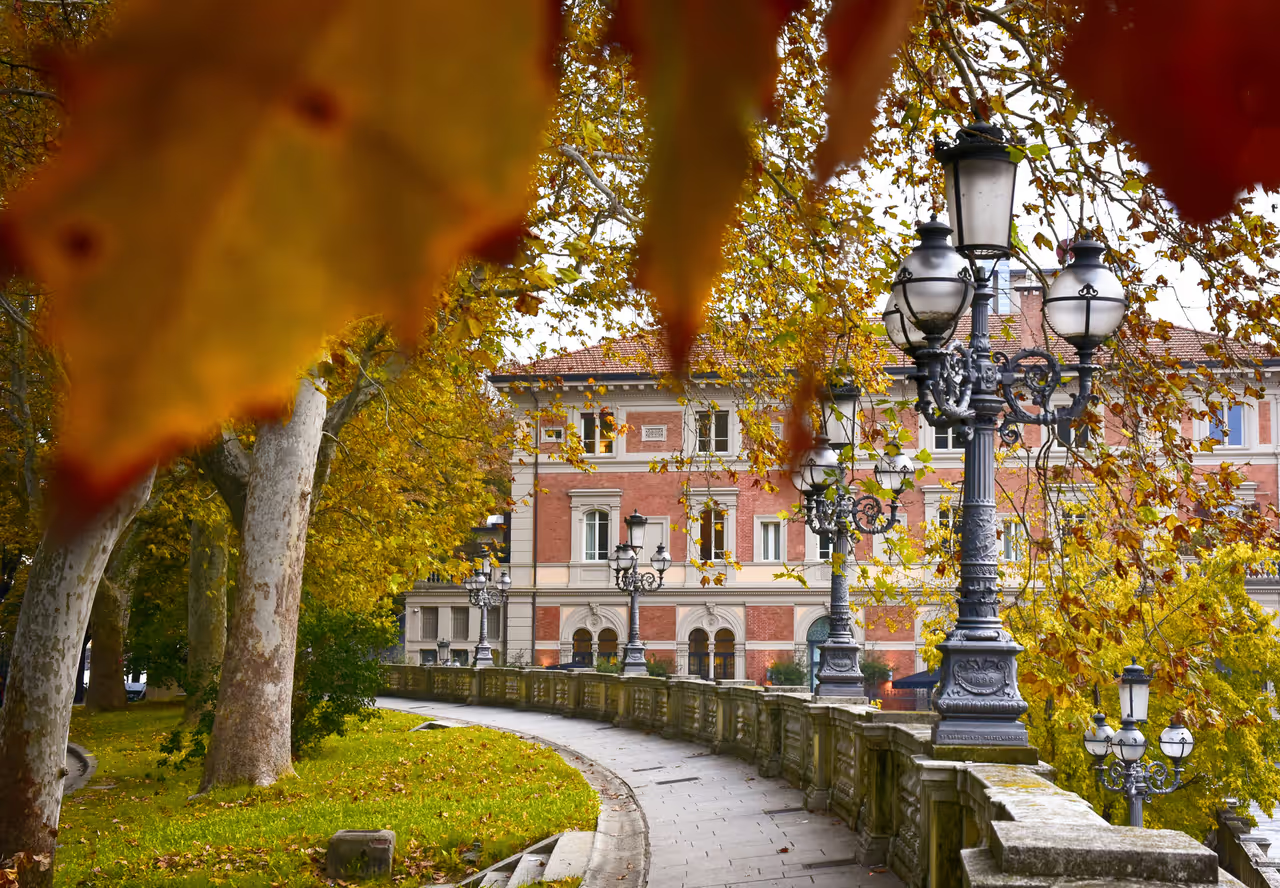
Autumn
This is widely considered one of the best times to visit, as the intense summer heat gives way to crisp, comfortable air. The...
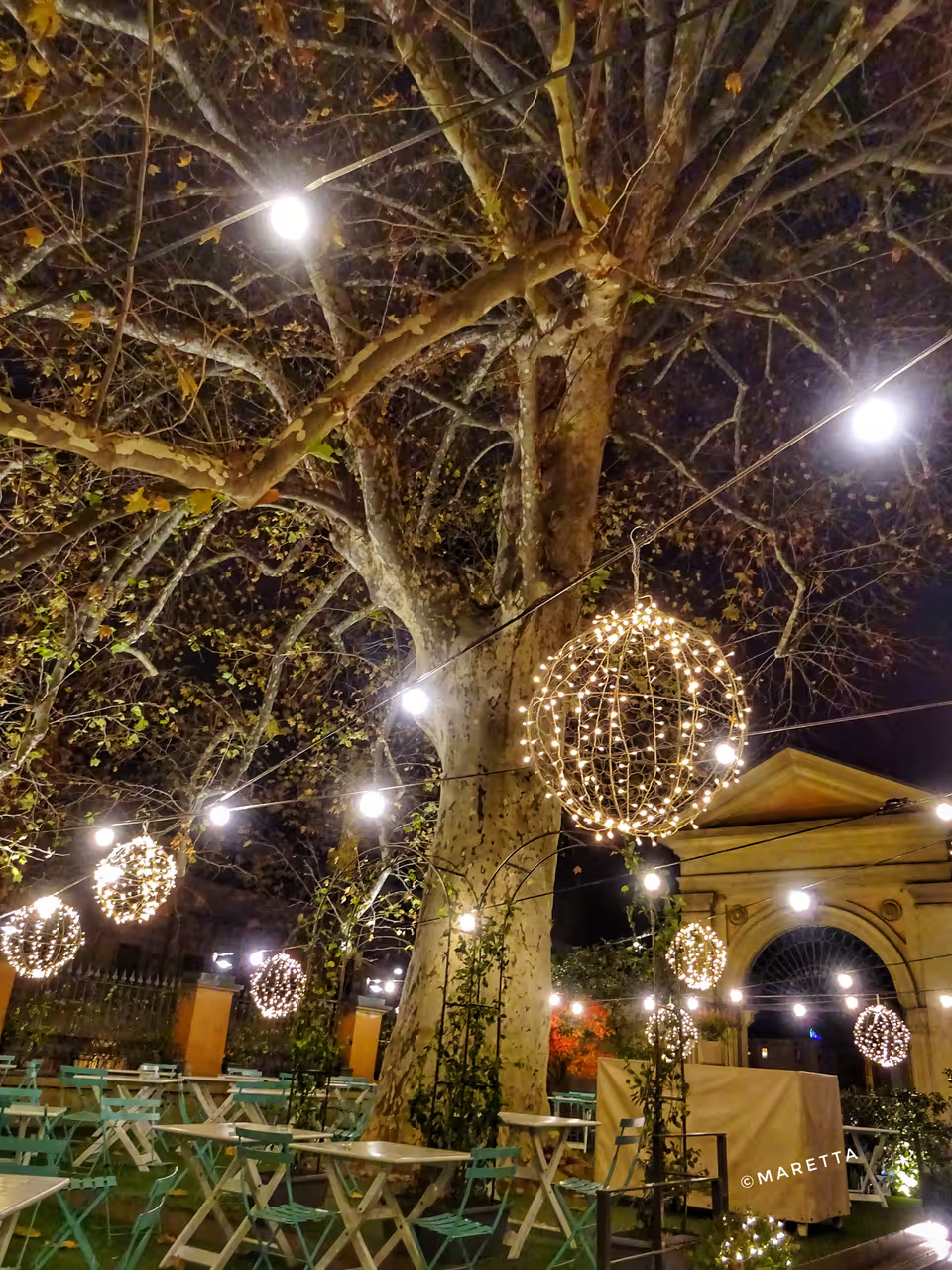
Winter
The city takes on a quiet, atmospheric charm as the temperatures drop, often featuring crisp, clear blue skies. The ancient...
Top Attractions in Bologna
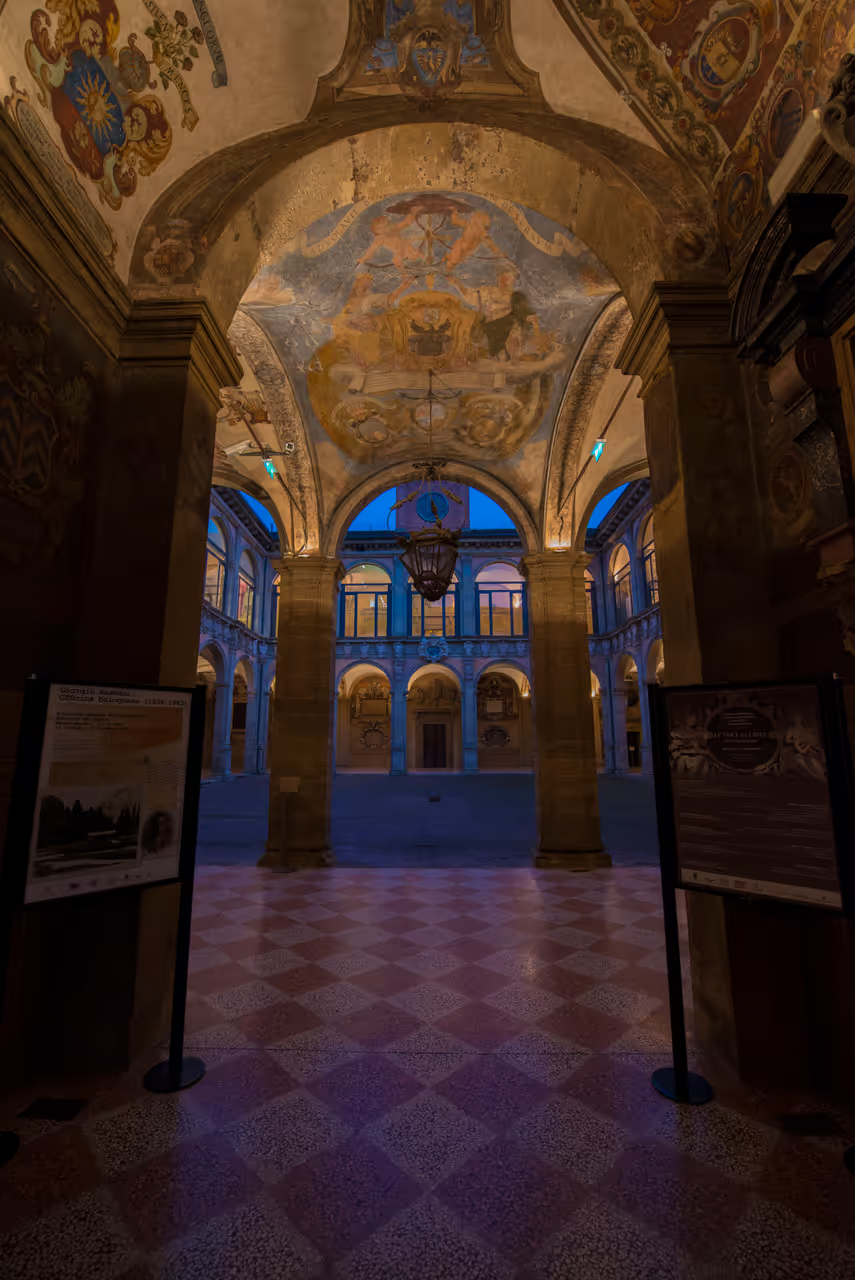
Archiginnasio of Bologna
The Archiginnasio of Bologna stands as a powerful testament to the intellectual heritage of one of the world's oldest university...
view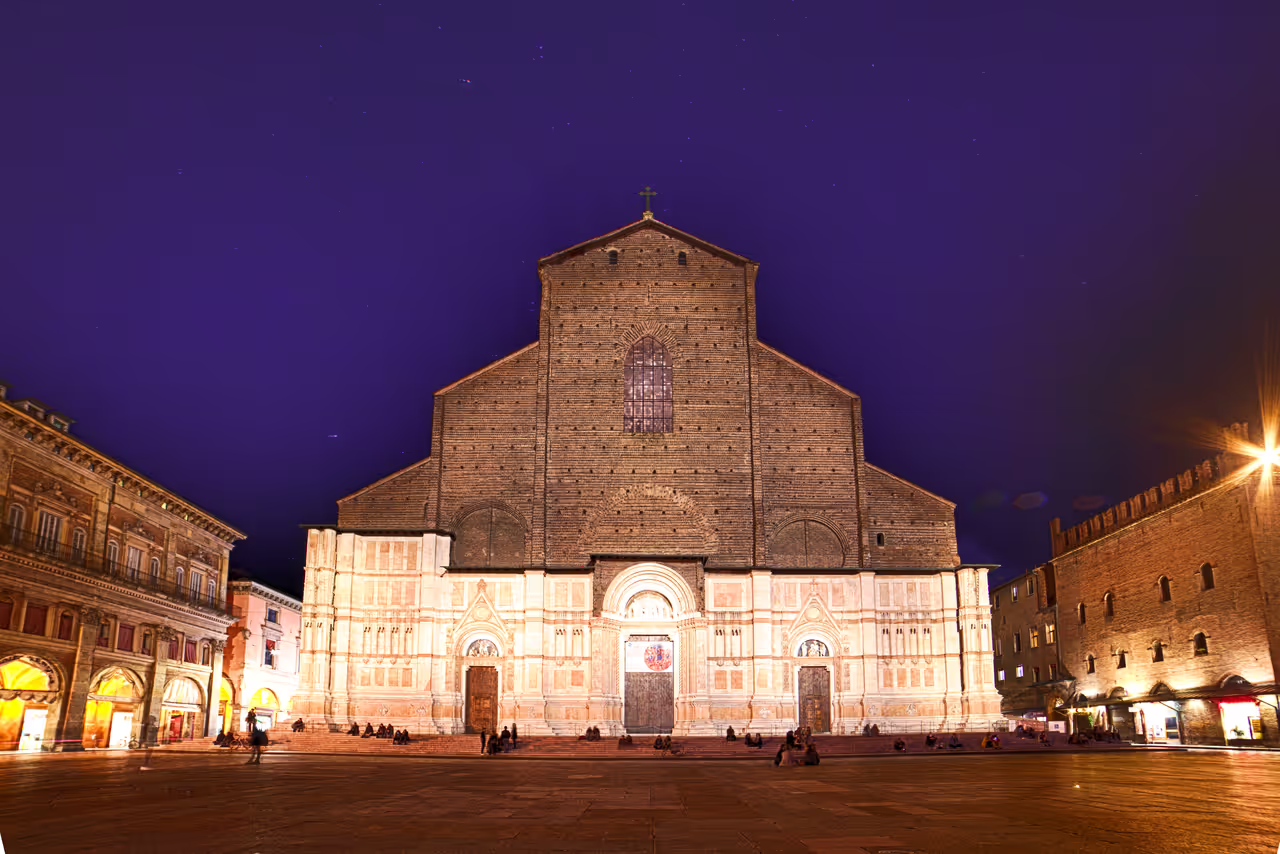
Basilica of San Petronio
Dominating Piazza Maggiore, this pink and white marble giant is more than just a place of worship; it is the beating heart of...
view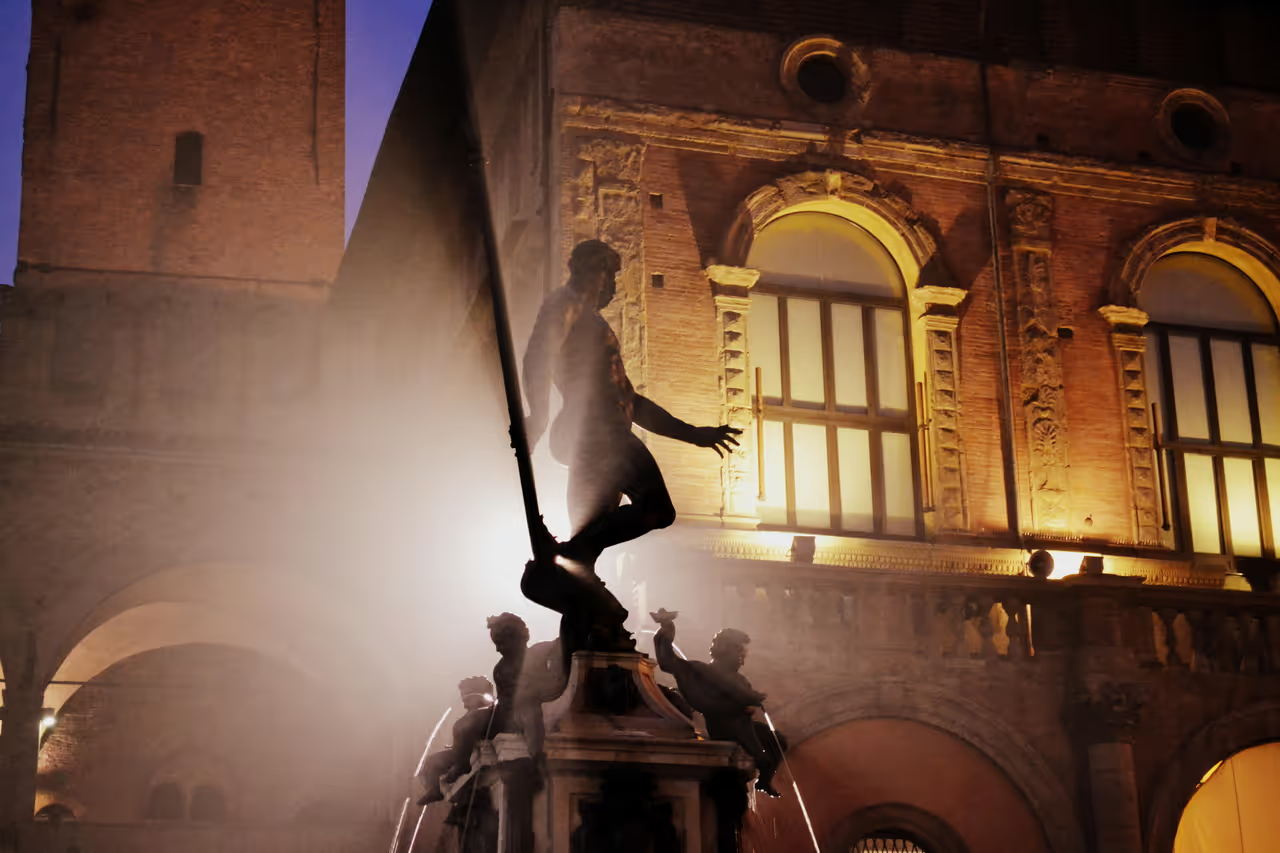
Fountain of Neptune
Standing proudly in the heart of the city, the Fountain of Neptune is the powerful heartbeat of Bologna. Known affectionately by...
view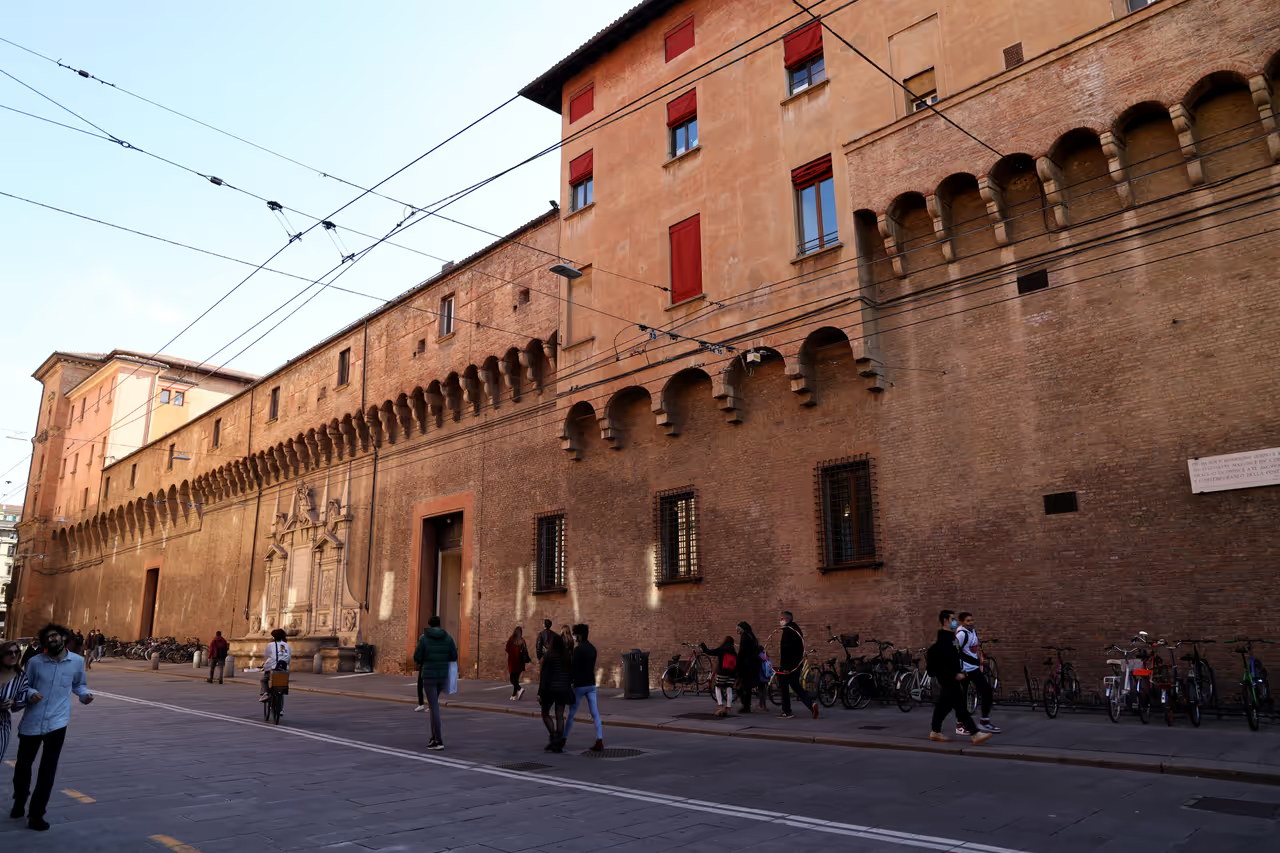
Palazzo d'Accursio
Perched on Piazza Maggiore, this ancient seat of government is far more than a simple town hall. It is a layered historical...
view
Best Views
Bologna Itineraries
TRIP PLANNER
3 Days Recommended
Three days allow you to comfortably explore the mediaeval core, climb the towers, and visit the university museums. It gives you ample time to enjoy long, relaxed meals and take the scenic walk up to the Sanctuary of San Luca. This pace ensures you experience both the cultural highlights and the local lifestyle without rushing.
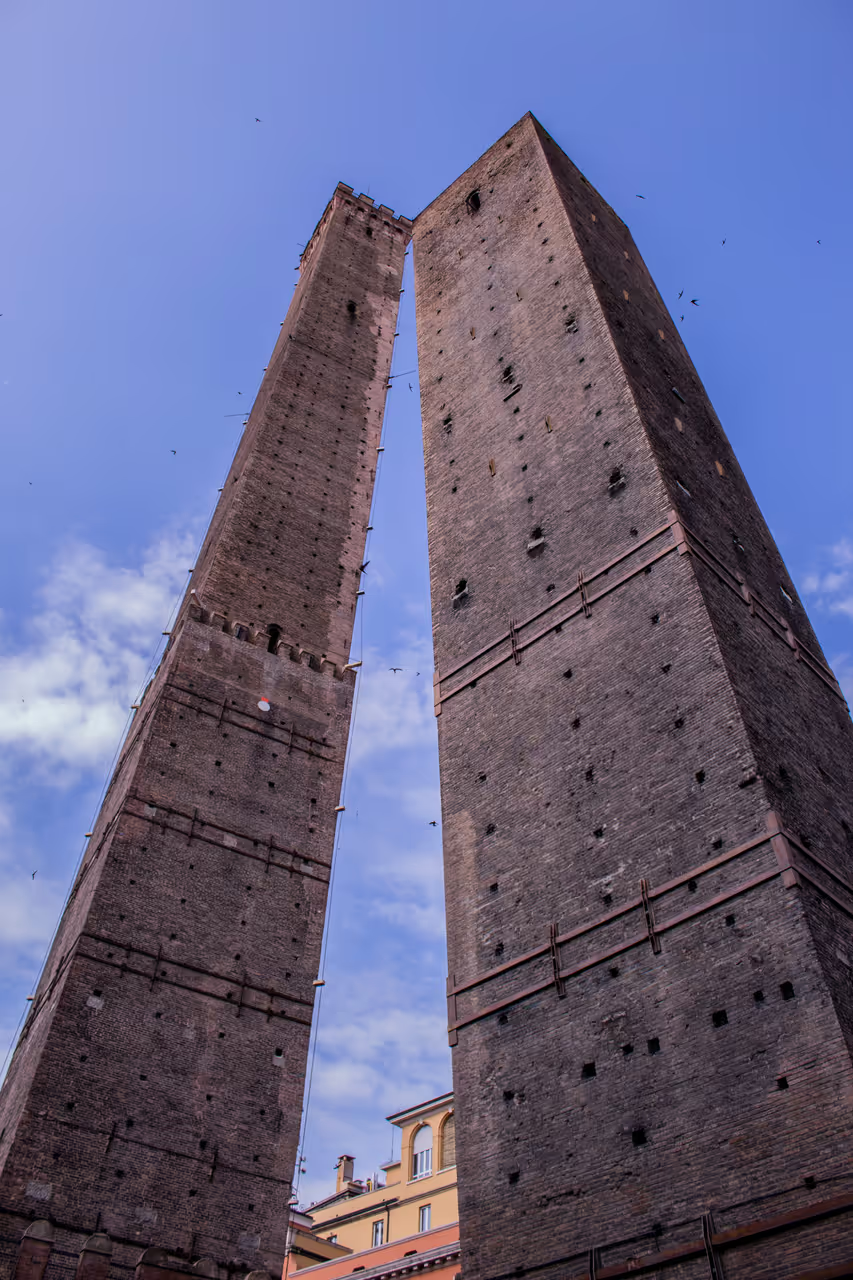
1 Day in Bologna: The Culinary and Historic Core Itinerary
If you only have a single day, this fast paced itinerary hits the absolute essential highlights of the historic centre. You will experience the monumental civic squares, gaze up at the iconic leaning towers, and dive headfirst into the city's famous culinary scene. It is designed to maximize your time, keeping walking distances short while delivering a huge dose of atmosphere. By the time evening falls, you will have a perfect taste of what makes this city so special.
view itinerary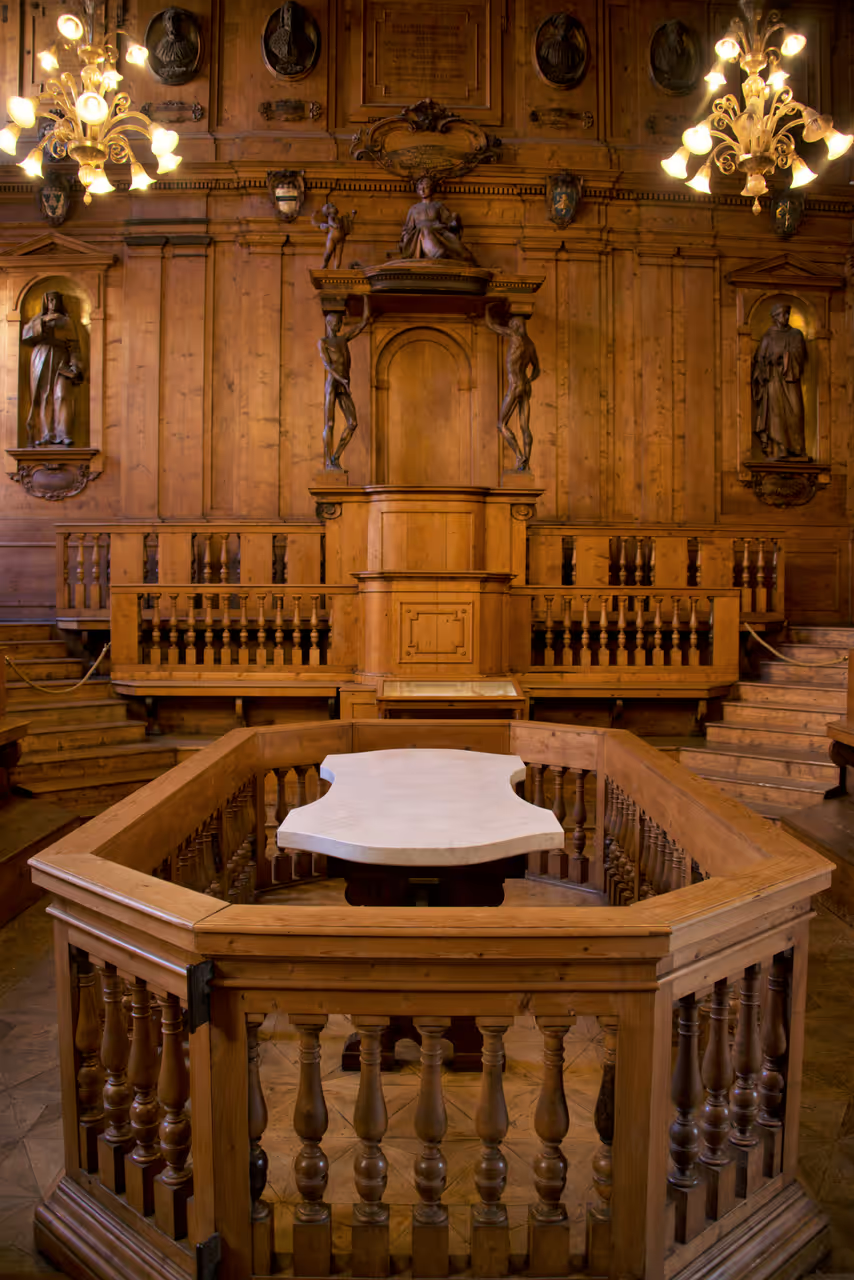
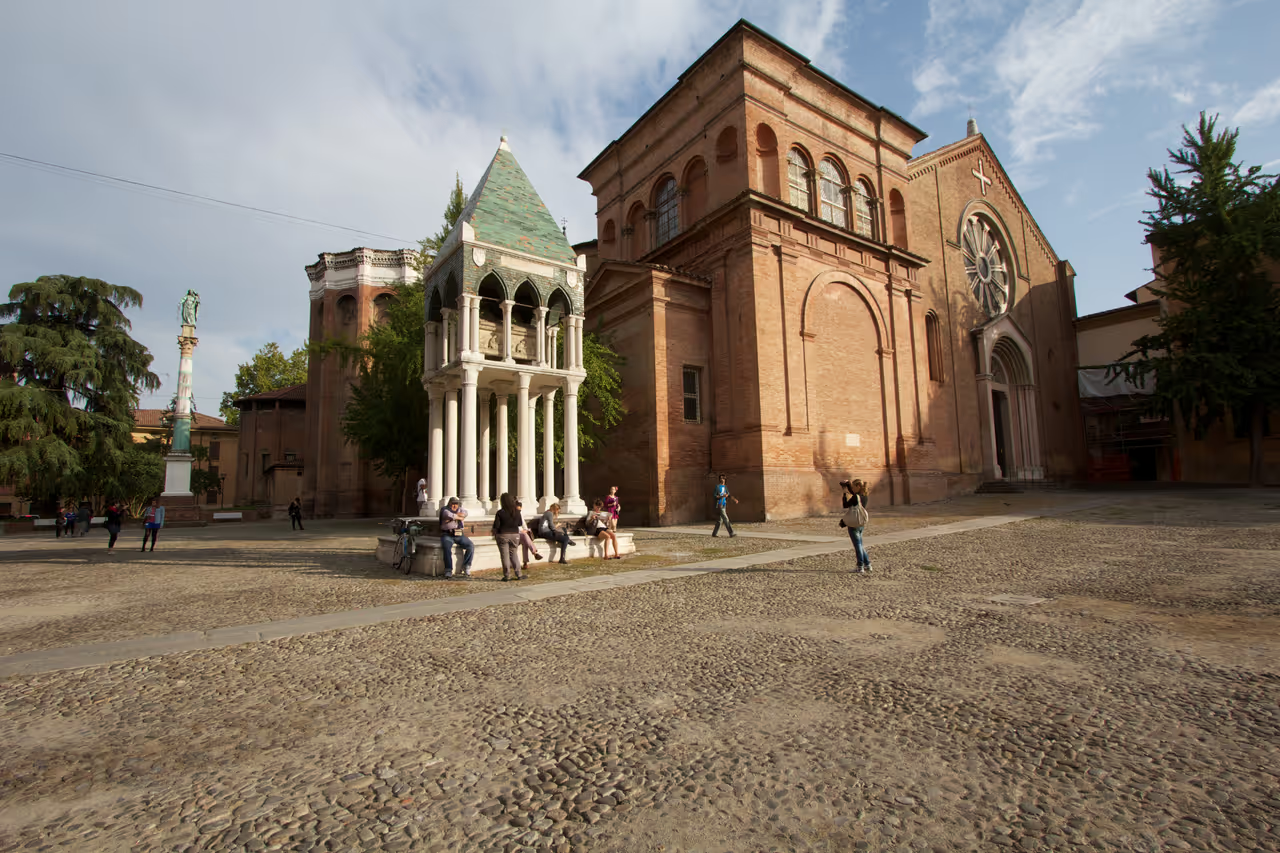
3 Days in Bologna: Porticoes, Piazzas and Panoramas Itinerary
Three days allows for a wonderfully balanced exploration of the city's diverse character. You will have time to thoroughly explore the university's academic legacy, tackle the famous portico walk to the hilltop sanctuary, and indulge in extended food and wine sessions. It mixes the essential historic sights with highly authentic local experiences and lively nightlife. This itinerary perfectly captures the city's blend of intellectual history and joyous culinary indulgence without rushing.
view itinerary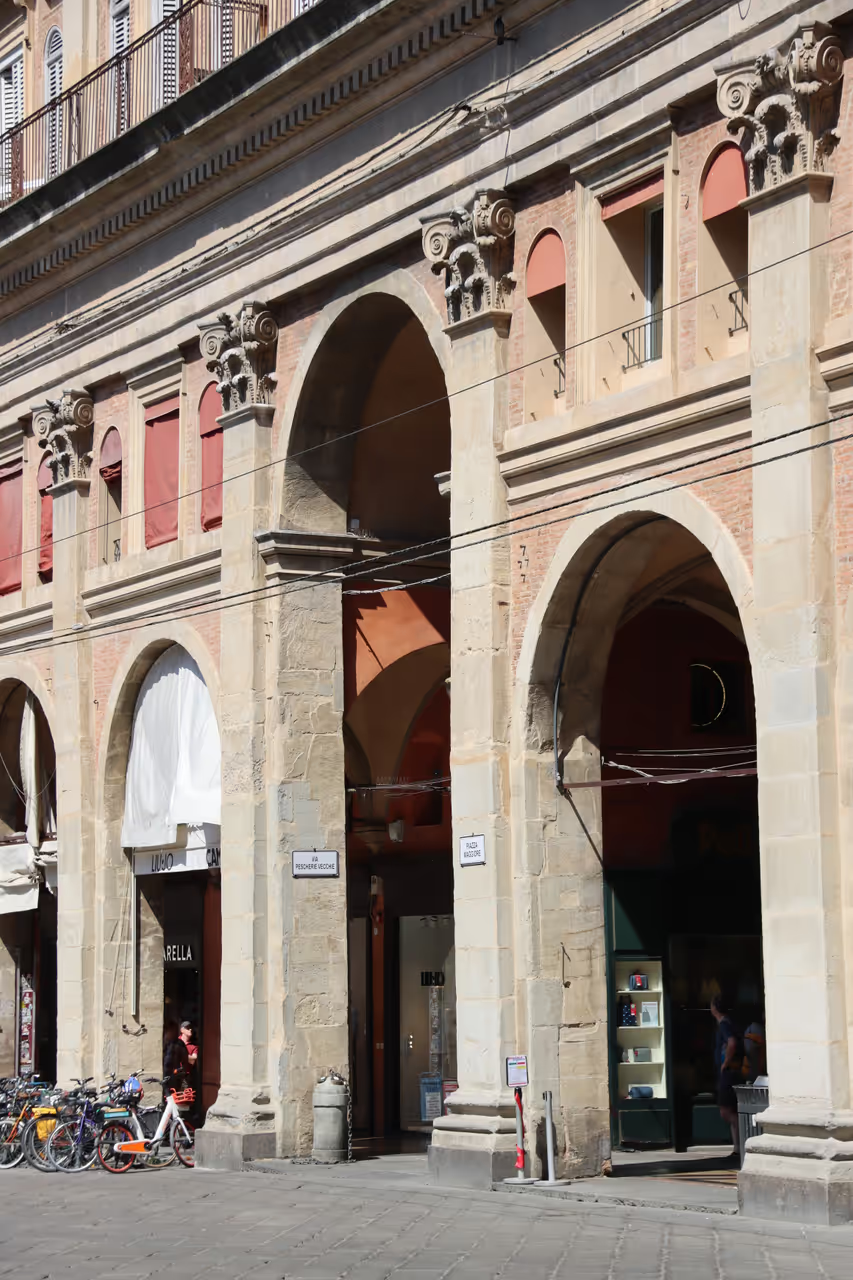
5 Days in Bologna: The Complete Emilian Experience Itinerary
A five day stay transforms a simple visit into a deep immersion into the local lifestyle and regional heritage. You will have ample time to uncover hidden historical gems, explore the surrounding Motor Valley, and enjoy relaxed, extensive gastronomic tours. It allows you to step off the main tourist trails and spend time in tranquil parks and vibrant alternative neighbourhoods. This is the ultimate itinerary for those who want to truly understand and savour everything this remarkable city has to offer.
view itinerary
Food in Bologna
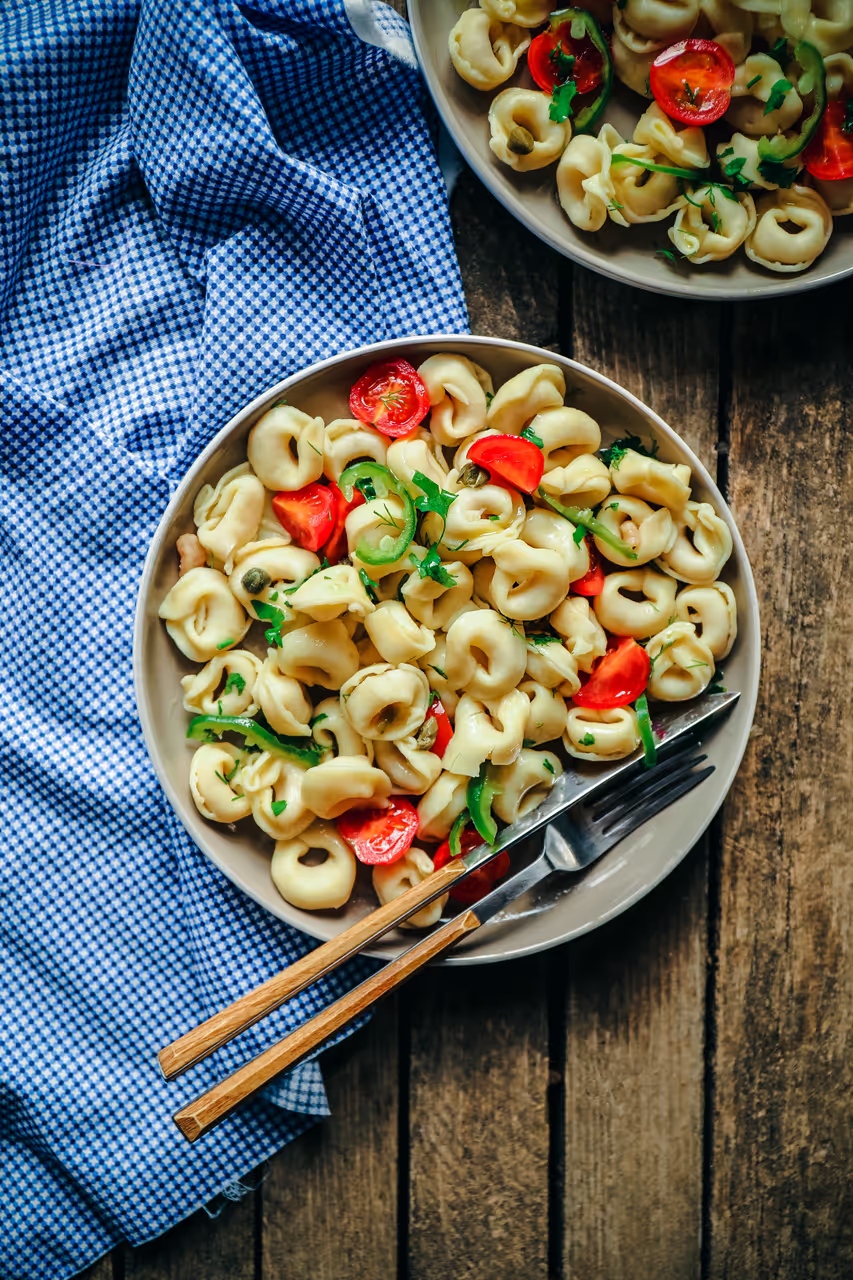
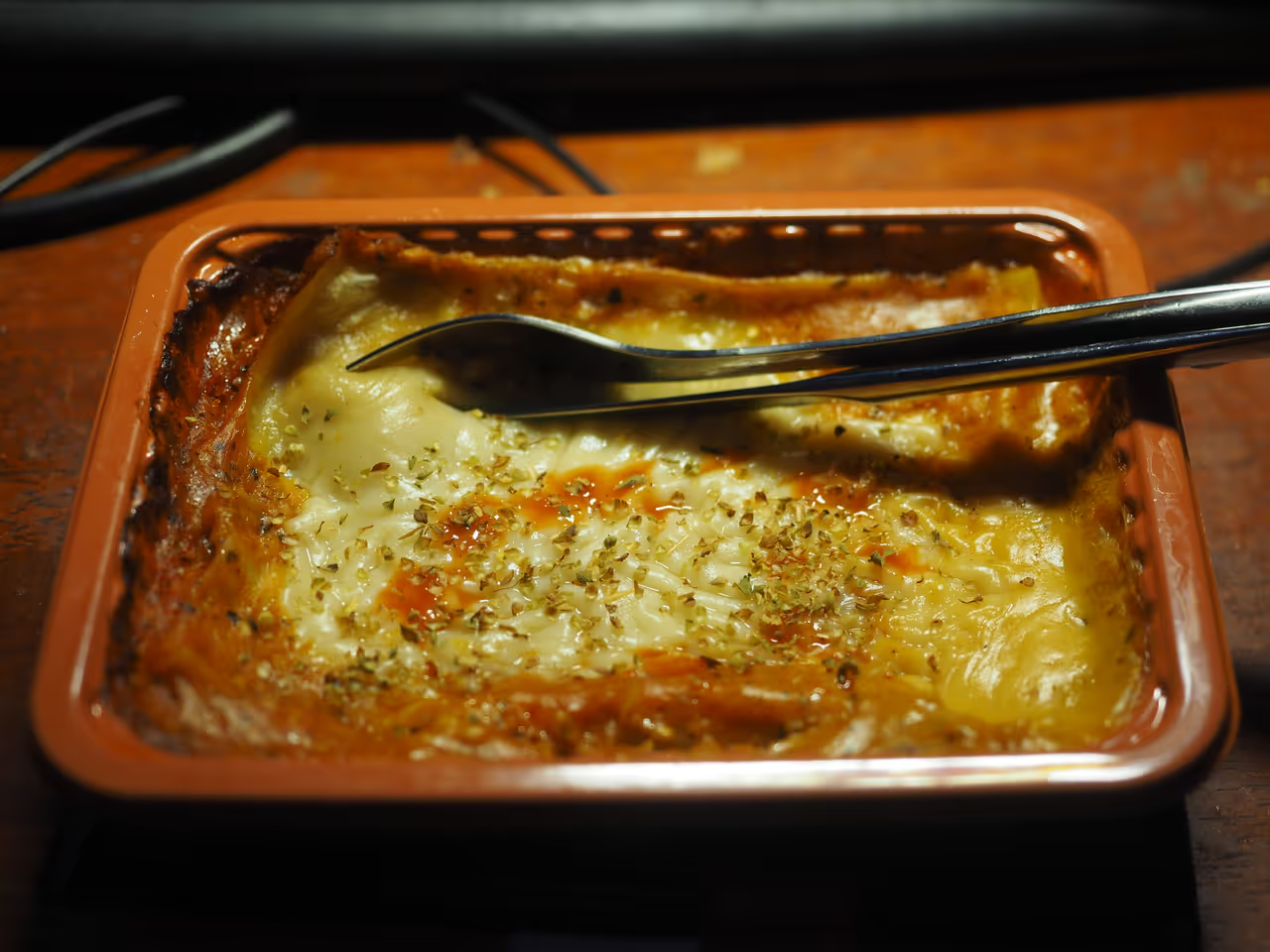
UNESCO World Heritage Sites
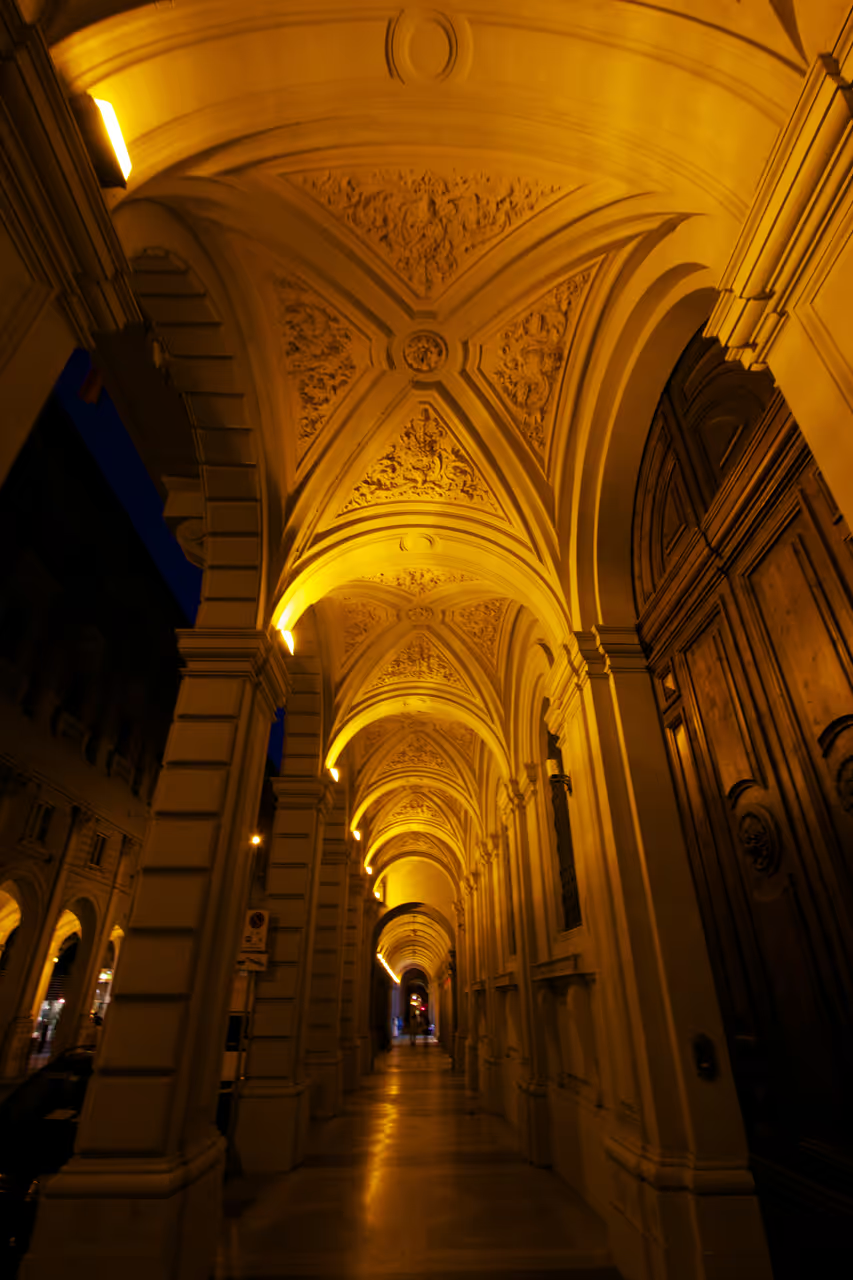
Free Things to do in Bologna
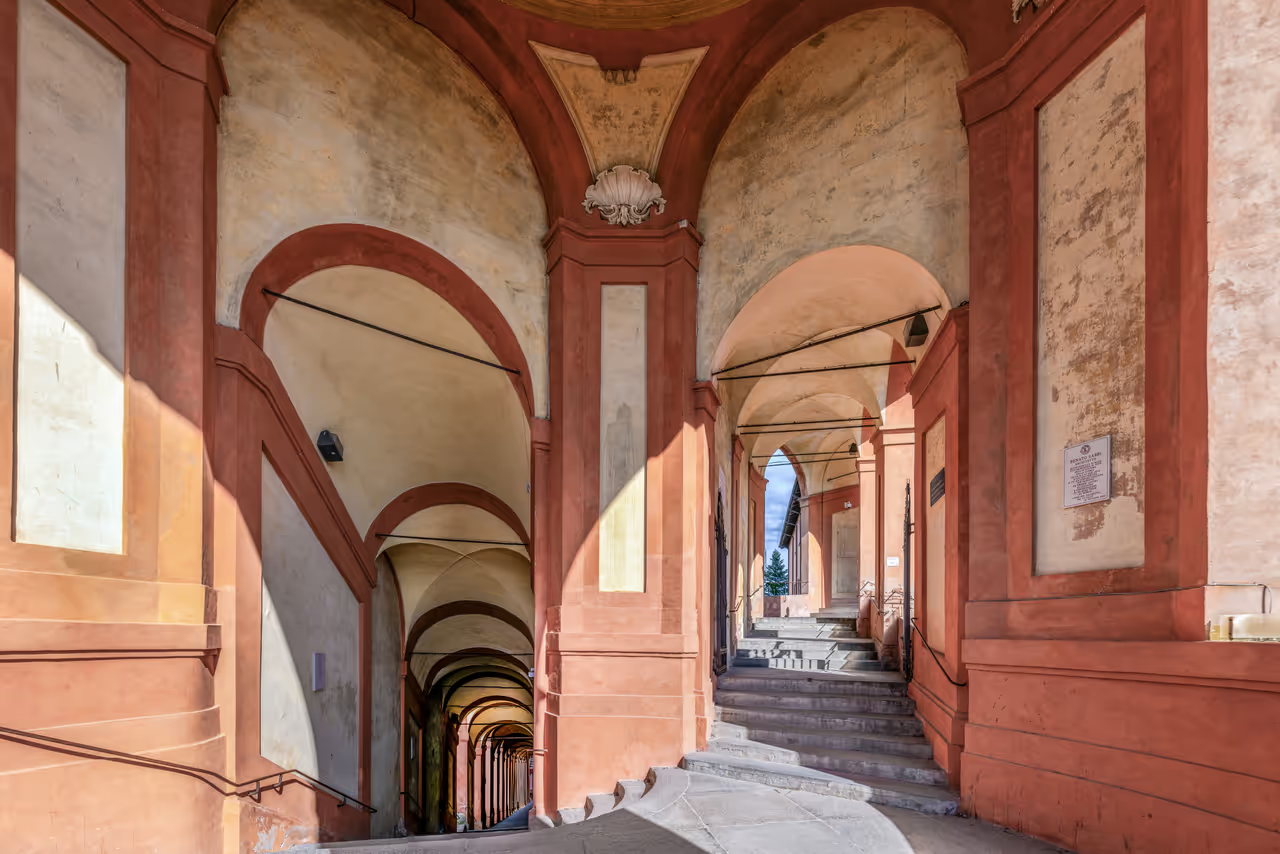
Parks & Nature
Orto Botanico di Bologna
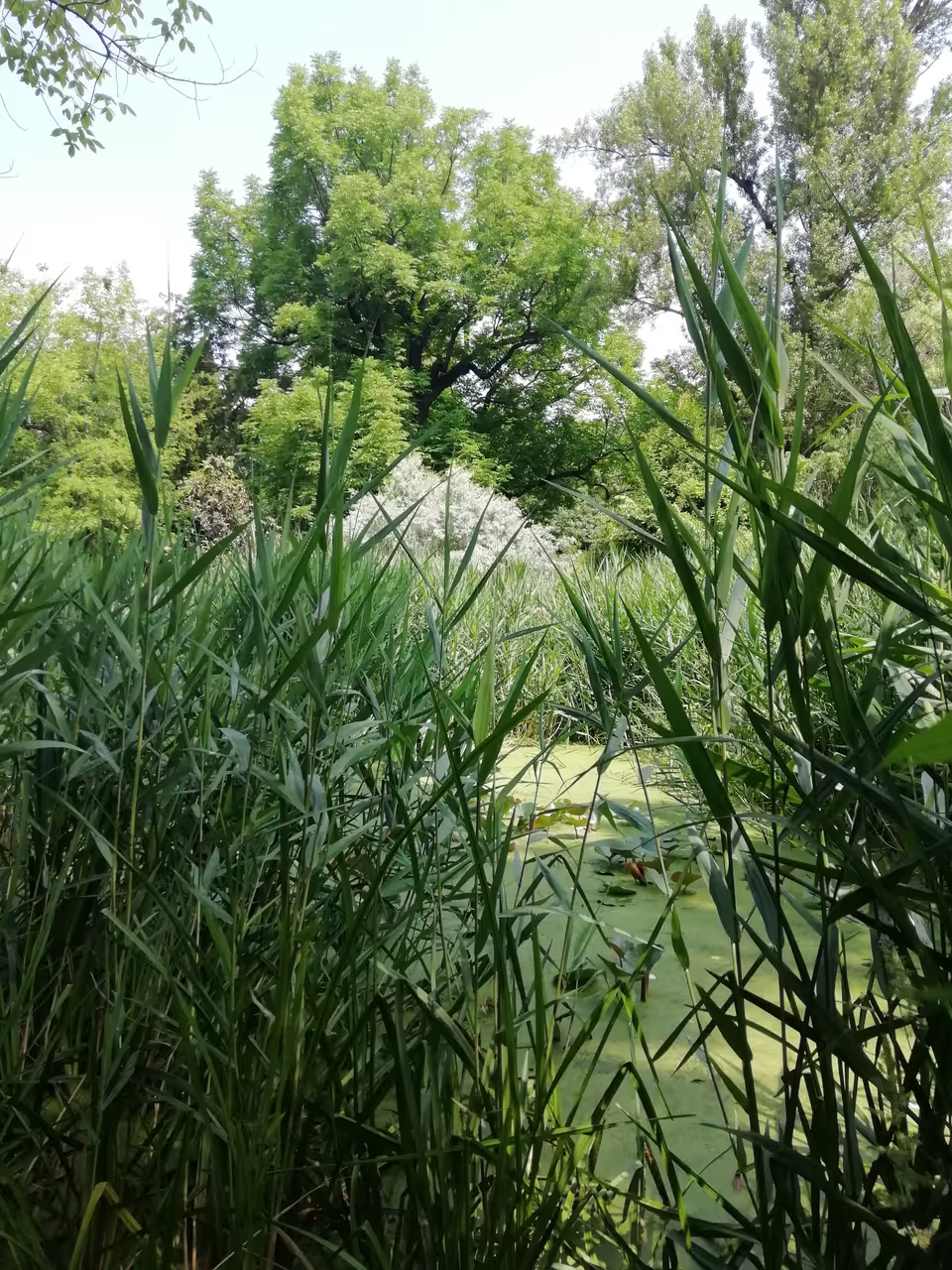
Step into one of Europe’s oldest botanical havens, a peaceful sanctuary of scientific discovery nestled right in the heart of...
view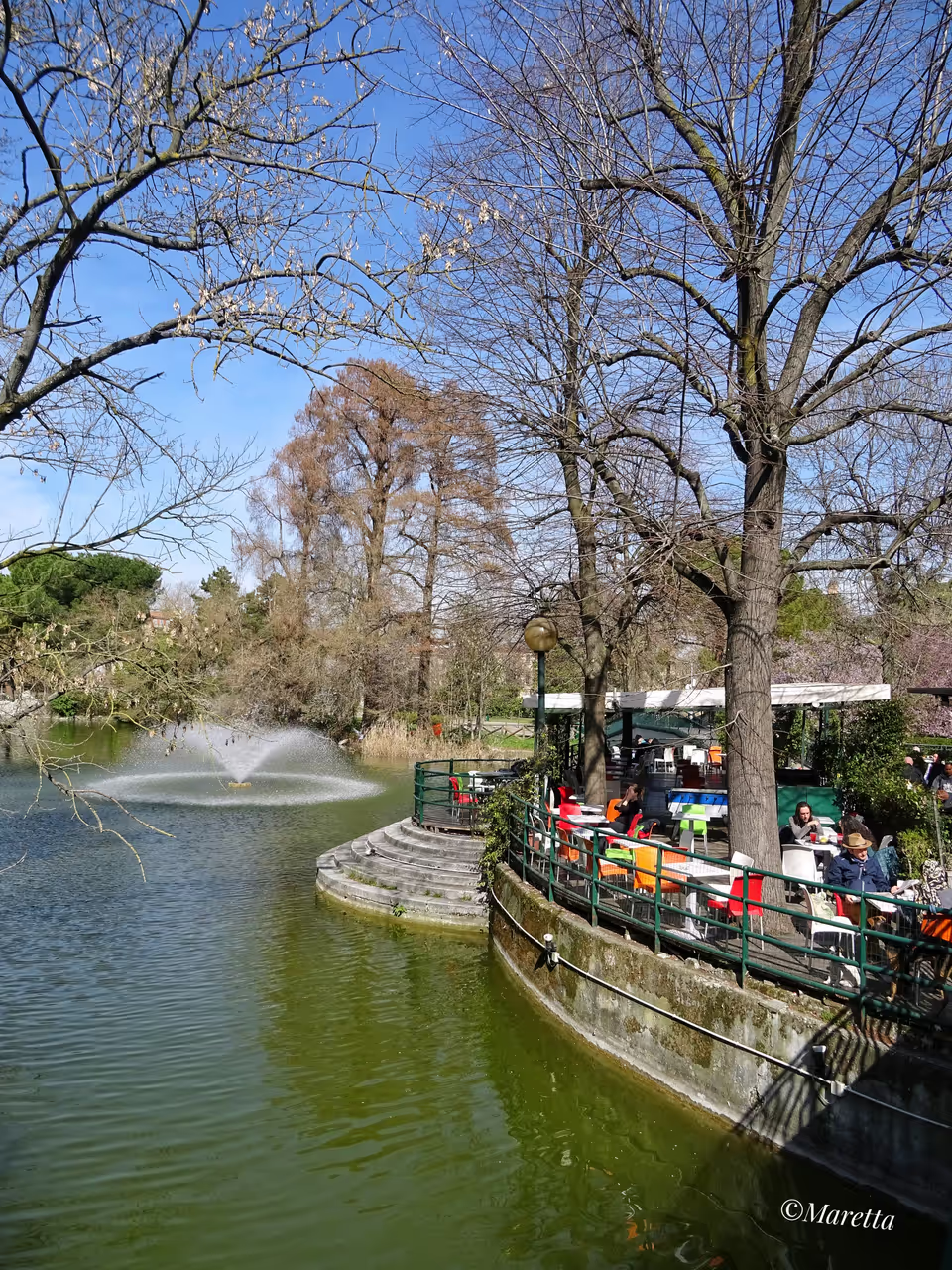
Giardini Margherita
Giardini Margherita is Bologna's beloved green escape, sprawling just south of the medieval city walls. Designed in the late...
view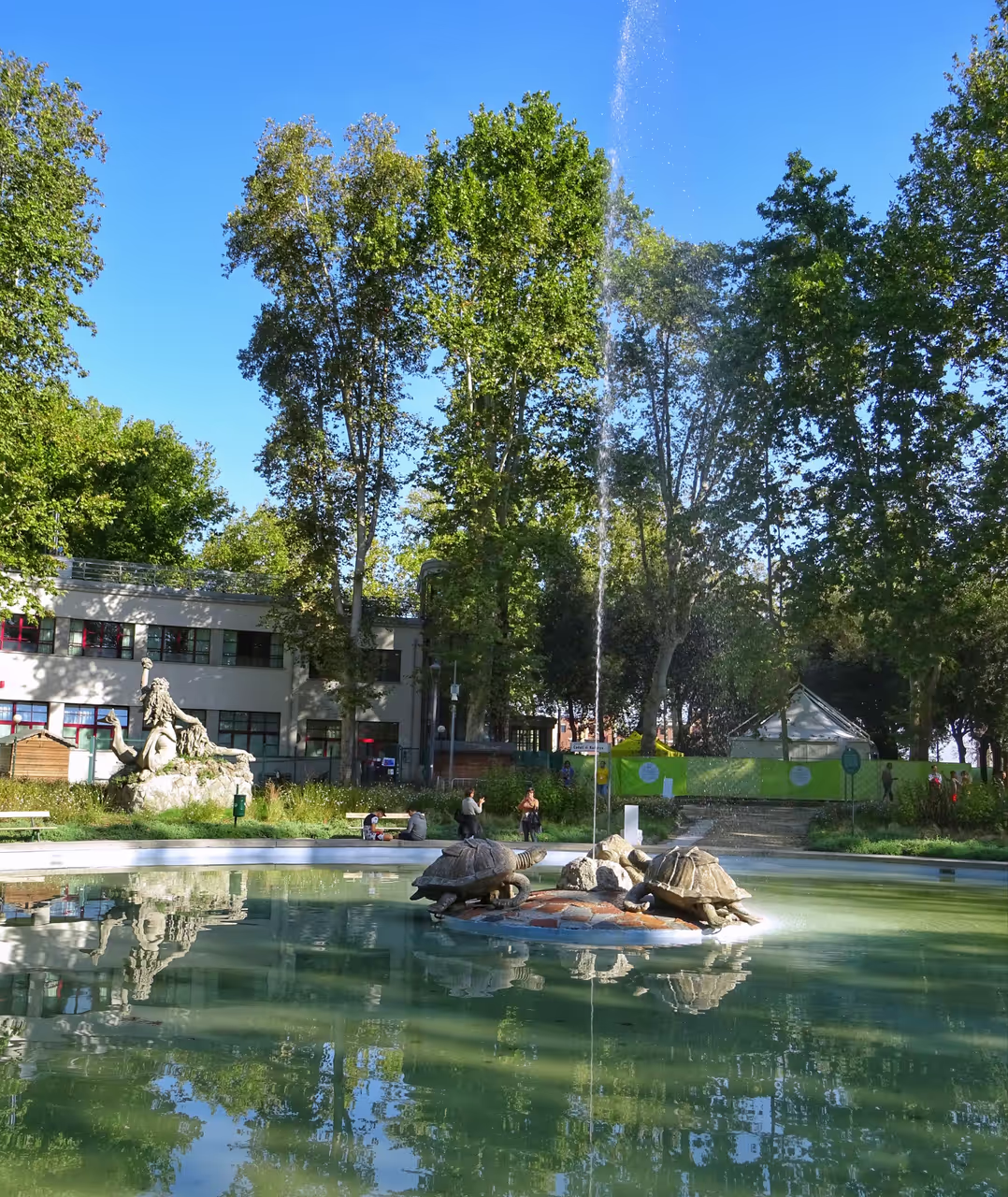
Park of Montagnola
The Park of Montagnola offers a serene green escape nestled in the heart of Bologna, serving as a peaceful sanctuary steeped in...
view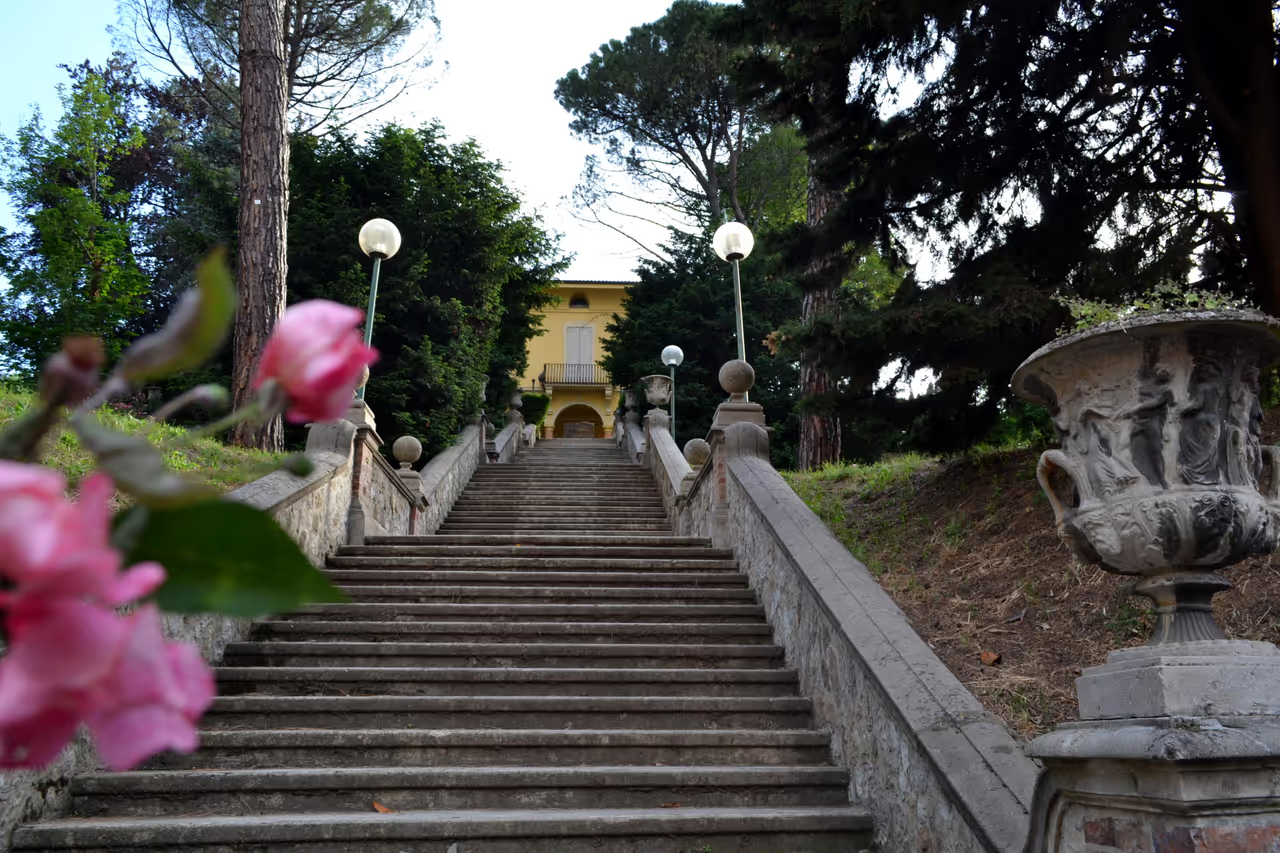
Villa delle Rose
Perched on the gentle slopes of the Colle della Guardia, Villa delle Rose offers a tranquil retreat from the city. This historic...
view
Highlights & Must-Sees
Anatomical Theatre
Carved entirely out of spruce wood in the seventeenth century, this incredibly atmospheric room was used for public medical...
view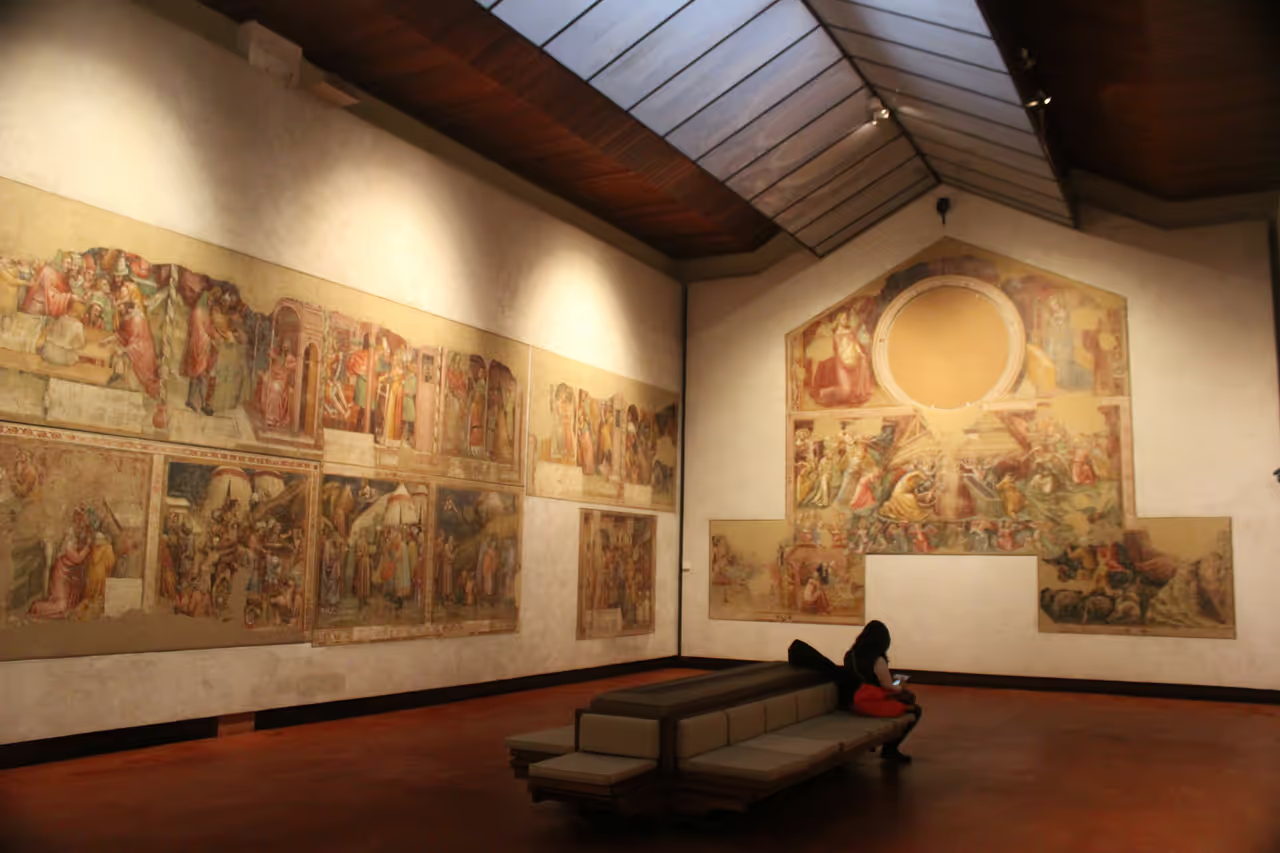
National Picture Gallery
This prestigious gallery houses one of the most important collections of art in the entire region, spanning from the thirteenth...
view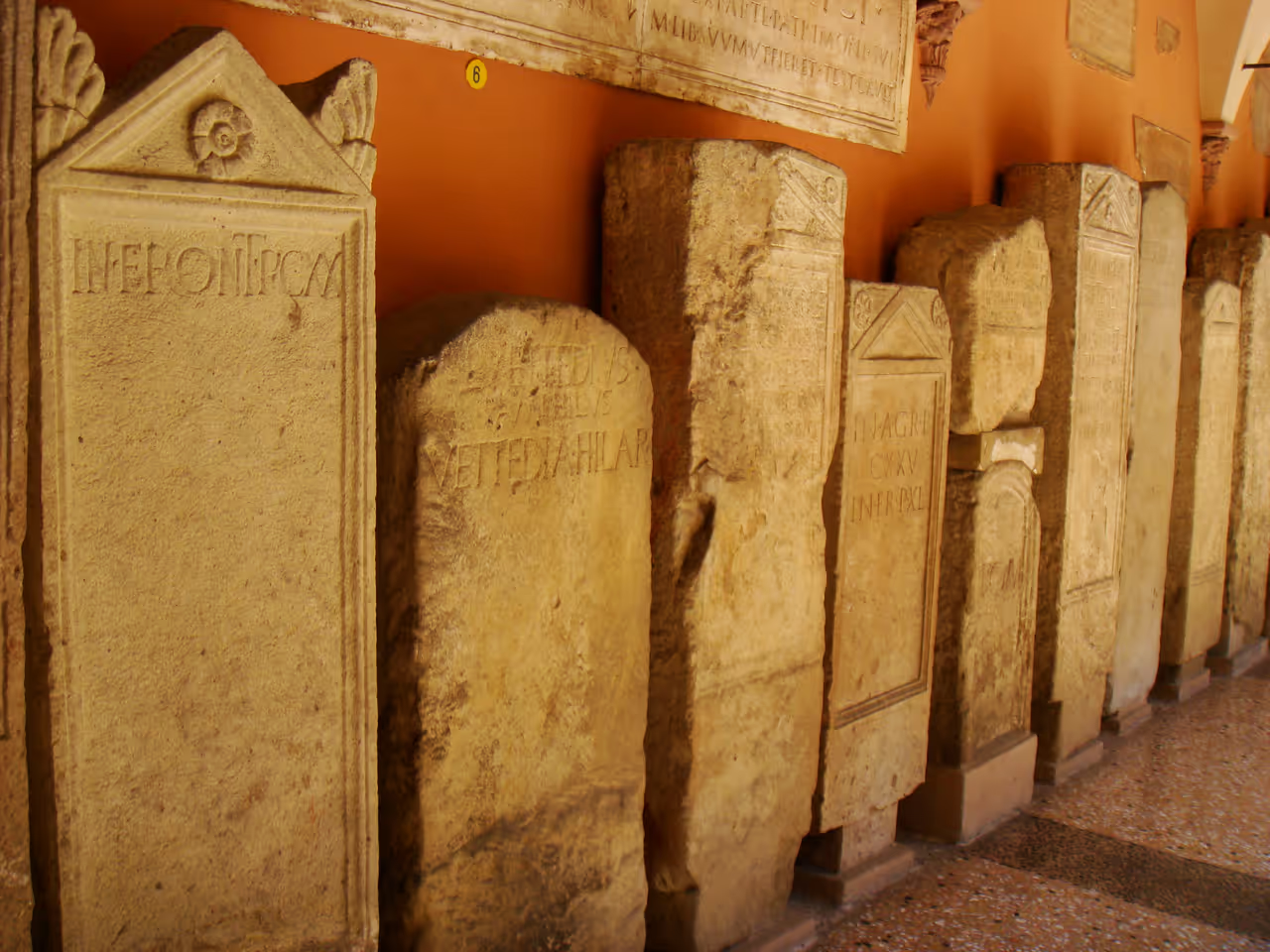
Civic Archaeological Museum
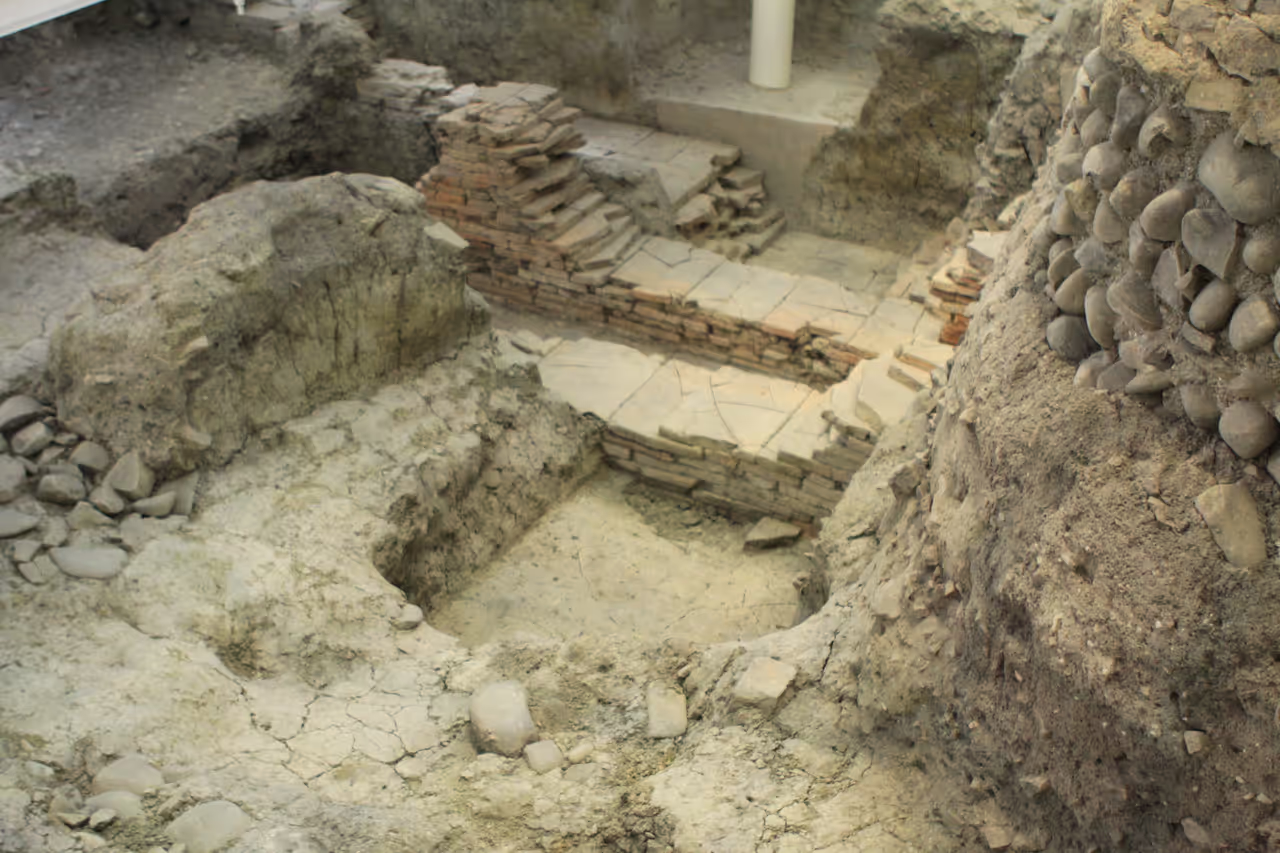
Located right off Piazza Maggiore in a former hospital building, this museum holds an astoundingly rich collection of ancient...
view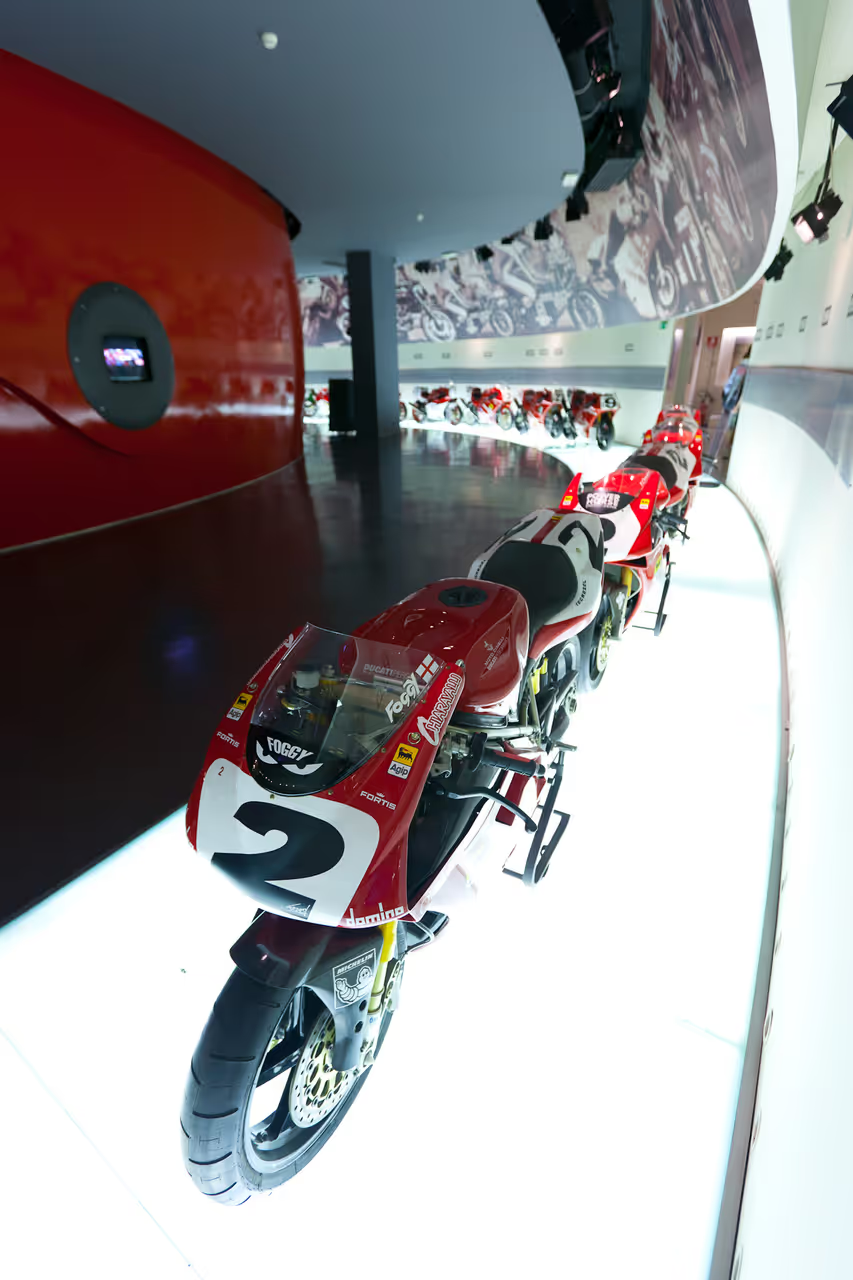
Ducati Museum
A sleek, high octane shrine dedicated to the legendary Italian motorcycle manufacturer, located right at the factory...
view
Best Walks in Bologna
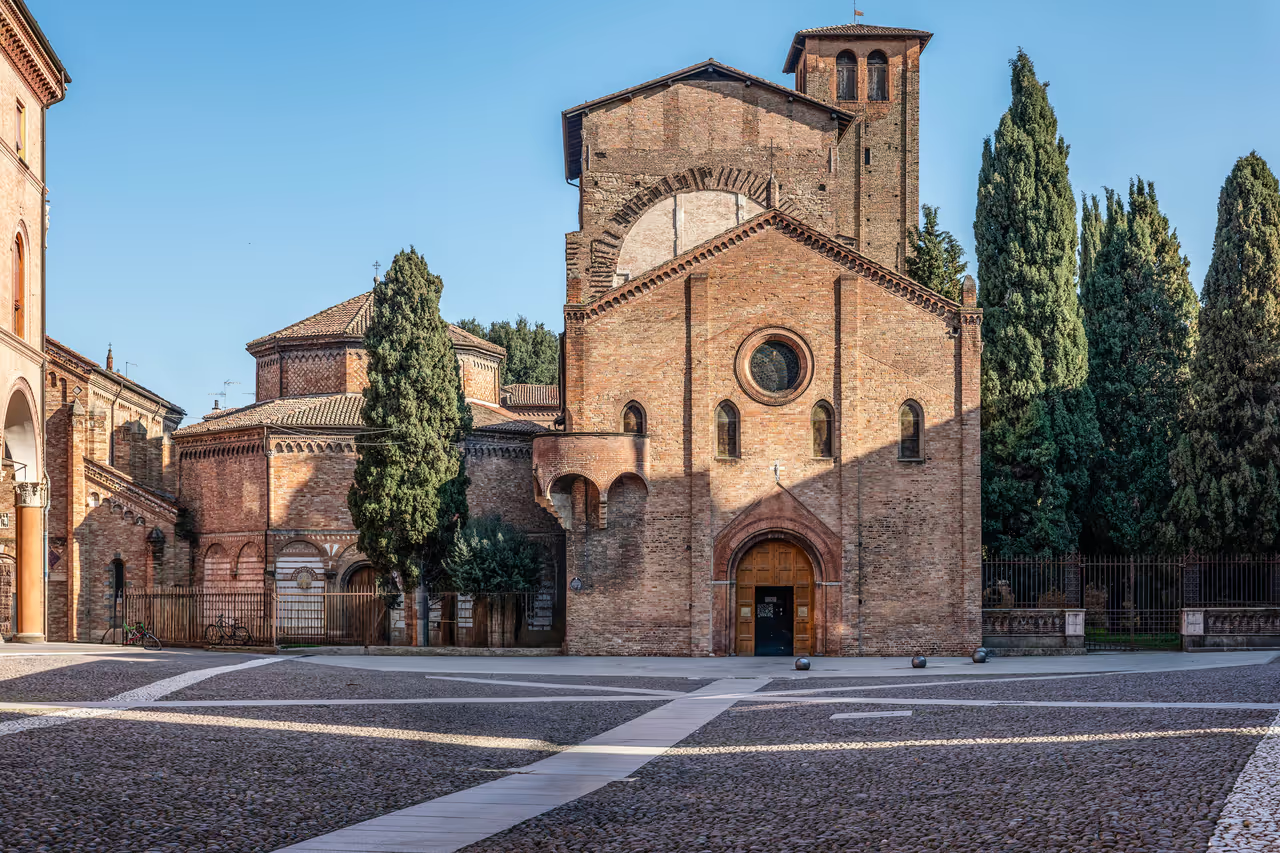
Seven Churches Piazza Stroll
This walk focuses on the arguably most beautiful and uniquely shaped square in the entire city. The triangular piazza is paved with river stones and surrounded by magnificent palaces with intricately detailed porticoes. The undisputed highlight is the incredible religious complex at the end, a labyrinthine cluster of ancient chapels built over centuries. The atmosphere here is serene, elegant, and deeply historical, often filled with students quietly chatting or playing soft music. It offers a perfectly picturesque and deeply peaceful urban escape.
 HIGHLY RECOMMENDED
Walk to San Luca
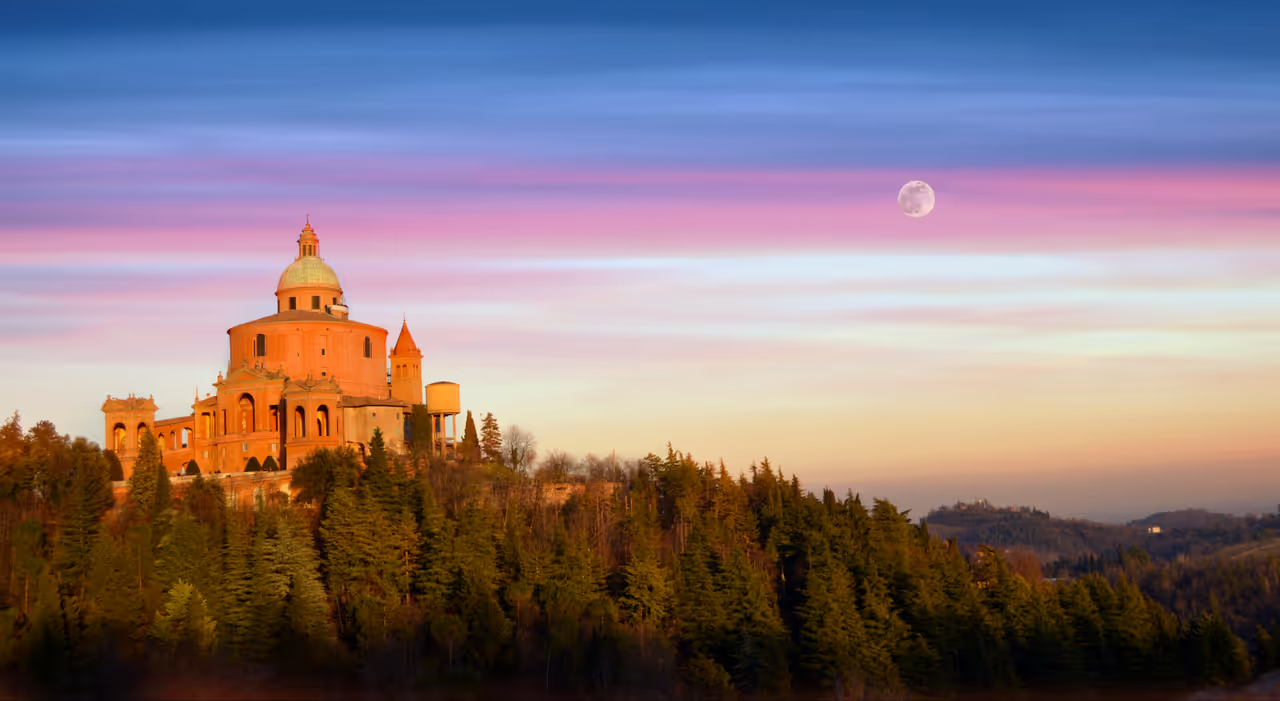
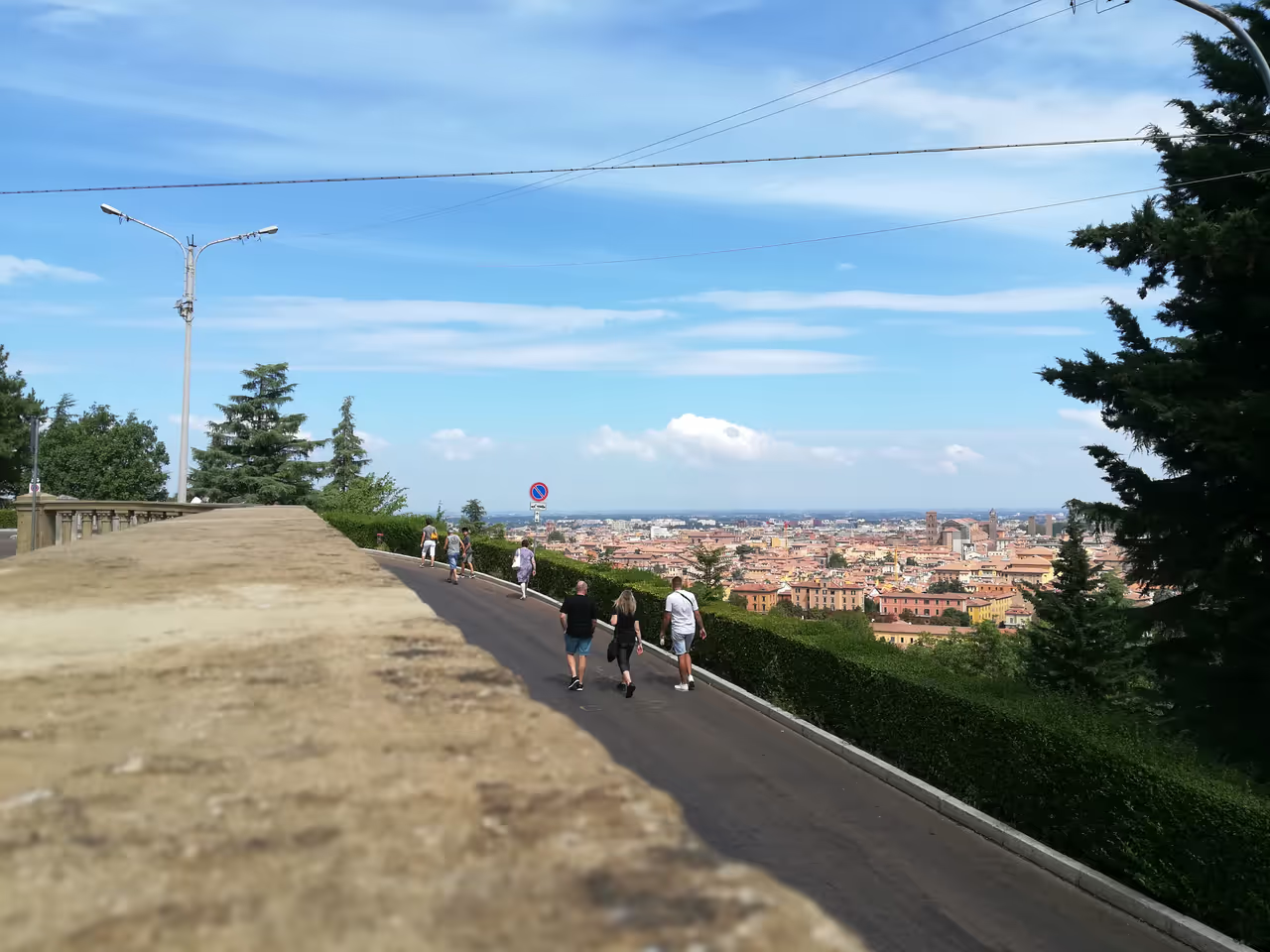
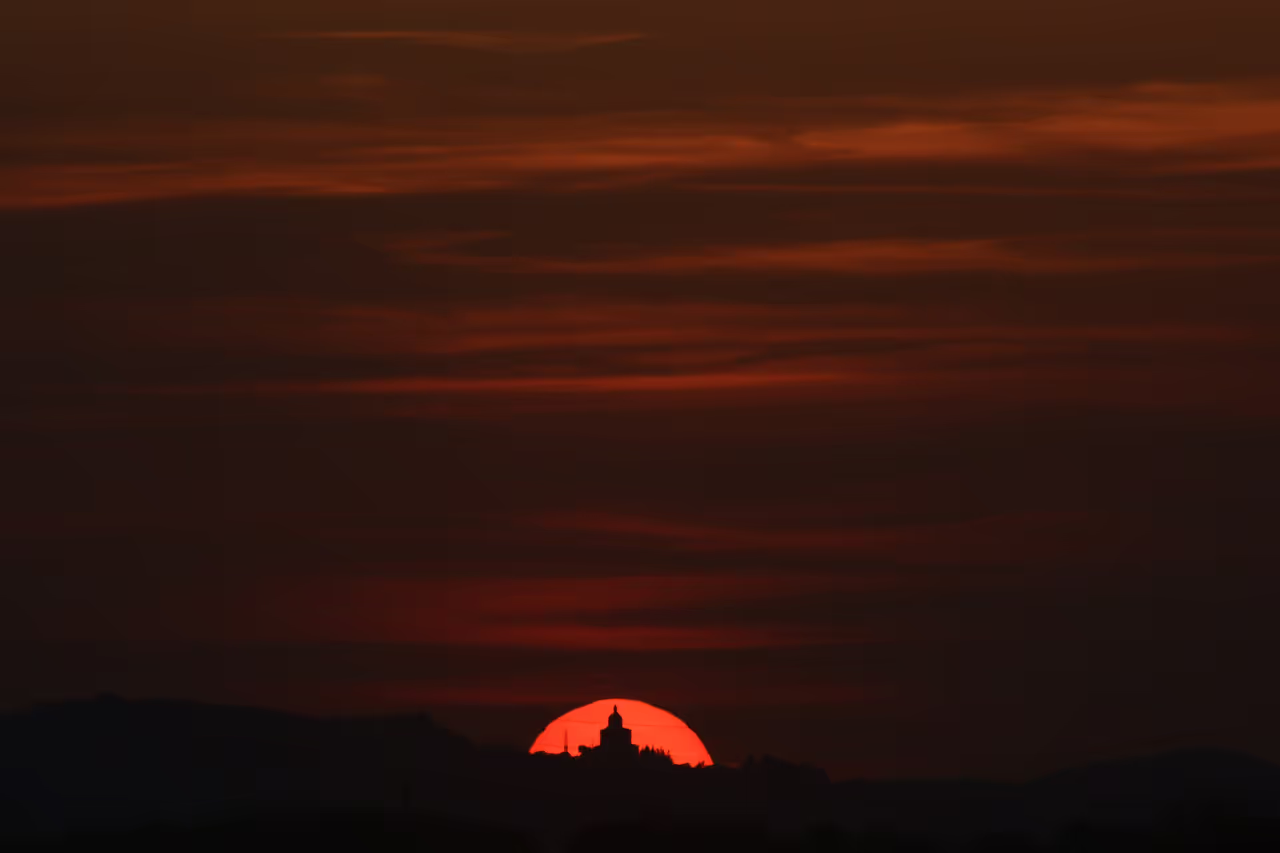
This is arguably the most famous and unique walk the city has to offer. You will follow the longest continuous portico in the world, stretching for almost four kilometres and encompassing exactly 666 arches. The path gradually ascends into the lush surrounding hills, providing a satisfying physical challenge alongside incredible architecture. The rhythmic passing of the terracotta arches creates a meditative, hypnotic atmosphere. Upon reaching the top, you are rewarded with sweeping panoramic views and a stunning baroque sanctuary.
- HIGHLY RECOMMENDED
Quadrilatero Wander
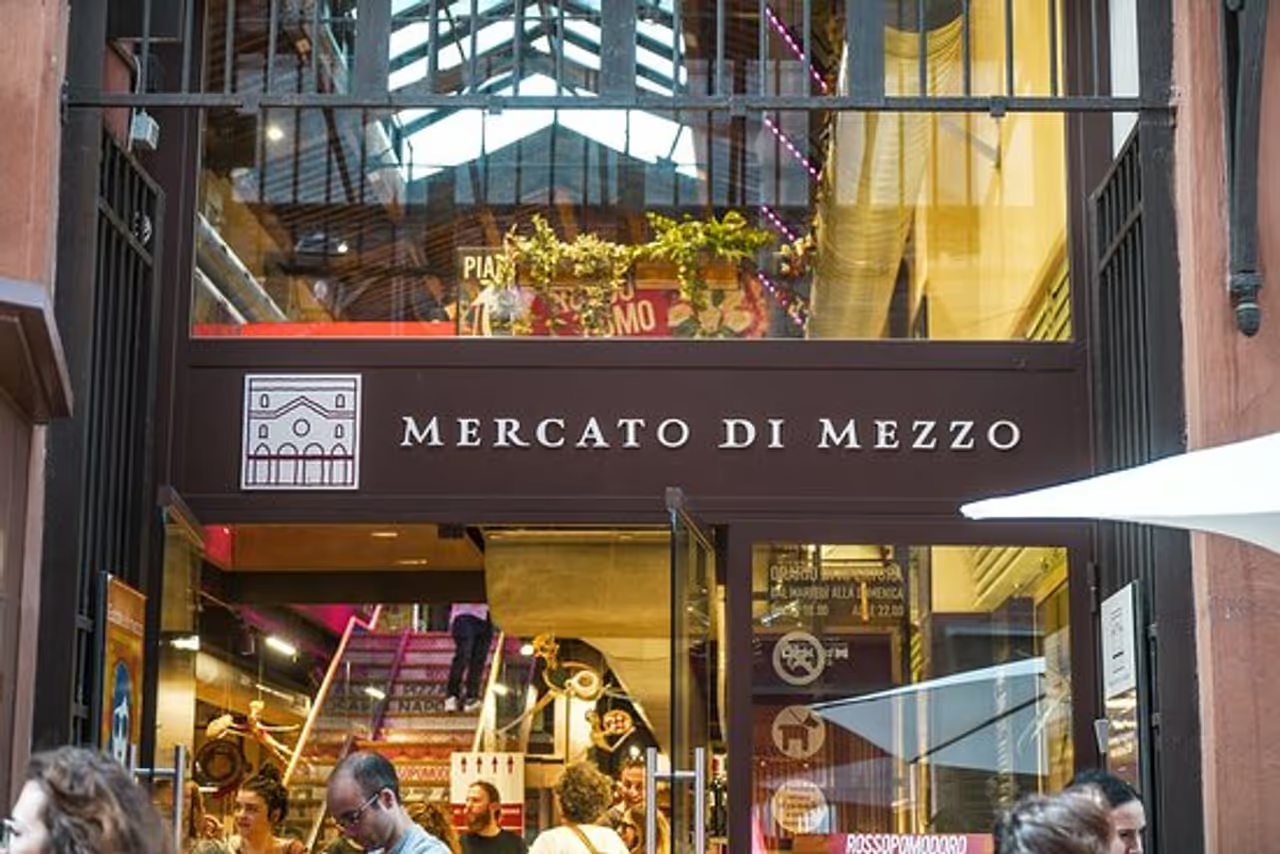
A sensory overload in the best possible way, this stroll takes you through the narrow, ancient streets of the old market district. The air is thick with the scent of aged parmesan, fresh tortellini, and cured meats hanging in shop windows. Historic delicatessens, lively wine bars, and colourful fruit stalls are packed tightly together, creating a vibrant, chaotic charm. It is an incredibly visual and aromatic journey that perfectly captures the city's title as Italy's culinary capital. You will want to stop every few metres to admire the incredible displays of food.
Architecture & Landmarks
Basilica of Saint Dominic
This highly significant church houses the remains of Saint Dominic, the founder of the Dominican order. While the exterior...
view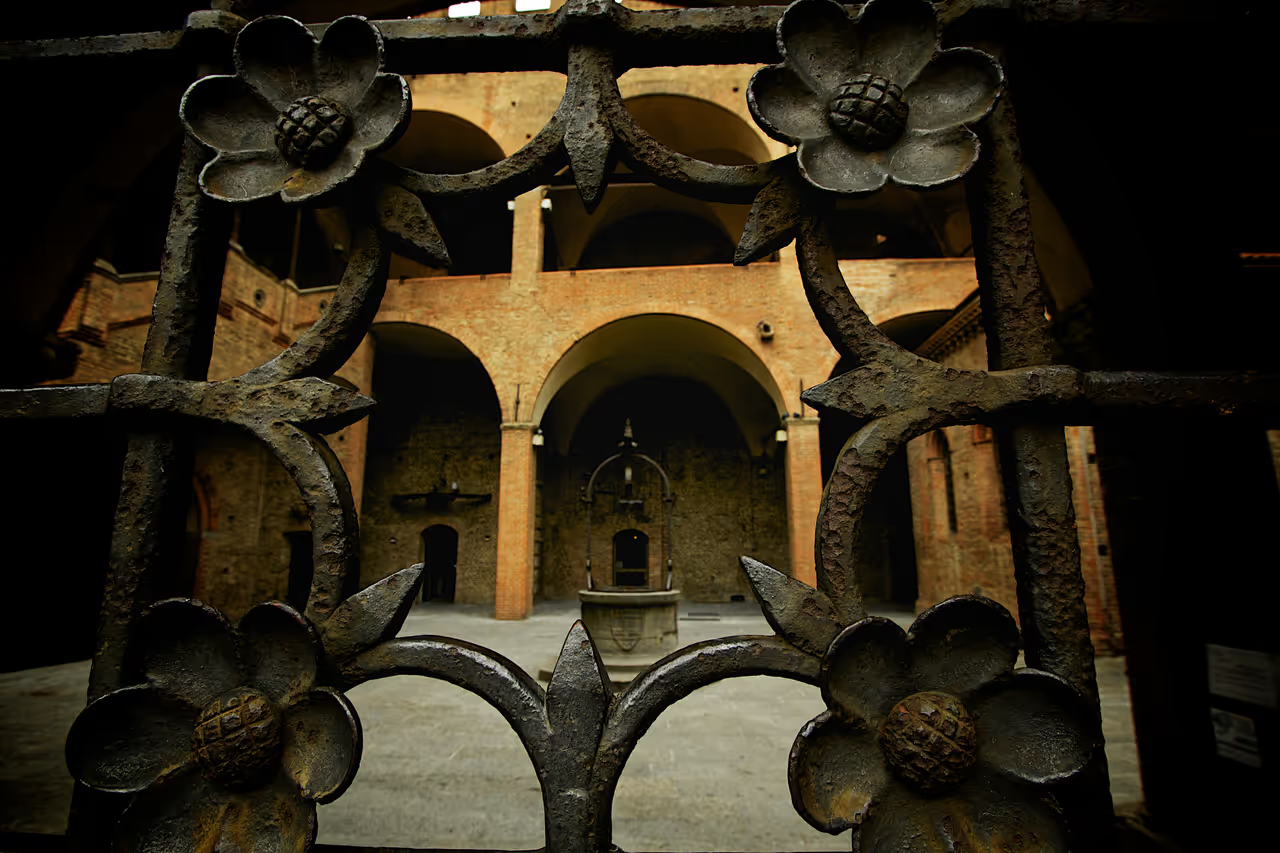
King Enzo Palace
Built as an extension to the civic buildings in the thirteenth century, this Gothic palace is most famous for its legendary...
view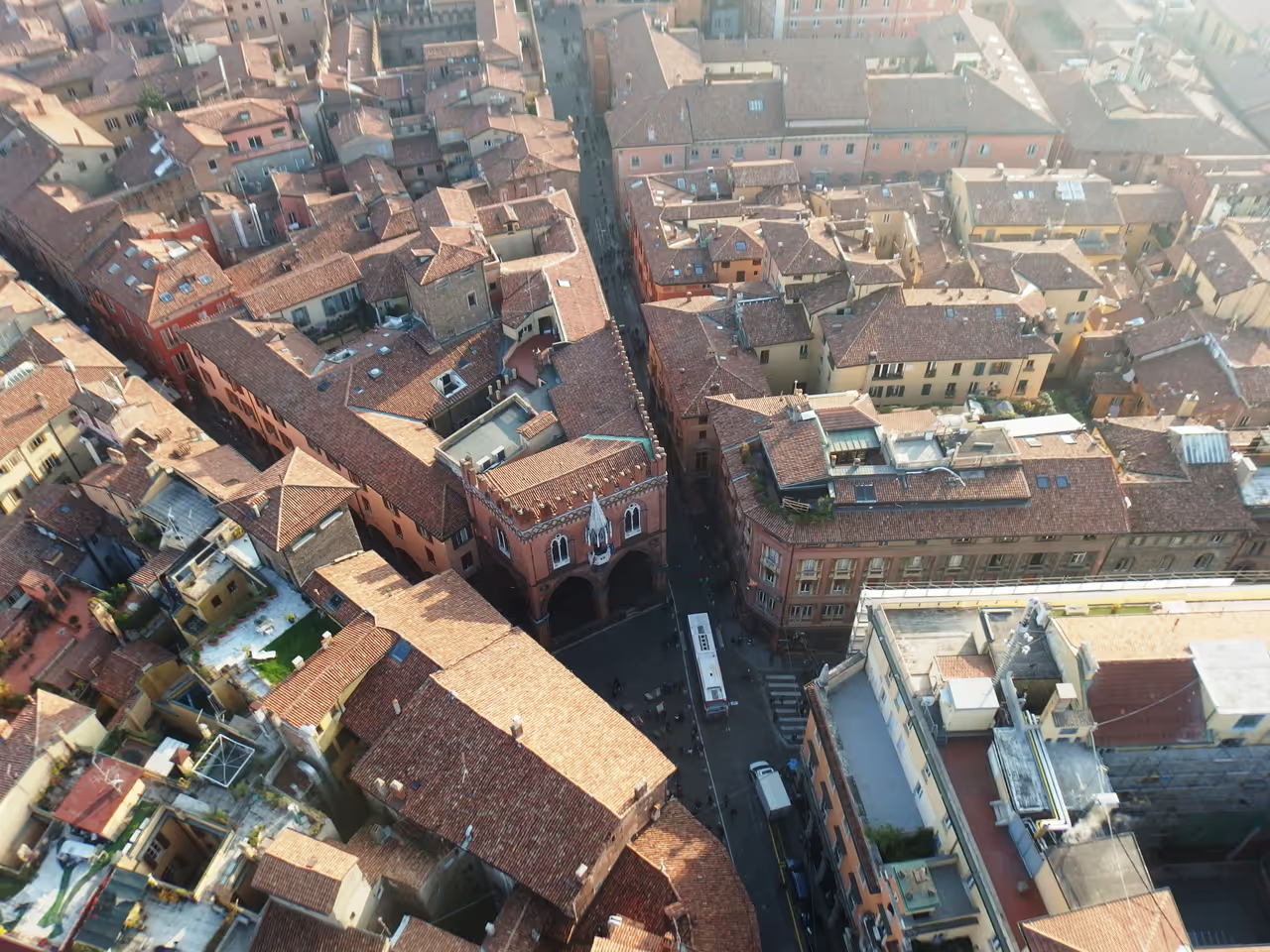
Palace of Merchandise
Situated near the famous leaning towers, this stunning Gothic building has overseen the city's trade and commerce for centuries...
view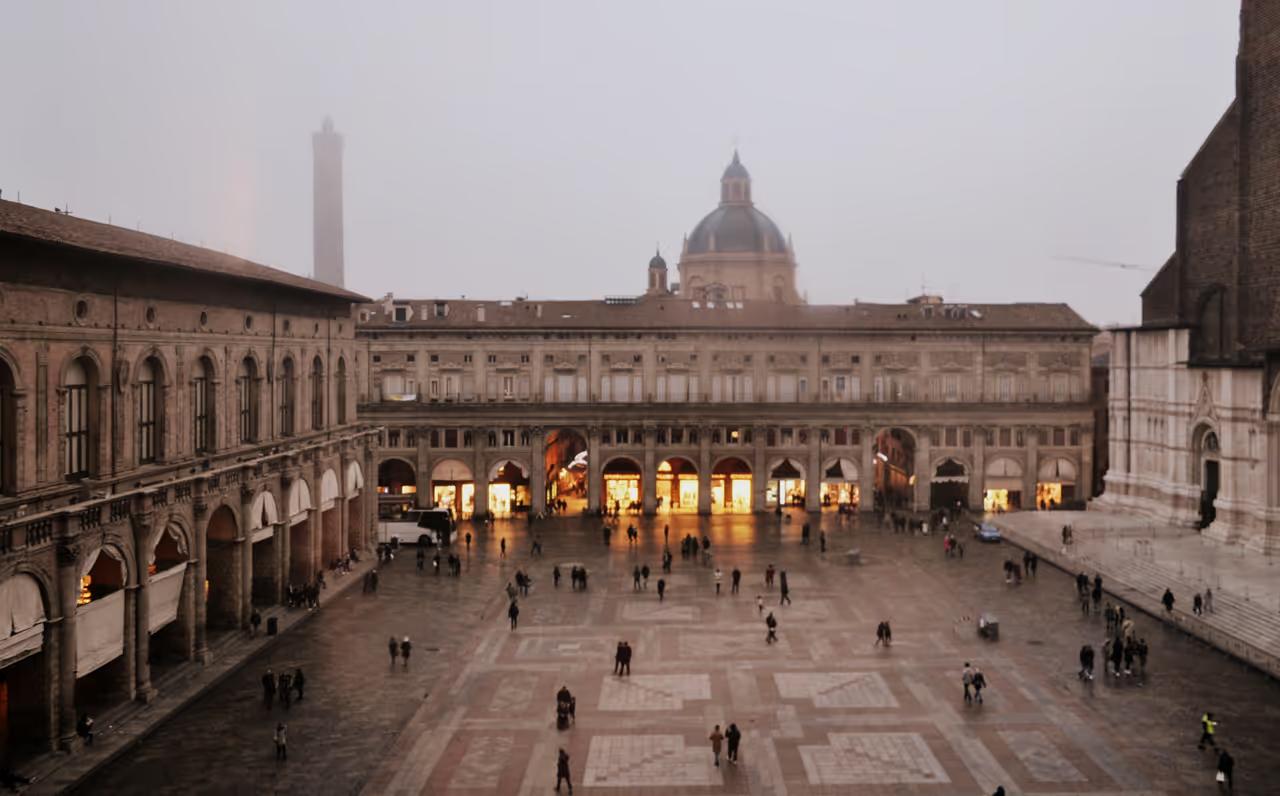
Palace of the Banks
This structure is essentially a magnificent, scenic facade rather than a traditional building, designed by the famous architect...
view
Markets & Shopping
Bologna Nightlife
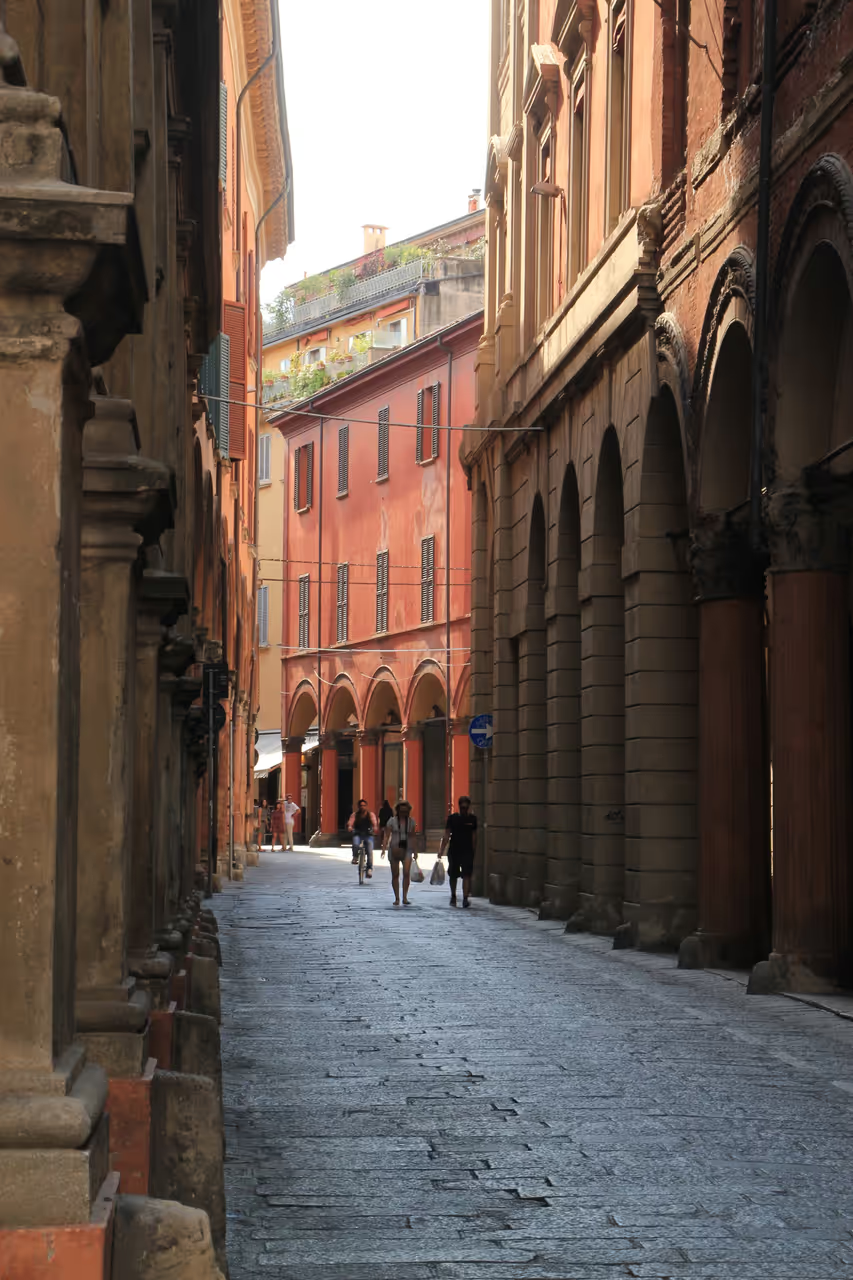
Photo Spots
Activities & Experiences
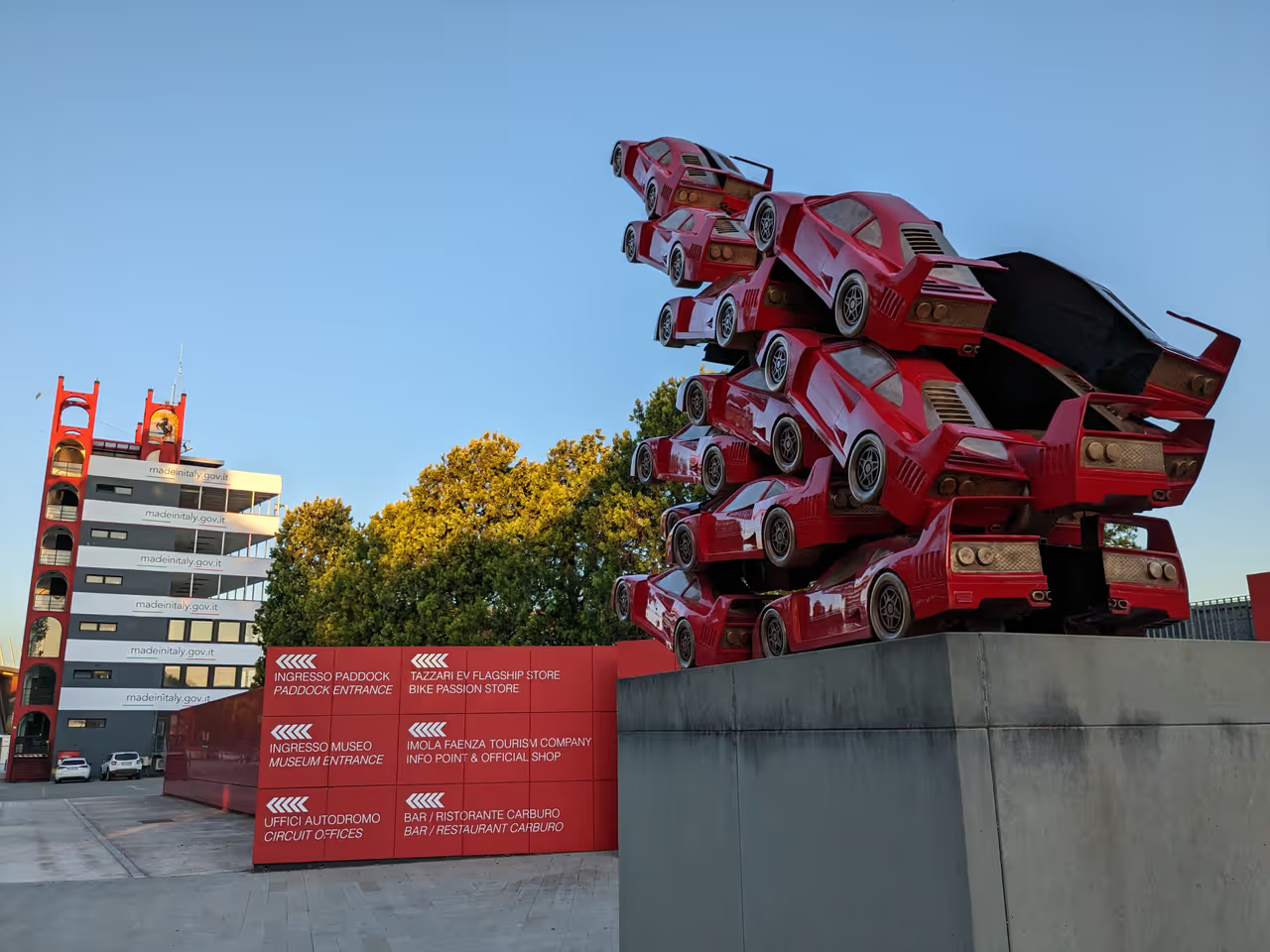
Cycling Routes
Giardini Margherita Loop
A delightful, easy going ride through the largest and most popular public park in the city. Wide, paved paths wind through vast lawns, ancient trees, and around a picturesque central lake. It is the perfect place to soak in the local vibe, as families, students, and joggers flock here on sunny days. The ride is entirely flat and shaded, offering a refreshing break from the stone and brick of the historic streets. You can effortlessly combine this ride with a picnic or a stop at the park's charming cafes.
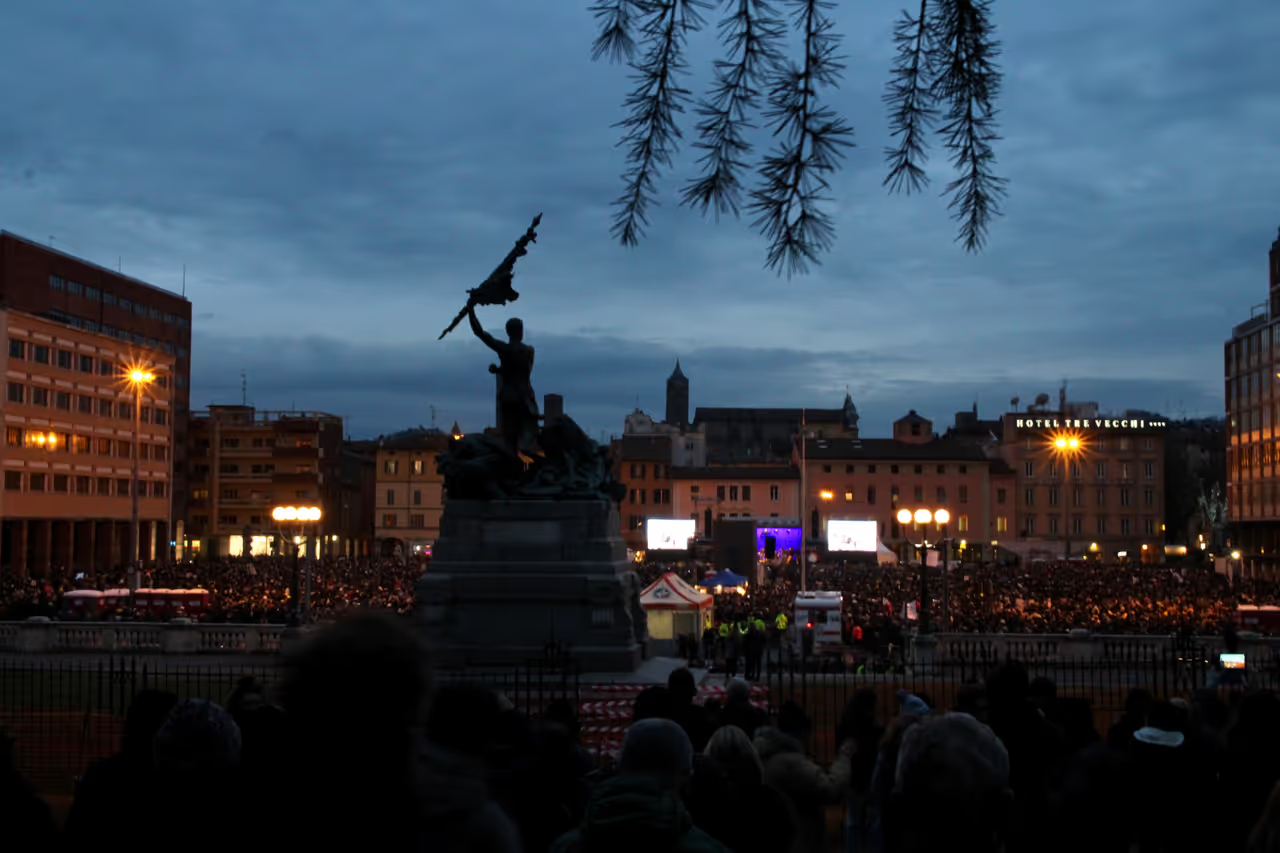
Historic Portico Glide
This urban ride takes advantage of the city's smooth, pedestrianised streets and wide avenues to explore the architectural wonders of the centre. You will glide past magnificent basilicas, towering medieval structures, and elegant palazzos. While you cannot cycle directly under most porticoes, riding alongside them offers an incredible perspective of their unending arches. The route captures the vibrant, bustling heart of the city while remaining relatively safe from heavy traffic. It is an exhilarating way to see the major monuments quickly.
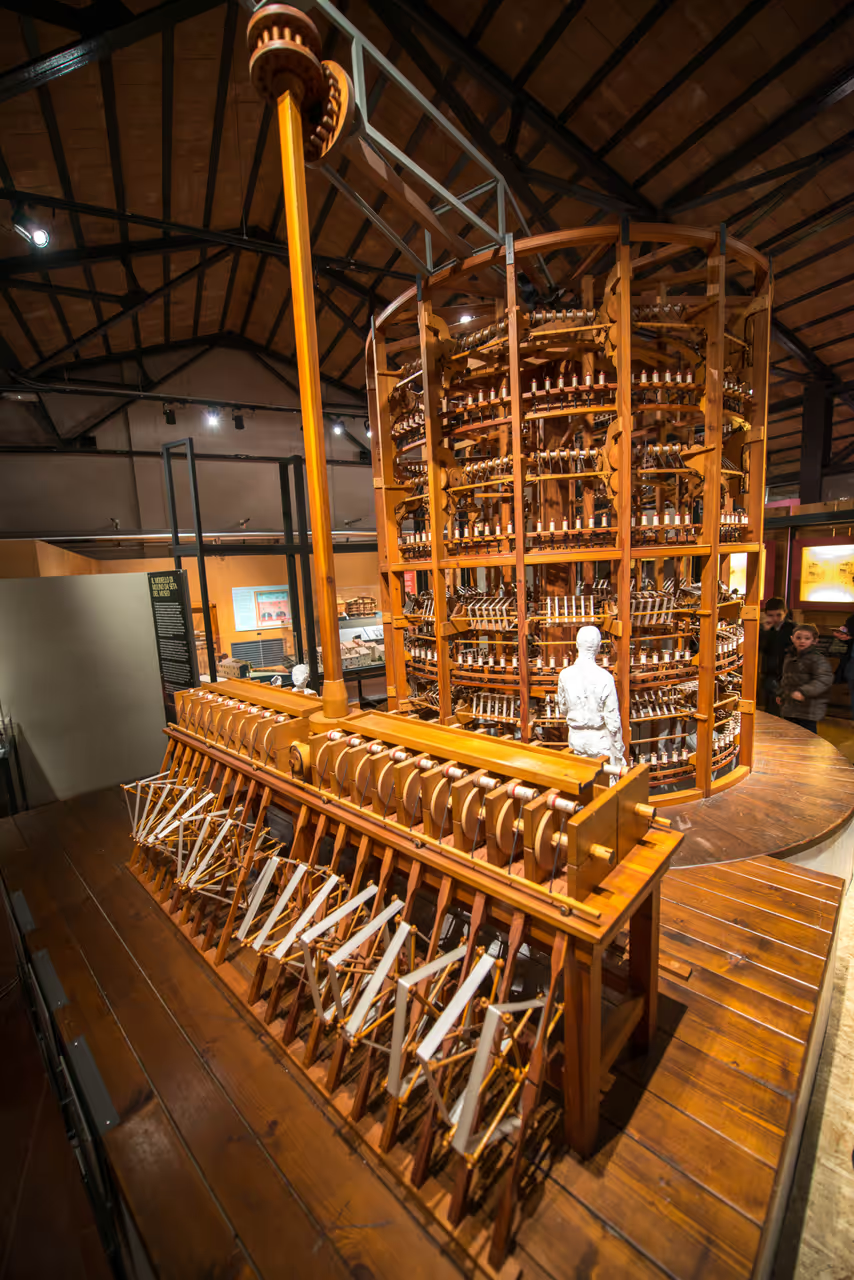
Navile Canal Path
This peaceful ride takes you away from the urban centre along an ancient waterway that once connected the city to the sea. The dedicated path is flat and completely separated from car traffic, making it incredibly relaxing. Along the route, you will pass historic waterlocks, old brick kilns, and remnants of the city's industrial heritage surrounded by lush greenery. The atmosphere changes from historic to rural very quickly, providing a wonderful contrast to the dense mediaeval core. It is a fantastic journey into a lesser known part of local history.
Self-Guided Tours
- HIGHLY RECOMMENDED
Alma Mater University Walk
Explore the profound legacy of the oldest university in the continuous Western world. This tour connects the magnificent historic halls of early academia with the vibrant, gritty streets of the modern student district. You will see where pioneering scientists, brilliant poets, and the first female professors taught and studied. The journey moves from stunningly frescoed ancient libraries to piazzas covered in political graffiti, showing the evolution of student life. It is an inspiring exploration of a city that has championed knowledge and progressive thought for nearly a millennium.
Mediaeval Towers Trail
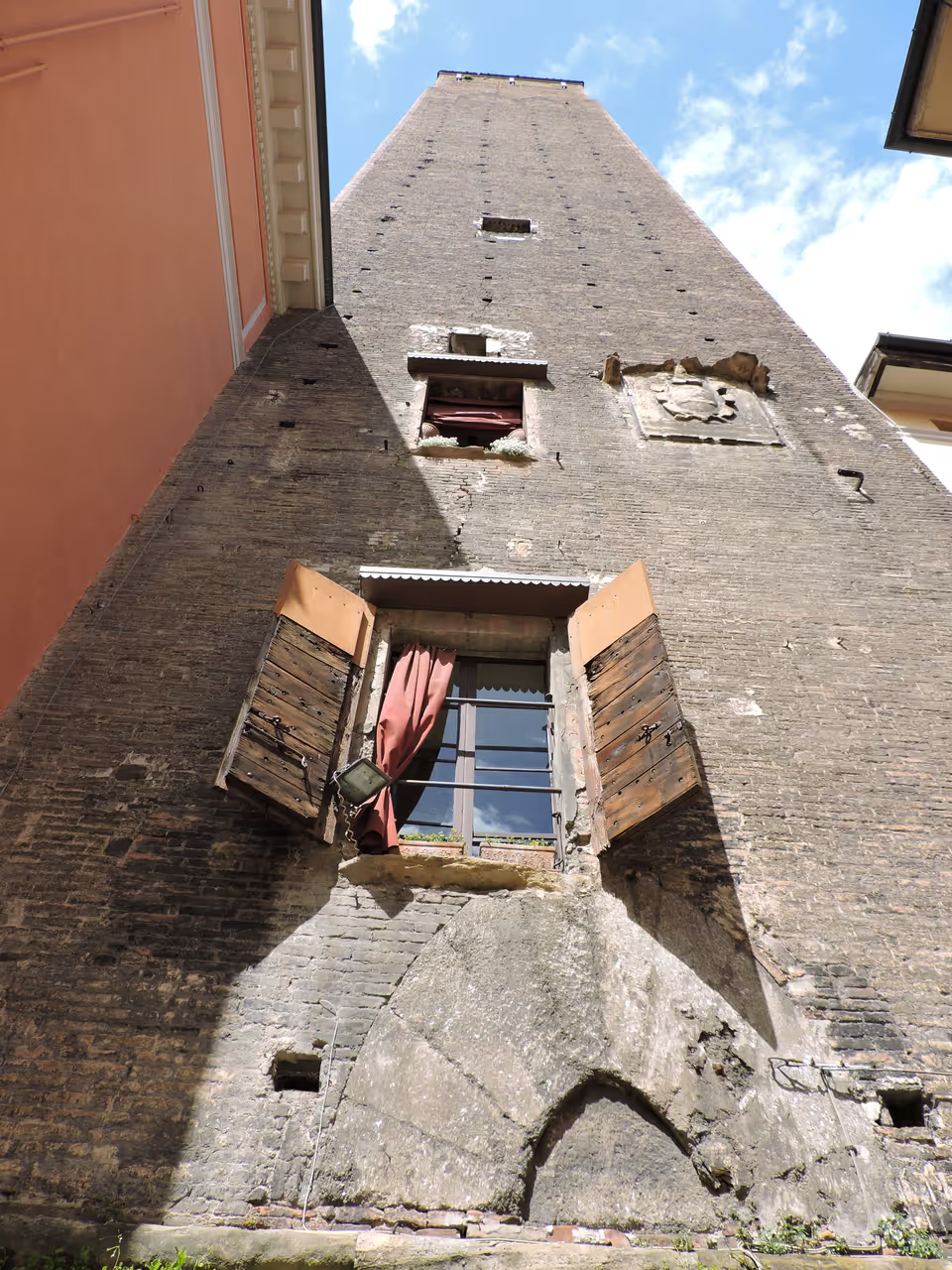
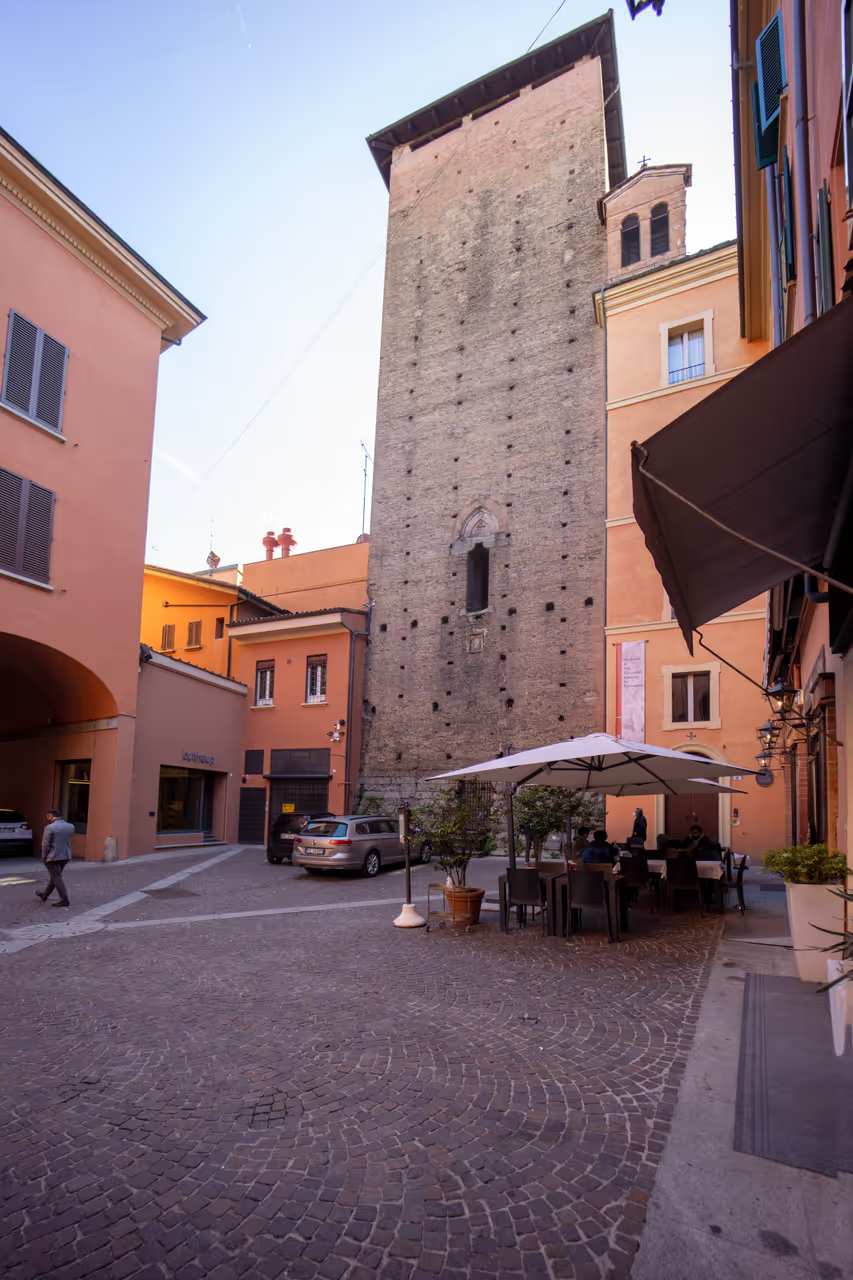
Centuries ago, the city skyline looked like a medieval Manhattan, bristling with up to one hundred and eighty towering skyscrapers. This tour traces the remnants of that incredible era, taking you past the surviving towers that still loom over the modern streets. You will discover how these structures were built by rival noble families as ultimate displays of wealth and military might. The path weaves through narrow alleys and grand piazzas, highlighting both famous leaning giants and hidden, integrated towers. It is a fascinating deep dive into the fierce, competitive history of the city's nobility.
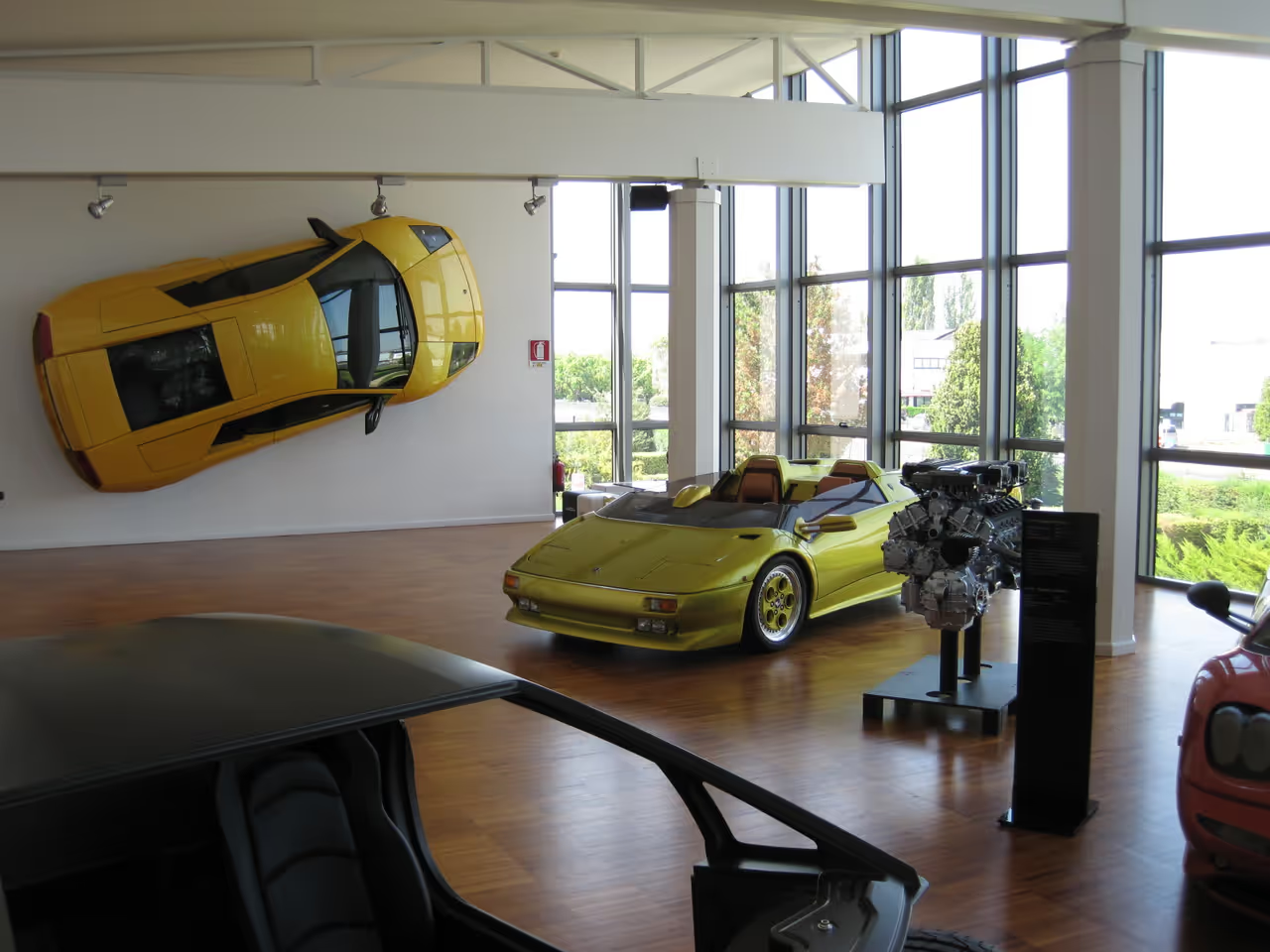
Motor Valley Tour
Dive headfirst into the region's legendary obsession with speed, luxury, and unparalleled automotive engineering. This unique journey takes you to the absolute pinnacle of Italian motor heritage, exploring the hallowed halls where iconic supercars and superbikes are born. You will witness the incredible evolution of design, from vintage classics to the cutting edge hypercars of tomorrow. The tour highlights the meticulous craftsmanship and passionate racing history that defines this specific pocket of Italy. It is a high octane adventure perfect for anyone who appreciates brilliant machinery.
Annual Festivals & Events
 HIGHLY RECOMMENDED
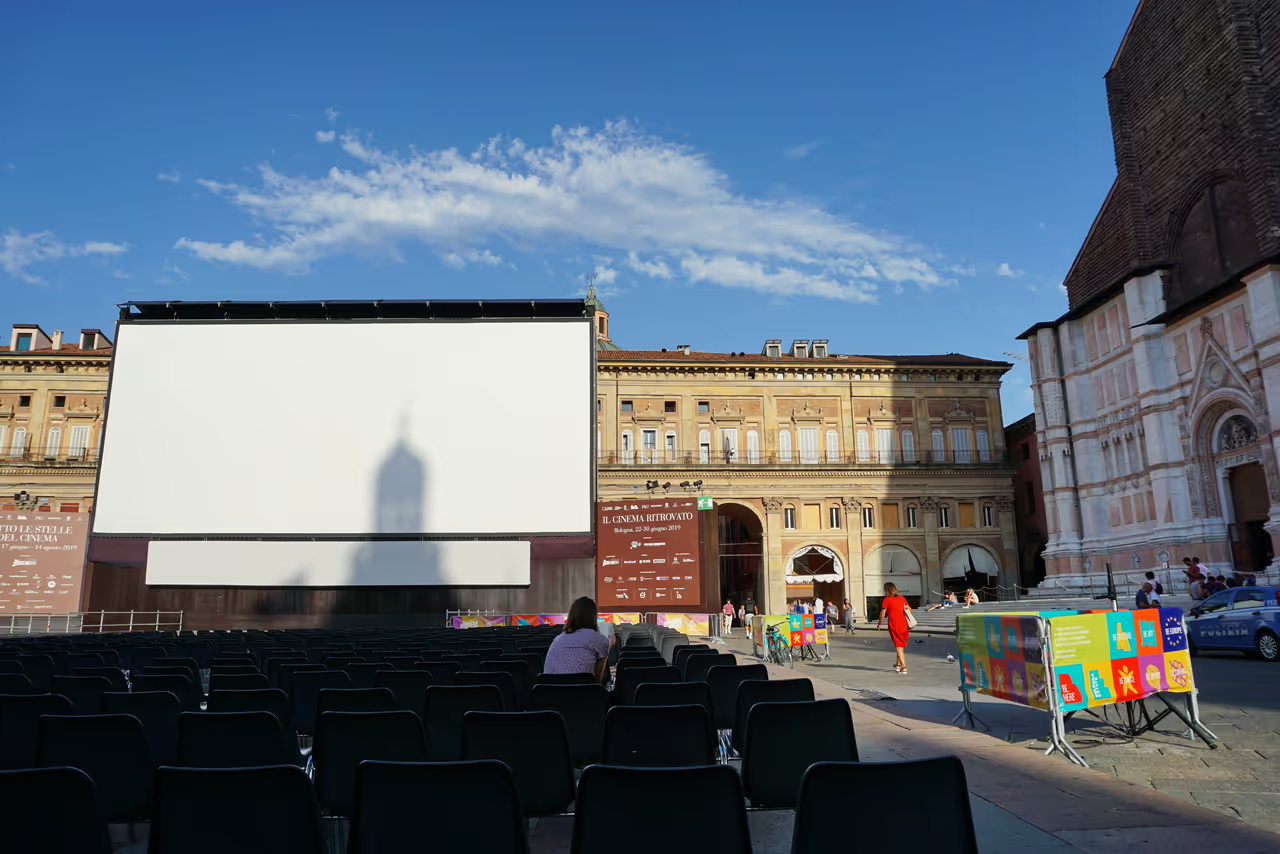
Il Cinema Ritrovato
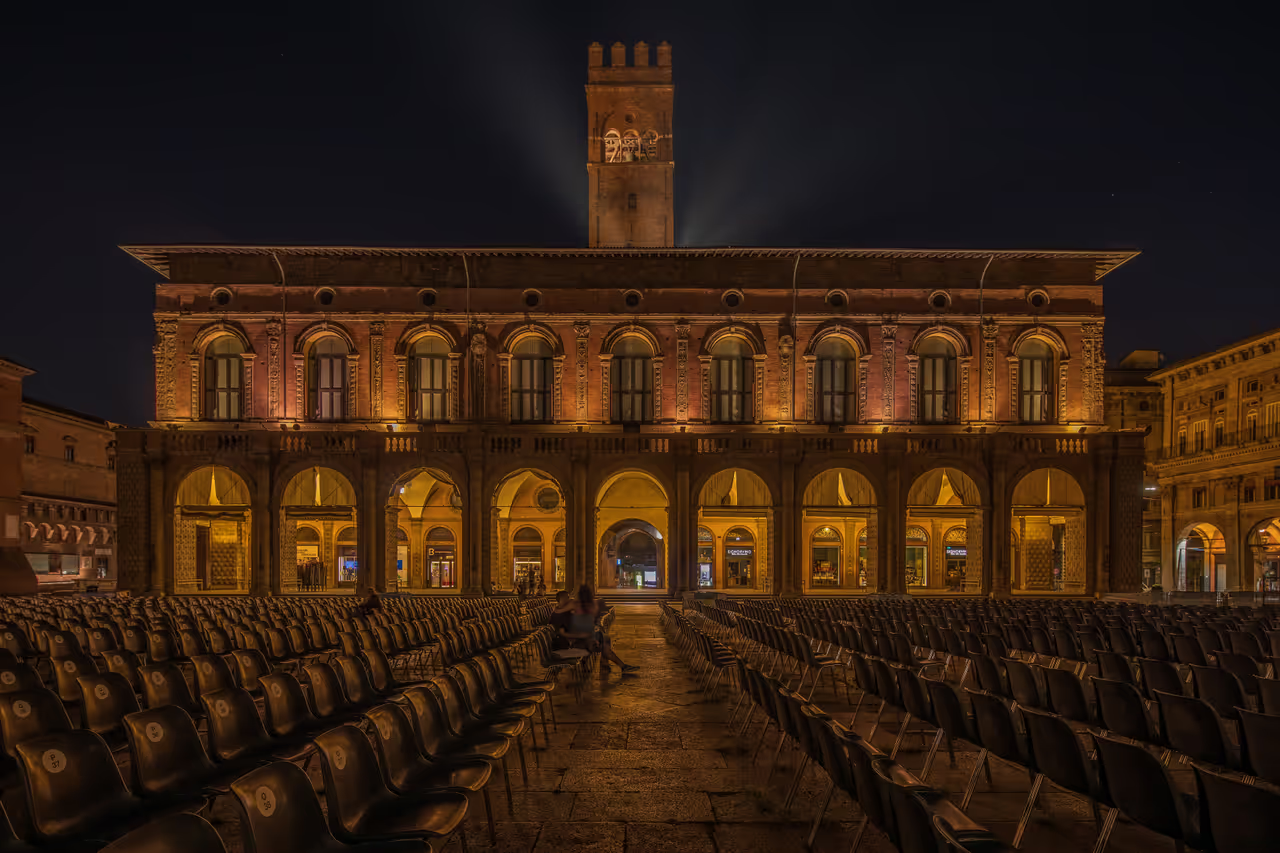
A magical summer festival dedicated to rare, forgotten, and beautifully restored classic films. The absolute highlight is the open air evening screenings held in the magnificent Piazza Maggiore, where thousands gather under the stars. Hosted by the local film archive, it draws film historians and cinephiles globally for a week of cinematic nostalgia. Watching a silent film accompanied by a live orchestra in a mediaeval square is a truly unforgettable experience. It highlights the city's profound dedication to preserving cultural heritage.
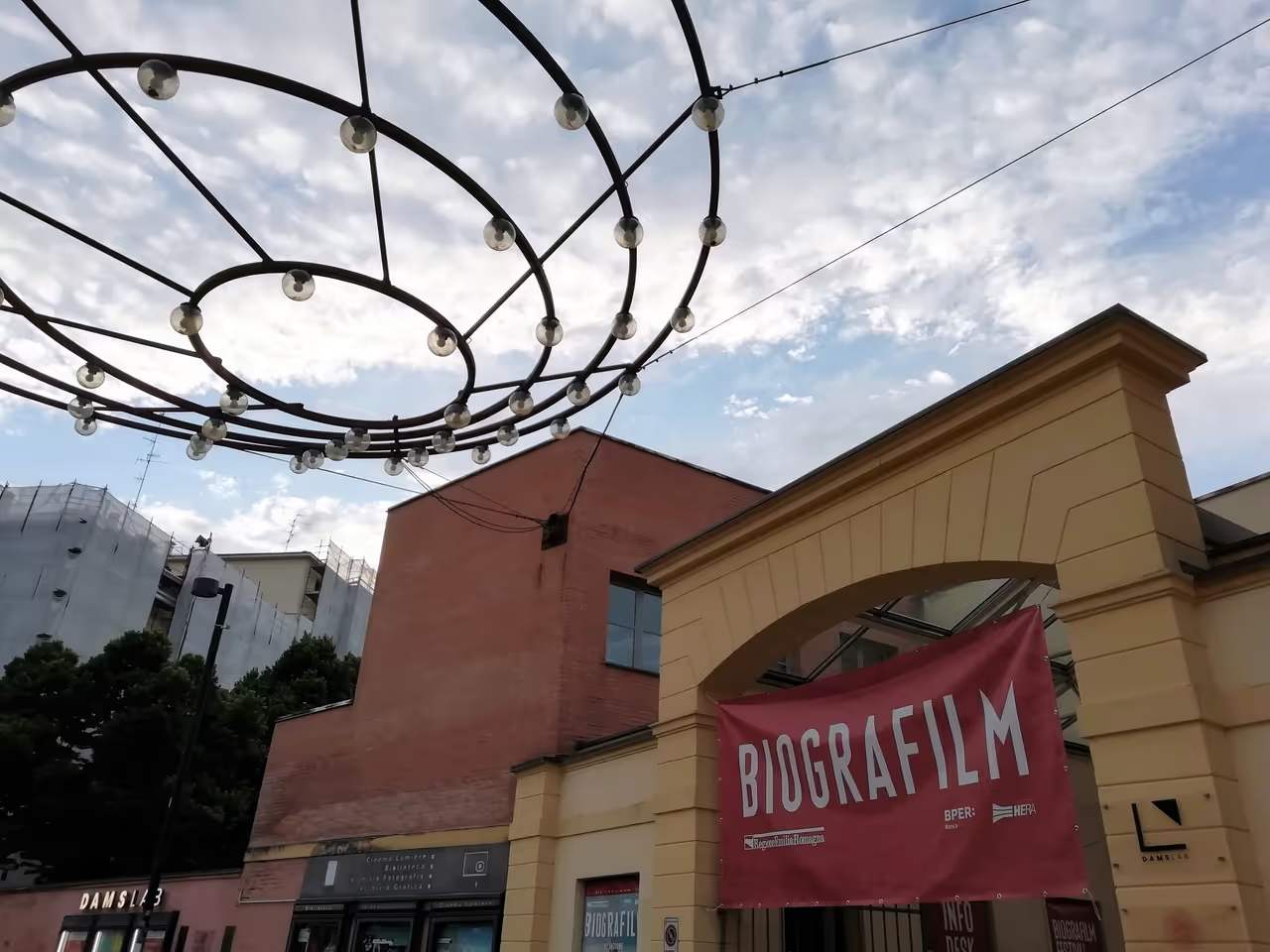
Biografilm Festival
An internationally acclaimed film festival entirely devoted to biographical movies and compelling life stories. Screenings take place in various historic cinemas across the city, attracting directors and film enthusiasts from all over the world. The atmosphere is vibrant and intellectual, perfectly matching the city's deeply rooted academic culture. Alongside the films, there are numerous workshops, talks, and networking events for cinema lovers. It is a fantastic opportunity to see rare documentaries and celebrate the art of storytelling.
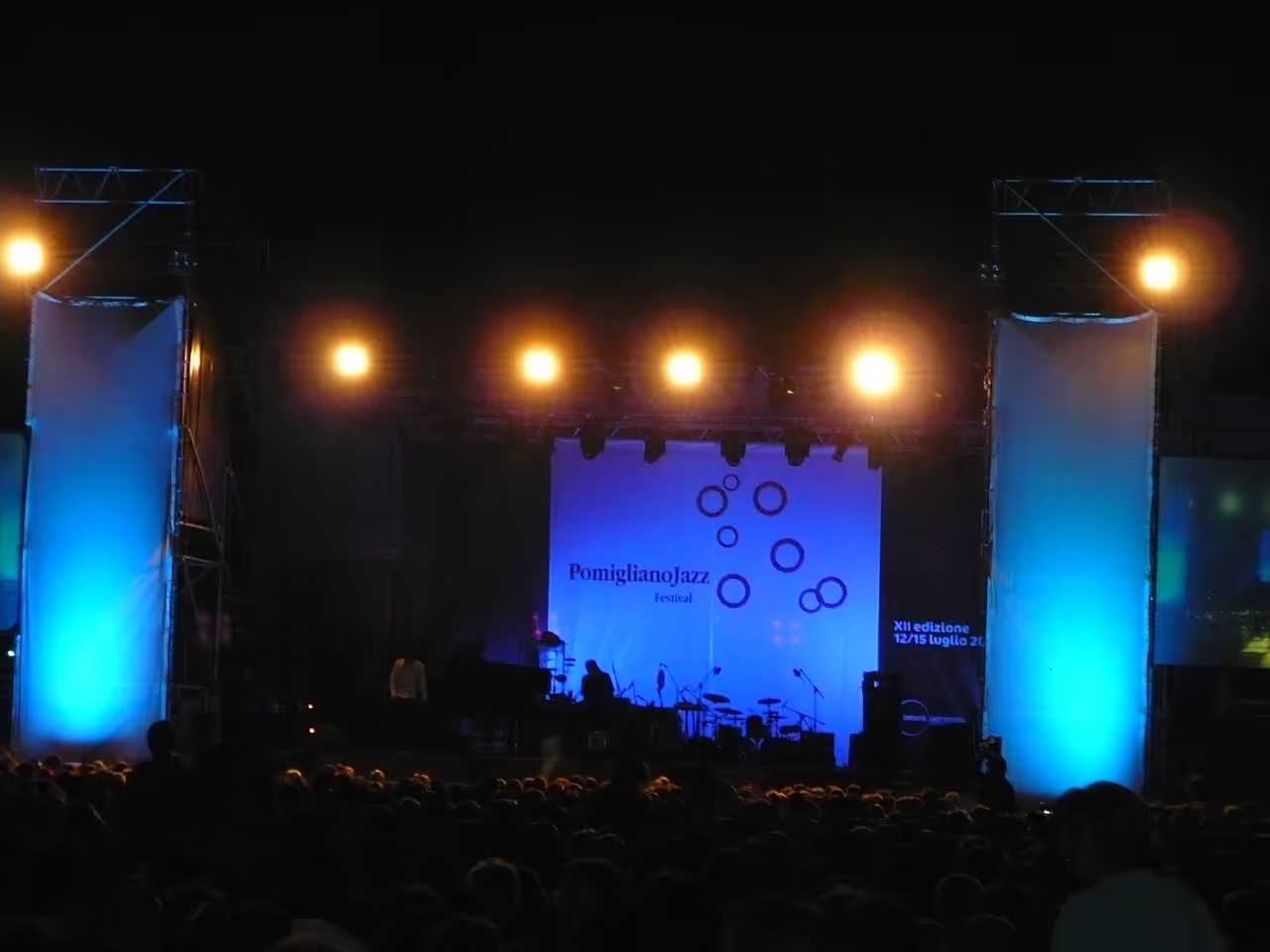
Bologna Jazz Festival
A premier musical event that transforms the city into a swinging hub for jazz aficionados. World renowned musicians and emerging talents perform in historic theatres, intimate jazz clubs, and even impromptu street corners. The festival honours the city's rich musical legacy and its prestigious status as a UNESCO Creative City of Music. The eclectic mix of traditional and avant garde performances ensures there is something for every musical palate. The energy is infectious, making the cool autumn evenings incredibly lively.
Insider Tips
Always look for 'tagliatelle al ragu' on the menu instead of spaghetti bolognese, as asking for the latter will immediately mark you as a tourist.
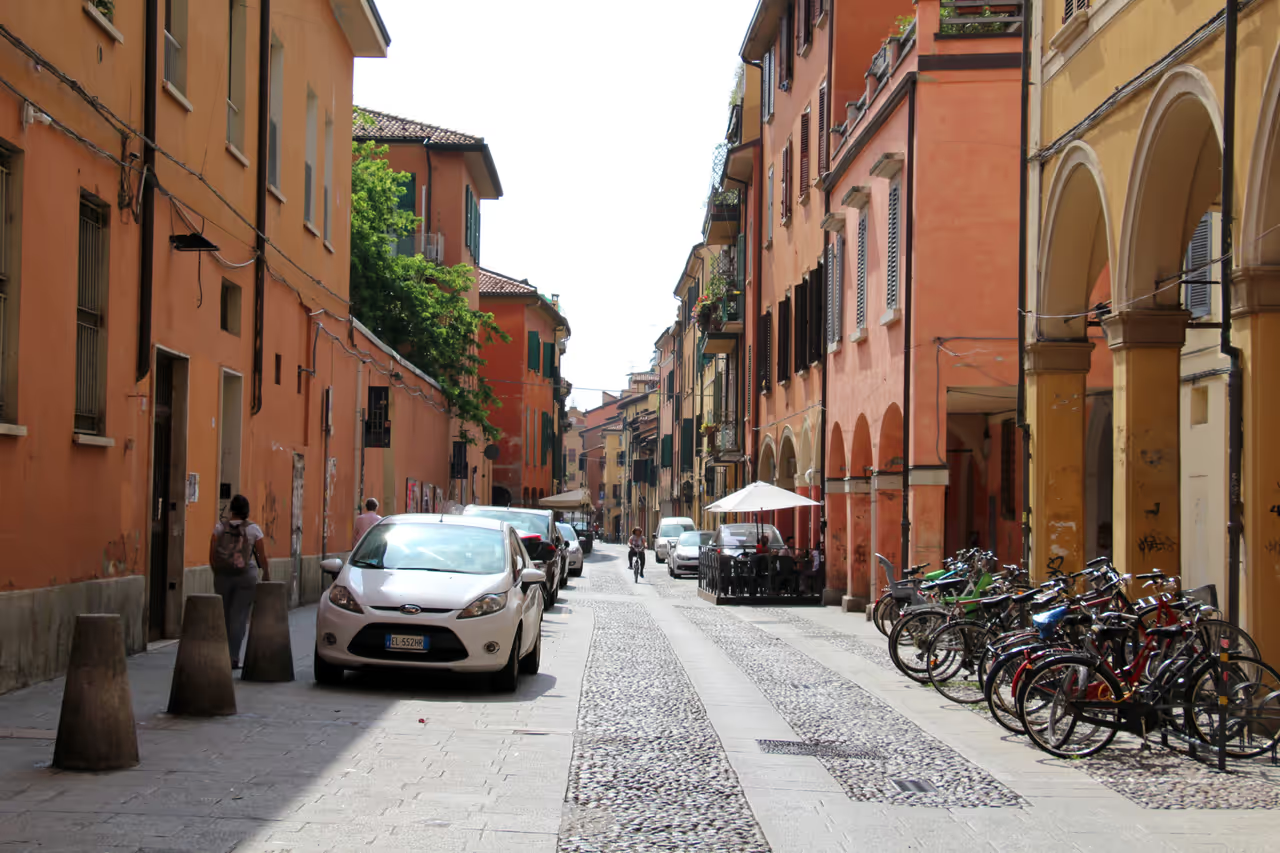
Walk under the porticoes when it rains, you can traverse almost the entire city centre without ever needing to open an umbrella.
Book your ticket to climb the Asinelli Tower online well in advance, as time slots sell out quickly and you cannot buy tickets at the entrance.
Many smaller local trattorias and market stalls prefer cash, so it is always wise to carry a few small euro notes with you.
Aperitivo hour starts around six in the evening, when buying a drink often gets you access to a generous spread of free snacks.
Avoid driving into the historic centre entirely, the strict Limited Traffic Zones will result in hefty fines caught by automated cameras.
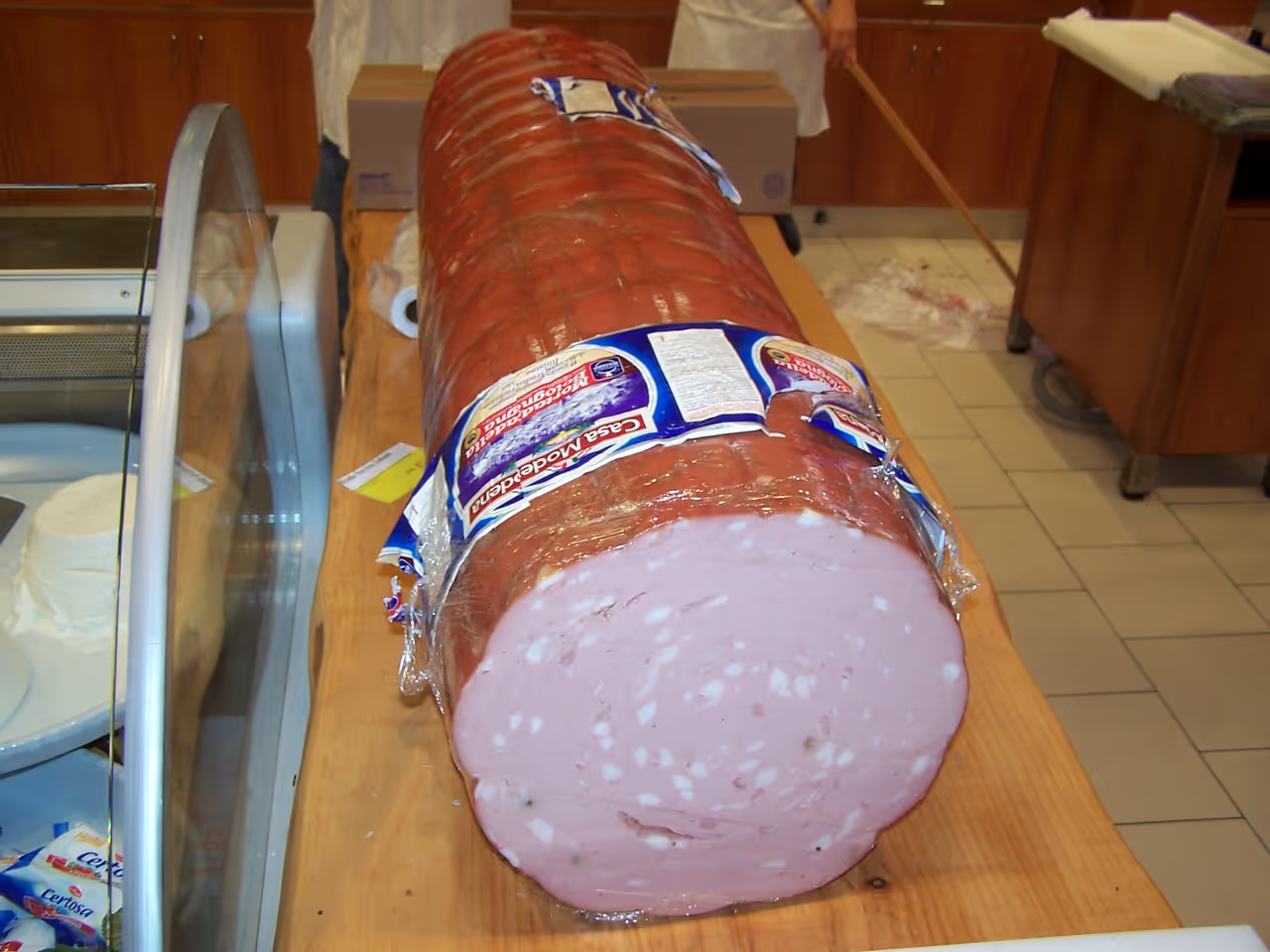
If you want to buy authentic local cured meats and cheeses, visit the Quadrilatero district early in the morning before the crowds arrive.
PERFECT FOR
This destination is a paradise for food lovers eager to taste authentic Italian cuisine at its absolute best. It perfectly suits history enthusiasts and architecture admirers who prefer exploring well preserved mediaeval streets without battling massive tourist crowds. Couples seeking a romantic, slow paced getaway and culturally curious travellers will find themselves completely at home here.
VIBE
The atmosphere is a delightful mix of relaxed sophistication and youthful energy. You will constantly hear the lively chatter of students spilling out from historic cafes and wine bars under the elegant arched walkways. It feels authentically Italian, rooted in deep intellectual and culinary traditions while welcoming visitors with open arms and a laid back charm.
Frequently Asked Questions about Bologna
While we strive to keep this information accurate and up to date, we recommend verifying any details independently before making decisions based on them.
Similar Destinations in Italy
Continue your journey. Explore these highly recommended cities and uncover more of what Italy has to offer.