Iconic Architecture and Landmarks in Assisi

Discover the buildings, monuments, and structures that define the skyline. From historic masterpieces to modern marvels, explore the architectural soul of Assisi, showing off styles like Italian Gothic and Romanesque.

  • ITALIAN GOTHIC AND ROMANESQUE

    Gothic Masterpiece of San Francesco

    ARCHITETTURA DELLA BASILICA DI SAN FRANCESCO

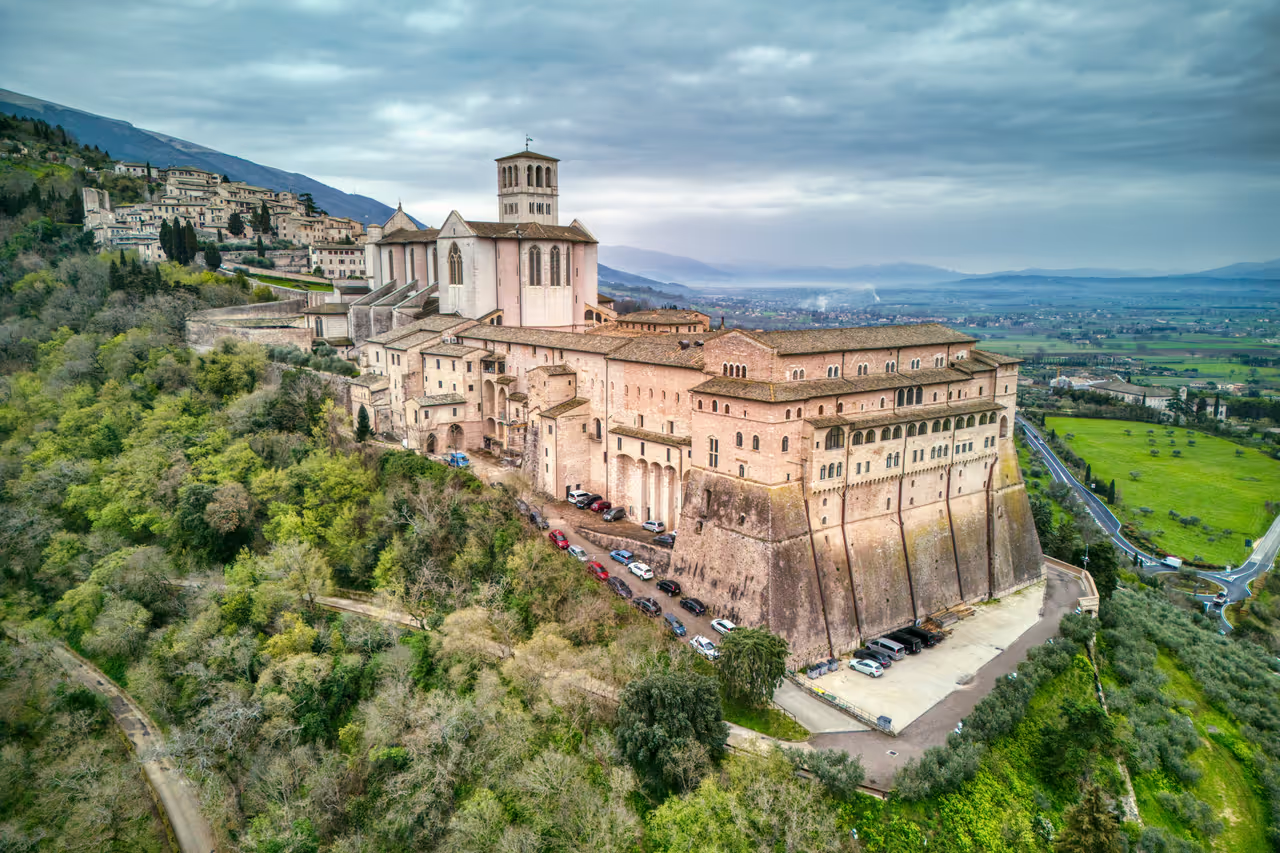
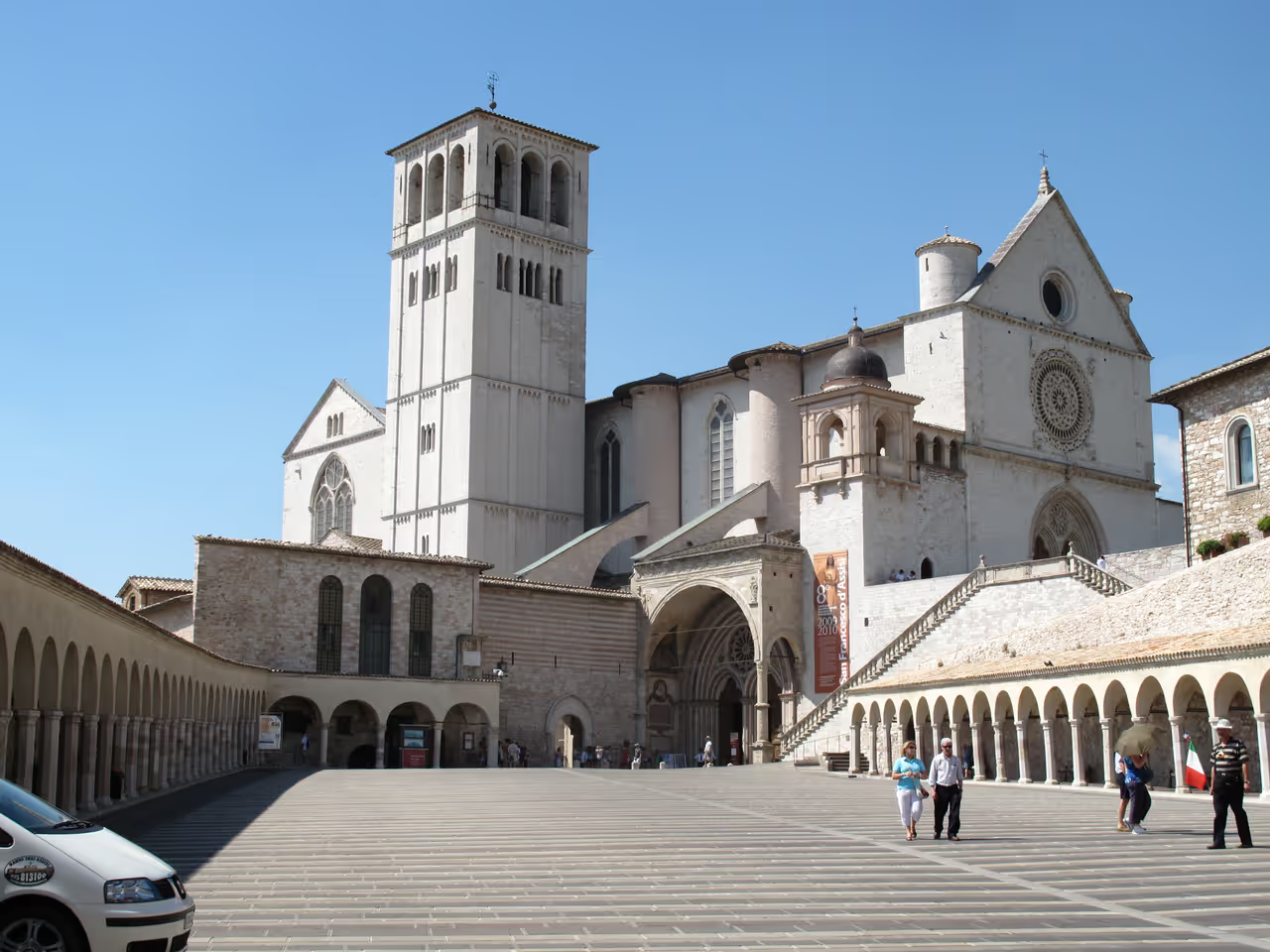
    The Basilica of San Francesco stands as a monumental, groundbreaking achievement in the evolution of Italian architecture. It ingeniously utilizes a dramatic two level design, stacking a brilliantly illuminated, soaring Gothic upper church directly on top of a heavy, solemn Romanesque lower crypt. This architectural duality brilliantly physicalizes the spiritual journey from earthly suffering to heavenly glory. The massive, cylindrical buttresses on the exterior give the structure a formidable, almost fortress like appearance against the hillside. The interior ribbed vaults and expansive stained glass windows provided the perfect canvas for the revolutionary frescoes that would soon follow. It is an absolute masterclass in medieval engineering and theological storytelling through stone.

    view detailed guide

    LOCATION

    Loading map...

    FULL PLACE DETAILS

    ARCHITECTURE & HERITAGE

    Heritage Status
    World Heritage Site

    WEB & AMENITIES

  • ANCIENT ROMAN CLASSICAL

    Roman Temple of Minerva

    ARCHITETTURA DEL TEMPIO DI MINERVA

    Dominating the central Piazza del Comune, the facade of the Temple of Minerva is an incredibly jarring, awe inspiring piece of ancient classical architecture surviving in a medieval world. Six towering, deeply fluted Corinthian columns support a beautifully proportioned, triangular pediment, constructed entirely from local Mount Subasio limestone. The survival of this pagan structure is largely due to its brilliant adaptive reuse, having been seamlessly transformed into a Catholic church. The columns are so remarkably preserved that they deeply inspired the famous poet Goethe during his Italian travels. It stands as a powerful, incredibly visceral reminder of the city's affluent Roman origins as Asisium. The contrast between its classical symmetry and the surrounding rough hewn medieval buildings is visually spectacular.

    view detailed guide

    LOCATION

    Loading map...

    FULL PLACE DETAILS

    ARCHITECTURE & HERITAGE

    Heritage Status
    Italian National Heritage
    Architectural Styles
    Ancient Roman

    WEB & AMENITIES

  • ITALIAN GOTHIC

    Flying Buttresses of Santa Chiara

    ARCHITETTURA DELLA BASILICA DI SANTA CHIARA

    The Basilica of Santa Chiara is a stunning, highly recognizable example of 13th century Italian Gothic architecture, built prominently with distinctive alternating bands of pink and white Subasio stone. The most visually arresting feature of the church are the three enormous, sweeping flying buttresses attached to the left side of the nave. These massive, arched stone supports were added later to prevent the heavy vaulted ceiling from collapsing, but they lend the building a dramatic, incredibly unique silhouette against the sky. The minimalist, elegantly simple facade is adorned with a delicate, beautifully carved central rose window. The interior maintains an atmosphere of severe simplicity, reflecting the austere ideals of St. Clare's order. It is a brilliant, highly atmospheric architectural triumph.

    view detailed guide

    LOCATION

    Loading map...

    FULL PLACE DETAILS

    OVERVIEW & STATS

    Established
    In 1257, making it 769 years old

    ARCHITECTURE & HERITAGE

    Heritage Status
    Italian National HeritagePart Of Unesco World Heritage Site
    Architectural Styles
    Gothic

    WEB & AMENITIES

  • MEDIEVAL CIVIC GOTHIC

    Palace of the Captain of the People

    PALAZZO DEL CAPITANO DEL POPOLO

    Situated directly adjacent to the ancient Temple of Minerva, this imposing 13th century palace is a perfect representation of medieval civic power and administration. Built during the era of the free commune, its heavy stone walls, arched windows, and fiercely proud roofline battlements were designed to project absolute authority and civic pride. The accompanying Torre del Popolo, an incredibly tall, stark square bell tower, dominates the skyline and was used to call citizens to assembly or warn of impending attacks. At the base of the tower, visitors can still see the fascinating, original 14th century standard measurements for bricks, roof tiles, and fabrics carved directly into the stone. The complex anchors the secular identity of the city, perfectly complementing the overwhelming religious architecture found elsewhere.

    LOCATION

    Loading map...

    FULL PLACE DETAILS

    ARCHITECTURE & HERITAGE

    Heritage Status
    Italian National Heritage
  • MEDIEVAL MILITARY

    Rocca Maggiore Military Fortress

    ARCHITETTURA MILITARE DELLA ROCCA MAGGIORE

    Perched menacingly on the peak above the city, the Rocca Maggiore is a quintessential, text book example of imposing medieval military architecture. The fortress is defined by its massive, incredibly thick stone walls, highly strategic defensive battlements, and a towering central keep designed to withstand brutal sieges. Originally built by the Holy Roman Empire, it was heavily reconstructed by Cardinal Albornoz in the 14th century to brutally assert papal authority over the rebellious locals. Later additions, including a dramatic polygonal tower and a massive cylindrical bastion, showcase the terrifying evolution of warfare and siege tactics. The structure is entirely utilitarian, lacking any religious or artistic embellishment, creating an incredibly stark, powerful aesthetic. Exploring its dark, echoing halls offers a chilling glimpse into the violent realities of medieval life.

    view detailed guide

    LOCATION

    Loading map...

    FULL PLACE DETAILS

    OVERVIEW & STATS

    Established
    In 1173, making it 853 years old
    Annual Visitors
    8,961 (2021)
    Exhibition Items
    35
    Wi-Fi
    No

    ARCHITECTURE & HERITAGE

    Heritage Status
    Italian National Heritage
    Architectural Styles
    Medieval

    WEB & AMENITIES

    Facilities
    BookstoreCaféParking Area
  • UMBRIAN ROMANESQUE

    San Rufino Romanesque Facade

    FACCIATA ROMANICA DI SAN RUFINO

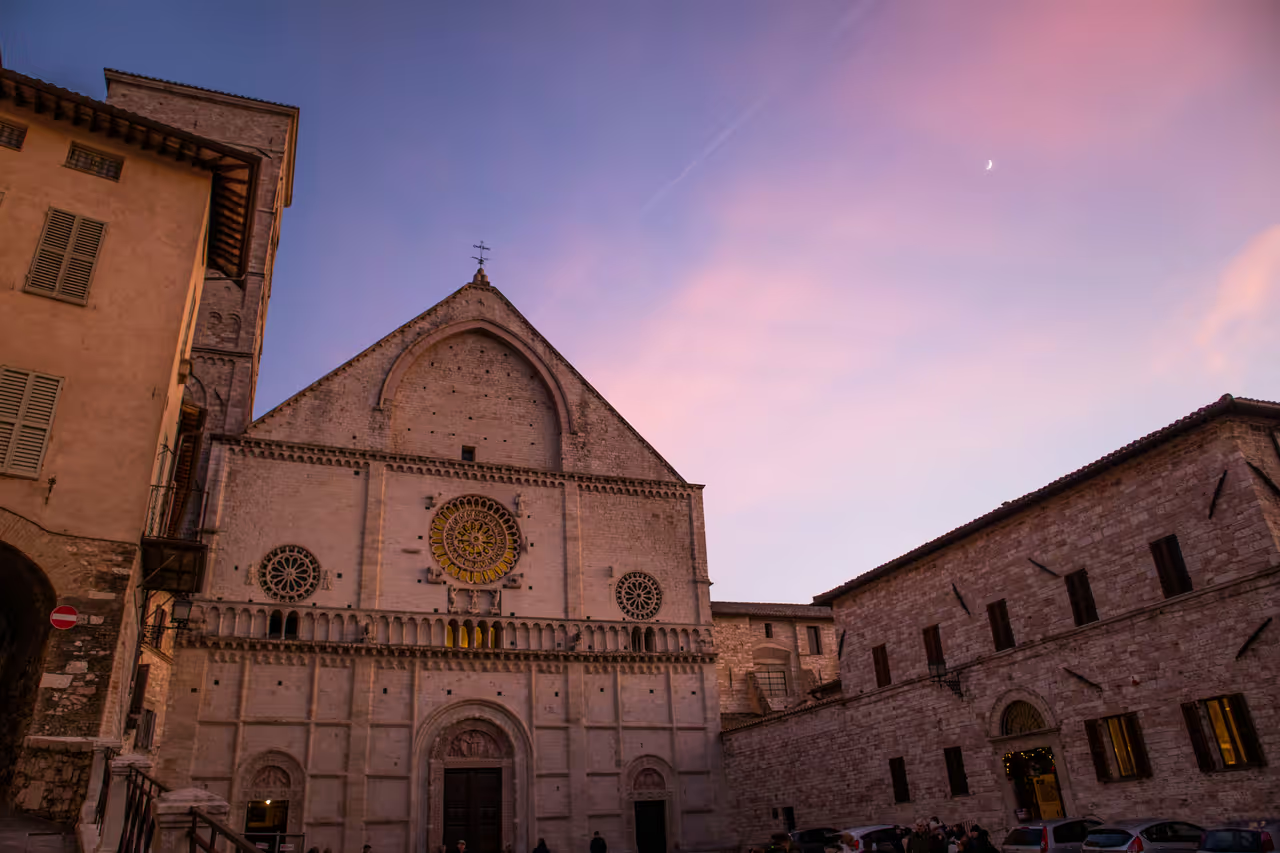
    The Cathedral of San Rufino boasts what is widely considered the most spectacular, intricately detailed Romanesque facade in the entire Umbria region. The sheer artistry carved into the stone is breathtaking, featuring three magnificent rose windows and three elaborately decorated portals. The central doorway is heavily guarded by deeply expressive, carved stone lions and griffins, alongside incredibly complex reliefs depicting saints and floral motifs. The architectural composition is incredibly balanced and harmonious, providing a stunning contrast to the highly modified, later Renaissance interior. The massive, incredibly sturdy square bell tower standing adjacent adds a sense of immense gravity and historical weight to the piazza. Sitting outside and simply studying the staggering amount of detail carved into the facade is a deeply rewarding experience.

    view detailed guide

    LOCATION

    Loading map...

    FULL PLACE DETAILS

    OVERVIEW & STATS

    Established
    In 1140, making it 886 years old

    ARCHITECTURE & HERITAGE

    Heritage Status
    Italian National Heritage
    Architectural Styles
    Romanesque

    WEB & AMENITIES

KEEP EXPLORING

More to see in Assisi