Marienberg Fortress
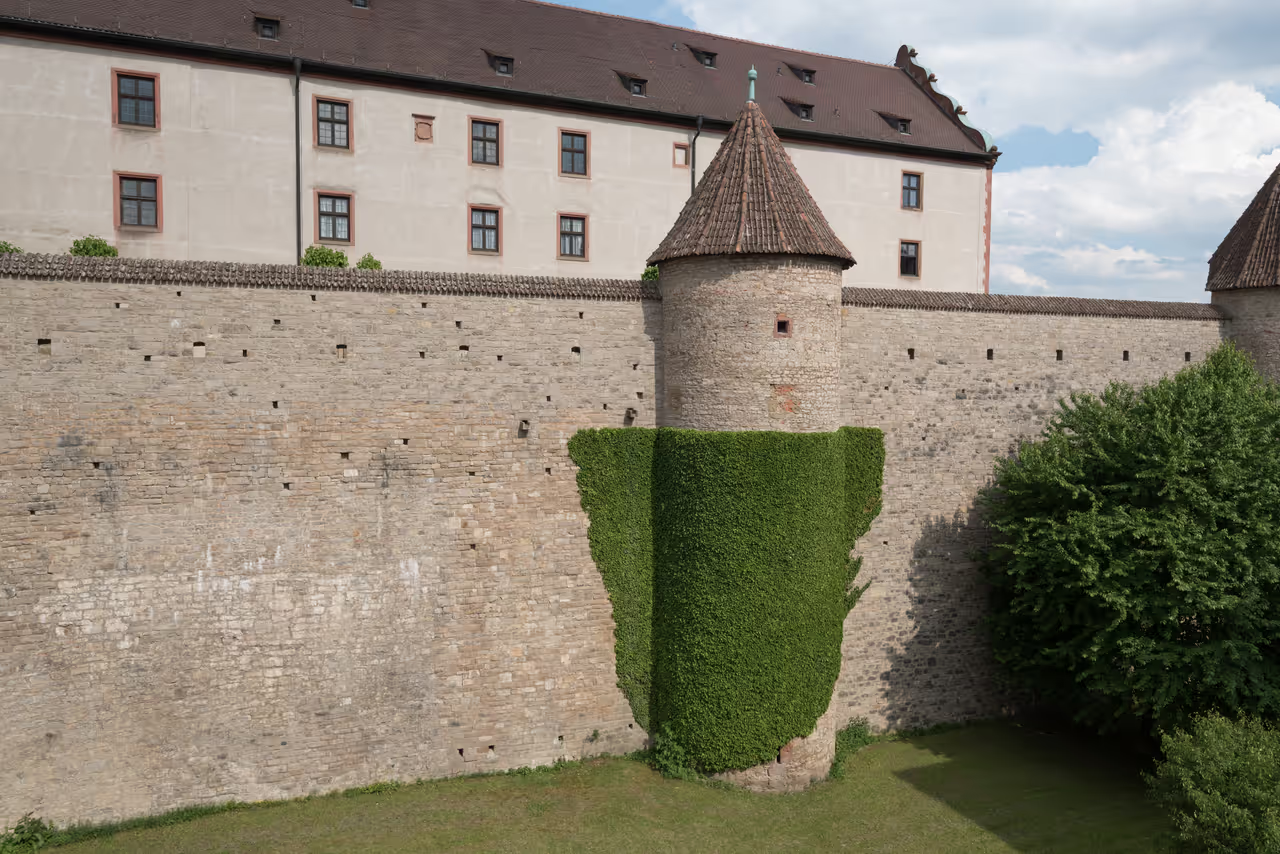
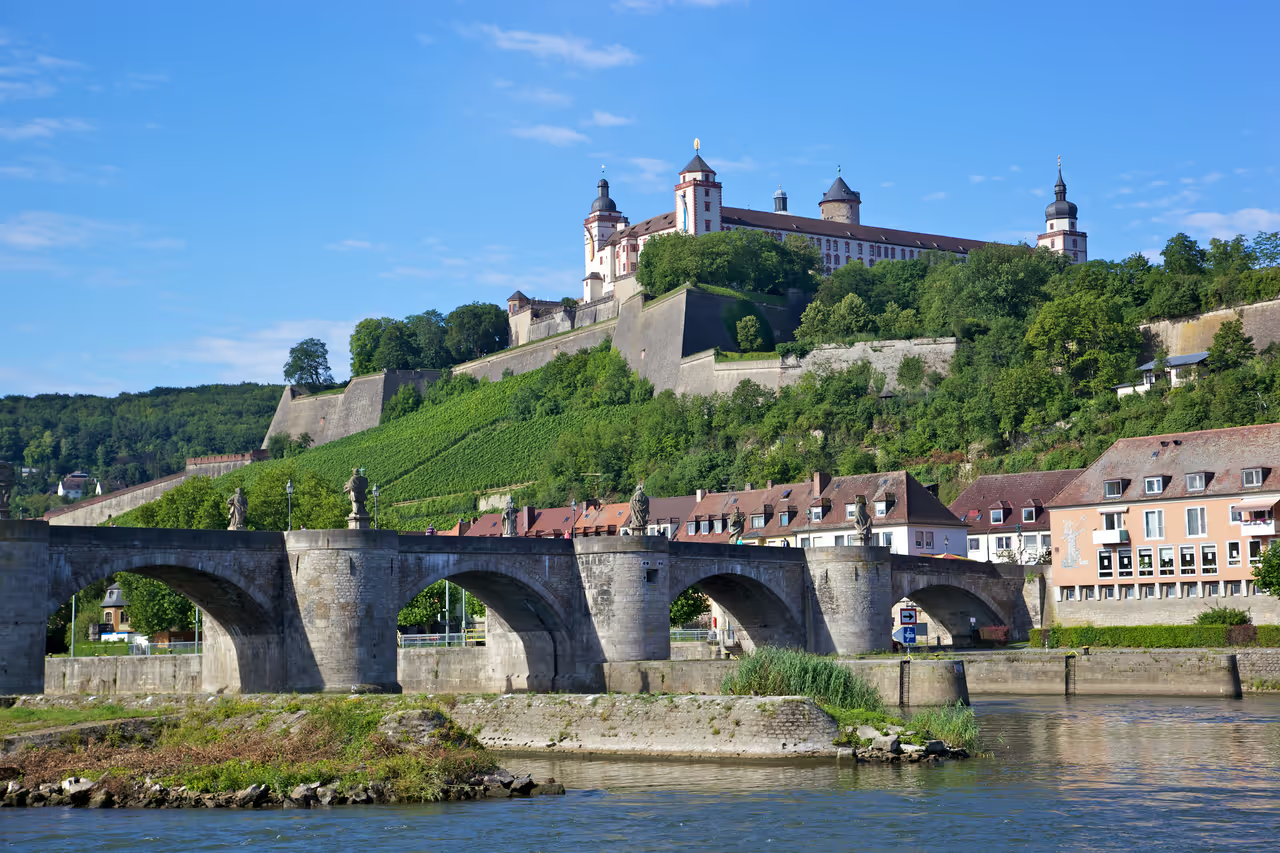
Perched high above the Main River, Marienberg Fortress is the defining landmark of the Würzburg skyline. This massive complex blends the rugged strength of a medieval stronghold with the refined elegance of a Renaissance palace and Baroque gardens. Visiting offers a journey through three millennia of history, from its beginnings as a Celtic hillfort to its centuries as the seat of the powerful Prince-Bishops. The atmosphere is one of regal authority and timeless charm, especially when strolling through the terraced vineyards that cling to the hillside. It is a place where you can peer into one of Germany's oldest churches and enjoy panoramic views that stretch across the city's red roofs and church spires. Whether you are exploring the deep, rock-cut well or the art-filled museums, the fortress provides a truly grand perspective on Franconian heritage.
Videos
History of Marienberg Fortress
Deep beneath the cobblestones of the inner courtyard, a shaft drops 102 metres through solid rock to reach the water table. This monumental well, carved entirely by hand around the year 1200, secured the survival of the local rulers who claimed this hill as their seat of power. Celtic tribes and Merovingian warlords had already recognised the strategic value of this promontory above the River Main. By the eighth century, an early duke handed the site over to his daughter Immina to run as a hilltop monastery. The clerics eventually fortified the ridge, transforming a quiet religious retreat into a heavily armed stronghold that would dominate the skyline of Würzburg for centuries. The fortress faced its most desperate hour during the German Peasants' War of 1525. A massive army of roughly 15,000 peasant rebels descended on Würzburg and surrounded the hill, demanding the surrender of the ruling bishop. Inside the walls, commander Sebastian von Rotenhan had just 240 men to hold the line. Knowing the odds, he ordered the total destruction of the castle's pleasure gardens, using the freshly felled trees to build a defensive palisade. When the peasants launched a massive night assault in pitch darkness, the tiny garrison held them back by pouring boiling water, pitch, and sulphur down the slopes. The attackers eventually retreated, leaving Marienberg as the only undefeated stronghold in the entire bishopric. An accidental fire in 1572 gave Bishop Julius Echter the excuse to reinvent the military compound as an opulent Renaissance palace. He added ornate gables, a sprawling central courtyard, and a highly prized royal library. This intellectual treasure collection proved too tempting for the Swedish King Gustavus Adolphus, who brought the Thirty Years' War to Würzburg in 1631. A massive force of 12,000 Swedish soldiers stormed the hill, swiftly overwhelming the 600 Spanish mercenaries stationed inside. The victors showed no mercy to the garrison and immediately looted the castle, packing up Echter's magnificent library into carts as war booty to send back to the University of Uppsala. After the Swedes finally relinquished control, the returning bishops realised their defences needed a serious upgrade. They encased the Renaissance palace within a massive star fort, adding a labyrinth of bastions, ravelins, and deep dry moats. Builders constructed the Neutor, a monumental sandstone gate richly carved with allegorical figures referencing the recent Westphalian peace treaties. They even added the Maschikuliturm, a four storey battery tower set right into the southern vineyards. Today, the complex still wears this heavy baroque armour, its thick sandstone walls rising sharply above the neat rows of grapevines that line the hillside.
Events spanning 1245 years
Fun Facts
- • Despite a heavy bombardment by the Prussian army in 1866, the fortress remained uncaptured until an armistice was signed.
- • During the 1871 Franco-Prussian War, the fortress was used to house over 5,000 French prisoners of war.
- • Legendary sculptor Tilman Riemenschneider was imprisoned in the fortress for six weeks for siding with the peasants in 1525.
- • The 'Maschikuliturm' features unique defensive slots that allowed soldiers to drop projectiles on attackers at the base of the wall.
- • The Prince's Garden was designed as a 'giardino segreto' or secret garden, hidden away on a former artillery platform.
- • The circular Marienkirche inside the courtyard dates back to 706 AD and is among the oldest stone buildings in Germany.
- • The fortress well is 102 metres deep and was painstakingly carved directly into the shell limestone rock.
- • The interior houses the Museum für Franken, which contains the world's largest collection of works by Tilman Riemenschneider.
- • The library looted by the Swedes in 1631 was so large that many of the books ended up at the University of Uppsala.
- • The site was originally a Celtic 'prince's seat' inhabited as early as the late Bronze Age around 1000 BC.
RESOURCES
Official WebsiteMarienberg Fortress FAQ
While we strive to keep this information accurate and up to date, we recommend verifying any details independently before making decisions based on them.
Marienberg Fortress Map & Neighborhood Explorer
This interactive map is centered on Marienberg Fortress. Zoom in and move the map around to automatically discover Wikipedia photos and summaries of other nearby sights, monuments, and historical points of interest and stories in real-time!
Places near Marienberg Fortress
Make the most of your trip. Check out these top-rated spots located nearby.
 341m
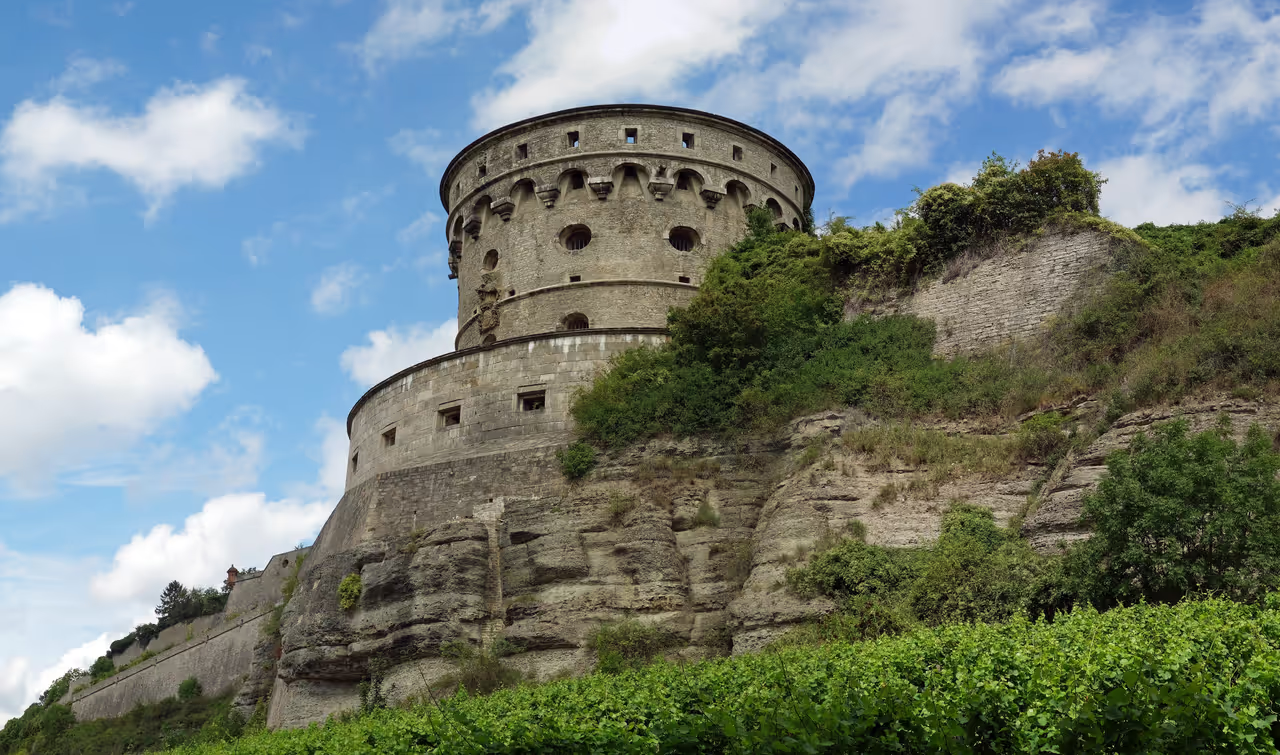
341mMaschikuli Tower
This formidable, multi story artillery tower clings dramatically to the steep southern flank of the Marienberg Fortress, often missed by tourists who only visit the main courtyard. Designed by the master architect Balthasar Neumann in the eighteenth century, it represents a fascinating departure from his usual delicate, opulent palace designs. The tower is a masterpiece of brutal, functional military engineering, featuring thick stone walls and an array of downward facing defensive firing slits known as machicolations. The sheer scale and grim utility of the structure are deeply impressive when viewed from the valley path below. Exploring the exterior provides a powerful reminder of the intense, martial history of the prince bishops. It stands as a stoic, unyielding stone sentinel overlooking the river.
hidden gem view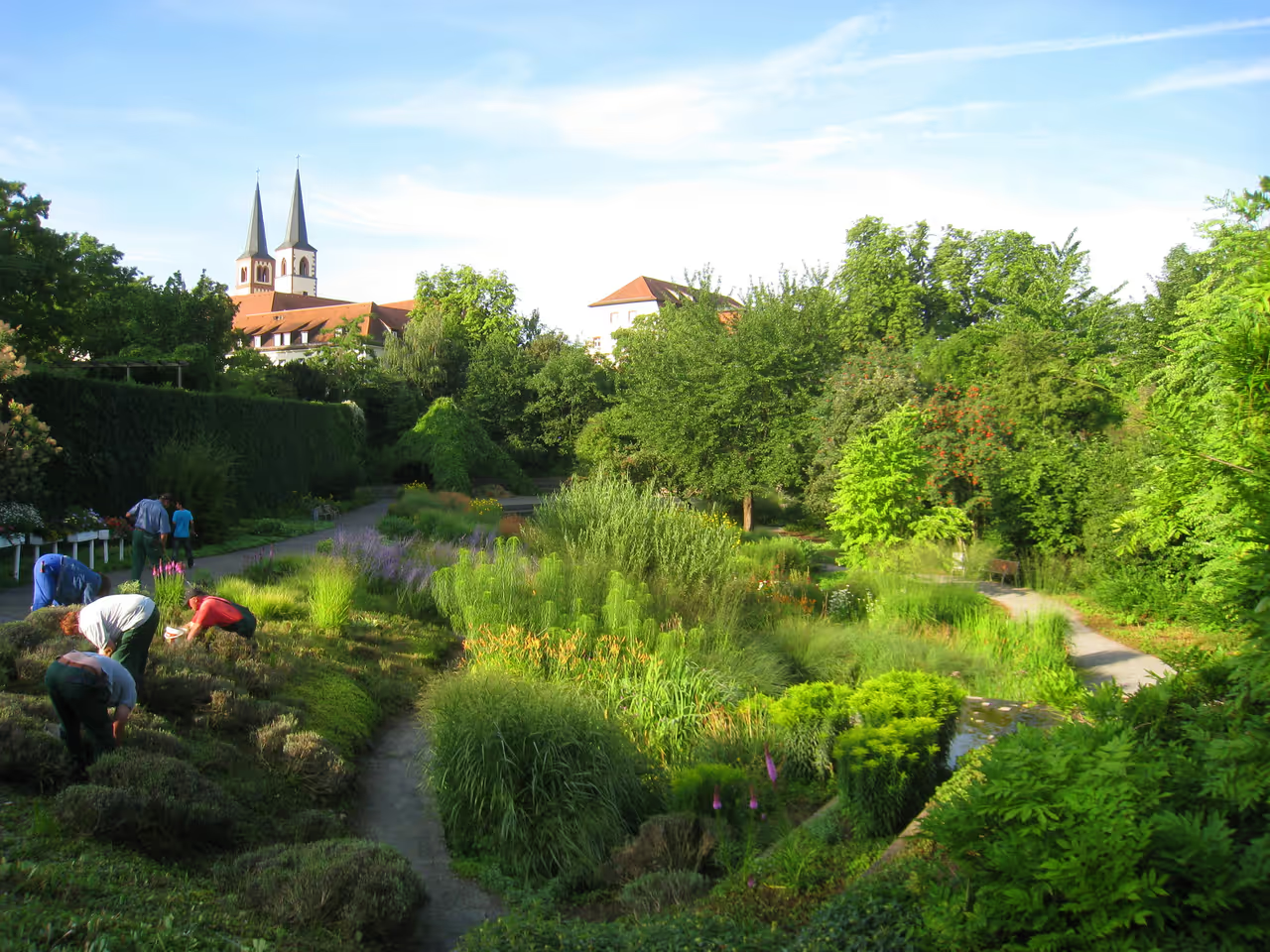 504m
504m1990 State Garden Show Park
Nestled right beneath the imposing Marienberg Fortress, this park is a lush green link between the river Main and the historic heights of the city. Originally created for the 1990 State Garden Show, it remains a beloved sanctuary where wild perennials and ancient fortification walls blend into a stunning, multi-layered landscape. Walking through here feels like discovering a secret garden that perfectly balances raw nature with the structured grandeur of Würzburg’s military history. It is a fantastic spot for a quiet stroll or to admire the beautifully maintained community allotments that still flourish today. The park truly shines during the early summer when it hosts vibrant international festivals, filling the air with music and global flavours. Whether you are a history buff or just need a peaceful escape, this green haven offers some of the most unique perspectives of the city’s iconic fortress.
park & nature view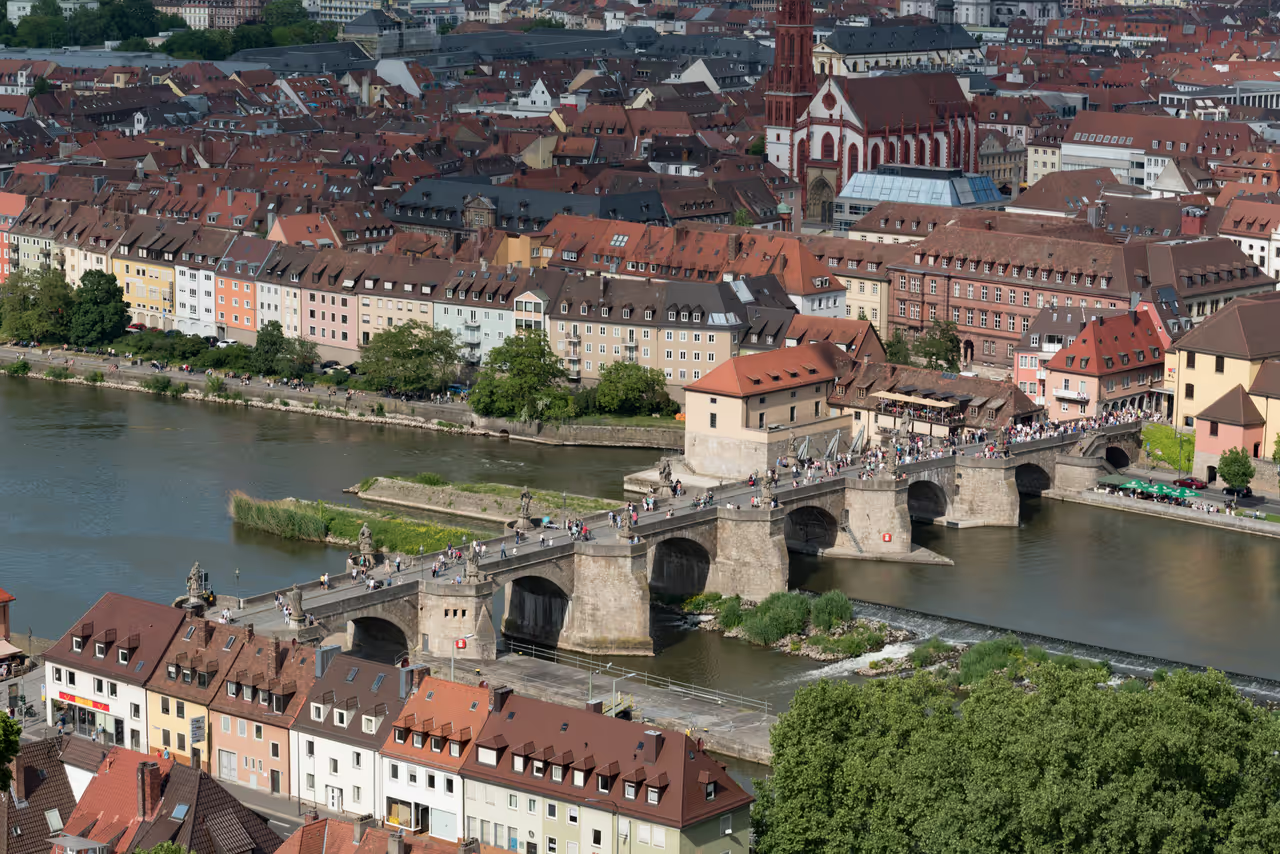 518m
518mOld Main Bridge
Wander across the Alte Mainbrücke and step into the heart of Würzburg’s history. As the city’s oldest river crossing, this stone marvel serves as a stunning gateway between the historic Old Town and the majestic Festung Marienberg. Lined with dramatic baroque statues of saints and historical figures, the bridge offers a uniquely picturesque atmosphere that is perfect for a leisurely stroll. Today, it stands as a lively pedestrian walkway, inviting locals and visitors alike to linger, take in the serene river views, and appreciate the timeless architecture that has survived centuries of transformation. It is more than just a bridge; it is a symbol of the city's resilience and enduring spirit. Whether you are catching the golden hour light or simply enjoying the vibrant energy of the riverfront, this landmark is the undisputed soul of Würzburg.
attraction view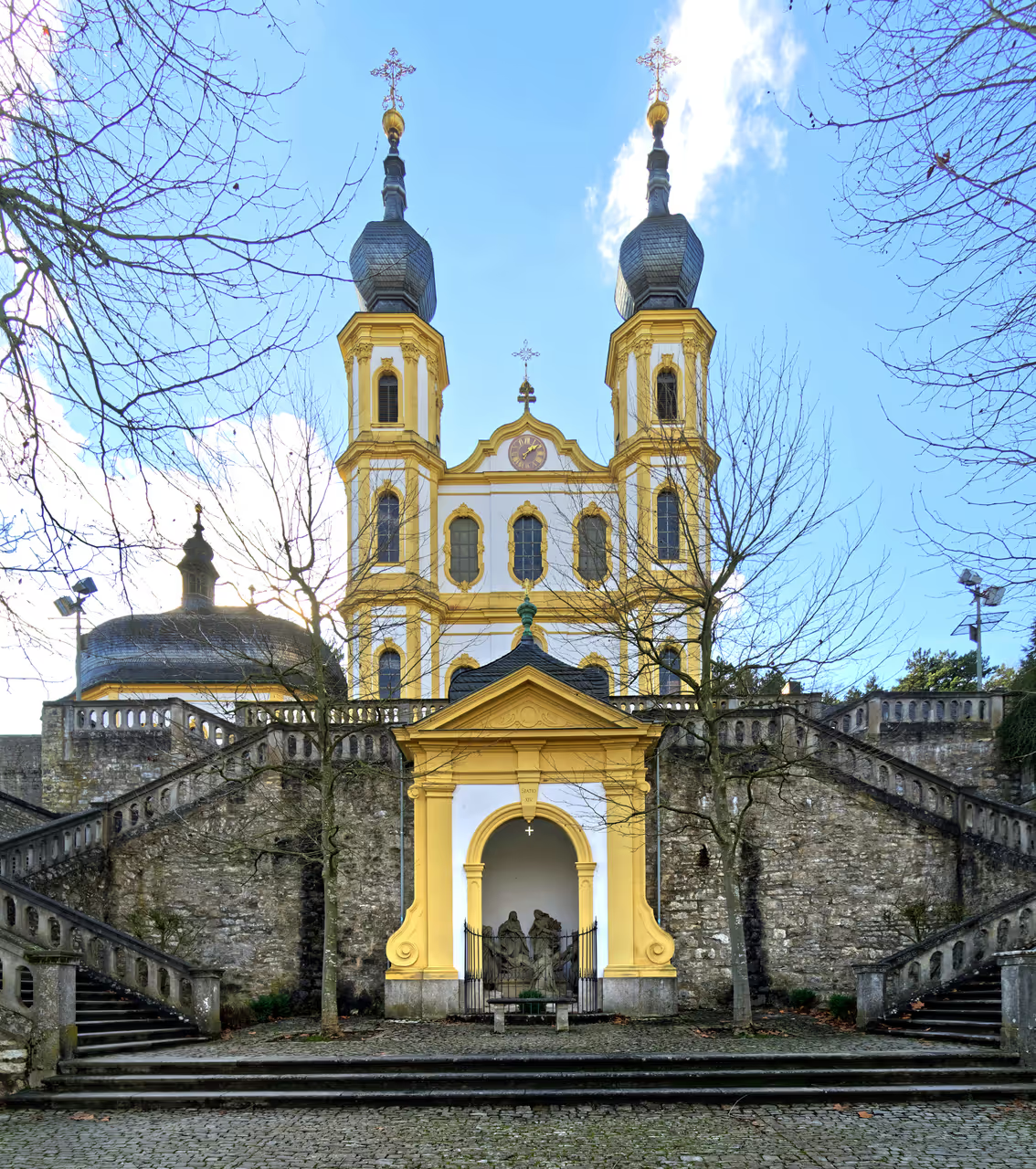 597m
597mLittle Chapel
Perched high on the Nikolausberg, the Käppele is a scenic vantage point and a masterpiece of Rococo architecture. Designed by the legendary Balthasar Neumann, its bulbous domes and elegant towers dominate the skyline across from the fortress. Reaching the top involves a scenic climb through Germany’s largest Stations of the Cross, flanked by grand plane trees and intricate sculptures. Inside, the atmosphere shifts to one of quiet devotion, surrounded by vibrant frescoes and a gold-laden altar. It is a place where history, faith, and nature merge, offering a peaceful retreat from the city below. Whether you come for the art or the panoramic views, the experience is truly unforgettable.
attraction view
Explore Similar Places in This Collection
Featured on These Itineraries and Routes
1 Day in Würzburg Itinerary
This highly focused, fast paced itinerary is designed specifically for travellers with very limited time who wish to experience the absolute pinnacle highlights of the city. It connects the most monumental, globally recognised landmarks to provide a deep understanding of the region's immense historical and architectural significance. The journey covers the breathtaking heights of Baroque palace design before transitioning to the robust, unyielding military might of the medieval era. It includes the essential, iconic visual panoramas that define the city on every postcard. By following this route, visitors will efficiently absorb the dual legacy of aristocratic wealth and defensive authority. It promises an incredibly dense, unforgettable day of grand sightseeing.
view itinerary
3 Days in Würzburg Itinerary
This balanced, comprehensive itinerary allows visitors to fully digest the rich history, stunning architecture, and vibrant wine culture of the region at a very comfortable pace. Over three days, the journey expands beyond the primary monuments to include elegant gardens, important museums, and deeply authentic local culinary institutions. It provides ample time to genuinely appreciate the incredibly intricate details of the Baroque masterpieces without suffering from museum fatigue. The plan thoughtfully mixes rigorous historical exploration with highly relaxing, sensory experiences like exploring ancient, cavernous wine cellars. It is the absolute ideal duration to capture the true, relaxed essence of Franconian life. Visitors will leave with a profound, well rounded appreciation of the city.
view itinerary
5 Days in Würzburg: Deep Dive Itinerary
This extensive, unhurried itinerary is crafted for the deeply curious traveller who wants to uncover every layer of history, art, and nature the municipality has to offer. With five full days, the journey reaches far beyond the central squares, exploring massive hillside pilgrimage churches, quiet botanical parks, and highly specialised museums. It affords the incredible luxury of experiencing the renowned wine culture through multiple, distinct historical cellars without ever rushing the tastings. The generous timeframe allows for deeply immersive, peaceful strolls through the surrounding landscapes and ancient fortifications. It is the ultimate, definitive way to experience the city like a knowledgeable, highly cultured local. The pace ensures complete relaxation alongside profound historical education.
view itinerary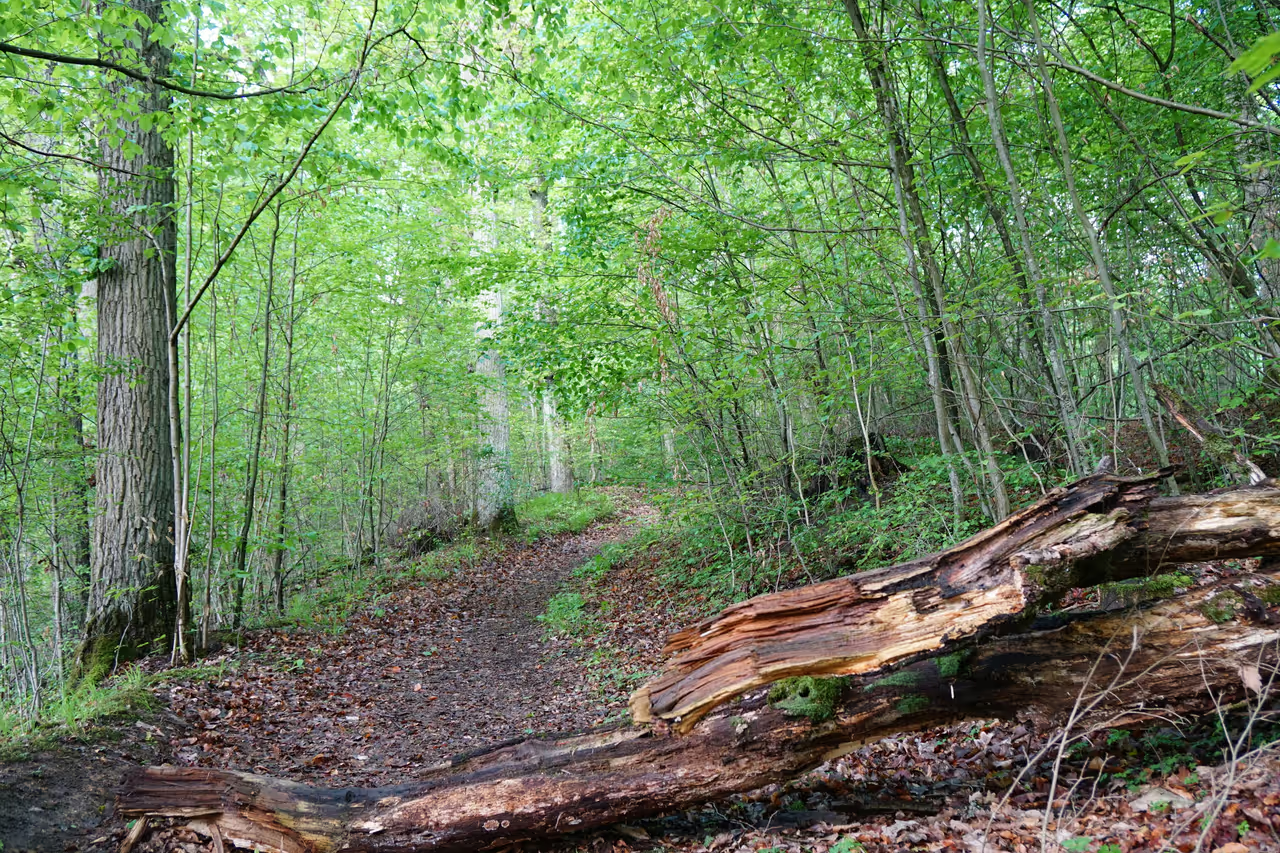
Würzburg Forest Trail
Escaping the urban environment, this ride plunges into the cool, shaded tranquillity of the nearby protected woodlands. The dense canopy of mature trees provides wonderful relief on hot summer days, filtering the sunlight into dappled patterns. The paths are generally unpaved but well maintained, offering a slightly more rugged, adventurous feel. It is a fantastic opportunity to breathe in crisp, pine scented air and listen to the sounds of local wildlife. This route reveals the surprising proximity of wild, untouched nature to the historic city centre.
view cycling route
Prince Bishops Legacy
This route traces the immense architectural and political footprint left by the powerful religious rulers who shaped the city for centuries. Walkers will journey between the colossal defensive structures they built to protect themselves and the opulent palaces they constructed to flaunt their wealth. The tour highlights the dramatic shift from medieval military austerity to breathtaking Baroque extravagance. It paints a vivid picture of absolute power, immense wealth, and deep religious devotion. By connecting these monumental landmarks, the narrative of the city's golden age comes sharply into focus.
view self-guided tour
See all attractions in Würzburg
Falkenhaus, Juliusspital Foundation, Little Chapel, Marienkapelle, Neumünster Collegiate Church, Old Main Bridge, St. Kilian's Cathedral...