Iconic Architecture and Landmarks in Würzburg

Discover the buildings, monuments, and structures that define the skyline. From historic masterpieces to modern marvels, explore the architectural soul of Würzburg, showing off styles like Rococo and Renaissance.

  • ROCOCO

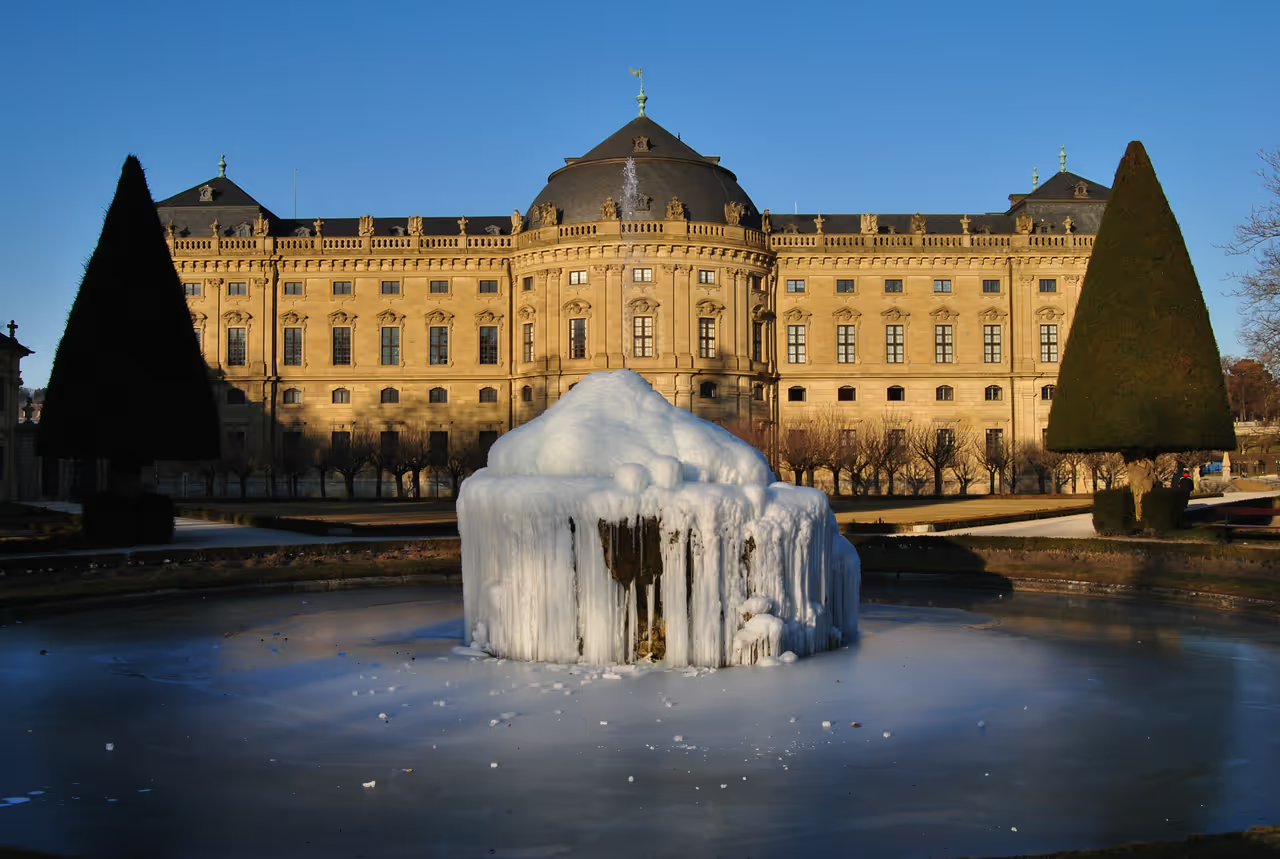
    Falkenhaus Facade

    FALKENHAUS

    The exterior of this prominent market square building boasts the most exuberant and elaborate Rococo stucco work in the entire city. The facade is a joyful, swirling explosion of delicate ornamental details, featuring intricate shells, ribbons, and floral motifs set against a vibrant yellow background. Originally a modest guesthouse, a wealthy widow commissioned the stunning redesign in the mid eighteenth century to showcase her immense wealth and refined taste. The playful, curving gables perfectly contrast with the stricter, more austere Gothic lines of the adjacent chapel. It serves as a textbook example of how the playful Rococo style was applied to civic, bourgeois architecture. The building is utterly impossible to ignore and commands the attention of every passerby.

    view detailed guide

    LOCATION

    Loading map...

    FULL PLACE DETAILS

    ARCHITECTURE & HERITAGE

    Heritage Status
    Architectural Heritage Monument In Bavaria
  • LATE BAROQUE / ROCOCO

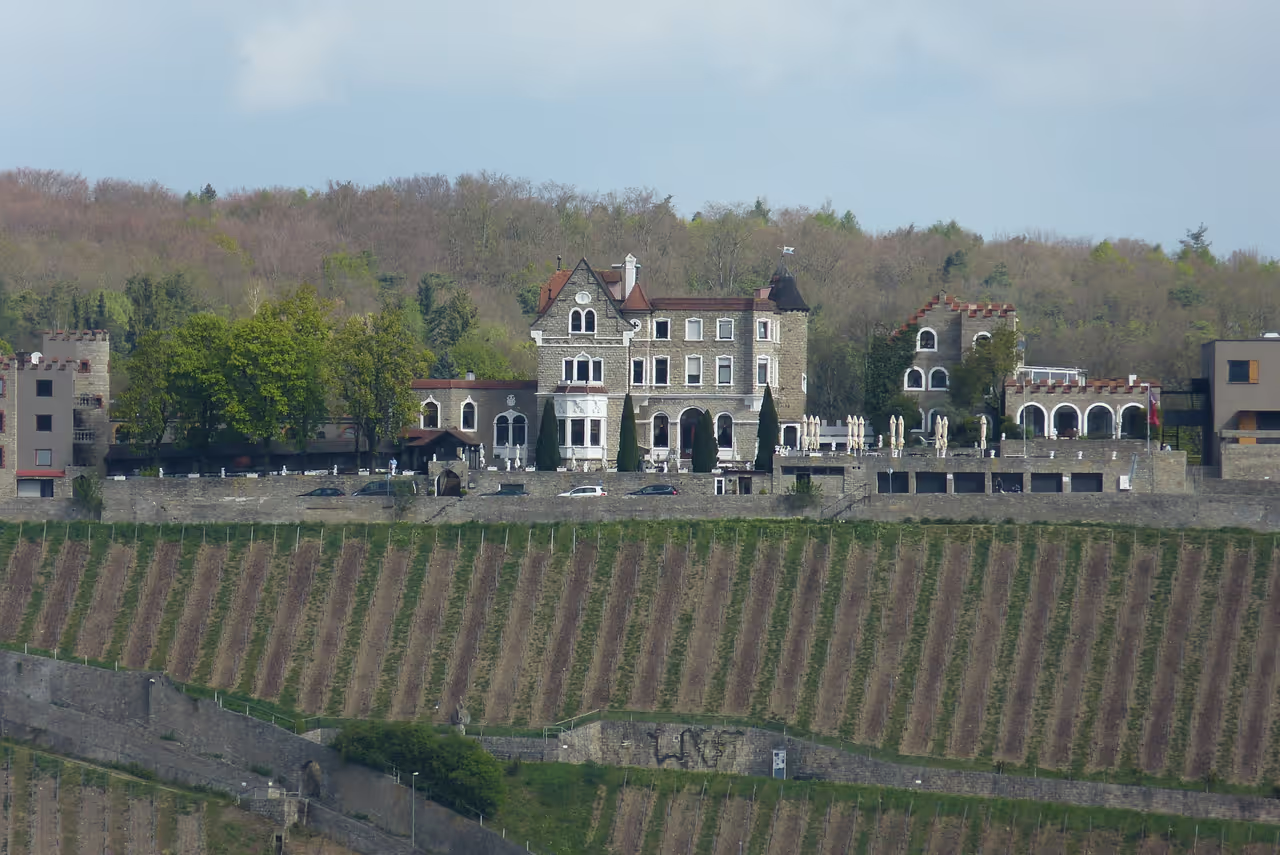
    Käppele

    KÄPPELE

    Perched dramatically on a wooded hillside, this highly picturesque pilgrimage church is a masterclass in playful Late Baroque and Rococo design. Another genius creation of Balthasar Neumann, the silhouette is defined by an elegant, undulating cluster of elegant, bulbous onion domes. The exterior playfully interacts with the surrounding natural landscape, seeming to organically grow out from the steep hill. Inside, the space is a sensory explosion of brilliant light, exquisite stucco work, and vivid, emotionally charged ceiling frescoes. The architectural composition is incredibly theatrical, designed specifically to inspire awe in arriving pilgrims after their steep climb. It is widely considered one of the most beautiful and harmonious church exteriors in southern Germany.

    view detailed guide

    LOCATION

    Loading map...

    FULL PLACE DETAILS

    OVERVIEW & STATS

    Established
    In 1750, making it 276 years old

    ARCHITECTURE & HERITAGE

    Heritage Status
    Architectural Heritage Monument In Bavaria
    Architectural Styles
    Baroque
    Architects
    Johann Balthasar Neumann
  • BAROQUE

    Residence Staircase

    TREPPENHAUS DER RESIDENZ

    This breathtaking architectural feature represents the absolute pinnacle of European Baroque spatial design. Masterminded by the genius architect Balthasar Neumann, the grand staircase sweeps upward with an incredibly daring, unsupported vaulted ceiling. The engineering marvel is perfectly matched by the immense, awe inspiring ceiling fresco painted by Giovanni Battista Tiepolo, representing the four known continents. The harmonious fusion of structural audacity and overwhelming artistic decoration creates an environment of pure, unadulterated regal splendour. Walking up these stairs provides a deeply theatrical experience, as the magnificent painting slowly reveals itself step by step. It is widely considered one of the most important interior spaces in global architectural history.

    view detailed guide

    LOCATION

    Loading map...

    FULL PLACE DETAILS

    ARCHITECTURE & HERITAGE

    Heritage Status
    World Heritage Site

    WEB & AMENITIES

  • ROMANESQUE / RENAISSANCE

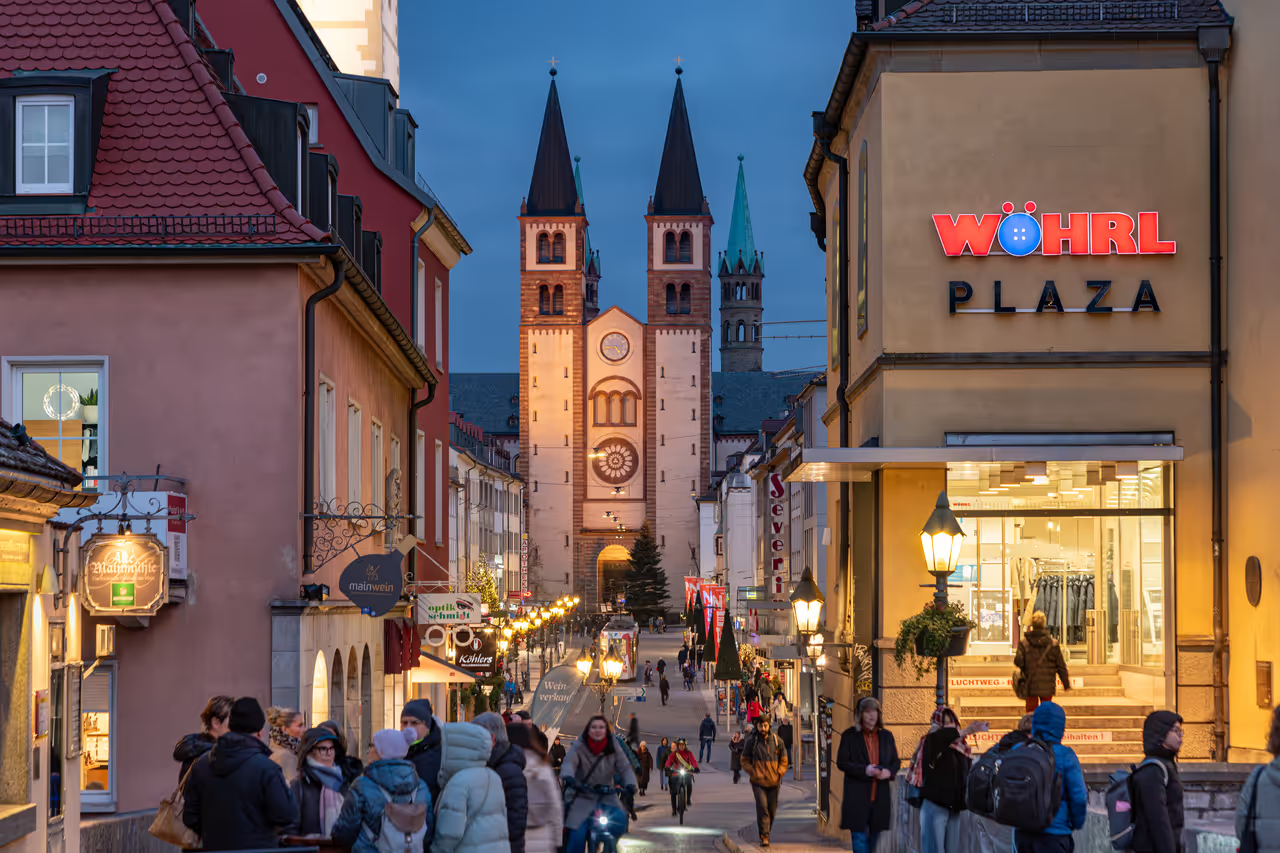
    Historical Town Hall

    GRAFENECKART

    This deeply fascinating structure is a remarkable architectural collage, bearing the physical marks of numerous centuries of continual adaptation. The core of the building, known as the Grafeneckart, features a robust, ancient Romanesque tower that dates all the way back to the late twelfth century. As the centuries passed, elegant Renaissance additions and vivid murals were grafted onto the sturdy medieval base, reflecting the growing wealth and pride of the civic population. The sprawling complex vividly illustrates the ongoing struggle for power between the secular townspeople and the ruling religious bishops. The bold, asymmetrical composition makes it an incredibly engaging piece of urban history to visually dissect. It serves as the resilient, beating administrative heart of the city.

    LOCATION

    Loading map...

    FULL PLACE DETAILS

    ARCHITECTURE & HERITAGE

    Heritage Status
    Architectural Heritage Monument In Bavaria
  • RENAISSANCE

    Old University Building

    ALTE UNIVERSITÄT

    This sprawling historic complex stands as a monumental testament to the intellectual and architectural ambitions of the late sixteenth century. Commissioned by the influential Prince Bishop Julius Echter, the design heavily reflects the sturdy, symmetrical ideals of the German Renaissance. The facades are characterised by elegant, mullioned windows, neat decorative courtyards, and a strong sense of academic discipline and order. The architecture is deeply integrated with the soaring spire of the adjacent Neubaukirche, creating a visually harmonious educational fortress. Walking through the quiet, cloister like inner courtyards provides a profound sense of the deep historical roots of the institution. It is a wonderfully preserved example of robust, pre Baroque civic architecture.

    LOCATION

    Loading map...

    FULL PLACE DETAILS

    ARCHITECTURE & HERITAGE

    Heritage Status
    Former Architectural Heritage Monument In Bavaria
  • EARLY BAROQUE

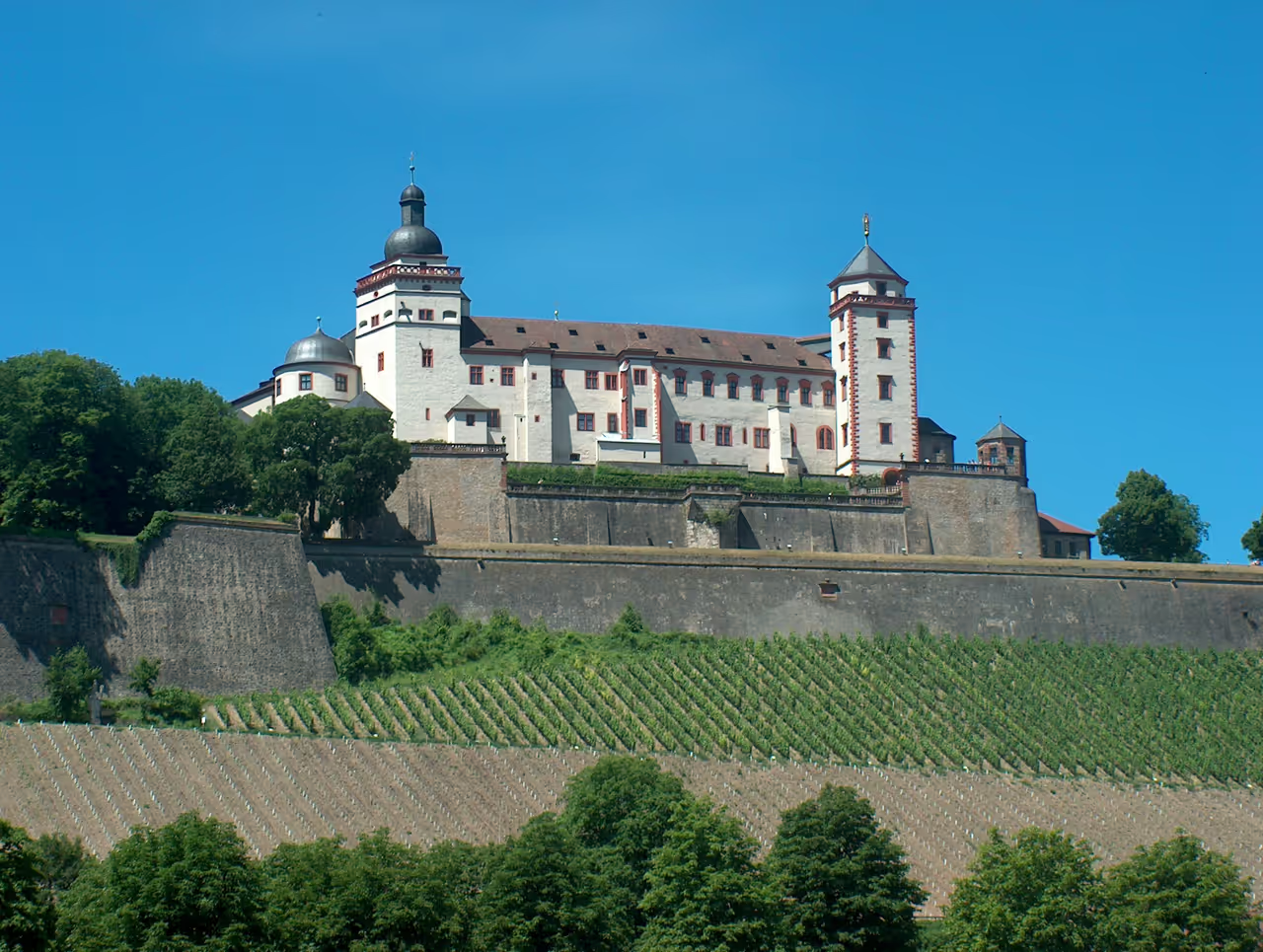
    Stift Haug Church

    STIFT HAUG

    This imposing structure is notable as the very first major Baroque church built in the Franconian region, setting a highly influential architectural precedent. Designed by the Italian architect Antonio Petrini in the seventeenth century, its massive, commanding twin towers dominate the northern city skyline. The defining feature is its colossal, towering central dome, which floods the otherwise stark, monumental interior with brilliant natural light. The heavy, muscular stone facade projects an aura of immense strength and unshakeable religious authority. It provides a fascinating, somewhat sombre contrast to the lighter, highly decorative Rococo style that would later sweep the city. Observing the sheer scale of the dome from the street level is an awe inspiring experience.

    LOCATION

    Loading map...

    FULL PLACE DETAILS

    ARCHITECTURE & HERITAGE

    Heritage Status
    Architectural Heritage Monument In Bavaria
    Architects
    Antonio Petrini
KEEP EXPLORING

More to see in Würzburg