Hidden Gems & Local Secrets in Würzburg

Step off the tourist trail and experience the authentic side of the city. We've bypassed the crowded landmarks to uncover the best-kept local secrets—from quiet neighborhood courtyards to underground art scenes. Dive into the forgotten histories and unique stories that make these spots truly special.

  • Lusam Garden

    LUSAMGÄRTCHEN
    20 M

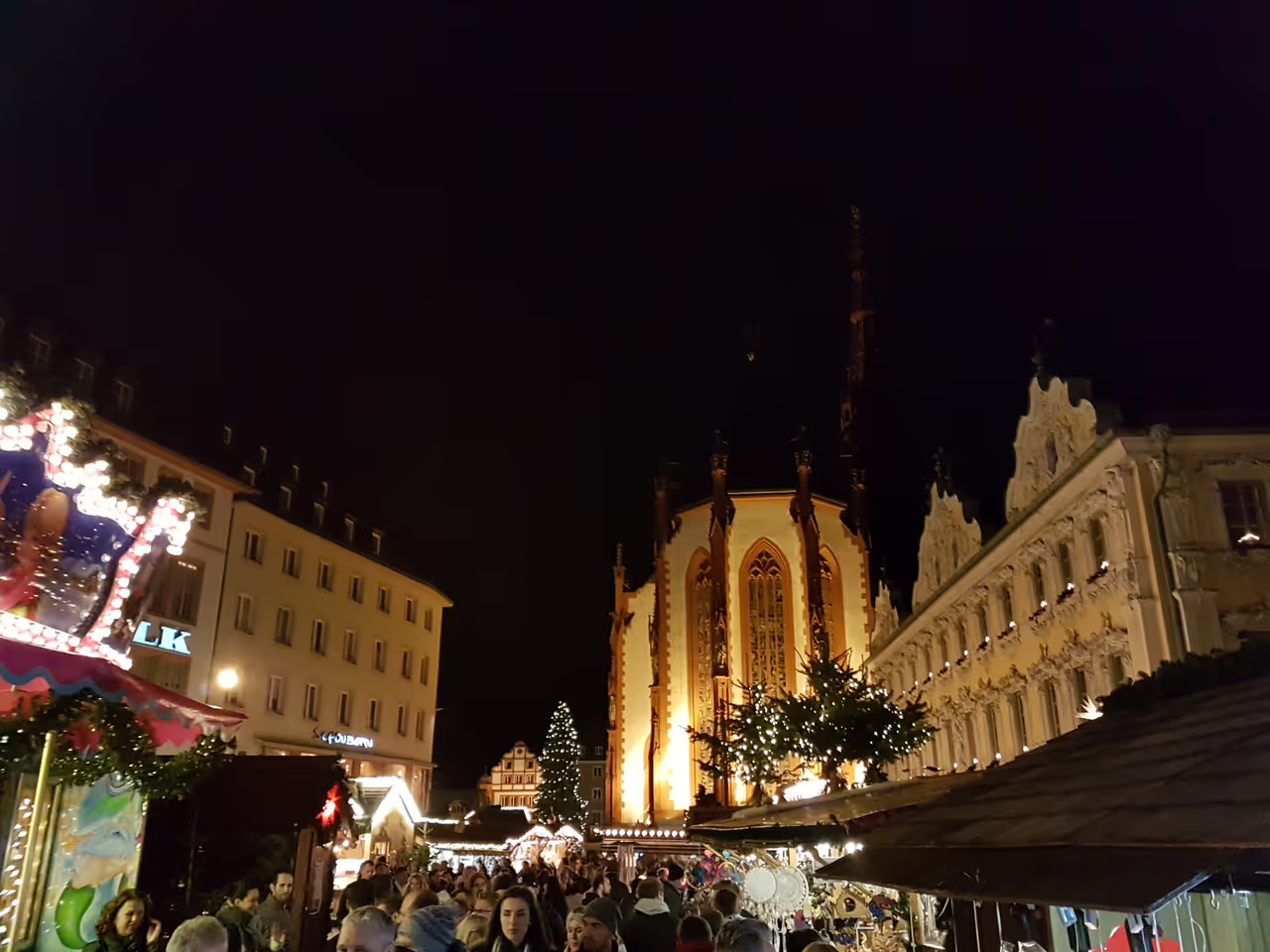
    Tucked quietly away behind the massive Neumünster church, this tiny, walled cloister garden is a profoundly peaceful oasis hidden right in the bustling city centre. It contains the few remaining, elegant Romanesque arches of a former cloister, creating a deeply historical and slightly melancholic atmosphere. The focal point is a simple, modern memorial stone dedicated to Walther von der Vogelweide, arguably the most celebrated poet of the German Middle Ages, who is reputed to be buried exactly here. The garden is incredibly lush and green, offering a stark contrast to the surrounding stone streets. It is a highly revered, secret spot where literary lovers come to find a moment of absolute tranquillity. Discovering this serene courtyard feels like stepping into a private, medieval sanctuary.

    HISTORY & HIGHLIGHTS

    The history of this diminutive patch of greenery is inextricably linked to Walther von der Vogelweide, the greatest lyrical poet of the Middle High German period. Spending his twilight years in the city, he was granted a small fiefdom by the generous local bishop, allowing him to end his days in relative comfort. Legend states he requested to be buried here in the Lusamgärtchen, with instructions that the birds should be fed daily upon his tomb. While the original tomb has long been lost to the ravages of time, a modern memorial now stands in its place. Today, the garden maintains an intensely romantic and deeply historical aura. The surviving twelfth century Romanesque arches, remnants of the original Neumünster cloister, frame the space beautifully, creating an atmosphere of quiet, enduring reverence. Modern visitors, particularly young lovers and poetry enthusiasts, maintain the ancient, poetic legacy by frequently leaving fresh flowers or small offerings on the memorial stone. It survives as a rare, intimate pocket of absolute silence amidst the bustling modern city.

    Events spanning 700 years

    YEAR 1230

    Burial of a Poet

    Legend suggests that the legendary medieval poet Walther von der Vogelweide is laid to rest within this small cloister.

    YEAR 1800

    Destruction of the Cloister

    Much of the original Romanesque cloister surrounding the garden is dismantled or lost to subsequent urban redevelopment.

    YEAR 1930

    Erection of the Memorial

    A modern stone monument is placed in the garden to honour the enduring literary legacy of the famous medieval poet.

    LOCATION

    Loading map...

    FULL PLACE DETAILS

    ARCHITECTURE & HERITAGE

    Heritage Status
    Former Architectural Heritage Monument In Bavaria
  • Maschikuli Tower

    MASCHIKULITURM
    30 M

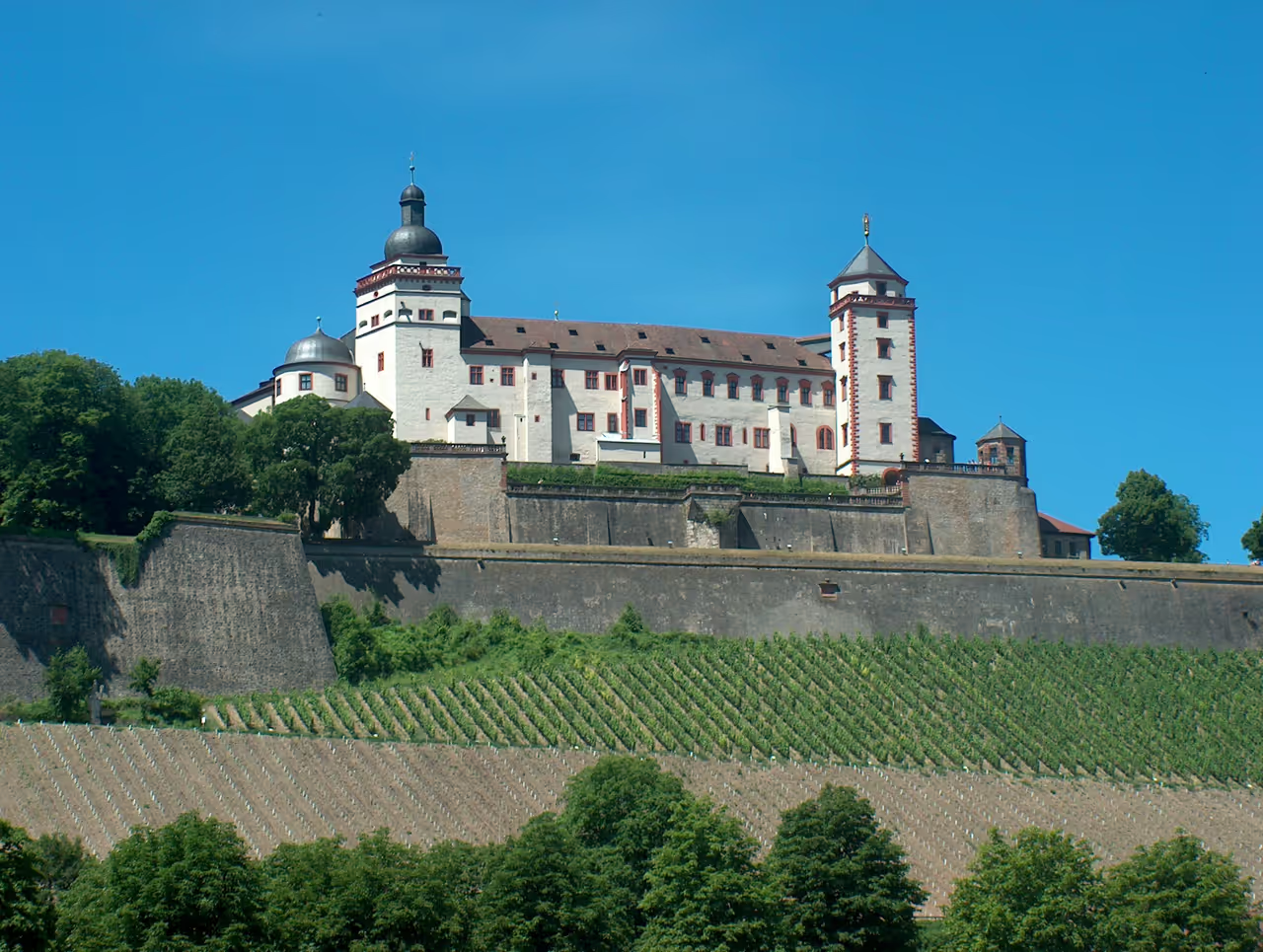
    This formidable, multi story artillery tower clings dramatically to the steep southern flank of the Marienberg Fortress, often missed by tourists who only visit the main courtyard. Designed by the master architect Balthasar Neumann in the eighteenth century, it represents a fascinating departure from his usual delicate, opulent palace designs. The tower is a masterpiece of brutal, functional military engineering, featuring thick stone walls and an array of downward facing defensive firing slits known as machicolations. The sheer scale and grim utility of the structure are deeply impressive when viewed from the valley path below. Exploring the exterior provides a powerful reminder of the intense, martial history of the prince bishops. It stands as a stoic, unyielding stone sentinel overlooking the river.

    HISTORY & HIGHLIGHTS

    The creation of this grim, imposing defensive structure is rooted in a fascinating piece of architectural rivalry. Balthasar Neumann, the visionary genius behind the exquisitely delicate Würzburg Residence, was primarily celebrated for his ornate, sweeping Baroque palaces. However, vocal critics and rival engineers allegedly claimed his talents were purely decorative, doubting his ability to design robust, functional military fortifications capable of withstanding serious siege warfare. Determined to silence his detractors, Neumann accepted the commission to fortify the vulnerable southern flank of the Marienberg Fortress. He designed the Maschikuliturm as a brilliant, multifaceted artillery platform, incorporating deeply sophisticated defensive features like overlapping fields of fire and the namesake machicolations designed to drop projectiles on attackers below. The resulting tower is a triumph of brutal, unyielding military engineering, proving unequivocally that the master architect possessed a profound understanding of formidable structural mechanics as well as delicate artistic beauty.

    Events spanning 266 years

    YEAR 1724

    Architectural Challenge

    Master architect Balthasar Neumann is commissioned to design a robust defensive tower, aiming to prove his skills beyond delicate palace design.

    YEAR 1729

    Completion of the Tower

    The formidable artillery tower is completed, successfully securing the vulnerable southern approach to the main fortress.

    YEAR 1990

    Modern Restoration

    The tower undergoes careful historical restoration to preserve its unique architectural features for future generations.

    LOCATION

    Loading map...

    FULL PLACE DETAILS

    OVERVIEW & STATS

    Elevation
    267 m

    ARCHITECTURE & HERITAGE

    Heritage Status
    Natural Monument In Germany

    WEB & AMENITIES

  • Planet Walk

    PLANETENWEG WÜRZBURG
    1 H

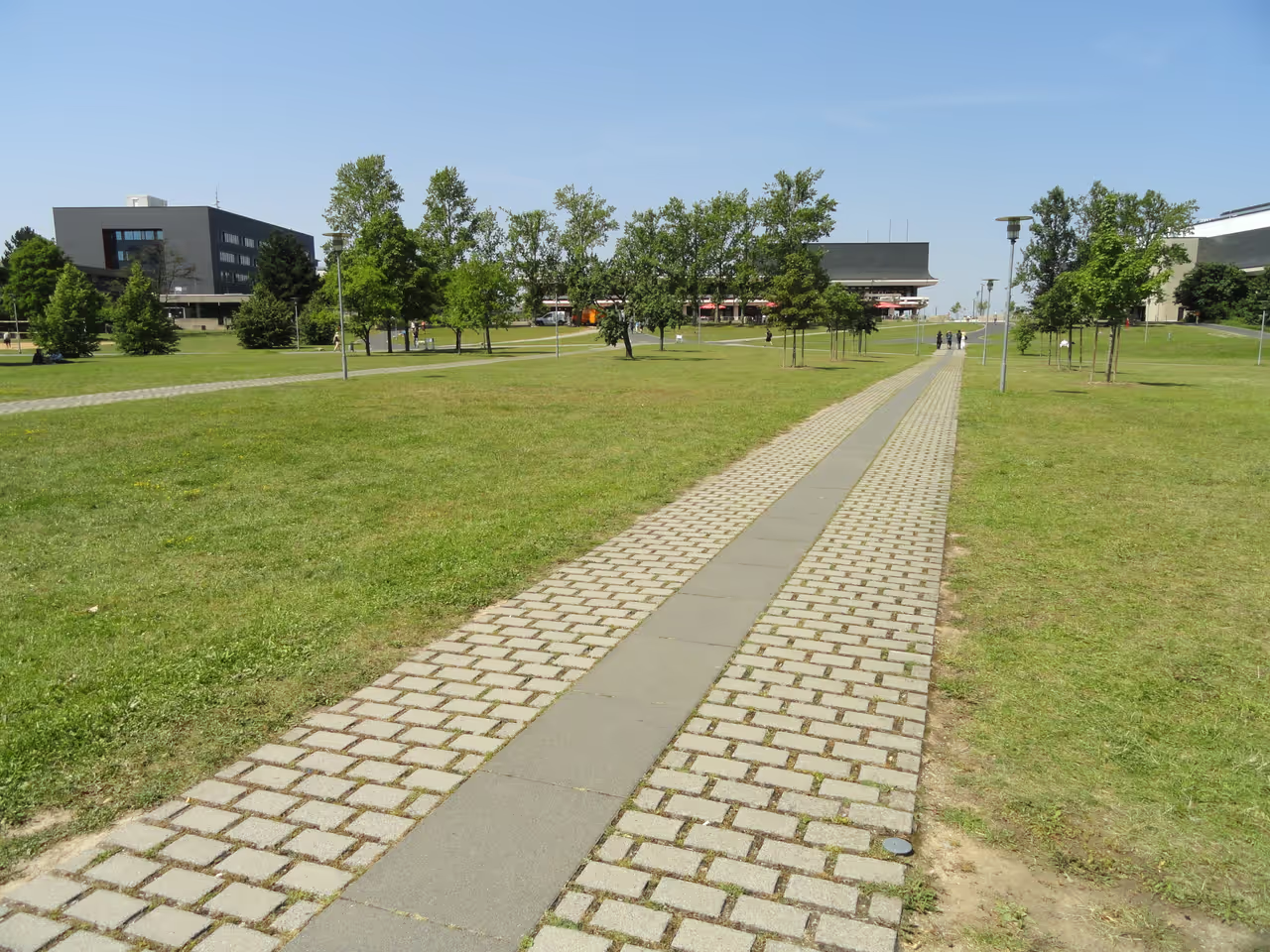
    This highly unique, educational walking trail is located in a quiet residential district in the southeast of the city. The route brilliantly maps out our entire solar system at a massive scale of one to one point two billion, allowing walkers to physically experience astronomical distances. Starting with a large representation of the Sun, visitors stroll past individual stone steles detailing fascinating facts about each subsequent planet. It is an incredibly engaging, interactive experience that provides a fantastic sense of cosmic perspective. The walk weaves through peaceful, leafy suburban streets and ends near a local wooded area. It is a fantastic, completely offbeat activity, especially for families or anyone with a curious, scientific mind.

    HISTORY & HIGHLIGHTS

    The creation of this expansive, educational trail reflects the deep seated academic and scientific curiosity that characterises this historic university city. While Würzburg is globally celebrated for its immense contributions to physics and medicine, local astronomy enthusiasts desired a public, highly accessible way to communicate the breathtaking scale of the cosmos. The ambitious project was carefully planned to ensure that the monumental distances of space could be comprehended through the simple, physical act of walking. The trail begins with the Sun in a quiet residential area and stretches over two and a half kilometres, representing the vast, lonely void of the solar system. As walkers progress from the tightly clustered inner rocky planets towards the distant, isolated gas giants, the physical exertion required perfectly mirrors the expanding, cold emptiness of space. The installation of the stone steles transformed a completely ordinary suburban stroll into a profound, thought provoking journey of cosmic discovery, marrying civic beautification with excellent, accessible public education.

    Events spanning 10 years

    YEAR 2000

    Conception of the Project

    Local astronomy enthusiasts and educators develop the concept to create a physical, scaled representation of the solar system.

    YEAR 2005

    Installation of the Planets

    The informational stone steles are carefully installed across the southeastern districts, accurately spacing out the celestial bodies.

    YEAR 2010

    Educational Integration

    The path becomes a highly popular destination for local school field trips and science minded families.

    LOCATION

    Loading map...
  • Schenkenturm Ruins

    SCHENKENTURM
    45 M

    Located in the quieter northern outskirts near a small local airfield, this ancient, solitary stone tower is the last surviving remnant of a thirteenth century castle. The robust, square keep offers a fascinating, unpolished glimpse into the harsh realities of early medieval fortification, completely devoid of later Baroque refinements. Because it requires a short drive or a long hike from the city centre, it remains gloriously free of typical tourist crowds. Visitors who make the journey can climb to the top for a wonderfully serene, completely different perspective of the surrounding valley and distant city. The surrounding fields are incredibly peaceful, making it a perfect destination for an adventurous, quiet afternoon picnic. It holds a rugged, deeply authentic historical charm.

    HISTORY & HIGHLIGHTS

    The solitary Schenkenturm is the final, stubborn remnant of the once formidable Schenkenburg, a strategic medieval stronghold built in the mid thirteenth century. Erected by the influential Schenk von Rossberg family, the castle was designed to assert dominance and control vital trade routes approaching the city from the north. For decades, it stood as a proud symbol of feudal power, representing the complex, often tense relationship between the regional nobility and the deeply powerful prince bishops ruling from the city below. However, the glory of the fortress was destined to be fleeting. By the late medieval period, shifting political alliances and the brutal realities of regional warfare saw the castle slowly fall into ruin, its defensive walls crumbling and its halls abandoned. While the surrounding fortress disappeared completely, the incredibly robust, central stone keep miraculously survived the centuries. In the late nineteenth century, the sturdy tower was thoughtfully repurposed by local historians as a panoramic observation point, ensuring that this rugged piece of early medieval history remains accessible to adventurous modern explorers.

    Events spanning 615 years

    YEAR 1275

    Construction of the Fortress

    The Schenkenburg castle is constructed by regional nobility to secure influence and control over northern trade routes.

    YEAR 1500

    Descent into Ruin

    The castle slowly loses its strategic importance and falls into severe disrepair over the following centuries.

    YEAR 1890

    Conversion to Observation Tower

    The surviving central keep is historically restored and repurposed as an accessible observation point for local hikers.

    LOCATION

    Loading map...

    FULL PLACE DETAILS

    ARCHITECTURE & HERITAGE

    Heritage Status
    Architectural Heritage Monument In Bavaria
  • Talavera Schlösschen

    TALAVERA-SCHLÖSSCHEN
    15 M

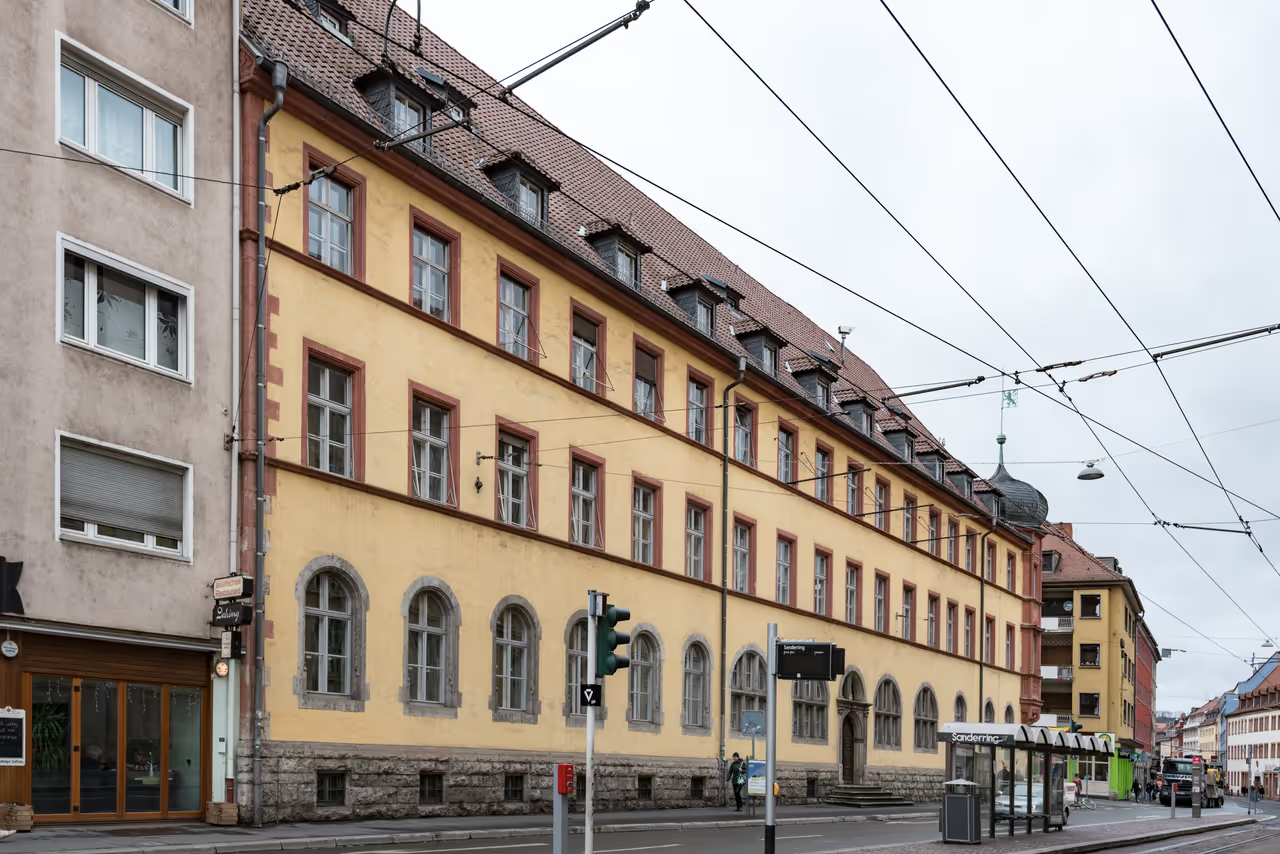
    This elegant, somewhat forgotten little Baroque palace is tucked away in the Zellerau district, far removed from the grand, bustling tourist centre. Originally built as a lavish summer residence for an incredibly wealthy local official, it showcases the beautiful, ornate architectural style of the famous builder Joseph Greissing. The building exudes a quiet, faded aristocratic charm, standing proudly amidst a rapidly modernising, residential neighbourhood. Because it is rarely highlighted in standard guidebooks, the surrounding atmosphere is deeply authentic and completely undisturbed. Taking a short detour to admire its intricate facade offers a wonderful, intimate glimpse into the opulent lifestyles of the historical elite. It is a true architectural jewel hiding in plain sight.

    HISTORY & HIGHLIGHTS

    The elegant Talavera Schlösschen is a beautiful surviving example of the immense wealth and refined taste that flowed through the upper echelons of the city during its Baroque golden age. Commissioned in the early eighteenth century by Johann Friedrich Dietrich Faust von Stromberg, a highly influential and affluent civic official, it was designed specifically as a luxurious, private summer retreat. The prominent architect Joseph Greissing was tasked with creating a residence that projected sophisticated aristocratic flair while maintaining an intimate, relaxed atmosphere away from the intense political pressures of the central court. For decades, the delicate palace hosted lavish, private summer gatherings, surrounded by carefully manicured gardens that have long since vanished. As the centuries passed and the city expanded rapidly outwards, the surrounding rural landscape was entirely consumed by the bustling, working class Zellerau district. Today, the palace stands as a fascinating, slightly surreal architectural anachronism, a delicate slice of eighteenth century nobility stubbornly holding its ground amidst the practical realities of a modern, residential neighbourhood.

    Events spanning 181 years

    YEAR 1719

    Commissioning the Retreat

    Wealthy official Johann Friedrich Dietrich Faust von Stromberg commissions a lavish, private summer residence.

    YEAR 1721

    Architectural Completion

    The elegant Baroque structure is successfully completed by the highly regarded local architect Joseph Greissing.

    YEAR 1900

    Urban Expansion

    The surrounding rural landscape is slowly absorbed by the expanding, residential Zellerau district, completely altering the context of the palace.

    LOCATION

    Loading map...
KEEP EXPLORING

More to see in Würzburg