Biarritz
Full City Guide, Map & 163 Things To Do
26,206 people live here.
That's 0.04% of the entire population of France.
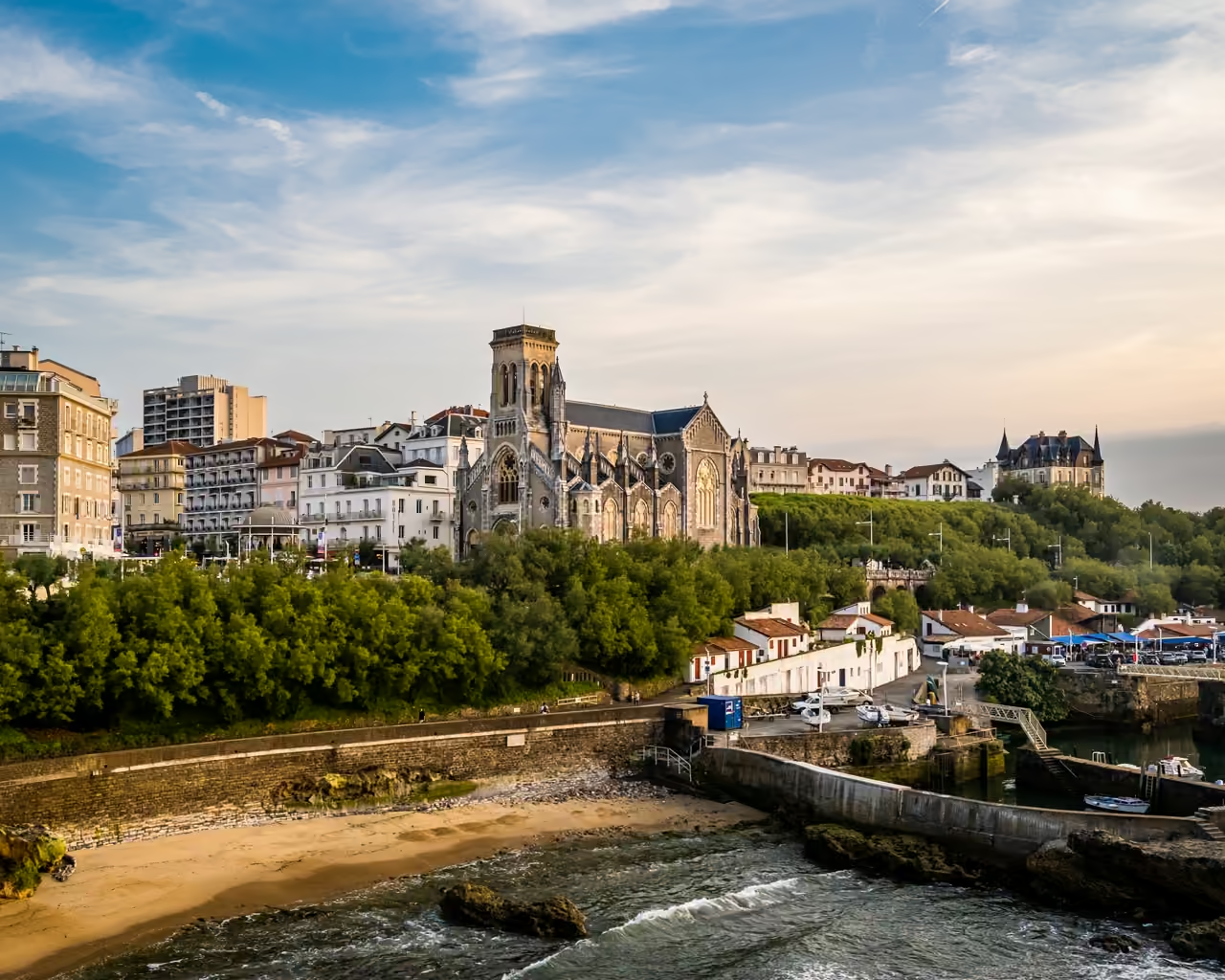
Perched above the Bay of Biscay just 25 kilometres from the Spanish border, Biarritz packs imperial palaces, rugged sea stacks, and Atlantic surf breaks into four kilometres of indented coastline. Former whalers once kept watch from the rocky Atalaye promontory before nineteenth century European monarchs turned the quiet fishing port into a glamorous seaside capital. Today the Hôtel du Palais watches over beachgoers on the Grande Plage while surfers carry boards down the steps to the Côte des Basques. Between coastal cliff walks, morning food counters at Les Halles, and tucked away Basque chapels up in Saint Martin, the town mixes grand Second Empire stonework with barefoot ocean life.
Biarritz DNA
History of Biarritz
Look closely at the town's coat of arms and you will see a small boat manned by five sailors, one poising a harpoon over a diving whale. Long before the grand hotels blocked the skyline, Biarritz was a rough, wind-battered settlement dedicated to the slaughter of Atlantic right whales. Lookouts stood on the Atalaye plateau, lighting damp straw to signal the town when a blow spout appeared on the horizon. The locals would drag the massive carcasses into the Port-Vieux to be butchered. The final whale was caught in 1686, forcing the sailors to pivot to corsair privateering and deep-sea cod fishing off the coast of Newfoundland. The town's fate shifted violently in 1843 when writer Victor Hugo visited. He praised the white houses and green shutters but accurately feared that the town would soon be ruined by wealth. Eleven years later, Emperor Napoleon III and his Spanish-born wife, Empress Eugénie, bought a patch of dunes and built the Villa Eugénie. Their arrival dragged the entire European aristocracy down to the Bay of Biscay. Kings, queens, and Russian grand dukes constructed absurdly ornate mansions on the cliff edges. Biarritz became the undisputed 'Queen of Beaches and Beach of Kings'. Wealth poured into the streets throughout the Belle Époque and the Roaring Twenties. Coco Chanel opened her third boutique here in 1915 to dress the wealthy refugees of the First World War. The Casino Municipal went up in strict Art Deco geometry, and underground pipes pumped highly concentrated salt water from the inland village of Briscous directly into the town's thermal baths. The party abruptly halted during the Second World War when German forces blasted bunkers into the cliffs to form the Atlantic Wall. Allied bombers devastated the town in 1944, aiming for the nearby airport but killing hundreds of civilians in the process. The final reinvention of the town came from an unlikely source. In 1956, Hollywood screenwriter Peter Viertel arrived to film 'The Sun Also Rises' and brought a surfboard over from California. He challenged the local waves, failed a few times, and eventually taught the local kids how to ride. The Waikiki Surf Club opened three years later, cementing Biarritz as the absolute birthplace of European surfing. The town now exists in a strange, compelling equilibrium where barefoot surfers share the pavement with guests stepping out of luxury sedans.
23 events spanning 810 years
Map of Biarritz
Interactive Destination & Itinerary Map
This map blends our curated city guides—featuring best photo spots, scenic walks, viewpoints, hidden gems and much more—with a live Wikipedia explorer. Click on our numbered pins to plan your routes, or zoom in on the surrounding neighborhoods to discover verified local landmarks, museums, and stories with dynamic Wikipedia summaries and photos!
Fun Facts
21- 01
A French word was born from a Biarritz place name. Étienne de Silhouette, finance minister under Louis XV in 1759, came from a family tied to Zilhoeta, a corner of the commune where his father Arnaud was born. He became so unpopular that caricatures of him spread widely, and the vogue for outline drawings 'à la Silhouette' gave French a new noun.
- 02
An empress reached her private beach through a tunnel. Eugénie bathed discreetly at the little Plage Bernain, getting there by a gallery cut into the rock. The beach is now closed to the public because of the risk of rockfall.
- 03
Frank Sinatra was a regular guest at the Hôtel du Palais and used to sing at the piano bar late into the night.
- 04
The Grande Plage used to be called the Coast of the Fools. Patients with mental illness were once brought here to receive the supposed cure of a furious sea, and Eugène Viollet-le-Duc wrote of the violent detonations of water in the caves along this shore.
- 05
The last whale was taken here on 2 or 3 March 1686. Five men in a boat closing in on a whale still fill the town's coat of arms, more than three centuries after the hunt ended.
- 06
Bismarck came to Biarritz to ask an emperor for a favour. In September 1865 he met Napoleon III here, hoping to win French support for Prussian policy.
- 07
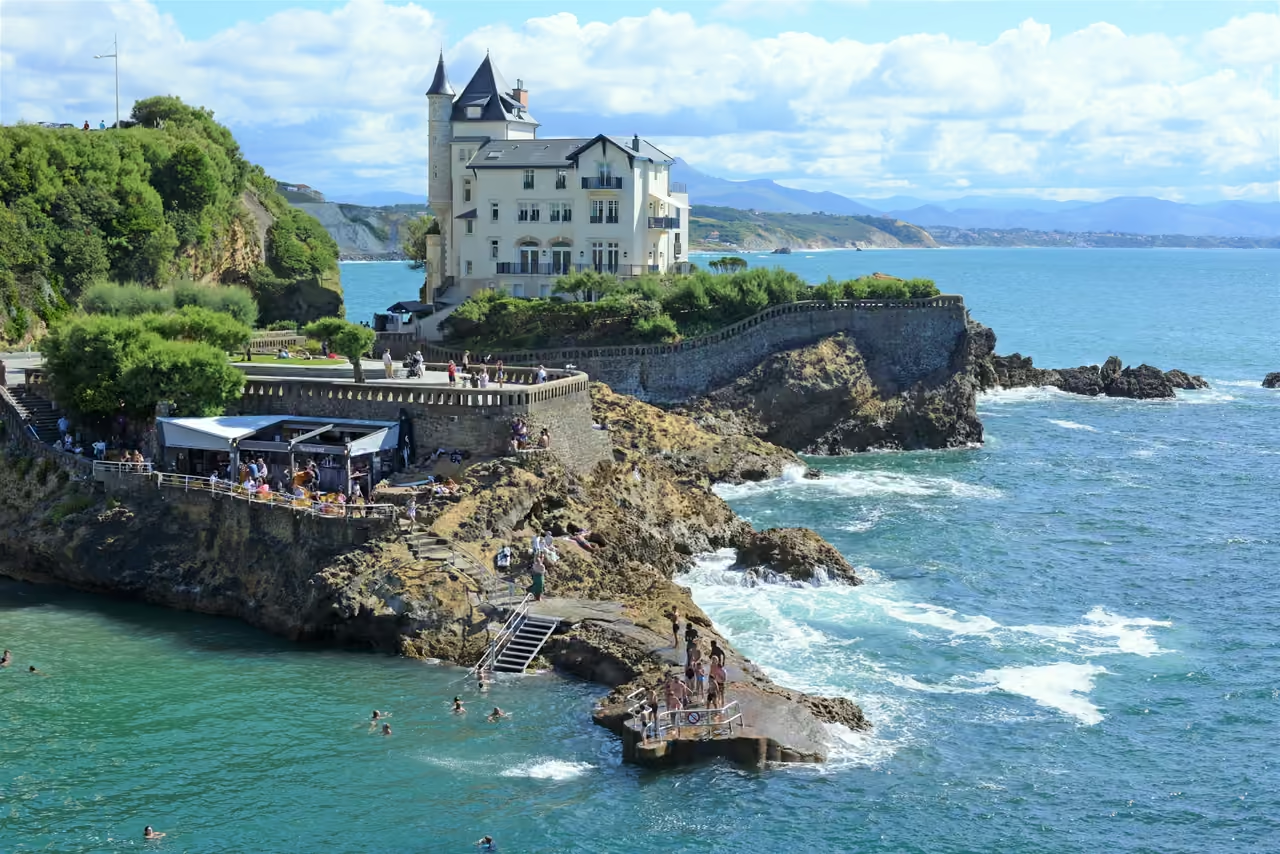
A Stravinsky in-law ran a Russian cabaret in a medieval-style villa. During the Années folles the Villa Belza housed a cabaret and restaurant opened by a brother-in-law of Igor Stravinsky, later remembered as the last refuge of incorrigible revellers. It now contains flats.
- 08
Someone tried to power a town with waves in 1929. The engineer Paul Grasset built a hydrodynamic laboratory below the lighthouse, and the crash of that year killed the project. The ruins are still there.
- 09
Americans turned the resort into a campus. From August 1945 to March 1946 soldiers waiting to go home studied at the American University of Biarritz, run from offices in the Hôtel du Palais, which logged more than ten thousand enrolments.
- 10
Victor Hugo predicted the town's fate. In 1843 he fretted that fashion would give the fishing hamlet a bad appetite for money and turn it into something faded like Dieppe or Ostend. He was only half right.
- 11
Cars were named after the town. Hotchkiss built a Biarritz cabriolet in 1937 with right-hand drive, Cadillac later sold a Biarritz convertible of its Eldorado, and Chanel has a lipstick shade called Biarritz.
- 12
The old tower on the Atalaye was nicknamed la Humade, after the smoke of damp straw that whale lookouts burned as a signal. A navy beacon was lit there on 1 October 1739, and the tower fell in 1856.
- 13
Coco Chanel's third boutique opened here in 1915, at 2 Avenue Édouard VII. The couture houses of Worth, Poiret, Patou, Lanvin, Molyneux and Maggy Rouff also traded around Place Bellevue.
- 14
The department store Biarritz Bonheur, opened in 1894, was nicknamed the Harrods of Biarritz. Its staff spoke English and Russian to serve the visitors, and it is still trading today.
- 15
More than four in ten homes in Biarritz are second homes. In 2022 residences of that kind made up 40.7 per cent of the housing stock, a figure few towns can match.
- 16
The tower of Saint-Martin church was whitewashed every year so that fishermen could use it as a seamark. The church itself predates 1450.
- 17
A doctor's rescue chain for surfers and swimmers, set up in the 1950s by the firefighters' physician Dr Saury, is said to have served as a model for the later SAMU emergency medical service.
- 18
Moriscos expelled from Spain in 1611 reportedly settled by Lake Mouriscot and made clay pots from the local clay. The lake's name dates from the seventeenth century.
- 19
France's oldest surf magazine, Surf Session, was founded in Biarritz in 1986. The town also hosts the headquarters of Surfrider Foundation Europe.
- 20
The thermal baths of 1893 used salt water piped from Briscous, more than twenty kilometres away. It was over ten times saltier than the sea.
- 21
The Tour de France chose Biarritz as a stage town in 1948 and again in 1978.
Did You Know?
17- 01
Biarritz is the cradle of European surfing. A board arrived from California in 1956, the Waïkiki club formed in 1959, and the first French championships took place on the Grande Plage in 1960. Today it is the only town to hold the three-star surf city label created by the French surfing federation in 2015.
- 02
Napoleon III and Empress Eugénie turned a whaling village into a resort from 1854. The Villa Eugénie, now the Hôtel du Palais, drew the crowned heads of Europe, and the town became known as the queen of beaches and the beach of kings.
- 03
Biarritz was a whaling port. Crews hunted the North Atlantic right whale from the Old Port, and a lookout on the Atalaye promontory scanned the sea day and night for the spout. Whaling ended here in 1686.
- 04
The coastline marks a geological frontier. To the north runs nearly two hundred kilometres of straight, low, sandy coast from the Pointe de Grave in the Gironde, ending at Anglet. From Biarritz southwards the coast turns to cliffs and rocks.
- 05
Three sedimentary levels follow one another along four kilometres of shore. Grey marly limestone cliffs, shaped when the Pyrenees rose about 25 million years ago, give way to ochre sandy limestone laid down 34 million years ago and packed with tiny fossil foraminifera.
- 06
The cliffs have been eroding at roughly 70 centimetres a year since the early twentieth century. Waves hit them head-on and rainwater undermines them from behind, and the Beaurivage district and the Côte des Basques are the most exposed.
- 07
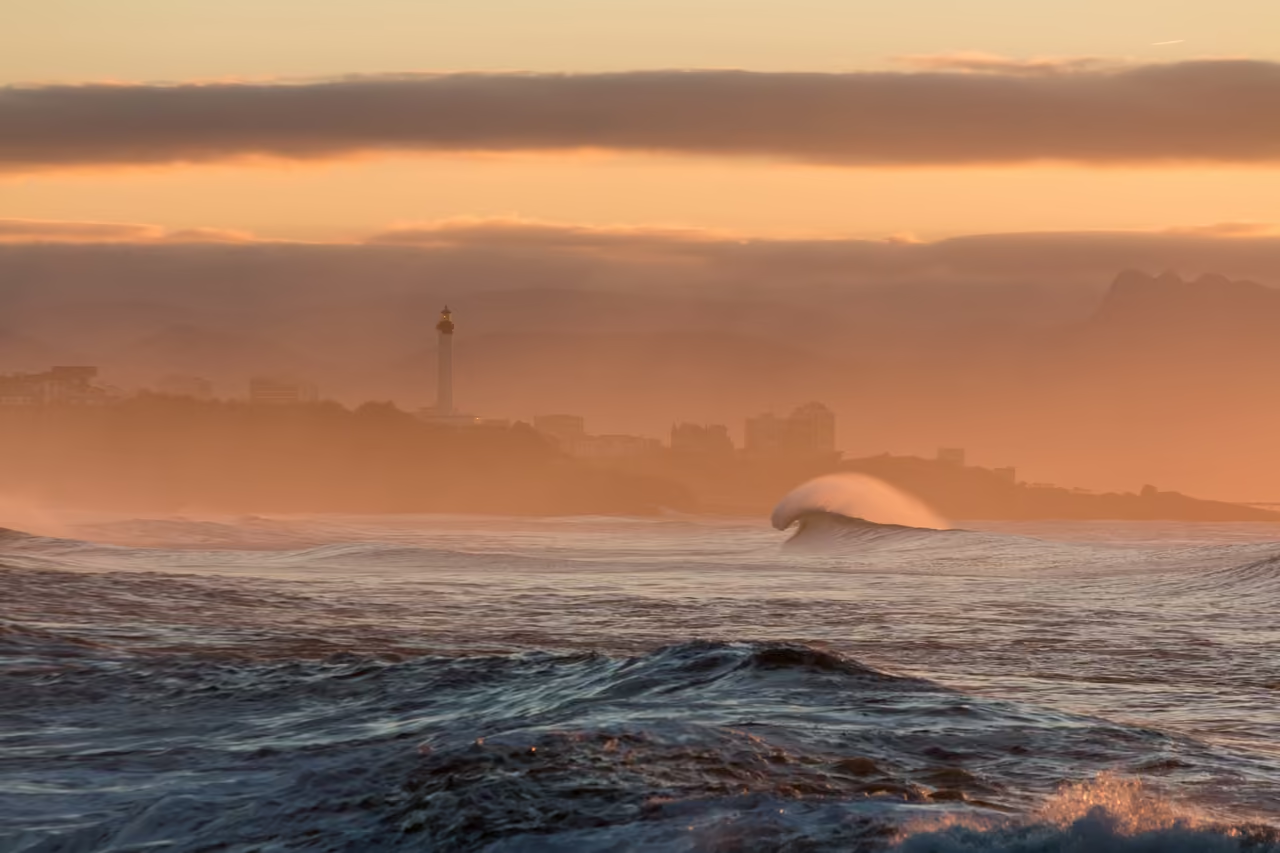
The lighthouse on Pointe Saint-Martin was designed by Nicolas Philippe Vionnois, built from Bidache and La Rhune stone between 1830 and 1832, and inaugurated on 1 February 1834. It was automated in 1980 and still has its Fresnel lens.
- 08
The salt baths of 1893 were fed by pipes carrying brine over twenty kilometres from the salt works at Briscous. Their water was more than ten times saltier than seawater, and the establishment closed in 1953 and was demolished in 1968.
- 09
Biarritz was an early testing ground for wave energy. In 1929 Paul Grasset built a hydrodynamic laboratory at the foot of the lighthouse, and its ruins are still visible.
- 10
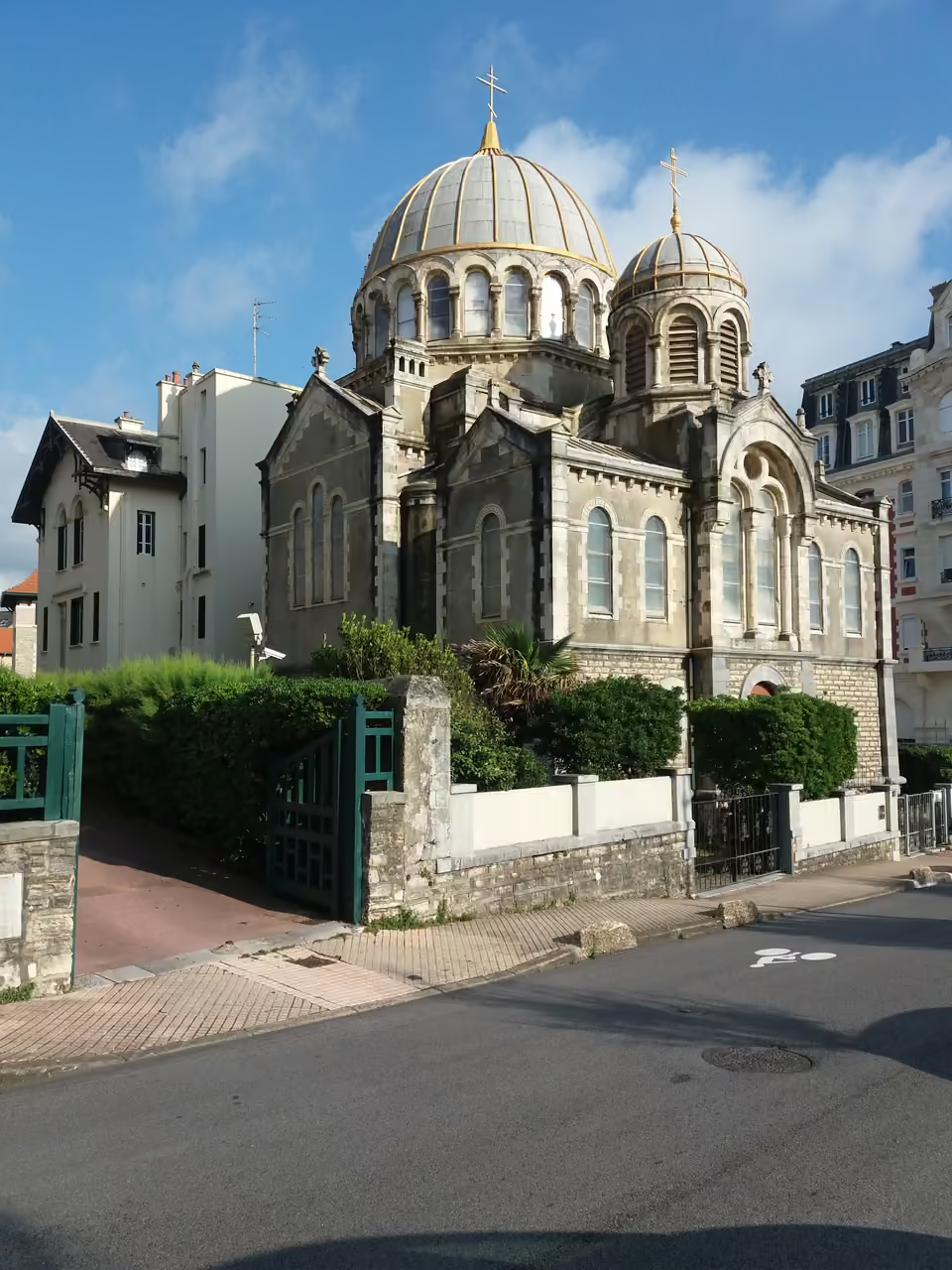
Three faiths built landmark places of worship in the Belle Époque resort: the Russian Orthodox church of 1892, the synagogue of 1904, and the Imperial Chapel, dedicated to Our Lady of Guadalupe after French campaigns in Mexico.
- 11
Lake Mouriscot is partly a Natura 2000 site, with freshwater making up about half the protected area, plus deciduous woodland, marsh and heath. The Roche Ronde and Le Boucalot rocks form another Natura 2000 site, designated on 6 April 2006.
- 12
Basque and Gascon are both native languages here. Biarritz lies at the far south-western tip of Gascon territory and served as the westernmost survey point of the Gascon area in the Linguistic Atlas of France of 1897.
- 13
The climate is mild and wet: roughly 1,470 millimetres of rain and 1,920 hours of sunshine a year in the 1991 to 2020 data, with an average of about 14.5 °C. The all-time record high is 42.9 °C, set on 18 June 2022.
- 14
Biarritz Olympique, founded in 1913, has won five French rugby championships (1935, 1939, 2002, 2005 and 2006), reached two European Cup finals and won the European Challenge Cup in 2012.
- 15
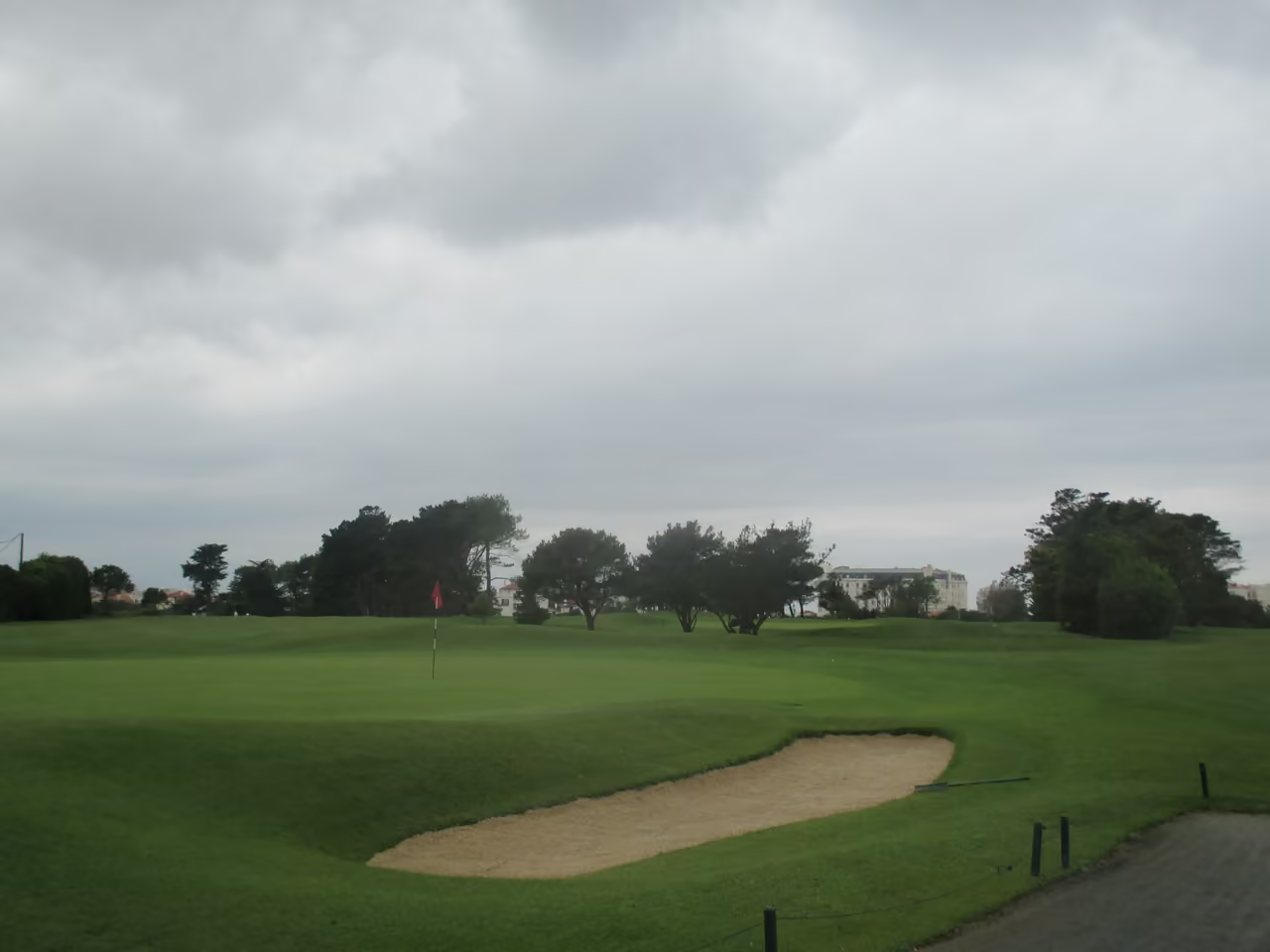
The Golf du Phare, opened in 1888, is the oldest of the eleven golf courses on the Basque coast. It is a par 69 of more than 5,400 metres, backed by a par 32 practice course at Ilbarritz.
- 16
Malandain Ballet Biarritz has been a national choreographic centre since 1998. Its permanent company of 22 dancers is based in the former Gare du Midi, and it has a partnership with San Sebastián.
- 17
The population of Biarritz more than tripled between 1891 and 1999, rising from 9,177 to 30,055 inhabitants. It has since settled at around 26,000, with a high proportion of residents over sixty-five.
RESOURCES
Official WebsiteVideos of Biarritz
Seasons
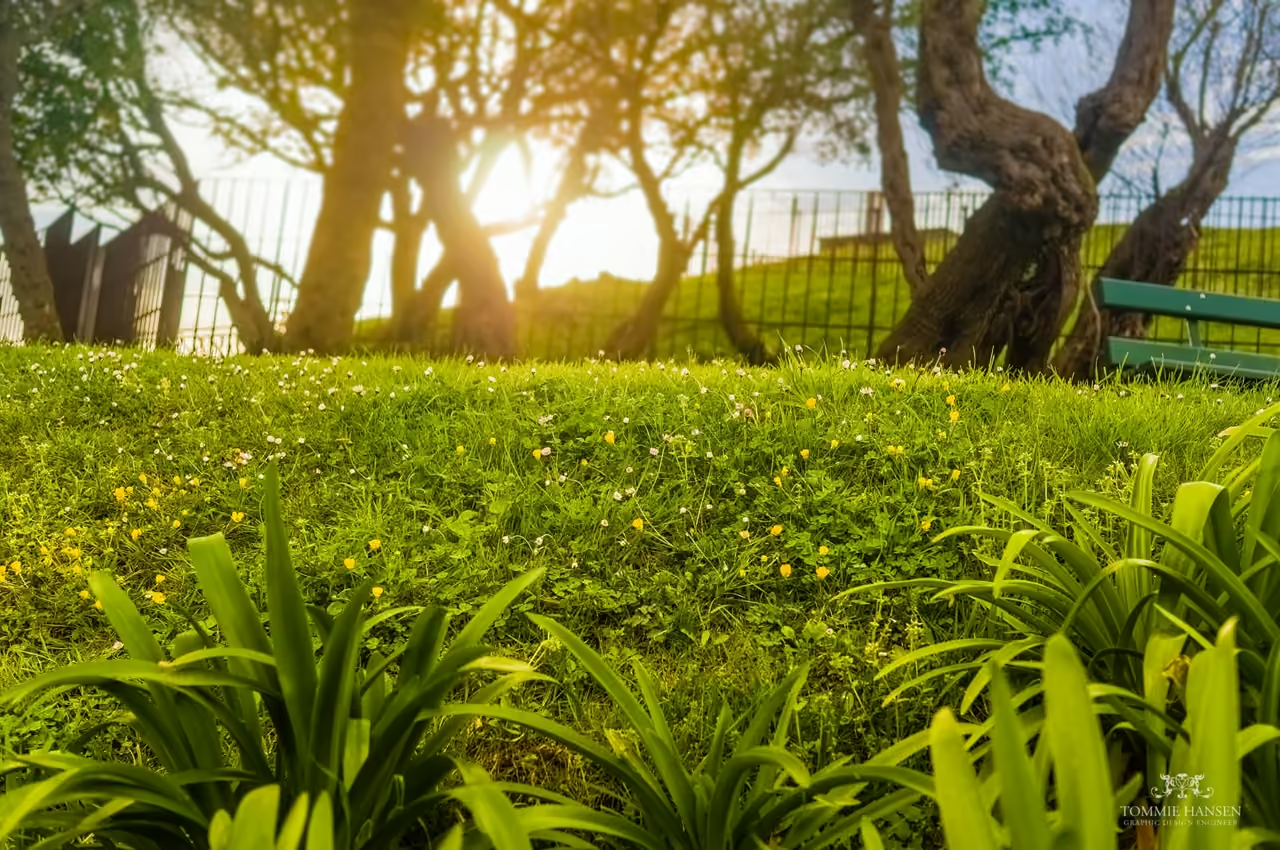
Spring
From March to May the average temperature climbs from about 11°C to nearly 16°C, and sunshine builds to almost 200 hours in May...
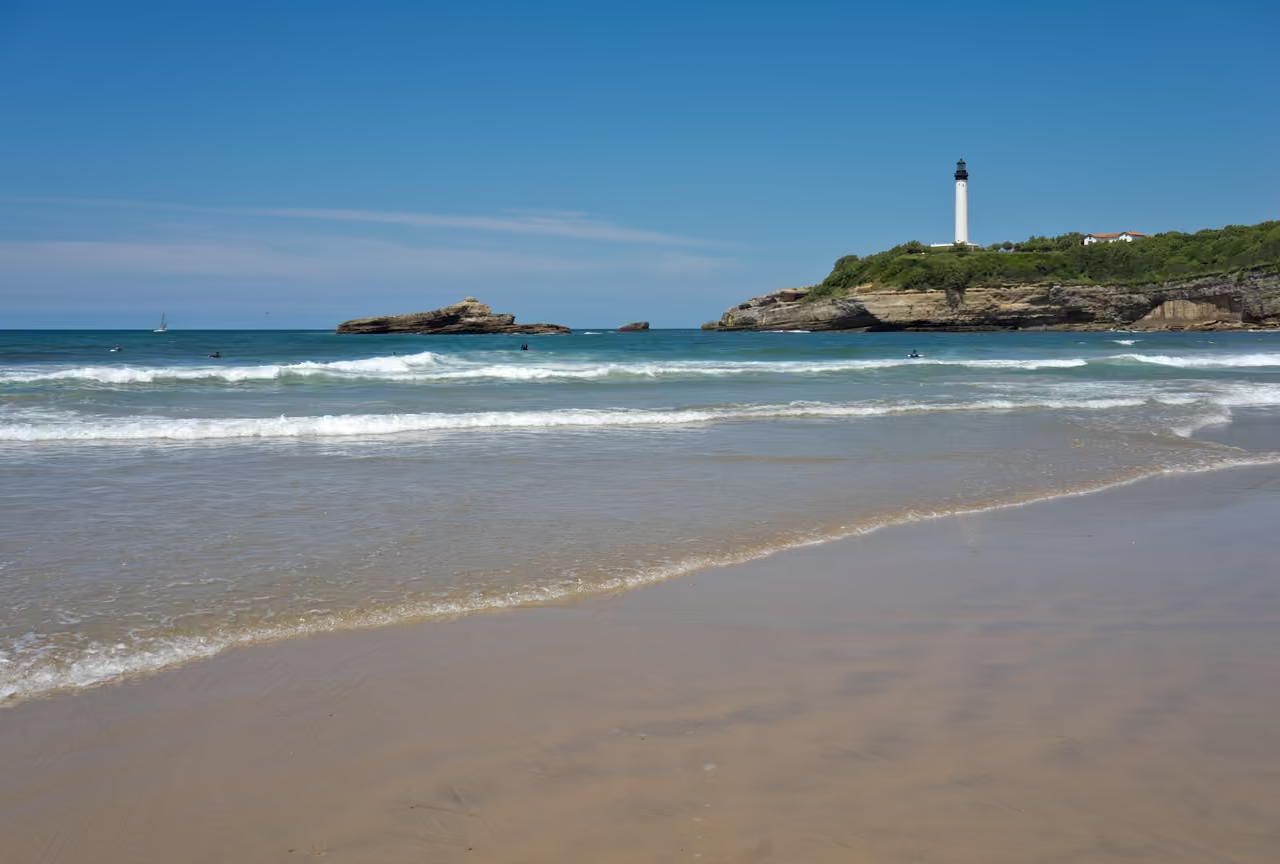
Summer
June to August is warm rather than scorching, with July and August averaging about 21°C, highs near 24 to 25°C and over 200...
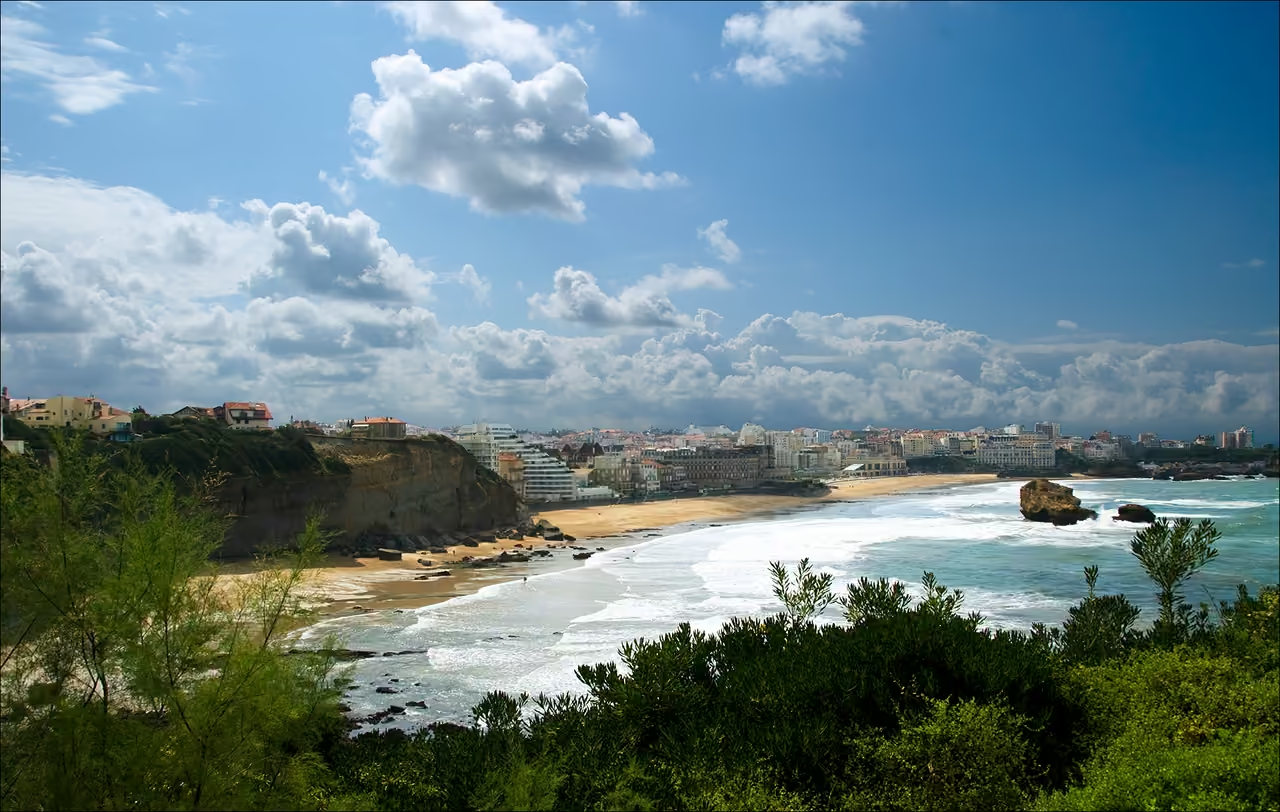
Autumn
September is the sweet spot, still averaging nearly 19°C, with swells building and crowds thinning. By November rain peaks at...
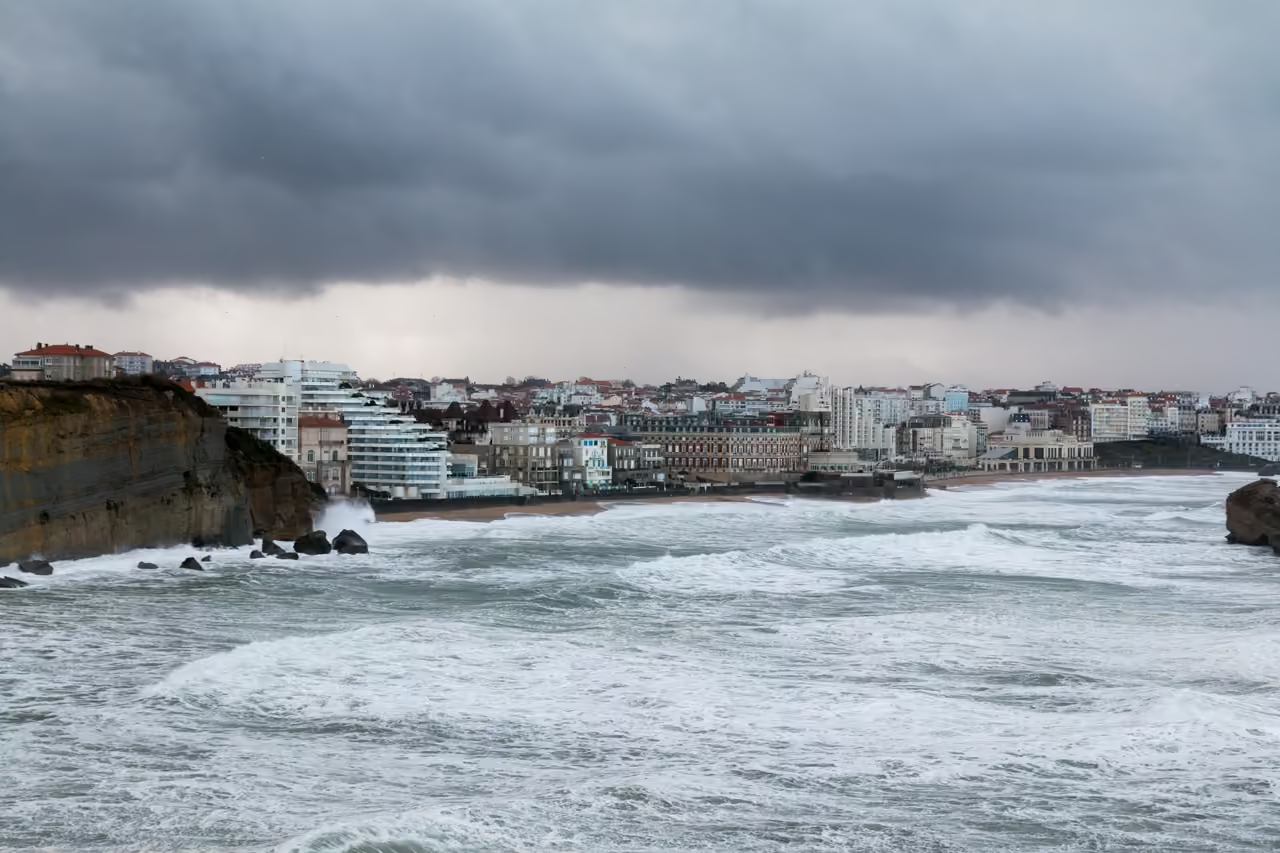
Winter
December to February averages about 9°C, which is mild for France, with roughly 92 to 115 hours of sunshine a month. Storms...
Top Attractions in Biarritz
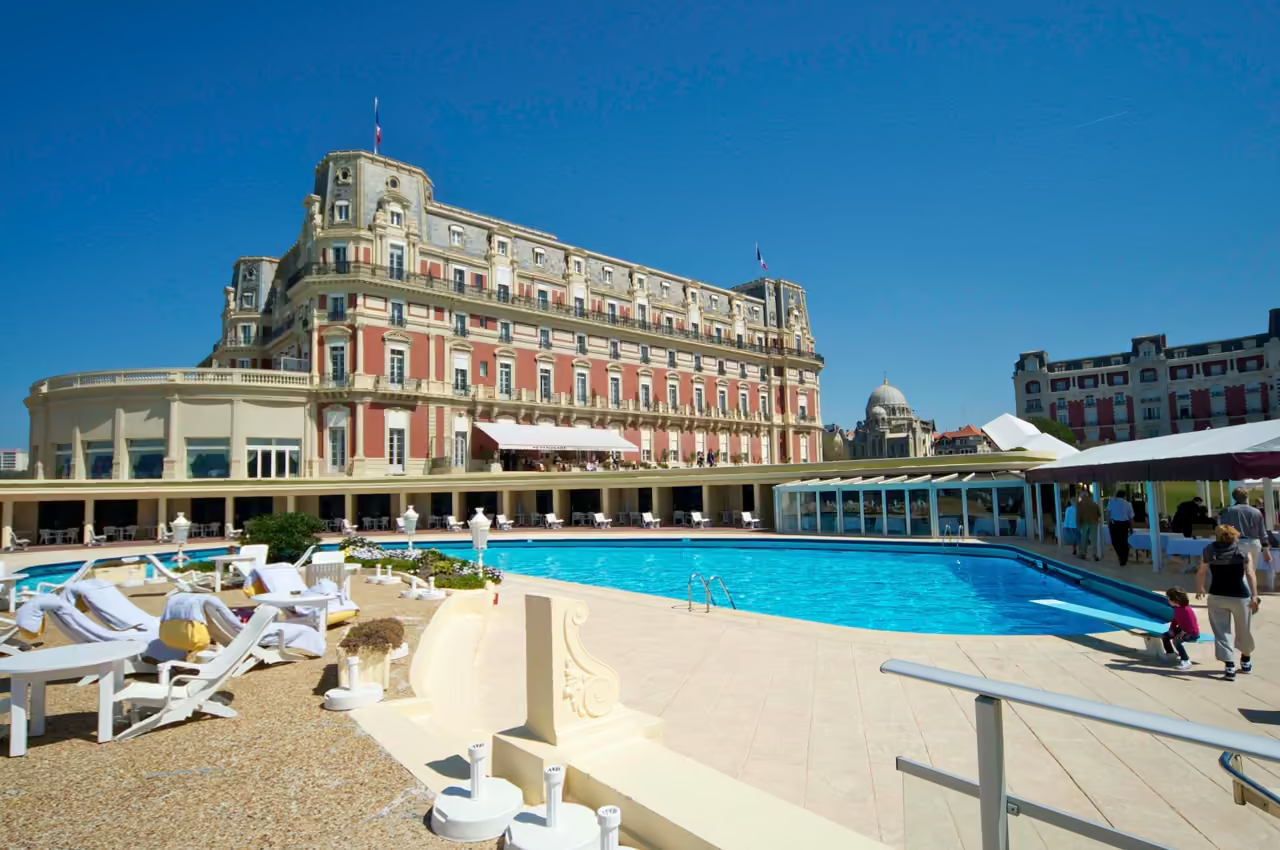
Hôtel du Palais
Built in the shape of the letter E as a grand romantic gesture for Empress Eugénie, this striking seaside estate dominates the...
view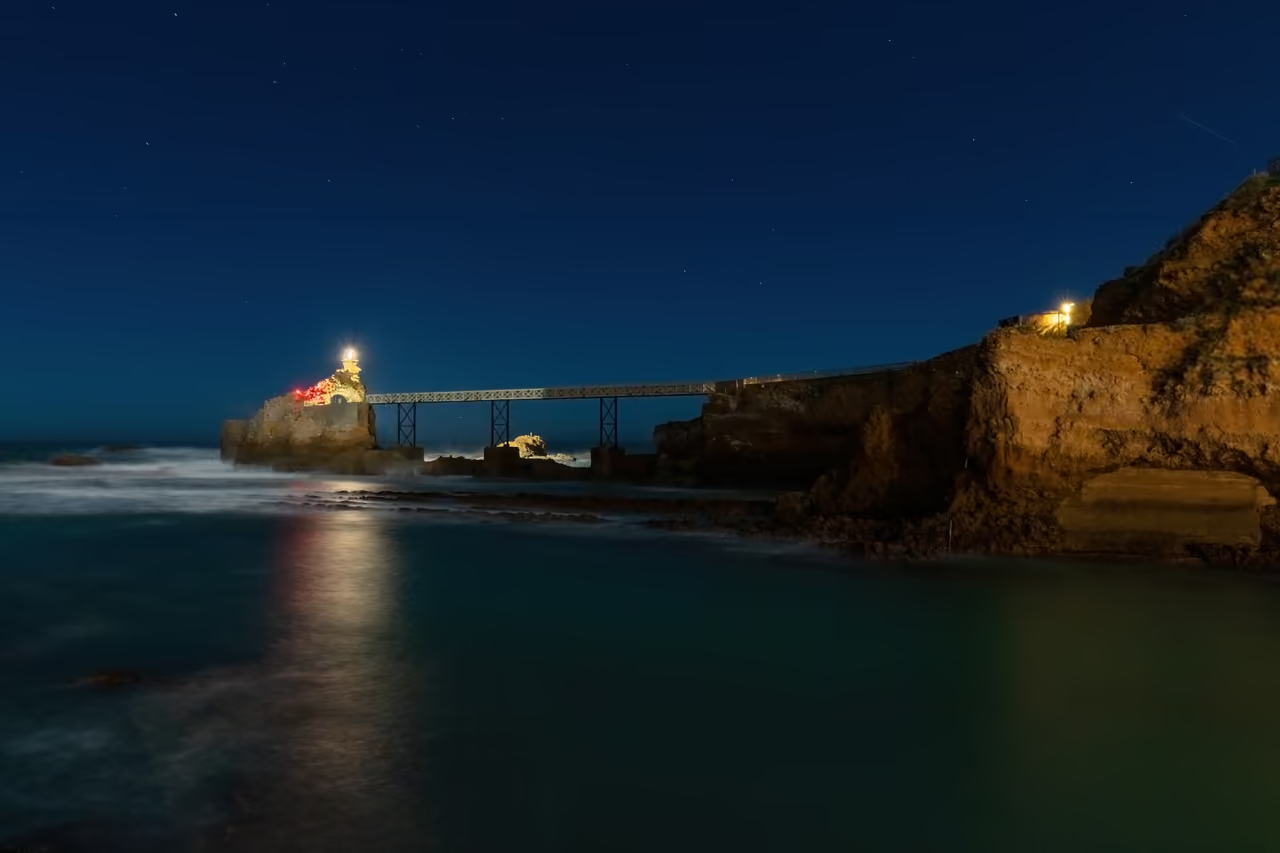
Rock of the Virgin
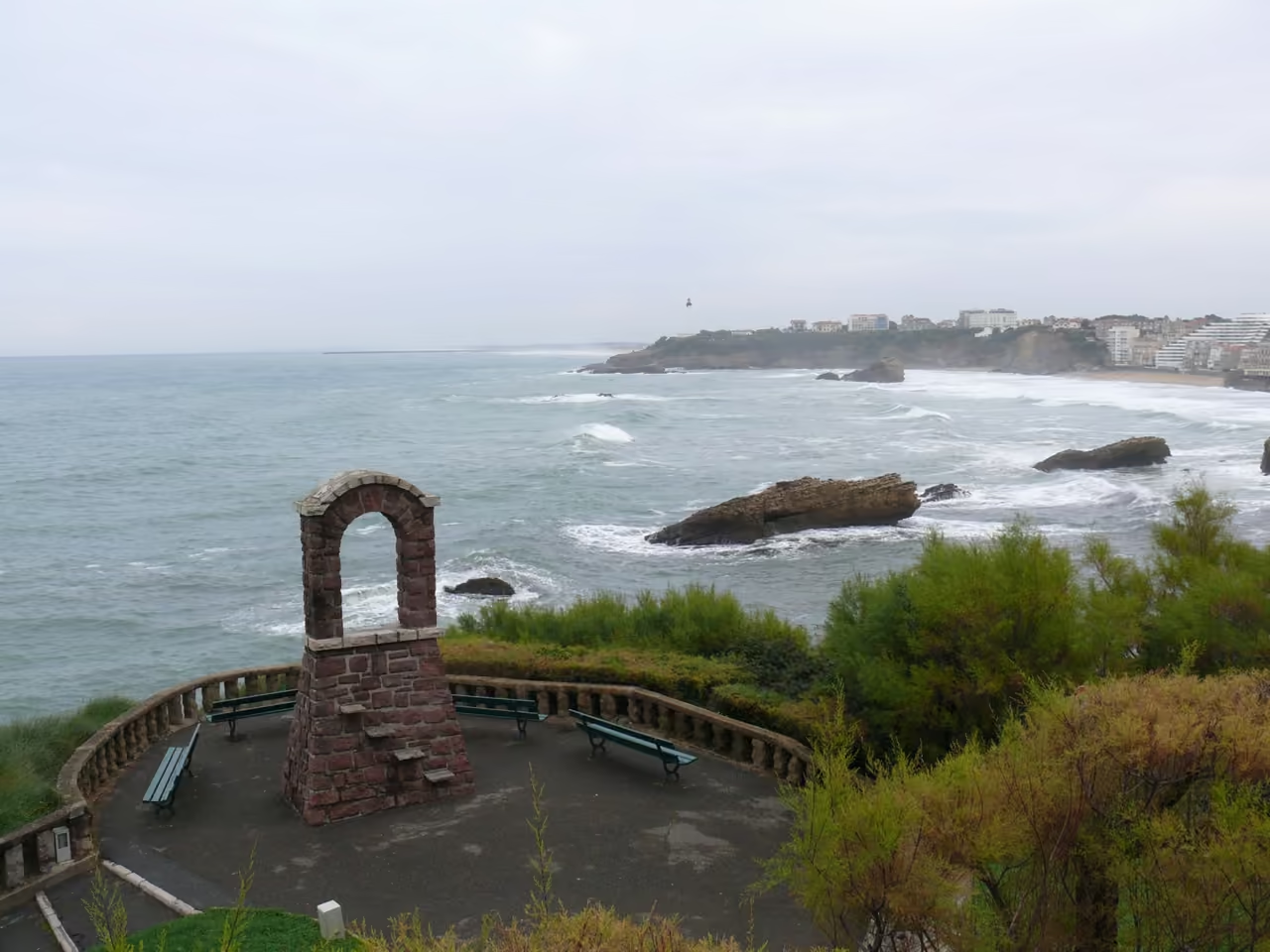
Salt spray frequently catches the wind here, dampening the iron rails of the approach. Reaching out into the Bay of Biarritz...
view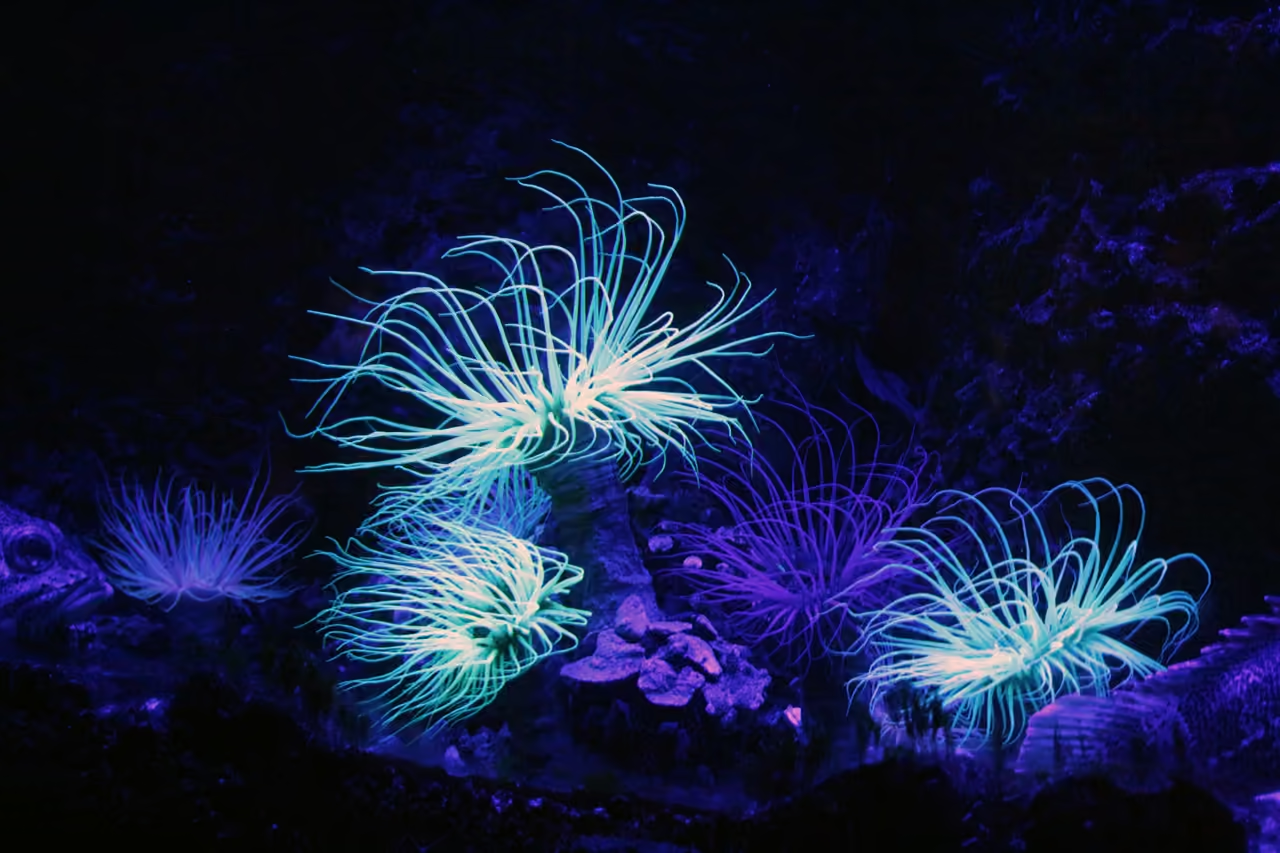
Biarritz Aquarium
Standing bold against the cliff face of the Atalaye plateau, the Biarritz Aquarium wraps marine biology in striking 1930s Art...
view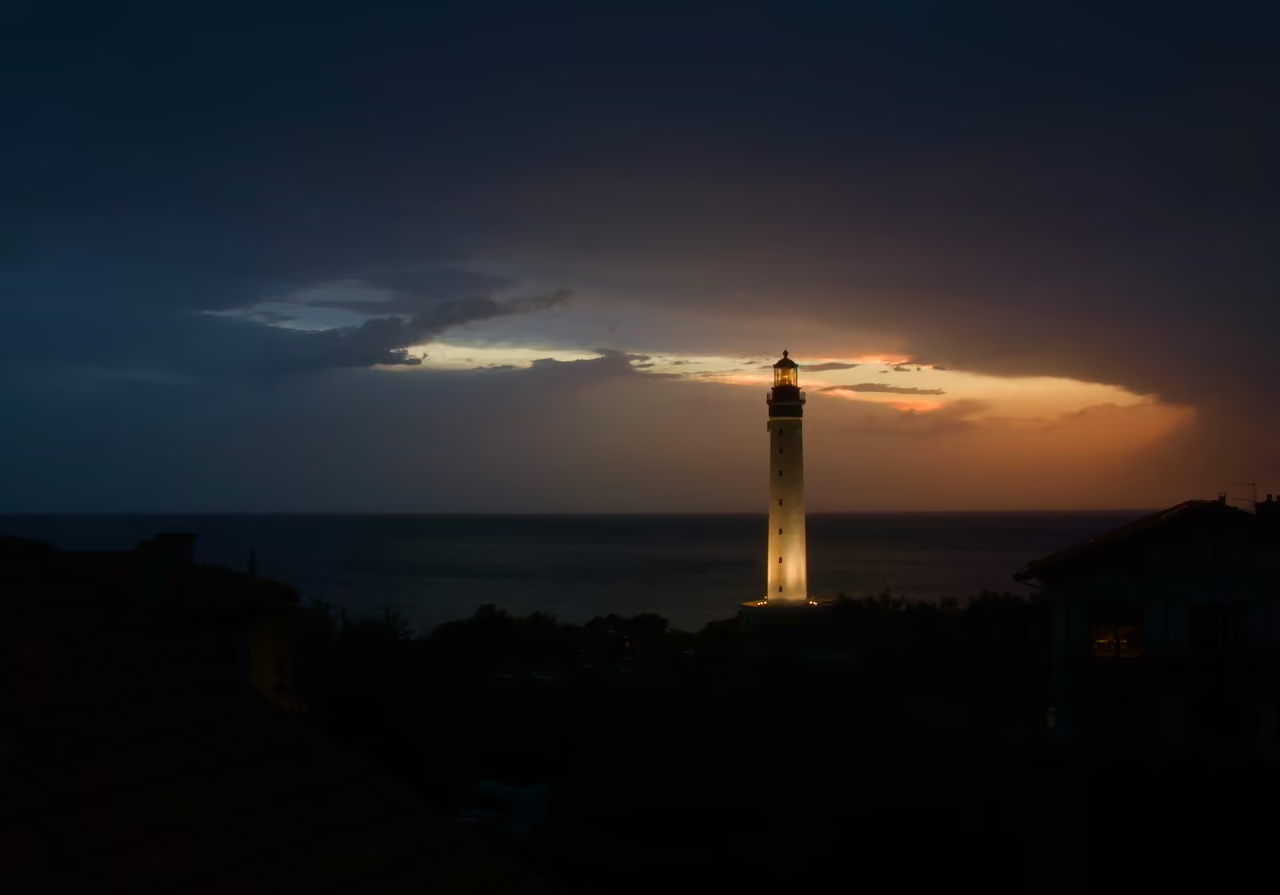
Biarritz Lighthouse
Let your thighs burn just a little on the 248 steps spiralling up inside this cylindrical white tower. Standing 75 metres above...
view
Best Views
Biarritz Itineraries
TRIP PLANNER
3 Days Recommended
Three days is enough to walk the seafront landmarks, fit in a surf lesson or spa session, and spend a slow morning around the lakes. The main sights cluster within a couple of kilometres, and the hills and sea air make a gentle pace sensible. A fourth day opens up Bayonne, Saint-Jean-de-Luz or San Sebastián.
1 Day in Biarritz: Palaces, Rocks and Sunset
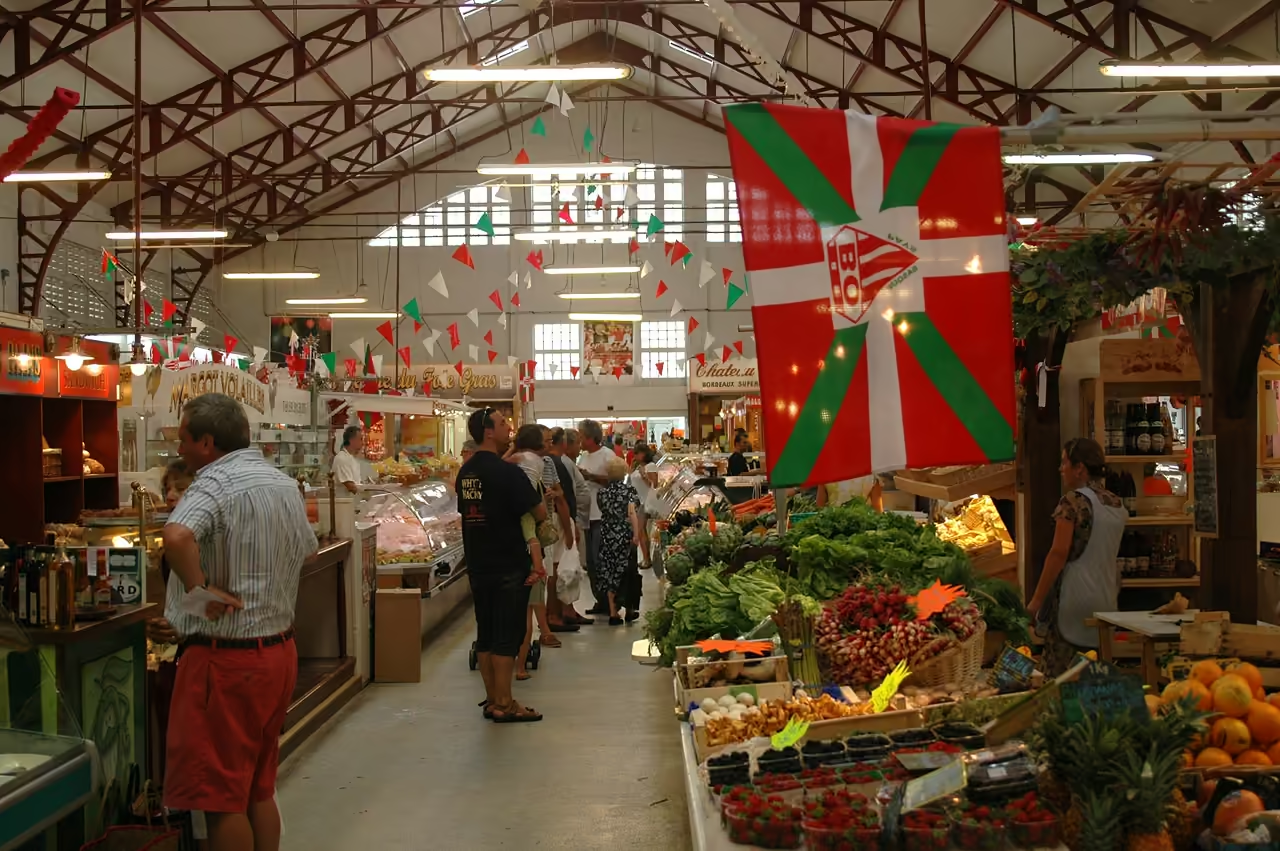
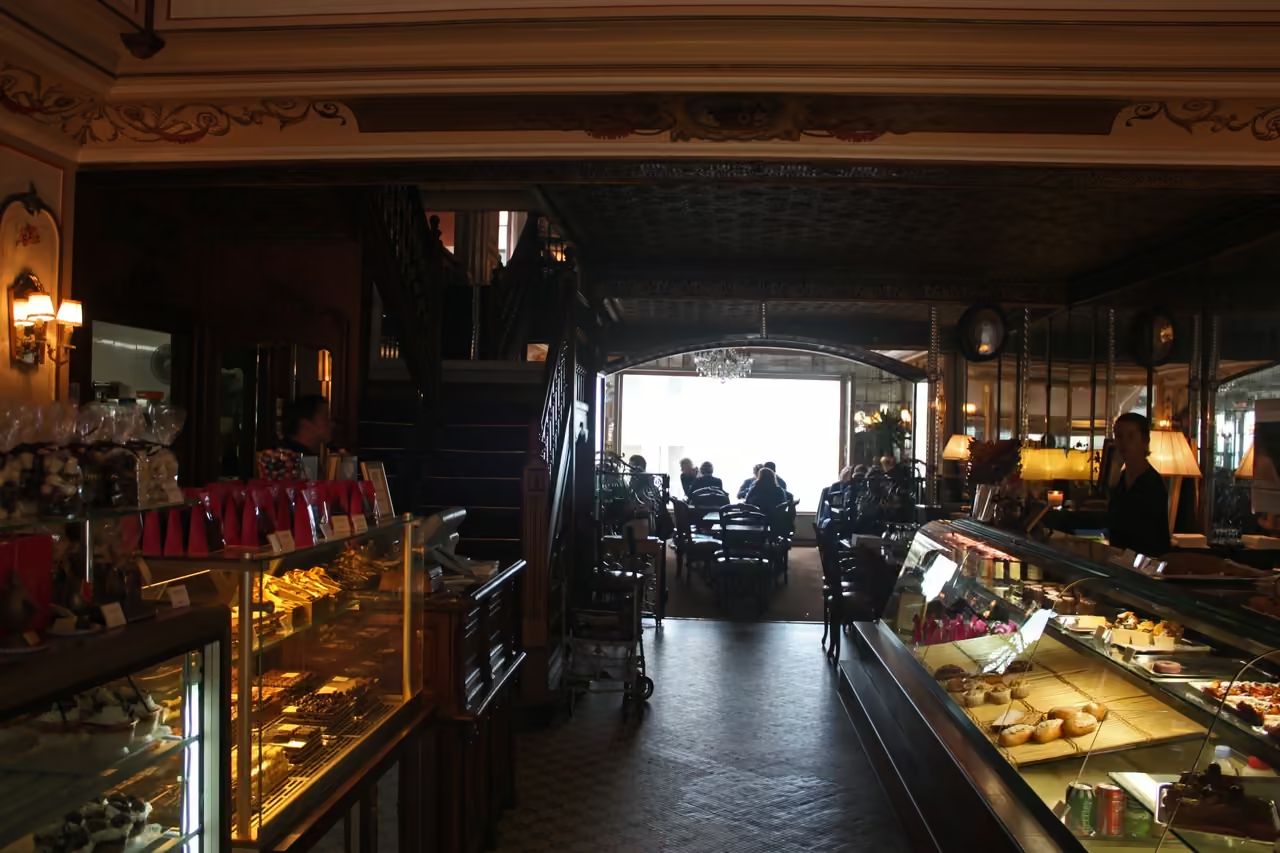
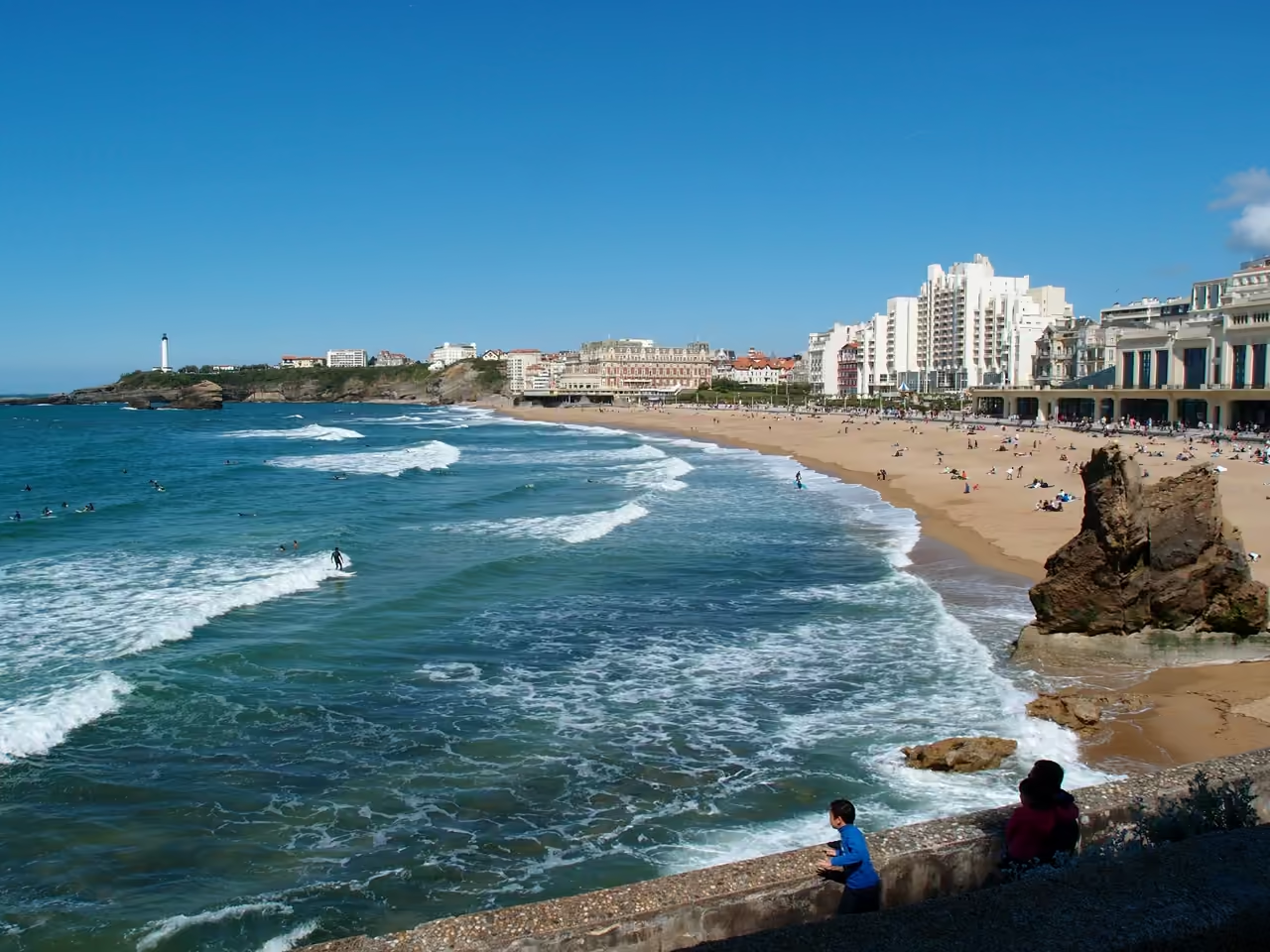
A single day is enough for the essentials: market stalls, a pastry stop, the palace hotel, the main beach, the rock of the Virgin, the fishermen's port and a sunset on the surf beach. The route stays within a couple of kilometres and ends with the floodlit coast.
view itinerary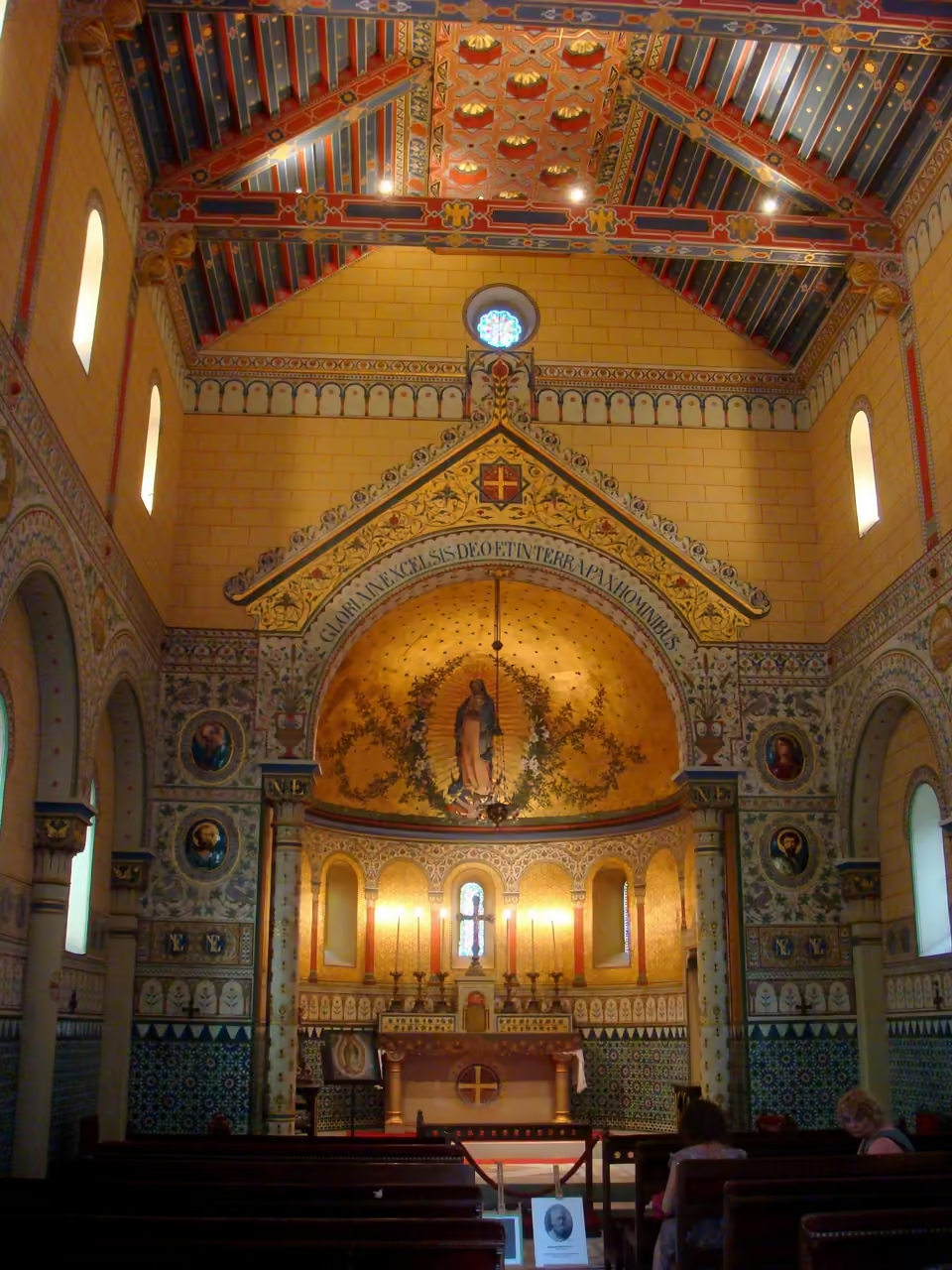
3 Days in Biarritz: Empire, Surf and Lakes
Three days give time for the imperial landmarks, a surf and swim day, and a slower day among the lakes and old village. The pace is relaxed, with room for long lunches and a spa session.
view itinerary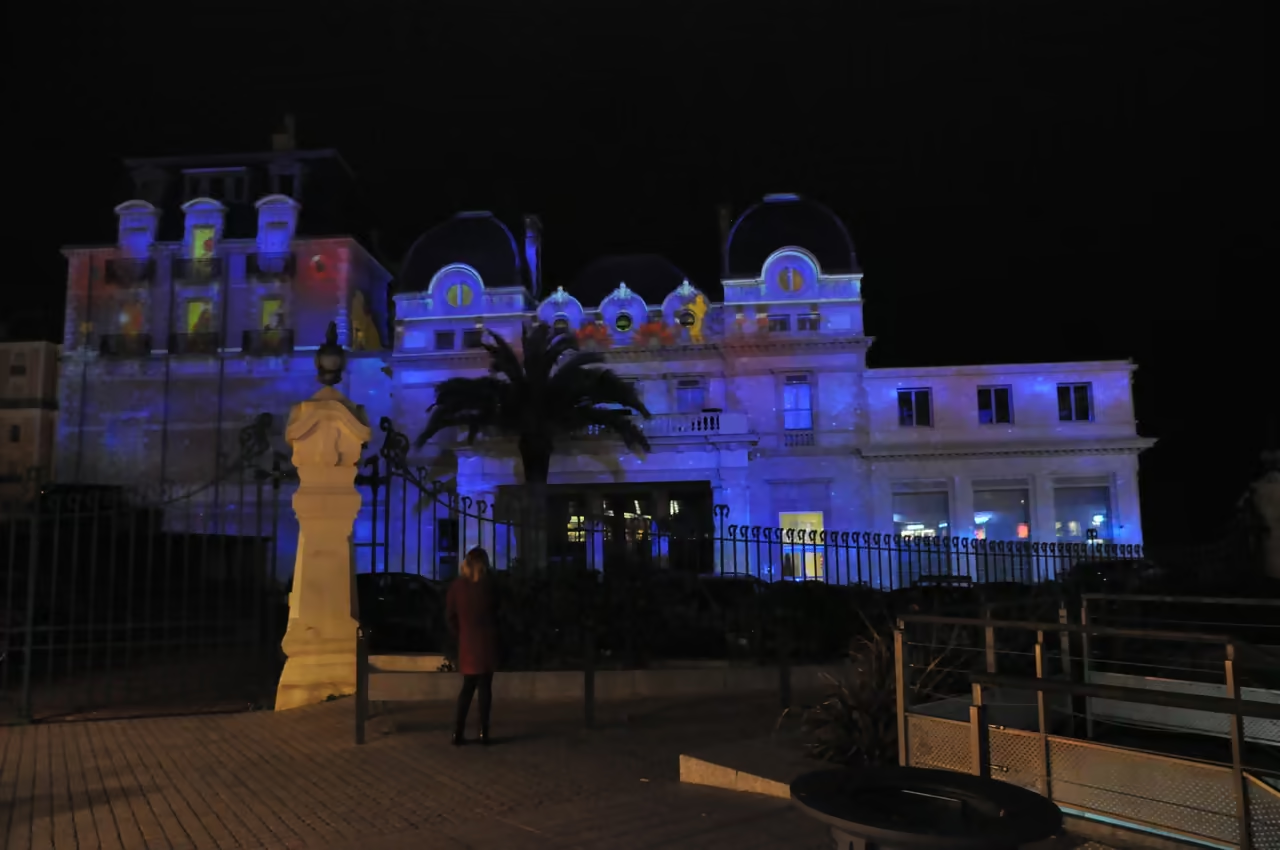
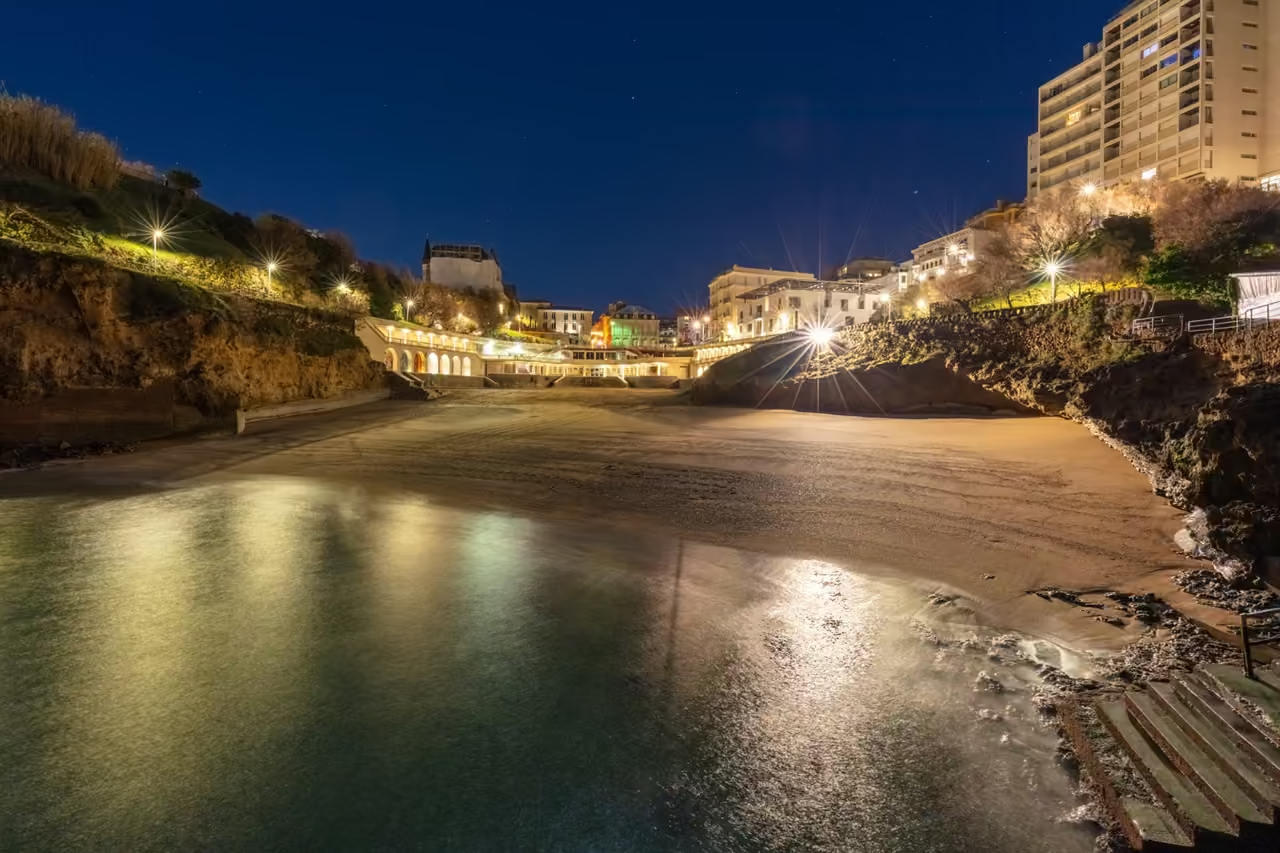
5 Days in Biarritz: The Full Basque Coast Experience
Five days allow the palace and promenade, a full surf day, a day of faiths and facades, a day of lakes, sport and music, and a final day among the headland's hidden corners. It is a leisurely plan that leaves space for the sea.
view itinerary
Food in Biarritz
Free Things to do in Biarritz
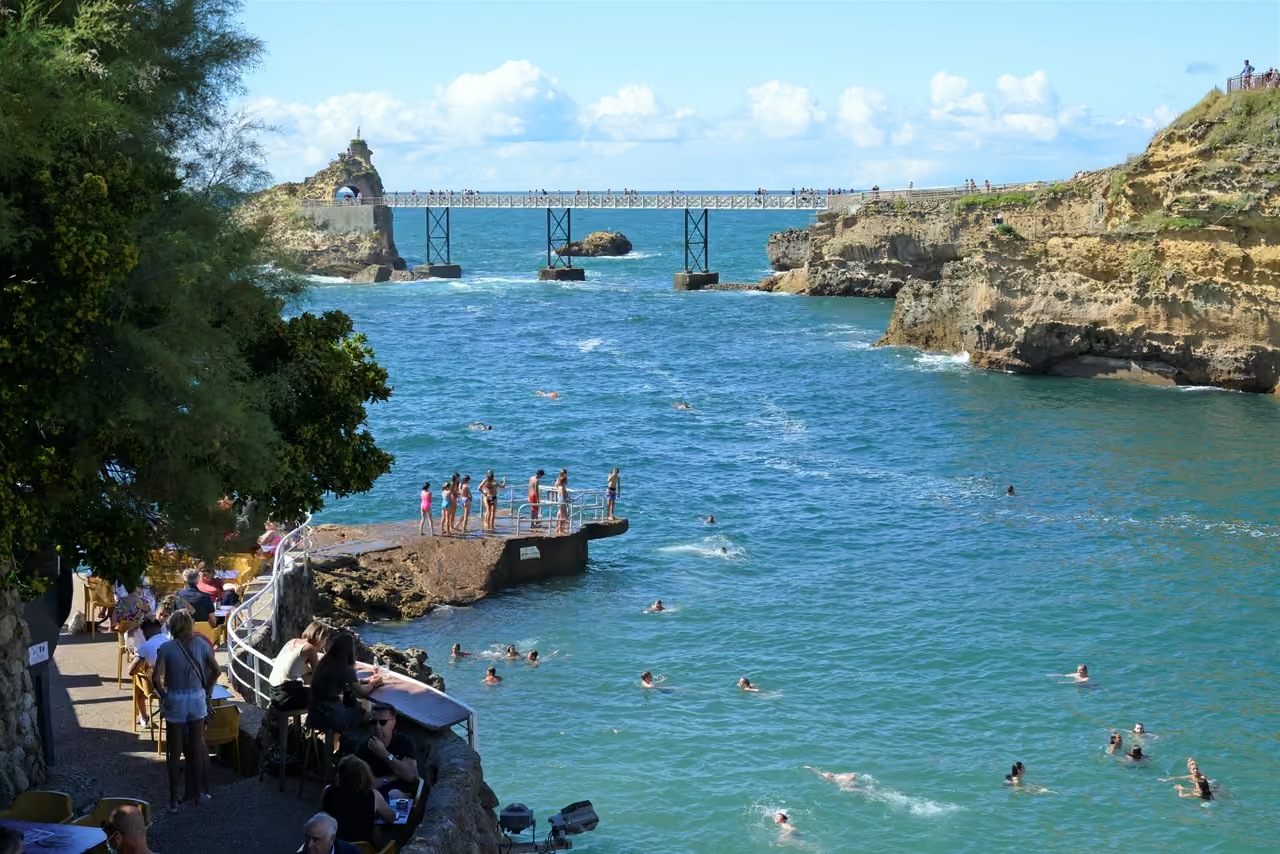
Cross the Iron Footbridge to the Virgin Rock
Traverser la passerelle du Rocher de la ViergeWalk the Coastal Path
Le Sentier du Littoral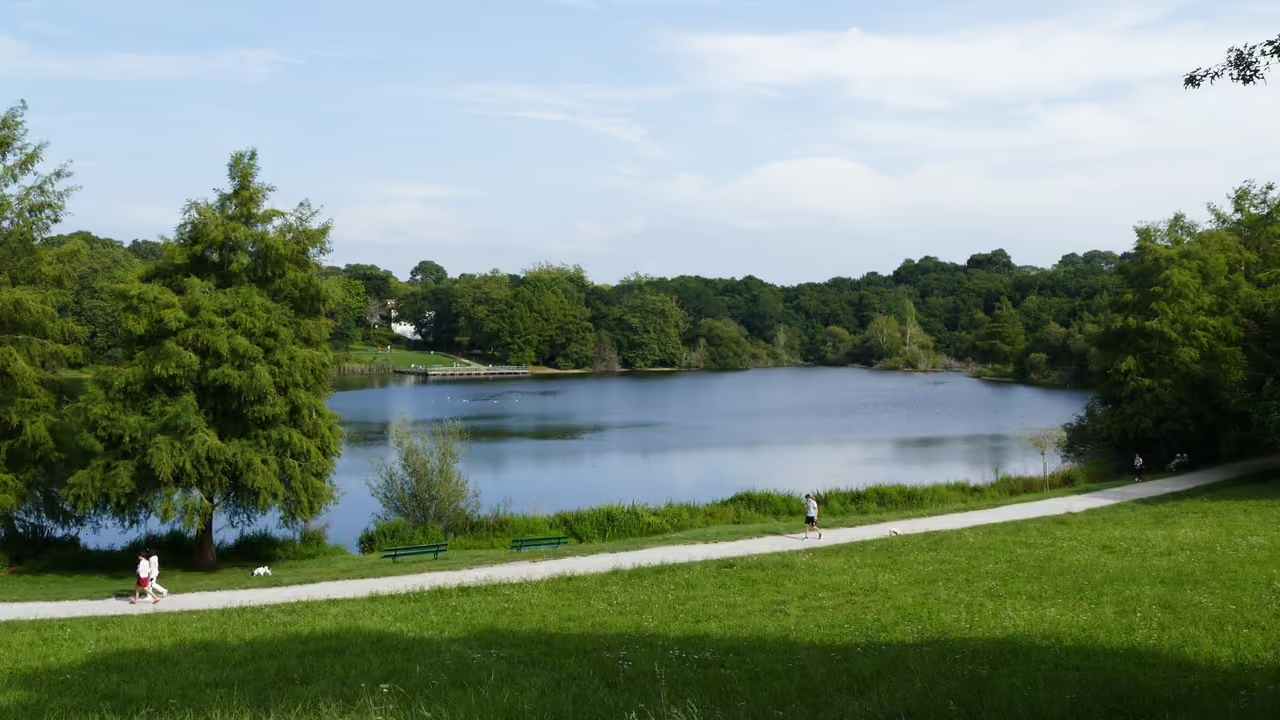
Picnic on the Lake Marion Lawns
Pique-niquer au bord du lac Marion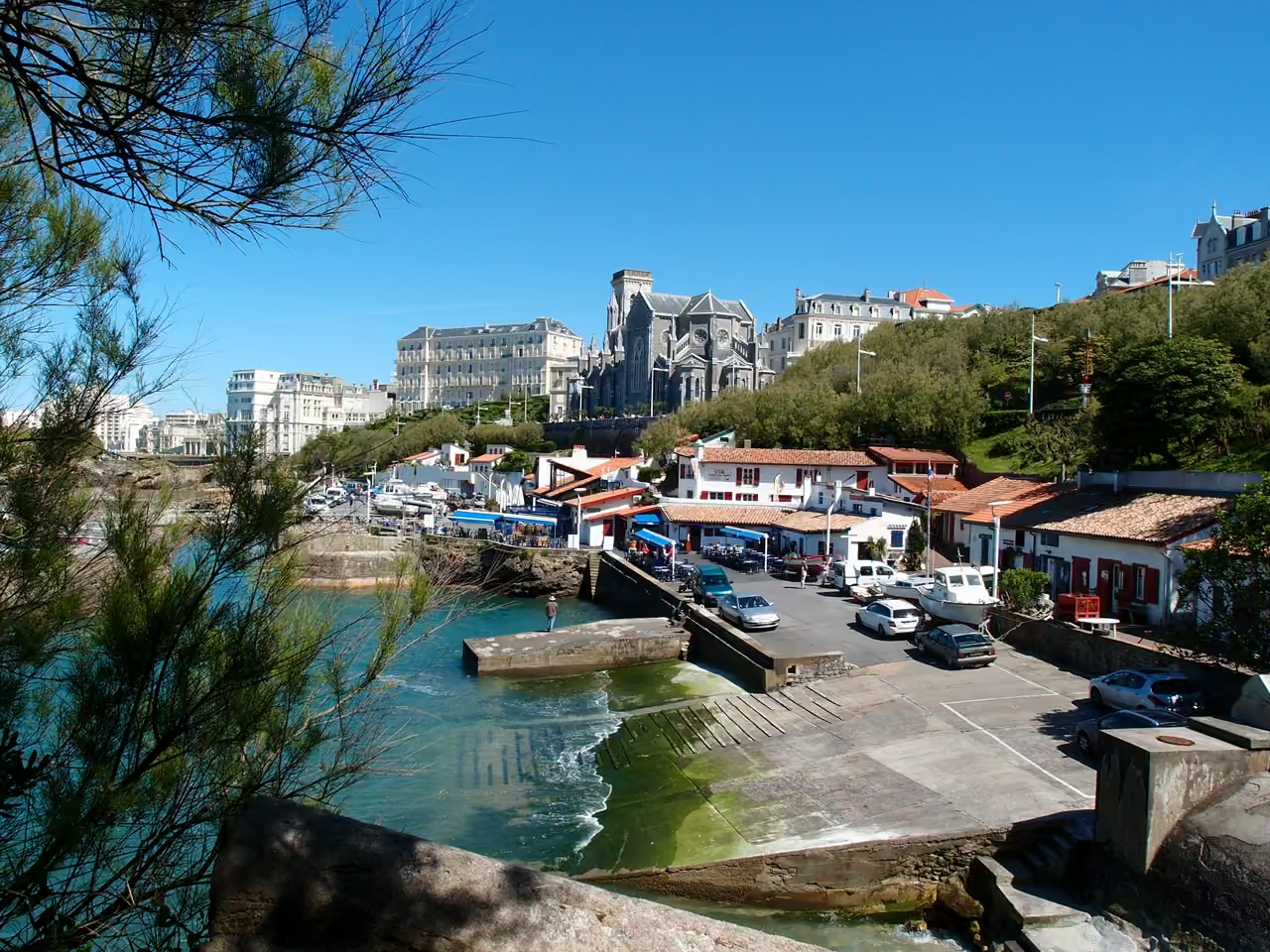
Wander the Fishermen's Port
Flâner au Port des PêcheursWander the Les Halles Stalls
Flâner parmi les étals des Halles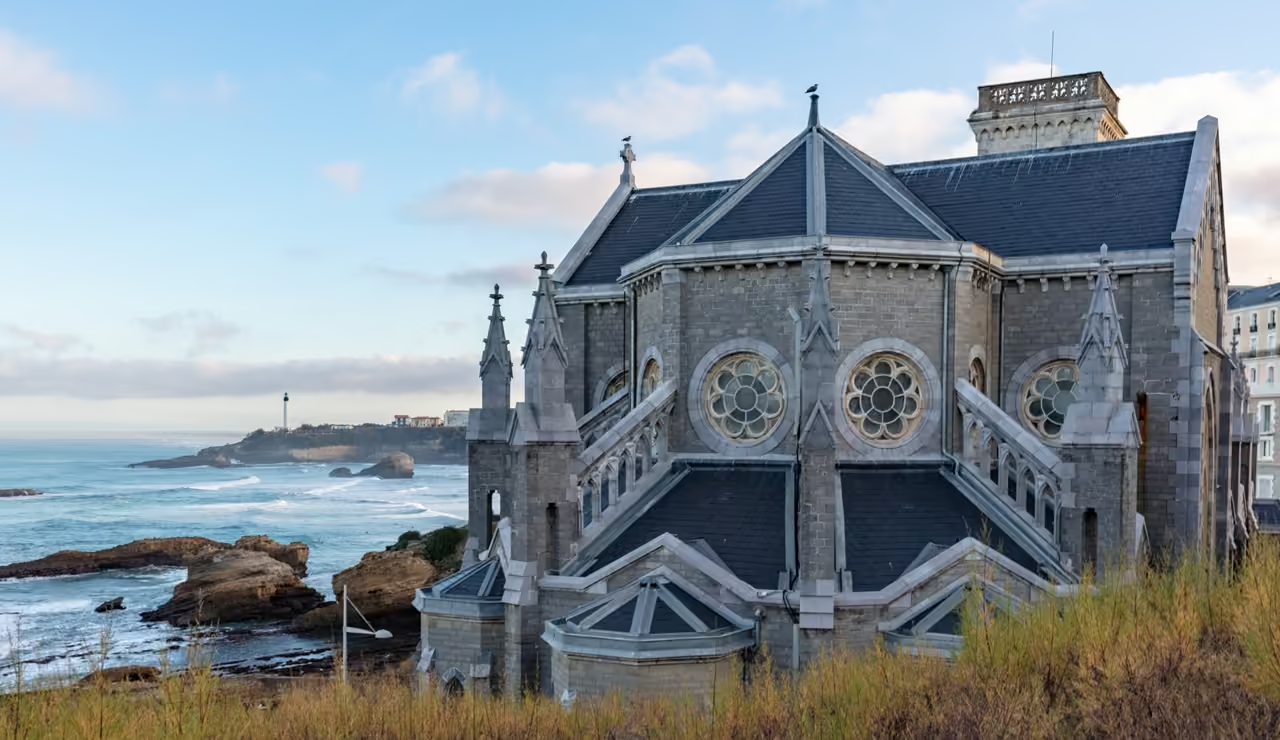
Explore Saint Eugenie Church
Visiter l'Église Sainte-Eugénie
Parks & Nature
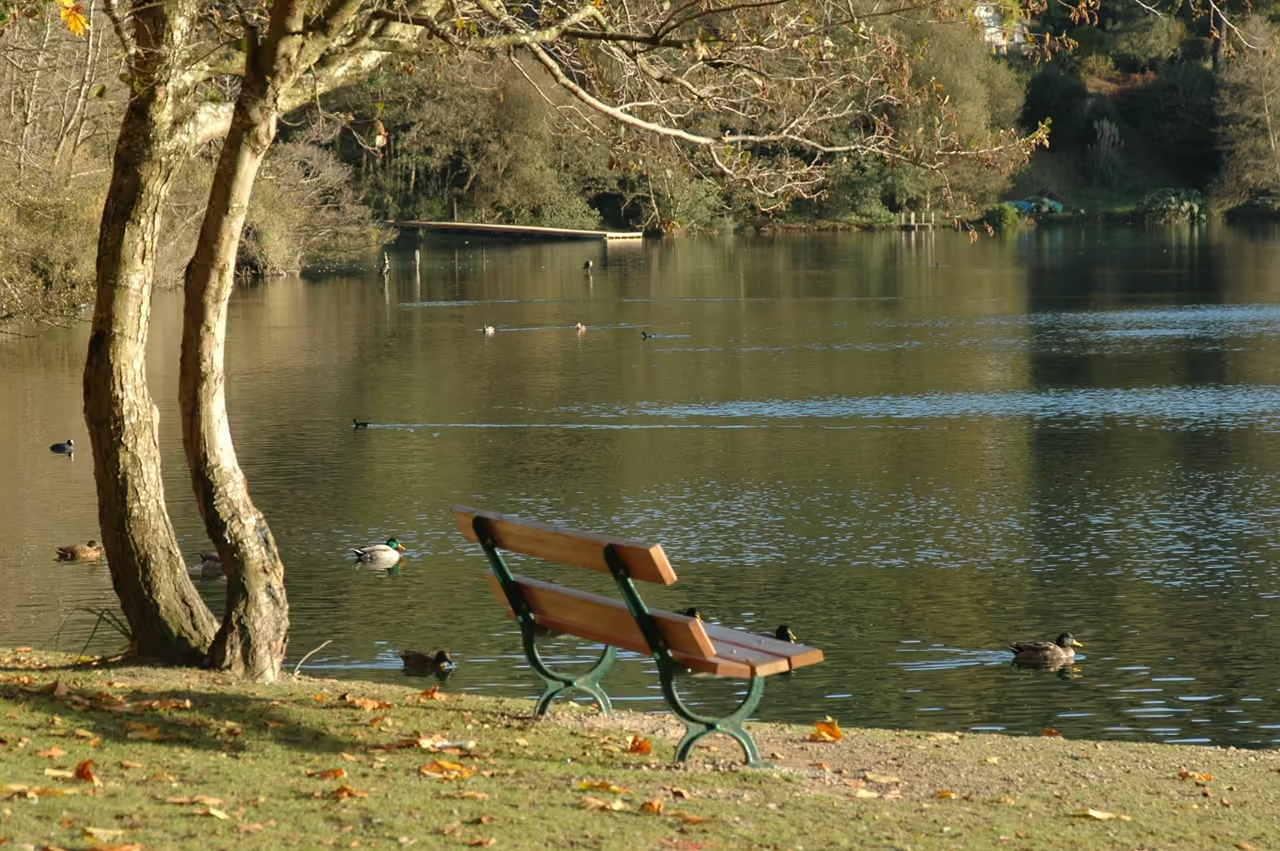
Lake Mouriscot
Oak, beech and pine crowd down steep slopes to a lake the colour of bottle glass, and for long stretches of the loop path the...
view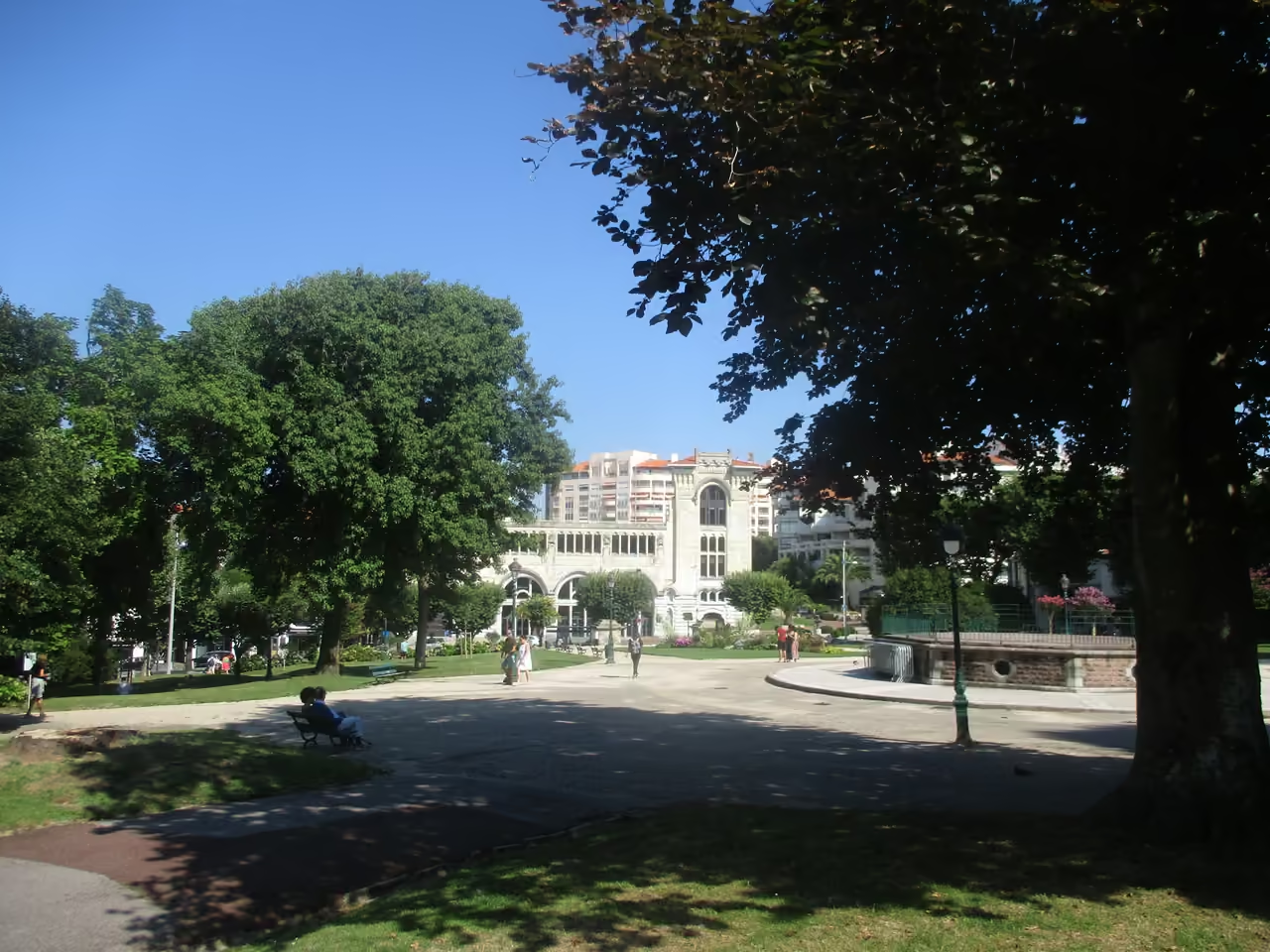
Public Garden
At midday during the Temps d'Aimer festival the heart of the Jardin Public becomes a dance stage, with the Art Nouveau Gare du...
viewLake Marion
Lake Marion is the tidy and civilised lake of Biarritz: a fenced garden of about 17 hectares with five hectares of water in the...
view
Highlights & Must-Sees
Fishermen's Port
A tiny, isolated village exists at the bottom of the cliffs, entirely disconnected from the manicured luxury of the streets...
viewGreat Beach
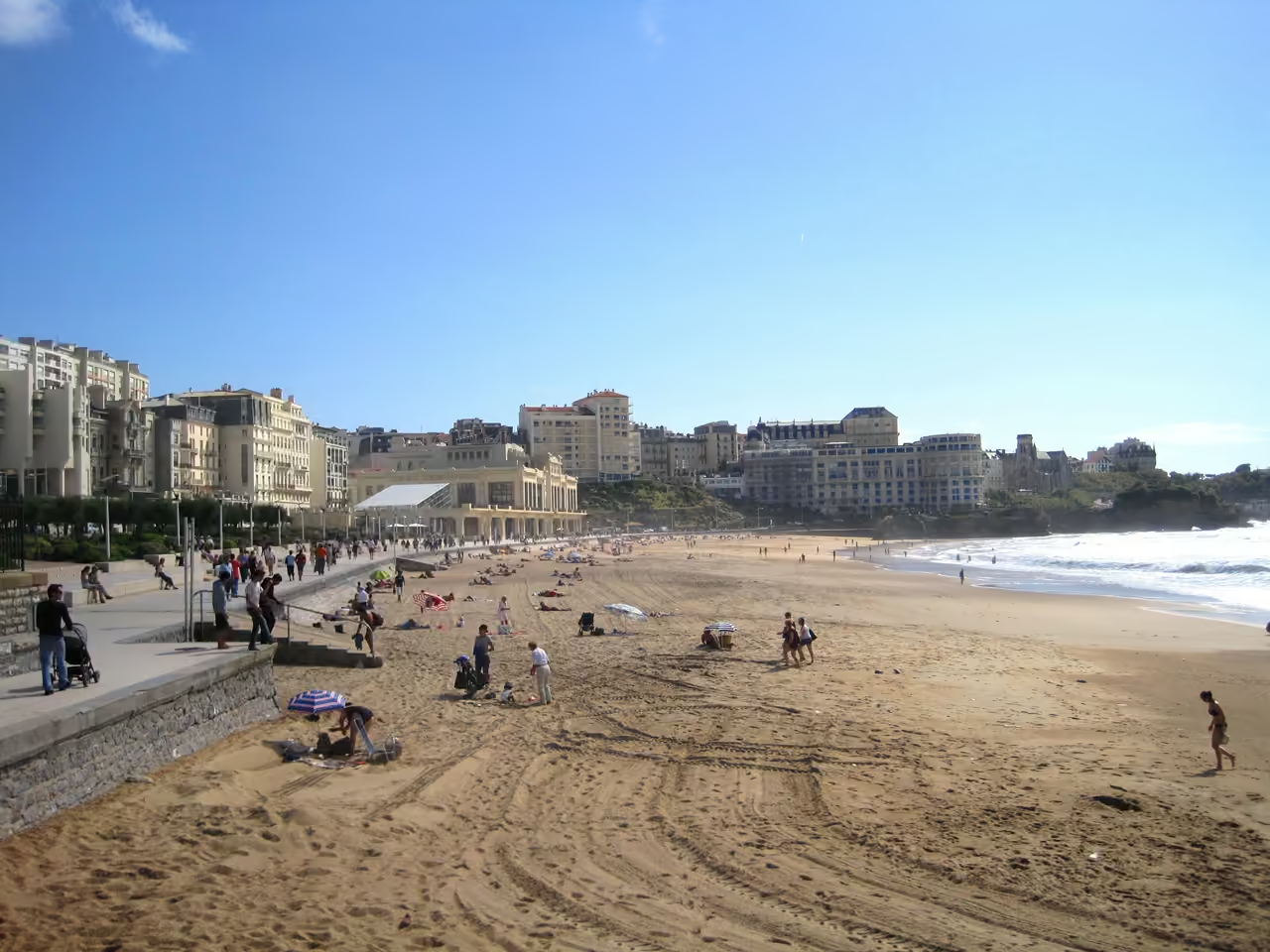
This massive strip of pale sand forms the visual and social focal point of the entire town. Hemmed in by the Casino Municipal on...
view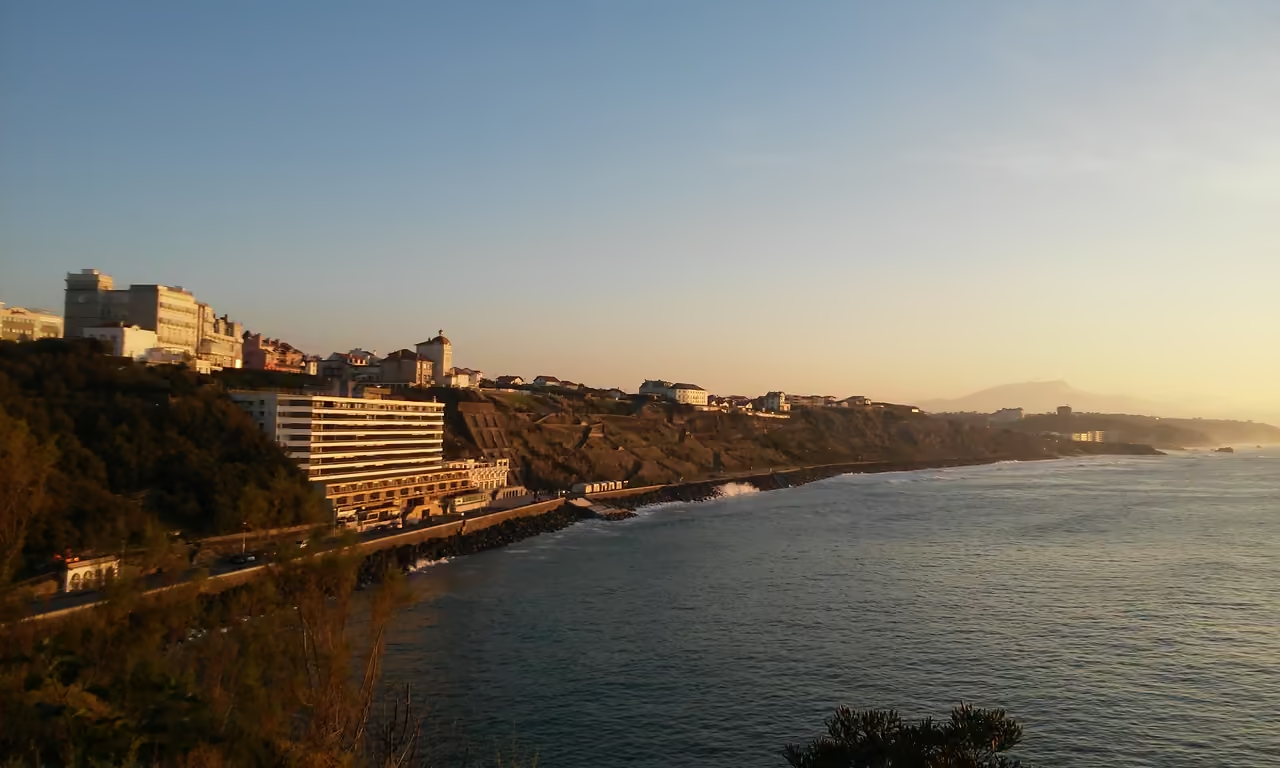
Surf, Stroll and Watch the Sunset on the Côte des Basques
Until the mid nineteenth century this long beach was known as the Côte de Pernauton, after a farm that stood nearby. It is the...
viewMiremont Pastry Shop
An exercise in 19th-century indulgence, this historic tea room has served complex pastries to European royalty since 1872. The...
view
Best Walks in Biarritz
- HIGHLY RECOMMENDED
Clifftop Promenade Stroll from the Hôtel du Palais to the Côte des Basques
This is the classic Biarritz walk, tracing the seafront from the grand hotel past the main beach, the rock of the Virgin and the old port to the long surf beach. It can be done in a leisurely hour or stretched into an afternoon with swimming stops. The sea is on the right the whole way.
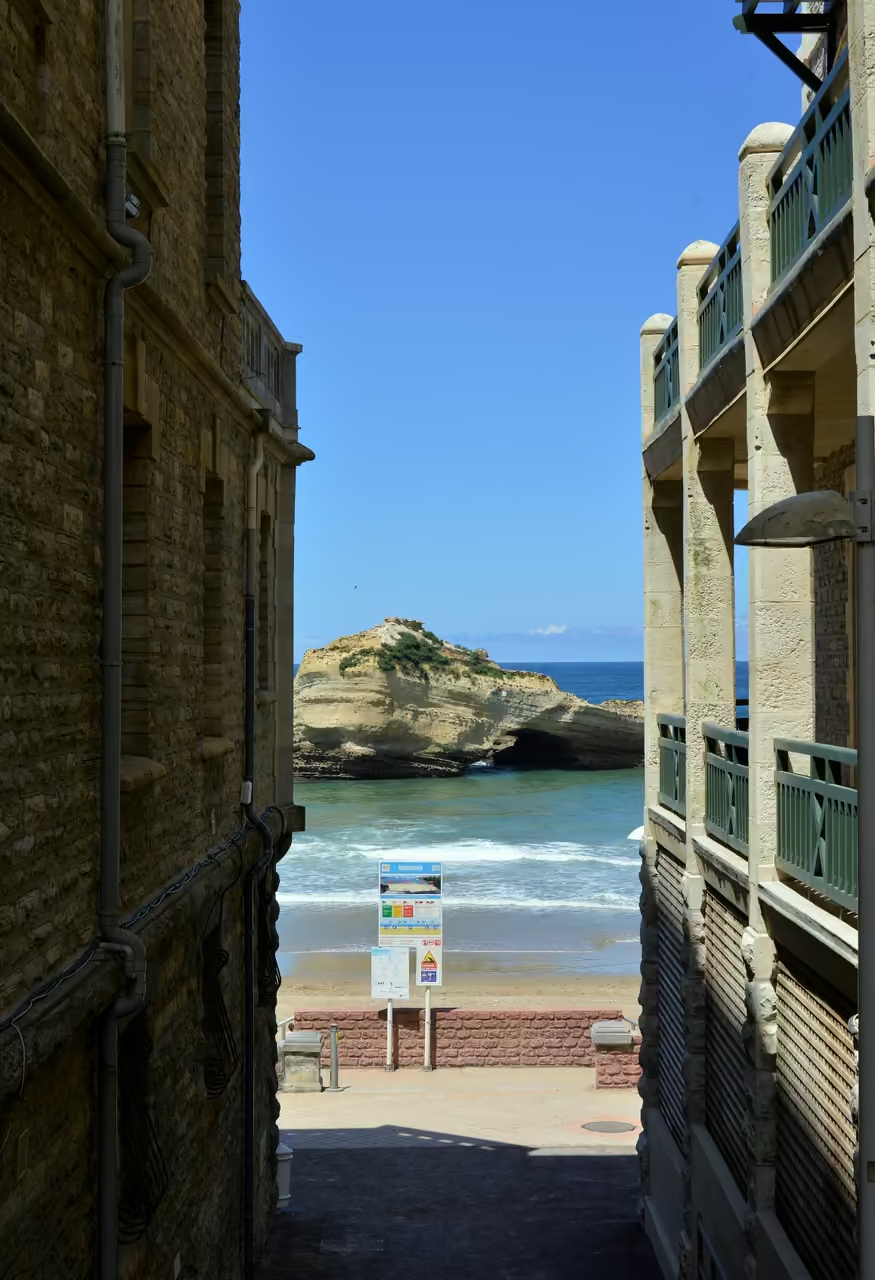
Lighthouse Headland Walk to the Roche Ronde
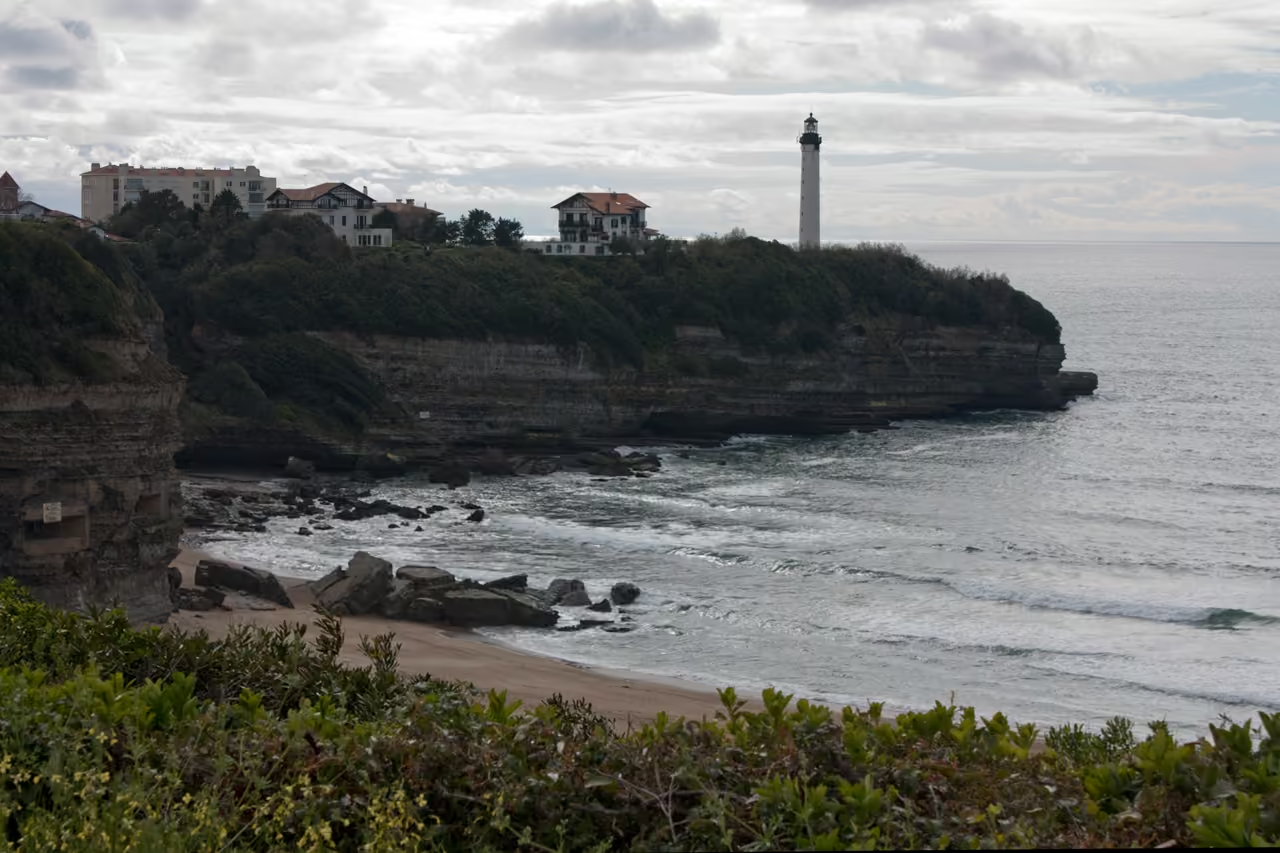
The northern headland has the wildest scenery in town: a white lighthouse, crumbling cliffs, a ruined laboratory and a rock with a hole in it. The paths are short but the views are long. It is a good choice for a windy day, when the waves are at their most dramatic.
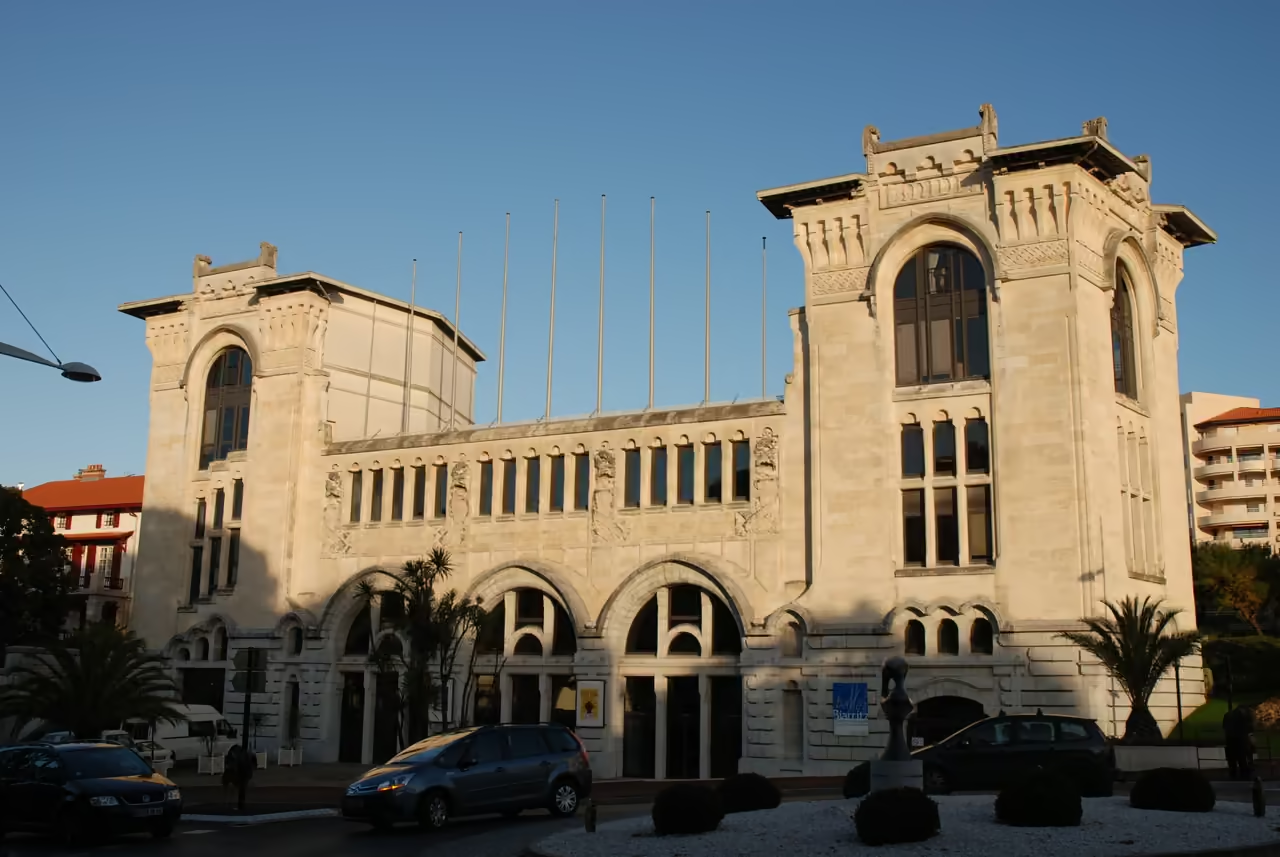
Lakeside Nature Walk from the Public Garden to Lake Mouriscot
Away from the sea, Biarritz has gardens, lawns and two protected lakes. This route links the old railway station, the Public Garden and the two lakes in a quiet green sweep. Birdsong replaces the surf, and the pace slows right down.
Architecture & Landmarks
Villa Belza
Perched on the Cachaous rock above the waves, this neo-medieval villa was built between 1880 and 1895 by the architect Alphonse...
view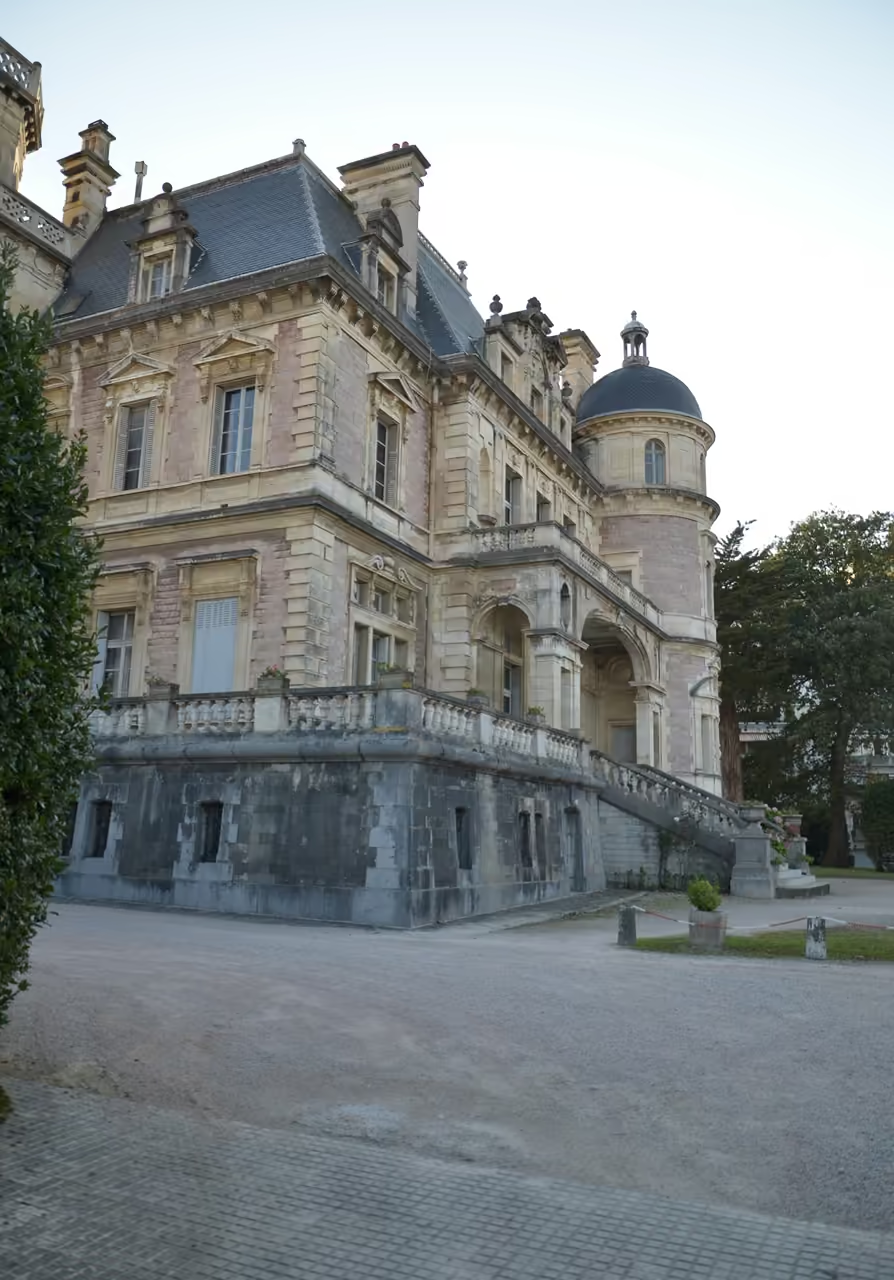
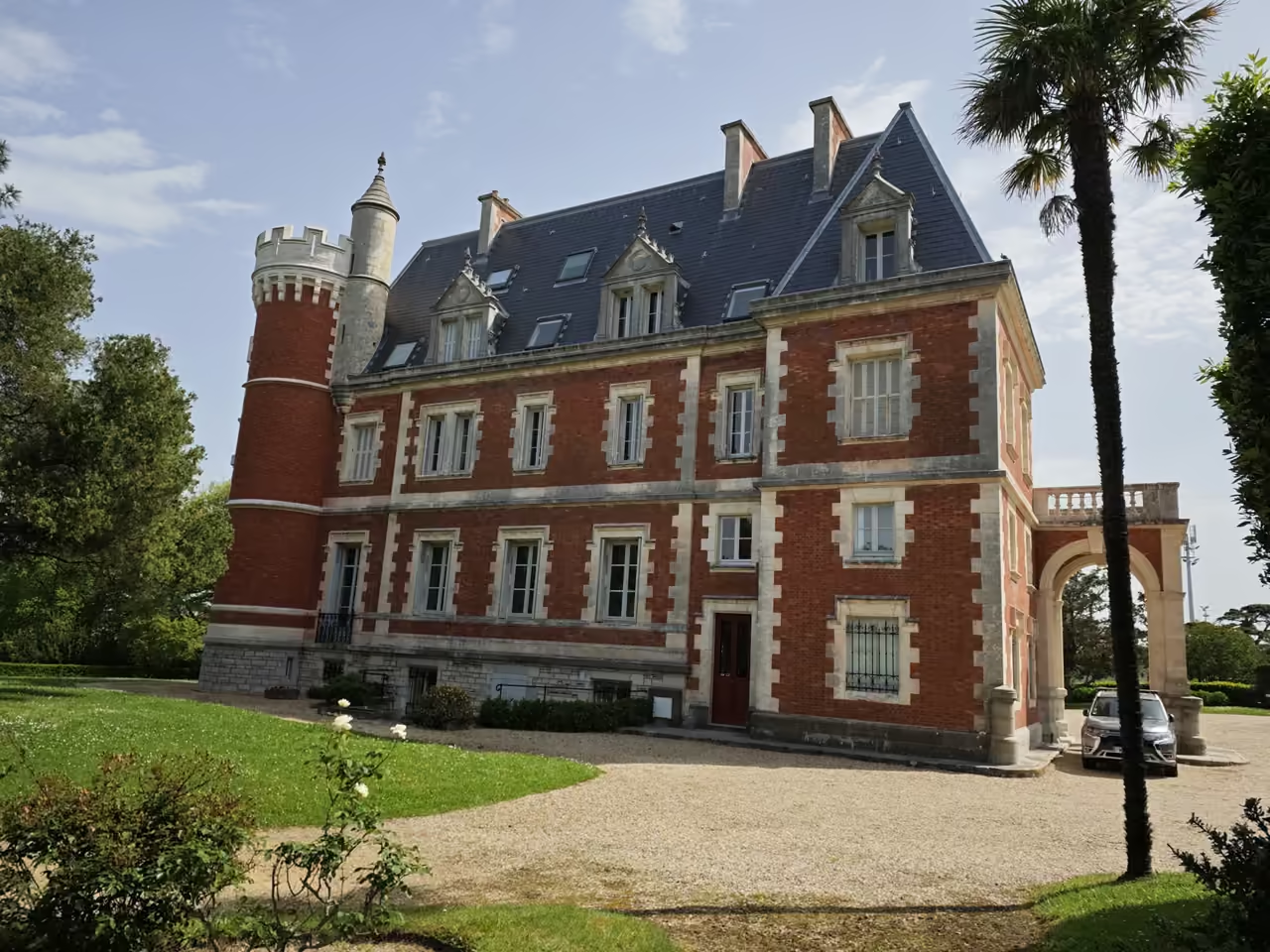
Boulart Castle
A Renaissance-style château with domed corner towers and stone balustrades. It stands as one of the grandest private houses in...
view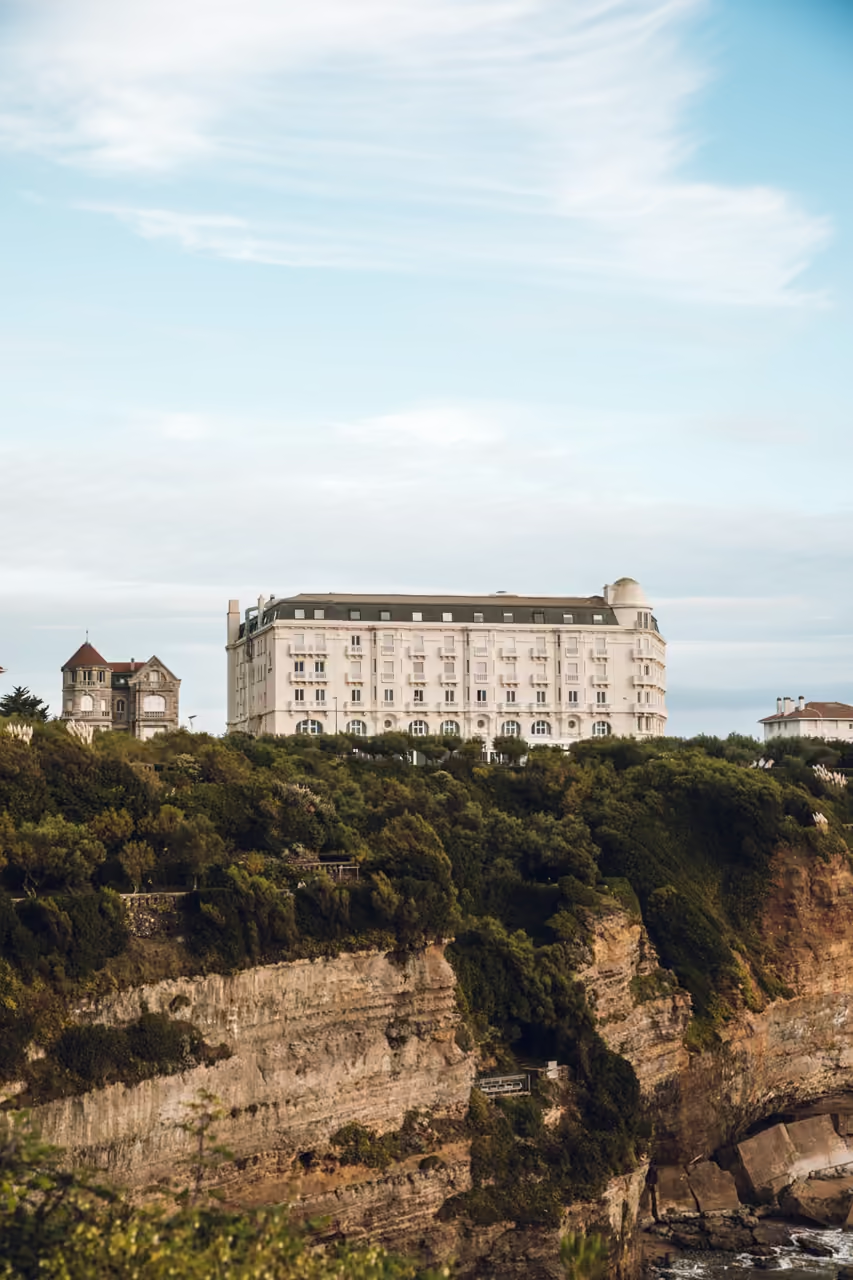
Hotel Regina
A Belle Époque hotel that sums up the confidence of the resort's golden years. During the occupation of the 1940s it housed the...
viewImperial Chapel
Commissioned in 1863 as Empress Eugénie's vow to celebrate French victories in Mexico, the chapel is dedicated to Our Lady of...
view
Markets & Shopping
Biarritz Nightlife
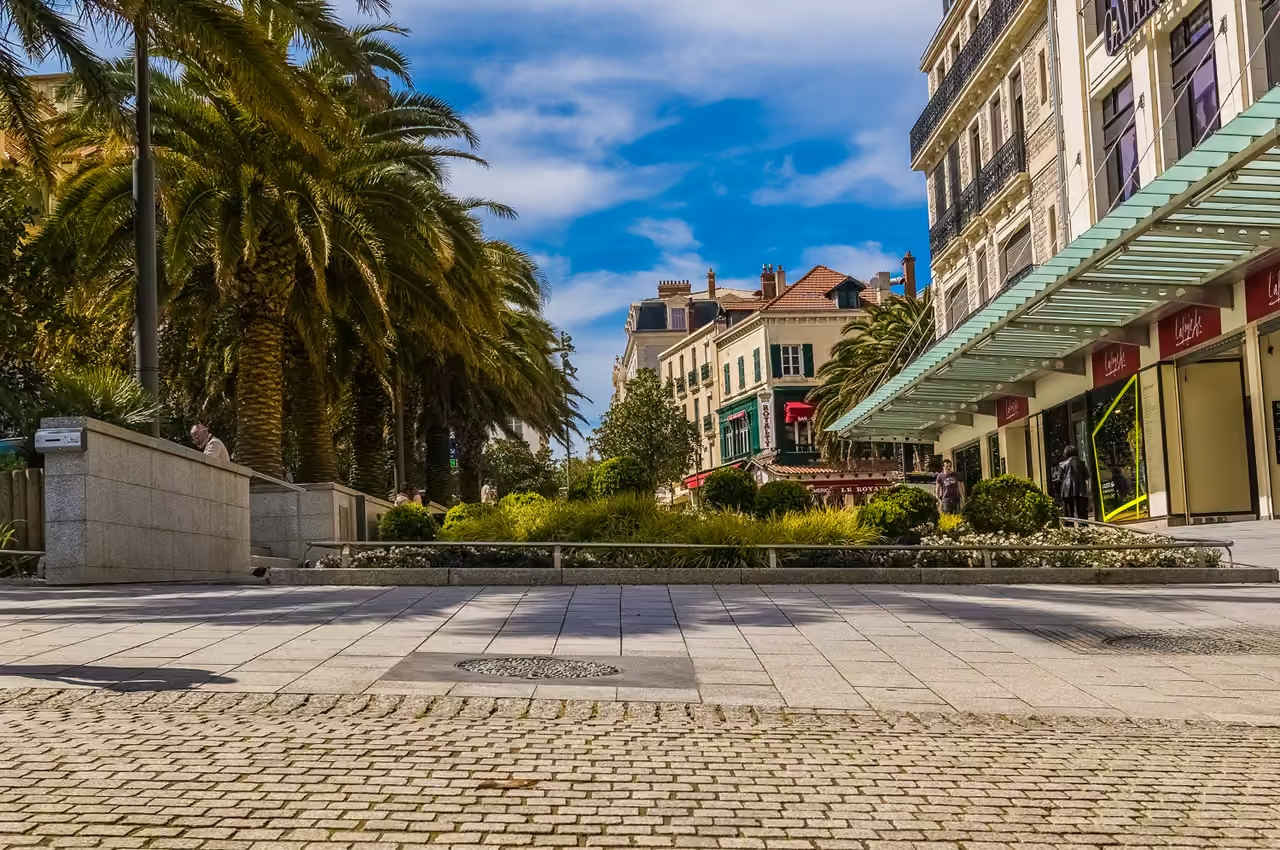
Photo Spots
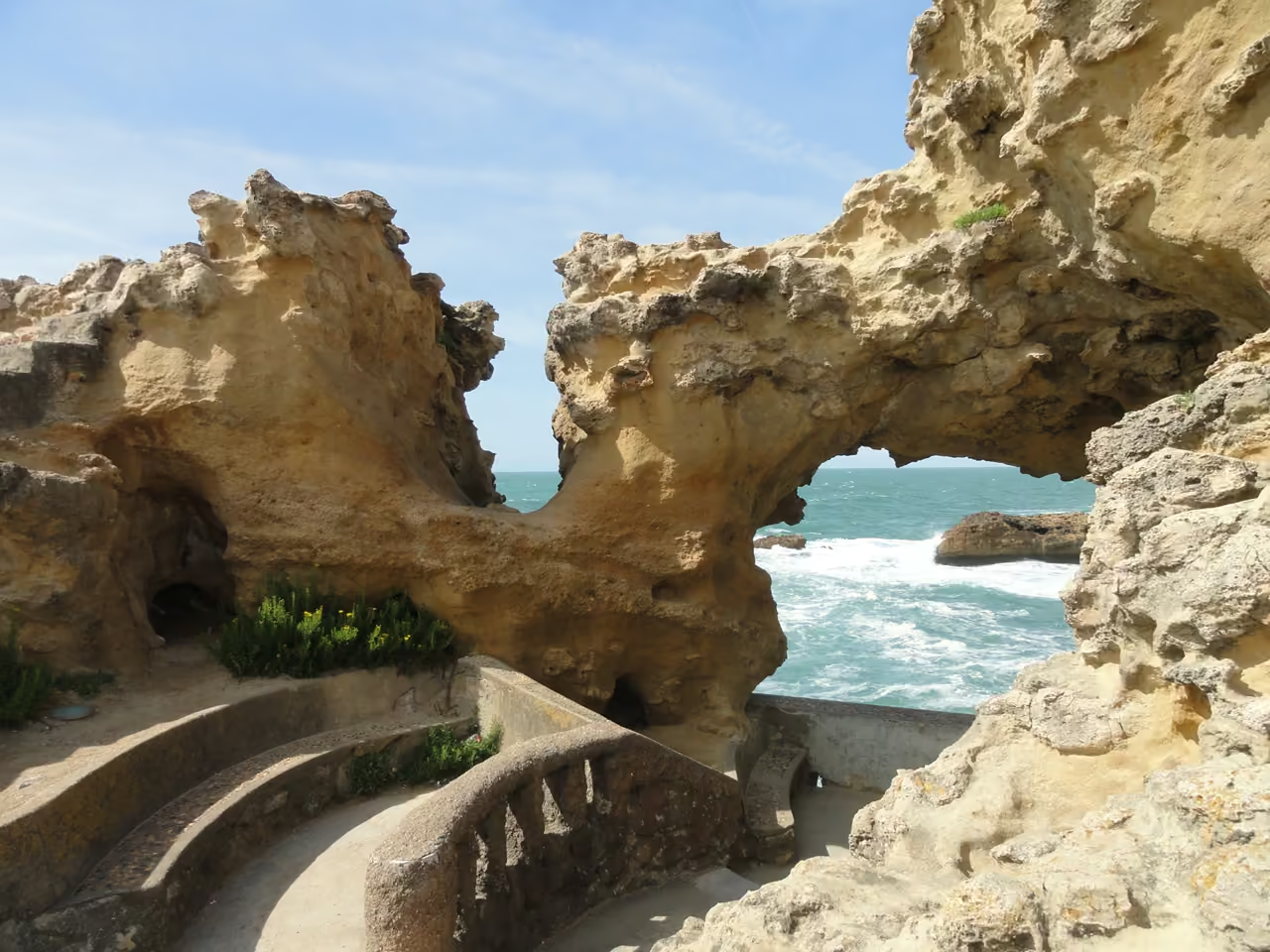
Activities & Experiences
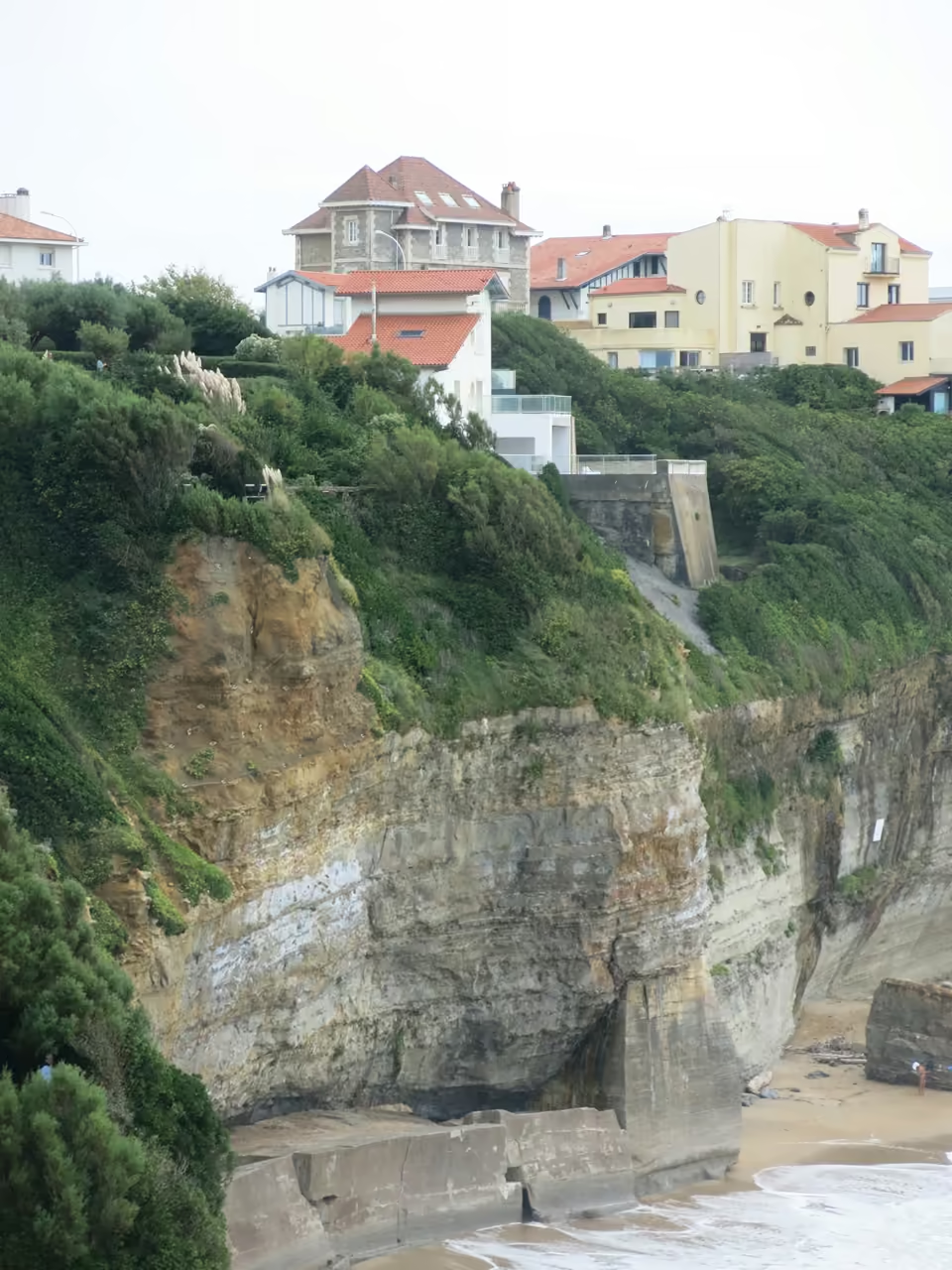
Cycling Routes
 HIGHLY RECOMMENDED
Coastal Bike Ride from the Grande Plage to Anglet's Beaches
This ride follows the seafront north from Biarritz's main beach, passes the lighthouse headland and drops to the long, open beaches of Anglet. The surface is mostly smooth and the views stay on the ocean throughout. It is the easiest way to see the point where the cliffs of the Basque coast give way to the sands of the Landes coast.
Lakes Ride from Lake Marion to Ilbarritz Beach
Inland Biarritz is greener than most visitors expect. This route links the town's two protected lakes and follows the stream that carries Lake Mouriscot's water to the ocean at Ilbarritz in neighbouring Bidart. Quiet lanes and parkland make it a gentle contrast to the busy seafront.
South Coast Bike Ride from Côte des Basques to Bidart
The southern shore runs from the big surf beach of the Côte des Basques through the Marbella and Milady coves into the village beaches of Bidart. The coast road climbs and dips, with the Pyrenees often visible on clear days. It is a ride for anyone who likes sea views with their exercise.
Self-Guided Tours
 HIGHLY RECOMMENDED
Imperial Biarritz Trail: Napoleon III and Eugénie's Seaside Resort
This tour follows the places where Napoleon III and Empress Eugénie shaped Biarritz, from the villa that became a palace to the sea wall built to hold a commercial port. The route links buildings, rocks and a chapel that tell the story of the Second Empire summers. It suits history lovers and anyone curious about royal holidays.
Belle Époque Architecture Trail: Palaces, Villas and Châteaux
Biarritz's eclectic skyline is the product of visitors who each wanted their own fantasy by the sea. This trail looks at the main styles, from Art Deco hotels and the Casino to neo-medieval villas, Renaissance châteaux and Basque revival houses. The geographer Roger Brunet called the result almost a museum of seaside kitsch.
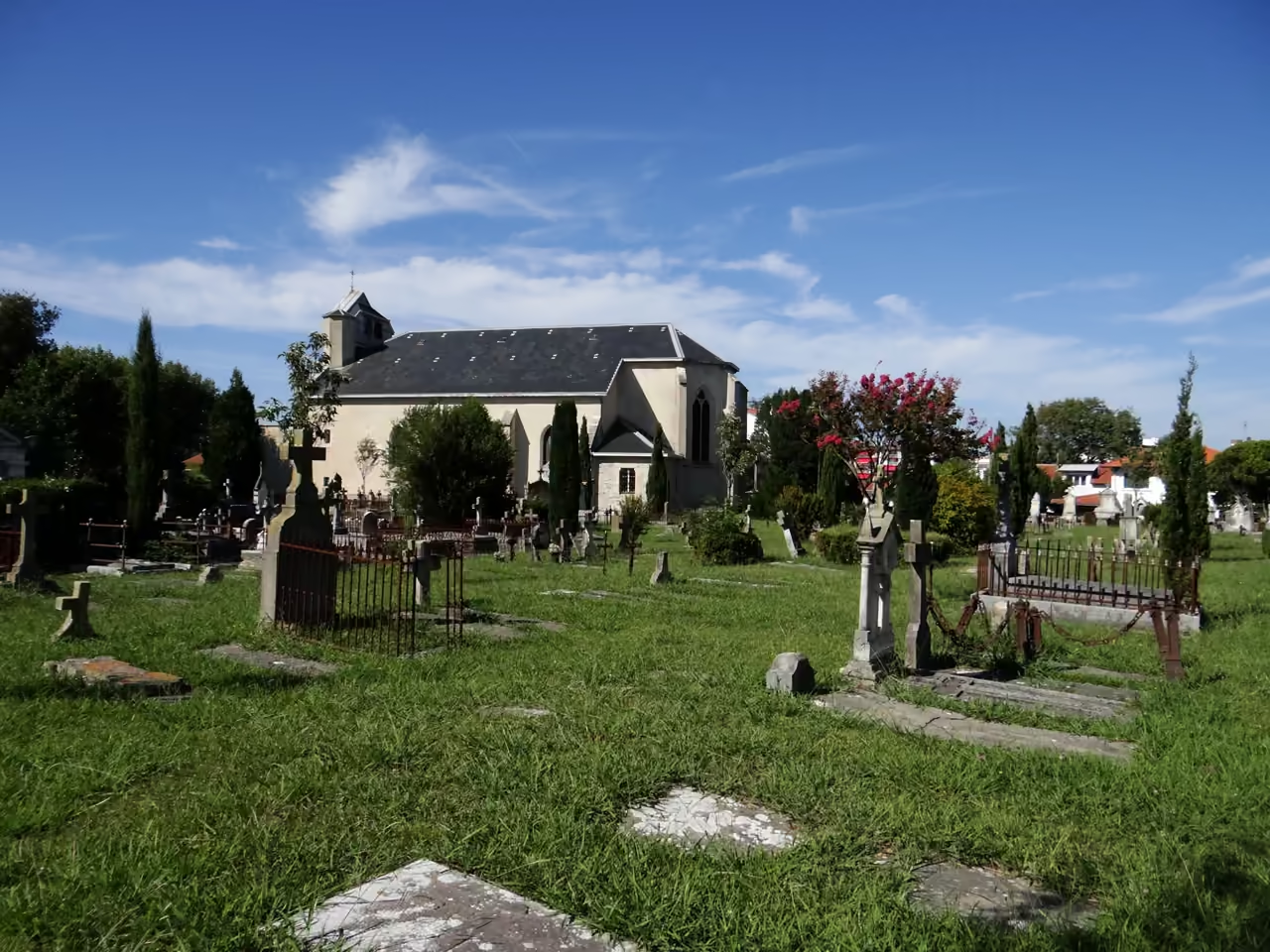
Faiths of Biarritz Trail: Churches, Chapels and a Synagogue
The Belle Époque resort drew visitors of many faiths, and each left a place of worship that still stands. This trail links a Russian Orthodox church, an imperial chapel, a synagogue and two Catholic churches of very different ages. It is a compact lesson in how a seaside resort became cosmopolitan.
Annual Festivals & Events
Biarritz Latin America Film and Culture Festival
Each year the festival gathers the best of Latin American creation in one week, from feature films in competition to short films, exhibitions and conferences. Screenings and talks fill the town's venues in late September and early October, when the beaches are quiet and the surf is building. Directors, actors and writers from across the Americas mingle with locals in the cinemas and cafés. It is a cheerful excuse to see a film and then argue about it over a glass of wine.
Biarritz Piano Festival
Since 2010, August in Biarritz has come with a soundtrack of pianos. The concerts are staged with the lighthouse and the Atlantic as a backdrop, so the evening light is as much a part of the programme as the repertoire. Recitals fill the town's halls during the warmest weeks of the year, when the Grande Plage is at its busiest and the cafés stay open late. Book the headline evenings ahead and pack a jumper for the walk home along the cliffs.
Les Casetas Open-Air Party
At the end of June the Côte des Basques turns into an open-air party site, with temporary bars and music on the cliff top above the surf. The twentieth edition took place in 2015 after two years off, and the event has returned as a summer fixture ever since. Locals and visitors drift between the tents as the sun goes down over the Atlantic. Wear shoes that can handle grass and gravel.
Insider Tips
The main railway station, Biarritz La Négresse, sits about 3 km from the seafront, so skip the walk with luggage and take the Tram'Bus T1 or a Txik Txak bus. In the centre, two free electric shuttles, the N4 and N5, link Pétricot with the Côte des Basques and Port-Vieux, and with the Grande Plage and the lighthouse. Check current timetables before relying on them.
In summer, leave the car at the park-and-ride at the Halle d'Iraty, which has about 250 free spaces, and take line 31 to the Jardin Public. It saves a lot of circling around the narrow streets near the beaches.
Look at the tide table before heading to the Côte des Basques: at high tide there is almost no sand, and the beach comes into its own at low tide. When the surf beach is shut or too rough, the sheltered cove at Port-Vieux is the usual place for a safe swim.
The iron footbridge to the Rocher de la Vierge is best avoided in heavy seas, and the cliff edges along the coast are crumbling by around 70 cm a year. Obey the barriers and closed signs, and swim only where lifeguards are posted.
The tunnel under the Atalaye plateau is pedestrianised from 11am to 2.30am, which makes it a car-free shortcut to the Rocher de la Vierge and the aquarium. It is also one of the easiest ways to dodge the beach traffic in July and August.
Small restaurants often close on set evenings, so confirm opening days when you book, and look for the fixed-price lunch menus, which are usually the better value. Service is included on French menus, so a rounding up of the bill is enough.
Street signs are in French, but Basque and Gascon names turn up on maps and menus. A bonjour on entering any shop is expected, and an agur on leaving, or eskerrik asko for thanks, will earn a smile.
Swimwear belongs on the beach. Put a shirt on before wandering Place Clemenceau or queuing for pastries, as locals generally dress for the street even on hot days.
For picnic supplies, the supermarket in the basement of the Galeries Lafayette on Place Clemenceau is decently priced and far cheaper than the beachfront cafés. Carry a little cash for market stalls and small kiosks.
PERFECT FOR
Biarritz suits travellers who want sea air with some history behind it: surfers and swimmers, couples after a grand hotel and a long lunch, and anyone curious about the Second Empire and the Belle Époque. It rewards slow walkers who like to alternate beach hours with museums and pastry stops. It also works as a base for the Basque coast, with Bayonne, Saint-Jean-de-Luz and the Spanish border all close.
VIBE
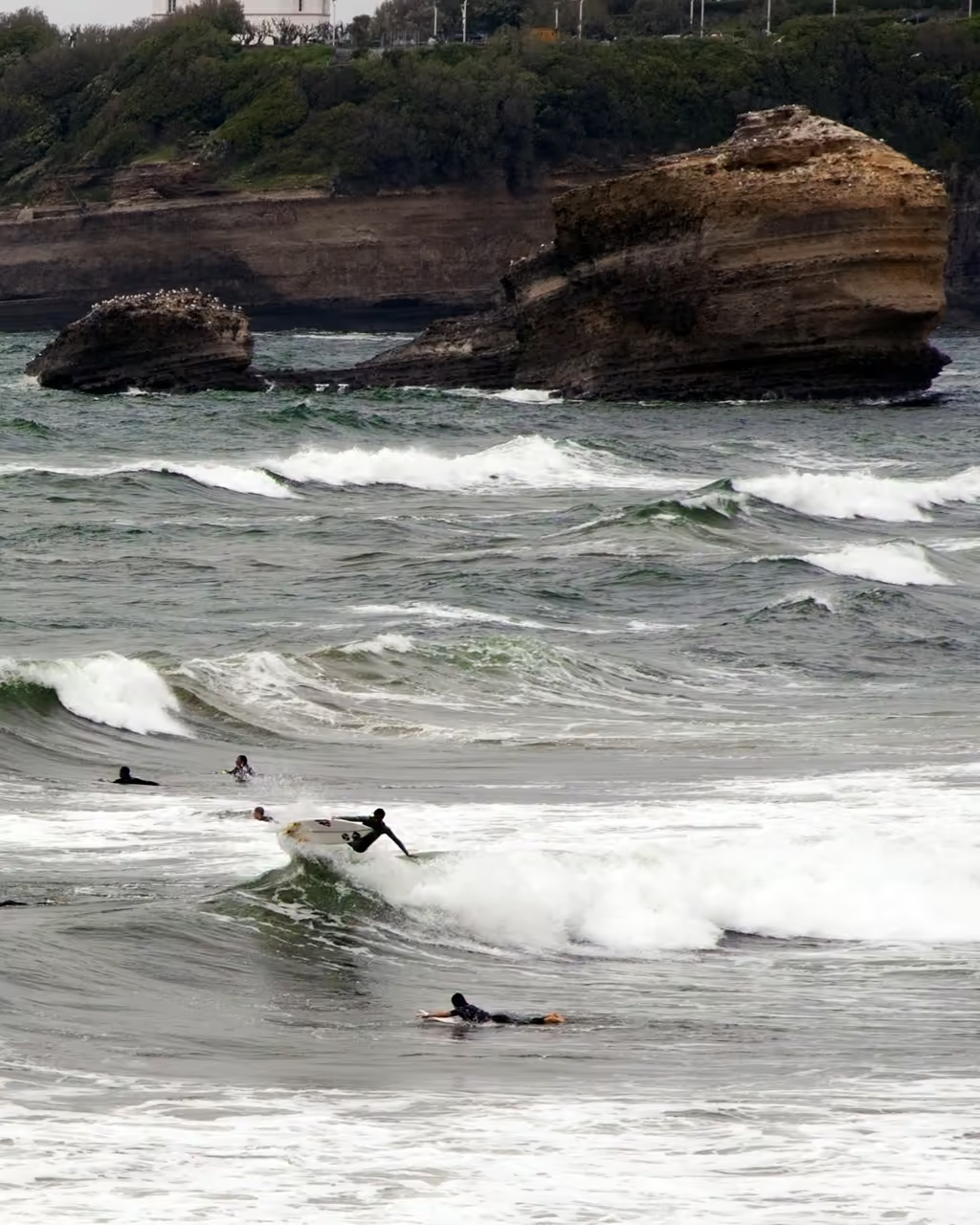
Salt spray drifts over the seafront on rough days, and nobody seems to mind. Surfers in dripping wetsuits cross Place Clemenceau, pensioners in good coats walk the promenade, and by teatime there is a queue at Miremont. After dark the cliffs are floodlit and the Grande Plage settles into a long, slow murmur.
Frequently Asked Questions about Biarritz
July and August are the warmest months, with average highs of about 24 to 25 °C, and they suit swimming and beach days. May, June and September bring long light, thinner crowds and good surf. Winter averages around 9 °C and delivers dramatic storm waves, while November is the wettest month with roughly 200 mm of rain.
Biarritz-Pays Basque airport lies about 3 km from the centre, mostly on the territory of neighbouring Anglet. A taxi takes only a few minutes, and Txik Txak buses serve the area, so check the current network map for the airport line. The main railway station, Biarritz La Négresse, is also roughly 3 km from the seafront and receives TGV trains from Paris in around five hours.
Yes. The town has more than ten surf schools, and the Grande Plage and the Côte des Basques are the classic places for a first lesson on a longboard. The Côte des Basques has almost no sand at high tide, so book lessons around the tide table. When the swell is too big, the sheltered Port-Vieux cove is a better place to swim.
No. The centre and the main beaches are walkable, although the streets climb in places. The Tram'Bus T1 and a network of Txik Txak bus lines link Biarritz with Anglet and Bayonne, and the old centre is easiest to explore on foot.
Yes. Biarritz belongs to the historic Basque province of Labourd and to the Pays Basque agglomeration, although it also sits on the far edge of Gascon-speaking territory, so both languages show up in local place names. It lies under 25 km from the Spanish border as the crow flies, which makes San Sebastián an easy day trip.
The Atlantic currents here are notoriously powerful, and the waves can be punishing. Swimming is strictly regulated and only permitted between the blue flags when lifeguards are on duty. If the red flag is flying, stay on the dry sand.
We recommend spending about 3 days in Biarritz. Three days is enough to walk the seafront landmarks, fit in a surf lesson or spa session, and spend a slow morning around the lakes. The main sights cluster within a couple of kilometres, and the hills and sea air make a gentle pace sensible. A fourth day opens up Bayonne, Saint-Jean-de-Luz or San Sebastián.
Biarritz has an average temperature of 13.3°C in spring, 20.2°C in summer, 15.5°C in autumn, and 8.9°C in winter. Choose the season that best matches your weather preference.
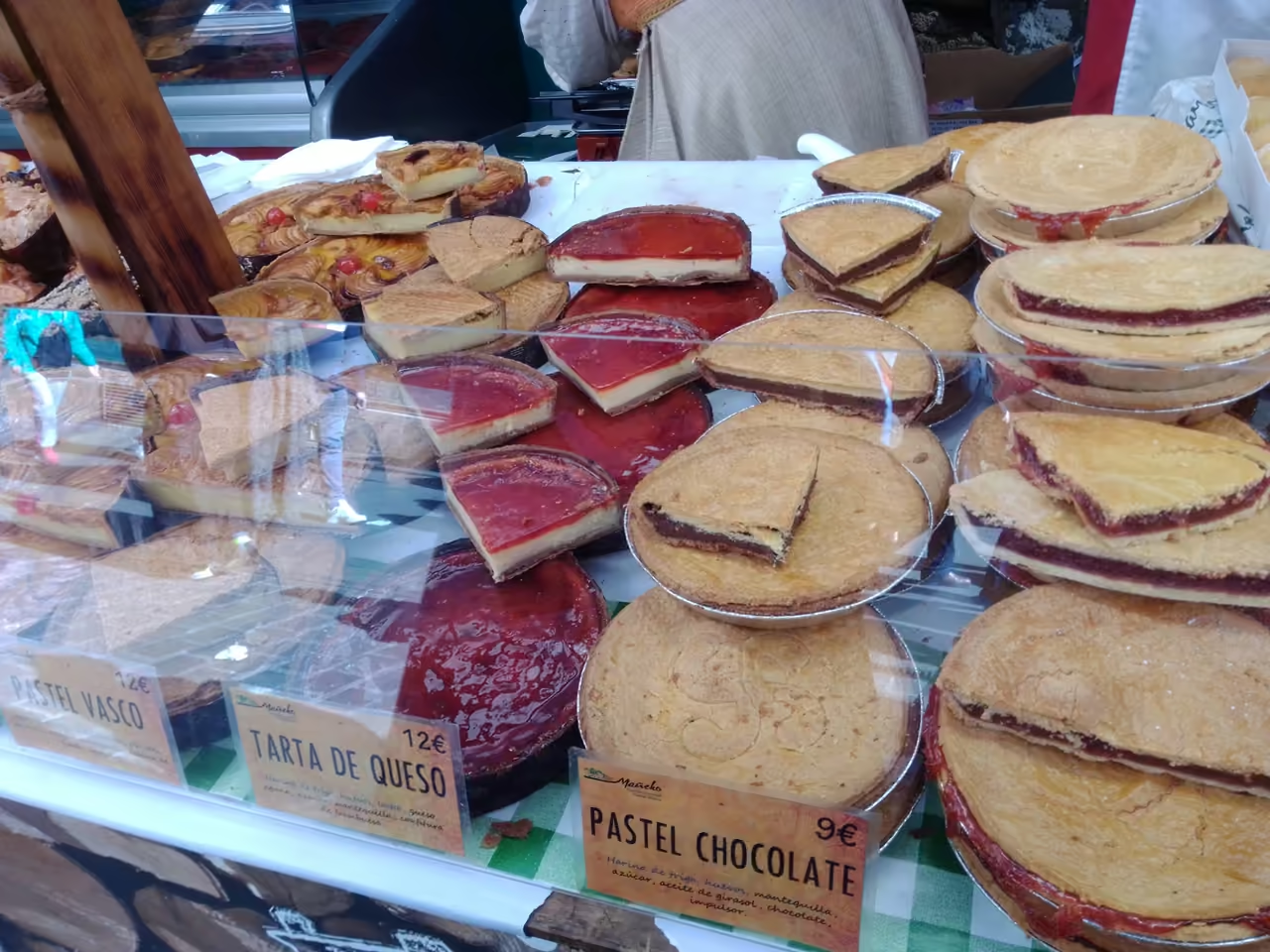
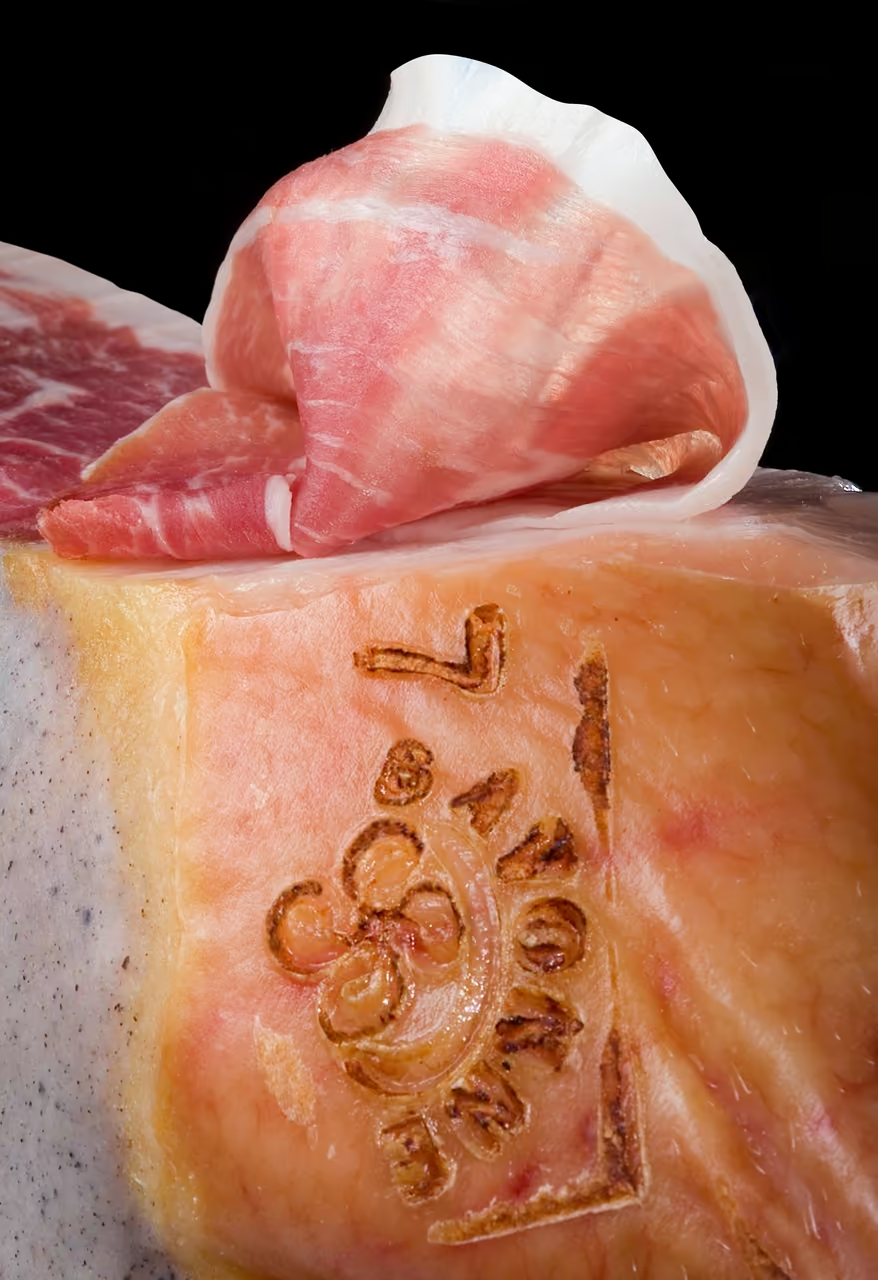
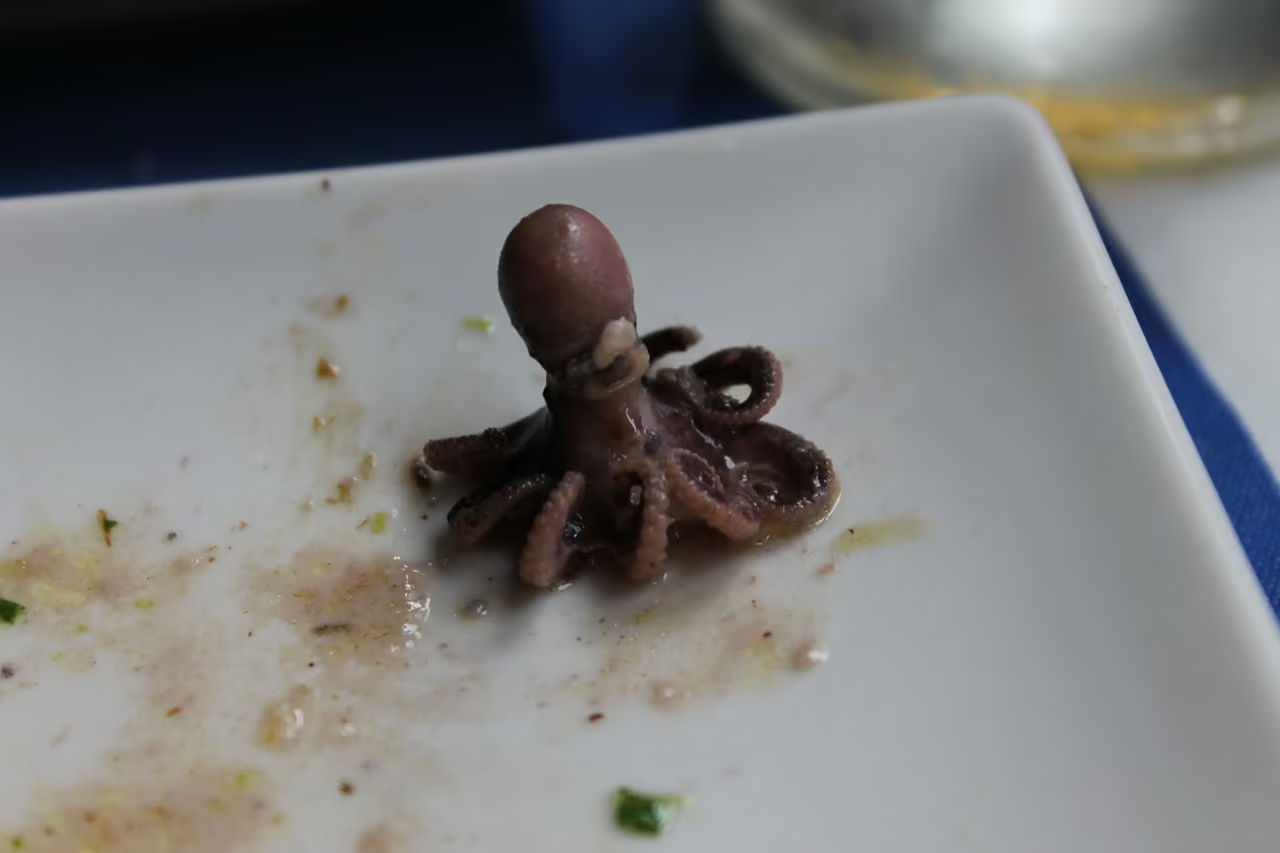
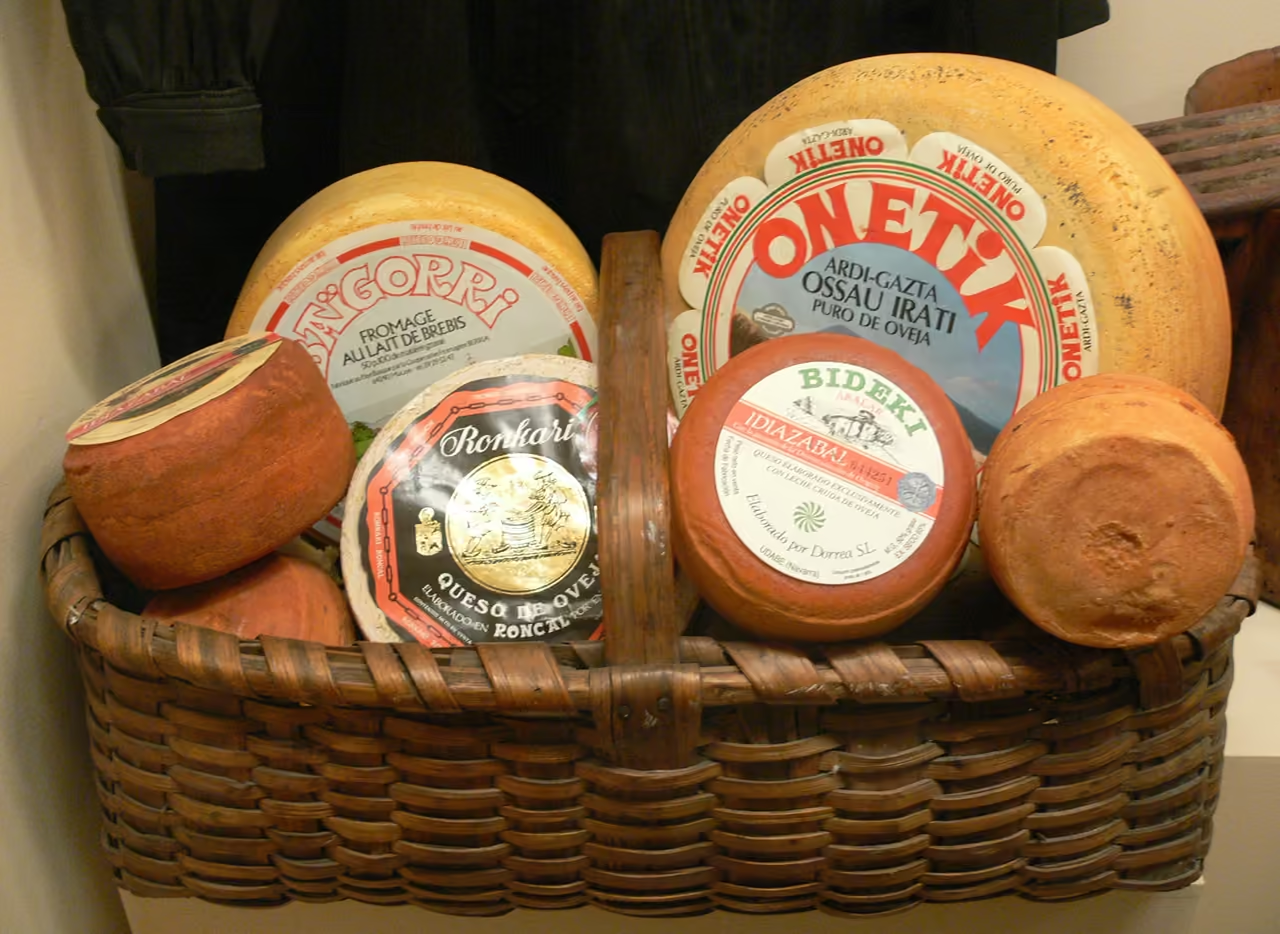
Some popular local food choices in Biarritz include Basque Cake, Bayonne Ham, Grilled Baby Squid, Ossau-Iraty Sheep Cheese, Piperade, Ttoro Fish Stew, Axoa Veal Stew and Basque Hot Chocolate.
It has a population of 26,206 people.
It was founded in 1150, making it 876 years old.
While we strive to keep this information accurate and up to date, we recommend verifying any details independently before making decisions based on them.
Similar Destinations in France
Continue your journey. Explore these highly recommended cities and uncover more of what France has to offer.