Everglades National Park
Water moves so slowly here you have to watch a single blade of sawgrass for minutes just to prove it is flowing at all. It is not a stagnant swamp. Instead, it is a sheet of fresh water creeping across southern Florida towards the sea. Step out onto the boardwalks of the Anhinga Trail and the heavy, sweet scent of damp soil and mahogany immediately fills the air. A solitary mosquito will inevitably hum near your ear as the afternoon humidity settles on your skin. This immense wilderness humbles visitors with its flat, vast horizon, interrupted only by clusters of cypress trees and the sudden, explosive splash of a green heron hunting in the shallows. Down in the marl prairies, a pair of alligators rests on a muddy bank with their jaws open to the sun.
Videos
History of Everglades National Park
For thousands of years, water spilled freely out of Lake Okeechobee and drifted southward in a sheet fifty miles wide but barely six inches deep. Indigenous groups like the Calusa and Tequesta thrived in this watery expanse, engineering complex shell mounds and navigating the channels in dugout canoes. The arrival of European settlers introduced a fundamental misunderstanding of the landscape. Developers and politicians viewed the shallow waters not as a river but as a worthless marsh begging to be drained and monetised. In the late nineteenth century, fashion trends in distant cities almost eradicated the native wildlife. Plume hunters slaughtered millions of snowy egrets and roseate spoonbills simply to decorate hats for wealthy society women. The violence reached a peak in 1905 when poachers murdered Guy Bradley, one of the first game wardens hired to protect the wading birds. His death shocked the nation and sparked a massive conservation movement that ultimately outlawed the feather trade. However, the ecosystem faced a much larger threat from industrial drainage projects. Canals were blasted through the limestone bedrock to siphon the water away for agricultural development, slowly choking the landscape of its lifeblood. A turning point arrived in 1947 when writer Marjory Stoneman Douglas published her landmark book redefining the region as a river of grass. That same year, President Harry Truman formally dedicated the area as a national park. This was a radical shift in American conservation because it was the first time land was protected entirely for its delicate flora and fauna rather than its scenic mountain views. Despite this victory, decades of water diversion took a heavy toll, shrinking the ecosystem to half its original size. Modern restoration efforts now focus on dismantling old levees and elevating highways to allow the historic water flow to resume. Today, the slow creep of fresh water continues to sustain an environment where American alligators and crocodiles swim in the exact same estuaries.
events spanning 479 years
Fun Facts
- • During the Cold War, the United States government built a secret Nike Hercules missile base deep within the park to defend against potential air strikes from Cuba, which remains preserved there today.
- • Early attempts to drain the swamps involved planting thousands of thirsty Melaleuca trees imported from Australia, a disastrous plan that created an aggressive invasive forest that officials are still trying to eradicate.
- • Flamingo, the southernmost outpost of the park, was once an isolated, lawless fishing village notorious for smuggling moonshine during Prohibition before it was eventually incorporated into the federal lands.
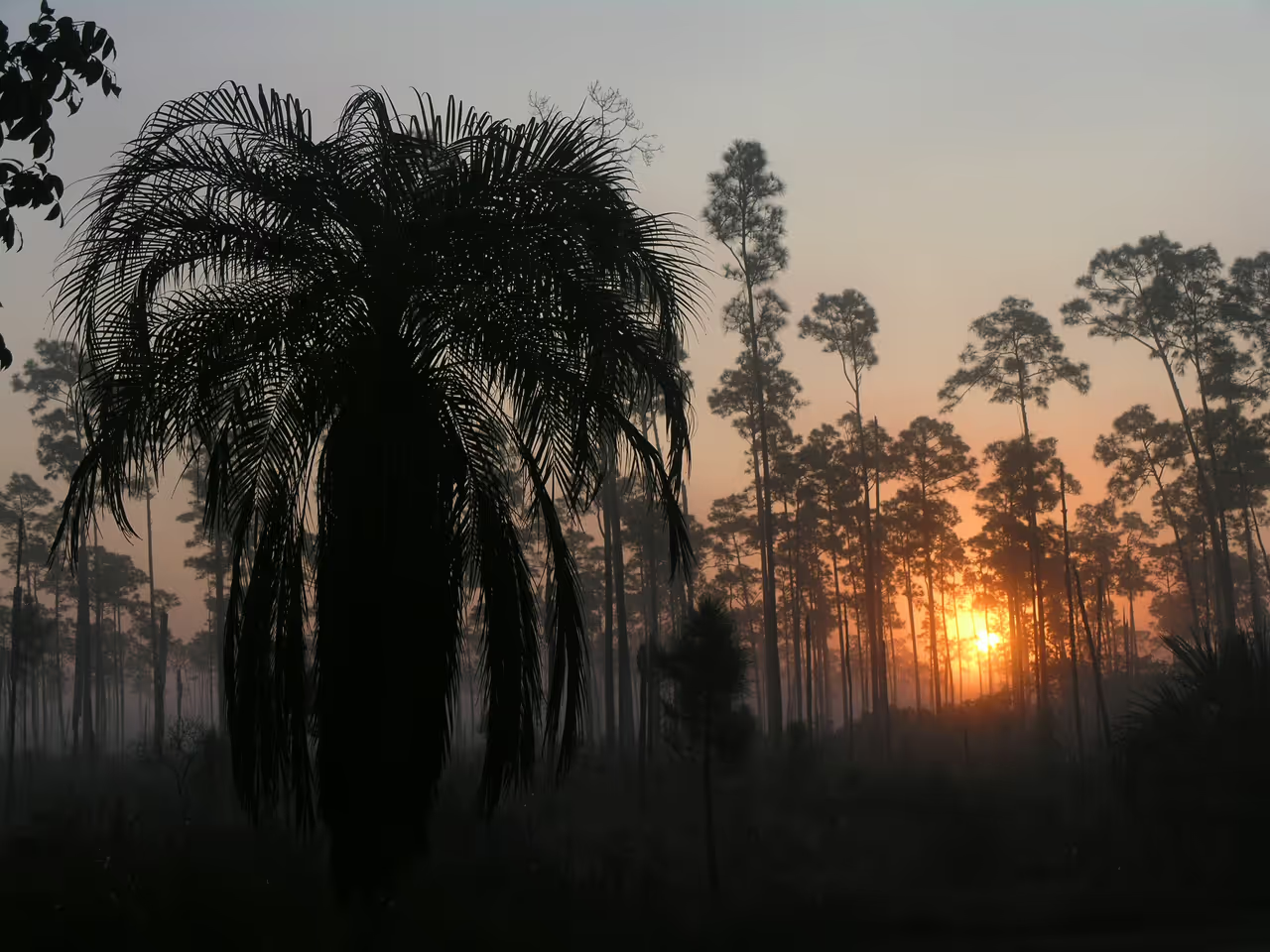
- • Florida panthers, one of the most endangered mammals on the planet, survive in the isolated pinelands of the park, though their numbers dropped to fewer than twenty individuals before a genetic restoration programme intervened.
- • It is the only place on Earth where American alligators and American crocodiles coexist in the wild.
- • The entire landscape actually functions as a slowly creeping river, dropping only a few inches in elevation per mile as the water travels from Lake Okeechobee down to the Gulf of Mexico.
- • The park features strange, elevated limestone ridges known as tree islands, which stay completely dry throughout the year and contain dense forests that look completely out of place amid the watery sawgrass.
- • The park has become the epicentre of a massive ecological battle against the Burmese python, an invasive species that multiplied rapidly after being released by exotic pet owners, leading to the near total disappearance of small mammals in some sectors.
Everglades National Park FAQ
While we strive to keep this information accurate and up to date, we recommend verifying any details independently before making decisions based on them.
Everglades National Park Map & Neighborhood Explorer
This interactive map is centered on Everglades National Park. Zoom in and move the map around to automatically discover Wikipedia photos and summaries of other nearby sights, monuments, and historical points of interest and stories in real-time!
Places near Everglades National Park
Make the most of your trip. Check out these top-rated spots located nearby.
 10362m
Zoo Miami
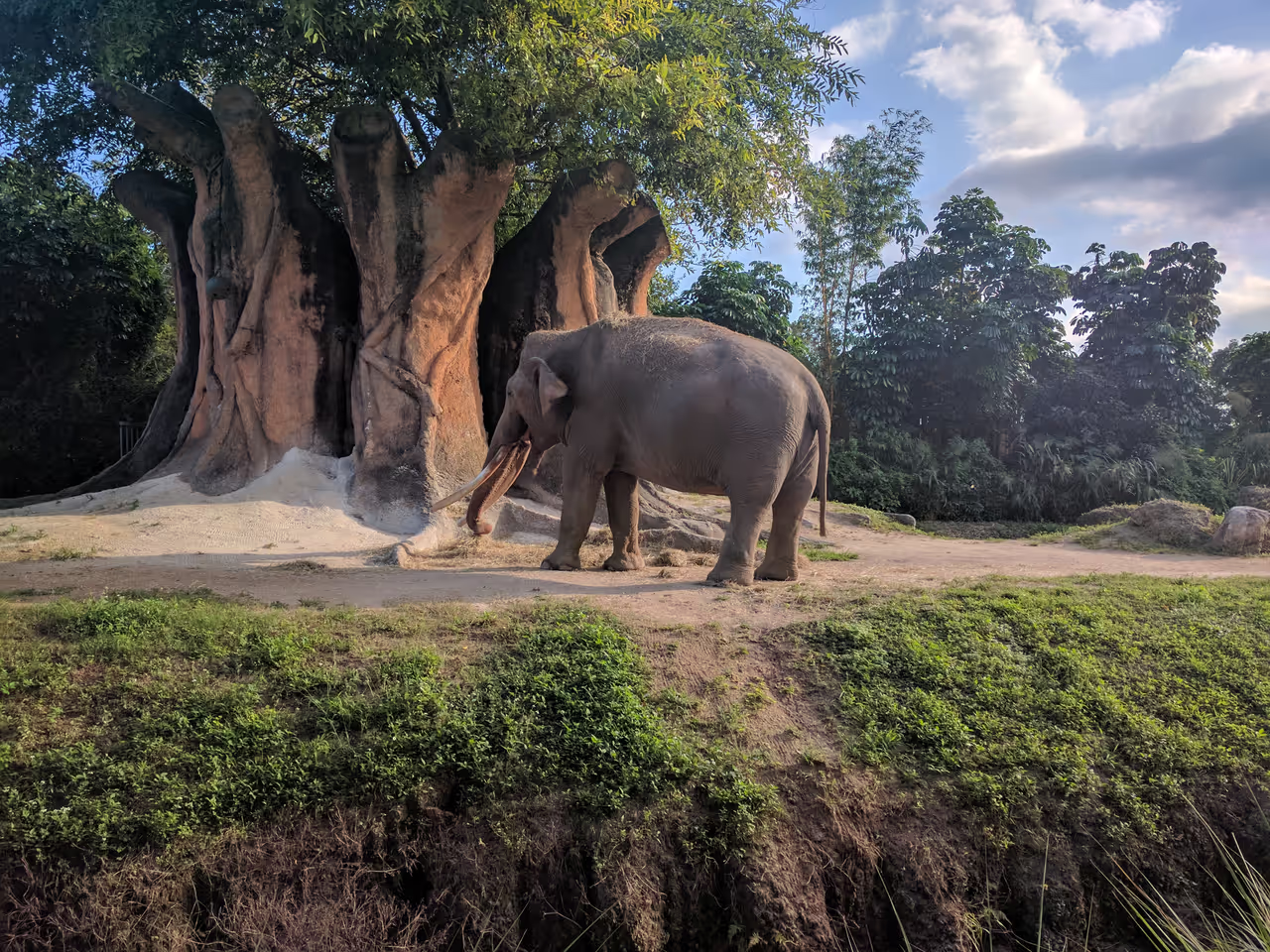
The continental United States contains exactly one tropical zoo. It sprawls across a former naval air station in South Miami. Zoo Miami uses clever moat systems and vast landscapes to keep enclosures completely open. This means African bush elephants and reticulated giraffes roam freely under the heavy Florida sun. Walking the entire circuit requires covering four miles of paved trails, and your water bottle will definitely run warm before the halfway mark. Forget peering through metal wire. Visitors observe Sumatran tigers and lowland anoas separated only by concealed trenches and dense vegetation. Over in the Amazon and Beyond section, the path plunges directly into a recreated cloud forest. A harpy eagle watches quietly from the upper canopy.
attraction view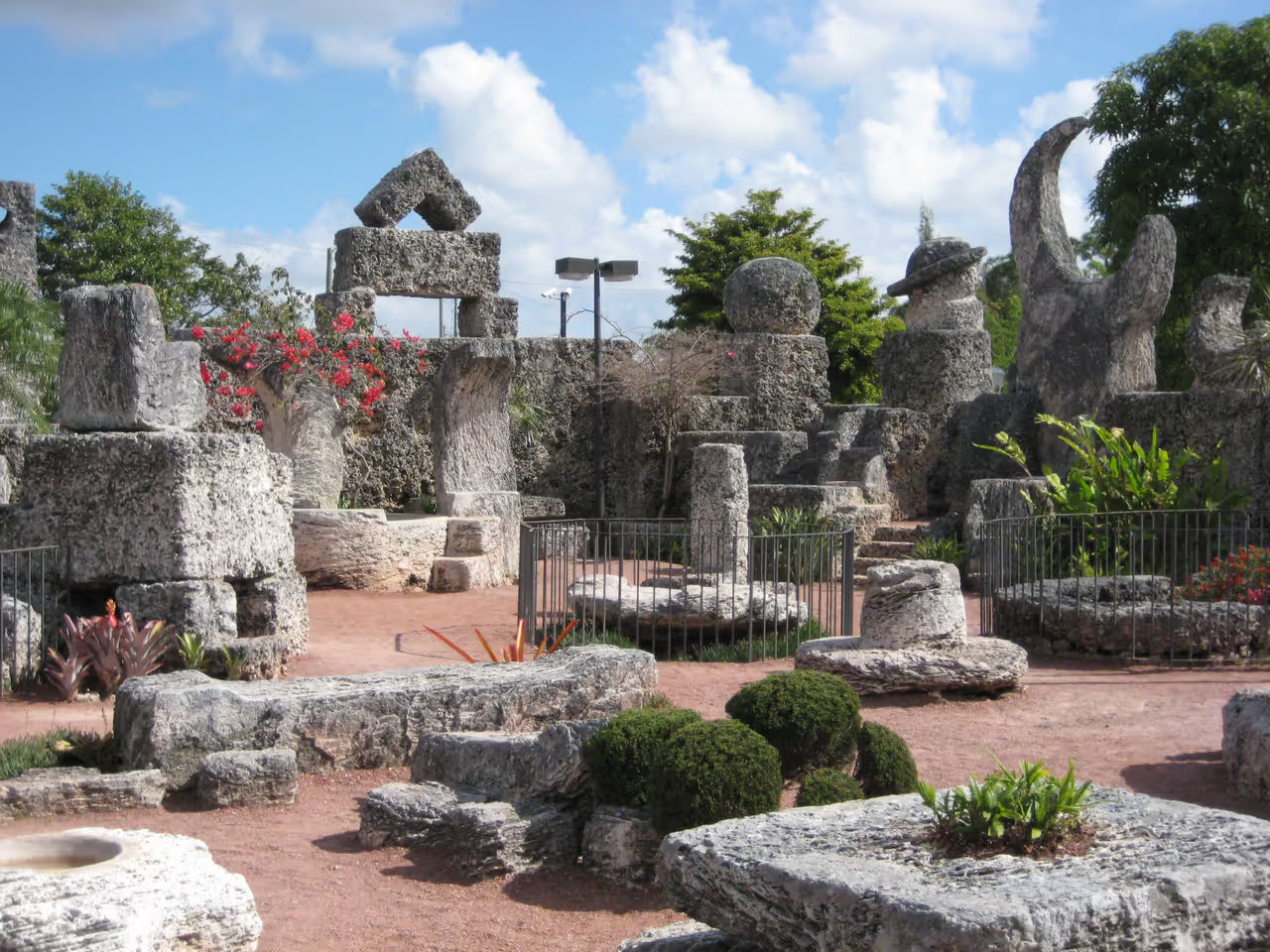 16049m
Coral Castle
A roadside wonder off South Dixie Highway, this open air labyrinth of calcified rock baffles engineers and amateurs alike. A solitary Latvian migrant named Edward Leedskalnin carved over eleven hundred tons of Florida oolite limestone completely by himself. Hand chiselled rocking chairs sit beneath the subtropical sun alongside a functional polar telescope aligned with Polaris. Nothing holds the monolithic blocks together except gravity and surgical balance. You can lean against a thirty ton corner block and trace fossilised shells embedded across the stone matrix. Peer straight down into the shadowy quarry pit where he severed each slab directly from the porous bedrock.
attraction view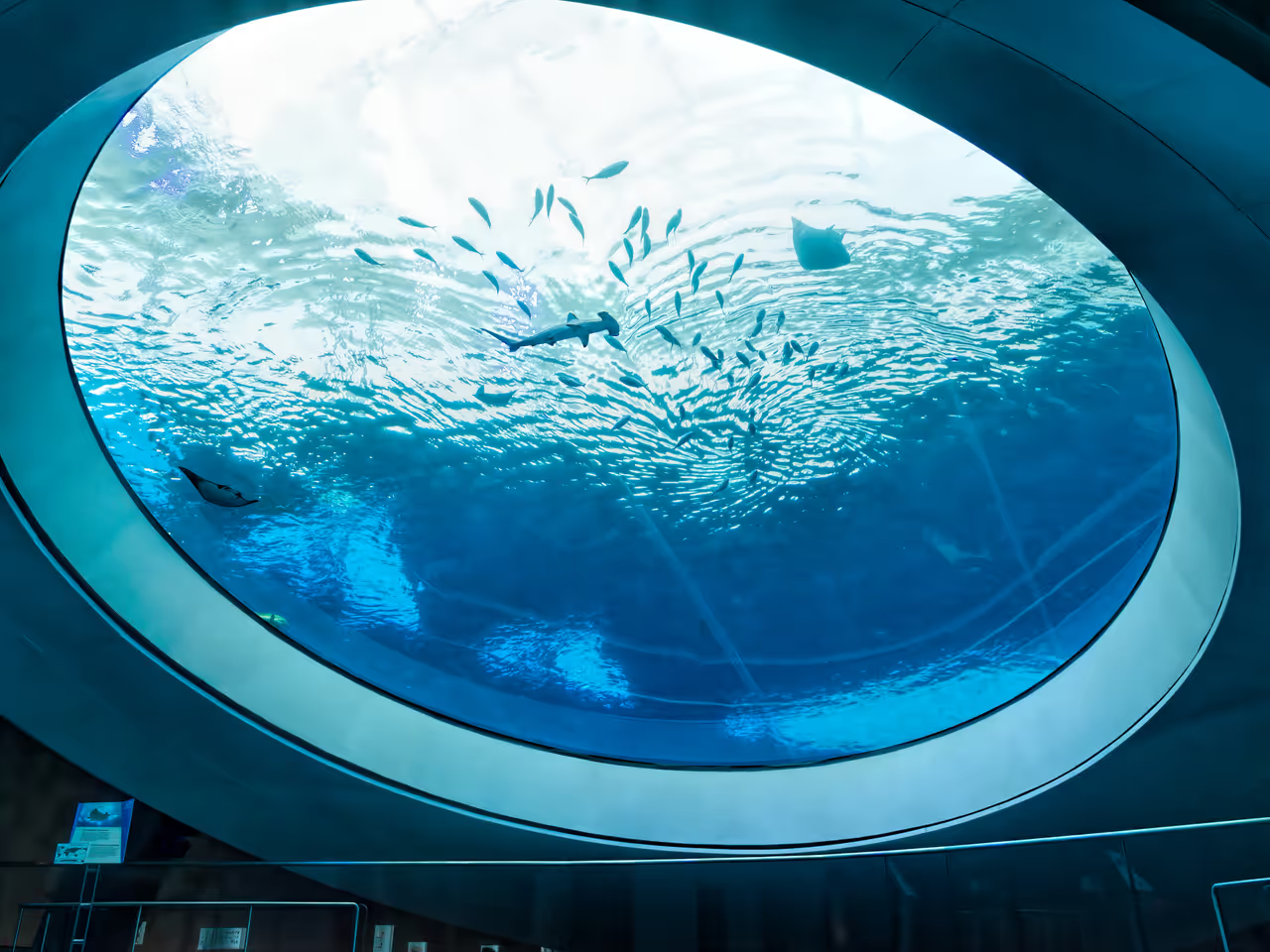 18131m
Phillip and Patricia Frost Museum of Science
Standing beneath the thirty-one-foot oculus lens of the Gulf Stream aquarium feels less like visiting a typical exhibition hall and more like resting on the seabed of the Atlantic shelf. Four distinct pavilions cluster along Maurice A. Ferré Park, catching the salty Biscayne Bay air while housing everything from a tilted full-dome planetarium to living mangrove thickets. You can track bonnethead sharks cruising overhead on one floor, then step upstairs to touch stingrays gliding along shallow pool ledges. School groups occasionally crowd the ramps during mid-morning hours, but the buzz quickly dissipates as people disperse into the darker corners of the planetarium. Laser light shows soundtracked by rock legends run well into the evening beneath the twenty-four-degree tipped projection dome. It is an unapologetically hands-on waterfront complex that turns coastal physics and subtropical biology into tactile theatre.
attraction view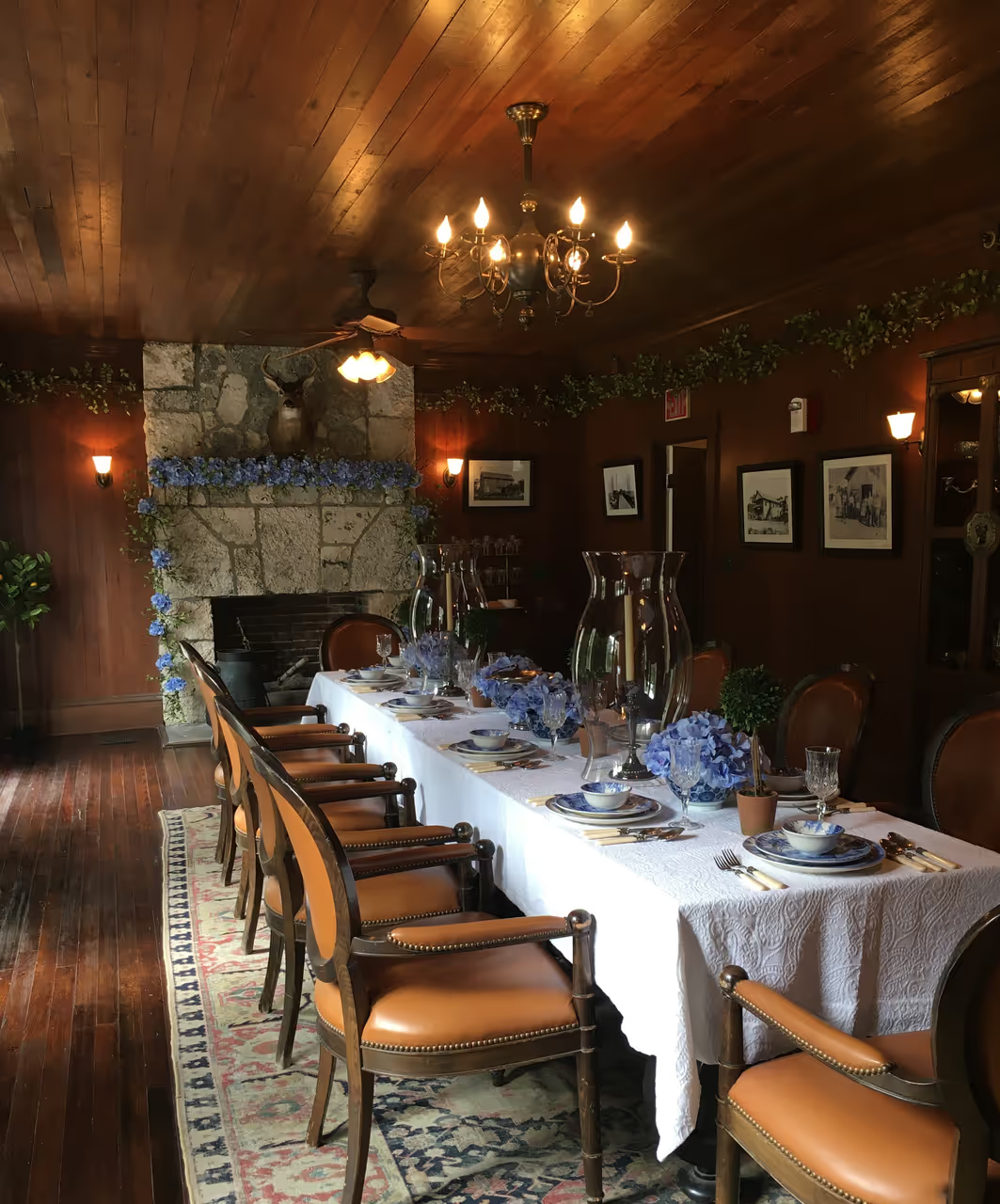 19669m
Deering Estate
This sprawling 400-acre environmental and archaeological preserve sits far south of the downtown core, hugging the coastline. The property contains a massive wooden hotel from the 1890s and a striking stone mansion built to house a wealthy industrialist's art collection. Visitors walk through thick mangrove forests and pine rocklands that look exactly as they did a century ago. The grounds feature deep, fresh-water springs and ancient fossil sites hidden within the limestone. It offers a deeply quiet, nature-focused alternative to the heavy crowds at Vizcaya.
hidden gem view