Phillip and Patricia Frost Museum of Science
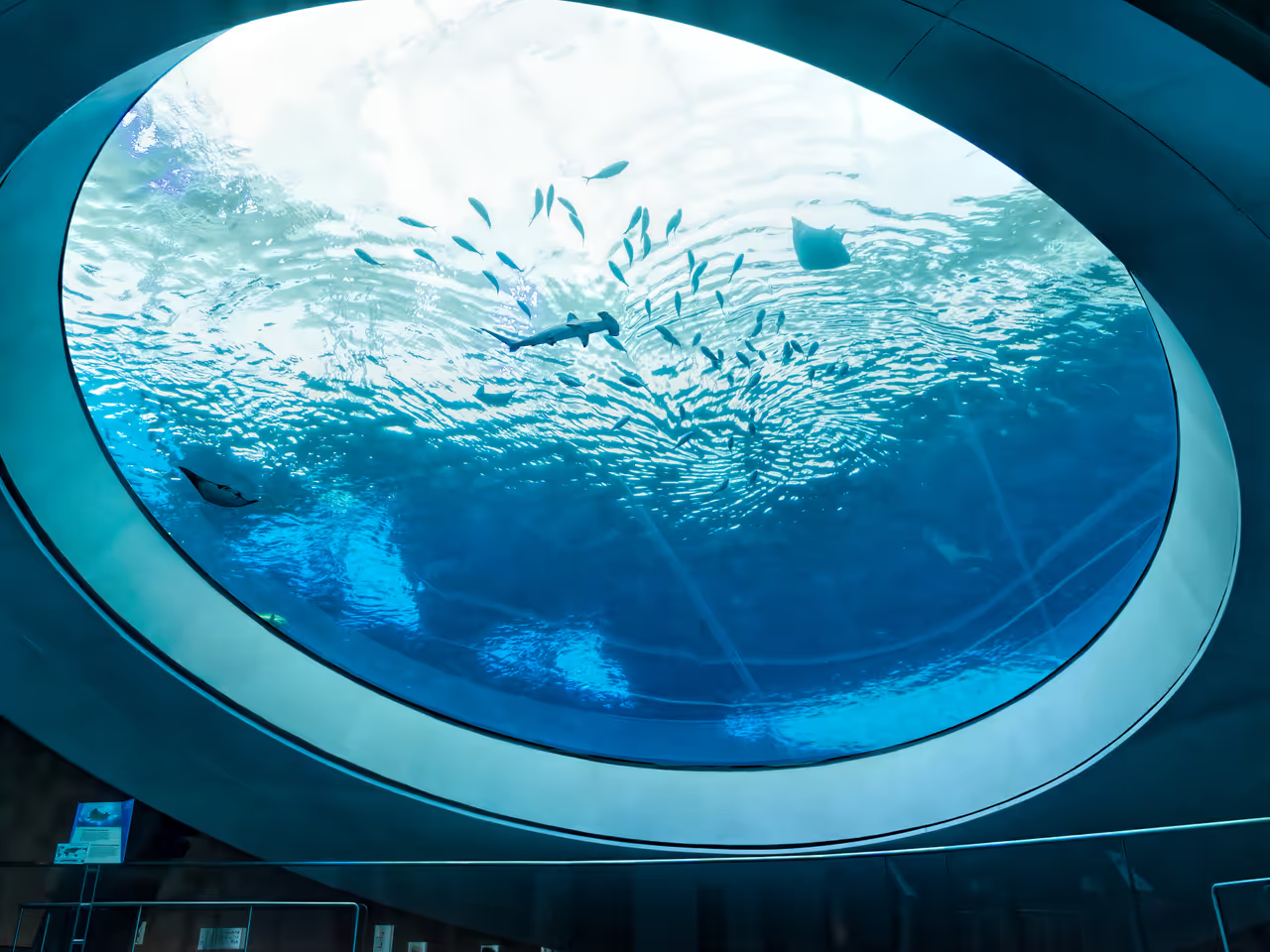
Standing beneath the thirty-one-foot oculus lens of the Gulf Stream aquarium feels less like visiting a typical exhibition hall and more like resting on the seabed of the Atlantic shelf. Four distinct pavilions cluster along Maurice A. Ferré Park, catching the salty Biscayne Bay air while housing everything from a tilted full-dome planetarium to living mangrove thickets. You can track bonnethead sharks cruising overhead on one floor, then step upstairs to touch stingrays gliding along shallow pool ledges. School groups occasionally crowd the ramps during mid-morning hours, but the buzz quickly dissipates as people disperse into the darker corners of the planetarium. Laser light shows soundtracked by rock legends run well into the evening beneath the twenty-four-degree tipped projection dome. It is an unapologetically hands-on waterfront complex that turns coastal physics and subtropical biology into tactile theatre.
Videos
History of Phillip and Patricia Frost Museum of Science
In 1949, a determined group of civic women banded together as the Junior League of Miami to remedy the city's lack of a dedicated natural history institution. Starting with little more than donated furniture and tireless volunteer hours, they launched the Junior Museum of Miami inside a rented house on Biscayne Boulevard in 1950. The initial collection leaned into pure ingenuity. Live honeybees hummed within an active hive mounted outside an open window frame, while loaned Seminole artefacts sat alongside donated Florida fossils. Crowds grew swiftly, forcing an interim shift to the Miami Women's Club before Dade County stepped forward in 1960 to build a permanent home on three acres of Vizcaya estate land in Coconut Grove. Six years later, the institution unveiled its crowning jewel: the Space Transit Planetarium, equipped with a revolutionary Spitz Model B star projector. For several decades, this planetarium shaped American pop astronomy. Jack Horkheimer roamed its darkened floor with exuberant hand gestures, producing the nationally syndicated television broadcast Star Gazers, which taught millions of late-night viewers how to read the constellations before bed. By the early twenty-first century, the beloved Coconut Grove campus was buckling under its own popularity and ageing infrastructure. Miami philanthropists Phillip and Patricia Frost ignited a daring downtown transformation in 2011 with a landmark thirty-five million dollar donation. Global design firm Grimshaw Architects drafted an ambitious waterfront science centre perched on Biscayne Bay. The Coconut Grove museum finally turned off its lights in 2015, carefully retiring the Spitz projector so it could be preserved for the public at HistoryMiami. The new complex officially opened its doors at Maurice A. Ferré Park in May 2017. Rising above the bay, the complex divides into four aerodynamic pavilions anchored by a half-million-gallon conical aquarium that cuts through three vertical levels. Visitors stand directly below a massive acrylic lens watching hammerheads and rays slice through the water overhead, while next door, a sixty-seven-foot planetarium dome projects deep space across eight thousand horizontal pixels.
8 events spanning 73 years
Fun Facts
- • Cult Television Broadcasts: Eccentric astronomy educator Jack Horkheimer filmed the nationally syndicated PBS series Star Gazers inside the planetarium for decades, famously signing off each episode with his catchphrase urging viewers to keep looking up.
- • Everglades Simulation: The River of Grass gallery uses real-time motion sensors to let children physically chase virtual animal footprints across an indoor marsh projection, simulating the water flow of the Everglades.
- • Forward-Tilted Sky: Unlike conventional hemispherical planetariums where visitors look straight up, the 250-seat Frost Planetarium dome is tilted forward at an angle of 23.5 degrees to match Earth's exact axial tilt.
- • Laser Rock Spectacles: Continuing a beloved tradition begun in the 1970s at the Coconut Grove planetarium, technicians project custom choreographed laser graphics against the dome to albums by rock icons like Pink Floyd and Queen.
- • Last Operating Spitz Model B: The Coconut Grove planetarium housed one of only twelve Spitz Model B Space Transit Projectors ever built, and by the time the building closed in 2015, it was the final functioning model operating anywhere in the world.
- • Live Honeybee Observation: When the museum first opened in a private residence in 1950, founders mounted an active honeybee hive directly outside a window so children could safely watch worker bees produce honey.
- • Massive Acrylic Oculus: The 31-foot-wide circular lens at the base of the Gulf Stream aquarium was cast in Colorado and shipped via oversized flatbed lorry, measuring thirteen inches thick to withstand oceanic water pressure.
- • Preserved Relic: Following the 2015 closure of the Coconut Grove complex, preservationists carefully dismantled the historic Spitz star projector rather than scrapping it, placing it on permanent exhibition across town at the HistoryMiami museum.
- • Rooftop Solar Laboratory: The rooftop Sun Spot installation does not simply power exhibits, serving as an active research testing ground where different types of experimental photovoltaic panels are monitored against intense South Florida humidity and solar radiation.
- • Suspended Sea Weight: The cone-shaped Gulf Stream aquarium holds half a million gallons of saltwater weighing approximately two thousand tonnes, supported entirely by massive cast concrete pylons to allow visitors to walk underneath.
Phillip and Patricia Frost Museum of Science FAQ
While we strive to keep this information accurate and up to date, we recommend verifying any details independently before making decisions based on them.
Phillip and Patricia Frost Museum of Science Map & Neighborhood Explorer
This interactive map is centered on Phillip and Patricia Frost Museum of Science. Zoom in and move the map around to automatically discover Wikipedia photos and summaries of other nearby sights, monuments, and historical points of interest and stories in real-time!
Places near Phillip and Patricia Frost Museum of Science
Make the most of your trip. Check out these top-rated spots located nearby.
 9660m
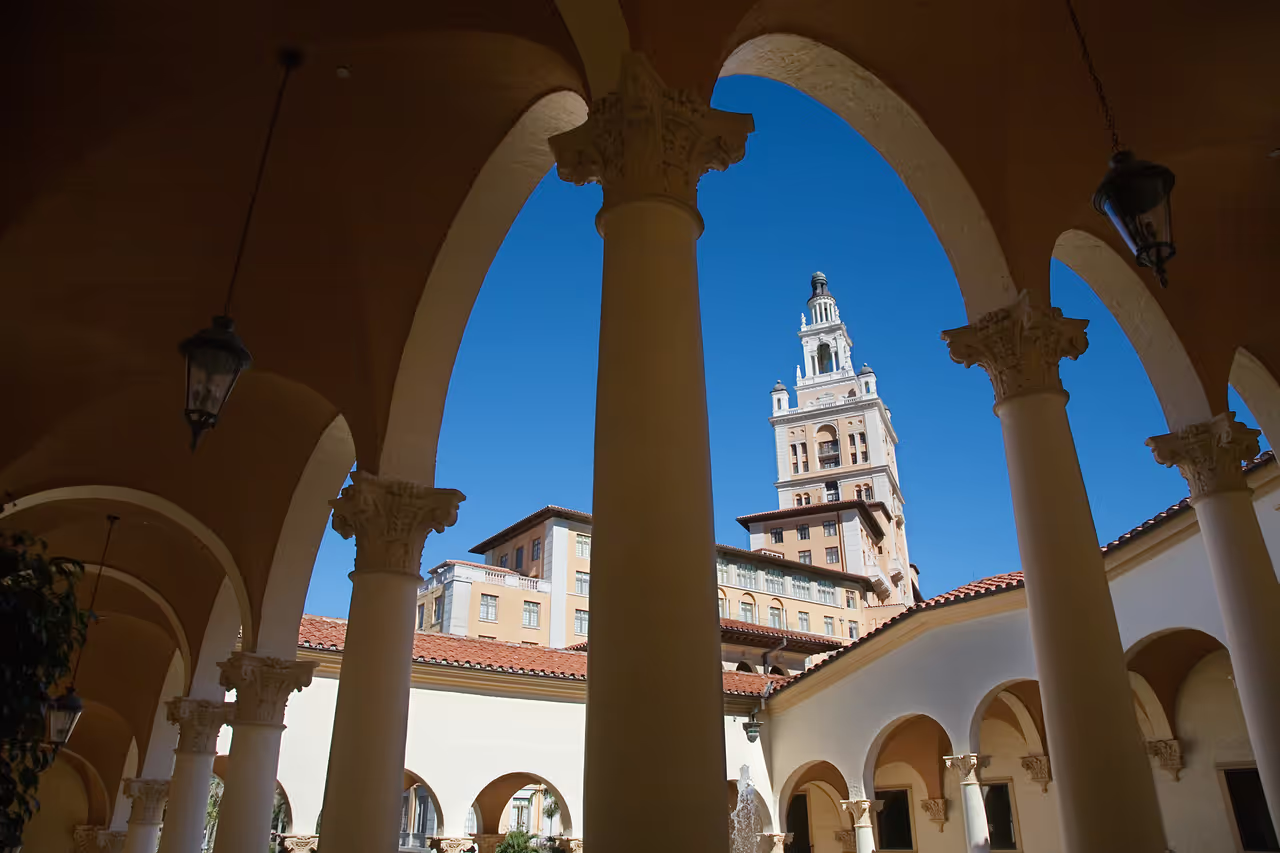
9660mBiltmore Hotel
A massive, ornate tower rises out of the flat suburban canopy of Coral Gables, visible for miles in every direction. The 1920s resort features hand-painted ceilings, heavy wooden beams, and a massive copper-clad cupola. It boasts one of the largest swimming pools in the country, surrounded by classical statues and grand colonnades. During the Second World War, the military sealed the windows and transformed the luxury rooms into a sprawling veteran's hospital. It operates today as a monument to the extravagant, unapologetic wealth of the 1920s land boom.
architecture view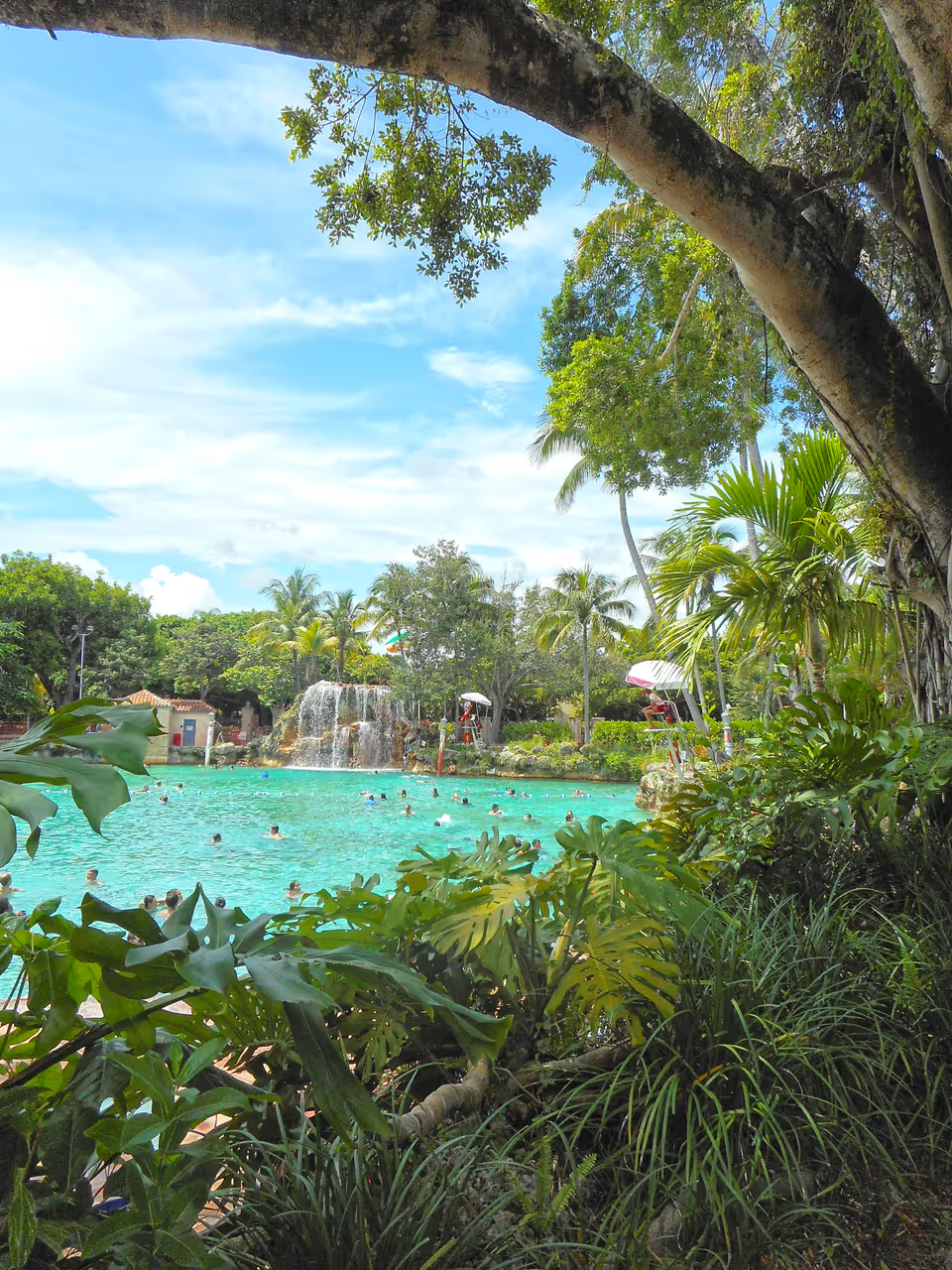 9948m
9948mSwimming at the Venetian Pool
In the 1920s, developers transformed an ugly limestone quarry into a sprawling, Mediterranean-style swimming oasis. Fresh, cool spring water fills the massive basin daily, providing relief from the oppressive tropical heat. Swimmers duck under picturesque stone bridges and explore small, dark cave systems carved into the rock. Historic photographs line the entryway, showing vintage Hollywood stars lounging by the waterfalls. It remains one of the most visually spectacular public municipal pools in the country.
highlight view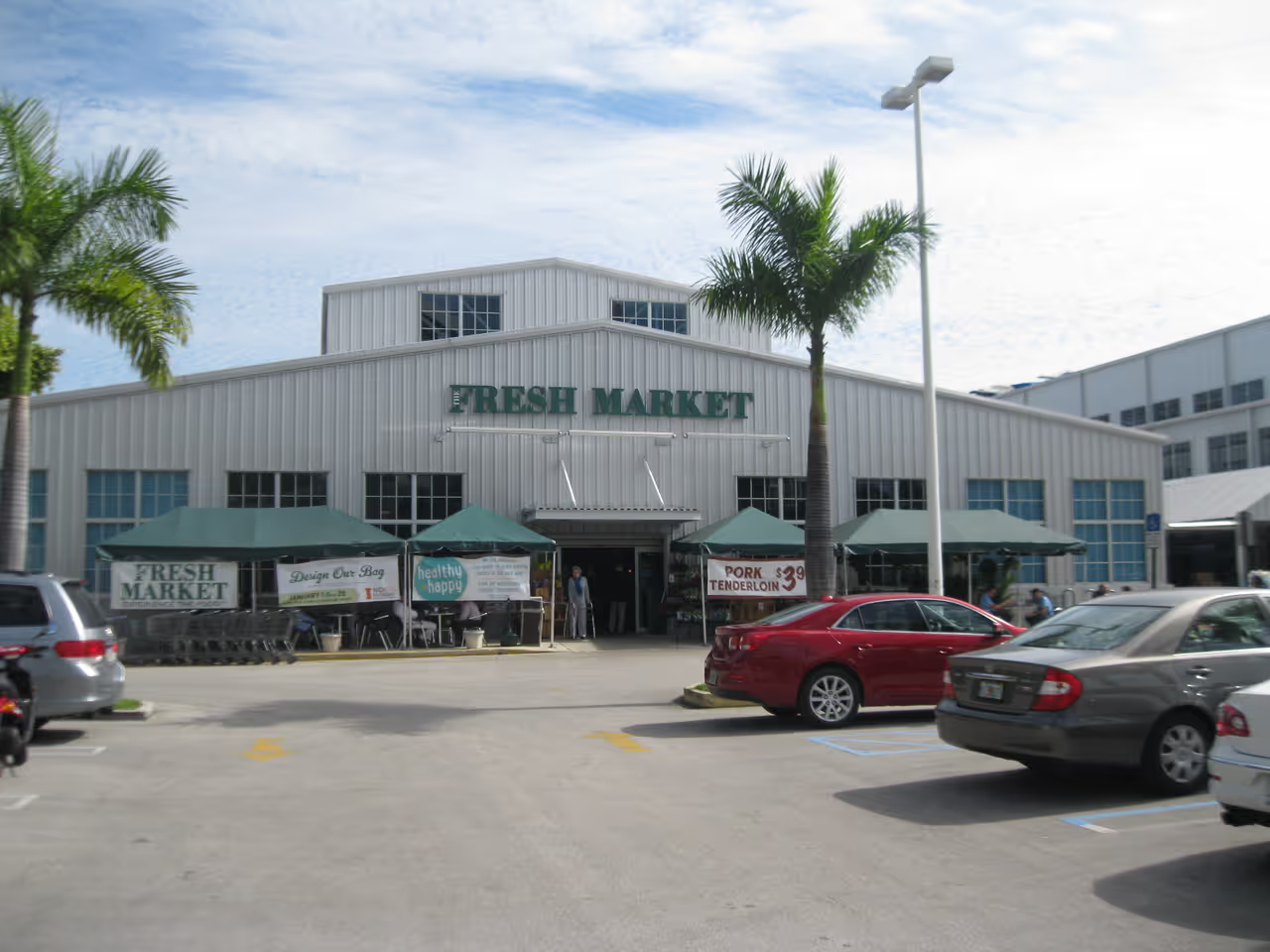 12726m
Coconut Grove Saturday Organic Market
Tucked away in the shaded streets of the Grove, this market focuses heavily on raw, vegan, and organic foods. Vendors sell exotic fruits like jackfruit and mamey sapote, alongside fresh cashew milk and raw cashew cheese. The atmosphere feels distinctly bohemian, reflecting the historical counter-culture roots of the neighbourhood. Visitors grab a freshly pressed sugarcane juice and sit under the banyan trees to escape the midday heat.
market view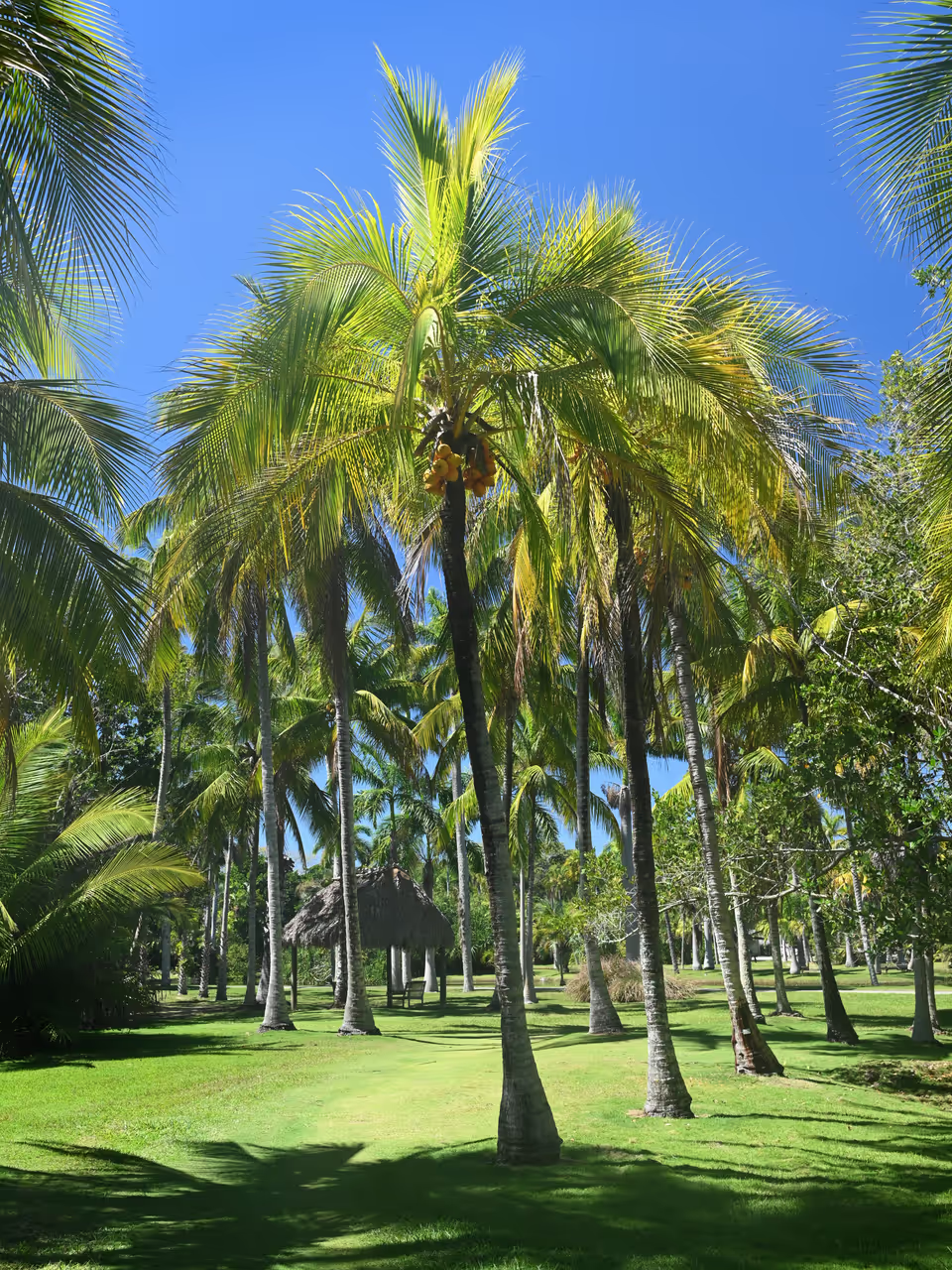 12949m
Fairchild Tropical Botanic Garden
Step inside the Clinton Family Conservatory, and a brilliant blue Morpho butterfly might just land directly on your shoulder. Fairchild Tropical Botanic Garden spreads across 83 acres of Coral Gables, holding the largest collection of tropical bamboo on the planet within its meticulously designed landscape. Landscape architect William Lyman Phillips laid out these grounds in the 1930s specifically to guide visitors on a journey of discovery, using carefully spaced plantings to reveal sweeping vistas one moment and intimate, shaded walkways the next. You can wander through an expansive artificial rainforest complete with its own atmospheric misting system, or seek out the peculiar fragrance of a massive cannonball tree planted over eight decades ago. The institution actively tests edible plants for future space missions while simultaneously working to restore native orchids to the surrounding city streets. Finish an afternoon here by tasting rare tropical fruits or simply observing the sunlight filter through the tall fronds of the Montgomery Palmetum.
park & nature view
Explore Similar Places in This Collection
Featured on This Itinerary
See all attractions in Miami
Including Ancient Spanish Monastery, Hard Rock Stadium, Vizcaya Museum and Gardens, and more