Würzburg University Botanical Garden
Stepping into the Würzburg University Botanical Garden is like embarking on a botanical world tour across nine hectares of beautifully curated landscapes. Whether you are wandering through the prehistoric shadows of the Tertiary Forest or exploring the humid depths of the tropical glasshouses, there is a sense of wonder waiting at every turn. It is a place where scientific research meets pure aesthetic beauty, offering a serene escape from the city streets. You can admire rare medicinal herbs, vibrant alpine blooms, and exotic plants from East Asia that tell stories of global exploration. The atmosphere is one of quiet discovery, making it a perfect spot for both curious minds and those seeking a peaceful afternoon. Its long history and dedication to conservation make every visit feel like you are part of an ongoing legacy of nature and science.
History of Würzburg University Botanical Garden
The Würzburg University Botanical Garden traces its roots back to 1696, when it was established as a 'Hortus Medicus' or medical garden. Founded by Prince-Bishop Johann Gottfried von Guttenberg at the Juliusspital, its early purpose was strictly practical: providing students with the living materials needed to study medicine and pharmacology. Over the decades, it evolved from a simple plot of herbs into a sophisticated botanical institution. By the mid-1700s, the renowned architect Balthasar Neumann had even applied his Baroque sensibilities to the garden's design, turning a place of study into a work of art. However, the garden's history is also marked by survival and resilience. The most harrowing moment came in March 1945, when Allied bombing raids reduced Würzburg to ruins. The botanical garden was not spared; its greenhouses were shattered, and its priceless collections were lost to fire and cold. In the bleak aftermath, Professor Hans Burgeff became an unlikely hero. A specialist in orchids, he used his expertise to breed and sell rare hybrids to collectors around the world. The proceeds from these international sales provided the vital funds needed to resurrect the garden from the ashes, ensuring that the botanical legacy of the university would not perish. Today, the garden resides at its third location on the Dallenberg, where it has flourished since the 1960s. It has transitioned from a compact city-centre plot to a sprawling nine-hectare sanctuary of biodiversity. The modern garden is a bridge between eras, housing everything from ancient European flora in the Tertiary Forest to the exotic specimens collected by the Würzburg-born explorer Philipp Franz von Siebold in Japan. It remains a vital hub for research and a beloved retreat for the community, embodying a spirit of scientific curiosity that has endured for over three centuries.
8 Events spanning 282 years
Fun Facts
- • After World War II, the garden's survival was largely due to an international orchid trade run by its own professor.
- • Balthasar Neumann, the architect of the famous Würzburg Residence, was responsible for the garden's layout in the mid-18th century.
- • It features a special collection of plants brought from Japan by the famous Würzburg physician and explorer Philipp Franz von Siebold.
- • Its tropical glasshouses include a simulated mountain cloud forest and a lowland rainforest environment.
- • The 'Tertiary Forest' section allows visitors to see what European forests looked like millions of years ago before the ice ages.
- • The facility manages over 9 hectares of land, making it one of the most significant green spaces for research in Bavaria.
- • The garden has moved three times since its founding in 1696 to accommodate the growing needs of the university.
- • The garden serves as a primary training ground for future biologists and teachers at the Julius Maximilian University.
- • The garden was originally founded inside the walls of the Juliusspital to grow plants for medicine.
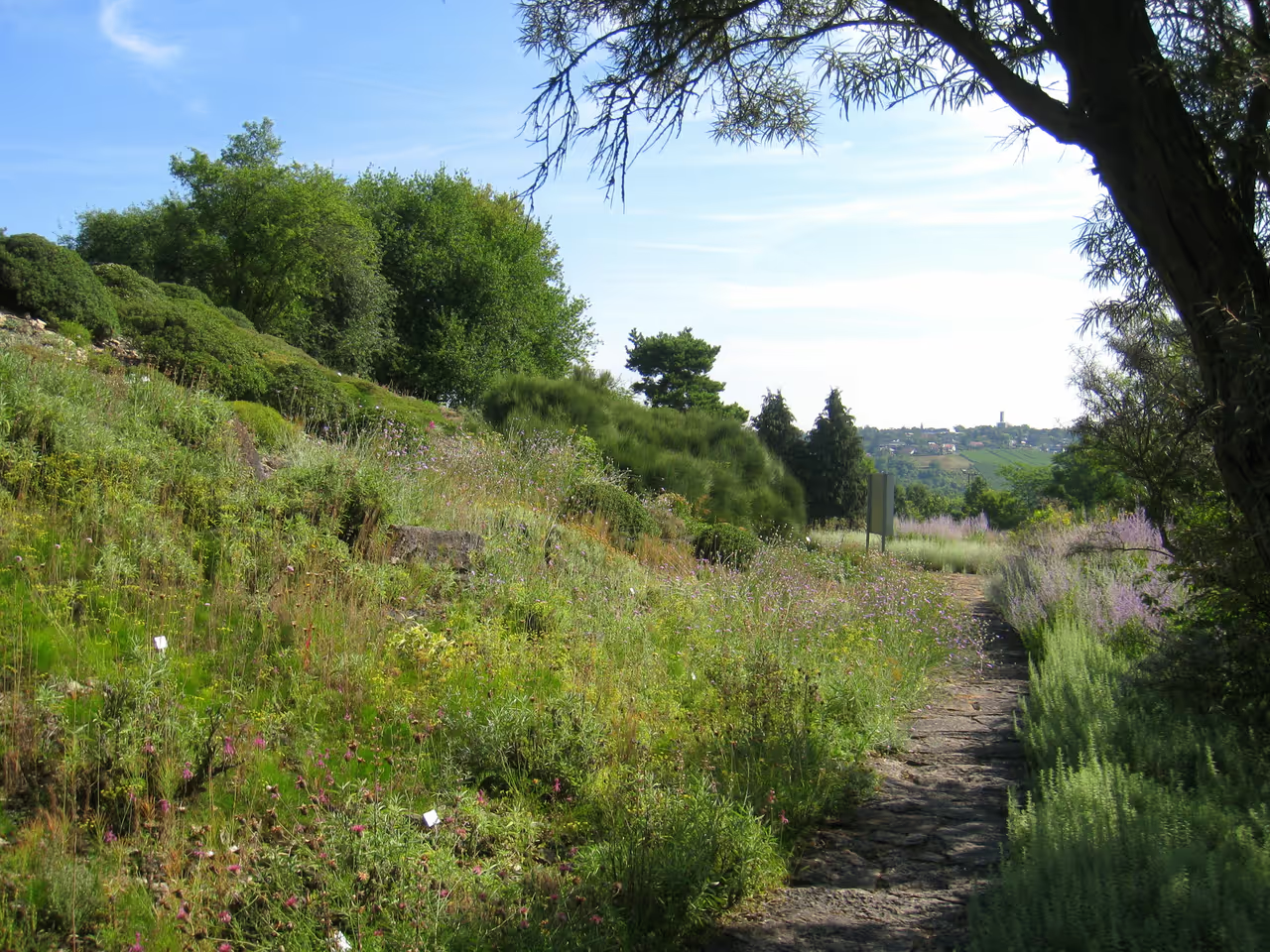
- • There is a Mediterranean courtyard designed to replicate the dry, rocky landscapes of Southern Europe.
Würzburg University Botanical Garden FAQ
While we strive to keep this information accurate and up to date, we recommend verifying any details independently before making decisions based on them.
Würzburg University Botanical Garden Map & Neighborhood Explorer
This interactive map is centered on Würzburg University Botanical Garden. Zoom in and move the map around to automatically discover Wikipedia photos and summaries of other nearby sights, monuments, and historical points of interest and stories in real-time!
Places near Würzburg University Botanical Garden
Make the most of your trip. Check out these top-rated spots located nearby.
 1871m
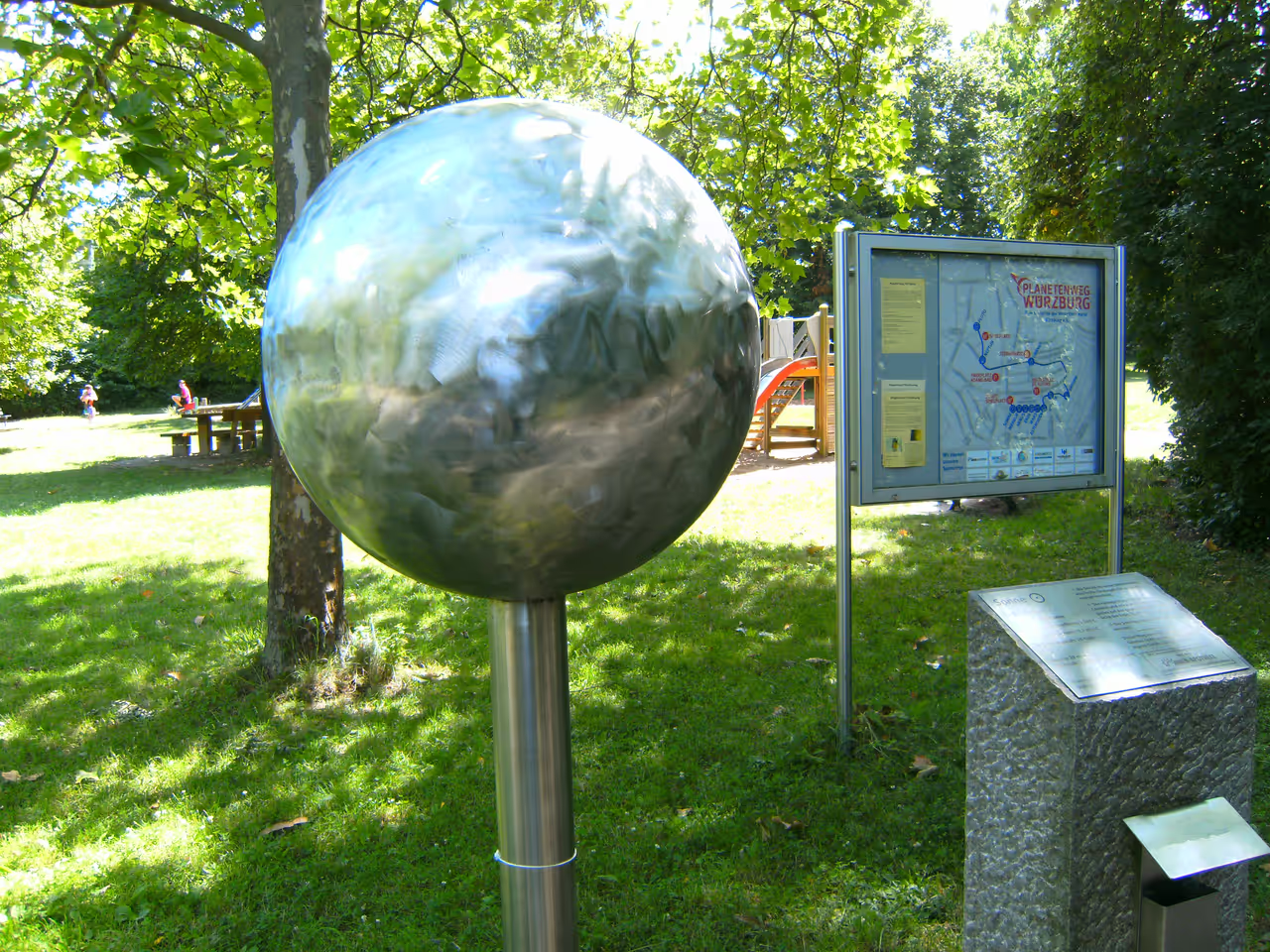
1871mPlanet Walk
This highly unique, educational walking trail is located in a quiet residential district in the southeast of the city. The route brilliantly maps out our entire solar system at a massive scale of one to one point two billion, allowing walkers to physically experience astronomical distances. Starting with a large representation of the Sun, visitors stroll past individual stone steles detailing fascinating facts about each subsequent planet. It is an incredibly engaging, interactive experience that provides a fantastic sense of cosmic perspective. The walk weaves through peaceful, leafy suburban streets and ends near a local wooded area. It is a fantastic, completely offbeat activity, especially for families or anyone with a curious, scientific mind.
hidden gem view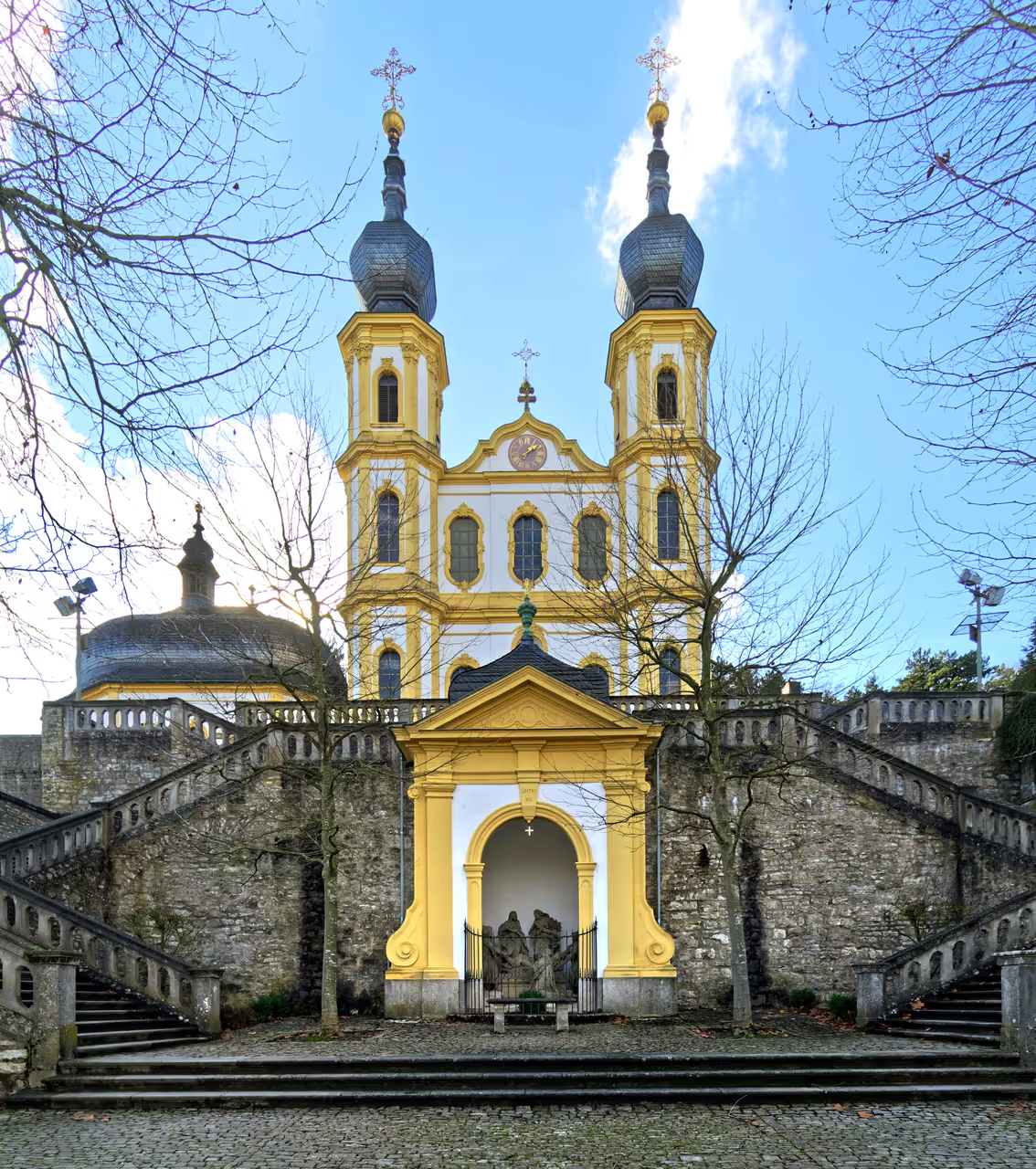 2230m
2230mLittle Chapel
Perched high on the Nikolausberg, the Käppele is a scenic vantage point and a masterpiece of Rococo architecture. Designed by the legendary Balthasar Neumann, its bulbous domes and elegant towers dominate the skyline across from the fortress. Reaching the top involves a scenic climb through Germany’s largest Stations of the Cross, flanked by grand plane trees and intricate sculptures. Inside, the atmosphere shifts to one of quiet devotion, surrounded by vibrant frescoes and a gold-laden altar. It is a place where history, faith, and nature merge, offering a peaceful retreat from the city below. Whether you come for the art or the panoramic views, the experience is truly unforgettable.
attraction view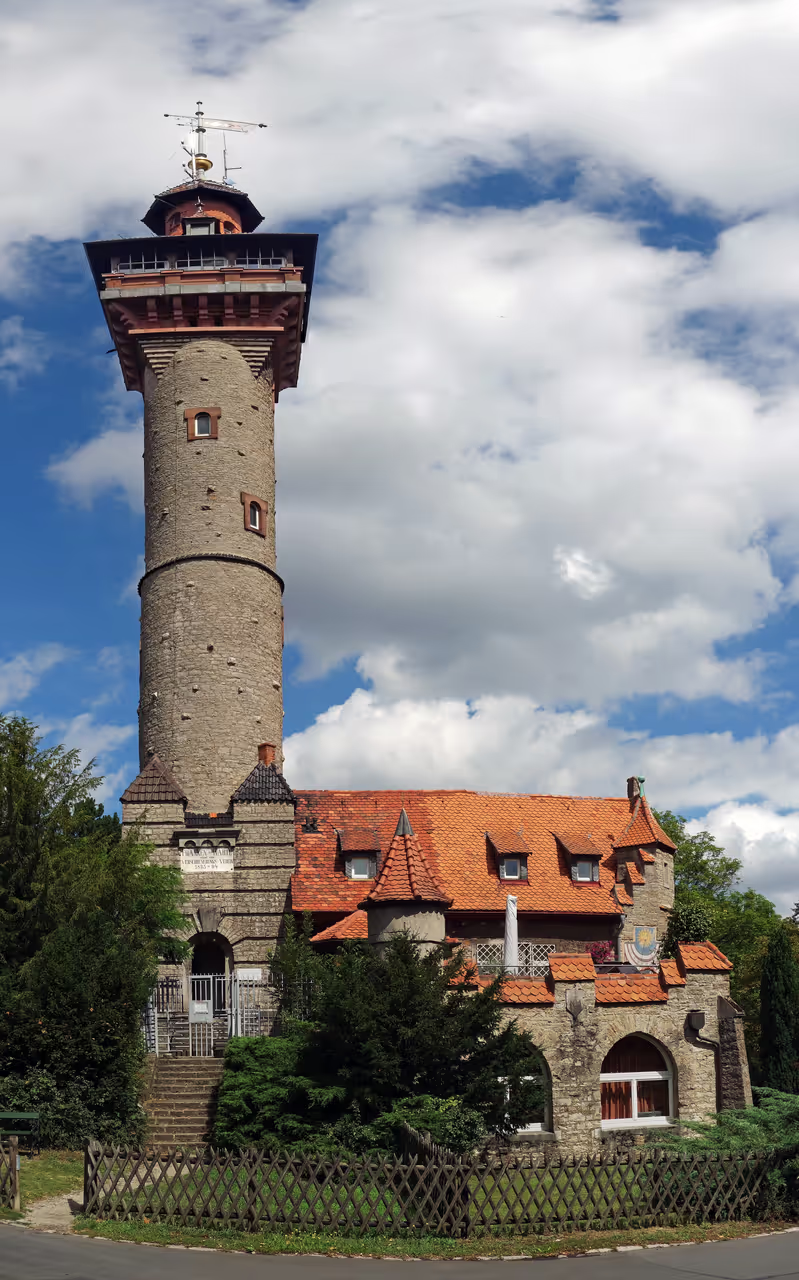 2492m
2492mFrankenwarte Tower
Constructed in the late nineteenth century by a passionate local beautification society, this rugged stone tower sits upon one of the highest hills in the immediate area. Climbing the steep internal spiral staircase is a rigorous effort, but breaking through the tree line reveals an astonishing, three hundred and sixty degree view. The vantage point is so incredibly high that on clear days, the expansive panorama stretches far beyond the city limits deep into the surrounding Franconian countryside. The dense, surrounding woodland provides a wonderful, framing contrast of raw nature against the distant urban grid. It is an adventurous, slightly off the beaten path destination that rewards true explorers. The brisk, elevated winds at the top are incredibly refreshing.
viewpoint view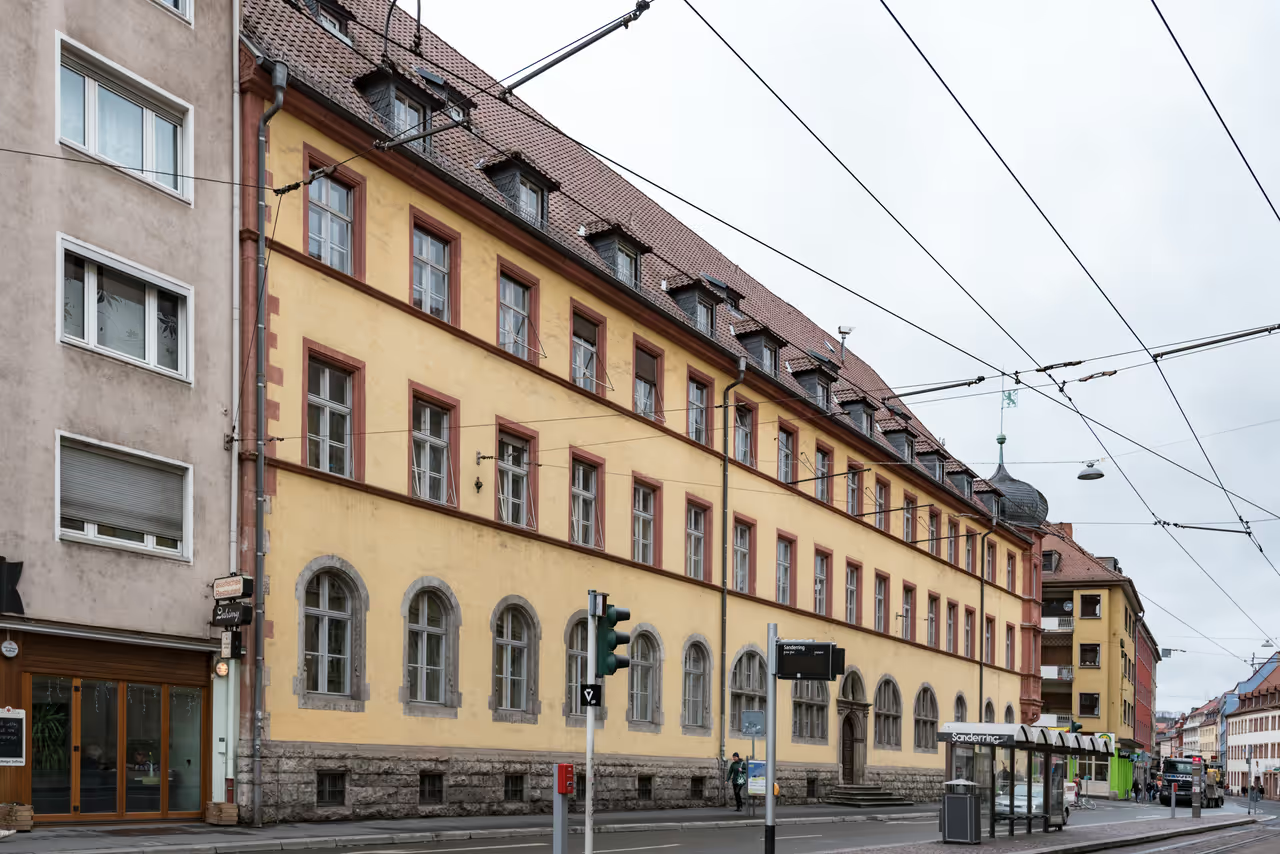 2615m
2615mSanderstraße District
This lively artery is the epicentre of the city's student nightlife and youthful alternative culture. The street is packed tightly with casual pubs, eclectic dive bars, and vibrant late night eateries serving cheap but delicious food. It has a distinctly bohemian and unpretentious vibe, making it incredibly welcoming for newcomers and solo travellers. People often spill out onto the pavements on warm evenings, creating a massive, interconnected street party atmosphere. It is the perfect place to sample affordable local beers and mingle with friendly locals. The energy here remains high and boisterous well into the early hours of the morning.
nightlife view
See all nature & parks in Würzburg
Ringpark, 1990 State Garden Show Park...