Nuremberg Toy Museum
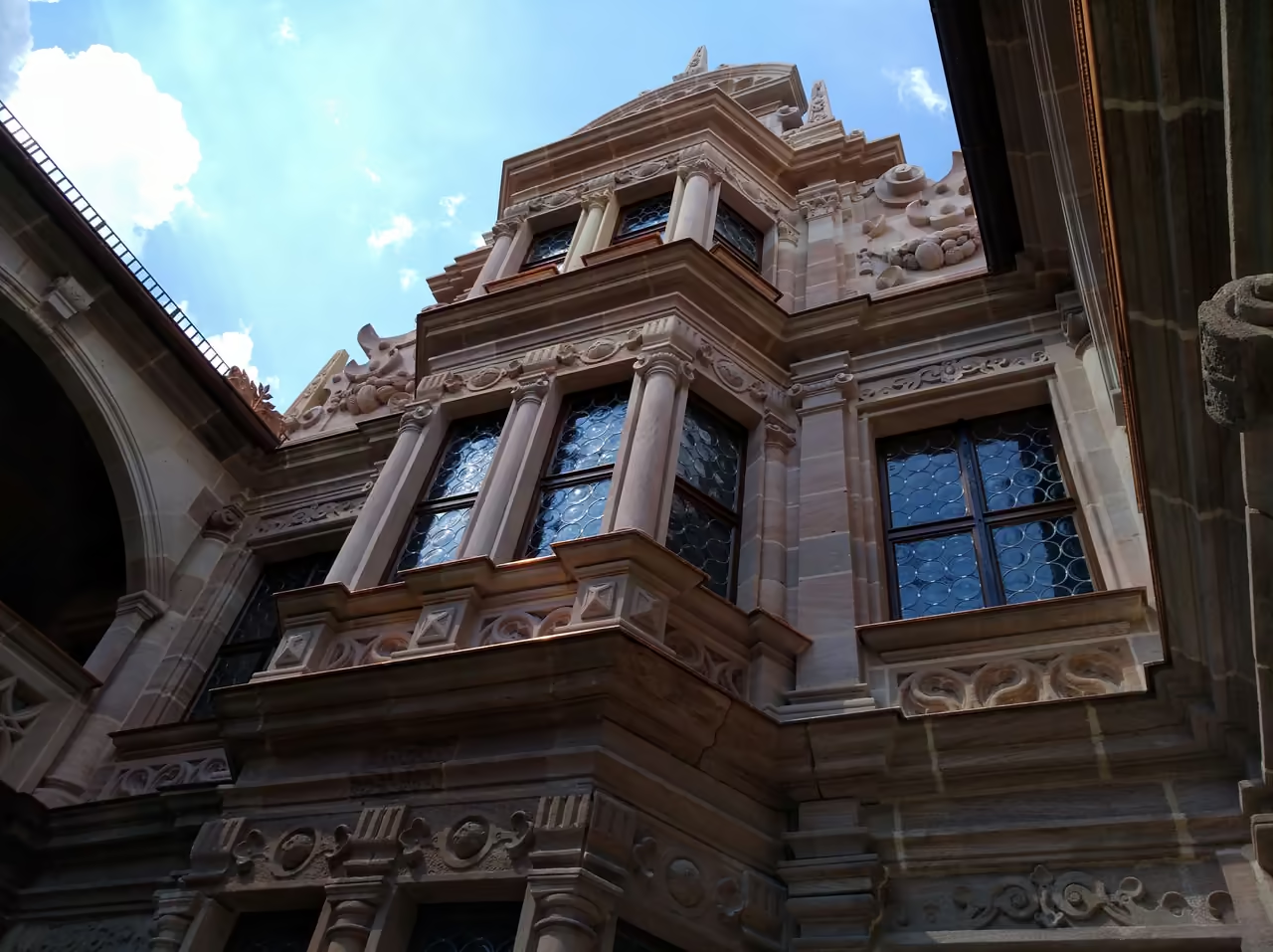
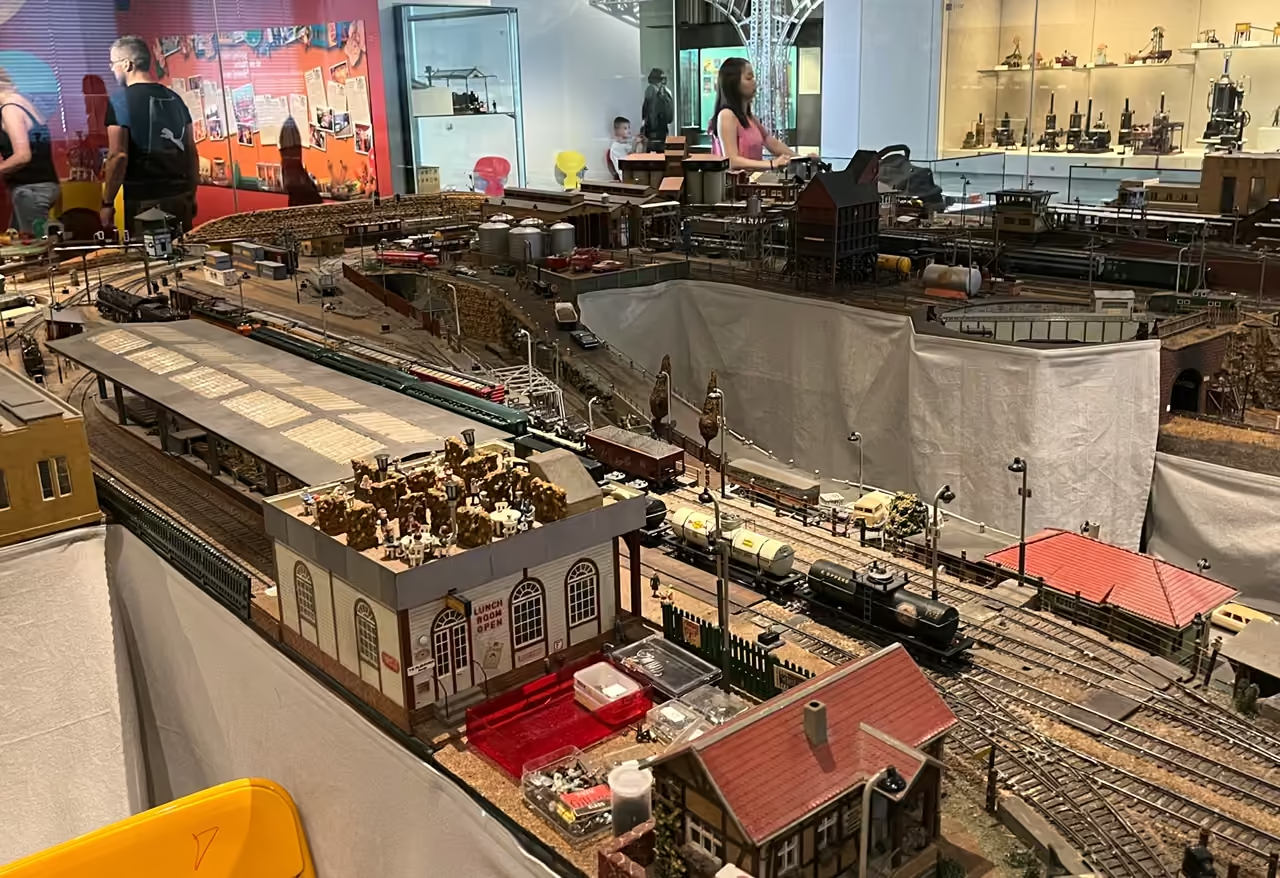
Stepping into Karlstraße reveals Nuremberg's centuries old legacy as the toy making capital of Europe, sheltered behind an ornate Italian Renaissance facade. Inside, four floors showcase four millennia of childhood playthings, beginning with simple Antiquity clay rattles and progressing to finely engineered Lehmann tin automations. A highlight is the 1:64 scale railway layout on the third level, faithfully depicting the crowded rail yard of Nebraska's Omaha Union Station. Down in the courtyard, visitors discover an unusual timber Dockengalerie, whose turned baluster pegs deliberately mimic early wooden doll bodies. The top floor invites hands on tinkering with construction bricks and vintage games. Outside in the secluded garden, children navigate a hedge labyrinth while Michael Mathias Prechtl's colourful ceramic cockerel fountain splashes beside the courtyard cafe.
Videos
History of Nuremberg Toy Museum
In the early sixteenth century, prominent Nuremberg patrician Wilhelm Haller the Elder established his family residence on Karlstraße, dubbing it the Haus im Gemsenthal. Nearly a century later, a prosperous jeweller named Paul Kandler commissioned mason Jakob Wolff the Elder to crown the merchant home with a lavish Italianate Renaissance gable. The manor evolved through changing architectural fashions, acquiring a carved Baroque wooden bay window and delicate Rococo stucco songbirds on the first floor ceiling. By the close of the nineteenth century, toy wholesalers Schrögler and Scheckenbach converted the premises into a busy shipping depot, sending crates of local tin novelties across global trade routes. The museum collection owes its life to the quiet persistence of Lydia and Paul Bayer, who began scouring flea markets across Weimar Germany during the 1920s. At a time when serious historians dismissed playthings as disposable nursery clutter, the Bayers recognised dolls, paper figures, and clockwork contraptions as vital records of domestic life. Their private hoard grew to over twelve thousand pieces, surviving relocation to Würzburg. After Lydia died in 1961, her daughter Lydia Bayer and husband Paul carried out her lifelong wish by opening a private exhibition in Würzburg to showcase the extraordinary treasury. Eager to celebrate Nuremberg's centuries as the world capital of toy manufacturing, city cultural director Hermann Glaser spearheaded the acquisition of the Bayer collection in 1966. Municipal architects restored the war damaged Karlstraße complex, retaining the historical street facade while fashioning modern exhibition rooms behind it. When the museum opened in 1971, visitors found centuries of social history mirrored in miniatures, from hand carved wooden peg dolls to elaborate steam driven factories built by Bing and Lehmann. Continued expansions later added the sprawling Omaha model railway network and incorporated the German Games Archive, ensuring the institution remains a dynamic sanctuary for play.
10 events spanning 502 years
Fun Facts
- • A delicate Rococo ceiling created around 1750 remains preserved inside the first floor, decorated with sculpted plaster songbirds hidden among whimsical foliage.
- • Collectors Lydia and Paul Bayer began hunting for nursery antiquities in the 1920s, rescuing hundreds of intact eighteenth century doll kitchens that ordinary families were throwing away as outdated junk.
- • During the seventeenth century, the residence belonged to court jeweller Paul Kandler, who spared no expense installing an elaborate sandstone gable designed to rival the grandeur of Nuremberg's town hall.
- • Hidden away in the museum vaults are over eighty thousand catalogued objects that cannot fit into the physical galleries, all digitised in a virtual public depot for researchers worldwide.
- • In the late nineteenth century, Karlstraße 13 operated as a busy commercial depot where toy distributor Schrögler and Scheckenbach loaded horse carts in the courtyard to export tin novelties to London and New York.
- • Nuremberg's metal craft gave rise to industrial toy giant Bing, which grew into the world's largest toy manufacturer by the early twentieth century before economic collapse and anti Semitic pressure forced its closure in 1932.
- • One of the museum's rarest exhibits is a collection of miniature kitchens from the 1600s, designed not for child amusement but as instructional teaching tools to prepare young patrician daughters to manage a complex household.
- • The fountain standing beside the entrance, named the Gockelreiterbrunnen, was sculpted by Nuremberg artist Michael Mathias Prechtl in 1971 to resemble a traditional folk art cockerel toy mounted on a concrete column.
- • The museum holds an official registry spot on Bavaria's UNESCO Intangible Cultural Heritage list due to its work safeguarding thousands of historical European board games alongside the German Games Archive.
- • The third floor transport hall houses a bespoke S gauge model railway layout spanning several scale miles, replicating Nebraska's Omaha Union Station during its mid century steam and diesel peak.
- • The wooden balusters lining the inner courtyard galleries are known locally as Docken, which doubles as the Franconian dialect word for the limbless turned wood peg dolls produced by medieval woodturners.
FULL PLACE DETAILS
OVERVIEW & STATS
- Established
- In 1971, making it 55 years old
ARCHITECTURE & HERITAGE
- Heritage Status
- Architectural Heritage Monument In Bavaria
- Architects
- Michael Mathias Prechtl
WEB & AMENITIES
Nuremberg Toy Museum Map & Neighborhood Explorer
This interactive map is centered on Nuremberg Toy Museum. Zoom in and move the map around to automatically discover Wikipedia photos and summaries of other nearby sights, monuments, and historical points of interest and stories in real-time!
Nuremberg Toy Museum FAQ
While we strive to keep this information accurate and up to date, we recommend verifying any details independently before making decisions based on them.
Places near Nuremberg Toy Museum
Make the most of your trip. Check out these top-rated spots located nearby.
 119m
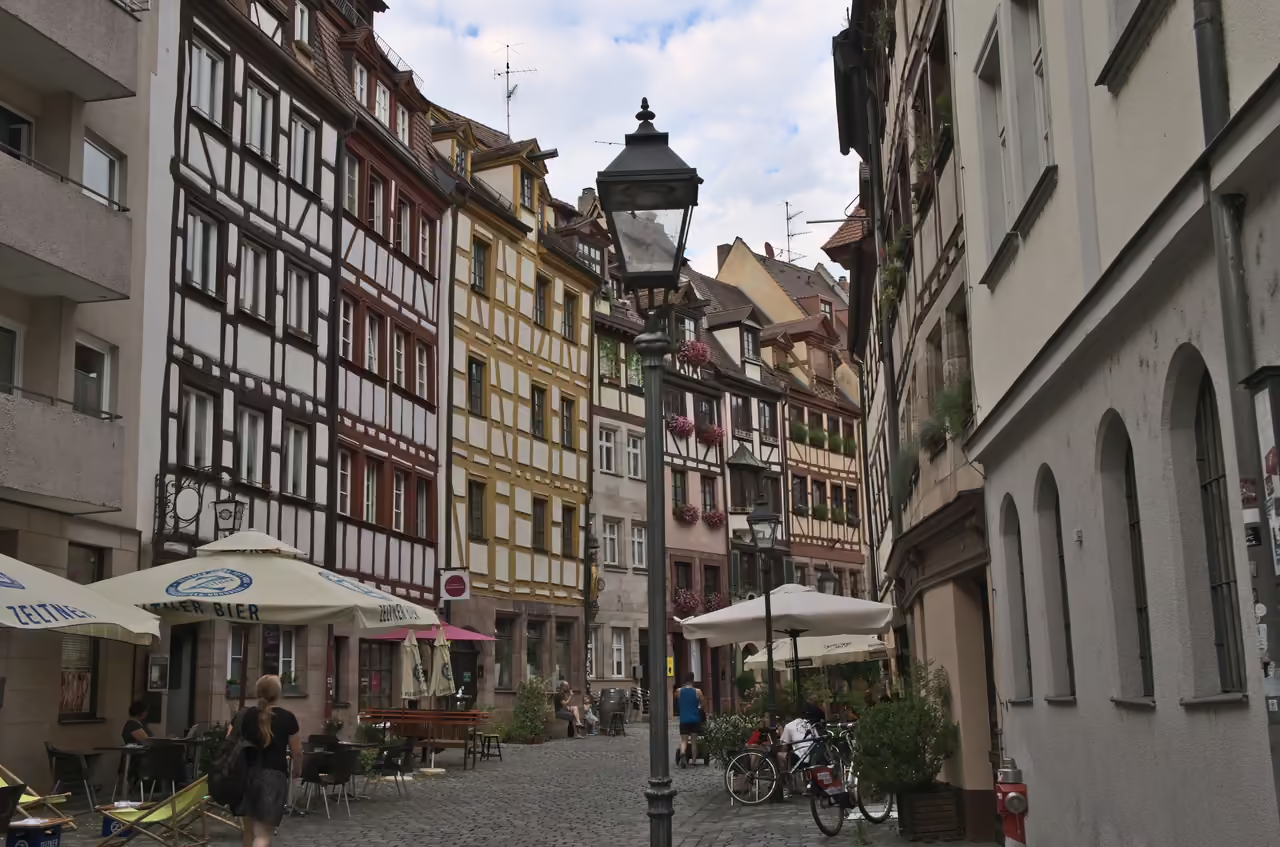
Wander Tanners' Lane
Strolling down this gently curving cobblestone street offers the most authentic glimpse of the pre-war city architecture available. Dozens of brightly painted, intricately carved half-timbered houses lean slightly outward over the pavement. The lack of modern facades creates an immersive historical atmosphere, perfect for photography. Admiring the detailed craftsmanship of the wooden beams and oriel windows costs absolutely nothing.
free thing to do view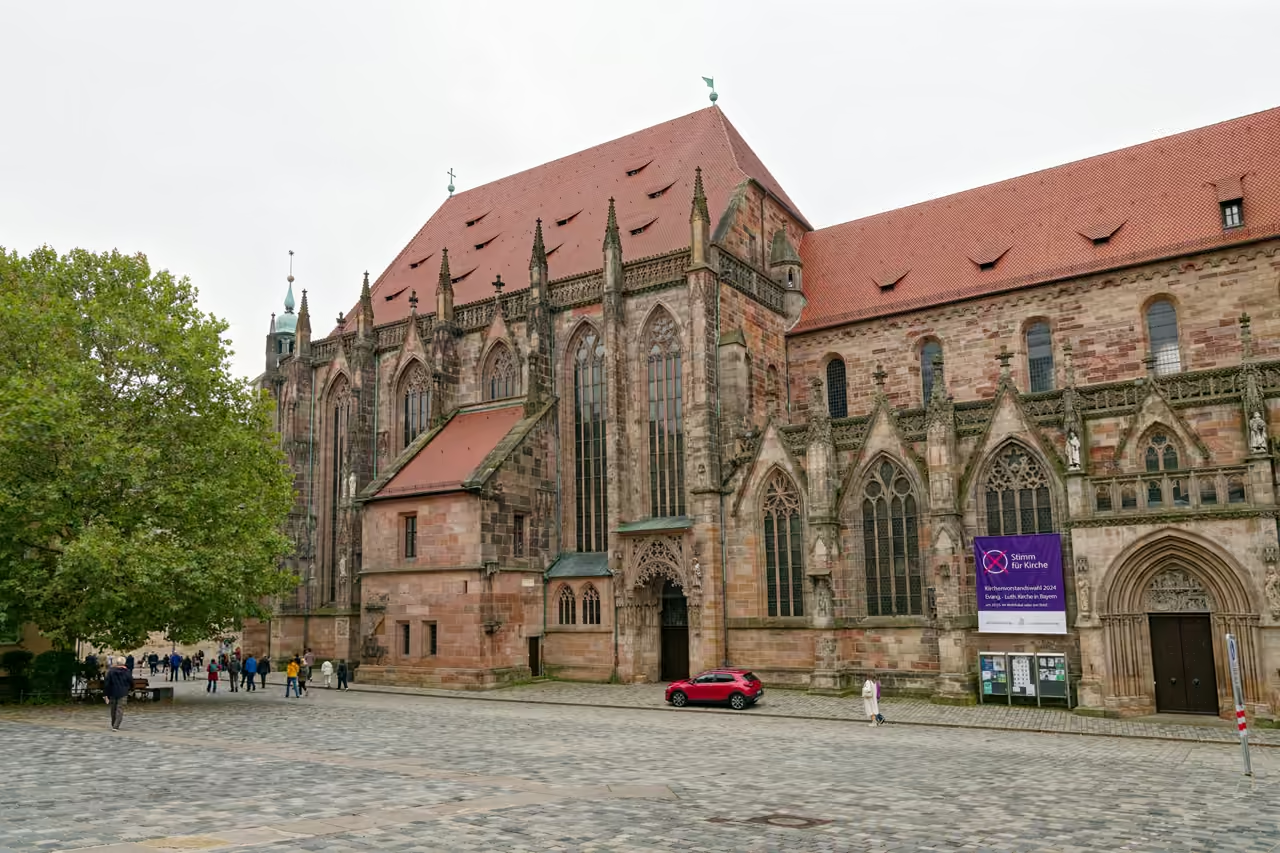 168m
St. Sebald Church
Climbing the gentle cobblestone rise from the main market square toward Nuremberg Castle, the twin towers of St. Sebald Church dominate the skyline. Inside, warm sandstone arches shelter an extraordinary gathering of pre-Reformation masterpieces that survived fires and aerial bombardments. The visual anchor of the eastern hall choir is Peter Vischer's colossal bronze monument, holding the silver reliquary of Sebaldus, the city's hermit patron saint. Sunlight filters through fourteenth-century stained glass designed by Albrecht Dürer's circle, splashing kaleidoscopic heraldry onto intricate stone epitaphs. Echoes of Johann Pachelbel, who once commanded the organ pipes here, seem to linger in the vaulted acoustics. Outside, the delicate relief carvings of the Bride's Doorway and the sculpted Last Judgement present an evocative glance into medieval civic pride.
attraction view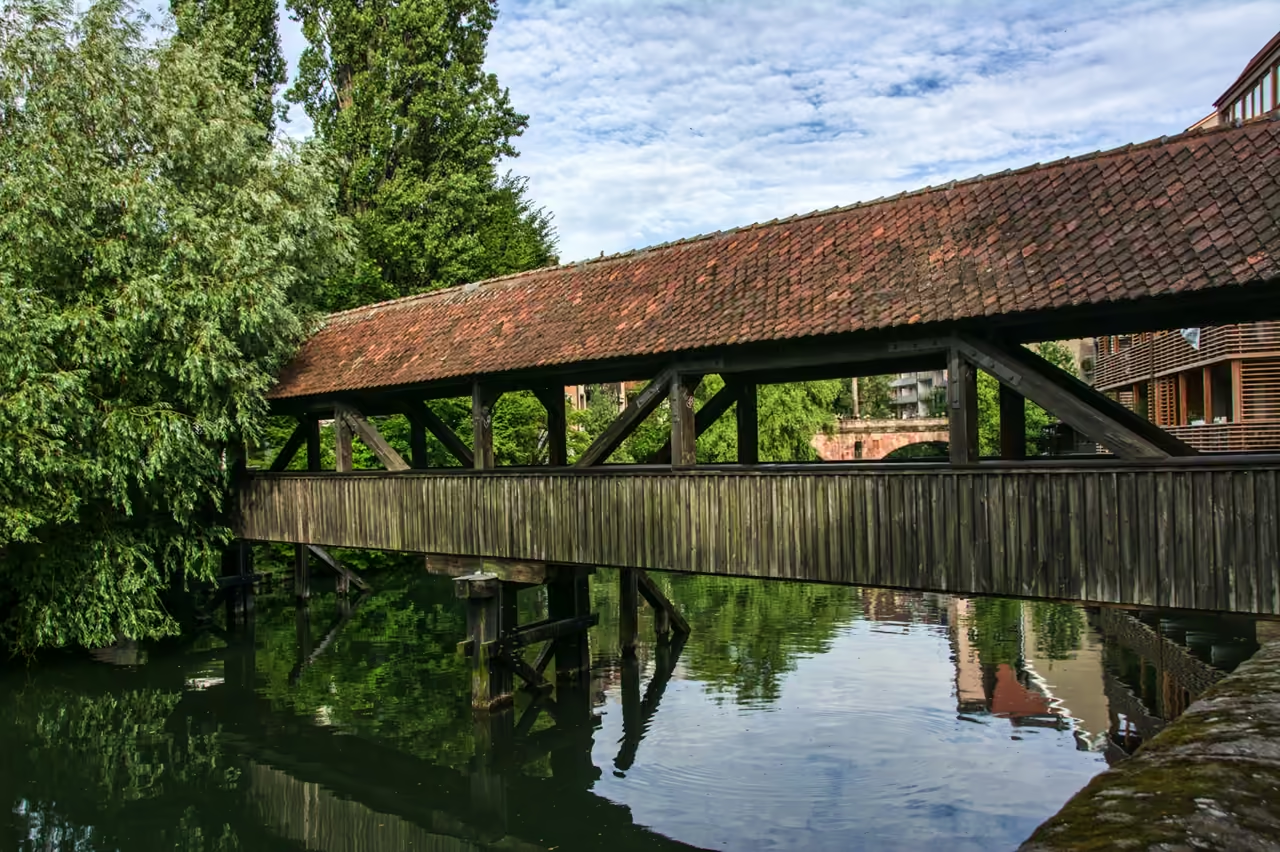 169m
Executioner's Bridge & Wine Storehouse
A covered wooden footbridge spans the Pegnitz river, connecting a small island to the northern bank under a sloping, tiled roof. Directly adjacent sits a massive, half-timbered building overhanging the water, originally built to house lepers before being converted to a wine depot. The executioner lived in the isolated tower connected to the bridge, banished from residing within the city proper due to his grim profession. The dark wood and red roofs create a striking reflection in the slow-moving river below. The ensemble represents the most fiercely photographed architectural composition in the entire city.
highlight view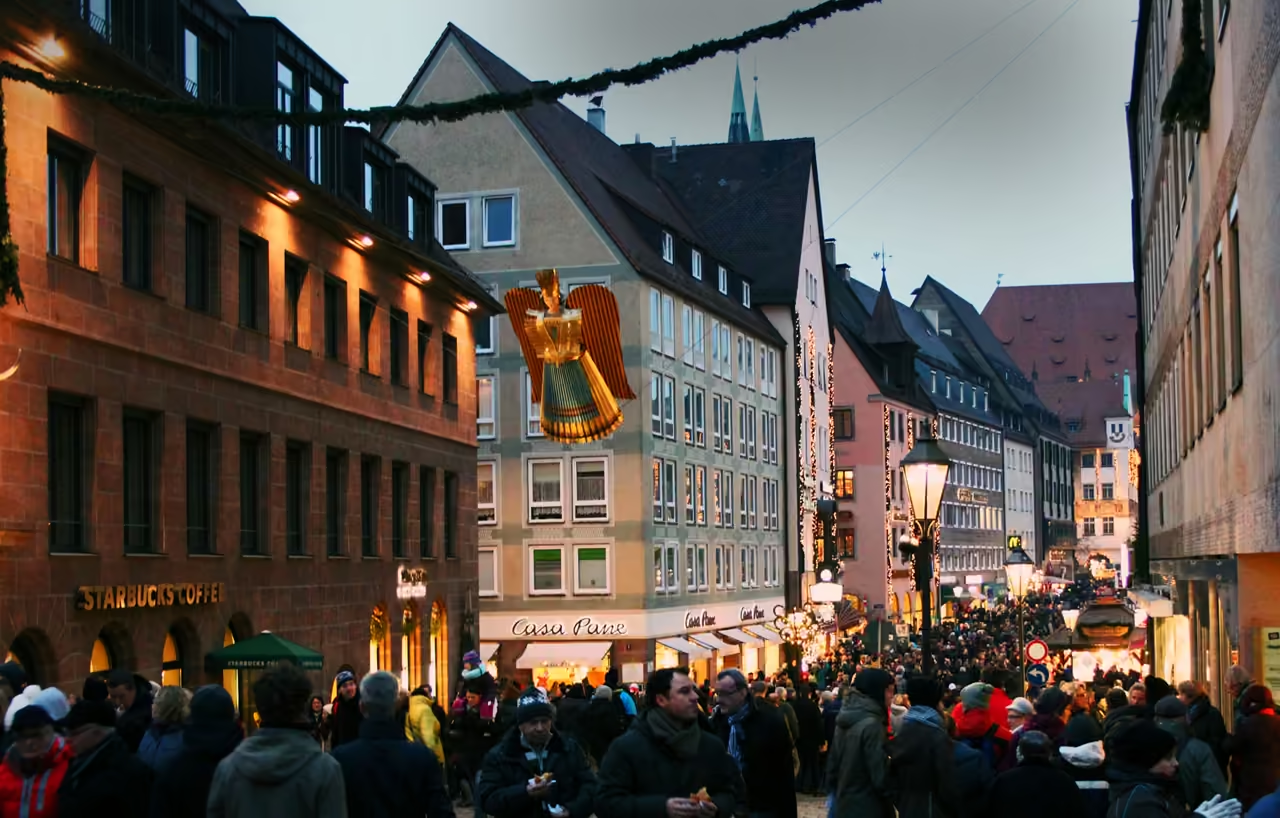 176m
Christmas Market
Wooden stalls with red-and-white canvas roofs take over the Hauptmarkt, filling the winter air with the scent of roasted almonds and mulled wine. The traditional 'Christkind', a young woman dressed in gold and white, officially opens the festivities from the balcony of the Frauenkirche. Vendors sell exclusively high-quality, locally produced crafts, strictly prohibiting mass-produced plastic toys. Visitors wrap their hands around warm mugs of Feuerzangenbowle while snacking on spiced gingerbread. It remains one of the oldest and most atmospheric winter events in Europe.
festival view
Explore Similar Places in This Collection
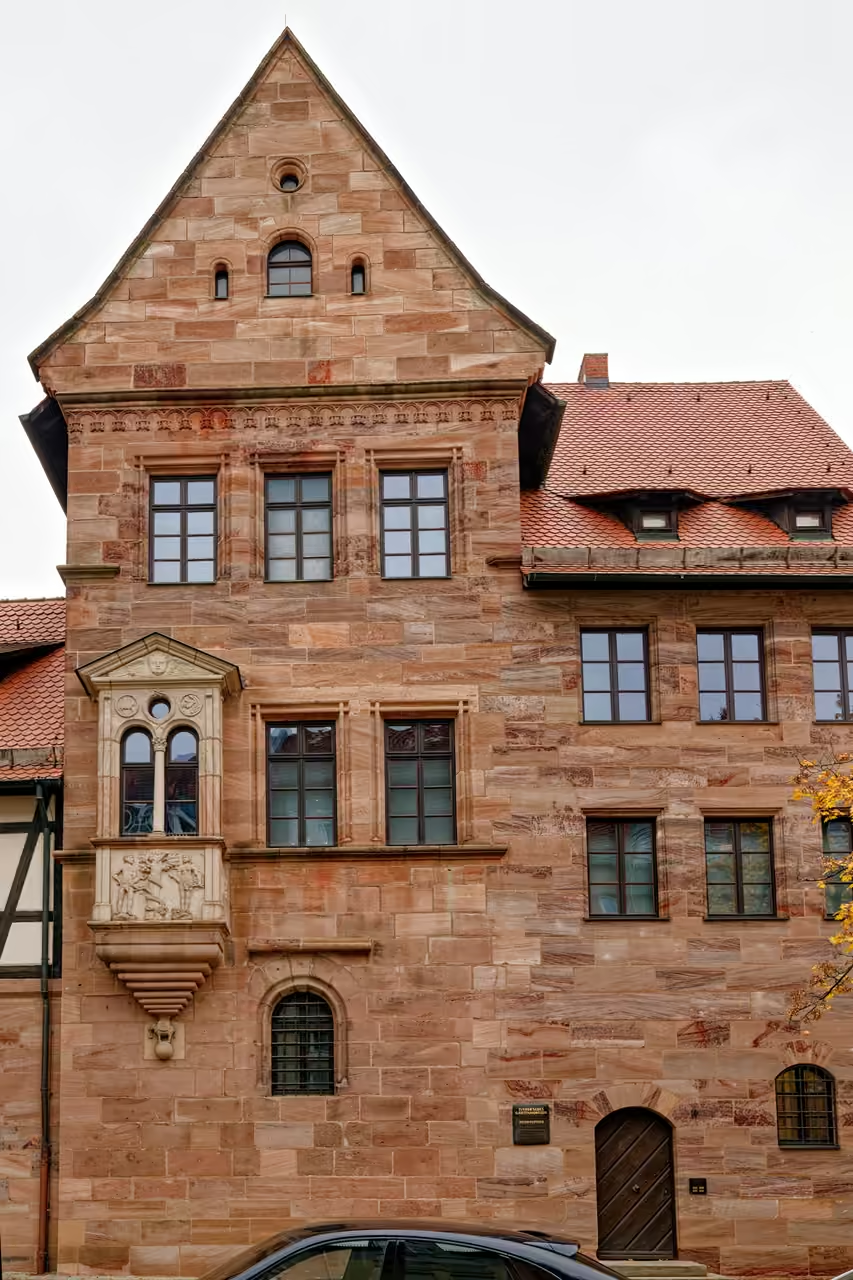
See all attractions in Nuremberg
Including Albrecht Dürer House, Germanic National Museum, Nazi Party Rally Grounds, and more