Solidor Tower
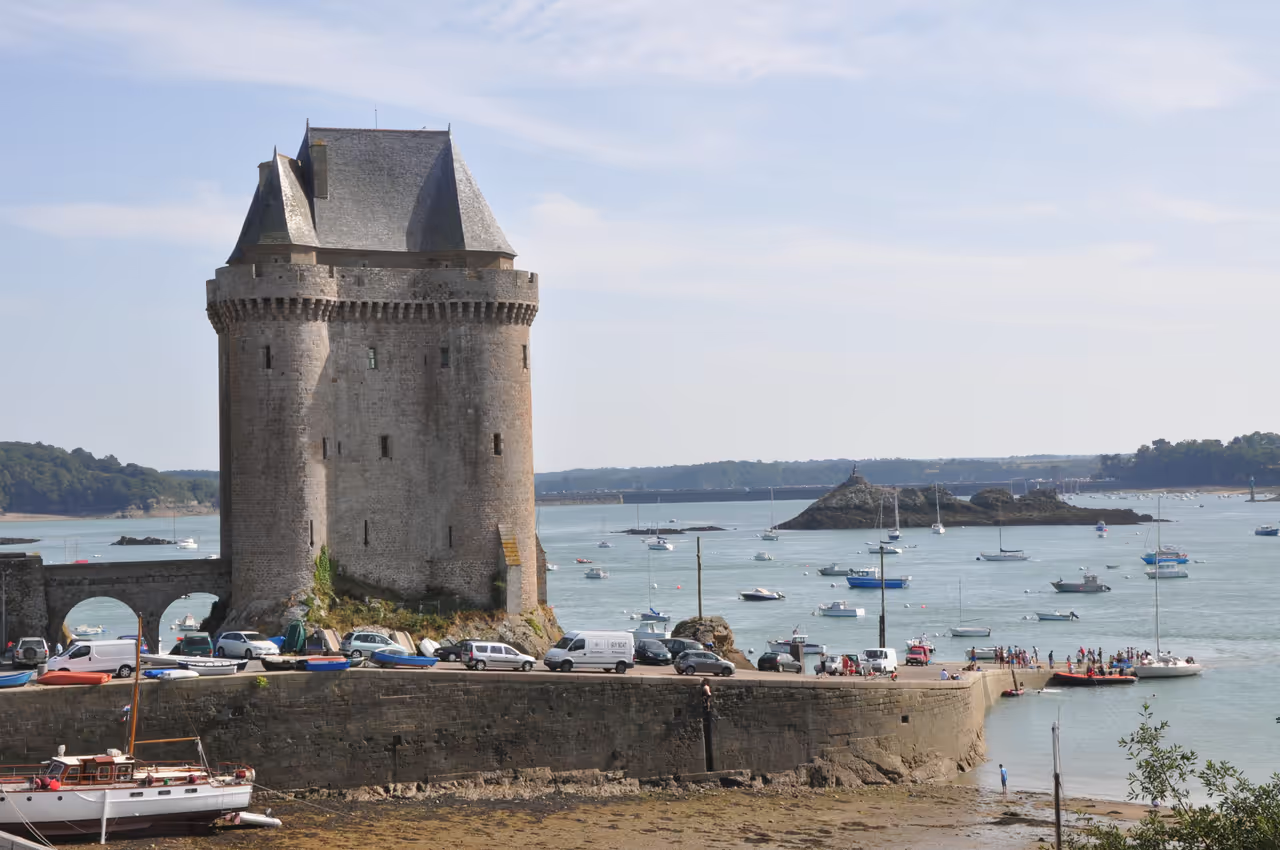
The triple-towered Solidor Tower stands sentinel at the mouth of the Rance, a sturdy medieval fortress whose very presence once asserted ducal power over the rebellious city of Saint-Malo. Its unique design, with three interconnected towers, makes it a striking sight against the backdrop of the estuary, a constant reminder of centuries of maritime control. Today, it invites visitors to step inside and explore the International Cap Hornier Museum, delving into the gripping tales of long-distance navigation and the legendary sailors who rounded Cape Horn. Ascend its ancient walls for panoramic views of the Rance, Dinard, and the bustling port, imagining the ships it once monitored and the prisoners it held within its formidable embrace. This isn't just a historical landmark; it's a window into Brittany's seafaring soul and a strategic marvel.
Videos
History of Solidor Tower
The story of Solidor Tower begins in a crucible of conflict during the late 14th century. Duke John IV of Brittany, determined to rein in the fiercely independent merchants of Saint-Malo, commissioned this formidable donjon between 1369 and 1382. Its strategic location at the mouth of the Rance estuary was no accident; it served as a watchful eye, controlling river traffic and imposing taxes on goods flowing in and out, a direct challenge to Malouin autonomy. The tower, originally known as "Stiridort" or "river gate," was built on an already fortified site, incorporating vestiges of older Gallo-Roman defences and the medieval Tour d'Oreigle, hinting at the enduring importance of this rocky outcrop. Centuries later, the tower continued to play a role in regional power struggles. In 1588, during the Wars of Religion, Malouins loyal to the Catholic League audaciously seized the tower, which was then lightly guarded, asserting their defiance against royal authority. Though its original military purpose waned with evolving warfare, Solidor found a new, darker role during the French Revolution and the Empire, transformed into a prison. Priests, nuns, and military figures were held within its cold stone walls, leaving behind poignant graffiti that can still be glimpsed today, whispering tales of their confinement. The tower entered a new chapter in 1886 when it was ceded to the Monuments Historiques. Architect Albert Ballu oversaw its restoration, gifting it the grand roof it bears today. Then, in 1970, Solidor began its life as a cultural beacon, becoming home to the International Cap Hornier Museum. Here, it preserved the epic sagas of the cap-horniers, the intrepid sailors who braved the treacherous waters around Cape Horn, with collections of maps, ship models, and navigation instruments, connecting its past as a guardian of the Rance to the broader horizons of global maritime history.
Events spanning 601 years
Fun Facts
- • A unique wooden weather vane, sculpted in the shape of an albatross, was gifted to the museum by the Chilean section of the International Amicale des Cap-Horniers in 2003, symbolising the global reach of its maritime history.
- • At low tide, visitors can sometimes spot the submerged vestiges of an ancient stone causeway that once led to the Gallo-Roman port, revealing that sea levels were approximately eight metres lower in antiquity.
- • Before the Rance tidal power plant opened in 1967, a passenger and vehicle ferry regularly crossed the Rance from Cale Solidor to Dinard, making the tower a familiar landmark for daily commuters.
- • During its time as a prison in the Revolutionary era, many prisoners left their mark, with poignant graffiti still visible on the inner cell doors today.
- • Illustrious engineers, such as Siméon Garangeau in the late 17th century, drafted plans to enhance Solidor Tower's defences, though many of these were never fully implemented.
- • In 1694, the duty of guarding the tower was entrusted to the residents of Saint-Servan, showing a shift towards local involvement in its maintenance.
- • It stands on the remains of much older fortifications, including the medieval Tour d'Oreigle (also known as Tour Aiquin) and even Gallo-Roman defences from the 4th century.
- • Several renowned painters, including Maximilien Luce, Bernard Buffet, and James Carroll Beckwith, have depicted the iconic Solidor Tower in their artworks, cementing its place in artistic history.
- • The primary purpose of Solidor was not just defence, but also to levy taxes on ships navigating the Rance, thereby asserting the Duke's authority over trade.
- • The restoration led by architect Albert Ballu in 1886 not only stabilised the structure but also gave the tower its current distinctive large roof, changing its profile significantly.
- • The tower's original Latin name, "Stiridort," translates from Breton as "river gate," perfectly describing its strategic position at the mouth of the Rance.
- • When Malouins seized the tower in 1588, it was reportedly guarded by a mere five or six men, highlighting its strategic value despite minimal defence.
Solidor Tower FAQ
While we strive to keep this information accurate and up to date, we recommend verifying any details independently before making decisions based on them.
Solidor Tower Map & Neighborhood Explorer
This interactive map is centered on Solidor Tower. Zoom in and move the map around to automatically discover Wikipedia photos and summaries of other nearby sights, monuments, and historical points of interest and stories in real-time!
Places near Solidor Tower
Make the most of your trip. Check out these top-rated spots located nearby.
 199m
199mAleth Cliff Edge
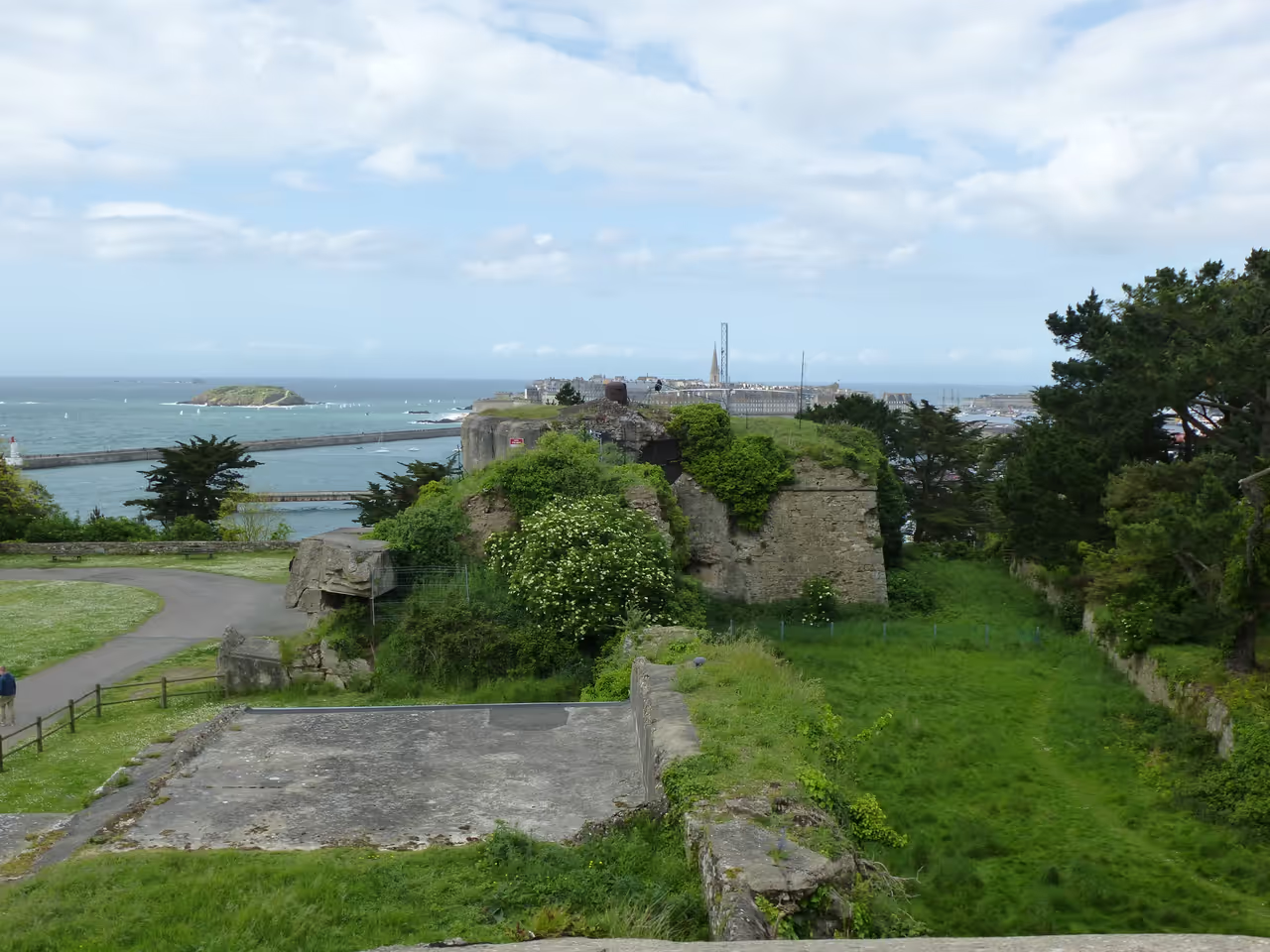
A high, wooded vantage point located south of the main city on the Aleth peninsula. The view looks back across the busy marina basin, offering a perfect profile of the walled city's skyline dominated by the cathedral spire. You can also watch the ferry traffic navigating the narrow channels toward the open sea. It is much quieter than the ramparts, shaded by tall pine trees.
viewpoint view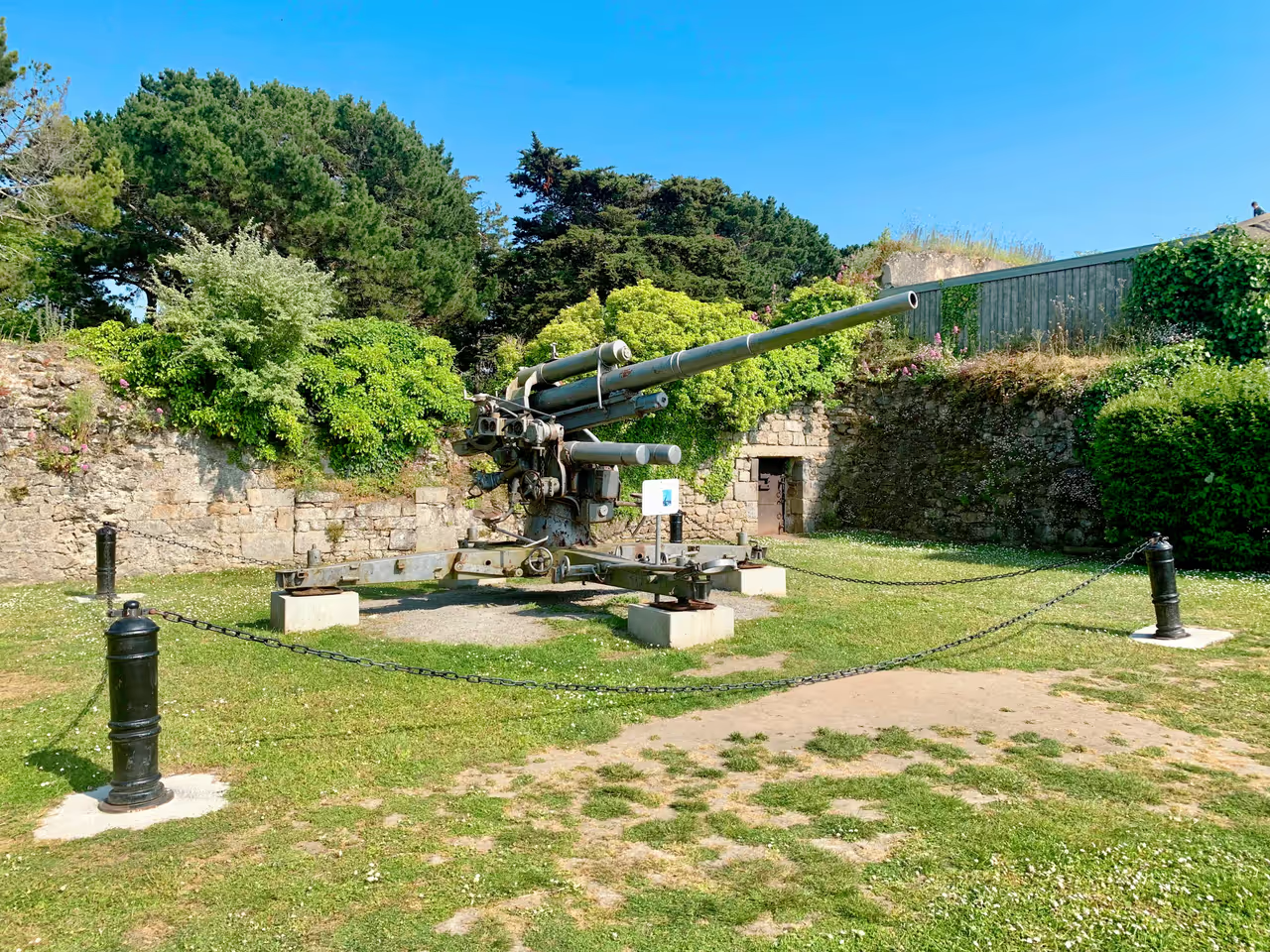 381m
381mWorld War II Memorial
Built inside a massive German anti-aircraft bunker on the Aleth peninsula, this museum details the grim reality of the city's wartime occupation and destruction. You walk through thick concrete corridors to view authentic weapons, uniforms, and harrowing photographs of the bombed out ruins. The sheer thickness of the walls muffles all outside noise, creating a claustrophobic and oppressive atmosphere. It provides necessary context for understanding why the historic city looks so pristine today.
highlight view- 396m
Cunningham Manor
A distinctive, tall building located right on the waterfront near the Aleth peninsula. It features a striking half timbered upper facade, completely different from the stone masonry typical of the region. The upper floors overhang the street slightly, creating a cramped, deeply historic visual profile. Today it operates as a hotel, maintaining its slightly precarious but charming architectural stance.
architecture view 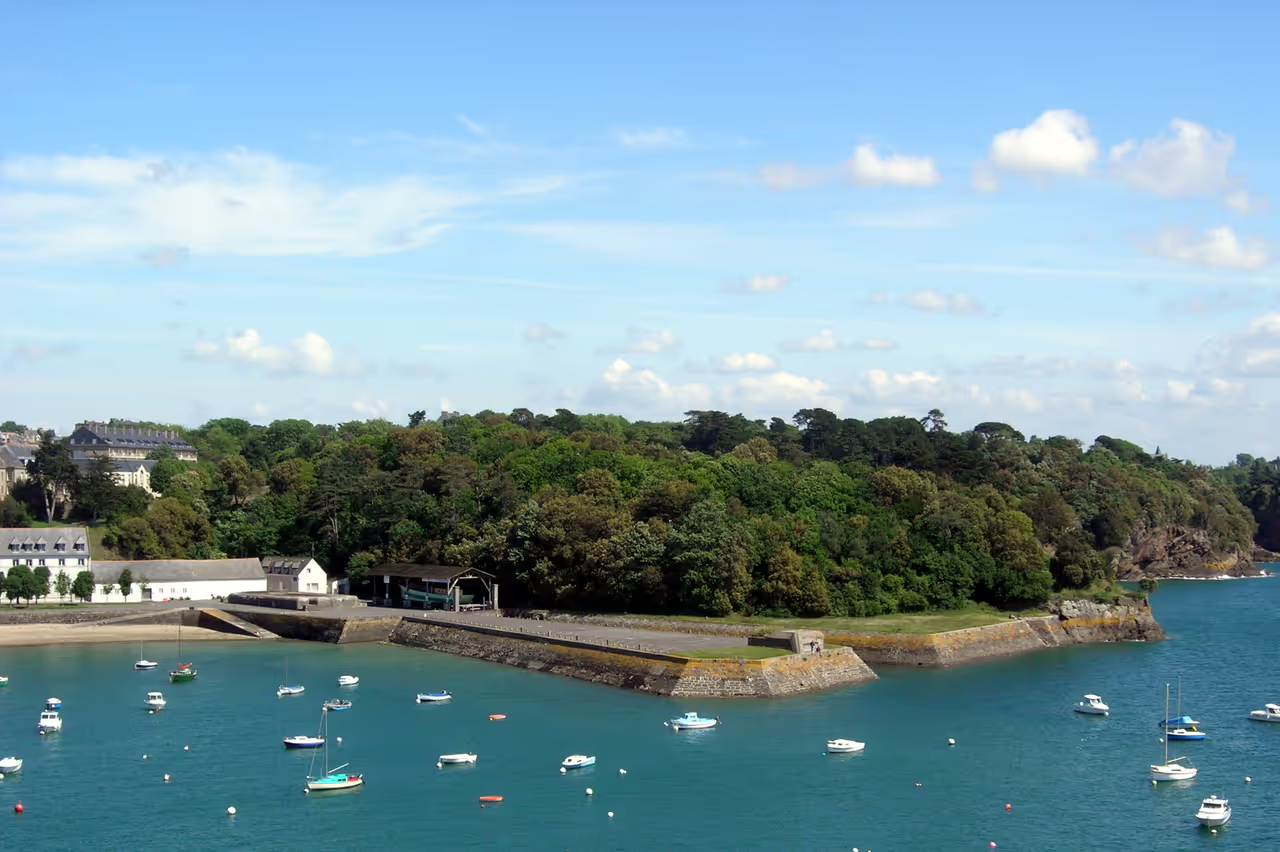 410m
410mAr Zenith Restored Vessel
Moored quietly near the Saint-Servan waterfront, this small wooden fishing boat looks unremarkable at first glance. However, it holds a significant place in modern French history. It was the very first vessel to answer General Charles de Gaulle's 1940 radio broadcast, smuggling young volunteers across the channel to join the resistance. Volunteers meticulously restored the hull in the 1990s, and it now opens for brief viewings during the summer. It is a quiet, powerful symbol of defiance sitting completely removed from the main tourist paths.
hidden gem view
Explore Similar Places in These Collections
Featured on These Itineraries and Routes
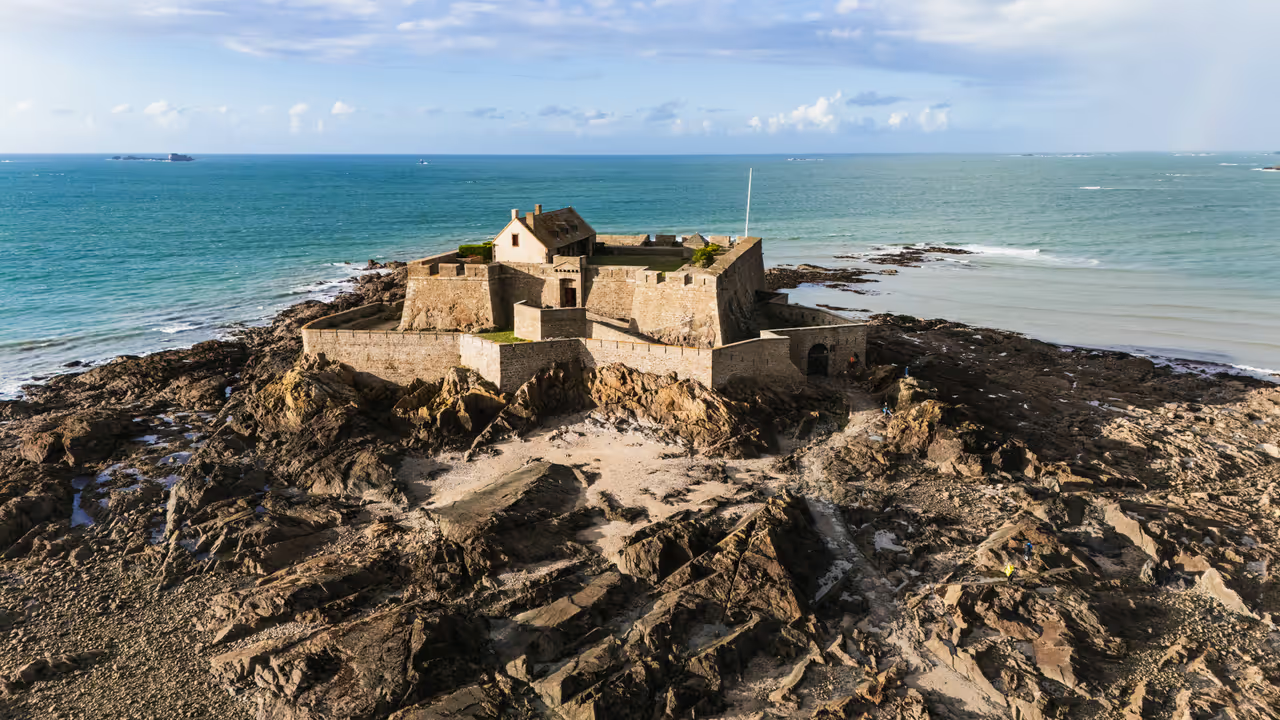
3 Days in Saint Malo: Forts and the Abbey Itinerary
Expanding your stay to three days allows you to explore the wider bay and take a crucial day trip along the coast. You will spend the first day mastering the walled city and its immediate tidal forts. The second day pulls you south to the quieter, heavily fortified Aleth peninsula and the working harbour. On the final day, you will drive east to experience the staggering scale of a world famous island abbey.
view itinerary
5 Days in Saint Malo: Emerald Coast Itinerary
A five day stay turns a city break into a comprehensive exploration of the surrounding Breton coastline. You will cover the essential historical sights within the walls, but also have time to push out into the rural landscapes. You will see bizarre cliff sculptures, cross the river to elegant seaside resorts, and stand in the shadow of massive tidal engineering. It is a varied, active plan that requires renting a bike or a car for the later days.
view itinerary
Rance Estuary to Dinard Ride
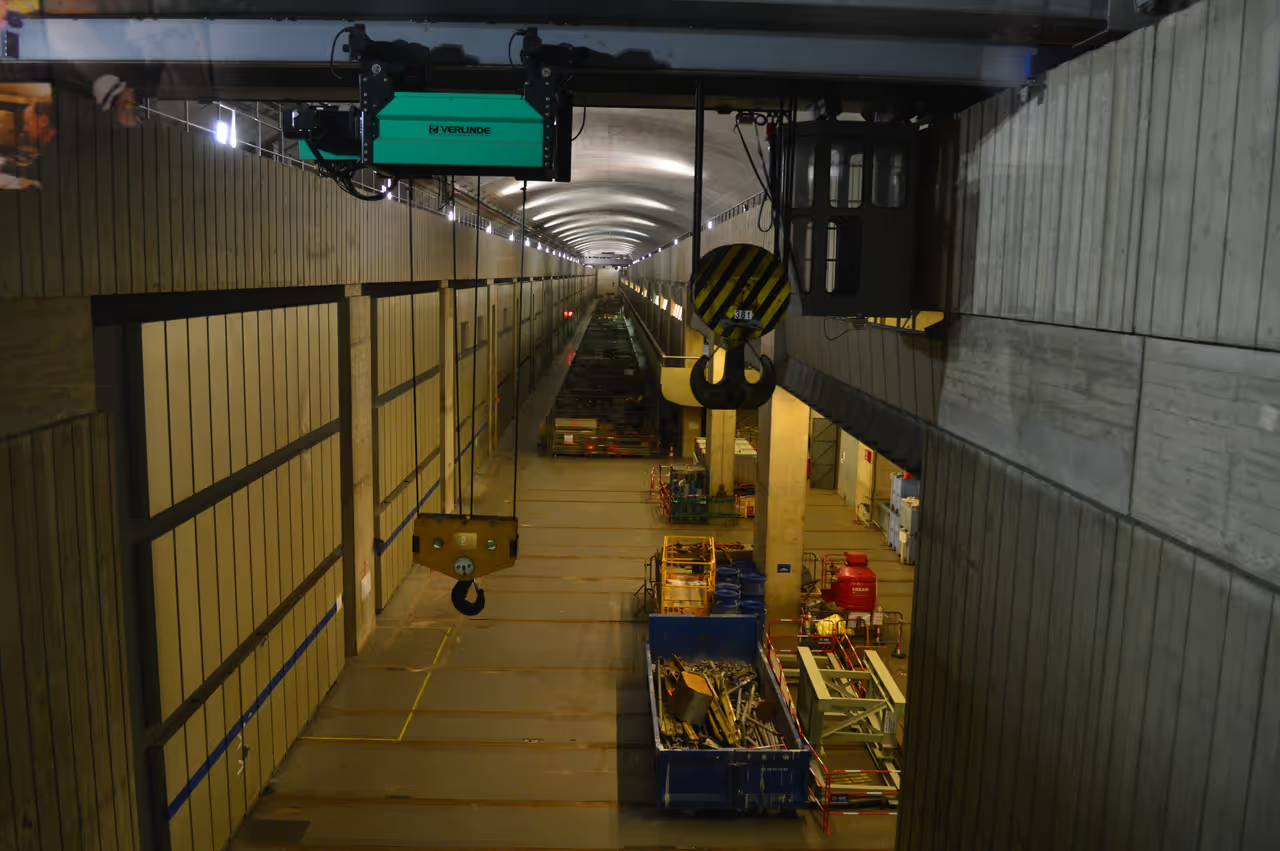
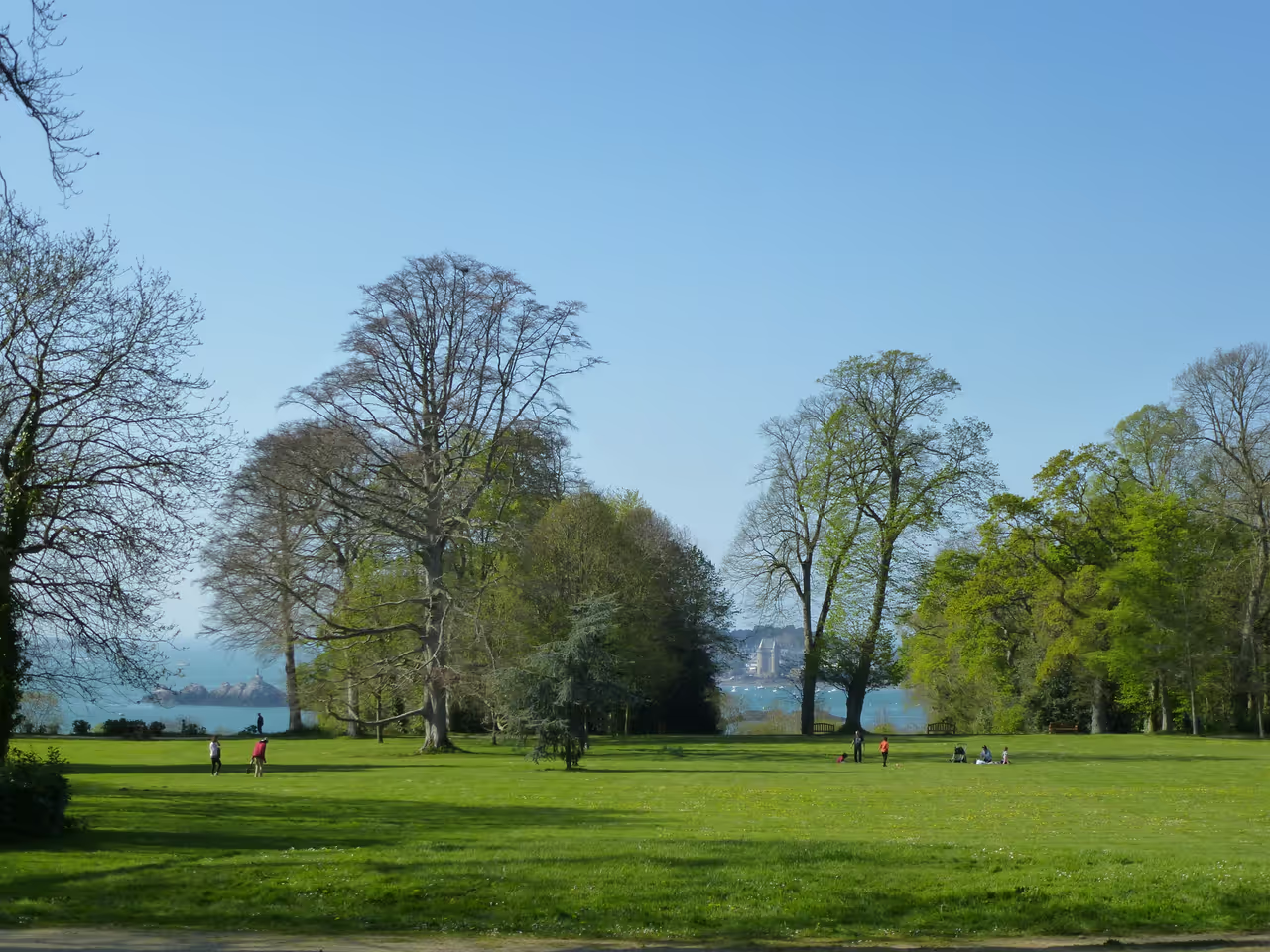
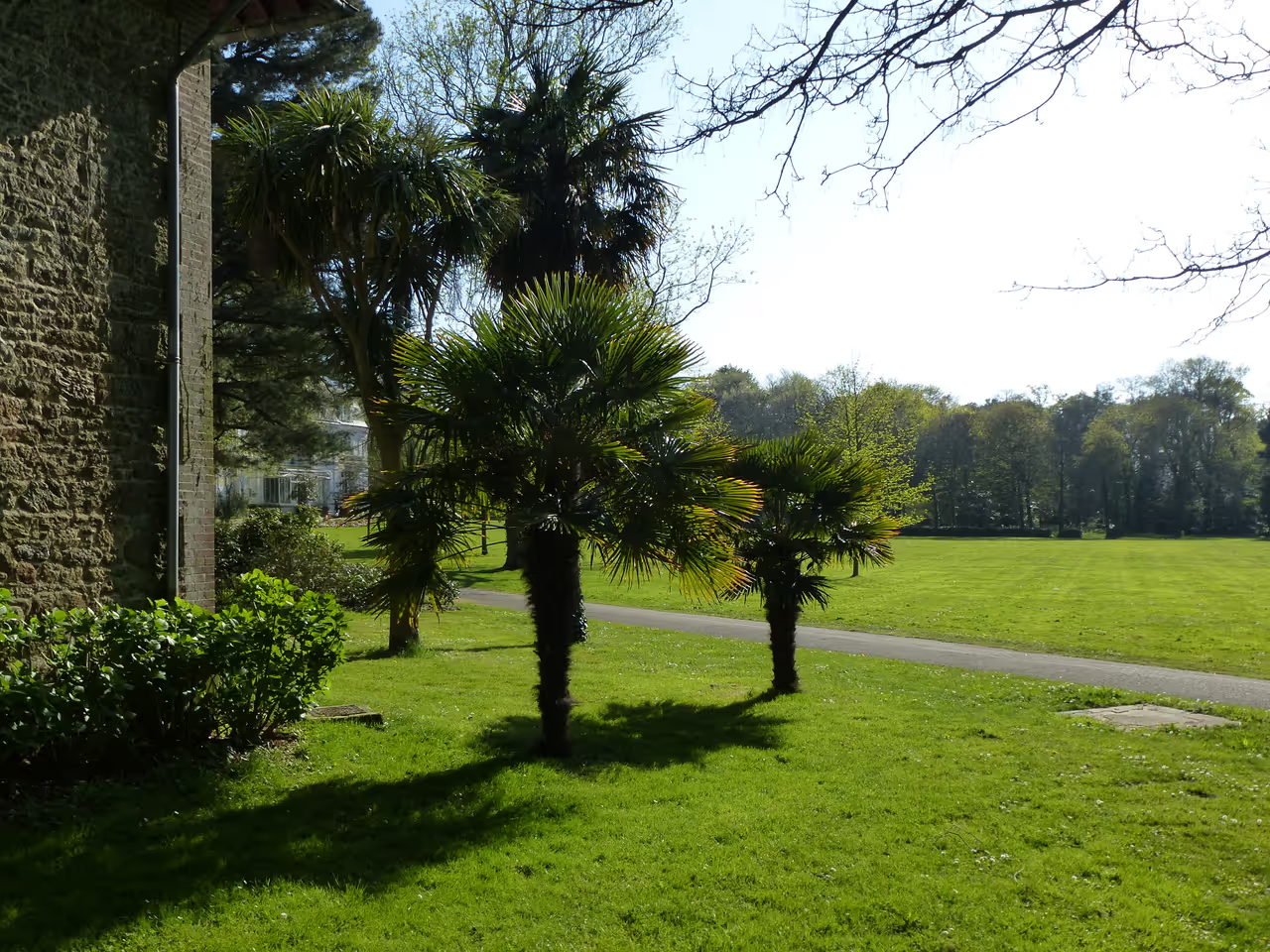
This route heads south out of the city, following the water down to the impressive engineering marvel of the tidal dam. Crossing the barrage places you on the opposite bank of the estuary, leading into the elegant resort town of Dinard. You will cycle past grand 19th century villas perched precariously on the cliff edges. The return journey offers sweeping views of the walled city standing solitary across the bay.
view cycling route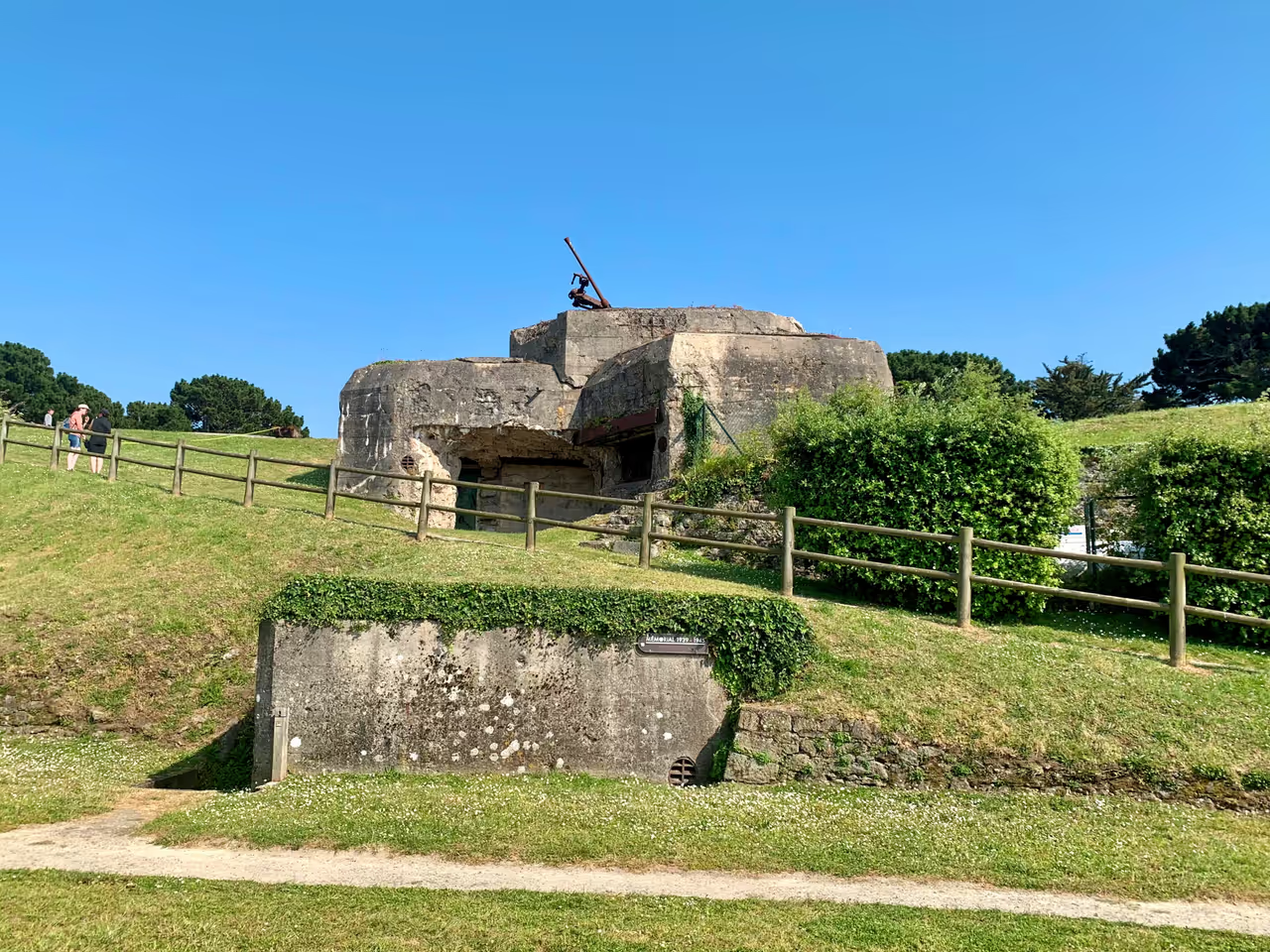
Aleth Peninsula Path
This walk traces the edge of a steep, wooded peninsula south of the main city. It is significantly quieter and greener than the stone streets of Intra-Muros. The path weaves through pine trees and passes the crumbling ruins of an ancient cathedral. Deep concrete scars from World War II bunkers remain embedded in the cliffs, offering a sobering contrast to the natural beauty of the river mouth.
view walking route
See all attractions in Saint-Malo
Ancient Ramparts of Saint-Malo, Fort National, Saint-Vincent Cathedral of Saint-Malo, Grand Aquarium, Grand Bé Island, Jacques Cartier Manor House and Museum, Rance Tidal Power Plant...