Count's Castle
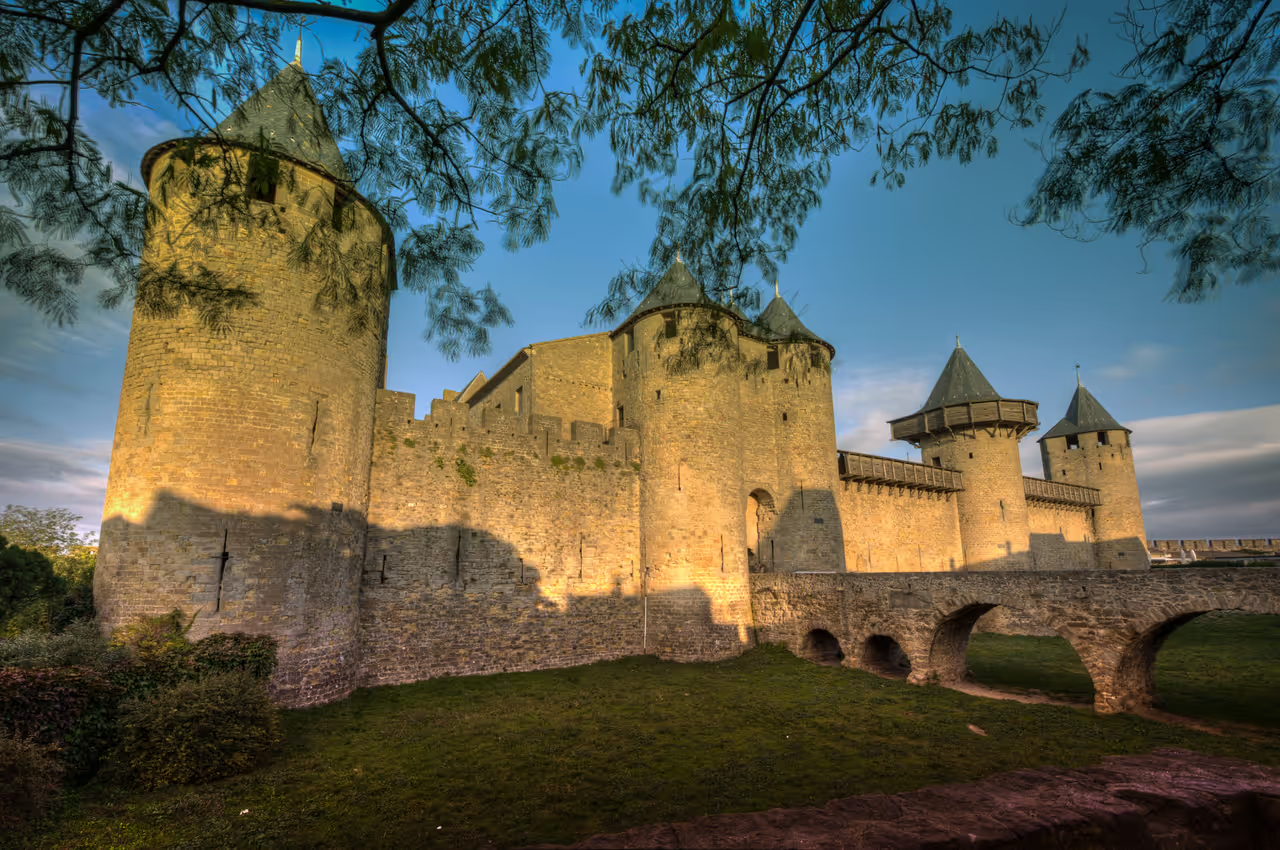
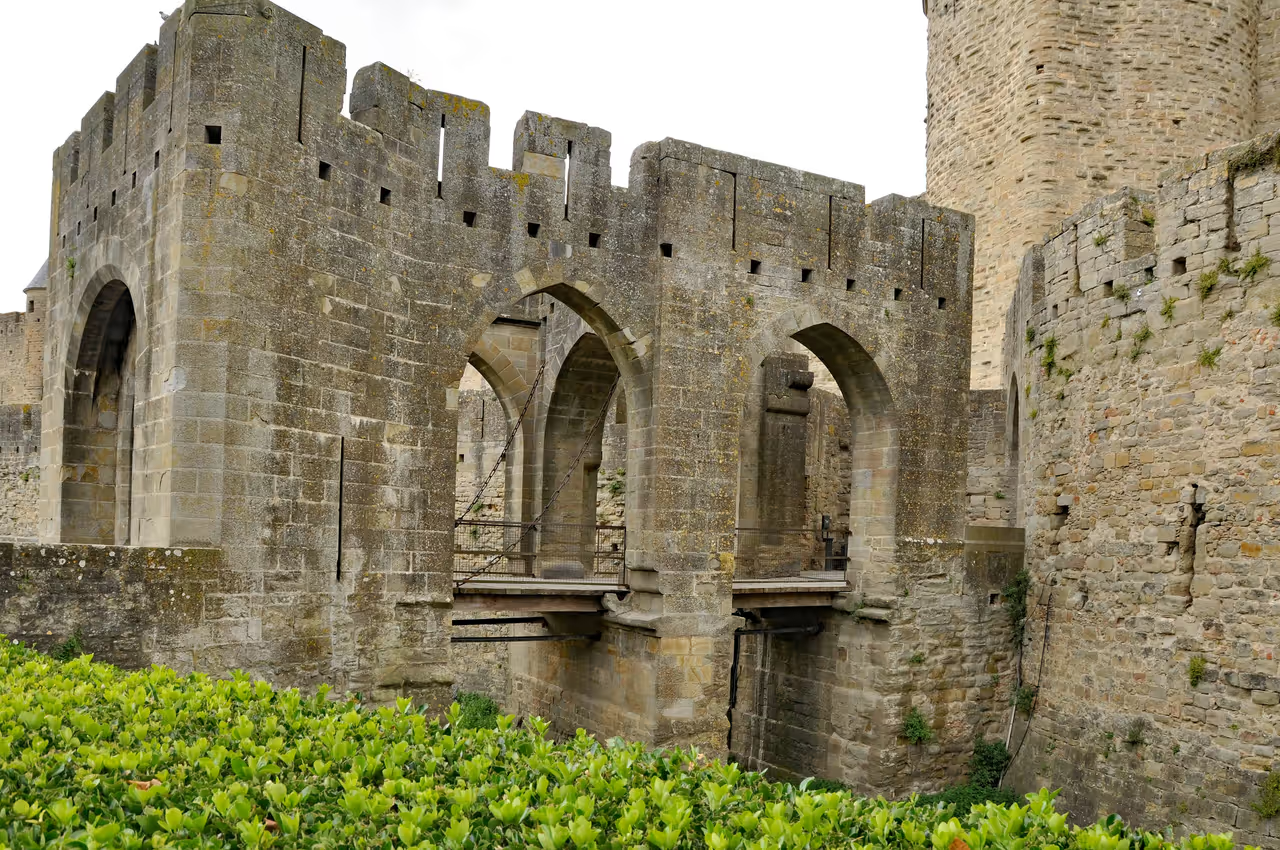
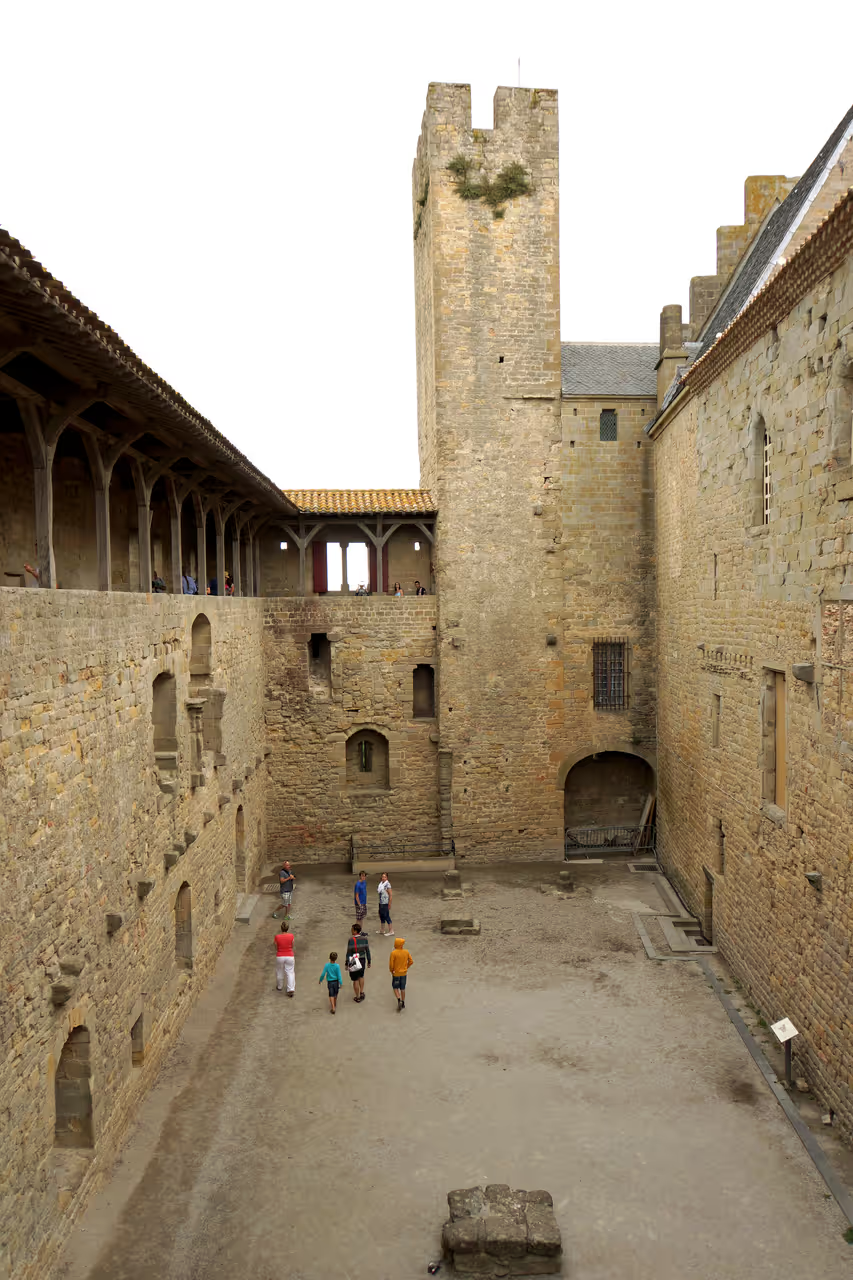
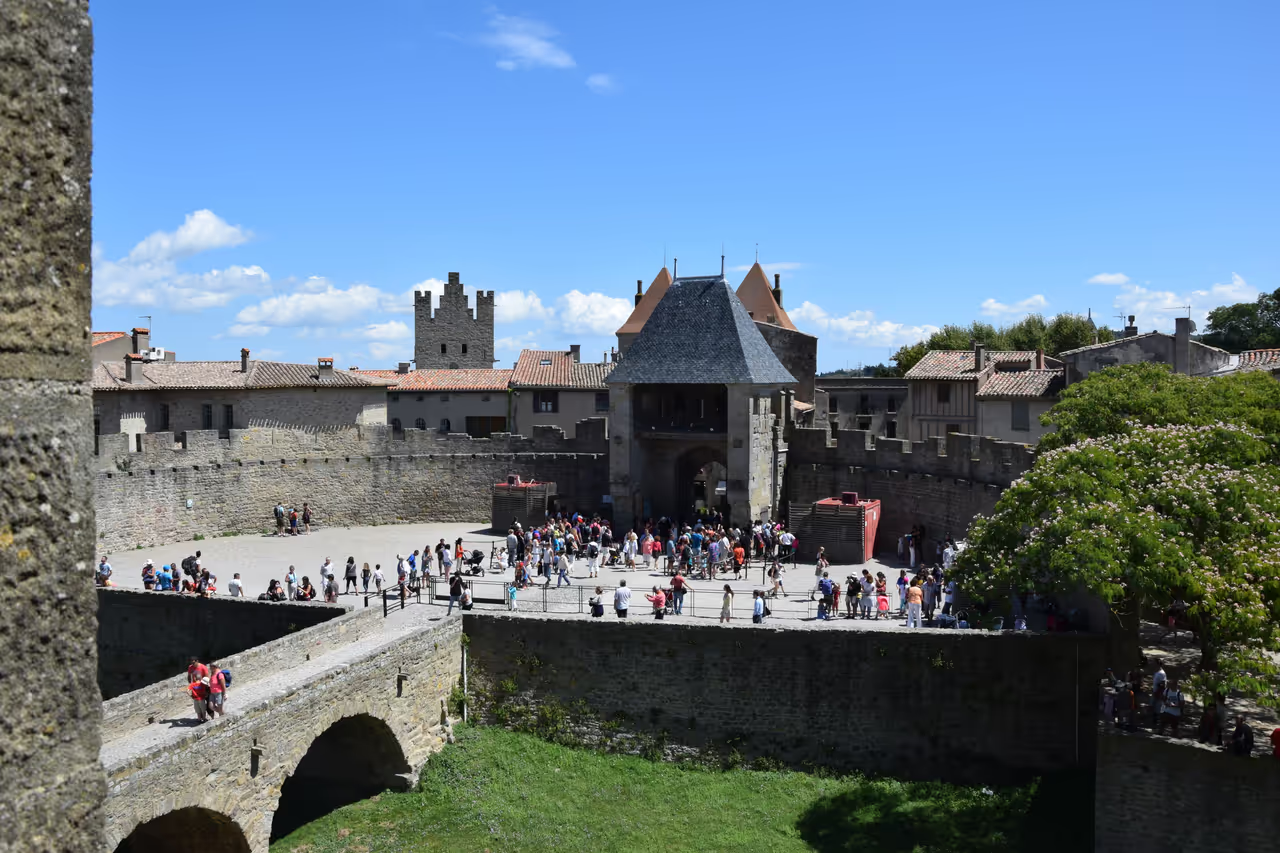
A dry moat and a heavy timber drawbridge separate this twelfth-century fortress from the rest of the medieval citadel. Originally constructed as a lavish palace for the Trencavel family, it evolved into an imposing military stronghold bristling with wooden galleries and nine distinct towers. You will often find a minor bottleneck of visitors pausing on the stone bridge to look down into the empty defensive ditch, a perfect spot to inspect the masonry up close. Walking along the reconstructed wooden ramparts gives a sharp sense of what archers saw when scanning the Aude river valley for approaching crusaders. Inside the central courtyard, a giant elm tree once grew, and today the space leads directly into a museum housing salvaged Romanesque frescoes and intricate stone carvings. The tour finishes by descending a narrow spiral staircase right at the base of the Tour de la Pinte, depositing you onto the cobblestones near the western walls.
Videos
History of Count's Castle
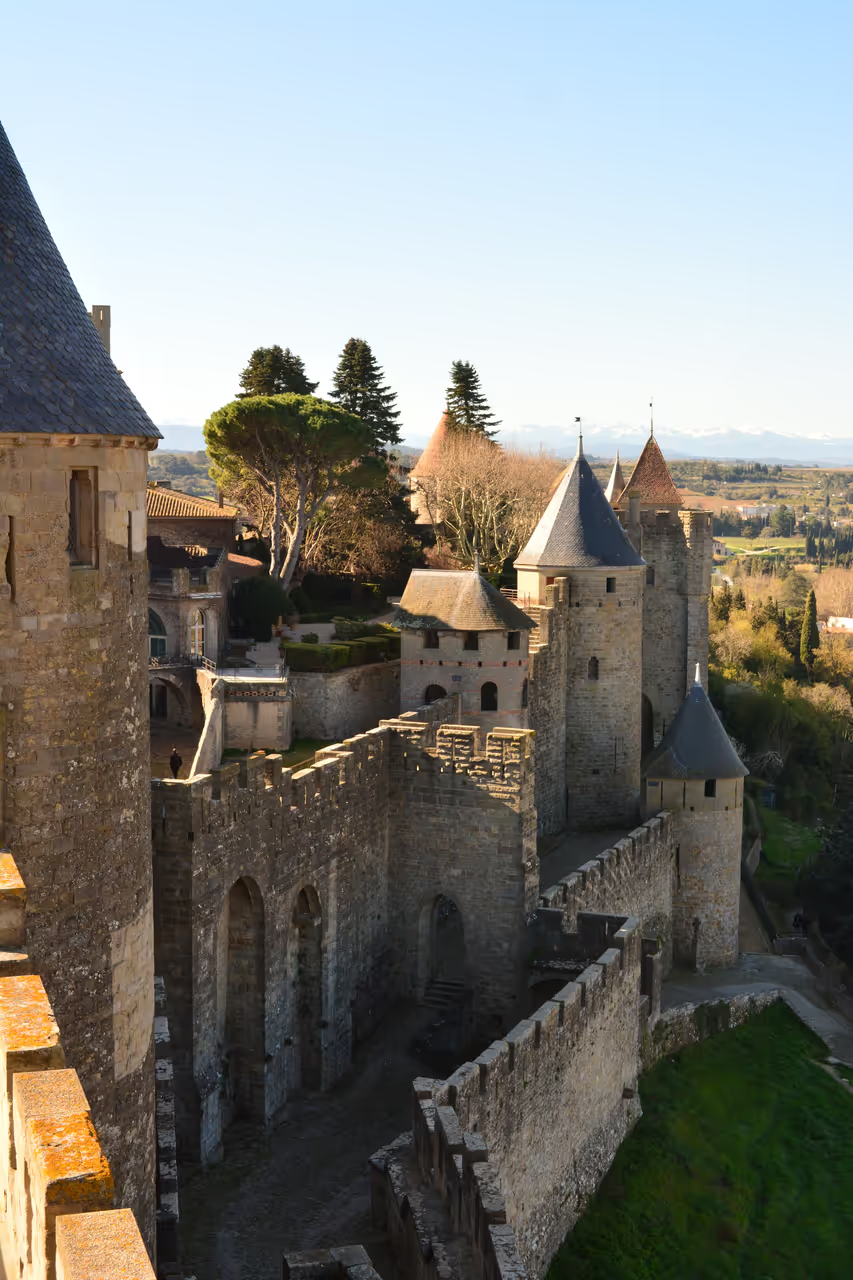
Bernard Aton IV Trencavel decided in the twelfth century that his family needed a residence matching their immense wealth. He chose the western edge of Carcassonne, directly over old Roman foundations, to construct a vast palatial estate. This was not a modest home. The viscount added a chapel, expansive halls, and the towering Tour de la Pinte, an intimidating watchtower that served as a constant visual reminder to the townsfolk of exactly who was in charge. The lavish lifestyle of the Trencavels abruptly collapsed in the early thirteenth century. The family had tolerated and protected the Cathars, a religious sect deemed heretical by the Catholic Church. In response, a massive crusade swept through the region, arriving at the walls of Carcassonne in the summer of 1209. The young viscount, Raymond-Roger Trencavel, attempted to negotiate a truce with the crusading army led by Simon de Montfort. Instead of a peaceful settlement, he was taken captive during the talks and thrown into his own dungeon, where he died of starvation months later. Following the crusade, the French crown formally annexed the citadel in 1226. The new royal seneschals did not trust the local population, who harboured deep resentment over the loss of their independence. To protect themselves from a potential uprising, the royal officers fortified the palace further, constructing a massive defensive wall around the building and digging a deep dry moat. They effectively created a heavily armed island within the city, ensuring the king's men could withstand an attack from the very citizens they were sent to govern. By the nineteenth century, the entire structure had fallen into severe disrepair. The government approved a massive restoration project led by the architect Eugène Viollet-le-Duc, who poured enormous resources into rebuilding the walls and towers. His work saved the structure from complete collapse but sparked fierce criticism when he topped the towers with slate roofs, a material common in northern France but highly unusual in the Mediterranean south. Today, those pointed, blueish grey roofs remain the defining silhouette of the fortress, an architectural signature born from a heavily debated historical interpretation.
events spanning 723 years
Fun Facts
- • Before the grand medieval palace existed, the exact same footprint was occupied by a Gallo-Roman military outpost, the heavy stone foundations of which are still visible in the lowest levels of the castle.
- • Eugène Viollet-le-Duc drew heavy criticism from local historians for his restoration choices, as he used steep slate roofs designed to shed heavy snow, a weather condition almost entirely absent in this part of southern France.
- • Inside the main courtyard, a massive elm tree stood for centuries, serving as a traditional gathering spot where local lords would hold court and dispense justice before the royal takeover.
- • Royal engineers deliberately built the inner moat without water, relying on its sheer depth and steep stone walls to trap invaders and make them easy targets for archers stationed above.
- • The fortress features a unique defence mechanism called a barbican, a semi-circular forward structure designed to force attackers into a narrow, exposed path before they could even reach the drawbridge.
- • The lapidary museum inside the castle preserves original stone projectiles launched by trebuchets during the thirteenth-century sieges, giving visitors a tangible sense of the artillery used against the walls.
- • The tallest structure in the entire fortress complex is the Tour de la Pinte, a rectangular keep erected in the twelfth century to give the Trencavel family an unobstructed view across the Aude valley.
- • To defend the walls during a siege, soldiers used wooden galleries called hoardings, which extended out over the stone battlements and allowed them to drop heavy rocks directly onto attackers below.
- • When Raymond-Roger Trencavel was captured by crusaders in 1209, he was imprisoned in the very dungeon his family had built beneath their own palace, ultimately dying there at the age of twenty-four.
Count's Castle FAQ
While we strive to keep this information accurate and up to date, we recommend verifying any details independently before making decisions based on them.
Count's Castle Map & Neighborhood Explorer
This interactive map is centered on Count's Castle. Zoom in and move the map around to automatically discover Wikipedia photos and summaries of other nearby sights, monuments, and historical points of interest and stories in real-time!
Places near Count's Castle
Make the most of your trip. Check out these top-rated spots located nearby.
- 16m
Convenanza Festival
An intimate, sharply curated electronic and alternative music festival held at the end of September. Founded by the late British DJ Andrew Weatherall, the event turns the medieval courtyard of the castle into a massive, pulsating dance floor. It draws a dedicated, international crowd of music obsessives rather than casual tourists. The acoustics of the heavy stone walls provide a uniquely dense sound environment.
festival view 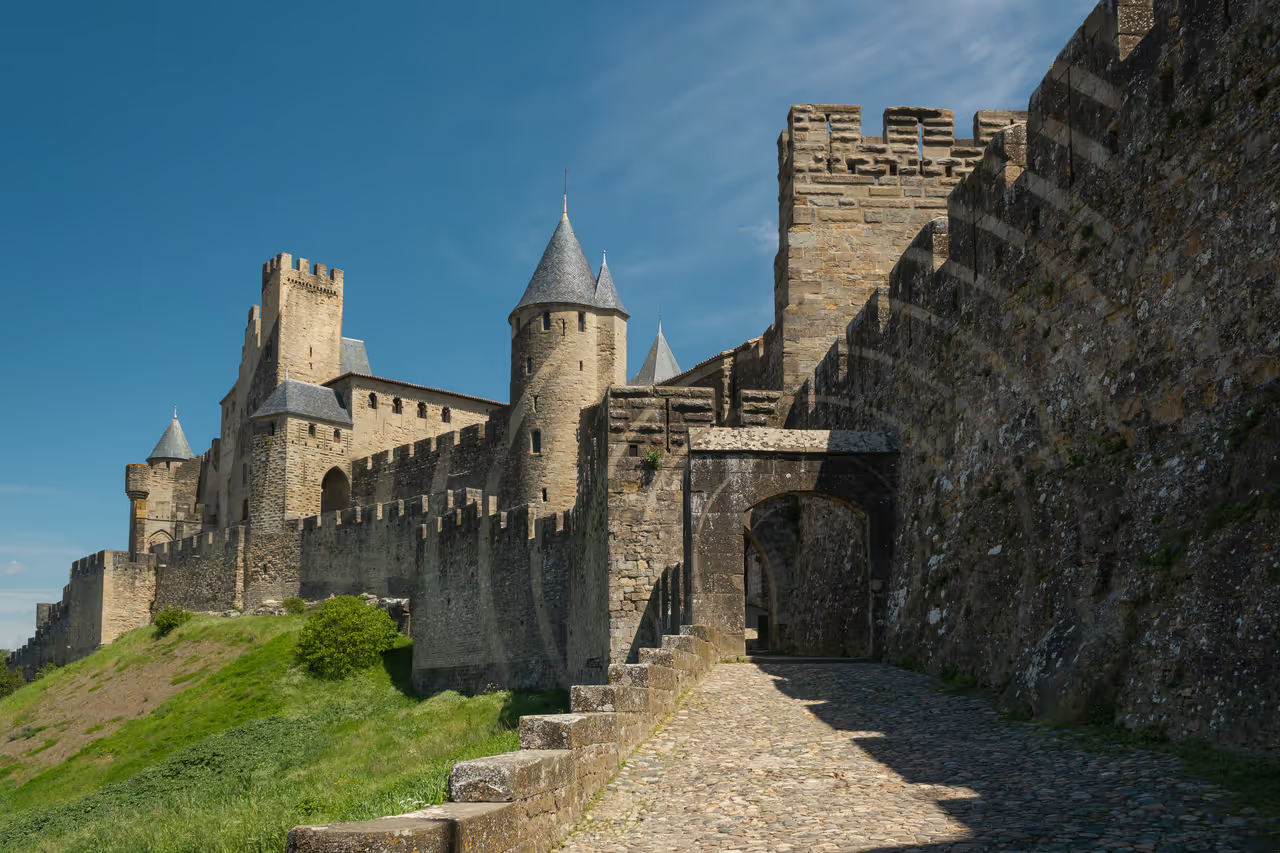 98m
98mAude Gate
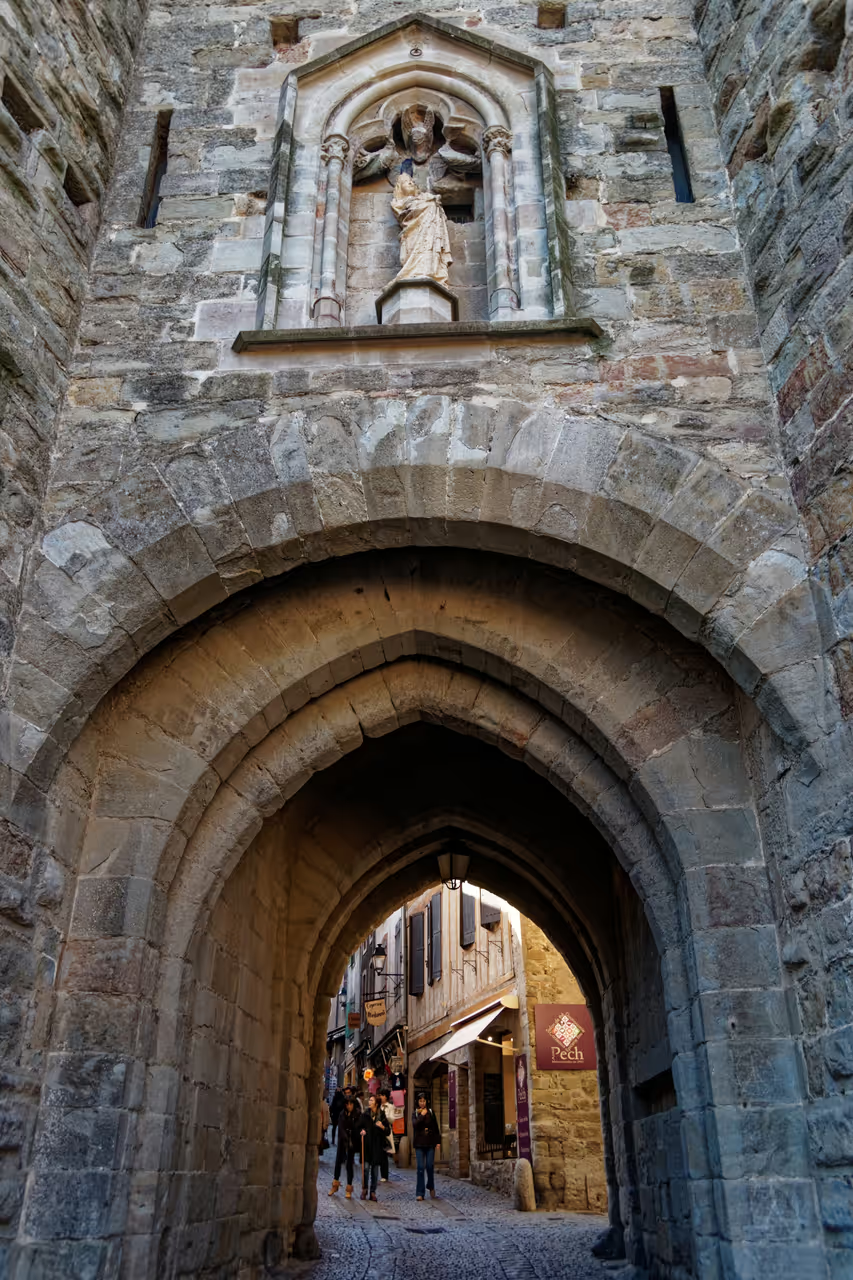
Carcassonne’s western entrance was built to exhaust attackers long before they reached the heavy timber doors. Approaching the Aude Gate means hauling yourself up a steep, curving cobbled ramp that rises sharply from the lower town. The local Tramontane wind often funnels directly through this stone archway, catching unsuspecting hats and forcing walkers to lean forward into the breeze. Unlike the grand Narbonnaise entrance on the opposite side of the city, this defensive choke point lacks a drawbridge or a moat. Instead, it relies on a twisting path exposed to overlapping lines of fire from the flanking towers. Today, finishing the climb rewards walkers with sweeping views over the roofs of Bastide Saint-Louis and the slow-moving River Aude far below.
attraction view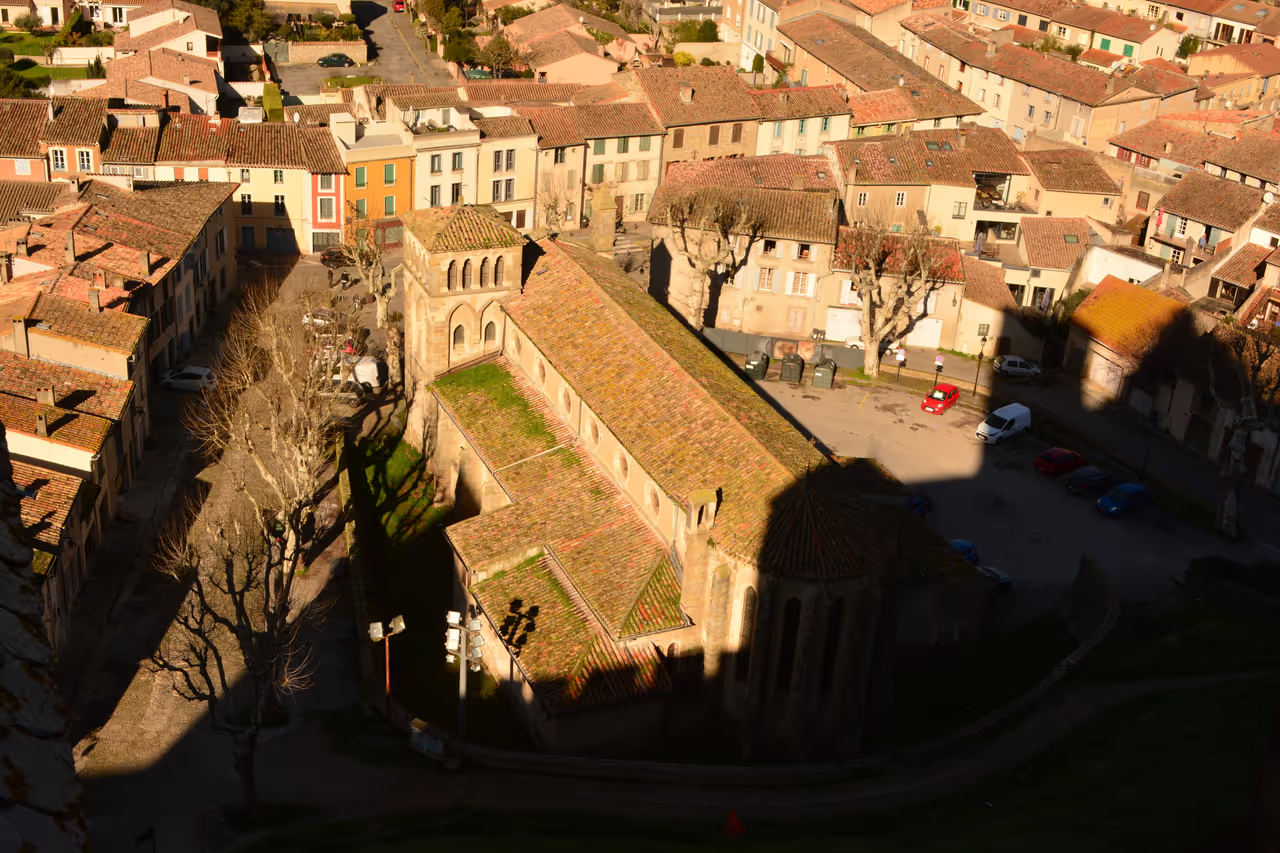 106m
106mSaint-Gimer Church
Located in the quiet Barbacane neighbourhood right at the foot of the fortress. Architect Eugène Viollet-le-Duc designed this church in the 1850s, actually tearing down authentic medieval ruins to make room for his pristine, Gothic-revival vision. It looks aggressively perfect, lacking the messy historical scarring of older buildings. The interior feels sharp, precise, and completely disconnected from the tourist frenzy above.
hidden gem view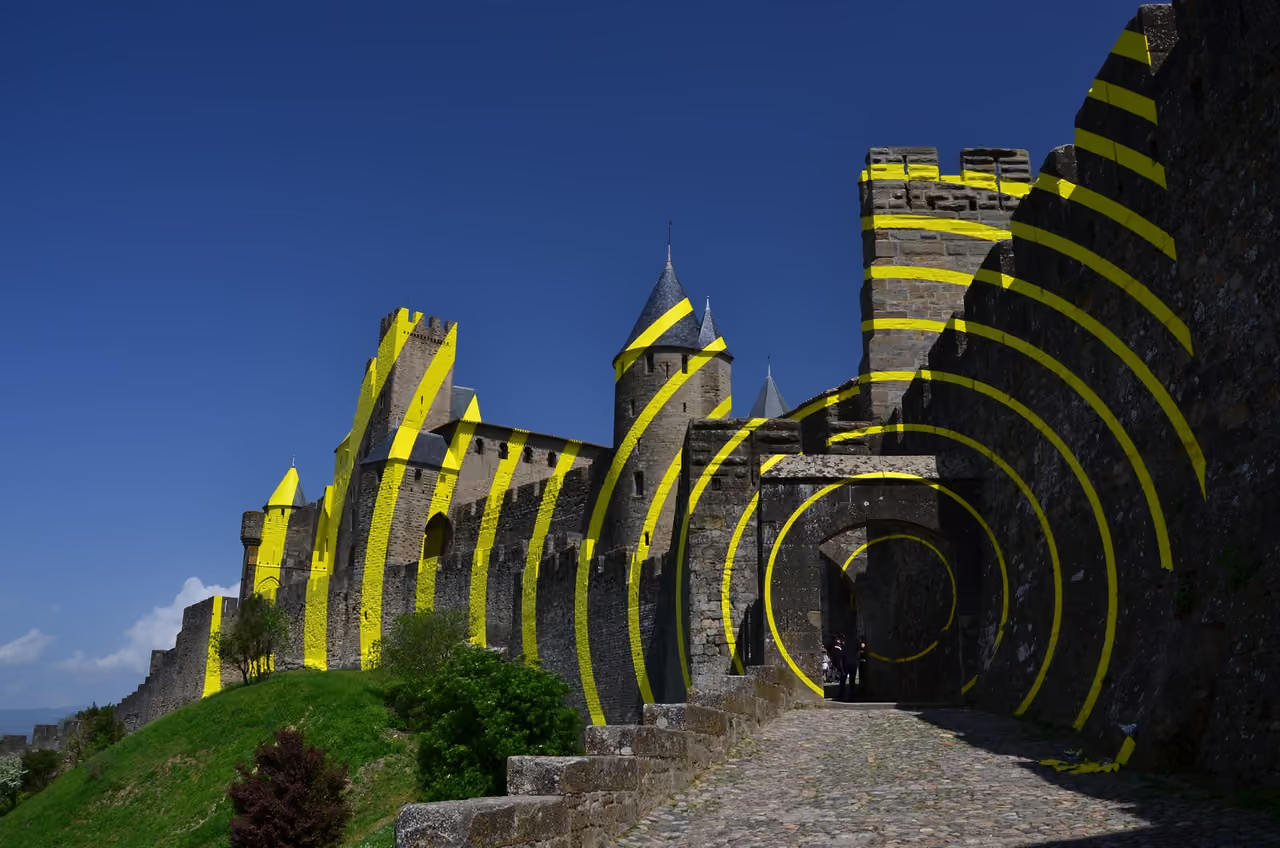 117m
117mCité de Carcassonne
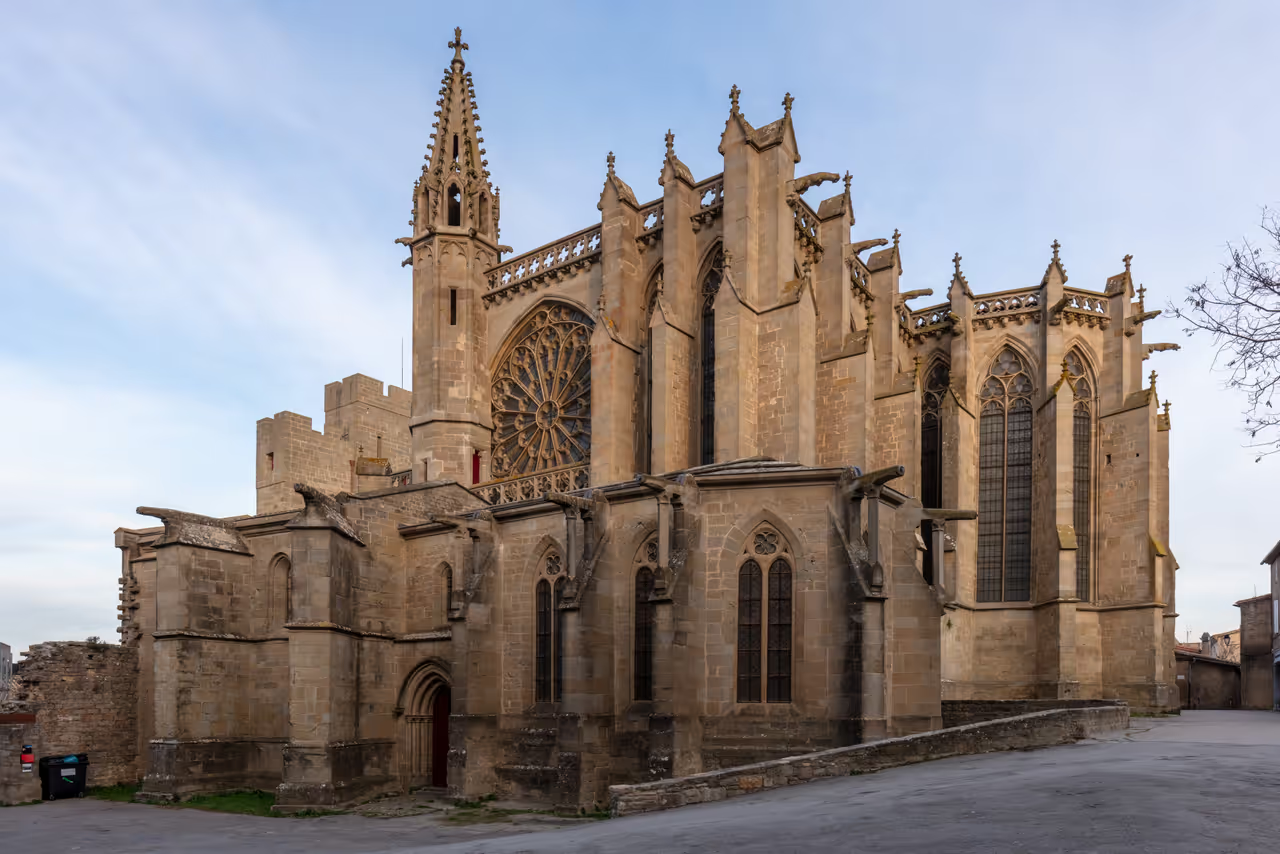
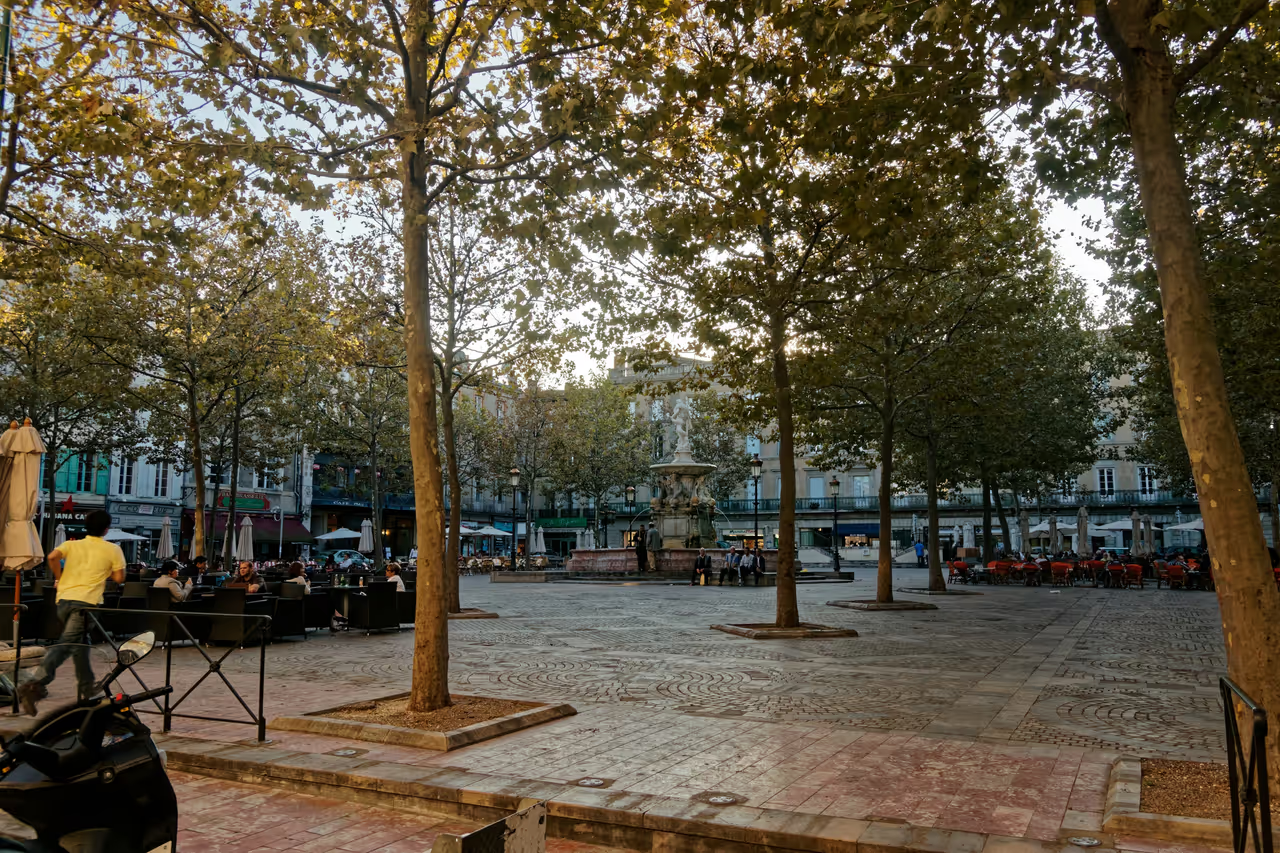
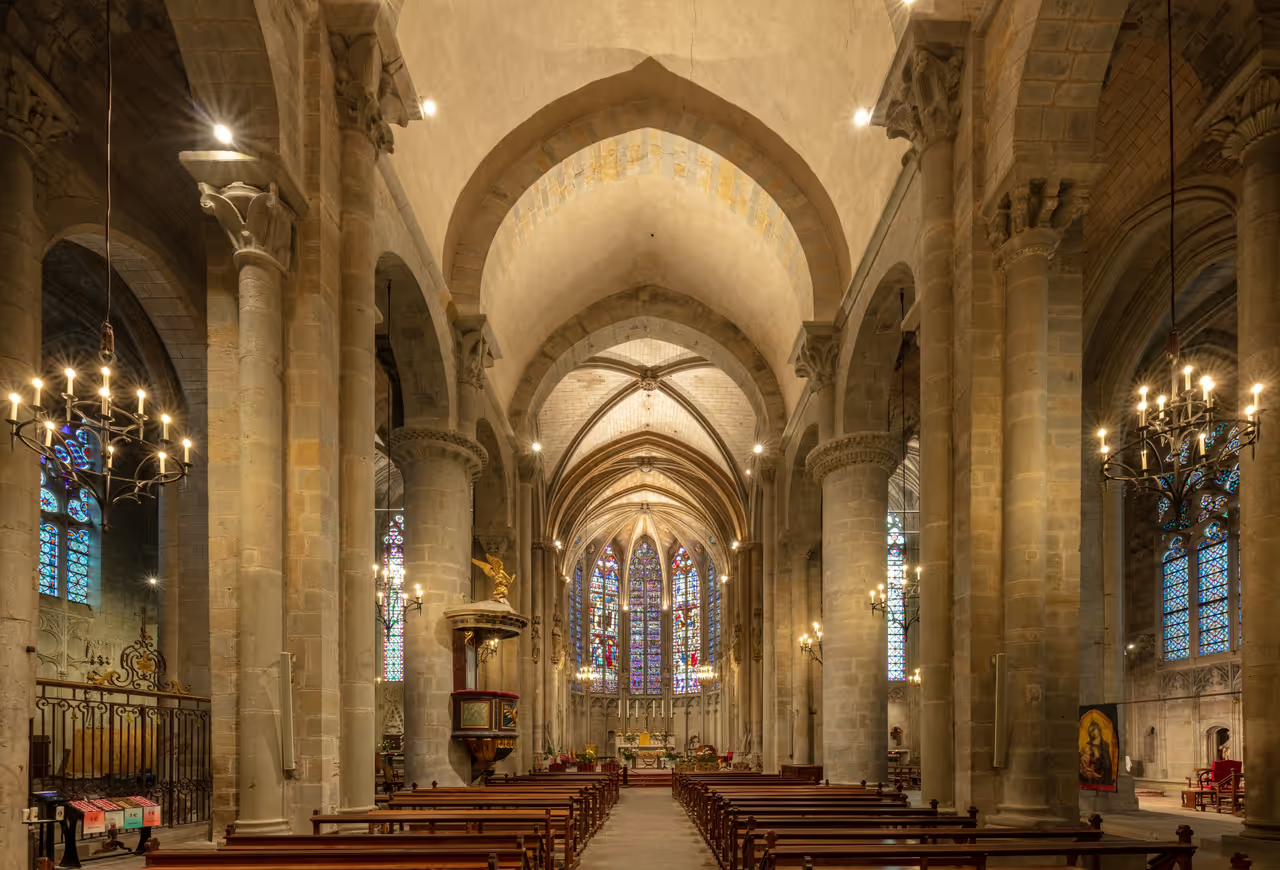
Count the towers along the ramparts of the Cité and you will reach 52, which gives you something to do while the queue at the Porte Narbonnaise shuffles forward on a July afternoon. Two lines of wall, roughly three kilometres in all, wrap a hilltop town that people still live in, so the lanes behind the gate hold crêpe stalls and cassoulet on the terrace tables of Place Marcou. The Château Comtal leads across a drawbridge and up onto the ramparts, where the wooden galleries show how defenders once dropped missiles on anyone who reached the foot of the wall. The Basilica of Saint-Nazaire has Romanesque arches at one end and medieval stained glass at the other, and it is worth ten quiet minutes out of the crowds. Come late, once the day trippers have drifted off, and the only sound along the Lices is shoes on cobbles and a shop shutter coming down.
unesco heritage site view
Explore Similar Places in This Collection
Featured on These Itineraries and Routes
1 Day in Carcassonne: The Fortress Focus
A highly concentrated, aggressive strike directly at the city's most famous assets. This route ignores the wider region to ensure you thoroughly absorb the terrifying scale of the medieval military architecture. It involves steep climbs, tight crowds, and heavy stone, culminating in a deeply traditional, calorie-dense dinner.
view itinerary
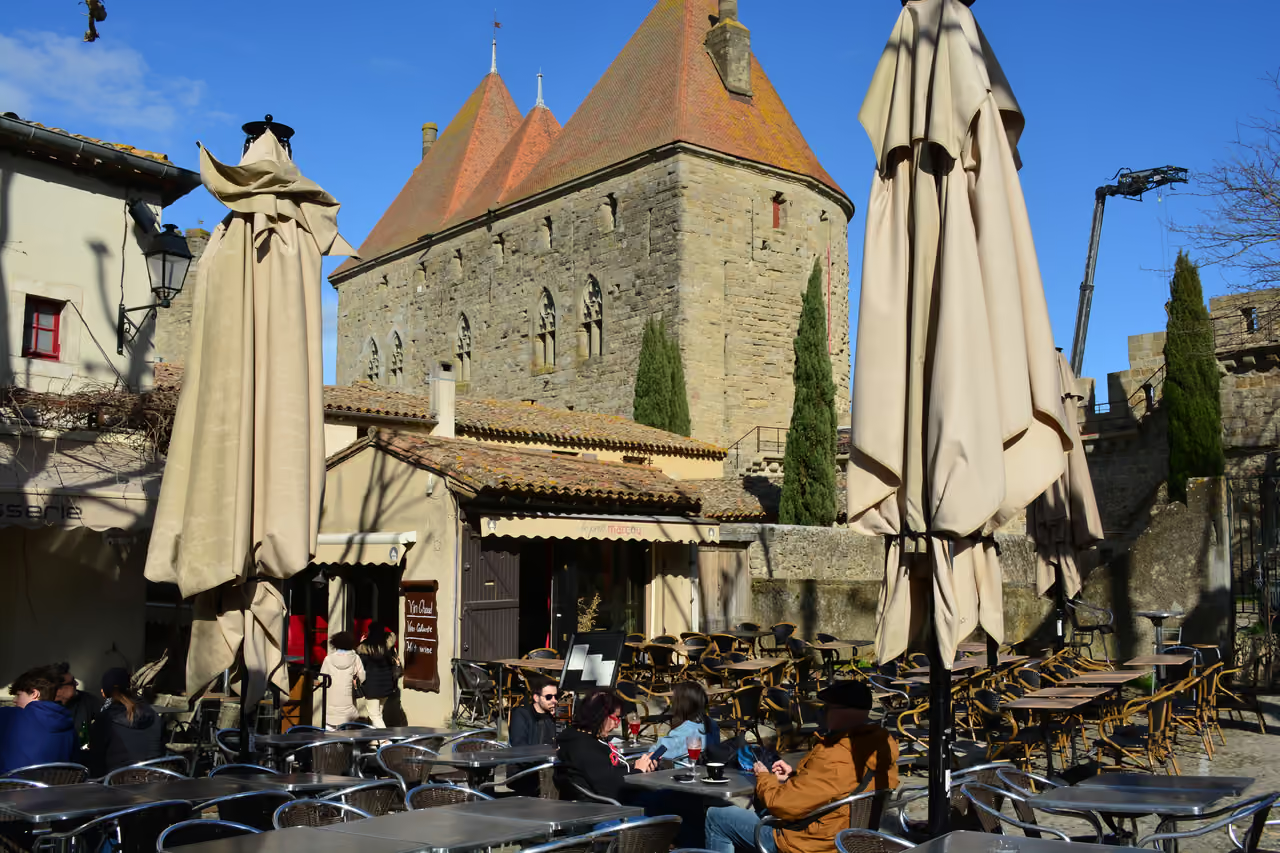
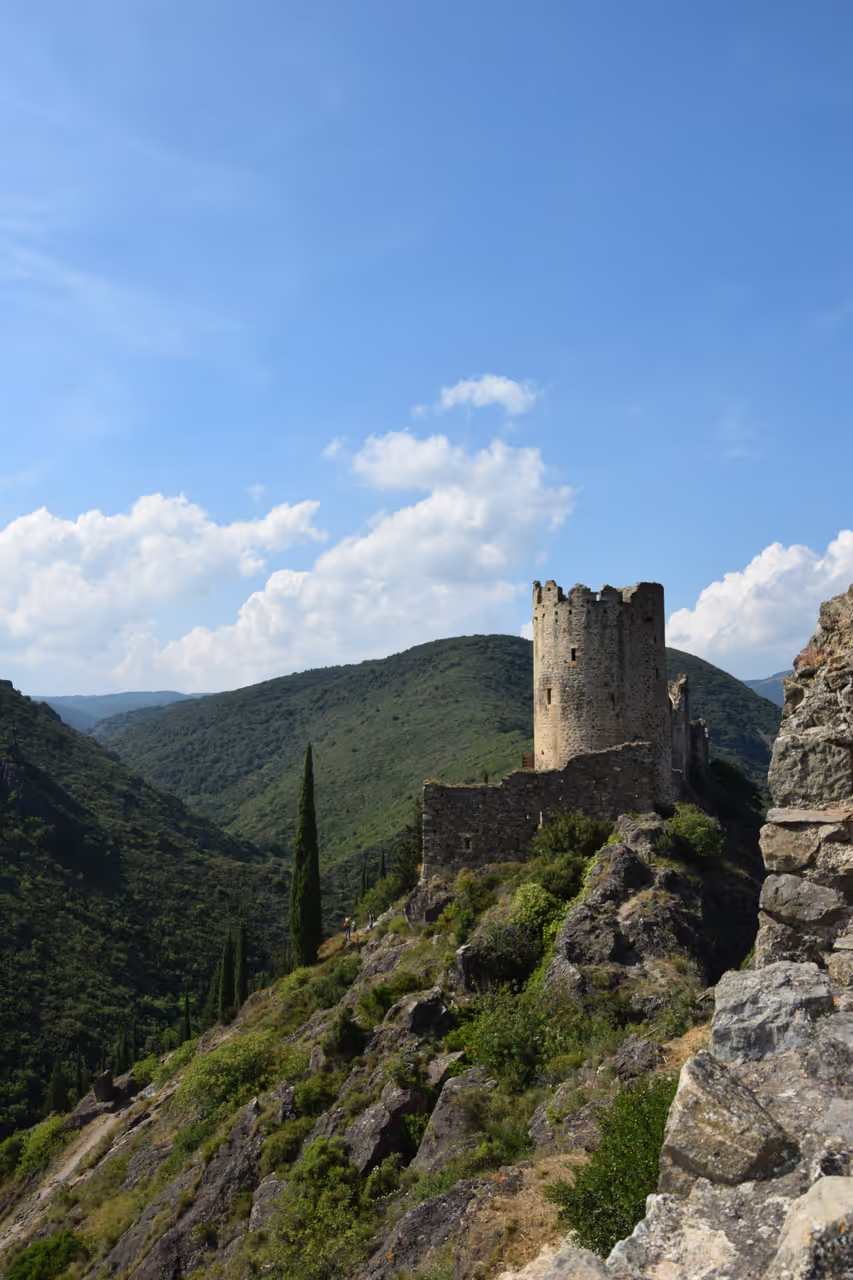
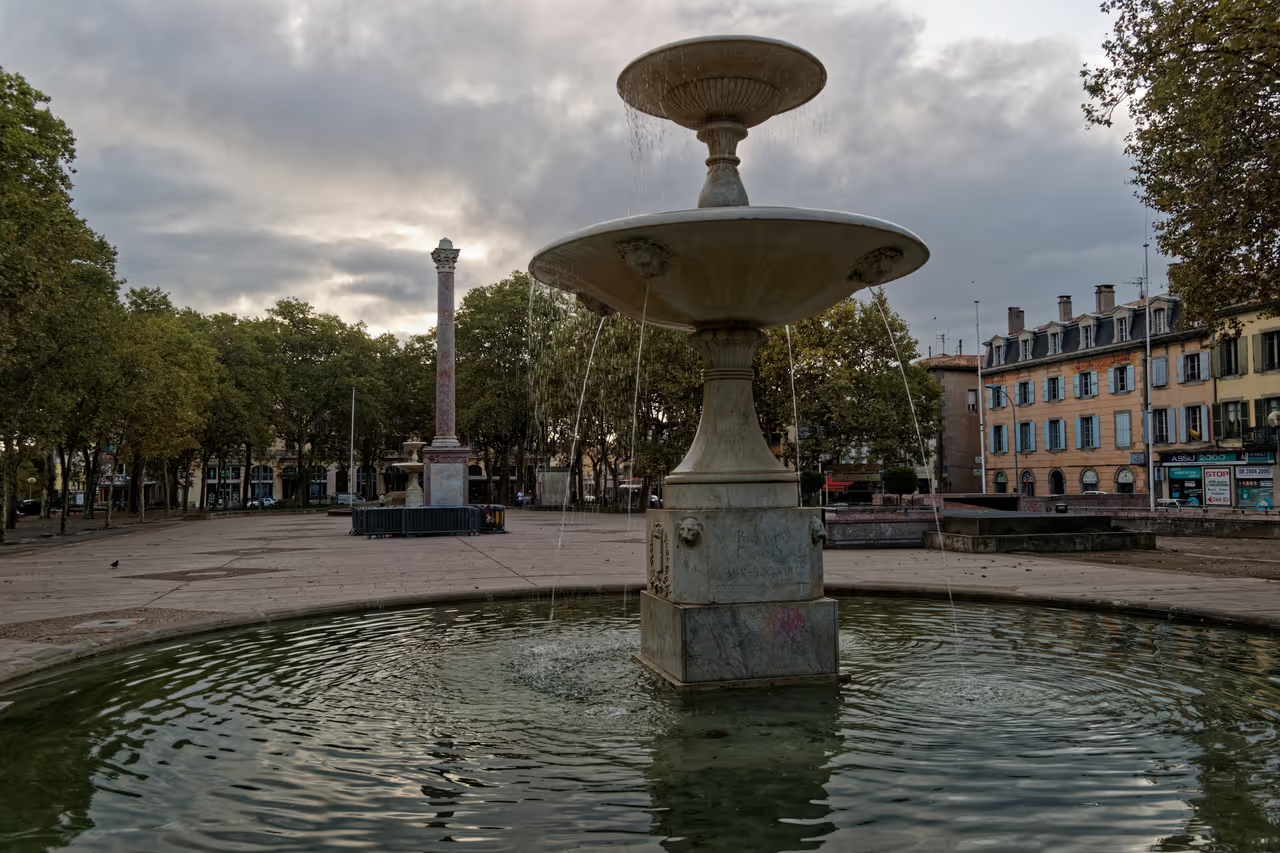
3 Days in Carcassonne: The Split City
This extended timeline allows you to properly separate the aristocratic military history on the hill from the pragmatic merchant history in the valley. It forces you out of the medieval theme park and onto the flat, working grid of the Bastide. You will navigate the locks of the Canal du Midi and climb the brutal limestone ridges outside the city limits.
view itinerary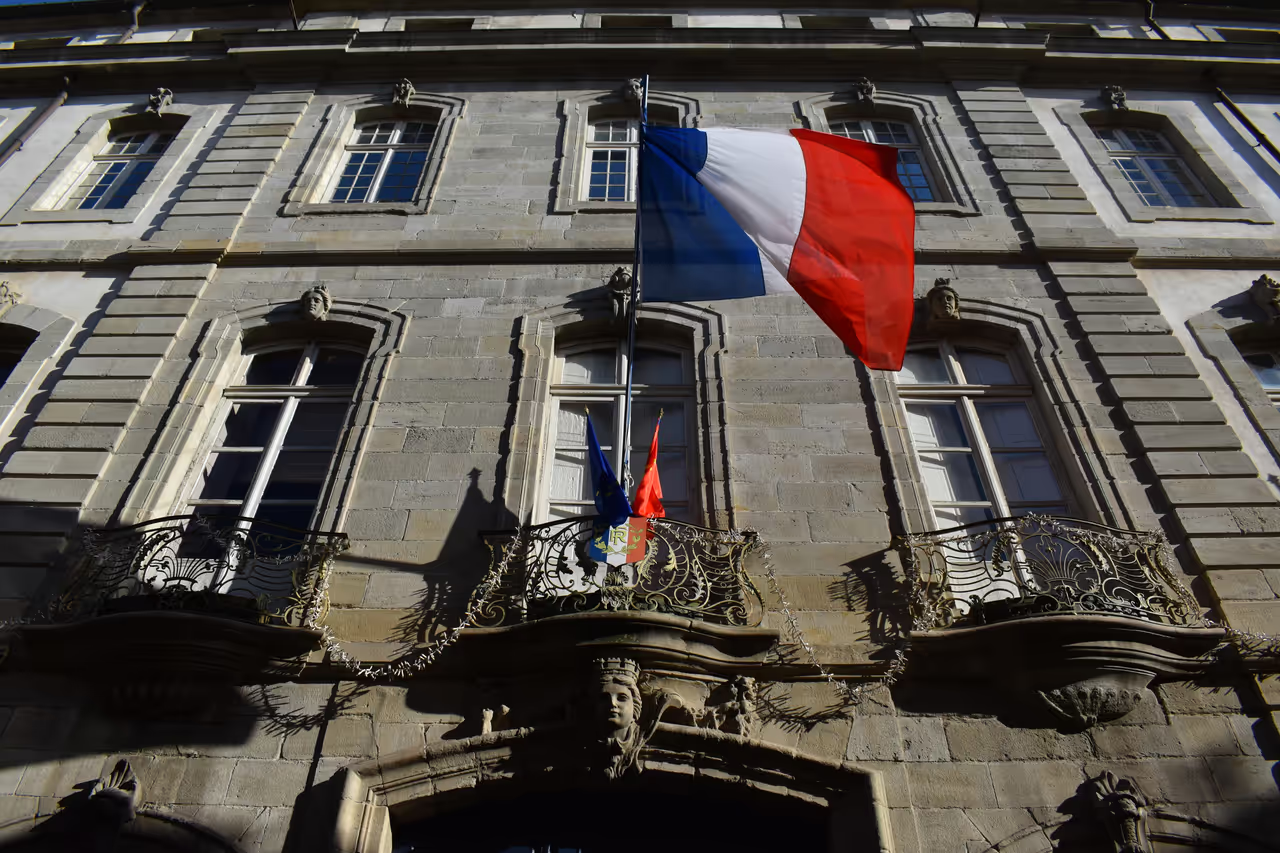
5 Days in Carcassonne: Terroir and Defences
A slow, deliberate extraction of everything the region has to offer. This pacing allows for serious culinary exploration and day trips into the brutal, rocky scrubland of the Corbières. You will spend hours simply sitting in cafes watching the city function, alternating between the manicured wealth of the 18th-century mansions and the raw stone of the ancient outposts.
view itinerary
Architect's Illusion
An investigation into one of the most controversial restoration projects in architectural history. The route examines Eugène Viollet-le-Duc's heavy-handed, highly romantic 19th-century intervention. It highlights the obvious fakes, the brilliant stabilisations, and the philosophical debate between preserving a ruin and rebuilding a fantasy. The narrative asks whether authenticity matters if the forgery is this beautiful.
view self-guided tour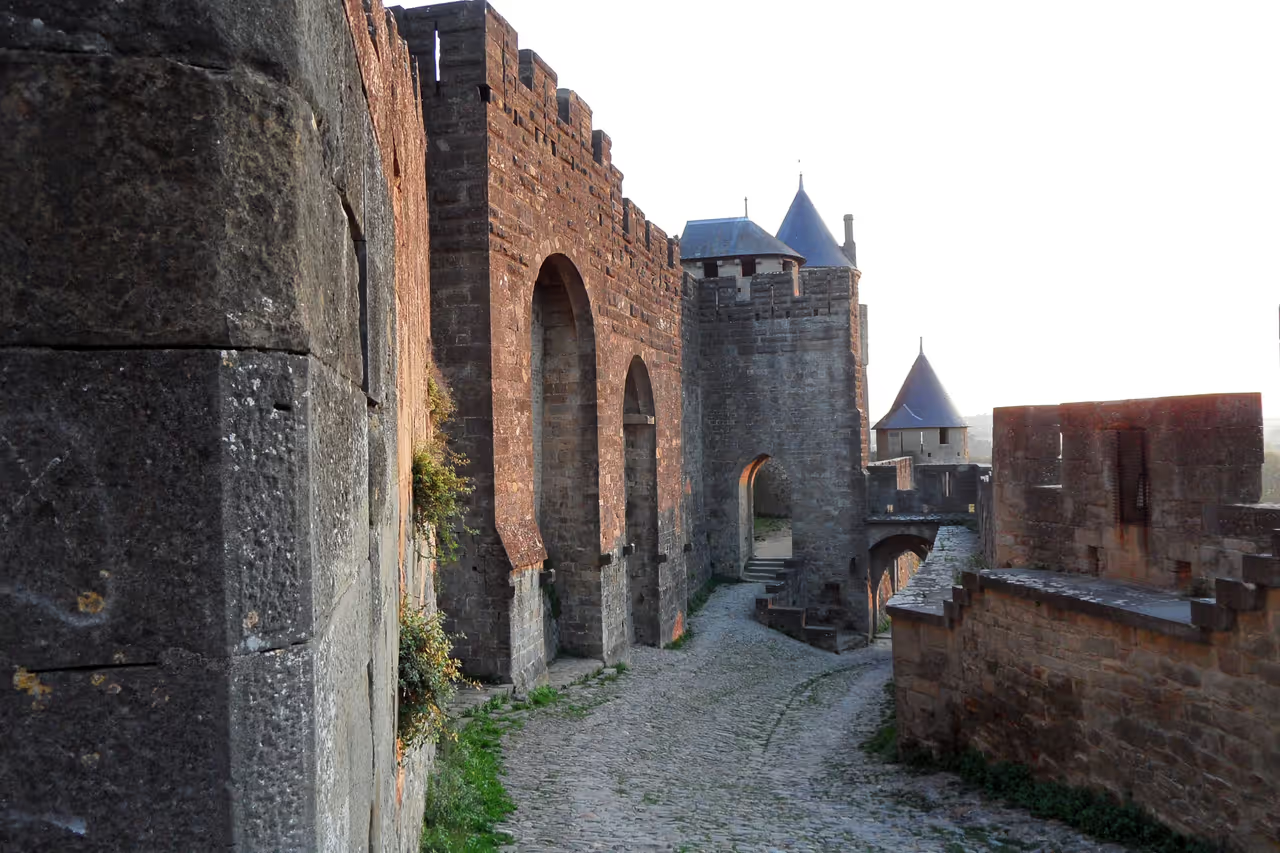
Siege Defence Circuit
A brutal examination of medieval military paranoia. The route explores the precise architectural choices made to kill attackers and preserve defenders. It focuses on the chokepoints, the murder holes, and the blindingly steep approach angles. The narrative shifts from the despair of the Cathars to the overwhelming might of the French Royal engineers.
view self-guided tour
See all attractions in Carcassonne
Including Aude Gate, Basilica of Saint-Nazaire and Saint-Celse, Narbonne Gate, and more