Aude Gate
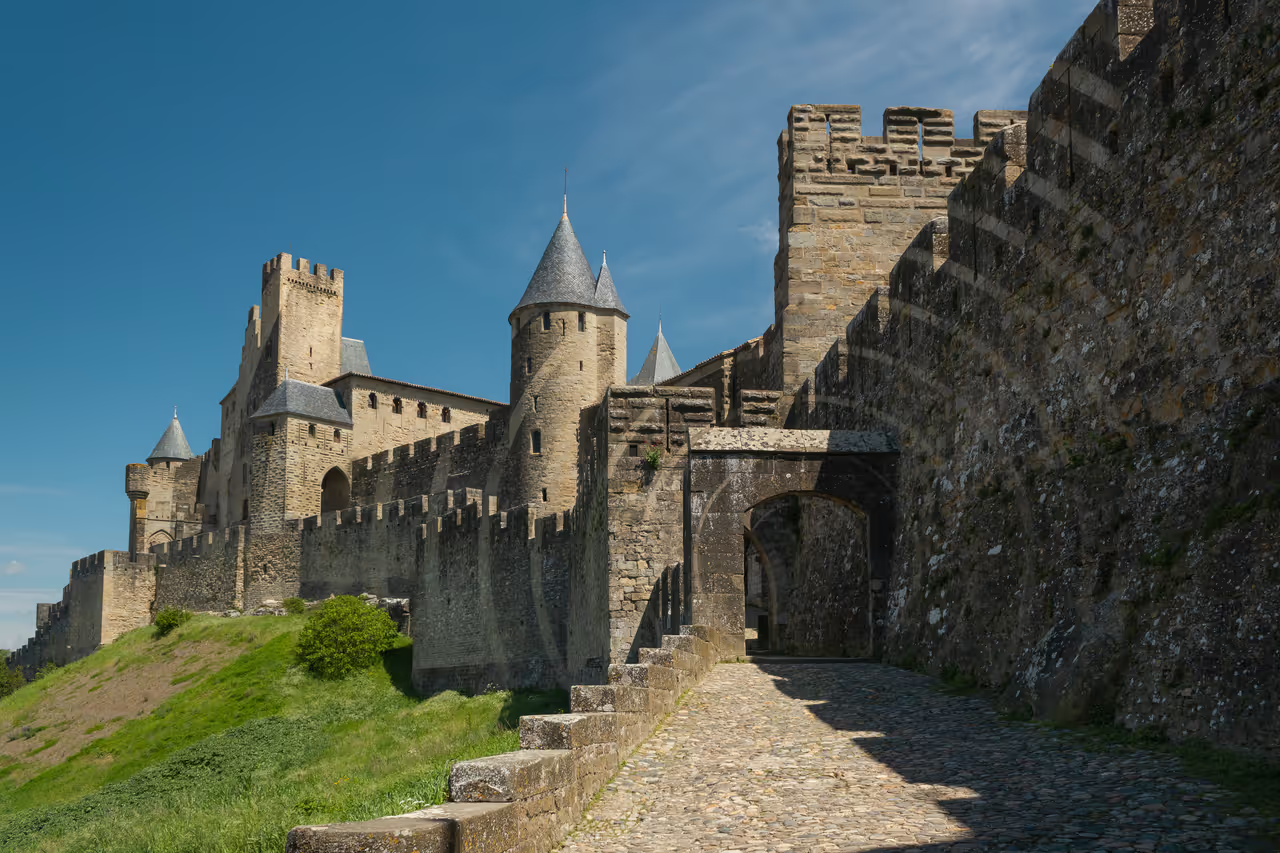
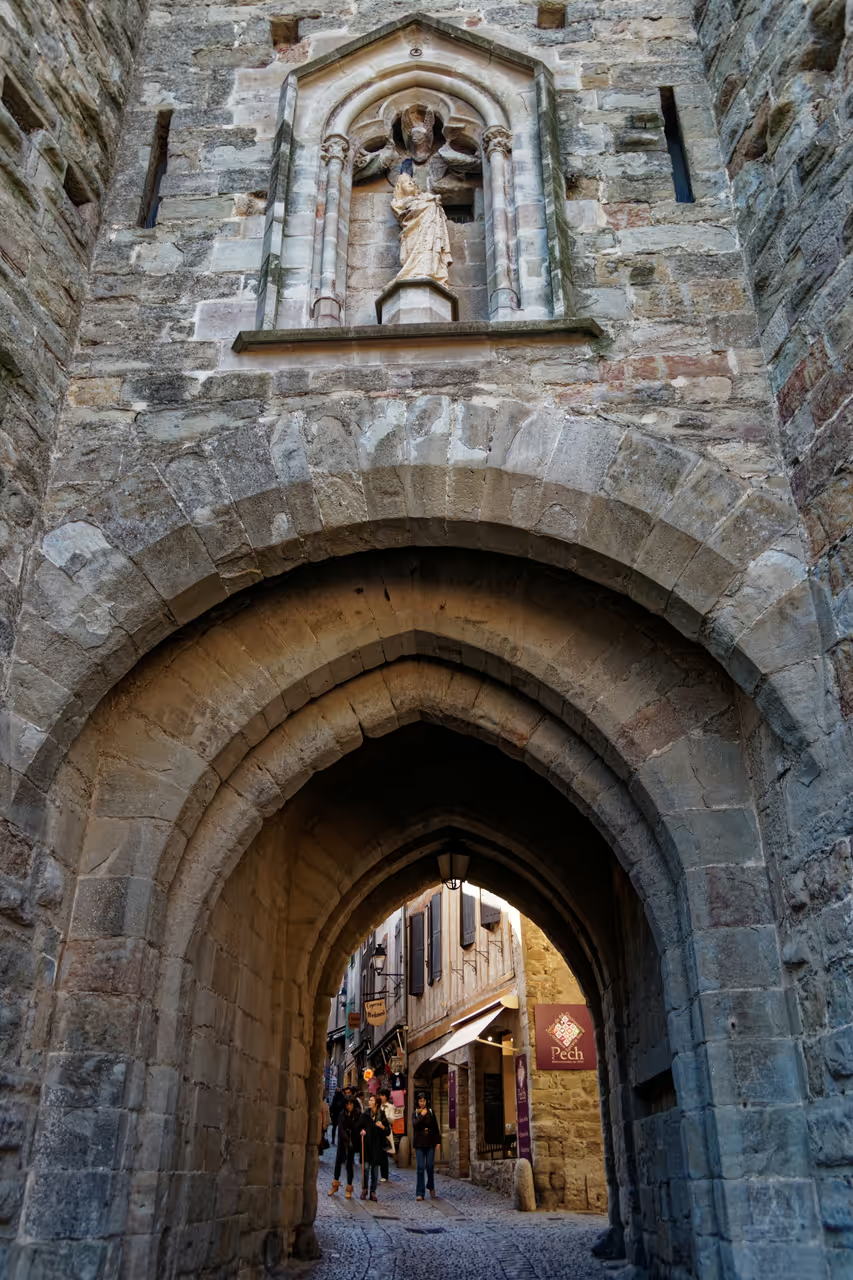
Carcassonne’s western entrance was built to exhaust attackers long before they reached the heavy timber doors. Approaching the Aude Gate means hauling yourself up a steep, curving cobbled ramp that rises sharply from the lower town. The local Tramontane wind often funnels directly through this stone archway, catching unsuspecting hats and forcing walkers to lean forward into the breeze. Unlike the grand Narbonnaise entrance on the opposite side of the city, this defensive choke point lacks a drawbridge or a moat. Instead, it relies on a twisting path exposed to overlapping lines of fire from the flanking towers. Today, finishing the climb rewards walkers with sweeping views over the roofs of Bastide Saint-Louis and the slow-moving River Aude far below.
History of Aude Gate
The Romans first fortified this hilltop, but the western defences took their distinctive shape under the Visigoths and the Trencavel dynasty. By the twelfth century, Carcassonne operated as a primary stronghold for the Cathars. Rome viewed this Christian sect as a heresy and demanded action. The western approach faced its defining trial in 1209 during the Albigensian Crusade. Crusader forces led by Simon de Montfort arrived outside the walls, cut off the city water supply from the river below, and forced a complete surrender. Following this capitulation, the French Crown seized control and heavily fortified the entire slope to prevent the city from ever falling again. Royal engineers in the thirteenth century recognised that the western approach lay dangerously close to the river. They constructed a series of complex defensive traps designed to turn the path into a brutal gauntlet. An attacking army breaking through the outer wall still had to navigate a blind right hand turn, exposing their unshielded sides to archers stationed on the ramparts above. Masons even built false doors into the rock face to confuse invaders under fire. For centuries, this sophisticated defensive zone deterred hostile armies from Spain. It kept the royal garrison safe behind the towering stonework. As the border with Spain moved further south in 1659, the fortress lost its military purpose and slowly decayed. The lower defences fell into ruin, their carefully carved blocks cannibalised by local residents for new houses. The entire structure faced total destruction in the nineteenth century. It was saved only when Eugène Viollet-le-Duc began a massive restoration project across the citadel. He rebuilt the crumbling parapets and reinstated the heavy wooden hoardings along the upper walls. Now, modern walkers pass through the exact staggered defensive layers that once terrified medieval soldiers, emerging directly beneath the imposing shadow of the Inquisition Tower.
events spanning 782 years
Fun Facts
- • During a siege, a complex system of wooden hoardings could be rapidly attached to the exterior stonework. This allowed defenders to drop heavy stones directly onto the heads of attackers without leaning over the stone parapets.
- • In the early nineteenth century, the local government planned to demolish the ruined gate entirely to use its masonry for road construction. A vigorous public campaign forced the state to halt the destruction.
- • Local defensive records indicate defenders used secret postern doors cut into the lower slope to launch surprise counterattacks against besieging armies. Soldiers would slip out at night to sabotage siege equipment.
- • Masons carved a false door into the solid rock face just before the actual entrance. They aimed to waste the time of enemy troops during the chaos of an assault while the invaders took heavy casualties from the towers above.
- • The approach ramp is known as the Montée d'Aude. It forces an uphill right turn that exposed the unshielded right flanks of attackers to archers, since most medieval soldiers carried their shields on their left arms.
- • The archway served as a prominent backdrop for the hit French comedy Les Visiteurs in 1993. The steep cobbled path outside the gate was used to film the time travelling knights' chaotic arrival.
- • The gateway lacks a protective portcullis. This omission is highly unusual for a major medieval fortress, but the twisting approach ramp made it impossible for an attacking force to gain enough momentum to use a heavy battering ram.
- • The heavy iron studded timber doors currently hanging in the gateway swing on massive iron pivots rather than traditional hinges. This is a medieval engineering technique designed to stop battering rams from snapping the door fixtures.
Aude Gate FAQ
While we strive to keep this information accurate and up to date, we recommend verifying any details independently before making decisions based on them.
Aude Gate Map & Neighborhood Explorer
This interactive map is centered on Aude Gate. Zoom in and move the map around to automatically discover Wikipedia photos and summaries of other nearby sights, monuments, and historical points of interest and stories in real-time!
Places near Aude Gate
Make the most of your trip. Check out these top-rated spots located nearby.
 79m
79mCité de Carcassonne
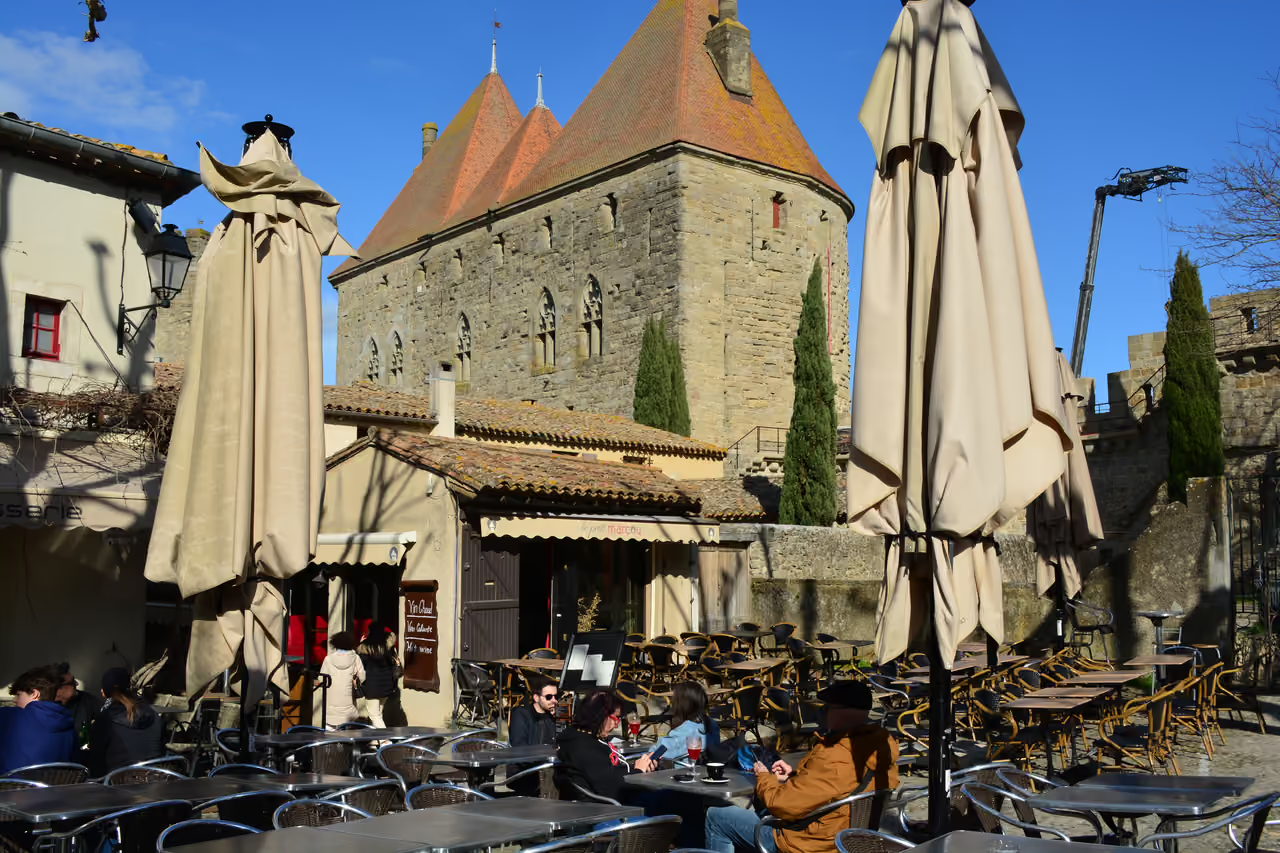
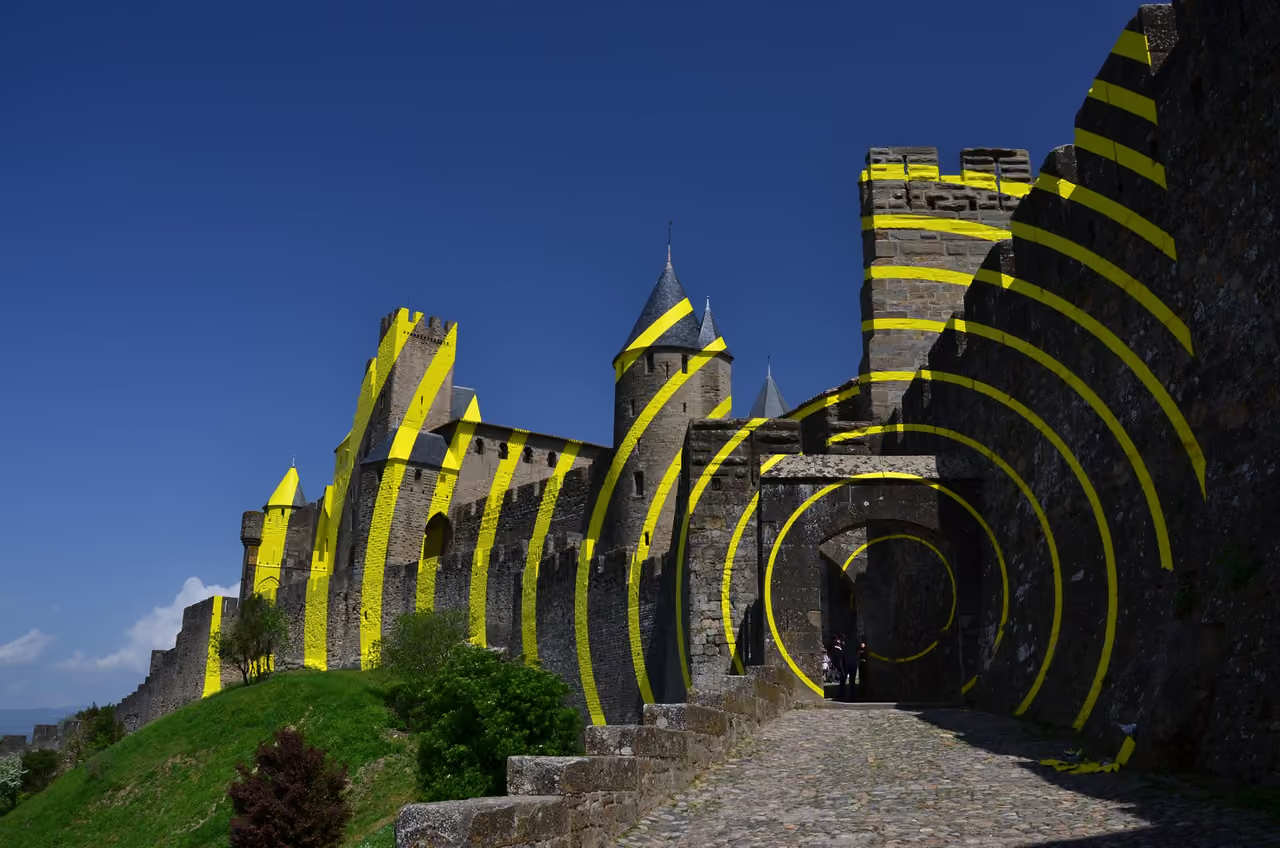
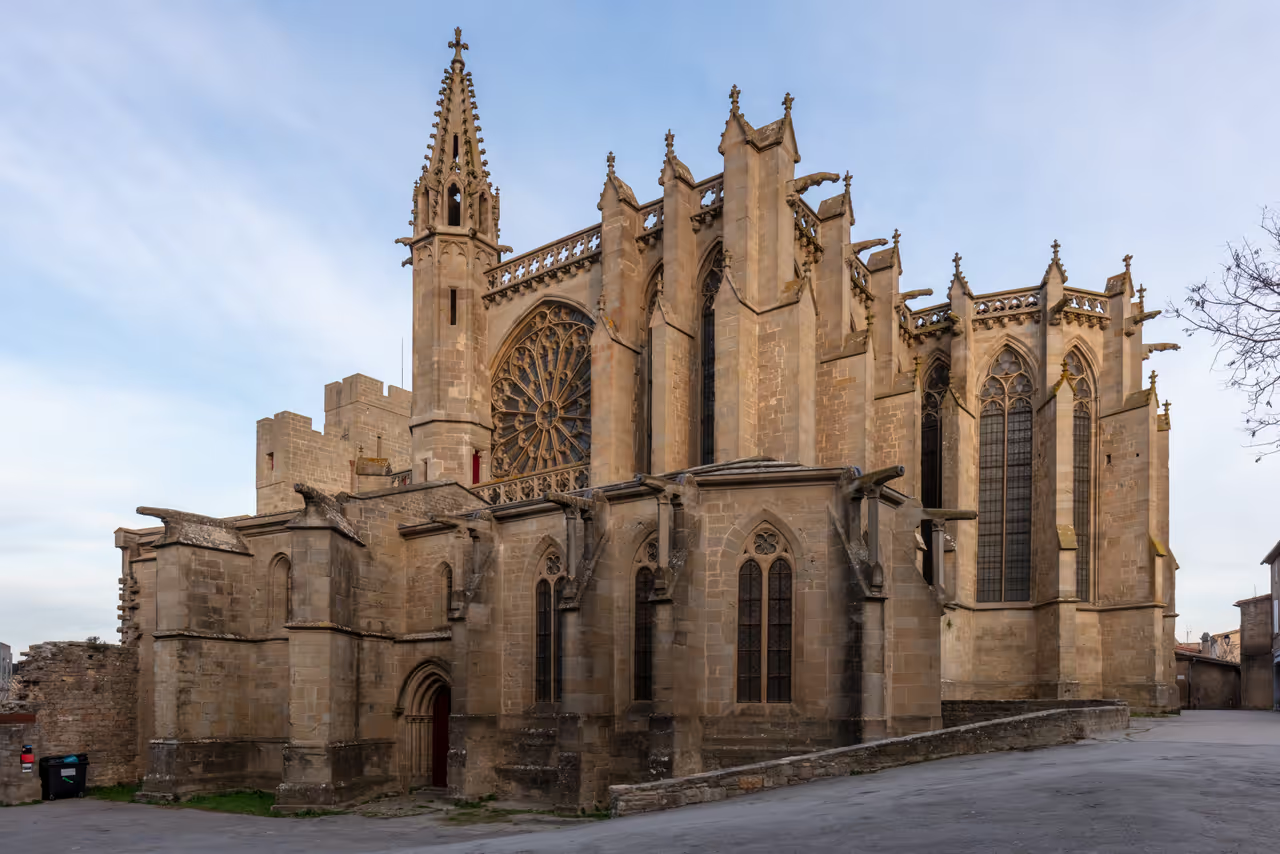
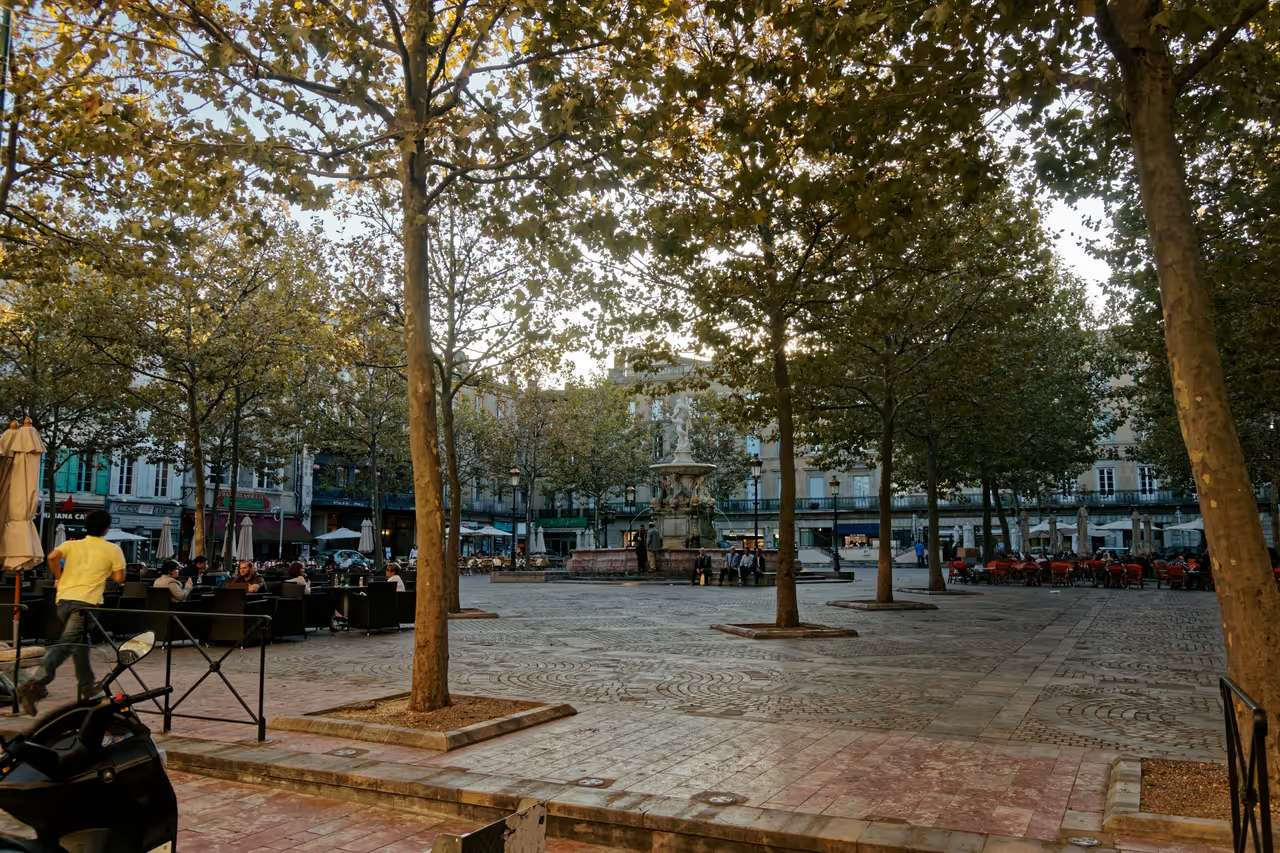
Count the towers along the ramparts of the Cité and you will reach 52, which gives you something to do while the queue at the Porte Narbonnaise shuffles forward on a July afternoon. Two lines of wall, roughly three kilometres in all, wrap a hilltop town that people still live in, so the lanes behind the gate hold crêpe stalls and cassoulet on the terrace tables of Place Marcou. The Château Comtal leads across a drawbridge and up onto the ramparts, where the wooden galleries show how defenders once dropped missiles on anyone who reached the foot of the wall. The Basilica of Saint-Nazaire has Romanesque arches at one end and medieval stained glass at the other, and it is worth ten quiet minutes out of the crowds. Come late, once the day trippers have drifted off, and the only sound along the Lices is shoes on cobbles and a shop shutter coming down.
unesco heritage site view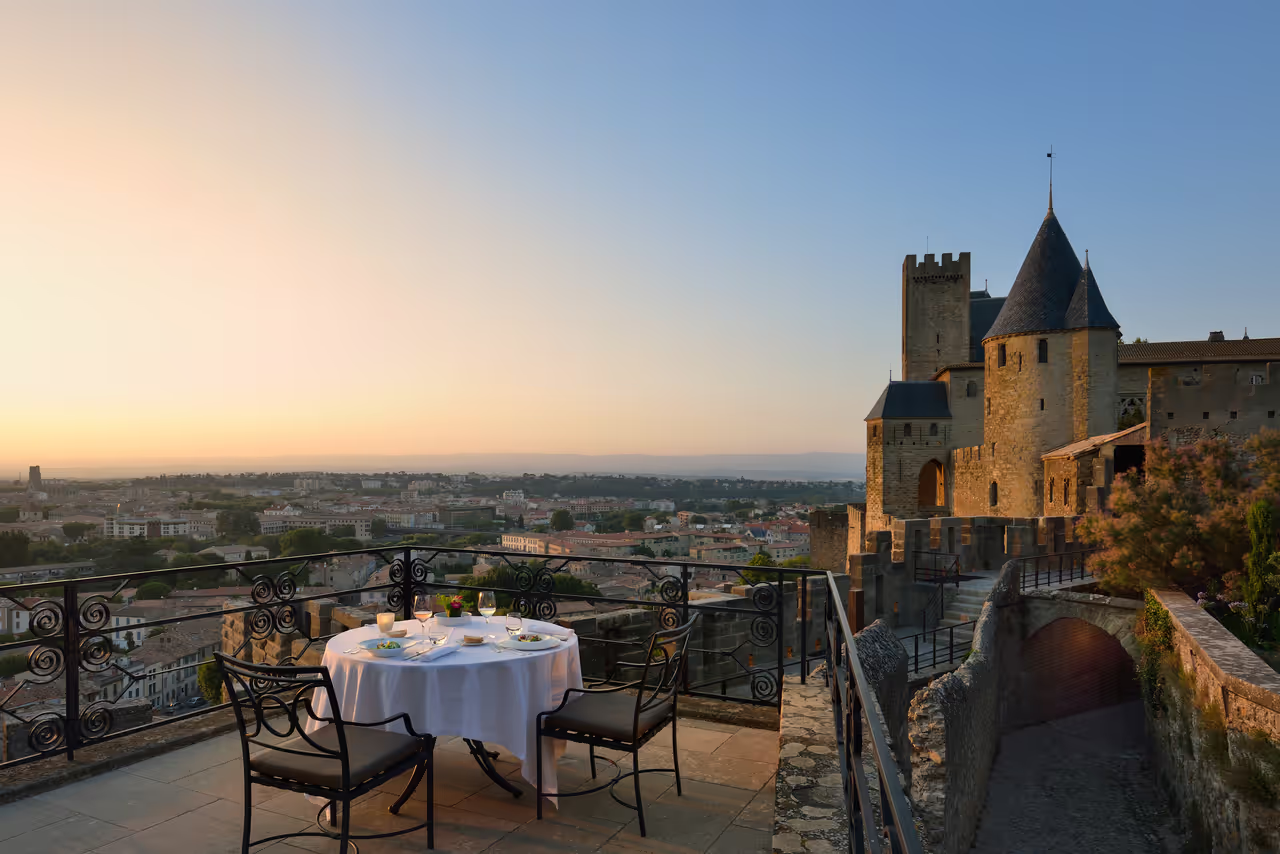 88m
88mHotel of the City
Constructed directly inside the walls of the medieval fortress, this luxury hotel blends aggressively into its ancient surroundings. Built in the 1920s on the site of a former bishop's palace, it features pointed arches, heavy leaded glass, and neo-Gothic woodwork. The building deliberately blurs the line between historical preservation and wealthy theatricality. Deep, manicured gardens separate it from the chaotic tourist paths.
architecture view- 94m
Convenanza Festival
An intimate, sharply curated electronic and alternative music festival held at the end of September. Founded by the late British DJ Andrew Weatherall, the event turns the medieval courtyard of the castle into a massive, pulsating dance floor. It draws a dedicated, international crowd of music obsessives rather than casual tourists. The acoustics of the heavy stone walls provide a uniquely dense sound environment.
festival view 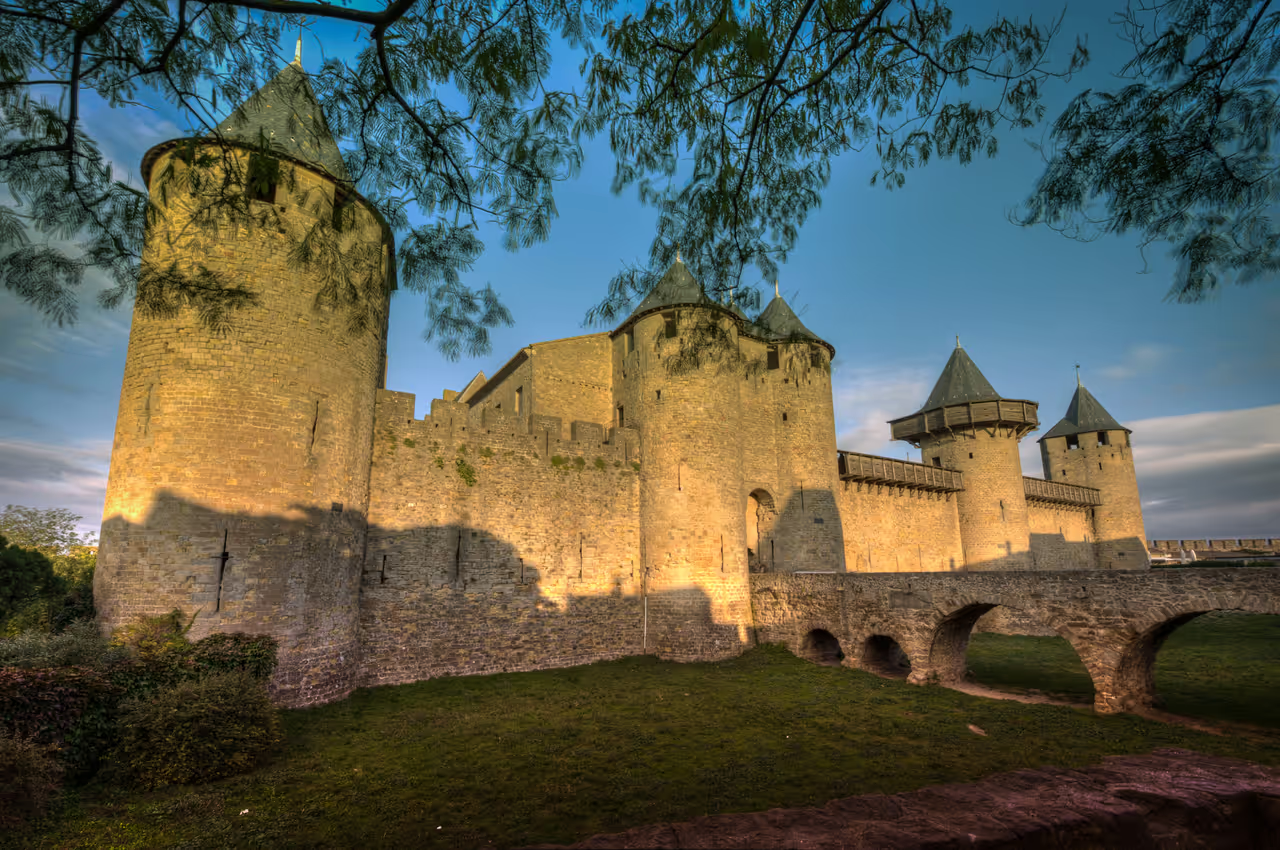 98m
98mCount's Castle
A dry moat and a heavy timber drawbridge separate this twelfth-century fortress from the rest of the medieval citadel. Originally constructed as a lavish palace for the Trencavel family, it evolved into an imposing military stronghold bristling with wooden galleries and nine distinct towers. You will often find a minor bottleneck of visitors pausing on the stone bridge to look down into the empty defensive ditch, a perfect spot to inspect the masonry up close. Walking along the reconstructed wooden ramparts gives a sharp sense of what archers saw when scanning the Aude river valley for approaching crusaders. Inside the central courtyard, a giant elm tree once grew, and today the space leads directly into a museum housing salvaged Romanesque frescoes and intricate stone carvings. The tour finishes by descending a narrow spiral staircase right at the base of the Tour de la Pinte, depositing you onto the cobblestones near the western walls.
attraction view
Featured on These Itineraries and Routes

5 Days in Carcassonne: Terroir and Defences
A slow, deliberate extraction of everything the region has to offer. This pacing allows for serious culinary exploration and day trips into the brutal, rocky scrubland of the Corbières. You will spend hours simply sitting in cafes watching the city function, alternating between the manicured wealth of the 18th-century mansions and the raw stone of the ancient outposts.
view itinerary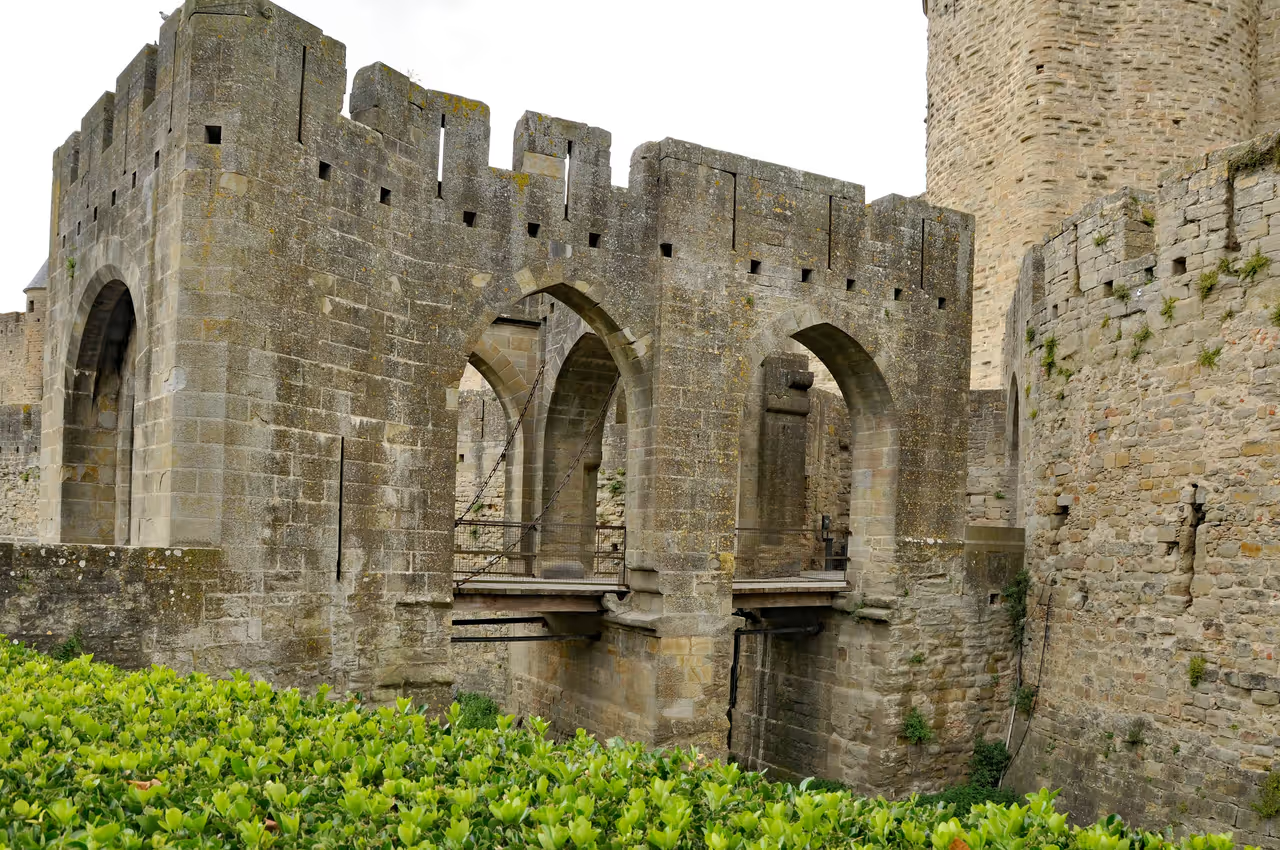
Circuit of the Lices
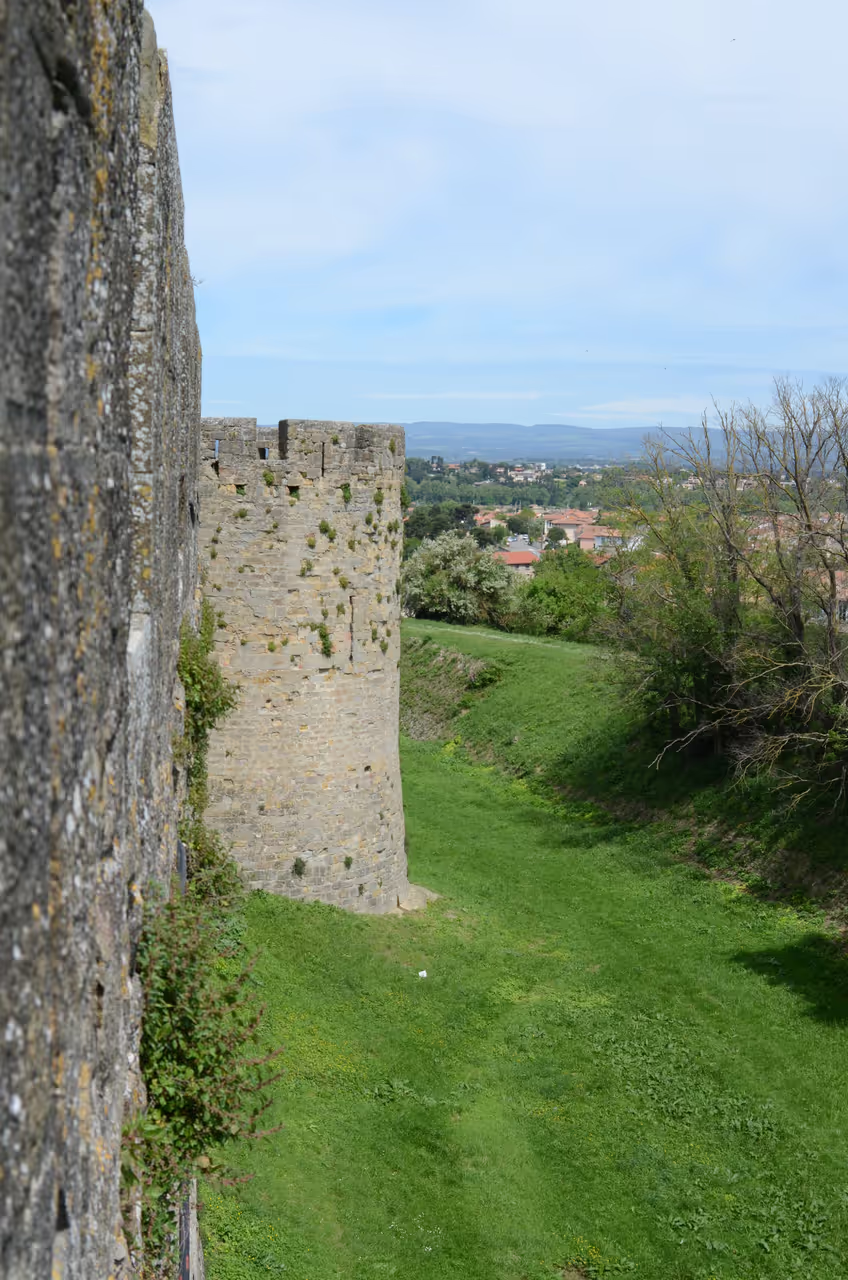
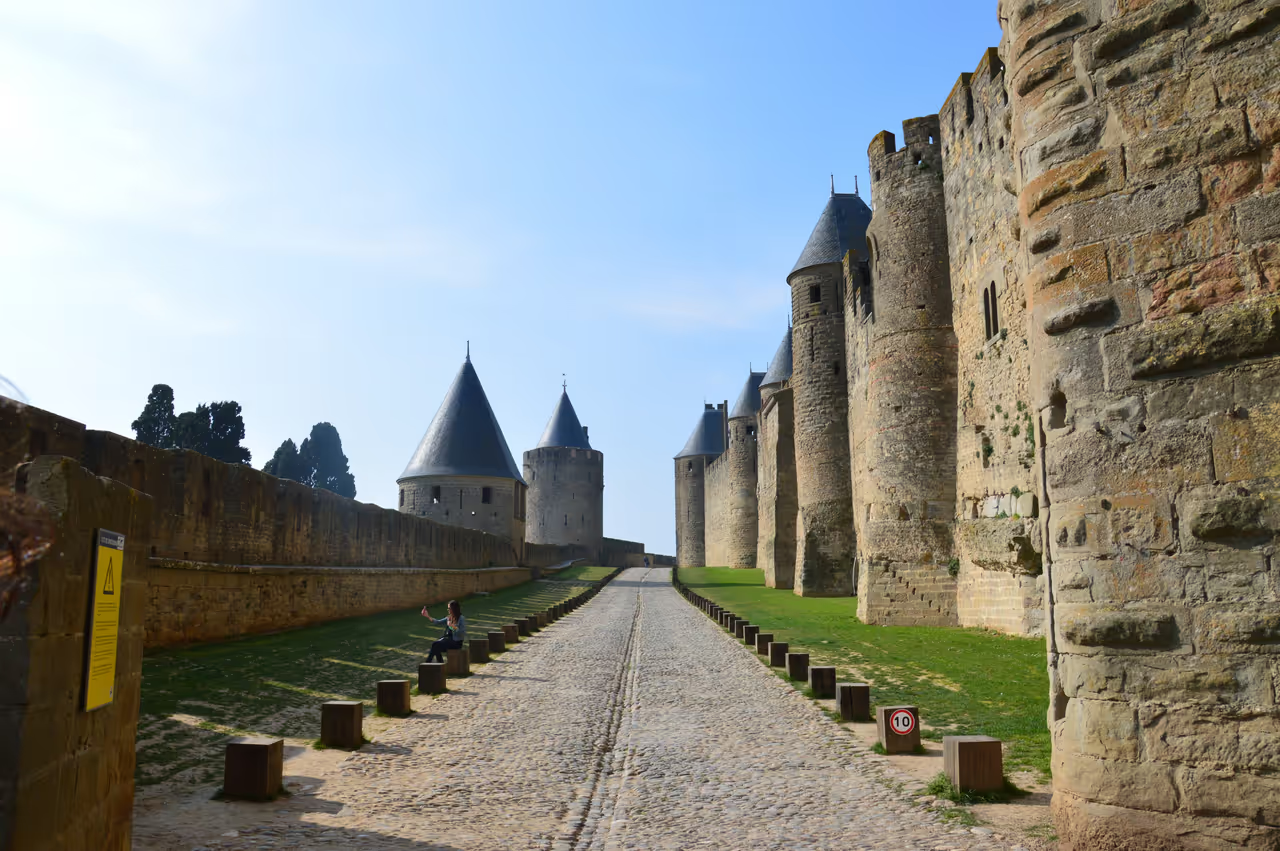
A massive, dry moat separates the inner and outer defensive walls of the medieval fortress. The space is vast, dusty, and completely enclosed by towering masonry. Tour groups huddle around specific gates, but long stretches remain remarkably empty. The sheer vertical drop of the stone tricks the eye, making the sky feel narrow and distant.
view walking route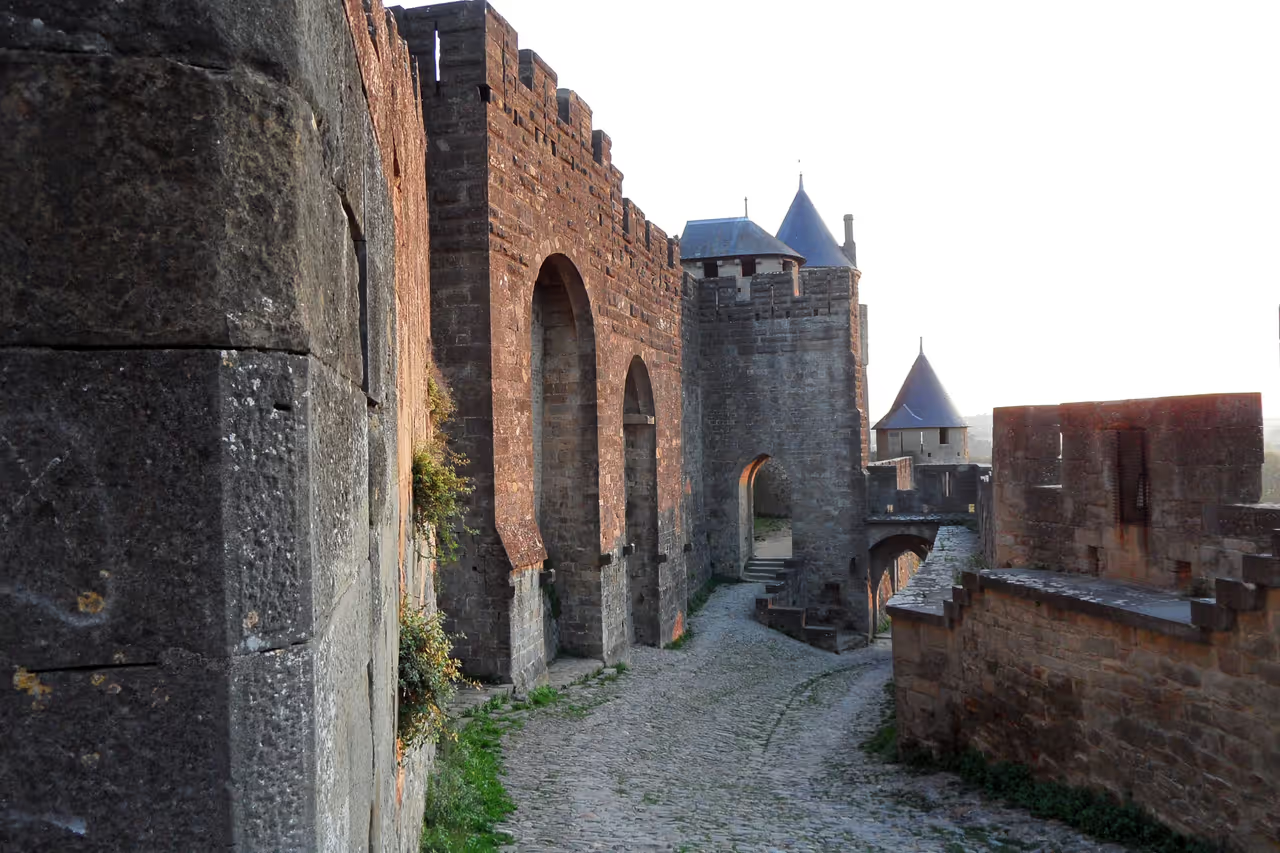
Siege Defence Circuit
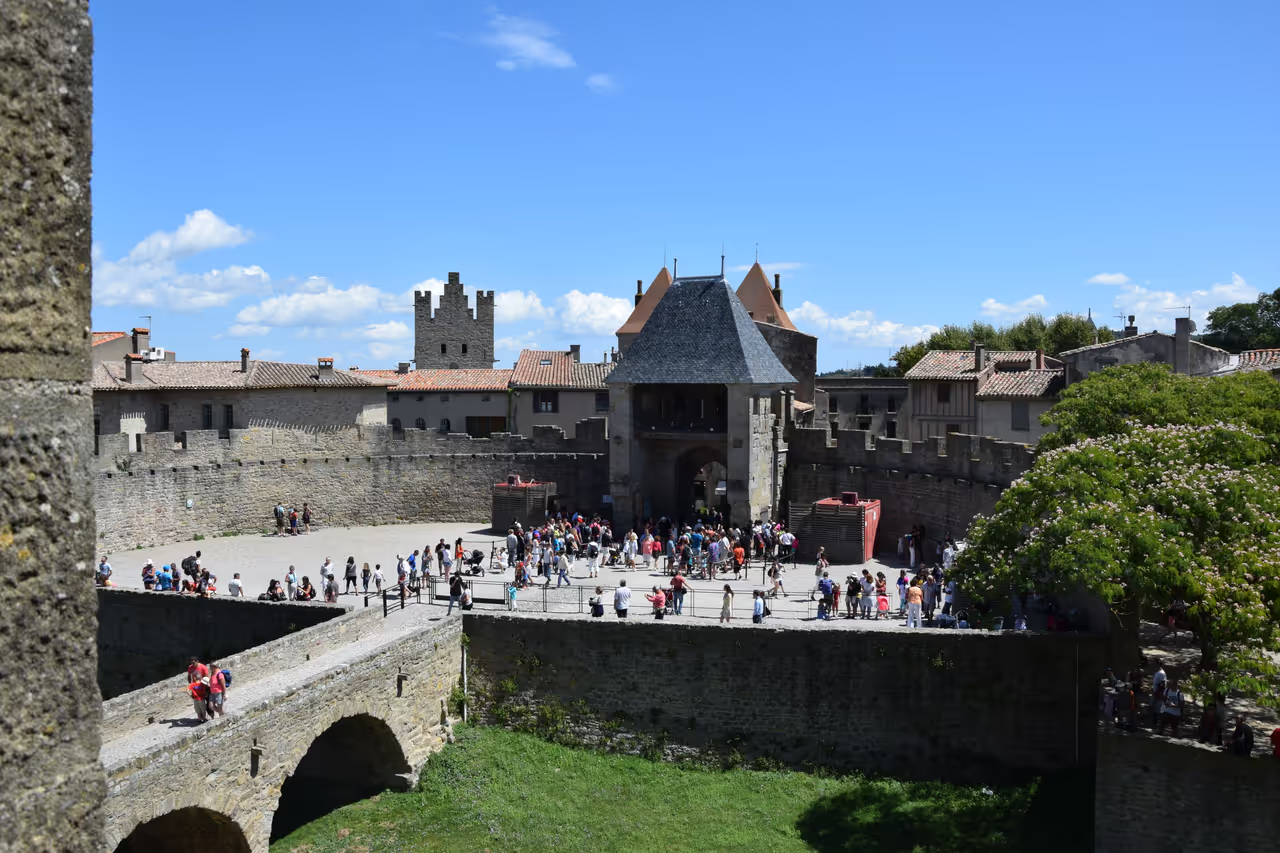
A brutal examination of medieval military paranoia. The route explores the precise architectural choices made to kill attackers and preserve defenders. It focuses on the chokepoints, the murder holes, and the blindingly steep approach angles. The narrative shifts from the despair of the Cathars to the overwhelming might of the French Royal engineers.
view self-guided tour
See all attractions in Carcassonne
Including Basilica of Saint-Nazaire and Saint-Celse, Count's Castle, Narbonne Gate, and more