Cité de Carcassonne
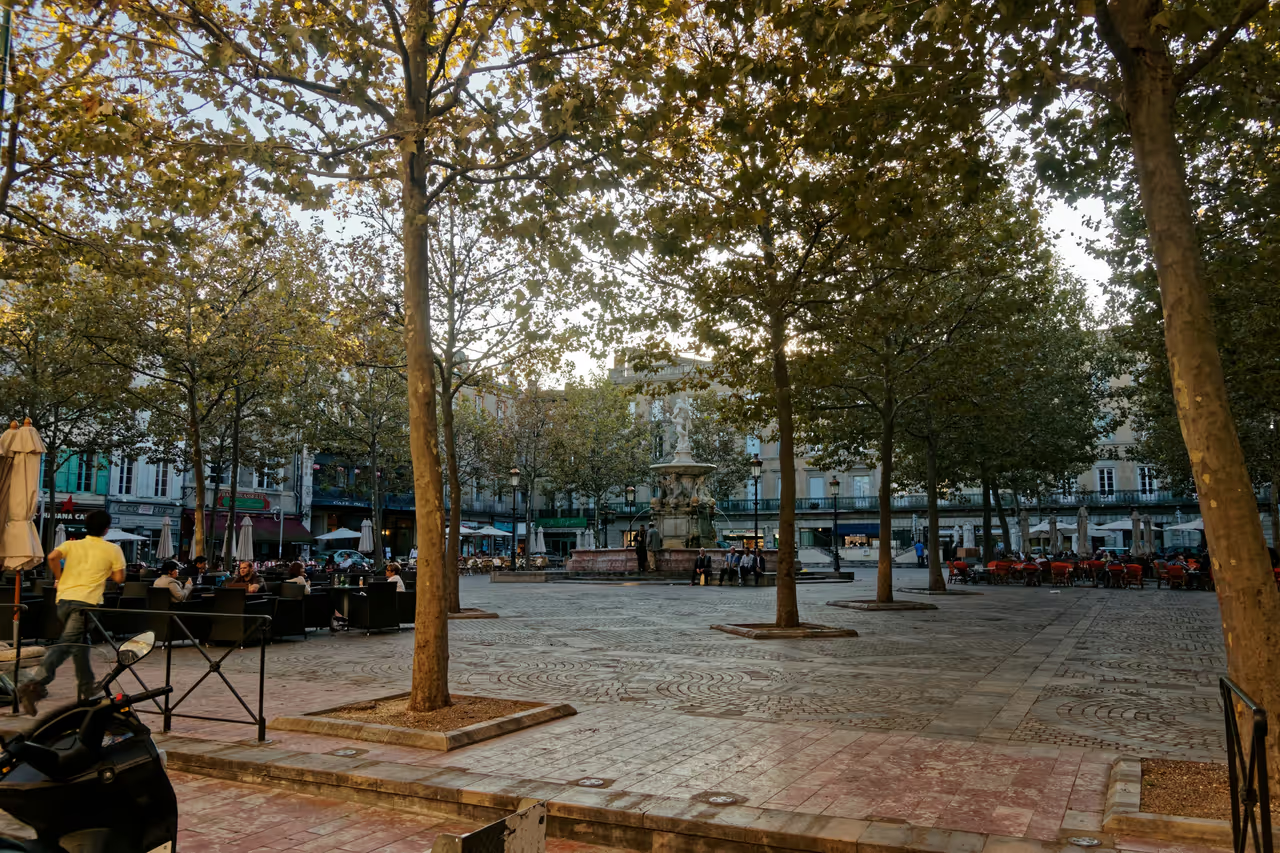
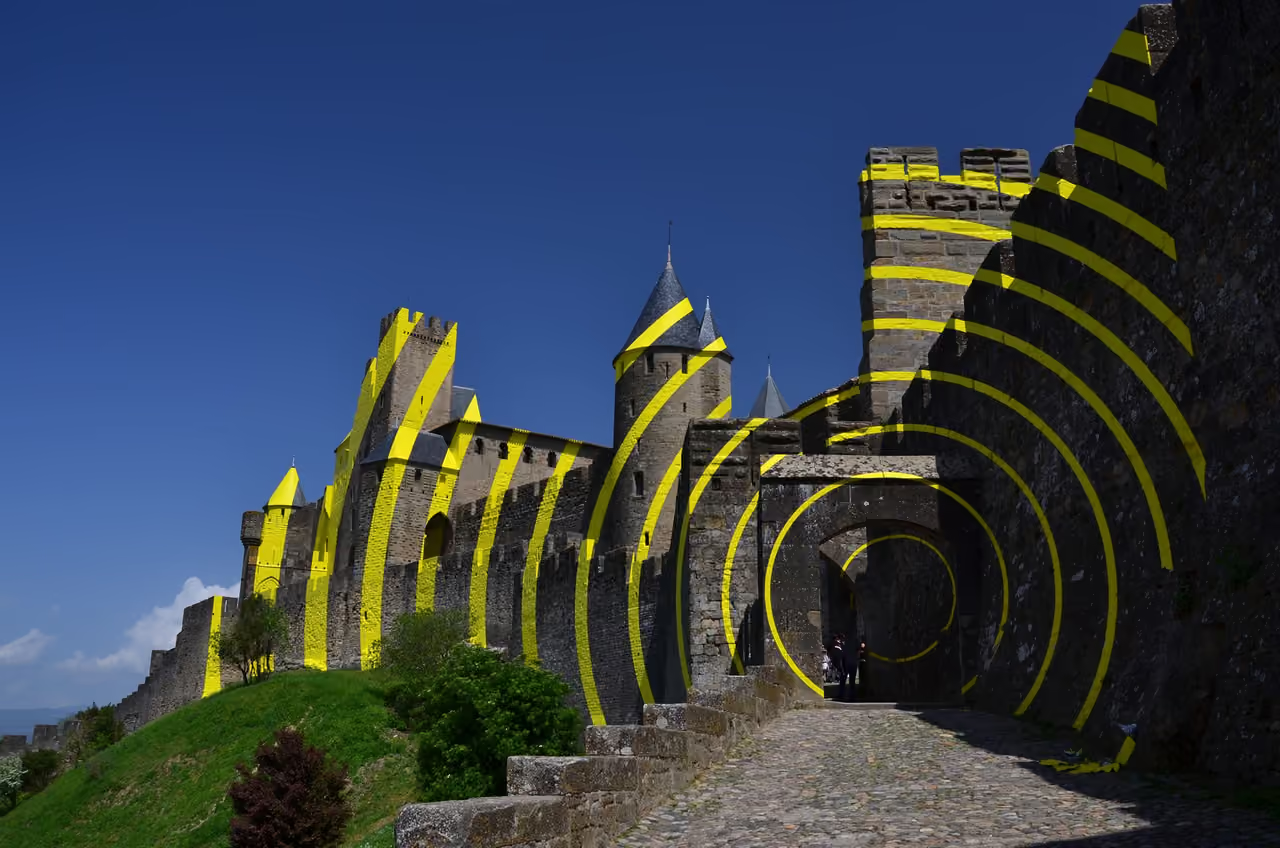
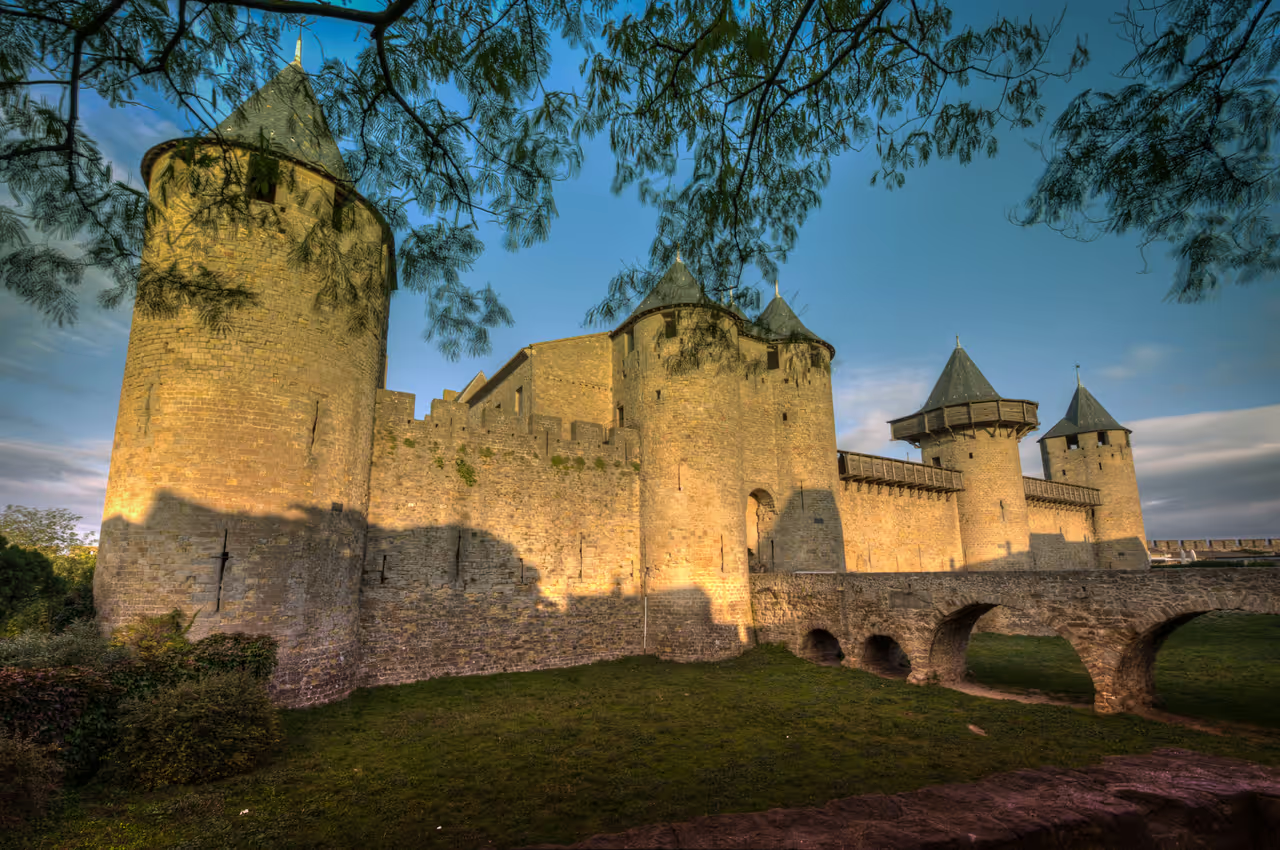
Count the towers along the ramparts of the Cité and you will reach 52, which gives you something to do while the queue at the Porte Narbonnaise shuffles forward on a July afternoon. Two lines of wall, roughly three kilometres in all, wrap a hilltop town that people still live in, so the lanes behind the gate hold crêpe stalls and cassoulet on the terrace tables of Place Marcou. The Château Comtal leads across a drawbridge and up onto the ramparts, where the wooden galleries show how defenders once dropped missiles on anyone who reached the foot of the wall. The Basilica of Saint-Nazaire has Romanesque arches at one end and medieval stained glass at the other, and it is worth ten quiet minutes out of the crowds. Come late, once the day trippers have drifted off, and the only sound along the Lices is shoes on cobbles and a shop shutter coming down.
Videos
History of Cité de Carcassonne
The hill above the Aude sits where the road from the Atlantic meets the road to the Mediterranean, and everyone who wanted to control that crossing eventually wanted the hill. A Gaulish hilltop settlement became the Roman town of Carcaso around the 1st century BC, and the Romans gave it its first serious walls. The Visigoths rebuilt those defences when they took over in the 5th century, and some of that early masonry can still be spotted in the lower courses of the inner ramparts. Saracen garrisons and the Franks under Pepin the Short came and went after that, but the place only became the fortress people recognise today in the Middle Ages. Over the 11th and 12th centuries the Trencavel family, who held the title of viscount of Carcassonne, turned the old stronghold into something grander. They built the Château Comtal on the western side of the hill, while the suburbs of Saint-Vincent and Saint-Michel grew up against the walls and the town prospered on trade. In 1096 Pope Urban II consecrated the church of Saint-Nazaire while touring southern France to preach the First Crusade. Languedoc at the time was a patchwork of tolerant courts where Cathar belief, a Christian movement the Church condemned as heresy, had won many followers, and the Trencavels were accused of protecting them. That accusation brought an army south. A crusade raised by the pope reached Carcassonne on 1 August 1209, and the town was crowded with refugees from the countryside while the summer heat drained its water supply. The young viscount, Raimond Roger Trencavel, went to the crusaders' camp to negotiate and was kept prisoner, and the town surrendered. His lands were handed to the crusade's new leader, Simon de Montfort, a minor lord from the Île-de-France who suddenly found himself ruling one of the richest regions in the south. His grip never quite held. Montfort died at the siege of Toulouse in 1218, his son Amaury could not keep the territory, and in 1224 the dead viscount's son, also called Raimond Trencavel, rode back in and reclaimed the Cité. The triumph lasted barely two years before King Louis VIII brought the region under the French crown. In 1240 the same Raimond Trencavel returned with an army and failed to retake it, and the townspeople who had backed him were pushed out of the suburbs, eventually founding a gridded new town called the Bastide Saint-Louis on the other side of the river. The crown turned the captured town into a frontier fortress. The Kingdom of Aragon still held land just beyond the Pyrenees, and until the Treaty of Corbeil settled the border in 1258, Carcassonne stood watch over it. Louis IX and his successors added a second, outer wall so that attackers would have to storm two lines of stone in turn. The design was tested in 1355, when Edward, the Black Prince, rode through Languedoc during the Hundred Years' War. His army burned the lower town and then left the Cité alone. Then history moved on and left the fortress behind. The Treaty of the Pyrenees in 1659 pushed the French frontier far to the south, and Carcassonne's walls guarded nothing in particular. Napoleon had it struck off the list of official fortifications in 1804, stone was carted away for local building, and within a few decades the government had decided the whole thing should simply be demolished. A local antiquarian, Jean-Pierre Cros-Mayrevieille, and the writer Prosper Mérimée, then France's inspector of historic monuments, argued fiercely for saving it, and they won. In 1853 the architect Eugène Viollet-le-Duc began a restoration that Paul Boeswillwald and later Nodet carried on for decades. The slate roofs and wooden fighting galleries they added were criticised even then, and still are, as looking more like northern France than the sunny south. Yet without them the Cité might not exist at all, and the argument has become part of its character. The Cité joined the UNESCO World Heritage list in 1997 and has never been an empty monument. Families still live inside the walls, a theatre in the castle grounds stages the Festival de Carcassonne each July, and on 14 July the ramparts vanish behind a long fireworks display called the Embrasement de la Cité, with red light glowing along the towers while locals crowd the banks of the Aude to watch.
14 events spanning 2047 years
Fun Facts
- • A local legend explains the town's name. Charlemagne supposedly besieged Carcassonne for five years until a widowed Saracen lady called Carcas, with food running out, fed the last pig on the last of the wheat and threw it from the walls. Convinced the defenders must be well supplied, Charlemagne lifted the siege, and Carcas rang the bells in triumph. The story goes that someone shouted that Carcas sonne, 'Carcas rings', and that is how Carcassonne got its name. A bust of Dame Carcas still looks out near the Porte Narbonnaise.
- • After the surrender of 1209 the townspeople were reportedly allowed to leave with their lives but almost nothing else. Chroniclers of the time describe residents walking out in their underclothes, carrying only what they could hide.
- • Carcassonne is one of three towns that claim to be the home of cassoulet, the slow cooked bean stew of southwest France. The food writer Prosper Montagné is said to have ranked the rivals by calling Castelnaudary the father of cassoulet, Toulouse the son and Carcassonne the Holy Spirit. In Carcassonne the stew is traditionally made with mutton and, in season, partridge.
- • Carcassonne was the keystone of a chain of mountain strongholds along the border with Aragon, including Quéribus and Peyrepertuse. They became known as the five sons of Carcassonne, a name that reflects how closely the Cité and its outposts worked together to guard the frontier.
- • English novelist Kate Mosse set her bestselling novel Labyrinth around the Cité and its Cathar past. The book helped introduce a wave of English speaking readers to the history of the Albigensian Crusade, and Mosse has long had a home in the area.
- • In 2000 German designer Klaus Jürgen Wrede released the tile laying game Carcassonne, named after the town. It went on to win the Spiel des Jahres in 2001 and introduced the Cité to players around the world.
- • Parts of Robin Hood: Prince of Thieves, the 1991 film starring Kevin Costner, were shot at Carcassonne, where the Cité stood in for medieval England. The crossing of the drawbridge and the turrets against the sky made it an easy substitute for a storybook castle.
- • Some of the medieval stained glass in the Gothic parts of the Basilica of Saint-Nazaire has survived for several centuries, giving the church one of the oldest collections of coloured glass in the region. The contrast between the heavy Romanesque nave and the light Gothic choir lets you see two eras of Carcassonne in a single building.
- • The Cité's board game namesake is among the best known tabletop games in the world. Klaus Jürgen Wrede based it on the idea of building roads, walled towns and cloisters from tiles, and took the name from a visit to the real fortress. Many players know the name before they have seen the place.
- • The wooden galleries along the walls, called hourds, were only ever temporary in the Middle Ages. Defenders fixed them to the tops of the towers when a siege was expected so they could drop stones and other missiles on attackers below, and took them down in peacetime. Viollet-le-Duc rebuilt them as permanent fixtures, which means visitors see something medieval soldiers would rarely have seen standing for long.
- • Viollet-le-Duc's pointed slate roofs on the towers are among the most argued over details in French heritage. Critics said the steep slate belonged to the rainy north, and that the original medieval roofs would have been low and tiled for the southern sun. Later restorers and many visitors accept them anyway, since they are now the shape everyone pictures.
Cité de Carcassonne FAQ
While we strive to keep this information accurate and up to date, we recommend verifying any details independently before making decisions based on them.
Cité de Carcassonne Map & Neighborhood Explorer
This interactive map is centered on Cité de Carcassonne. Zoom in and move the map around to automatically discover Wikipedia photos and summaries of other nearby sights, monuments, and historical points of interest and stories in real-time!
Places near Cité de Carcassonne
Make the most of your trip. Check out these top-rated spots located nearby.
 21m
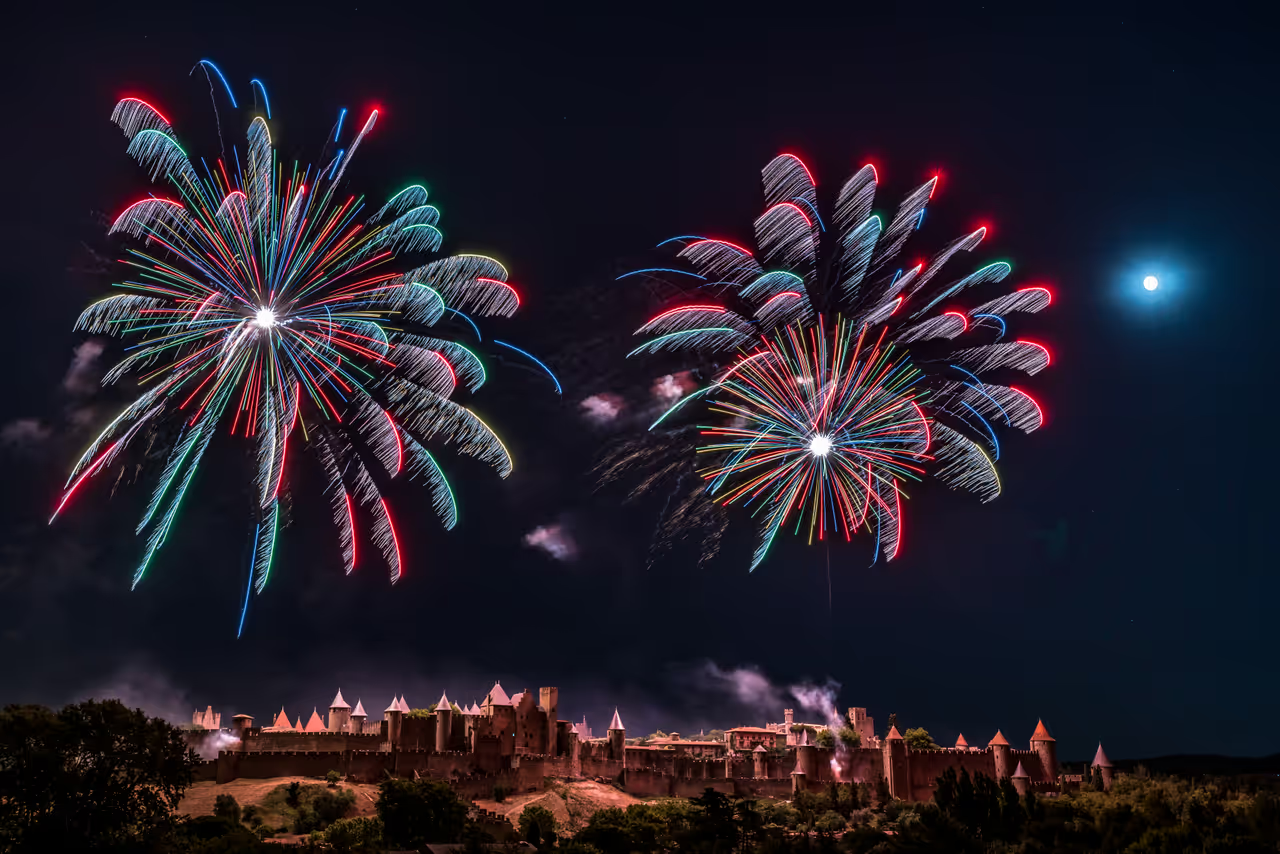
21mBurning of the City Fireworks
On the evening of July 14th, the city stages one of the most spectacular pyrotechnic displays in Europe. The entire medieval fortress is illuminated with red flares to simulate a massive historical fire, followed by a highly choreographed fireworks show launched directly from the ramparts. Crowds gather along the banks of the River Aude and on the nearby bridges hours in advance to secure a view. The sheer scale and noise of the event shake the surrounding valley.
festival view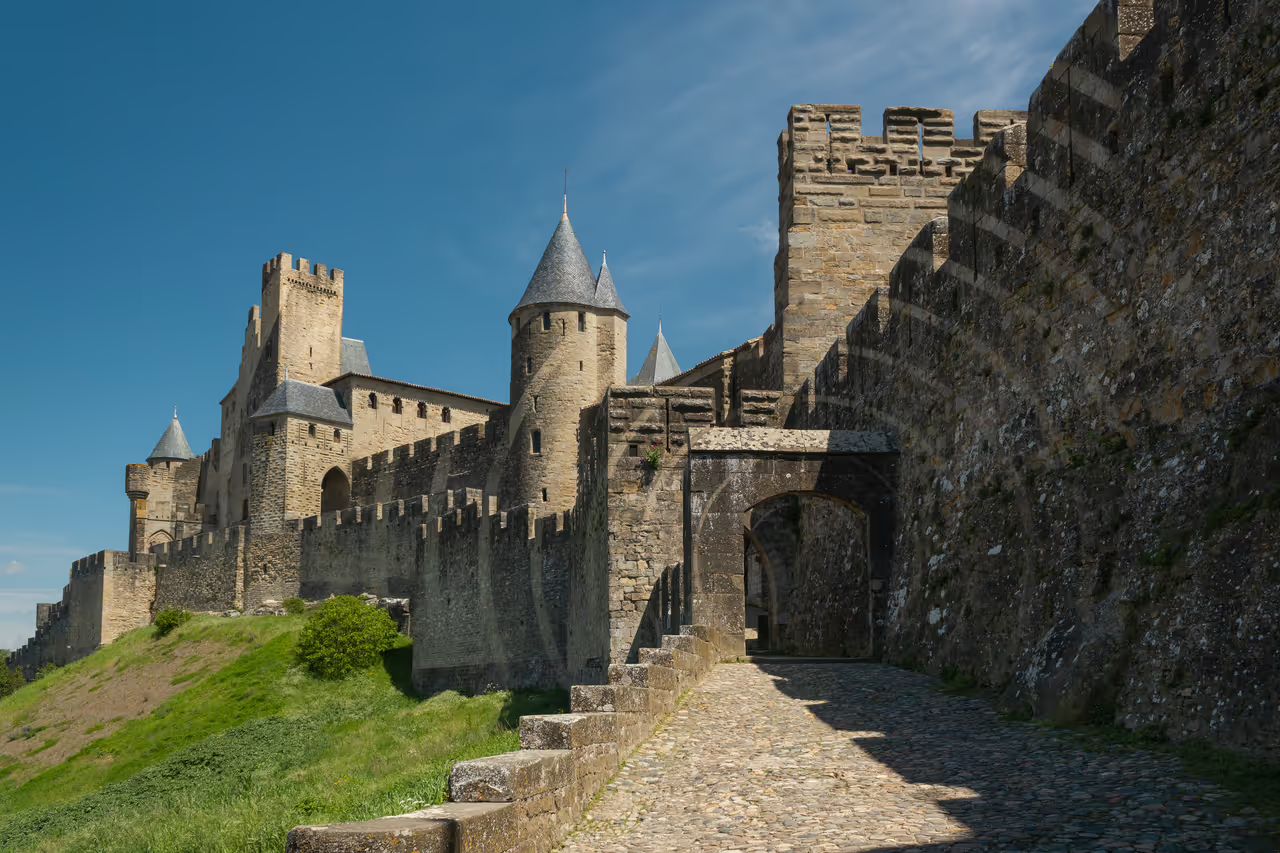 79m
79mAude Gate
Carcassonne’s western entrance was built to exhaust attackers long before they reached the heavy timber doors. Approaching the Aude Gate means hauling yourself up a steep, curving cobbled ramp that rises sharply from the lower town. The local Tramontane wind often funnels directly through this stone archway, catching unsuspecting hats and forcing walkers to lean forward into the breeze. Unlike the grand Narbonnaise entrance on the opposite side of the city, this defensive choke point lacks a drawbridge or a moat. Instead, it relies on a twisting path exposed to overlapping lines of fire from the flanking towers. Today, finishing the climb rewards walkers with sweeping views over the roofs of Bastide Saint-Louis and the slow-moving River Aude far below.
attraction view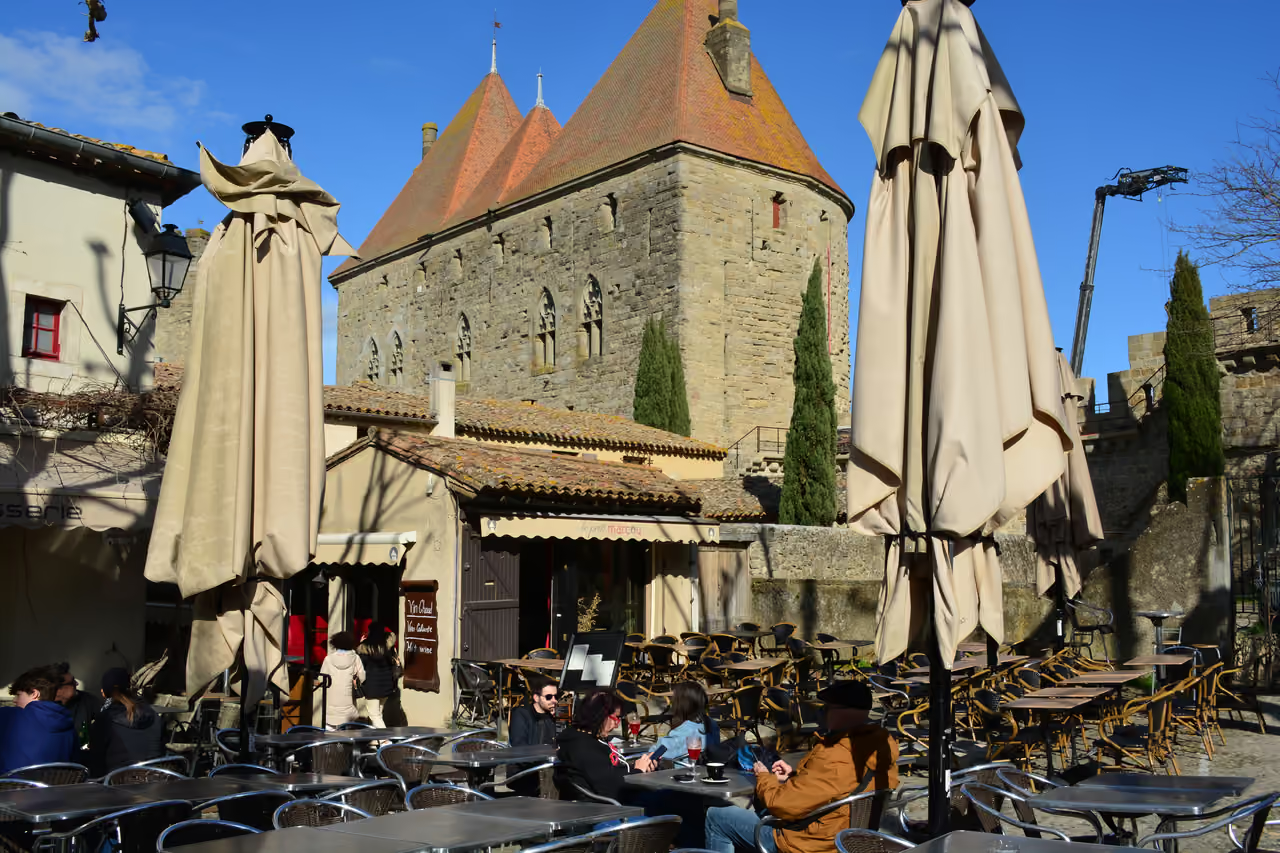 91m
91mPlace Marcou in the Morning
Before the restaurants open and the crowds arrive, this enclosed square reveals its pure medieval geometry. The sharp morning light slices through the surrounding rooftops, illuminating the uneven cobblestones and tightly packed facades. Stacked cafe chairs and wet pavement reflect the early sun. It captures the quiet, domestic side of a highly commercialised zone.
photo spot view- 103m
Convenanza Festival
An intimate, sharply curated electronic and alternative music festival held at the end of September. Founded by the late British DJ Andrew Weatherall, the event turns the medieval courtyard of the castle into a massive, pulsating dance floor. It draws a dedicated, international crowd of music obsessives rather than casual tourists. The acoustics of the heavy stone walls provide a uniquely dense sound environment.
festival view
Explore Similar Places in This Collection
See all unesco sites in Carcassonne
Including Canal du Midi