National Museum of Art
Look up on Nakanoshima island and you will spot towering silver steel pipes piercing the Osaka sky, yet the entire museum they announce sits hidden beneath the pavement. Designed by Caesar Pelli right next to the Osaka Science Museum, this subterranean art sanctuary descends three full storeys underground. Ride the escalator down to the first basement level and you immediately pass under Alexander Calder's suspended mobile London and Jiro Takamatsu's enigmatic Shadow before even buying a ticket. Further below, the second basement rotates highlights from a collection of roughly 8,000 postwar artworks, while the third basement hosts large touring exhibitions. Step into those deep galleries and the clatter of Watanabebashi Station vanishes completely, making it wonderfully easy to lose track of whether rain or sunshine awaits back at street level. Pause at the B1 restaurant or browse the museum shop on your way out, surrounded by concrete curves and crisp gallery lighting.
Videos
History of National Museum of Art
The story begins in the hills of Suita during the 1970 Japan World Exposition. Between the Japanese Garden and the Festival Plaza, architect Kiyoshi Kawasaki erected a four storey concrete pavilion called the Expo Museum of Fine Arts to hold masterpieces arriving from across the globe. Lighting designer Motoko Ishii built an automated dimming system into its sloped roof so natural daylight could wash gently across the galleries without harming delicate canvases. Under the direction of art historian Soichi Tominaga, the opening exhibition threw out the textbook habit of separating East and West. Tominaga arranged 719 works from 44 nations side by side across five sweeping thematic chapters, from ancient sacred sculpture to modern dynamism, drawing 1,775,173 visitors before the borrowed treasures went home in January 1971. Once the fairgrounds fell quiet and neighbouring pavilions were bulldozed, Kawasaki's museum building was spared in hopes of a second life. Early discussions imagined turning the site into an Osaka prefectural gallery, yet political turns led the national government to claim it instead. After a preparation office formed in 1974 and the Expo association handed over the keys free of charge in late 1975, lawmakers revised the Ministry of Education Establishment Act in May 1977, allowing the National Museum of Art, Osaka to open its doors that October. For more than two decades, the institution built a formidable international archive inside those Suita halls, even as the 1970 concrete began to age and the storage vaults ran out of room. In April 1993, leadership made the bold call to abandon the northern suburbs for central Osaka, settling a year later on a daring scheme to burrow beneath the grounds of the Osaka Science Museum on Nakanoshima island. Ground broke on the Caesar Pelli designed complex in 1999, and when the original Expo building finally closed in January 2004, demolition crews cleared it away for a car park. Ten months later, on November 3, 2004, the subterranean museum welcomed its first guests in Nakanoshima, where it now anchors a thriving cultural block reinforced in 2022 when the municipal Nakanoshima Museum of Art opened right next door.
9 events spanning 54 years
Fun Facts
11- 01
Alberto Giacometti's 1960 bronze sculpture Yanaihara I in the museum's vaults portrays Japanese philosopher Isaku Yanaihara, who sat repeatedly for the Swiss master in Paris and became one of his closest confidants.
- 02
Alongside Japanese icons such as Yayoi Kusama's 1958 painting Net Accumulation and Atsuko Tanaka's Hell Gate, the museum holds Western postwar giants including Andy Warhol's Four Foot Flowers, Lucio Fontana's slashed Spatial Concept, and Barnett Newman's Queen of the Night I.
- 03
Although the collection focuses sharply on art created after 1945, several prized prewar works sit in storage, including Paul Cézanne's 1890 painting Preparation for the Banquet, Tsuguharu Foujita's 1925 Reclining Nude (Dream), and three paintings by Pablo Picasso spanning six decades.
- 04
Conceptual and lens based milestones fill the archive, ranging from On Kawara's date painting May 12, 1980 and Hiroshi Sugimoto's 1978 photograph Prospect Park Theater, New York to Teiji Furuhashi's pioneering 1994 video installation LOVERS.
- 05
In 1978, Osaka industrialist Kaichi Ohashi bequeathed 828 artworks from his personal collection, giving the museum its world renowned core of Gutai Art Association pieces, including Kazuo Shiraga's foot painted canvases inspired by characters from the Chinese classic Water Margin.
- 06
Joan Miró's monumental ceramic mural Innocent Laughter, now permanently installed in the B1 entrance lobby, was originally commissioned for the Osaka Gas Pavilion at Expo '70 before finding its lasting home with the museum.
- 07
Osaka native Kenji Yanobe's 1998 black Atom Car, a retrofuturistic survival vehicle built as a wry commentary on nuclear anxiety, sits among the museum's contemporary sculptures next to Kodai Nakahara's 1990 Lego piece.
- 08
Since founding director Masayoshi Homma took office in 1977, seven directors have guided the institution, culminating in Atsuhiko Shima stepping into the role in April 2021.
- 09
The Nakanoshima complex squeezes 13,500 square metres of total floor space into a shared 16,000 square metre plot directly underneath the Osaka Science Museum grounds.
- 10
The museum's galleries and collection have drawn regular national broadcast attention, featuring on NHK programmes such as Traveller and Abstract World as well as TV Tokyo's New Giants of Beauty.
- 11
While the second basement level dedicates 1,962 square metres to the permanent collection and emerging artists, the deeper 1,849 square metre third basement regularly partners with major Japanese newspapers to stage blockbuster shows extending far outside contemporary art.
FULL PLACE DETAILS
Updated
FULL PLACE DETAILS
UpdatedOVERVIEW & STATS
- Established
- In 1977, making it 49 years old
ARCHITECTURE & HERITAGE
- Architects
- César Pelli
WEB & AMENITIES
National Museum of Art Map & Neighborhood Explorer
This interactive map is centered on National Museum of Art. Zoom in and move the map around to automatically discover Wikipedia photos and summaries of other nearby sights, monuments, and historical points of interest and stories in real-time!
National Museum of Art FAQ
When the museum relocated from Suita to central Osaka in 2004, planners chose a shared plot beneath the grounds of the Osaka Science Museum on Nakanoshima. Placing the entrance, shop, restaurant, and galleries across three subterranean levels allowed Caesar Pelli to preserve open plaza space above while housing 13,500 square metres of museum facilities below.
The permanent collection holds around 8,000 artworks primarily created after World War II, spanning Japanese movements such as Gutai alongside international figures including Pablo Picasso, Andy Warhol, Yayoi Kusama, and Gerhard Richter. In addition to rotating collection displays on B2, the B3 galleries stage major temporary exhibitions covering diverse eras and media.
The museum sits a five minute walk west of Watanabebashi Station and east of Nakanoshima Station on the Keihan Nakanoshima Line. You can also walk about 500 metres west from Higobashi Station on the Osaka Metro Yotsubashi Line, 800 metres south from Hanshin Fukushima Station, or ride the Nakanoshima Loop Bus straight to the stop in front of the museum.
Yes, they are two separate museums standing right next to each other. The National Museum of Art, Osaka is a state run institution built underground in 2004 with a strong focus on post 1945 contemporary art, whereas the municipal Nakanoshima Museum of Art opened immediately to its north in 2022 inside a striking black above ground building.
Yes, the first basement floor houses both a restaurant and a museum shop alongside the main entrance lobby, auditorium, and kids room. You can enjoy a meal or pick up art books and exhibition goods without needing to head back up to street level.
A typical visit takes about 2 hours. We recommend planning your schedule accordingly to make the most of your time there.
The closest place to visit near National Museum of Art is Catch a Planetarium Show at Osaka Science Museum, around 84 m away. Other things to do near National Museum of Art include Nakanoshima Museum of Art (99 m), Utsubo Park (738 m) and Yodoyabashi Sky Terrace (852 m). All of these are within roughly 852 m of National Museum of Art, close enough to walk.
It dates back to 1977, making it 49 years old.
National Museum of Art was designed by César Pelli.
While we strive to keep this information accurate and up to date, we recommend verifying any details independently before making decisions based on them.
Places near National Museum of Art
Make the most of your trip. Check out these top-rated spots located nearby.
 84m
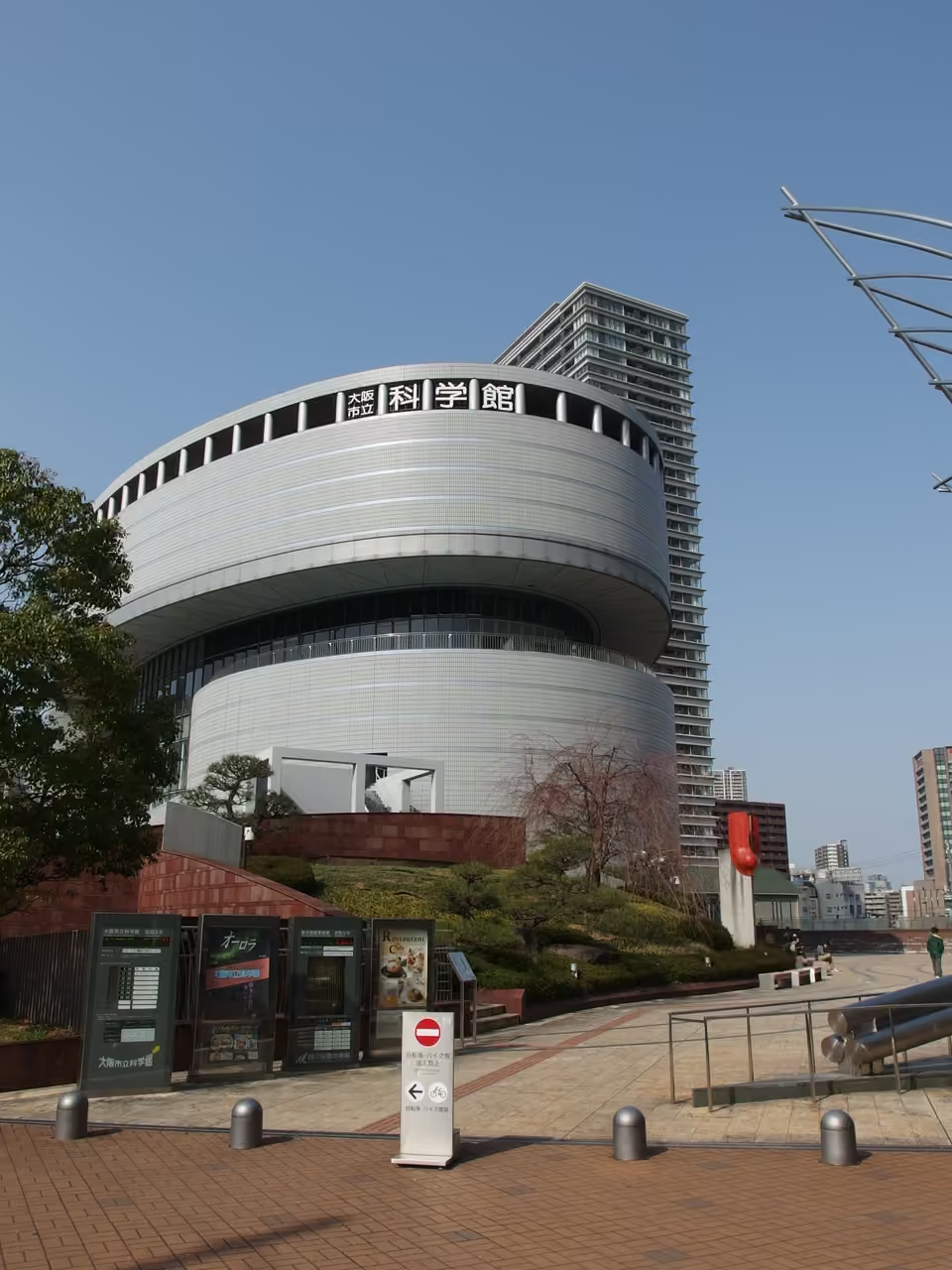
Catch a Planetarium Show at Osaka Science Museum
Standing on Nakanoshima beside the National Museum of Art, this hands-on institution carries forward the legacy of Japan's very first science museum and planetarium opened in Osaka in 1937. Its massive 26.5-metre dome projects razor-sharp starfields across reclining seats alongside exhibits recalling Osaka University physicist Hideki Yukawa, Japan's first Nobel laureate. Four upper floors packed with interactive electricity, optics, and chemistry experiments make it a hit for curious adults and families on rainy afternoons.
highlight view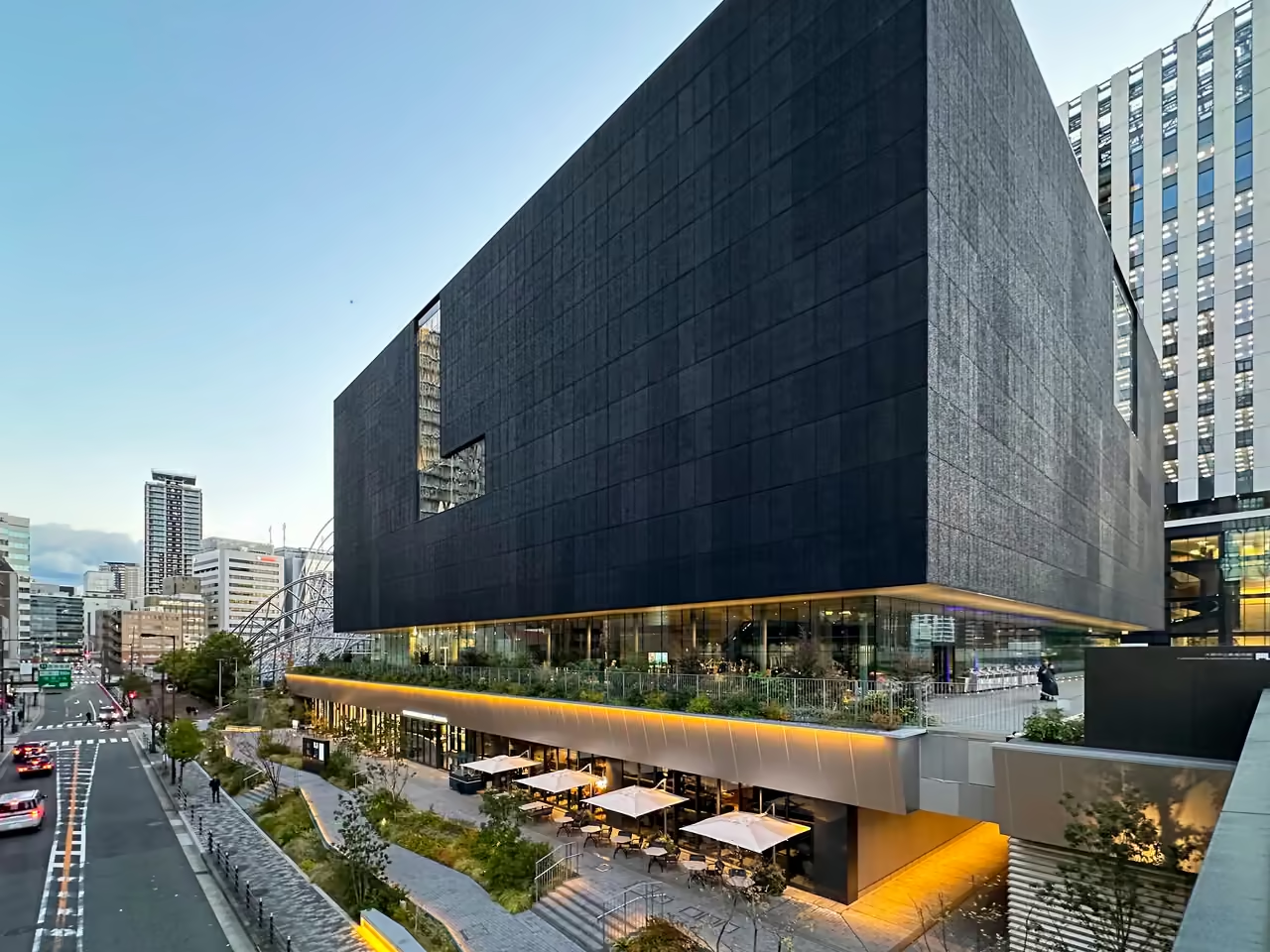 99m
Nakanoshima Museum of Art
Between the Dojima and Tosabori rivers on Nakanoshima island sits a stark black cube that looks more like a giant minimalist sculpture than a conventional gallery. Locals call it NAKKA. Architect Katsuhiko Endo omitted a formal front door so wanderers can drift straight inside from elevated walkways or street level into a thirty metre atrium open to everyone without a ticket. Escalators haul gallerygoers up to the upper levels for Yuzo Saeki streetscapes, Umberto Boccioni futurist works, and bold Alphonse Mucha posters. On mild afternoons the second floor lawn fills with nearby office workers and families taking a breather, though the main escalator lobby can bottleneck briefly during blockbuster shows. Step out onto the terrace at dusk and those textured dark walls catch the amber glow of the bridges spanning the water below.
attraction view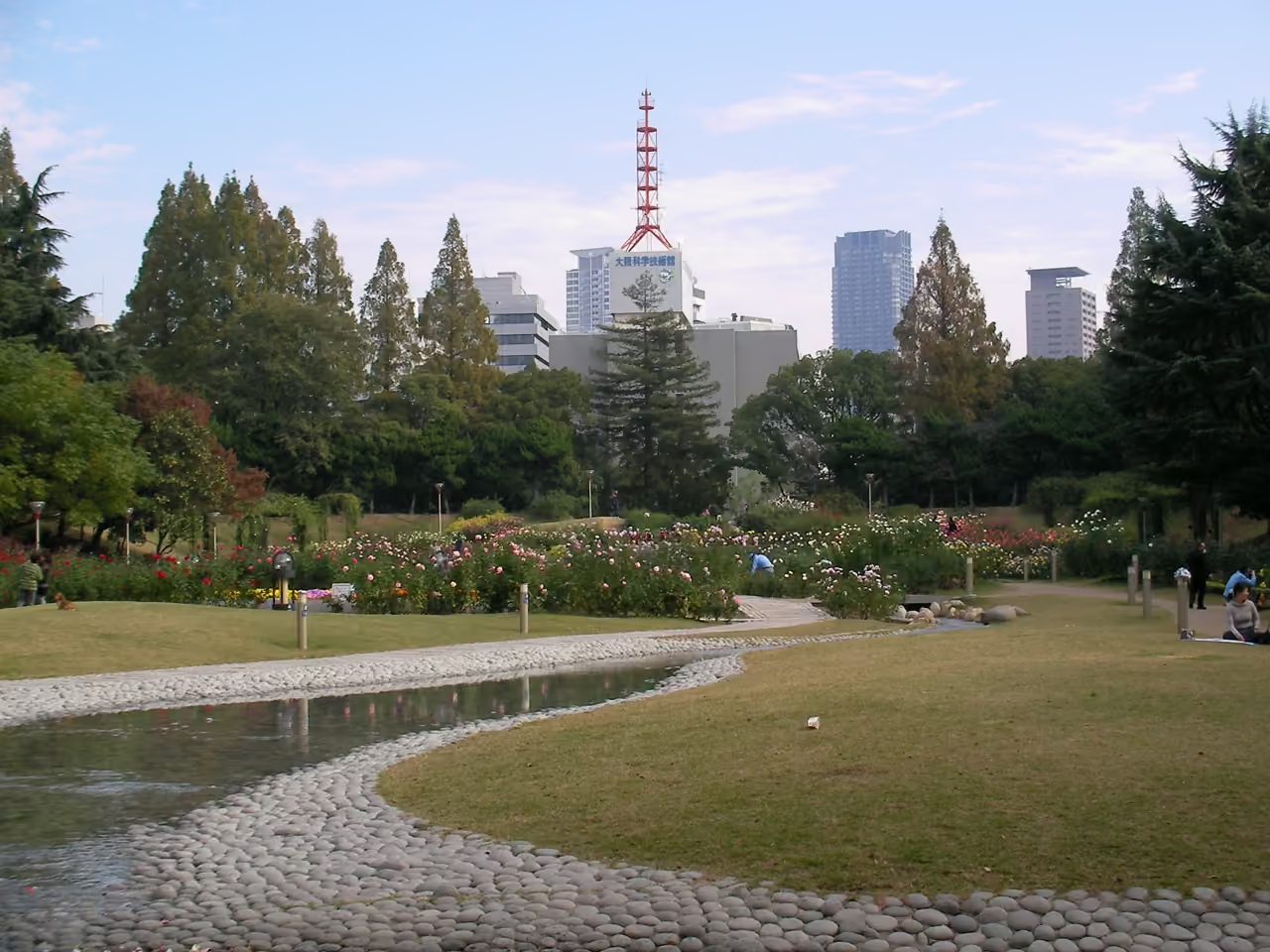 738m
Utsubo Park
Just west of Osaka's central business district, office workers slip out of glass towers along Yotsubashi-suji to eat bakery pastries where Allied occupation aircraft once touched down. Utsubo Park runs nearly a kilometre between Yotsubashi-suji and Amidaike-suji, sliced cleanly in two by Naniwa-suji avenue. The East Garden belongs to rose beds and tall zelkova trees. Roughly 2,300 rose bushes across 190 varieties fill the sunken garden with scent each spring and autumn, drawing outdoor wedding parties alongside weekend picnickers. Cross Naniwa-suji into the West Garden and the mood shifts to the sharp crack of tennis balls inside the 5,000-seat Utsubo Tennis Centre. Expect a brief scramble for shaded benches along Kyomachibori-dori's cafe terraces during the May Rose Festival, when the aroma of espresso drifts across the lawn toward the towering camphor tree at Kusunaga Shrine.
park & nature view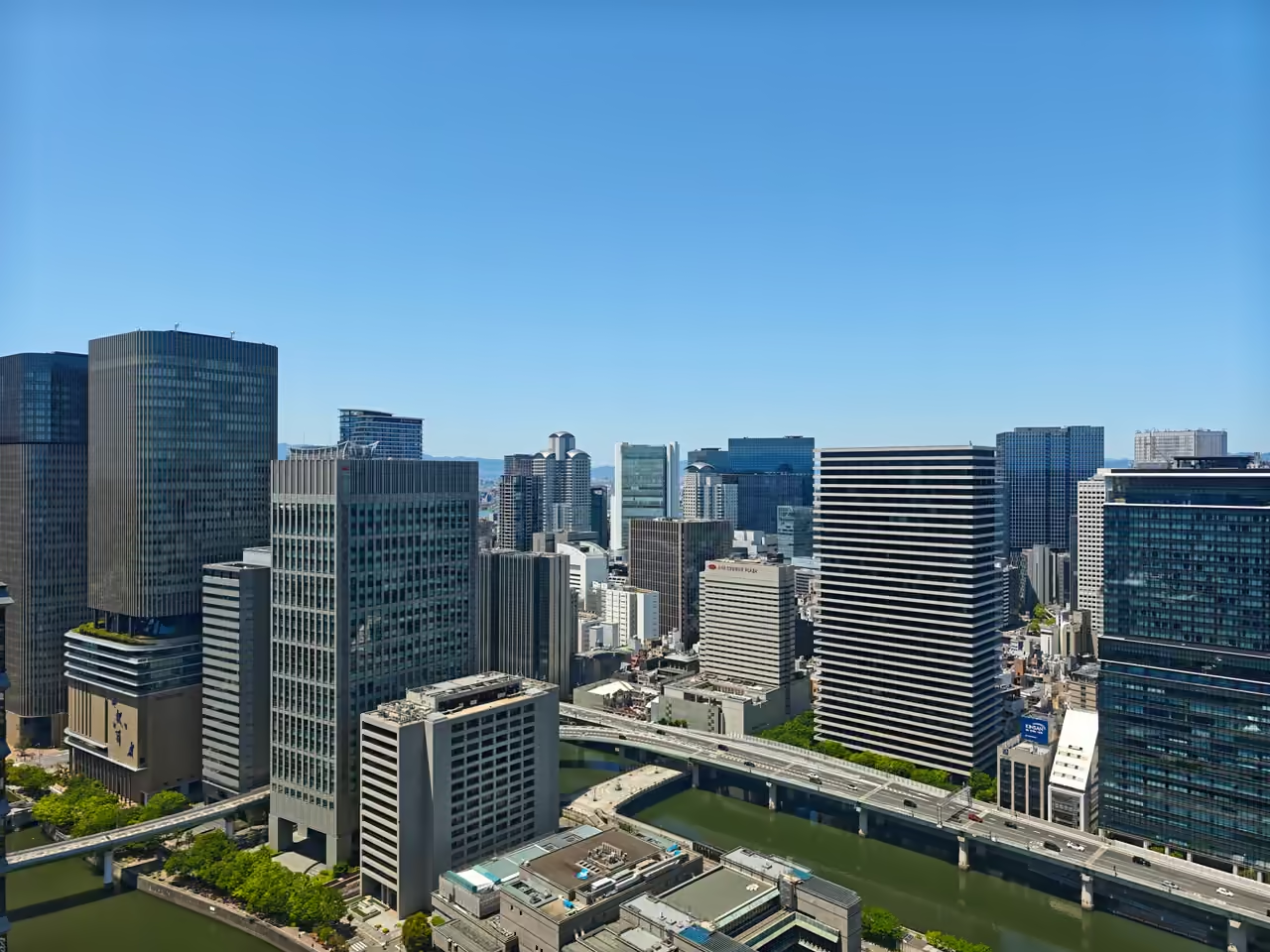 852m
Yodoyabashi Sky Terrace
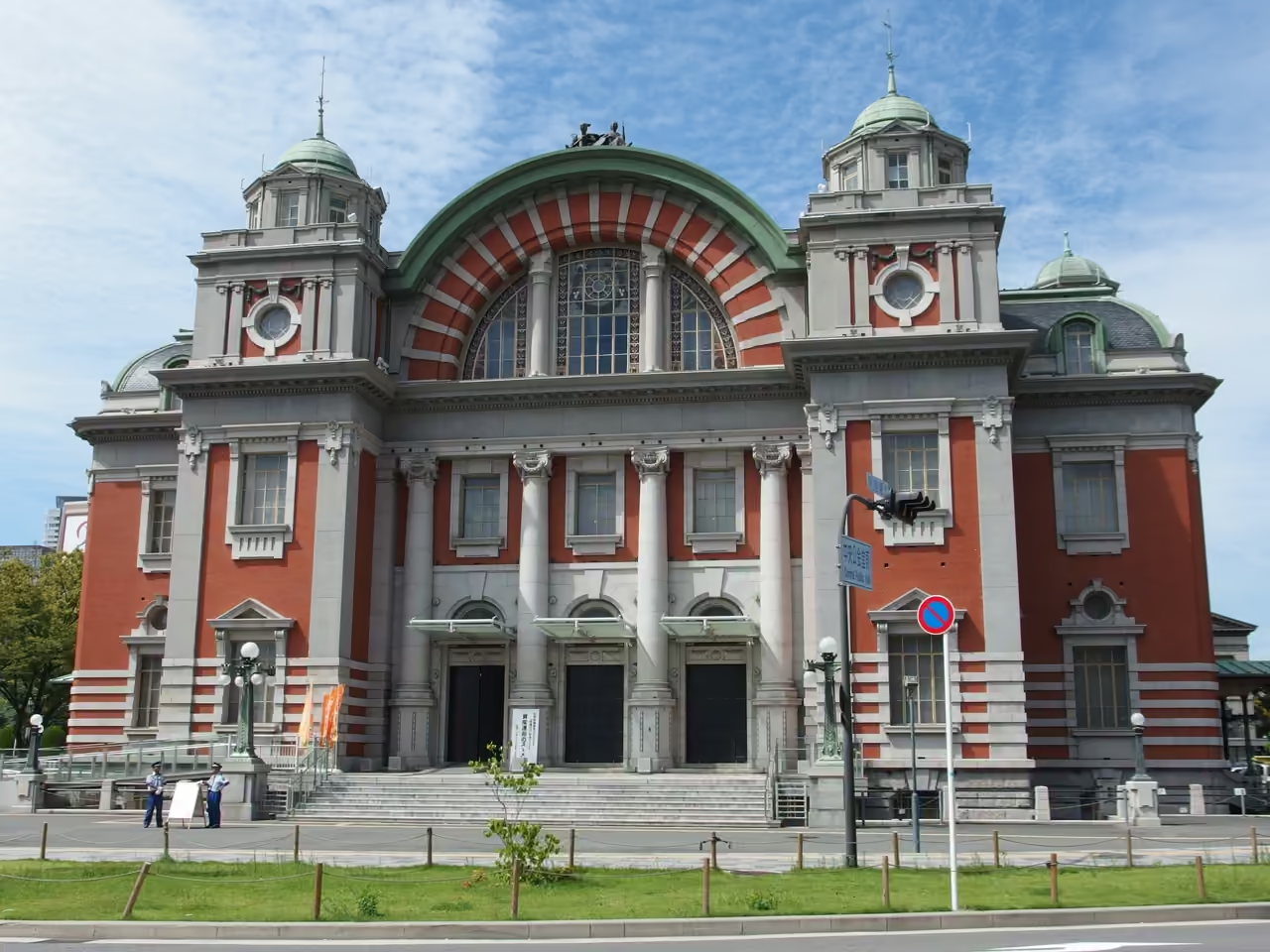
Crowning the 30th floor of the modern Yodoyabashi Station One tower right above Midosuji Boulevard's northern entrance, this sleek public sky lounge frames central Osaka completely free of charge. Floor-to-ceiling windows peer down squarely onto Nakanoshima's brick public hall, the curving Tosabori and Dojima rivers, and Umeda's rising skyline north. Stylish bench seating invites visitors to pause between museum stops and watch river barges glide beneath historic stone arches. Evening visits capture twin rivers mirroring golden office windows without spending a single yen.
viewpoint view
Explore Similar Places in This Collection
See all attractions in Osaka
Including Aquarium Kaiyukan, Osaka Castle, Sumiyoshi Taisha, and more