Utsubo Park
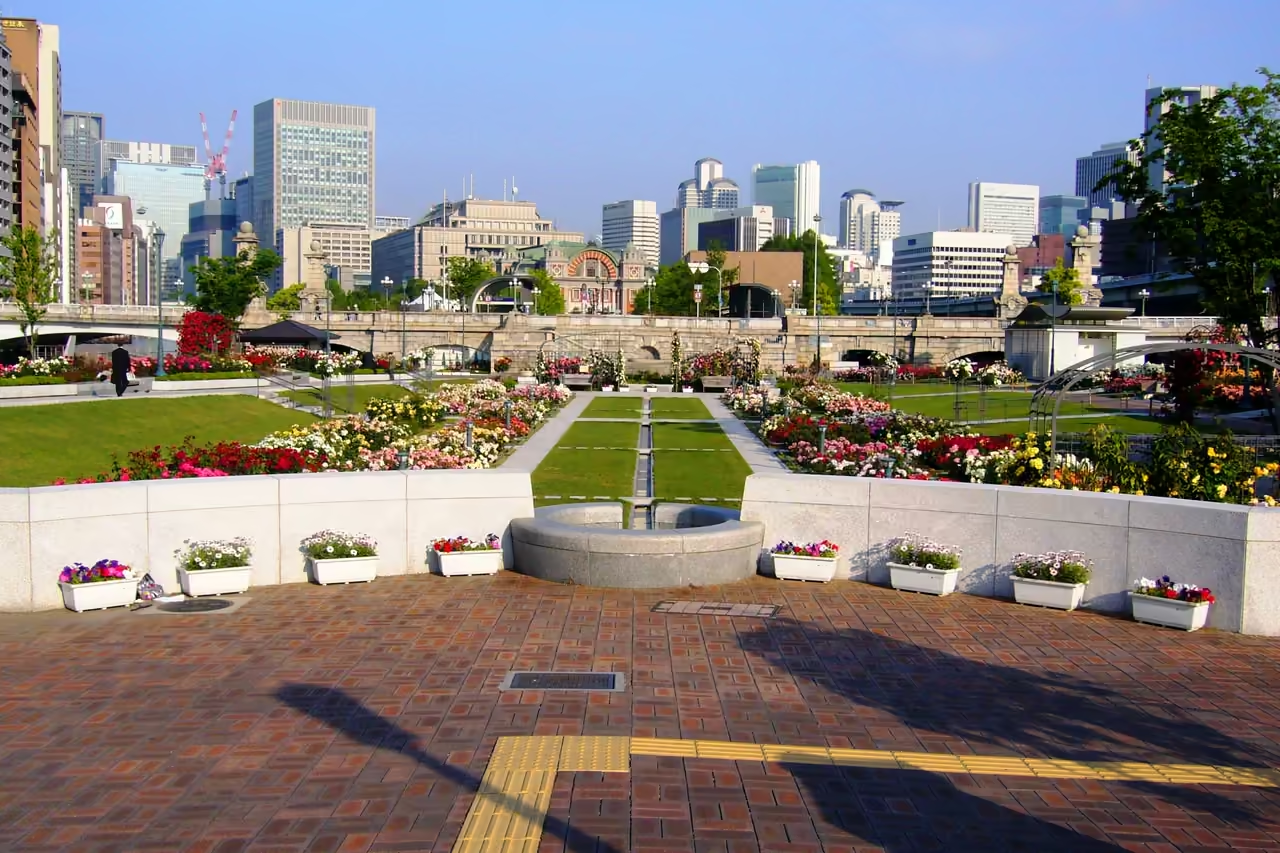
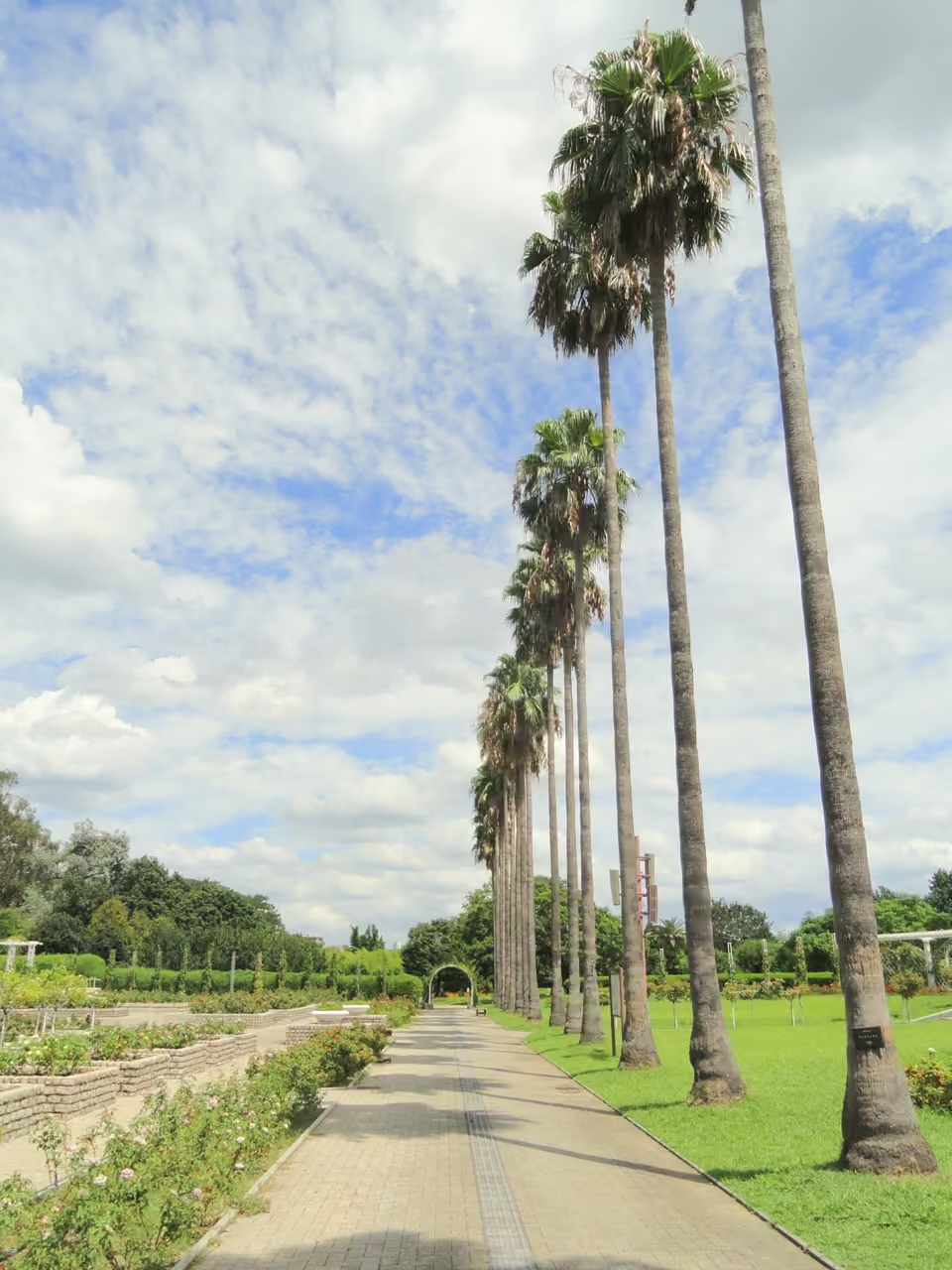
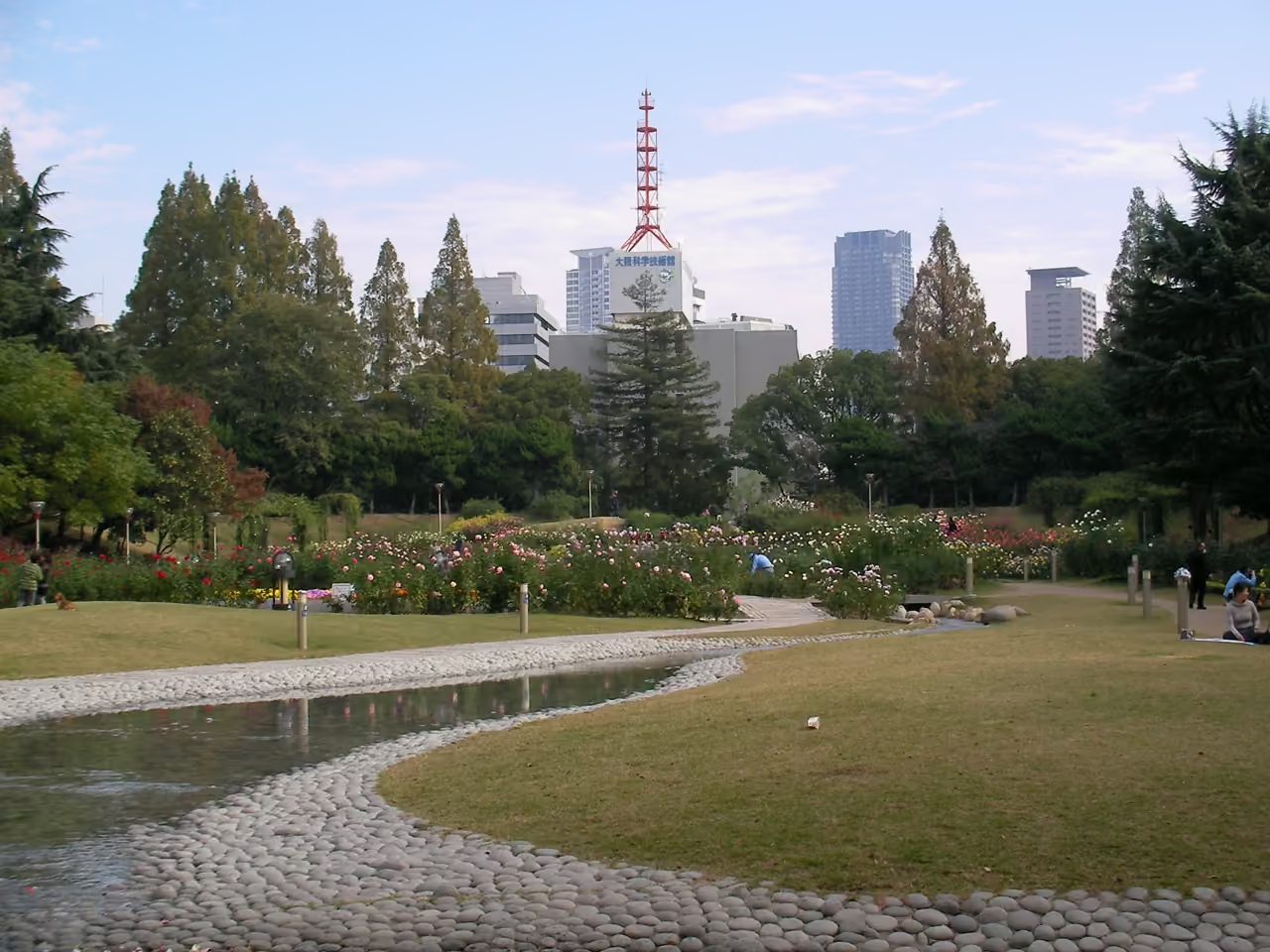
Just west of Osaka's central business district, office workers slip out of glass towers along Yotsubashi-suji to eat bakery pastries where Allied occupation aircraft once touched down. Utsubo Park runs nearly a kilometre between Yotsubashi-suji and Amidaike-suji, sliced cleanly in two by Naniwa-suji avenue. The East Garden belongs to rose beds and tall zelkova trees. Roughly 2,300 rose bushes across 190 varieties fill the sunken garden with scent each spring and autumn, drawing outdoor wedding parties alongside weekend picnickers. Cross Naniwa-suji into the West Garden and the mood shifts to the sharp crack of tennis balls inside the 5,000-seat Utsubo Tennis Centre. Expect a brief scramble for shaded benches along Kyomachibori-dori's cafe terraces during the May Rose Festival, when the aroma of espresso drifts across the lawn toward the towering camphor tree at Kusunaga Shrine.
Videos
History of Utsubo Park
Salt and dried sardines defined this narrow strip of Nishi Ward for centuries. For generations, the site operated as the Utsubo salted and dried fish market alongside the Kaifubori Canal, receiving boats packed with preserved seafood and dried sardine fertiliser from ports across Japan. When the Osaka Central Wholesale Market opened in 1931, the old riverside market closed its doors. Fourteen years later, the 1945 Osaka air raids swept through the district and left the former trading blocks in ashes. From those ruins came one of the strangest chapters in Osaka's postwar landscape. Allied occupation forces requisitioned roughly 30,000 tsubo of land wedged between the Kaifubori and Kyomachibori canals, paving over the old merchant quarter to build Utsubo Airfield for military aircraft. Workers flattening the site ran into an unexpected obstacle near the middle of the strip, where a huge camphor tree stood beside Kusunaga Shrine. Each attempt to fell the tree reportedly brought machinery failures and injuries to the crew. During a Shinto purification rite held to calm the site, a white snake emerged from the shrine building, convincing everyone involved that the camphor was a sacred tree that could not be touched. The bulldozers backed off, and the tree still stands along the central avenue today. In 1952, two months after the San Francisco Peace Treaty took effect, the airfield returned to Osaka City. Engineers filled in both bordering canals during the 1950s and transformed the runway corridor into Utsubo Park, which officially opened in October 1955. Four years later, the construction of Naniwa Avenue sliced straight through the middle of the grounds, creating the East and West Gardens visitors walk between today. Sport shaped the young park's identity from the start. Even before the formal opening, clay tennis courts arrived in the East Garden in 1953 and hosted the prestigious All Japan Tennis Championships for nearly three decades until 1983. Meanwhile, the West Garden housed Utsubo Soccer Stadium, a prominent national pitch that staged the 40th Emperor's Cup football final in 1960. Both sides underwent dramatic reinventions around the turn of the millennium. To prepare for the 1997 National Sports Festival, the city demolished the old football stadium in 1994 and built the modern Utsubo Tennis Centre, complete with sixteen hard courts and a stadium court holding five thousand spectators. Around the same time, the northern boundary facing Kyomachibori Street began attracting independent cafes, bakeries, and clothing shops that turned their terraces directly toward the park lawns. In 2006, Osaka hosted the 14th World Rose Convention, prompting another bold trade: the East Garden's original tennis centre court was torn down to expand the rose beds. That gamble paid off with an Award of Garden Excellence from the World Federation of Rose Societies, sealing the former fish market and military airstrip's unlikely evolution into one of Osaka's finest urban refuges.
11 events spanning 75 years
Fun Facts
11- 01
A stone literary monument erected in 1981 honours novelist Motojiro Kajii with an engraved excerpt from his landmark modernist short story Lemon.
- 02
Although the East Garden's original 1953 centre court was sacrificed to expand the rose beds for the 2006 World Rose Convention, four traditional red en-tout-cas clay courts survived the redesign and remain open for bookings.
- 03
Because the Kyomachibori Canal was filled in during 1955 and its exact centreline became the northern property boundary of the park, buildings along Kyomachibori-dori sit flush against the East Garden, allowing bars, bakeries, and boutiques to open terraces straight onto the greenery with no street in between.
- 04
Beyond modern hybrids, the Rose Garden cultivates wild rose species gathered from around the world so visitors can observe how ornamental roses evolved over time.
- 05
Every October, the Rose Garden and zelkova avenue host the Flower and Sculpture Exhibition, while seasonal plant markets pop up near the Yotsubashi-suji entrance.
- 06
Five separate railway stations across three networks serve the park on foot: Hommachi and Higobashi on the Yotsubashi Line, Awaza on the Chuo and Sennichimae lines, and Nakanoshima and Watanabebashi on the Keihan Nakanoshima Line.
- 07
Just beside the park stands House at Utsubo Park, one of Pritzker Prize-winning architect Tadao Ando's noted later residential works.
- 08
Spanning 9.7 hectares as an officially designated comprehensive park, the grounds hold towering metasequoia trees, a Sakura Square, a children's sandpit playground in the East Garden, and a municipal underground car park beneath the West Garden.
- 09
The park sits right next door to the Osaka Science and Technology Center and within an easy stroll of Nakanoshima and the historic Kawaguchi Foreign Settlement.
- 10
Utsubo Tennis Centre stages the Osaka Mayor's Cup World Super Junior Tennis Championships, drawing top international junior players to a complex equipped with 14 general hard courts, a 500-seat sub-centre court, and its main arena.
- 11
When Utsubo Soccer Stadium was demolished around 1994 to build the new tennis complex, Osaka built Tsurumi Ryokuchi Stadium in 1997 specifically to replace the lost football pitch.
FULL PLACE DETAILS
Updated
FULL PLACE DETAILS
UpdatedOVERVIEW & STATS
- Established
- In 1955, making it 71 years old
WEB & AMENITIES
Utsubo Park Map & Neighborhood Explorer
This interactive map is centered on Utsubo Park. Zoom in and move the map around to automatically discover Wikipedia photos and summaries of other nearby sights, monuments, and historical points of interest and stories in real-time!
Utsubo Park FAQ
Naniwa-suji avenue splits the park cleanly in two. The East Garden focuses on leisure and greenery, featuring zelkova avenues, a playground, four clay tennis courts, and the 2,300-bush Rose Garden. The West Garden centres on the 16-court Utsubo Tennis Centre, a 5,000-seat stadium arena, outdoor fitness equipment, and an underground car park.
The roses peak twice a year, once in May and again in October. Mid May is particularly lively during the Utsubo Park Rose Festival, which features open-air concerts, while mid to late October pairs autumn blooms with the Flower and Sculpture Exhibition.
Yes. In addition to hosting international events such as the World Super Junior Tennis Championships, the park has 14 general hard courts in the West Garden and four clay courts in the East Garden available for public booking, alongside spectator seating during tournaments.
Walk along the northern edge of the East Garden facing Kyomachibori-dori. Since the late 1990s, this side of the park has filled with independent bakeries, patisseries, wine bars, and cafes whose front doors and terraces open directly onto the lawn.
Alongside Naniwa-suji stands Kusunaga Shrine, a rare relic of the old fish market days beside a centuries-old camphor tree. When postwar occupation crews attempted to cut the tree down for an airstrip, repeated equipment failures and injuries halted work, and a white snake emerged during a purification ceremony, sparing the tree as sacred.
You can walk from Hommachi or Higobashi stations on the Osaka Metro Yotsubashi Line for the East Garden, Awaza Station on the Chuo or Sennichimae lines for the West Garden, or Nakanoshima and Watanabebashi stations on the Keihan Nakanoshima Line just to the north.
The closest place to visit near Utsubo Park is Catch a Planetarium Show at Osaka Science Museum, around 696 m away. Other things to do near Utsubo Park include Osaka Festival of the Lights (700 m), National Museum of Art (738 m) and Osaka Gas Building (760 m). All of these are within roughly 760 m of Utsubo Park, close enough to walk.
It dates back to 1955, making it 71 years old.
While we strive to keep this information accurate and up to date, we recommend verifying any details independently before making decisions based on them.
Places near Utsubo Park
Make the most of your trip. Check out these top-rated spots located nearby.
 696m
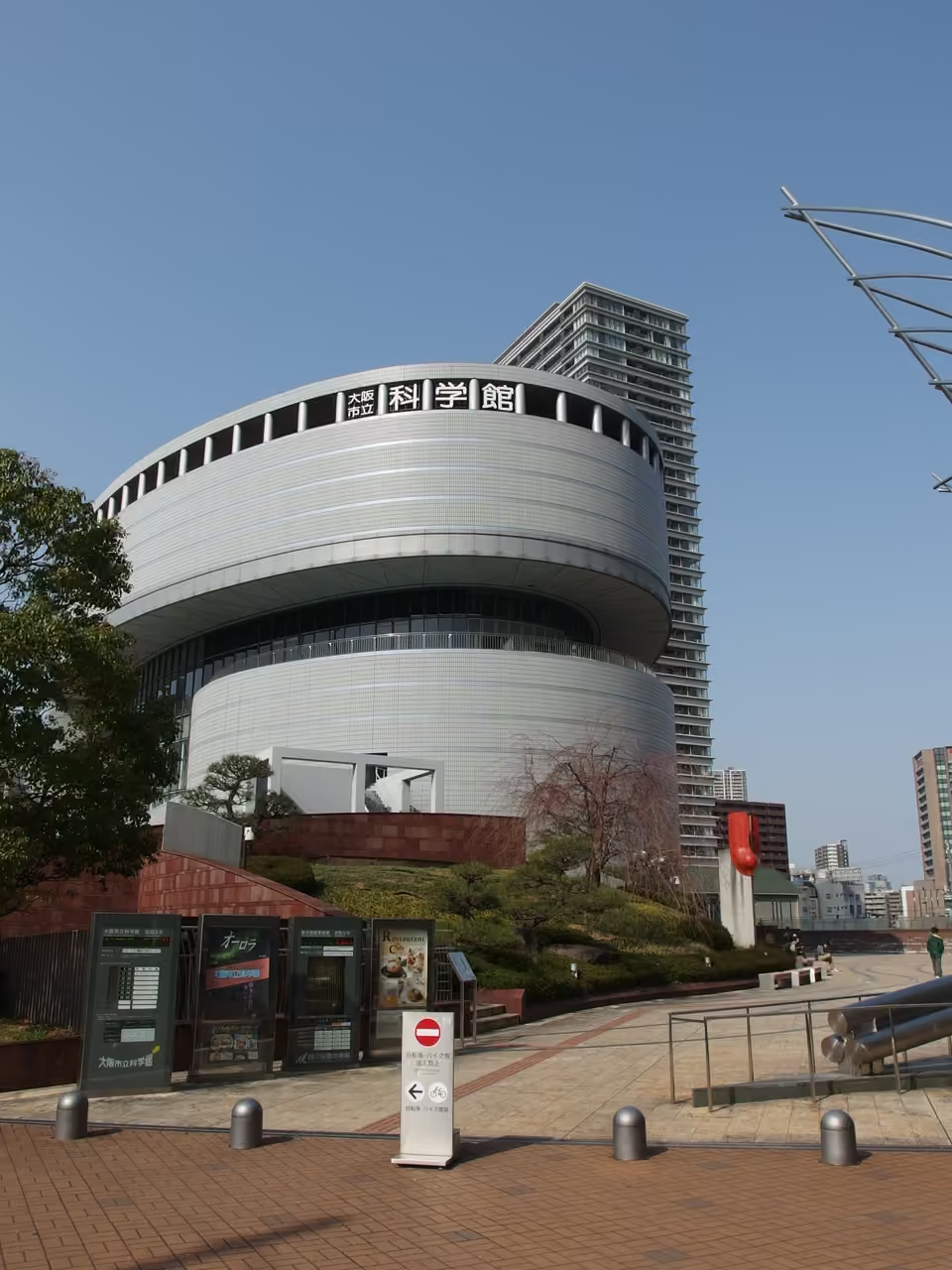
Catch a Planetarium Show at Osaka Science Museum
Standing on Nakanoshima beside the National Museum of Art, this hands-on institution carries forward the legacy of Japan's very first science museum and planetarium opened in Osaka in 1937. Its massive 26.5-metre dome projects razor-sharp starfields across reclining seats alongside exhibits recalling Osaka University physicist Hideki Yukawa, Japan's first Nobel laureate. Four upper floors packed with interactive electricity, optics, and chemistry experiments make it a hit for curious adults and families on rainy afternoons.
highlight view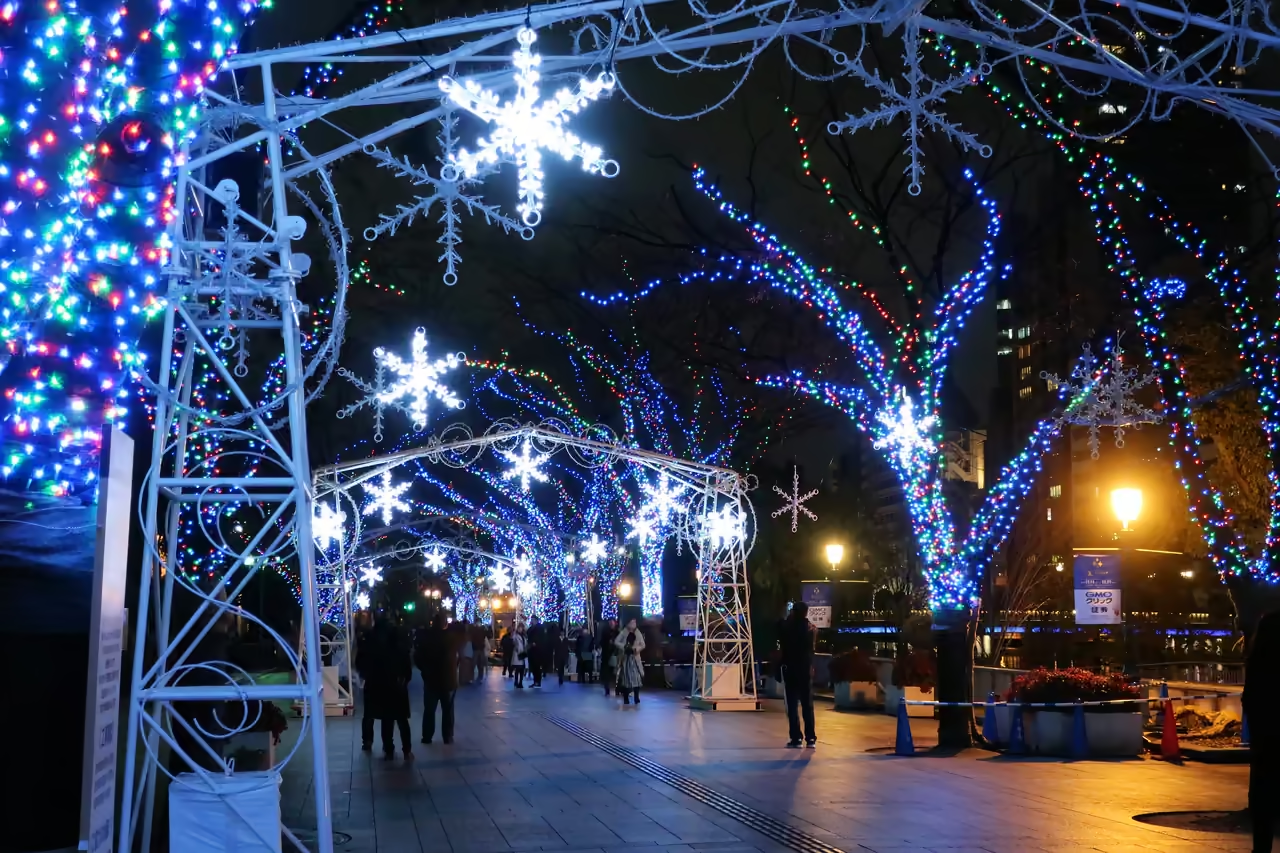 700m
Osaka Festival of the Lights
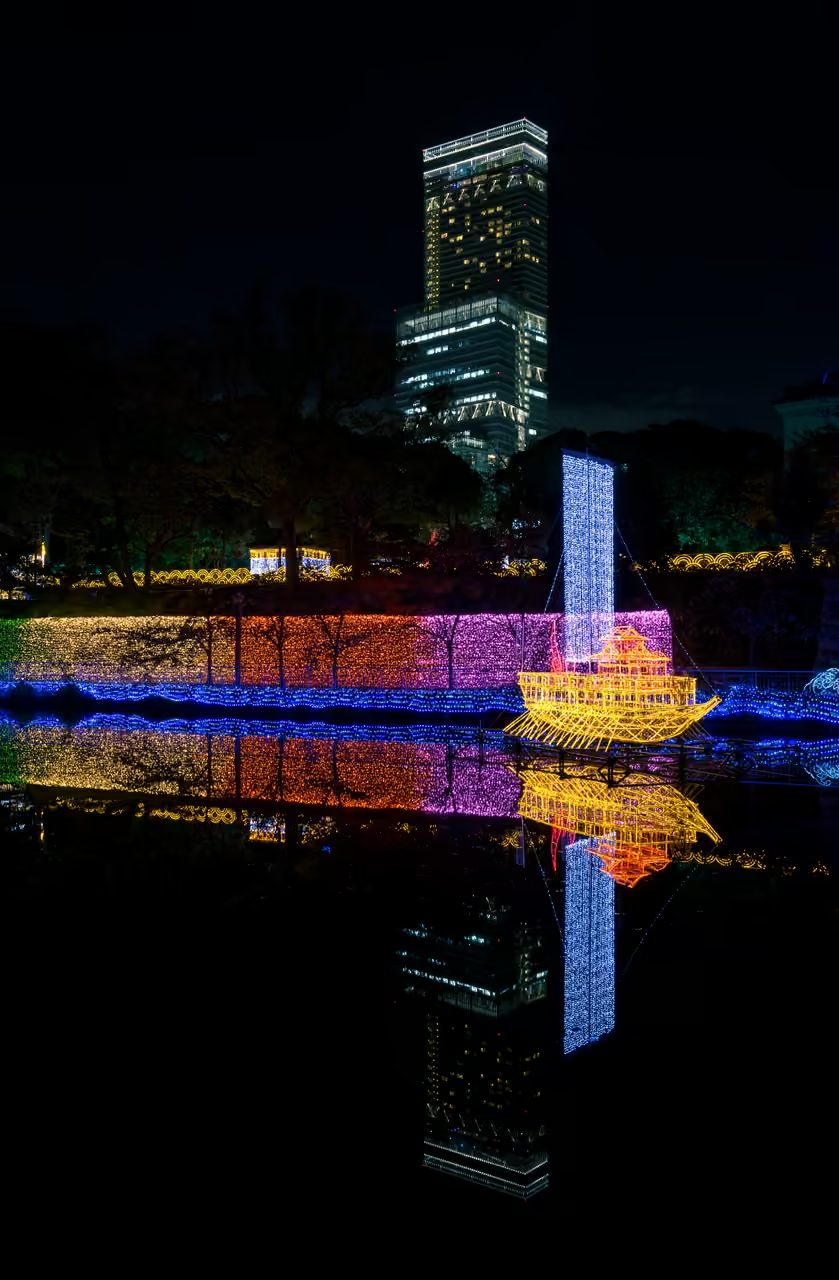
Through November and December, central Osaka glows with winter illuminations stretching four kilometres down Midosuji Boulevard and across Nakanoshima Island. During late December's OSAKA Hikari-Renaissance, projection art dances across the brick facade of Osaka City Central Public Hall while gourmet food stalls warm the waterfront. Locals wrapped in scarves stroll beside glowing installations reflected cleanly in the Dojima and Tosabori rivers. Walking the lit gingko avenue from Umeda to Namba is free and transforms crisp winter nights.
festival view 738m
National Museum of Art
Look up on Nakanoshima island and you will spot towering silver steel pipes piercing the Osaka sky, yet the entire museum they announce sits hidden beneath the pavement. Designed by Caesar Pelli right next to the Osaka Science Museum, this subterranean art sanctuary descends three full storeys underground. Ride the escalator down to the first basement level and you immediately pass under Alexander Calder's suspended mobile London and Jiro Takamatsu's enigmatic Shadow before even buying a ticket. Further below, the second basement rotates highlights from a collection of roughly 8,000 postwar artworks, while the third basement hosts large touring exhibitions. Step into those deep galleries and the clatter of Watanabebashi Station vanishes completely, making it wonderfully easy to lose track of whether rain or sunshine awaits back at street level. Pause at the B1 restaurant or browse the museum shop on your way out, surrounded by concrete curves and crisp gallery lighting.
attraction view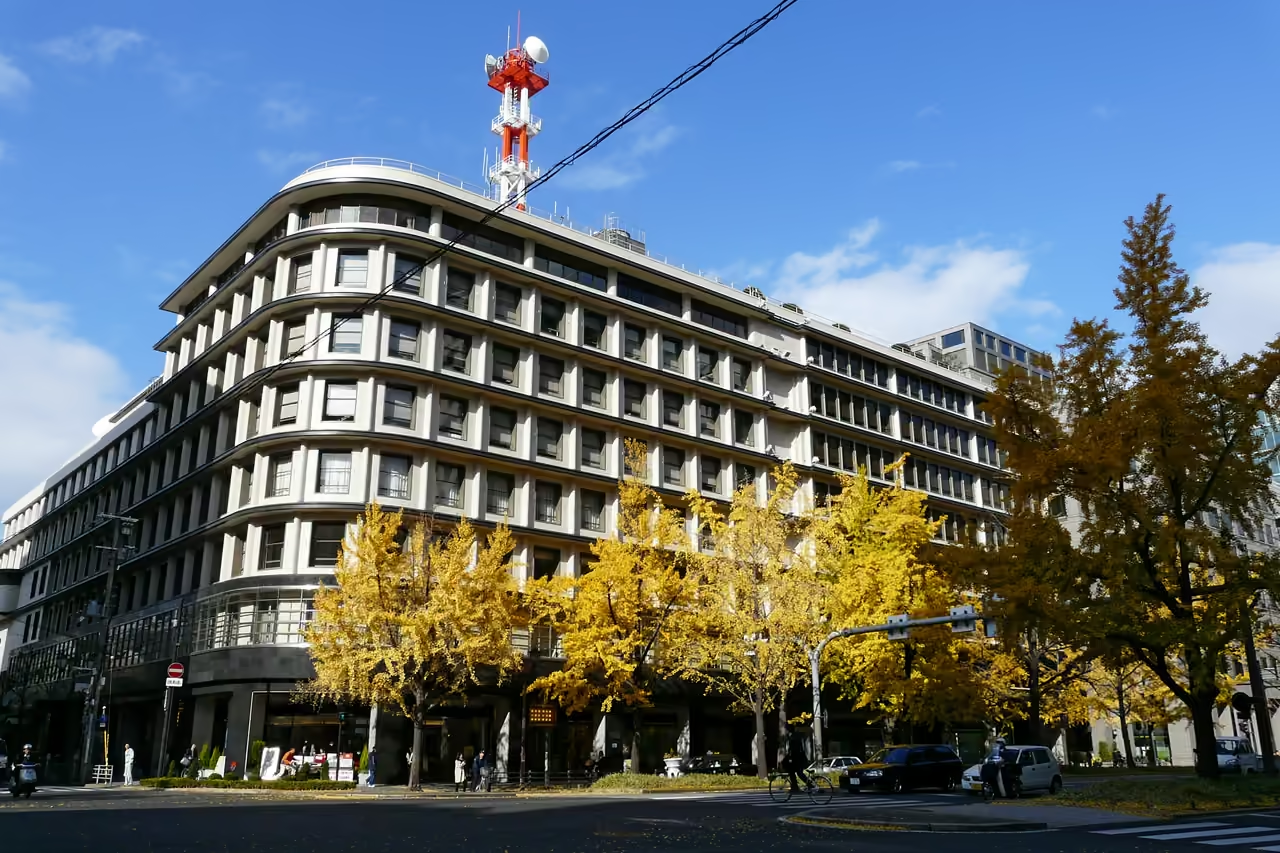 760m
Osaka Gas Building
Standing proudly on widened Midosuji Boulevard since 1933, Takeo Yasui's celebrated headquarters launched functionalist modernism across western Japan. Abandoning heavy stone colonnades for crisp horizontal ribbon windows, curved corner glass, and crisp white ceramic tiles, the tower anticipated sleek postwar urban geometry. Dark volcanic-stone trim along the ground floor anchors the soaring brightness above with quiet solidity. Inside, the original eighth-floor dining hall still operates in remarkably faithful interwar surroundings.
architecture view
Featured on This Route
See all parks & nature in Osaka
Including Nakanoshima Park, Namba Parks, Sakuranomiya Park, and more