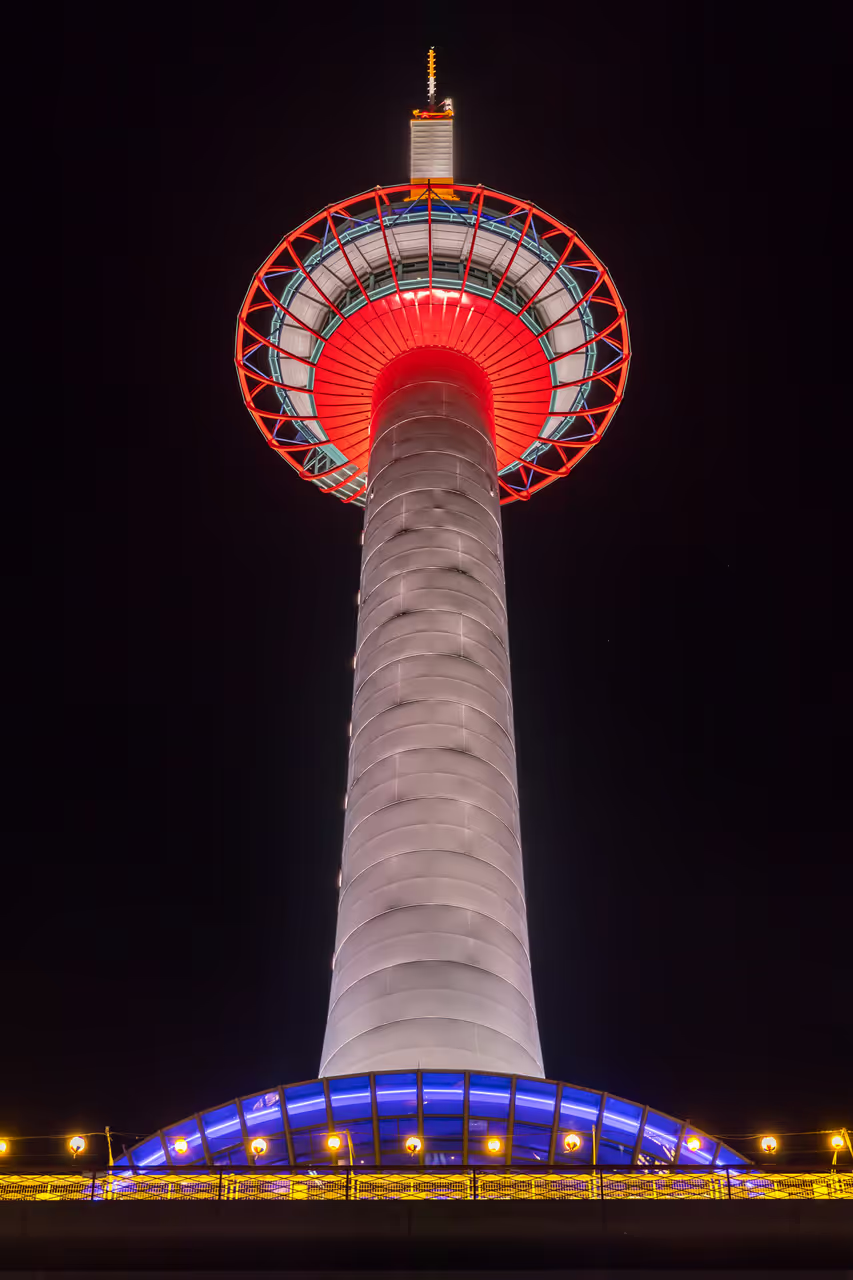
Kyoto Tower
Rising gracefully above the traditional low rise architecture of Japan's ancient capital, Kyoto Tower stands as a striking symbol of modern progress. Some find its stark design a departure from the city's historic charm, yet it offers an unparalleled panoramic perspective that remains unmatched in the region. Visitors enjoy a serene ascent to the observation deck, where the sprawling cityscape reveals mountains framing the horizon on every side. It is the perfect spot for those seeking to contrast the city's revered temples with a glimpse of contemporary life. Whether you visit by day to spot landmarks or at night to see the city lights, the experience provides a fresh context for understanding the evolution of Kyoto.
Videos
History of Kyoto Tower
In the early 1960s, Kyoto looked toward the future with ambitious plans for the 1964 Tokyo Olympics. The city sought to demonstrate its capacity for innovation by replacing the old central post office with a beacon of contemporary engineering. This decision marked a defining moment in the capital's history, setting the stage for a dramatic architectural shift that would challenge long held perceptions of the city's identity. Architect Mamoru Yamada collaborated with engineer Makoto Tanahashi to create a structure that defied convention. Eschewing the typical lattice frame seen in other towers, they developed a unique design consisting of steel rings stacked vertically and enclosed in lightweight sheets. The result was a sleek, candle like silhouette designed specifically to withstand the intense forces of typhoons and earthquakes, ensuring that this modern addition would stand firm against the elements for generations. The legacy of Kyoto Tower is one of persistent debate, reflecting the ongoing conversation between tradition and modernity. While critics once viewed the structure as an intrusion upon the historic landscape, many locals have come to see it as a necessary evolution. Today, it remains the city's tallest landmark, offering a vantage point that bridges the past and the present, allowing observers to see the mountains and the historic grid of the city from a single, elevated position.
Events spanning 36 years
Fun Facts
- • Engineers designed the structure to withstand wind speeds of up to 201 miles per hour.
- • It has held the title of the tallest man made structure in Kyoto since it was finished in 1964.
- • On a clear day, the elevation of the tower provides visibility that extends as far as the city of Osaka.
- • The base of the complex features various commercial amenities, including a bookstore and a dentist office.
- • The building complex includes a three star hotel containing 160 rooms.
- • The construction was originally part of a broader push to modernize Kyoto for the 1964 Summer Olympics.
- • The design of the tower was inspired by the shape of a traditional Japanese candle.
- • The observation deck sits at 100 metres high with the total spire reaching 131 metres.
- • The tower is capable of surviving earthquakes with a magnitude significantly greater than the Great Hanshin earthquake.
- • Unlike common lattice towers, this structure consists of steel rings stacked vertically and encased in lightweight sheets.
Kyoto Tower FAQ
While we strive to keep this information accurate and up to date, we recommend verifying any details independently before making decisions based on them.
Kyoto Tower Map & Neighborhood Explorer
This interactive map is centered on Kyoto Tower. Zoom in and move the map around to automatically discover Wikipedia photos and summaries of other nearby sights, monuments, and historical points of interest and stories in real-time!
Places near Kyoto Tower
Make the most of your trip. Check out these top-rated spots located nearby.
 115m
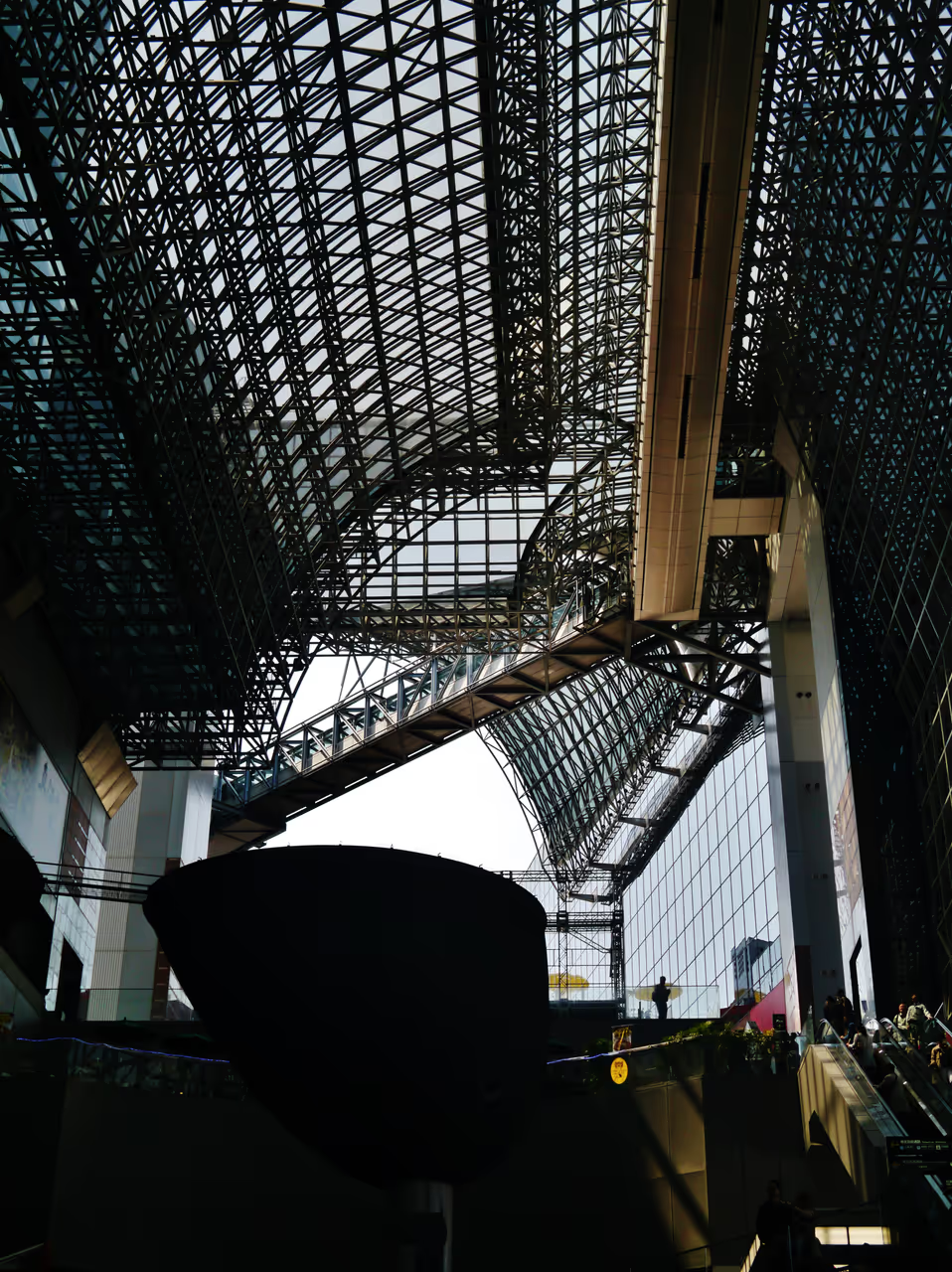
115mKyoto Station Skyway
Suspended high beneath the soaring glass roof of the colossal train station, this completely free pedestrian walkway offers a brilliant urban viewpoint. The glass-enclosed tunnel provides fascinating perspectives looking directly down into the cavernous, futuristic station concourse. More importantly, it offers numerous viewing windows looking outwards across the city streets, with the Kyoto Tower looming directly ahead. It is an incredibly convenient, easily accessible spot to capture the impressive scale of the city's modern heart, particularly striking as the sunset glints off the glass architecture.
viewpoint view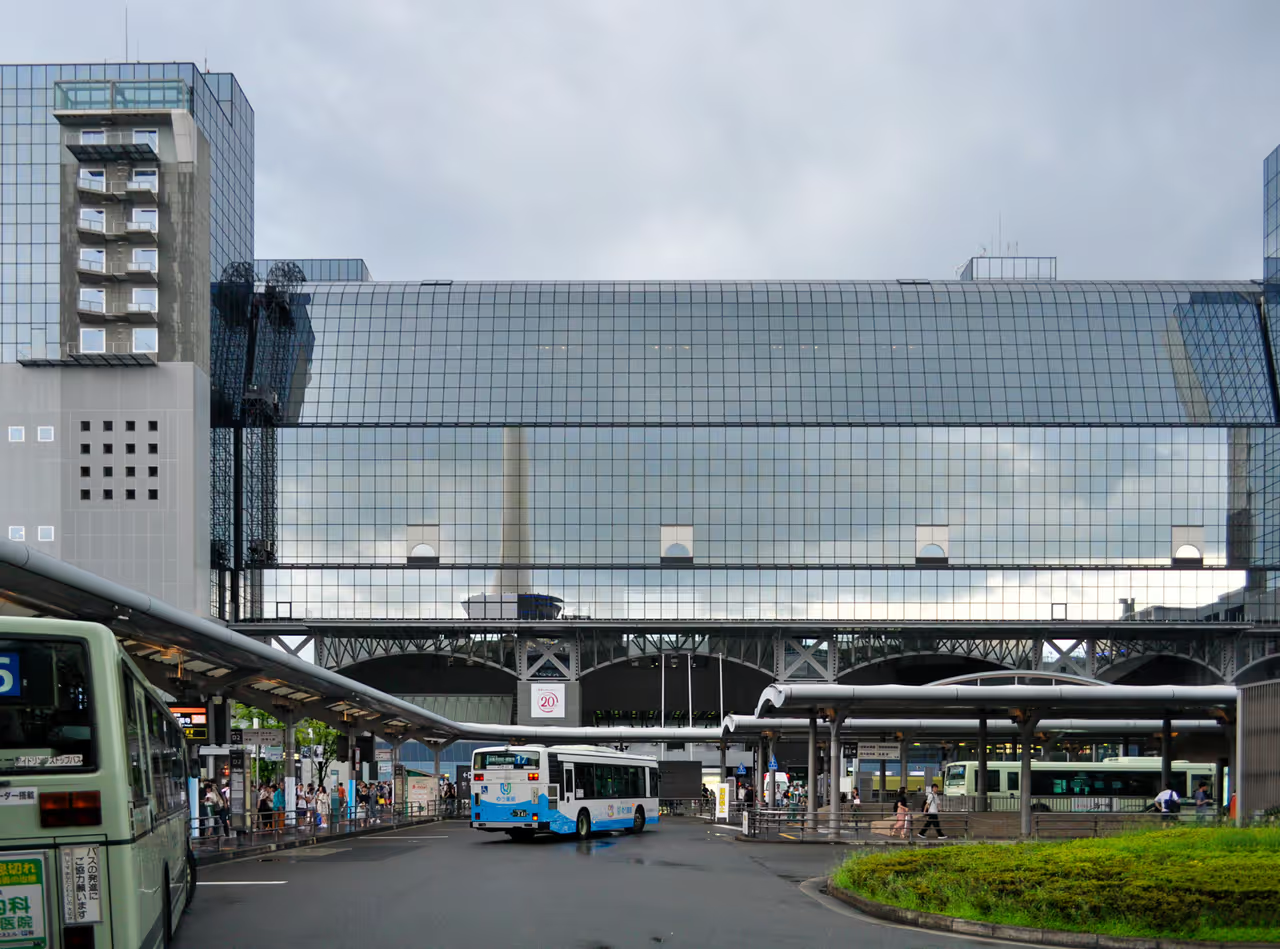 341m
341mKyoto Station Building
Opened in 1997, this massive, futuristic transport hub stands in dramatic contrast to the city's ancient image. Designed by Hiroshi Hara, the striking glass and steel structure features an exposed, cavernous central concourse with a soaring, matrix-like roof. The building was highly controversial upon its construction due to its stark modernism, but it has since become a beloved landmark. It features an enormous grand staircase, elevated aerial walkways, and sweeping views of the city from its open-air rooftop. It serves as a bold, architectural statement that the city is looking forward as much as it looks back.
architecture view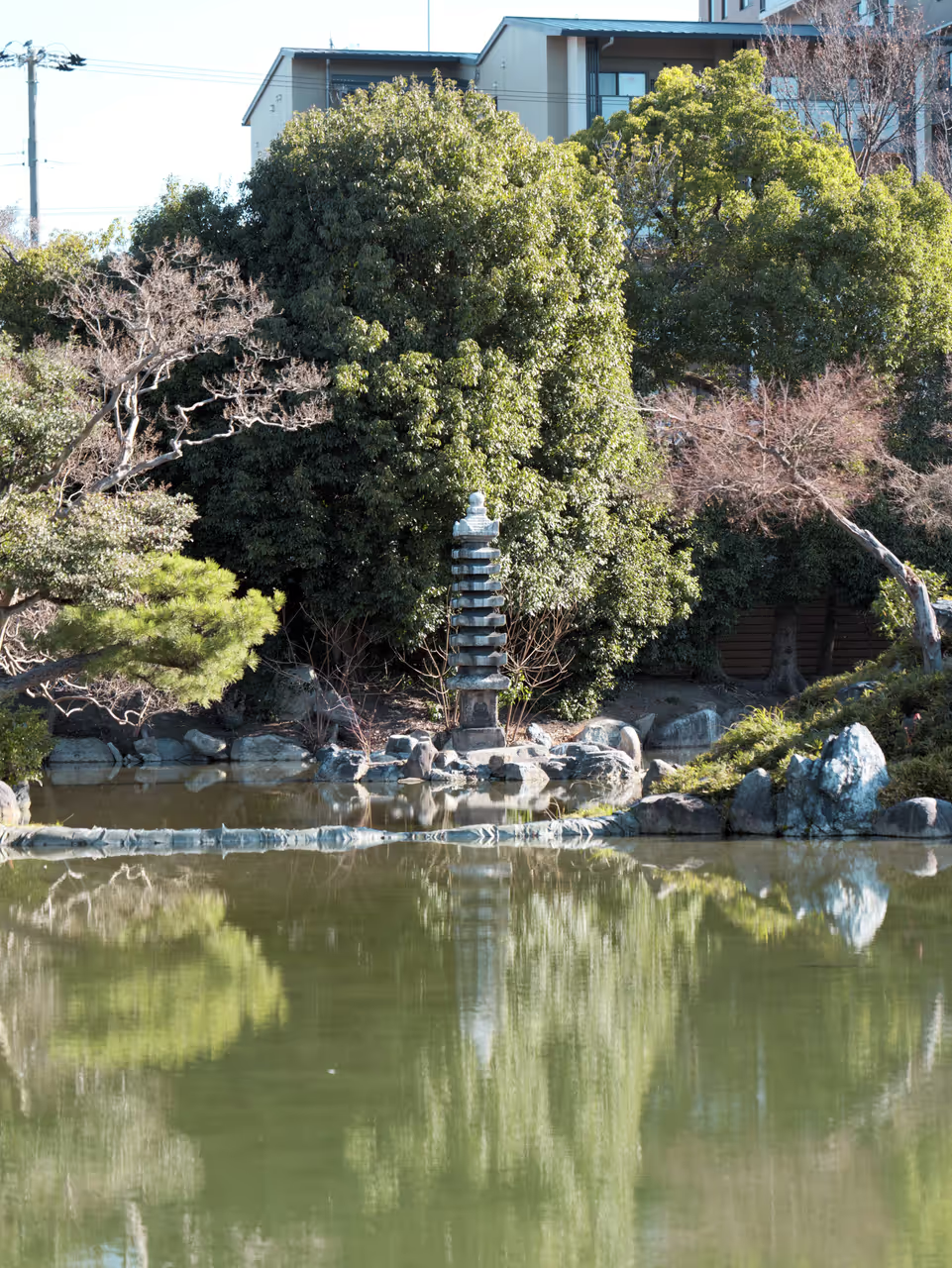 560m
560mShoseien Garden
Tucked away just a short walk from the grandeur of Higashi Honganji, Shoseien Garden serves as a tranquil oasis in the heart of Kyoto. This masterful stroll garden invites you to wander through meticulously curated landscapes that feel worlds apart from the surrounding city. Known locally as Kikokutei, or the Orange Tree Residence, the garden captivates visitors with its sprawling pond, elegant teahouses, and the striking sight of distant mountains serving as borrowed scenery. You can spend hours exploring its winding paths and discovering quiet nooks where history and nature converge seamlessly. It is a place where the changing seasons paint vibrant pictures, offering a serene escape that feels both personal and profoundly historic. Visiting allows you to step back in time and experience the refinement of a seventeenth century retreat designed for contemplation.
park & nature view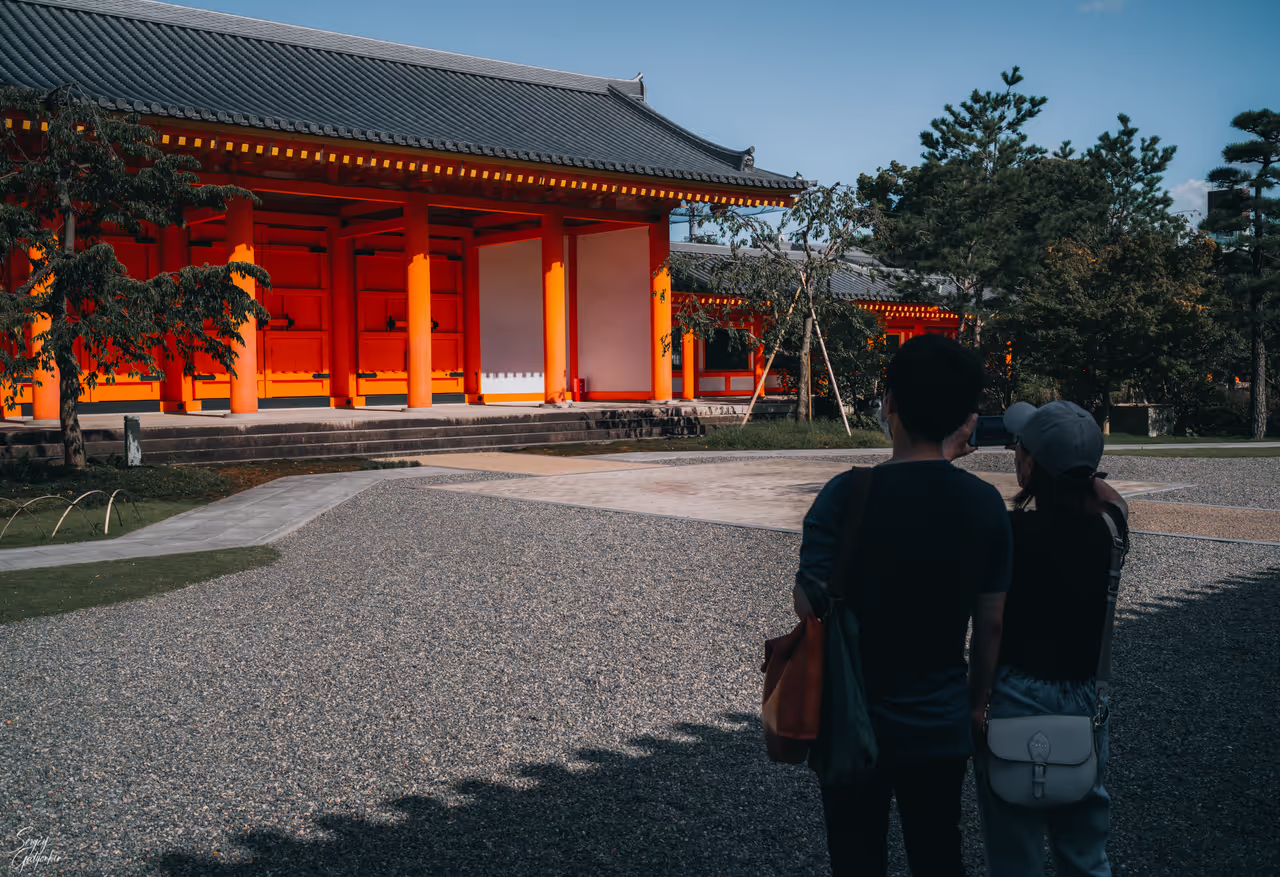 1155m
1155mSanjusangen-do Hall
This awe-inspiring Buddhist temple is renowned for its incredibly long main hall, measuring an astonishing 120 metres in length. The structure's name translates to 'thirty-three spaces', referencing the spaces between the supporting pillars, a significant number in Buddhist tradition. Inside, the massive, dimly lit wooden hall protects an overwhelming sight: 1,001 life-sized, golden statues of Kannon, the goddess of mercy, standing row upon row in silent ranks. The sheer scale and repetitive visual power of the architecture and statuary make it one of the most uniquely imposing buildings in the country.
architecture view
Explore Similar Places in This Collection
Featured on This Itinerary
See all attractions in Kyoto
Heian Shrine, Kyoto Railway Museum, Nanzen-ji Temple, Thousand Torii Gates at Fushimi Inari-taisha...