Rotonda Gardens
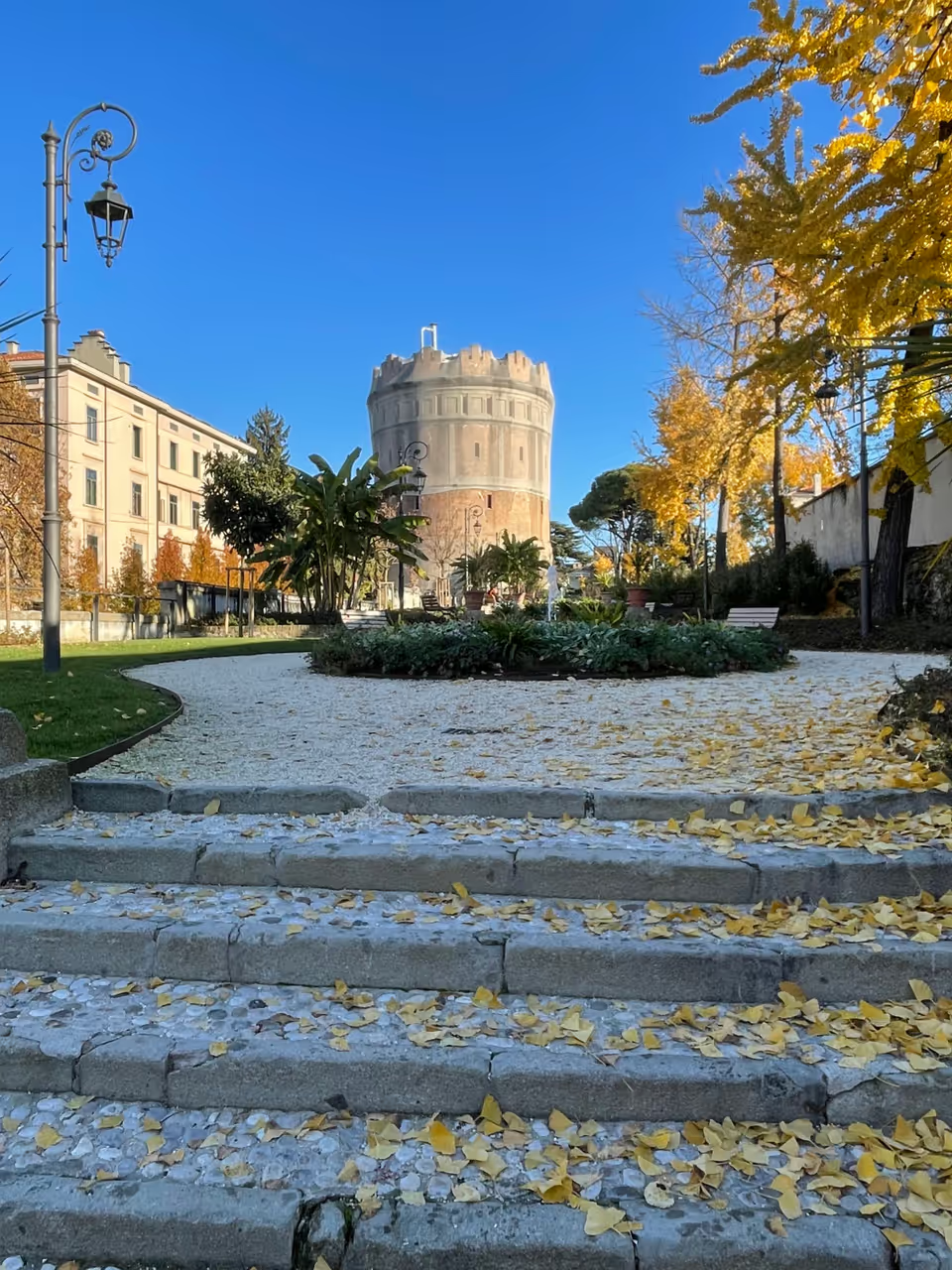
Perched on the edge of Padua's historic sixteenth-century walls, the Rotonda Gardens offer a peaceful retreat with a fascinating layered history. The gardens are built around a monumental cylindrical water tank that looks more like a Roman tomb than a piece of utility infrastructure. You can wander through tiered terraces filled with circular fountains and blooming water lilies, creating a serene atmosphere that feels far removed from the city streets. This space is a masterclass in early twentieth-century design, blending Art Nouveau elegance with the geometric precision of Art Deco. Whether you are interested in innovative engineering or simply want to catch an open-air film during a balmy summer evening, the gardens provide a unique visual and cultural experience. It is a place where local legends of defiant cats and solemn memorials for fallen citizens sit side by side.
History of Rotonda Gardens
The story of the Rotonda Gardens is a fascinating journey through layers of Paduan history, starting with a moment of high drama in 1509. During the Siege of Padua, the forces of Emperor Maximilian I attempted to breach the city walls using a formidable war machine known as the Gatto. In an act of legendary bravado, the defenders of the bastion tied a live cat to a pole and dangled it over the walls, mocking the attackers and their machine. This spirit of resistance eventually saw the siege lifted, and the bastion was forever immortalised with a stone sculpture of a cat, which still watches over the area today. By the early twentieth century, the site took on a more somber role. During the First World War, an Austrian aerial bomb struck the bastion, claiming the lives of nearly one hundred citizens who had taken refuge in the old military galleries. This tragedy spurred the city to transform the site into something both functional and sacred. In the 1920s, engineers constructed the monumental Rotonda, a massive water tank designed with the gravitas of a Roman mausoleum. It was intended to solve the city's growing water needs while housing a memorial chapel in its foundations to honour those lost in the bombing. The gardens we see today were designed to frame this engineering marvel. Architects utilised the varying heights of the old military embankments to create a series of elegant terraces and gravel paths. The design reflects the transition from the floral flourishes of Art Nouveau to the bold, geometric shapes of Art Deco. Today, the gardens serve as a living monument where the engineering prowess of the past meets the vibrant cultural life of modern Padua, especially when the bastion top becomes a starlit cinema during the summer months.
Events spanning 416 years
Fun Facts
- • A Latin inscription on the tank prays that the flowing water might symbolically wash away the blood spilled on the site during the war.
- • A sculpture of a cat, known as La Gata, sits on the bastion to commemorate the 1509 victory over Emperor Maximilian I.
- • During the summer months, the top of the bastion transforms into one of the most atmospheric open air cinemas in the region.
- • Inside the base of the tank lies a memorial chapel dedicated to the ninety-six civilians killed by the 1916 Austrian air raid.
- • The design of the Rotonda tank was explicitly inspired by the ancient Roman Tomb of Cecilia Metella on the Appian Way.
- • The gardens feature five distinct terraces, each housing a circular fountain that symbolises the park's liquid heritage.
- • The gardens were among the very first public parks created in Padua, utilizing the old defensive embankments of the city walls.
- • The massive water tank at the heart of the gardens can hold two million litres of water.
- • The name Rotonda actually predates the water tank, as it was originally the name of a circular beer garden that stood on the bastion.
- • The plant life was originally designed to be sparse and Mediterranean, featuring agaves and palms to let light reach the many water features.
- • The water tank is one of the earliest and most significant examples of reinforced concrete construction in the city.
Rotonda Gardens FAQ
While we strive to keep this information accurate and up to date, we recommend verifying any details independently before making decisions based on them.
Rotonda Gardens Map & Neighborhood Explorer
This interactive map is centered on Rotonda Gardens. Zoom in and move the map around to automatically discover Wikipedia photos and summaries of other nearby sights, monuments, and historical points of interest and stories in real-time!
Places near Rotonda Gardens
Make the most of your trip. Check out these top-rated spots located nearby.
 580m
580mArena Gardens
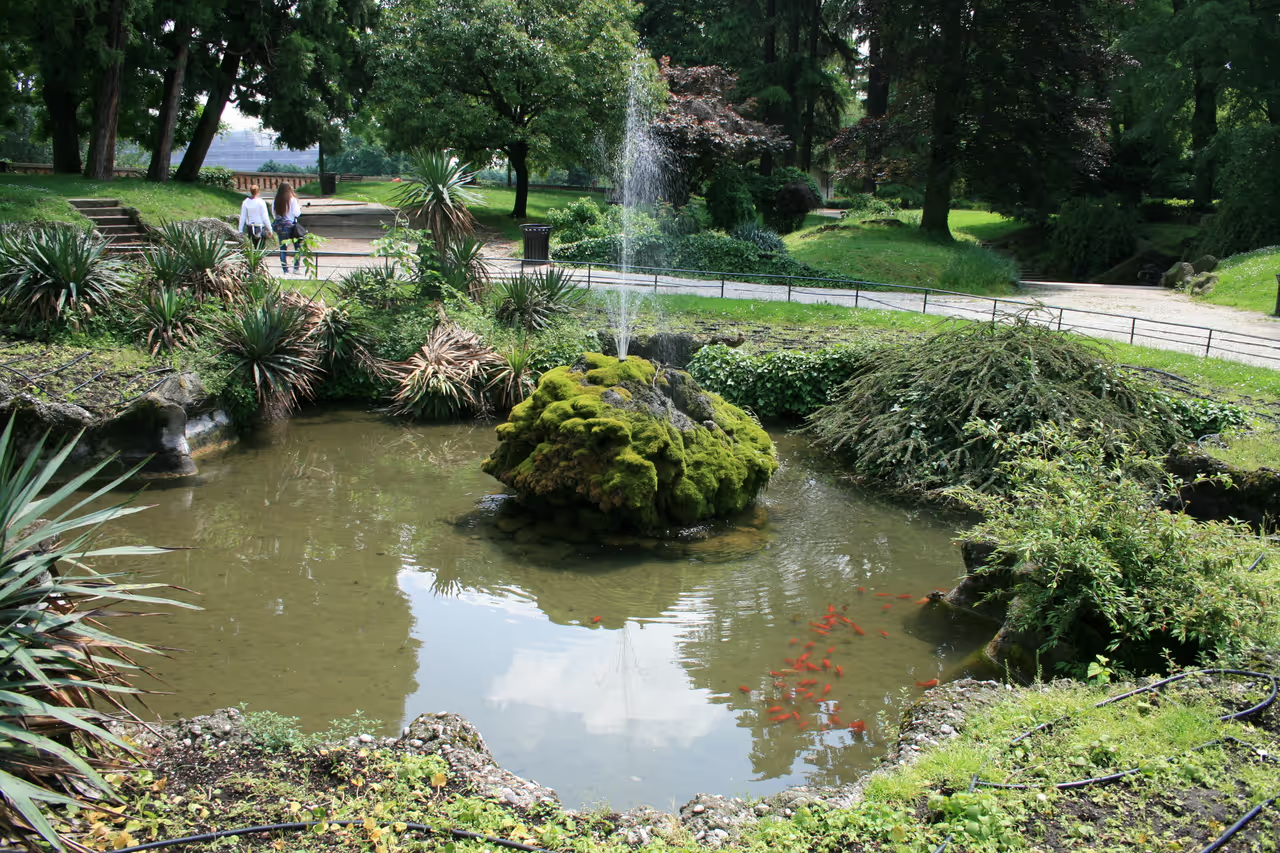
The Arena Gardens are a romantic green sanctuary that blends nearly two thousand years of history with a refreshing park atmosphere. Located in the heart of Padua, this spot is famous for housing the ancient Roman Amphitheatre and the world-renowned Scrovegni Chapel. It was one of Italy's very first public parks, designed with the winding paths and hidden grottos typical of the late Romantic style. Visitors can admire massive Himalayan cedars and rare Ginkgo trees while exploring the 16th-century fortifications that once defended the city. Today, the park is a lively cultural hub hosting everything from jazz festivals to innovative contemporary land art. It is a perfect place to escape the city pavements and soak up a unique mix of archaeology and nature.
park & nature view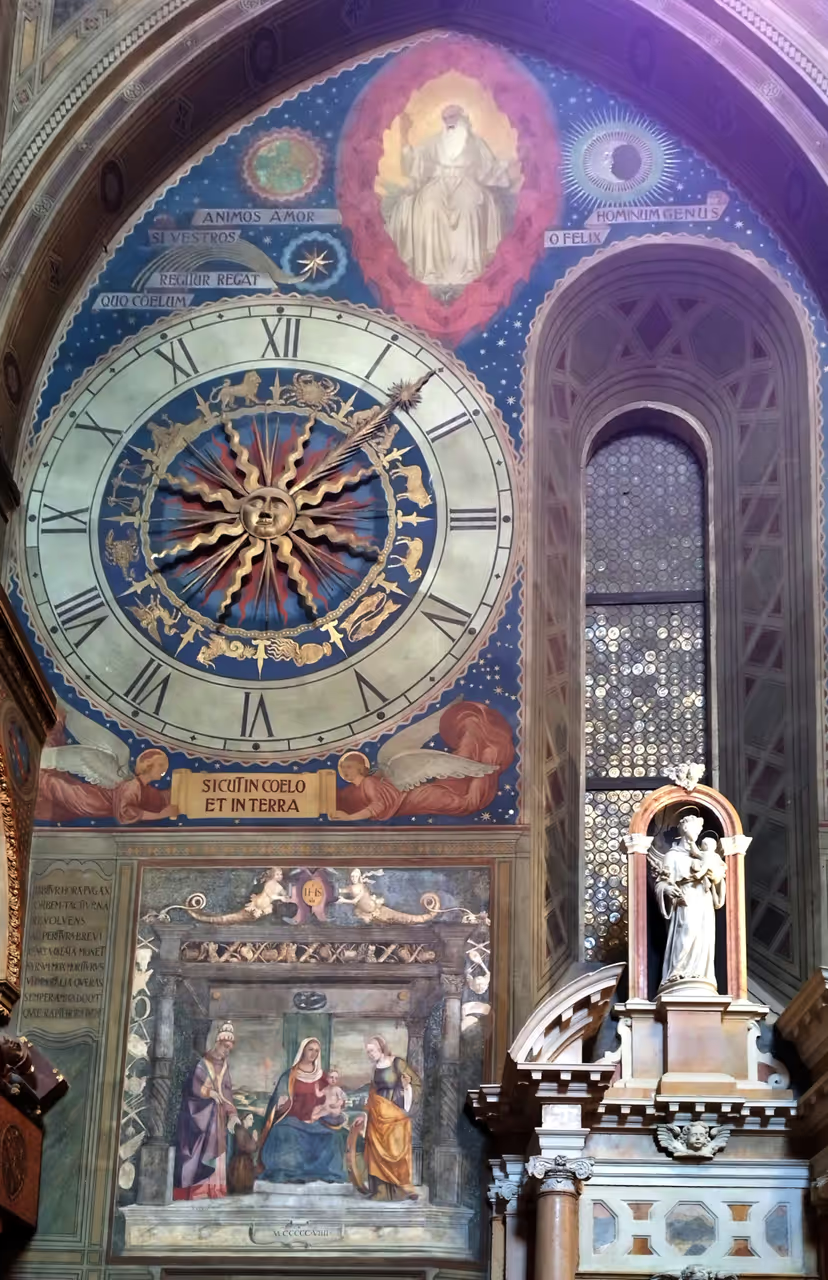 619m
619mPadua’s Fourteenth-Century Fresco Cycles
Immerse yourself in the birthplace of modern painting. This UNESCO World Heritage site is a monumental turning point where artists first mastered human emotion and spatial depth. Wandering through these eight historic locations allows you to trace the evolution of the Trecento, from Giotto’s revolutionary breakthroughs to the refined skills of his followers. You will find heavens painted in brilliant ultramarine and stories told with such intensity that they remain as poignant today as they were seven centuries ago. It is a profound experience that shifts your perspective on how art can capture the human soul. Make sure to visit these sites to witness the dawn of the Renaissance in the heart of Padua.
unesco heritage site view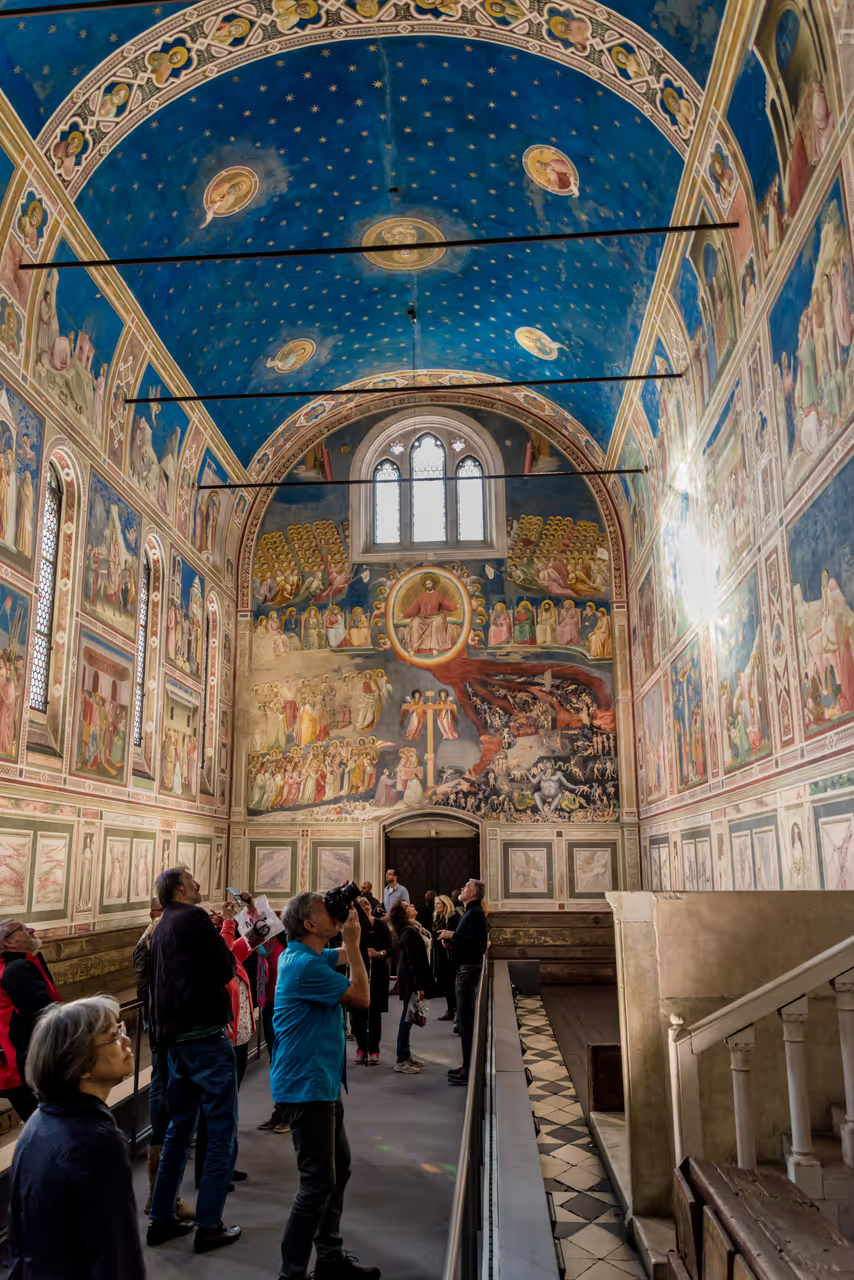 619m
619mScrovegni Chapel
Step inside the Scrovegni Chapel to witness what many art historians consider the most pivotal achievement in Western art. Painted by Giotto in the early 14th century, this masterpiece transformed the trajectory of painting, moving away from rigid Byzantine forms to a vibrant, humanistic style full of emotion and psychological depth. Every square centimetre of the interior is covered in intense blue pigments and masterful narrative cycles telling the stories of Joachim, Anna, Mary, and Christ. Beyond the religious scenes, the chapel features a profound cycle of Vices and Virtues, offering a complex philosophical journey. The experience is intimate and awe-inspiring, made even more special by the strict conservation measures that protect these fragile colours. It is a rare chance to see a complete vision of genius preserved perfectly in time.
attraction view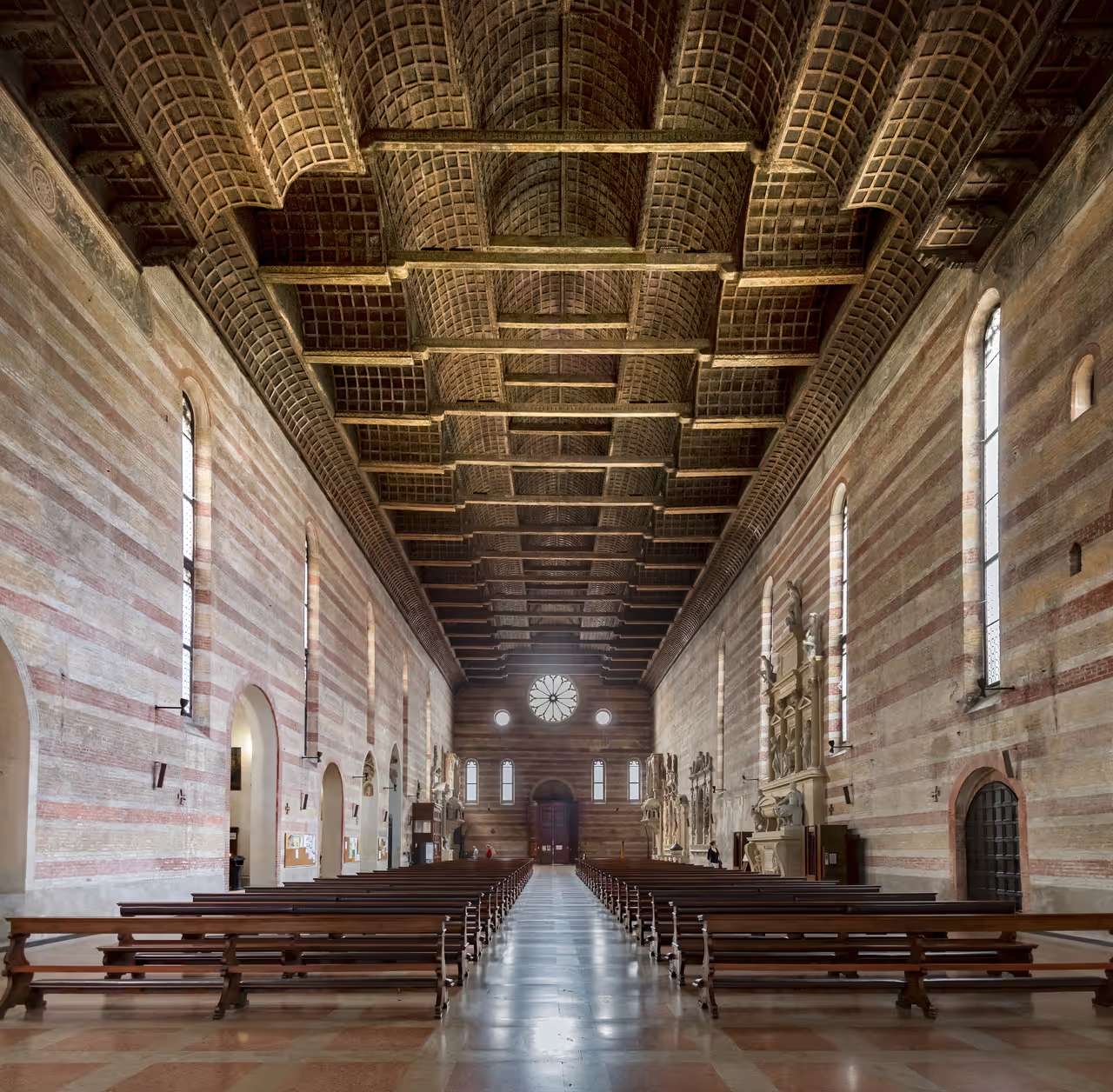 767m
767mChurch of the Eremitani
This vast, austere thirteenth century church stands as a deeply moving testament to both artistic genius and the devastating tragedies of war. Once entirely covered in spectacular Renaissance frescoes by Mantegna, the building was catastrophically bombed during the Second World War. Today, the painstakingly reconstructed fragments of the frescoes provide a poignant viewing experience alongside the remarkably beautiful, ship keel shaped wooden ceiling. The immense, echoing nave commands a profound sense of silence and reflection. It is a highly significant site for understanding the fragile nature of cultural heritage.
highlight view
See all nature & parks in Padua
Arena Gardens, Prato della Valle...