Padua’s Fourteenth-Century Fresco Cycles
Immerse yourself in the birthplace of modern painting. This UNESCO World Heritage site is a monumental turning point where artists first mastered human emotion and spatial depth. Wandering through these eight historic locations allows you to trace the evolution of the Trecento, from Giotto’s revolutionary breakthroughs to the refined skills of his followers. You will find heavens painted in brilliant ultramarine and stories told with such intensity that they remain as poignant today as they were seven centuries ago. It is a profound experience that shifts your perspective on how art can capture the human soul. Make sure to visit these sites to witness the dawn of the Renaissance in the heart of Padua.
Videos
History of Padua’s Fourteenth-Century Fresco Cycles
In the early fourteenth century, Padua became an unlikely laboratory for a revolution that would change Western art forever. While the rest of Europe was still largely tethered to the rigid, symbolic traditions of the Byzantine style, the city witnessed an explosion of creativity. It began when a wealthy banker, Enrico Scrovegni, sought redemption for his family name. He commissioned a young artist named Giotto to decorate his private chapel. What Giotto created was nothing short of miraculous. He stopped painting stiff icons and started painting people with real weight, real shadows, and raw human emotion. When you gaze at the walls of the Scrovegni Chapel, you are looking at the moment the Renaissance was born. This aesthetic revolution did not stay confined to one chapel. It spilled out across the city, transforming Padua into what locals proudly call the Urbs Picta, or the Painted City. Over the next hundred years, a succession of talented artists such as Guariento, Giusto de' Menabuoi, and Altichiero took Giotto's new visual language and applied it to different settings. From the grand, sweeping ceilings of the Baptistery to the solemn halls of the Basilica of Saint Anthony, these frescoes turned the city into a cohesive, immersive experience. They were not just religious decorations, but a bold experiment in spatial perspective and natural storytelling. Today, the legacy of these frescoes serves as a testament to the power of artistic vision. The city of Padua acts as a living museum where the evolution of art is written on the walls of its most historic buildings. This serial site represents more than just paint on plaster. It reflects a moment in history when society moved toward a more human centric worldview. For any visitor, walking from one site to another offers a rare chance to step back into the fourteenth century and witness the exact point where humanity started to see the world with new eyes.
Events spanning 718 years
Fun Facts
- • Giotto used the science of optics and geometry to create the illusion of three dimensional space, which was a radical departure from the flat, gold background style of the time.
- • In the Last Judgment scene, Enrico Scrovegni is depicted offering a model of the chapel to the Virgin Mary, a historical record of the man who funded this masterpiece.
- • The Baptistery of Padua features a stunning central dome fresco showing the Paradise, populated by a complex hierarchy of saints and angels.
- • The Scrovegni Chapel contains what is widely considered the best preserved fresco cycle of Giotto, the man often credited with starting the Renaissance.
- • The cycle is not the work of one man, but includes masterpieces by six different artists, including Guariento di Arpo and Giusto de' Menabuoi, who expanded on Giotto's visual language.
- • The depiction of emotions is a key feature of these works, with figures showing genuine grief, joy, and sorrow, which humanised religious subjects for the first time in centuries.
- • The intense blue pigment seen in the ceilings of the Scrovegni Chapel is lapis lazuli, a precious stone ground down into paint, symbolising the incredible wealth of the Scrovegni family.
- • The term Urbs Picta literally means Painted City, referring to how the fresco technique spread across multiple locations in Padua during the fourteenth century.
- • These frescoes were used as a form of visual storytelling to educate the public, as many people at the time could not read, making the walls a giant picture book for the faithful.
- • You can spot the painted coretti in the Scrovegni Chapel, which are clever architectural illusions that trick the eye into seeing little balconies, showing early experiments with perspective.
RESOURCES
Heritage UNESCO SitePadua’s Fourteenth-Century Fresco Cycles FAQ
While we strive to keep this information accurate and up to date, we recommend verifying any details independently before making decisions based on them.
Padua’s Fourteenth-Century Fresco Cycles Map & Neighborhood Explorer
This interactive map is centered on Padua’s Fourteenth-Century Fresco Cycles. Zoom in and move the map around to automatically discover Wikipedia photos and summaries of other nearby sights, monuments, and historical points of interest and stories in real-time!
Places near Padua’s Fourteenth-Century Fresco Cycles
Make the most of your trip. Check out these top-rated spots located nearby.
 0m
0mScrovegni Chapel
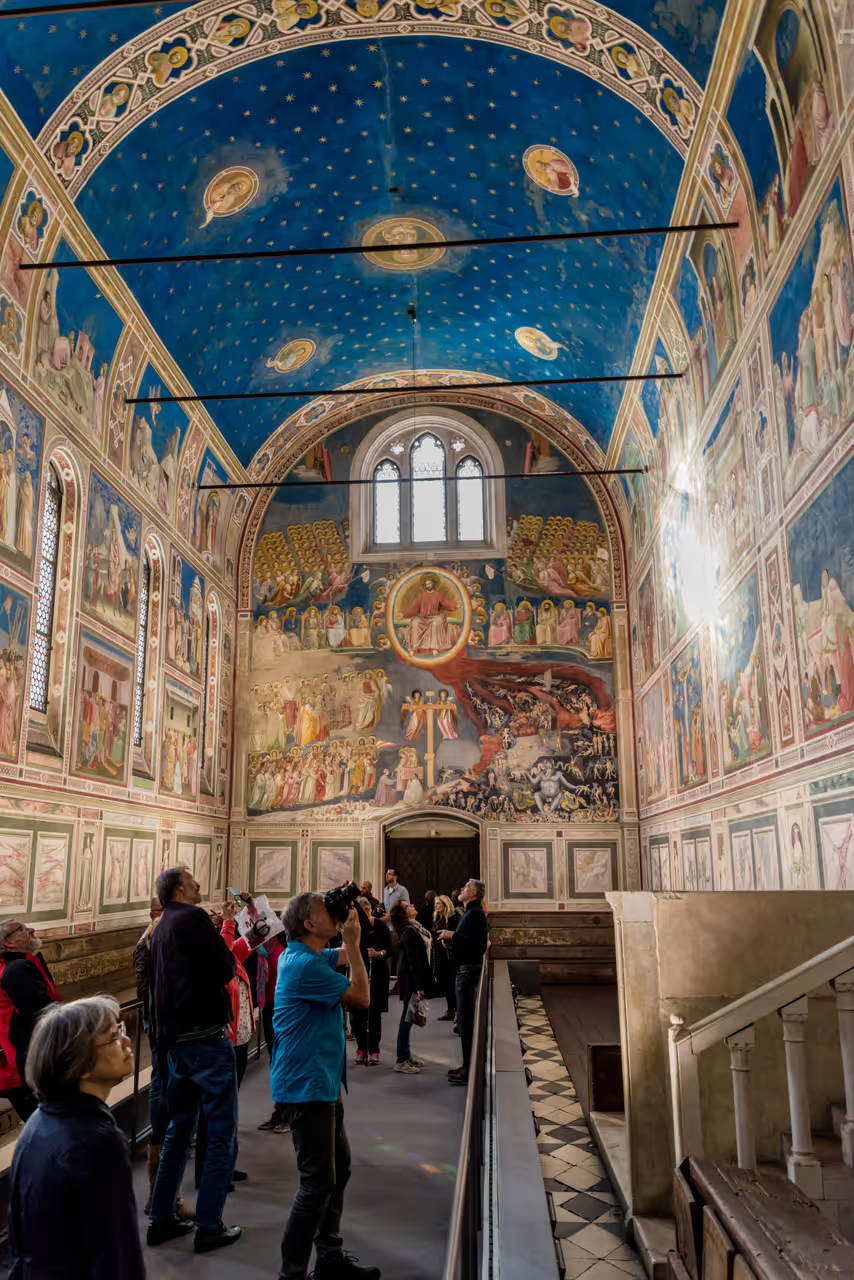
Step inside the Scrovegni Chapel to witness what many art historians consider the most pivotal achievement in Western art. Painted by Giotto in the early 14th century, this masterpiece transformed the trajectory of painting, moving away from rigid Byzantine forms to a vibrant, humanistic style full of emotion and psychological depth. Every square centimetre of the interior is covered in intense blue pigments and masterful narrative cycles telling the stories of Joachim, Anna, Mary, and Christ. Beyond the religious scenes, the chapel features a profound cycle of Vices and Virtues, offering a complex philosophical journey. The experience is intimate and awe-inspiring, made even more special by the strict conservation measures that protect these fragile colours. It is a rare chance to see a complete vision of genius preserved perfectly in time.
attraction view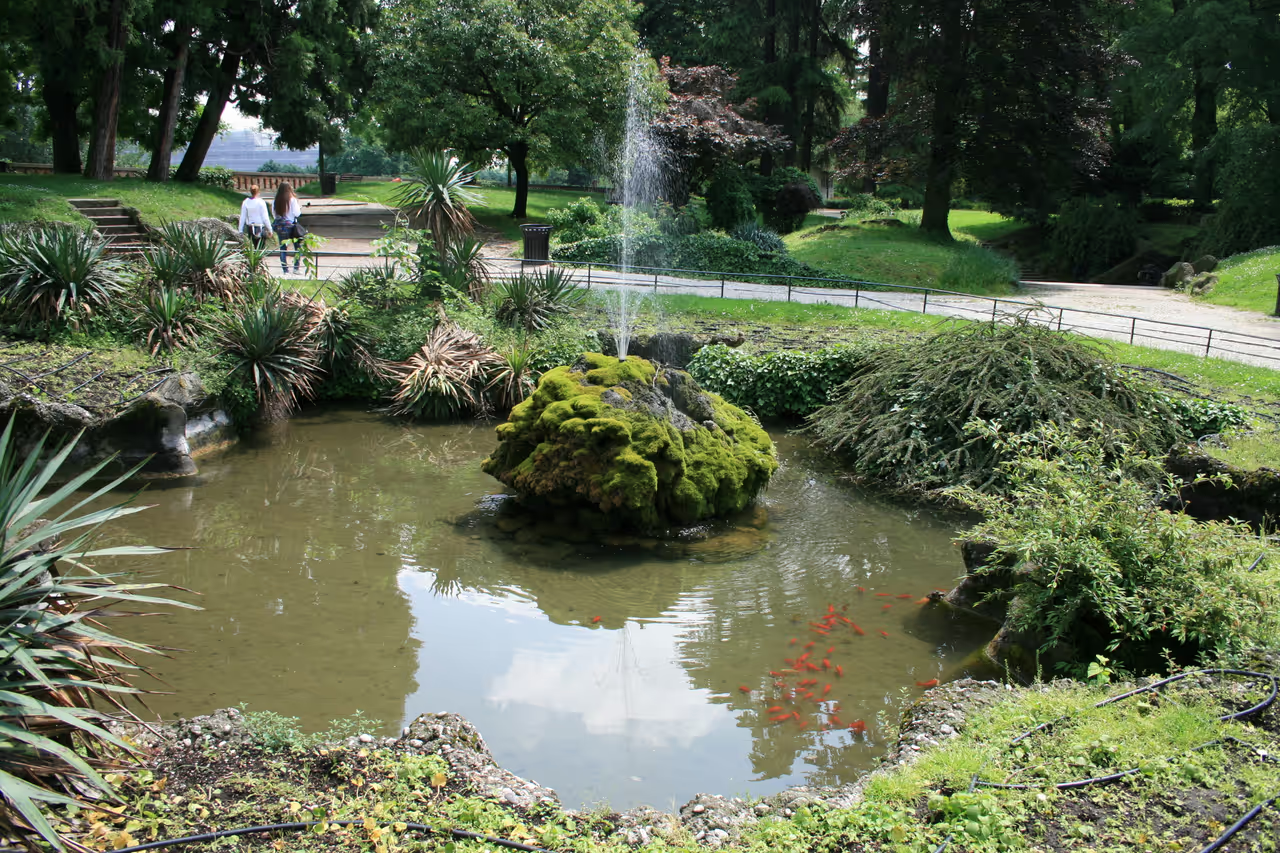 70m
70mArena Gardens
The Arena Gardens are a romantic green sanctuary that blends nearly two thousand years of history with a refreshing park atmosphere. Located in the heart of Padua, this spot is famous for housing the ancient Roman Amphitheatre and the world-renowned Scrovegni Chapel. It was one of Italy's very first public parks, designed with the winding paths and hidden grottos typical of the late Romantic style. Visitors can admire massive Himalayan cedars and rare Ginkgo trees while exploring the 16th-century fortifications that once defended the city. Today, the park is a lively cultural hub hosting everything from jazz festivals to innovative contemporary land art. It is a perfect place to escape the city pavements and soak up a unique mix of archaeology and nature.
park & nature view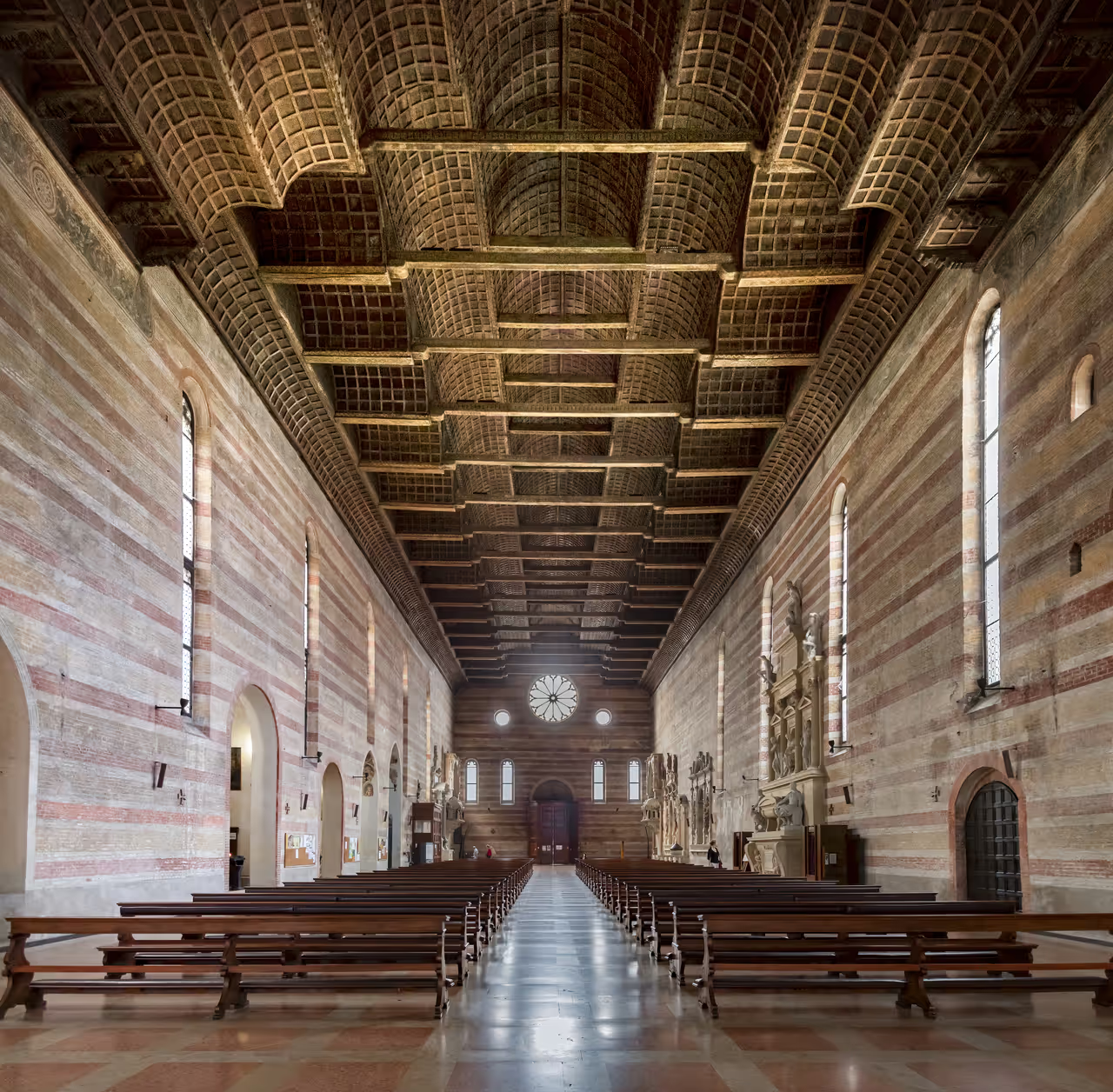 160m
160mChurch of the Eremitani
This vast, austere thirteenth century church stands as a deeply moving testament to both artistic genius and the devastating tragedies of war. Once entirely covered in spectacular Renaissance frescoes by Mantegna, the building was catastrophically bombed during the Second World War. Today, the painstakingly reconstructed fragments of the frescoes provide a poignant viewing experience alongside the remarkably beautiful, ship keel shaped wooden ceiling. The immense, echoing nave commands a profound sense of silence and reflection. It is a highly significant site for understanding the fragile nature of cultural heritage.
highlight view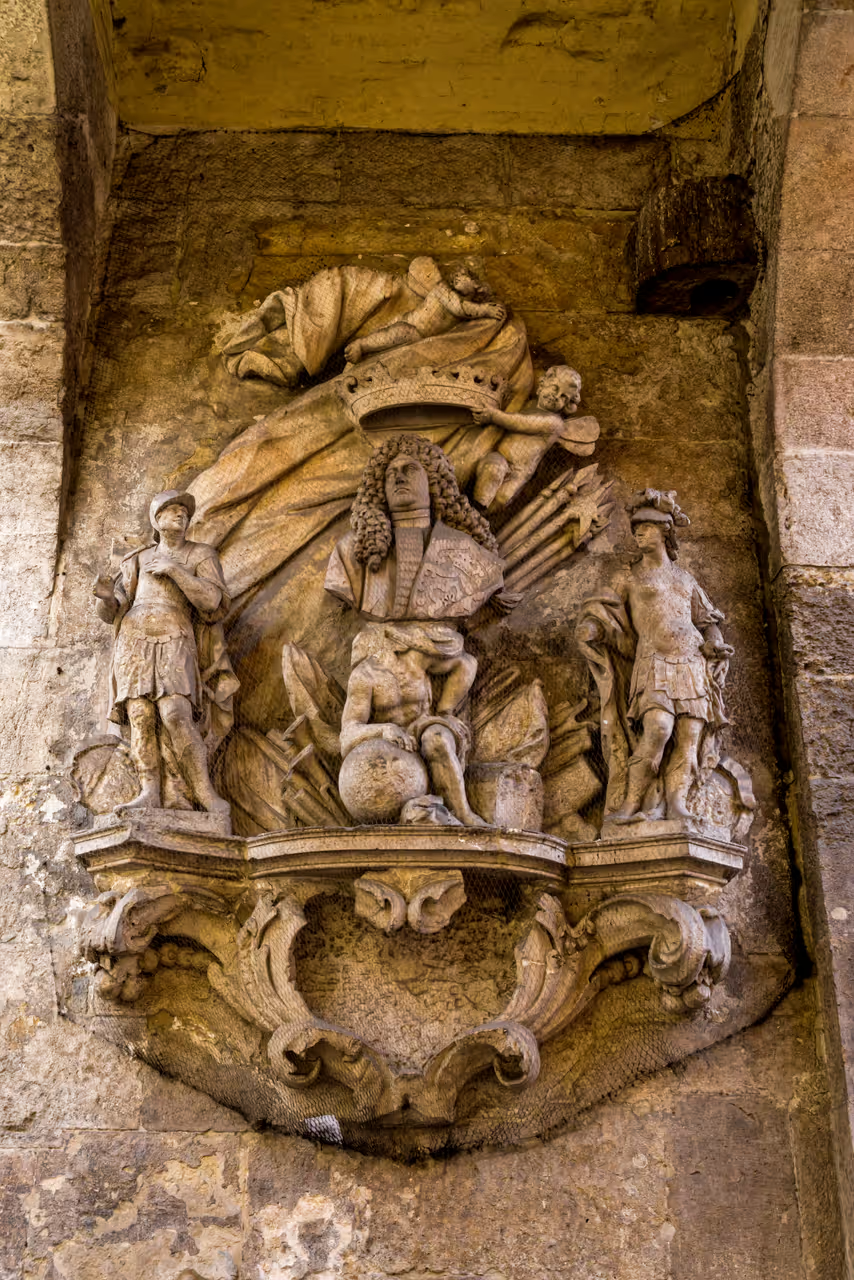 341m
341mAltinate Gate
This massive, single arched brick structure is a magnificent remnant of the ancient communal walls that once encircled the medieval heart of the city. The sheer thickness of the masonry and the heavy, unadorned style speak volumes about its original defensive purpose. Today, it stands as a highly picturesque monument spanning a busy pedestrian and cycling street. Passing beneath its imposing shadow provides a profound sense of crossing an ancient boundary. It is a highly resilient piece of military architecture that has gracefully survived centuries of urban expansion.
architecture view
See all unesco sites in Padua
Botanical Garden of Padua...