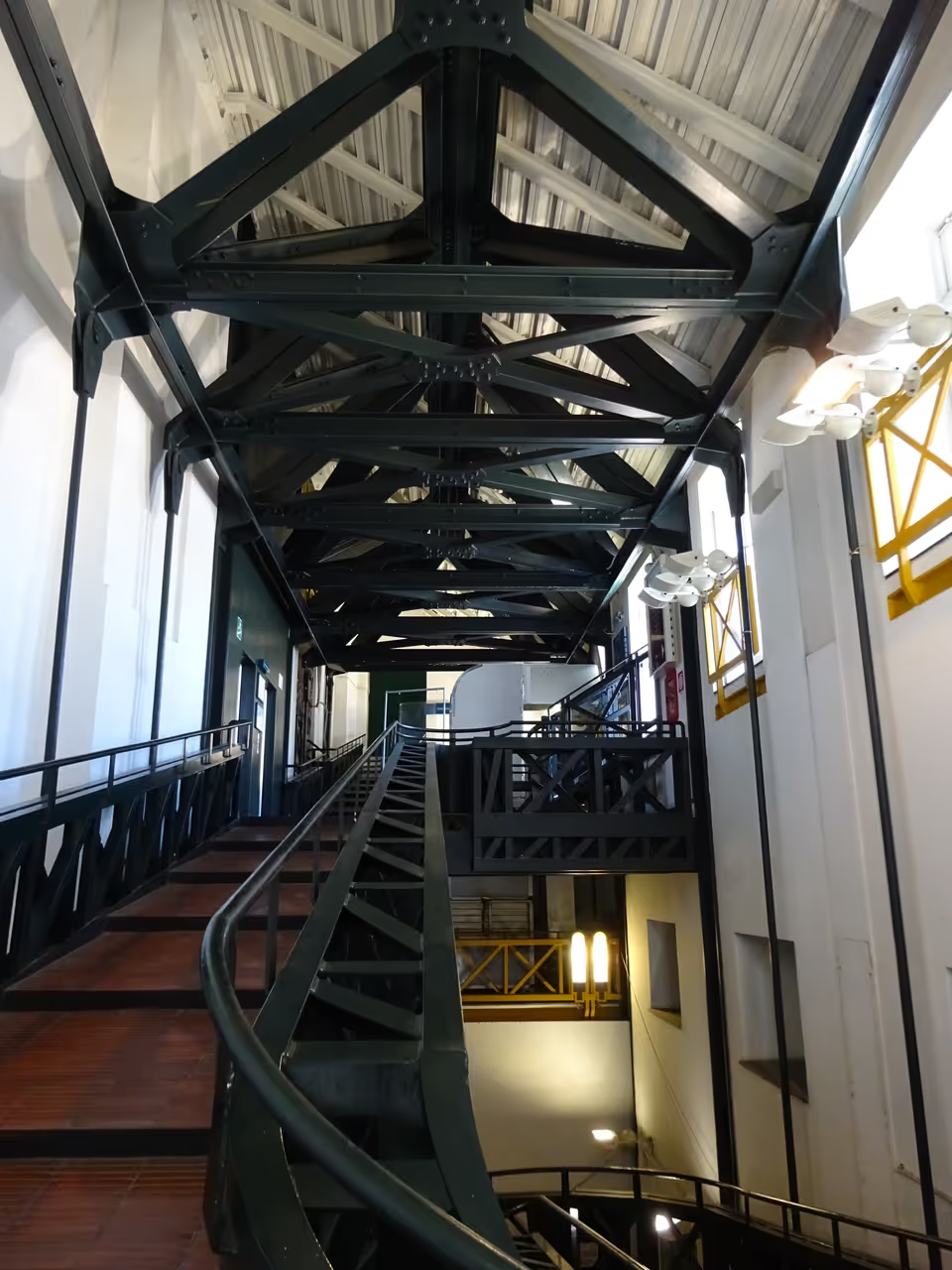
Doges' Palace
Standing at the heart of Genoa, the Doges' Palace serves as a monumental testament to the city's golden era of maritime power. Once the fortress and seat of government for the ancient Republic, this imposing structure now thrives as a vibrant cultural beacon. Visitors can explore grand council halls filled with history, wander through quiet medieval loggias, and admire the neoclassical facade that overlooks Piazza Matteotti. It is a place where deep political intrigue once played out behind thick stone walls, though today it hosts world class art exhibitions and public events. Whether you are climbing the historic Grimaldina Tower or simply soaking up the atmosphere of its impressive courtyards, the palace offers a profound connection to the city's resilient soul.
Videos
History of Doges' Palace
The story of the Doges' Palace began in the late thirteenth century, a time when Genoese sailors and merchants dominated Mediterranean trade routes following decisive victories against rivals like Pisa and Venice. The city needed a headquarters worthy of its newfound prestige, leading to the consolidation of several medieval buildings, including the Fieschi and Doria family estates. With the appointment of the first Doge, Simone Boccanegra, in 1339, this collection of structures officially became the Ducal Palace, forever tying the building to the identity of the Republic. It was a place designed for both power and protection, serving as the residence of the elected Doge and the seat of government. As political landscapes shifted, so did the architecture. In the late sixteenth century, the Senate commissioned the architect Andrea Ceresola, known as 'il Vannone', to transform the disjointed medieval complex into a cohesive, fortress like palace. He engineered a masterful structure capable of withstanding both internal coups and external threats. The building remained the beating heart of Genoese politics for centuries until the fall of the Republic in the early nineteenth century. During its long tenure, the palace witnessed everything from grand ceremonies and diplomatic negotiations to the hushed plotting of conspiracies behind its high, impenetrable walls. In the modern era, the palace has undergone a remarkable renaissance. After decades of serving as a judicial seat, a massive restoration project completed in 1992 returned the structure to the people of Genoa, breathing new life into its historic halls. Today, it stands as a premier cultural institution, hosting global summits like the 2001 G8 and rotating through prestigious art exhibitions. The restoration successfully balanced the preservation of its medieval roots, like the haunting Grimaldina Tower, with the refined neoclassicism of the Cantoni facade. It is no longer a restricted seat of power, but a living space where the city’s past and present seamlessly intertwine.
Events spanning 710 years
Fun Facts
- • A curious, late sixteenth century relief carving of 'Fortune' with a vase for a head remains near the entrance to the prison sections, serving as an enduring historical enigma.
- • A plaque at the entrance commemorates Kōstas Geōrgakīs, a Greek student who tragically ended his life here in 1970 to protest against the military regime in his home country.
- • During the second world war, the palace suffered significant damage from Allied bombings, which necessitated extensive structural repairs.
- • For centuries, the doges were required to live inside the palace for the entire duration of their two year term to isolate them from external political influence.
- • In 2001, the palace hosted the G8 summit, bringing world leaders together within these historic walls to discuss global issues.
- • The Grimaldina Tower, built around the turn of the fourteenth century, once functioned as a high security prison for political dissidents and famous figures.
- • The famous violinist Niccolò Paganini was once held within the prison cells of the palace on charges of seducing a young woman.
- • The neoclassical facade that defines the view from Piazza Matteotti was actually hidden for centuries behind a defensive curtain wall, preventing the public from seeing it until the nineteenth century.
- • The ornate courtyard and atrium designed by the architect known as 'il Vannone' features a clever system of hidden iron tie rods within the vaulted ceiling that remains invisible to the naked eye.
RESOURCES
Official WebsiteDoges' Palace FAQ
While we strive to keep this information accurate and up to date, we recommend verifying any details independently before making decisions based on them.
Doges' Palace Map & Neighborhood Explorer
This interactive map is centered on Doges' Palace. Zoom in and move the map around to automatically discover Wikipedia photos and summaries of other nearby sights, monuments, and historical points of interest and stories in real-time!
Places near Doges' Palace
Make the most of your trip. Check out these top-rated spots located nearby.
 3m
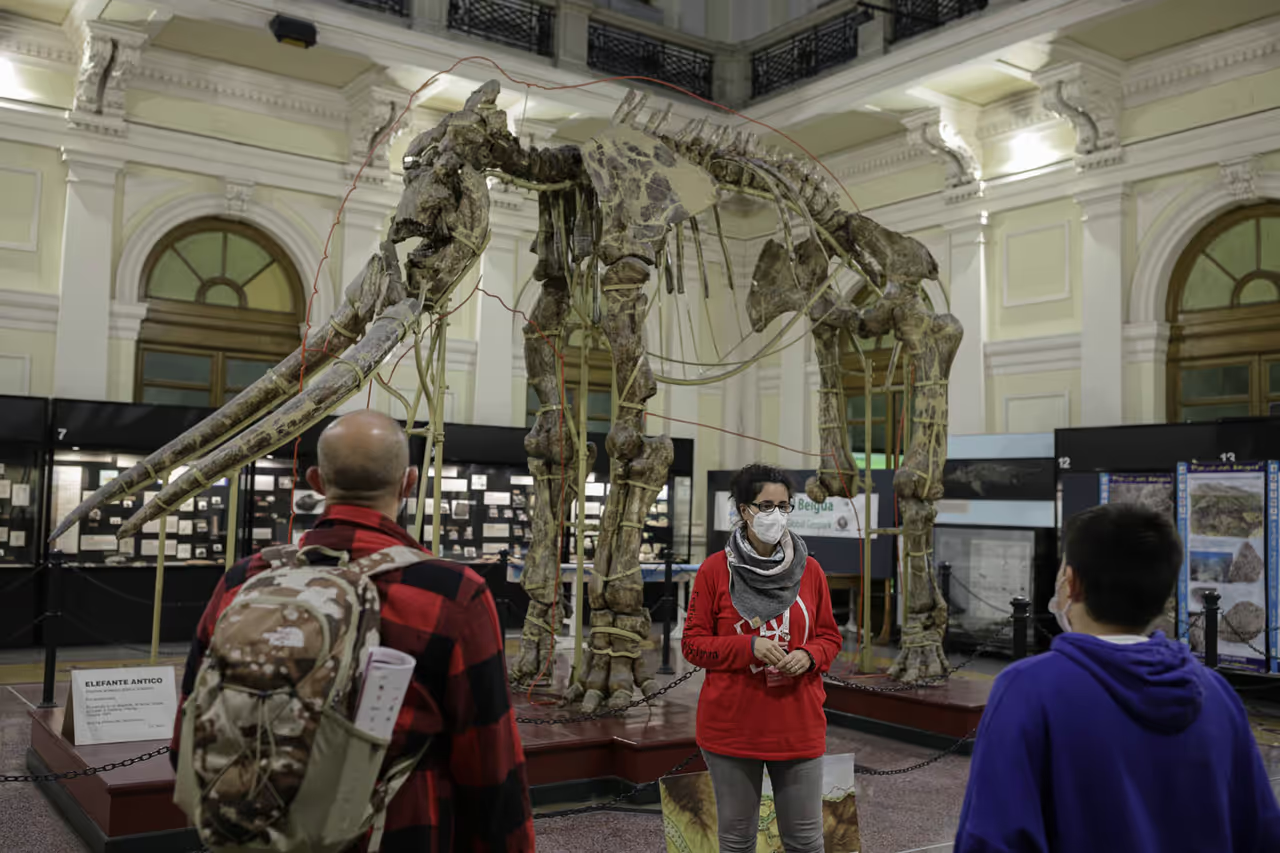
3mFestival of Science
This massive international event transforms the city into a vibrant hub of scientific discovery, innovation, and education. Hundreds of interactive exhibitions, workshops, and lectures are hosted in historic palaces, museums, and public squares across the centre. It attracts leading global scientists, researchers, and curious minds of all ages who come together to explore complex topics in an accessible and engaging way. The juxtaposition of cutting-edge robotics and physics presentations inside centuries-old Renaissance buildings creates a uniquely captivating experience.
festival view- 3m
Genoa International Poetry Festival
The largest and oldest poetry event in Italy takes over the city's most picturesque courtyards, historic theatres, and public squares. Renowned poets, authors, and musicians from around the world gather to share their work through passionate readings, concerts, and multidisciplinary art performances. The event highlights the emotional and rhythmic power of language, often blending spoken word with live music in highly atmospheric settings. It offers a wonderful opportunity to experience the city's intellectual and artistic soul during the warm early summer evenings.
festival view 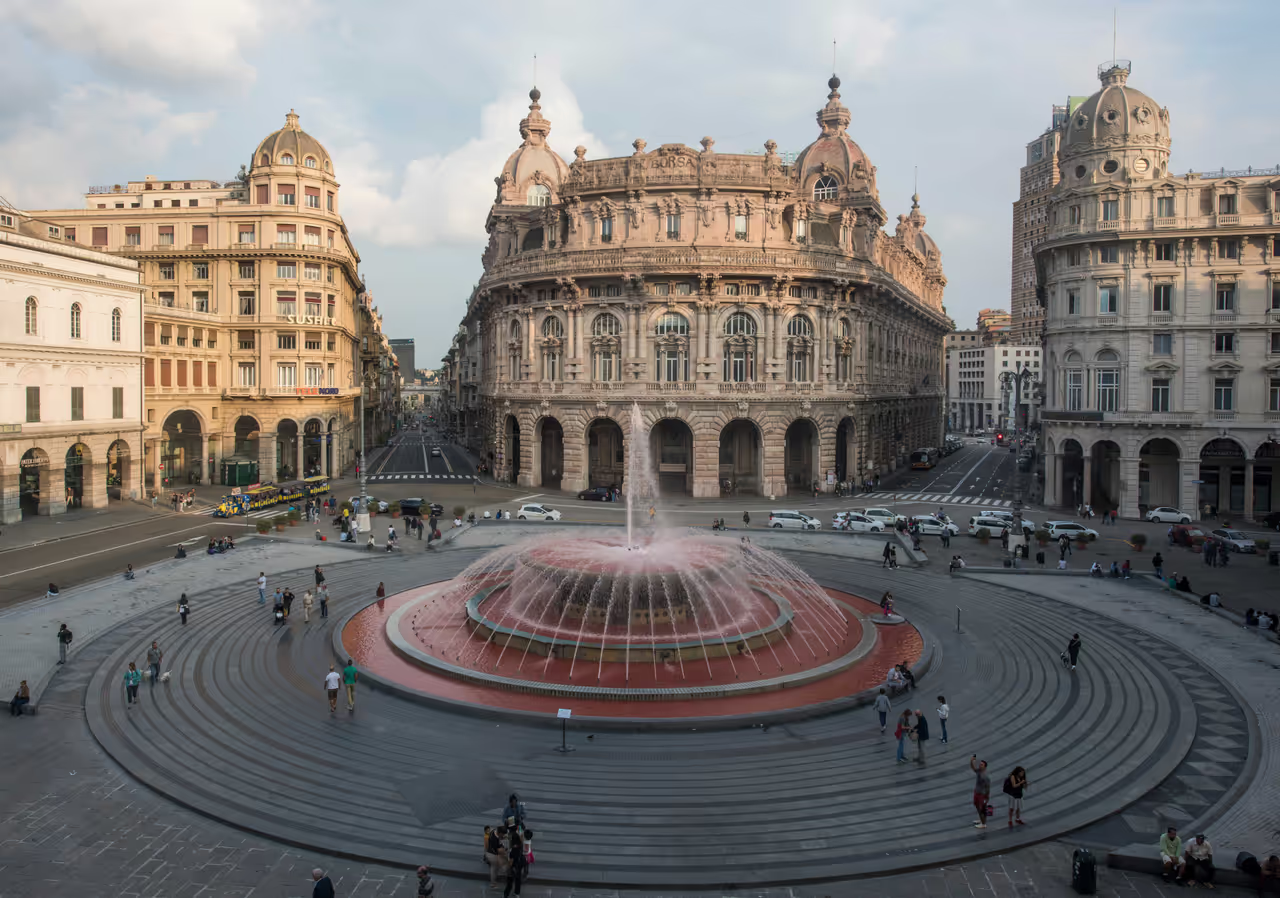 46m
46mDe Ferrari Square
This grand, expansive plaza serves as the true beating heart of the modern city, bridging the dense medieval caruggi with the wider avenues of the newer districts. It is dominated by a spectacular, massive bronze fountain that continuously shoots water high into the air, creating a dramatic focal point. The square is surrounded by incredibly imposing, monumental architecture, including the neoclassical Teatro Carlo Felice and the side facade of the Doge's Palace. It is a constantly busy, energetic crossroads where locals gather, protests are held, and celebrations take place. The sweeping curves and elegant buildings give the area a distinctly majestic, metropolitan feel.
highlight view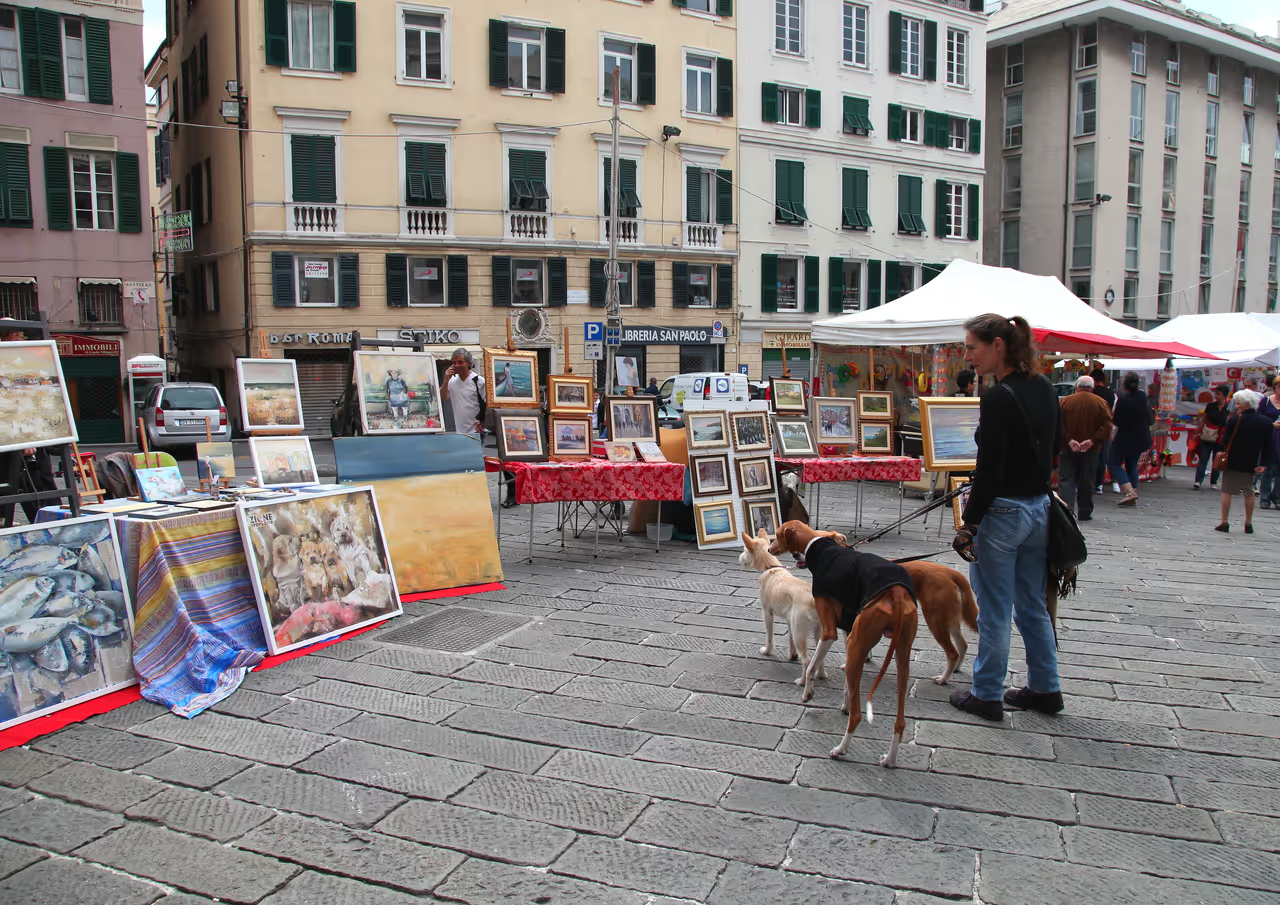 72m
72mPiazza Matteotti Antique Market
Set against the stunning backdrop of the grand Palazzo Ducale, this regular outdoor market is a treasure trove for collectors and curious browsers. Dozens of stalls pop up across the elegant square, offering a fascinating array of vintage furniture, old prints, antique jewellery, rare books, and quirky maritime memorabilia. The atmosphere is relaxed and unhurried, with locals carefully inspecting the goods and haggling with the knowledgeable vendors. Rummaging through the eclectic displays feels like digging through the attics of the city's historic palaces. It is the perfect place to find a unique, authentic souvenir while soaking in the majestic surrounding architecture.
market view
Explore Similar Places in These Collections
Featured on This Itinerary
See all attractions in Genoa
Aquarium of Genoa, Galata Maritime Museum, Genoa Cathedral, Genoa Lighthouse...