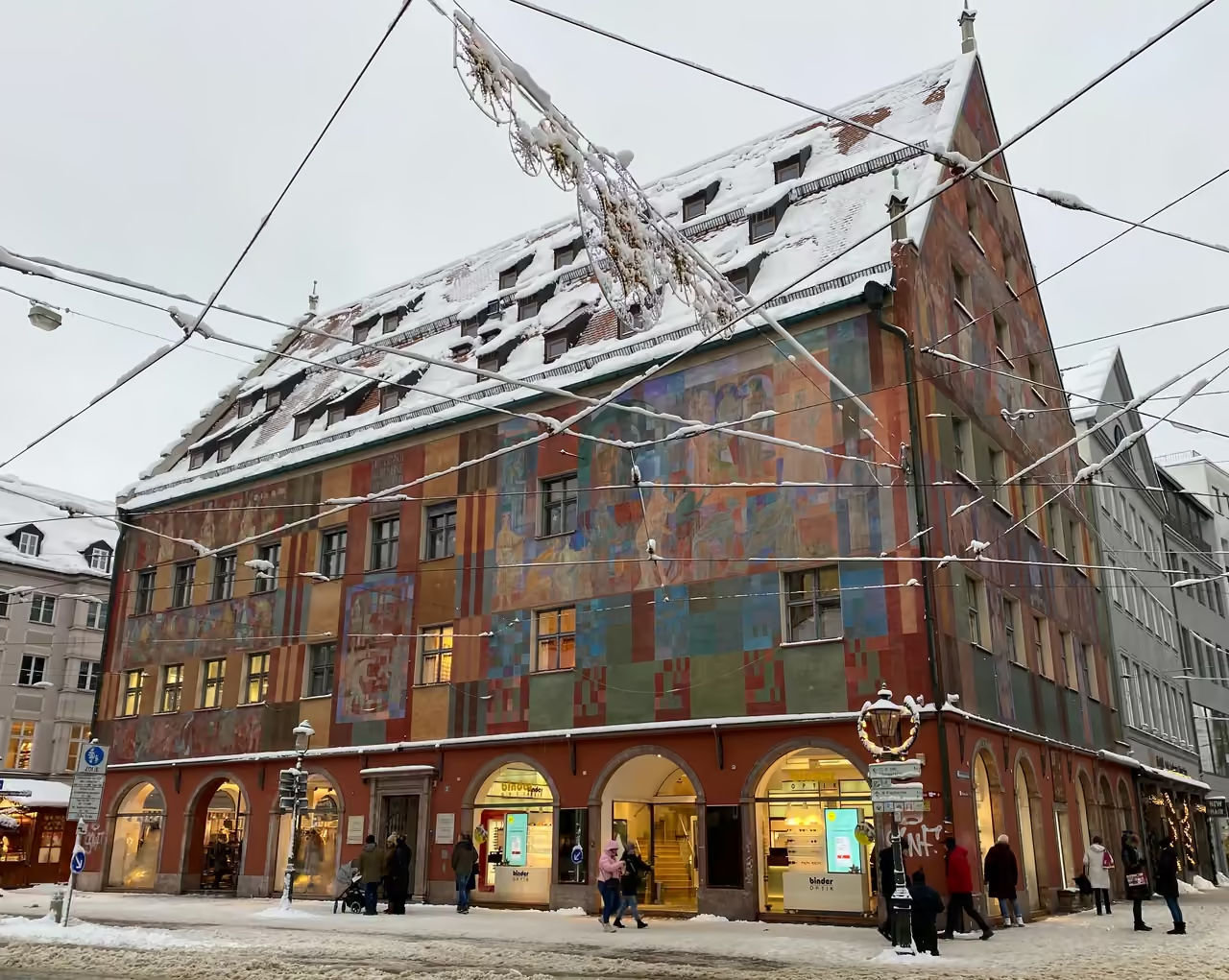
Augsburg Puppet Theatre
Approaching the historic Heilig-Geist-Spital in the old town, you immediately know you are in puppet territory when the pedestrian traffic light near the Rotes Tor flashes a green wooden Kasperle figure to let you cross. Inside this sixteenth-century former hospital complex, large timber lids hinge open to reveal a compact stage where generations of marionettes have danced, argued, and sung since the 1940s. The wooden seating can feel rather unforgiving on adult knees after an hour, but the sheer craft of the intricately carved faces entirely distracts from the mild ache. Watching a performance of Puss in Boots or a miniature Mozart opera here feels like stepping directly into a mid-twentieth-century German childhood. The strings pull and lift with a hypnotic precision that modern animation struggles to replicate. Leaving the auditorium, the smell of aged timber and theatrical dust lingers, cementing the feeling of having witnessed a deeply tactile form of storytelling.
Videos
History of Augsburg Puppet Theatre
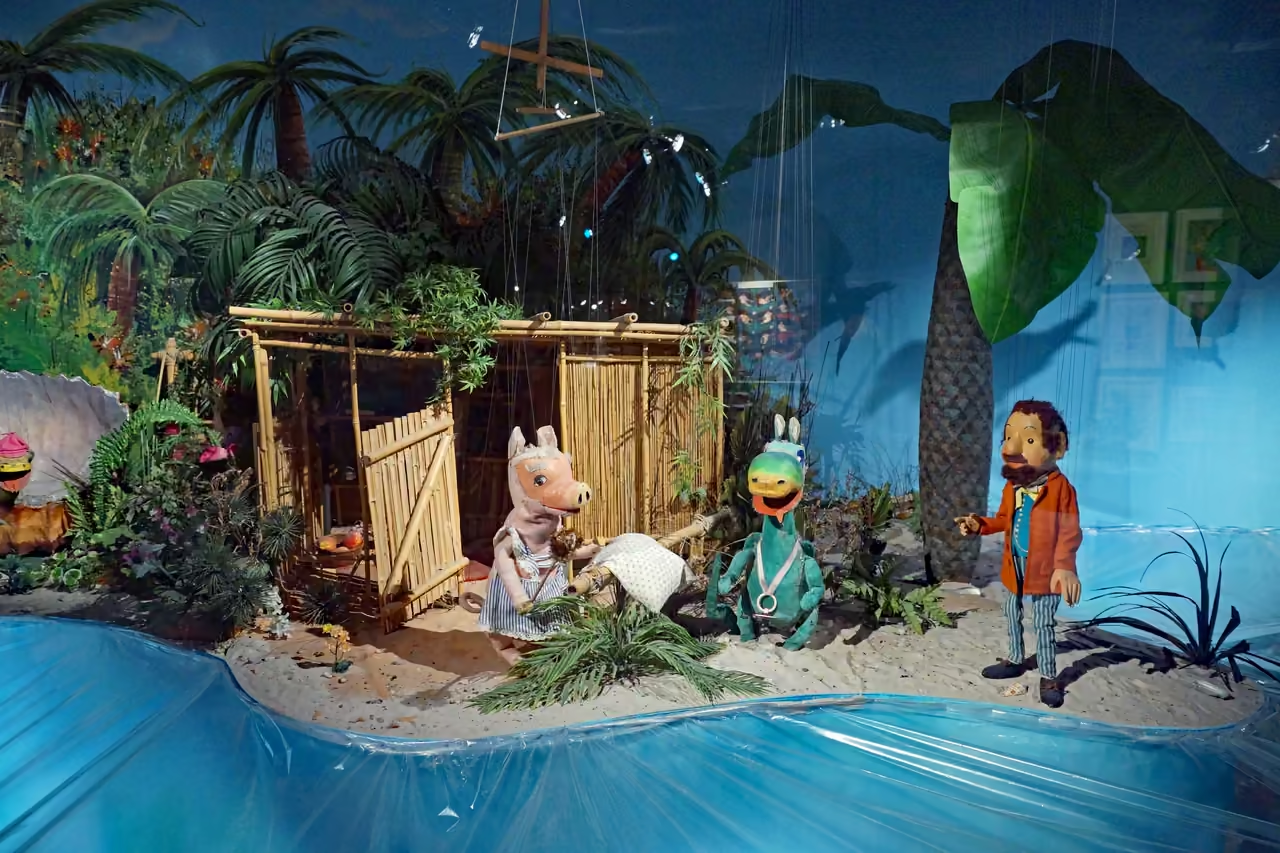
The origins of this marionette empire lie in a small homemade doorframe. In 1943, Walter and Rose Oehmichen built a tiny stage they called the Puppenschrein to entertain friends and family in the midst of the Second World War. This fragile wooden frame was completely obliterated during an air raid on Augsburg on the night of the 26th of February 1944, leaving only a single decorative rosette in the ashes. The wooden cast themselves escaped the flames purely by chance. Walter had taken the figures home that evening after putting on a show for the children of stage workers at the local Stadttheater, unwittingly saving the very characters that would later define German children's television. Finding a new home for the surviving puppets proved complicated in a ruined city, but a room was eventually secured in the Heilig-Geist-Spital. Exactly four years to the day after the destruction of the original stage, the new curtain rose on the 26th of February 1948 with a performance of The Booted Tomcat. The family adopted the name Puppenkiste, or Puppet Box, based on Walter's insistence that the entire new theatre must fit into a transportable crate, ensuring it could always be moved to safety if disaster struck again. The theatre's trademark oversized wooden crate lids still swing open to reveal the stage today. Fame arrived through an entirely new medium in 1953, when the marionettes made their television debut just weeks after the first national news broadcasts. The initial live performances of Peter and the Wolf were staged in an underground bunker in Hamburg because of a lack of recording equipment, forcing the puppeteers to manipulate their heavy wooden characters while sweating profusely under primitive studio lights that heated the room to sixty degrees Celsius. Rather than simply filming stage plays, the crew eventually converted the Augsburg theatre foyer into a dedicated film studio, producing cinematic adventures featuring prehistoric creatures and miniature railway drivers that cemented the theatre's legendary status across the nation.
events spanning 58 years
Fun Facts
7- 01
Hannelore Oehmichen carved her first famous marionette, The Little Prince, in absolute secrecy at the age of thirteen because she was strictly forbidden from handling the sharp carving knives.
- 02
In a bid to explain pandemic safety to young children in early 2021, the Bavarian Ministry of Culture commissioned a video featuring Dr. Kasperl, who explained self-testing procedures in a thick Swabian dialect.
- 03
Since 2009, the captain of local football team FC Augsburg has abandoned the traditional pre-match pennant exchange, instead presenting the opposing team's captain with a different hand-carved marionette each season.
- 04
The original television productions were filmed entirely on 16mm colour film starting in 1965, but were broadcast to the nation in black and white for years until colour sets became widely available.
- 05
The theatre features a strictly adult-oriented New Year's Eve political cabaret, an annual tradition established in 1951 that consistently sells out a hundred consecutive performances through the first six months of the year.
- 06
To accommodate the transition to widescreen television formatting in 1994, carpenters had to construct an entirely new elongated insert box for the production of The Robbery of the Midnight Sun.
- 07
When adapting Mozart's famous operas for the miniature stage, director Hanns-Joachim Marschall ruthlessly stripped out the major arias to keep the pacing entirely suited to wooden actors.
FULL PLACE DETAILS
WEB & AMENITIES
Augsburg Puppet Theatre Map & Neighborhood Explorer
This interactive map is centered on Augsburg Puppet Theatre. Zoom in and move the map around to automatically discover Wikipedia photos and summaries of other nearby sights, monuments, and historical points of interest and stories in real-time!
Augsburg Puppet Theatre FAQ
While the dialogue is entirely in German, the highly expressive movements of the marionettes and the detailed set designs make the classic fairy tales and operas visually engaging for non-speakers, though the political cabaret is heavily reliant on local language and context.
Yes, the building houses a dedicated museum called Die Kiste on the upper floor, which displays the original wooden stars from the classic television broadcasts entirely separate from the live theatre space.
Far from it. Alongside classic fairy tales, the evening schedule frequently features works adapted specifically for adults, including condensed Mozart operas, Richard Wagner's Ring Cycle, and a notoriously sharp political cabaret.
The venue is located inside the historic Heilig-Geist-Spital complex near the Rotes Tor. The easiest way to spot the crossing to the entrance is to look for the unique pedestrian traffic light that uses a green Kasperle figure instead of a standard walking man.
A typical visit takes about 2 hours. We recommend planning your schedule accordingly to make the most of your time there.
The closest place to visit near Augsburg Puppet Theatre is Red Gate Park Viewpoint, around 144 m away. Other things to do near Augsburg Puppet Theatre include St Ulrich and St Afra Abbey (197 m), Roman Museum (478 m) and Water Management System of Augsburg (478 m). All of these are within roughly 478 m of Augsburg Puppet Theatre, close enough to walk.
While we strive to keep this information accurate and up to date, we recommend verifying any details independently before making decisions based on them.
Places near Augsburg Puppet Theatre
Make the most of your trip. Check out these top-rated spots located nearby.
 144m
Red Gate Park Viewpoint
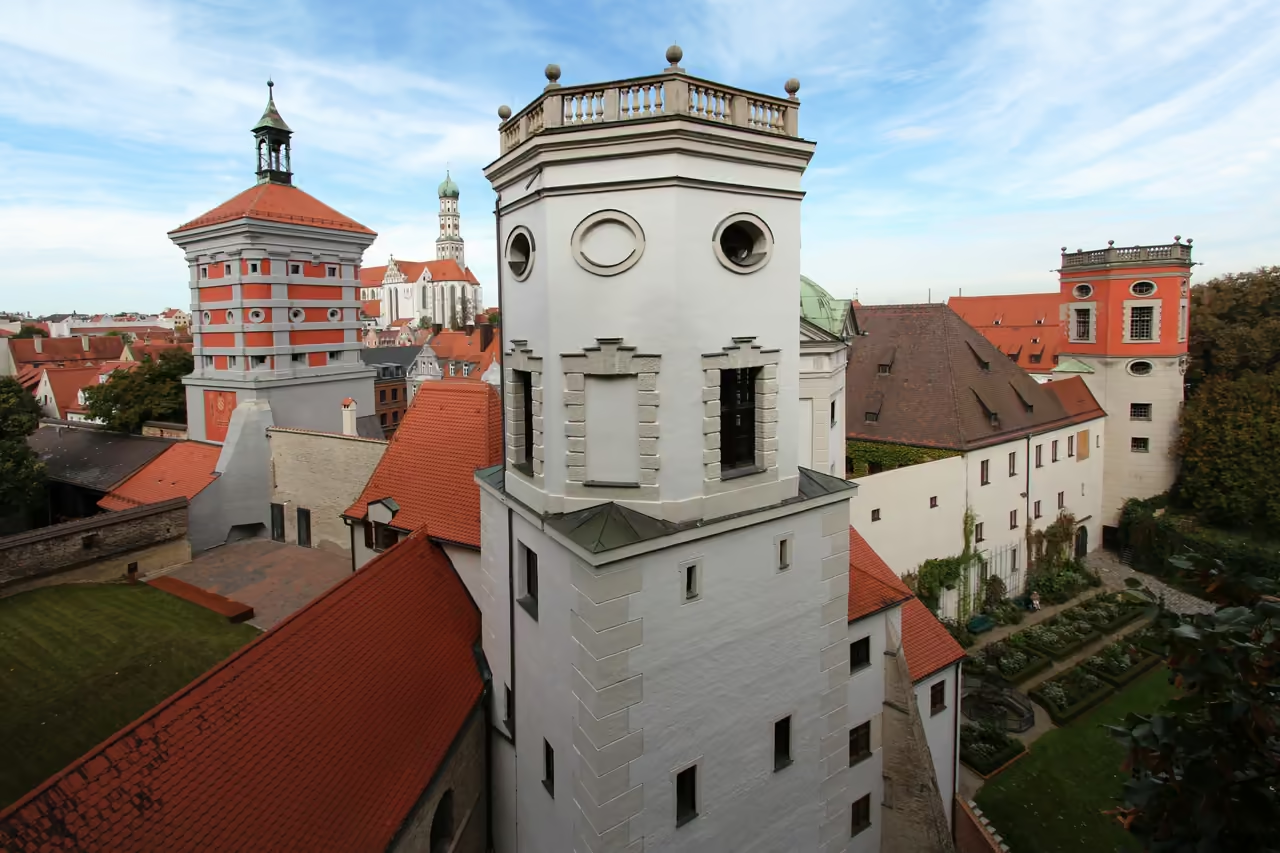
Standing on the heavy stone bridge over the former moat, you get a highly compressed, deeply historical view of ancient engineering. The massive Red Gate defensive tower looms directly ahead, flanked by three exceptionally old brick water towers. The steep, grassy banks of the moat drop away violently below you, creating a deep sense of scale. It feels entirely disconnected from the modern traffic rushing just a few streets away.
viewpoint view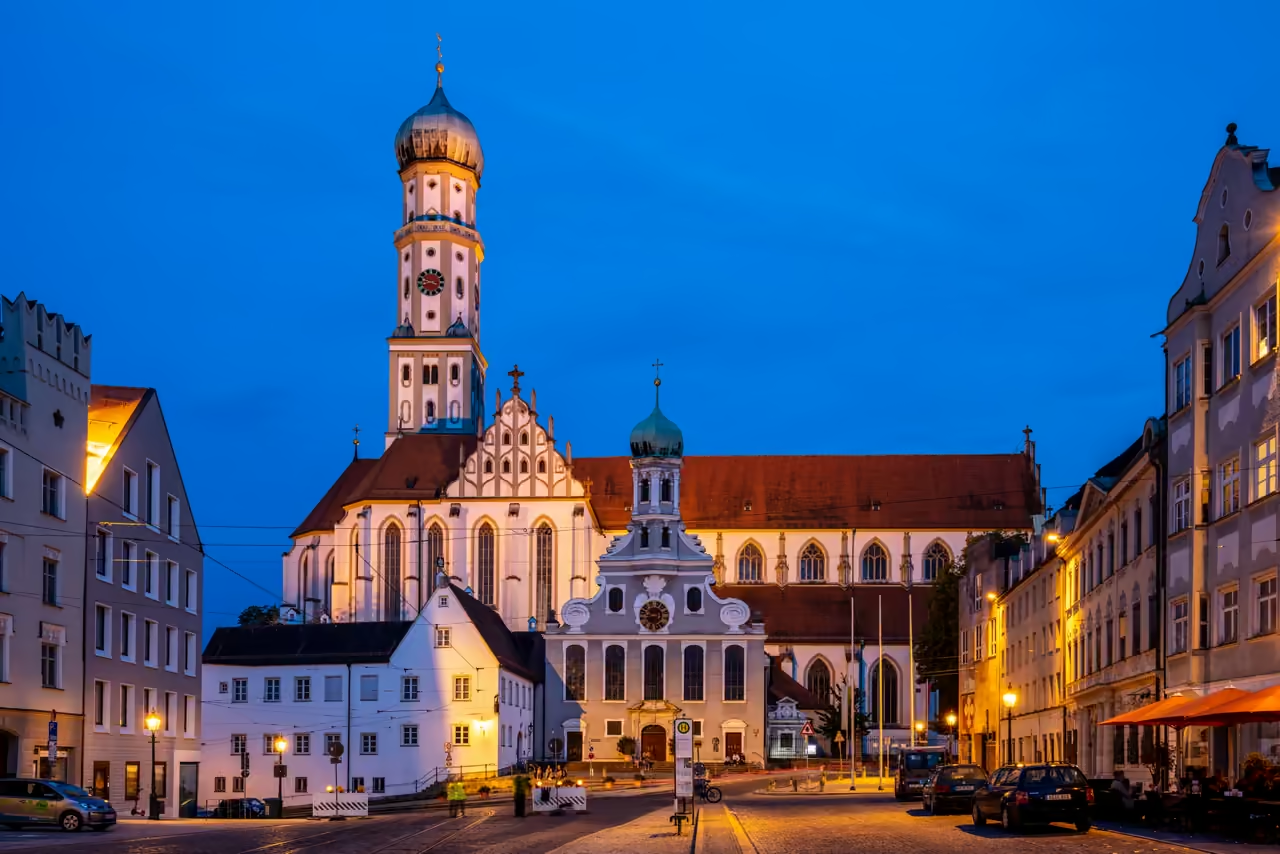 197m
St Ulrich and St Afra Abbey
A massive, towering Catholic basilica that visually dominates the southern end of the old town. Its exceptionally tall onion-domed tower is one of the most aggressive vertical elements in the city's skyline. Inside, the heavy late-Gothic architecture features three incredibly ornate, towering Renaissance altars that demand immediate attention. It holds the crypts of the city's patron saints, making it a highly significant pilgrimage site. Bizarrely, a much smaller Protestant church leans directly against its walls, physically representing the Peace of Augsburg.
highlight view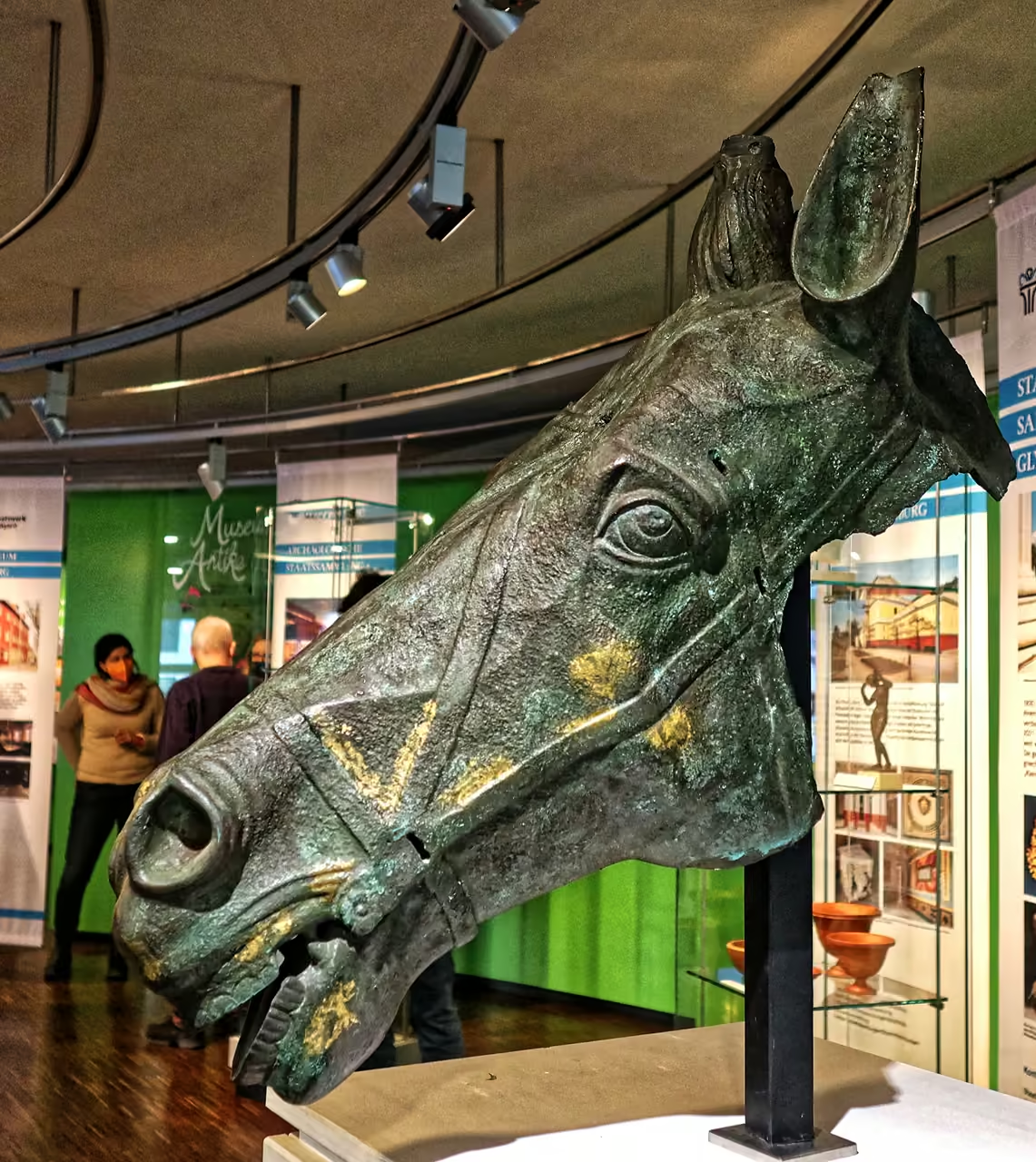 478m
Roman Museum
A highly concentrated collection of artifacts proving the city's deep origins as a brutal Roman military camp. Because the original church housing the museum suffered severe structural issues, the core exhibition temporarily occupies a space in the historic arsenal. You will confront massive stone monuments, heavy bronze military gear, and exceptionally fragile glassware pulled from local excavations. It firmly roots the city in antiquity, long before the famous bankers arrived. The presentation is highly academic but deeply fascinating.
highlight view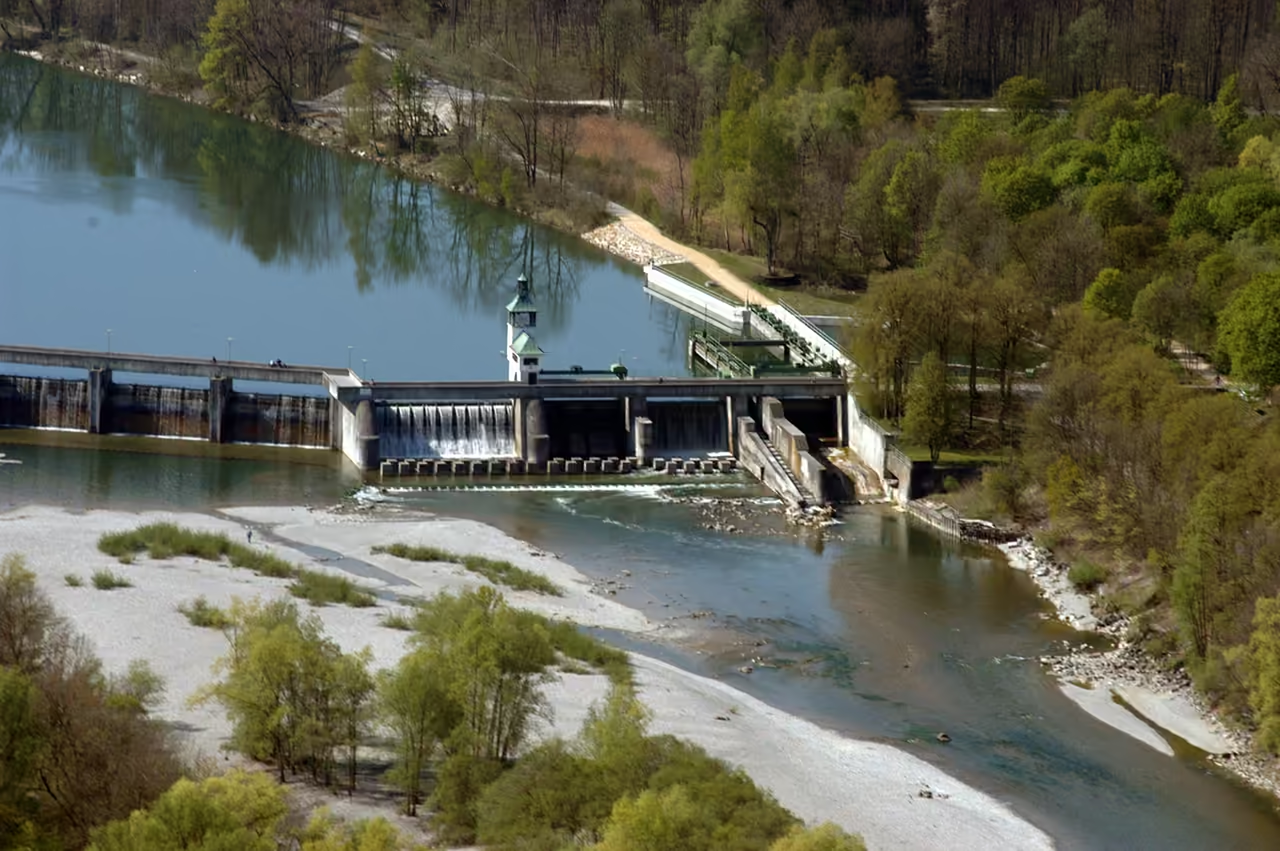 478m
Water Management System of Augsburg
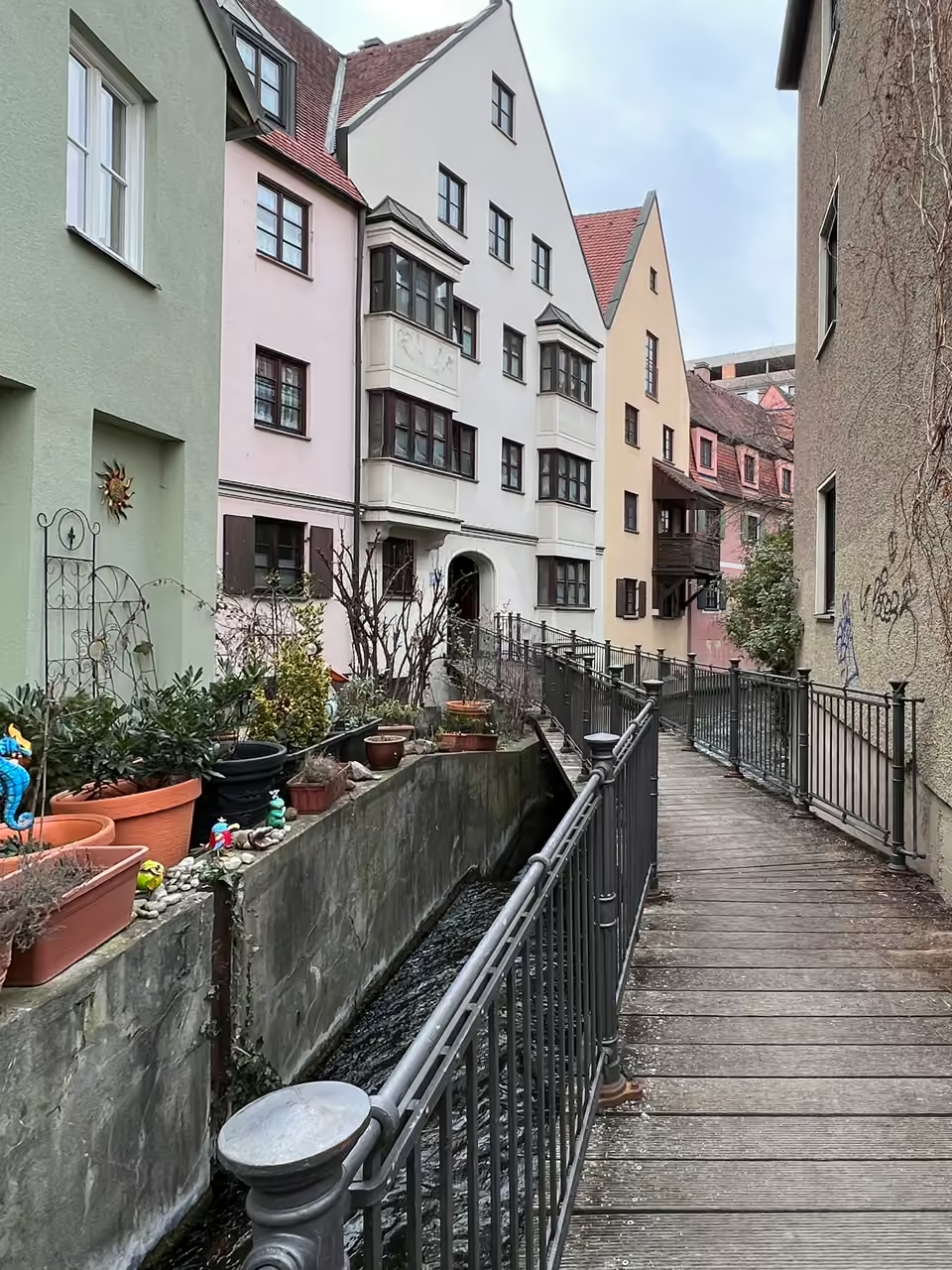
Walk the Lechviertel and a canal is never far away, and the old Stadtmetzg actually sits on top of the Vorderer Lech. That makes a handy first taste of a UNESCO listing built from 22 separate pieces: waterworks with three towers at the Rotes Tor, bronze fountains along Maximilianstraße and Rathausplatz, ten historic power stations and a canoe slalom course from the 1972 Olympics. The pieces are scattered, so the fun lies in picking a thread and following it, perhaps from the fountains to the Welterbe Info-Zentrum on Rathausplatz, or out to the Hochablass weir, where pedestrians can cross the Lech along the top. Some sights are free to wander up to, some open only on a guided tour, and a few are best admired from outside. Together they show Augsburg as a city that spent centuries shaping its rivers to its needs and then kept the evidence in plain view.
unesco heritage site view
Explore Similar Places in This Collection

Featured on These Itineraries and Routes
5 Days in Augsburg
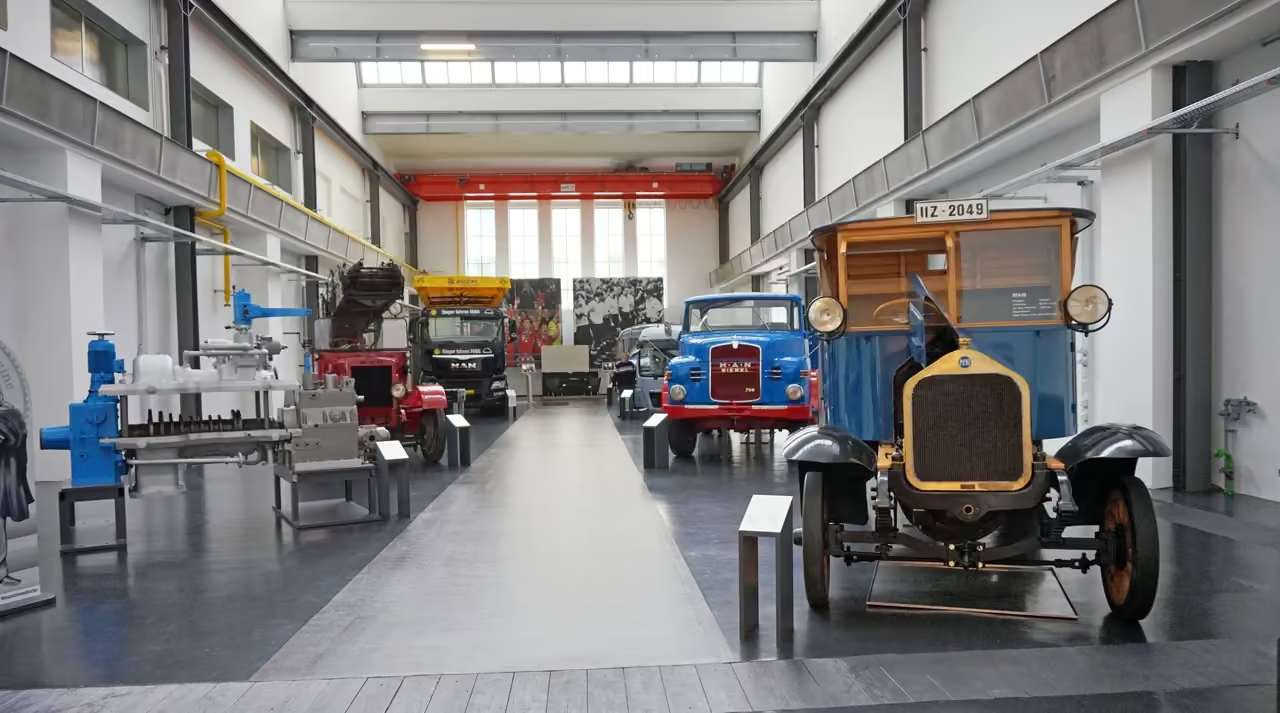
A deeply comprehensive, highly exhaustive deep dive into every facet of the city's complex identity. You will transition from Roman foundations to massive industrial machinery, tracking the complete evolution of a major European powerhouse. It prevents museum fatigue by heavily incorporating long stretches of nature and unscripted time in eccentric local pubs.
view itinerary
Literary and Musical Heritage Walk
A quiet, highly focused route tracking the early lives of two of the city's most famous cultural exports: Bertolt Brecht and Leopold Mozart. You will visit their modest birthplaces and the small alleys where they formed their early worldviews. The contrast between Brecht's gritty socialist theatre and Mozart's classical aspirations makes for a fascinating narrative. It requires stepping away from the grand palaces into more intimate residential streets.
view self-guided tour
See all attractions in Augsburg
Including Augsburg Cathedral, Fuggerei, Schaezlerpalais, and more