Rance Tidal Power Plant
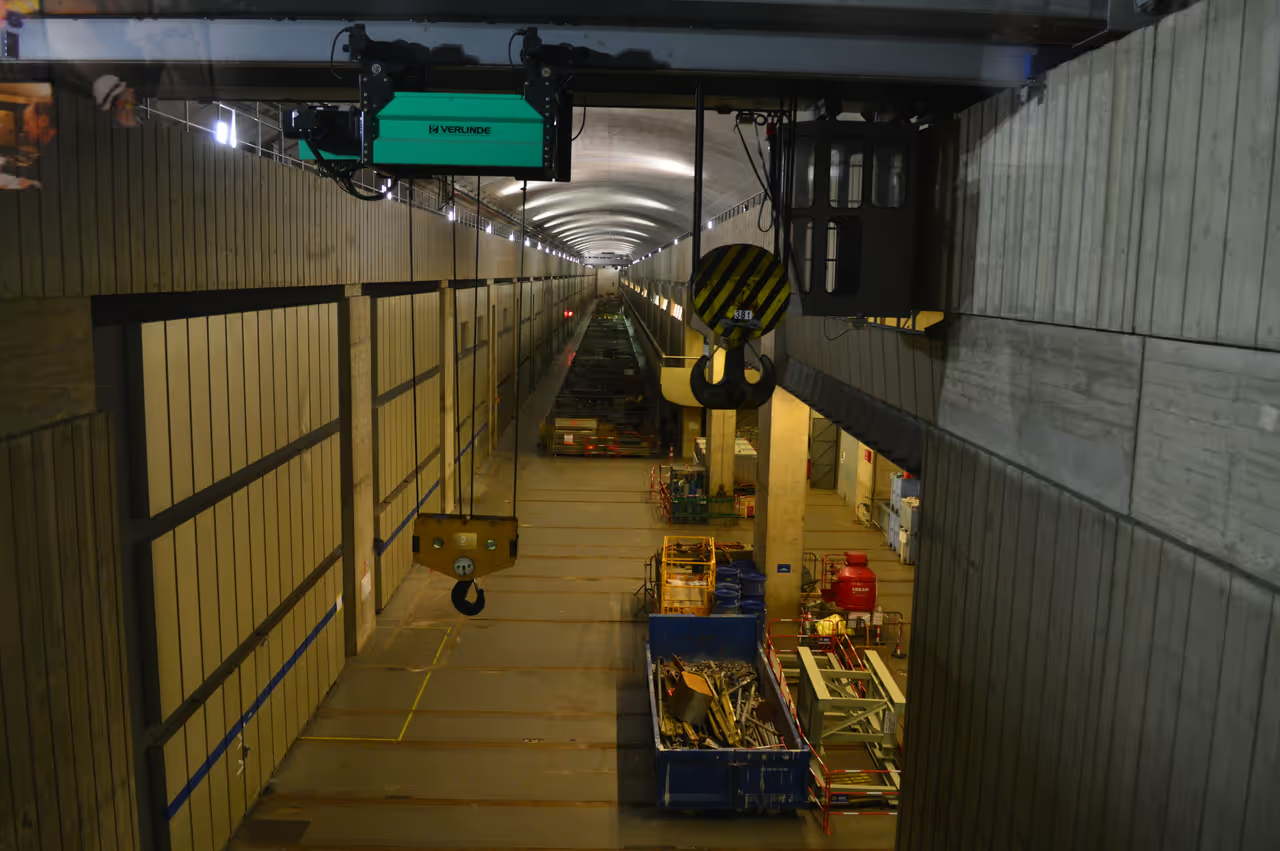
Step into the future of energy production at the Rance Tidal Power Plant, a pioneering marvel that harnesses the powerful tides of Brittany. For decades, this site held the title of the world's largest tidal power station, showcasing audacious French engineering and a commitment to renewable energy long before it became mainstream. Beyond its industrial might, the barrages serves a dual purpose, gracefully carrying a road bridge that connects Saint-Malo and Dinard, offering spectacular views of the Rance estuary. Discover the fascinating interplay between nature and innovation, observing how 24 reversible turbines silently convert the ocean's ebb and flow into electricity. It’s a place where history, technology, and stunning coastal landscapes converge, making for a truly unique and enlightening visit.
Videos
History of Rance Tidal Power Plant
The idea of harnessing the immense power of the Rance River's tides, amongst the strongest in the world, sparked imaginations long before any concrete plans. As early as the late 19th century, engineers proposed ambitious schemes to tap into this natural force. By 1921, Georges Boisnier's detailed study, "Utilisation de l'énergie des marées," laid a solid intellectual foundation, advocating for a large tidal plant on the Rance. However, the economic turmoil of the 1929 crisis stalled similar pioneering efforts, such as the one at Aber-Wrac'h, though its plans would later inform the Rance project. The true impetus came during the Second World War. In 1941, under the guidance of Robert Gibrat, who is celebrated as the father of tidal energy in France, the Société d'étude pour l'utilisation des marées (SEUM) was established. This company spearheaded a comprehensive research program aimed at designing a viable tidal power plant for the Rance estuary. The project was audacious, requiring unprecedented engineering solutions to tame the powerful 18,000 cubic metres per second currents that surged through the estuary. Construction began in January 1961, immediately facing the formidable challenge of creating dry working areas amidst these fierce tides. This led to the invention of 'caquots' – massive concrete cylinders used to build temporary coffer dams, a testament to French ingenuity. Once the estuary was successfully isolated, the construction of the power plant itself commenced in July 1963. Three years of intensive work culminated in the completion of the facility. The Rance Tidal Power Plant was formally inaugurated by French President Charles de Gaulle on 26 November 1966. This event marked a proud moment for France, showcasing its leadership in renewable energy technology and establishing the Rance as the world's largest tidal power station, a title it would hold for 45 years. The following year, the integral road bridge atop the barrage opened, and the plant was fully connected to the national grid, fulfilling its dual promise of clean energy and vital infrastructure. Today, the Rance Tidal Power Plant stands as a enduring symbol of innovative spirit and a functional landmark, constantly humming with the energy of the ocean's breath.
8 Events spanning 126 years
Fun Facts
- • An unfortunate side effect of the barrage is the progressive silting of the Rance estuary, which has transformed sandy beaches into mudflats and necessitates ongoing efforts to maintain navigability.
- • Despite its environmental impact in changing the estuary's ecosystem, the Rance estuary has been home to several common seals and even porpoises, with one seal, Josephine, residing there for two decades.
- • During construction, engineers used an innovative method involving concrete cylinders nicknamed 'caquots' to create coffer dams, resisting strong currents of up to 18,000 cubic metres per second.
- • Each of the four blades on the turbines weighs 2.6 tonnes, yet they are designed to rotate slowly enough (93 revolutions per minute) to allow most fish to pass through safely.
- • The Rance Tidal Power Plant held the title of the world's largest tidal power plant for 45 years, from its inauguration in 1966 until 2011.
- • The Rance Tidal Power Plant produces about 500 GWh of electricity annually, equivalent to the consumption of a city of 225,000 inhabitants, significantly contributing to Brittany's energy needs.
- • The barrage not only generates electricity but also functions as a road bridge, carrying the D168 departmental road between Saint-Malo and Dinard.
- • The cost of producing electricity from the Rance plant is approximately 0.018 euros per kWh, making it economically more competitive than nuclear power in France.
- • The plant is a popular tourist attraction, drawing over 70,000 visitors in 2006 to its museum, which explains the science and engineering behind tidal power.
- • The plant utilises 24 reversible bulb turbines, which can generate electricity from both incoming and outgoing tides, and can also pump water to enhance energy production during peak demand.
Rance Tidal Power Plant FAQ
While we strive to keep this information accurate and up to date, we recommend verifying any details independently before making decisions based on them.
Rance Tidal Power Plant Map & Neighborhood Explorer
This interactive map is centered on Rance Tidal Power Plant. Zoom in and move the map around to automatically discover Wikipedia photos and summaries of other nearby sights, monuments, and historical points of interest and stories in real-time!
Places near Rance Tidal Power Plant
Make the most of your trip. Check out these top-rated spots located nearby.
 906m
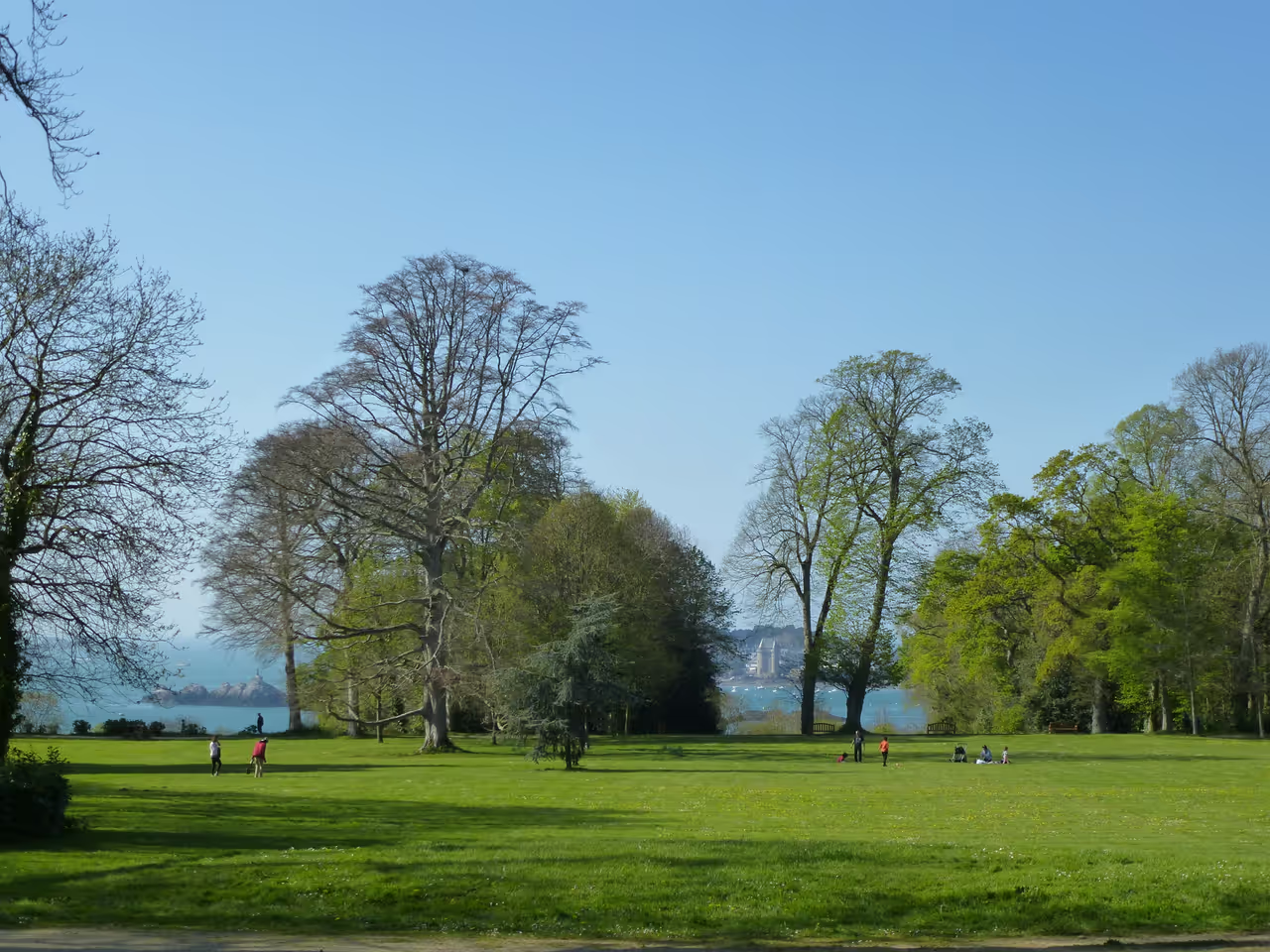
906mGrand Park of La Briantais
Perched high above the Rance estuary in Saint-Malo, the Grand Park of La Briantais unfolds across 27 hectares, offering truly commanding views that sweep across Saint-Malo Bay, the historic Solidor Tower, and the distant shores of Dinard. This extensive green space, a masterwork of 18th-century landscape design later refined, invites exploration through its thoughtful arrangement of plateaus and meandering paths, each turn revealing a new perspective. At its heart lies a rebuilt 17th-century château, giving the park a deeply rooted sense of history and aristocratic charm. Visitors can lose themselves among ancient trees, discover quaint garden follies like the Temple of Love, and wander through varied landscapes from manicured lawns to wilder woodlands. It's a peaceful sanctuary that brilliantly combines natural beauty with centuries of Breton heritage, an ideal spot for a leisurely afternoon.
park & nature view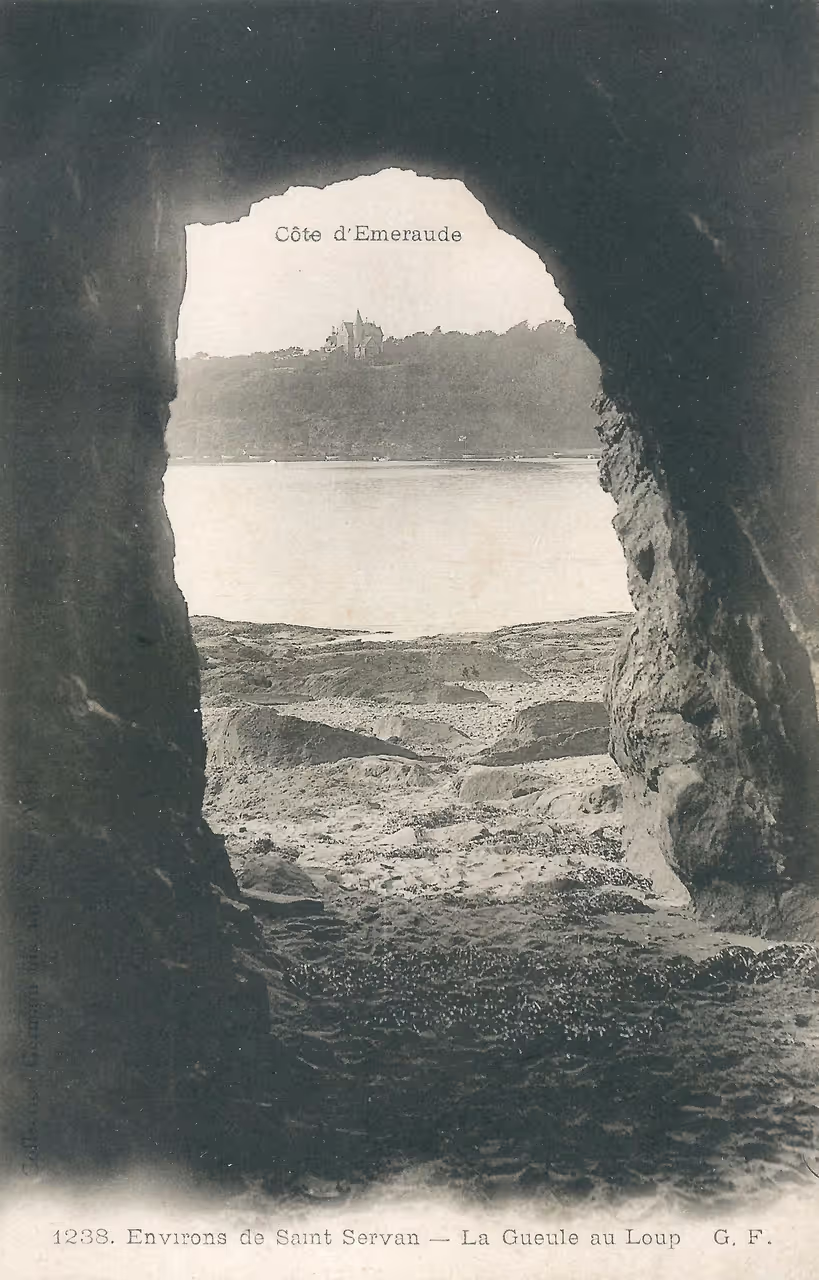 1364m
1364mWolf's Mouth Cave
Hidden along the rocky shoreline of the Aleth peninsula, this natural sea cave is entirely invisible from the main paths above. You can only access it by scrambling over the slippery, seaweed covered rocks during low tide. The entrance resembles a jagged jaw opening into the cliffside, hence the dramatic name. Standing inside, the acoustics amplify the sound of the ocean, creating a booming echo even when the water is calm. It is a completely raw, unmanaged natural feature.
hidden gem view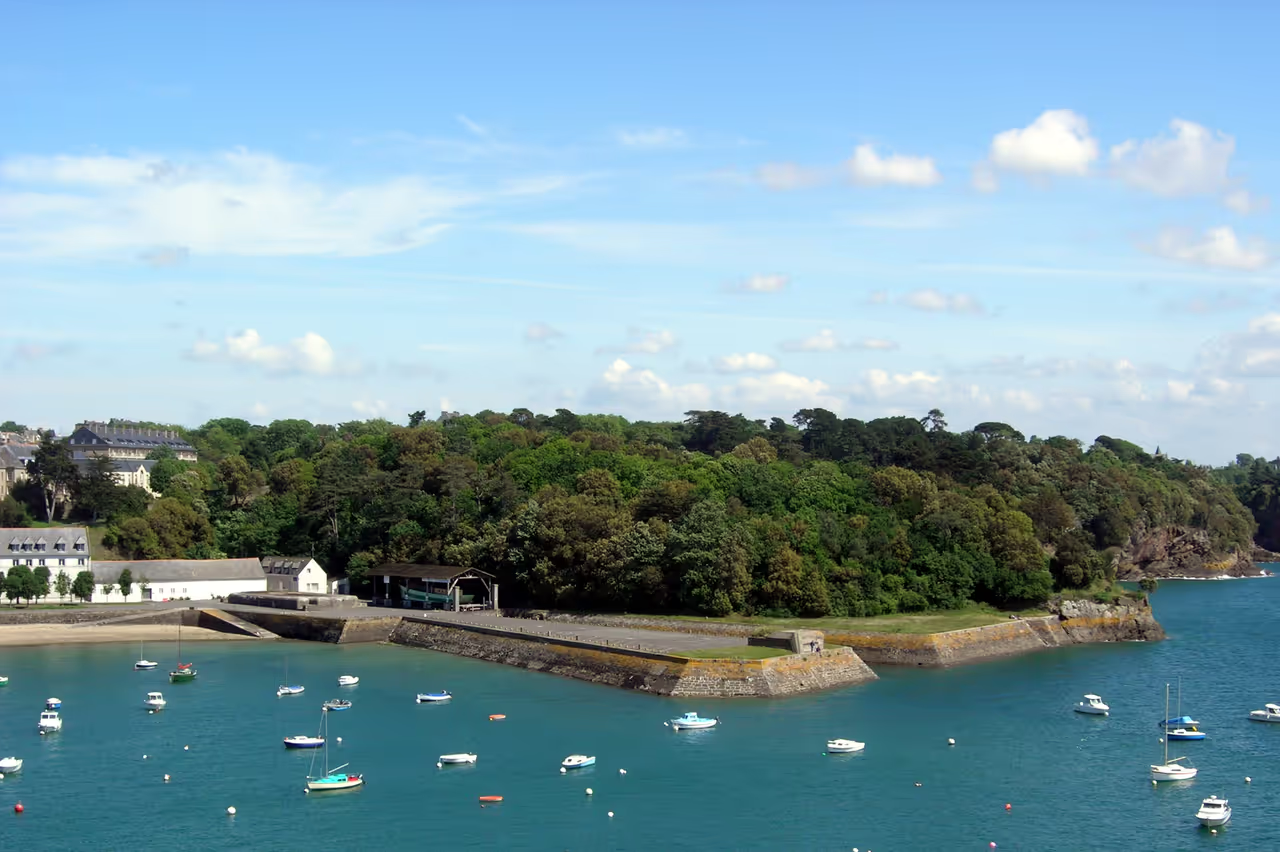 1699m
1699mAr Zenith Restored Vessel
Moored quietly near the Saint-Servan waterfront, this small wooden fishing boat looks unremarkable at first glance. However, it holds a significant place in modern French history. It was the very first vessel to answer General Charles de Gaulle's 1940 radio broadcast, smuggling young volunteers across the channel to join the resistance. Volunteers meticulously restored the hull in the 1990s, and it now opens for brief viewings during the summer. It is a quiet, powerful symbol of defiance sitting completely removed from the main tourist paths.
hidden gem view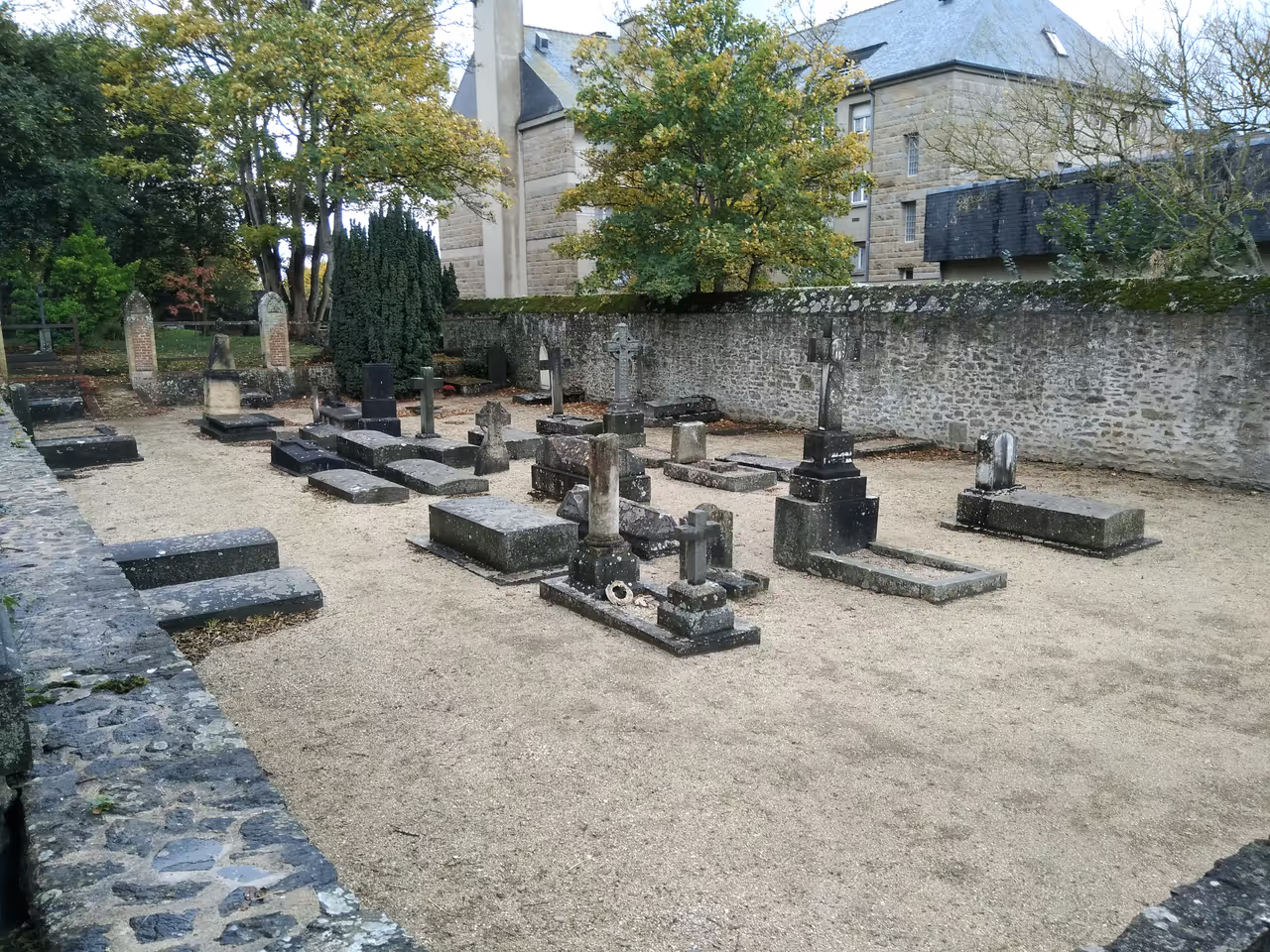 1776m
1776mJeanne Jugan Cemetery
Tucked away in the Saint-Servan district, this graveyard originally served as a burial ground for the poor. Today, it is a fascinating, chaotic mix of cracked stone tombs covered in moss and maritime history. You will find an entire section known as the English Square, dedicated to British expats who settled here in the 19th century. Walking among the overgrown graves reveals the resting places of famous admirals and prominent corsairs. It is far removed from the pristine, manicured tourist areas.
hidden gem view
Featured on These Itineraries and Routes
5 Days in Saint Malo: Emerald Coast Itinerary
A five day stay turns a city break into a comprehensive exploration of the surrounding Breton coastline. You will cover the essential historical sights within the walls, but also have time to push out into the rural landscapes. You will see bizarre cliff sculptures, cross the river to elegant seaside resorts, and stand in the shadow of massive tidal engineering. It is a varied, active plan that requires renting a bike or a car for the later days.
view itinerary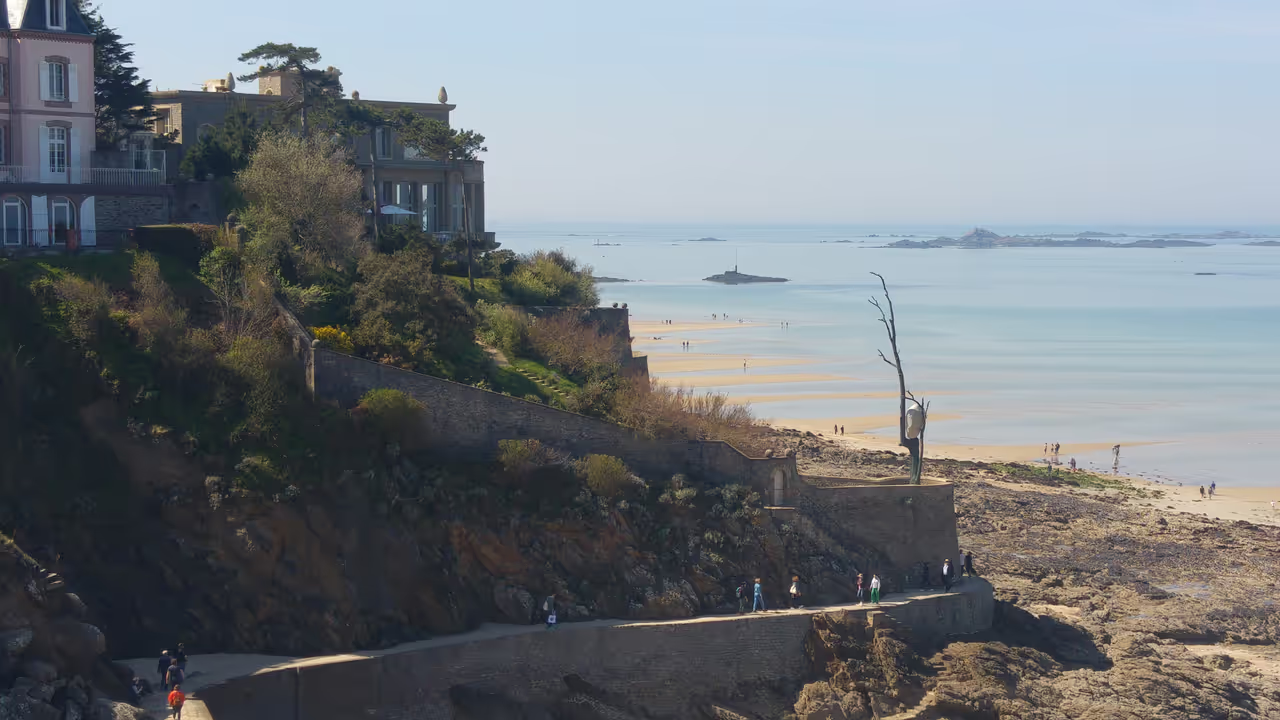
Rance Estuary to Dinard Ride
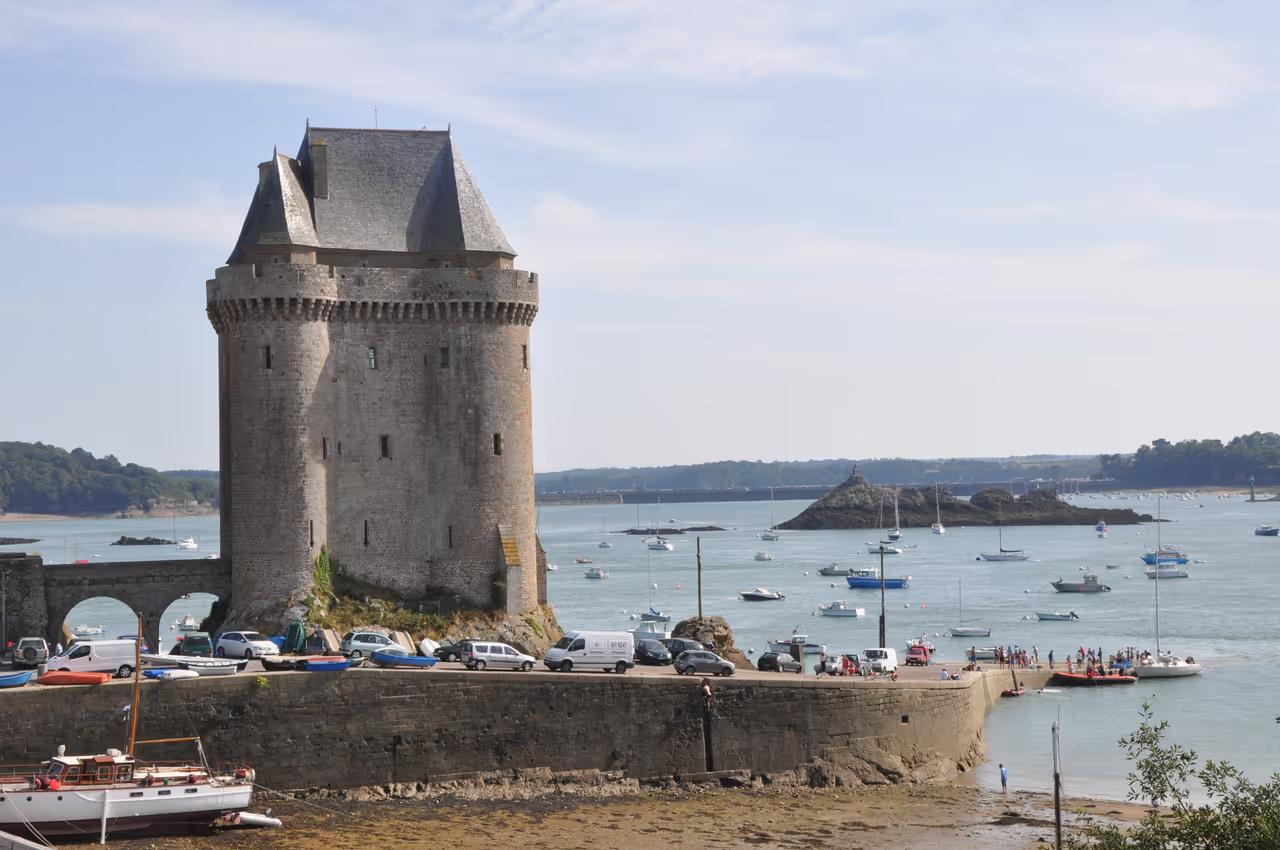
This route heads south out of the city, following the water down to the impressive engineering marvel of the tidal dam. Crossing the barrage places you on the opposite bank of the estuary, leading into the elegant resort town of Dinard. You will cycle past grand 19th century villas perched precariously on the cliff edges. The return journey offers sweeping views of the walled city standing solitary across the bay.
view cycling route
See all attractions in Saint-Malo
Ancient Ramparts of Saint-Malo, Fort National, Saint-Vincent Cathedral of Saint-Malo, Grand Aquarium, Grand Bé Island, Jacques Cartier Manor House and Museum, Solidor Tower...