Abbey of Saint-Victor
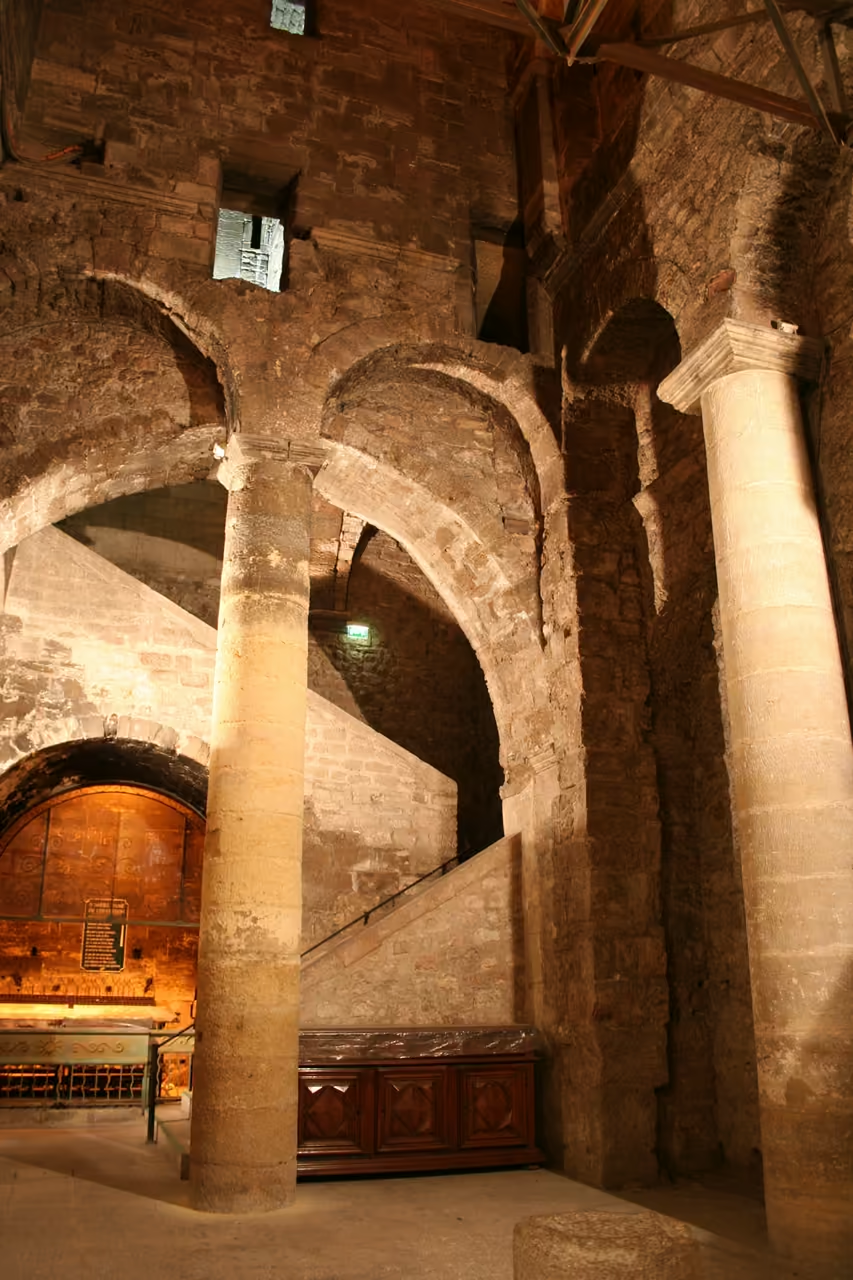
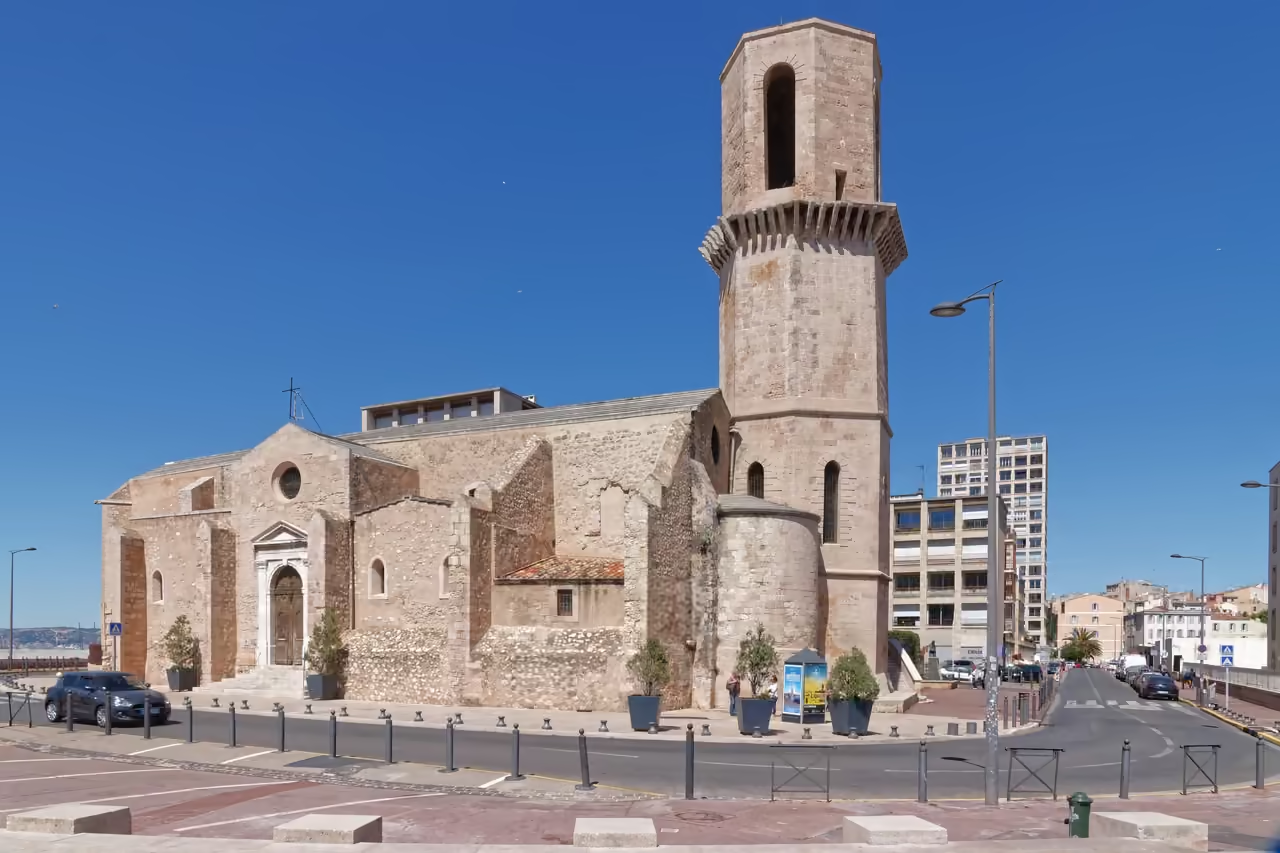
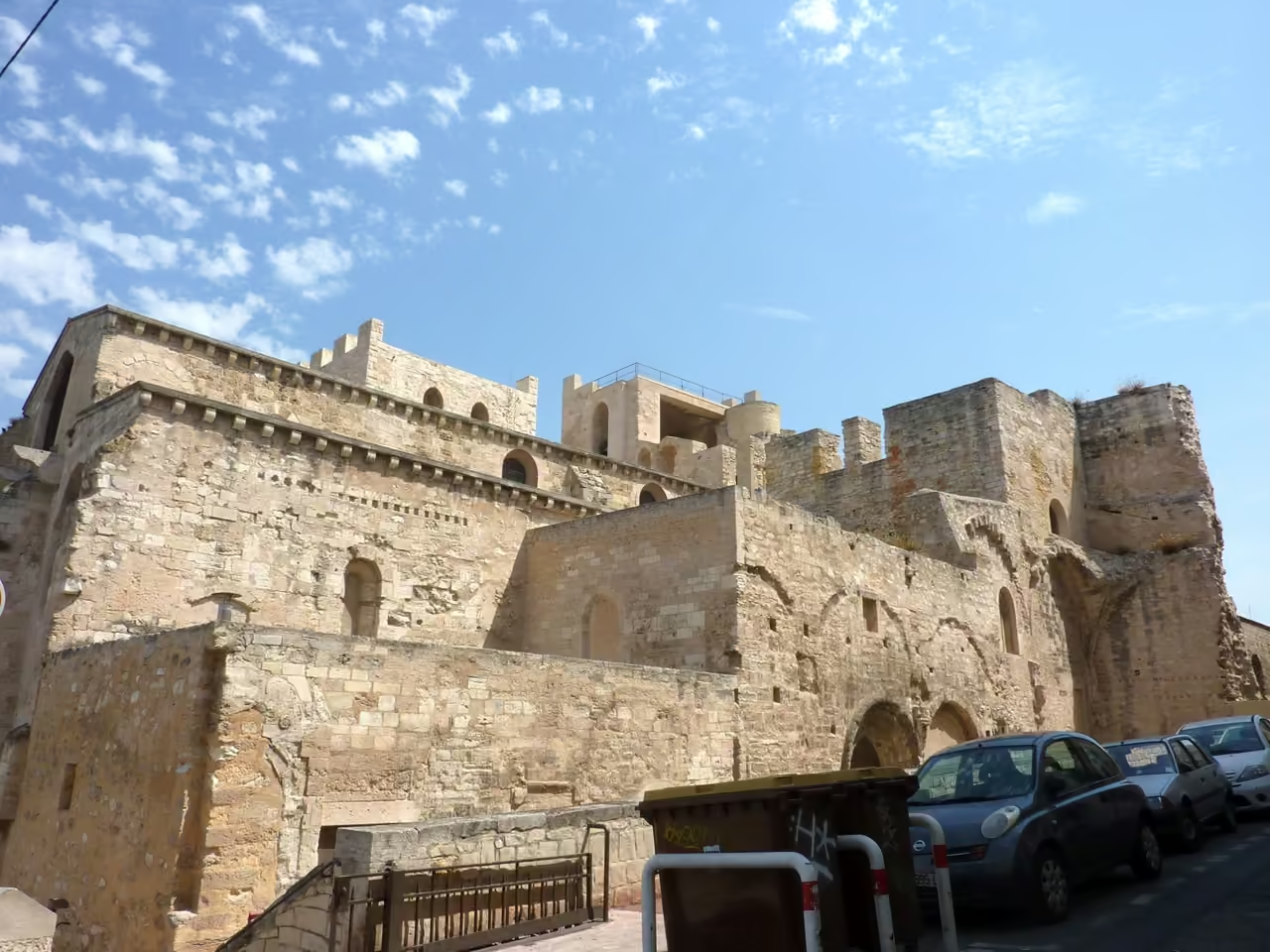
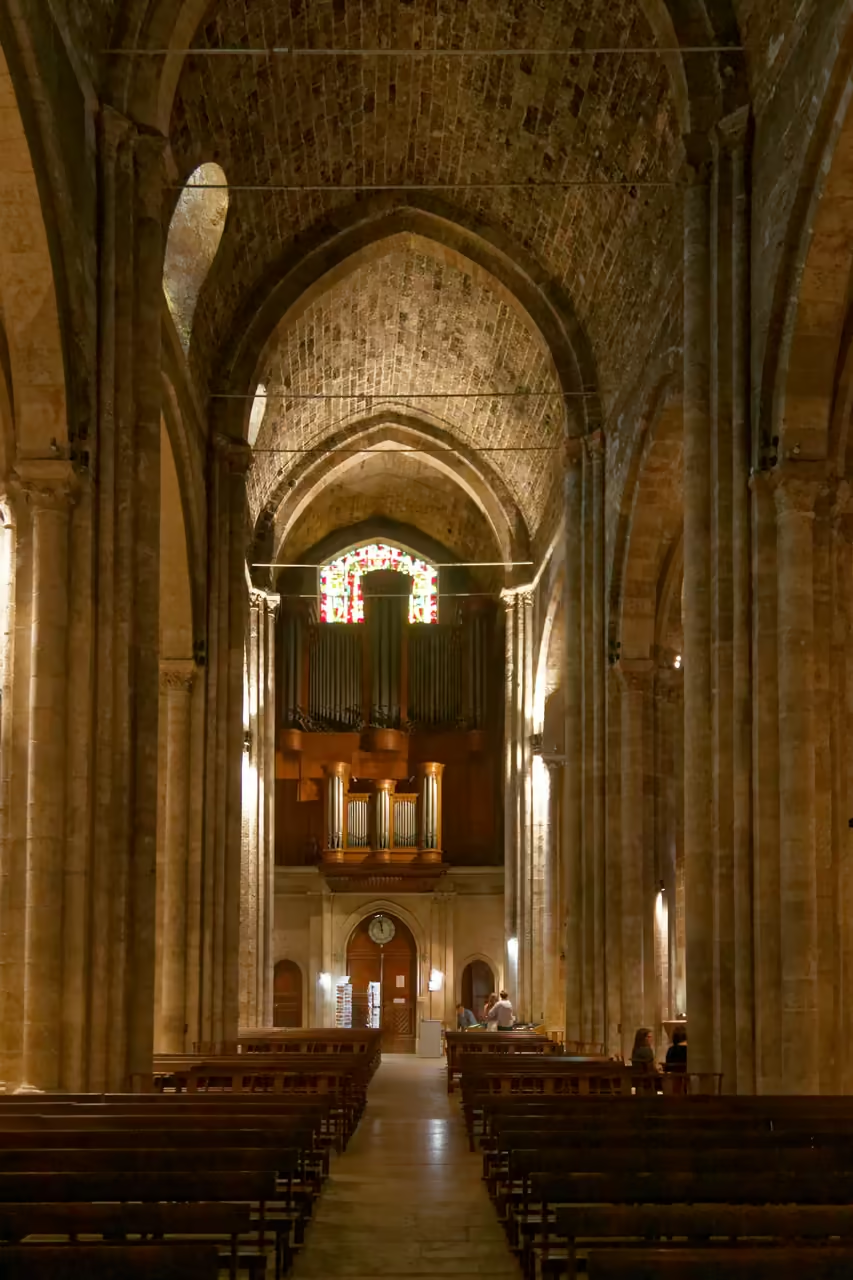
Perched above the Old Port's southern quay, the Abbey of Saint-Victor looks far more like a coastal fortress than a parish church. Crenellated buttresses and masonry walls over three metres thick still brace its flank along Rue Saint-Victor. Step inside beneath Isarn's tower, though, and the military severity gives way to pale stone arches and a towering tribune organ. The real draw waits down a narrow flight of stairs. Beneath the church floor, a dimly lit labyrinth of underground chapels holds carved fourth and fifth century sarcophagi, a floral mosaic, and a medieval walnut Black Virgin. Give your eyes a few seconds to adjust to the crypt glow after stepping out of the sharp Marseille sun. Come 2 February for Candlemas, locals pack the nave with green beeswax candles before heading up Rue Sainte for warm orange blossom navettes at Four des Navettes.
Videos
History of Abbey of Saint-Victor
Hellenistic quarrymen first carved this limestone slope south of Marseille's harbour, leaving behind deep open galleries that Greek and Roman residents later turned into a sprawling cemetery. Early Christians buried their dead here beside the graves of local martyrs, most famously Victor, a Roman military officer executed around the start of the fourth century. Near the end of that century, Bishop Proculus erected a sanctuary over the rock tombs to assert Marseille's ecclesiastical weight against its dominant neighbour, Arles. Then in 416, a monk named John Cassian arrived from Egypt and Palestine and upturned Western Christian custom. Rather than retreating to a remote island or mountain valley, he planted monastic life directly beside a busy Mediterranean port, composing foundational texts on communal discipline that Saint Benedict later urged his own followers to read. That early intellectual reputation faded during the turbulent sixth through ninth centuries, when Marseille's episcopal records went blank for generations and the monastery lost its independent estates. Fleets of Saracen raiders sacked and wrecked the sanctuary in 838 and again in 923, while Greek pirates ravaged the city in between, forcing Marseille's bishop to take refuge in Arles. Stability returned only in 972 after Count William of Provence drove the raiders out at La Garde-Freinet. Five years later, Bishop Honorat introduced the Rule of Saint Benedict to the abbey and eventually separated monastic revenues from his own diocese. Under abbots of the eleventh century like Isarn, followed by the brothers Bernard and Richard de Millau, Saint-Victor answered directly to the Pope in Rome rather than local bishops. Within generations, it commanded 440 churches and priories in the Marseille diocese alone, alongside estates stretching across Languedoc, Catalonia, Sardinia, and Castile, plus water privileges running all the way from Saint-Menet to the sea. Success bred friction as regional wars between the Counts of Toulouse and the Kings of Aragon choked off priory income during the late twelfth century, burying the abbey in debt. At the same time, Marseille's rising merchant class formed a civic commune in 1188 and chipped away at the monks' feudal monopolies over the next hundred years. Despite financial strain, Abbot Hugues de Glazinis launched a complete rebuild of the upper church in 1201, turning the earlier medieval chambers below into underground crypts over a construction campaign lasting until 1279. The abbey's final surge of architectural ambition came when Abbot Guillaume de Grimoard was elected Pope Urban V in 1362. Keen to fold the monastery into Marseille's coastal fortifications, he sent master mason Rastin in January 1363 to ring the choir and transept with defensive buttresses and turrets, returning in person in 1365 to inspect the completed stronghold. Fortified walls could not reverse the wider decline sparked by the 1348 plague, the Hundred Years' War, and eroding discipline within the cloister. When Catholic League troops and forces from Savoy clashed over Marseille in the late sixteenth century, the fortified abbey changed hands in armed fighting. Later royal attempts under Louis XIV in the 1660s to restore discipline by merging the house with the strict Congregation of Saint-Maur fell flat, leading Pope Clement XII to secularise the abbey into a chapter of canons in 1739. During the French Revolution, the state nationalised church holdings in 1790 and marked the building for demolition in 1794 because federalist assemblies had met inside. Relics were burned and treasures seized, yet the church escaped complete destruction largely because authorities repurposed it first as a prison for convicts and later as an army hay depot. Urban expansion in the nineteenth century cleared away the ruined cloisters and dormitories to drive through Avenue de la Corse and Rue de l'Abbaye, leaving the isolated church standing alone. Reopened for worship in 1804 and elevated to a minor basilica in 1934, the building regained its fourth and fifth century sarcophagi in 1968 when Mayor Gaston Defferre returned them from Château Borély, securing Saint-Victor's place as Provence's second largest repository of first millennium Christian art after Arles.
16 events spanning 1564 years
Fun Facts
15- 01
A priceless medieval library of theology, ancient classics, medicine, and science catalogued in 1374 later vanished without clear explanation, sparking a bitter nineteenth century scholarly feud in Marseille. Historians argued furiously over whether sixteenth century Abbot Giuliano de' Medici gifted the manuscripts to Queen Catherine de' Medici or whether Cardinal Richelieu acquired them instead.
- 02
Although Pope Urban V asked for his bones to be returned from Avignon and his successor Gregory XI commissioned a soaring monument seven metres tall in 1372, that funerary tomb disappeared around the end of the Ancien Régime. Only stone scars remain on the choir wall, while the recumbent effigy visible today is a 1980 cast copied from his cenotaph in Avignon.
- 03
Around 1803, Napoleonic prefect Charles-François Delacroix stripped the crypt's Atrium of its nine ancient marble and granite columns under the cover of carrying out structural repairs, scattering them across city gardens and crossroads. One of those salvaged pagan columns still stands on Rue d'Aubagne today, holding up a bust of the Greek poet Homer.
- 04
Before becoming an ordinary parish church, the fortress monastery served as a secure prison for Cardinal Jean Balue in April 1481. King Louis XI transferred the fallen royal adviser here after keeping him locked away for nearly twelve years at Château de Loches.
- 05
By 1708, Bishop Vintimille du Luc found that Saint-Victor's enclosure walls were practically defunct because wealthy monks rented houses in town so they could slip out to attend balls. After secularisation, a 1774 royal decree restricted its canon positions strictly to Provençal noblemen who could prove four aristocratic ancestors.
- 06
During the Revolutionary confiscations of 1794, the fourteenth century walnut Black Virgin escaped destruction only because a municipal official named M. Laforêt bought her at auction and safeguarded her while her ceremonial robes and jewels were dispersed. Crowds carried her back to Saint-Victor in procession on 20 May 1804.
- 07
During the Western Schism, Aragonese antipope Benedict XIII fled Avignon and moved his entire papal court inside Saint-Victor twice, in 1404 and 1407. Playing host to a displaced pontiff and his entourage for months at a stretch nearly emptied the abbey's treasury.
- 08
For centuries, the Chapel of Saint Andrew held a diagonal cross containing relics of Saint Andrew that a crusader knight had looted from Patras in Greece during the Fourth Crusade. In January 1980, Marseille's Cardinal Roger Etchegaray formally returned the relic to the Greek Church, receiving an icon of the saint in gratitude.
- 09
Found inside the crypt's former sacristy in 1839, a broken marble plaque bearing a Christian anchor symbol and the names Volusianus and Fortunatus still divides historians. Depending on how scholars reconstruct its missing edges, the stone either honours two third century martyrs executed under Emperor Decius or merely commemorates two drowned sailors.
- 10
In 1193, Marseille citizens anxious about rival noble claims from Arles stormed the abbey, dragged out Abbot Roncelin, and installed him as Viscount of Marseille. Embracing secular life, Roncelin promptly got married and ignored church disapproval until Pope Innocent III excommunicated him in 1209, forcing him to renounce his wife and hand his entire personal fortune back to the monastery in 1212.
- 11
In another bid for eleventh century prestige, monks deliberately blurred the identity of Lazarus of Aix, a fifth century bishop and companion of John Cassian, with the biblical Lazarus of Bethany. By fusing the two men into one figure, the abbey claimed the friend of Jesus as Marseille's very first bishop.
- 12
Marseille's famous hilltop basilica, Notre-Dame-de-la-Garde, owes its existence to an abbey property lease. In 1214, a local priest named Master Pierre had to ask Saint-Victor's abbot for permission to plant vines, grow a garden, and build a small chapel to the Virgin Mary on La Garde hill, which belonged to the monks.
- 13
To assert supremacy over neighbouring Arles in the eleventh century, Saint-Victor's scribes tampered with the text of a papal consecration charter attributed to Benedict IX. They inserted the grand title Secunda Roma, or Second Rome, to cast Marseille as Western Christendom's premier ancient see.
- 14
When Marseille's catastrophic 1720 plague broke out, Saint-Victor's monks departed starkly from the conduct of other local clergy by bricking up every opening in their monastery walls. Safe behind sealed stone, they sent out modest alms and messages announcing they were praying for the city.
- 15
While reinforcing a nave pillar in 1970, workers unearthed a yellowish travertine sarcophagus sculpted with the sacrifice of Abraham and containing a rare forensic time capsule. Scientists studying the skeleton identified a young woman in her twenties who had survived childhood polio in her right leg and was buried in silk threaded with gold, wearing a leaf crown, costly incense, and a gold cross on her forehead.
FULL PLACE DETAILS
Updated
FULL PLACE DETAILS
UpdatedARCHITECTURE & HERITAGE
- Heritage Status
- Classified Historical Monument
- Architectural Styles
- GothicRomanesque
WEB & AMENITIES
Abbey of Saint-Victor Map & Neighborhood Explorer
This interactive map is centered on Abbey of Saint-Victor. Zoom in and move the map around to automatically discover Wikipedia photos and summaries of other nearby sights, monuments, and historical points of interest and stories in real-time!
Abbey of Saint-Victor FAQ
Entering the upper basilica is free, as Saint-Victor remains an active Catholic parish church open for visitors and worshippers alike. Descending the stairs beneath the organ into the subterranean crypts and the sarcophagus collection requires buying a modest entry ticket at the desk inside the church.
Its heavy crenellated buttresses and walls over three metres thick along Rue Saint-Victor date back to the 1360s, when Pope Urban V (a former abbot of the monastery) transformed the choir and transept into part of Marseille's coastal defence system. Because the abbey controlled the rocky ridge overlooking the entrance to the Old Port, the church doubled as an armed bastion guarding the southern shoreline.
Beneath the church nave lies a stone maze built over an ancient Hellenistic quarry and Roman necropolis, displaying one of Provence's richest collections of early Christian stone carvings. Highlights include fourth and fifth century marble sarcophagi moved back from Château Borély in 1968, the tombstone of eleventh century Abbot Isarn, a rare thirteenth century fresco of medieval masons at work, a fifth century floral mosaic, and the walnut Black Virgin.
Candlemas, known locally as the Chandeleur, is Marseille's liveliest annual tradition centred on the abbey. The fourteenth century Black Virgin is carried up from the crypt into the main church for a procession, parishioners light green beeswax candles tied to ancient Provençal custom, and crowds head up Rue Sainte to buy orange blossom navettes biscuits shaped like tiny boats from Four des Navettes.
The abbey stands on Place Saint-Victor at the meeting point of Rue Sainte and Rue de l'Abbaye, roughly a ten minute uphill walk from Quai de Rive Neuve on the south bank of the Old Port. Local buses also climb the hill from the harbourfront, making it easy to pair the church with a stroll toward Palais du Pharo or up toward Notre-Dame-de-la-Garde.
Reaching the crypt chambers themselves requires descending a stone staircase beneath the organ at the west end of the nave, so wheelchair access is limited to the upper church entered through the tower porch. However, visitors staying on the main floor can look down into the southern side of the crypt from a wooden viewing walkway along the south aisle that overlooks Saint Blaise's chapel and the Atrium.
A typical visit takes about 1 hour. We recommend planning your schedule accordingly to make the most of your time there.
The closest place to visit near Abbey of Saint-Victor is Fort Saint-Nicolas Citadel Ramparts, around 157 m away. Other things to do near Abbey of Saint-Victor include Traditional Savon de Marseille Soap Workshops (433 m), Old Port of Marseille (629 m) and Fort Saint-Jean (673 m). All of these are within roughly 673 m of Abbey of Saint-Victor, close enough to walk.
Abbey of Saint-Victor holds the following heritage designation: Classified Historical Monument.
Abbey of Saint-Victor was built in the Gothic style.
While we strive to keep this information accurate and up to date, we recommend verifying any details independently before making decisions based on them.
Places near Abbey of Saint-Victor
Make the most of your trip. Check out these top-rated spots located nearby.
 157m
Fort Saint-Nicolas Citadel Ramparts
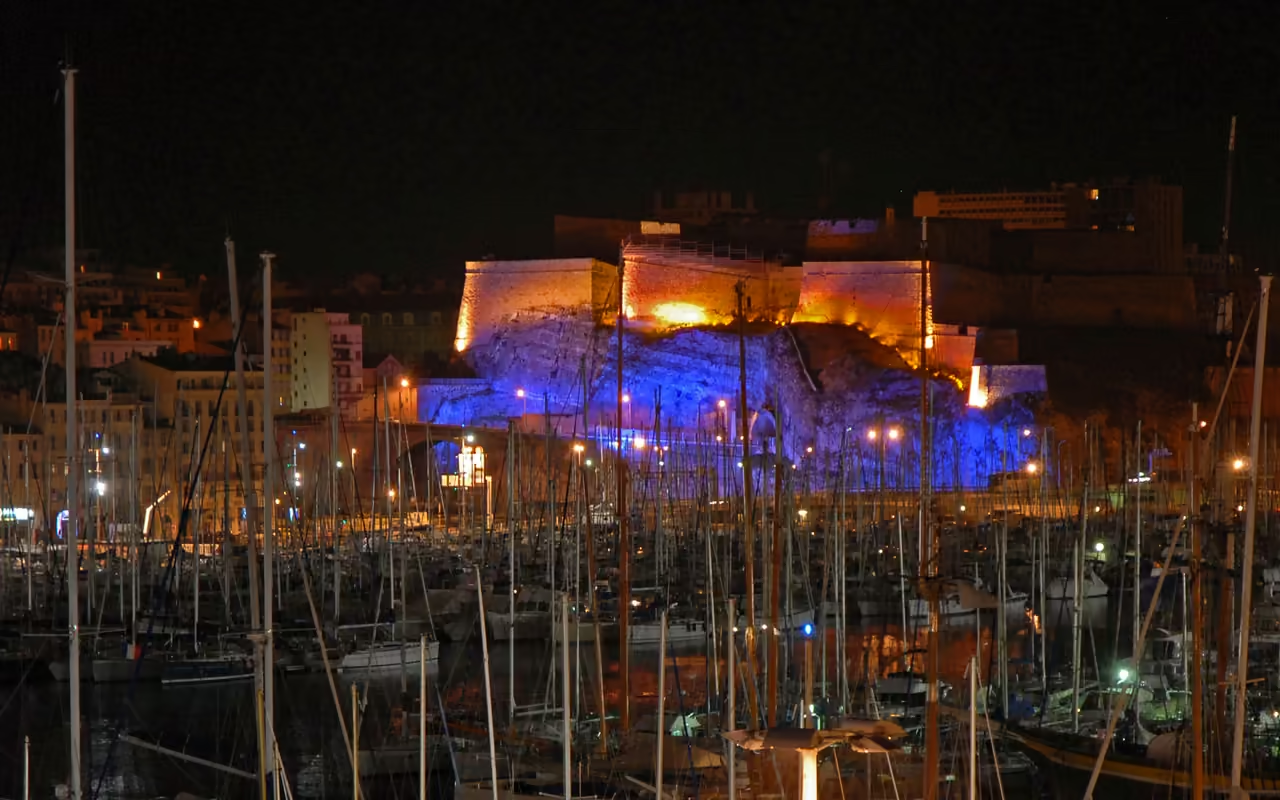
Guarding the southern entrance of the harbour since 1660, the dramatic star-shaped bastions of Fort Saint-Nicolas glow warm ochre above the water. Stand along Boulevard Charles Livon to capture sharp stone bastions stepping down into dark Mediterranean chop.
photo spot view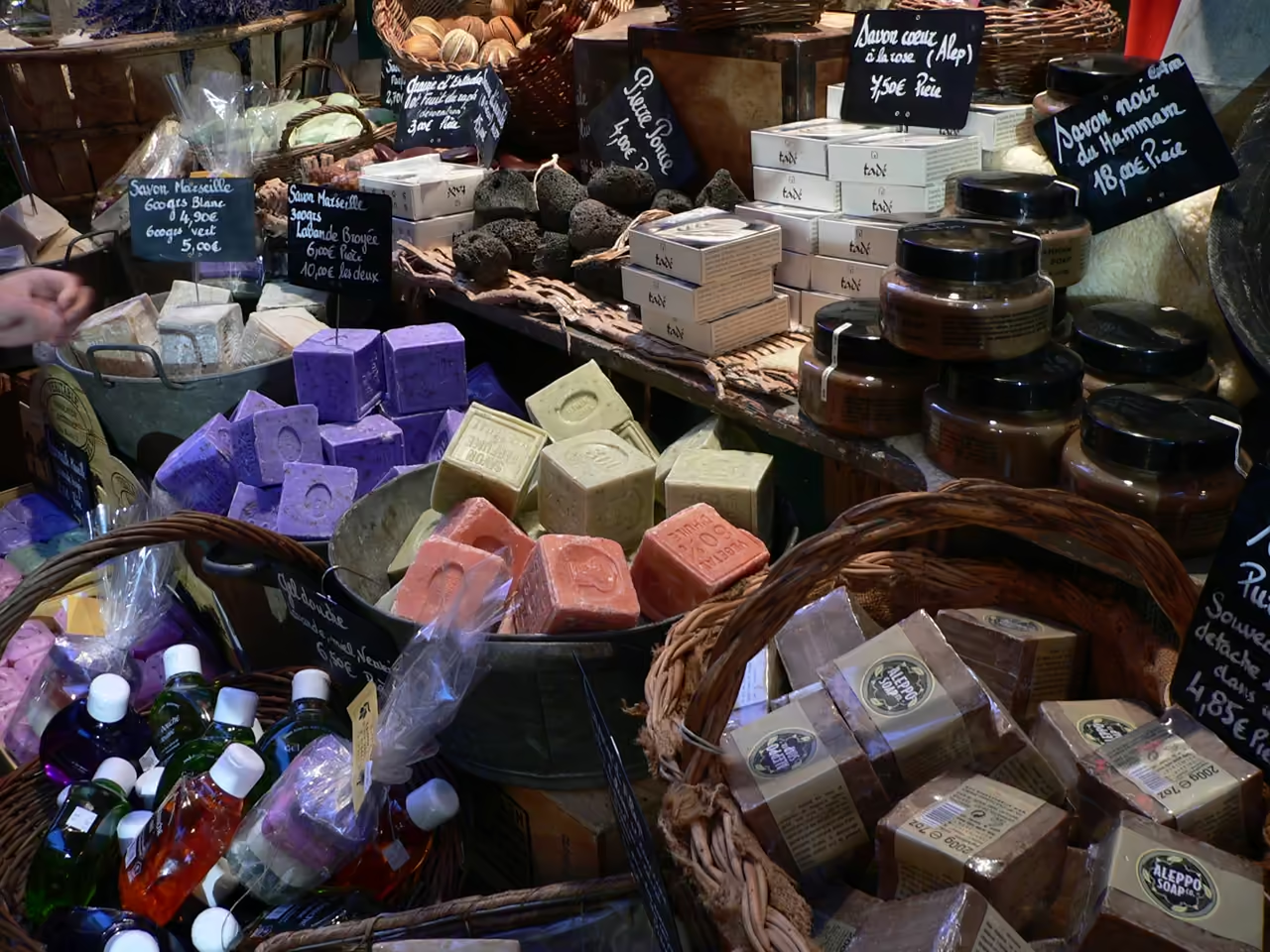 433m
Traditional Savon de Marseille Soap Workshops
Marseille's centuries-old olive-oil soapmaking heritage endures inside a handful of working northern factories and waterfront ateliers along Quai du Port. Authentic unbleached green or beige cubes carry a '72% d'huile' stamp certifying pure vegetable-oil cooking in giant cauldrons without synthetic perfumes. Step into La Licorne soap museum or harbourfront workshops to watch hot paste stamped by hand.
highlight view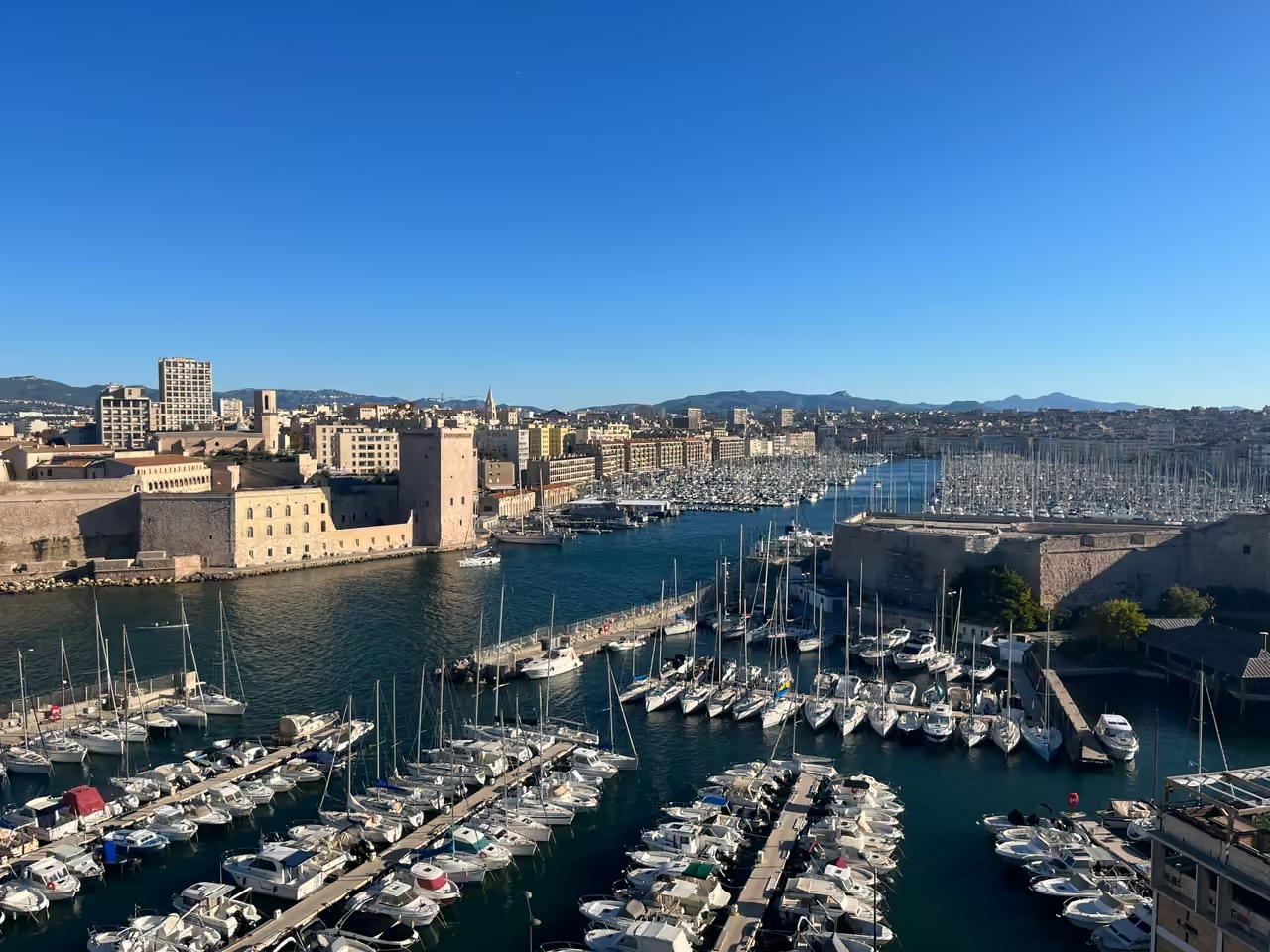 629m
Old Port of Marseille
Follow the cry of gulls down La Canebière and Marseille opens straight onto salt water. It hits you all at once. On Quai des Belges each clear morning, fishermen haul crates of glistening scorpionfish and sea bream right beside Norman Foster's mirrored stainless canopy, L'Ombrière, where crowds watch themselves walking upside down across the steel ceiling. Around a basin covering 24 hectares, traditional wooden pointus bob beside sleek racing yachts, framed at the harbour entrance by twin stone forts while Notre Dame de la Garde watches from the southern ridge. Dodging distracted tour groups by the Metro escalators takes a moment of patience at midday, yet the broad granite promenade clears quickly along Quai de Rive Neuve, where a former 1909 fish hall now hosts La Criée theatre. Board a boat shuttle out toward the Château d'If, or grab an espresso on Quai du Port and wait for pink dusk light to catch the limestone facades as island ferries slip quietly back past the jetty.
attraction view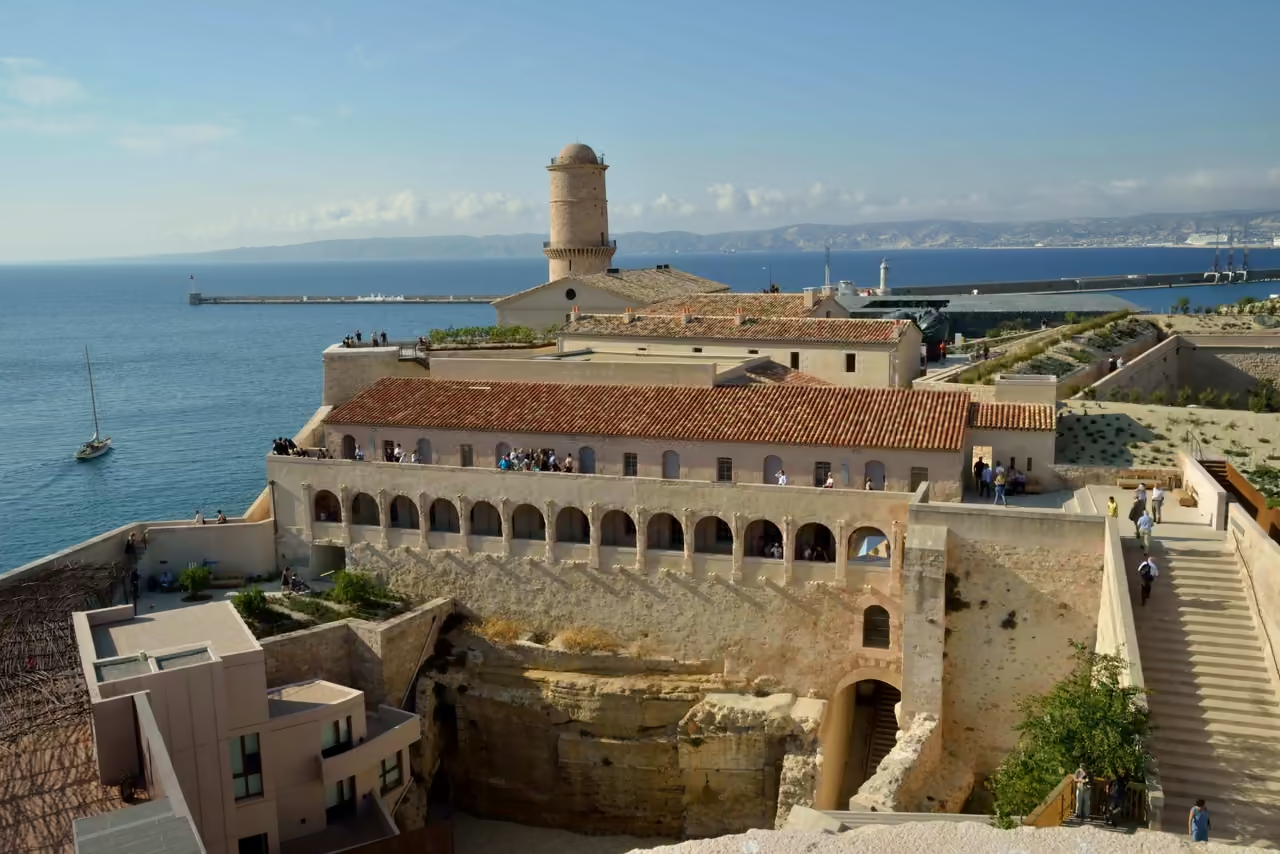 673m
Fort Saint-Jean
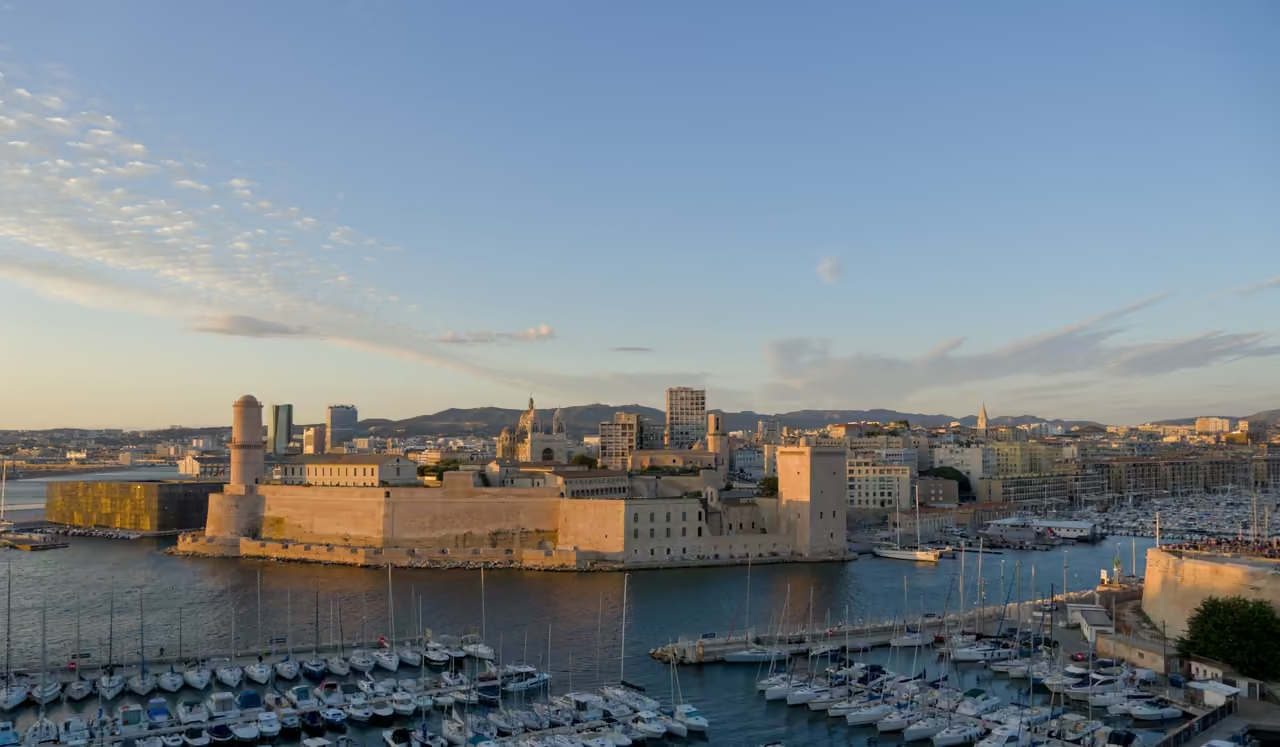
Guarding the northern jaw of the Vieux-Port, Fort Saint-Jean looks straight across a narrow channel at its southern rival, Fort Saint-Nicolas. Skip the uphill climb from the waterfront quays if you fancy an easier arrival. You can walk straight onto the upper ramparts across a pedestrian bridge from the square outside Saint-Laurent Church in Le Panier, or cross 19 metres above the harbour dock along the concrete walkway linking the fort to architect Rudy Ricciotti's MuCEM pavilion. Inside the walls, the cobbled tunnel of the Montée des Canons slopes upward past the Officers' Gallery to the sunlit chemin de ronde, where holm oaks, orange trees, myrtle, and wild herbs scent the salt breeze. Hang onto your sunglasses when the Mistral sweeps off the Gulf of Lion, as the exposed ledges beside the round Tour du Fanal turn brisk on gusty afternoons. Climb the 147 spiral steps inside the square Tour du Roi René, stepping onto its open artillery terrace just as ferries glide past the stonework below.
attraction view
Explore Similar Places in This Collection
Featured on These Itineraries and Routes
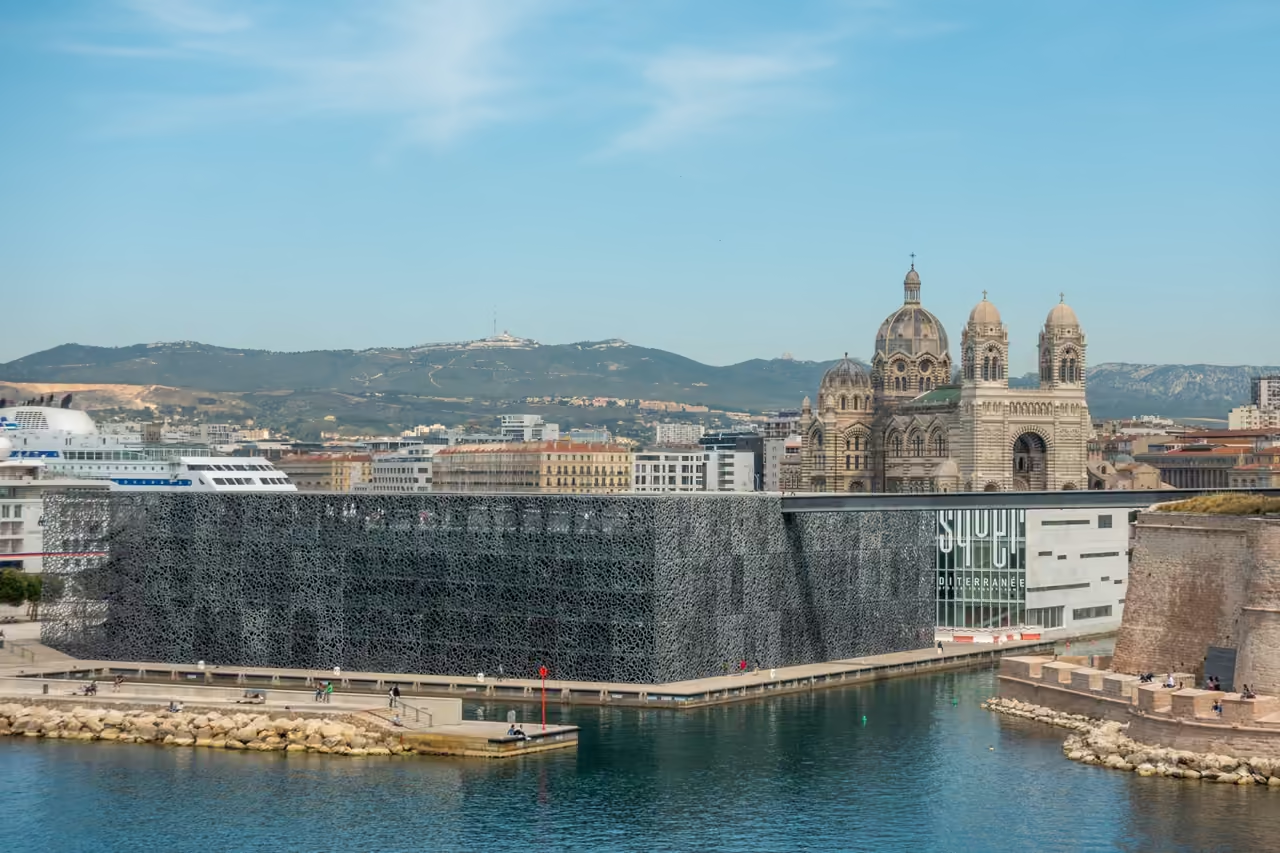
3 Days in Marseille: Sea, Culture & Calanques Break
Pair Marseille's harbour museums and island fortresses with a full coastal exploration of the Calanques National Park, Parc Borély, and bohemian street-art squares.
view itinerary
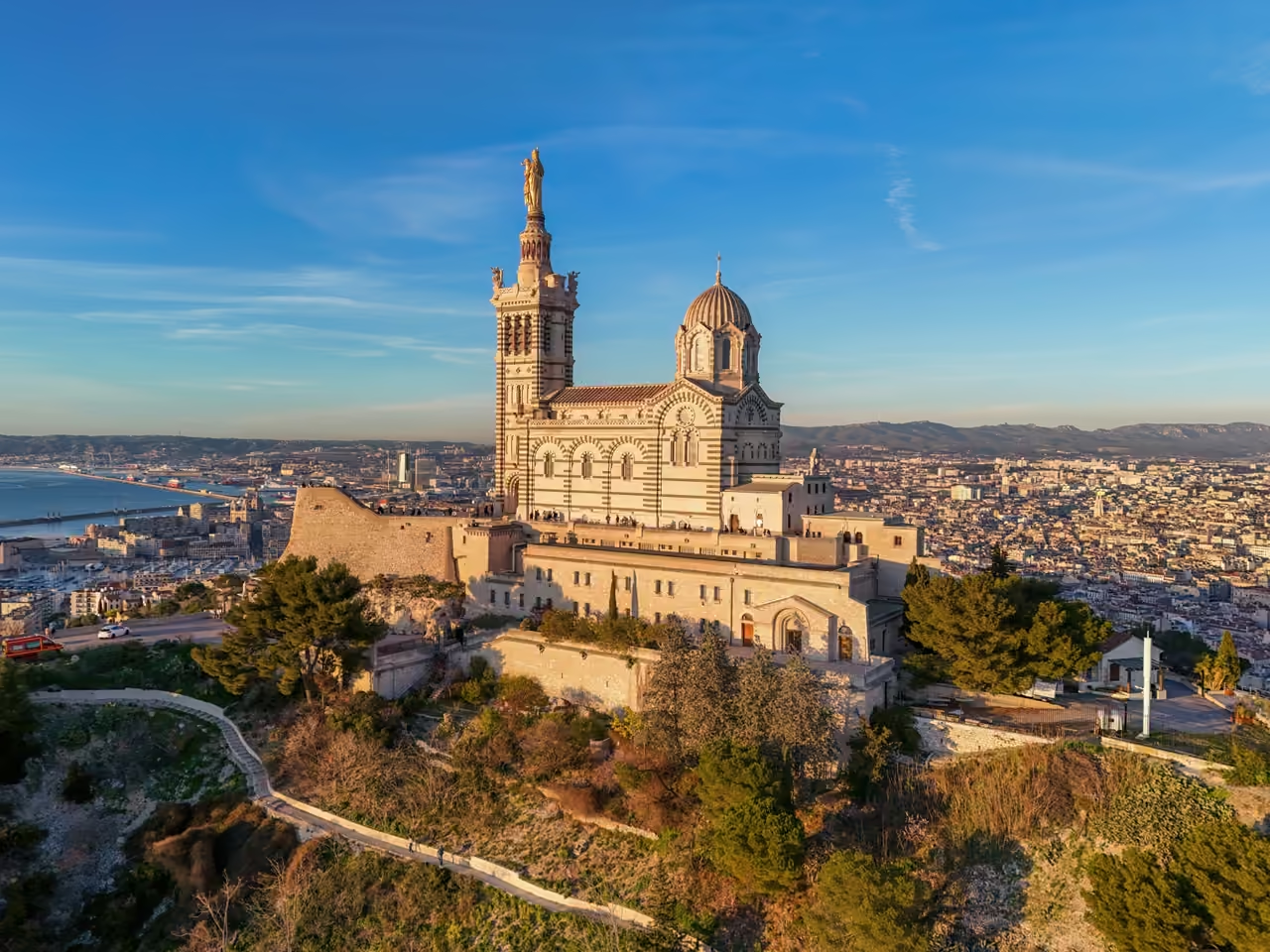
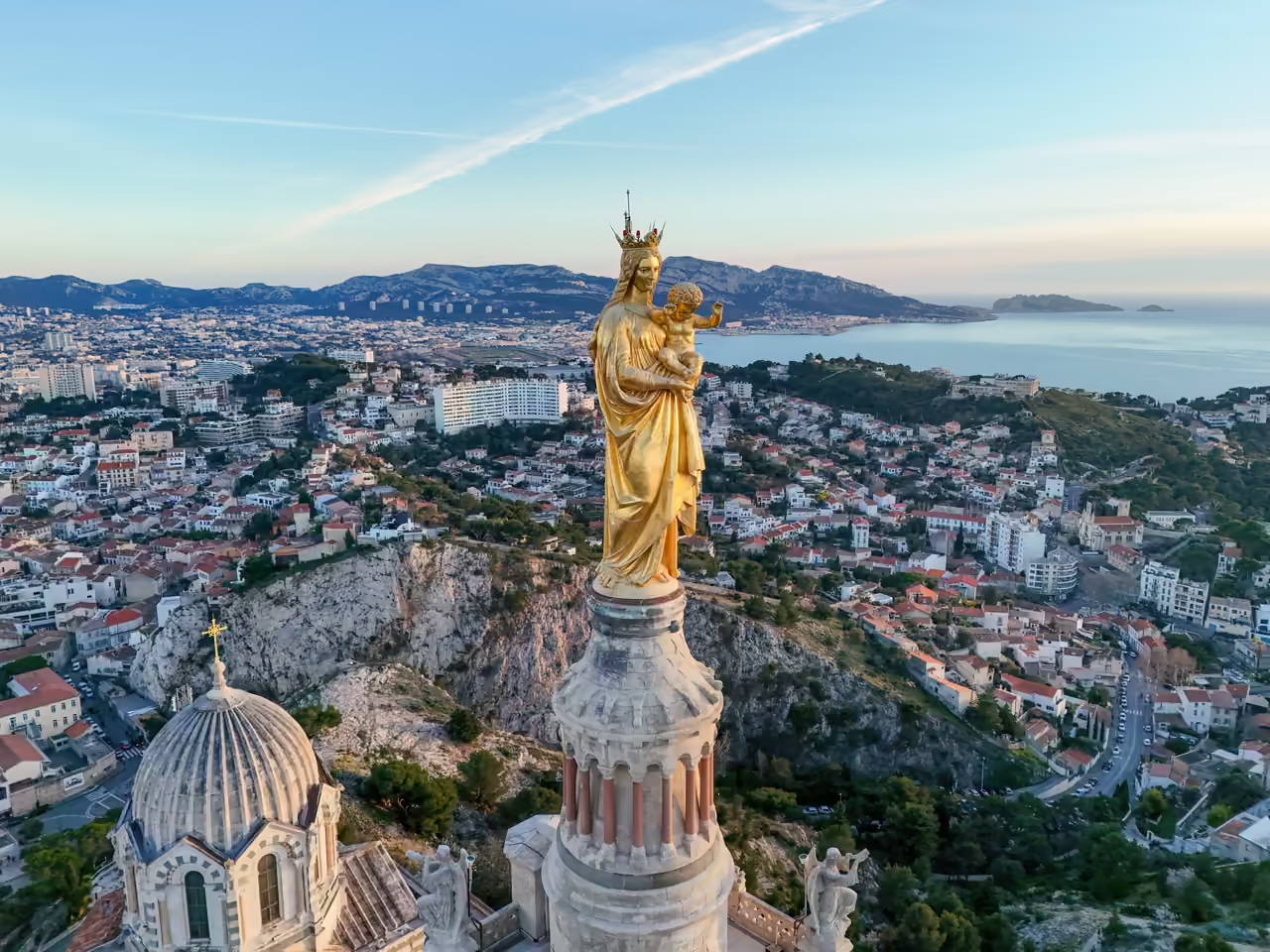
Old Port to Notre-Dame-de-la-Garde Hilltop Walk
Ascend gently from Marseille's southern harbour quays past ancient catacombs, warm biscuit ovens, and quiet hillside gardens straight to the city's golden basilica summit.
view walking route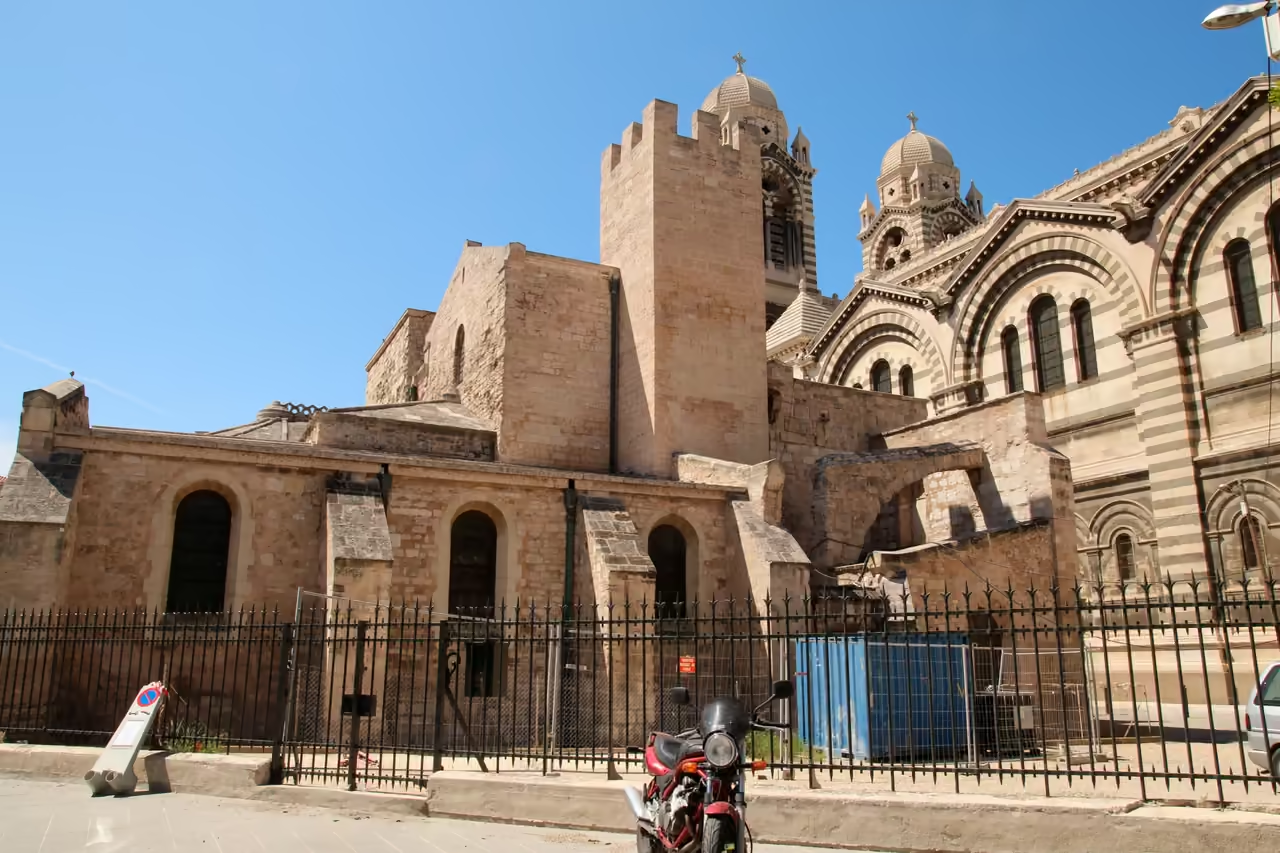
2,600 Years of Massalia: Ancient & Medieval Marseille
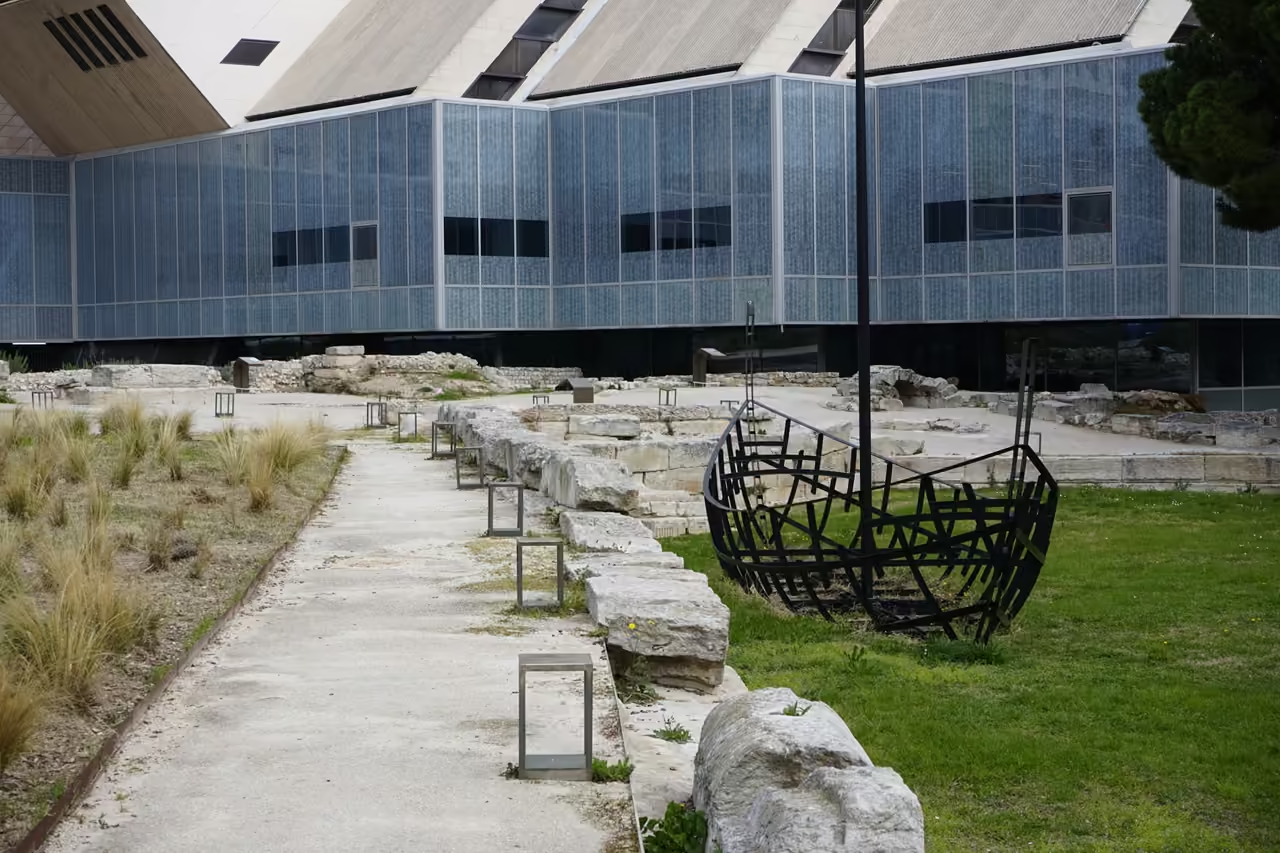
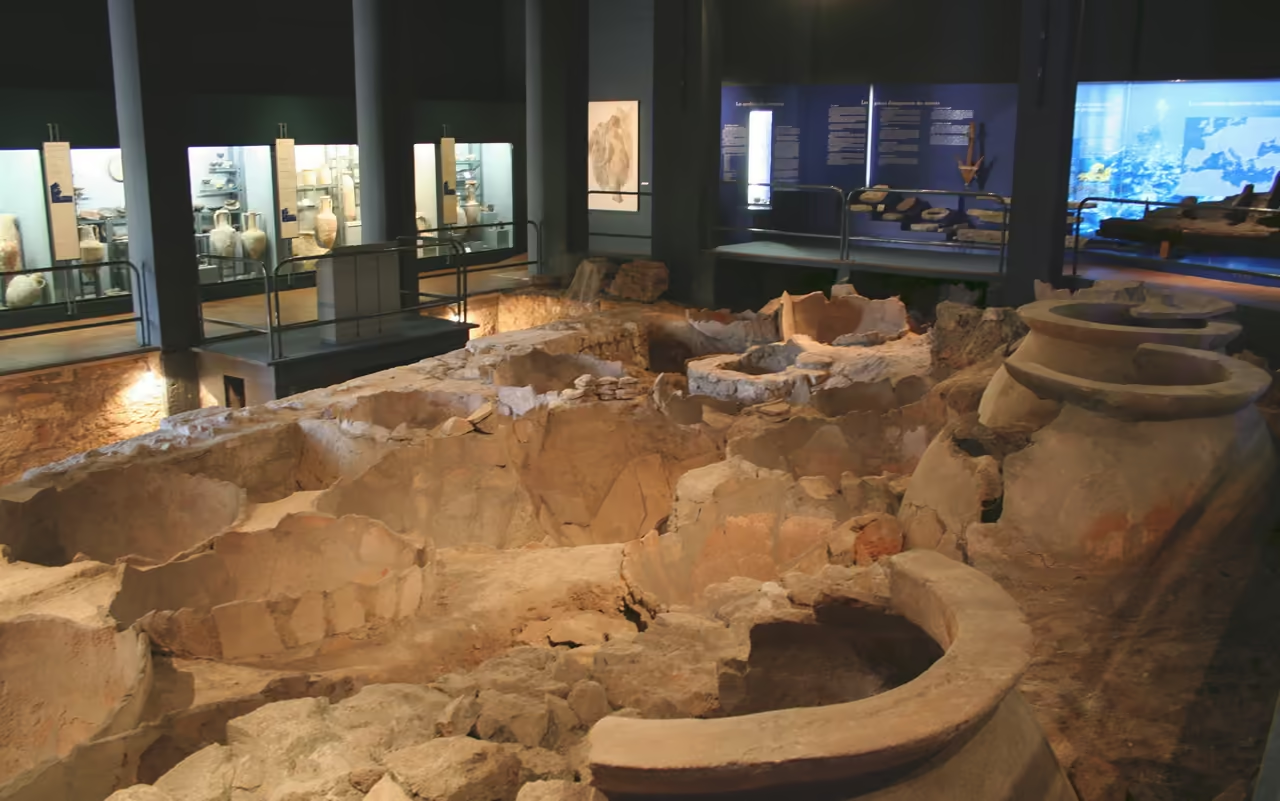
Trace Marseille's origins from sixth-century-BC Greek port walls and Roman storage jars to early Christian crypts and striped medieval stone cathedrals.
view self-guided tour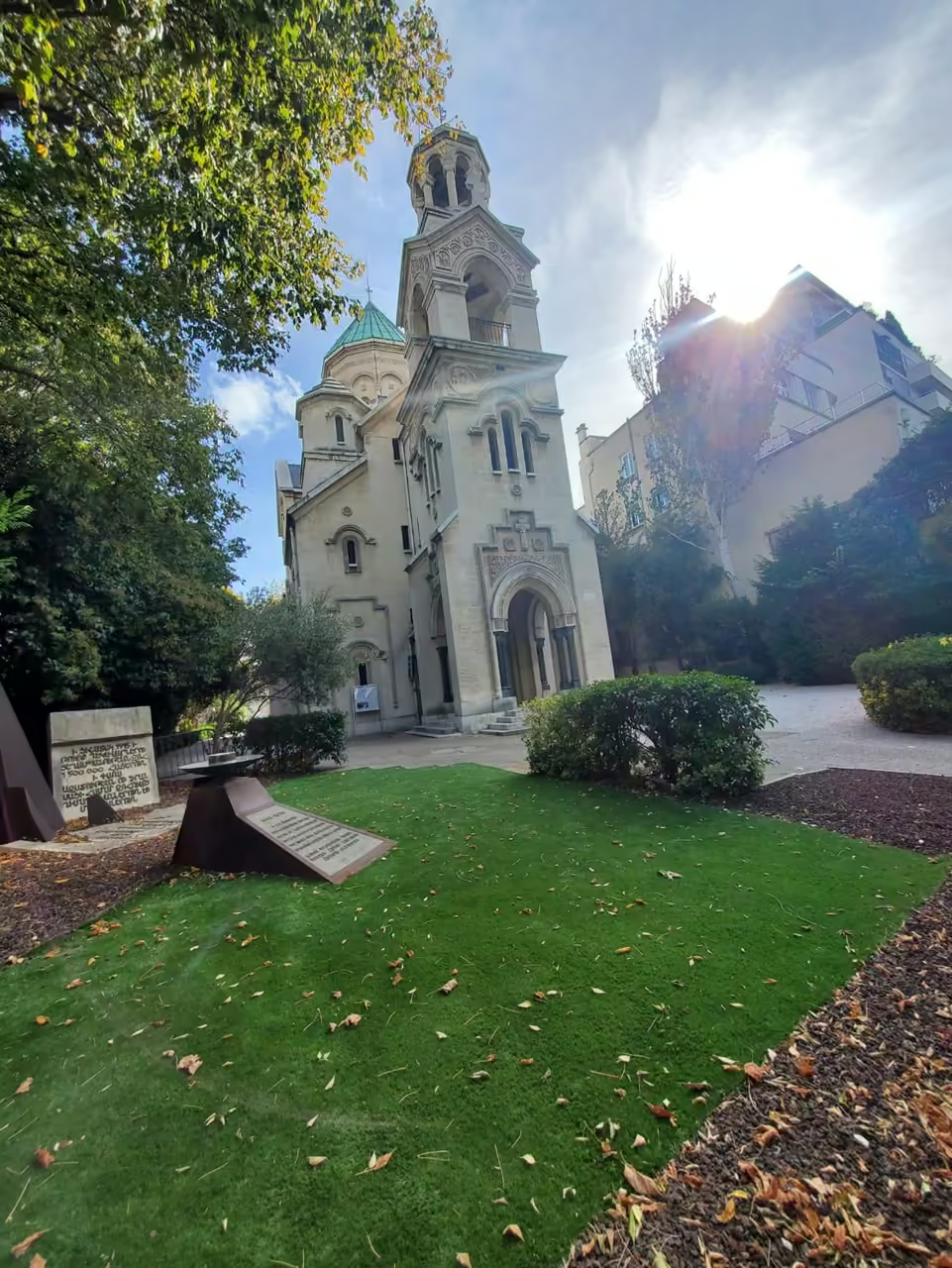
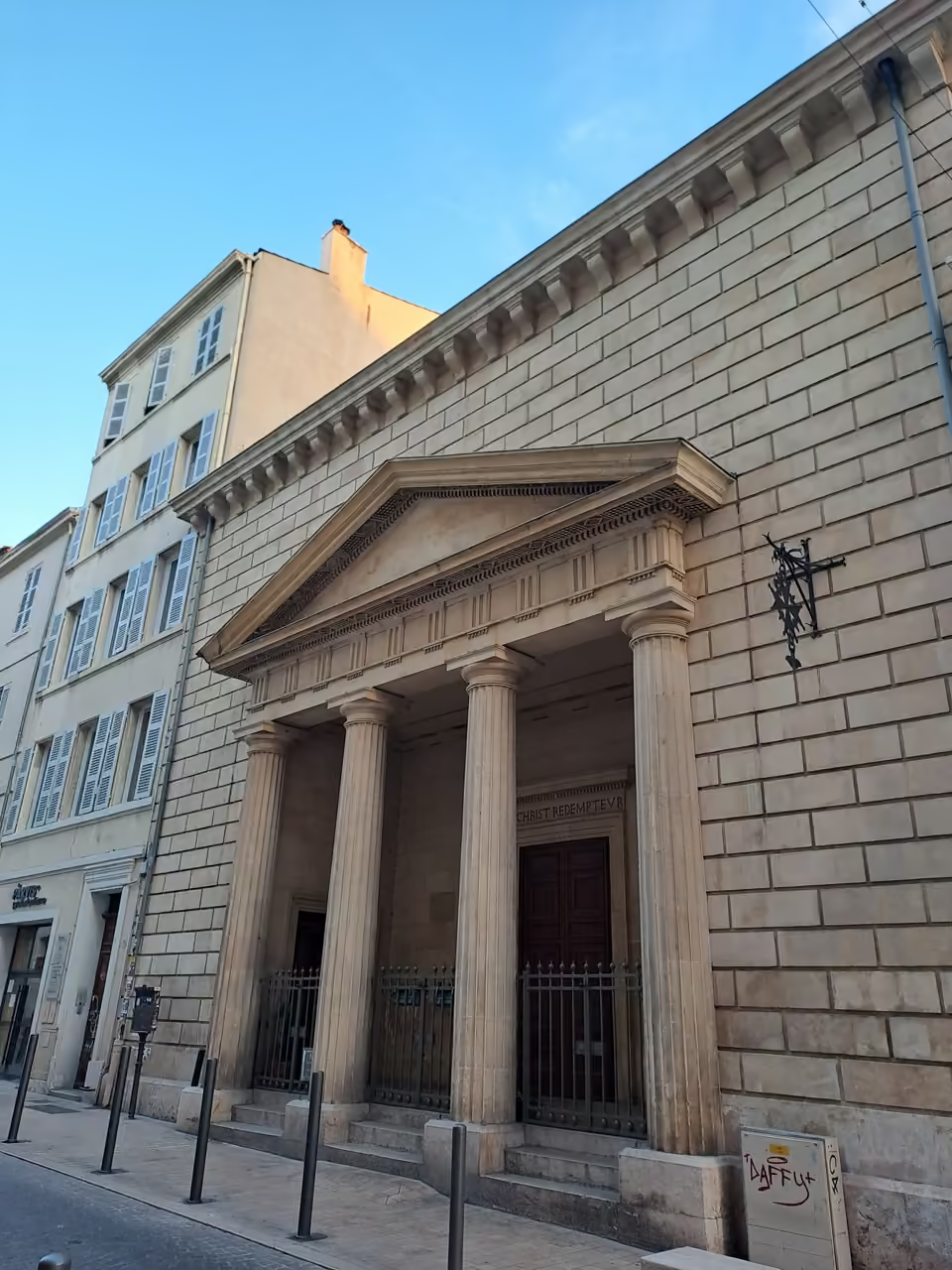
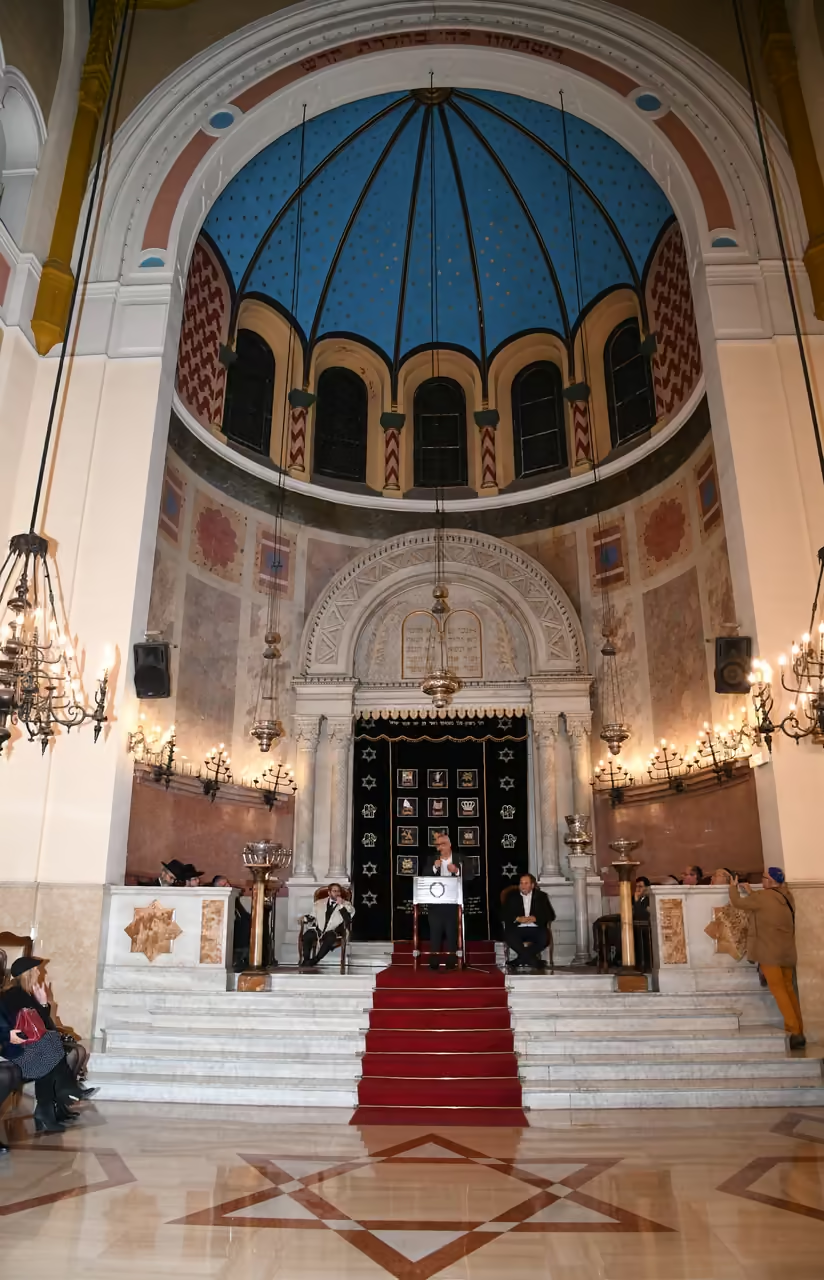
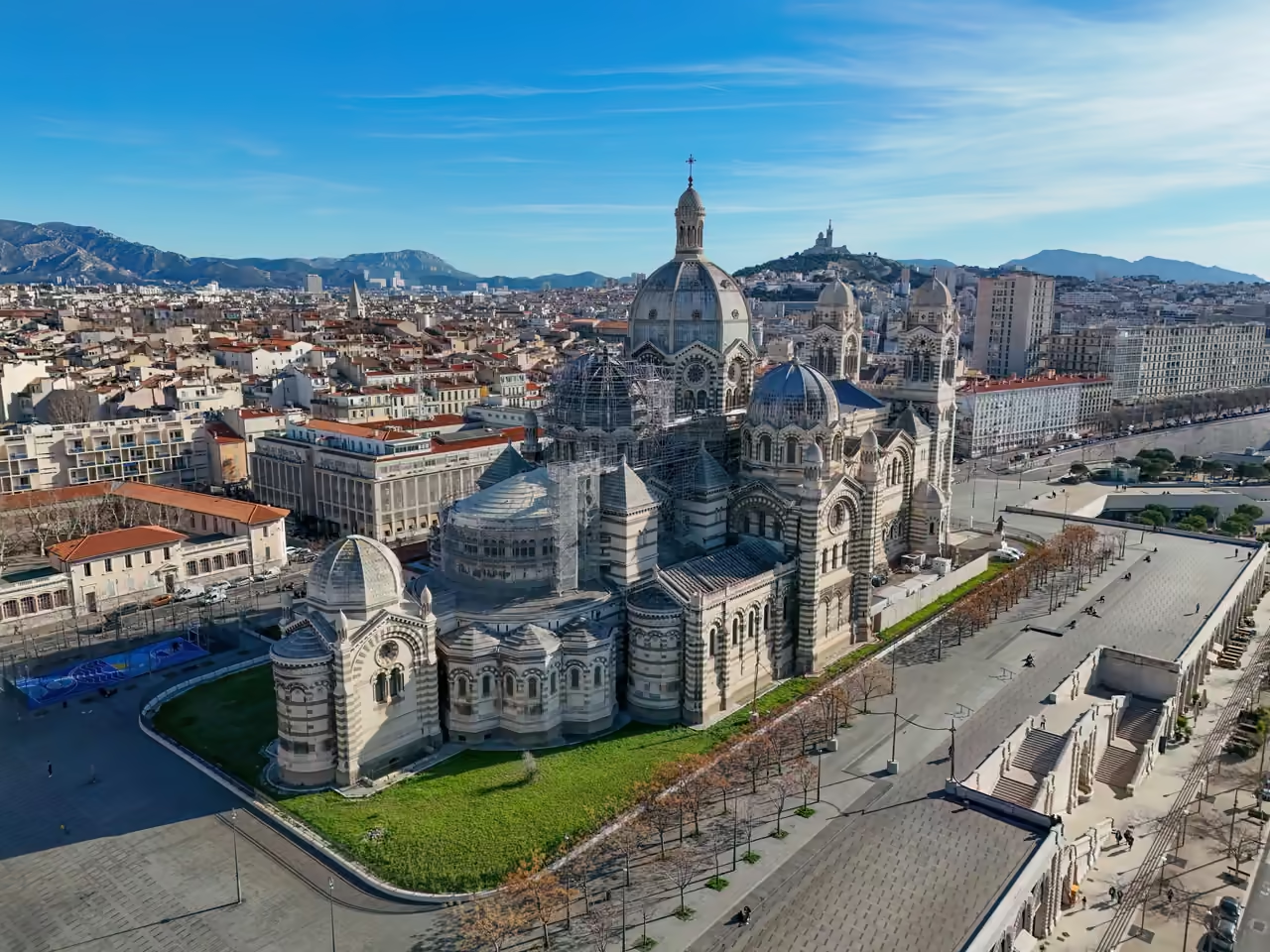
Faith & Migration Trail: Abbeys, Cathedrals, Synagogue & Temples
Explore how waves of arrivals by sea shaped Marseille's spiritual map, connecting fifth-century catacombs and Roman-Byzantine shrines with Jewish, Armenian, and Protestant landmarks.
view self-guided tour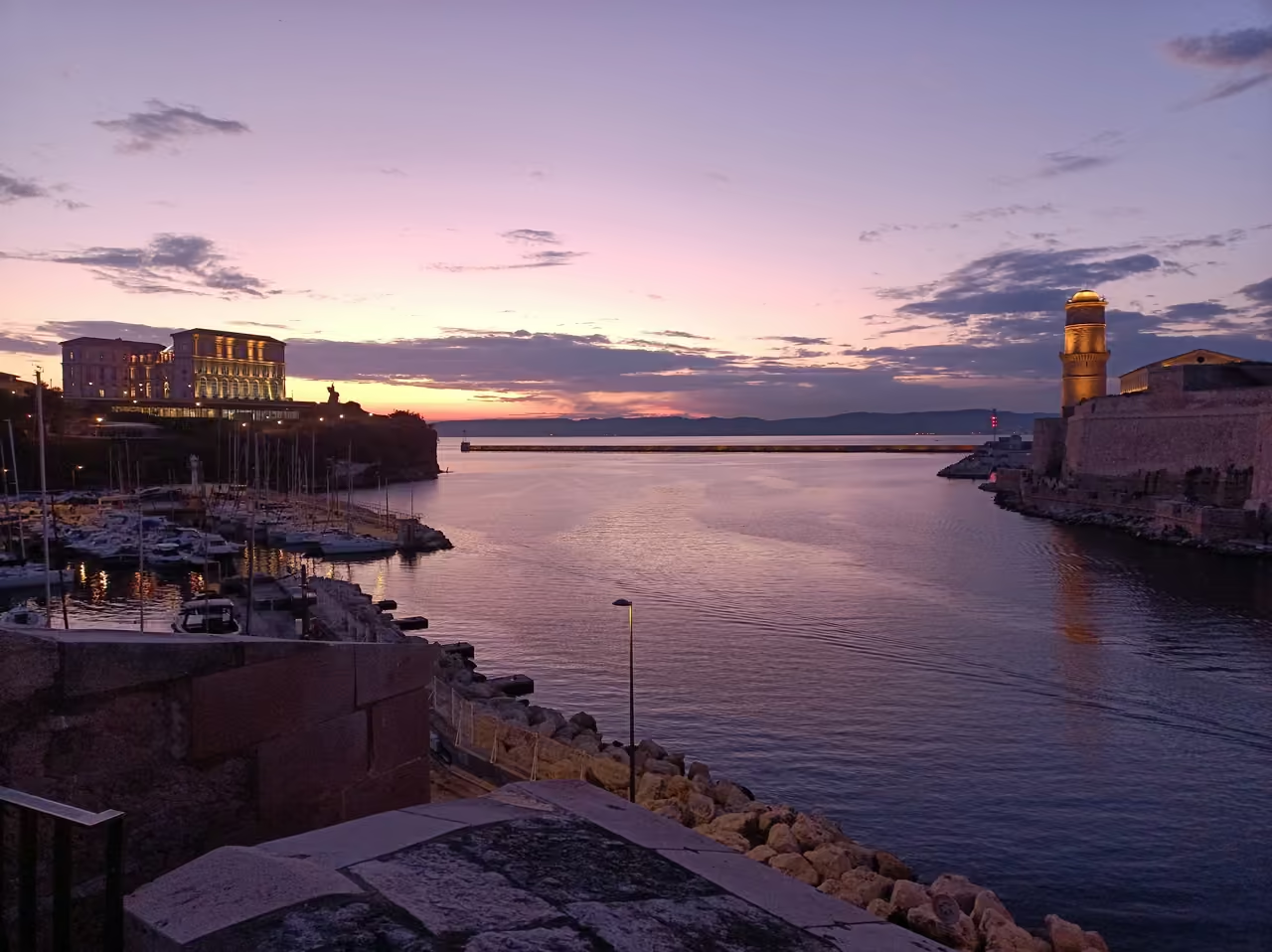
Royal Cannons & Island Prisons: Marseille's Sea Fortresses
Uncover centuries of maritime defence, rebellious town politics, and literary imprisonment across stone ramparts guarding the Vieux-Port and offshore reefs.
view self-guided tour
See all attractions in Marseille
Including Basilica of Notre-Dame de la Garde, Château d'If, Fort Saint-Jean, and more