Fort Saint-Jean
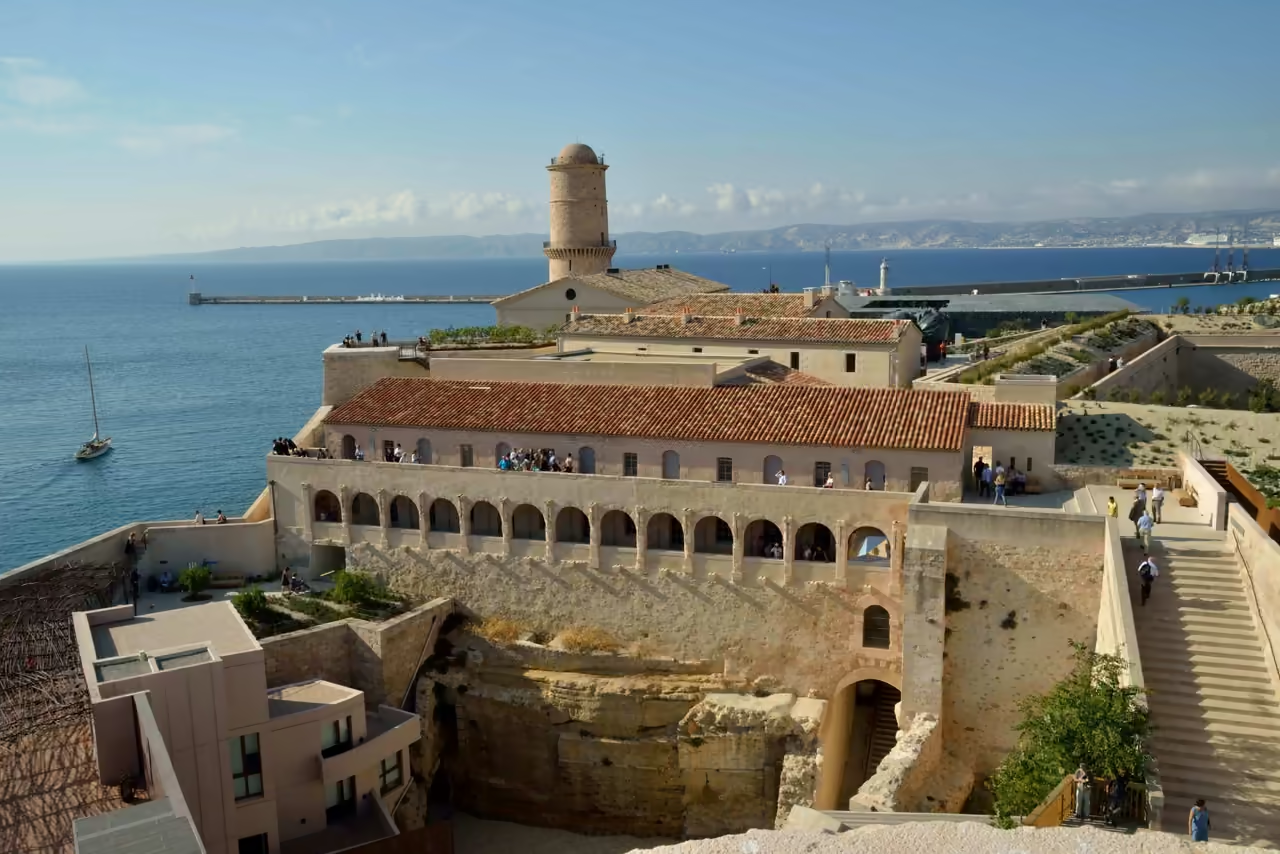
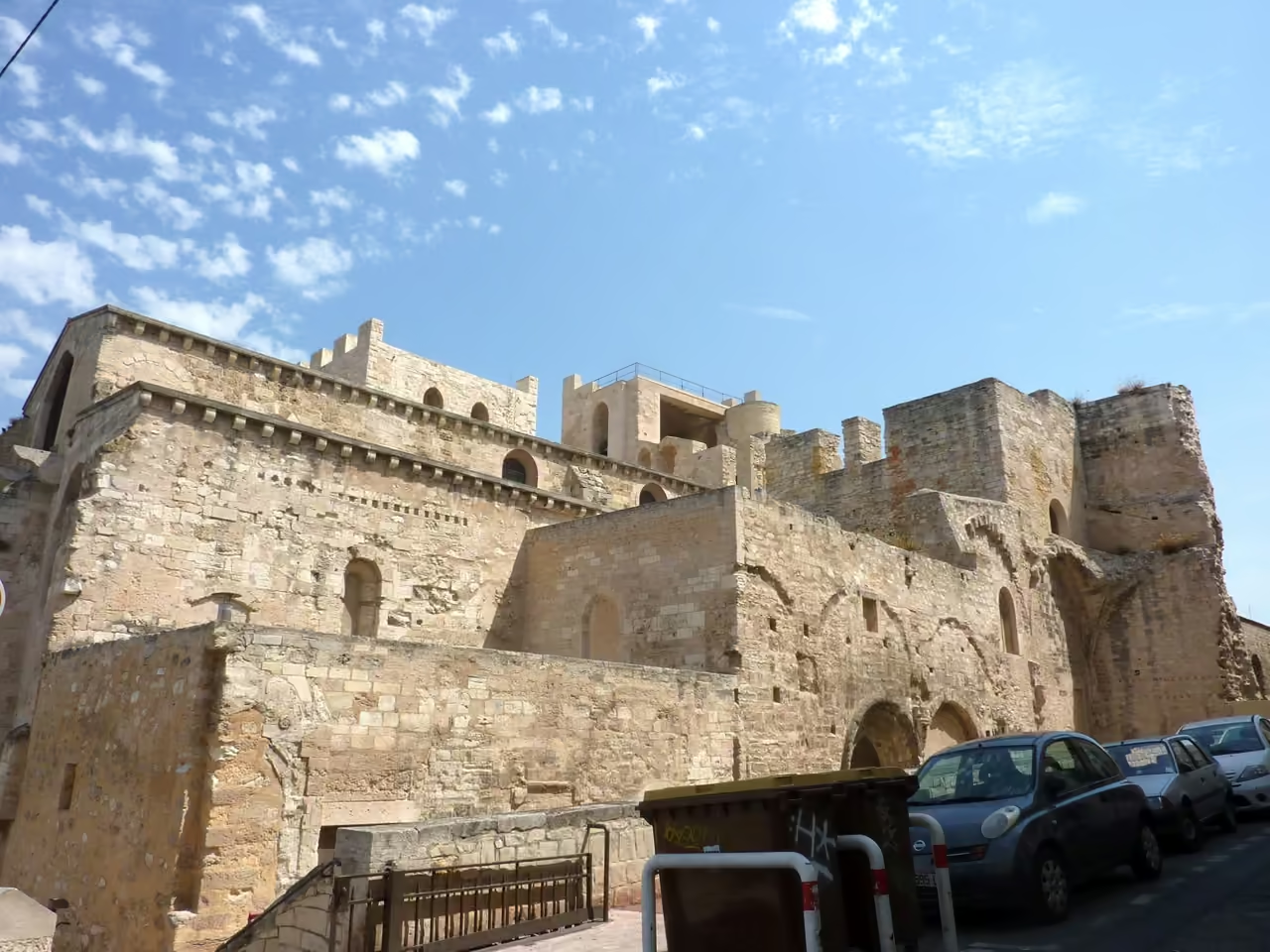
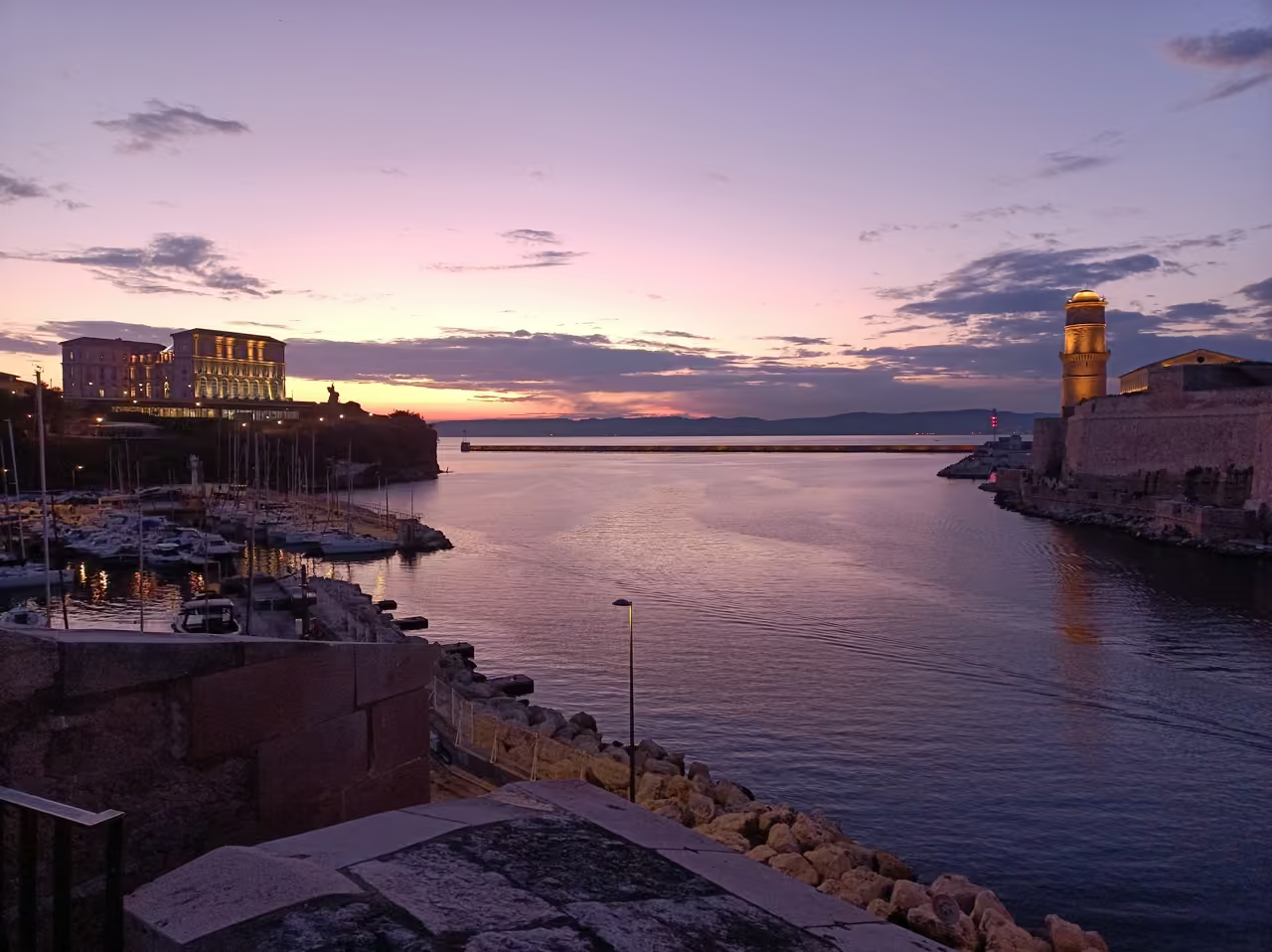
Guarding the northern jaw of the Vieux-Port, Fort Saint-Jean looks straight across a narrow channel at its southern rival, Fort Saint-Nicolas. Skip the uphill climb from the waterfront quays if you fancy an easier arrival. You can walk straight onto the upper ramparts across a pedestrian bridge from the square outside Saint-Laurent Church in Le Panier, or cross 19 metres above the harbour dock along the concrete walkway linking the fort to architect Rudy Ricciotti's MuCEM pavilion. Inside the walls, the cobbled tunnel of the Montée des Canons slopes upward past the Officers' Gallery to the sunlit chemin de ronde, where holm oaks, orange trees, myrtle, and wild herbs scent the salt breeze. Hang onto your sunglasses when the Mistral sweeps off the Gulf of Lion, as the exposed ledges beside the round Tour du Fanal turn brisk on gusty afternoons. Climb the 147 spiral steps inside the square Tour du Roi René, stepping onto its open artillery terrace just as ferries glide past the stonework below.
Videos
History of Fort Saint-Jean
In the sixth century BC, Greek seafarers from Phocaea established their earliest foothold on this rocky spur beside Marseille's natural harbour. Centuries later, repeated coastal raids by Saracen and Greek pirates forced surviving residents to abandon the exposed lower town and take shelter inside the hilltop enclave of Château Babon. By the late twelfth century, the Knights Hospitaller of Saint John had set up their regional commandery beneath those walls, adding a stone church and a grand palace stately enough to accommodate Pope Urban V's cardinals during a papal visit in 1365. Throughout the Middle Ages, defending the port meant sealing its tight entrance with twin iron chains stretched from a square watchtower called the Tour Maubert. That barrier failed on 20 November 1423, when troops loyal to King Alfonso V of Aragon landed south of the inlet, silenced the opposite garrison, and pillaged the town. Determined never to repeat that vulnerability, King René of Anjou commissioned a far stronger square keep on the ruined tower's footprint between 1447 and 1452, creating the imposing landmark that still overlooks the water today. Two centuries on, domestic politics reversed the headland's military purpose. After Marseille repeatedly defied crown taxes and royal authority, Louis XIV entered the city in March 1660 and ordered new citadels constructed on both sides of the harbour mouth. Working between 1668 and 1671, royal engineer Louis Nicolas de Clerville wrapped angled bastions around both King René's keep and a 1644 lighthouse tower, turning the fortress's heaviest cannons toward Marseille's restless streets rather than solely out toward foreign fleets. His successor Vauban later carved a wide moat designed to flood straight from the sea and added low coastal batteries built to skip cannonballs across the waves into approaching hulls. Local resentment toward a stronghold aimed at its own citizens erupted in May 1790 during the early days of the French Revolution. Crowds stormed the fortress, killed the commanding officer when he refused to surrender, and began tearing down the cityward walls until the National Assembly stepped in to protect the coastal defences. Over the next few years the garrison became a grim political prison during the Terror and subsequent royalist backlash, witnessing violent reprisals inside its cells against detained Jacobin militants in June 1795. Half a century later, surging steamship traffic altered the site's geography once more when engineers cut a shipping canal straight through Vauban's moat to link the Old Port with new docks at La Joliette, turning the bastion into an artificial island crossed by twin swing bridges until workers filled the channel in 1938. Military occupation returned during the Second World War, when German forces arrived in November 1942 and stockpiled explosives inside the lower courtyard. Ahead of Marseille's liberation in August 1944, an Allied bombardment set off that depot and shattered buildings dating back to the Middle Ages. Too damaged and outdated for modern military strategy, the fort passed to the Ministry of Culture and received historic monument status in 1964. Linked to the modern MuCEM pavilion in 2013, the old garrison now trades artillery drills for Mediterranean gardens, public walkways, and open cultural spaces.
17 events spanning 2613 years
Fun Facts
13- 01
A close look at the eastern ramparts facing Le Panier reveals an abrupt shift from warm pink blocks to duller grey masonry. After citizens pulled down part of the cityward wall in 1790 to build neighbourhood houses, the original pink limestone quarries at Cap Couronne had already run dry by 1833, forcing authorities to patch the breach with coarser grey stone from Cassis.
- 02
Aragonese troops hauled away Marseille's heavy iron harbour chain during the 1423 sack and carried it back to Spain as a war trophy, where it still hangs inside Valencia Cathedral today; a replacement chain guarded the port until 1820, and an iron mooring hook remains wedged in a quay beneath the fort.
- 03
At the eastern edge facing Saint-Laurent Church, a concrete German bunker from the Second World War has been preserved and converted into Marseille's Mémorial des déportations, occupying the exact site where military engineer Vauban once built a triangular outer bastion to shield the main entrance.
- 04
Before the connecting canal between the Old Port and La Joliette was filled in during 1938, Italian sailing ships routinely moored along the fort's stone quays to load scrap iron, while local bathers and line anglers claimed the flat boulders along its seaward breakwater.
- 05
Built between 1644 and 1646 at the insistence of Marseille shipowners, the Tour du Fanal rises to a dome 49 metres above sea level and worked long before glass optical lenses existed; iron brackets remain visible on its summit where lookouts fastened and lit bundles of dried brushwood to guide incoming ships past coastal reefs.
- 06
During the thirteenth century, port traffic around the fort's medieval predecessor grew tight enough that Marseille's 1268 municipal statutes forbade any vessel from dropping anchor in the narrow pass, where rocky shallows already blocked over two thirds of the southern side.
- 07
From 1840 until 1944, a marble tide gauge installed at Fort Saint-Jean served as the literal zero point for the Nivellement général de la France, meaning every official elevation across mainland France was measured against its mark at 0.329 metres until the 1944 dynamiting of Marseille's nearby transporter bridge shattered the scale.
- 08
From the late 1960s until 2009, buildings erected over the buried ruins of the medieval Grand Commander's palace served as headquarters for France's national underwater archaeology institute DRASSM, before the agency moved to L'Estaque and renowned Marseille chef Gérald Passédat later took charge of the fort's Le Café du Fort.
- 09
In May 1793, revolutionary officials confined King Louis XVI's cousin Philippe Égalité inside the fortress alongside his sister and his sons Montpensier and Beaujolais; after their father was taken to Paris and executed, the surviving brothers published a memoir of their imprisonment before sailing aboard La Fortune in 1796 for American exile, though lung illnesses caught in the damp cells later ended both lives in London and Malta.
- 10
Refusing to enter Marseille peacefully through its town gates on 2 March 1660, King Louis XIV ordered workers to smash a breach straight through the medieval city walls so he could ride in as a conqueror, before forcing the local fishermen's guild to sell their communal hall beside the fort to clear room for his new citadel.
- 11
Shortly after the Knights Hospitaller founded their waterfront commandery, Pope Innocent III granted them rare burial rights in 1202, sparking a bitter feud with the neighbouring Church of Les Accoules over funeral fees and elevating the fort chapel's standing so high that Count Alfonso II of Provence asked to be laid to rest there.
- 12
When building costs for the Tour du Roi René ran over budget in 1452, fishermen from the Saint-Jean quarter financed 1,200 florins through a levy on fish catches lasting four years, winning perpetual ownership of the Calanque de Morgiou and exclusive rights to anchor a madrague tuna trap in its cove.
- 13
While excavating fifty foundation shafts beside the lighthouse in 1908 for a new army barracks that now houses the Georges Henri Rivière exhibition hall, archaeologist Georges Vasseur recovered early Iron Age pottery shards dated between 600 and 580 BC, proving Marseille's Phocaean Greek founders settled this exact rocky spur.
FULL PLACE DETAILS
Updated
FULL PLACE DETAILS
UpdatedOVERVIEW & STATS
- Established
- In 1660, making it 366 years old
Fort Saint-Jean Map & Neighborhood Explorer
This interactive map is centered on Fort Saint-Jean. Zoom in and move the map around to automatically discover Wikipedia photos and summaries of other nearby sights, monuments, and historical points of interest and stories in real-time!
Fort Saint-Jean FAQ
Exploring the outdoor grounds of Fort Saint-Jean, crossing both pedestrian footbridges, and strolling along its ramparts and Mediterranean gardens are completely free of charge. You only need a MuCEM admission ticket if you plan to enter the indoor exhibitions inside the historic fort buildings or cross into the main J4 museum pavilion. Keep in mind that the museum complex normally closes one day a week on Tuesdays.
Three main pedestrian routes lead straight into the fortress. You can walk level onto the upper ramparts across the footbridge starting beside Saint-Laurent Church in Le Panier, cross the suspended walkway stretching 130 metres from the roof terrace of the MuCEM J4 building, or enter from waterfront level near the Esplanade du J4 along the northern quay of the Vieux-Port. Entering from Le Panier is especially handy if you want a downward walk toward the sea without tackling a steep climb.
Plan around two hours to wander the courtyards, climb the Tour du Roi René, walk the upper chemin de ronde, and take in views toward the Frioul archipelago, or half a day if you pair it with MuCEM's main J4 galleries. Children generally enjoy the fortress far more than a conventional indoor museum because the open ramparts, cannon tunnel, and high sea footbridges feel adventurous, though pushchairs are best suited to the lifts and main paths rather than the narrow spiral stairs and cobbled ramps.
Visitors can routinely climb the 147 spiral steps up the Tour du Roi René to reach its rooftop artillery terrace and explore the open courtyards, the Montée des Canons, and the main garden paths. However, individual heritage spaces such as the medieval Chapelle Saint-Jean have experienced periodic closures for stonework conservation, so it is always worth checking on arrival if a specific interior room is temporarily off limits.
Inside the upper fort right beside the Georges Henri Rivière building, Le Café du Fort sets out shaded outdoor tables where you can pause for coffee, pastries, or casual Mediterranean dishes overseen by Marseille chef Gérald Passédat's team. If you cross the walkway to the top floor of the neighbouring MuCEM J4 pavilion, you will also find his bistro La Table and casual counter La Cuisine.
Late afternoon is a favourite among locals and travellers alike, when softening sunlight warms the stone ramparts and shines across the harbour mouth toward Fort Saint-Nicolas. Mornings tend to be calmest along the garden walkways before midday crowds gather, while warm summer evenings occasionally feature open air cultural events and screenings in the courtyard.
A typical visit takes about 2 hours. We recommend planning your schedule accordingly to make the most of your time there.
The closest place to visit near Fort Saint-Jean is Church of Saint-Laurent, around 141 m away. Other things to do near Fort Saint-Jean include Museum of European and Mediterranean Civilisations (179 m), Cosquer Méditerranée Cave Replica (202 m) and Villa Méditerranée (215 m). All of these are within roughly 215 m of Fort Saint-Jean, close enough to walk.
It dates back to 1660, making it 366 years old.
While we strive to keep this information accurate and up to date, we recommend verifying any details independently before making decisions based on them.
Places near Fort Saint-Jean
Make the most of your trip. Check out these top-rated spots located nearby.
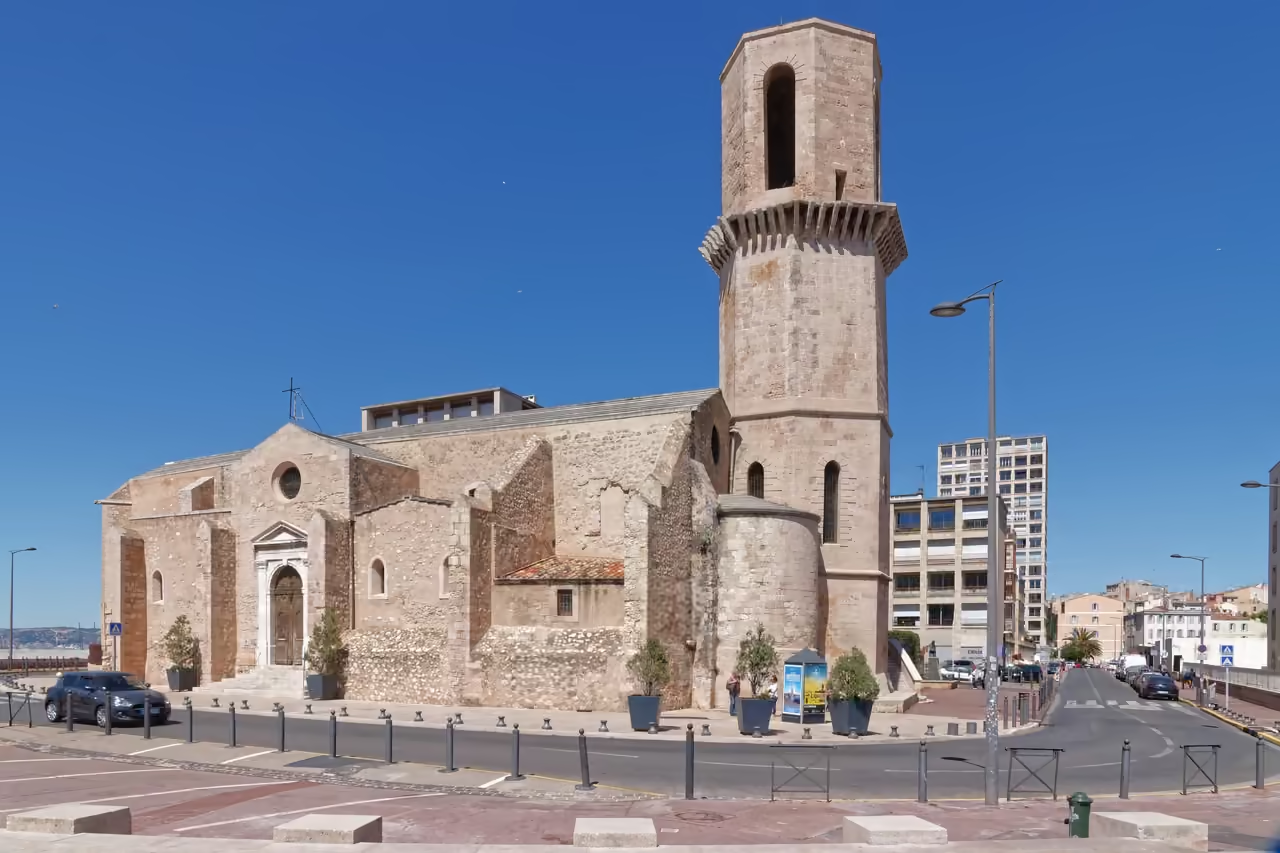 141m
Church of Saint-Laurent
Perched quietly above the Old Port channel right beside Fort Saint-Jean's footbridge, this honey-toned medieval church served Marseille's fishing guild for centuries. Step inside its cool, austere Provençal Romanesque nave to feel the salt-stained devotion of a shoreline parish that survived wartime demolition all around it.
hidden gem view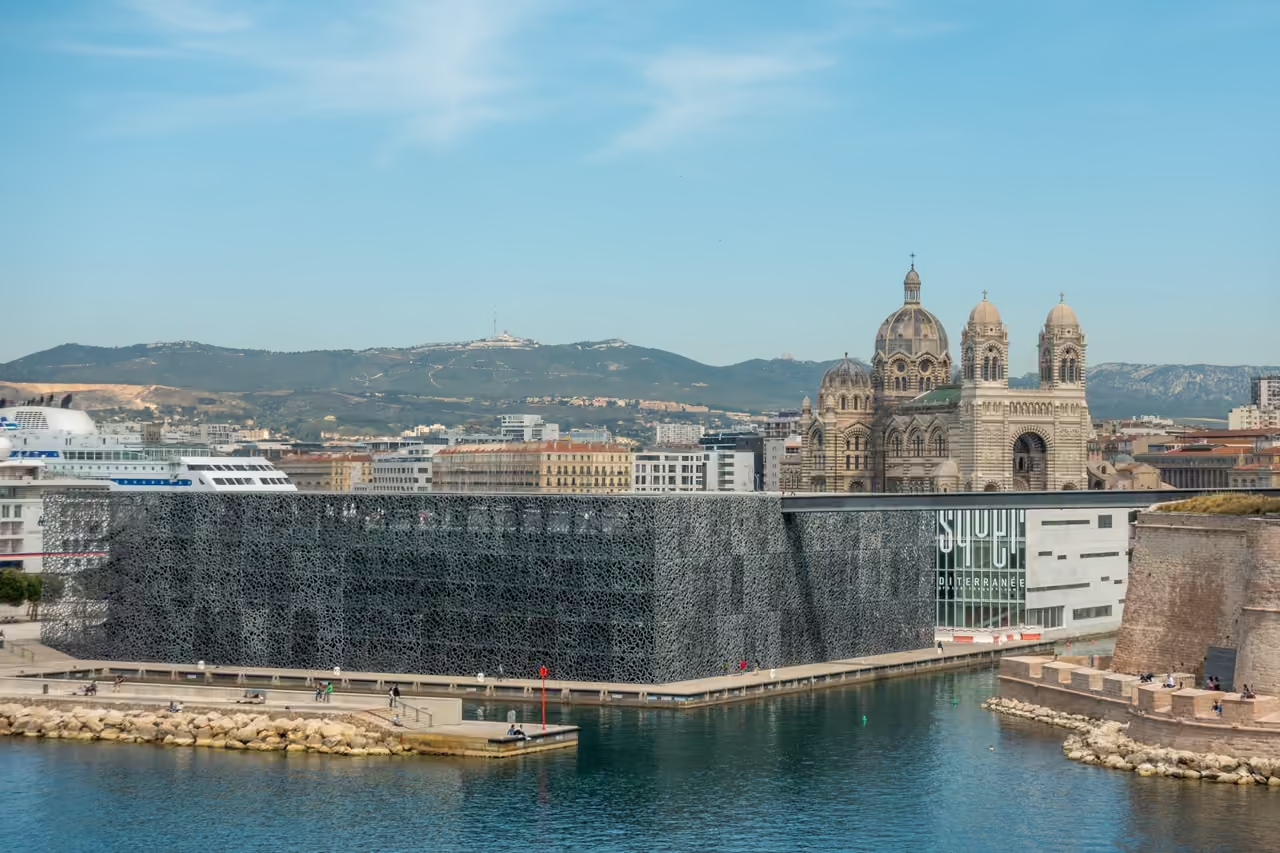 179m
Museum of European and Mediterranean Civilisations
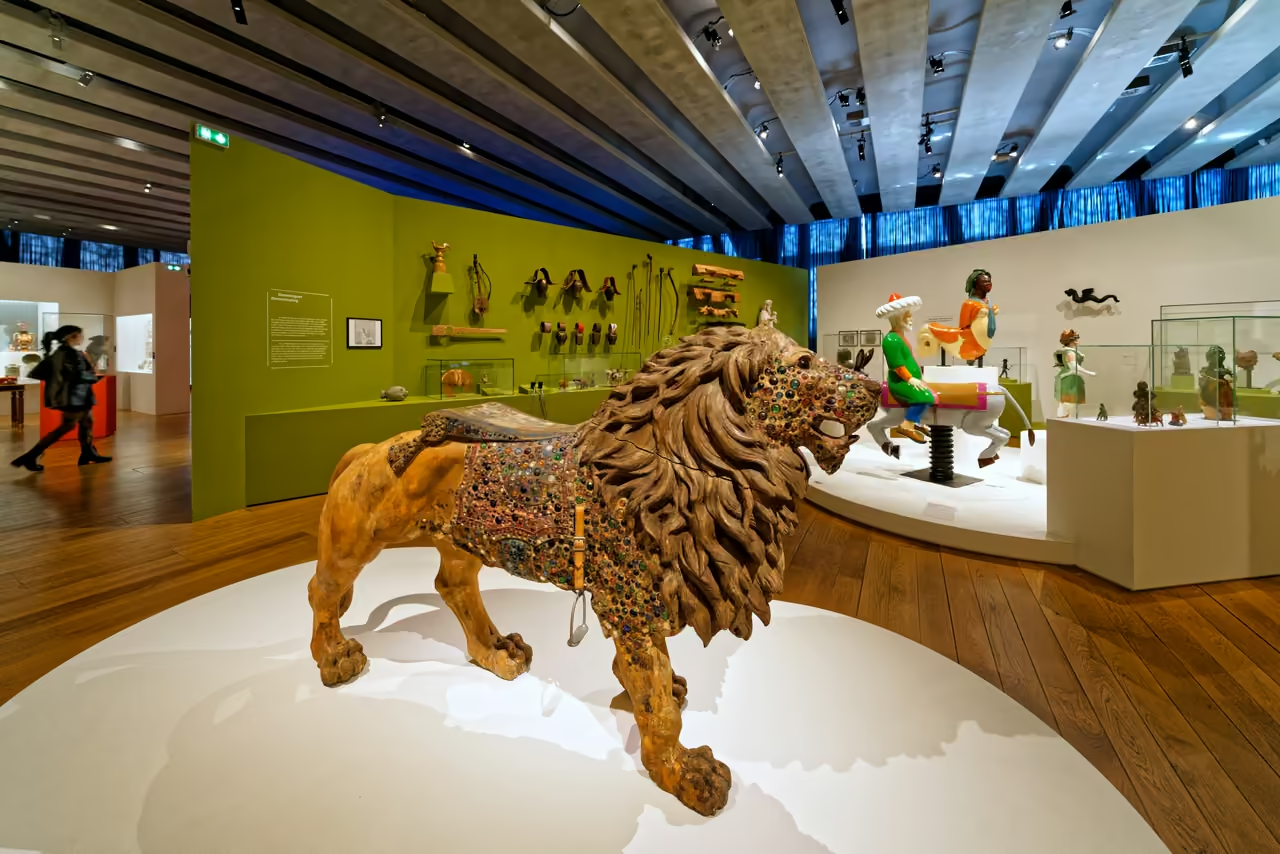
Concrete lace sounds impossible until you spot Mucem on Promenade Robert-Laffont. At the mouth of Marseille's Old Port, Rudy Ricciotti's dark J4 cube wears a perforated outer shell that filters fierce southern glare onto wide ramps spiralling toward a free rooftop plaza and views of the Château d'If. Inside, the Galerie de la Méditerranée places ancient maritime artefacts beside contemporary photography, joined upstairs by two temporary halls and Marseille's independent Maupetit bookshop. From the roof, a slim footbridge leaps 130 metres over the harbour basin straight into Fort Saint-Jean. Keep one hand on your hat when brisk gusts hit that exposed span. Once inside the fort, summer evenings turn the Place d'Armes into an open air cinema, while higher ramparts shelter the Jardin des Migrations, scenting the breeze with wild thyme and fig trees opposite the striped domes of Cathédrale de la Major.
attraction view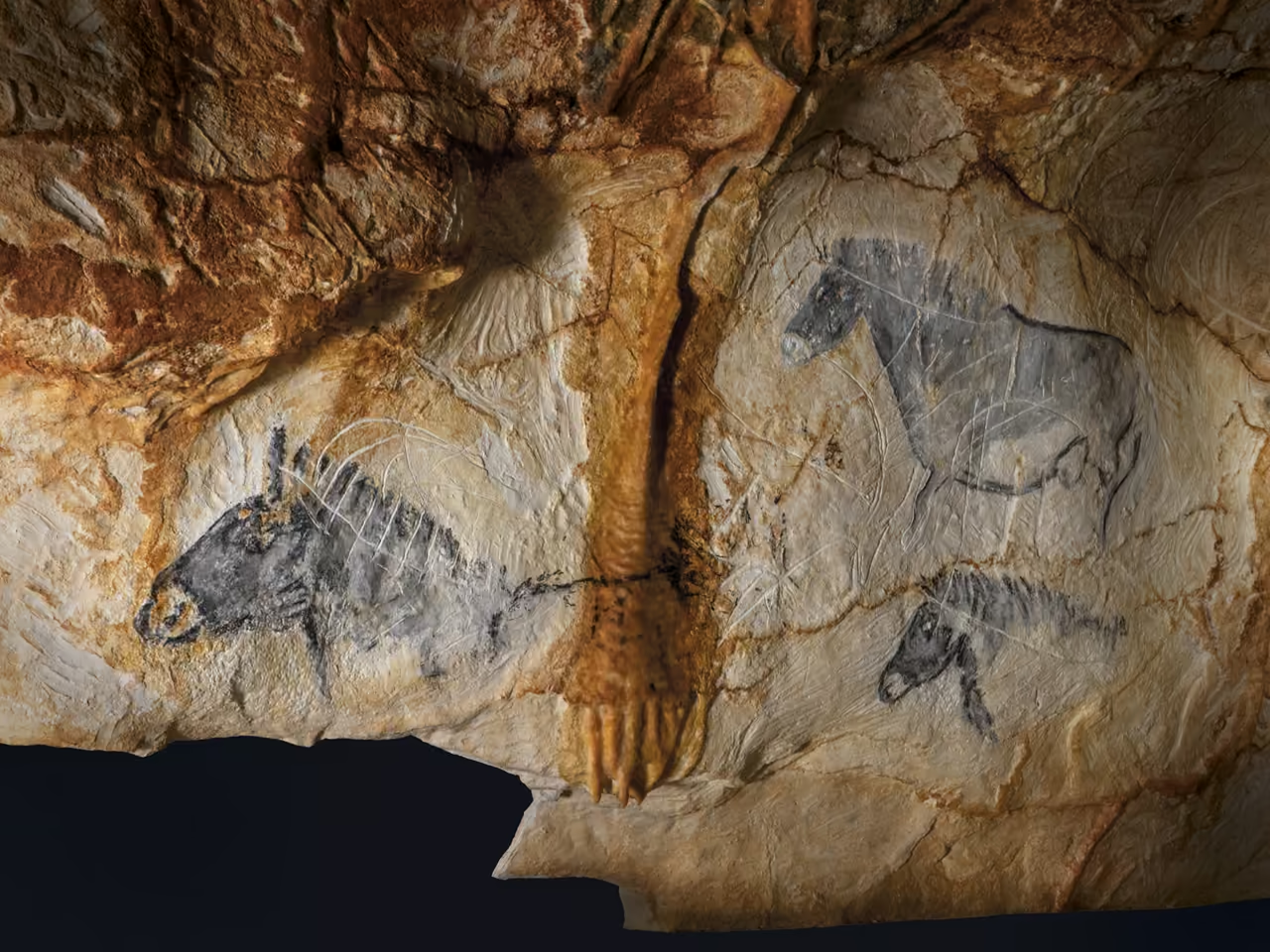 202m
Cosquer Méditerranée Cave Replica
Inside the striking cantilevered Villa Méditerranée beside MuCEM, visitors descend in slow exploration pods through a full-scale replica of the submerged Cosquer Cave. Divers discovered the real Palaeolithic cavern offshore only in 1992, sealed behind a tunnel 37 metres underwater where Ice Age artists painted penguins, bison, horses, and hand stencils. Interactive galleries upstairs explain rising seas and ancient Mediterranean climates.
highlight view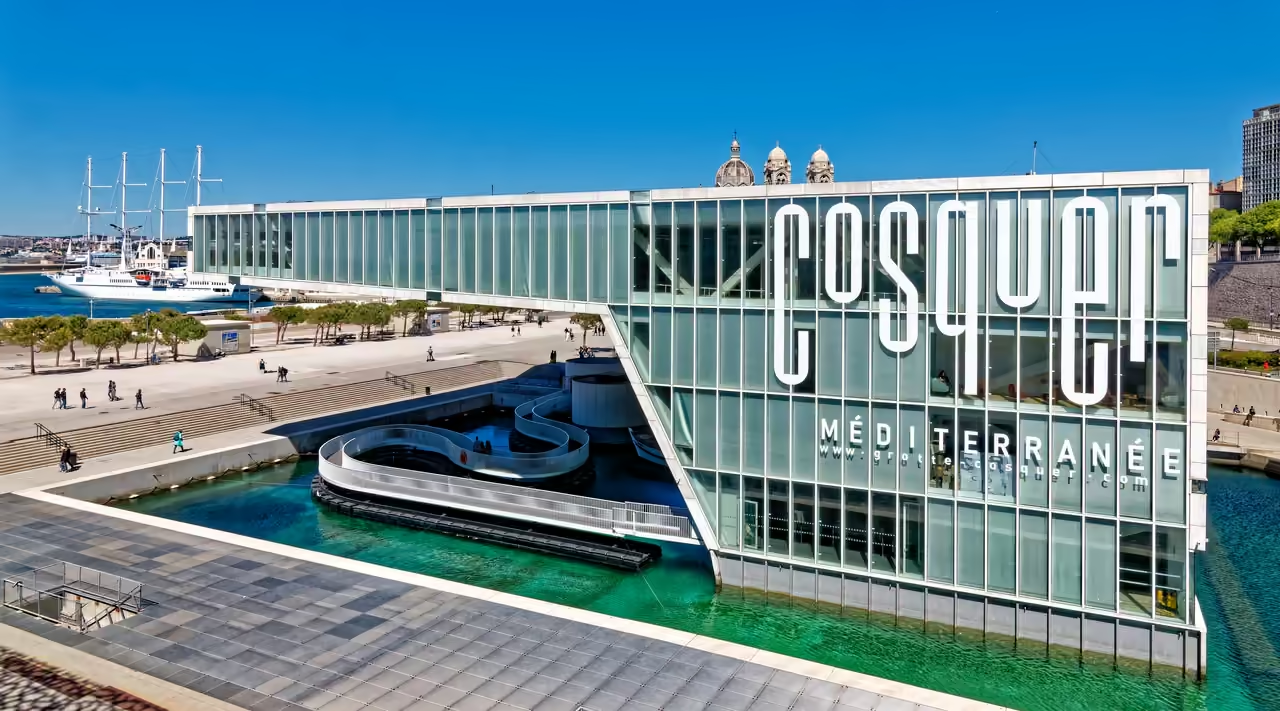 215m
Villa Méditerranée
Designed by Italian architect Stefano Boeri beside MuCEM on the J4 pier, this stark white contemporary pavilion launches a dramatic 40-metre horizontal cantilever directly out above a sunken seawater basin. Its sharp minimalist lines mirror Mediterranean sky and water while housing the Cosquer Méditerranée exhibition inside.
architecture view
Featured on These Itineraries and Routes
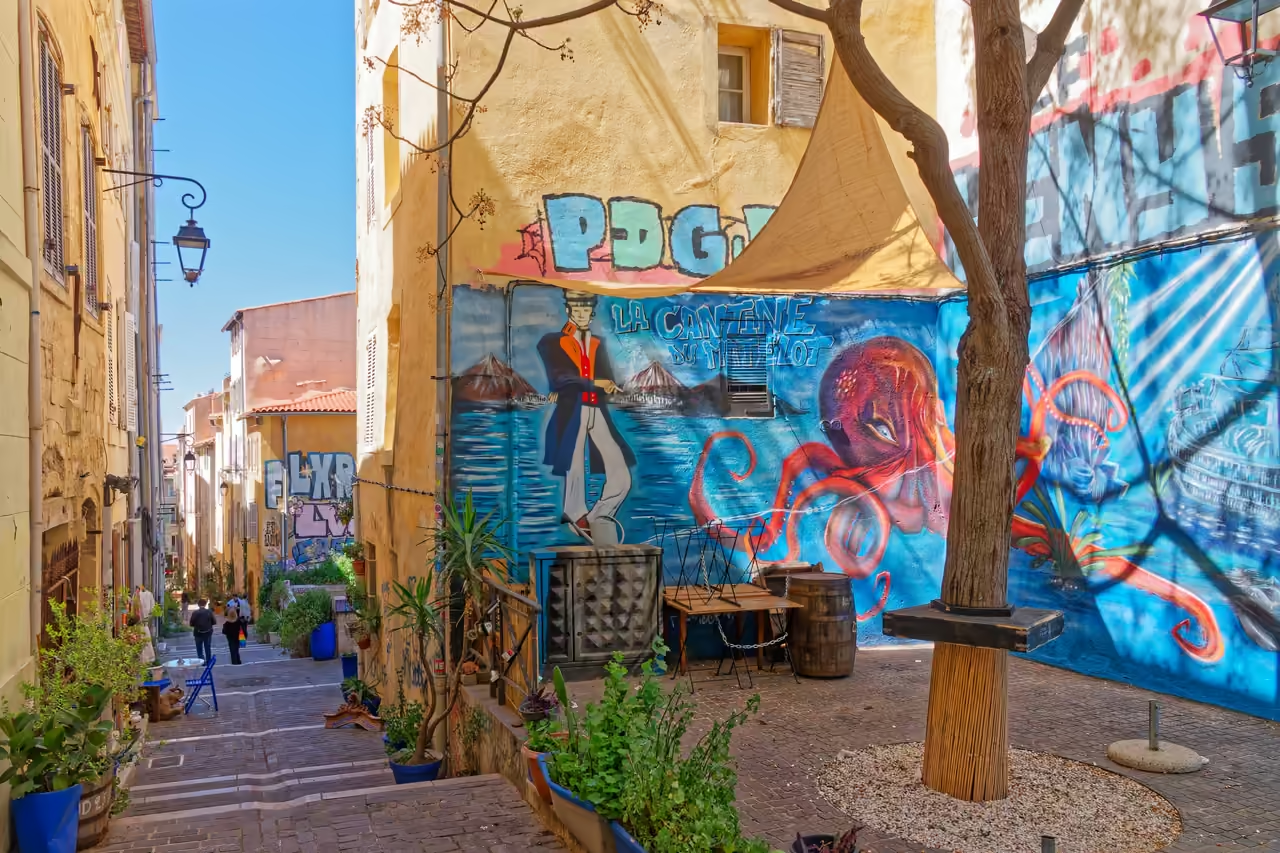
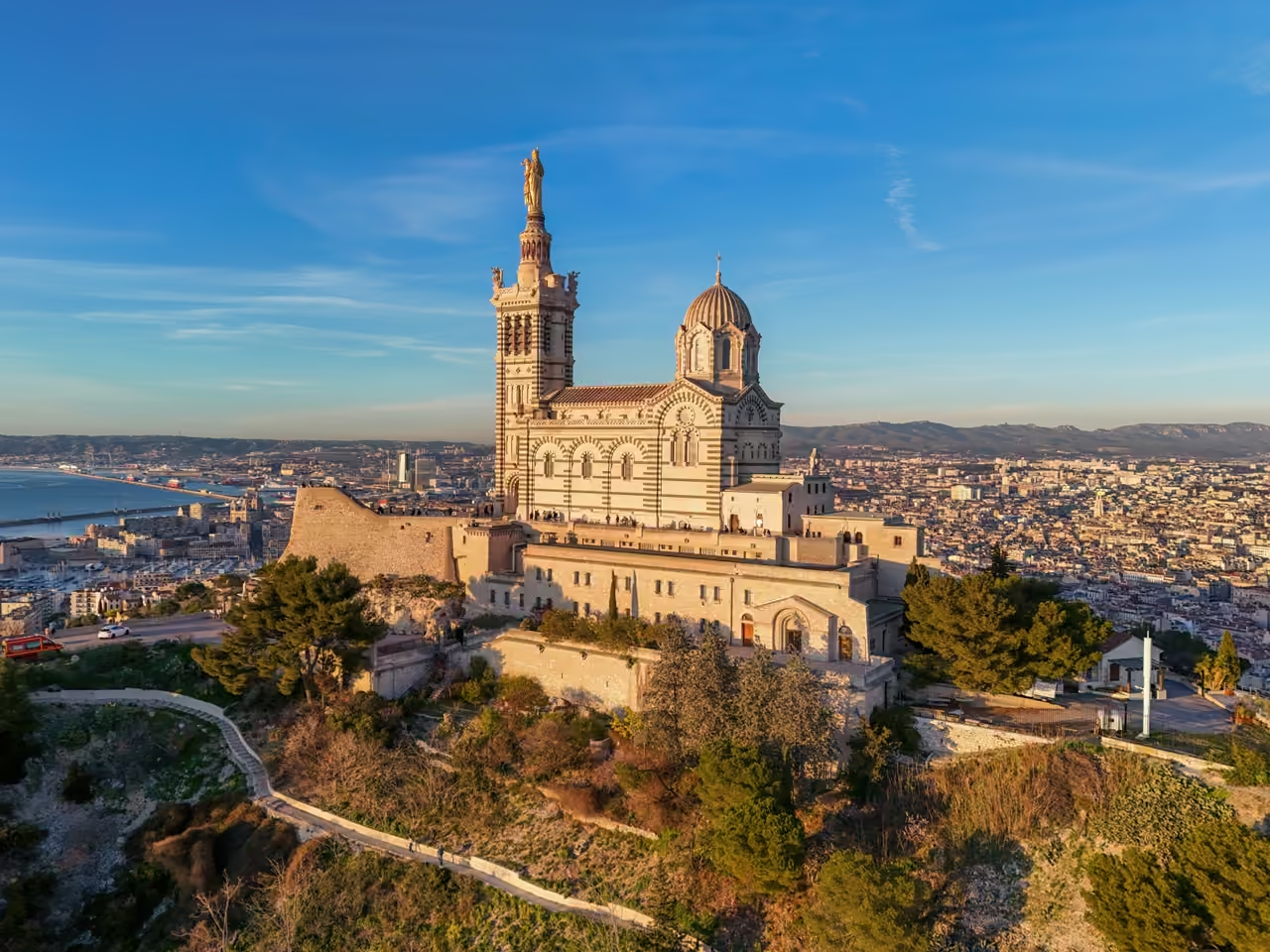
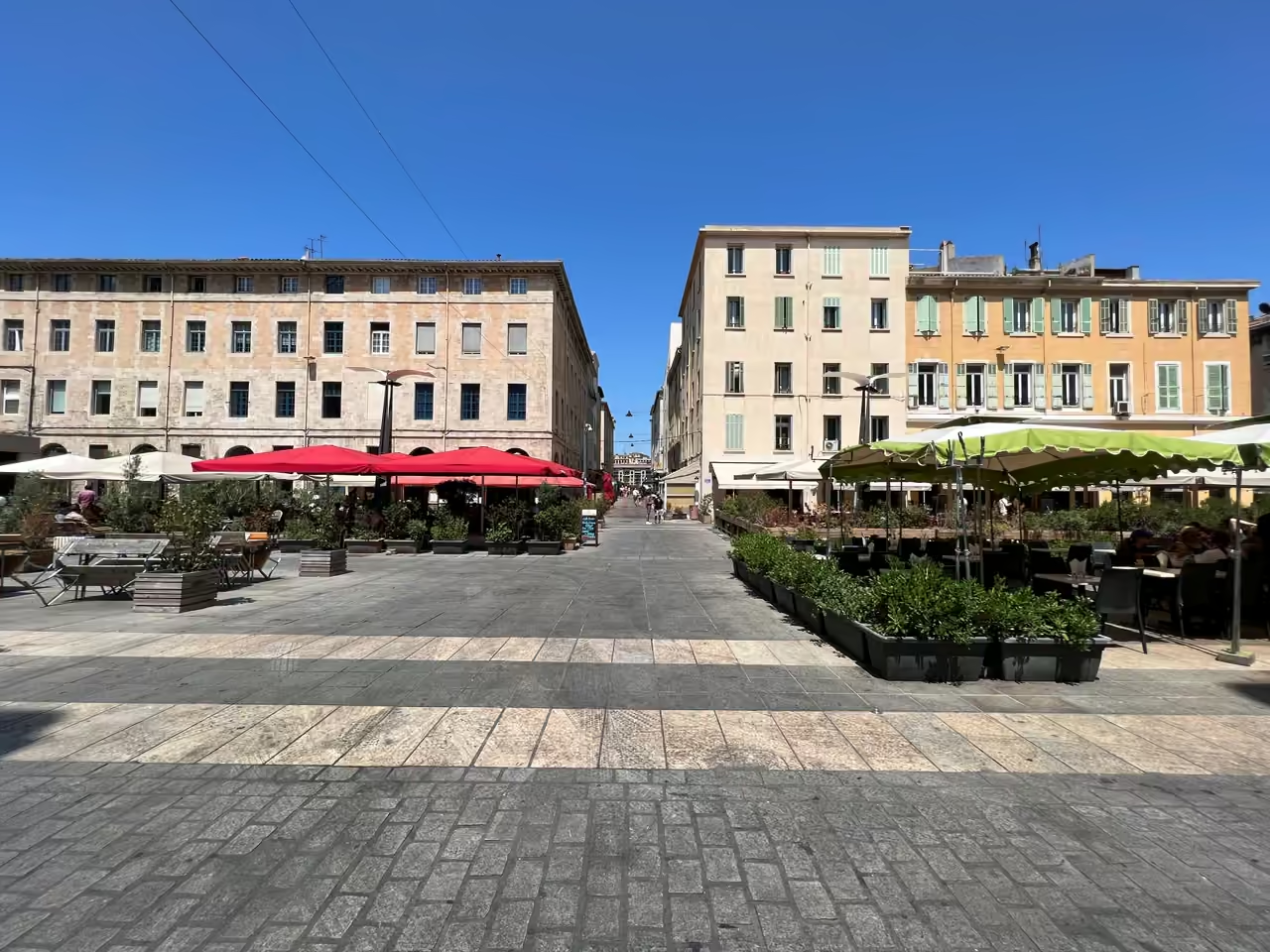
1 Day in Marseille: Essential Loop
Experience Marseille's heartbeat in one crisp, walkable coastal arc linking morning fish auctions, medieval hilltop lanes, waterfront architecture, panoramic basilica heights, and lively harbour terraces.
view itinerary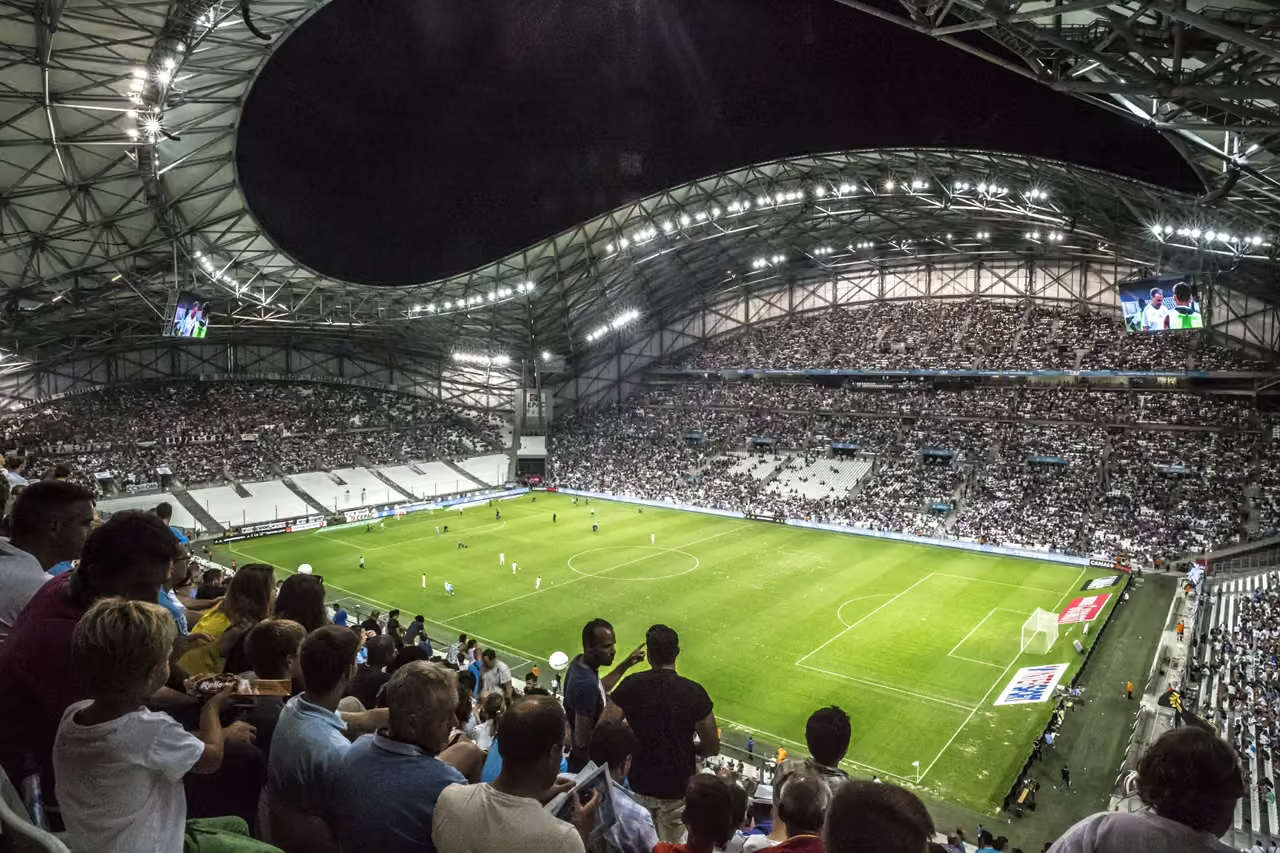
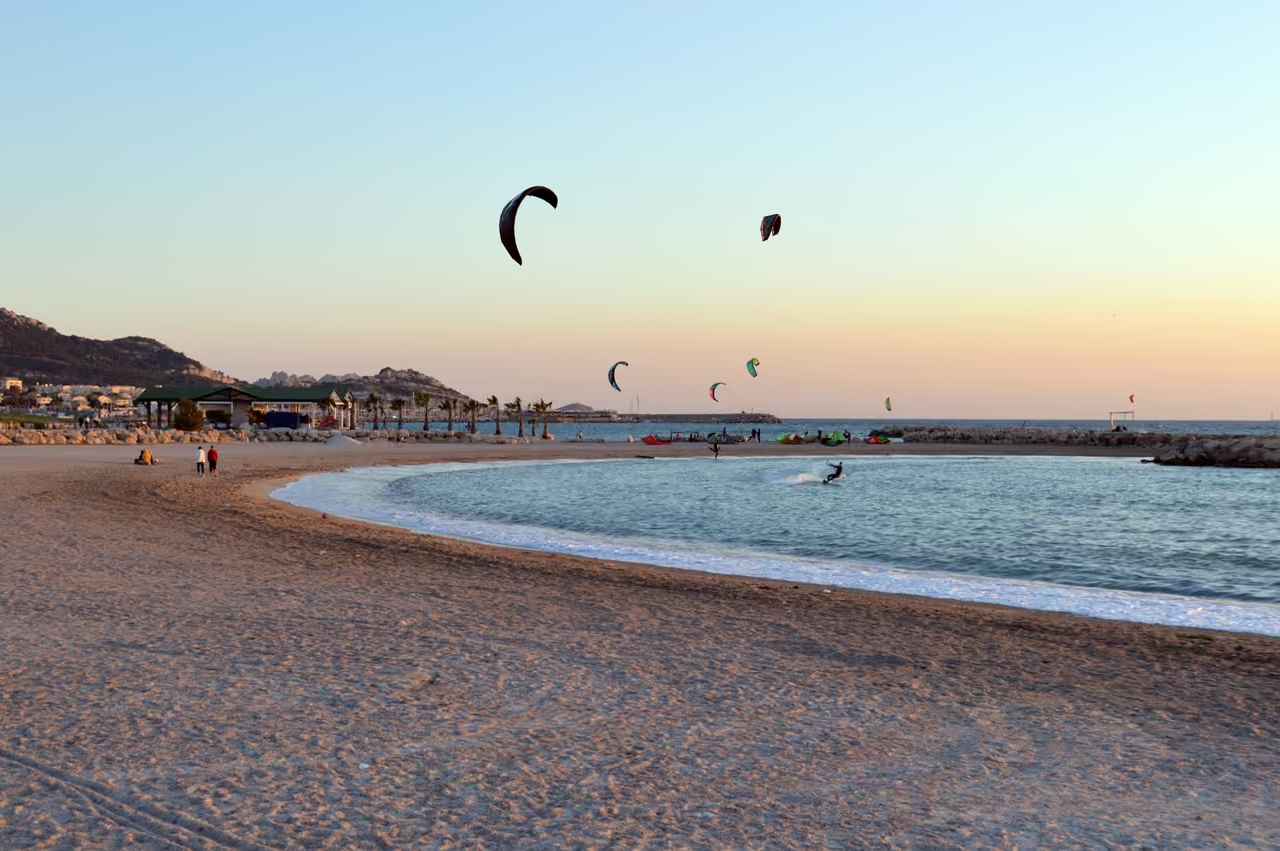
5 Days in Marseille: Villages, Architecture & Street Life Explorer
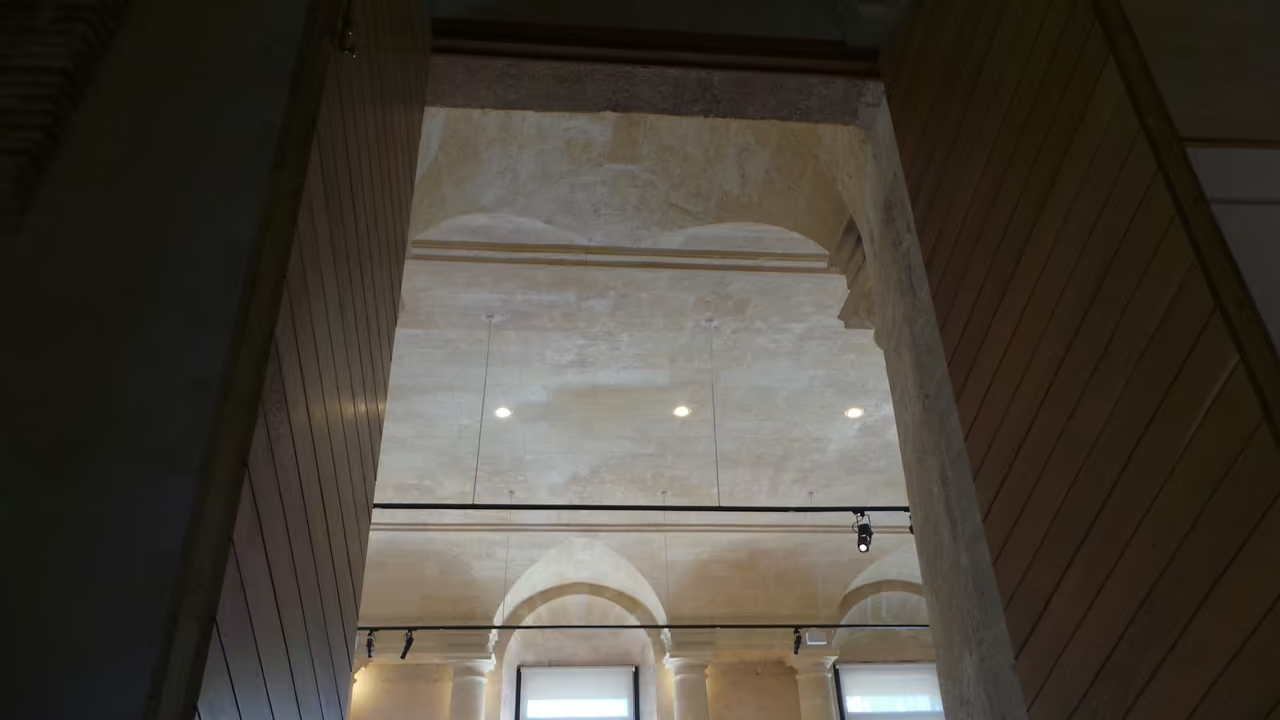
Dive deep across five full days covering Noailles spice bazaars, Palais Longchamp, Le Corbusier's UNESCO block, Calanques ridge trails, and Cézanne's L'Estaque harbour.
view itinerary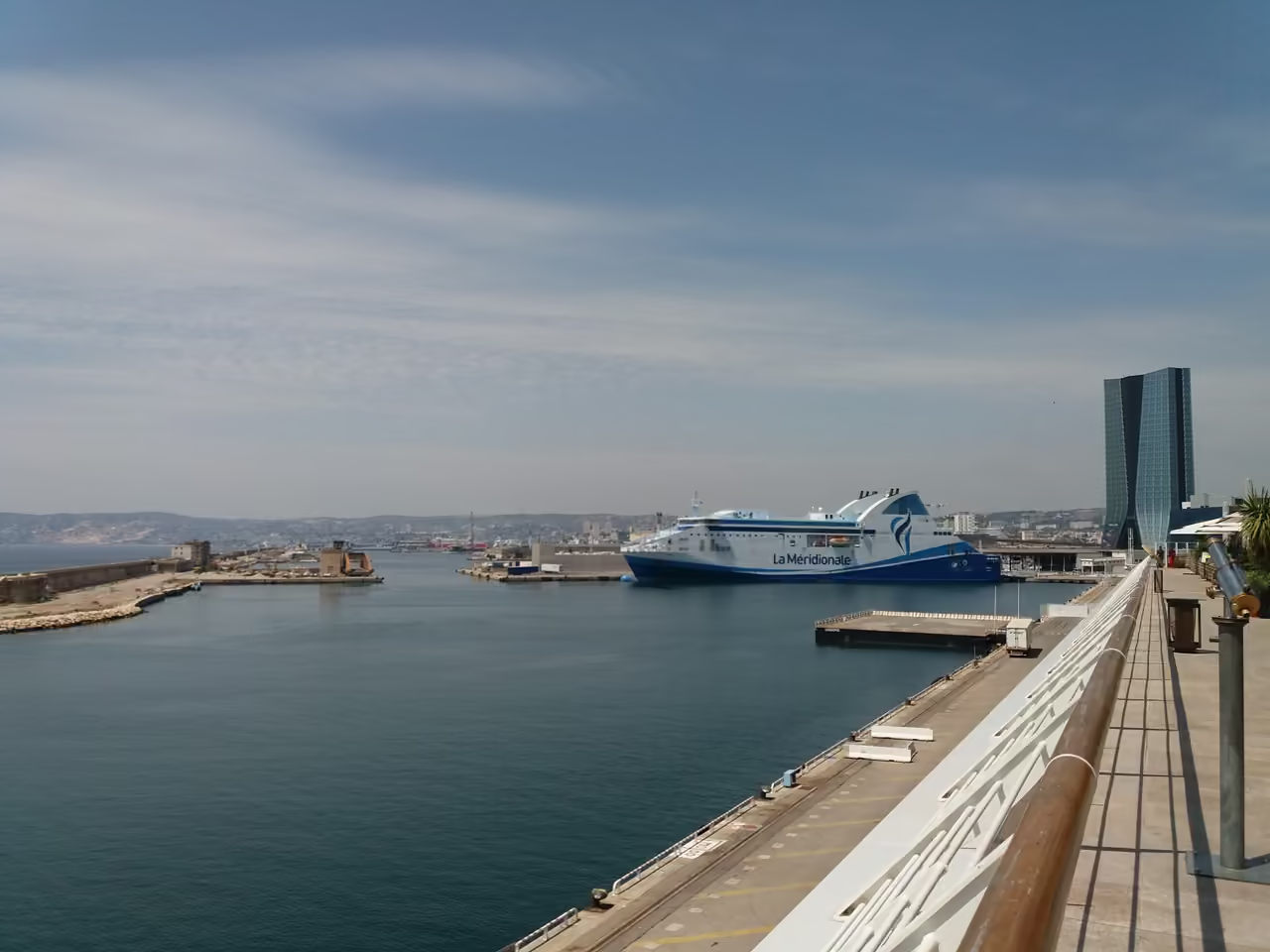
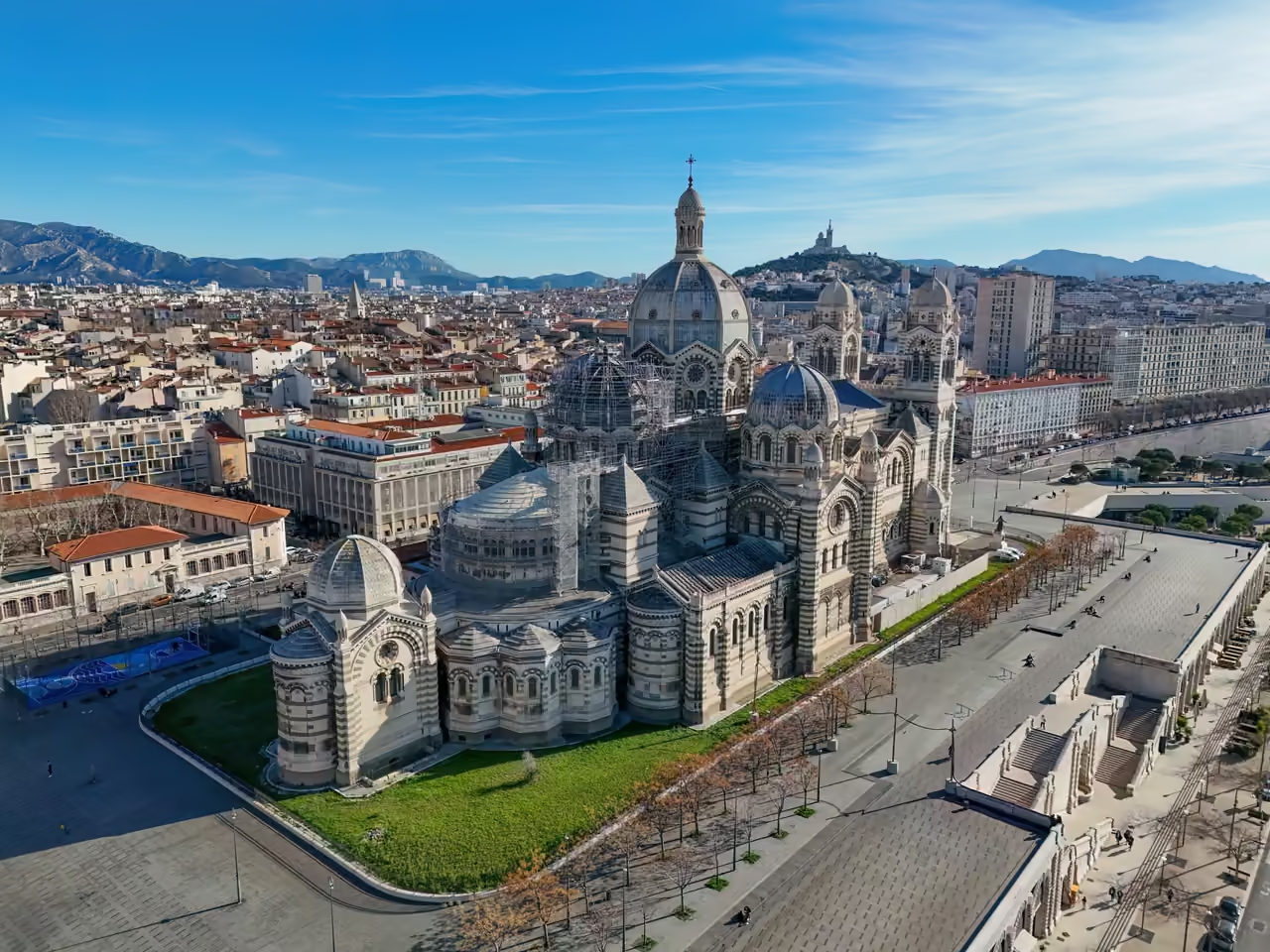
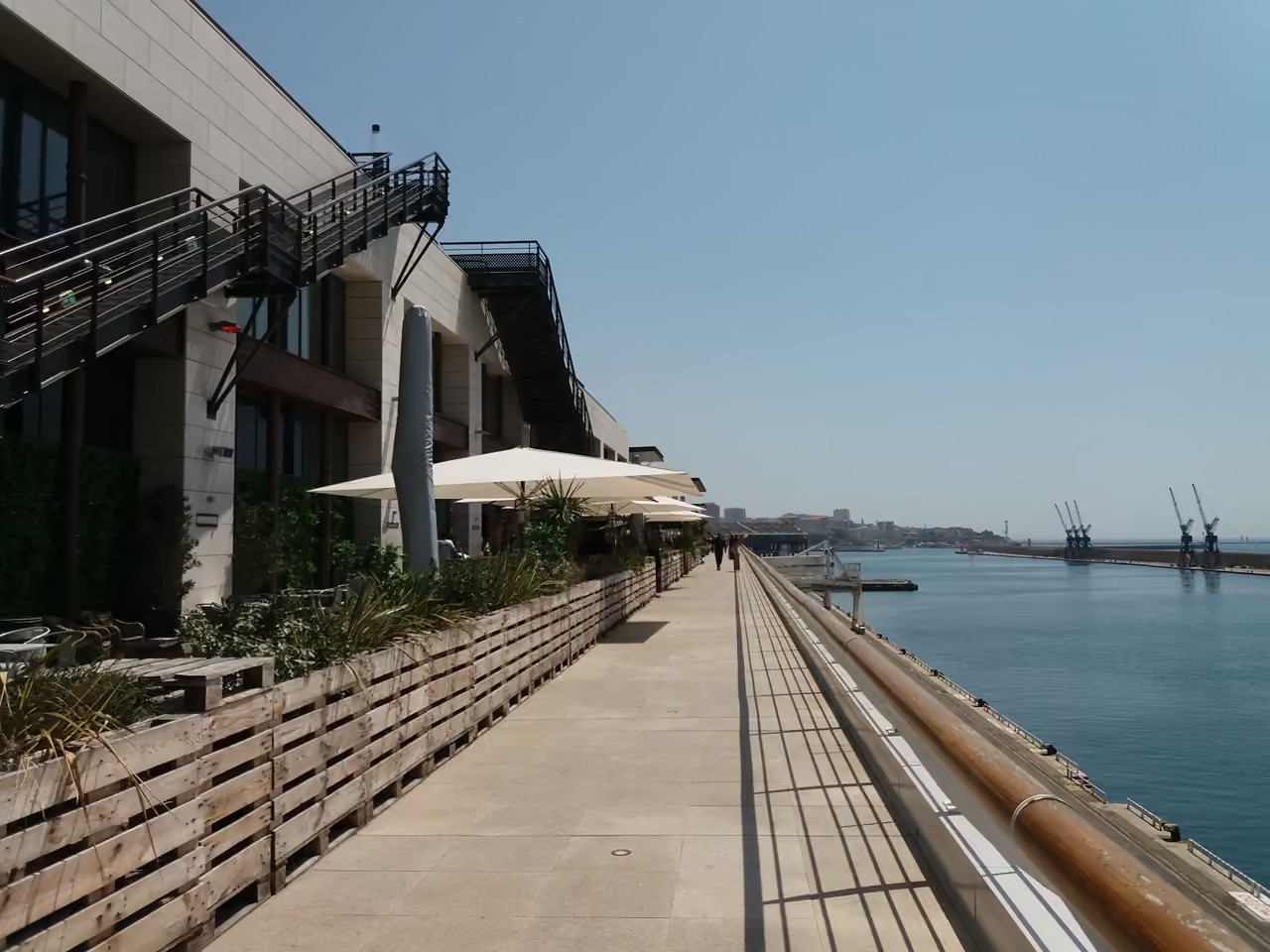
Vieux-Port, MuCEM & La Joliette Docklands Ride
Roll gently along flat pedestrianised harbour quays and broad modern esplanades connecting medieval fortifications, contemporary architecture, and breezy sunset decks.
view cycling route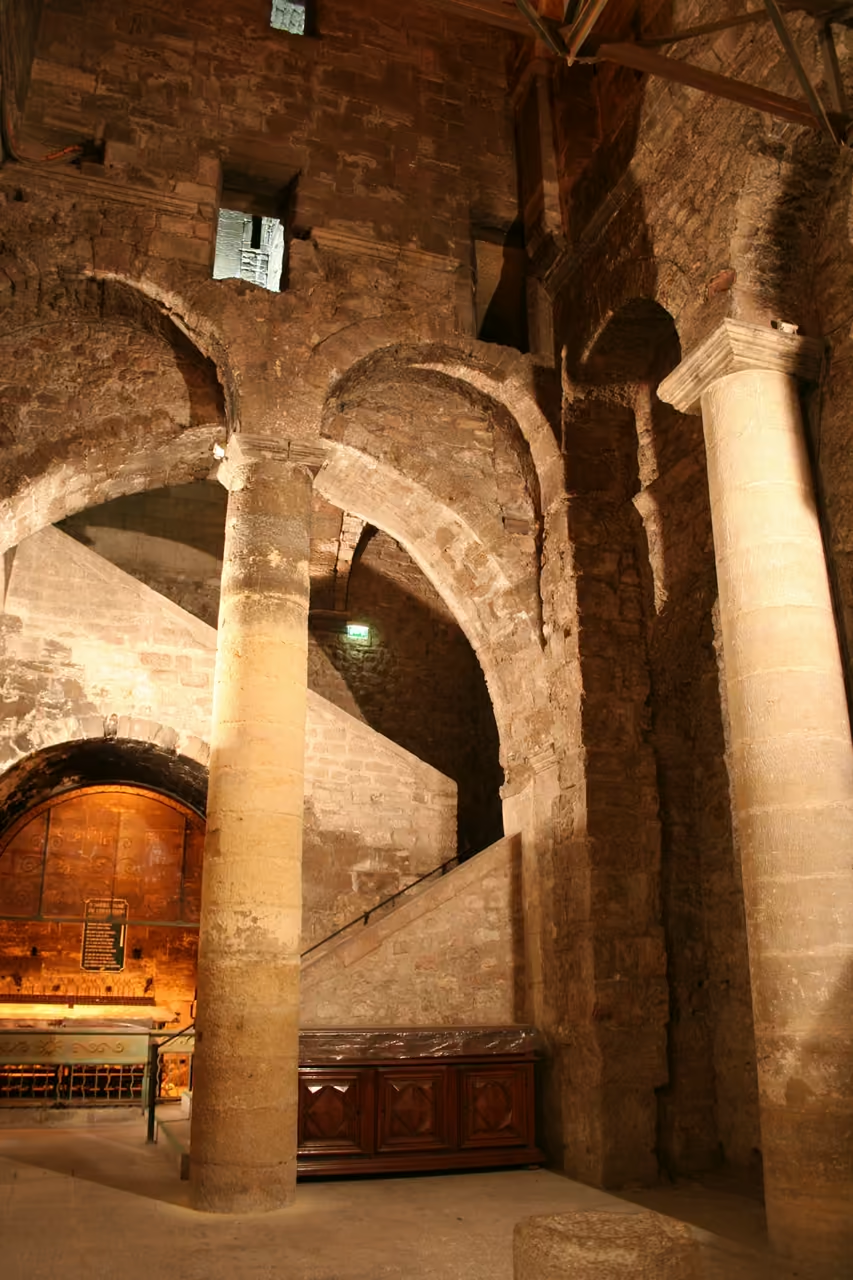
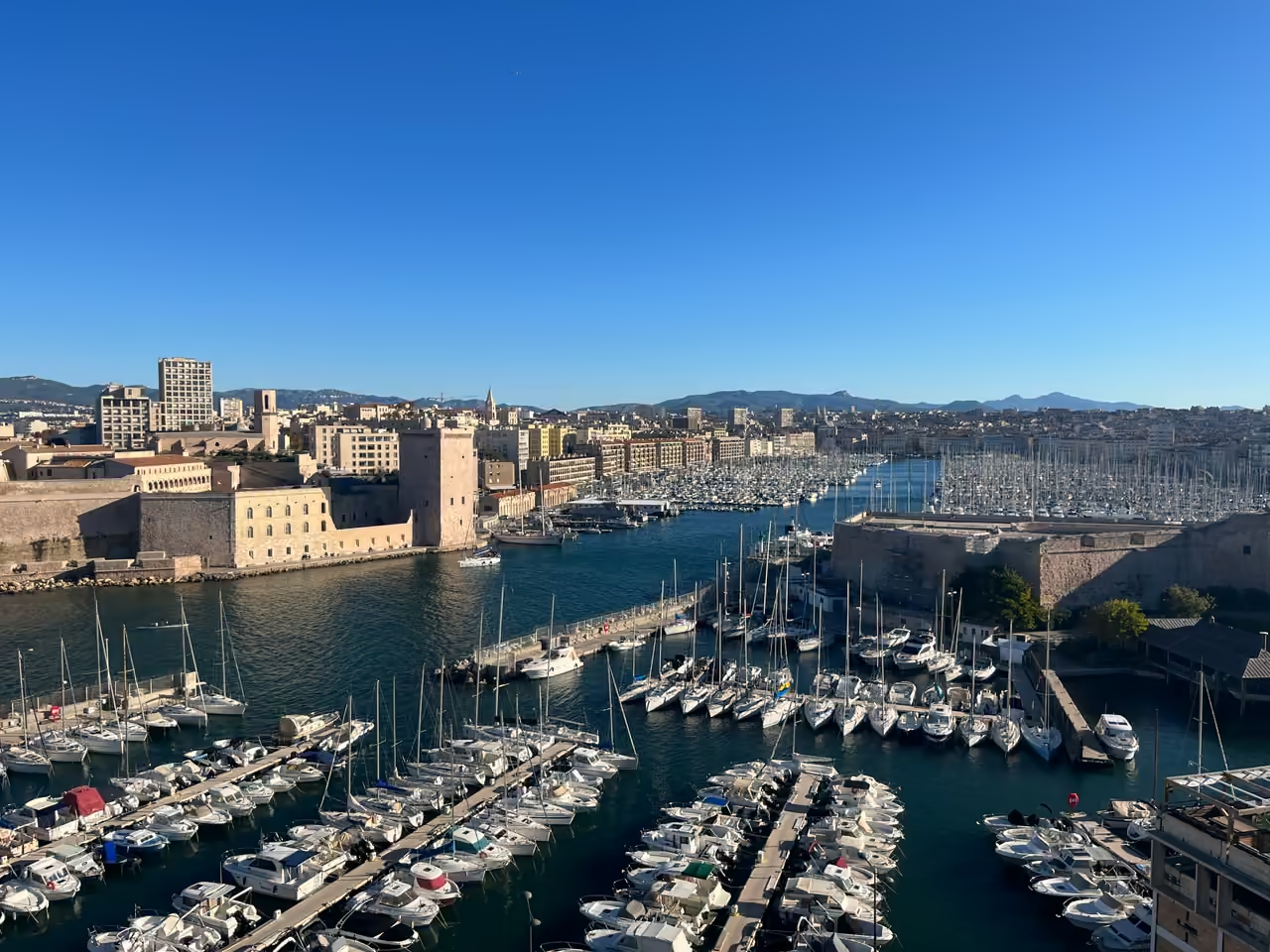
Royal Cannons & Island Prisons: Marseille's Sea Fortresses
Uncover centuries of maritime defence, rebellious town politics, and literary imprisonment across stone ramparts guarding the Vieux-Port and offshore reefs.
view self-guided tour
See all attractions in Marseille
Including Basilica of Notre-Dame de la Garde, Château d'If, Frioul Islands, and more