Hidden Gems & Local Secrets in Marseille

Step off the tourist trail and experience the authentic side of the city. We've bypassed the crowded landmarks to uncover the best-kept local secrets—from quiet neighborhood courtyards to underground art scenes. Dive into the forgotten histories and unique stories that make these spots truly special.

  • Old Port Ferry Boat

    LE FERRY-BOAT DU VIEUX-PORT
    15 M

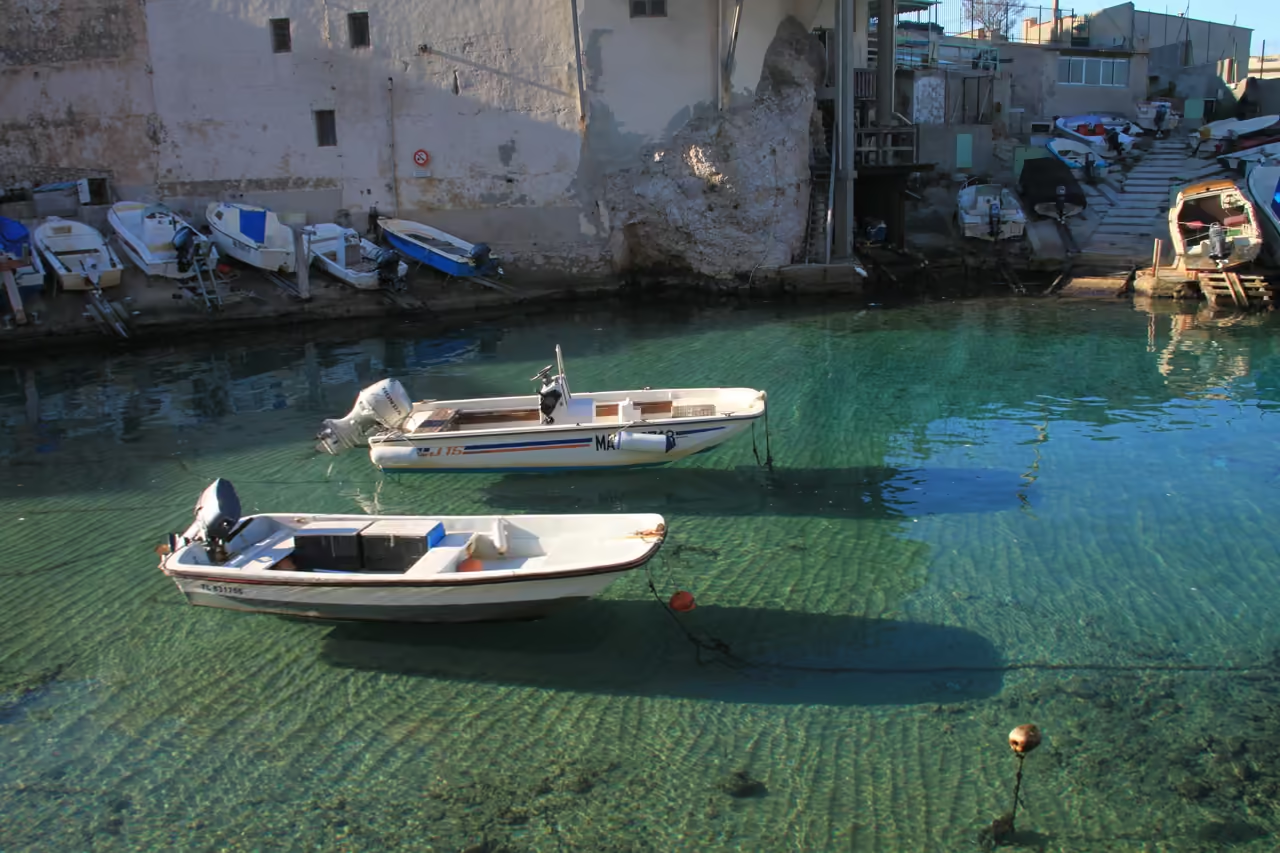
    Gliding noiselessly across 283 metres of water between City Hall and Place aux Huiles, Marseille's tiny shuttle proudly claims the title of Europe's shortest commercial boat ride. Locals use it as an everyday shortcut to dodge walking around the U-shaped harbour, stepping off in under three minutes flat.

    LOCATION

    Loading map...
  • Campagne Pastré

    2 H

    Stretching across 112 hectares of shady Aleppo pines and grassy meadows between Pointe-Rouge and the Montredon foothills, this former merchant estate feels worlds away from central street noise. Families picnic beside quiet canals and equestrian paddocks while hikers use its upper gates as a shaded backdoor climb straight onto the limestone trails of the Marseilleveyre massif.

    HISTORY & HIGHLIGHTS

    Wealthy Marseille merchant and shipowner Eugène Pastré assembled this sprawling coastal domain during the mid nineteenth century, commissioning architect Jean Charles Danjoy to build an ornate Provençal bastide at its heart in 1862. Surrounded by orchards, pine groves, and gardens watered by the newly completed Canal de Marseille, the estate served for decades as a grand summer retreat far from the bustling docks. During the Second World War, the estate took on an extraordinary moral role under Countess Lily Pastré. Turning her country home into a bold artistic refuge, she sheltered persecuted Jewish and exiled painters, writers, and musicians, hosting clandestine concerts and staging an open air production of A Midsummer Night's Dream beneath the pines in 1942 while launching an association devoted to keeping cultural life alive. Starting in 1966, the City of Marseille gradually acquired the estate to preserve one of the largest green corridors along the southern coast, opening its pine trails, meadows, and gates directly onto the foothills of the Calanques.

    events spanning 104 years

    YEAR 1862

    Château Pastré Bastide Completed

    Shipowner Eugène Pastré completes the ornate stone country mansion designed by Jean-Charles Danjoy amid landscaped coastal grounds watered by the Canal de Marseille.

    YEAR 1942

    Countess Lily Pastré Shelters Wartime Artists

    During the Second World War, Countess Lily Pastré turns the estate into a sanctuary for threatened artists and musicians, staging an open-air 1942 performance of A Midsummer Night's Dream under the pines.

    YEAR 1966

    City of Marseille Acquires the Estate for Public Parkland

    Municipal purchases beginning in 1966 preserve Campagne Pastré from suburban development, opening its woods and meadows as a public park bordering the Calanques hills.

    LOCATION

    Loading map...
  • Church of Saint-Laurent

    ÉGLISE SAINT-LAURENT DE MARSEILLE
    40 M

    Perched quietly above the Old Port channel right beside Fort Saint-Jean's footbridge, this honey-toned medieval church served Marseille's fishing guild for centuries. Step inside its cool, austere Provençal Romanesque nave to feel the salt-stained devotion of a shoreline parish that survived wartime demolition all around it.

    HISTORY & HIGHLIGHTS

    Ancient Greek colonists from Phocaea raised their earliest dwellings directly on this elevated headland around 600 BC, making the rocky crest beneath Saint Laurent the true cradle of Marseille. Archaeological digs outside its doors uncovered Archaic pottery confirming the spot where sea traders first settled above the Lacydon bay. Centuries later, local fishermen built a sturdy Provençal Romanesque parish church from pale limestone slabs during the twelfth and thirteenth centuries. Sailors prayed inside its simple barrel vaulted aisles before setting out past harbour reefs, and its octagonal bell tower later watched royal fortresses rise next door. During the dark winter of 1943, occupying German forces evacuated and dynamited the crowded streets of the Old Port right up to the church perimeter, leaving Saint Laurent standing almost alone amid rubble. Linked since 2013 by an elevated footbridge straight into Fort Saint Jean and MuCEM, the serene chapel preserves a direct stone thread connecting Marseille's fishermen to their Greek roots.

    events spanning 2613 years

    YEAR -600

    Phocaean Settlers Build on Butte Saint-Laurent

    Early Greek mariners construct the first homes of ancient Massalia directly upon the rocky promontory overlooking the Lacydon harbour.

    YEAR 1200

    Romanesque Fishermen's Parish Church Rises

    Masons erect the current limestone Provençal Romanesque sanctuary to serve the coastal fishing community of the Old Port.

    YEAR 1943

    Spared During 1943 Waterfront Clearance

    Surrounding medieval lanes behind the Vieux-Port are evacuated and dynamited, leaving the stone church standing intact above the docks.

    YEAR 2013

    Connected by Footbridge to Fort Saint-Jean

    A sleek aerial walkway links the church parvis directly across to Fort Saint-Jean and MuCEM as part of European Capital of Culture works.

    LOCATION

    Loading map...

    FULL PLACE DETAILS

    Updated

    ARCHITECTURE & HERITAGE

    Heritage Status
    Classified Historical Monument
    Architectural Styles
    Romanesque
  • L'Alcazar Historic Music Hall & Library

    BIBLIOTHÈQUE DE L'ALCAZAR
    45 M

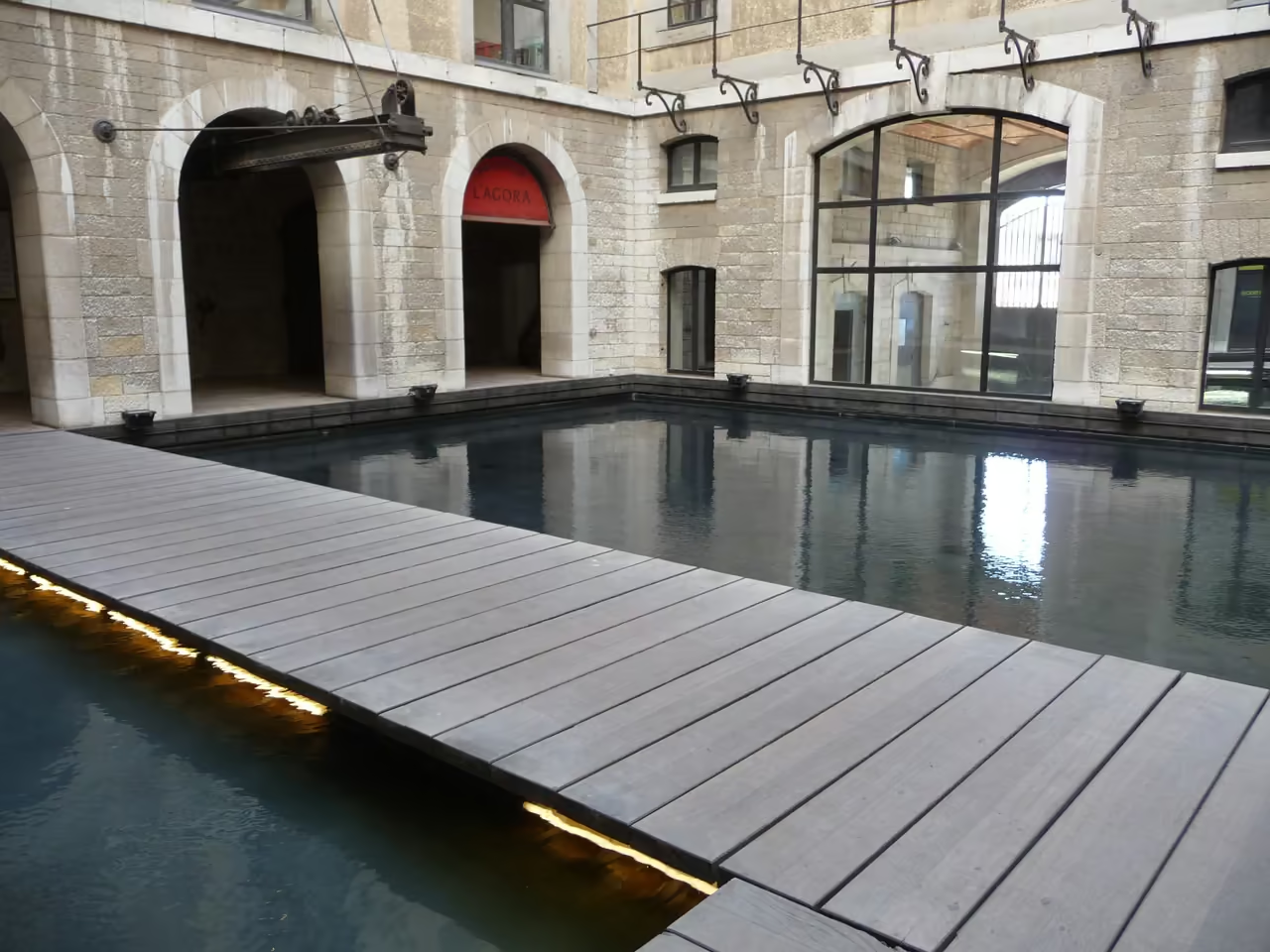
    Behind a dramatic twentieth-century glass-and-wrought-iron marquee on Cours Belsunce hides one of Marseille's richest double lives. Today it operates as the city's flagship public library overlooking a bright indoor atrium, yet its foyer echoes with memories of the legendary variety theatre where Yves Montand and Fernandel made their names.

    HISTORY & HIGHLIGHTS

    Digging beneath Cours Belsunce before opening the modern library revealed something astonishing: ancient Greek colonists had quarried clay here around 520 BC before turning the hillside into suburban vineyards. Roman and medieval builders later layered dwellings atop those sunken plots. Everything changed in 1857 when showmen unveiled the Alcazar, a Moorish inspired variety hall seating two thousand spectators right off the Canebière. Tough working class audiences famously judged singers mercilessly from the gallery, yet thriving under its spotlights launched the careers of Yves Montand, Fernandel, Tino Rossi, and Maurice Chevalier. Following the theatre's decline after midcentury television arrived, Marseille preserved the famous curved canopy and reopened the complex in 2004 as a soaring municipal library where students read beneath photographs of bygone variety stars.

    events spanning 2524 years

    YEAR -520

    Ancient Phocaean Clay Quarries and Vineyards

    Archaeological excavations reveal sixth-century-BC clay pits and early Greek vineyard trenches beneath the Cours Belsunce site.

    YEAR 1857

    Alcazar Music Hall Opens on Cours Belsunce

    Marseille's celebrated grand variety theatre welcomes audiences, becoming the premier southern proving ground for French chanson and comedy stars.

    YEAR 2004

    Reopened as Flagship Regional Library

    Restoring the famous Belle Époque canopy entrance, Marseille transforms the storied theatre site into the modern Alcazar public library.

    LOCATION

    Loading map...

    FULL PLACE DETAILS

    Updated

    OVERVIEW & STATS

    Established
    In 2004, making it 22 years old

    WEB & AMENITIES

  • Marseille National Tide Gauge

    LE MARÉGRAPHE DE MARSEILLE
    30 M

    Few passersby pausing along Corniche Kennedy realise that the modest nineteenth-century stone pavilion clinging to the rocks below holds France's ultimate ruler of height. Inside sits an ingenious mechanical well and recording instrument that established the zero-metre sea-level baseline still used on maps across mainland France, Switzerland, and Liechtenstein.

    HISTORY & HIGHLIGHTS

    When French cartographers resolved during the late nineteenth century to unify regional elevation maps under one accurate sea level benchmark, they needed a calm tidal harbour far removed from the Atlantic's dramatic swells. Marseille's sheltered limestone inlet along the Corniche offered an ideal laboratory where tidal swings rarely exceeded thirty centimetres. Engineers completed the neat masonry pavilion and deep coastal shaft in 1883, lowering a precision German mechanical float gauge inside a stilling well protected from storm waves. Continuous paper drum recordings began soon after, tracking every gentle Mediterranean rise and fall year round. By averaging more than a decade of uninterrupted data, surveyors fixed France's official zero elevation mark on a brass rivet embedded right inside the station. Protected today as a historic monument and fitted with modern satellite receivers alongside its nineteenth century clockwork brass wheels, the unassuming stone hut remains the altitude anchor not only for France, but also for neighbouring Switzerland and Liechtenstein.

    events spanning 119 years

    YEAR 1883

    Pavilion and Tidal Well Built on the Corniche

    Engineers construct the coastal masonry shelter and vertical seawater shaft beside Corniche Kennedy to house France's national mean sea-level station.

    YEAR 1885

    Continuous Sea-Level Recording Begins

    Automated mechanical instruments start recording Mediterranean tides around the clock to calculate France's official national levelling baseline.

    YEAR 2002

    Recognised as a French Historic Monument

    France protects the Marégraphe pavilion and its vintage nineteenth-century mechanical gauge as an official national scientific monument.

    LOCATION

    Loading map...

    FULL PLACE DETAILS

    Updated

    OVERVIEW & STATS

    Established
    In 1883, making it 143 years old

    ARCHITECTURE & HERITAGE

    Heritage Status
    Classified Historical MonumentMonument Selected By The Mission To Identify Immovable Heritage In Danger (2018)
  • House of Cinema

    CHÂTEAU DE LA BUZINE
    1 H 30 M

    Out in Marseille's leafy eastern valleys, an elegant nineteenth-century country bastide stands wrapped in shaded woodland trails and film memorabilia. Famous across France as the forbidding canal-side estate from Marcel Pagnol's childhood memoir 'Le Château de ma mère', it now invites visitors inside as a lively museum and cinema.

    HISTORY & HIGHLIGHTS

    Constructed in 1867 by architect Pierre Hilaire Curtil for wealthy landowner Henri de Buzine, this stately country bastide mirrored thousands of summer estates scattered across Marseille's rural valleys. Surrounded by Aleppo pines and bordered by the Canal de Marseille, it sat far from noisy dockside factories. In 1941, acclaimed Marseille filmmaker Marcel Pagnol purchased the property hoping to establish a sun drenched Mediterranean City of Cinema to rival Hollywood. Wartime shortages derailed his grand studio plans, yet Pagnol discovered a deeply personal twist: this very house had loomed over his terrified childhood family walks whenever they took the forbidden canal bank shortcut toward La Treille. He immortalised that memory in his 1957 memoir Le Château de ma mère. Restored by the city and reopened in 2011 as the House of Cinema, the bastide finally fulfils Pagnol's original dream of celebrating southern film heritage.

    events spanning 144 years

    YEAR 1867

    Country Bastide Constructed in Eastern Valleys

    Architect Pierre-Hilaire Curtil completes the neoclassical stone château beside the Canal de Marseille.

    YEAR 1941

    Marcel Pagnol Acquires the Estate

    Filmmaker and novelist Marcel Pagnol purchases the estate hoping to build a Mediterranean film studio complex before wartime disruption halts plans.

    YEAR 1957

    Immortalised in Le Château de ma mère

    Pagnol's beloved memoir turns the estate's imposing canal gate into one of French literature's most recognisable childhood settings.

    YEAR 2011

    Reopens as Marseille's House of Cinema

    Following municipal restoration, the mansion opens to the public with screening rooms and exhibitions dedicated to Mediterranean film.

    LOCATION

    Loading map...

    FULL PLACE DETAILS

    Updated

    ARCHITECTURE & HERITAGE

    Heritage Status
    Monument Historique Inscrit

    WEB & AMENITIES

  • Marseille Observatory at Longchamp

    OBSERVATOIRE DE MARSEILLE
    1 H

    Tucked discreetly behind the monumental cascades of Palais Longchamp, Marseille's historic astronomy campus houses the pioneering 80-centimetre silvered-glass reflector designed by Léon Foucault. Join a public planetarium session or open-dome visit to inspect Victorian brass mechanics that once reshaped deep-sky astronomy.

    HISTORY & HIGHLIGHTS

    Astronomers first trained telescopes skyward from Marseille in 1702 inside a hillside house in the Panier district, charting comets and Mediterranean longitudes for mariners. As nineteenth century city smoke thickened around the harbour, scientists sought clearer air on the elevated Longchamp plateau. Relocating onto the plateau in 1860 beside the rising water palace, the observatory received an astonishing piece of optical engineering: an eighty centimetre reflecting telescope built by physicist Léon Foucault using silvered glass instead of heavy metal speculum. Its lighter, brighter mirror unlocked distant nebulae previously invisible to older instruments. In 1877, observatory director Édouard Stephan aimed Foucault's wooden framed reflector at Pegasus and spotted five tightly clustered galaxies later named Stephan's Quintet, one of astronomy's classic deep space images. Though modern astrophysics moved elsewhere, preserved domes and the planetarium still welcome curious visitors inside the quiet park.

    events spanning 175 years

    YEAR 1702

    Observatory Founded Near the Old Port

    Jesuit astronomers establish Marseille's first official observatory inside the Montée des Accoules neighbourhood to chart skies and port navigation.

    YEAR 1860

    Transfer to the Longchamp Plateau

    Seeking clearer elevated horizons away from harbour smoke, astronomers relocate operations above the Longchamp water reservoirs.

    YEAR 1864

    Installation of Léon Foucault's Telescope

    Physicist Léon Foucault installs an innovative 80-centimetre silvered-glass reflecting telescope beneath a wooden observing dome.

    YEAR 1877

    Discovery of Stephan's Quintet

    Observatory director Édouard Stephan identifies the celebrated five-galaxy cluster known as Stephan's Quintet through Longchamp's mirror.

    LOCATION

    Loading map...

    FULL PLACE DETAILS

    Updated

    OVERVIEW & STATS

    Established
    In 1863, making it 163 years old
    Elevation
    40 m

    WEB & AMENITIES

KEEP EXPLORING

More to see in Marseille