Heights Park
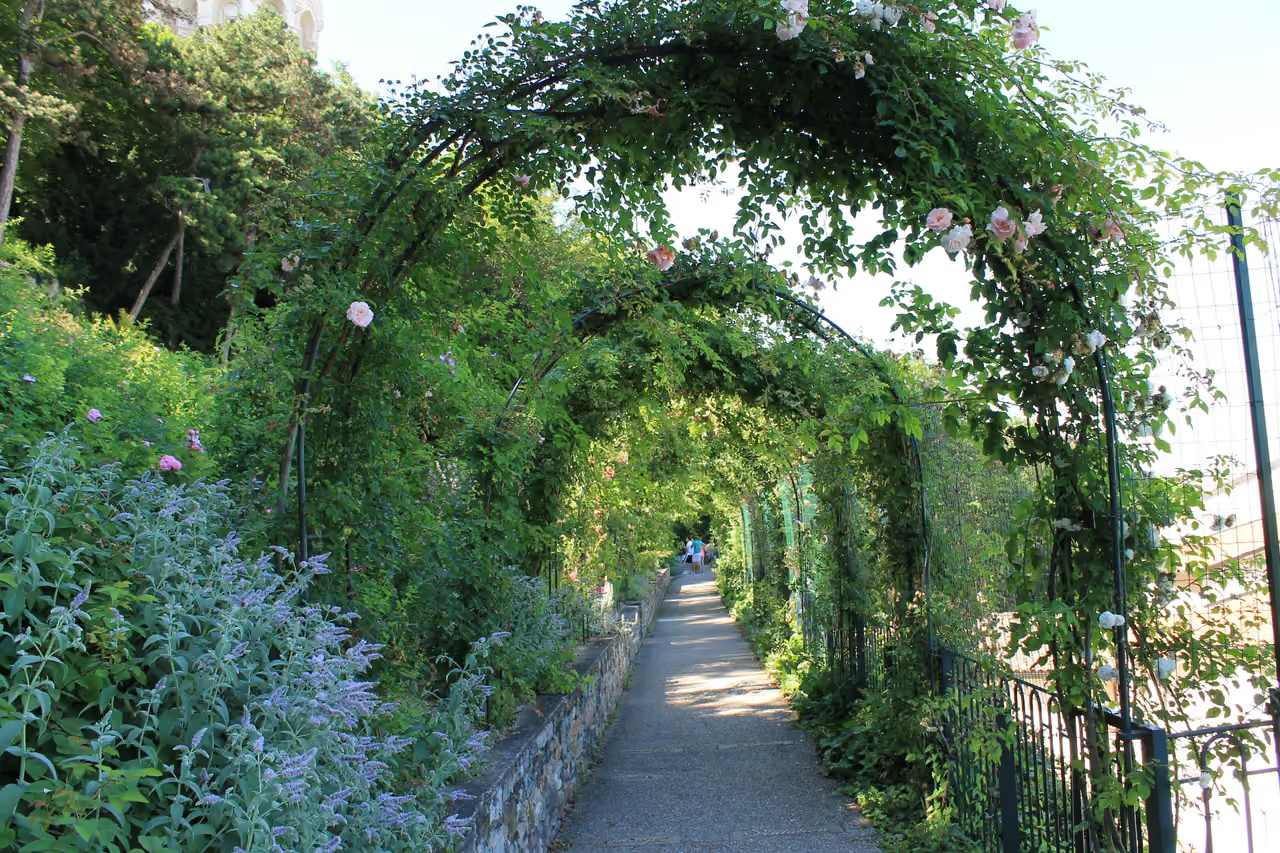
Perched atop Lyon's historic Fourvière hill, Heights Park offers an inspiring journey through history, nature, and breathtaking cityscapes. This expansive urban park seamlessly weaves together ancient Roman ruins, tranquil religious gardens, and exhilarating panoramic viewpoints. Visitors can stroll along the iconic Passerelle des Quatre-Vents, a former tramway viaduct that once transported both passengers and coffins, now providing a unique vantage point over the city and the Monts d'Or. Explore the serene Jardin du Rosaire, with its antique roses and hydrangeas, or delve into the archaeological park surrounding the ancient Roman theatre and odeon. It is a place that truly captures the essence of Lyon, blending its rich past with a vibrant present.
Videos
History of Heights Park
The story of Heights Park is inextricably linked to the colline de Fourvière itself, a hill that has shaped Lyon's identity for millennia. In 1807, the creation of Loyasse cemetery on the hill's western edge presented a significant challenge: how to provide access. This led to a remarkable engineering feat at the turn of the 20th century: the construction of a funicular and tramway line, completed in 1900. A defining feature of this line was the Passerelle des Quatre-Vents, a viaduct that carried tramways, which not only transported daily commuters but also, rather uniquely, coffins to the cemetery. Over the decades, as Lyon expanded, the importance of preserving Fourvière's natural beauty and historical significance grew. A pivotal moment occurred in 1930, when a tragic landslide on the hill's eastern slope claimed 39 lives. This disaster led to a crucial decision by municipal authorities: a permanent ban on construction across the entire hill, safeguarding its landscapes and ensuring its role as a green lung for the city. Meanwhile, the historic tramway line to Loyasse, along with its funicular connection, ceased operations by 1938, making way for new urban visions. Throughout the mid-20th century, urban planners consistently sought to integrate Fourvière's assets into the city's fabric. The archaeological park, housing the ancient Roman theatre and odeon, was gradually developed, and several religious congregations’ lands were acquired to facilitate public access. By 1989, the idea of a comprehensive 'Parc des Hauteurs' coalesced, envisioned not just as a collection of green spaces, but as a connecting pathway that would link the hill's diverse attractions: its archaeological past, its spiritual present centred around the basilica, and potential future artistic venues. The official creation of Heights Park in 1993 marked a new chapter, transforming these disparate elements into a cohesive, public amenity. Projects like the redevelopment of the Jardin du Rosaire, with its terraced gardens and ancient roses, showcased this integrated approach. Today, the park continues to evolve, reflecting a deep respect for its layered history while providing Lyon's residents and visitors with an essential space for recreation, reflection, and unparalleled views of the city it overlooks.
events spanning 186 years
Fun Facts
- • A catastrophic landslide in 1930 on Fourvière hill resulted in 39 fatalities and led to a lasting municipal decree prohibiting all further construction on the hill's slopes, effectively preserving its green character.
- • Despite its ambitious scope, the Parc des Hauteurs project remains partially unfinished, with certain sections still awaiting development due to complexities in securing land agreements with private owners.
- • Pierre Bossan, the acclaimed architect behind Lyon's iconic Notre-Dame de Fourvière Basilica, also played a significant role in the initial design and conception of the gardens directly beneath the basilica, now part of the Jardin du Rosaire.
- • The Jardin du Rosaire features the Chapel Sainte-Philomène, built by the revered Pauline Jaricot in 1839 as a token of gratitude for her miraculous recovery from illness in Italy.
- • The Parc de la Visitation includes buildings that once housed the Visitandines community, which moved there after the 1848 Canuts revolt, a significant uprising of silk workers in Lyon.
- • The Passerelle des Quatre-Vents, a prominent feature of the park, once carried a tramway line that transported not only passengers but also coffins to the Loyasse cemetery, making it a unique historical route.
- • The initial vision for Heights Park was not merely a green space, but a conceptual 'pathway' designed to link several distinct attractions: an archaeological zone, a religious space around the basilica, and a future arts area.
- • The park incorporates sections of what was once considered the shortest railway line in France, specifically the tramway connecting the funicular to Loyasse cemetery.
Heights Park FAQ
While we strive to keep this information accurate and up to date, we recommend verifying any details independently before making decisions based on them.
Heights Park Map & Neighborhood Explorer
This interactive map is centered on Heights Park. Zoom in and move the map around to automatically discover Wikipedia photos and summaries of other nearby sights, monuments, and historical points of interest and stories in real-time!
Places near Heights Park
Make the most of your trip. Check out these top-rated spots located nearby.
 257m
257mRoman Theatre of Lyon
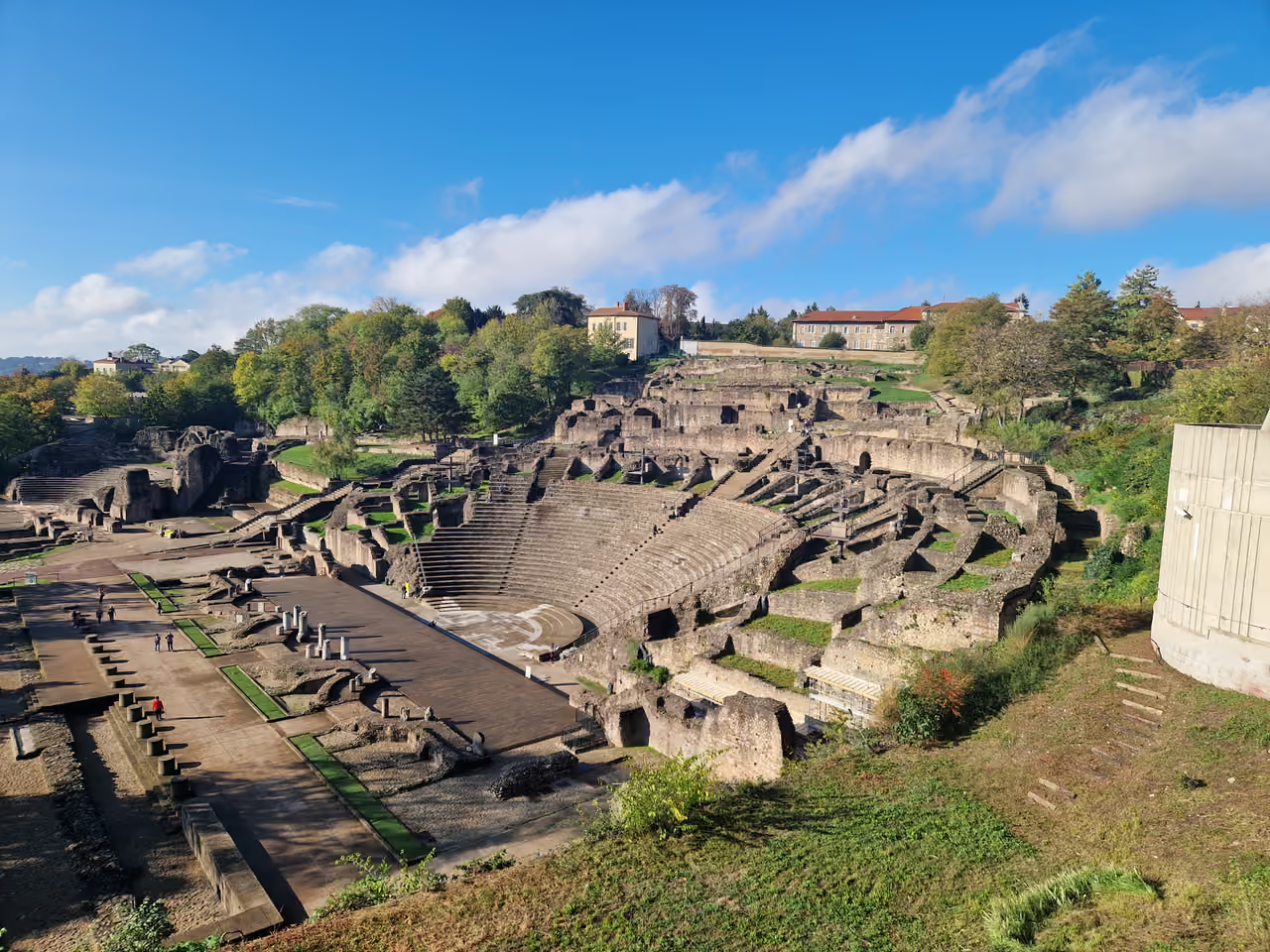
Imagine the roar of 10,000 Roman spectators echoing across the hillside of Fourvière; that's the spirit you'll find at the Roman Theatre of Lyon. This ancient marvel, one of Gaul's oldest, offers a compelling journey back to Lugdunum's glory days. It's not just a collection of old stones, but a meticulously restored amphitheatre that brings history to life, especially during the annual Nuits de Fourvière festival. You can wander through its tiers, touch the aged stone, and feel the weight of centuries, all while enjoying panoramic views of modern Lyon below. It's a place where Roman engineering and cultural heritage blend seamlessly with contemporary artistry, making it an essential stop for anyone wanting to connect with the city's profound past.
attraction view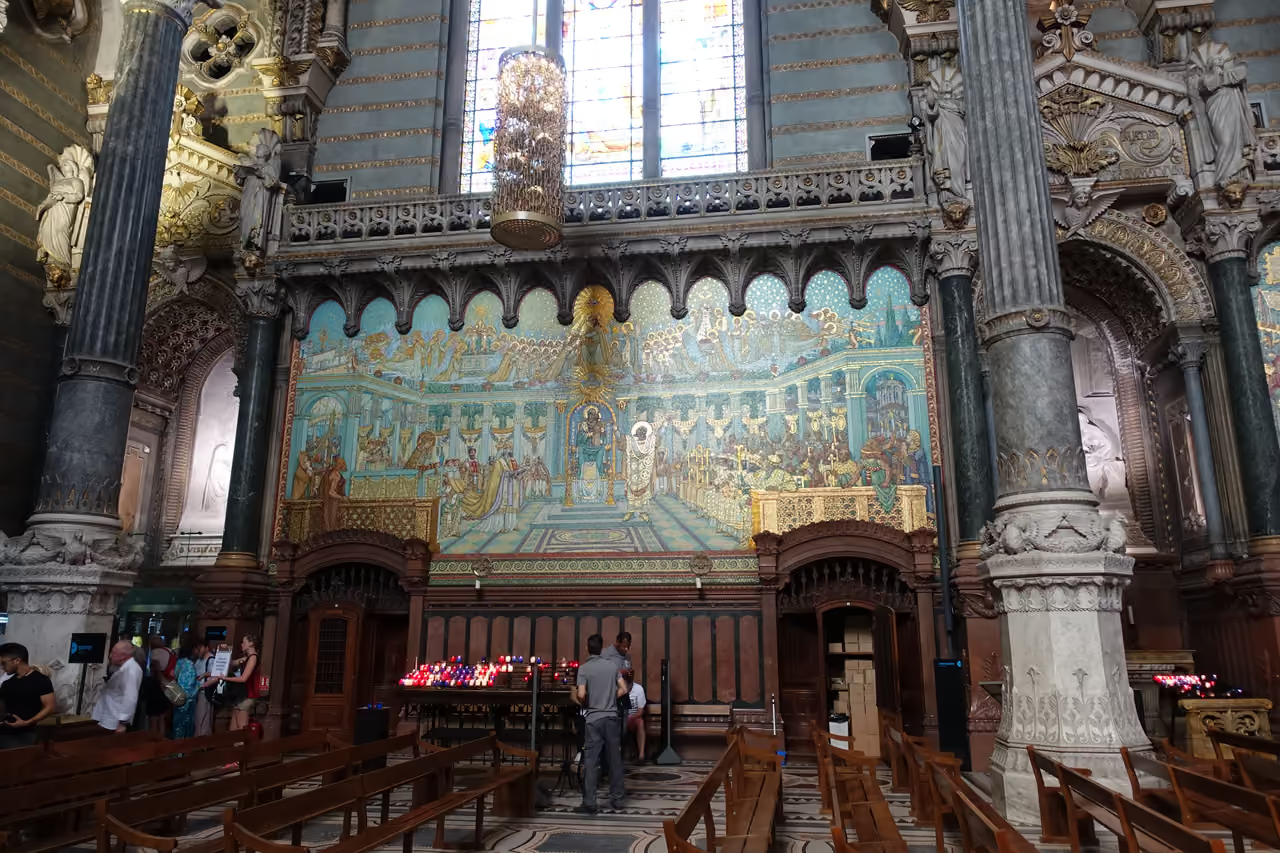 313m
313mBasilica of Notre-Dame de Fourvière
Lyon's residents call it the upside-down elephant, and once someone has pointed out the four stout corner towers as legs, the nickname is hard to unsee. The basilica crowns Fourvière hill, and the quickest way up is the funicular from Vieux Lyon, known locally as la ficelle, the string. Inside, the pale stone exterior gives way to walls and vaults covered in mosaics, with a crypt below that matches the church's footprint and hosts concerts by candlelight. Expect a queue for the funicular at busy times, though the ride itself takes only a couple of minutes. Every 8 December a procession of lantern carriers climbs the hill, which is the oldest and quietest strand of Lyon's famous festival of light. Before leaving, walk to the railing at the edge of the terrace, where the Saône slides past the red-tiled roofs of Vieux Lyon almost directly below.
attraction view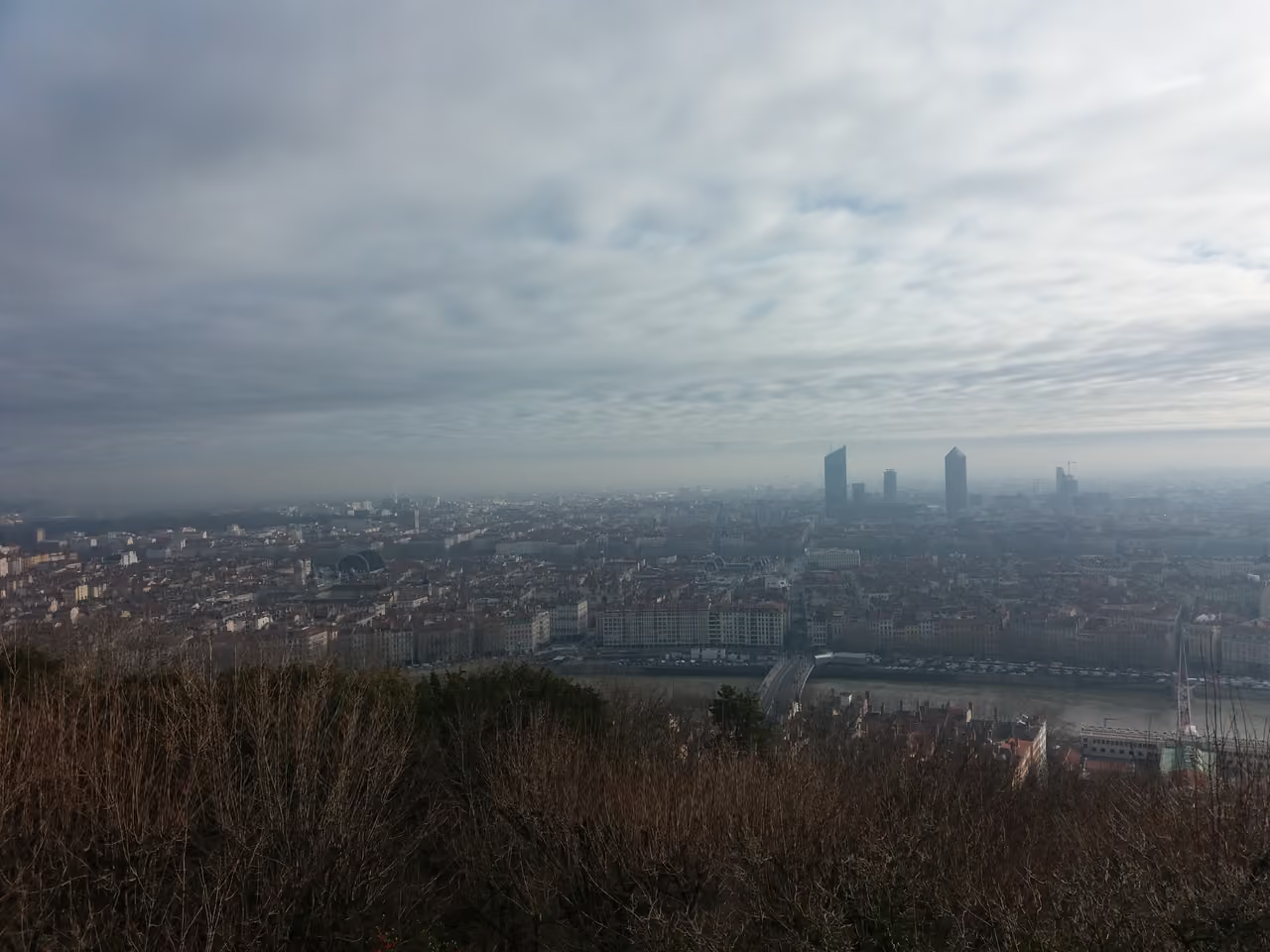 343m
343mFourvière Esplanade
The wide stone terrace immediately next to the basilica offers the definitive, sweeping panorama over the entire urban basin. You look directly down onto the red roofs of the Renaissance old town and the two rivers cutting through the centre. The financial district's skyscrapers puncture the horizon to the east. On clear days, the snow-capped peak of Mont Blanc is sharply visible hundreds of kilometres away in the Alps. It is the mandatory first stop for understanding the city's geography.
viewpoint view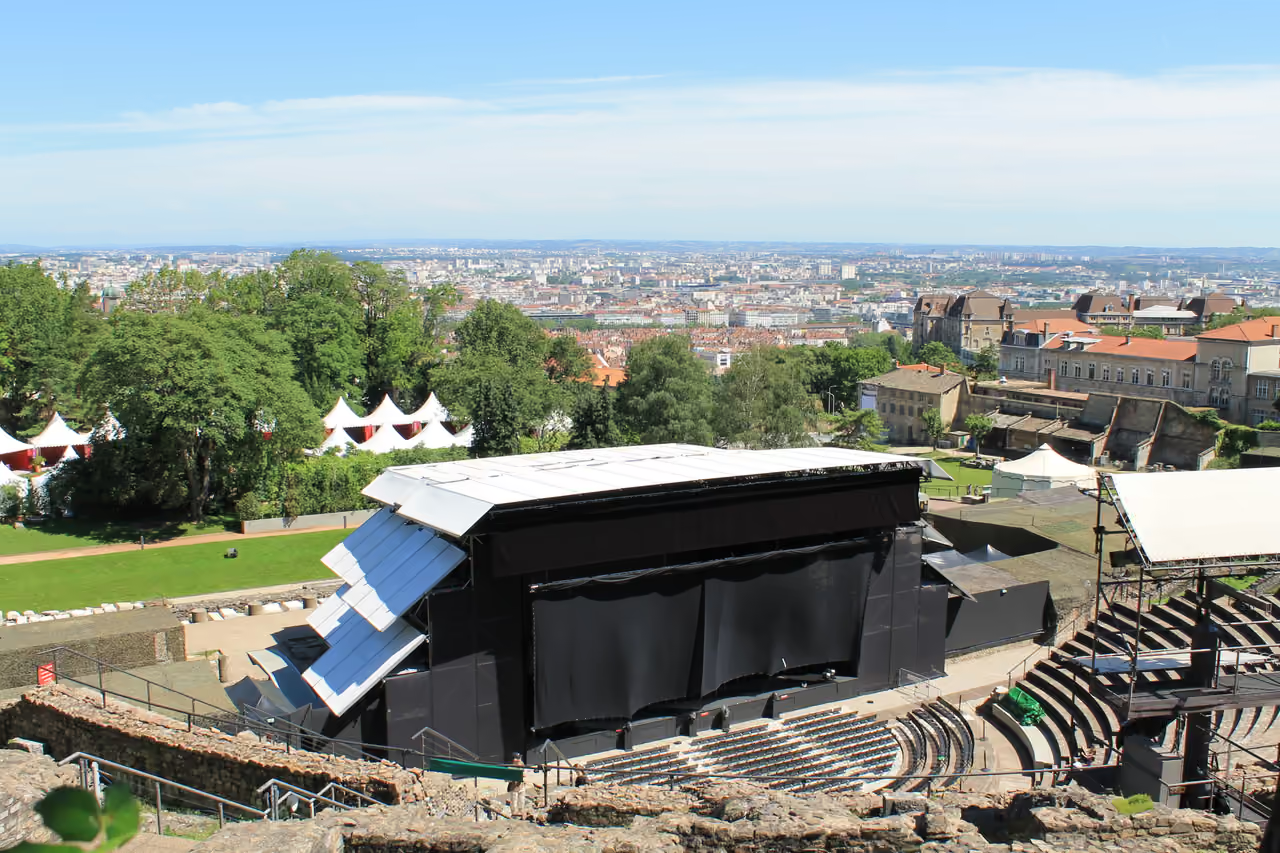 374m
374mFourvière Nights
Performers take to the stage inside a 2,000-year-old Roman theatre carved directly into the hillside. The festival spans theatre, music, dance, and cinema under the open summer sky. International musicians often alter their usual stadium sets to fit the intimate, ancient acoustics of the stone tiers. Audiences traditionally throw their seat cushions toward the stage at the end of a successful performance. The city stretches out below the venue, providing a dramatic backdrop as darkness falls.
festival view
See all nature & parks in Lyon
Including Tête d'Or Park, Garden of Curiosities, Gerland Henry-Chabert Park, and more