Roman Theatre of Lyon
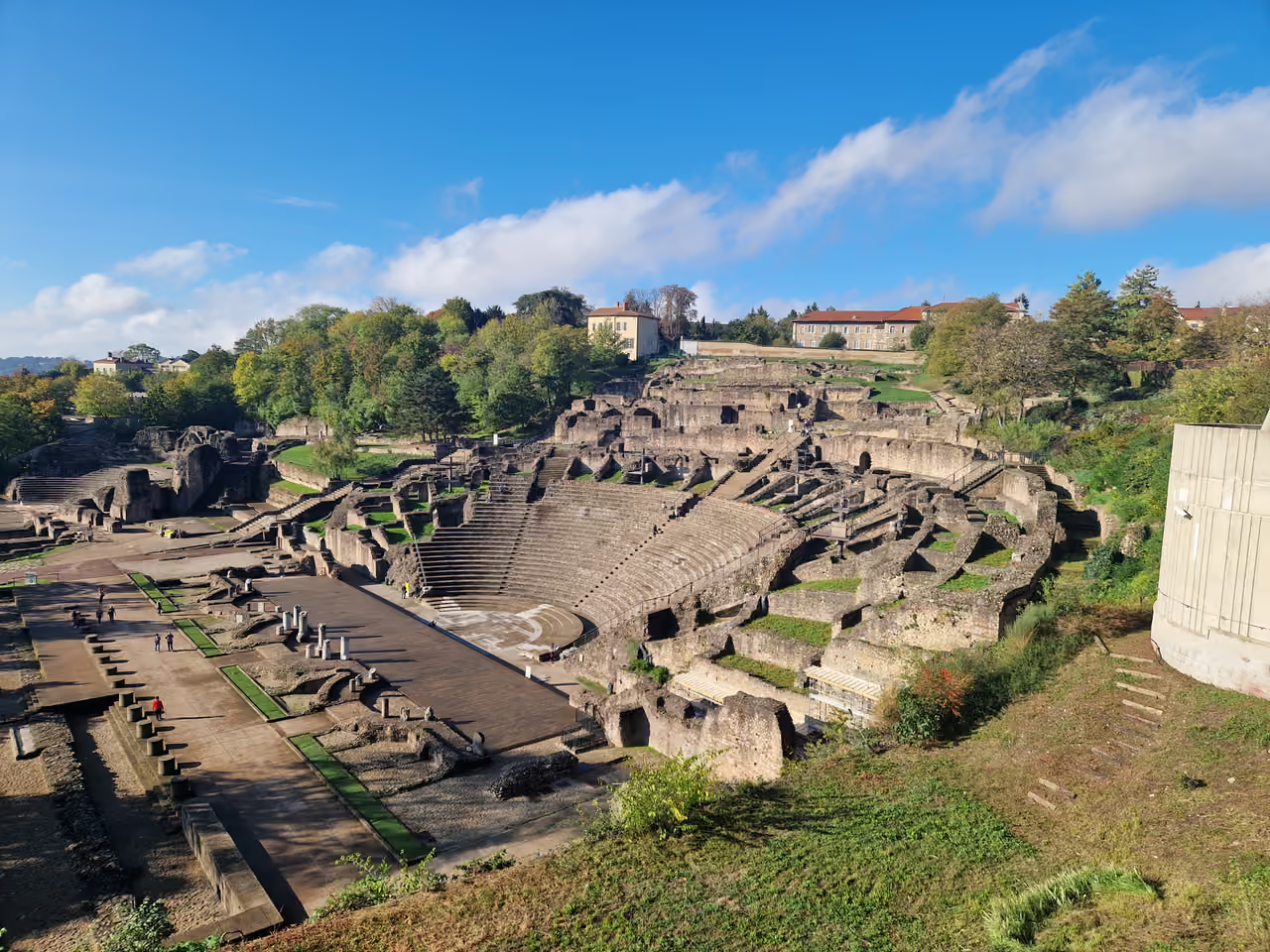
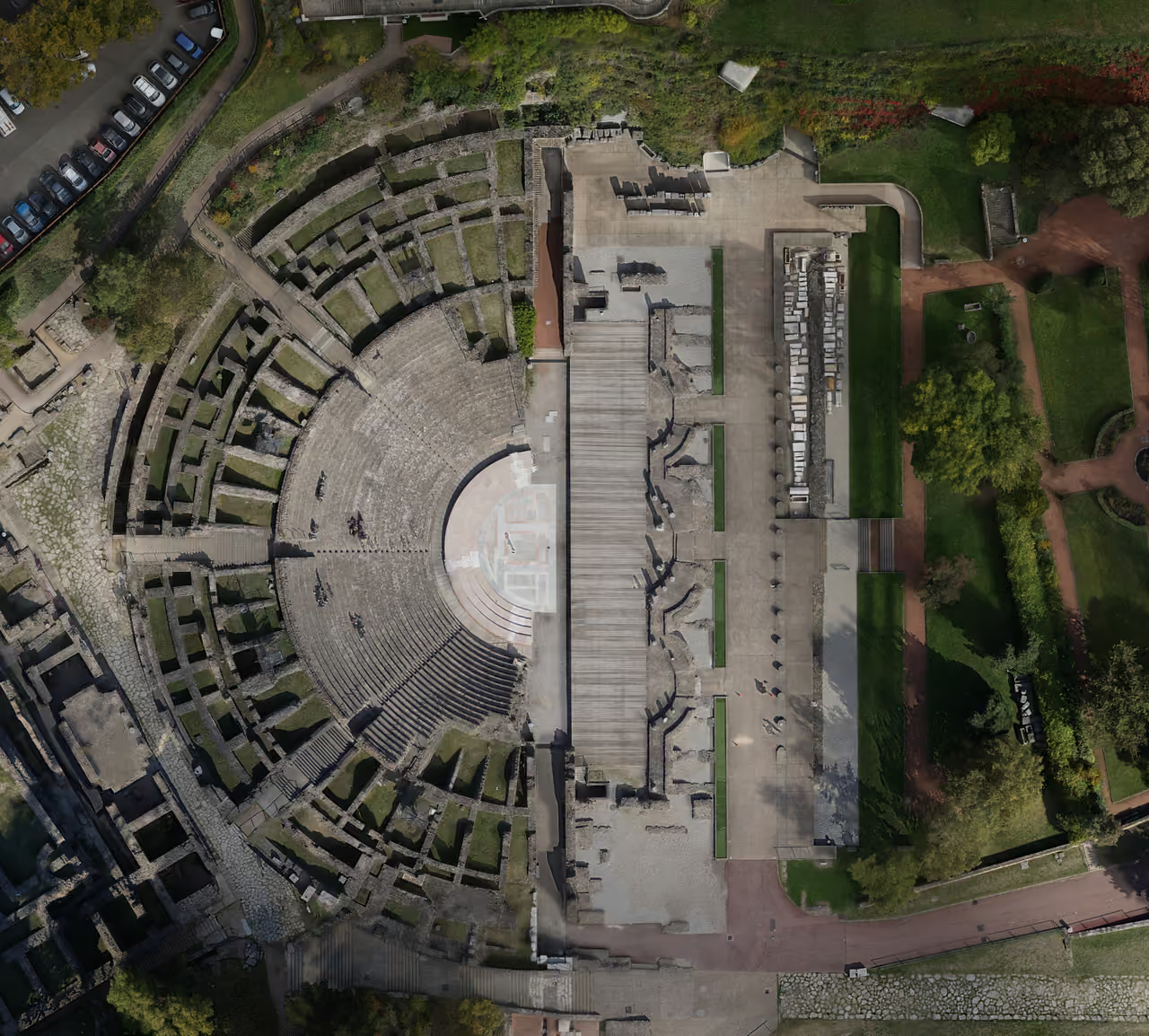
Imagine the roar of 10,000 Roman spectators echoing across the hillside of Fourvière; that's the spirit you'll find at the Roman Theatre of Lyon. This ancient marvel, one of Gaul's oldest, offers a compelling journey back to Lugdunum's glory days. It's not just a collection of old stones, but a meticulously restored amphitheatre that brings history to life, especially during the annual Nuits de Fourvière festival. You can wander through its tiers, touch the aged stone, and feel the weight of centuries, all while enjoying panoramic views of modern Lyon below. It's a place where Roman engineering and cultural heritage blend seamlessly with contemporary artistry, making it an essential stop for anyone wanting to connect with the city's profound past.
Videos
History of Roman Theatre of Lyon
The story of Lyon's Roman Theatre begins in the heart of the burgeoning Roman city of Lugdunum, possibly around 15 BC, during the time of Emperor Augustus. It was a period of grand vision, when monumental public structures became the hallmarks of Roman urban life, and this theatre was designed to be one of the earliest and most significant in Gaul. Initially seating around 5,700, it was later expanded to accommodate a staggering 10,000 spectators, a testament to Lugdunum's growing prominence and the Roman passion for spectacle. This expansion, likely between the 1st and 2nd centuries AD, saw the addition of new tiers and the use of distinct construction techniques, creating the impressive footprint we see today. For centuries, the theatre was a vibrant centre of Roman life, hosting everything from plays and pantomimes to oratorical contests. Historical accounts mention events potentially overseen by Emperor Caligula and even a dancer of Caracalla who found an unlikely path to power in Lyon's rustic charm. However, as the Roman Empire waned and Christianity gained influence, the theatre's purpose diminished. By the 4th century, Christian condemnation of its 'impudent' mythological references and performances led to its gradual abandonment. The once-grand structure fell into disuse, its location on the Fourvière hill becoming less central as the city developed along the Saône River. The medieval period brought a darker fate. The theatre became a convenient quarry, its finely cut stones systematically plundered to build new structures for the rising city of Lyon, including crucial bridges over the Saône and Rhône, and even parts of the Saint-Jean Cathedral. What remained was eventually buried by landslides from the unstable hillside, disappearing completely from view. For centuries, the site was lost to memory, its emerging ruins vaguely referred to as the 'Grottes des Sarrasins' (Caves of the Saracens) by locals, who speculated about their origin. The theatre's rediscovery began in 1887 when a professor, intrigued by the unusual curved shape of his garden, started to unearth ancient walls. This sparked a contentious debate among historians, many of whom mistakenly identified the ruins as the amphitheatre where Lyon's martyrs were persecuted. It was not until 1933, spurred by the mayor Édouard Herriot and a desire to create public works during an economic downturn, that extensive archaeological excavations truly began. This massive undertaking, employing many unemployed workers, finally revealed the structure's true identity as a theatre, not an amphitheatre, and led to its painstaking restoration. By 1946, the ancient stage roared to life once more, hosting its first modern performance with Aeschylus's 'The Persians'. Today, the Roman Theatre, now a UNESCO World Heritage site, continues its legacy as a cultural heart, most famously as the evocative setting for the 'Nuits de Fourvière' festival, where ancient stones once again witness the magic of performance.
8 events spanning 2013 years
Fun Facts
- • A unique construction technique known as 'opus mixtum,' featuring alternating layers of small schist blocks and double courses of bricks, was employed in the theatre's later expansion, a detail that led to considerable archaeological debate over its precise dating.
- • After its abandonment, the theatre was not merely forgotten; it was actively mined as a quarry. Its expertly cut stones were reused in major medieval constructions across Lyon, including its bridges and the foundational elements of the Saint-Jean Cathedral.
- • Archaeological studies have shown that the theatre boasted a sophisticated rising curtain mechanism for its stage, a device that has been imaginatively recreated in a working model at the nearby Lugdunum Museum.
- • During its prime, the theatre could accommodate approximately 10,000 spectators, making it the second-largest Roman theatre in Gaul, surpassed only by the theatre at Autun.
- • During the early 20th-century excavations, workers were incentivized with bonuses for finds; a fragment of decorated ceramic could earn them 25 francs, while an ancient coin might net 200 francs.
- • For centuries, the theatre lay buried under earth and debris, its visible remnants leading locals to refer to it mysteriously as 'Caverna' or 'massa grossa sarracenorum' (Caves of the Saracens).
- • Its initial rediscovery in the late 19th century sparked a lively debate among historians, with many mistakenly identifying it as the amphitheatre where Lyon's early Christian martyrs met their fate.
- • The 'frons scaenae,' or stage wall, adhered strictly to the canonical architectural schemes laid out by Vitruvius, featuring three monumental, curved doorways, including the central 'valvae regiae' (royal door) for principal actors.
- • The Roman Theatre of Lyon, dating back to around 15 BC, is considered one of the oldest Roman theatres in all of Gaul, predating many other significant Roman structures in the region.
- • The archaeological excavations initiated in 1933 were a major public works project during the Great Depression, employing up to 120 workers, whose efforts were crucial in uncovering and restoring the site.
- • The orchestra's opulent polychrome pavement, crafted from granite, pink breccia, and cipolin, was cleverly engineered with a gentle slope towards its centre to efficiently drain rainwater through a hidden canalization system.
- • The theatre's construction involved a diverse array of materials: local gneiss and granite for its core, limestone from Bugey and Provence for seating, and imported marble from as far as Italy, Greece, and even Egyptian porphyry for its luxurious ornamentation.
Roman Theatre of Lyon FAQ
While we strive to keep this information accurate and up to date, we recommend verifying any details independently before making decisions based on them.
Roman Theatre of Lyon Map & Neighborhood Explorer
This interactive map is centered on Roman Theatre of Lyon. Zoom in and move the map around to automatically discover Wikipedia photos and summaries of other nearby sights, monuments, and historical points of interest and stories in real-time!
Places near Roman Theatre of Lyon
Make the most of your trip. Check out these top-rated spots located nearby.
 134m
134mFourvière Nights
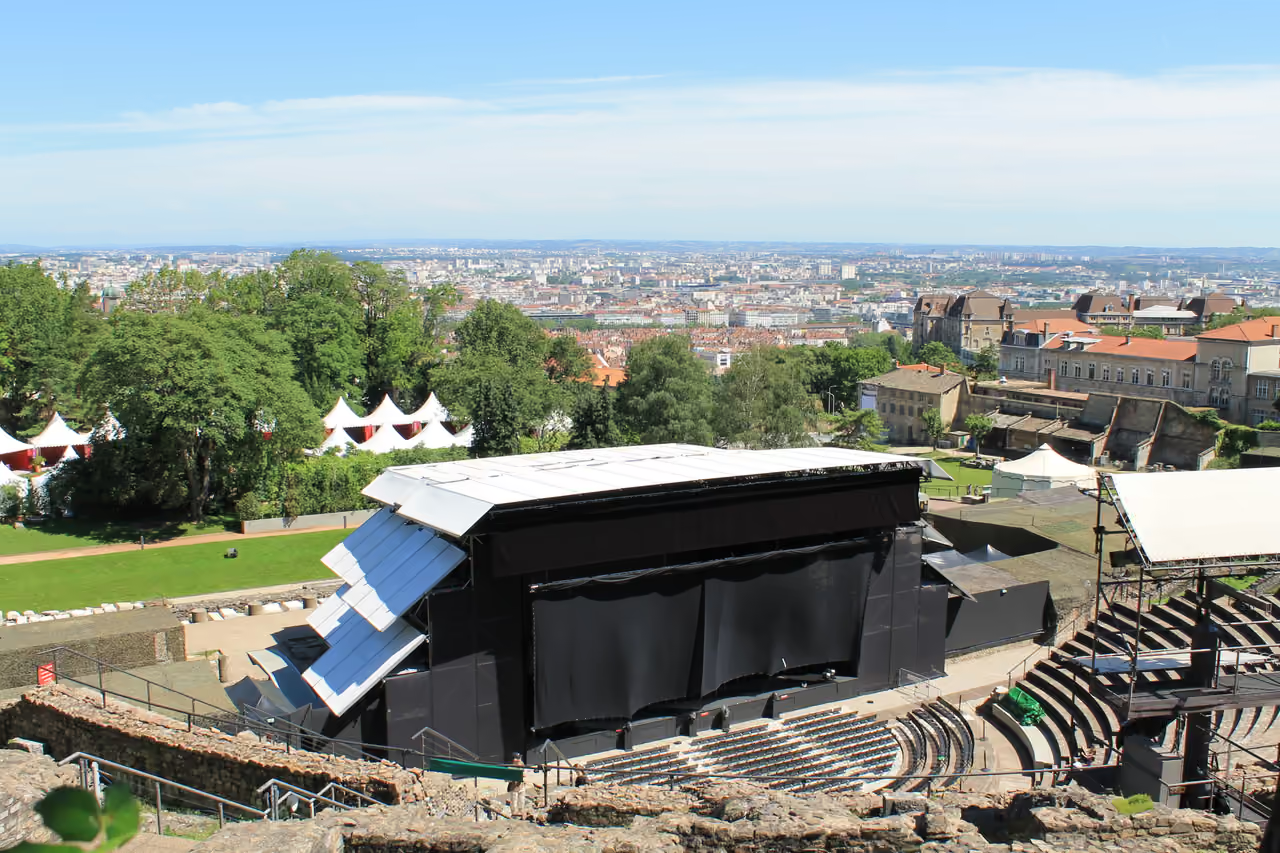
Performers take to the stage inside a 2,000-year-old Roman theatre carved directly into the hillside. The festival spans theatre, music, dance, and cinema under the open summer sky. International musicians often alter their usual stadium sets to fit the intimate, ancient acoustics of the stone tiers. Audiences traditionally throw their seat cushions toward the stage at the end of a successful performance. The city stretches out below the venue, providing a dramatic backdrop as darkness falls.
festival view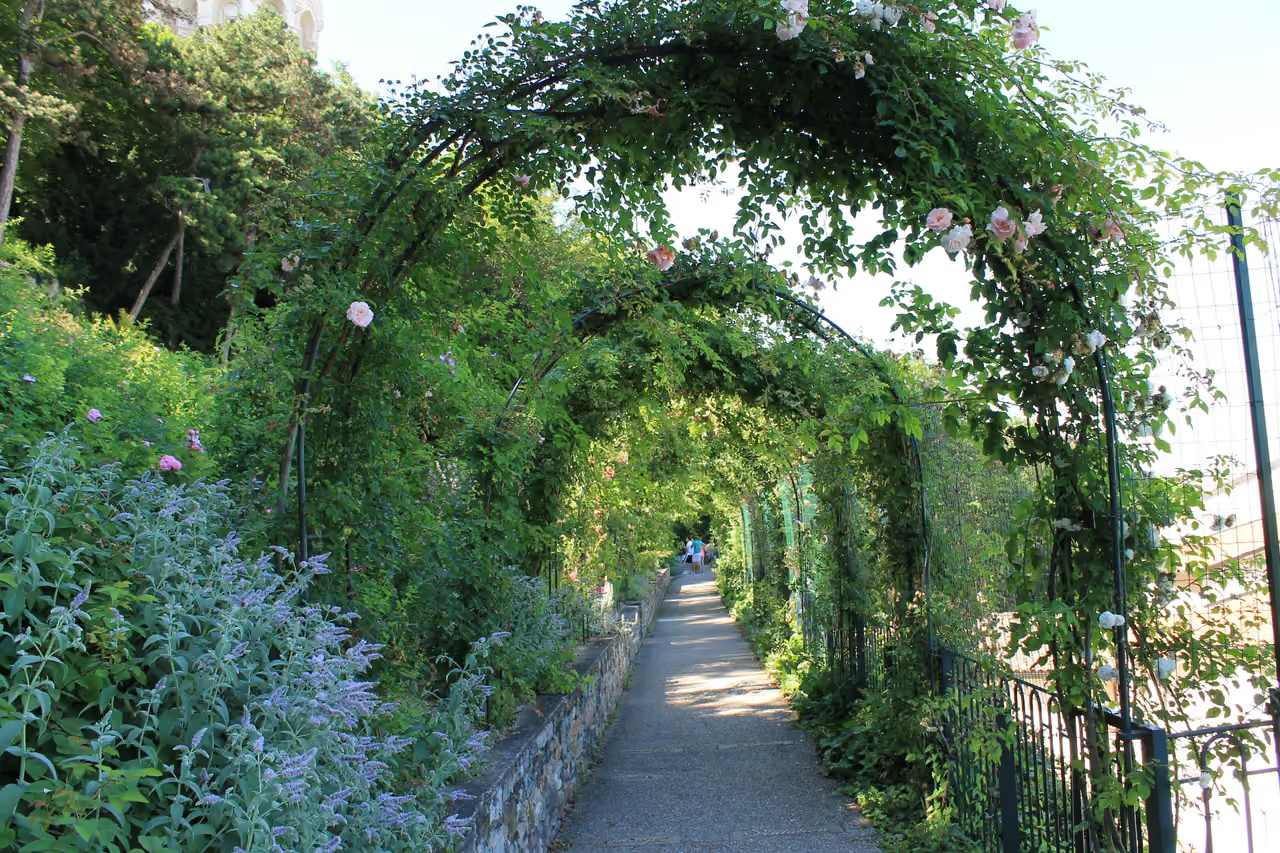 257m
257mHeights Park
Perched atop Lyon's historic Fourvière hill, Heights Park offers an inspiring journey through history, nature, and breathtaking cityscapes. This expansive urban park seamlessly weaves together ancient Roman ruins, tranquil religious gardens, and exhilarating panoramic viewpoints. Visitors can stroll along the iconic Passerelle des Quatre-Vents, a former tramway viaduct that once transported both passengers and coffins, now providing a unique vantage point over the city and the Monts d'Or. Explore the serene Jardin du Rosaire, with its antique roses and hydrangeas, or delve into the archaeological park surrounding the ancient Roman theatre and odeon. It is a place that truly captures the essence of Lyon, blending its rich past with a vibrant present.
park & nature view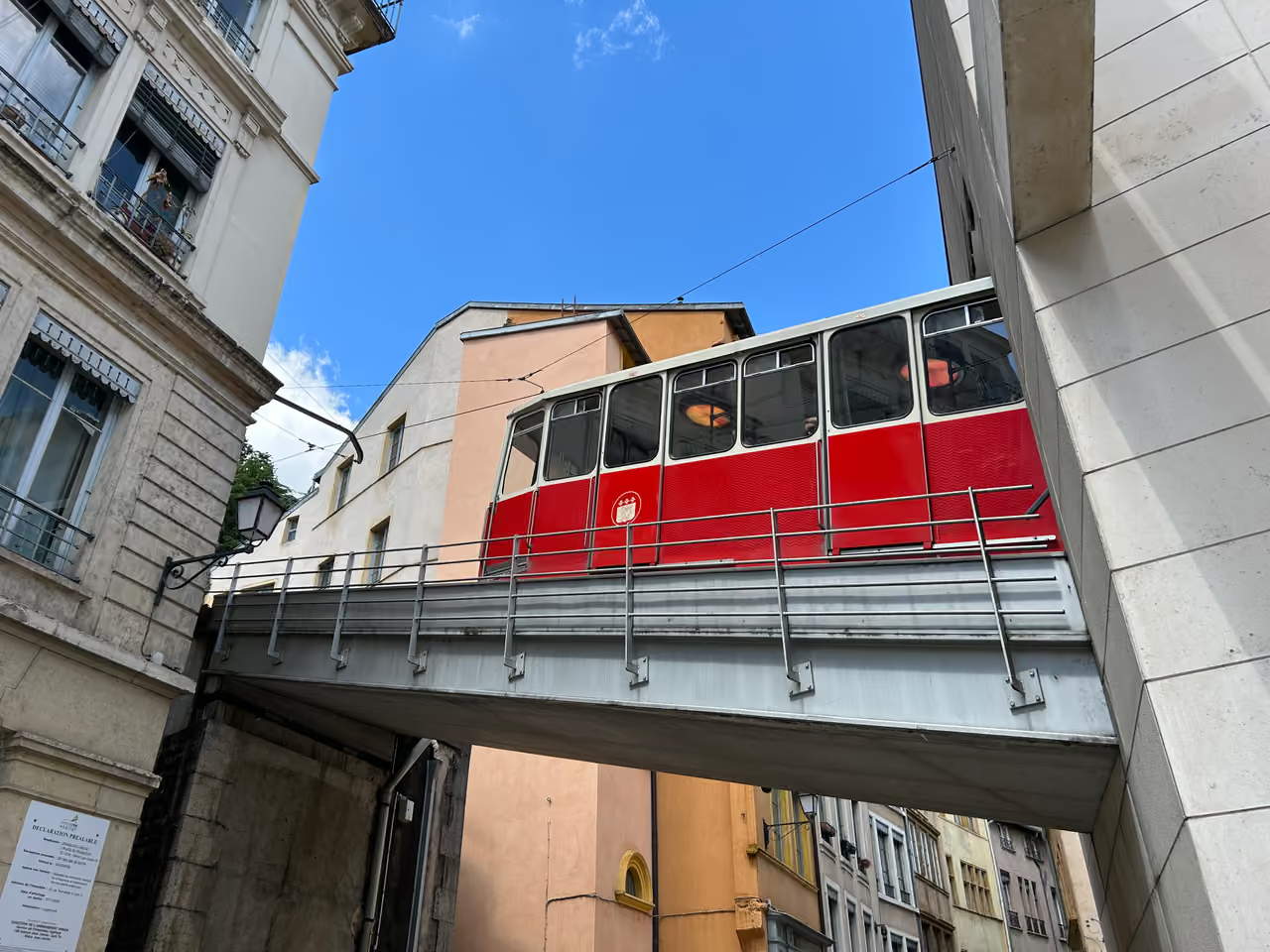 290m
290mFicelle Funicular
The ficelles, French for little strings, are Lyon's funiculars. They climb from Vieux Lyon to the heights of Fourvière and Saint-Just on short, wood-panelled cars. A ride takes only a few minutes and costs the same as a bus ticket, and it saves your legs for the descent on foot.
highlight view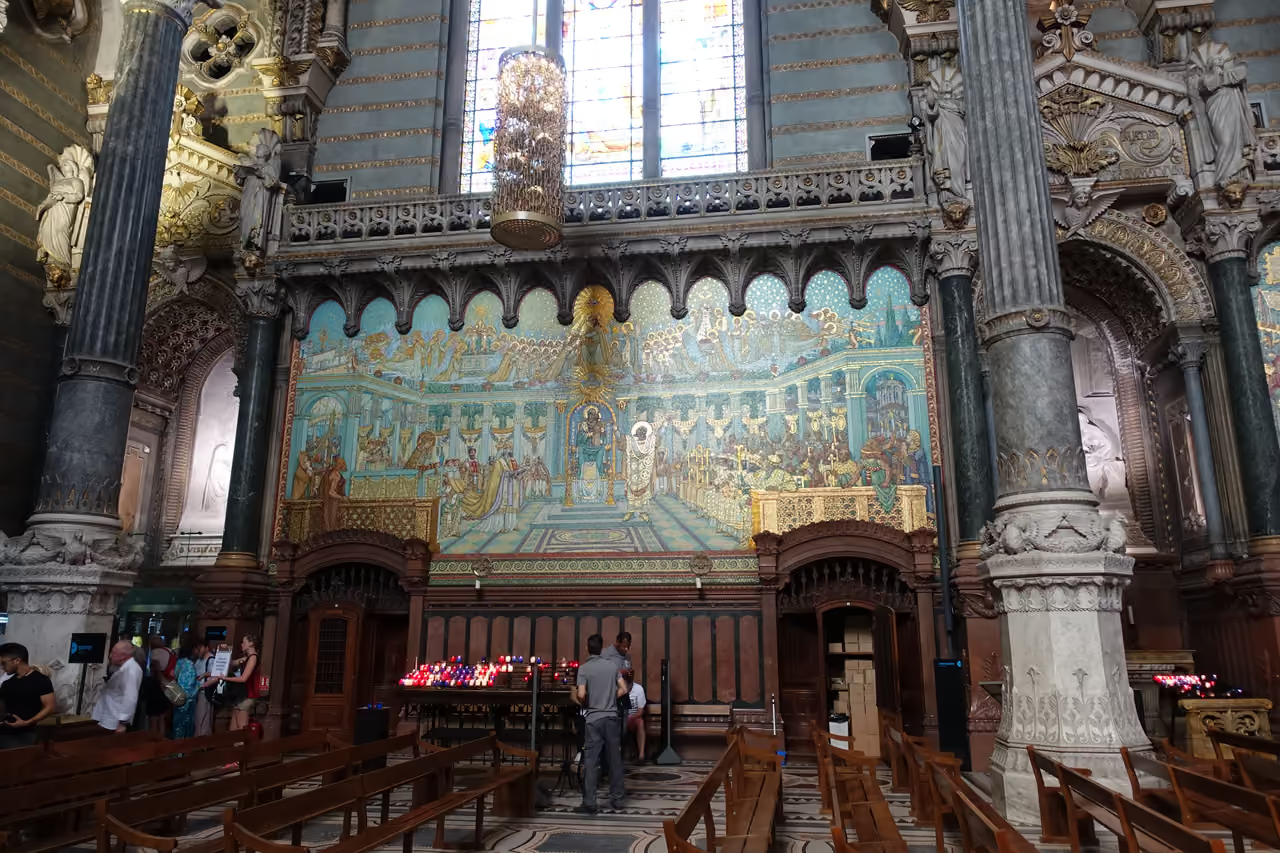 362m
362mBasilica of Notre-Dame de Fourvière
Lyon's residents call it the upside-down elephant, and once someone has pointed out the four stout corner towers as legs, the nickname is hard to unsee. The basilica crowns Fourvière hill, and the quickest way up is the funicular from Vieux Lyon, known locally as la ficelle, the string. Inside, the pale stone exterior gives way to walls and vaults covered in mosaics, with a crypt below that matches the church's footprint and hosts concerts by candlelight. Expect a queue for the funicular at busy times, though the ride itself takes only a couple of minutes. Every 8 December a procession of lantern carriers climbs the hill, which is the oldest and quietest strand of Lyon's famous festival of light. Before leaving, walk to the railing at the edge of the terrace, where the Saône slides past the red-tiled roofs of Vieux Lyon almost directly below.
attraction view
Explore Similar Places in This Collection
Featured on These Itineraries and Routes
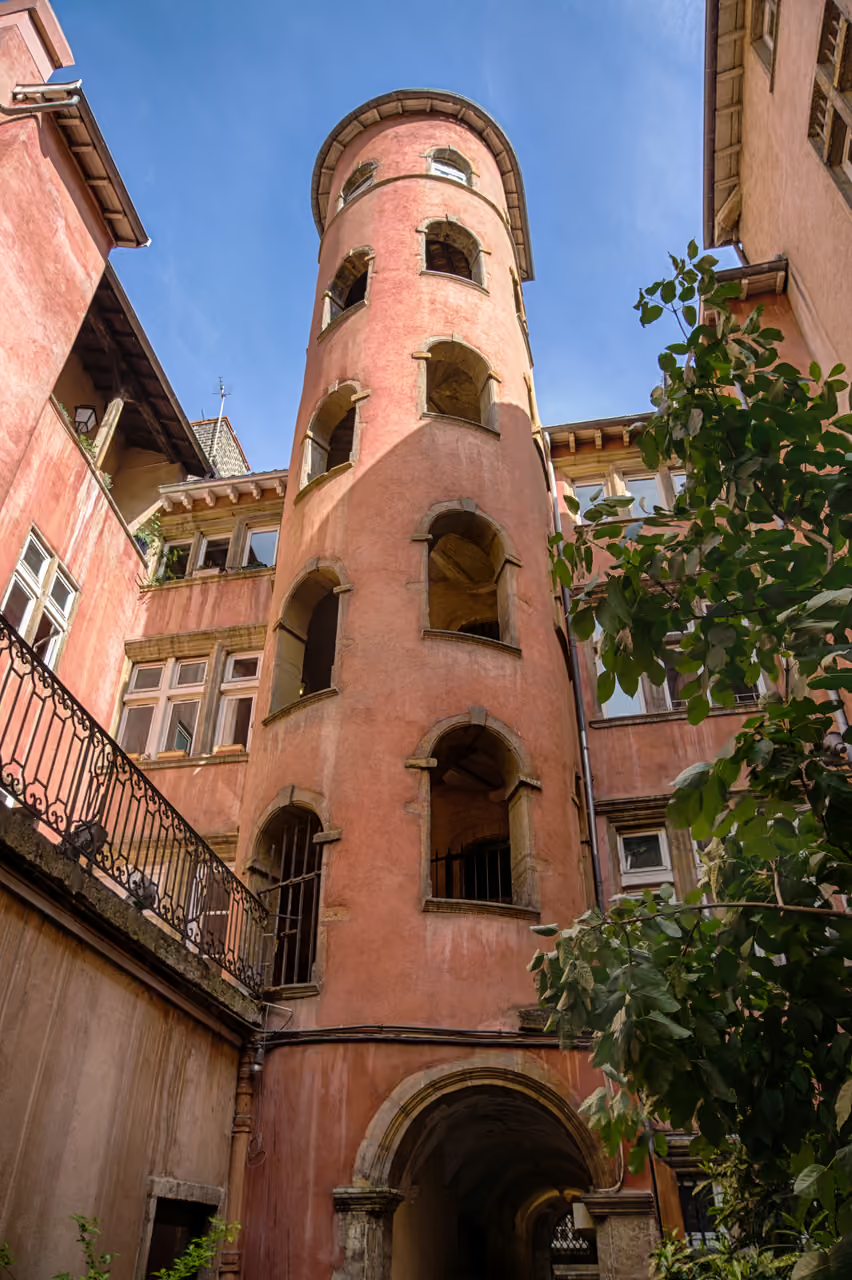
1 Day in Lyon
If you only have one day, focus entirely on the tight geographical progression from the Roman heights down to the Renaissance old town, finishing in the monumental nineteenth-century peninsula. The steep descent forces you through two millennia of architectural history in a matter of hours. You will skip the outer parks and modern districts in favour of heavy, traditional meals and dense historic streets. This route requires aggressive walking and comfortable shoes, as the elevation changes are severe. It delivers the absolute core identity of the city in a single, exhausted push.
view itinerary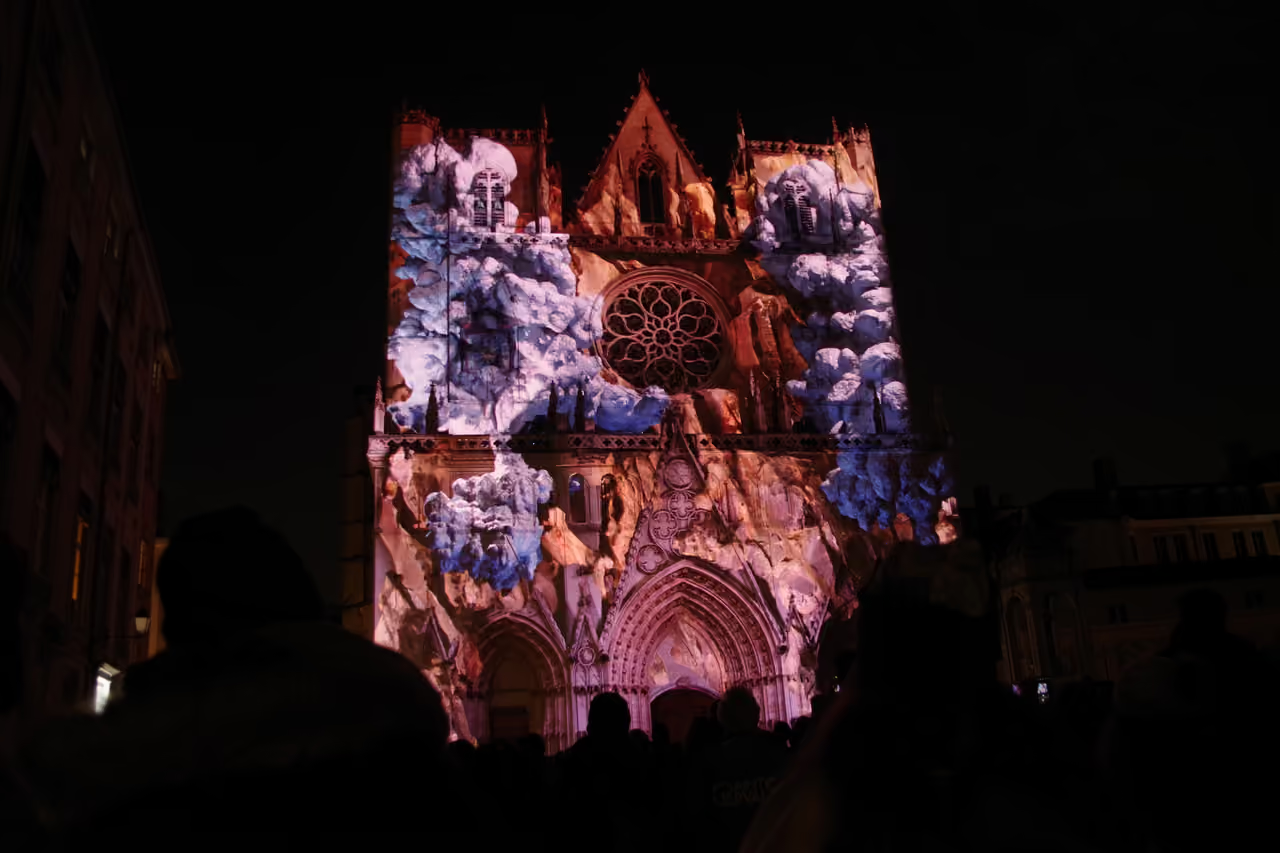
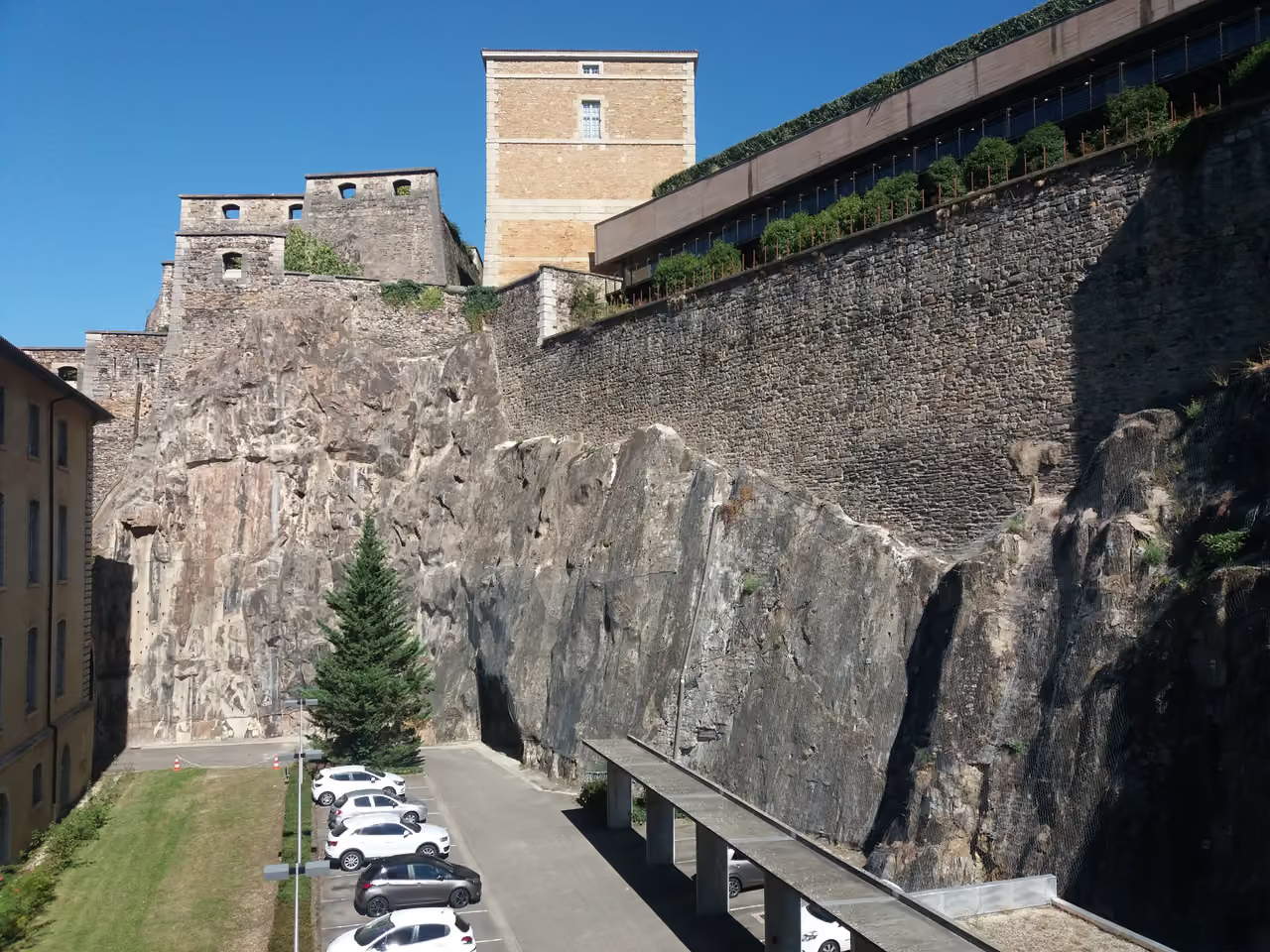
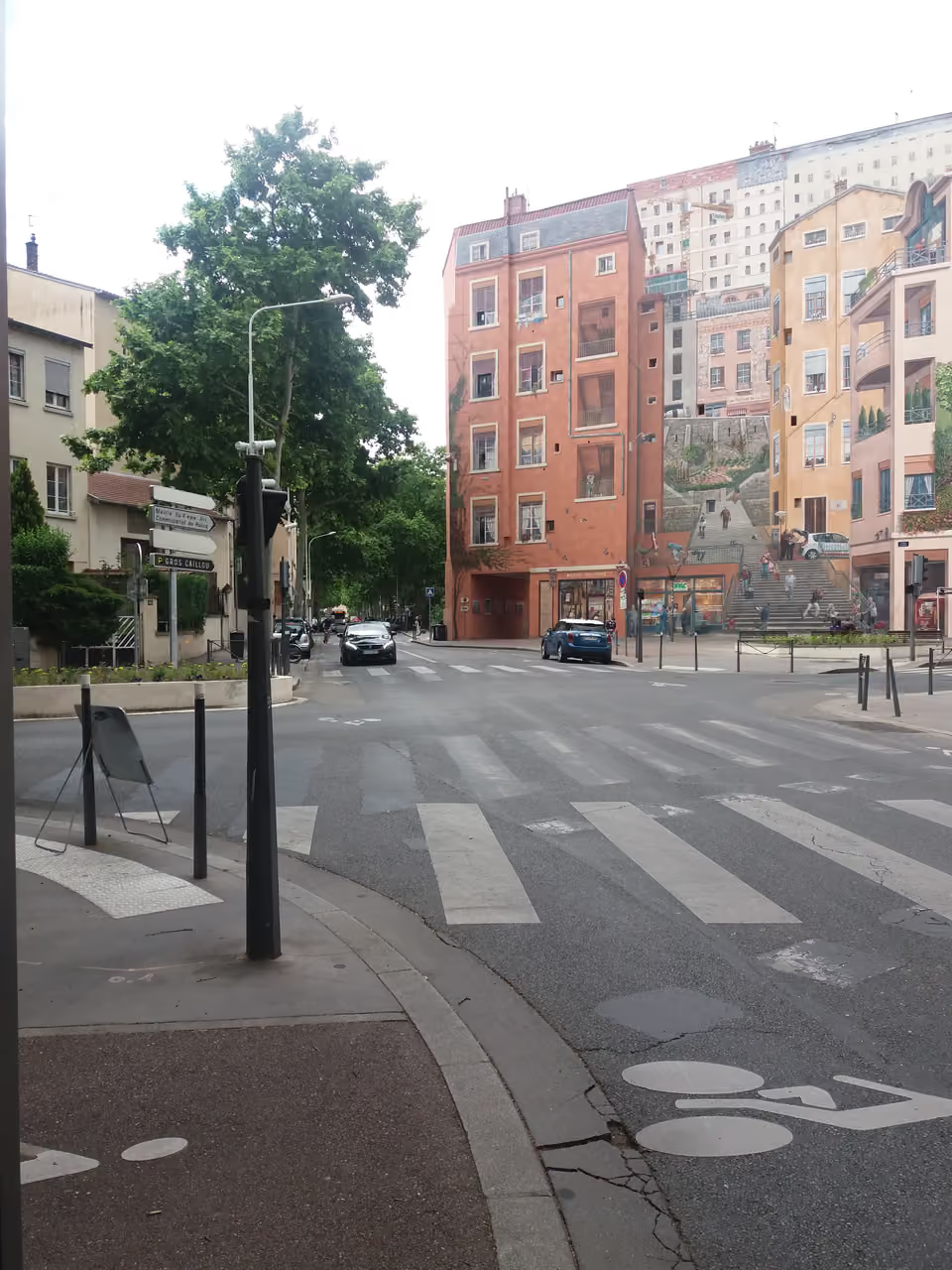
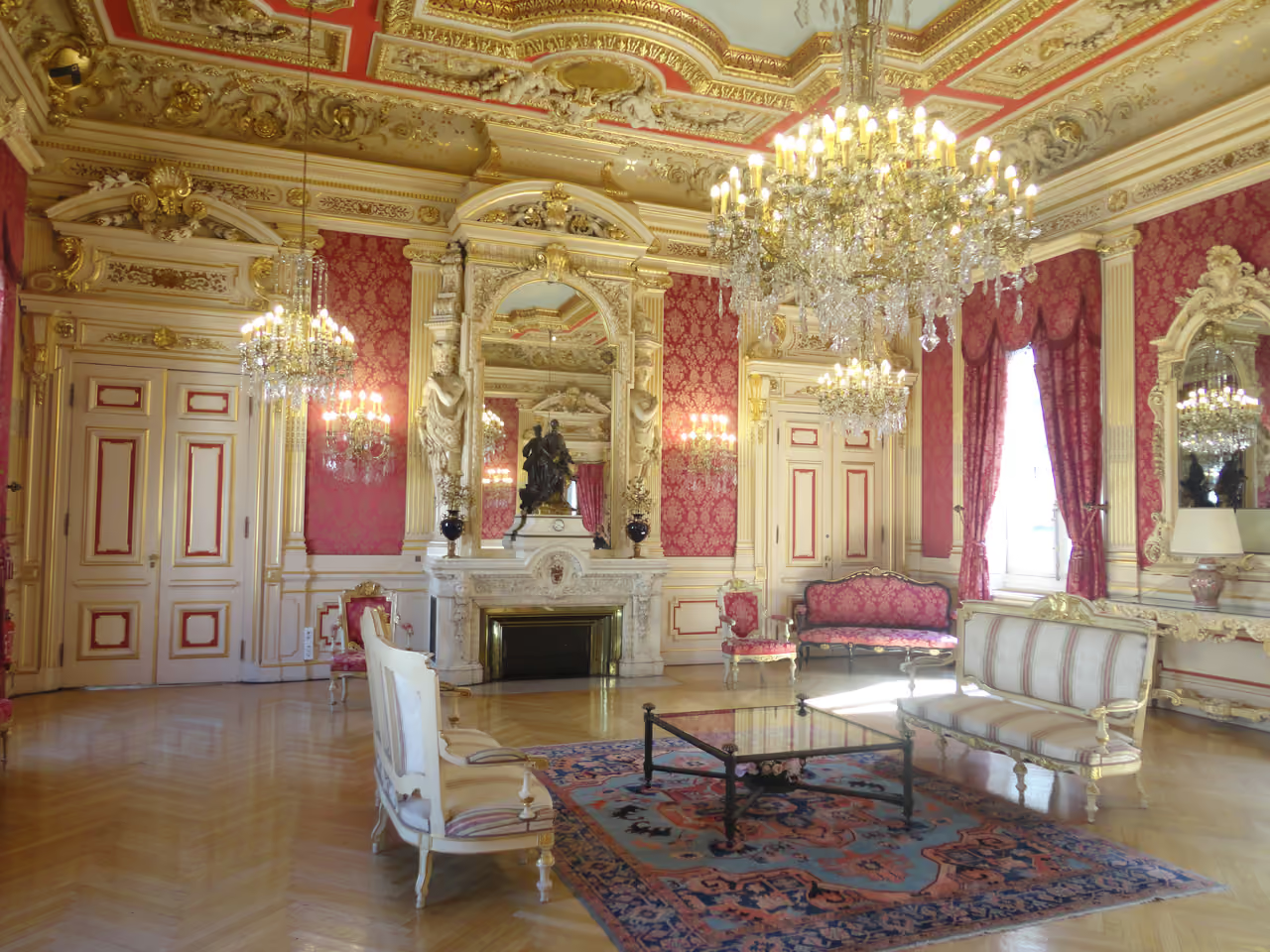
3 Days in Lyon: Heritage & Gastronomy
Three days allows you to split the city into distinct geographic zones, dedicating proper time to the silk-weaving history of the northern hill and the high-end culinary markets of the east. You can linger over three-hour lunches without ruining the day's schedule. This pacing permits a deep dive into the traboules and the massive Fine Arts museum, while leaving evenings free to explore the riverboat bars. It strikes the perfect balance between aggressive sightseeing and the relaxed, food-focused lifestyle the locals demand.
view itinerary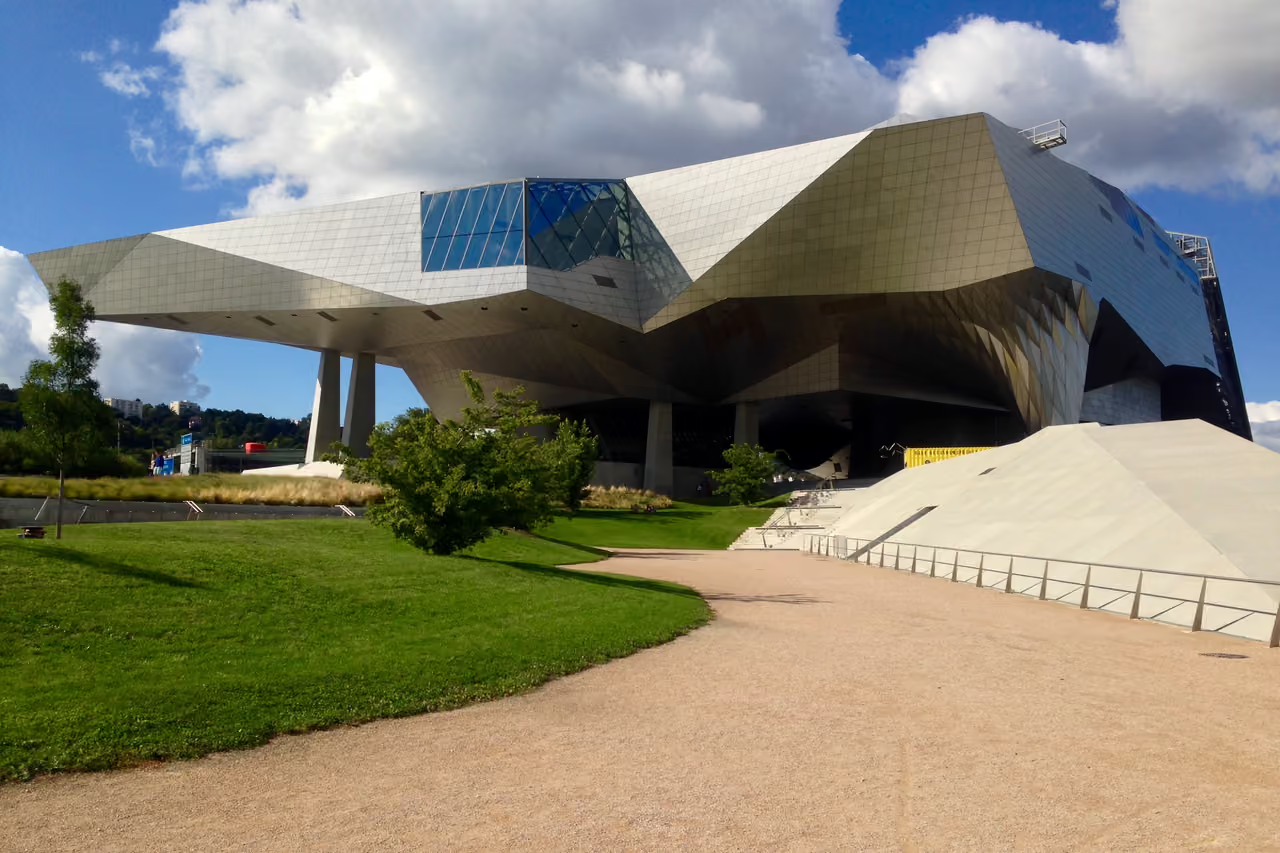
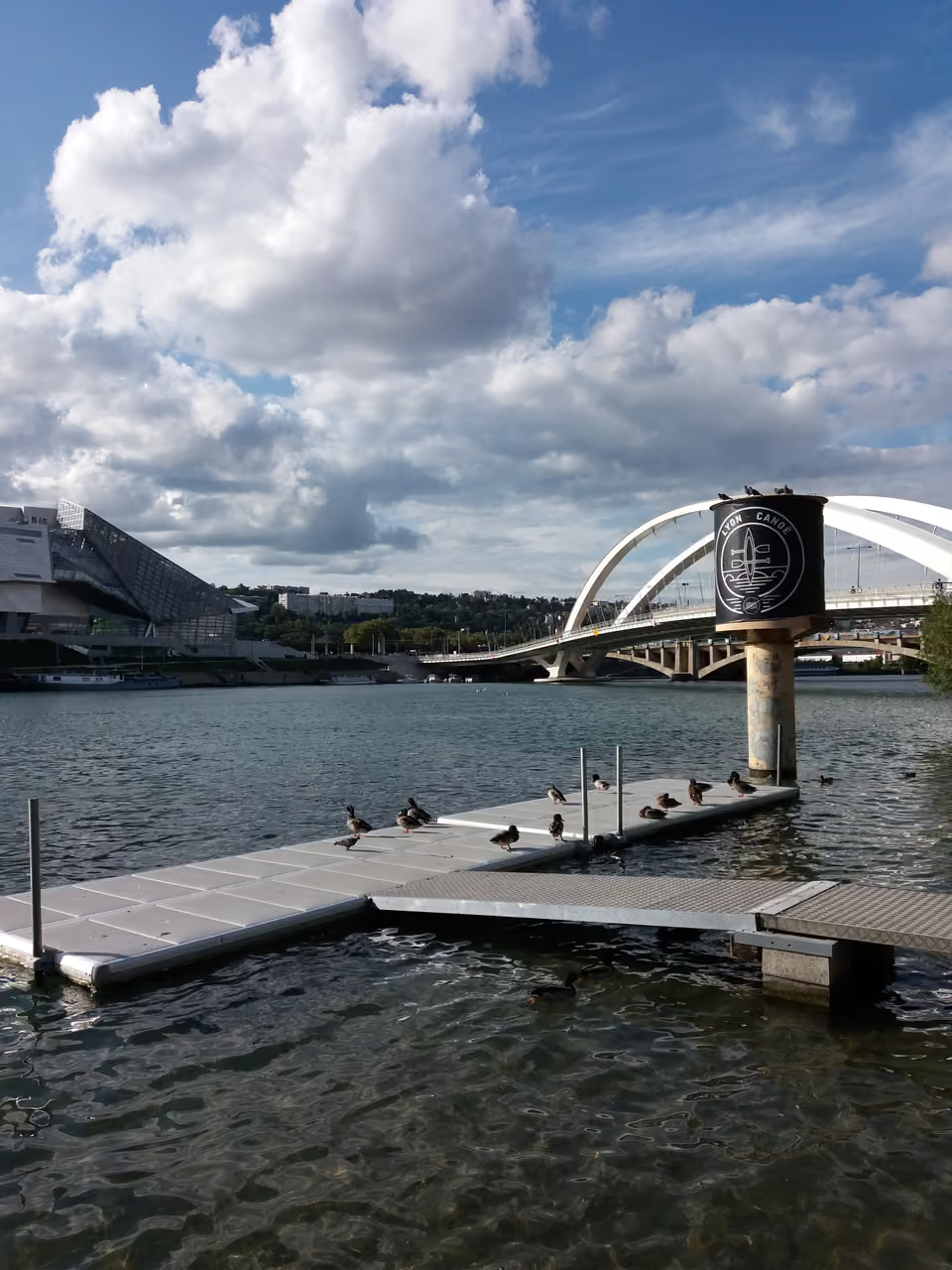
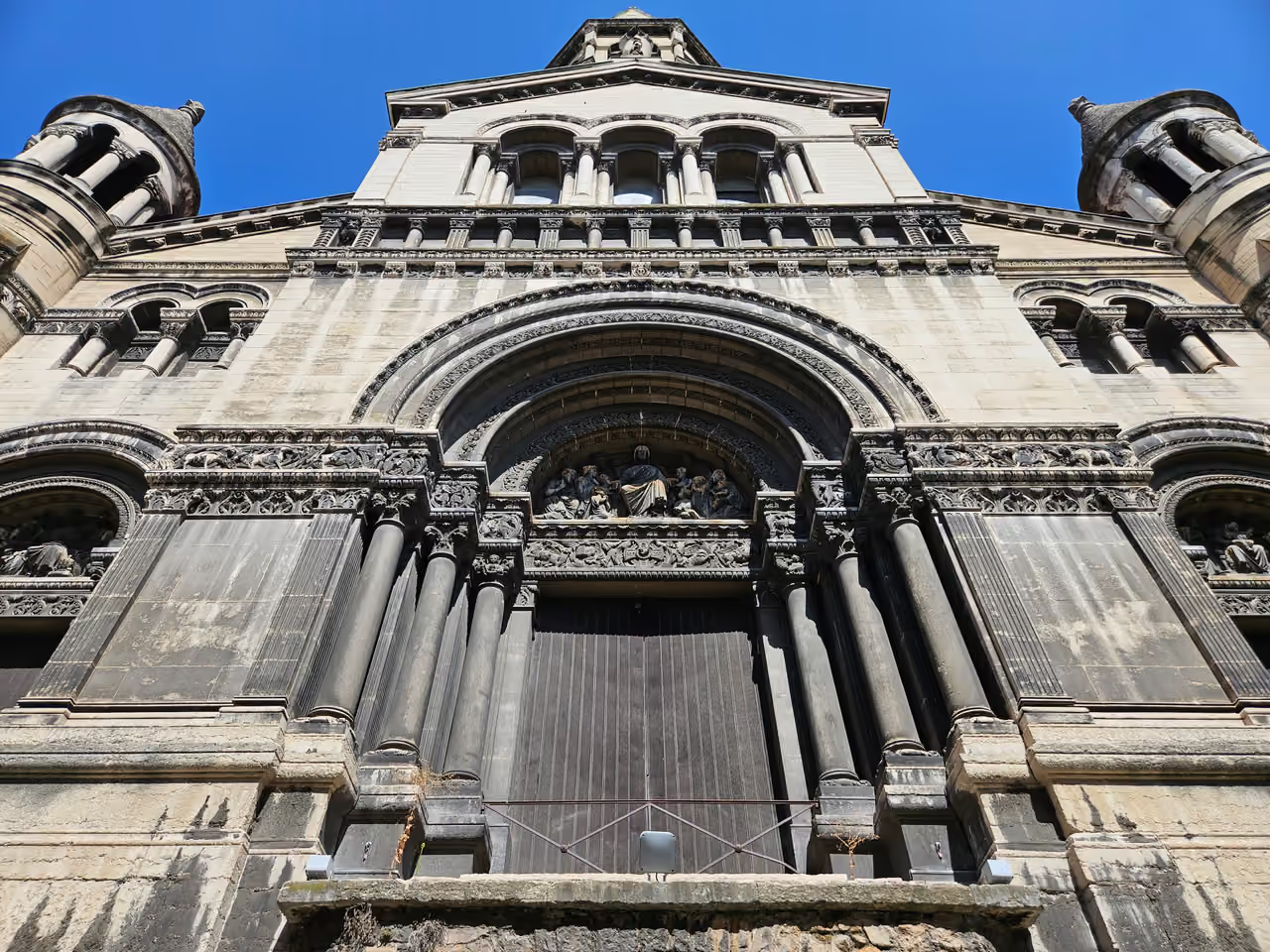
5 Days in Lyon: The Complete Experience
Five days entirely removes the pressure of tourism, allowing you to settle into the rhythm of the city. You have time to cross the rivers multiple times, explore the vast parks on the outskirts, and hunt down hidden courtyards that most visitors miss. This duration allows for a deep dive into the museums and a dedicated focus on the modern architecture of the southern peninsula. You can afford to spend an entire afternoon reading in a café or cycling the riverbanks without feeling like you are wasting time. It transforms a busy trip into a temporary residence.
view itinerary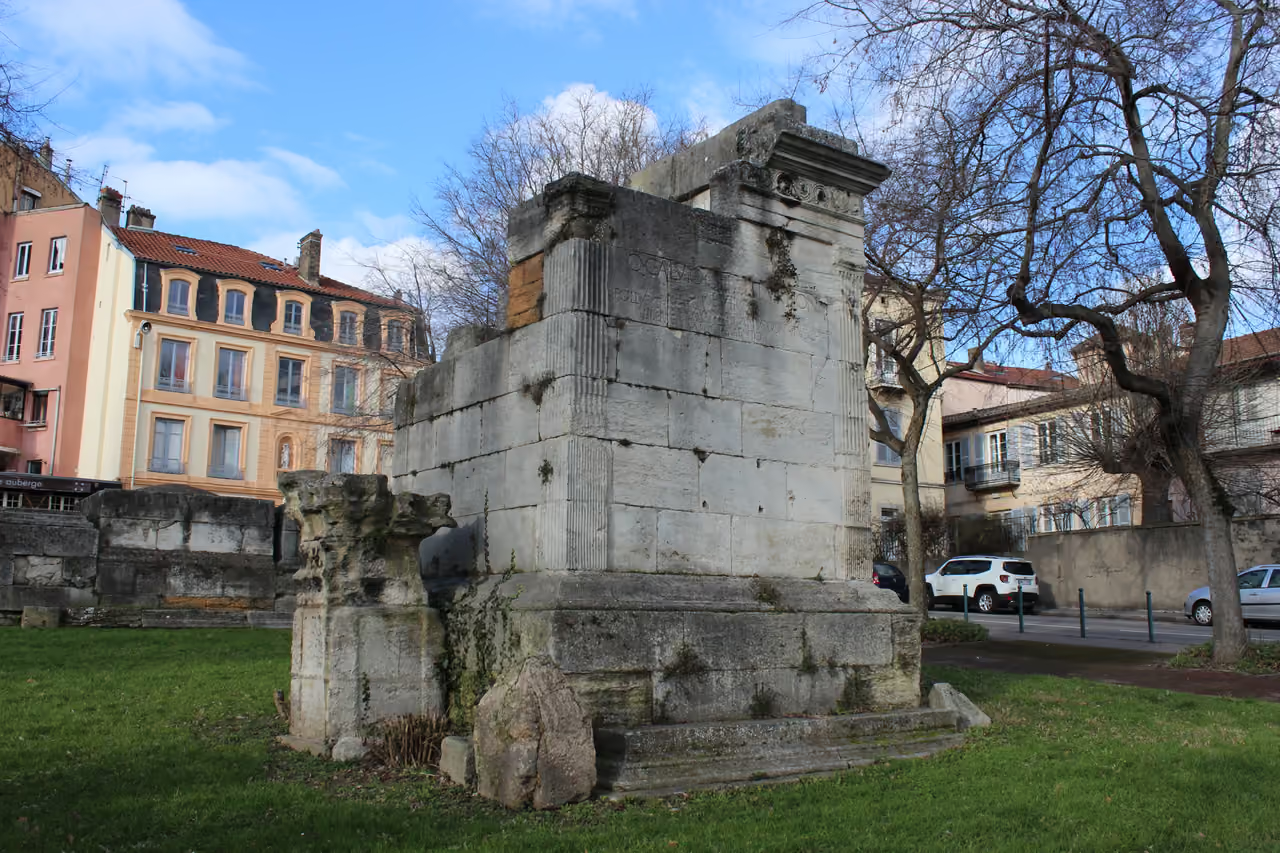
Roman Lugdunum Exploration
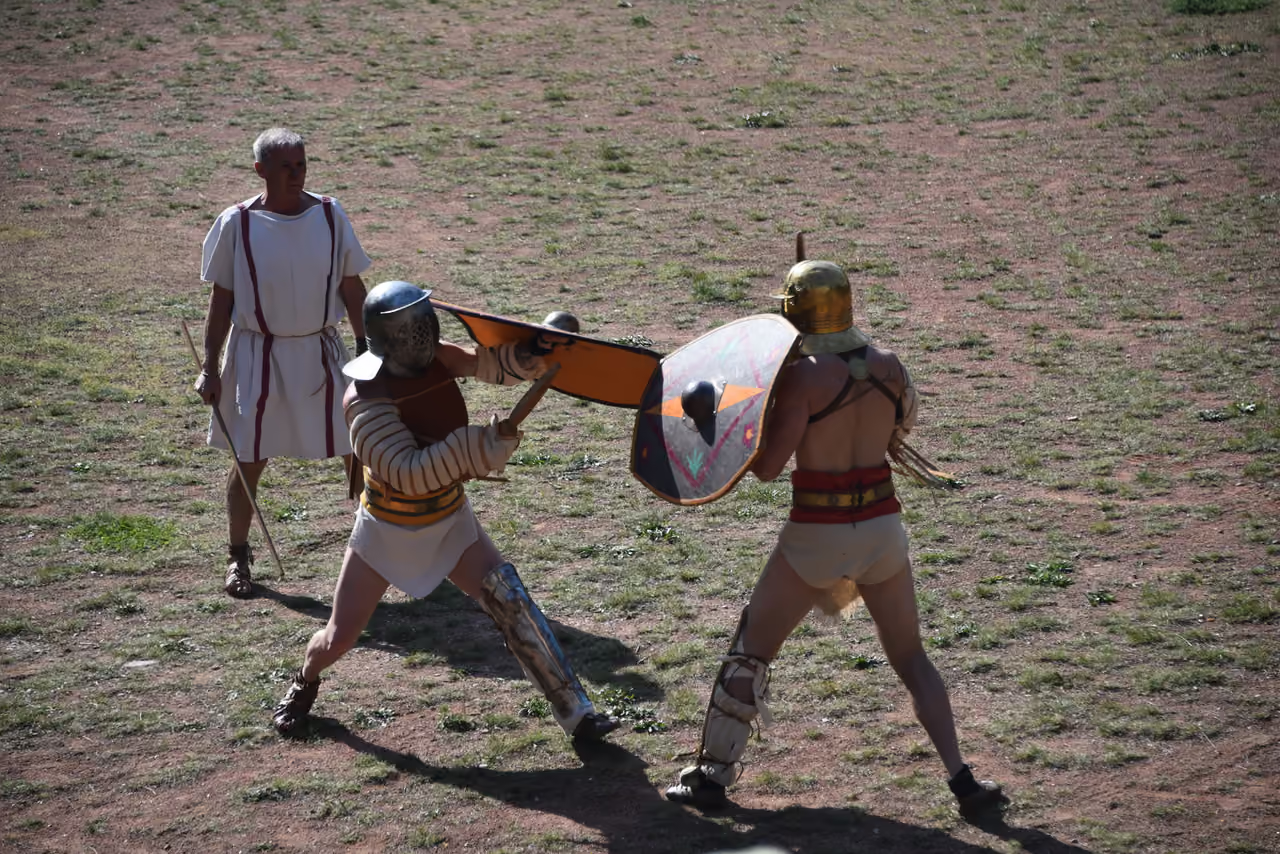
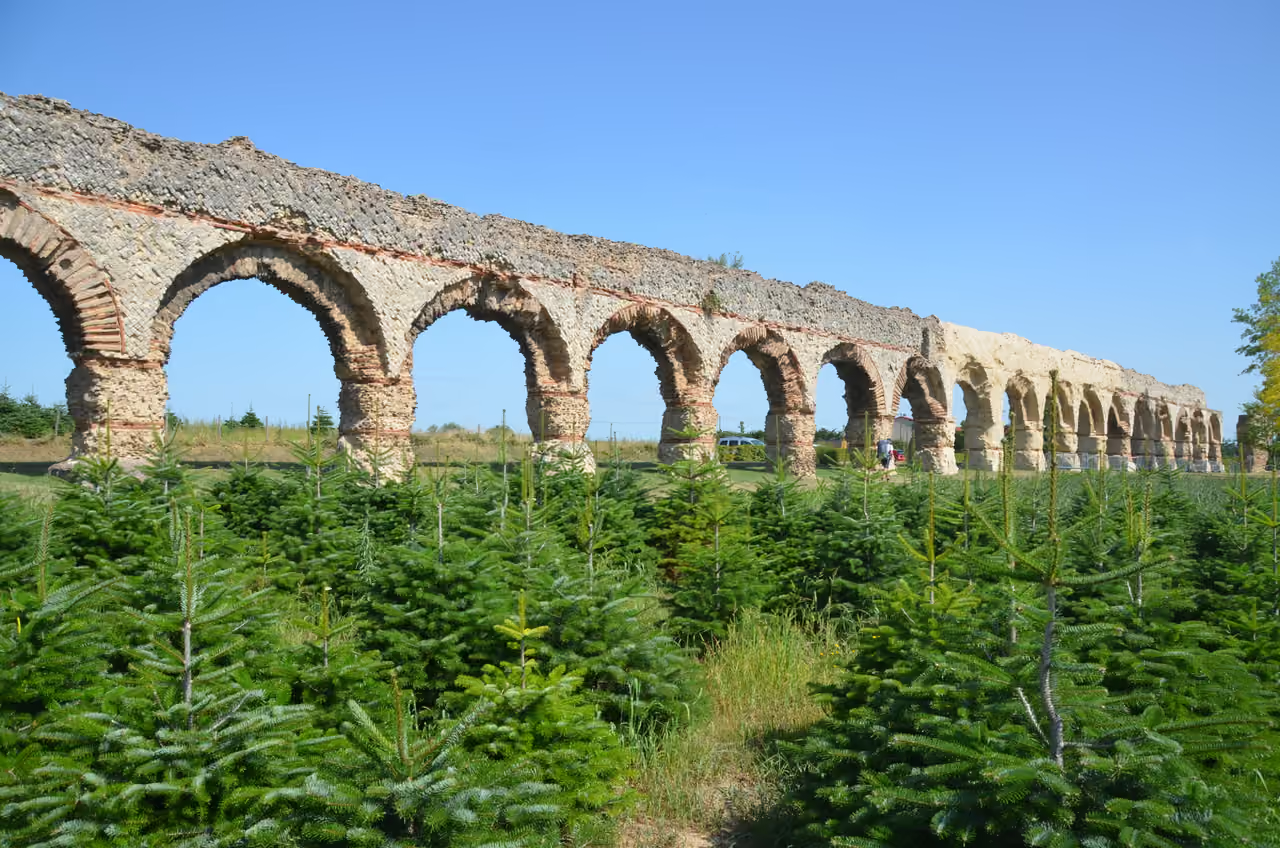
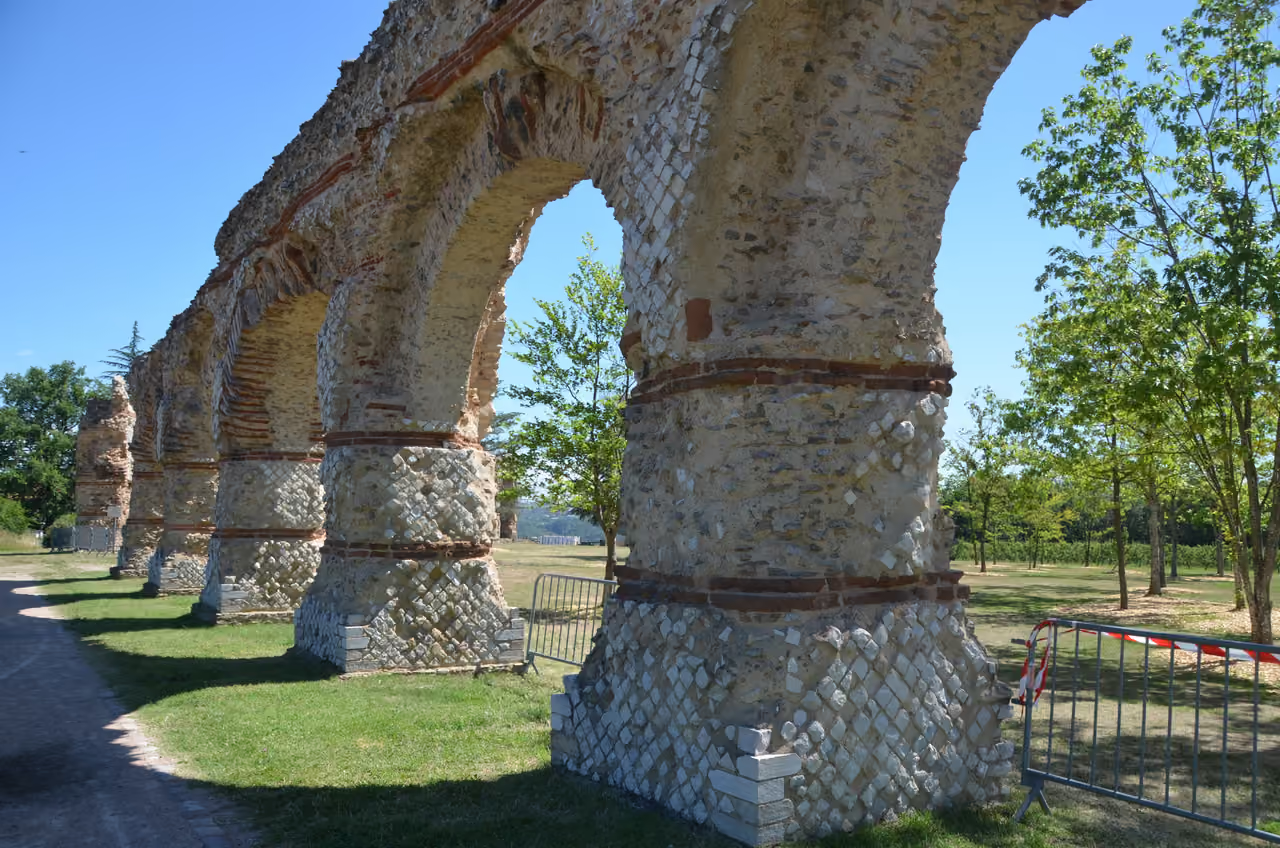
Hunt for the physical remnants of the ancient imperial capital scattered across the steep western hill. The route connects monumental stone theatres with hidden aqueduct pillars integrated into modern garden walls. You walk over the exact ground where Roman emperors were born and early Christians were executed. The high altitude provides a strategic view over the rivers, explaining exactly why the legions chose this site. The scale of the ruins underscores the immense power the city once held over the rest of Gaul.
view self-guided tour
See all attractions in Lyon
Including Basilica of Notre-Dame de Fourvière, Confluences Museum, Gadagne Museums, and more