Great Pyramid of Giza
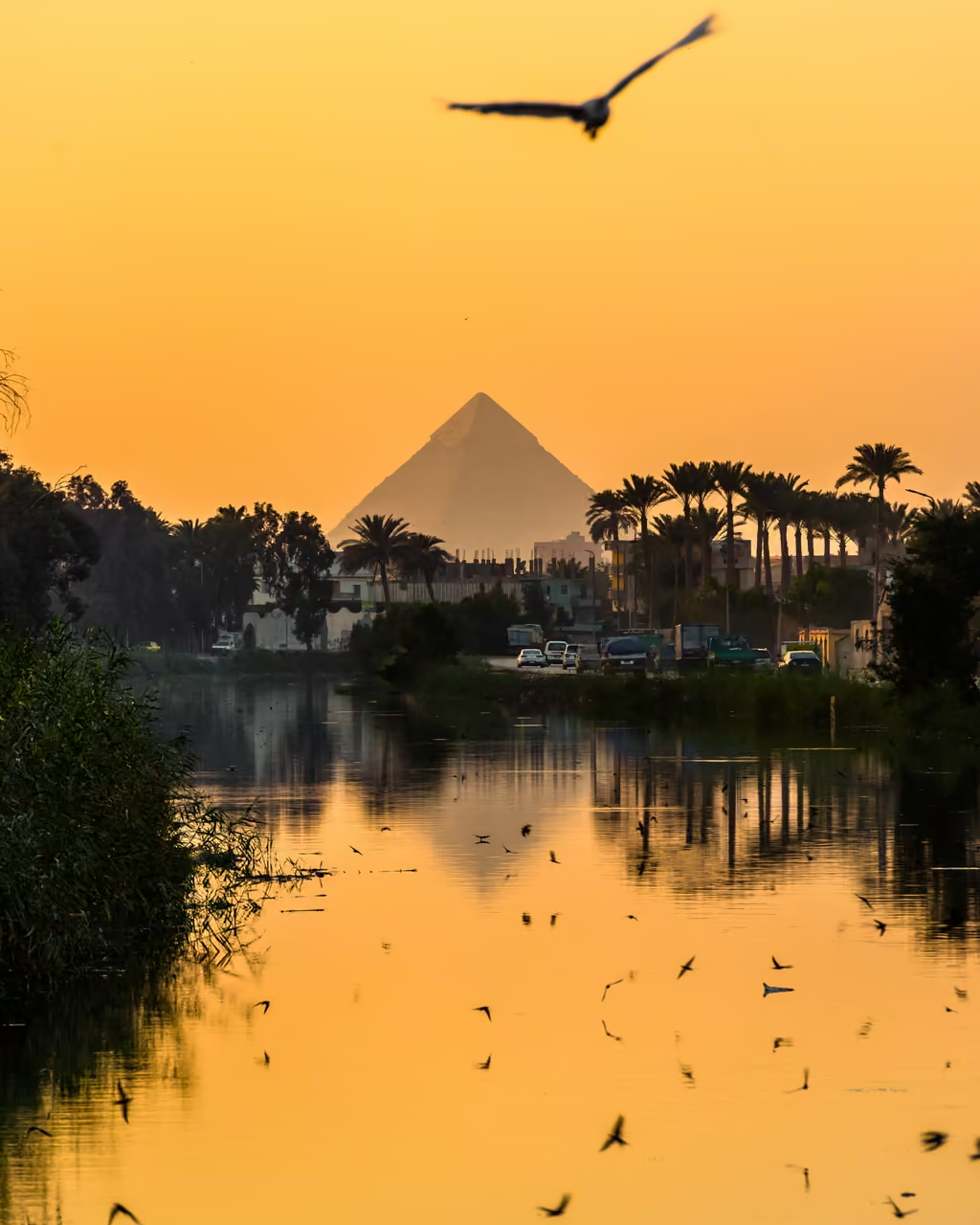
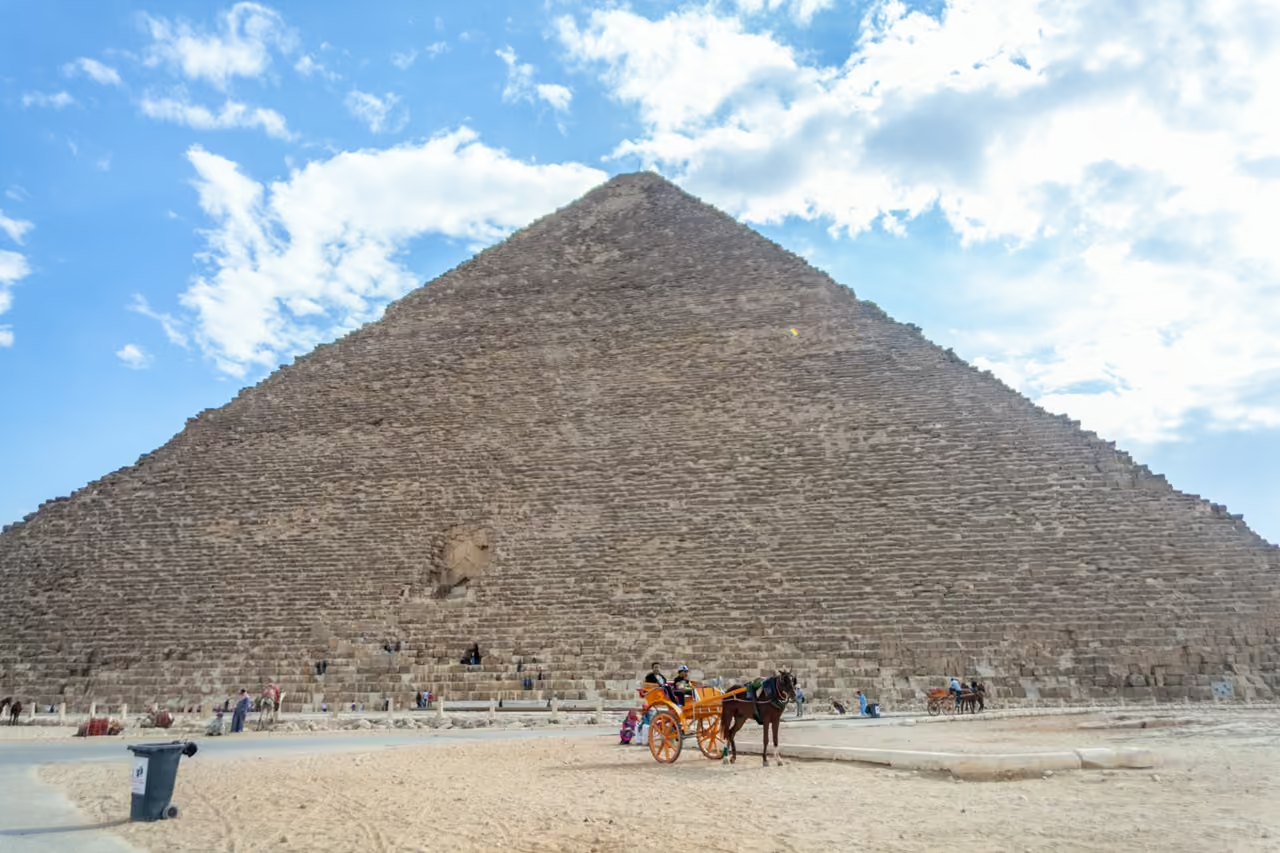
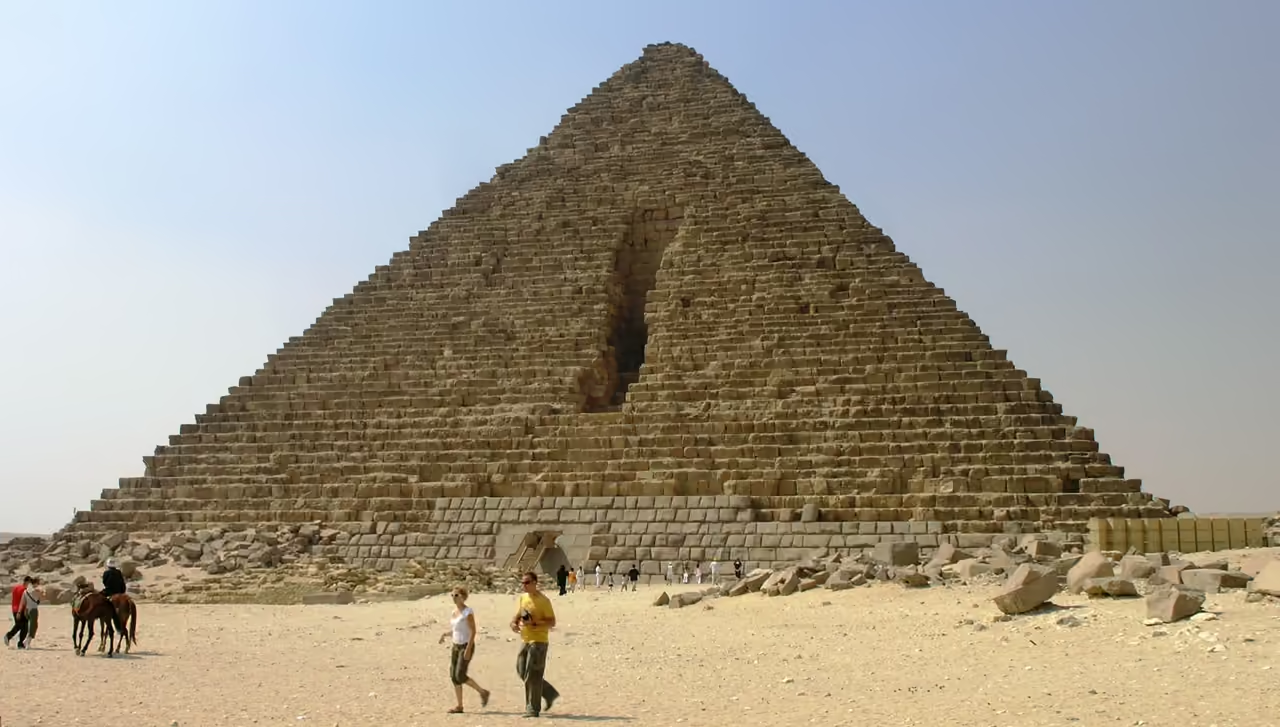
Nothing on the busy streets of Giza prepares you for the moment modern apartment blocks suddenly stop and Pharaoh Khufu's limestone mountain shoulders straight out of the plateau. Raised around 2600 BC and still standing 138.5 metres tall, this structure remains the only intact member of the Seven Wonders of the Ancient World, though its gleaming white outer shell is gone, exposing rough yellow masonry like desert stairs. Step inside if tight spaces do not rattle you. Ducking along the warm, low ceiling of the Robbers' Tunnel takes patience before the stonework abruptly splits upward into the Grand Gallery, where corbelled limestone walls climb nearly nine metres above your head on the ascent to Khufu's empty granite sarcophagus in the King's Chamber. Back out in the daylight, walk the eastern flank past the black basalt slabs of the ruined mortuary temple and the three stepped Queens' Pyramids sitting right alongside. Look down along the northern base and rest your palm against a few surviving smooth white casing stones still wedged tightly where Khufu's masons set them.
Videos
History of Great Pyramid of Giza
Around 2600 BC, Pharaoh Khufu decided that an ordinary tomb on the Giza Plateau would not match his royal ambition. Under architects likely led by his vizier Hemiunu, masons levelled a strip around a natural limestone outcrop to within 21 millimetres and raised Khufu's Horizon over roughly 26 years of steady labour. Contrary to later myths of whipped slaves dragging stone across endless sand, excavations of nearby barracks and burial grounds show the workforce consisted of thousands of conscripted Egyptian labourers split into disciplined haulage crews of forty men under named overseers. Barges riding a now vanished offshoot of the Nile delivered gleaming white cladding from Tura alongside granite ceiling beams weighing up to eighty tonnes from distant Aswan. Even while construction surged upward, the builders altered their blueprint, leaving a raw room hacked deep into the bedrock unfinished in favour of raised chambers locked behind heavy sliding granite doors. Those stone security measures failed far sooner than Khufu's priests intended. Grave robbers likely emptied the royal chamber within a few centuries during the turmoil of the First Intermediate Period, forcing later dynasties to repair and reseal the monument repeatedly. By the fifth century BC, when the Greek writer Herodotus arrived at Giza, the pyramid's real origins had already blurred into wild folklore. Local guides fed the curious traveller stories of a cruel tyrant who exploited 100,000 workers at a time and hid his true body on a secret subterranean island fed by the Nile. Later Roman visitors added their own guesses: the geographer Strabo wrote of a hidden hinged block partway up one slope that swung open into an oblique tomb corridor, while Pliny the Elder recorded an improbable rumour that builders stacked mounds of salt and nitre against the stone faces and melted them away with river water. Once knowledge of hieroglyphs died out in late antiquity, historical memory faded even further. Fourth century Christian pilgrims such as Egeria stared up at Giza's skyline and convinced themselves the biblical Joseph had built the monuments as massive granaries to store Egyptian corn before famine struck. Arabic chroniclers later wove their own legends around the antediluvian monarch Surid Ibn Salhouk, claiming he erected the pyramids three centuries before the Great Flood to safeguard Egypt's wisdom. Then came direct force. Around 820 AD, the Abbasid caliph Ma'mun sent diggers straight through the northern masonry, almost certainly enlarging an older robbers' passage that had been sealed shut centuries earlier. His crew chiselled around hard granite plugs blocking the Ascending Passage, climbed into the highest chamber, and confronted nothing more than an empty stone sarcophagus stripped of its lid. What looters left inside, northern Egyptian earthquakes and urban growth gradually claimed from the exterior. Tremors fractured the polished Tura casing blocks and dumped vast piles of pale limestone rubble around the pyramid's feet. In 1356, Bahri Sultan Hasan was said to have authorised Cairo's builders to haul away the prized white cladding stones across the Nile for new buildings, leaving the rough stepped core exposed to erosion that eventually trimmed roughly eight metres from the monument's original height. Locals grew wary of entering the darkened interior tunnels teeming with bats, which medieval travellers whispered were haunted. It took Italian humanist Cyriacus of Ancona sailing up the Nile in 1435 to restore the monument's true history. Comparing the masonry directly against Herodotus's manuscripts, Cyriacus exposed the grain silo myth to European scholars and spread word that one Wonder of the Ancient World had survived intact. European curiosity soon turned invasive. In 1763, acting on a tip from a French merchant named Maynard, British explorer Nathaniel Davison wriggled through a cramped passage near the top of the Grand Gallery to discover a narrow structural chamber perched above the King's Chamber ceiling. Half a century later, in 1817, Italian explorer Giovanni Caviglia hauled away choking sand to reopen the forgotten subterranean room deep in the bedrock. The sharpest turning point arrived in 1837, when Colonel Howard Vyse blasted upward with gunpowder above Davison's room and broke into four previously sealed chambers. Painted across those hidden stones in red ochre lay work gang graffiti spelling out Khufu's royal names, ending centuries of guesswork over who commissioned the monument. Later Victorian investigators swapped explosives for measuring instruments: Flinders Petrie spent two seasons beginning in 1880 proving that the four base sides matched within mere centimetres and aligned almost precisely to true geographic north. During the twentieth century, archaeology stepped back from the limestone giant to uncover the sprawling port town that once fed its builders, complete with barracks and settlements beside the cyclopean Wall of the Crow. Modern Giza eventually grew right up to the edge of the desert plateau, placing busy residential streets within sight of Khufu's ancient cemetery. Today, gentle cosmic ray sensors and tiny endoscopic cameras have replaced nineteenth century gunpowder. In February 2023, international researchers threaded a slender lens between chevron stones above the original north entrance and peered inside a gabled corridor nine metres long, revealing clean ancient stonework sealed behind the northern face since the Old Kingdom.
23 events spanning 4623 years
Fun Facts
15- 01
An impressive square panel of hieroglyphs carved directly above the original north entrance looks as old as the pyramid itself, yet dates only to 1842. Leading a Prussian royal expedition to Giza, German scholar Karl Richard Lepsius ordered his team to chisel the modern inscription in ancient script to honour King Frederick William IV of Prussia.
- 02
Around the turn of the twentieth century, enterprising tour guides grew tired of escorting visitors all the way down the steep Descending Passage to the Subterranean Chamber and back out again, so they routinely stacked loose rubble across the lower corridor to hide it. Explorer Lorenzo Dow Covington finally ended that shortcut around 1902 by installing a padlocked iron grille gate.
- 03
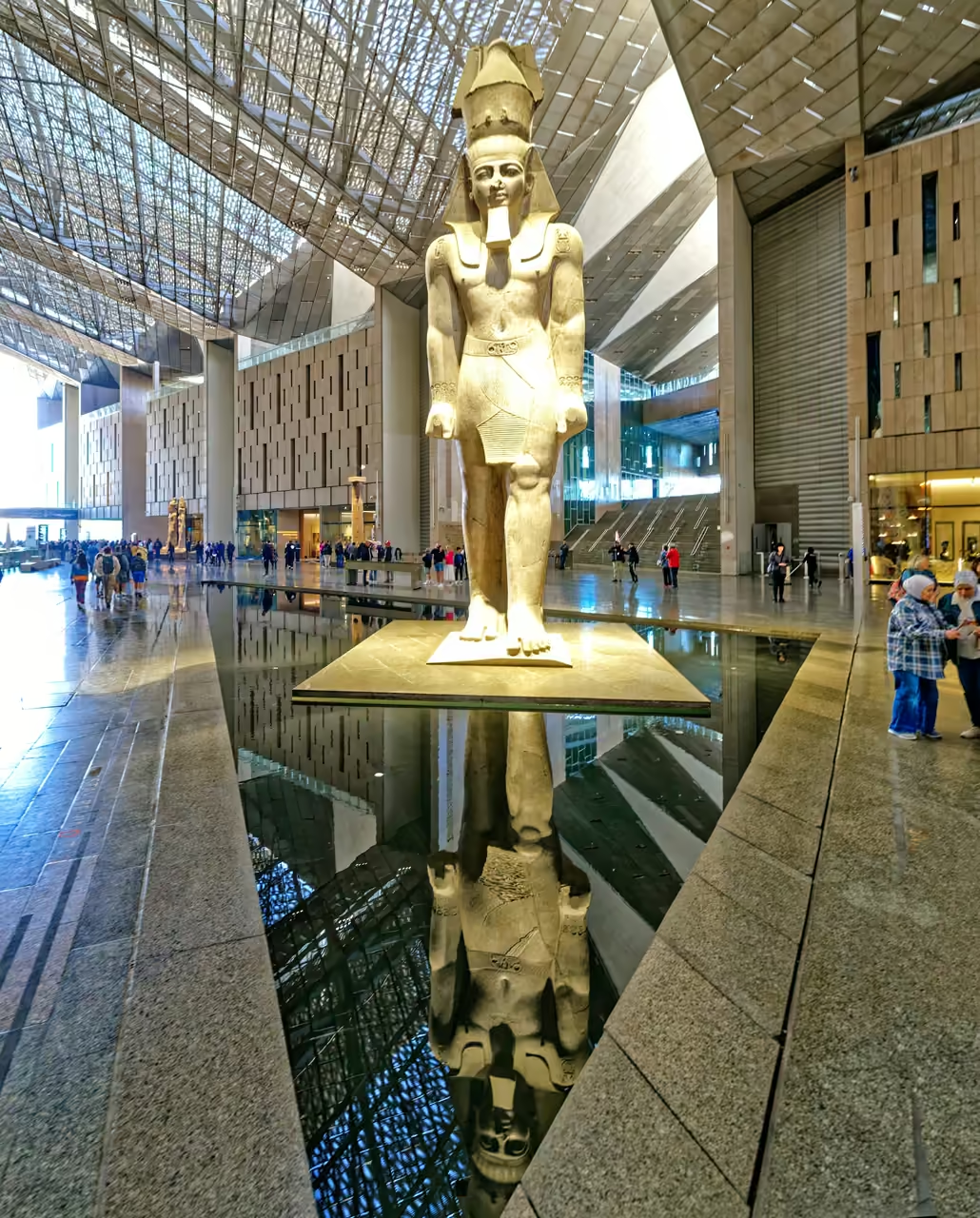
Beneath limestone slabs weighing up to 15 tonnes along the pyramid's southern flank, archaeologist Kamal el-Mallakh discovered a royal cedar boat in May 1954 that had been dismantled into 1,224 wooden pieces ranging from 10 centimetres to 23 metres long. Master shipwright Haj Ahmed Yusuf spent 14 years steaming, straightening, and lashing the vessel back together solely with ropes into a craft measuring 43.6 metres before its move to the Grand Egyptian Museum in 2021.
- 04
Black basalt floor slabs surviving beside the eastern entrance retain crisp saw marks that reveal how Bronze Age masons sliced volcanic stone long before steel existed. Egyptologist John Romer calculates builders mounted blades fitted with copper teeth roughly 15 feet long and weighing 140 kilograms onto wooden trestles, where teams of a dozen men worked them back and forth using quartz sand or emery and vegetable oil.
- 05
Even rooms explored since the nineteenth century still give up new ink under sharp modern optics. A three dimensional scan of Nelson's Chamber published from 2024 fieldwork revealed previously overlooked red paint graffiti mentioning the cobra goddess Wadjet alongside a construction date in the year of the 6th census, referring to the biannual royal cattle counts used to track Khufu's reign.
- 06
Excavations at the ancient Red Sea port of Wadi al-Jarf in 2013 yielded the oldest inscribed papyrus rolls ever recovered in Egypt, written during the 27th year of Khufu's reign by an inspector named Merer. His daily supply logs record boats hauling bright white limestone from Tura straight to Khufu's Horizon under the oversight of Khufu's half brother Ankhhaf, who owned the largest mastaba tomb in Giza's East Field.
- 07
In November 2017, physicists from the ScanPyramids collaboration confirmed a massive empty cavity at least 30 metres long hidden deep above the Grand Gallery, using cosmic ray muon particles that pass through rock like medical X rays. Verified independently by nuclear emulsion films, scintillator hodoscopes, and gas detectors from Nagoya University and partner teams, the space remains completely sealed with no known corridor leading inside.
- 08
Most of the pyramid's 2.3 million core blocks came from quarries right on the Giza Plateau and consist of nummulitic limestone packed with small disc fossils of prehistoric sea creatures visible to anyone looking closely at the base courses. Excavators examining stones across the plateau's blocks and nearby tombs have even uncovered fossilised prehistoric shark teeth preserved in the rock.
- 09
Originally rising 146.6 metres tall, the Great Pyramid stood as Earth's tallest structure built by human hands for more than 3,700 years until Old St Paul's Cathedral surpassed it in England in 1221 AD. Even inside Egypt itself, no modern landmark outstripped Khufu's limestone peak until Cairo Tower opened across the Nile in 1961.
- 10
Popular myths claim the narrow shafts leading from the King's Chamber line up with stars, yet detailed surveys show the northern shaft twists sharply through the stonework to dodge nearby voids while the southern shaft bends by roughly 20 centimetres. Scholars now view both channels as ritual pathways for the pharaoh's spirit rather than vents or star sights, and engineer Rudolf Gantenbrink even found one rough, unfinished ceiling slab inside the southern conduit that he nicknamed a Monday morning block.
- 11
Returning from observing a transit of Venus in 1874, Scottish astronomer David Gill surveyed the Great Pyramid to within a millimetre and mounted a wooden mast atop the summit platform for triangulation sightings. When a trespasser evaded guards in 2019 and damaged that pole, authorities noted the act did not violate Egypt's strict antiquities laws because the weathered mast had been periodically replaced and counted as a modern object.
- 12
Taking Herodotus's story of an underwater tomb literally, surveyor John Shae Perring spent 18 months starting in 1837 boring a narrow shaft 50 feet straight down through the bedrock floor of the Subterranean Chamber. His crew chipped all the way down to the Nile water level without discovering any secret island chamber, leaving behind a deep Victorian pit that modern visitors sometimes mistake for an ancient Egyptian trap.
- 13
Two narrow shafts leading out of the Queen's Chamber baffled researchers for over a century until German engineer Rudolf Gantenbrink drove a tiny crawler robot 65 metres up the southern passage in 1993 and spotted a limestone door fitted with two copper handles. In 2011, the Djedi team threaded a slender optical camera through a small pinhole drilled earlier and captured red painted hieroglyphs on a hidden chamber floor that mathematicians translated as 121, matching the shaft's length in royal cubits.
- 14
When British engineer Waynman Dixon chiselled open the closed shafts of the Queen's Chamber in 1872, he pulled out a diorite ball, a bronze hook, and a piece of cedar wood that passed to the University of Aberdeen in 1946 before vanishing into storage. Curators rediscovered the broken wood inside an ordinary cigar box in 2020, and radiocarbon testing dated the timber to between 3341 and 3094 BC, over 500 years older than Khufu's reign.
- 15
Writing in the tenth century, Arab historian al-Masudi claimed that when Caliph al-Ma'mun's workers broke inside and grew furious over finding zero treasure, they conveniently uncovered an emerald jar holding a thousand gold coins each weighing four ounces. The coin hoard supposedly matched the exact cost of funding the expedition, leading later historians to suspect the caliph quietly planted the gold himself to prevent a worker revolt.
FULL PLACE DETAILS
Updated
FULL PLACE DETAILS
UpdatedOVERVIEW & STATS
- Established
- In -2560, making it 4586 years old
- Elevation
- 95 m
ARCHITECTURE & HERITAGE
- Architectural Styles
- Ancient Egyptian
- Architects
- Hemiunu
Great Pyramid of Giza Map & Neighborhood Explorer
This interactive map is centered on Great Pyramid of Giza. Zoom in and move the map around to automatically discover Wikipedia photos and summaries of other nearby sights, monuments, and historical points of interest and stories in real-time!
Great Pyramid of Giza FAQ
Yes, visitors enter through the Robbers' Tunnel cut into the north face roughly seven metres above ground level. From there, a narrow climbing corridor leads into the Grand Gallery and up into the granite King's Chamber, where Khufu's empty lidless sarcophagus still sits. Expect warm air, narrow stairs, and low ceilings requiring a crouched walk at first, while the unfinished Subterranean Chamber deep in the bedrock remains closed to regular public entry.
Allow around two hours to walk the monument's perimeter, measuring over 230 metres along each side, examine the surviving white casing stones along the northern base, see the black basalt temple paving and Queens' Pyramids on the eastern side, and complete the steep trek inside to the King's Chamber. Plan half a day or longer if you also intend to visit Khafre's and Menkaure's pyramids and the Great Sphinx across the wider Giza Plateau.
When completed around 2600 BC, the monument wore a polished white limestone shell quarried in Tura and a capstone known as a pyramidion, which Fourth Dynasty parallels suggest was carved from white limestone rather than solid gold. The summit capstone had already disappeared by the first century AD when Pliny the Elder noted a flat platform on top, and after earthquakes damaged northern Egypt, builders under Bahri Sultan al-Hasan reportedly hauled away outer casing stones in 1356 for construction in Cairo.
No, climbing the Great Pyramid is strictly prohibited under Egyptian antiquities law to protect the ancient masonry and prevent falls. Visitors can walk right alongside the massive lower stone courses at the base and examine the smooth original casing blocks still resting at ground level on the northern face.
Khufu's reconstructed cedar ship, measuring 43.6 metres long and unearthed in 1,224 pieces south of the pyramid in 1954, stood for decades in a climate gallery beside the monument before moving to the nearby Grand Egyptian Museum in August 2021. Visitors at the pyramid itself can still see the excavated boat pits carved into the bedrock along its eastern and southern sides.
Ancient Greek historians such as Herodotus and Diodorus Siculus popularised the image of forced slave gangs, yet archaeological excavations of nearby workers' camps, bakeries, and cemeteries on the Giza Plateau point instead to thousands of conscripted Egyptian labourers. Hieroglyphic work gang graffiti inside the monument and surviving papyrus supply logs show structured teams working in organised shifts with regular food rations.
The monument was built as the tomb of Fourth Dynasty Pharaoh Khufu, known to the Greeks as Cheops, whose royal name appears in ancient quarry graffiti inside the relieving chambers while his son Djedefre's cartouches sealed the southern boat pits. Unlike later Egyptian tombs, the burial chambers have bare stone walls because Khufu ruled over two centuries before Egypt began inscribing Pyramid Texts inside royal pyramids.
A typical visit takes about 2 hours. We recommend planning your schedule accordingly to make the most of your time there.
The closest place to visit near Great Pyramid of Giza is Forever Is Now Art Exhibition, around 291 m away. Other things to do near Great Pyramid of Giza include Western Mastaba Cemetery (321 m), Tomb of Queen Meresankh III (372 m) and Giza Pyramid Complex (388 m). All of these are within roughly 388 m of Great Pyramid of Giza, close enough to walk.
It dates back to -2560, making it 4586 years old.
Great Pyramid of Giza was designed by Hemiunu in the ancient Egyptian style.
While we strive to keep this information accurate and up to date, we recommend verifying any details independently before making decisions based on them.
Places near Great Pyramid of Giza
Make the most of your trip. Check out these top-rated spots located nearby.
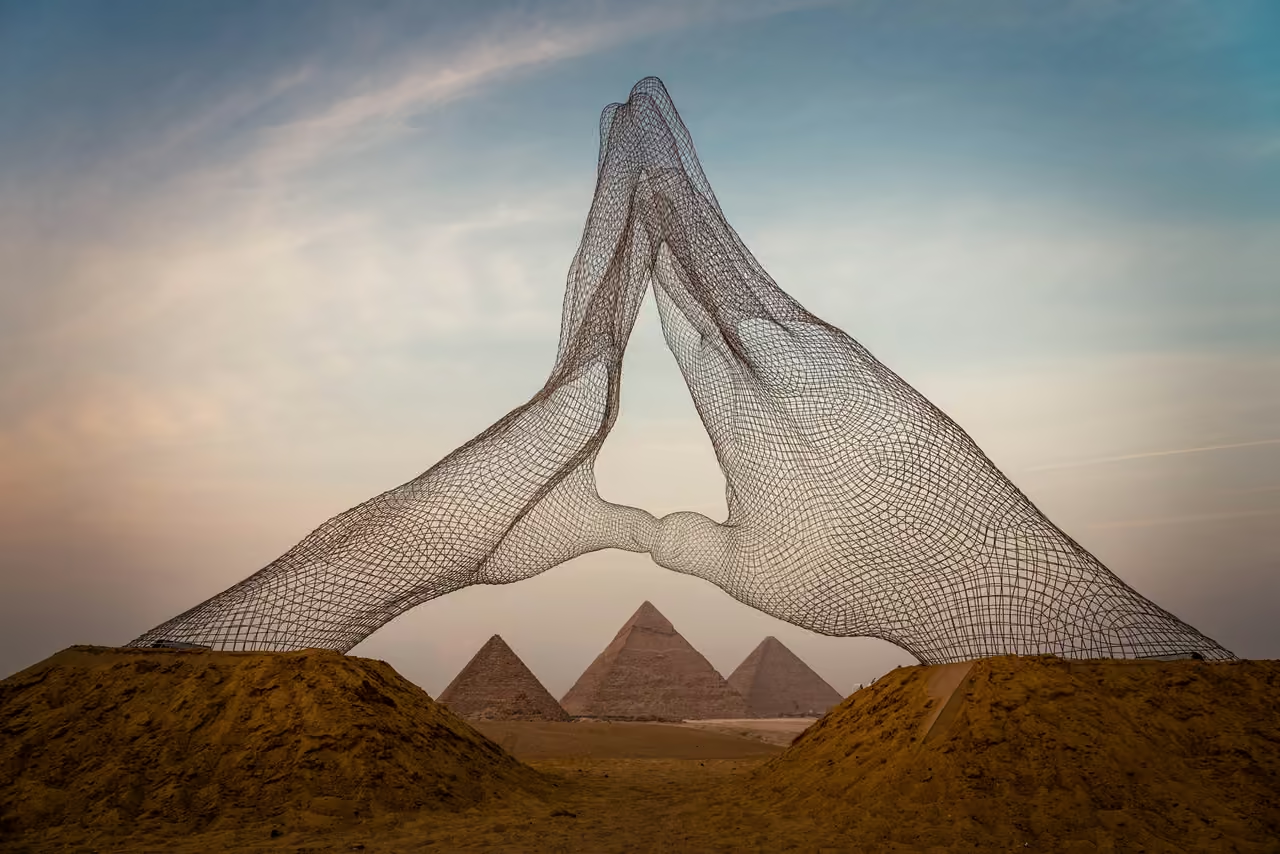 291m
Forever Is Now Art Exhibition
Mounted each autumn directly across the sand beside the pyramids, this annual contemporary sculpture exhibition sets large-scale installations in dialogue with Fourth Dynasty stone. Egyptian and international artists position mirrored portals, woven monoliths, and kinetic steel frames across the desert floor to catch shifting sunlight from sunrise to late afternoon. General plateau admission grants access, allowing regular visitors to wander straight among works ordinarily limited to global biennales.
festival view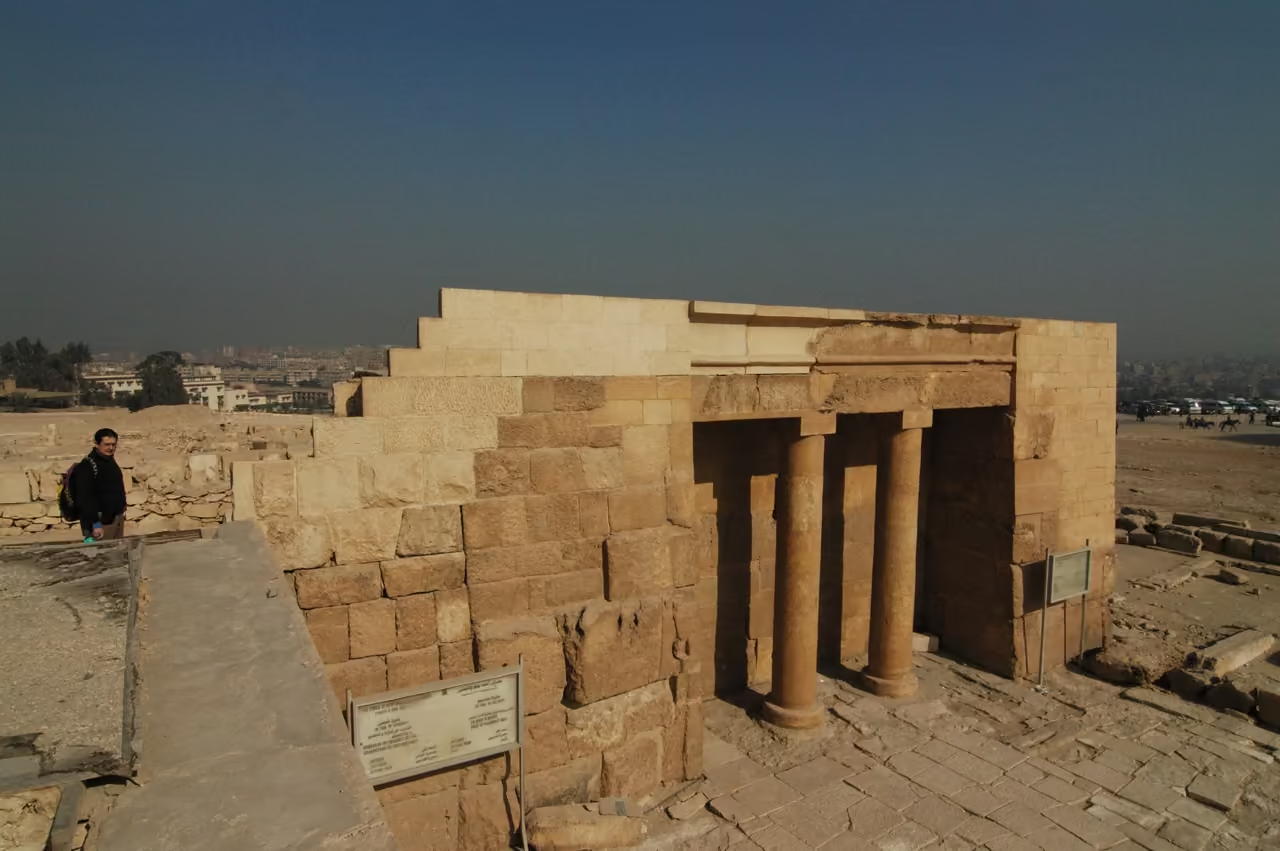 321m
Western Mastaba Cemetery
Laid out across neat street-like rows immediately west of the Great Pyramid, hundreds of flat-topped rectangular limestone tombs preserve the burial quarter of Fourth Dynasty princes, royal architects, and court priests. Stepping into open mastaba chapels reveals finely carved false doors, crisp relief carvings of harvest scenes, and solid bench proportions that shaped early pyramid geometry in total quiet.
architecture view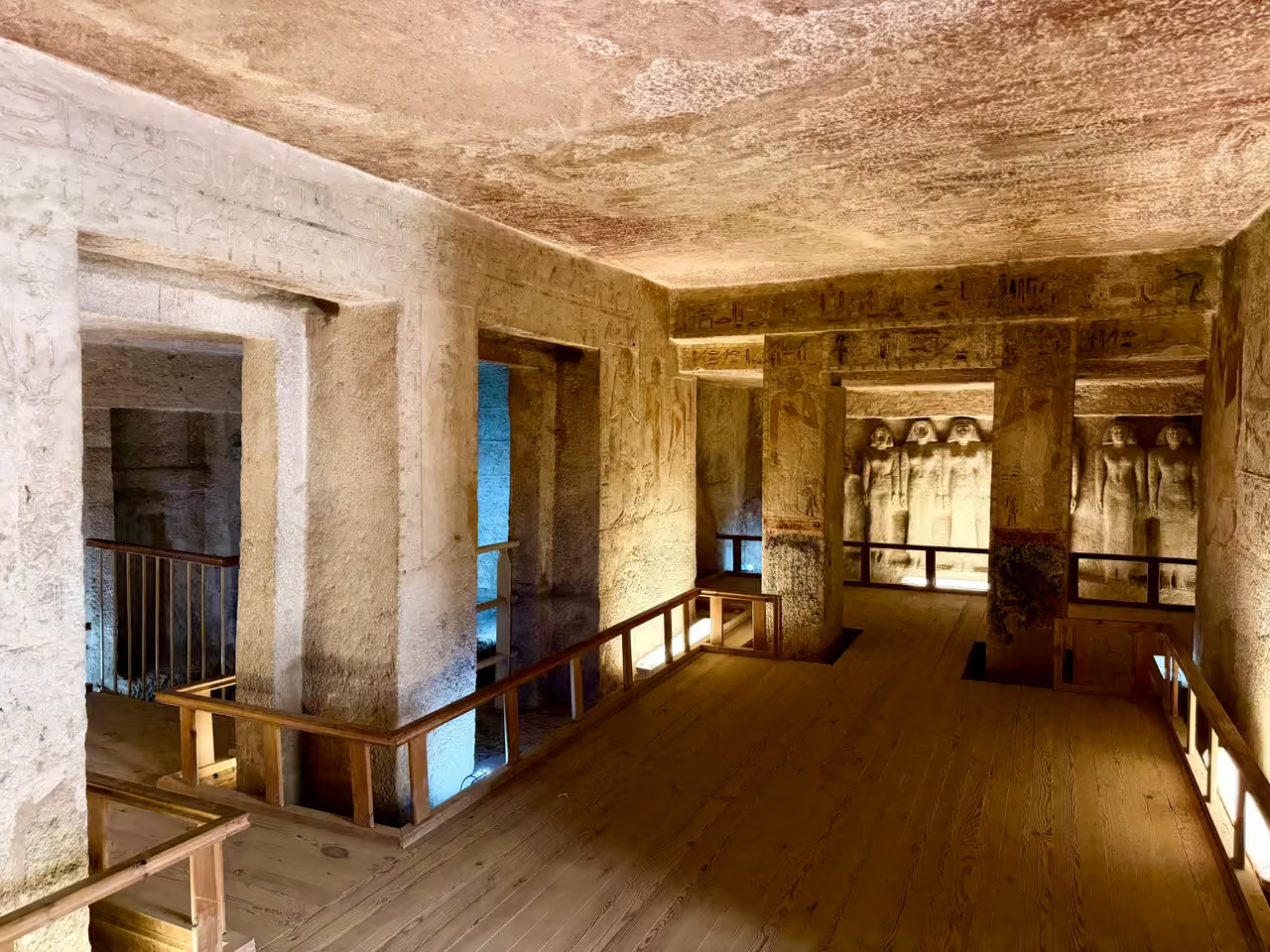 372m
Tomb of Queen Meresankh III
Hidden underground on the eastern cemetery field of the Giza Plateau while tour buses roll straight past, this rock-cut tomb shelters some of the best-preserved painted reliefs in all of Giza. Descending stone steps reveals vivid 4,500-year-old pigments showing Meresankh picking lotus flowers from papyrus skiffs, bakers kneading loaves, and sculptors chiselling statues. Few visitors step inside, keeping the cool painted chambers hauntingly quiet.
hidden gem view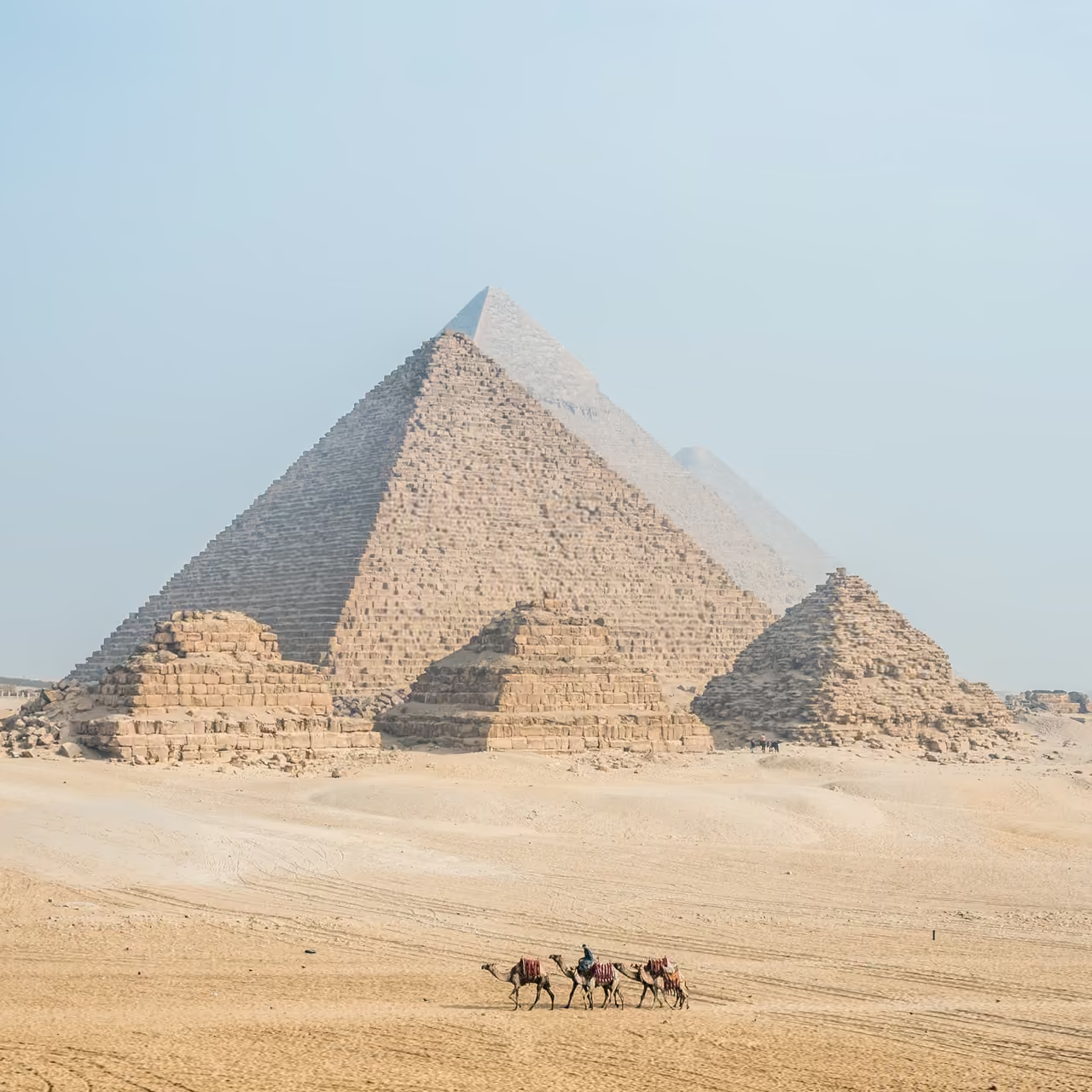 388m
Giza Pyramid Complex
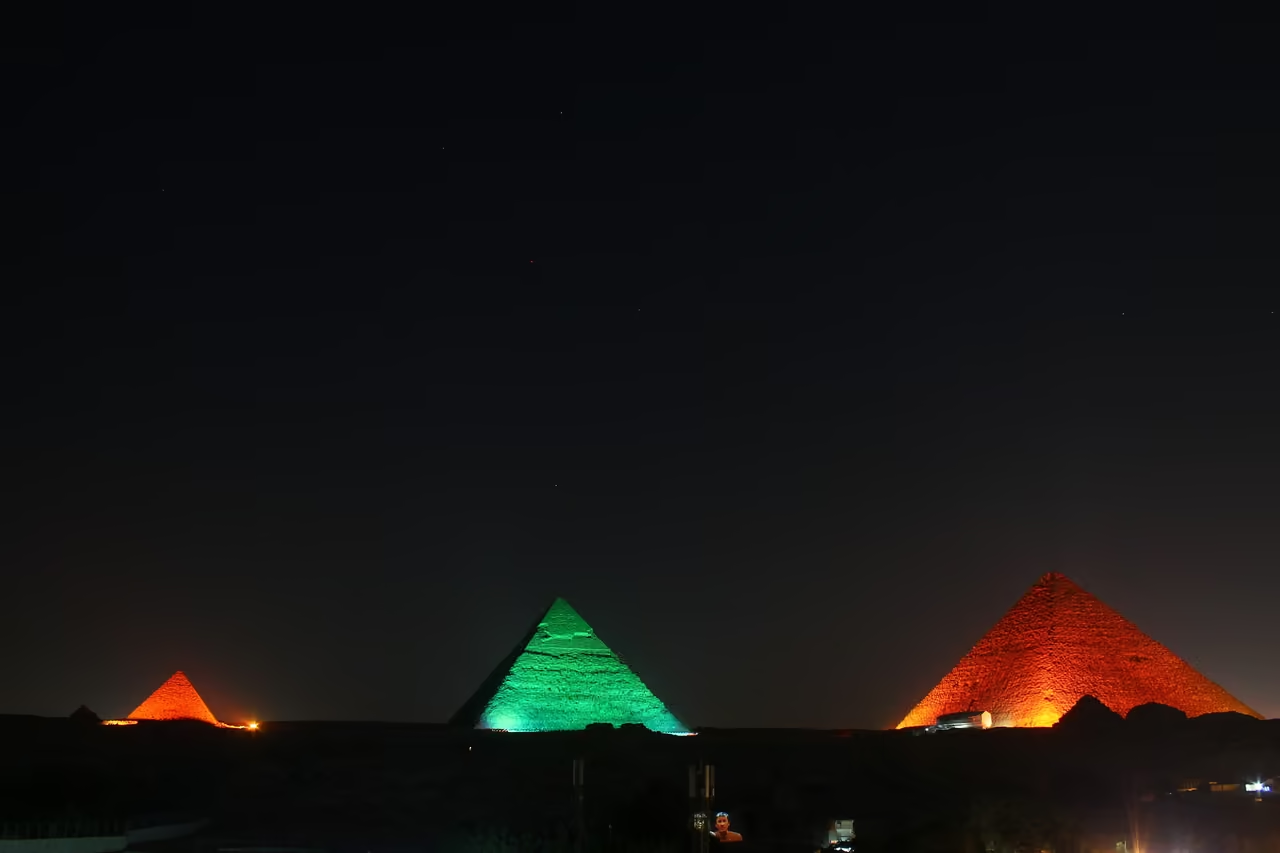
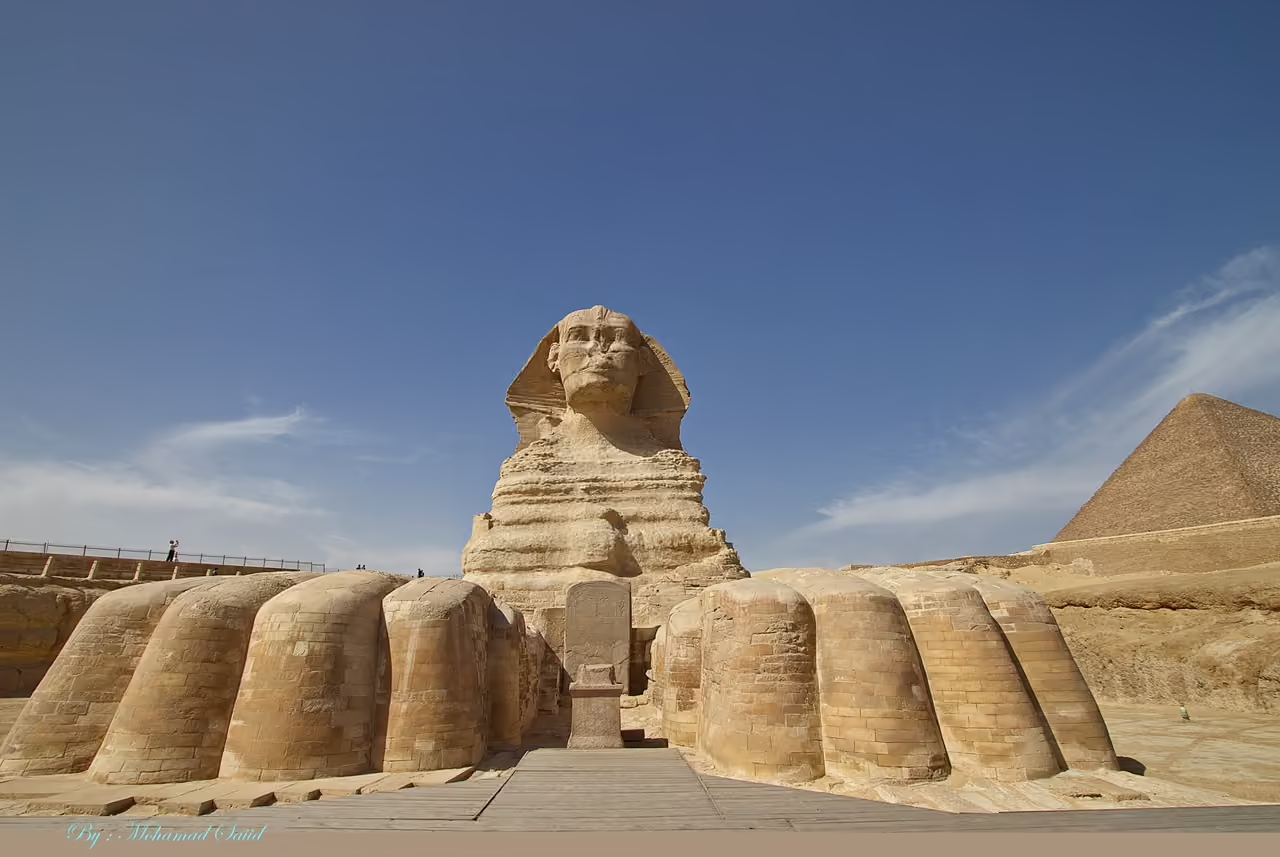
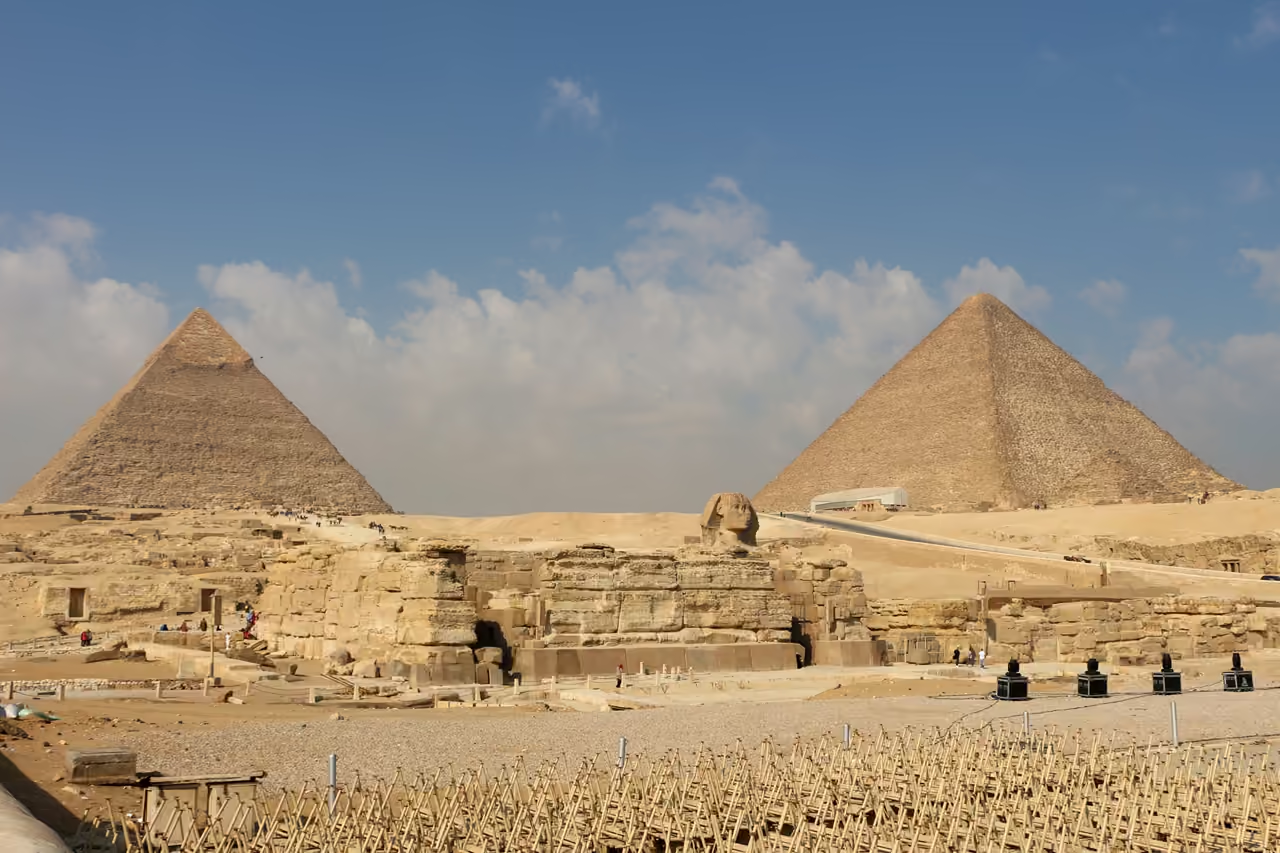
Nine kilometres west of the Nile, the apartment blocks of Nazlet el-Samman stop abruptly at the limestone boundary of the Giza Pyramid Complex. Three royal tombs own the desert skyline. Khufu's Great Pyramid stands as the sole surviving Wonder of the Ancient World, flanked by Khafre's monument perched higher on the bedrock with its smooth white cap intact, and Menkaure's smaller tomb farther southwest. On the eastern flank sits the Great Sphinx, encircled by ordered streets of royal mastabas and ancient boat pits carved into the rock. Electric shuttle buses loop between the desert viewpoints and the 9 Pyramids Lounge, though patience pays off when queues gather outside the cramped doorway leading into Khufu's warm interior corridor. Step back out late in the afternoon as the stone turns honey gold and the hum of Greater Cairo rises straight over the plateau wall.
unesco heritage site view
Explore Similar Places in These Collections
Featured on These Itineraries and Routes
3 Days in Giza: Royal Stone, Artisans, and Nile Nights
Three balanced days let you uncover Giza well past its headline postcard. Dedicate your first morning to deep pyramid exploration and sunset frames, devote day two to the Grand Egyptian Museum, Sahara horseback trails, and Harrania tapestry studios, and spend day three savouring Dokki gardens, Impressionist art palaces, car-free Dahab Island farms, and Agouza riverfront nights.
view itinerary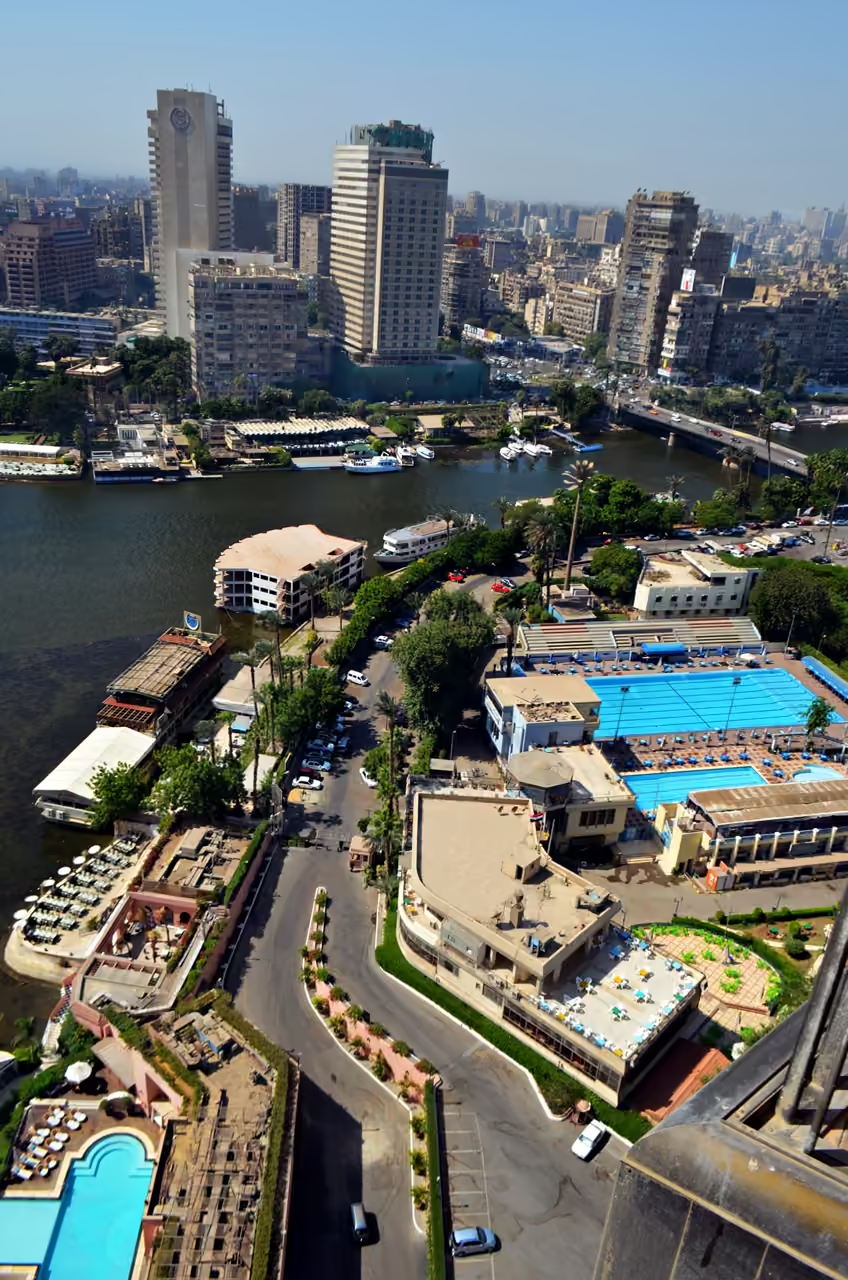
5 Days in Giza: Tombs, Cinema, Modern Art, and Local Life
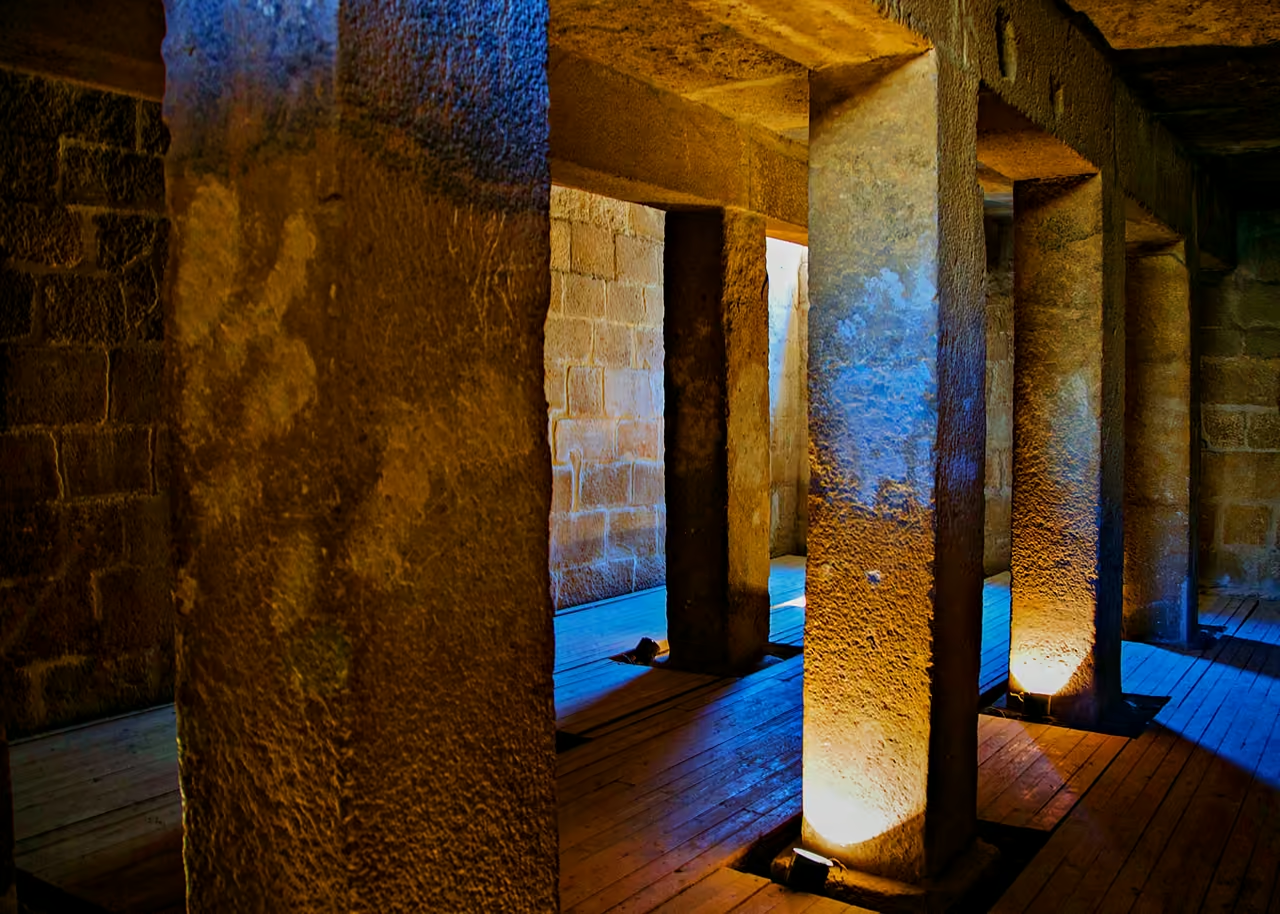
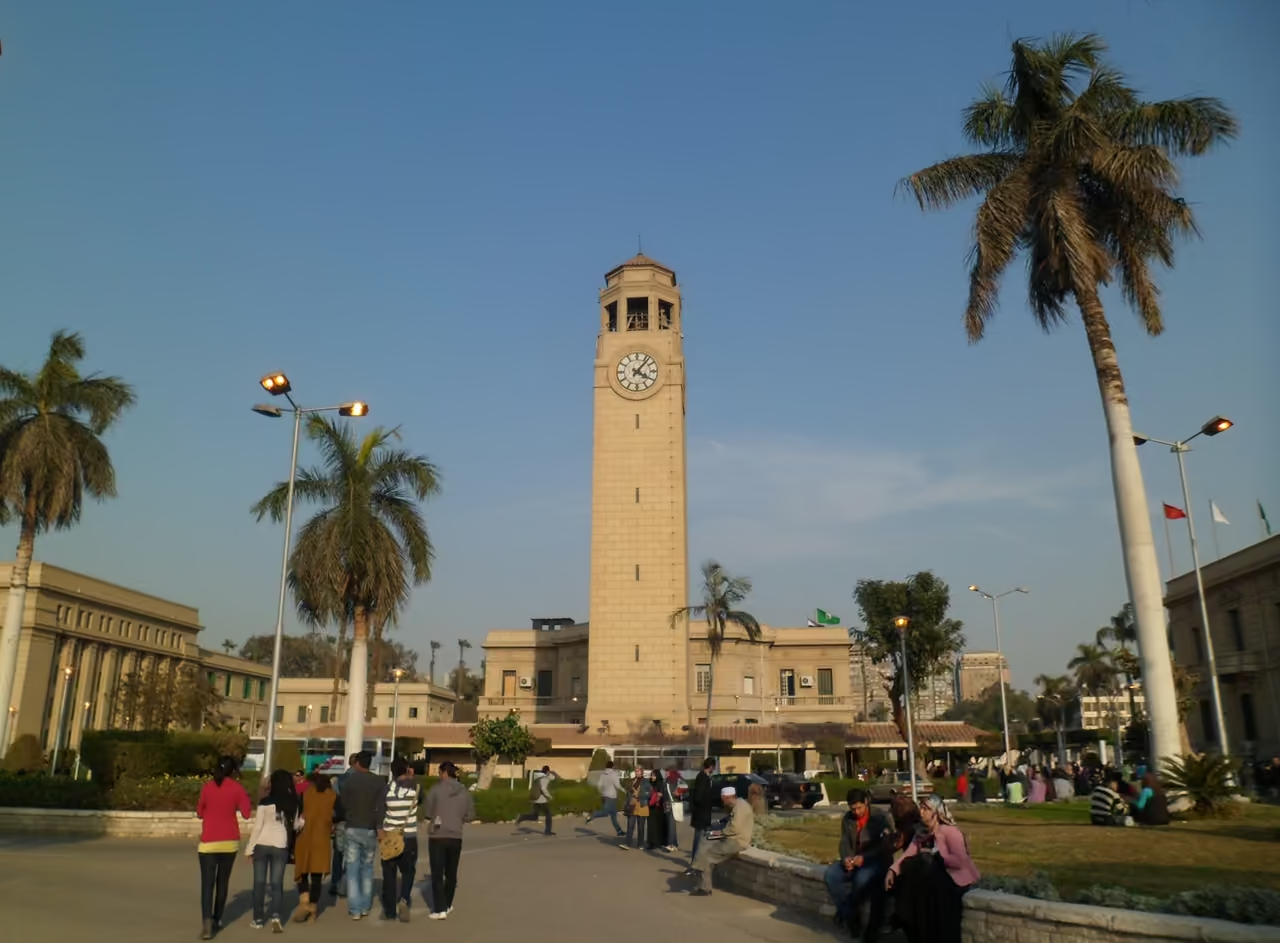
Designed for unhurried travellers who want every chapter of Giza's 4,500-year story, this five-day plan blends painted plateau rock tombs and Tutankhamun galleries with literary villa museums, golden-age cinema studios, morning produce markets, and late-night football neighbourhood cafés. Spacing desert excursions across mornings leaves afternoons cool inside gardens and galleries.
view itinerary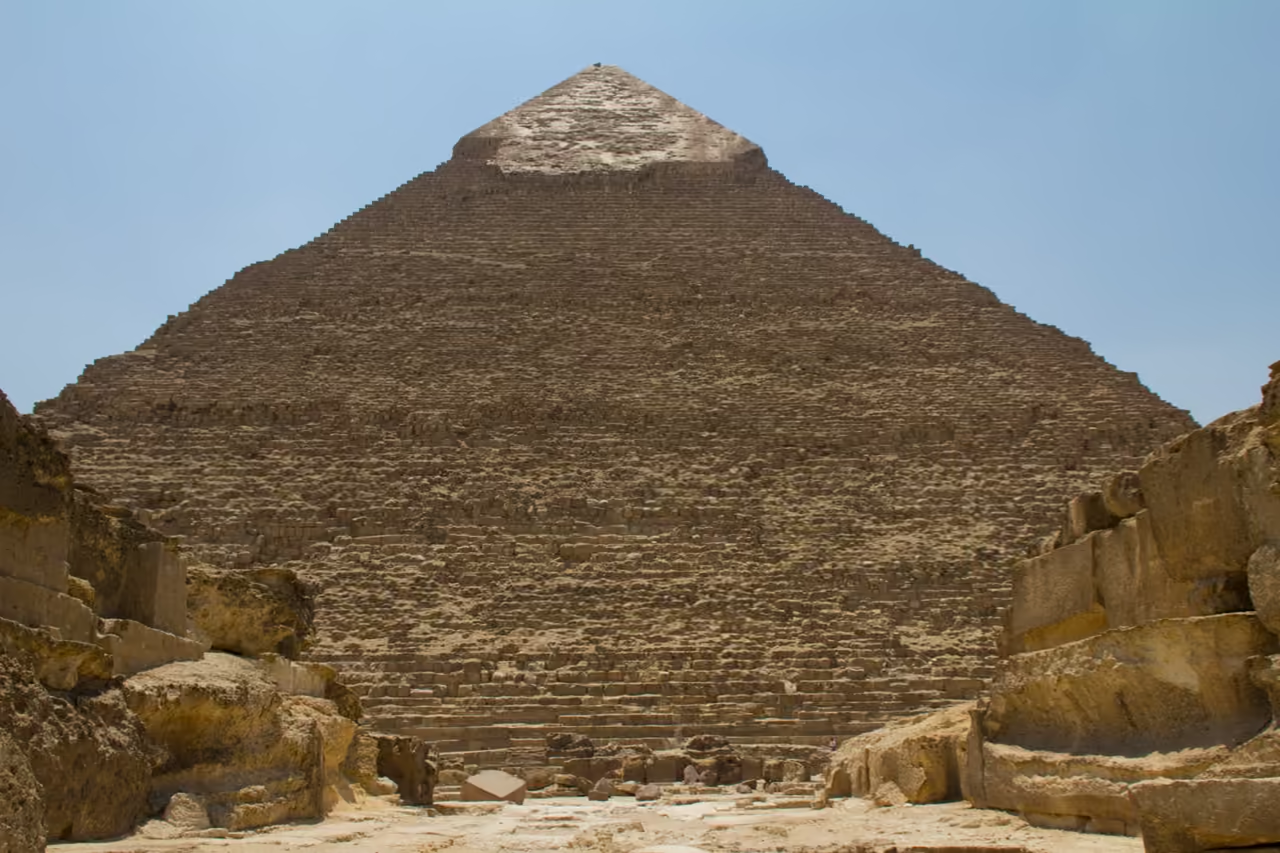
Fourth Dynasty Royal Necropolis Self-Guided Tour
Walk in the footsteps of Old Kingdom pharaohs across the wind-carved Giza Plateau on an unhurried route linking three royal pyramid precincts and the Great Sphinx. Tracing ancient quarry steps, polished granite valley temples, and limestone ceremonial causeways shows how Giza operated as one cohesive sacred complex rather than disconnected monuments. Allow three hours with sturdy shoes and extra drinking water.
view self-guided tour
See all attractions in Giza
Including Grand Egyptian Museum, Great Sphinx of Giza, Agricultural Museum, and more