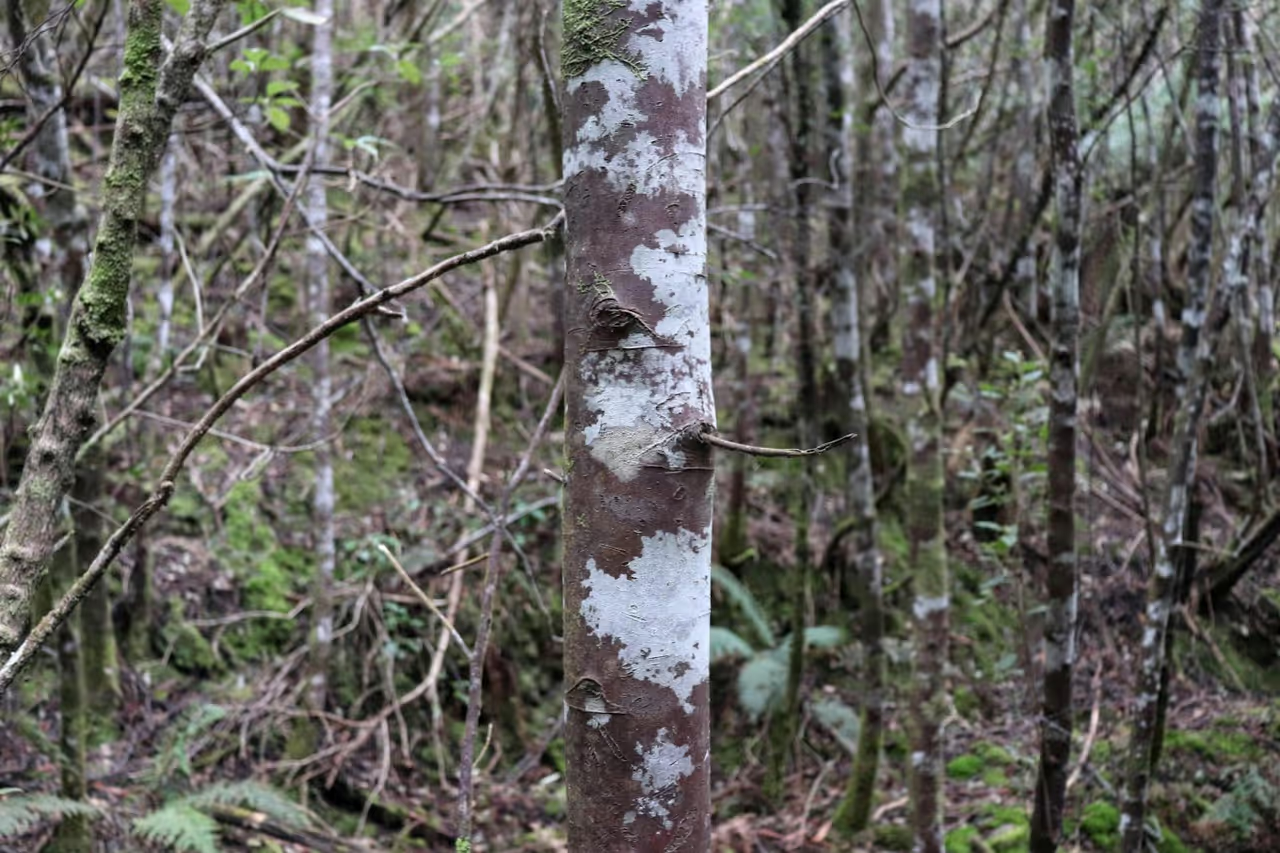
Wellington Park
Wellington Park acts as the magnificent, rugged crown jewel towering over Hobart, offering a pristine wilderness experience within arm's reach of the city. You can stand at the summit and gaze out over the Derwent River, the vast Tasman Peninsula, and the Southern Ocean, feeling completely removed from the urban world below. This area is home to the iconic Mount Wellington, locally revered as kunanyi, which serves as a constant, shifting backdrop to daily life in Tasmania's capital. Whether you are chasing breathtaking sunrises, exploring hiking trails through diverse alpine ecosystems, or simply driving up for a panoramic view, the park provides an unforgettable connection to nature. It is a place of dramatic shifts where you might experience brilliant sunshine one moment and a light dusting of snow the next. Visiting here is essential for understanding the true spirit of Tasmania.
Videos
History of Wellington Park
The identity of Hobart is inseparable from the towering presence of the mountain that looms over it. For as long as people have lived in the Derwent Valley, this massive dolerite monolith has served as a guide, a shelter, and a spiritual centre. While the colonial settlers viewed the peak as a formidable challenge to be conquered and mapped, the palawa people have always known it as kunanyi, a place of deep significance that connects the earth to the sky. The mountain is the silent guardian of the capital, dictating the weather patterns and providing a stunning natural backdrop that few other cities in the world can claim to possess. As the city grew, so did the desire to access the high country. The construction of Pinnacle Road in the 1930s was a monumental feat of engineering, carving a path through the ancient forests and rock fields to reach the summit. This road did more than connect the city to the peak; it democratised the wilderness. Suddenly, a journey that once took a full day of arduous trekking became a short drive, allowing locals and visitors alike to stand at the top and gaze across the Tasman Sea. This access brought a newfound appreciation for the fragile ecosystem that clings to the slopes, sparking a conservation movement that eventually led to the formal protection of the area under the Wellington Park Act. Today, the park stands as a testament to the balance between accessibility and preservation. It remains a wild space where the elements rule supreme, often shifting from tranquil sunlight to blizzard conditions in minutes. Whether you are walking the trails or standing on the observation deck, you are participating in a long history of exploration. The mountain invites you to look closer, to understand its geology, and to respect the ancient heritage that defines the landscape. It is the heart of Tasmania's natural charm, inviting you to witness the raw power of nature so close to civilisation.
Events spanning 178 years
Fun Facts
- • Indigenous palawa people hold a deep spiritual connection to the mountain, identifying it as a place of immense cultural heritage.
- • Mount Wellington is a dolerite monolith that formed during the Jurassic period, roughly 180 million years ago.
- • The Organ Pipes are a sheer cliff face of massive basalt columns that attract climbers and photographers from around the world.
- • The drive to the top winds through multiple ecological zones, climbing from temperate rainforest at the base to sub alpine flora at the peak.
- • The locality has a population of zero, as it is a protected area maintained strictly for nature and recreation.
- • The mountain serves as the primary water catchment for Hobart, ensuring the city has access to high quality water.
- • The summit rises to over 1,270 metres above sea level, providing views that stretch across the entire south of Tasmania on a clear day.
- • The weather at the summit can be wildly different from the city below, frequently creating a microclimate where snow falls while the city enjoys sunshine.
- • There are over 100 kilometres of walking tracks within the park, catering to everyone from casual strollers to serious trekkers.
- • This area is home to the Wellington Mint Bush, a rare plant species that is found nowhere else on earth.
Wellington Park FAQ
While we strive to keep this information accurate and up to date, we recommend verifying any details independently before making decisions based on them.
Wellington Park Map & Neighborhood Explorer
This interactive map is centered on Wellington Park. Zoom in and move the map around to automatically discover Wikipedia photos and summaries of other nearby sights, monuments, and historical points of interest and stories in real-time!
Places near Wellington Park
Make the most of your trip. Check out these top-rated spots located nearby.
 9230m
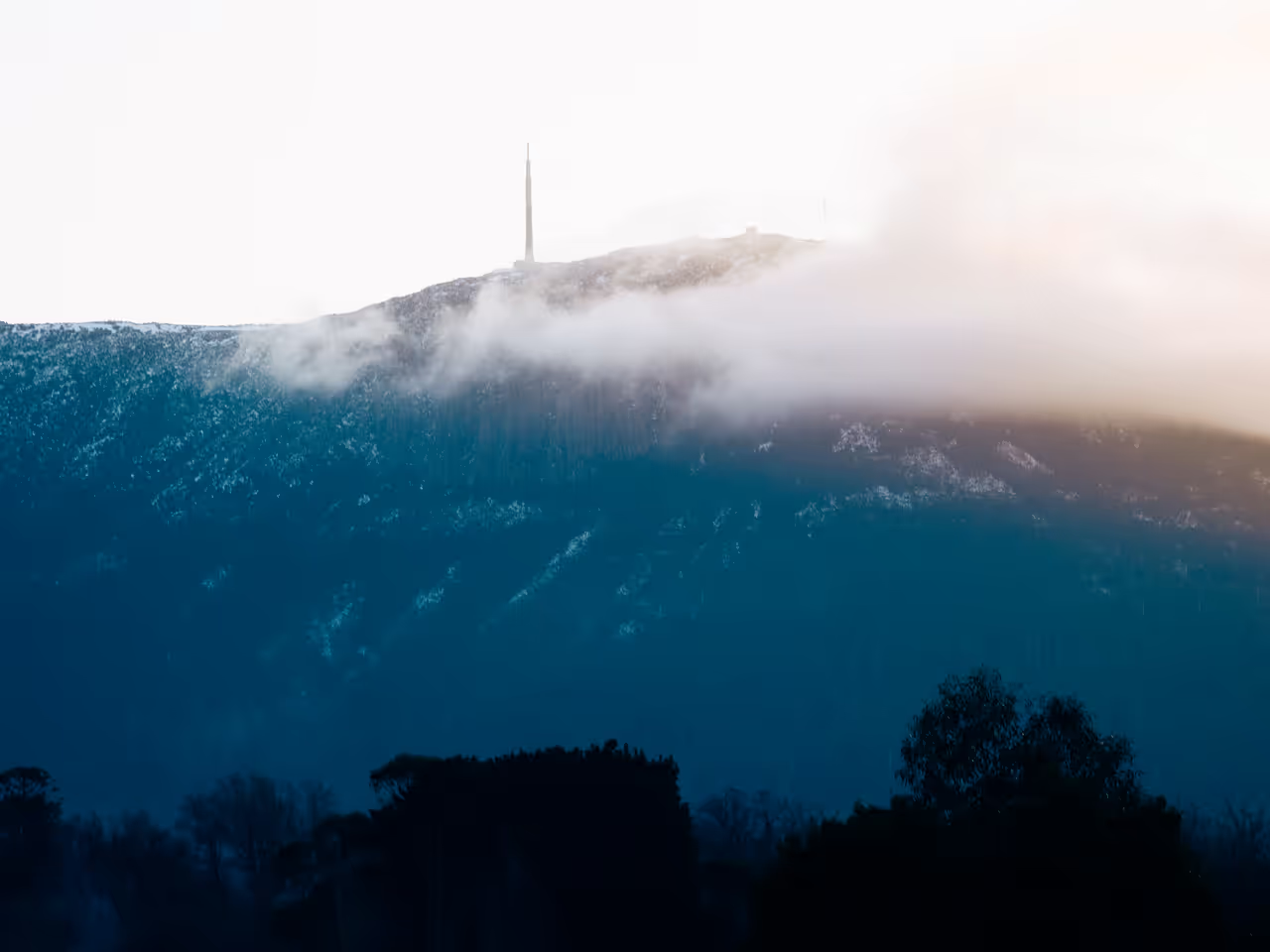
9230mKunanyi / Mount Wellington
Mount Wellington, known to the local palawa people as kunanyi, stands as the dramatic guardian of Hobart, its summit offering an incredible view that stretches across the city and the sparkling Derwent estuary. Reaching 1,271 metres into the sky, this majestic peak is a world unto itself where you can experience everything from warm sun to alpine snow in the span of a single afternoon. Walking trails wind through lush forests up to the famous Organ Pipes, where towering dolerite columns create a spectacle that has captivated explorers for centuries. Whether you drive to the top for the panoramic vistas or lace up your boots to explore the rugged slopes, the mountain offers an essential connection to the wild heart of Tasmania. It is a place where history, nature, and the spirit of the land converge, making it the defining landmark of the Tasmanian capital. This is an experience that stays with you long after you descend back into the city streets.
attraction view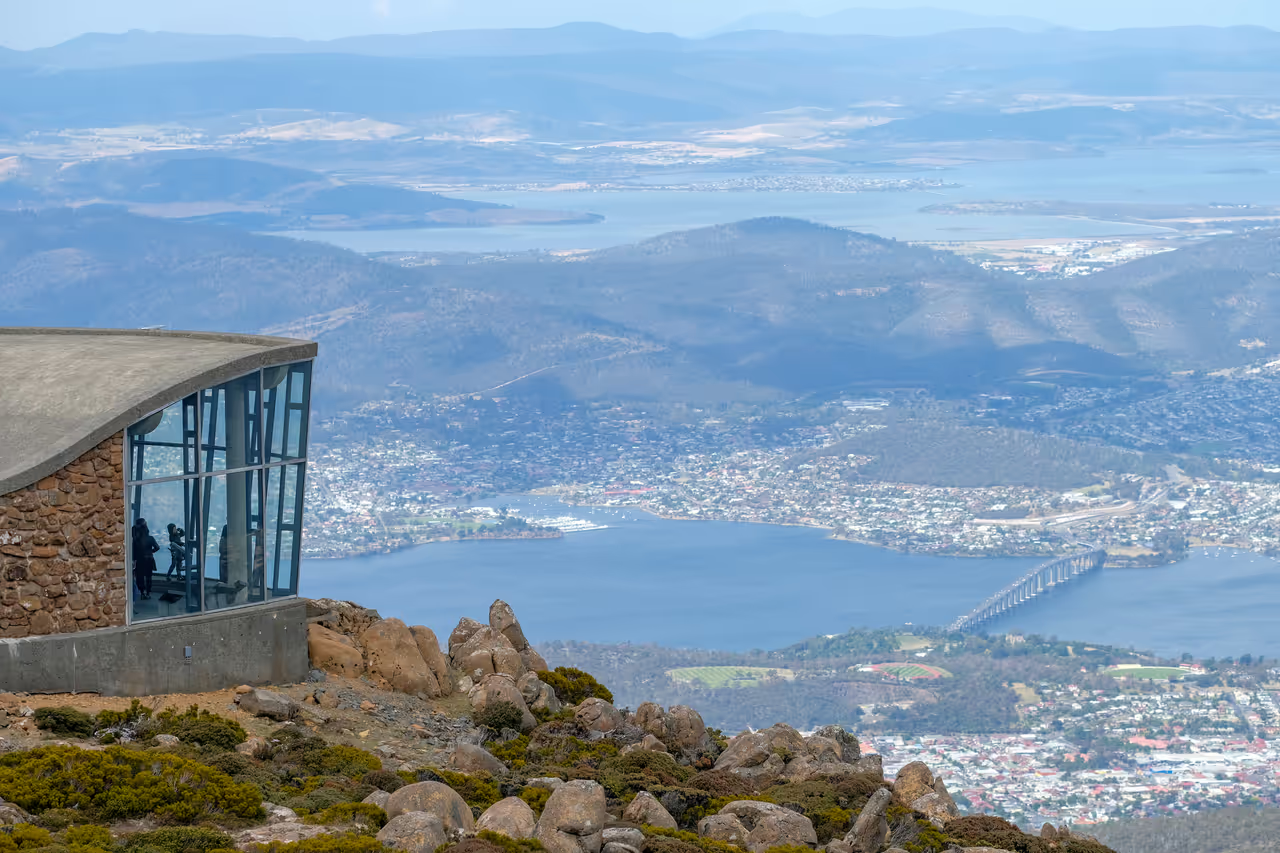 9798m
9798mPinnacle Observation Shelter
Located at the absolute summit of the massive mountain overlooking the city, this enclosed glass structure is a godsend in freezing weather. It offers mind bending, bird's eye views of the entire southern half of the state. On a clear day, you can see all the way out to the remote wilderness of the southwest. The sheer drop off below the viewing deck emphasizes the dramatic elevation perfectly. Experiencing the savage alpine weather from behind the safety of thick glass is an exhilarating contrast.
viewpoint view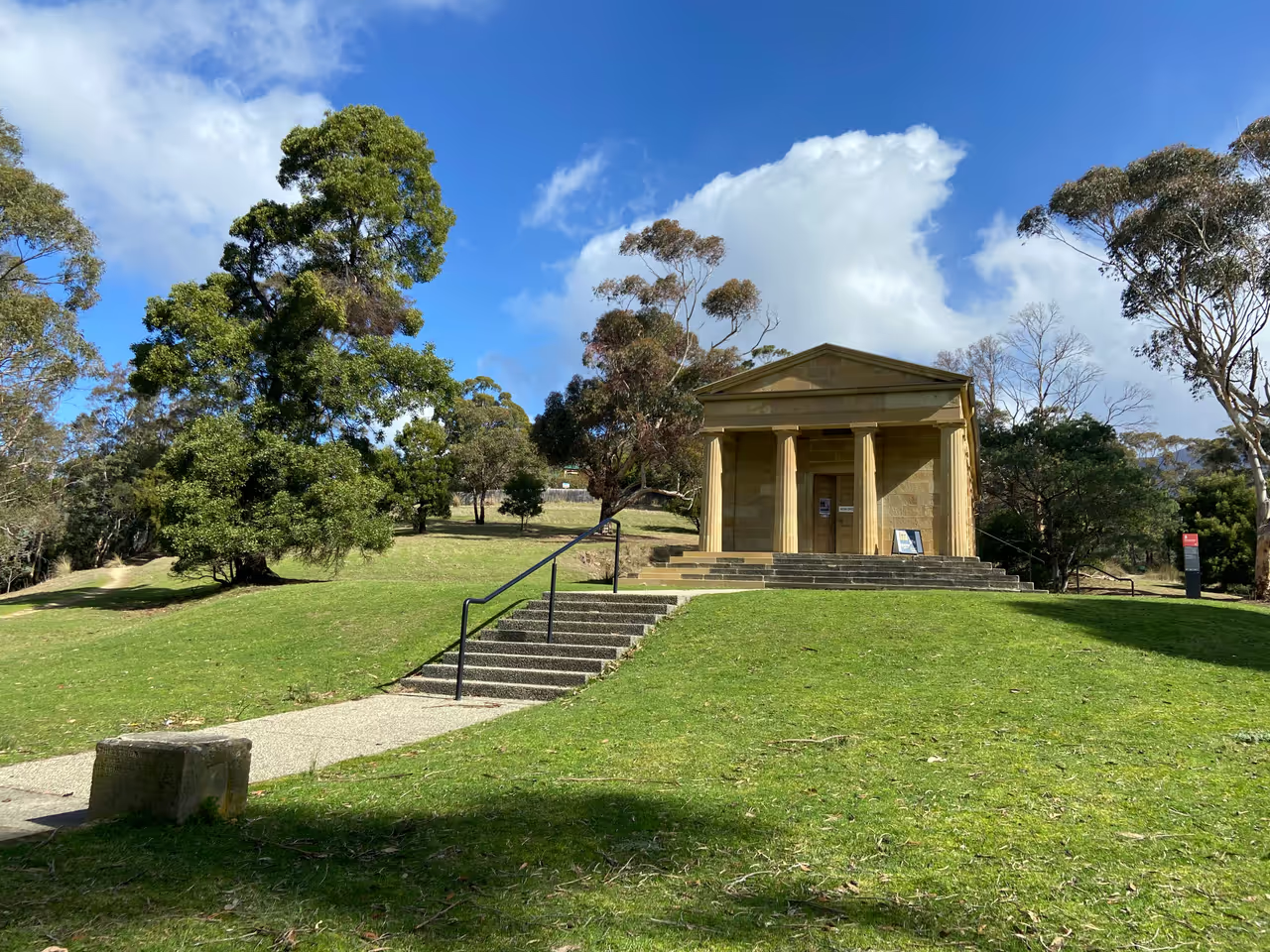 12968m
Lady Franklin Gallery
An incredibly unexpected piece of classic Greek revival architecture sitting quietly in a suburban park. It was originally built as a private museum by the highly intellectual wife of a controversial colonial governor. Today, it operates as a charming community gallery hosting exhibitions by local artists. The surrounding gardens feature lovely old trees and provide a wonderful spot for a quiet picnic. The stark, temple like facade is completely unique to the local architectural landscape.
hidden gem view- 13321m
Sip Cool-Climate Wines
The surrounding valleys produce some of the finest Pinot Noir and sparkling wines in the country, owing to the long, cool growing seasons. Exploring a local vineyard allows you to sample elegant, highly aromatic vintages right where the grapes are grown. The tasting rooms often feature striking modern architecture and sweeping views of the river. It is a highly sophisticated experience that pairs perfectly with locally sourced cheeses and cured meats. The passion of the winemakers here is palpable in every glass.
highlight view
See all nature & parks in Hobart
Franklin Square, Queens Domain, Royal Tasmanian Botanical Gardens, St David's Park...