Tennoji Park
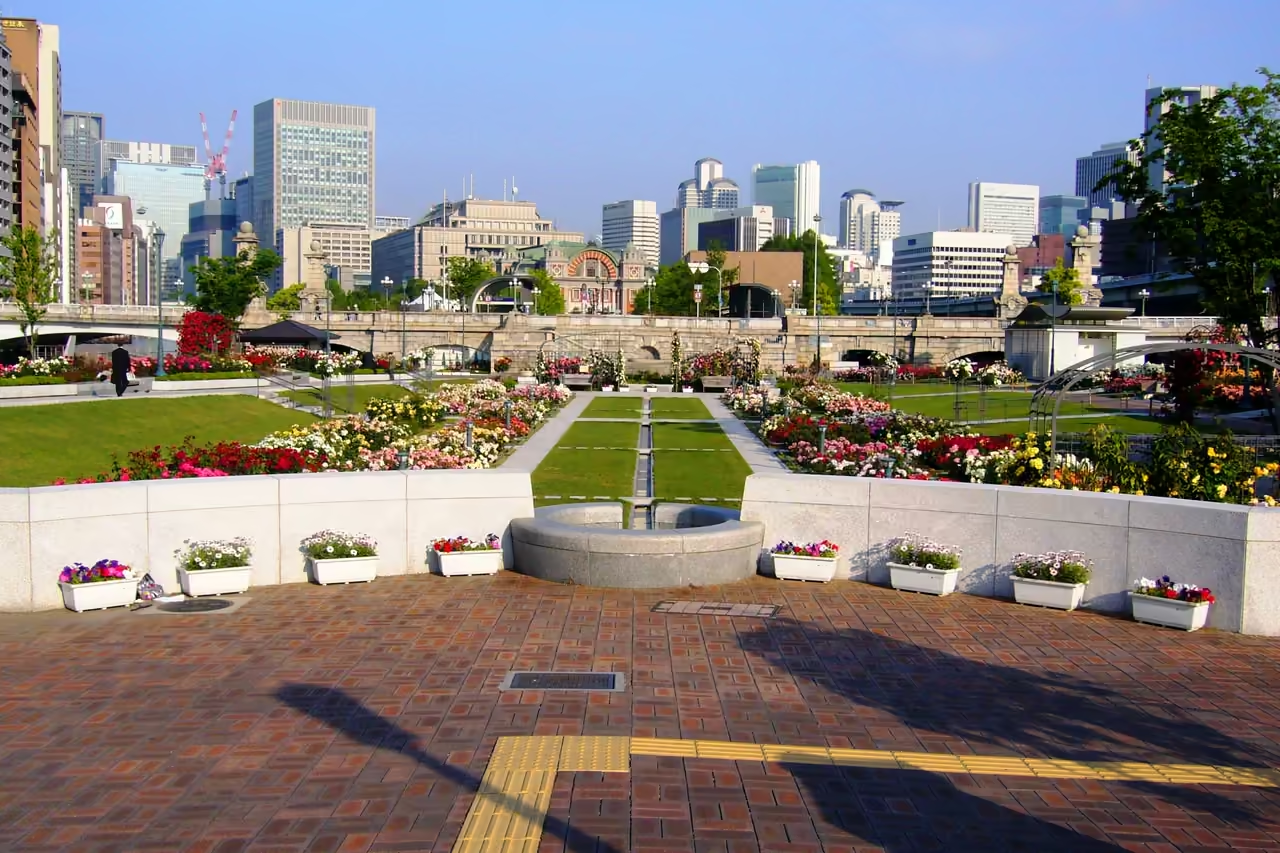
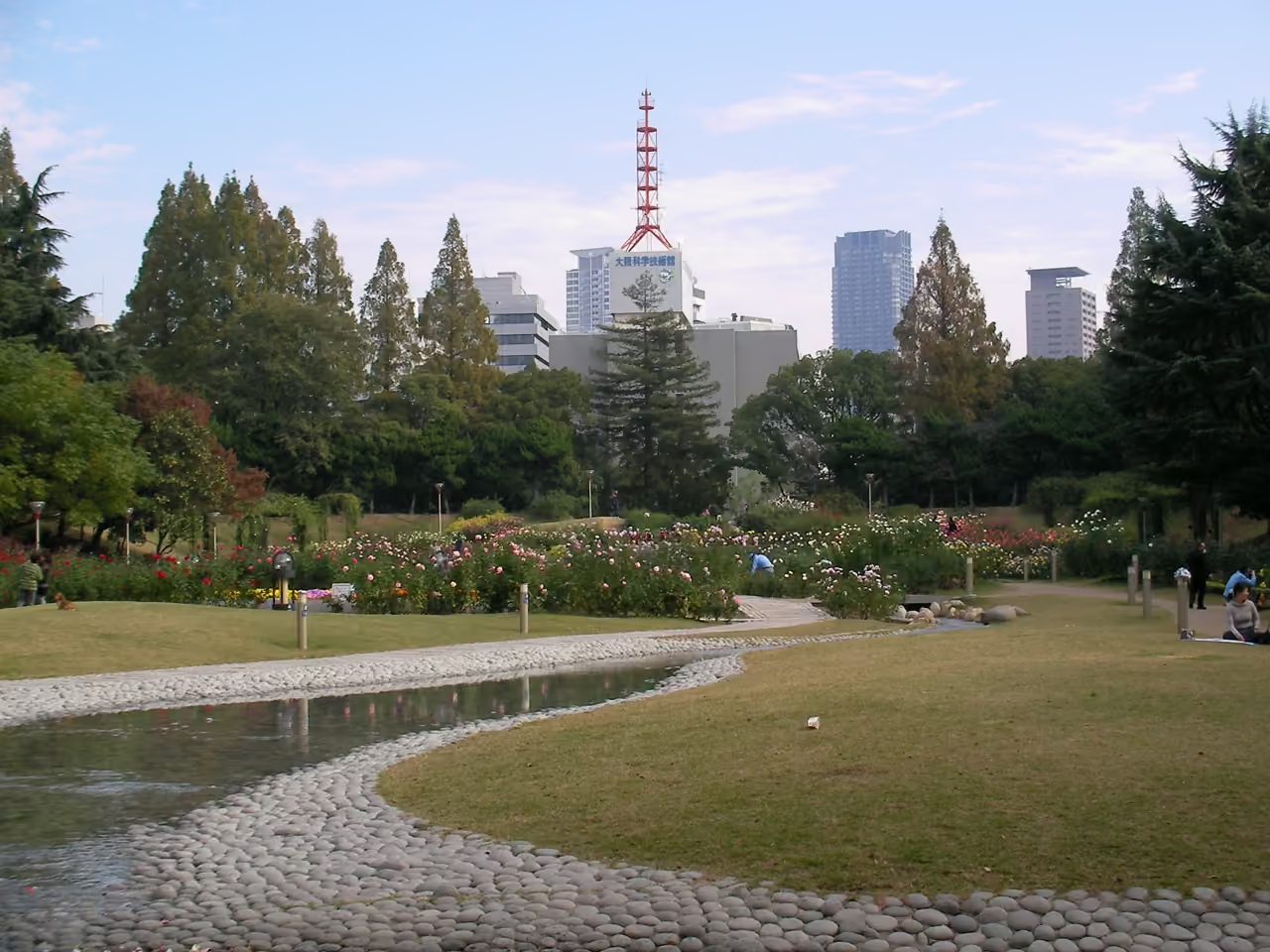
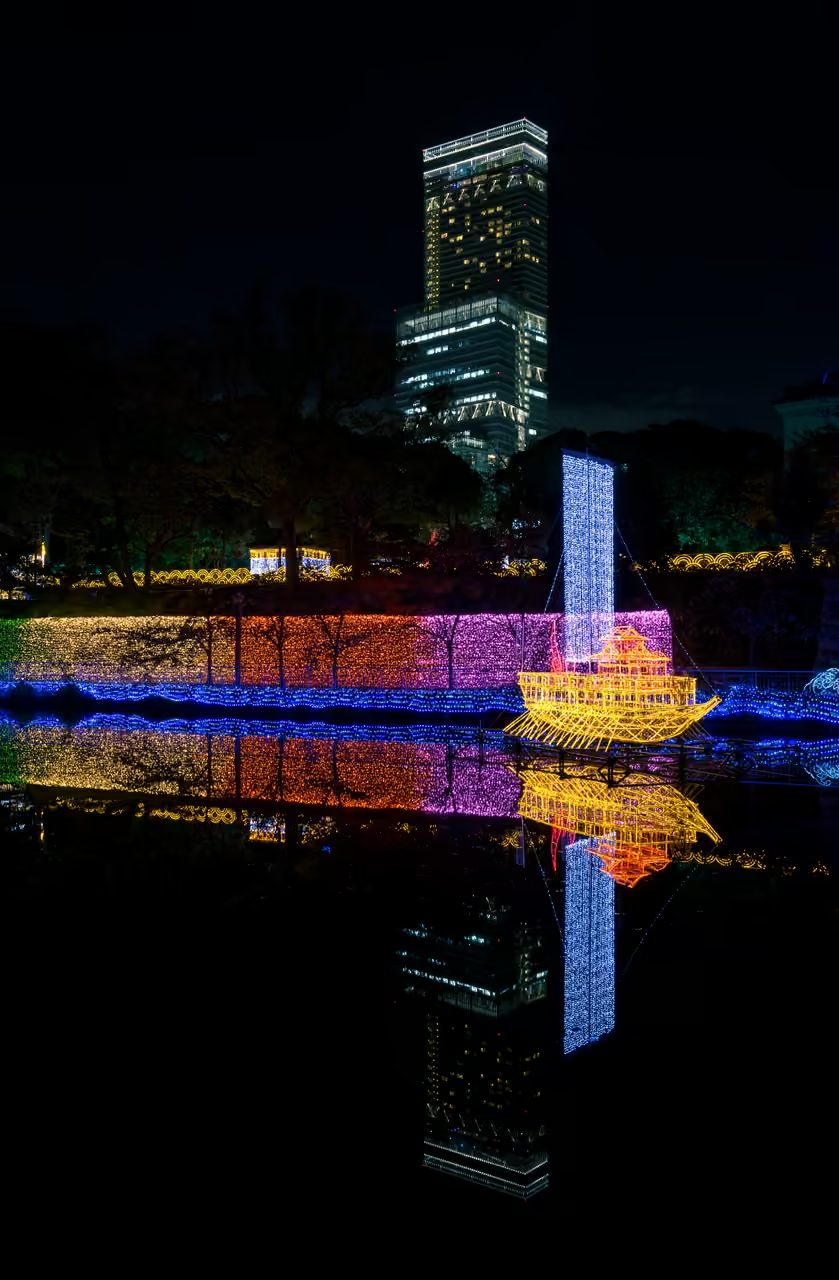
Step out of Tennoji Station and the city opens onto Tenshiba, a broad green lawn where families picnic directly beneath the glass tower of Abeno Harukas. Walk a few minutes west and the coffee terraces yield to the quiet gravel paths of Keitakuen Garden, crafted with curved ponds and stone lanterns long before skyscrapers framed the skyline. Above the trees sits the Osaka City Museum of Fine Arts, sharing the wooded Chausuyama mound with a preserved Nagayamon gate from the feudal Kuroda clan residence. Down the western slope, Tennoji Zoo borders the retro arcades of Shinsekai, while younger visitors tackle aerial rope courses at Tenshiba i:na. Weekend afternoons draw a short queue at the popular bakery patios on the eastern grass, yet the shaded paths around the old pond stay unhurried. Stick around until dusk to see the tower lights shimmer across Keitakuen's water beside the wooden pavilion.
Videos
History of Tennoji Park
Tennoji Park emerged from the aftermath of the Fifth National Industrial Exhibition, a massive 1903 fair that transformed the slopes of the Uemachi Plateau into a showcase of modern industry. Rather than letting the fairgrounds sit idle once the pavilions closed, city leaders divided the territory in 1909. While the western section evolved into the entertainment district of Shinsekai, the eastern grounds opened on 15 October as a public park designed to give industrial Osaka breathing room. Within six years, Tennoji Zoo arrived as only the third public zoo in the country, turning the southern slope into a weekend magnet for families across the Kansai region. Through the 1910s and 1920s, private wealth and civic ambition reshaped the hilltop at the park's centre. The powerful Sumitomo merchant family relocated their main residence to Chausuyama in 1914 and commissioned master landscape designer Jihei Ogawa to craft Keitakuen Garden on their estate. Just seven years later, when the family prepared to move again, they struck a landmark deal with Osaka City: they would donate their entire Chausuyama property on the condition that the municipality build a public art museum there. That promise took shape in 1936 with the opening of the Osaka City Museum of Fine Arts, while Keitakuen Garden unlocked its gates to ordinary citizens for the very first time. Wartime disruptions slowed park life during the mid 1940s when express tram schedules forced local stops around the perimeter to close temporarily, yet the postwar decades quickly restored its civic pulse. By 1952, Osaka opened its main municipal library directly inside the grounds, turning the park into a place of quiet study alongside its museums and animal enclosures. Even as the city expanded outward with new subway lines beneath Tennoji and the nearby Midosuji Line stations, the hillside remained a green anchor for southern Osaka. That openness shifted sharply after a major exposition closed in 1987, when officials surrounded the main park with fences and introduced paid admission gates in 1990 in an effort to deter rough sleepers from neighbouring districts. For a quarter of a century, barriers and ticket booths separated the lawns from passersby, draining much of the casual neighbourhood traffic. Change finally came in 2014 when the city partnered with Kintetsu Railway to reimagine the front entrance. By late 2015, the fences were gone, entry to the main grounds was free once more, and the newly opened Tenshiba lawn reconnected Osaka's commuters, museum goers, and zoo visitors in a single welcoming space.
19 events spanning 116 years
Fun Facts
12- 01
A military ensemble from the Imperial Army Fourth Division began performing public concerts on 200 wooden benches here in 1912, laying the roots for today's Osaka Shion Wind Orchestra.
- 02
An outdoor amphitheatre seating 3,400 spectators stood inside the park from 1928 to 1981 and launched Osaka's famous Haruichiban spring music festival, whose successor later moved north to Osaka Castle Park.
- 03
Designated as an official wide area evacuation site for Osaka City, the 28.2 hectare grounds are structured to shelter nearby residents during major emergencies.
- 04
For more than a decade starting around 1990, an informal strip of unlicensed outdoor karaoke stalls nicknamed Aozora Karaoke took over the public roadway beside the art museum until Osaka City dismantled them in 2003.
- 05
In 1913, the park hosted the Meiji Commemorative Colonial Exhibition, drawing large crowds through temporary pavilions just four years after the grounds opened.
- 06
In 1989 and 1990, city planners seriously evaluated Tennoji Park as the construction site for a giant domed stadium, a proposal that would have relocated Tennoji Zoo all the way out to Osaka Port at Nanko.
- 07
Inside the grounds stands a bronze statue honouring Shiro Ikegami, Osaka's sixth mayor, who championed the Great Osaka urban expansion era during the early twentieth century.
- 08
Japan's very first public radio tower was erected in the park in 1930 on the former bandstand site so residents without private sets could gather outdoors to hear broadcasts.
- 09
Kansai University owes an early chapter of its campus history to the park, having temporarily moved classes into the leftover 1903 exhibition art hall in 1906 while constructing new buildings.
- 10
Near the wooded Chausuyama mound stands a preserved Nagayamon gatehouse relocated from the former Osaka residence of the feudal Kuroda clan of Fukuoka.
- 11
Renowned architect Tadao Ando designed a Multi Image Theatre inside the park grounds for the 1987 Tennoji Expo.
- 12
The southeastern entrance flowerbeds were dramatically sunken below ground level during a major 1932 to 1933 redesign, giving the approach its stepped geometry decades before Tenshiba arrived.
FULL PLACE DETAILS
Updated
FULL PLACE DETAILS
UpdatedOVERVIEW & STATS
- Established
- In 1909, making it 117 years old
WEB & AMENITIES
Tennoji Park Map & Neighborhood Explorer
This interactive map is centered on Tennoji Park. Zoom in and move the map around to automatically discover Wikipedia photos and summaries of other nearby sights, monuments, and historical points of interest and stories in real-time!
Tennoji Park FAQ
Yes, entry to Tennoji Park and the Tenshiba lawn area is completely free, and the open grounds have no closing days. Separate admission fees apply only if you step inside specific attractions such as Keitakuen Garden, Tennoji Zoo, or the Osaka City Museum of Fine Arts.
The 28 hectare grounds pack an extraordinary variety of sights into one walk, including Tennoji Zoo, the Osaka City Museum of Fine Arts, the traditional strolling pond garden of Keitakuen, and the prehistoric Chausuyama mound. Visitors will also find a botanical greenhouse, a floating water stage, a preserved feudal Kuroda clan gatehouse, and the Tenshiba and Tenshiba i:na dining and activity zones.
The park sits steps away from major transit hubs on Osaka's southern loop. You can walk straight into the Tenshiba entrance from JR Tennoji Station or the Midosuji and Tanimachi subway lines at Tennoji Station, as well as Kintetsu Osaka Abenobashi Station and the Hankai tramway. For the western zoo entrance, Dobutsuenmae Station on the Midosuji and Sakaisuji subway lines puts you right next door.
Tenshiba is the park's revitalised southeastern gateway that opened in 2015 after removing the old perimeter fences. It features a large central grass lawn overlooking Abeno Harukas, casual cafes and restaurants, futsal courts, a dog run, an indoor children's play centre, and a tourist information hub.
Designed by celebrated Kyoto master Jihei Ogawa and completed in 1918 for the Sumitomo family, Keitakuen is a serene Japanese strolling garden built around a central pond with stepping stones, wooden pavilions, and seasonal foliage. Its classic bridges and pine trees create a striking visual contrast against the glass skyscraper of Abeno Harukas rising directly behind the treeline.
While the main park has no entry gates during the day, the central walkway through the grounds is closed overnight between 10 pm and 7 am. Restaurants and cafes along the front Tenshiba plaza generally stay open into the evening, making it an easy spot for dinner before heading back to Tennoji Station.
The closest place to visit near Tennoji Park is Pay Respects at Isshin-ji's Ash-Sculpted Buddhas, around 309 m away. Other things to do near Tennoji Park include Tennoji Zoo (389 m), Soak in Global Bathhouses at Spa World (451 m) and Tsutenkaku Golden Observatory (470 m). All of these are within roughly 470 m of Tennoji Park, close enough to walk.
It dates back to 1909, making it 117 years old.
While we strive to keep this information accurate and up to date, we recommend verifying any details independently before making decisions based on them.
Places near Tennoji Park
Make the most of your trip. Check out these top-rated spots located nearby.
 309m
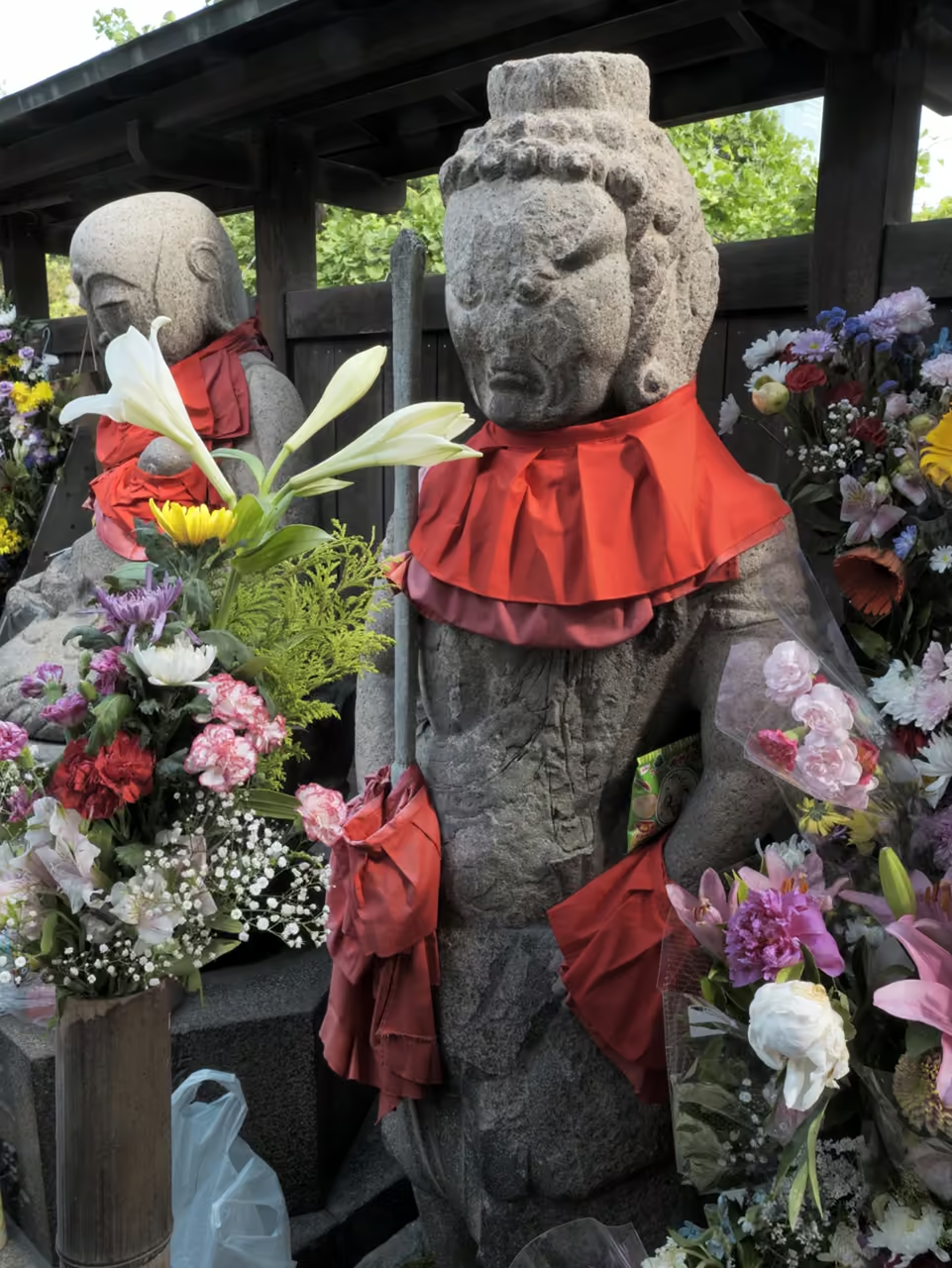
Pay Respects at Isshin-ji's Ash-Sculpted Buddhas
Stepping beneath Isshin-ji's striking 1997 concrete-and-steel entrance gate flanked by modern bronze warriors costs nothing and unveils one of Japan's most moving devotional traditions. Since 1887, monks here have cast monumental Amida Buddha statues from the cremated ashes of hundreds of thousands of everyday followers, mixing memory directly into living temple art. Quiet incense curls through the open sanctuary opposite Tennoji Park, welcoming respectful visitors regardless of faith.
free thing to do view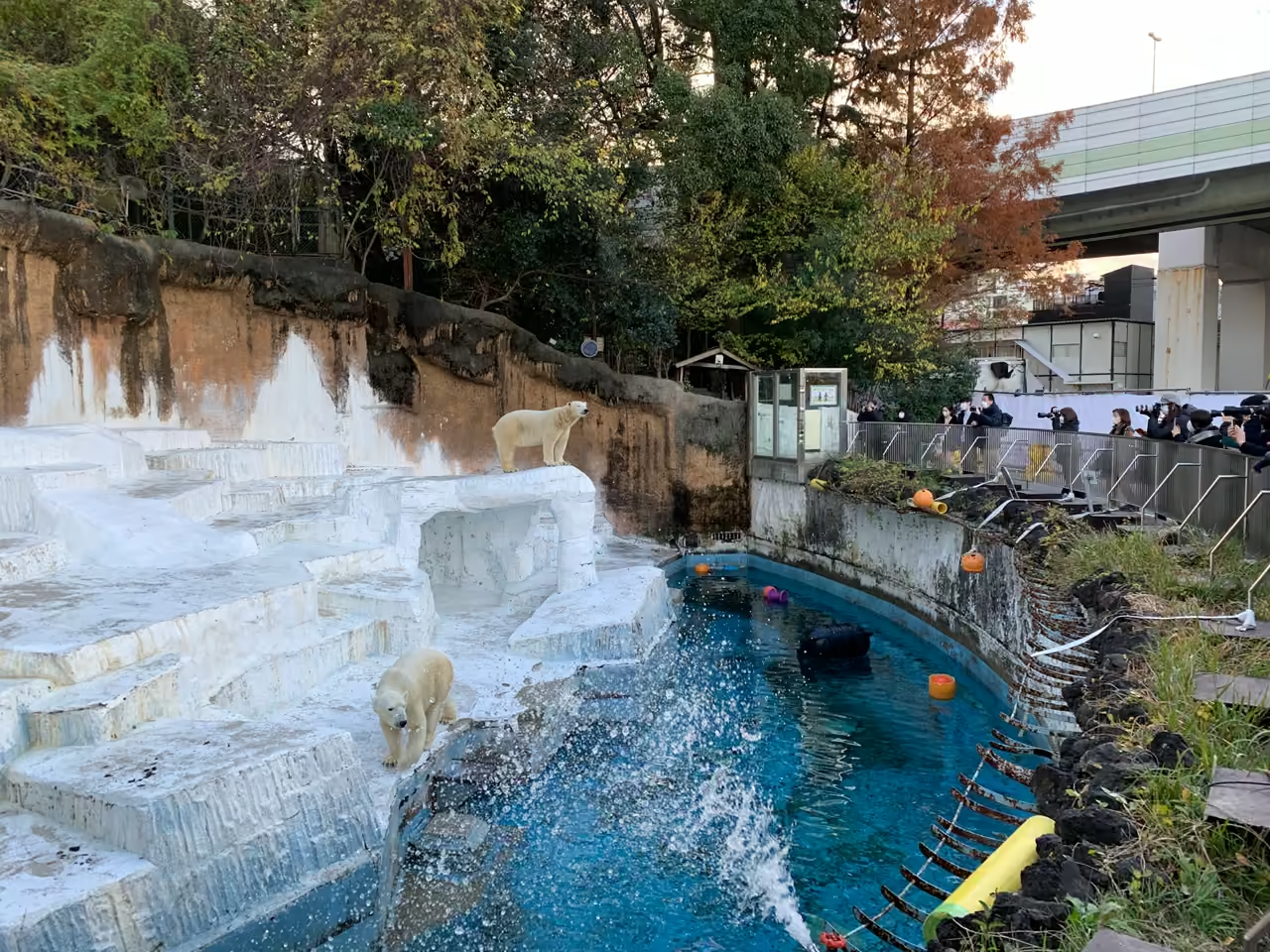 389m
Tennoji Zoo
Spread across eleven hectares in southern Osaka, Tennoji Zoo brings wildlife habitats directly into view alongside the steel girders of Tsutenkaku Tower. Opened on New Year's Day in 1915, it is Japan's third oldest zoological garden, having gradually shifted from an early twentieth-century attraction into a progressive centre for animal welfare. Visitors can gaze through broad acrylic glass to watch hefty hippos gliding underwater among schools of Nile tilapia, or observe reticulated giraffes browsing before the towering silhouette of Abeno Harukas. Inside the humid IFAR reptile dome, critically endangered Chinese alligators share space with coiled constrictors and giant salamanders. On sunny afternoons, a brief wait at the Tenshiba lawn ticket gates gives way to leafy avenues housing rare drills and polar bears. It remains a cherished green sanctuary right in the heart of the metropolis.
attraction view 451m
Soak in Global Bathhouses at Spa World
Sitting right beside Shinsekai's entrance, this massive bathhouse stacks European Roman marble pools and Asian cypress soaking rooms under one glowing roof. Natural hot spring water fills outdoor stone tubs, Finnish saunas, salt steam halls, and indoor waterslides on the top deck. Men and women swap themed floors monthly, ensuring fresh decor on return trips. Note that visitors with visible tattoos face strict entry bans unless small ink meets current cover rules at reception.
highlight view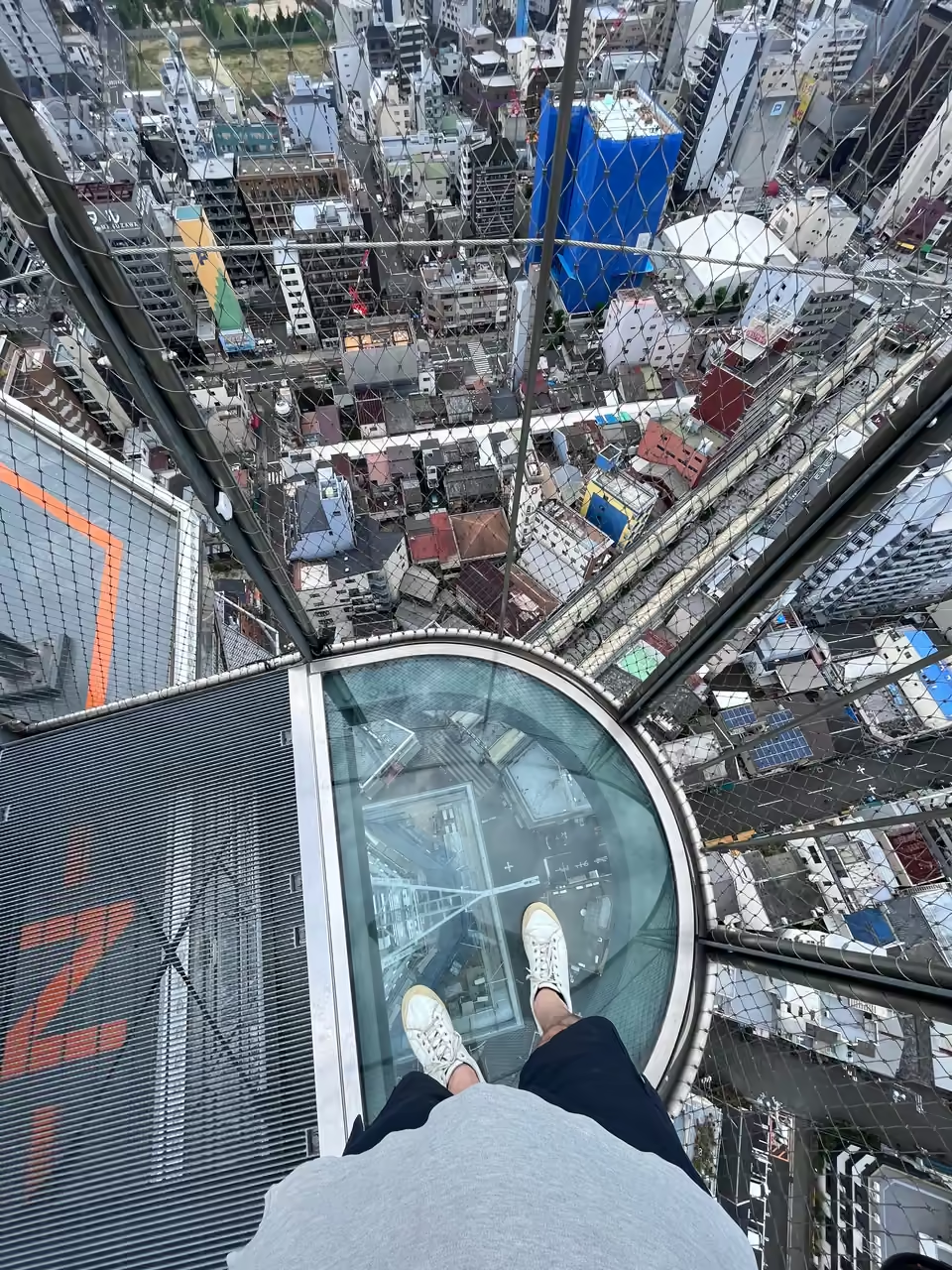 470m
Tsutenkaku Golden Observatory
Rising 91 metres above Shinsekai's bright billboards, Tsutenkaku's observatory packs pure working-class nostalgia alongside kitschy golden ceiling murals and the smiling Billiken statue. Outdoor open-air platform Tenbo Paradise exposes visitors directly to southern city breezes and crisp overhead views down Janjan Yokocho's rooftops and Tennoji Zoo. Bold visitors can also test their nerves sliding down a sixty-metre spiral steel tube straight from the third floor back to street level. Colour-changing neon rings atop the spire double as a neighbourhood weather beacon.
viewpoint view
Featured on These Itineraries and Routes
3 Days in Osaka: The Classic City Deep Dive
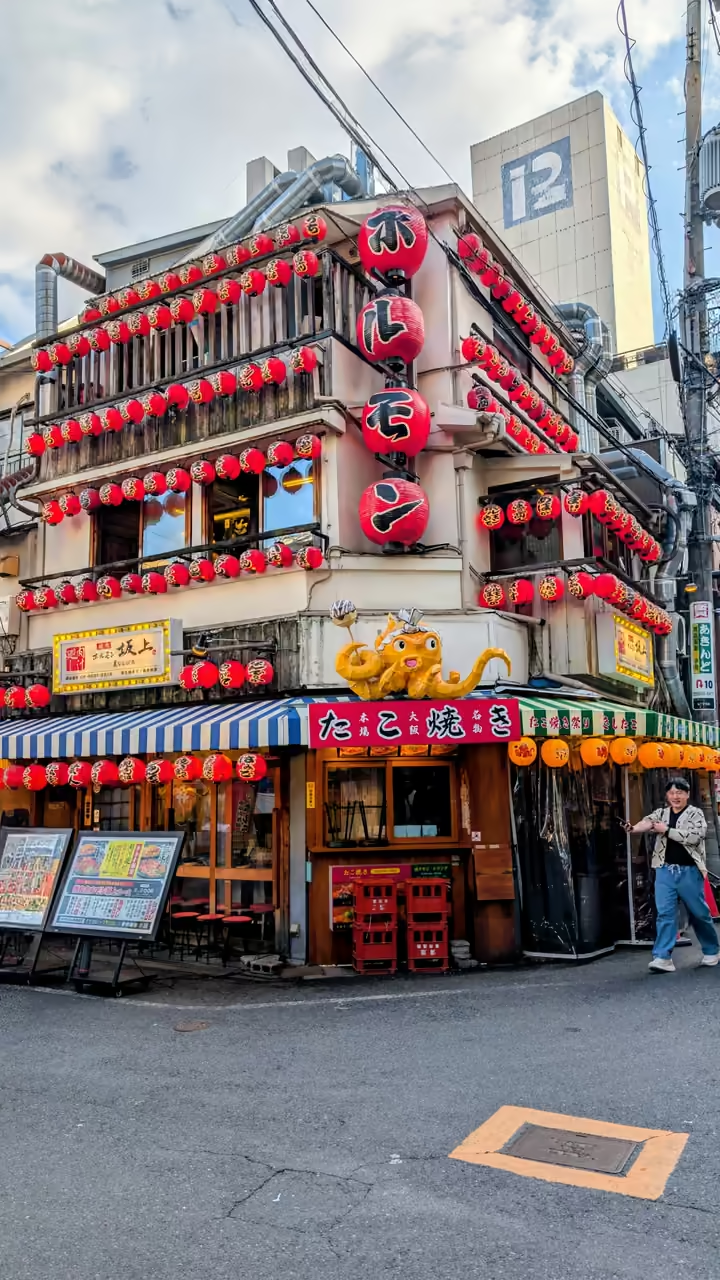
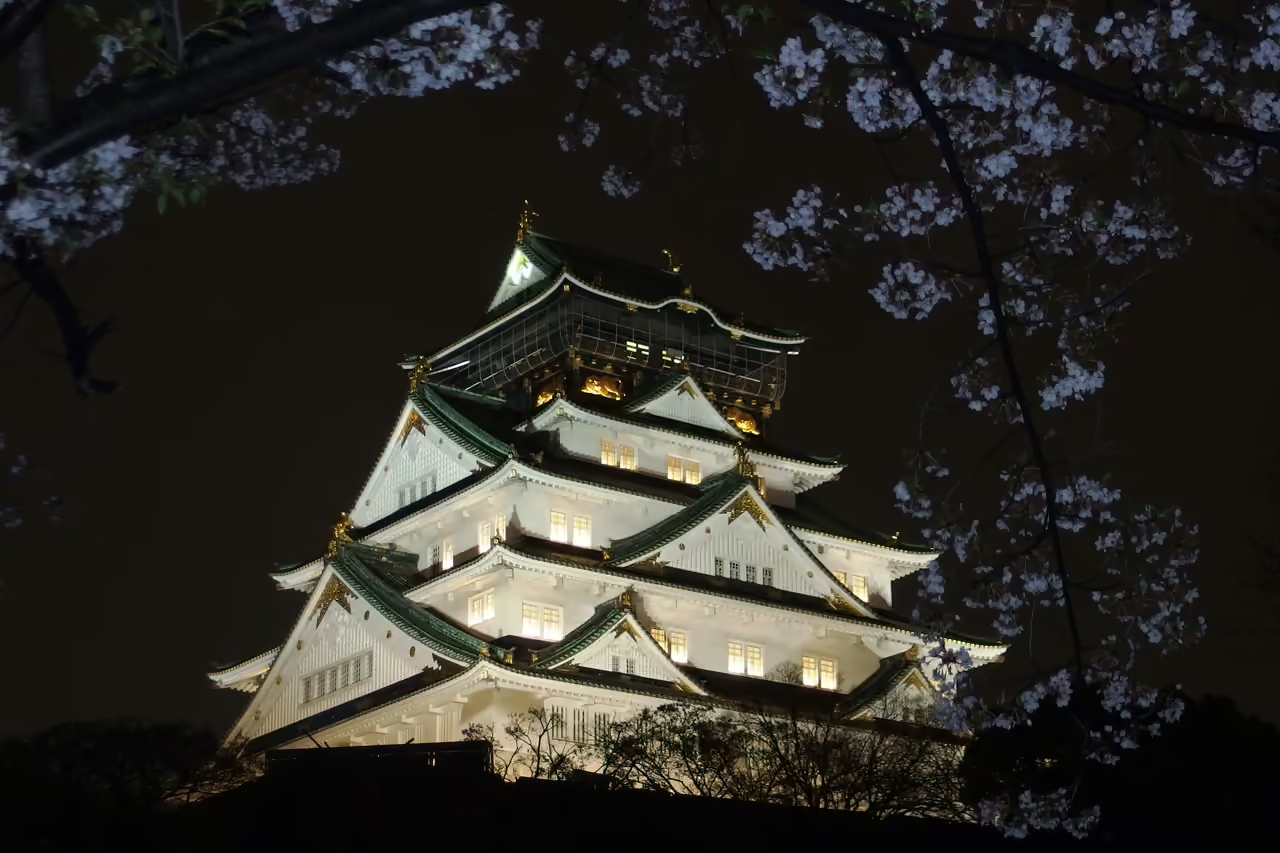
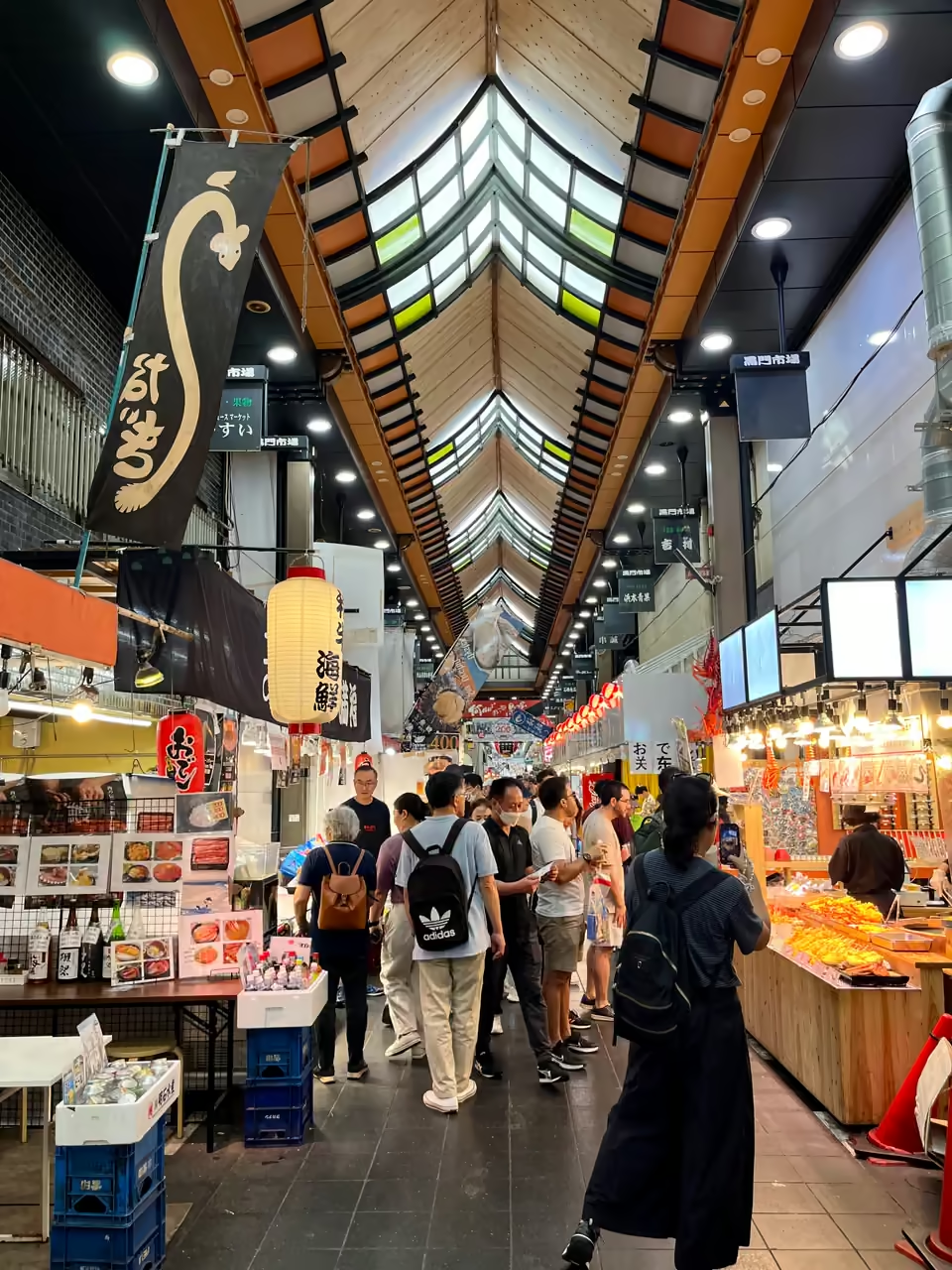
Paced cleanly across Osaka's three signature zones, this three-day plan pairs headline landmarks with local backstreets and plenty of sit-down feasts. Day one balances fortress history with Minami's lantern lanes, day two links markets to Tennoji and towering skyscrapers, and day three spans Osaka Bay's ocean giants and Nakanoshima's island museums.
view itinerary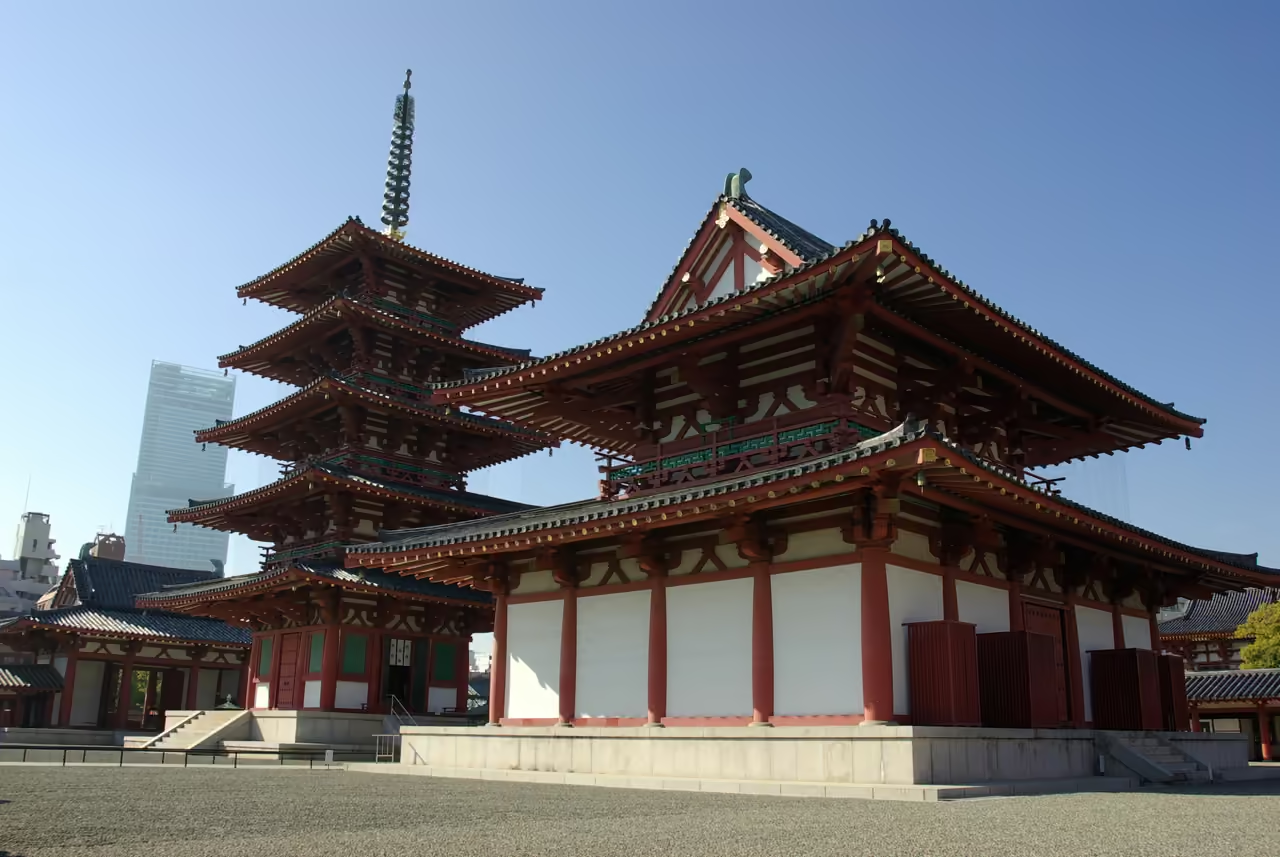
Sixth-Century Temples to Retro Shinsekai
Few short urban walks bridge fourteen centuries as smoothly as descending from Osaka's oldest Buddhist precinct down into flamboyant Shinsekai. Ancient stone gates, extraordinary devotional sculpture, tranquil garden ponds, and working-class fried skewer counters sit twenty minutes apart on foot.
view self-guided tour
See all parks & nature in Osaka
Including Nakanoshima Park, Namba Parks, Sakuranomiya Park, and more