Nagai Park
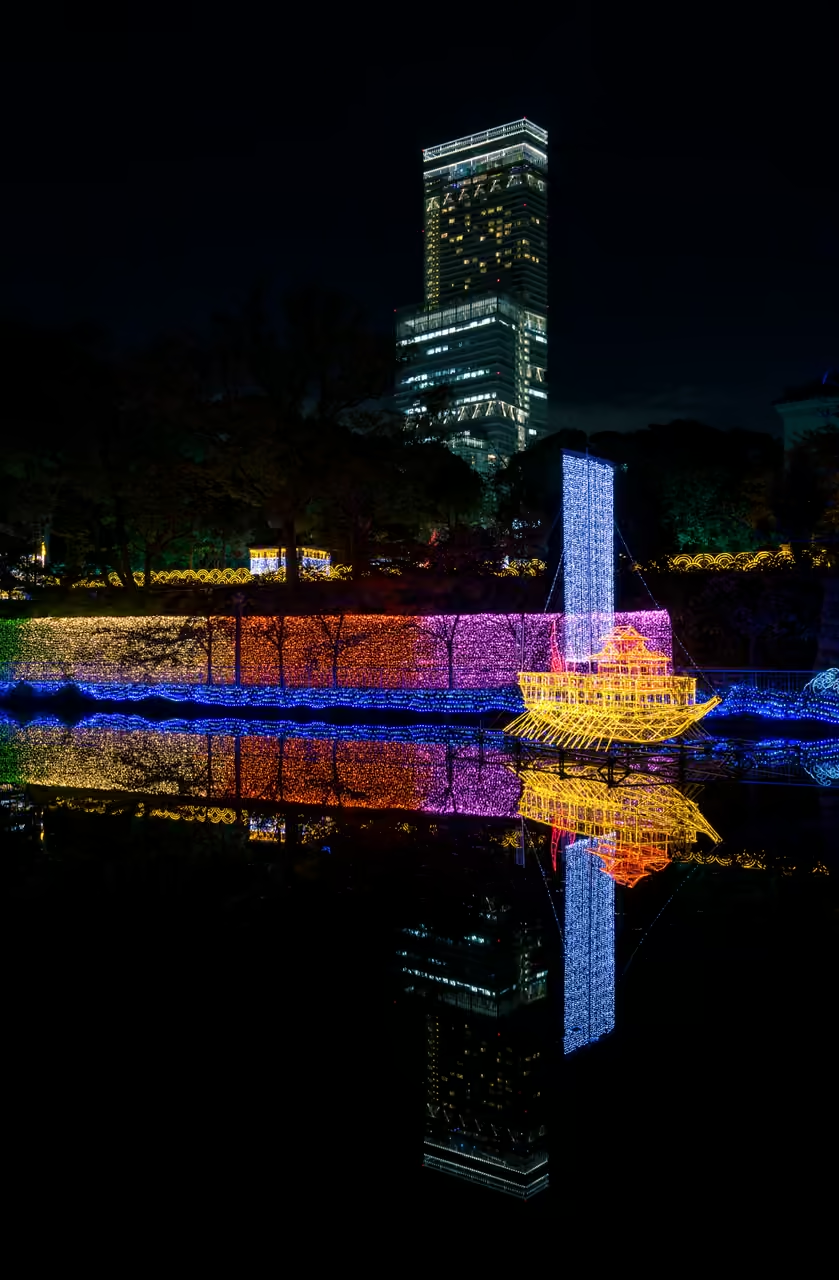
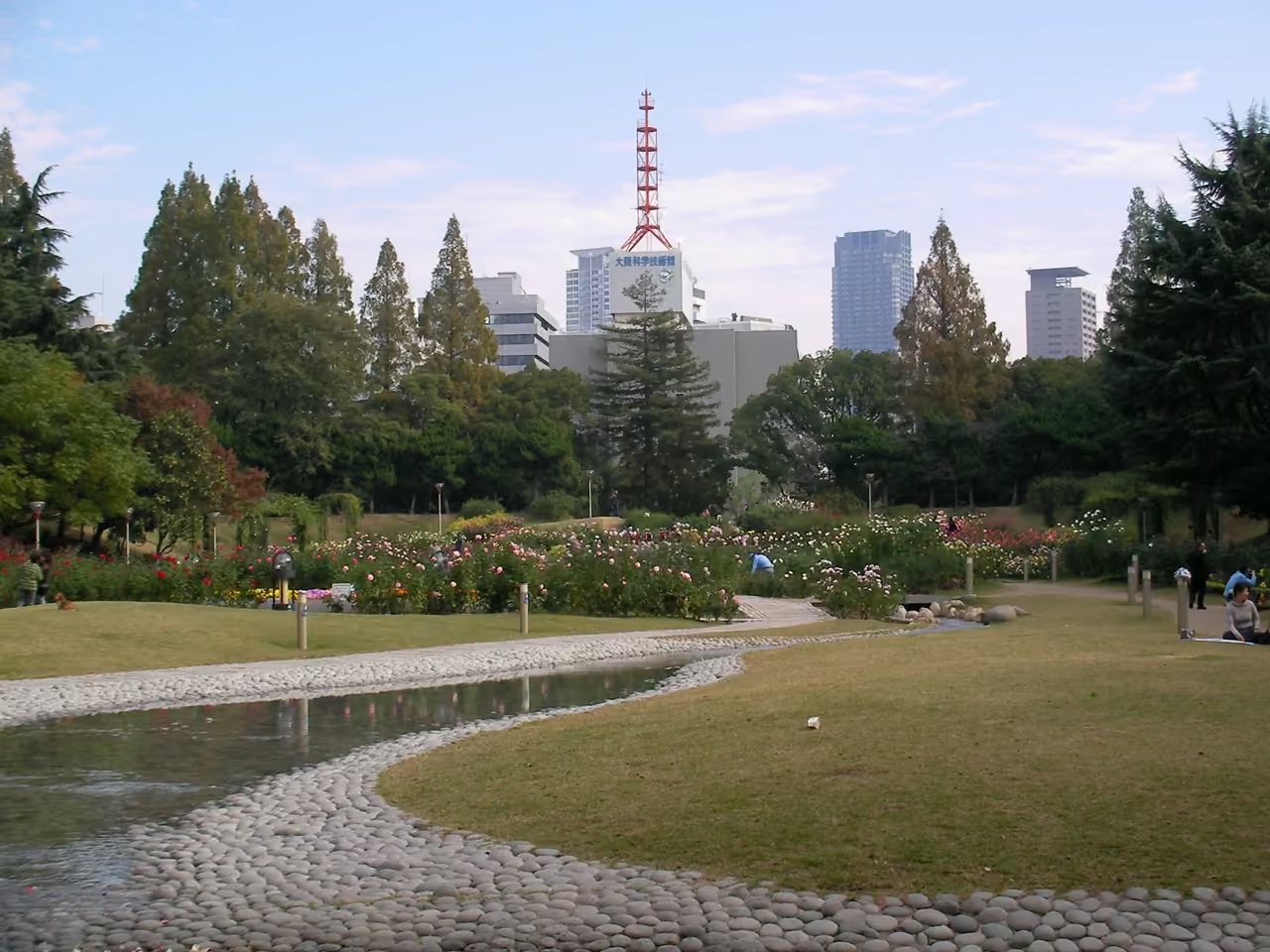
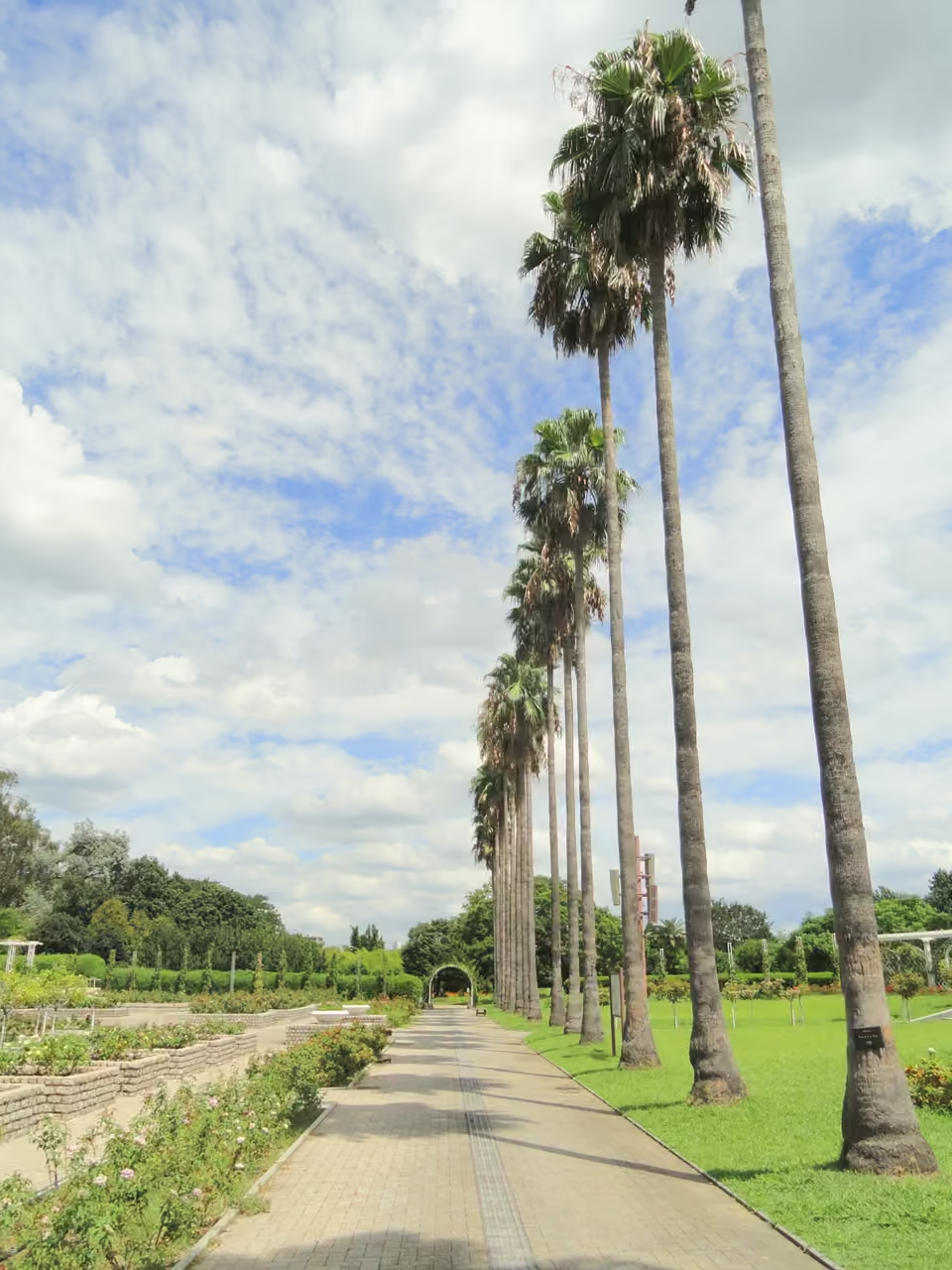
Step out of Exit 3 at Nagai Station and the traffic roar of southern Osaka drops behind a green wall of camphor trees. Spanning nearly 66 hectares in Higashisumiyoshi Ward, Nagai Park packs an absurd amount into one leafy block: two athletics arenas, a botanical garden, a natural history museum, and dozens of shaded clearings. On weekday mornings, local runners claim the perimeter loop while schoolchildren gather beneath full scale whale skeletons outside the Osaka Museum of Natural History. Come Saturday, pink clad Cerezo Osaka supporters pack the Midosuji Line ticket gates on their march towards the pitch, so expect a slow shuffle along the pavement before kickoff. After dark, the park shifts gears as Nagai Botanical Garden hands its flower meadows and lotus ponds over to glowing nocturnal light installations by teamLab. Stop by one of the cafes near Abiko Suji with an iced coffee and watch half the neighbourhood stretch, stroll, and linger until nightfall.
Videos
History of Nagai Park
In May 1928, Osaka City planners looked at 66.12 hectares of former farmland in Higashinagaimachi and sketched out a grand suburban park. They initially called the blueprint Rinnanji Park after Rinnanji, a Soto Zen Buddhist temple standing on the grounds that somehow survived every wave of construction and remains tucked in a corner of the park today. City officials renamed the site Nagai Park in 1934, and the gates formally opened on 1 April 1944 during the Second World War. Rather than quiet lawns, postwar Nagai Park initially thundered with hooves and bicycle wheels. Desperate for municipal revenue to rebuild Osaka, the city opened the Osaka Racecourse inside the grounds in 1948, then added the Osaka Chuo Keirin cycling velodrome alongside it in 1950. For over a decade, punters packed grandstands inside the park to wager on thoroughbreds and banked track cyclists. Changing urban priorities brought that gambling era to an end when horse racing shut down in 1959 and the velodrome closed in 1962. Crews promptly cleared the old cycling oval to build Nagai Athletics Stadium, launching a thirty year overhaul into Osaka's premier sporting complex. Over the following decades, planners added a dedicated ball game field, tennis courts, a swimming complex, a botanical garden, and a museum, wrapping up the master build with a second athletics stadium in 1993. In the twenty first century, Nagai Park evolved once again from purely municipal upkeep into commercial reinvention. After local football club Cerezo Osaka joined park management in 2016, a consortium led by Yanmar Holdings called the Wakuwaku Park Project Team won a twenty year contract in April 2021 under Japan's revised Urban Park Act. Rather than simply tending turf, the new operators opened contemporary eateries, upgraded public plazas, and turned a classic twentieth century sports ground into an everyday neighbourhood hangout.
12 events spanning 93 years
Fun Facts
12- 01
Alongside its professional stadiums, the park maintains eight floodlit artificial turf tennis courts laced with sand, a dance studio, and the Nagai Disabled Sports Centre.
- 02
During the 2002 FIFA World Cup, Nagai Stadium hosted three fiercely contested matches, including Japan's decisive victory over Tunisia and Turkey's dramatic golden goal triumph against Senegal in the quarterfinals.
- 03
Every January since 1982, the elite Osaka International Women's Marathon has started and finished on the stadium track, turning the surrounding park avenues into a world championship qualifying stage.
- 04
Global track and field stars converged on the park for the 2007 World Athletics Championships, where American sprinter Tyson Gay claimed three gold medals and Croatian high jumper Blanka Vlasic cleared 2.05 metres to take the crown.
- 05
In March 1990, the popular Kansai talk programme Tsurube Kamioka Papepo TV transformed the park's traditional Nagai Sumo Ring into a live outdoor comedy stage for a special titled Stormy Spring Tournament.
- 06
Nagai Park forms its own standalone administrative district and postal zone, 5460034, containing zero private homes and just twelve registered workplaces employing 345 people.
- 07
Nagai Pool pairs a year round 25 metre eight lane indoor lap pool with a seasonal summer outdoor pool equipped with a full waterslide.
- 08
Relocated from Utsubo Park in 1974, the Osaka Museum of Natural History inside the grounds preserves prehistoric Naumann's elephant fossils alongside regional geological specimens.
- 09
Three separate rail lines wrap around the park's perimeter: the Osaka Metro Midosuji Line, the JR Hanwa Line serving both Nagai and Tsurugaoka stations, and the Kintetsu Minami Osaka Line at Harinakano Station.
- 10
Tucked inside the structure of the main athletics stadium sits the Osaka Municipal Nagai Youth Hostel, letting travellers and student athletes sleep directly inside a major international sports arena.
- 11
Under Higashisumiyoshi Ward's school choice system, the entire park district is formally assigned to Minami Tanabe Elementary School and Tanabe Junior High School despite having no residential housing.
- 12
Wooded sections named Kyodo no Mori, or Hometown Forest, and Omoide no Mori, or Forest of Memories, were planted specifically with native species to recreate Osaka's historical lowland woodland.
FULL PLACE DETAILS
Updated
FULL PLACE DETAILS
UpdatedOVERVIEW & STATS
- Established
- In 1944, making it 82 years old
WEB & AMENITIES
Nagai Park Map & Neighborhood Explorer
This interactive map is centered on Nagai Park. Zoom in and move the map around to automatically discover Wikipedia photos and summaries of other nearby sights, monuments, and historical points of interest and stories in real-time!
Nagai Park FAQ
Take the Osaka Metro Midosuji Line to Nagai Station and use Exit 3, which opens straight onto the park's western edge. You can also walk about five minutes from Nagai or Tsurugaoka stations on the JR Hanwa Line, or roughly fifteen minutes from Harinakano Station on the Kintetsu Minami Osaka Line.
Entering the main park grounds, walking loops, playgrounds, and wooded areas is completely free and accessible all day. Separate admission tickets apply only to enclosed venues inside the park, including the Osaka Museum of Natural History, Nagai Botanical Garden, Nagai Pool, and ticketed stadium matches.
During the day, Nagai Botanical Garden showcases seasonal flower fields ranging from spring nemophila and roses to autumn cosmos alongside shaded ponds. After sunset, teamLab Botanical Garden Osaka transforms those same trees, flower beds, and lakeside paths with interactive outdoor digital art.
Unusually for a city park, the Osaka Municipal Nagai Youth Hostel is built directly inside the main athletics stadium structure, giving budget travellers and visiting teams a place to stay steps from the running track and train station.
Beyond its two athletics stadiums and dedicated football pitch, the grounds hold eight floodlit tennis courts, a sumo wrestling arena, an indoor lap pool, a summer outdoor waterslide pool, a multiuse sports field, and a long distance running track.
Spring brings cherry blossoms and blue nemophila blooms, while autumn fills the botanical garden with cosmos and rich foliage. Sports fans also flock here in January for the Osaka International Women's Marathon and throughout the J.League football season.
The closest place to visit near Nagai Park is Join a Cerezo Osaka Matchday at Nagai, around 261 m away. Other things to do near Nagai Park include Sumiyoshi Taisha (2.5 km), Explore the Autonomous Heritage of Hirano Old Town (2.6 km) and Hirano Danjiri Float Festival (3.7 km). All of these are within roughly 3.7 km of Nagai Park.
It dates back to 1944, making it 82 years old.
While we strive to keep this information accurate and up to date, we recommend verifying any details independently before making decisions based on them.
Places near Nagai Park
Make the most of your trip. Check out these top-rated spots located nearby.
 261m
Join a Cerezo Osaka Matchday at Nagai
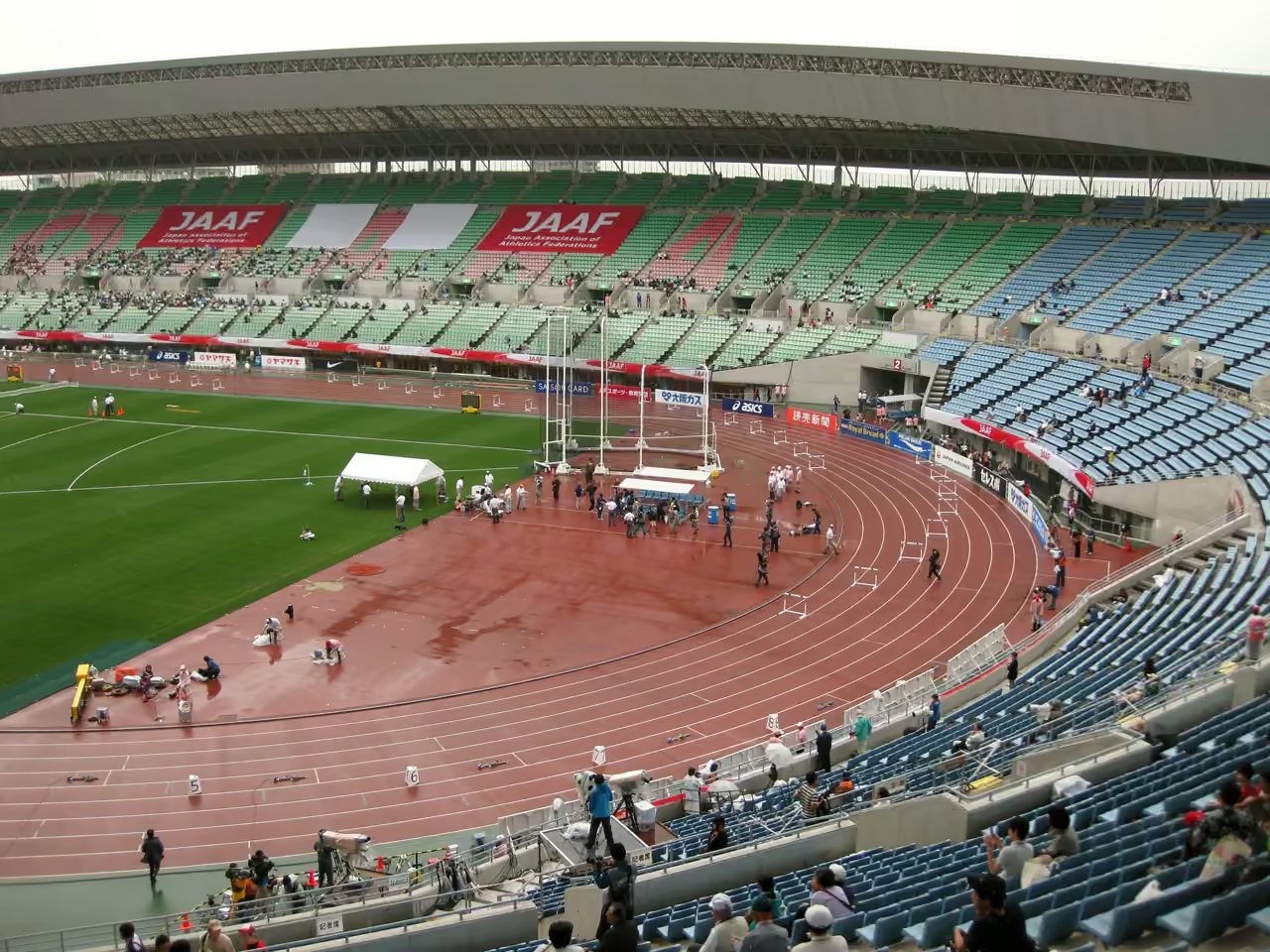
Clad in bright cherry-blossom pink inside Yodoko Sakura Stadium at Nagai Park, Cerezo Osaka's supporters turn J.League matchdays into non-stop singing spectacles. Pre-match plazas fill with outdoor food trucks and families enjoying shaded lawns before ninety minutes of drums, scarves, and rhythmic chants erupt beneath open sky. Affordable tickets and crisp pitch sightlines make football evenings effortless to slot into any trip.
highlight view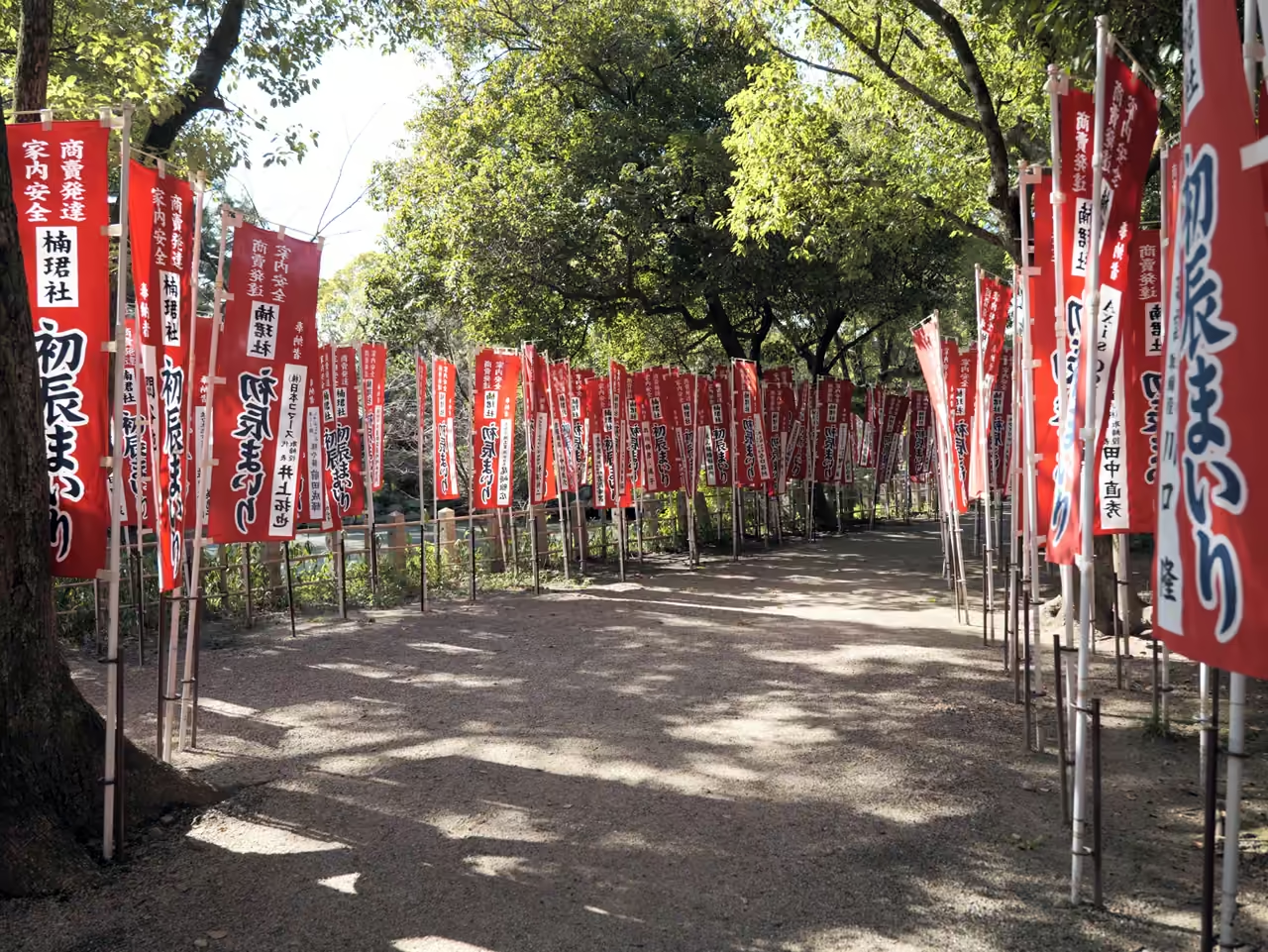 2497m
Sumiyoshi Taisha
Step off the clattering Hankai streetcar at Sumiyoshitoriimae Station and you immediately face Osaka's spiritual anchor from an age before skyscrapers filled the horizon. Just inside the entrance, the crimson timber arc of the Sorihashi bridge rises 4.4 metres over a reflective pond, though its steep rounded steps demand slow footing in wet weather. Past the flat sided Kaku torii gate, four white plastered and vermilion trimmed sanctuaries line up in an unusual staggered formation, three in single file with a fourth tucked beside them, facing west toward Osaka Bay like a fleet ready to sail. Over 600 mossy stone lanterns donated by Edo period shipping guilds flank the gravel paths, while locals crouch beside the cedar enclosure at Gosho gozen, sifting through pebbles for three tiny stones marked with the characters for five, great, and strength. Duck behind the main halls and the crowds thin around the quiet Asazawa sha iris pond and the sacred Onda rice paddy, where medieval planting songs still echo across the water every June.
attraction view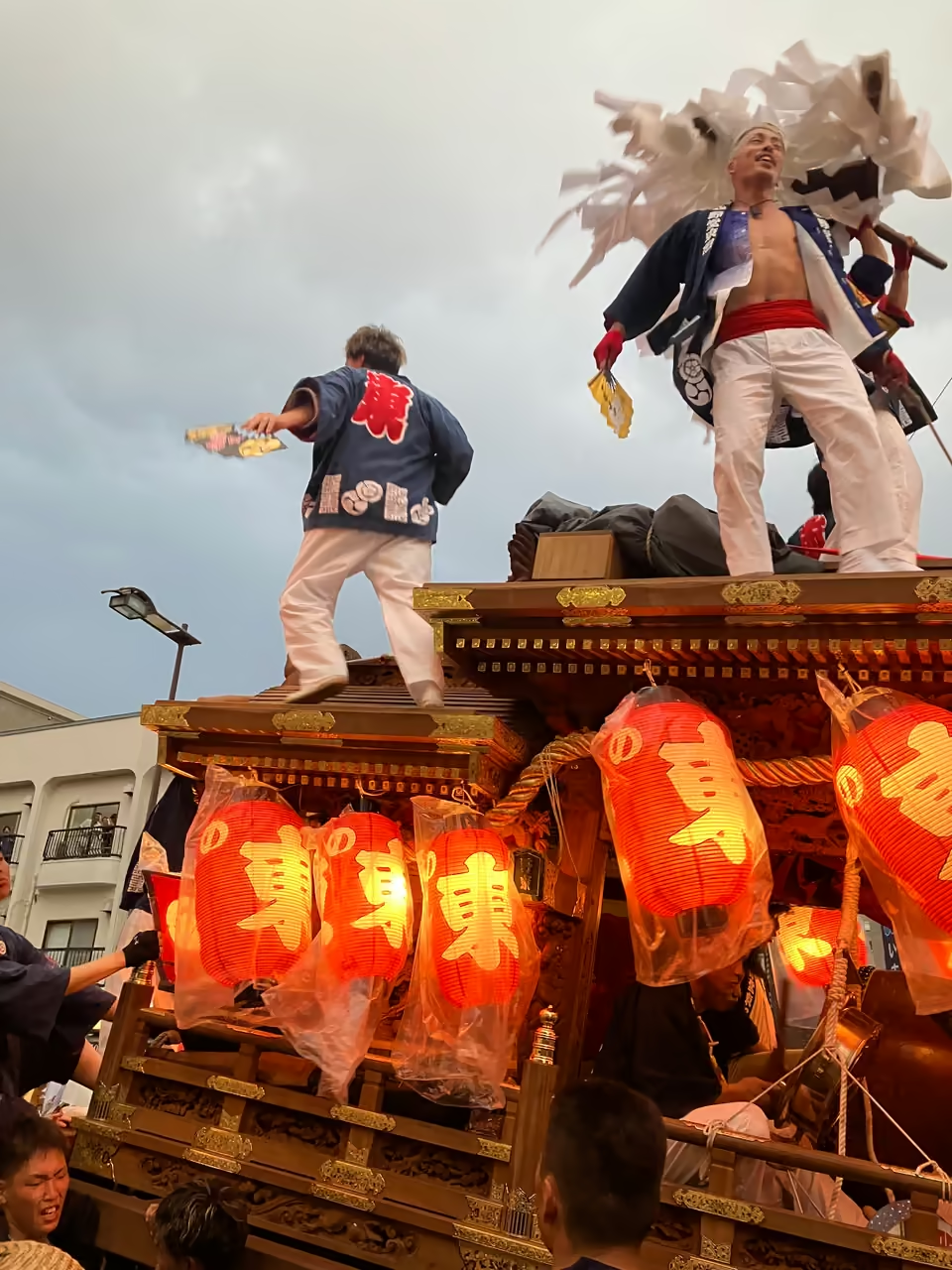 2562m
Explore the Autonomous Heritage of Hirano Old Town
Long before Osaka absorbed surrounding counties in 1925, Hirano operated as an autonomous moated cotton town with its own merchant councils. Quiet gridded lanes preserve old timber facades, Kumata Shrine's rare renga poetry hall, and the vast timber sanctuary of Dainenbutsu-ji. Locals organised the playful Hirano Machigurumi Museum, turning fifteen shops and old newspaper offices into free miniature museums. Pick up a walking sheet near JR Hirano Station to explore antique scales and local folklore at your own pace.
highlight view- 3663m
Hirano Danjiri Float Festival
Staged each July around historic Kumata Shrine, this thundering celebration sends nine massive carved-wood danjiri floats charging down the narrow lanes of old Hirano. Teams of youths in matching cotton coats spin multi-tonne wooden floats around tight corners to clanging bells and taiko drums. Rooted in the proud medieval merchant town that long predated modern Osaka, the festival keeps a fiercely local spirit. On 13 July, all nine floats gather under glowing lanterns along the main avenue for a roaring finale.
festival view
Explore Similar Places in This Collection
See all parks & nature in Osaka
Including Nakanoshima Park, Namba Parks, Sakuranomiya Park, and more