Villa Ada Savoia
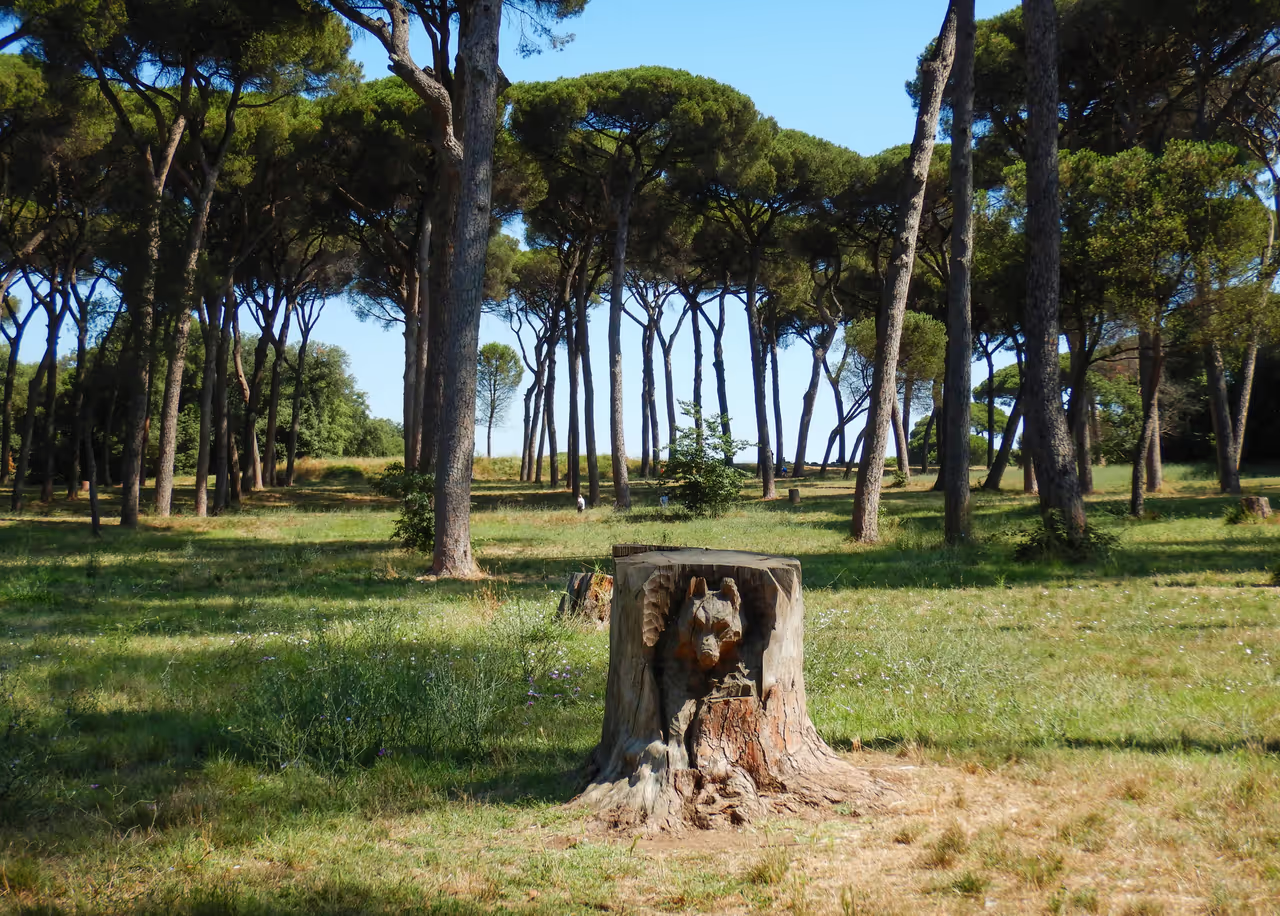
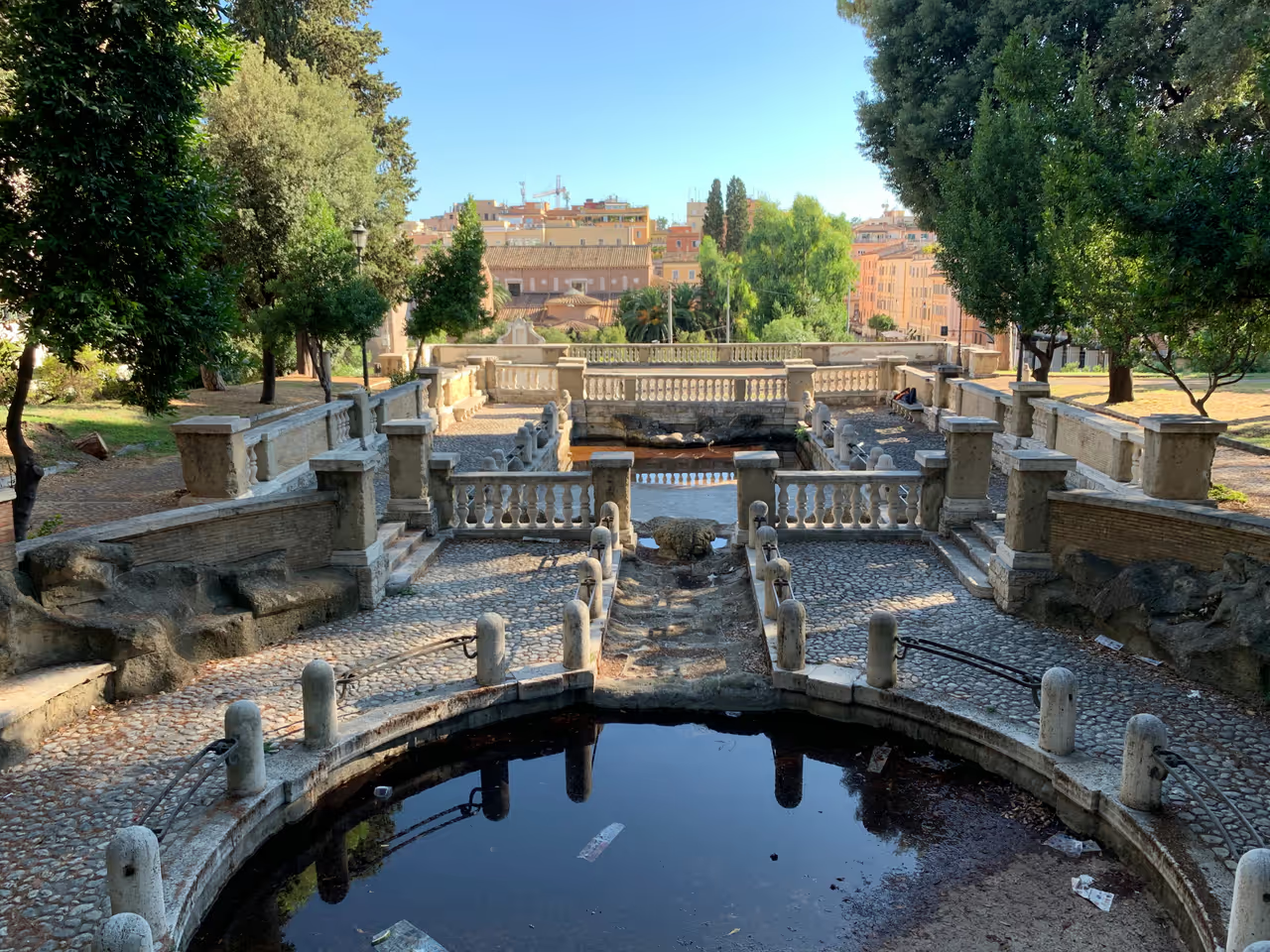
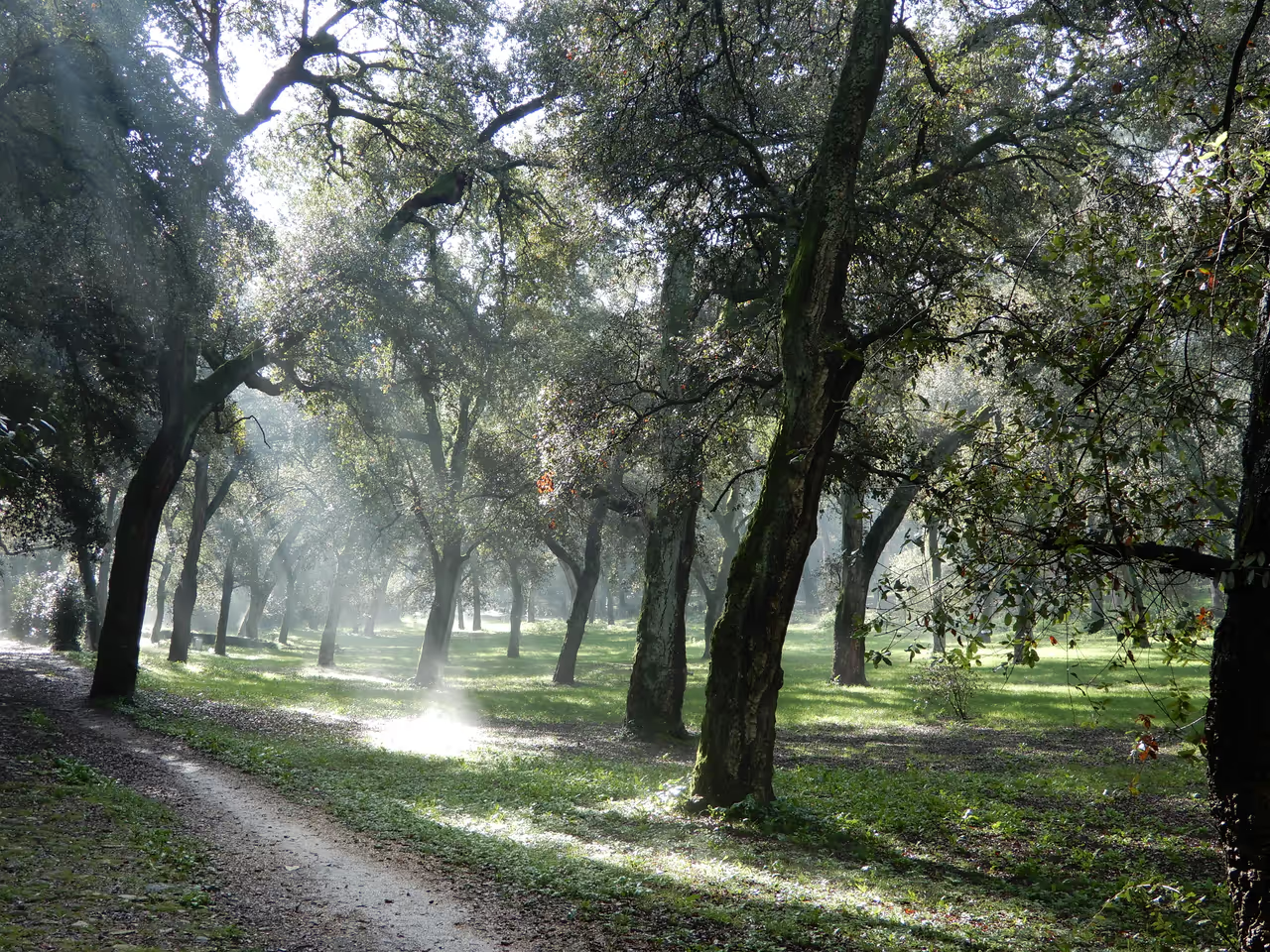
Step away from the Roman heat and lose yourself in the lush greenery of Villa Ada Savoia, one of the city's largest and most intriguing public parks. This former royal hunting estate offers a rare glimpse into a wilder, more serene side of the capital, complete with neoclassical temples and vast meadows. You can wander past the exotic Metasequoia trees or keep an eye out for the vibrant colonies of wild parrots that call these ancient trees home. Beyond the nature trails, history buffs will be captivated by the park's deeper layers, including a secret World War II bunker that once served as a royal refuge. The villa's royal past is palpable throughout, from the elegant architecture of the Scuderie Reali to the stories of political upheaval that unfolded within these very walls. Whether you are seeking a peaceful afternoon picnic or a deep dive into Rome's layered heritage, this verdant sanctuary promises a memorable escape from the city centre.
Videos
History of Villa Ada Savoia
The history of this land stretches back to the eighth century BC, long before it became a royal retreat. It was the site of the ancient settlement of Antemnae, a place strategically located where the Aniene and Tiber rivers converged. Centuries later, this fertile ground transitioned through various aristocratic hands until the House of Savoy transformed it into their private hunting estate in the late nineteenth century. It was a space defined by quiet grandeur and exclusive access, a world apart from the urban density of central Rome. The park later became the silent witness to the most turbulent chapters of Italian history, most notably during the Second World War. As the threat of conflict loomed, a sophisticated, reinforced bunker was carved into the volcanic tuff beneath the royal villa to protect the sovereign family. It was here, amidst the uncertainty of July 1943, that King Victor Emmanuel III summoned Benito Mussolini, leading to the dictator's arrest and the collapse of his regime. This event cemented the villa's place in the national consciousness as a stage for political upheaval. Today, the estate has shed its royal exclusivity, inviting the public to enjoy its sprawling hills and shaded paths. While the former Royal Villa now houses the Egyptian Embassy, the rest of the park has become a vibrant community hub. Visitors can explore the restored bunker, attend lively music festivals during the summer, or simply relax on the famous pratone where locals have gathered for generations to enjoy the simple pleasure of an afternoon under the Italian sun.
8 Events spanning 2816 years
Fun Facts
- • A proposal to convert the former Royal Stables into a massive European Toy Museum was abandoned, leaving the historic buildings to await a new purpose.
- • A thriving colony of wild parrots has made the park their home, creating a surprising splash of tropical colour against the Roman pines.
- • Count Giuseppe Telfener named the villa after his wife, Ada, after purchasing it from the Savoy family in the late nineteenth century.
- • During the Second World War, a reinforced bunker was carved into the volcanic tuff beneath the royal estate to protect the King and his family from potential aerial bombardment.
- • For over two decades, the sprawling meadows known as the pratone have been a legendary gathering spot for the city's alternative and hippy communities.
- • The ancient Via Salaria, one of the oldest roads in Rome, runs alongside the park, connected to centuries of salt trade history.
- • The bunker features industrial archaeology elements, including original heavy steel doors and complex ventilation systems designed to survive prolonged isolation.
- • The park sits atop the ancient settlement of Antemnae, which dates back to the eighth century BC and was once a rival to Rome.
- • The park was the primary filming location for the bicycle scenes in the classic film The Garden of the Finzi-Continis.
- • The park's former Royal Villa, once home to Italian monarchs, now serves as the Embassy of the Arab Republic of Egypt.
- • The rare Metasequoia glyptostroboides, a conifer previously thought to be extinct and only found in fossils, was introduced to the park in 1940 after being imported from Tibet.
RESOURCES
Official WebsiteVilla Ada Savoia FAQ
While we strive to keep this information accurate and up to date, we recommend verifying any details independently before making decisions based on them.
Villa Ada Savoia Map & Neighborhood Explorer
This interactive map is centered on Villa Ada Savoia. Zoom in and move the map around to automatically discover Wikipedia photos and summaries of other nearby sights, monuments, and historical points of interest and stories in real-time!
Places near Villa Ada Savoia
Make the most of your trip. Check out these top-rated spots located nearby.
 2163m
2163mBorghese Gallery
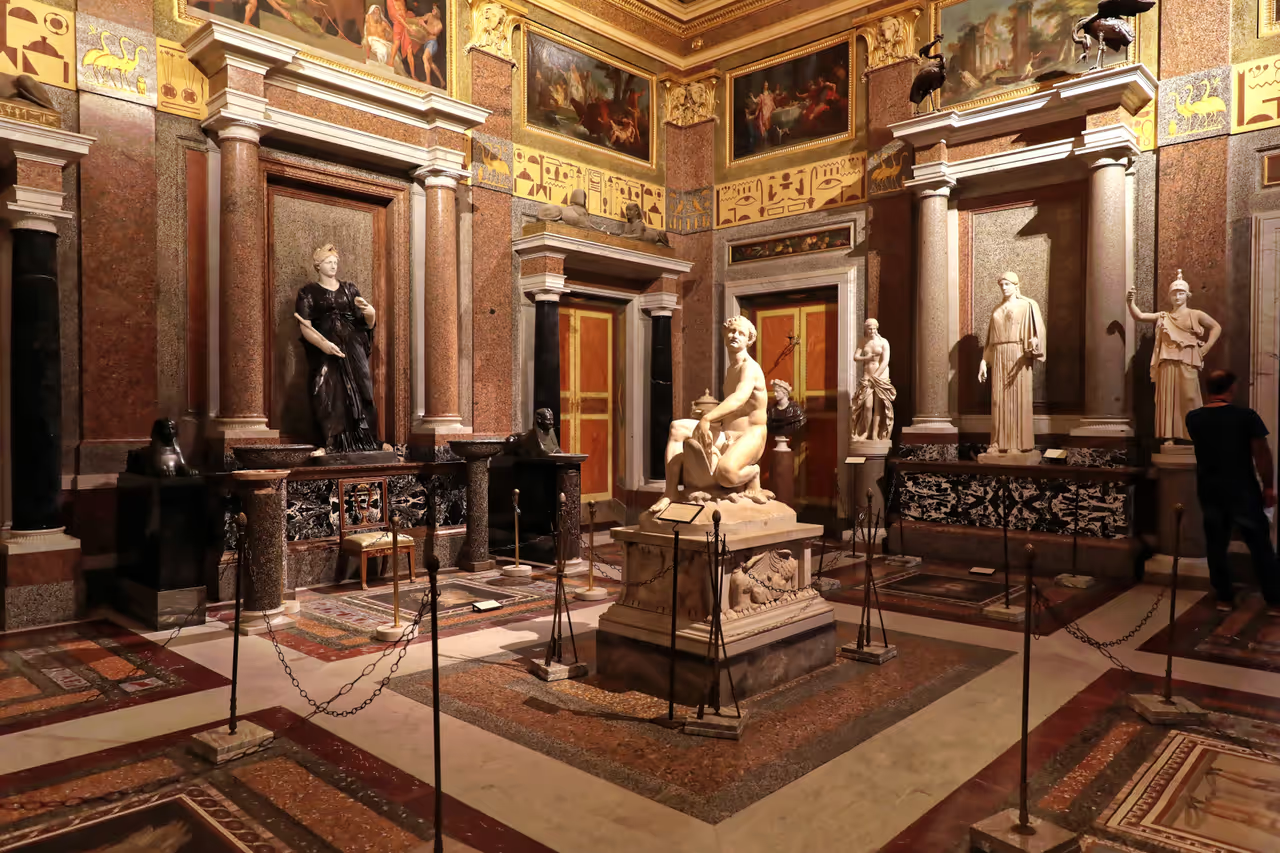
Housed in a spectacular, elegantly proportioned seventeenth century villa, this gallery contains what is arguably the most exquisite private art collection in the world. The opulent, intimately sized rooms are packed with absolute masterpieces of Renaissance and Baroque art, originally collected by a ruthless and passionate cardinal. The collection is particularly famous for its breathtaking, hyper realistic marble sculptures by Bernini, which seem to capture the illusion of soft flesh and dynamic movement. The walls are adorned with masterful, dramatic canvases by Caravaggio, Titian, and Raphael. Because entry is strictly limited to a small number of visitors at a time, the experience remains peaceful and deeply contemplative. It is an absolute jewel for any lover of classical art and refined architecture.
highlight view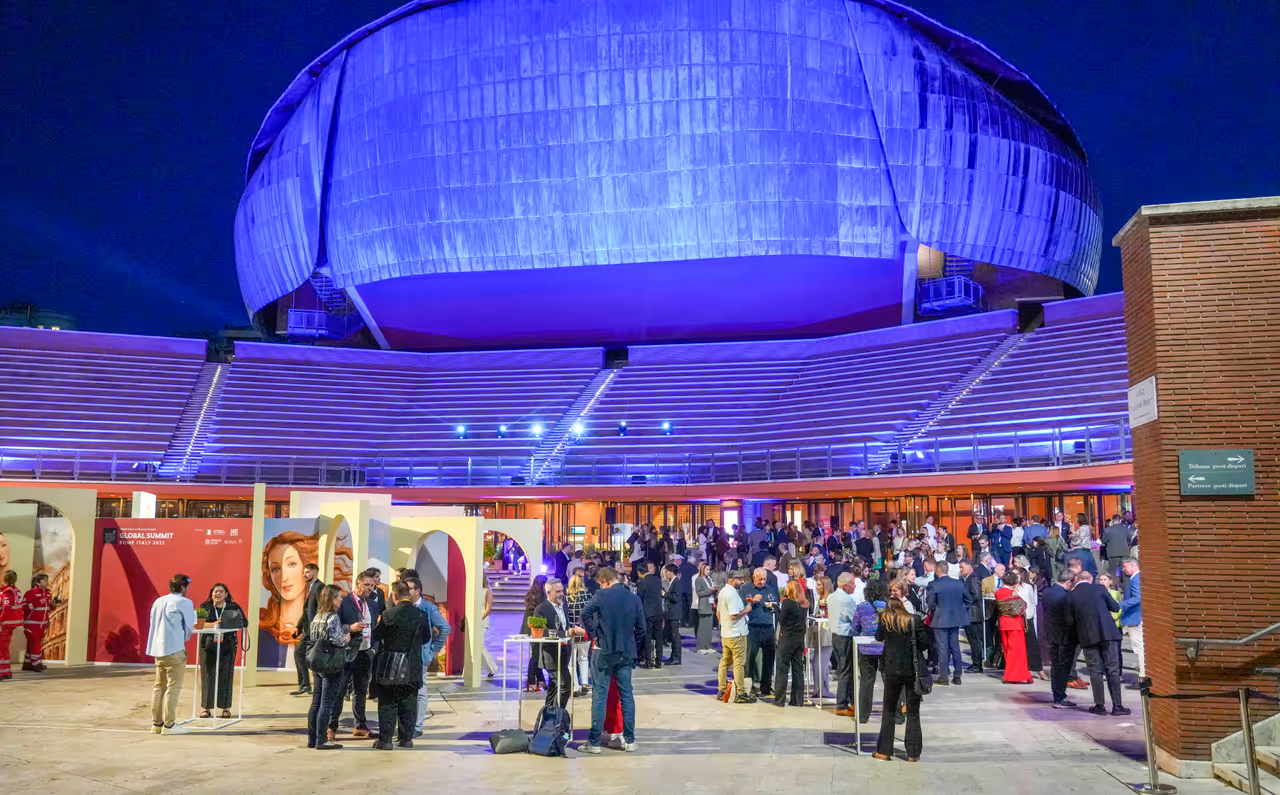 2298m
2298mAuditorium Parco della Musica
This sprawling, innovative contemporary music complex was designed by the globally renowned architect Renzo Piano. The structure features three massive, striking lead roofed concert halls that resemble giant beetles or ancient lutes resting gracefully within a lush urban park. The buildings are arranged around a large, open air amphitheatre that serves as a vibrant public gathering space and outdoor performance venue. The integration of sleek, modern materials with the surrounding greenery creates a beautifully harmonious and highly functional cultural hub. It is a spectacular example of how bold, contemporary design can successfully enhance the historic urban fabric.
architecture view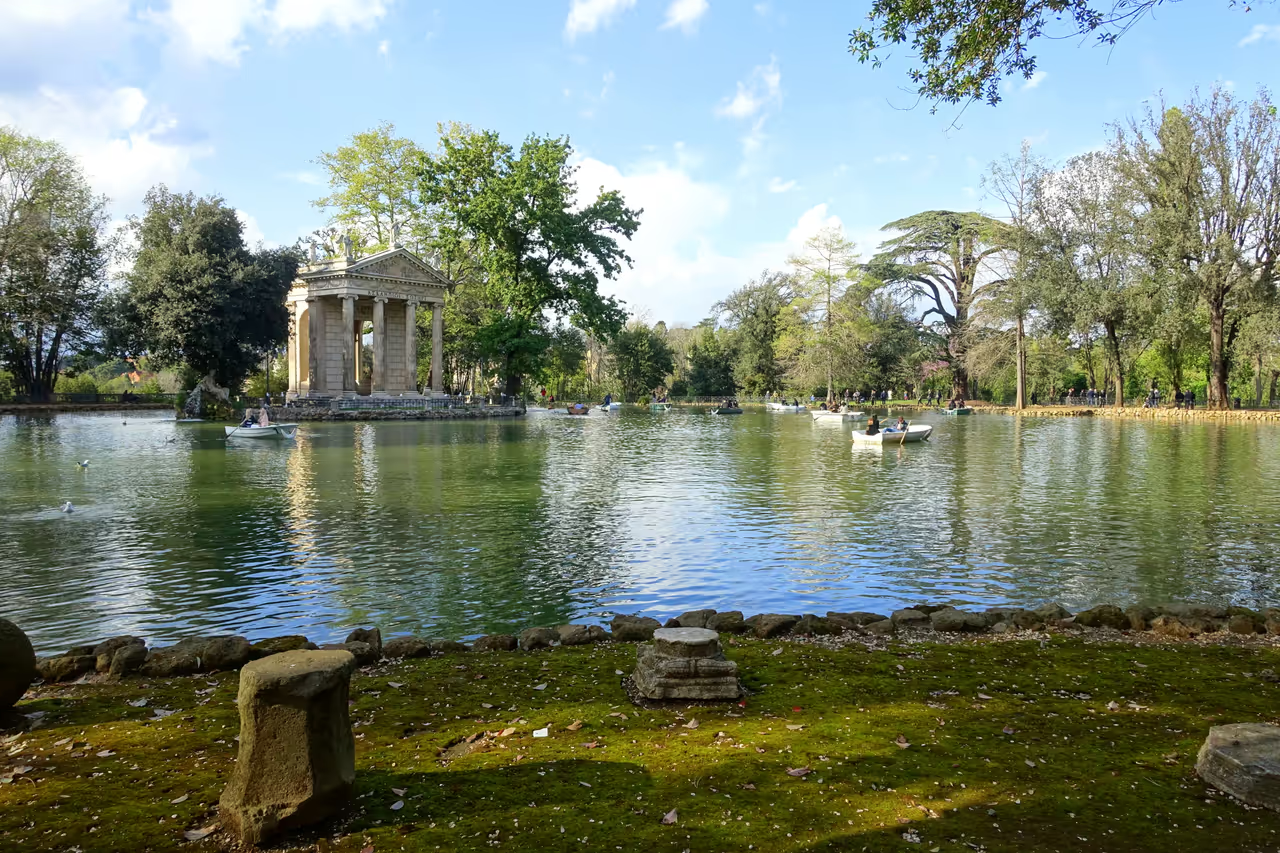 2568m
2568mVilla Borghese
Villa Borghese is the most famous park in Rome, offering a perfect blend of lush greenery and world class art. You can wander through English style gardens, admire neoclassical temples, or rent a rowboat on the picturesque lake. The park is home to the stunning Galleria Borghese, where masterpieces by Bernini and Caravaggio wait to be discovered. It provides a peaceful escape from the city heat and offers one of the best panoramic views of Rome from the Pincio Terrace. Whether you are looking for a romantic stroll or a family visit to the Bioparco, there is something here for everyone. Its rich history as a seventeenth century aristocratic estate makes every path feel like a journey through time.
park & nature view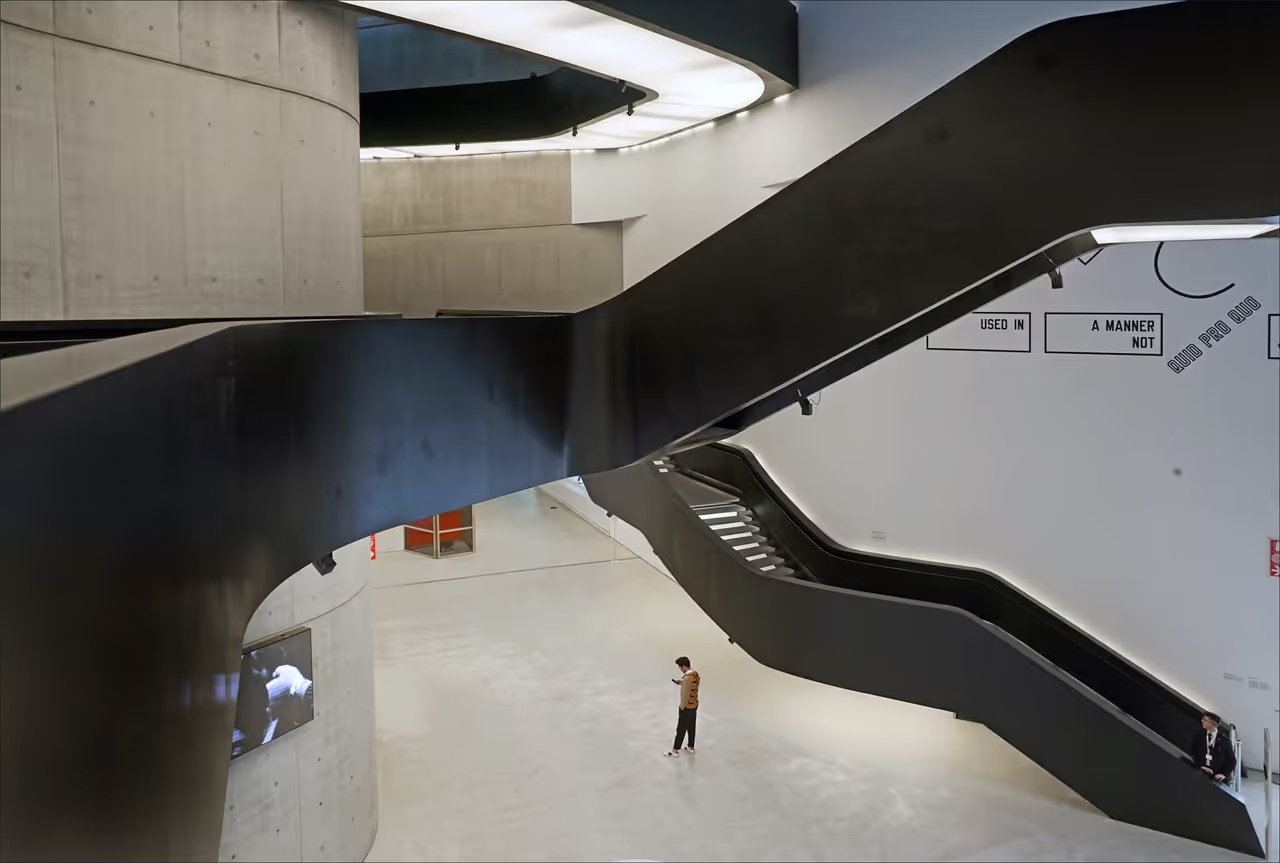 2989m
2989mMAXXI Museum
This cutting edge national museum of contemporary art and architecture is a breathtaking, fluid structure designed by the visionary architect Zaha Hadid. The building completely defies traditional geometry, featuring sweeping, overlapping concrete curves, dramatic cantilevered galleries, and a maze of intricate, suspended walkways. The dynamic, winding interior spaces challenge the viewer's perception and perfectly complement the innovative modern artworks displayed within. It stands as a bold, futuristic statement in a city predominantly known for classical antiquity. Exploring its labyrinthine, light filled corridors is an architectural adventure in itself.
architecture view
See all nature & parks in Rome
Appian Way Regional Park, Janiculum Hill, Orange Garden, Villa Borghese, Villa Doria Pamphili, Colle Oppio Park and Baths of Trajan...