Janiculum Hill
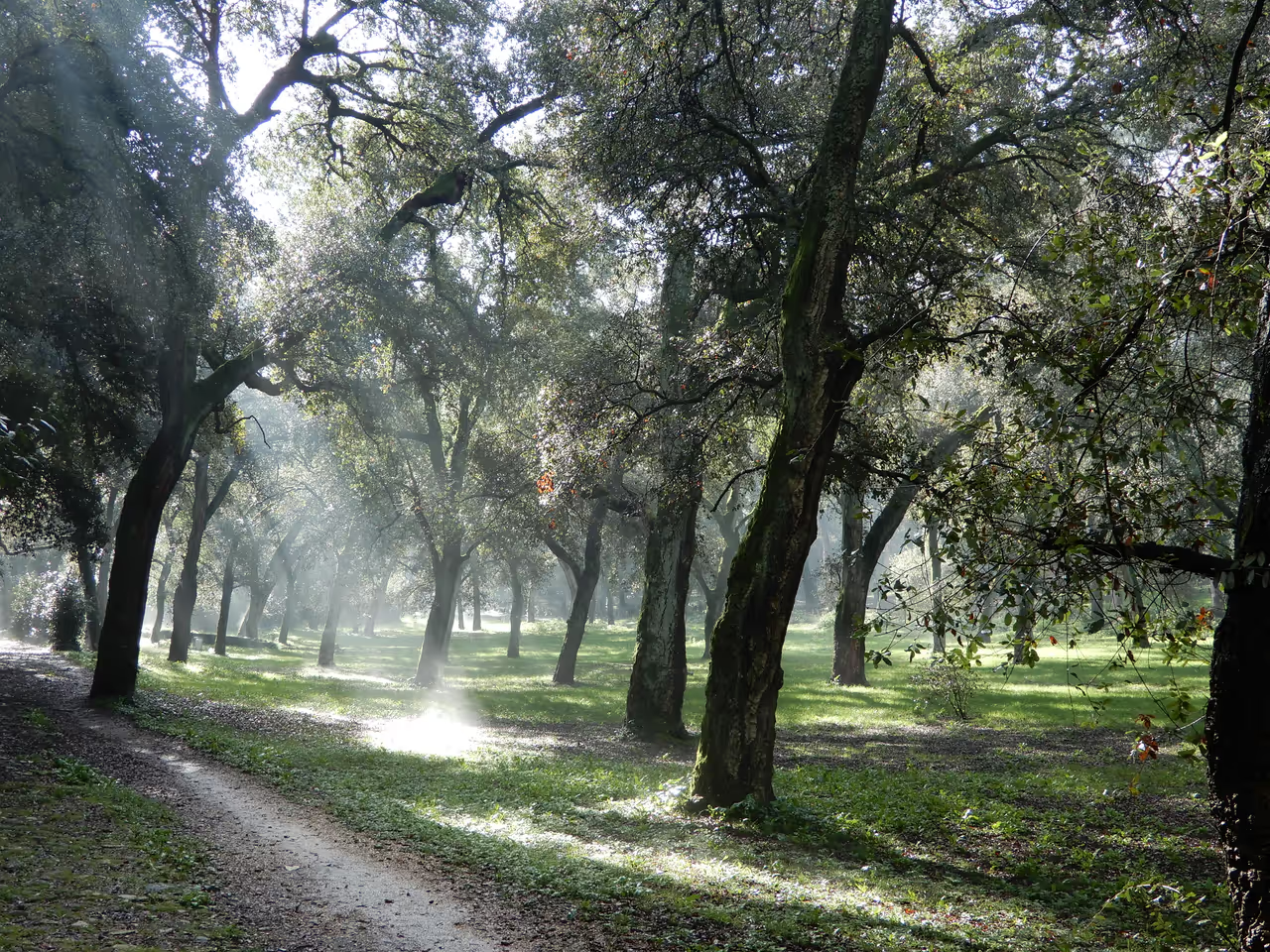
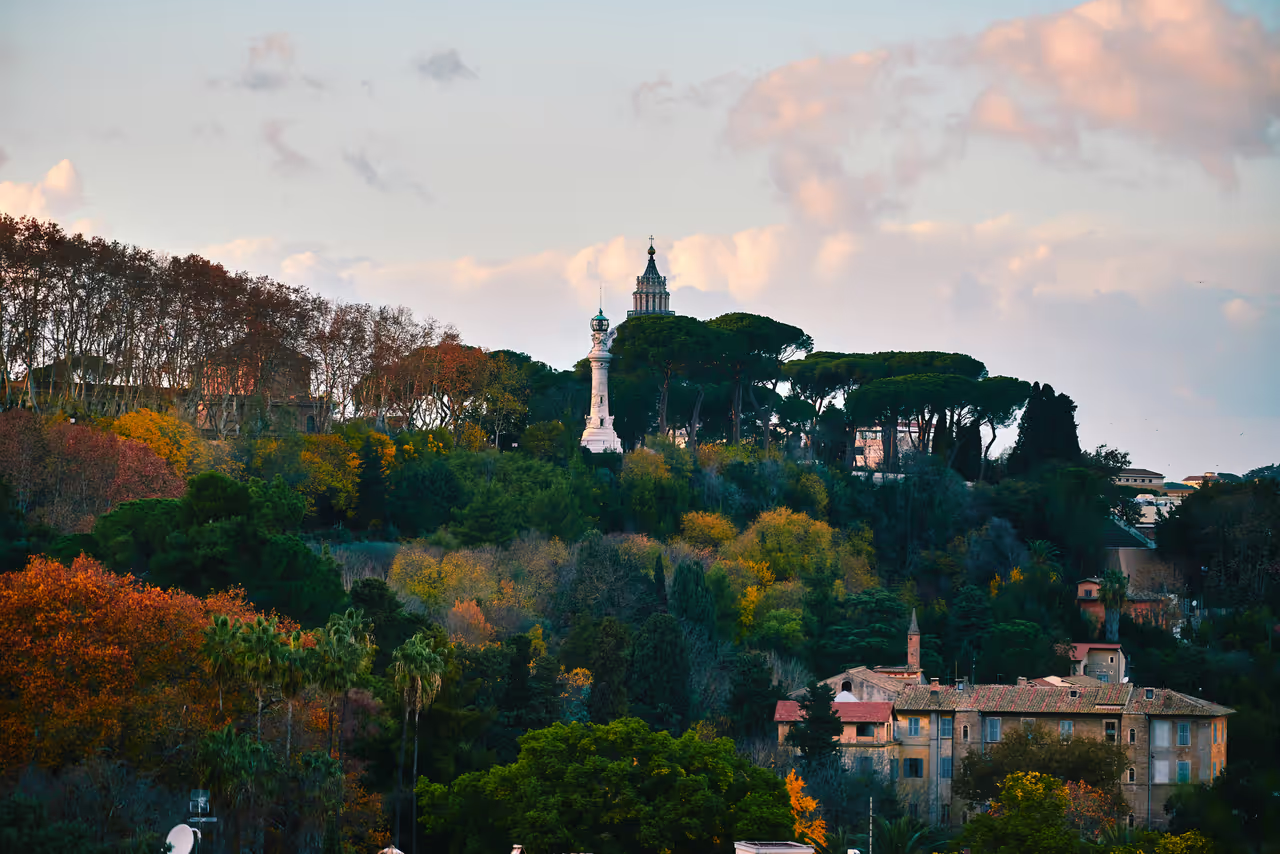
Rising above the rooftops of Trastevere, the Janiculum offers arguably the most breathtaking panorama of Rome. It is a place where history breathes through its leafy avenues and grand monuments, serving as both a serene escape and a tribute to the Risorgimento heroes who fought for Italian unification. Whether you are catching the daily cannon fire at noon or strolling past the majestic Fontanone, this hill provides a unique vantage point to absorb the city's vast architectural evolution. It is not one of the seven traditional hills, yet it holds a special place in the Roman heart, blending ancient mystery with modern patriotic pride. Visiting here is an essential experience for anyone wanting to see the Eternal City from a truly spectacular angle.
Videos
History of Janiculum Hill
The Janiculum has long served as a silent guardian watching over Rome from the west bank of the Tiber. In antiquity, it was considered a sacred and liminal space, disconnected from the seven hills that defined the heart of the city. Legends whispered that the god Janus established a residence here, and while historical reality offers more modest evidence of small shrines and Etruscan settlements, the hill always possessed a wild, strategic energy that the Romans could not ignore. It was the gatekeeper of the city, a high point that commanded respect and military attention from the earliest days of the Republic. Centuries later, the hill transformed into the stage for one of Italy's most romantic and tragic chapters. During the Risorgimento of 1849, the Janiculum became the final bastion of the Roman Republic, where Giuseppe Garibaldi led a desperate, heroic defence against the encroaching French forces. The slopes were soaked in the courage of volunteers who fought not for empire, but for the dream of a unified nation. After the smoke cleared and the Republic fell, the hill was repurposed not as a fortress, but as a vast memorial, dotted with the marble busts of the fallen who had fought for the Italian spirit. Today, the hill feels like a tranquil park where the echoes of cannon fire at noon bridge the gap between old rituals and modern life. It is the favourite terrace of Rome, a place where the grandeur of the cityscape unfolds below in a panorama that stretches from the historic centre to the distant Apennine peaks. Locals and travellers alike climb these paths to escape the frantic pace of the streets below, finding in the shade of the ancient trees a perspective on Rome that is both grounded in its epic history and alive with the quiet pulse of a city that never stops evolving.
Events spanning 2487 years
Fun Facts
- • Although often mistakenly grouped with the famous seven hills of Rome, the Janiculum technically stands apart as it sits on the west bank of the Tiber, outside the ancient city boundaries.
- • An unusual botanical inhabitant, the Ombu tree, grows near the lighthouse; it is a rare species from the South American pampas, symbolising the strong connection between Italy and the Argentinian diaspora.
- • During the Risorgimento, the hill became a vast open-air memorial, featuring 84 marble busts of the patriots who defended the Roman Republic, creating a silent, stone guard overlooking the city.
- • The famous cannon that fires at noon does not just mark the time; it was a clever solution introduced by Pope Pius IX to stop Rome's various church bells from ringing haphazardly at different intervals.
- • The hill is deeply tied to the god Janus, who allegedly founded an ancient settlement here, though archaeological evidence points more strongly towards a sacred shrine dedicated to Fons, the deity of springs and wells.
- • The hill offers such an expansive view that on a clear day, you can see far beyond the rooftops of central Rome, tracing the skyline all the way to the Apennine Mountains and the Alban Hills.
- • The hill served as a critical defensive line for the Roman Republic of 1849, where Giuseppe Garibaldi and his volunteers successfully held off the French intervention forces for weeks despite being vastly outnumbered.
- • The lighthouse on the northern end, known as the Faro del Gianicolo, was a generous gift from Italian immigrants living in Buenos Aires to celebrate the 50th anniversary of the unification of Italy.
- • Traces of an ancient temple dedicated to the Syrian goddess Atargatis and other oriental deities were discovered on the slopes, revealing that the area was once a hotbed of religious syncretism and mysterious, non-Roman cults.
- • Under the crest of the hill lies the Fontanone, or the Fountain of Acqua Paola, which is not just an architectural marvel but was constructed using marble salvaged from the nearby ancient Temple of Minerva in the Forum.
Janiculum Hill FAQ
While we strive to keep this information accurate and up to date, we recommend verifying any details independently before making decisions based on them.
Janiculum Hill Map & Neighborhood Explorer
This interactive map is centered on Janiculum Hill. Zoom in and move the map around to automatically discover Wikipedia photos and summaries of other nearby sights, monuments, and historical points of interest and stories in real-time!
Places near Janiculum Hill
Make the most of your trip. Check out these top-rated spots located nearby.
 527m
527mTempietto of San Pietro
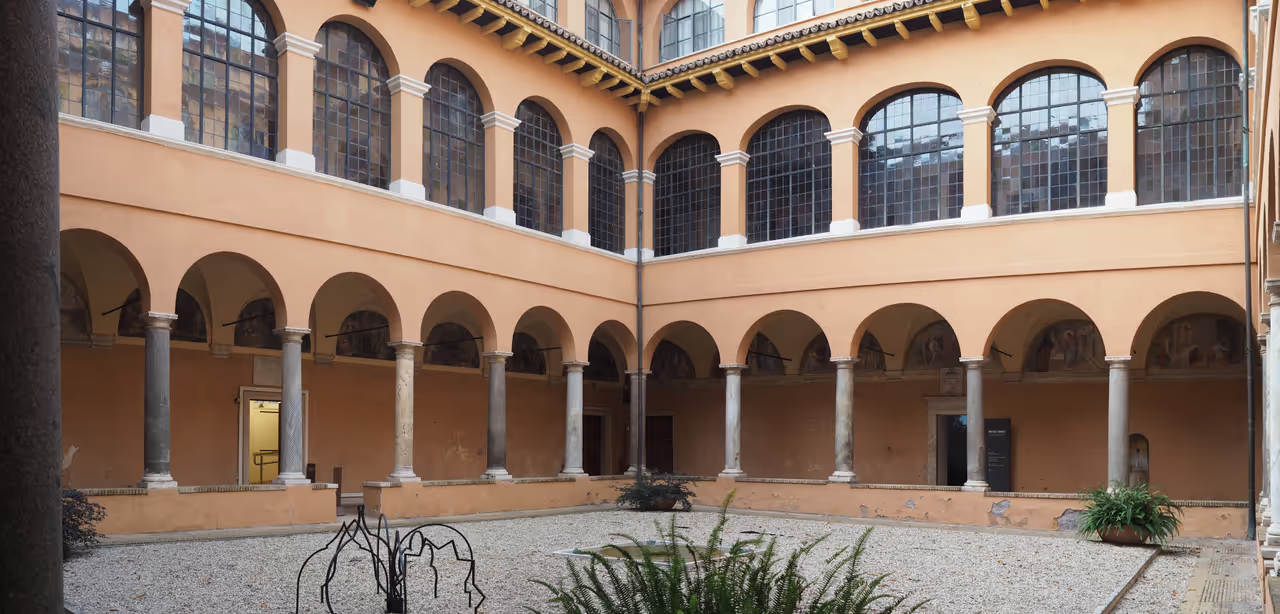
Tucked away in a quiet, unassuming courtyard on the slopes of the Janiculum hill sits this small but absolutely revolutionary architectural jewel. Designed by Bramante, this perfectly proportioned circular temple is considered one of the very first and greatest masterpieces of High Renaissance architecture. Inspired by the classical harmony of ancient Roman temples, it features a graceful, continuous colonnade and a beautifully balanced dome. Despite its modest size, its flawless geometry and elegant simplicity had a profound, lasting influence on Western architectural history. It is a serene, intellectually satisfying space that rewards careful observation.
architecture view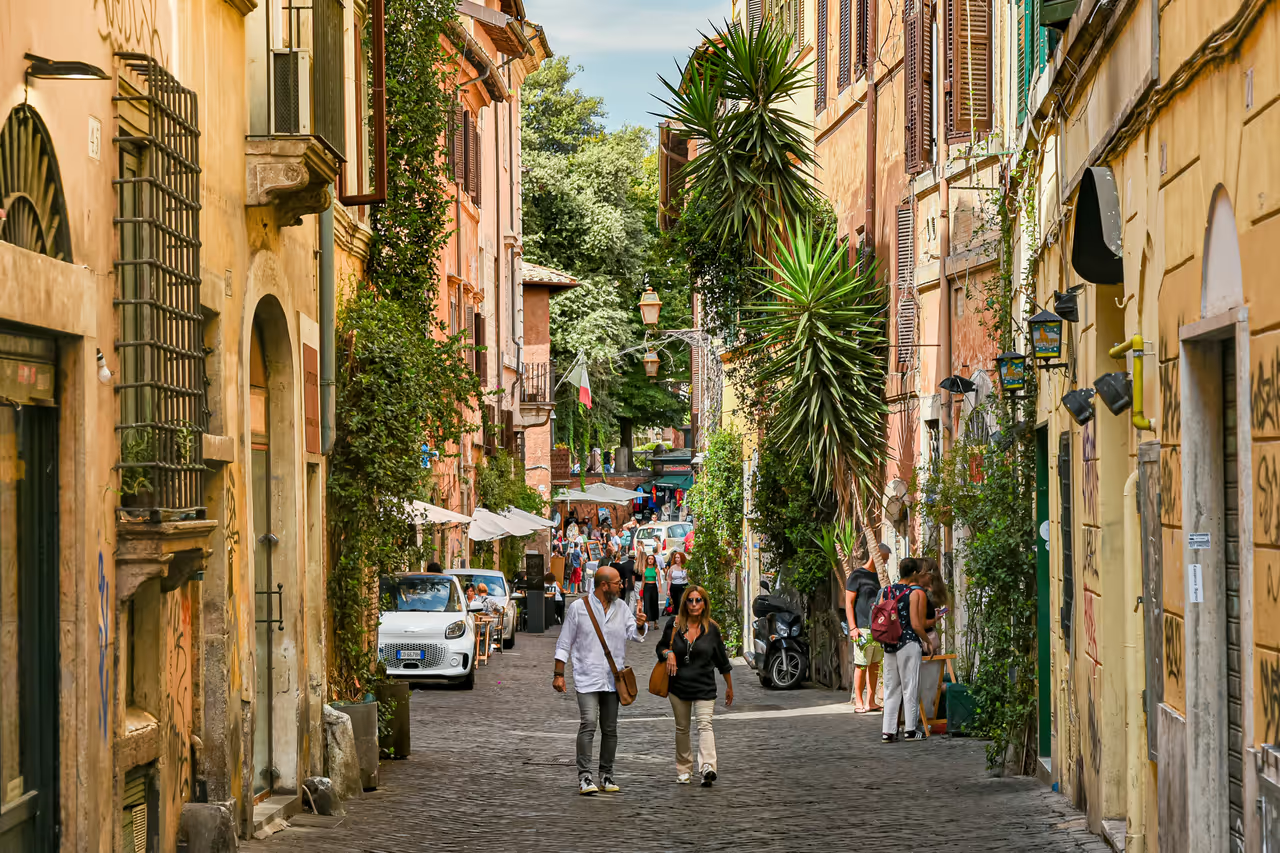 599m
599mWandering Trastevere
Getting completely lost in the charming, labyrinthine alleyways of this historic, working class district costs absolutely nothing but offers immense cultural value. The area is a highly photogenic maze of colourful, peeling facades, laundry strung between windows, and incredibly picturesque, vine draped courtyards. It provides a deeply authentic, vibrant glimpse into traditional local life, far removed from the monumental grandeur of the imperial ruins. Every corner reveals a new, charming detail, from tiny, hidden street shrines to lively, bustling local squares. It is the perfect, relaxed environment for endless, atmospheric exploration on foot.
free thing to do view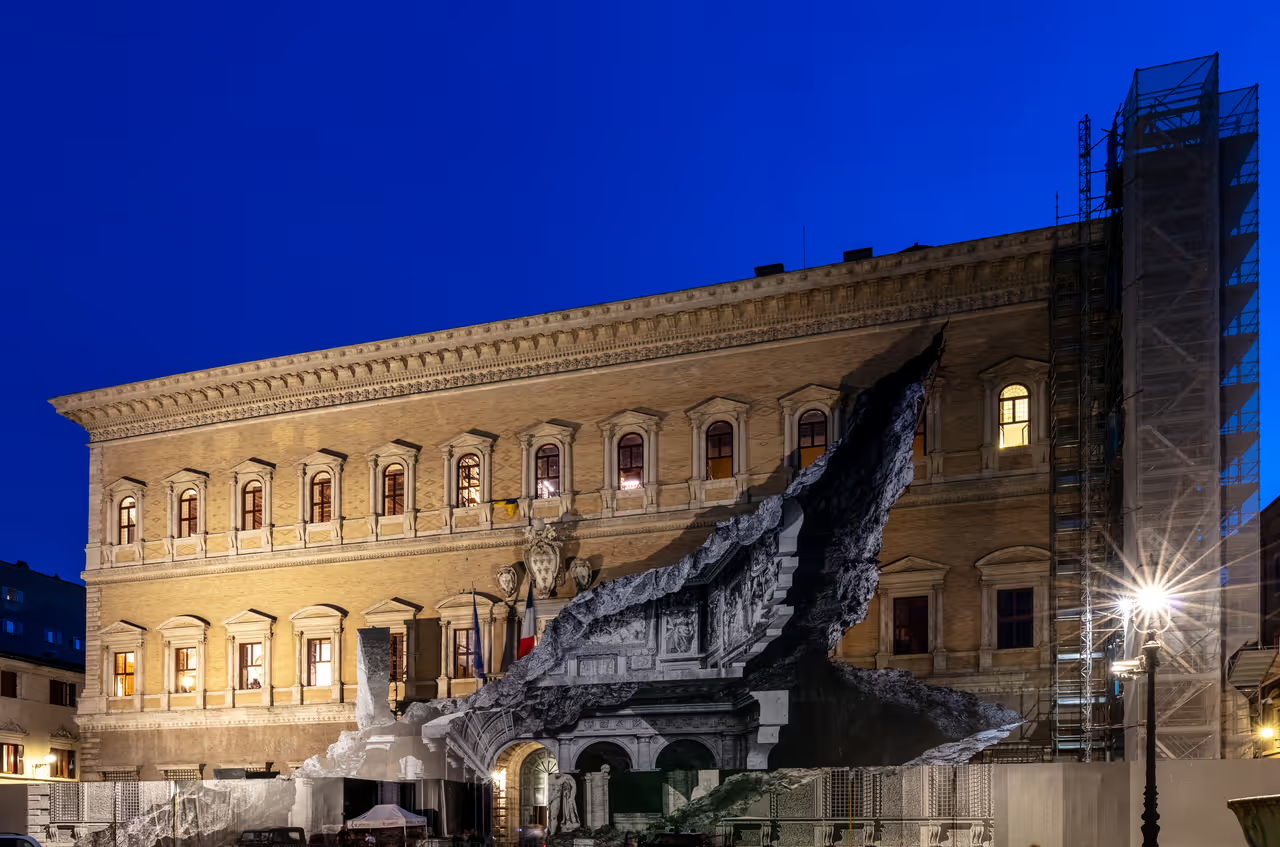 865m
865mFarnese Palace
This massive, imposing aristocratic residence is widely regarded as one of the most important and impressive High Renaissance palaces in the city. Designed by a series of brilliant architects, including Michelangelo who added the distinctive, prominent cornice, its facade is a masterclass in elegant, powerful civic design. The perfectly ordered windows and the magnificent central balcony project an image of immense wealth and political authority. Today, it serves as the French Embassy, adding an aura of exclusivity to its grand, monumental presence. The sheer bulk and refined detailing of the building dominate the beautiful, fountain filled square it faces.
architecture view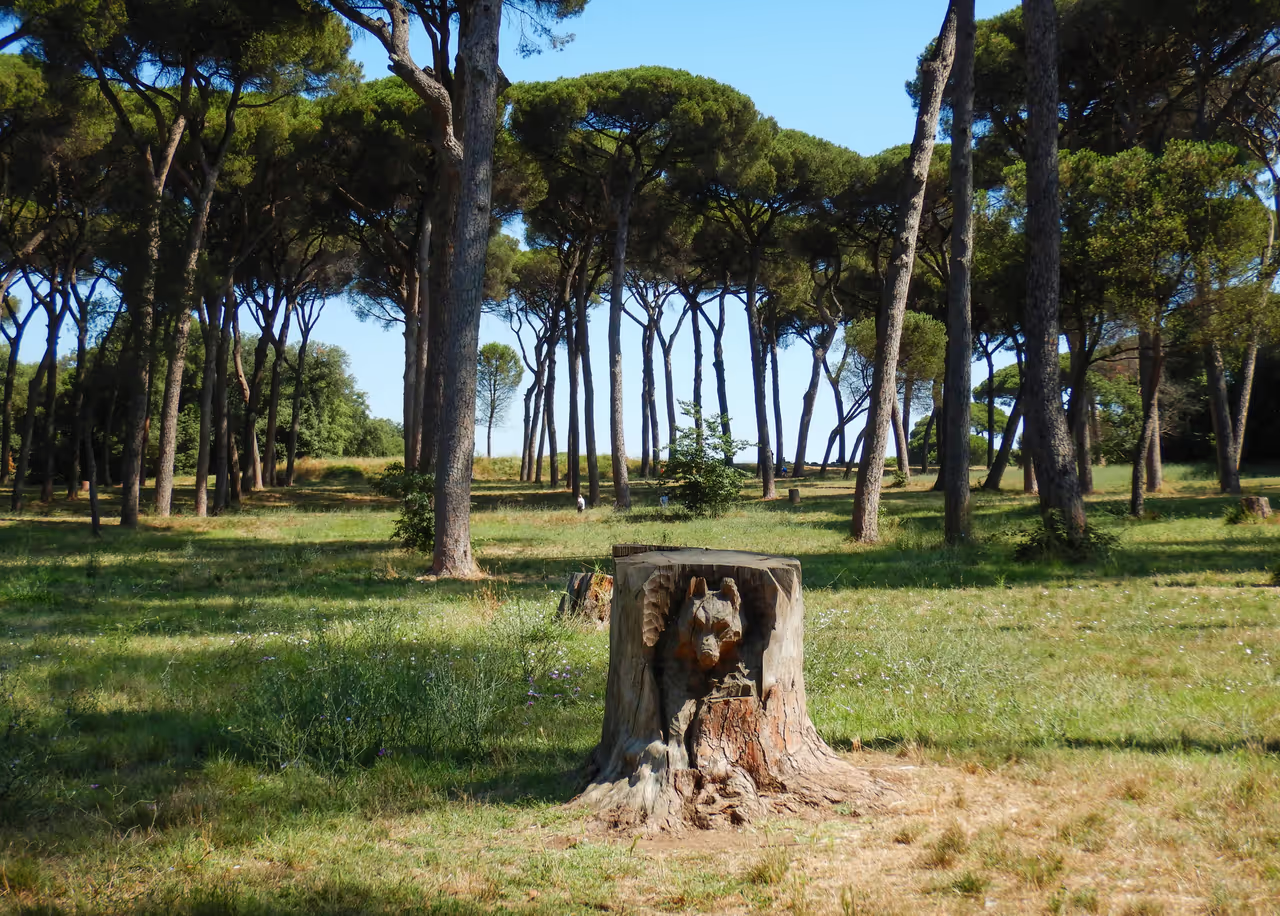 988m
988mVilla Doria Pamphili
Spanning 1.8 square kilometres, this is Rome's largest landscaped public park and offers a majestic escape from the city streets. Known historically as the 'Bel Respiro' for its fresh, high-altitude air, it was once the private playground of the powerful Pamphili family. Visitors can explore a captivating mix of formal manicured gardens, wild woodlands, and serene lakes that feel worlds away from the city centre. The heart of the estate is the stunning seventeenth-century Casino del Bel Respiro, an architectural masterpiece adorned with intricate sculptures and reliefs. Whether you are looking to jog along winding paths, picnic under towering stone pines, or admire Baroque garden design, this villa provides a perfect blend of nature and history. It is a place where the grandeur of the papal past meets the relaxed pace of modern Roman life.
park & nature view
Explore Similar Places in This Collection
Featured on This Route
See all nature & parks in Rome
Appian Way Regional Park, Orange Garden, Villa Borghese, Villa Doria Pamphili, Colle Oppio Park and Baths of Trajan, Villa Ada Savoia...