Sforza Castle
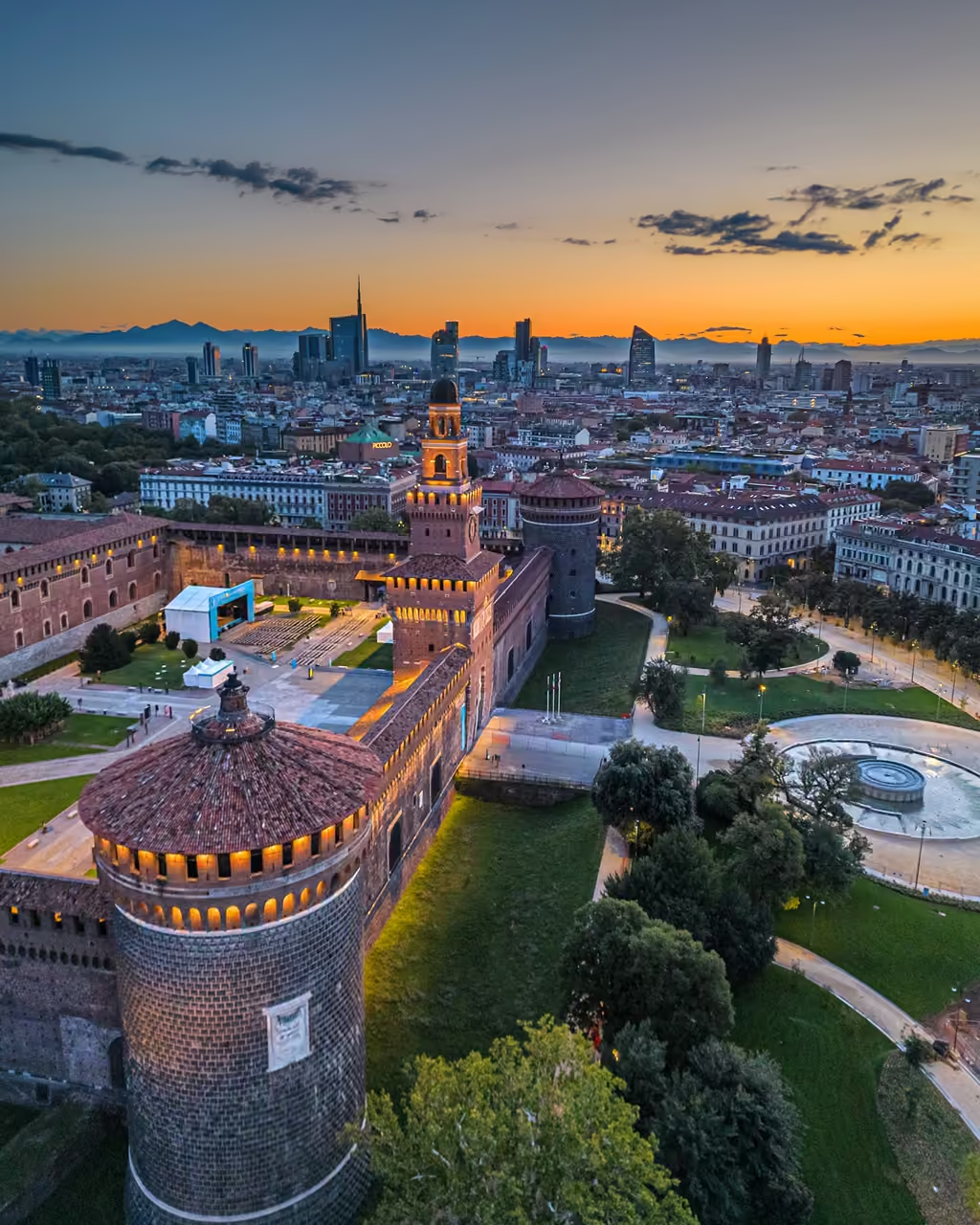
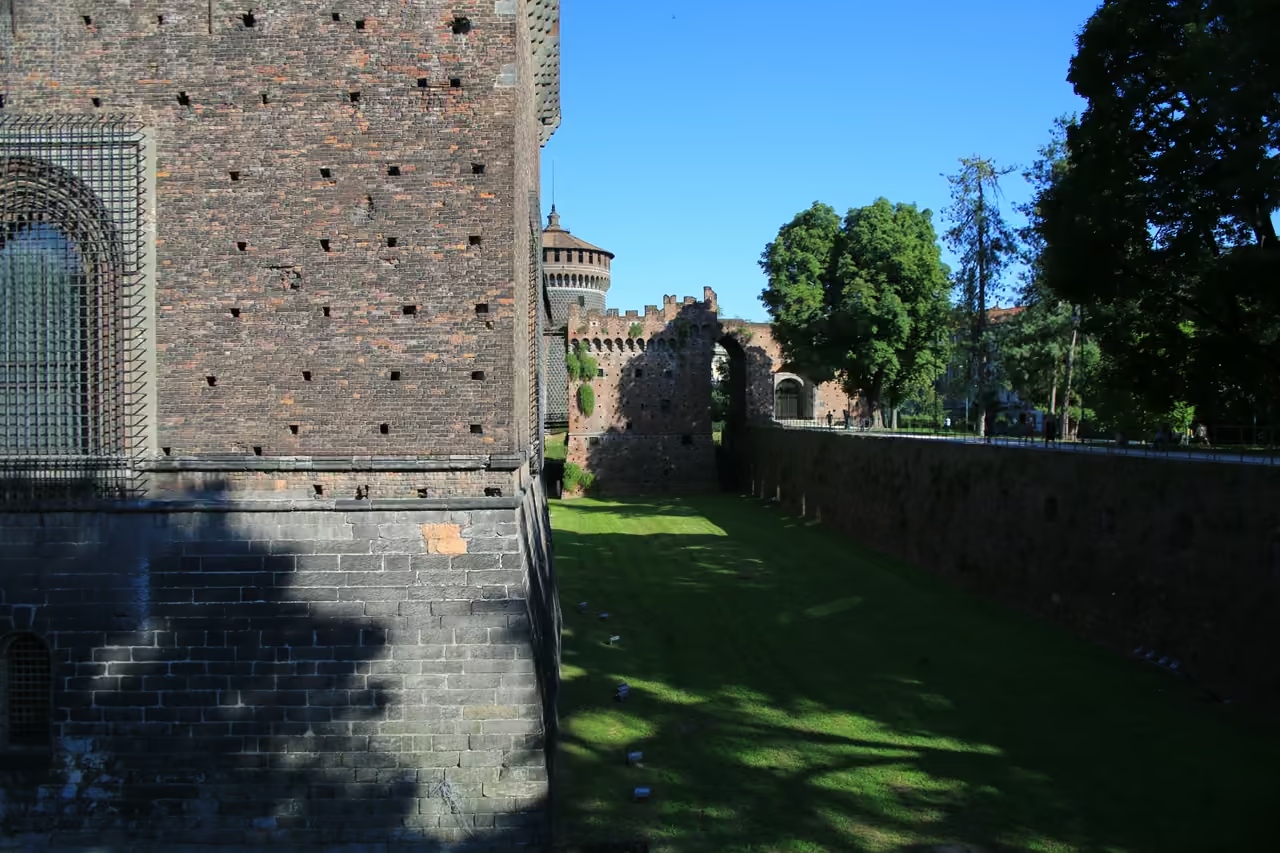
You hear the rush of the modern fountain long before the red brick mass of the Filarete Tower finally dominates the view at the end of Via Dante. Stepping through the main archway means dodging a few erratic pigeons by the entrance before the space suddenly opens up into the vast expanse of the Piazza d'Armi. This massive quadrangle immediately reveals that the complex is far more than a simple defensive perimeter. Crossing the dry moat takes you into the Rocchetta, an inner stronghold where the walls swap bare military brick for delicate terracotta window frames and pale plaster. Under the nearby Portico of the Elephant, a faded Renaissance fresco of exotic animals watches over the ducal courtyard. Look up at the marble statue of Saint John of Nepomuk standing solitary in the middle of the parade ground, marking exactly where the Spanish garrisons once mustered.
Videos
History of Sforza Castle
The earliest version of this fortress was planted on the ruins of a Roman gate by the powerful Visconti family in the late 1300s. They used it to maintain a tight grip on Milan, expanding the footprint until the last Visconti duke died without a legitimate male heir in 1447. Seizing the moment, the local nobility declared the Golden Ambrosian Republic and immediately tore the hated castle down to its foundations. That brief taste of republican freedom lasted exactly three years. The brilliant mercenary captain Francesco Sforza crushed the republic, took control of the city, and ordered the fortress rebuilt as his personal seat of power. The Sforza dynasty transformed the military barracks into one of Europe's most opulent courts. Ludovico il Moro took charge in the late 15th century and poured wealth into the interiors. He hired Donato Bramante to design an elegant bridge and brought in Leonardo da Vinci to paint the ceiling of the Sala delle Asse with an intricate canopy of mulberry roots. The golden age shattered when foreign armies swept into northern Italy. Control of the fortress violently bounced between the French, the Swiss, and finally the Spanish, who stripped away the luxury. For centuries, the castle functioned as a massive, oppressive military machine. Spanish governors built vast star-shaped bastions and turned the delicate Renaissance courtyards into carpentry shops and chicken coops. Later, Austrian troops used the walls to mount cannons aimed directly at the rebellious citizens of Milan during the 1848 uprisings. When Napoleon Bonaparte conquered the city at the turn of the 19th century, a cheering mob petitioned him to demolish the symbol of tyranny. He ordered it destroyed, and the outer Spanish bastions were indeed levelled before the project stalled. The surviving core of the castle sat battered and unloved until the late 19th century. Many city planners wanted to bulldoze the rest to build a modern residential district. Instead, architect Luca Beltrami launched an obsessive, decades-long restoration campaign. He scoured archives and even used the background details of a Renaissance painting to accurately reconstruct the towering main entrance that had been blown up centuries earlier.
8 events spanning 656 years
Fun Facts
9- 01
A 1630 stone plaque displayed under the Portico of the Elephant marks the original location of the Infamous Column, which was erected in a city square over the razed home of a man falsely accused of spreading the plague.
- 02
A hidden network of underground tunnels was definitively mapped in 2024 using ground-penetrating radar, proving that 15th-century sketches made by Leonardo da Vinci in his Codex Forster were actual architectural blueprints.
- 03
During the Five Days of Milan uprising in 1848, Austrian Field Marshal Radetzky used the castle's heavy artillery to ruthlessly bombard the rebellious city streets right outside the walls.
- 04
Following the sudden death of his wife Beatrice d'Este, Duke Ludovico il Moro locked himself inside a small room on the castle's elevated bridge to mourn in complete darkness.
- 05
In 1521, a French soldier accidentally dropped a bomb in the Filarete Tower while it was functioning as a gunpowder magazine. The explosion completely destroyed the central tower, leaving a gap in the facade until it was rebuilt in 1905.
- 06
The Spanish Hospital, a dedicated wing built in 1576 specifically to quarantine soldiers infected with the plague, has been completely restored to house Michelangelo’s unfinished final masterpiece, the Pietà Rondanini.
- 07
The castle's treasury room, where the Dukes hoarded gold and jewels, was guarded by a fresco of Argus Panoptes, the mythological giant who never slept because he only closed two of his hundred eyes at a time.
- 08
The courtyard features a transplanted stone facade from the Malastalla, a notorious 15th-century prison on Via Orefici specifically reserved for insolvent debtors before it was demolished in the early 20th century.
- 09
When the Spanish took control in the 16th century, they transformed the elegant ducal courtyards into a massive military base, going so far as to build brick chicken coops in the Renaissance plazas and turn frescoed halls into carpentry workshops.
FULL PLACE DETAILS
Updated
FULL PLACE DETAILS
UpdatedOVERVIEW & STATS
- Established
- In 1360, making it 666 years old
ARCHITECTURE & HERITAGE
- Heritage Status
- Italian National Heritage
- Architectural Styles
- Renaissance
- Architects
- Filarete
WEB & AMENITIES
Sforza Castle Map & Neighborhood Explorer
This interactive map is centered on Sforza Castle. Zoom in and move the map around to automatically discover Wikipedia photos and summaries of other nearby sights, monuments, and historical points of interest and stories in real-time!
Sforza Castle FAQ
Yes, walking through the Piazza d'Armi, the Rocchetta courtyard, and the Corte Ducale costs nothing. You only need to purchase a ticket if you want to enter the interior museum collections.
He painted the intricate canopy of mulberry tree branches in the Sala delle Asse and designed a network of subterranean tunnels that run beneath the fortress, which were only fully mapped out in 2024.
Yes. The Pietà Rondanini, which Michelangelo worked on until just days before his death, is displayed in the former Spanish Hospital wing located on the left side of the main parade ground.
The elevated walkways and battlements, known as the Ghirlanda, are only accessible through specifically booked guided tours rather than general admission.
A typical visit takes about 3 hours. We recommend planning your schedule accordingly to make the most of your time there.
The closest place to visit near Sforza Castle is Oh Bej! Oh Bej! Christmas Market, around 166 m away. Other things to do near Sforza Castle include BookCity Milano (271 m), Sempione Park (419 m) and Corso Como and Porta Garibaldi (461 m). All of these are within roughly 461 m of Sforza Castle, close enough to walk.
Sforza Castle holds the following heritage designation: Italian National Heritage.
It dates back to 1360, making it 666 years old.
Sforza Castle was designed by Filarete in the Renaissance style.
While we strive to keep this information accurate and up to date, we recommend verifying any details independently before making decisions based on them.
Places near Sforza Castle
Make the most of your trip. Check out these top-rated spots located nearby.
- 166m
Oh Bej! Oh Bej! Christmas Market
Milan's traditional Christmas market opens on 7 December, the feast of Sant'Ambrogio, and fills stalls around the Castello Sforzesco with sweets, roasted chestnuts, crafts and decorations. The name comes from the Milanese cry 'Oh bei, oh bei', meaning 'oh beautiful'. It is a family outing with a crowd of locals and the smell of hot sugar.
market view 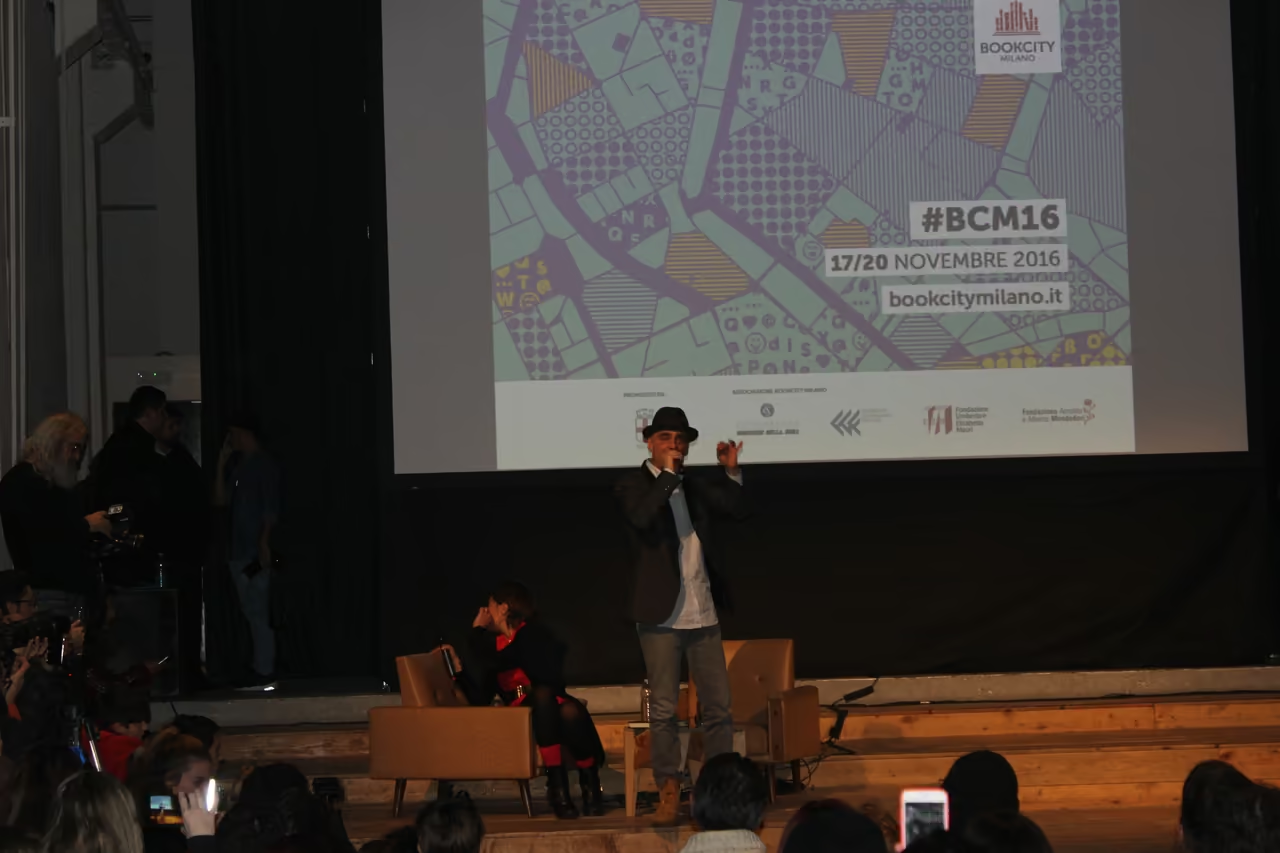 271m
BookCity Milano
For a few days in November the city's libraries, bookshops, schools and palaces fill with readings, debates and author talks. Events spread from the Castello Sforzesco to small neighbourhood libraries, and most are free. It celebrates Milan's status as Italy's publishing capital.
festival view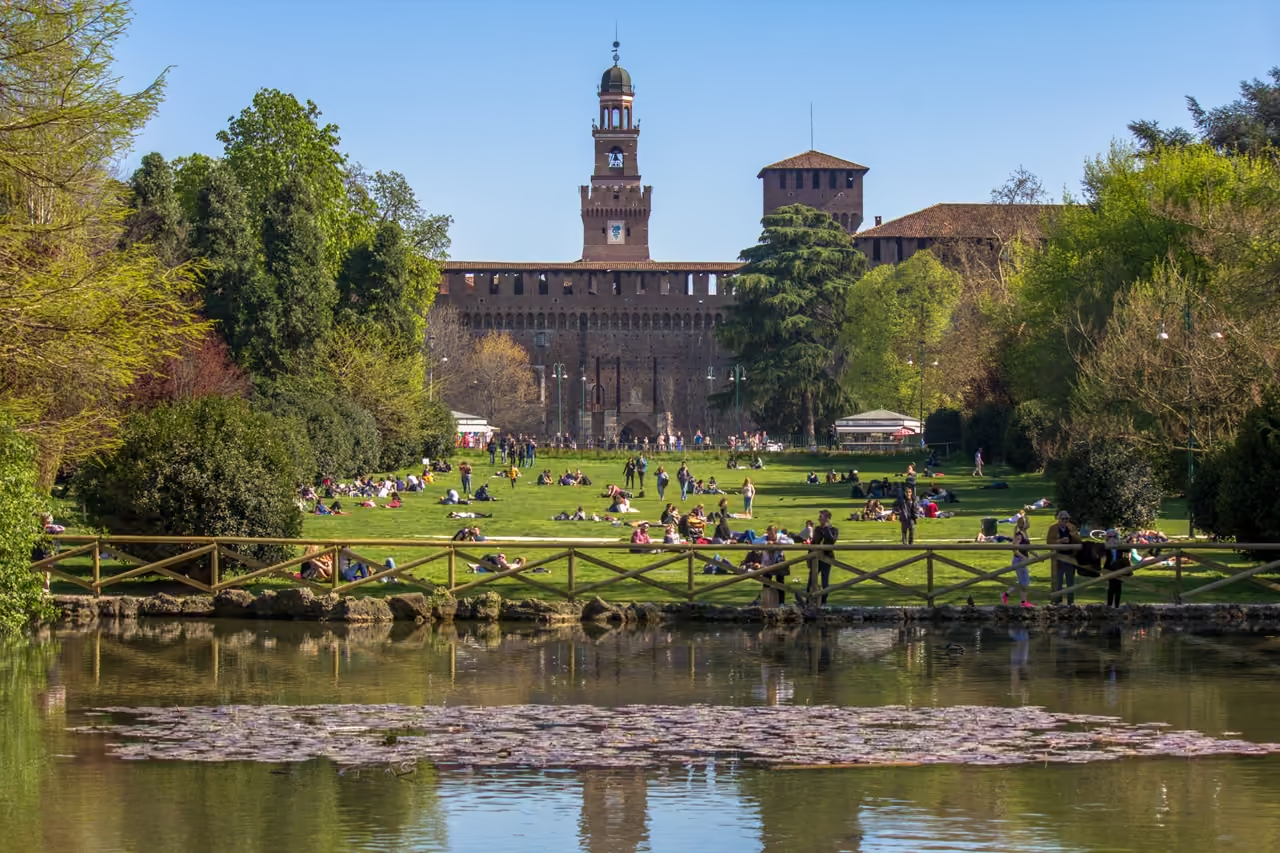 419m
Sempione Park
At 386,000 square metres, this patch of greenery completely severed the city's military past from its civilian future. Once a dusty parade ground for troops garrisoned at the nearby Castello Sforzesco, the area now acts as the central lungs of Milan. English-style romantic landscaping dominates the layout, with sweeping gravel paths curving past weeping beeches and Caucasian walnut trees. Stop by the Ponte delle Sirenette, a cast-iron bridge relocated here when the city paved over its inner canals. Locals often cluster around the Fontana dell'Acqua Marcia to fill bottles with mildly sulphurous water, chatting over the distinct scent of rotten eggs. Walk towards the north-western edge to catch the geometric bulk of the Arco della Pace framing the late afternoon sky.
park & nature view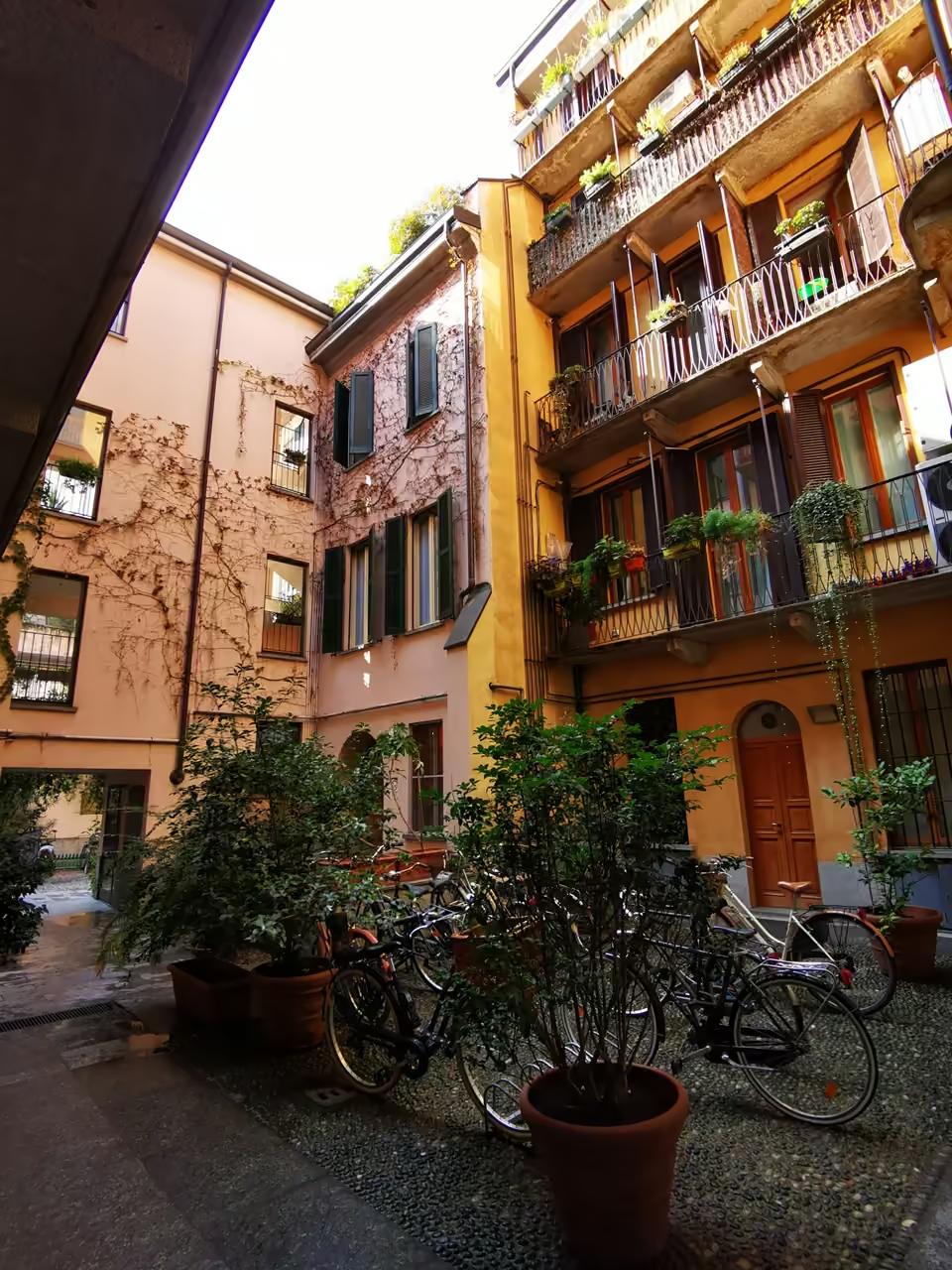 461m
Corso Como and Porta Garibaldi
A short pedestrian street near Porta Garibaldi station that fills with glamorous clubs, cocktail lounges and design-led bars. In summer the pavement is packed with groups dressed to be seen.
nightlife view
Explore Similar Places in This Collection
Featured on These Itineraries and Routes
1 Day in Milan
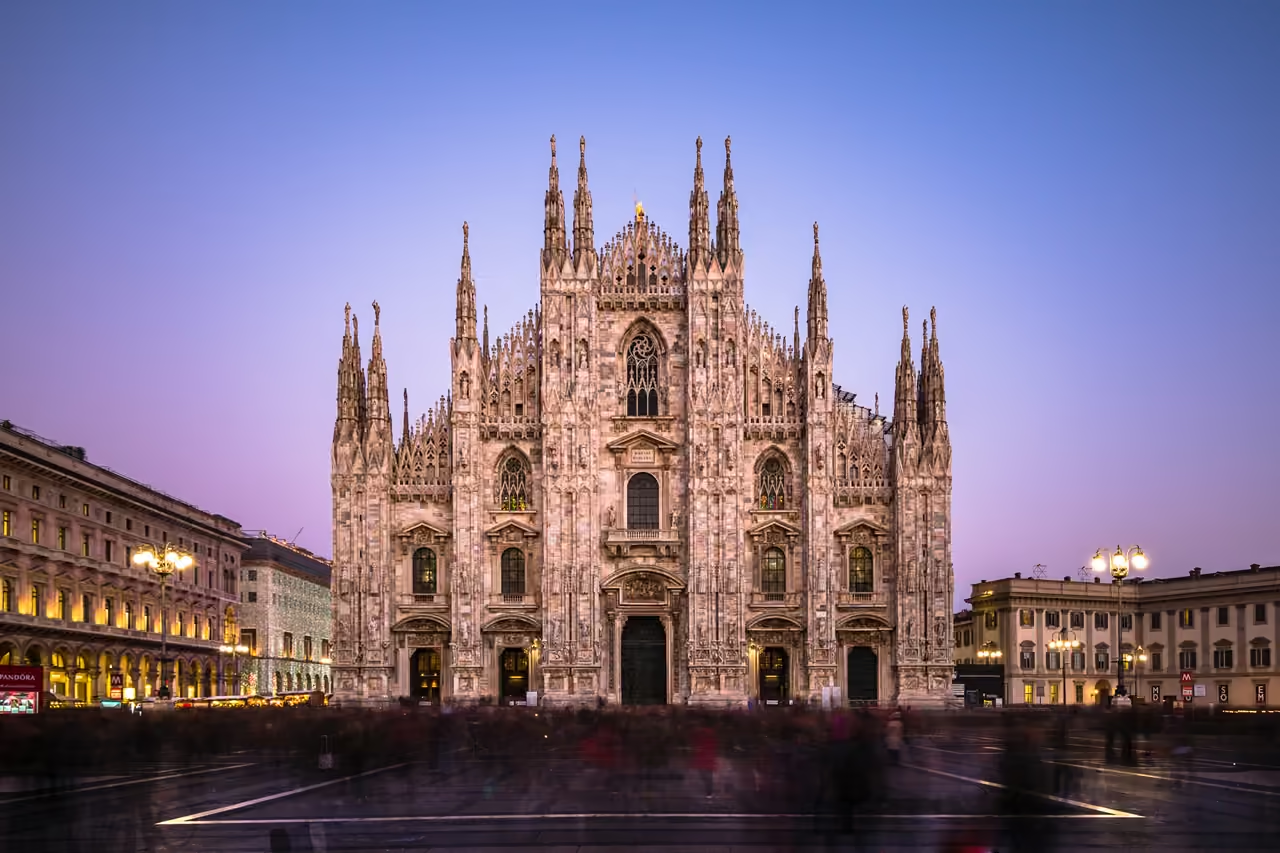
A single day that links Leonardo's masterpiece, a castle, a park, the cathedral and an evening on the canals. Book The Last Supper for the morning and the rest falls into place.
view itinerary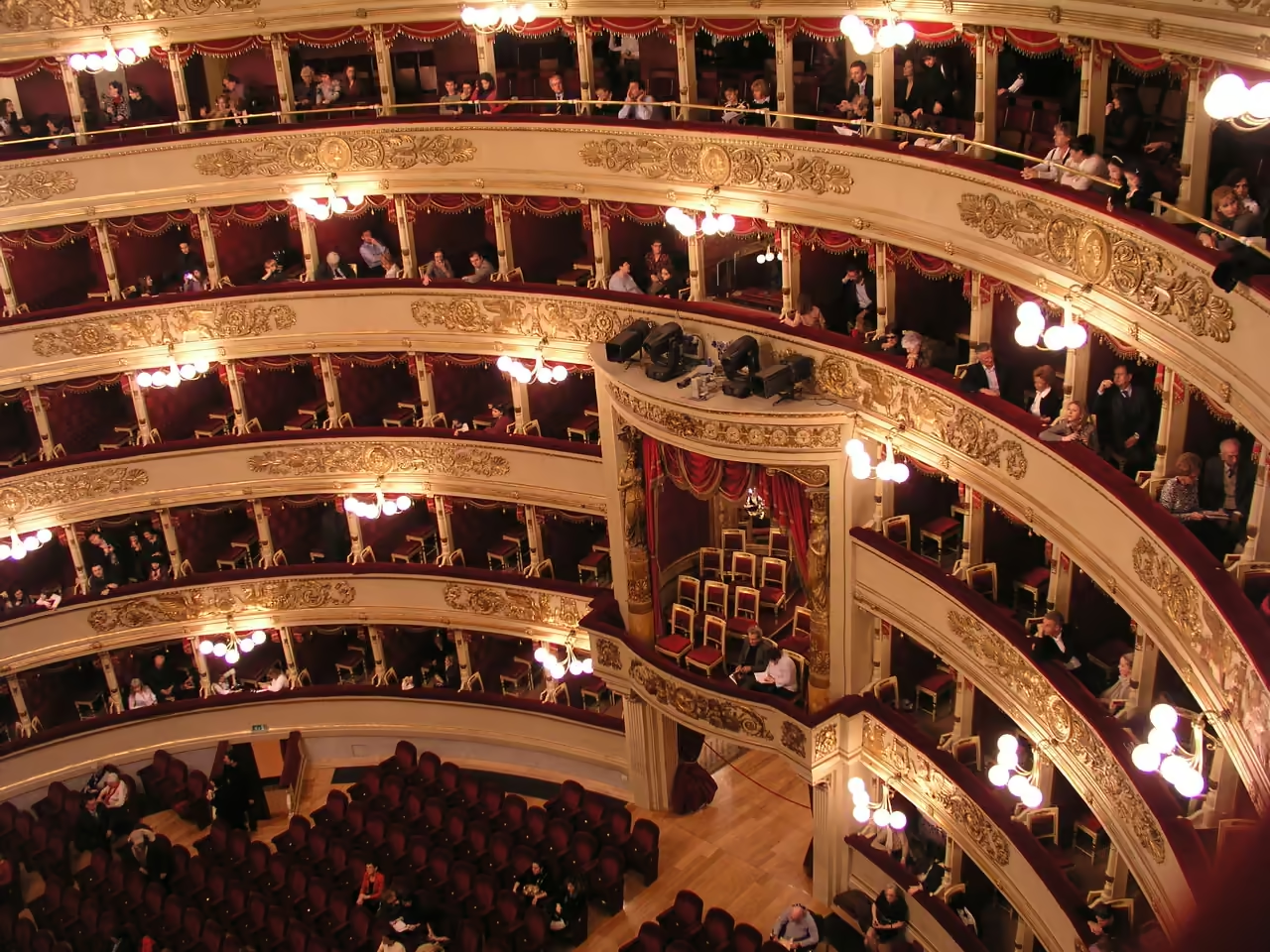
3 Days in Milan
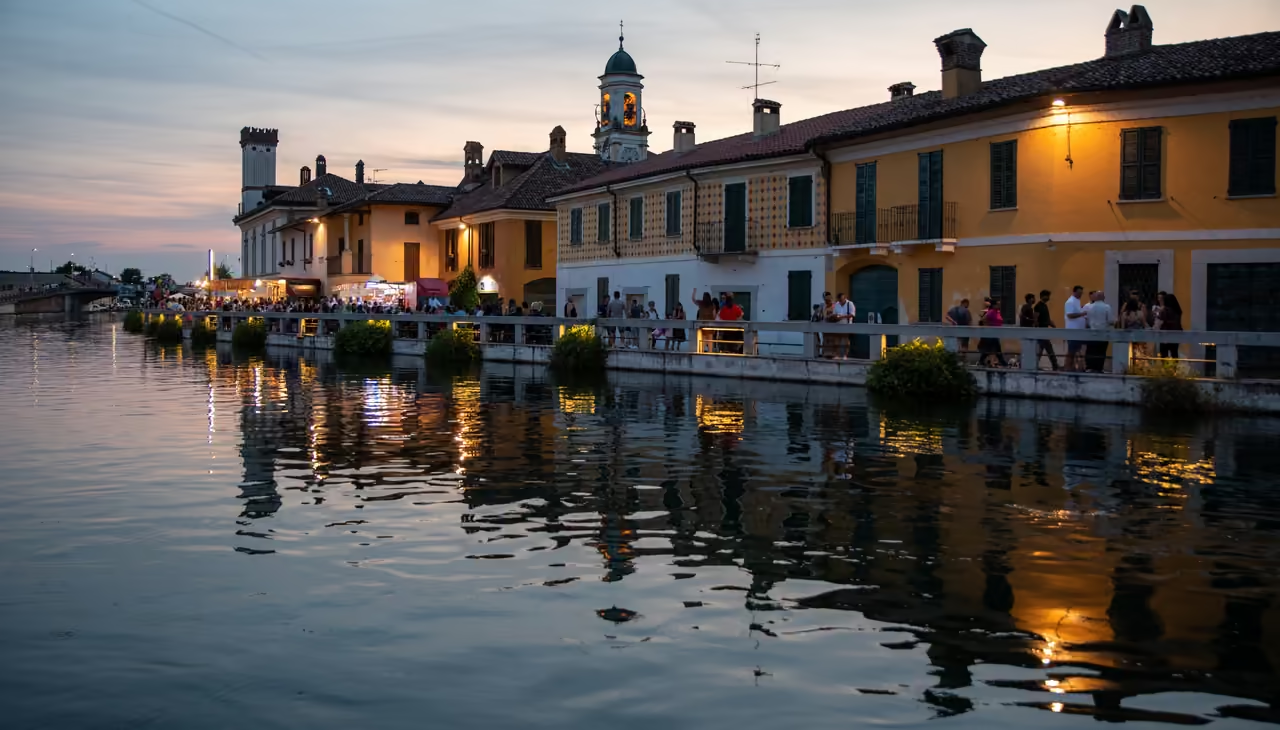
Three days that take in the cathedral district, Leonardo and the castle, and the churches and canals of the south. The pace allows for long lunches and an aperitivo each evening.
view itinerary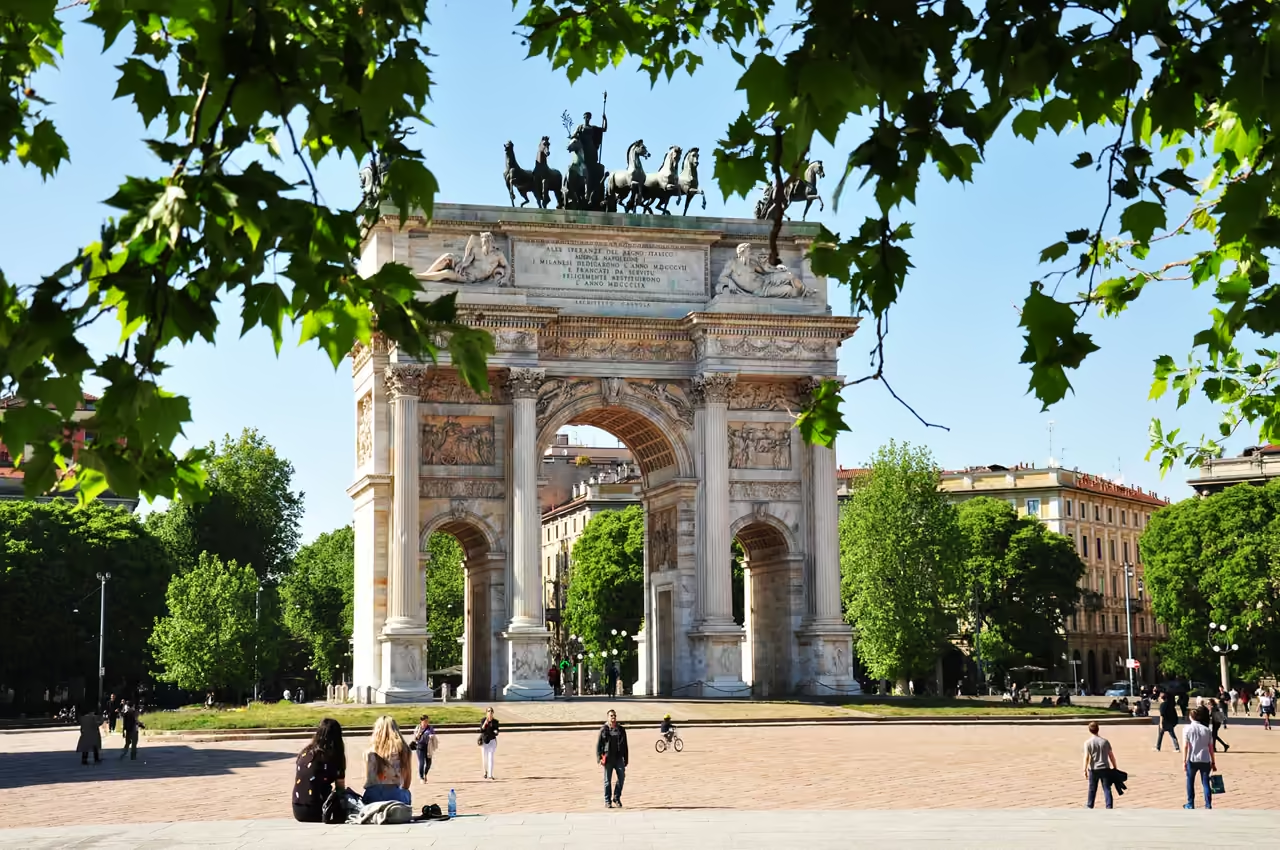
Parco Sempione Stroll from Castle to Peace Arch
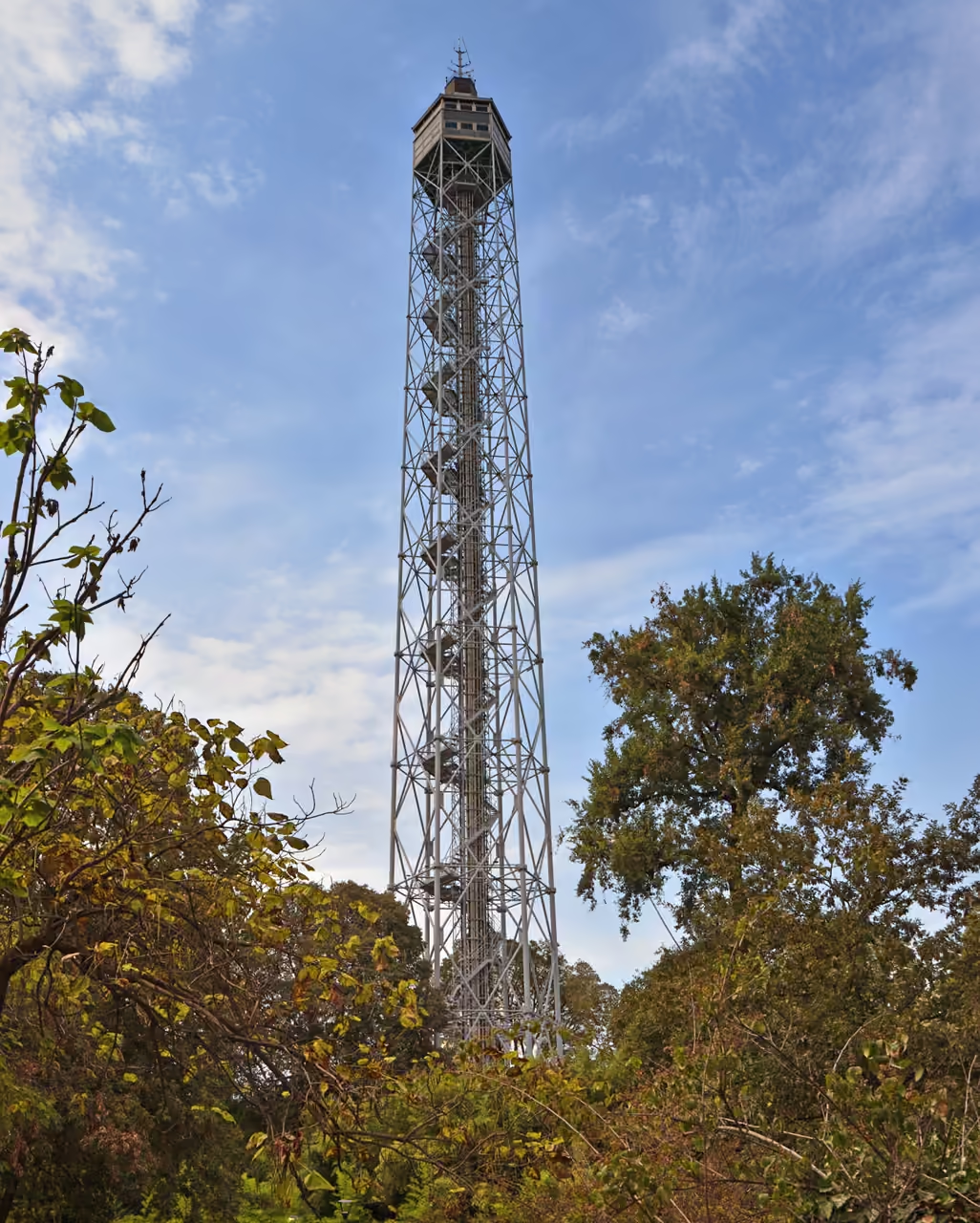
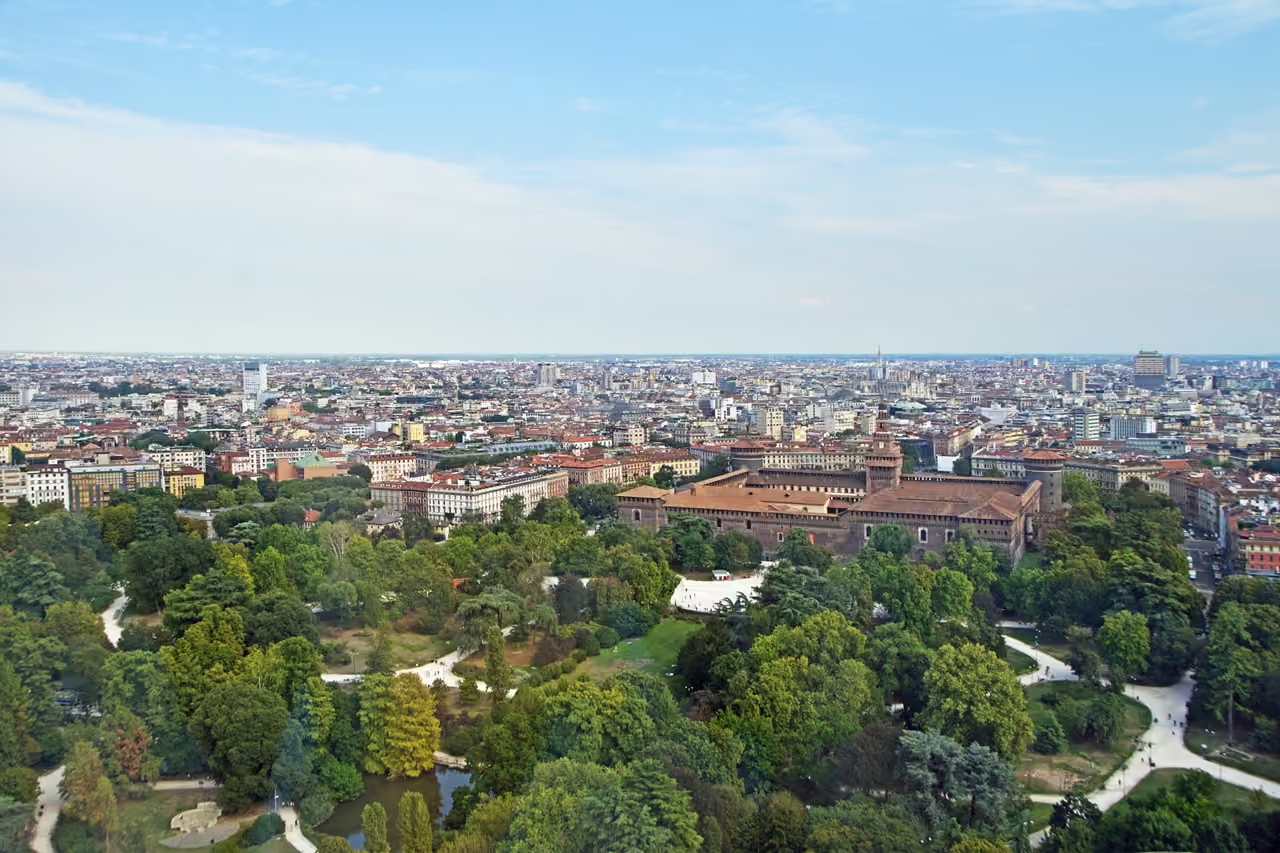
A leafy walk through the city's central park, from the Sforza ramparts across lawns and past a lake to a neoclassical triumphal arch. The route passes a tower with a view over the city.
view walking route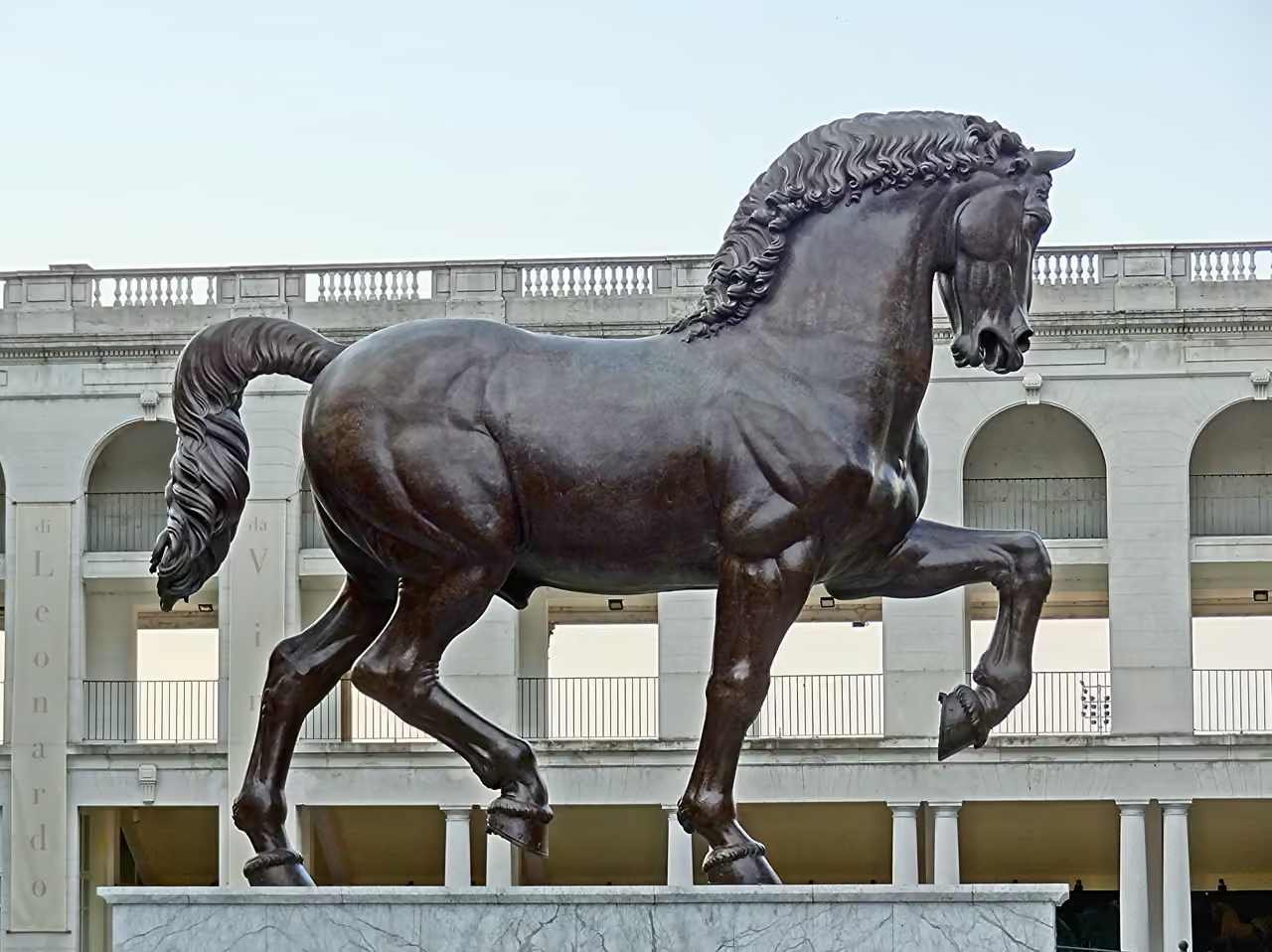
Leonardo da Vinci's Milan
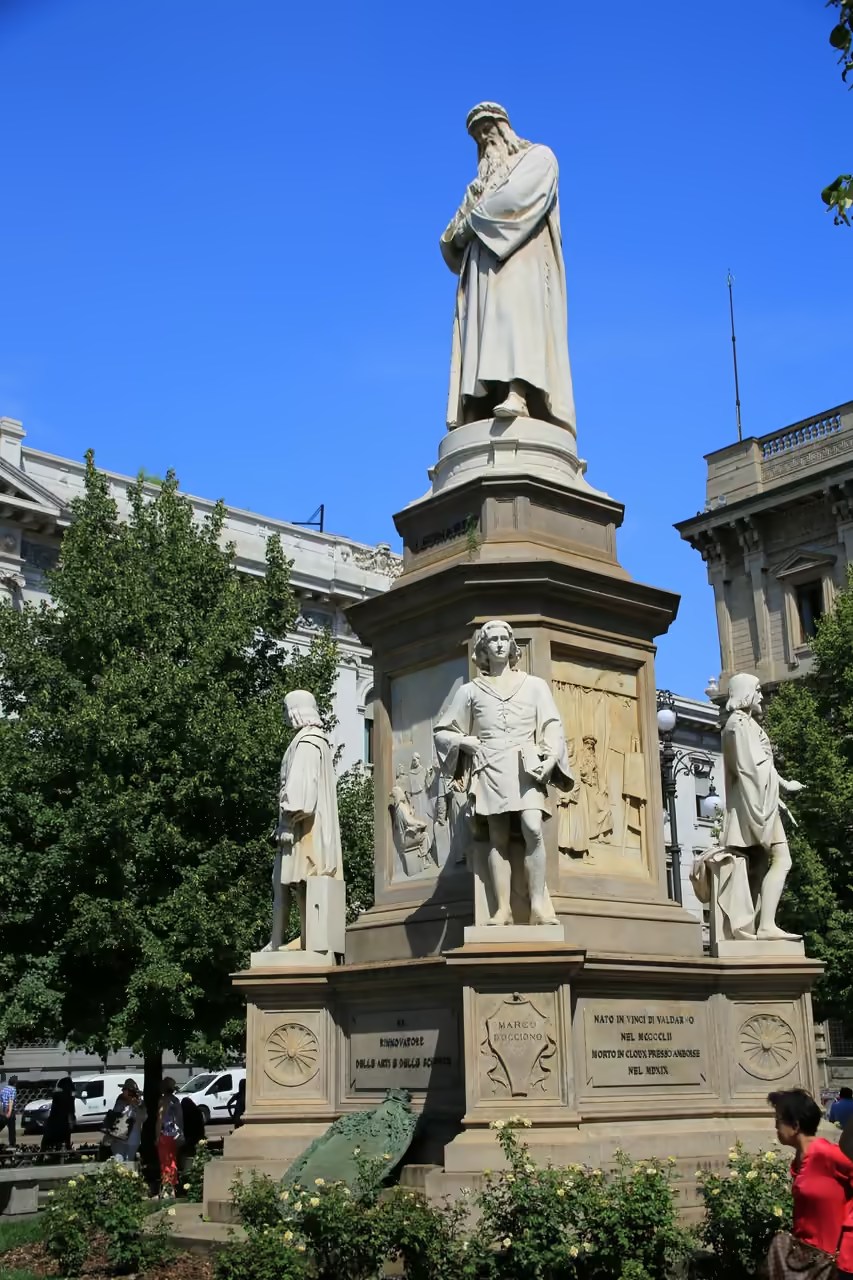
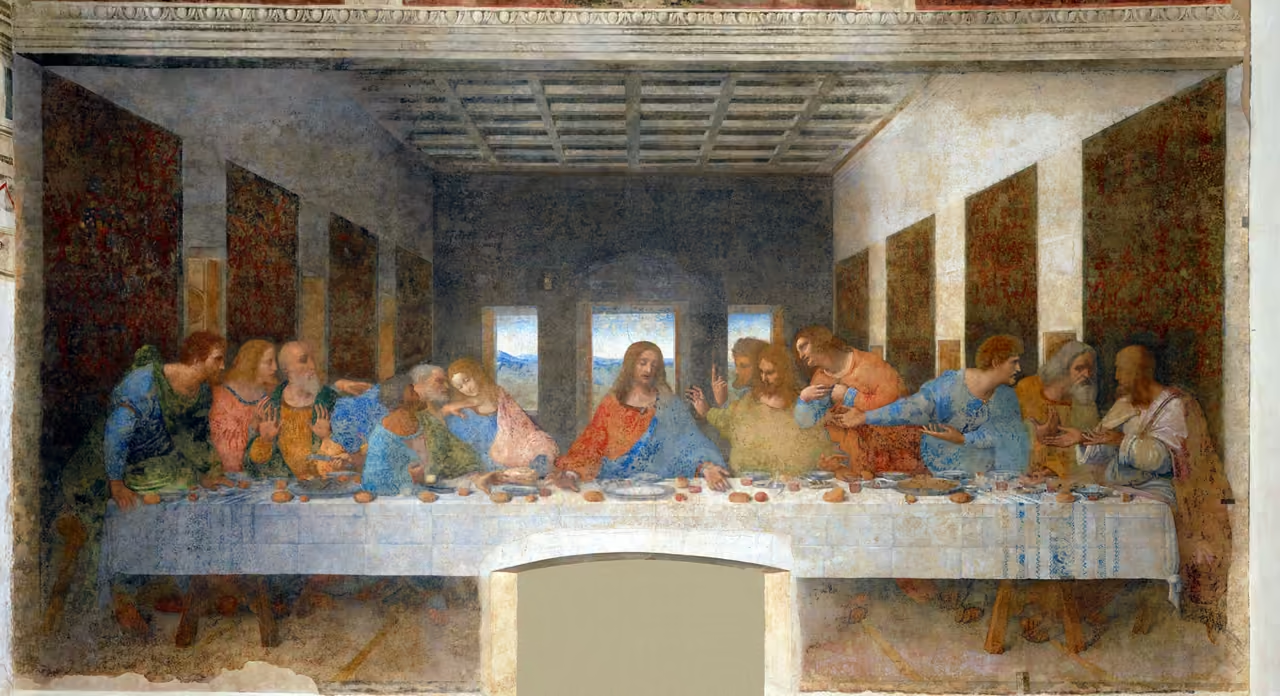
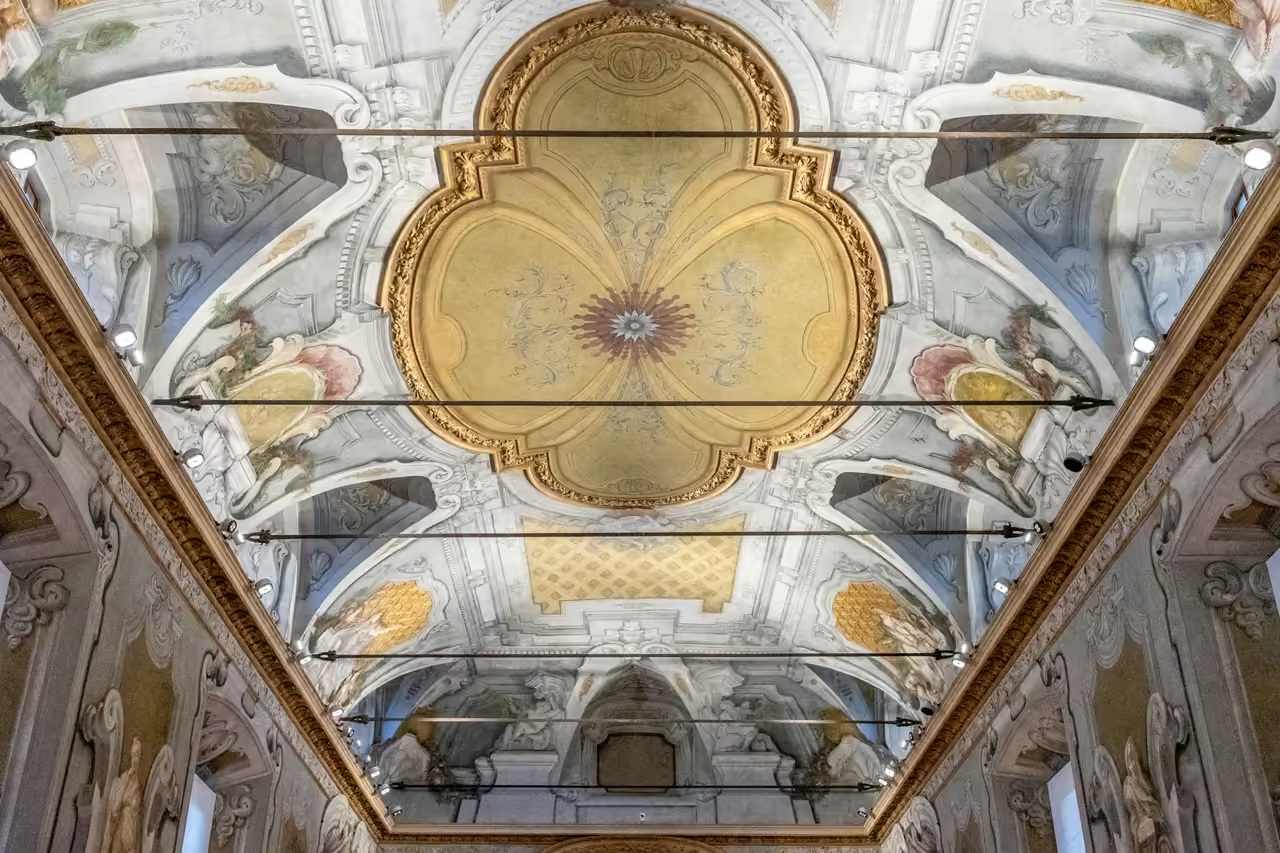
A trail through the city where Leonardo spent some of his most productive years, from the refectory that holds his Last Supper to a bronze horse made from his drawings.
view self-guided tour
See all attractions in Milan
Including Galleria Vittorio Emanuele II, Milan Cathedral, Basilica of Sant'Ambrogio, and more