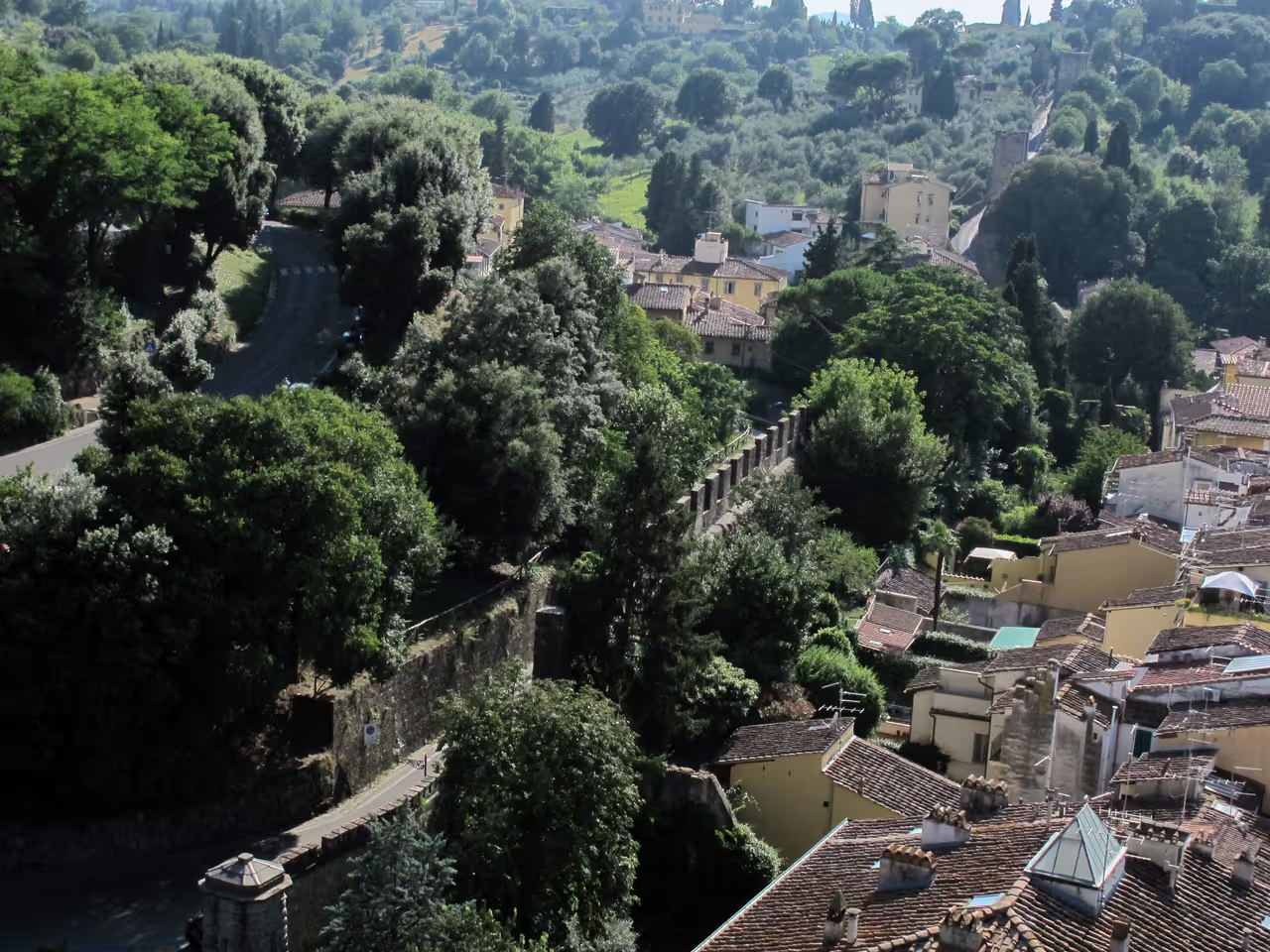
Historic Centre of Florence
Stepping into the historic centre of Florence feels like walking through an open air museum where every cobblestone whispers tales of the Renaissance. This UNESCO World Heritage site is the beating heart of Tuscany, where towering masterpieces like Brunelleschi’s dome stand proudly alongside the charm of hidden artisan workshops. Visitors are treated to an architectural journey, from the medieval allure of the Ponte Vecchio to the majestic grandeur of the Uffizi Gallery. It is a place that seamlessly blends centuries of artistic heritage with a modern, stylish lifestyle where you can enjoy a classic Negroni after exploring world famous galleries. The atmosphere is truly unique, offering a perfect harmony between its storied past and the contemporary pulse of Italian fashion and design. Whether you are gazing at the skyline from Piazzale Michelangelo or getting lost in the narrow winding streets, the centre of Florence invites you to experience beauty at every turn.
Videos
History of Historic Centre of Florence
The story of the historic centre of Florence begins with its Roman roots, but its true identity was forged in the Middle Ages and the Renaissance. As a merchant city, it grew wealthy through trade and banking, transforming from a medieval settlement into a powerhouse of European finance and culture. This wealth allowed the city to commission the greatest architects and artists of the age, turning the city into a canvas where humanism and beauty became the standard for daily life. During the golden age, the city was effectively ruled by the Medici family, whose patronage ignited an artistic explosion. This era saw the construction of the Cathedral, the renovation of grand palaces, and the creation of spaces like the Uffizi. It was a time when Leonardo da Vinci, Michelangelo, and Donatello walked these same streets, turning their surroundings into a legacy that would influence the entire world. This period established a cultural dominance that lasted centuries, creating a sense of pride that defines the Florentine character to this day. In modern times, the historic centre manages a delicate balance between preservation and progress. After its stint as the capital of Italy, the city embraced a transformation that added wide boulevards while respecting its dense core. Today, it stands as a testament to human creativity, where the preservation of the old is met with a passion for high fashion, craftsmanship, and gastronomy. It remains a place where the past is not kept in a box, but lived in every day by locals who take immense pride in their living, breathing masterpiece of a city.
Events spanning 682 years
Fun Facts
- • Artisan workshops are a living part of the centre, keeping centuries old techniques alive in leatherworking, bookbinding, and goldsmithing.
- • Between 1865 and 1871, Florence served as the capital of the newly united Kingdom of Italy, a period that saw the demolition of medieval walls to make way for grand Parisian style boulevards.
- • Florence is widely considered the cradle of the Renaissance, a movement that shifted the course of Western history by reviving classical learning and artistic perspective.
- • The Duomo's dome was built without the use of traditional scaffolding, requiring Brunelleschi to invent new cranes and a herringbone brick pattern that still puzzles engineers today.
- • The Uffizi Gallery began as a collection of offices for the Medici magistrates, only later becoming the public gallery that houses masterpieces by Botticelli, Da Vinci, and Michelangelo.
- • The Vasari Corridor, a secret elevated passageway, was built in just five months in 1565 to allow the Medici family to travel safely between the Palazzo Vecchio and the Pitti Palace.
- • The city centre operates as a massive open air museum, with the density of world class art works per square metre being arguably higher than anywhere else on Earth.
- • The famous bitter cocktail, the Negroni, was invented right here at Caffè Casoni when Count Camillo Negroni requested that a bartender strengthen his Americano by replacing soda water with gin.
- • The iconic Ponte Vecchio, now famous for its sparkling jewellery shops, was once home to butcher shops and tanneries that were ordered to relocate due to the smell.
- • Unlike many European cities that suffered total destruction during wars, the historic centre of Florence has preserved its medieval and Renaissance layout with remarkable integrity.
RESOURCES
Heritage UNESCO SiteHistoric Centre of Florence FAQ
While we strive to keep this information accurate and up to date, we recommend verifying any details independently before making decisions based on them.
Historic Centre of Florence Map & Neighborhood Explorer
This interactive map is centered on Historic Centre of Florence. Zoom in and move the map around to automatically discover Wikipedia photos and summaries of other nearby sights, monuments, and historical points of interest and stories in real-time!
Places near Historic Centre of Florence
Make the most of your trip. Check out these top-rated spots located nearby.
 0m
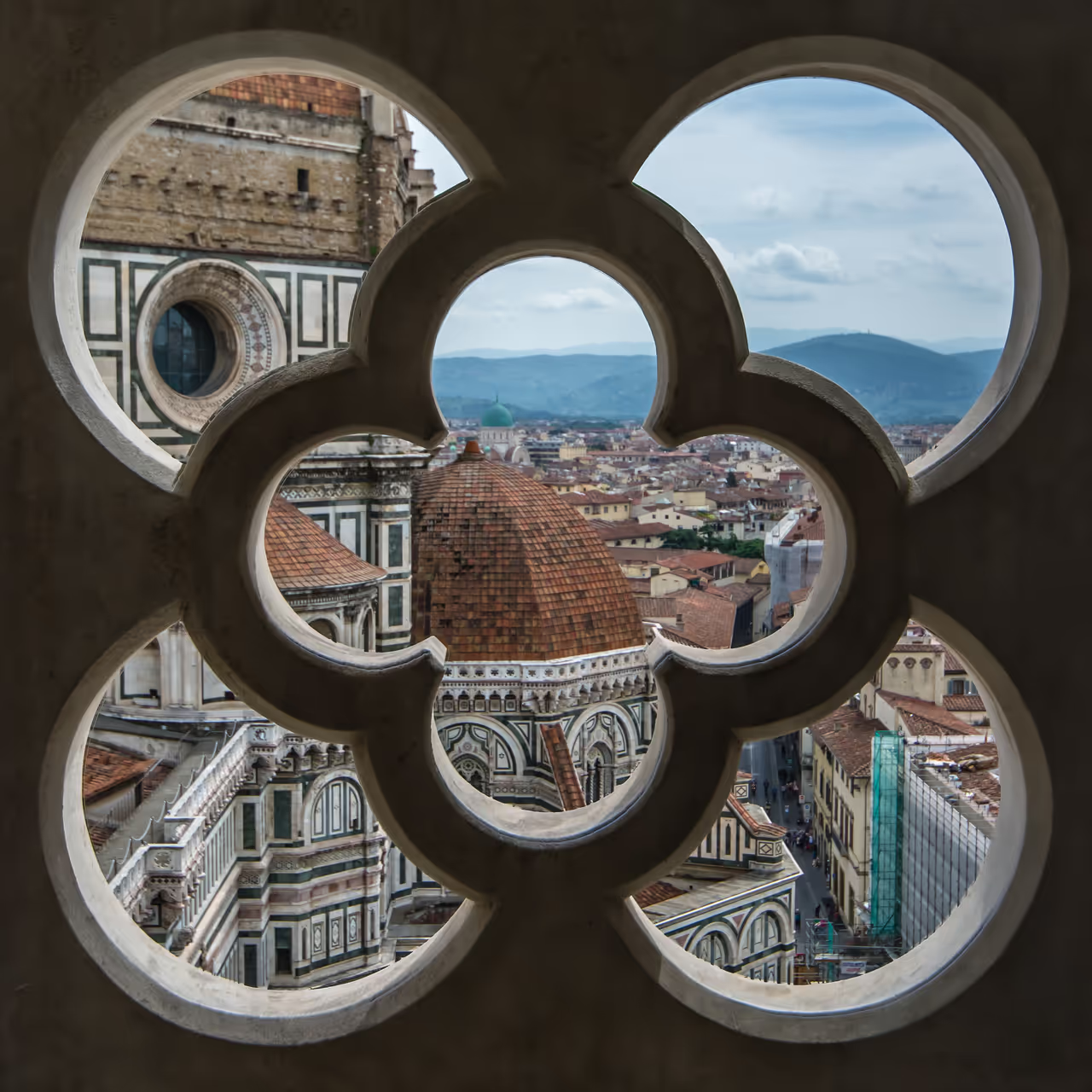
0mFlorence Cathedral
Dominated by Filippo Brunelleschi's colossal red tiled dome, the Florence Cathedral stands as the undisputed heart and soul of the city. Visiting this masterpiece is an essential experience, offering a glimpse into architectural history and a chance to stand beneath the largest masonry dome ever built. Inside, the vast, austere space transports you back to the Renaissance, while the ascent to the top rewards you with breathtaking panoramic views of Tuscany. It is a place where engineering genius meets profound spiritual devotion, forever marking the skyline. Do not miss the chance to witness the intricate polychrome marble facade that defines the very character of Florence.
attraction view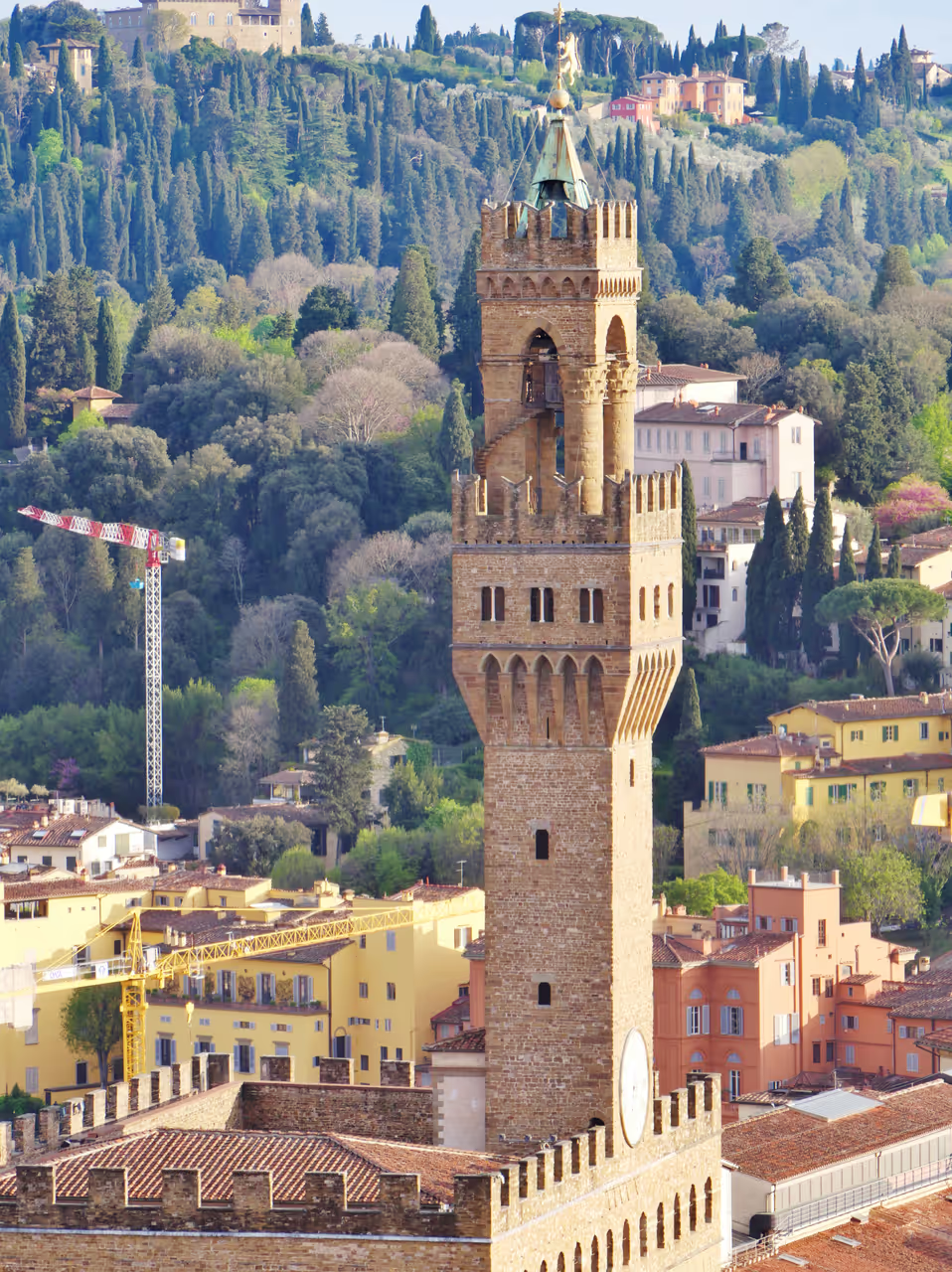 23m
23mGiotto's Bell Tower
Ascending the 414 steps of this beautifully ornate, freestanding tower provides a phenomenally unique vantage point. Unlike climbing the dome, reaching the top of the tower allows you to actually include the massive red dome in your photographs of the skyline. The open air terrace is tightly enclosed with safety grilles but still offers commanding, 360 degree sights. It is a fantastic alternative for securing dramatic, high altitude pictures.
viewpoint view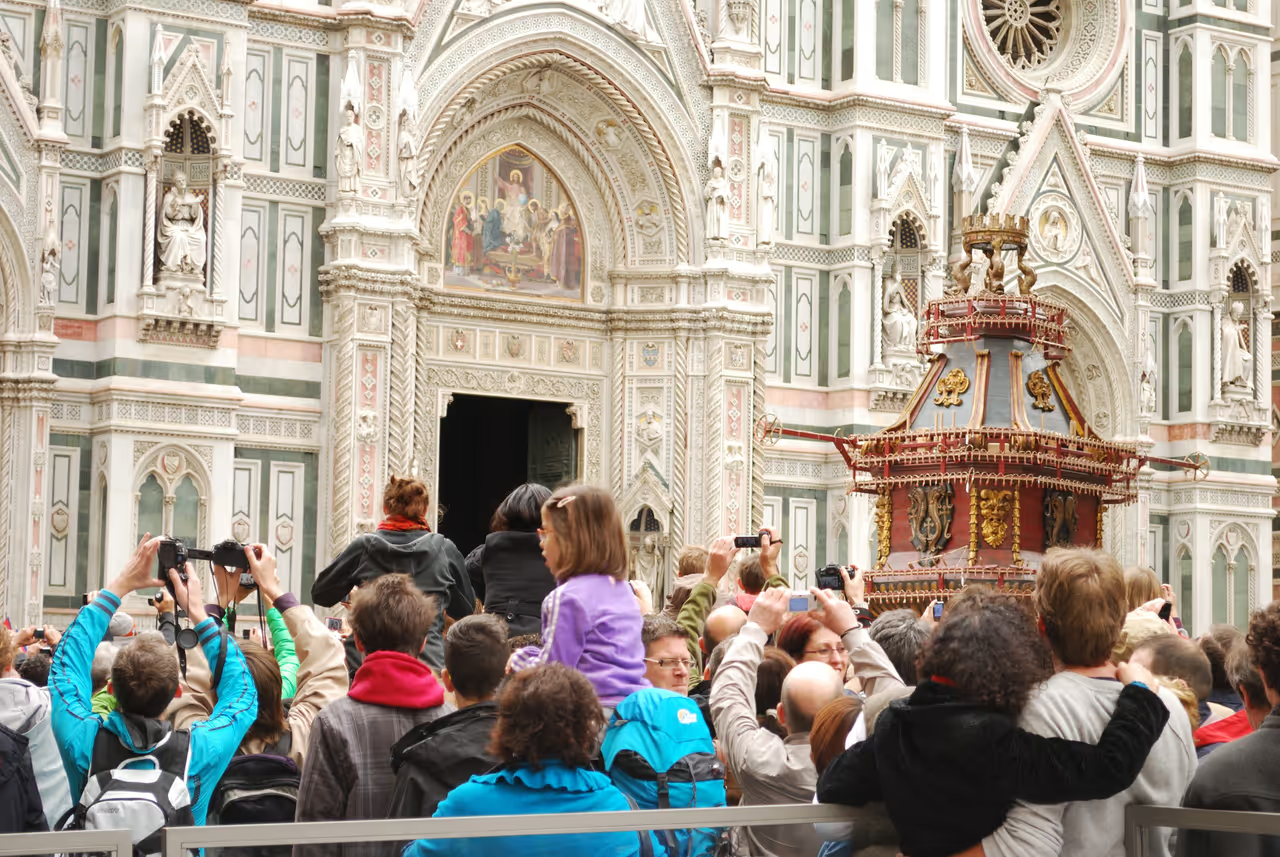 91m
91mExplosion of the Cart
An elaborate antique cart is hauled into the cathedral square by a team of white oxen on Easter morning. During the mass, the archbishop lights a mechanical dove that speeds down a wire to ignite a massive fireworks display rigged to the cart. This explosive tradition dates back to the First Crusade and is believed to guarantee a good harvest for the region. The atmosphere is loud, joyous, and wonderfully theatrical.
festival view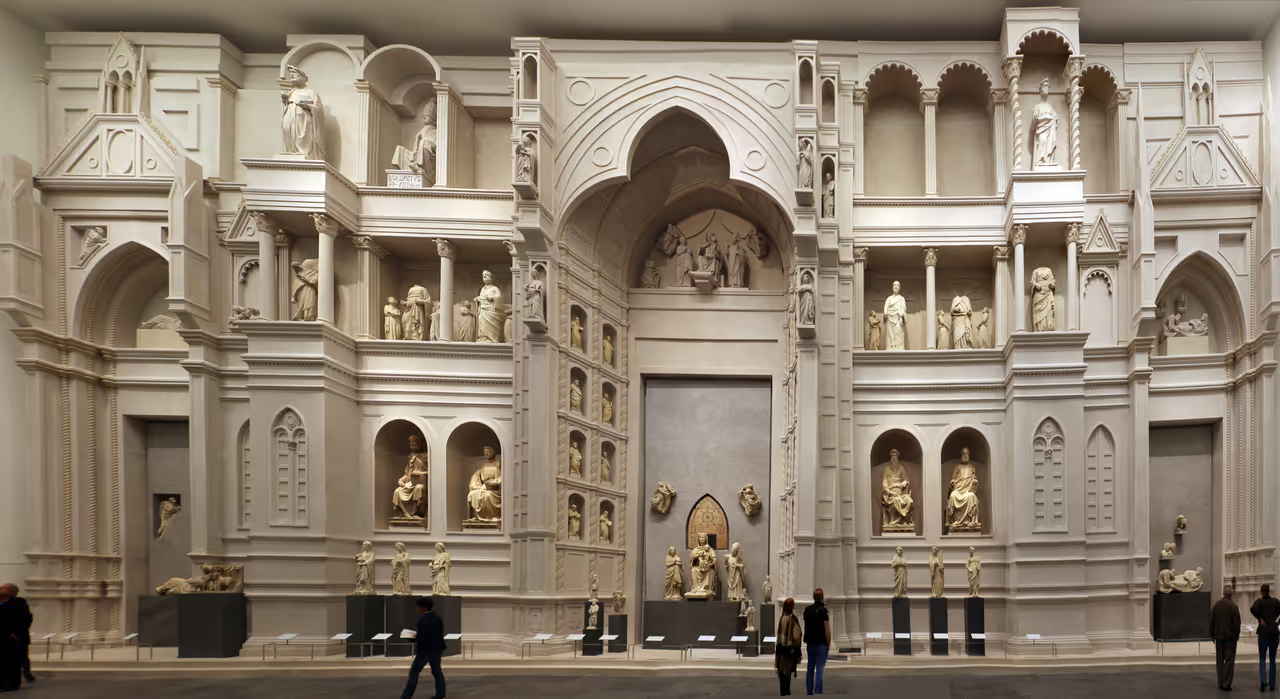 101m
101mCathedral Works Museum
This spectacularly modernised museum holds the original, priceless artworks removed from the cathedral complex to protect them from the elements. The highlight is a life sized, jaw-dropping recreation of the original cathedral facade, populated with genuine medieval statues. It also houses an intensely emotional, deeply personal sculpture of the Pieta carved by Michelangelo intended for his own tomb. The sheer scale and brilliant curation of the exhibits make it a deeply moving experience.
highlight view