Accademia Gallery
The Galleria dell'Accademia in Florence offers a profoundly moving encounter with Renaissance genius, centring on the presence of Michelangelo's towering David. While visitors flock here to stand before the world's most famous marble masterpiece, the museum rewards those who linger with an extraordinary, multi-faceted collection of Florentine painting and sculpture. The atmosphere is one of focused reverence, particularly within the dramatic Tribuna where the David stands beneath a luminous skylight. Beyond the iconic statue, you will discover the unfinished Slaves, which offer a rare, intimate window into Michelangelo's creative struggle. It is an essential stop for anyone wanting to truly understand the artistic height of the Italian Renaissance.
Videos
History of Accademia Gallery
The story of the Galleria dell'Accademia begins not with a grand museum vision, but with a practical academic ambition. In 1784, Grand Duke Pietro Leopoldo reorganised the Florentine artistic institutions, merging the old Academy of the Arts of Design into a new Academy of Fine Arts. The goal was to create a place where students could refine their skills by studying, copying, and analysing both original masterpieces and high quality plaster casts. It was a space for learning rather than sightseeing, filled with the tools of the trade for budding painters and sculptors.
Events spanning 155 years
Fun Facts
- • Michelangelo originally intended the Prisoners to adorn the tomb of Pope Julius II in Rome, but he left them unfinished, creating a haunting effect of figures emerging from the stone.
- • Moving the David in 1873 was a Herculean task that required a custom rail system and took several days to travel a short distance through the narrow city streets.
- • The David was originally placed in the Piazza della Signoria as a political symbol, representing the defiance of the Florentine Republic against powerful enemies.
- • The Tribuna, designed by Emilio De Fabris, was specifically constructed to house the David and uses a dramatic skylight to accentuate the statue's form.
- • The collection includes a fascinating array of historic musical instruments, many of which belonged to the grand dukes of Tuscany.
- • The gallery was initially established as a teaching aid for students, containing plaster casts and drawings to help them copy the old masters rather than as a public museum.
- • The museum has been granted special autonomy by the Italian Ministry of Culture, allowing it to manage its own operations and research initiatives effectively.
- • The museum holds one of the world's most significant collections of gold ground paintings, dating back to the 13th and 14th centuries, showcasing the evolution of Italian art.
- • The museum showcases a clear chronological progression of Florentine art, allowing visitors to see the shift from medieval techniques to the high Renaissance style.
- • While the David is the undisputed star, the museum houses more original Michelangelo sculptures than any other institution on the planet.
RESOURCES
Official WebsiteAccademia Gallery FAQ
While we strive to keep this information accurate and up to date, we recommend verifying any details independently before making decisions based on them.
Accademia Gallery Map & Neighborhood Explorer
This interactive map is centered on Accademia Gallery. Zoom in and move the map around to automatically discover Wikipedia photos and summaries of other nearby sights, monuments, and historical points of interest and stories in real-time!
Places near Accademia Gallery
Make the most of your trip. Check out these top-rated spots located nearby.
 194m
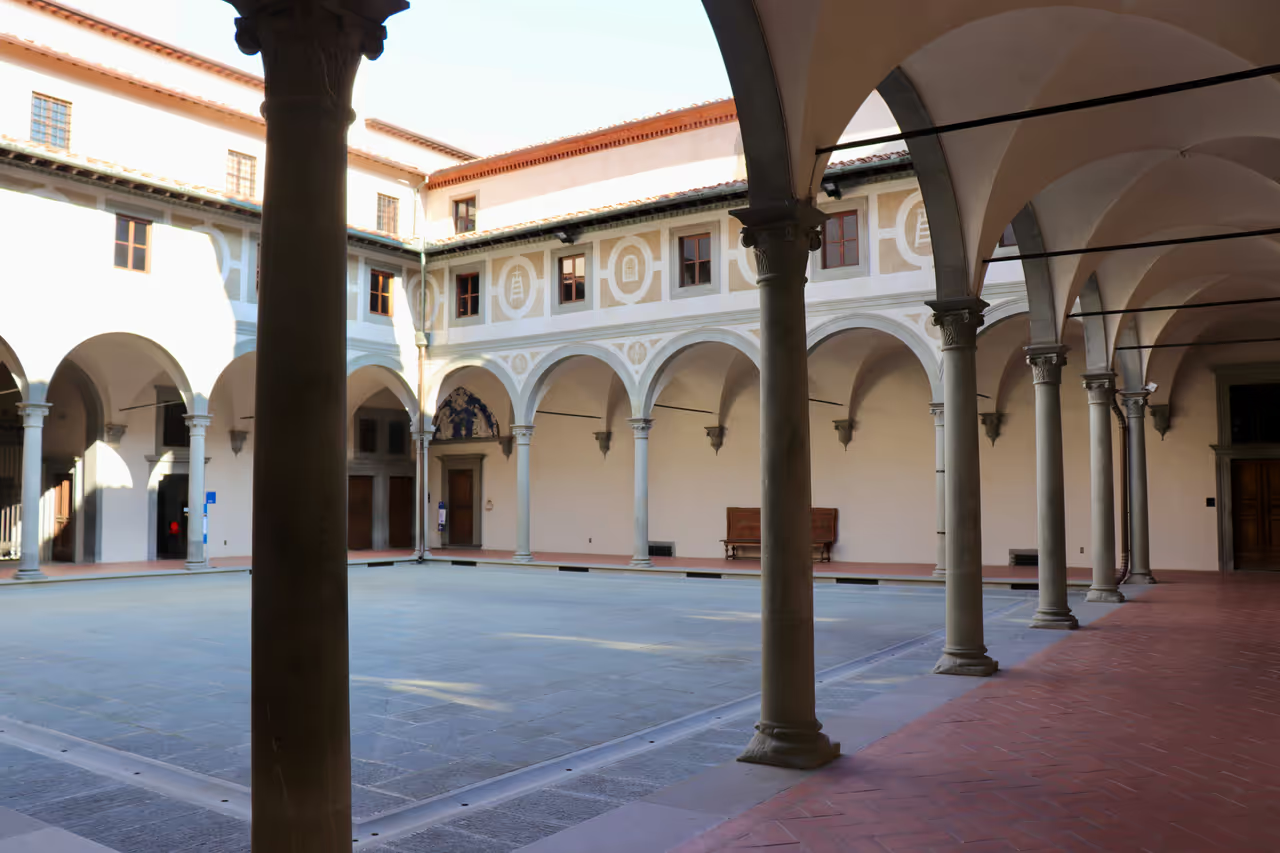
194mHospital of the Innocents
Originally functioning as an orphanage, this elegant building is heavily celebrated as the very first purely Renaissance structure. Designed by Brunelleschi, its defining feature is a brilliantly proportioned loggia with delicate arches resting on slender columns. The facade is famously decorated with iconic, bright blue terracotta medallions depicting swaddled infants. It introduced a completely new, rational sense of order and civic beauty to European architecture.
architecture view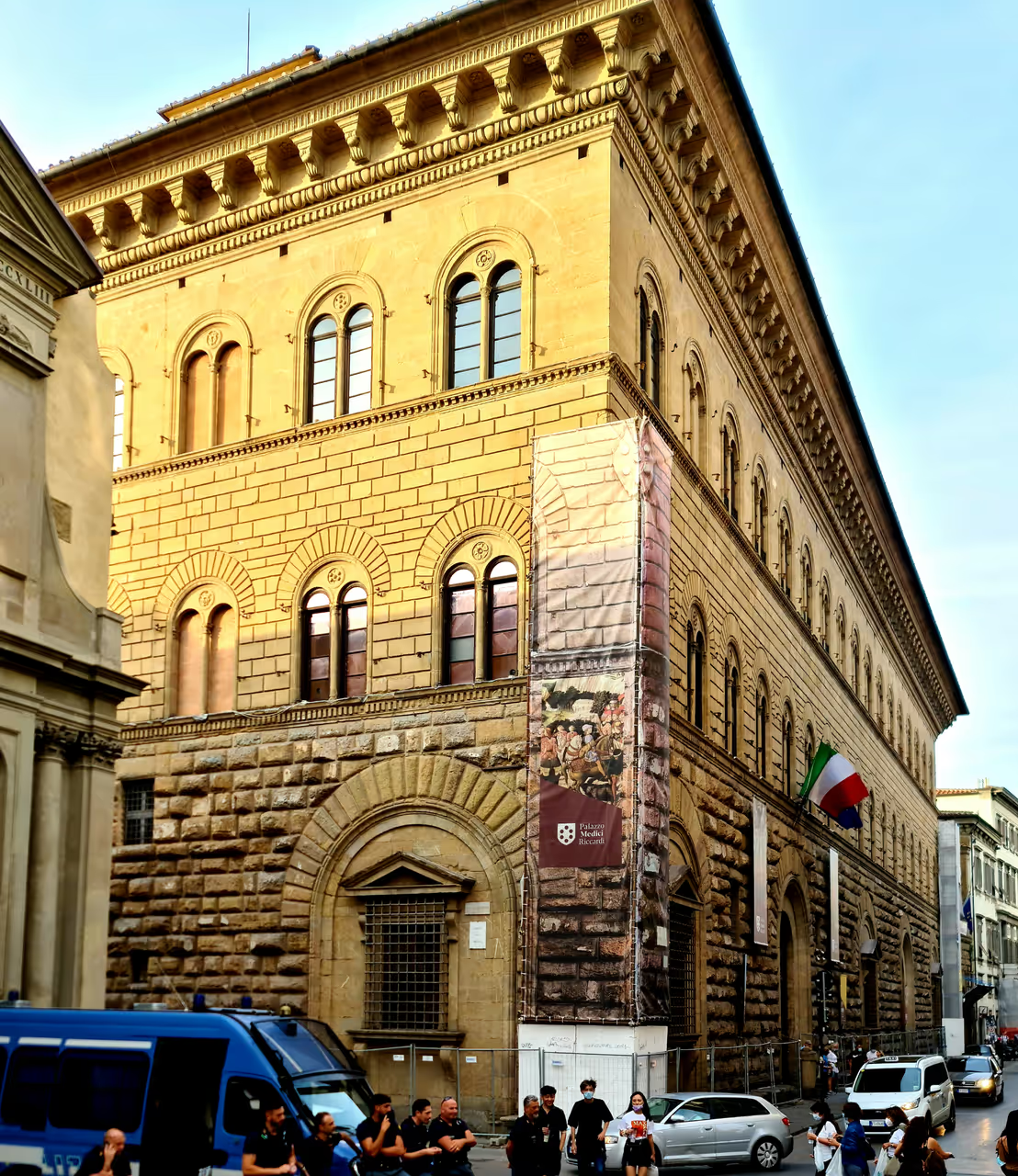 287m
287mMedici Riccardi Palace
This formidable building served as the primary residence and banking headquarters for the legendary Medici family during their initial rise to absolute power. The rough, heavy stone blocks on the ground level slowly transition to smoother masonry on the upper floors, creating an illusion of lightness. Inside, a gorgeously decorated chapel features vivid, heavily detailed frescoes depicting the journey of the Magi. It set the architectural standard for elite urban dwellings for centuries to come.
architecture view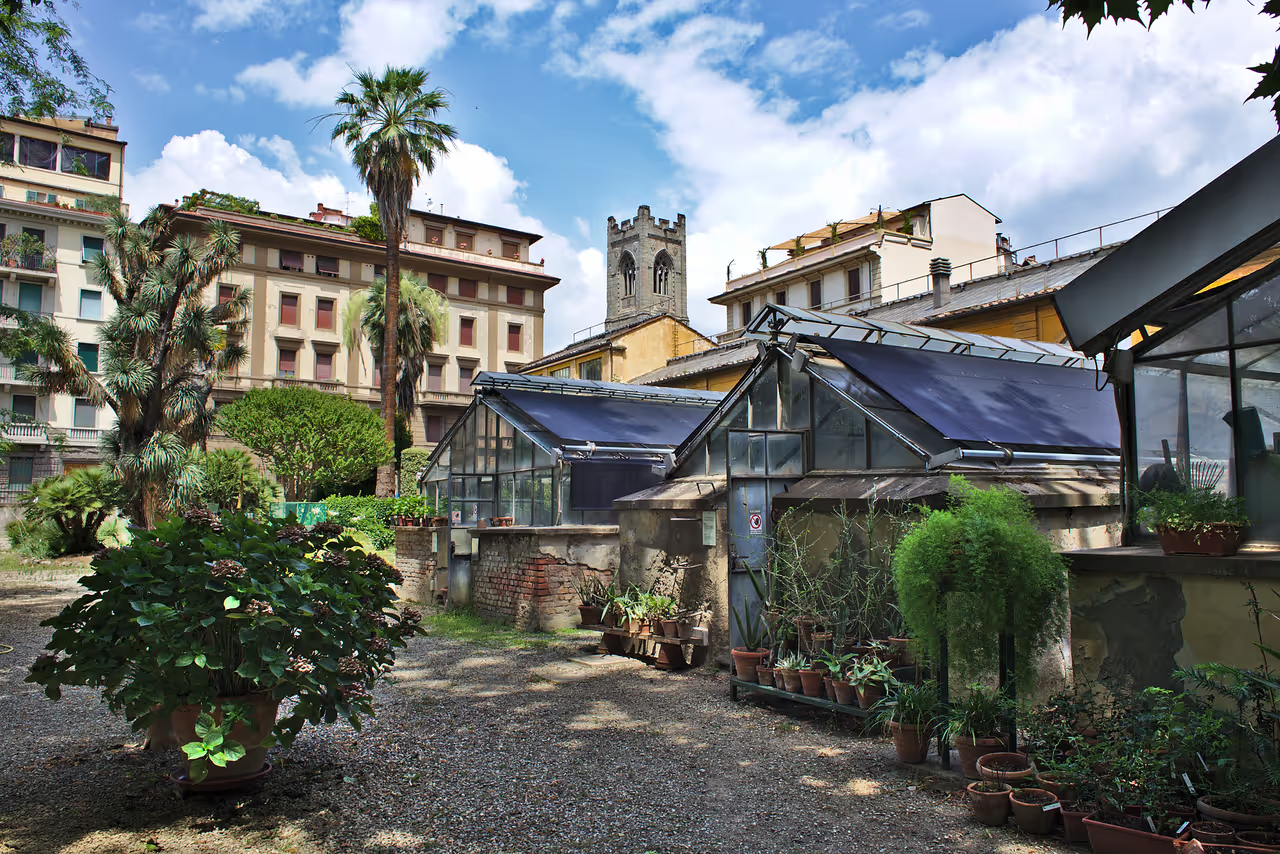 367m
367mBotanical Garden of Florence
Step into a living archive of scientific history at the Giardino dei Semplici, the second oldest botanical garden in the world. Tucked away in the heart of Florence, this tranquil oasis has been nurturing rare flora since 1545, when Cosimo I de Medici commissioned it to support medical research. Today, it offers a peaceful escape where visitors can wander among historic greenhouses, centuries old trees, and lush exotic collections. It is a place where the air feels cleaner and the pace slows down, inviting you to connect with nature in a setting shaped by some of history greatest botanists. Whether you are a plant enthusiast or simply seeking a quiet moment away from the city crowds, this garden promises a refreshing experience that feels miles away from the urban rhythm.
park & nature view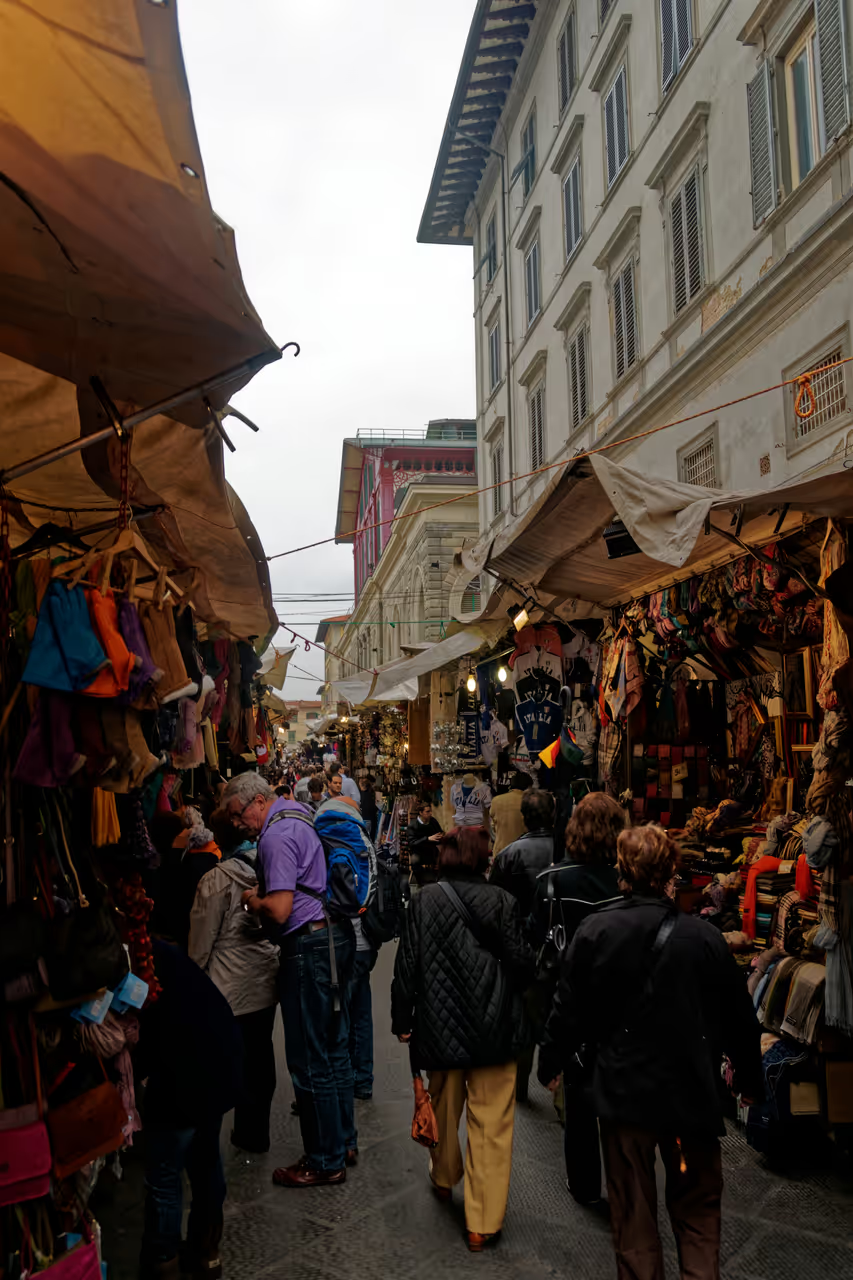 381m
381mSan Lorenzo Market Streets
The streets surrounding the central basilica are completely overtaken by hundreds of outdoor vendor stalls selling endless varieties of leather jackets, bags, and belts. The atmosphere is loud, colourful, and highly energetic as vendors enthusiastically try to lure you into their tents. It provides a classic, chaotic Italian market experience where haggling is absolutely expected. Even if you do not plan to buy, navigating the maze of goods is a highly entertaining adventure.
highlight view
Explore Similar Places in This Collection

Featured on These Itineraries and Routes
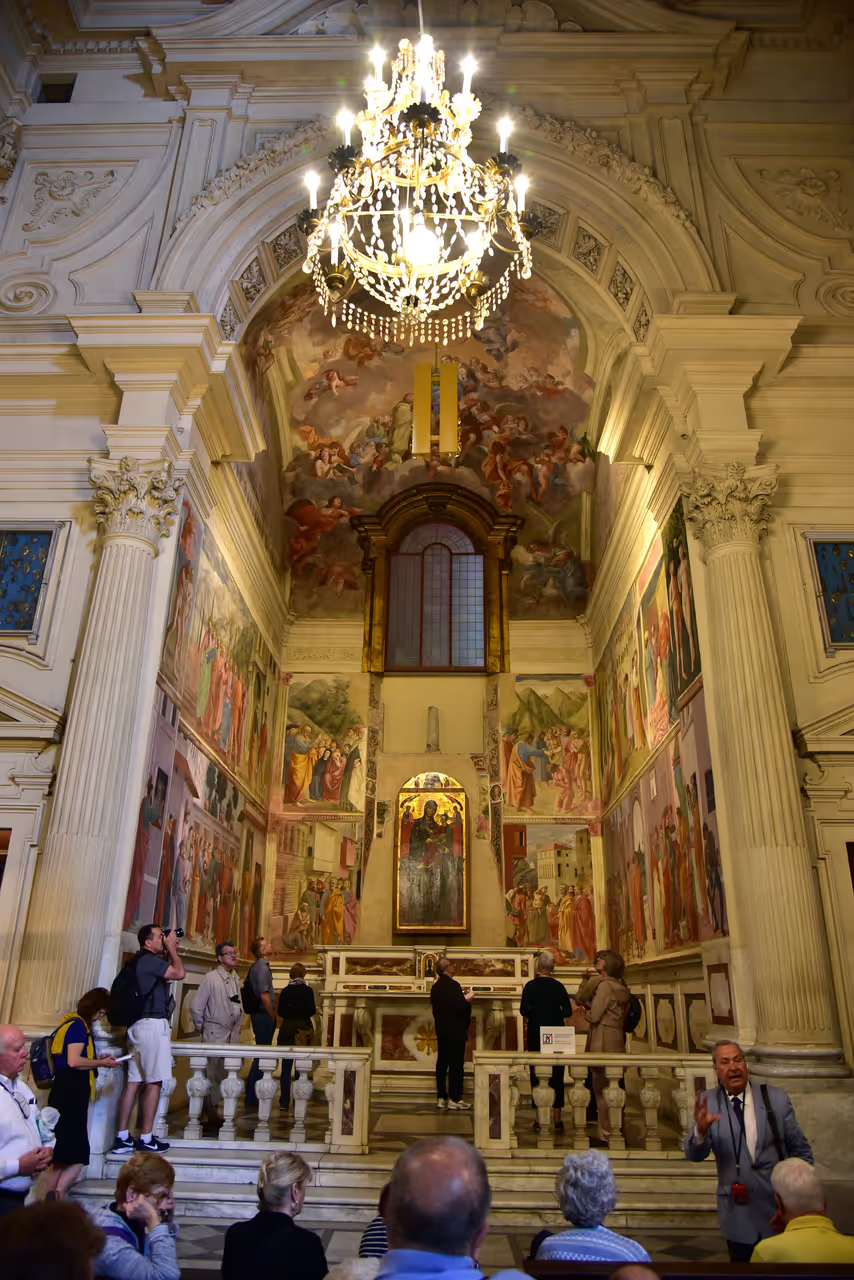
3 Days in Florence: Renaissance Deep Dive Itinerary
Three days allow you to spread out the heavy cultural intake, exploring different historical neighbourhoods and digging deeper into the artistic legacies. You will spend dedicated time admiring the greatest sculptures, wandering through vast royal gardens, and exploring the gritty political history of the medieval squares. This pace permits you to comfortably cross the river and experience the artisan workshops without constantly rushing. It perfectly balances monumental tourism with authentic local exploration.
view itinerary
5 Days in Florence: The Ultimate Experience Itinerary
With five days, you can truly absorb the rhythm of the city, moving beyond the central museums to discover eccentric hidden gems and quiet hilltop retreats. You will have time to climb the famous towers, explore bizarre scientific collections, and venture out to the ancient Etruscan ruins in the mountains. This extended stay allows you to appreciate the subtle, romantic atmosphere of the city that is often missed by rushed tourists. It is a highly comprehensive, incredibly satisfying cultural immersion.
view itinerary
Renaissance Masterpieces
This spectacular route focuses entirely on the most groundbreaking and famous works of art produced during the city's golden age. It connects the major galleries and monumental churches housing the sculptures and frescoes that redefined human expression. You will trace the evolution of perspective, realism, and classical beauty through the hands of absolute masters. It is an intense, visually overwhelming journey through the pinnacle of European art history.
view self-guided tour
See all attractions in Florence
Baptistery of San Giovanni, Bargello National Museum, Florence Cathedral, Palazzo Pitti, Palazzo Vecchio, Ponte Vecchio, Uffizi Gallery...