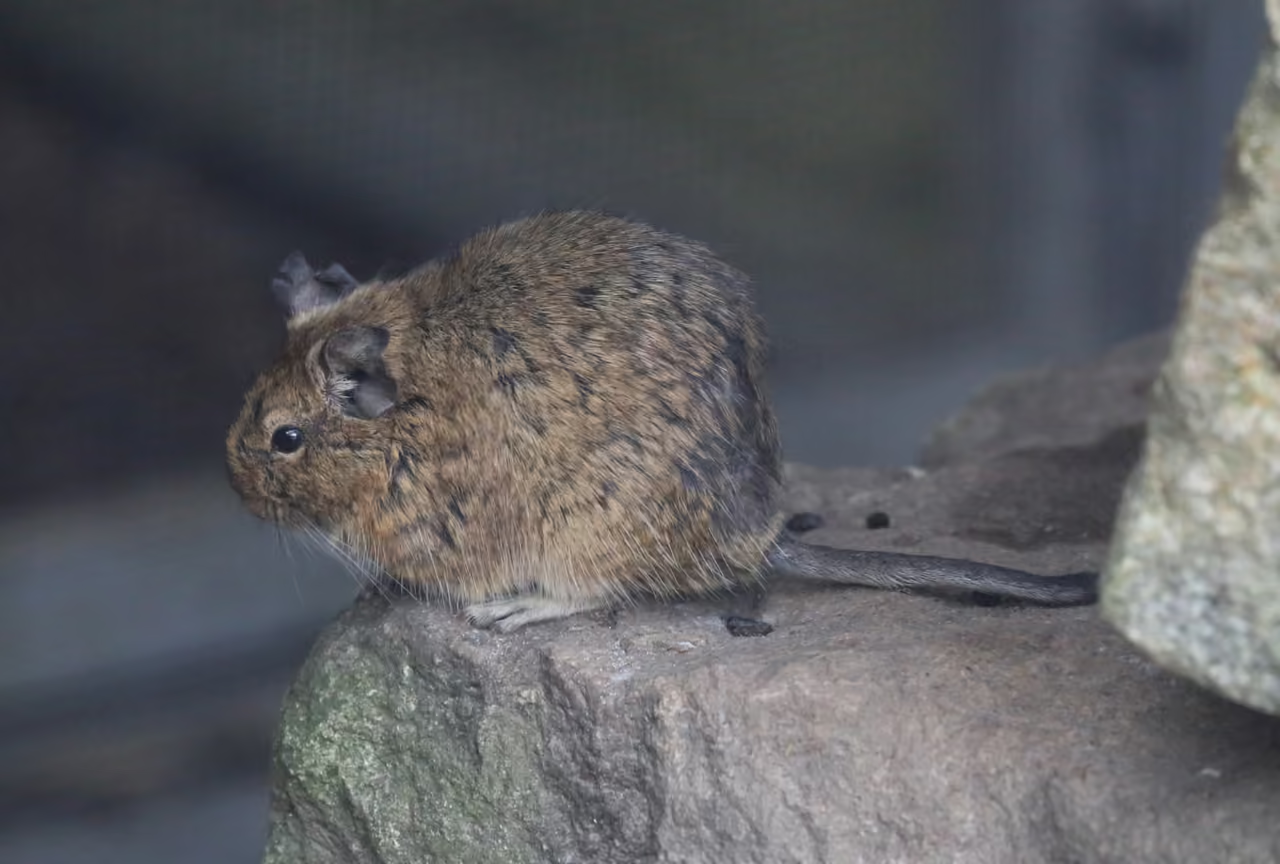
Augsburg Zoo
Step into the wild heart of Augsburg at its fantastic zoo, a sprawling 22-hectare green oasis nestled alongside the Siebentischwald. It's not just a collection of animals; it's a vibrant hub for global conservation, actively nurturing endangered species through European breeding programmes. Wander through diverse habitats, from the sprawling Africa Panorama where giraffes and rhinos roam, to the immersive Lechhaus showcasing local aquatic life like beavers and otters. This zoo beautifully balances entertainment with education, offering engaging encounters and insights into the animal kingdom, making it a compelling visit for animal lovers of all ages looking for adventure. You'll find a delightful blend of playful moments, such as the captivating seal feedings, and profound connections with wildlife, all set within a beautifully maintained, family-friendly environment.
Videos
History of Augsburg Zoo
Augsburg's relationship with wild animals stretches back to the early medieval period, long before the concept of a modern zoo existed. The city recorded a remarkable event in 802 AD when it hosted Abul Abbas, an Indian elephant sent by the Caliph Harun al-Rashid as a gift to Emperor Charlemagne. This majestic creature, which even saw service as a war elephant against the Danish King Göttrik, died from pneumonia while crossing the Rhine, leaving behind a legendary tale. Centuries later, in 1410, a more local form of animal display emerged with the establishment of the 'Hirschgraben,' where deer were kept for public viewing in the city moat, a feature that persisted for centuries until French soldiers harvested them during the First Coalition War in 1796. The early 20th century saw another attempt at creating an animal park in Augsburg's Stadtgarten in 1902. However, concerns from animal welfare societies regarding the conditions led to its closure just over a decade later in 1914, demonstrating an early awareness of animal care standards. The origins of the present-day Augsburg Zoo are rooted in the politically charged climate of 1937, when it opened as the 'Park der deutschen Tierwelt.' This initial phase focused exclusively on native German fauna, aligning with the nationalistic ideology of the time. The war years brought devastation, with Allied bombings severely damaging the park. Yet, from these ashes, a new vision emerged. The zoo reopened in 1947, and crucially, public demand spurred a significant shift towards acquiring exotic animals, transforming it into a diverse zoological garden. Over the decades, the Augsburg Zoo has expanded and modernised considerably. It has become a key player in international conservation, actively participating in European Endangered Species Programmes to protect threatened wildlife. However, its journey hasn't been without controversy; a proposed 'African Village' exhibit in 2005 drew criticism for evoking uncomfortable historical parallels to 'Völkerschauen' or ethnic shows. More recently, the transfer of two baboons to a primate research centre in 2023 ignited a public outcry, highlighting the evolving ethical considerations surrounding zoos. Despite these challenges, the zoo continues to grow. Significant investments like the grand new elephant house, opened in 2020, and the upcoming Himalayan complex demonstrate a strong commitment to animal welfare and visitor experience. These modern facilities not only provide improved habitats but also serve as educational platforms, reinforcing the zoo's role as a vital institution for conservation and public engagement in Augsburg.
14 events spanning 1223 years
Fun Facts
13- 01
A unique feature within the zoo's seal exhibit is a covered visitor platform housed in a former sluice keeper's cottage, originally built in 1922 and translocated from the Goggelesbrücke over the Wertach river.
- 02
After suffering extensive damage during Allied bombing raids in World War II, the zoo was rebuilt and, in a significant departure from its original mandate, began acquiring exotic animals in response to public demand, fundamentally transforming its mission.
- 03
Augsburg's earliest documented interaction with an exotic animal was in 802 AD when it briefly hosted Abul Abbas, an Indian elephant presented by Caliph Harun al-Rashid to Emperor Charlemagne, which later famously served as a war elephant against Danish King Göttrik before succumbing to pneumonia.
- 04
In 1796, the long-standing tradition of the Hirschgraben came to an abrupt end when French soldiers, reaching Augsburg during the First Coalition War, summarily shot and consumed all the deer residing there, highlighting a drastic shift in the city's fortunes.
- 05
In 2005, the zoo proposed an 'African Village' exhibit, designed for visitors to interact with African culture through activities like drumming and hair braiding, but the plan was heavily criticised by historians who saw unsettling parallels to historical 'Völkerschauen' (ethnic shows).
- 06
The 'Hirschgraben' was not merely a simple deer enclosure; it was a public attraction in the city moat from 1410 for centuries, where wild deer were protected by exceptionally high penalties for poaching, indicating a unique historical appreciation for urban wildlife viewing.
- 07
The 'Lechhaus,' a 2016 addition to the zoo, specifically focuses on local wildlife, showcasing European beavers, Eurasian otters, and indigenous fish species in three aquaria, connecting visitors with the region's natural heritage.
- 08
The Augsburg Zoo was a filming location for the popular German comedy movie 'Fack ju Göhte 3' in 2017, temporarily bringing a touch of cinematic glamour to its animal residents.
- 09
The current Augsburg Zoo was originally founded in 1937 as the 'Park der deutschen Tierwelt,' exclusively featuring native German animals, a concept explicitly aligned with the nationalistic ideology of the Nazi regime.
- 10
The new elephant house, opened in 2020, despite being the most expensive construction project in the zoo's history, was completed with a budget significantly lower than comparable elephant facilities in many other European zoos, demonstrating innovative financial planning amidst ambitious goals.
- 11
The precursor to the modern zoo, a small animal garden established in Augsburg's Stadtgarten in 1902, was ultimately dissolved in 1914 following persistent complaints from the local animal protection society regarding substandard animal welfare.
- 12
The zoo faced widespread condemnation in November 2023, including from the City of Augsburg itself, for transferring two male baboons to the German Primate Centre, an institution known for conducting animal experiments on primates.
- 13
The zoo is a key participant in 18 European Endangered Species Programmes (EEP), and has achieved notable breeding successes with species such as Grévy's zebras, Rothschild's giraffes, and onagers, directly contributing to global conservation efforts.
FULL PLACE DETAILS
WEB & AMENITIES
Augsburg Zoo Map & Neighborhood Explorer
This interactive map is centered on Augsburg Zoo. Zoom in and move the map around to automatically discover Wikipedia photos and summaries of other nearby sights, monuments, and historical points of interest and stories in real-time!
Augsburg Zoo FAQ
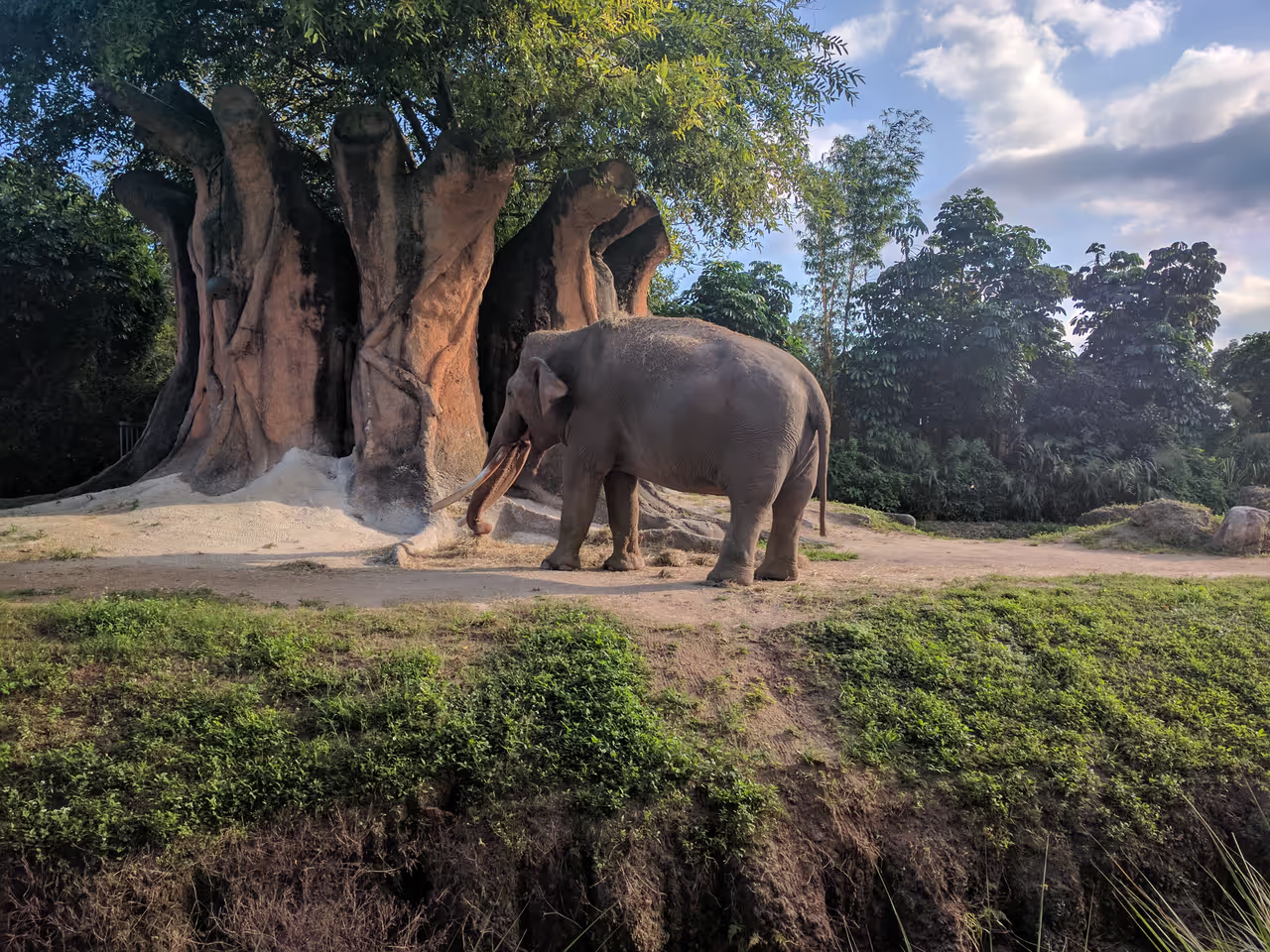
Augsburg Zoo is home to over 1,200 animals across 240 species from around the world. You can encounter impressive large cats like Sumatran tigers and Sri Lankan leopards, majestic Asian elephants, graceful Rothschild giraffes, and a variety of primates, birds, and reptiles. Unique exhibits like the Lechhaus also showcase local European wildlife, including beavers and otters.
Absolutely! The zoo is deeply committed to animal conservation, actively supporting 18 European Endangered Species Programmes (EEP) for critically endangered birds and mammals. They also run a dedicated Naturschutzfonds (Nature Conservation Fund), established in 2009, which finances various projects for specific animal species, both those housed in the zoo and those with a local connection to Augsburg.
Beyond its diverse animal collection, Augsburg Zoo offers several unique attractions. You can enjoy daily seal feedings, explore the walk-through Katta-Land with lemurs, or visit the new, state-of-the-art elephant house. The zoo also features a large adventure playground, a mini-railway, and hosts special events like evening tours and the 'Dschungelnacht' (Jungle Night) during summer.
Yes, the zoo frequently offers special events and experiences! These include monthly evening tours between April and September (excluding July), the annual 'Dschungelnacht' (Jungle Night) in late July, and daily robben (seal) feeding shows. They also provide educational programmes through their 'Zooschule' for various age groups and guided tours to enhance your visit.
Augsburg Zoo is conveniently located on the northern edge of the Siebentischwald, a popular recreational area, and directly borders the Siebentischanlagen landscape park and the Botanical Garden. The zoo spans a considerable area of 22 hectares (approximately 54 acres), providing ample space for its diverse animal inhabitants and offering visitors a spacious and natural environment to explore.
The closest place to visit near Augsburg Zoo is Augsburg Botanical Garden, around 280 m away. Other things to do near Augsburg Zoo include Augsburg Railway Park (1.5 km), Siebentisch Forest (1.5 km) and Olympic Whitewater Course (1.6 km). All of these are within roughly 1.6 km of Augsburg Zoo.
While we strive to keep this information accurate and up to date, we recommend verifying any details independently before making decisions based on them.
Places near Augsburg Zoo
Make the most of your trip. Check out these top-rated spots located nearby.
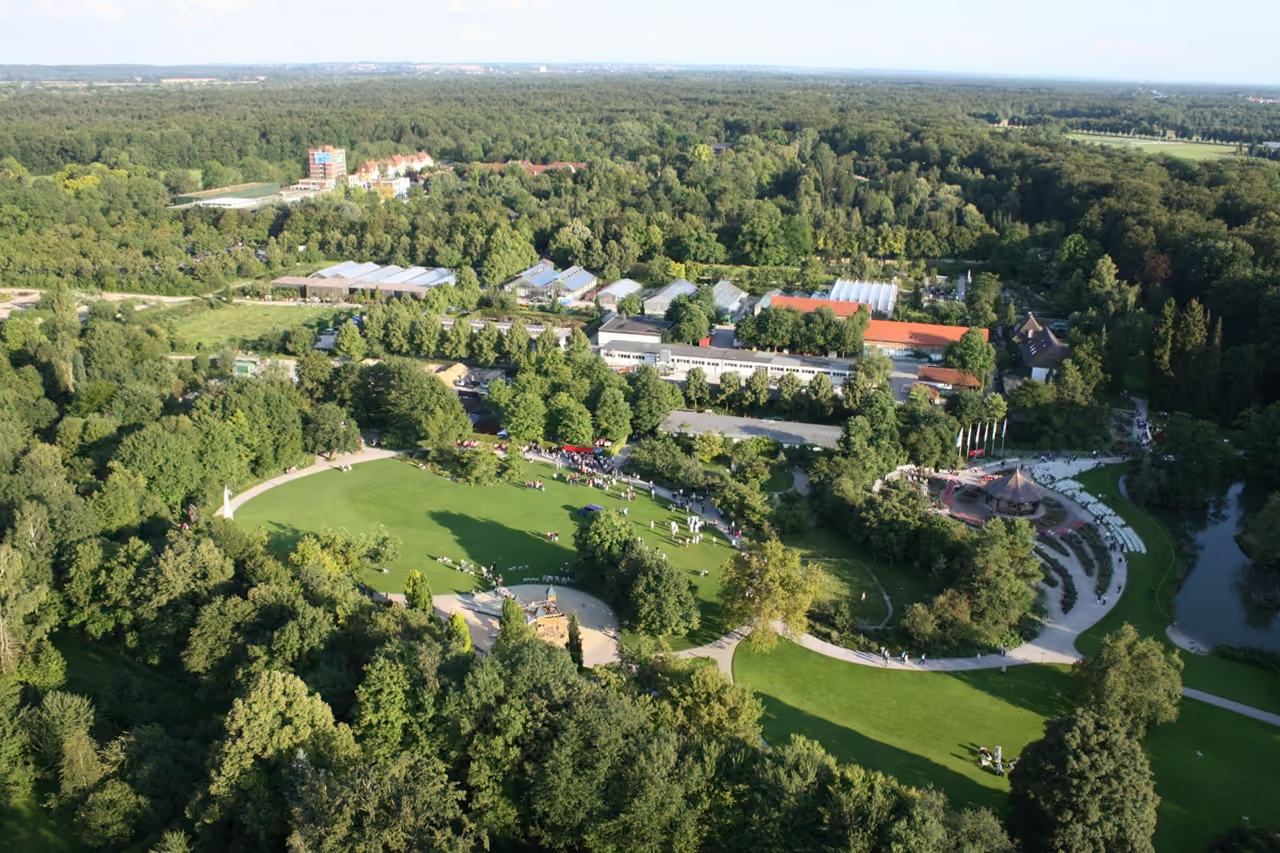 280m
Augsburg Botanical Garden
More than a million bulbs push up through the beds here each spring, and the tulips are only the opening act. Across about ten hectares beside the Siebentischwald, a Kyoto inspired pond garden sits on 400 tonnes of Fichtelgebirge granite, while the glasshouse grows cocoa, vanilla and cinnamon in tropical humidity. Roses fill the beds around a small music pavilion, and a tiny apothecary garden labels what each herb has traditionally been used for. Between late February and early April tropical butterflies flutter loose in the old Victoria regia house, and in the weeks before Christmas an oriental landscape nativity takes over its lily pool. Only the Dr. Ziegenspeck path separates the garden from Augsburg Zoo next door.
park & nature view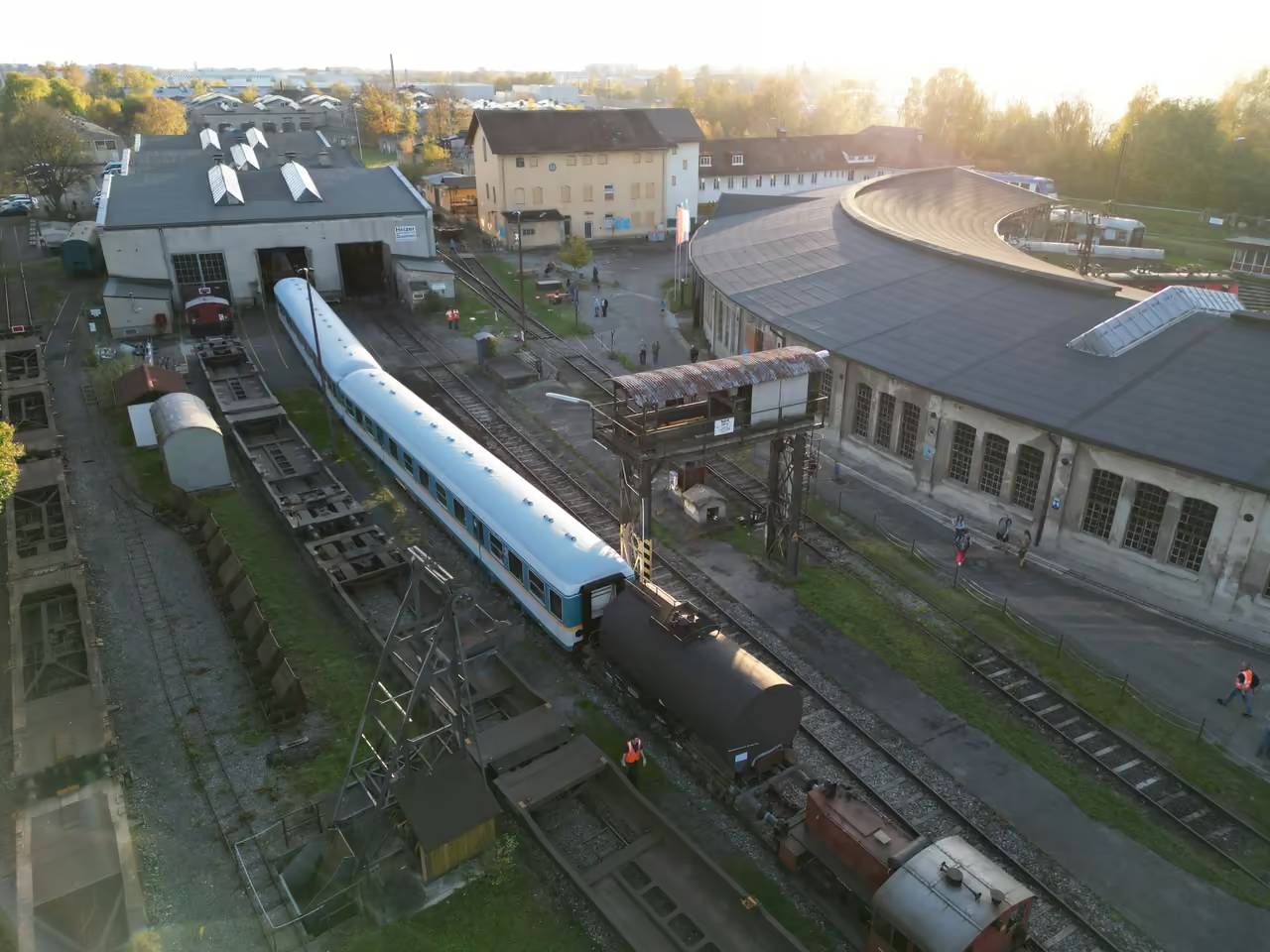 1515m
Augsburg Railway Park
A massive, grease-stained locomotive depot saved from demolition and slowly transformed into a raw, heavily industrial museum. Dozens of massive historic trains, including sleek Trans Europ Express carriages and brutal steam engines, sit silently in the roundhouse. It smells intensely of old oil, cold steel, and damp brickwork. Enthusiasts fiercely maintain the operational engines in the active blacksmith workshops. It lacks the polish of a state-funded museum, making the heavy machinery feel highly real and dangerous.
hidden gem view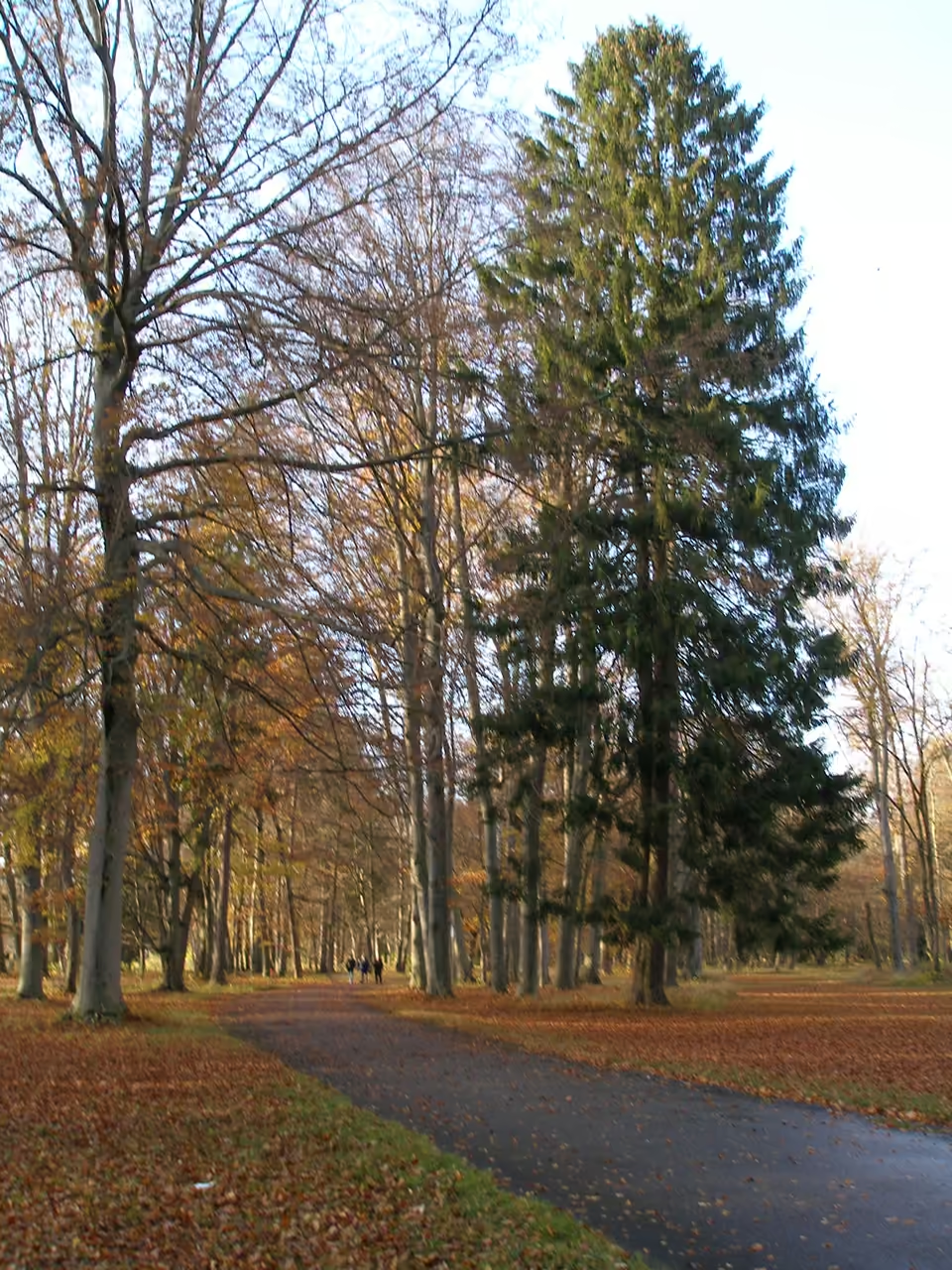 1519m
Siebentisch Forest
Escape into the lush expanse of Siebentisch Forest, Augsburg's expansive green lung, where nature and history intertwine. This sprawling woodland, covering 660 hectares, is not just a beloved recreational haven for locals and visitors alike, but also a crucial source of the city's pristine drinking water. Wander along its winding paths, discover the tranquil Stempflesee, or simply soak in the serene atmosphere that has captivated generations. The forest holds an intriguing past, from the origin of its unique name, linked to a historic guesthouse, to its role in shaping Augsburg's environmental consciousness. It's a place where you can truly connect with the natural world right on the city's doorstep.
park & nature view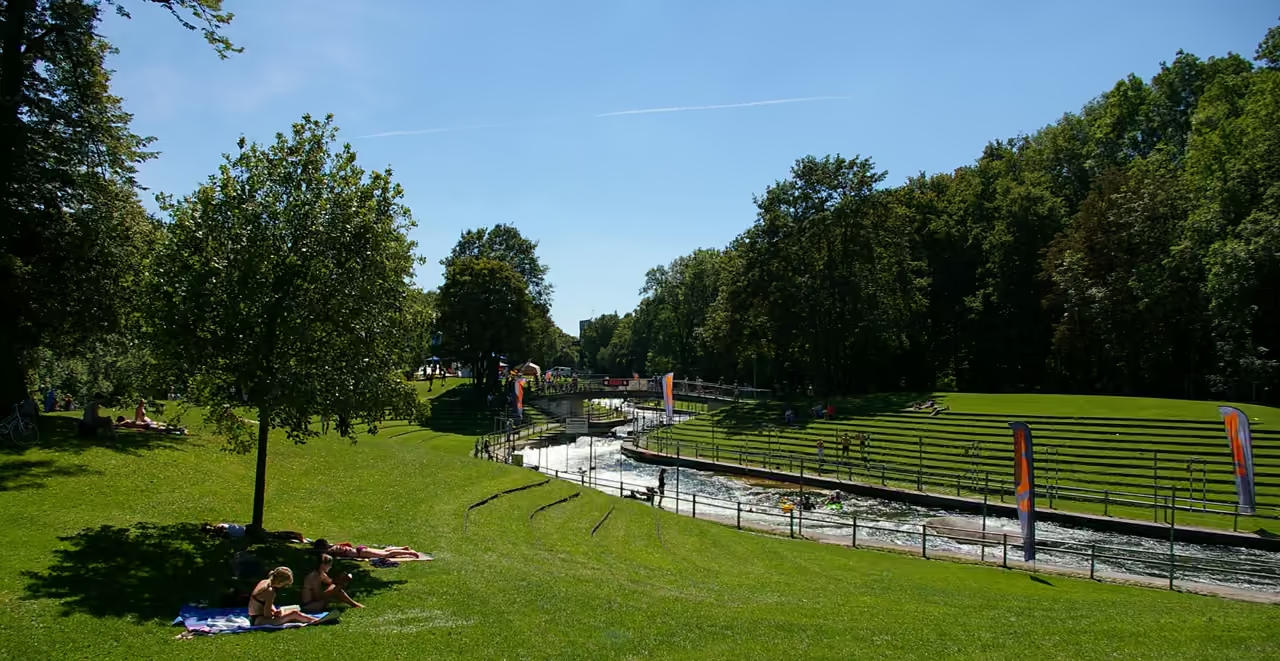 1570m
Olympic Whitewater Course
A violent, artificial river carved out of concrete specifically for the 1972 Munich Olympic Games. It holds the title of the absolute first highly controlled artificial whitewater slalom course in the world. Even when no competitions are running, the sheer volume and speed of the turquoise water are deeply hypnotic to watch. Local professionals and aggressive amateurs frequently battle the fierce drops and eddies here. You can walk the steep grassy banks and stand literally inches away from the rushing current.
highlight view
Explore Similar Places in This Collection
See all nature & parks in Augsburg
Including Augsburg Botanical Garden, River Lech, Wittelsbacher Park, and more