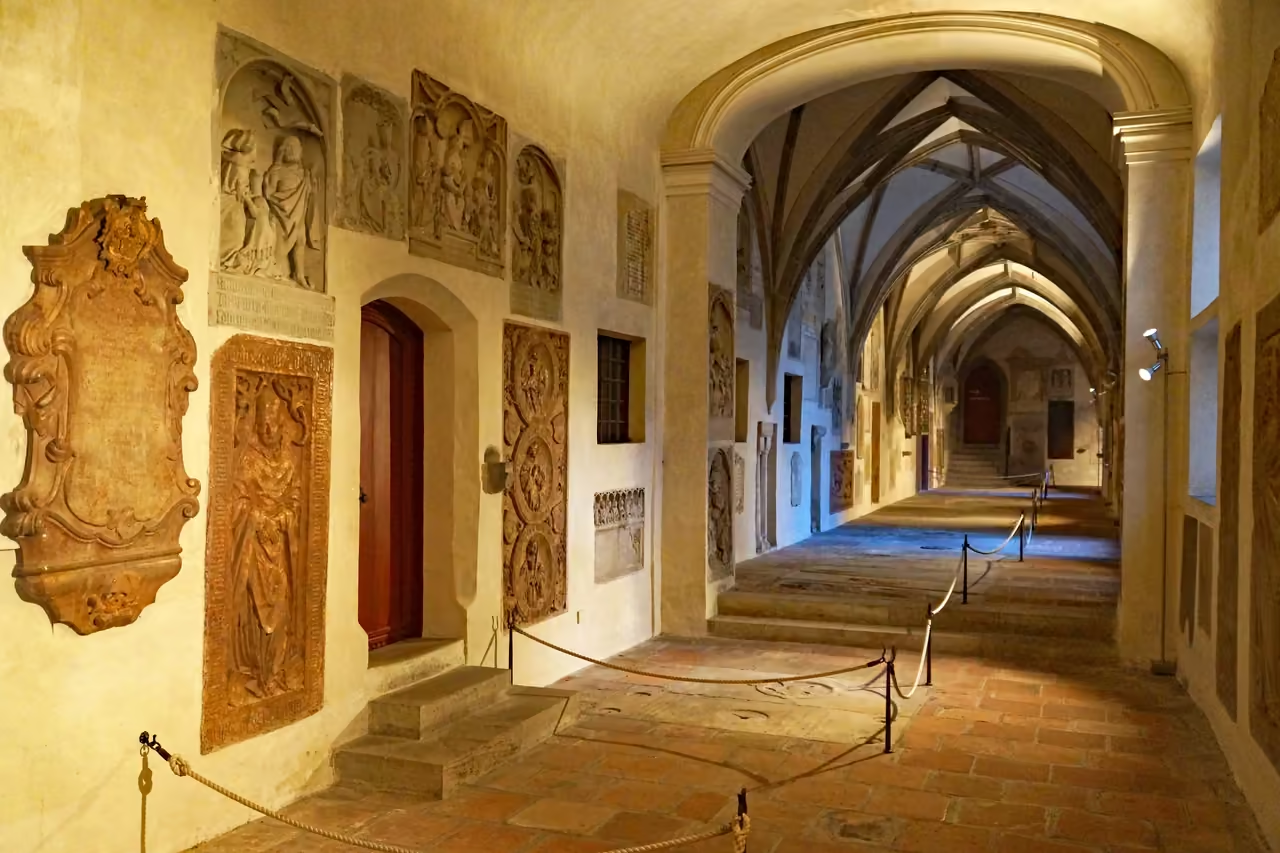
Augsburg Cathedral
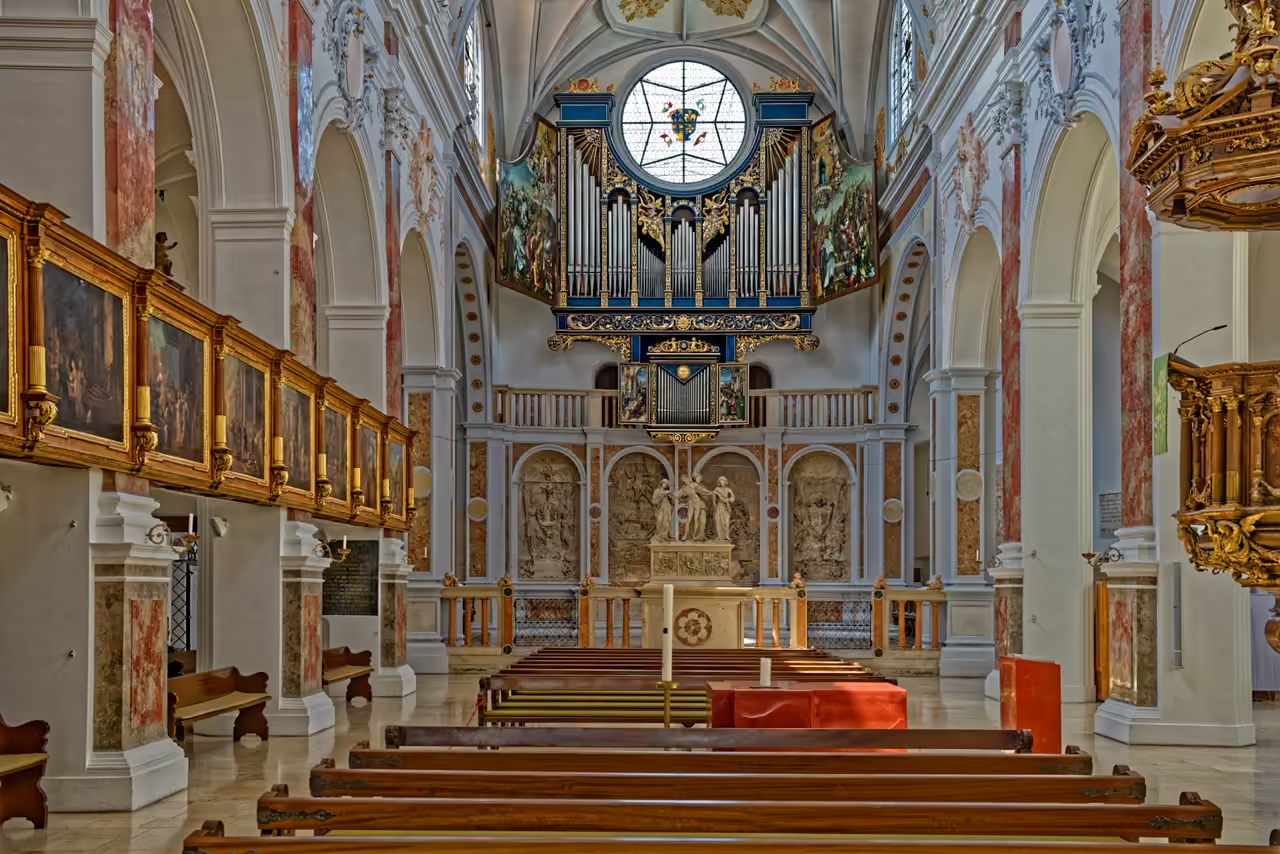
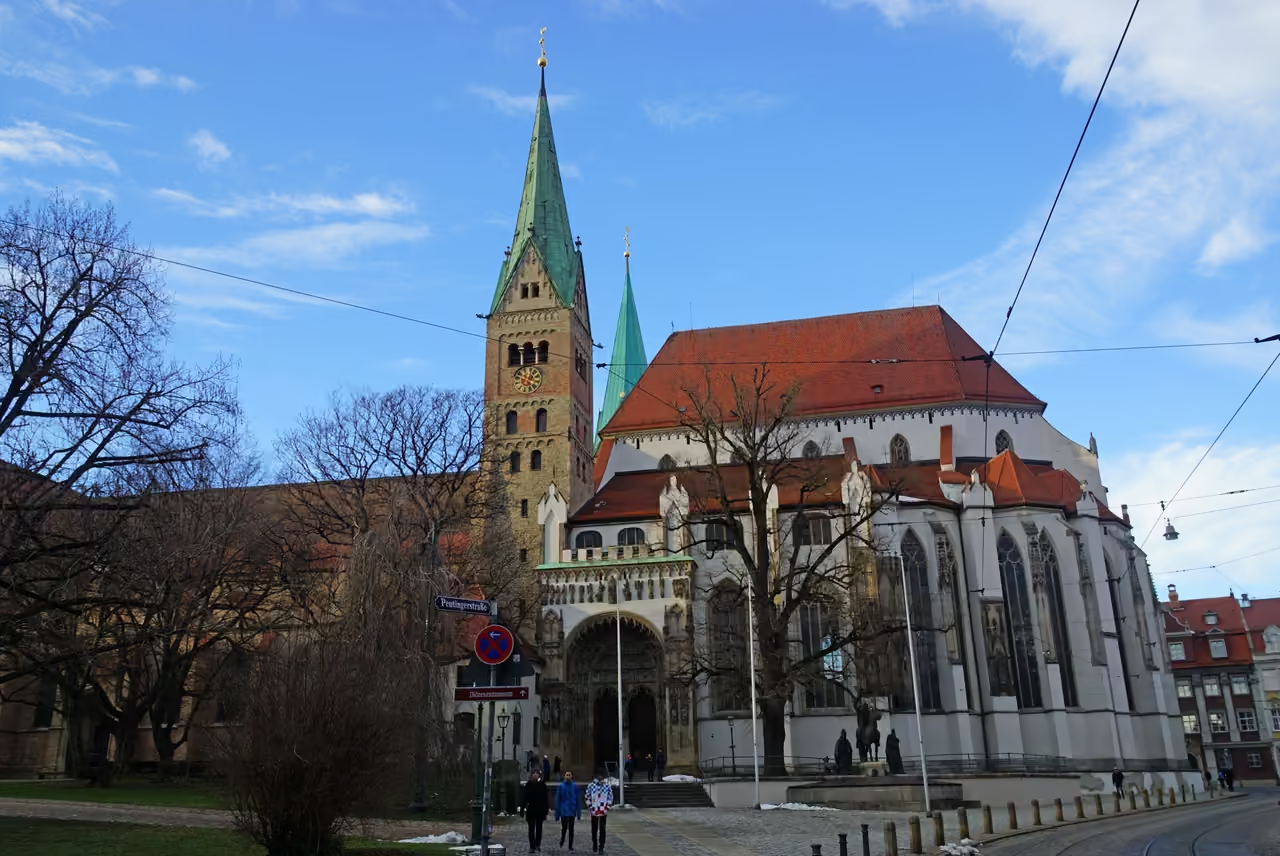
Look up into the southern clerestory to spot five figures glaring down from the glass. These are the Augsburg Prophets, crafted in the late eleventh century and holding the title of the oldest large scale stained glass windows on earth. Augsburg Cathedral wears its messy timeline on its sleeve. You can clearly see the seam where a squat Romanesque nave crashes into an incomplete Gothic choir. Step through the south portal past stone apostles to stand on the same flooring where a quick witted chaplain and local teenagers saved the entire structure from incendiary bombs in 1944. Notice the scent of old masonry mixed with the faint metallic tang of the nearby bronze works. Your neck will spend most of the visit craned upwards toward the painted wooden ceilings and the captured Ottoman flag hanging far above the altar.
Videos
History of Augsburg Cathedral
The western towers of the original church collapsed into a heap of rubble in 994. Empress Adelheid claimed to have foreseen this exact disaster in a vision, which prompted Bishop Liutold to immediately draw up plans for a massive new Ottonian structure. Wood from the scaffolding used during this initial push still sits inside the high walls of the nave today. Workers chopped down the trees for those planks in the winter of 999, locking the cathedral’s core construction to the turn of the first millennium. Ambition overtook the builders again in 1331. The clergy decided their Romanesque church needed a soaring French style Gothic choir. Master builder Heinrich Parler the Elder designed an elaborate ring of chapels and open flying buttresses modelled on the cathedral in Cologne. Money and enthusiasm eventually ran dry. They capped the choir with blank exterior walls instead of elegant stone arches, leaving the building with an unpolished, mismatched silhouette where the low Ottonian nave simply rams into the towering Gothic extension. Political chaos brought royalty to these mismatched walls in 1690. The Nine Years War made the usual coronation city of Frankfurt too dangerous for the Holy Roman Empire to use. Officials scrambled to relocate the ceremony to Augsburg. Archbishop Anselm Franz of Mainz crowned Joseph I as the Roman German King right inside the cathedral, followed days later by the coronation of Empress Eleonore Magdalene, turning the provincial church briefly into the absolute centre of European power. Fire threatened to erase all of this during an Allied bombing raid on the night of 25 February 1944. Local authorities explicitly banned the fire brigade from wasting water on burning churches. As phosphorus bombs punched through the cathedral roof, Chaplain Johann Aichele realised nobody was coming to help. He gathered a small group of teenage altar boys and climbed into the wooden rafters. The boys kicked and threw dozens of sparking incendiaries out of the roof down into the snow before the ancient timber could catch fire. Generations later, the building still hides physical secrets from its earliest days. During routine roof repairs in the south transept in 2009, workers scraped back layers of modern paint and found a face looking back at them. Conservators eventually revealed a massive Ottonian fresco of John the Baptist painted shortly after the year 1000. He stares straight ahead from the plaster, his wide eyes and ochre robes completely unbothered by the millennium of renovations, coronations, and falling bombs that passed beneath his feet.
events spanning 1015 years
Fun Facts
9- 01
A captured Ottoman flag hangs directly in the eastern choir, brought back from the Turkish wars in 1689 by Margrave Ludwig Wilhelm of Baden.
- 02
During a 2018 repair of the north tower's spire, workers opened the golden orb at the top and found time capsules left by steeplejacks in 1598, 1848, and 1952.
- 03
Every Holy Week, the clergy set up a complex mechanical Holy Sepulchre from 1645 in the Marian Chapel, using hidden gears to hoist a monstrance into a high display niche above a painted wooden tomb.
- 04
In 1970, restorers mistakenly threw away the original 1430 wooden canopies over the choir stalls because they wrongly assumed the woodwork was a cheap nineteenth century imitation.
- 05
The north tower holds two 'beehive bells' cast around 1070, which feature small holes in their crowns to create a rattling, tambourine like noise when rung by hand.
- 06
The original cathedral doors from the eleventh century feature intricate bronze reliefs of lions, centaurs, and biblical scenes, though you have to visit the adjacent Diocesan Museum to see the originals today.
- 07
The paintings by Hans Holbein the Elder on the eastern pillars actually began their life as a single folding altarpiece for Weingarten Abbey, but they were later split straight down the middle to separate the front and back panels.
- 08
The stained glass windows depicting King David and other prophets date back to at least the late eleventh century, making them the oldest cycle of large scale stained glass in the world.
- 09
When Pope John Paul II visited Augsburg in May 1987, a sudden severe thunderstorm forced his massive outdoor mass to be hastily relocated inside the cathedral.
FULL PLACE DETAILS
OVERVIEW & STATS
- Established
- In 1065, making it 961 years old
ARCHITECTURE & HERITAGE
- Heritage Status
- Architectural Heritage Monument In Bavaria
- Architectural Styles
- Romanesque
- Architects
- Wilhelm Huber
Augsburg Cathedral Map & Neighborhood Explorer
This interactive map is centered on Augsburg Cathedral. Zoom in and move the map around to automatically discover Wikipedia photos and summaries of other nearby sights, monuments, and historical points of interest and stories in real-time!
Augsburg Cathedral FAQ
The builders in the fourteenth century wanted to replace the old Romanesque church with a soaring Gothic structure like the one in Cologne. They started at the eastern end but eventually abandoned the project, leaving the new Gothic choir awkwardly glued to the older, lower Ottonian nave.
No, the eleventh century bronze portals were removed from the elements in 2002 to halt corrosion. They are now displayed on a custom mount inside the Diocesan Museum next door, while a modern bronze replica fills the portal.
You need to look high up on the southern wall of the central nave. Because they are situated in the clerestory, bringing a pair of binoculars helps to make out the eleventh century brushstrokes on the glass.
The large green and red banner in the eastern choir was captured during the Turkish Wars in 1689. It was presented to the cathedral as a trophy by a local military commander and has hung there ever since, though the current textile is a conservation copy of the original.
A typical visit takes about 2 hours. We recommend planning your schedule accordingly to make the most of your time there.
The closest place to visit near Augsburg Cathedral is Bishop's Residence, around 177 m away. Other things to do near Augsburg Cathedral include Wieselhaus (323 m), Leopold Mozart House (325 m) and Brecht Festival (339 m). All of these are within roughly 339 m of Augsburg Cathedral, close enough to walk.
Augsburg Cathedral holds the following heritage designation: Architectural Heritage Monument In Bavaria.
It dates back to 1065, making it 961 years old.
Augsburg Cathedral was designed by Wilhelm Huber in the Romanesque style.
While we strive to keep this information accurate and up to date, we recommend verifying any details independently before making decisions based on them.
Places near Augsburg Cathedral
Make the most of your trip. Check out these top-rated spots located nearby.
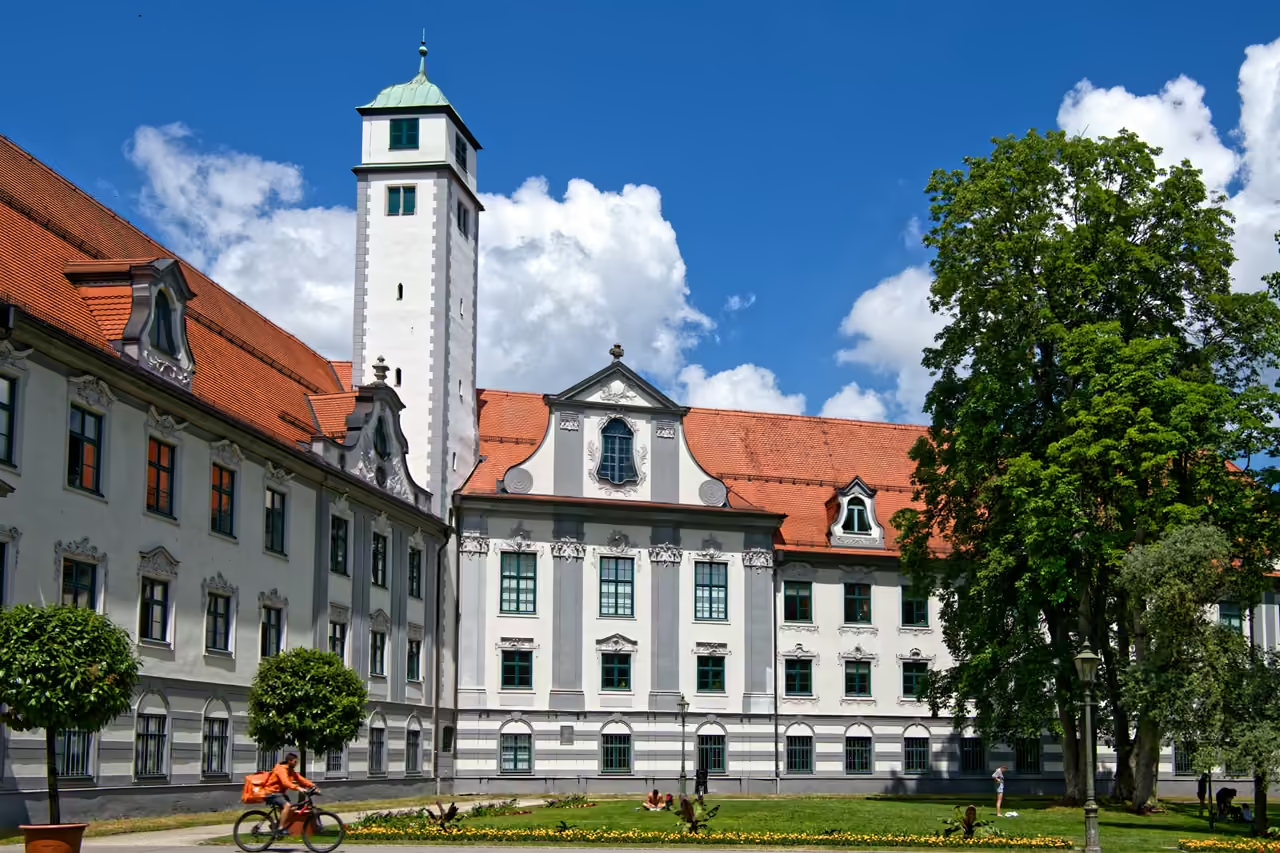 177m
Bishop's Residence
An imposing, highly structured complex that historically housed the powerful Prince-Bishops who clashed fiercely with the city's independent merchants. Built in the mid-18th century, it features a heavy, symmetrical facade that commands the adjacent square. The massive building now serves as the administrative seat for the entire Swabian region. A deeply ornate, quiet courtyard garden sits tucked behind the heavy walls, providing a sudden escape from the traffic. It projects the absolute authority of the church during the Baroque era.
architecture view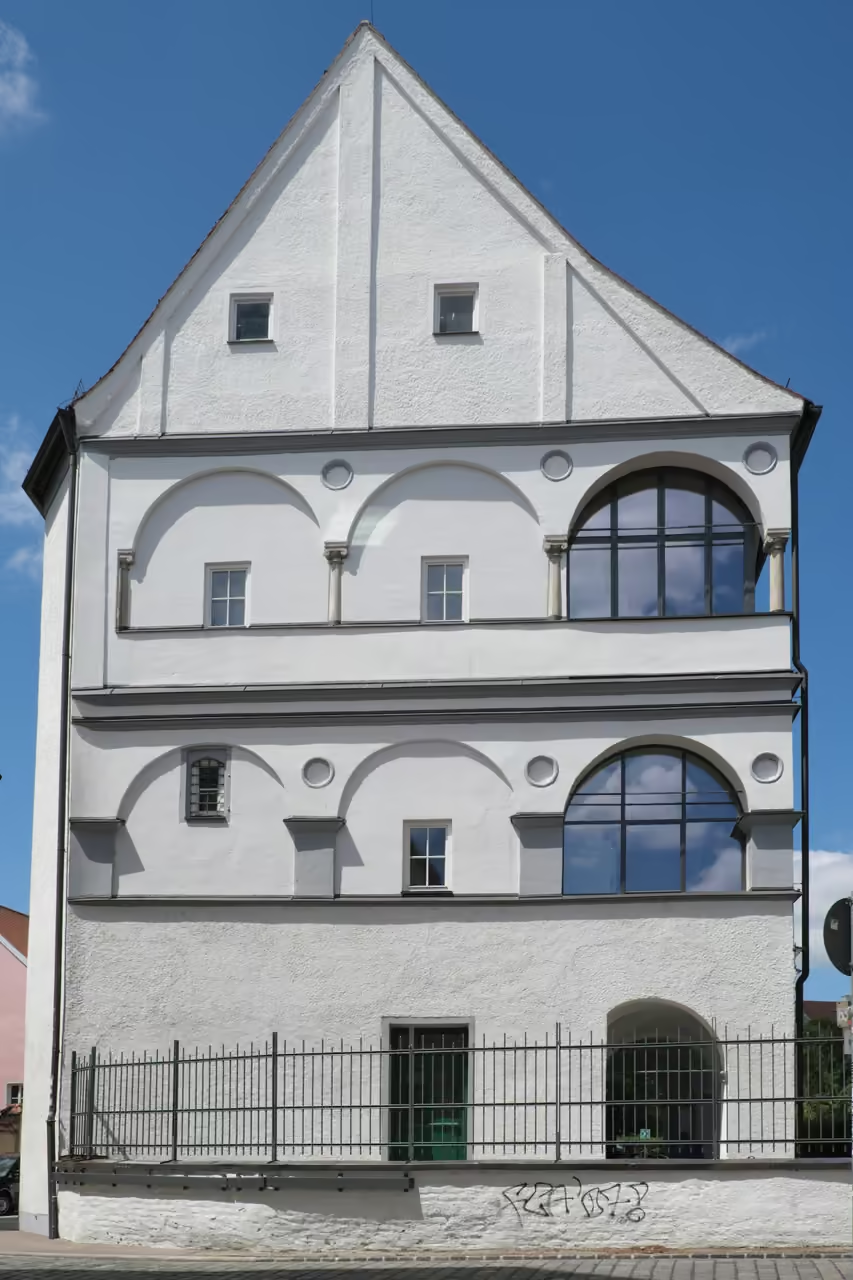 323m
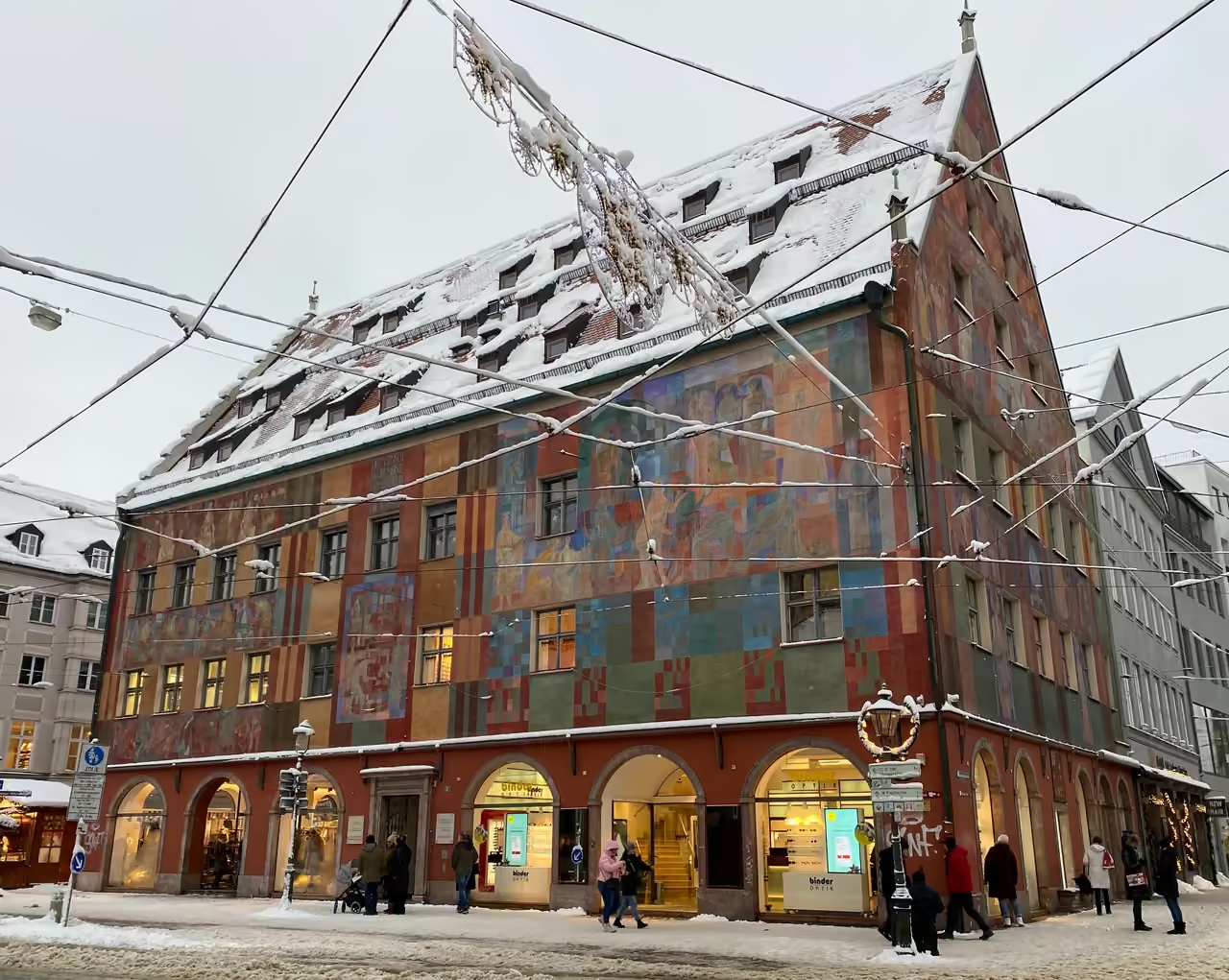
Wieselhaus
A highly distinct 16th-century building tucked into a quiet alley, featuring exceptionally complex terraced arcades that look completely out of place in Germany. The Italianate influences reflect the intense trade connections local merchants maintained with Venice and the Mediterranean. The heavy masonry and arched loggias create deep shadows and a secretive, secluded atmosphere. Following a massive, careful restoration, it now houses the interactive Fugger and Welser Museum. It is a rare, perfectly preserved slice of patrician wealth.
architecture view 325m
Leopold Mozart House
The birthplace of the fiercely ambitious man who trained and managed Wolfgang Amadeus Mozart. The heavily restored house functions as a museum dedicated solely to his life, teaching methods, and extensive European travels. Visitors can examine historic musical instruments and listen to his highly influential violin compositions. A complex carriage ride simulator gives you a brutal sense of what traveling across 18th-century Europe actually felt like. It provides crucial context for understanding the intense pressure placed on his legendary son.
highlight view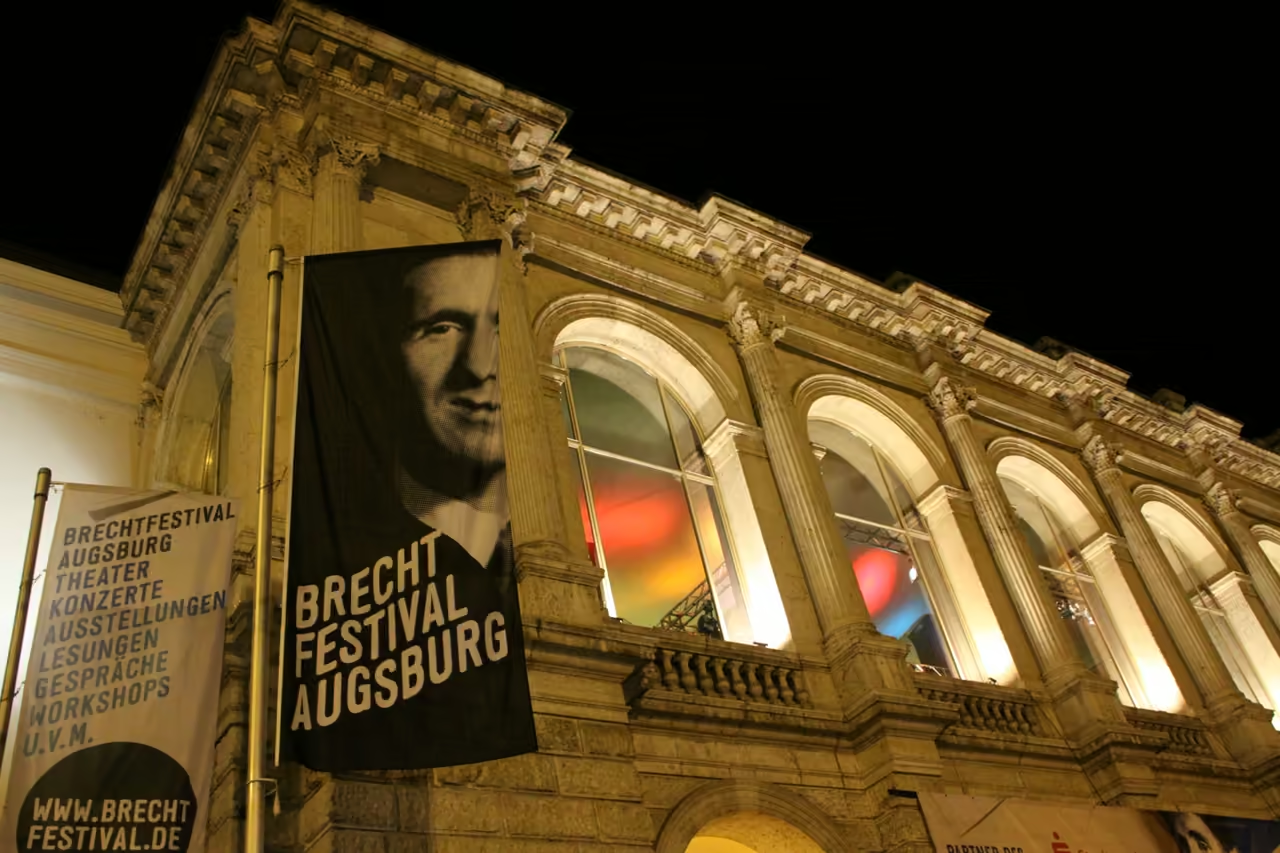 339m
Brecht Festival
The city fiercely honours its most famous and controversial playwright, Bertolt Brecht, with a massive festival of contemporary theatre, aggressive poetry readings, and live music. Performances completely take over established theatres and gritty, unconventional industrial spaces across the city. The programming pairs Brecht's original socialist plays with modern artists actively arguing with his legacy. It injects a highly intellectual, slightly chaotic artistic energy into the freezing winter months.
festival view
Explore Similar Places in This Collection
Featured on These Itineraries and Routes
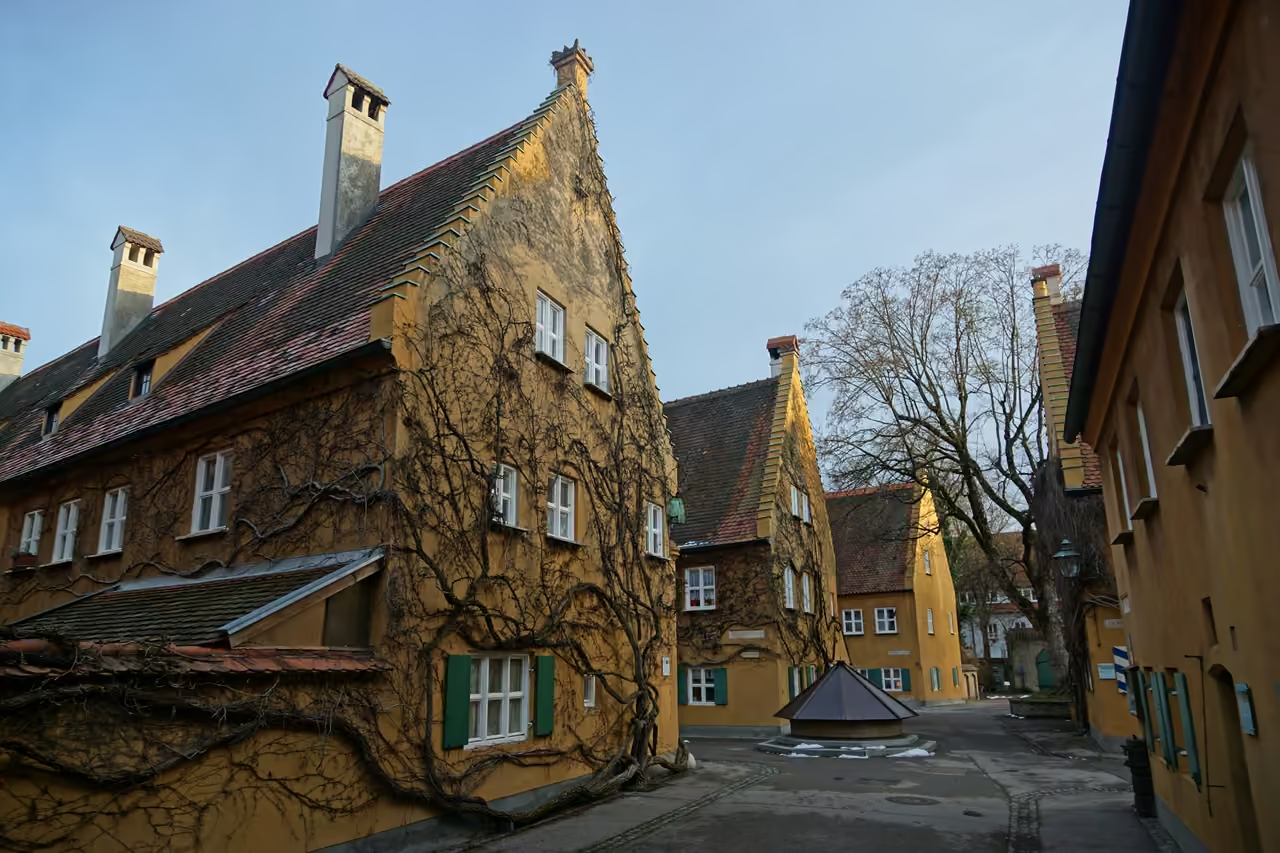
1 Day in Augsburg
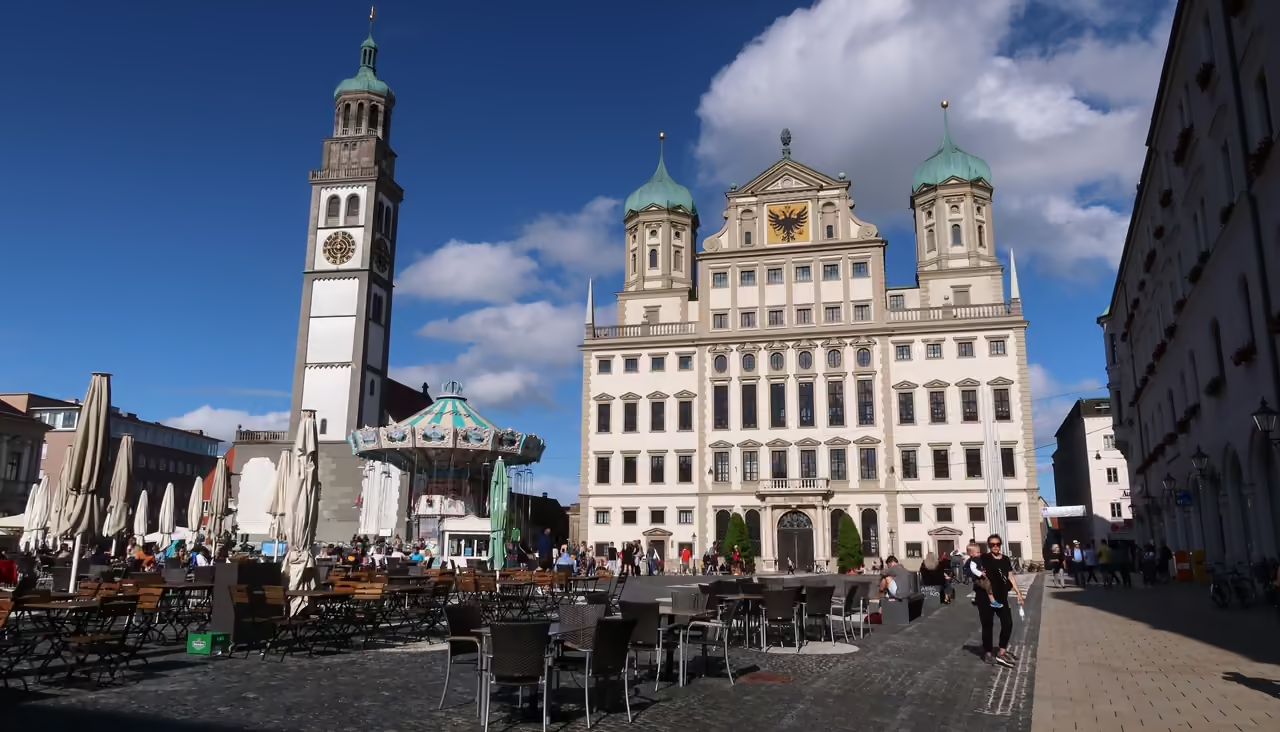
A highly compressed, fiercely efficient route tackling the absolute core of the city's Renaissance wealth and history. You will stand in the massive ceremonial halls of bankers and walk the quiet streets of the world's oldest social housing. It completely skips the outskirts, forcing you to engage heavily with the central mediaeval grid.
view itinerary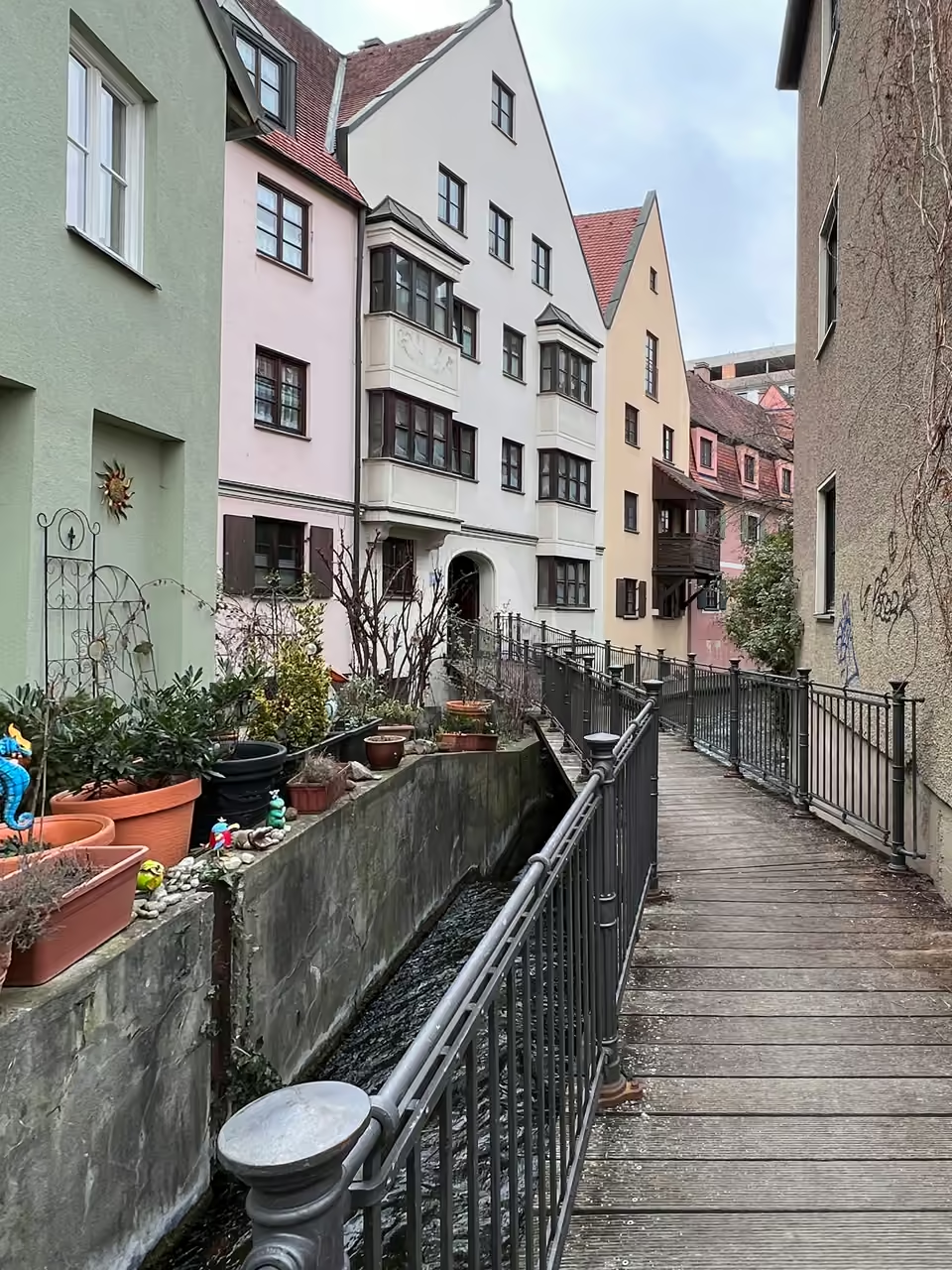

5 Days in Augsburg
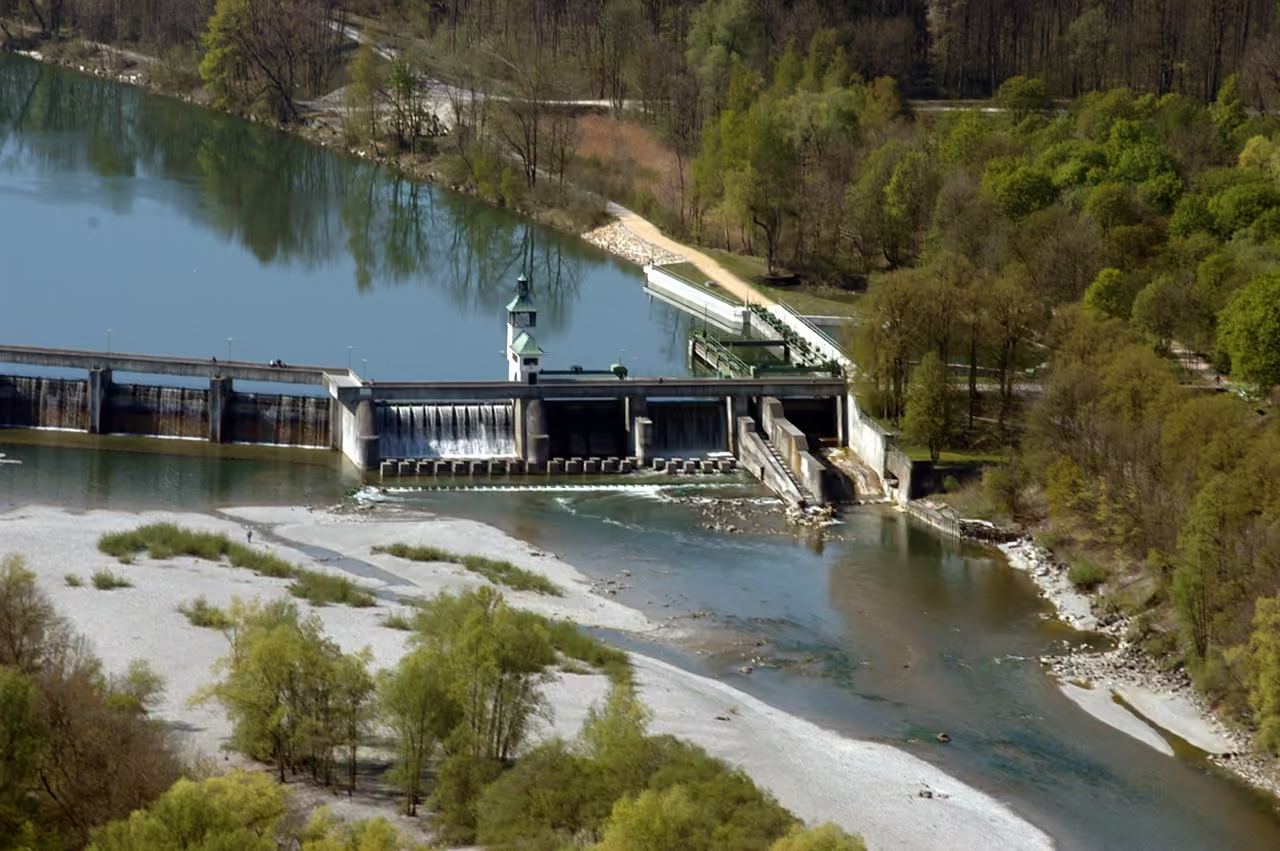
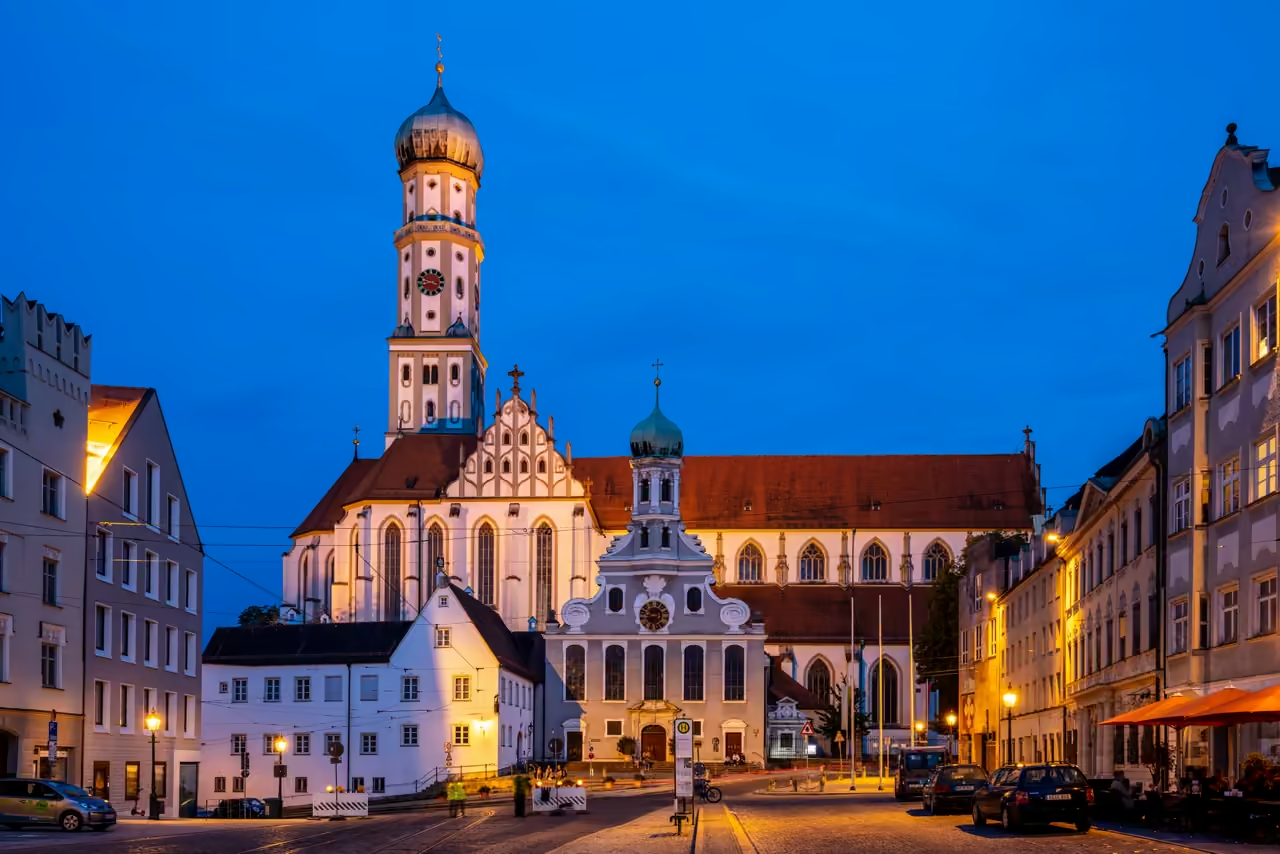
A deeply comprehensive, highly exhaustive deep dive into every facet of the city's complex identity. You will transition from Roman foundations to massive industrial machinery, tracking the complete evolution of a major European powerhouse. It prevents museum fatigue by heavily incorporating long stretches of nature and unscripted time in eccentric local pubs.
view itinerary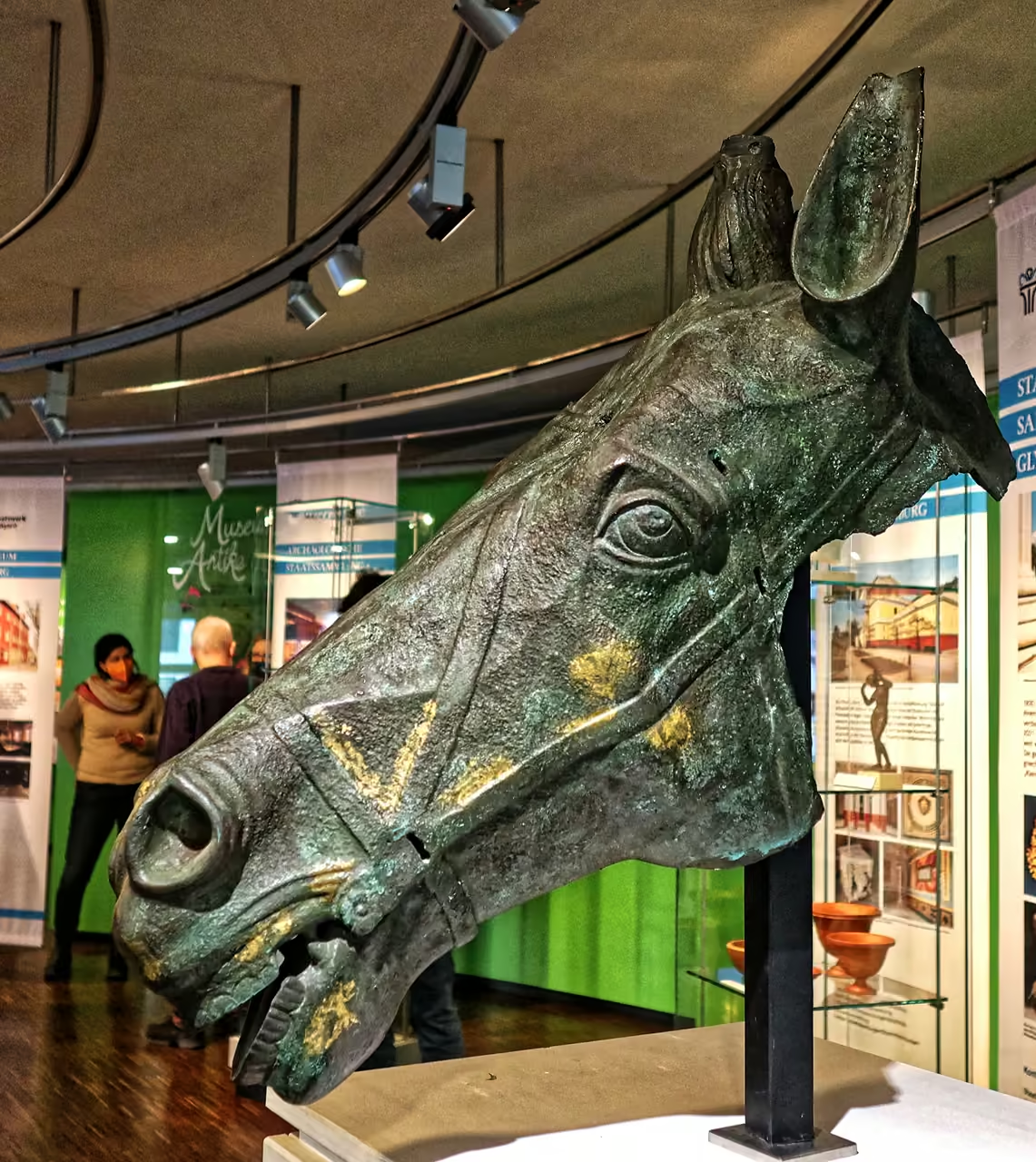
Roman Antiquity Trail
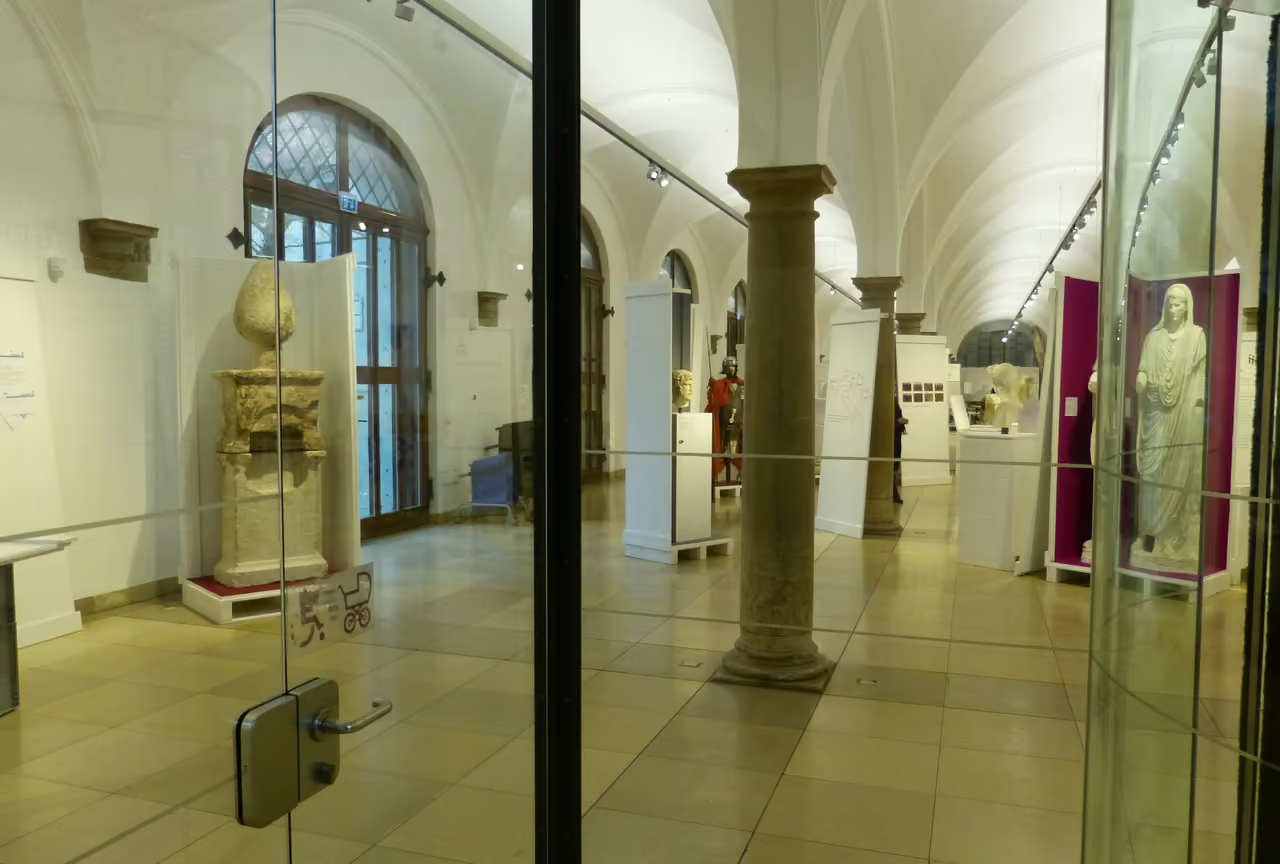
A challenging exercise in imagination, as almost all of the original Roman city lies buried deep beneath the cobblestones. You will visit museums housing massive stone monuments and peer into small archaeological windows revealing ancient foundations. It tracks the transformation from a rough military camp to a highly sophisticated provincial capital. The artifacts offer glimpses of heavy bronze armour and delicate glasswork.
view self-guided tour
See all attractions in Augsburg
Including Fuggerei, Schaezlerpalais, Augsburg Puppet Theatre, and more