Tuileries Garden
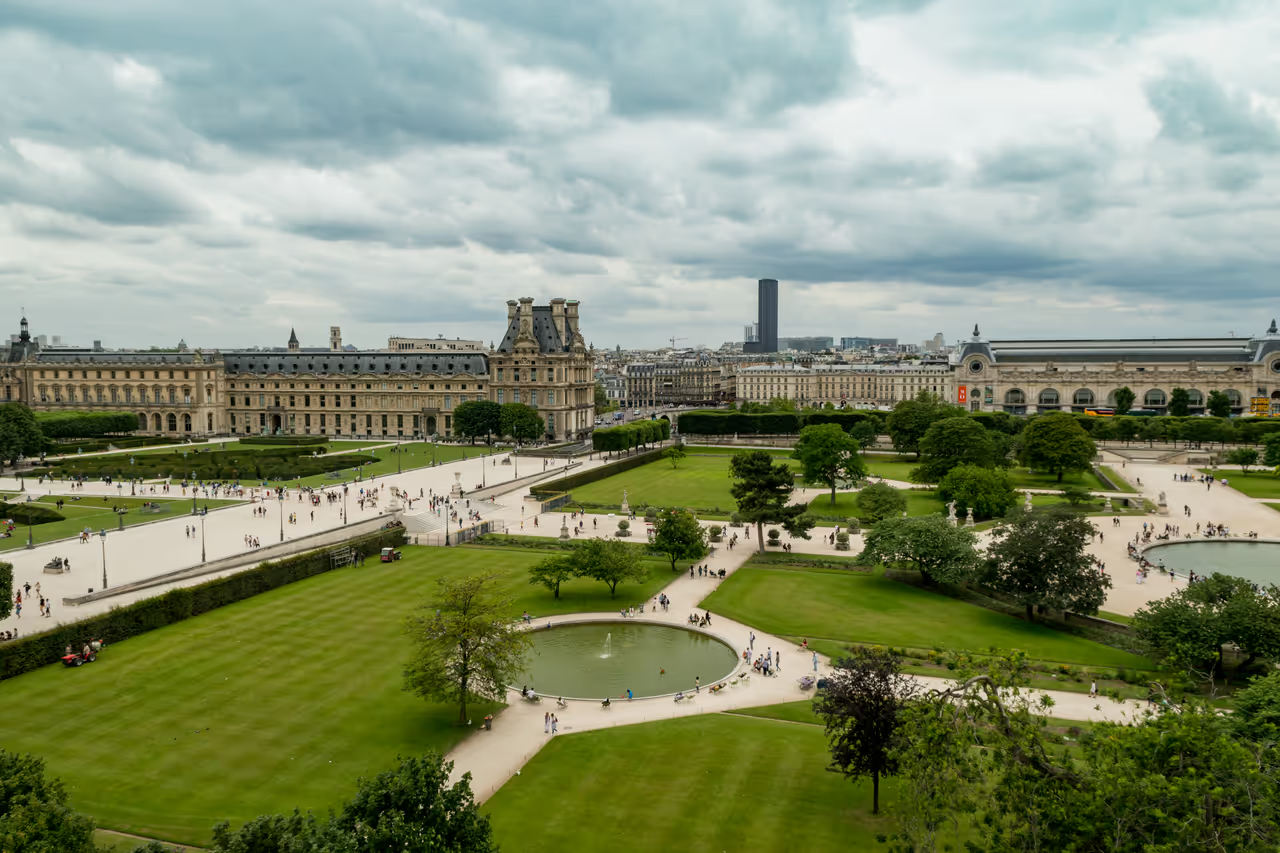
Nestled between the grandeur of the Louvre and the historic Place de la Concorde, the Tuileries Garden is a masterpiece of landscape design and a beloved oasis in the heart of Paris. Originally commissioned by Catherine de' Medici in the 16th century as a private Italian-style retreat, it has evolved over centuries into a quintessential French formal garden, perfected by the legendary André Le Nôtre. Today, it offers a perfect blend of history, art, and relaxation, where Parisians and visitors alike stroll past manicured hedges, shimmering fountains, and an array of remarkable sculptures. Whether you are exploring the Musée de l'Orangerie's Monet water lilies or simply resting by the octagonal basin with a book, the garden provides a timeless escape from the urban pace. It serves as a living chronicle of French history, from revolutionary upheavals to modern celebrations like the 2024 Olympic cauldron, capturing the spirit of the city. A visit here is an essential experience for anyone wanting to feel the true elegance and vibrancy of Parisian life.
Videos
History of Tuileries Garden
The story of the Tuileries Garden begins with ambition and the desire to reshape the Parisian landscape. In 1564, Queen Catherine de' Medici sought to escape the confines of her existing residence and commissioned a grand Italian-style garden on land previously occupied by dusty tile factories. She envisioned a retreat filled with labyrinths, grottos, and vibrant flowers, bringing a piece of Florentine elegance to France. It was a bold move that laid the foundation for the park, though it would take the genius of André Le Nôtre, the landscape architect to Louis XIV, to perfect the symmetrical and grandiose design that defines the park today. Under Le Nôtre, the garden became an extension of royal power, with long perspectives and perfectly ordered paths that mirrored the absolute authority of the Sun King. Yet, the garden's history is far from serene. Over the centuries, it became a silent witness to the most dramatic shifts in French history. It saw kings hunted, revolutions ignite, and monarchies crumble. The most pivotal moment came in 1871, when the Tuileries Palace, which had anchored the garden's eastern edge, was set ablaze during the chaotic Paris Commune. The flames consumed the symbol of royal authority, and the subsequent demolition of the ruins permanently altered the park, opening the view from the Louvre all the way to the Place de la Concorde. This transformation turned what was once a private royal playground into a truly public space, belonging to the people of Paris. Today, the garden serves as a bridge between the city's imperial past and its vibrant modern identity. It is a place where art takes centre stage, from the profound silence of Monet's Water Lilies in the Orangerie to the rotating installations of contemporary sculpture that dot the tree-lined paths. Whether it is hosting the ceremonial cauldron for the Olympic Games or serving as a quiet sanctuary for a lunch break, the Tuileries retains its character as the heart of Paris. It is a place that invites reflection, holding the weight of centuries within its hedges while remaining entirely accessible to anyone who walks its gravel paths.
Events spanning 460 years
Fun Facts
- • André Le Nôtre designed the garden with such precise perspectives that the view from the palace was intended to extend visually all the way into the countryside.
- • During the Second World War, the Jeu de Paume gallery was used by the occupying forces as a warehouse to store art looted from private collections.
- • Many of the classical statues visible in the park are actually copies, as the original masterpieces were moved to the nearby Louvre for preservation.
- • The Tuileries Palace once stood at the western end of the Louvre, but after the fire of 1871, the site was left open, creating the grand vista we see today.
- • The garden contains two exedras, which are semicircular stone benches, that are the only surviving fragments of a grand decoration plan conceived during the French Revolution.
- • The garden features an 'Octagonal Basin', a favourite spot for children and adults alike to sail miniature wooden boats, a tradition that has persisted for generations.
- • The garden hosts an English oak planted in 1992, symbolising the 'Liberty Tree' tradition that became a potent emblem during the French Revolution.
- • The garden was the scene of the 'Carrousel' in 1662, a spectacular equestrian parade celebrating the birth of Louis XIV's heir, which gave the local area its name.
- • The name 'Tuileries' comes from the French word for tile, as the site was once home to factories that produced roof tiles for the city.
- • There is a dedicated section known as 'Prière Toucher' or 'Please Touch', where visitors are encouraged to interact physically with selected sculptures.
Tuileries Garden FAQ
While we strive to keep this information accurate and up to date, we recommend verifying any details independently before making decisions based on them.
Tuileries Garden Map & Neighborhood Explorer
This interactive map is centered on Tuileries Garden. Zoom in and move the map around to automatically discover Wikipedia photos and summaries of other nearby sights, monuments, and historical points of interest and stories in real-time!
Places near Tuileries Garden
Make the most of your trip. Check out these top-rated spots located nearby.
 486m
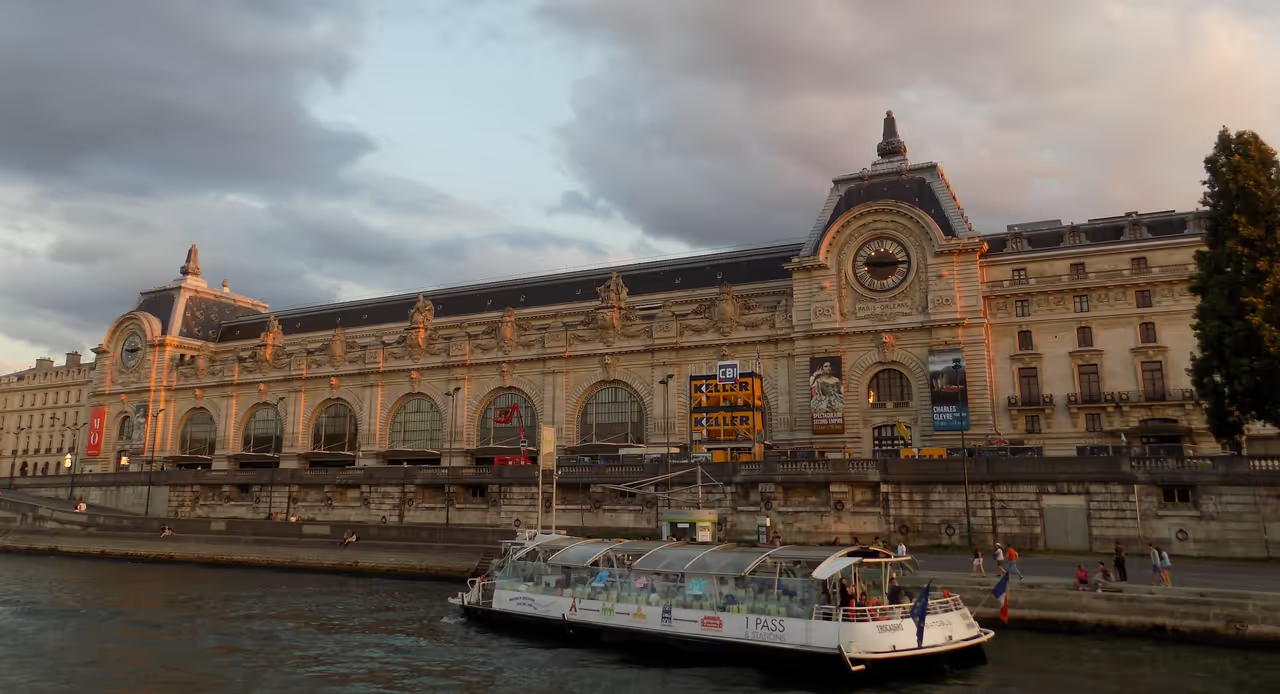
486mMusée d'Orsay
Standing on the left bank of the Seine, the Musée d'Orsay is housed in a magnificent former railway station that feels as much like a cathedral of light as a museum. This landmark is home to the world's most impressive collection of Impressionist and Post-Impressionist masterpieces, featuring legends like Monet, Van Gogh, and Renoir. Visitors can wander through vast galleries where massive station clocks offer unique framed views of the city across the river. The atmosphere is an incredible blend of industrial history and artistic revolution, making it an essential stop for anyone who loves beauty and heritage. From the grand Beaux Arts facade to the intimate details of the sculptures, every corner tells a story of a Paris in transition. It is truly a worthwhile experience to see such famous works of art in a setting that is a masterpiece in its own right.
attraction view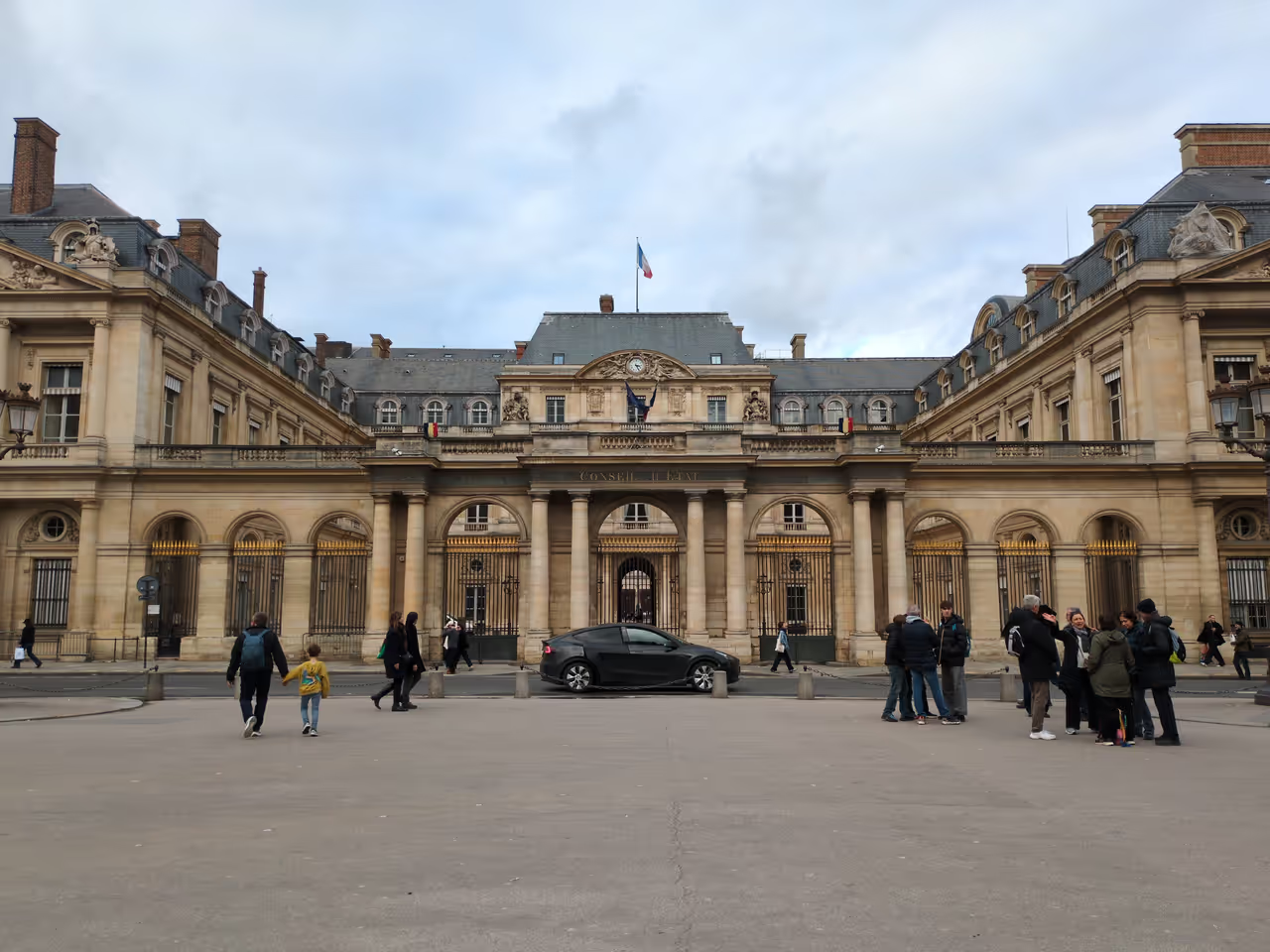 813m
813mRoyal Palace
Originally built for Cardinal Richelieu, this refined complex is a superb example of seventeenth-century classical architecture. The serene central garden is perfectly framed by elegant, uniform arcades that once housed the city's most fashionable boutiques and cafes. The striking contrast between the austere historic stonework and the modern, striped Buren Columns in the main courtyard creates a fascinating visual dialogue. It remains a tranquil, sophisticated oasis shielded from the chaotic traffic nearby.
architecture view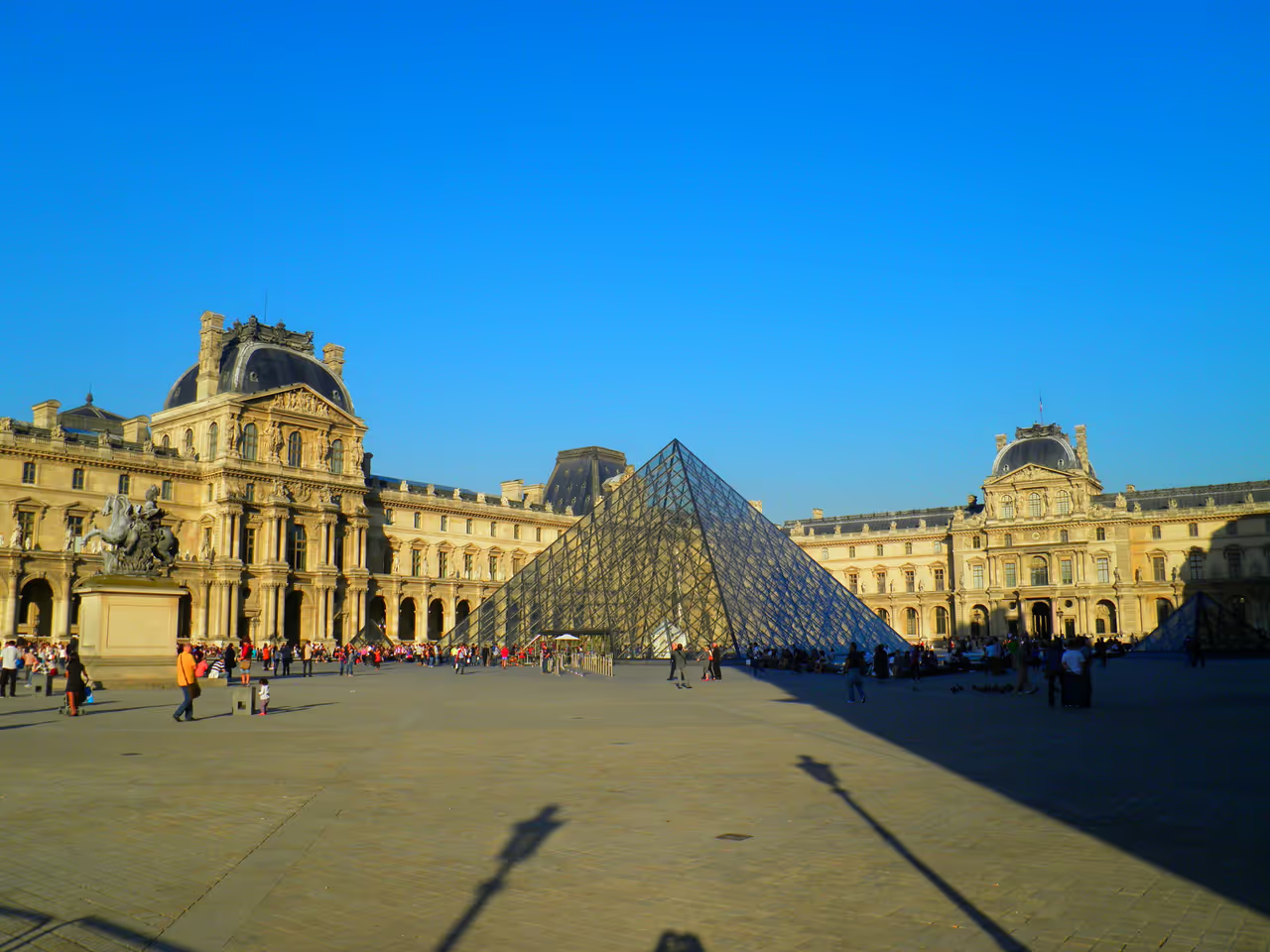 821m
821mLouvre Museum
Standing as the world's largest and most visited art museum, the Louvre is an architectural marvel that has evolved from a medieval fortress into a sprawling royal palace. It is home to an incredible 35,000 masterpieces on display, ranging from mysterious Egyptian antiquities to the unparalleled treasures of the Italian Renaissance. Walking through its grand galleries, you can feel the weight of eight centuries of history within walls that once housed French kings and emperors. The atmosphere is a spectacular blend of classical opulence and bold modern design, best symbolised by the iconic glass Pyramid in the central courtyard. Whether you are searching for the enigmatic smile of the Mona Lisa or exploring the hidden moats of the original castle below ground, a visit here is a journey through the very heart of human creativity. It is truly an essential experience for anyone who wants to witness the cultural pinnacle of Paris.
attraction view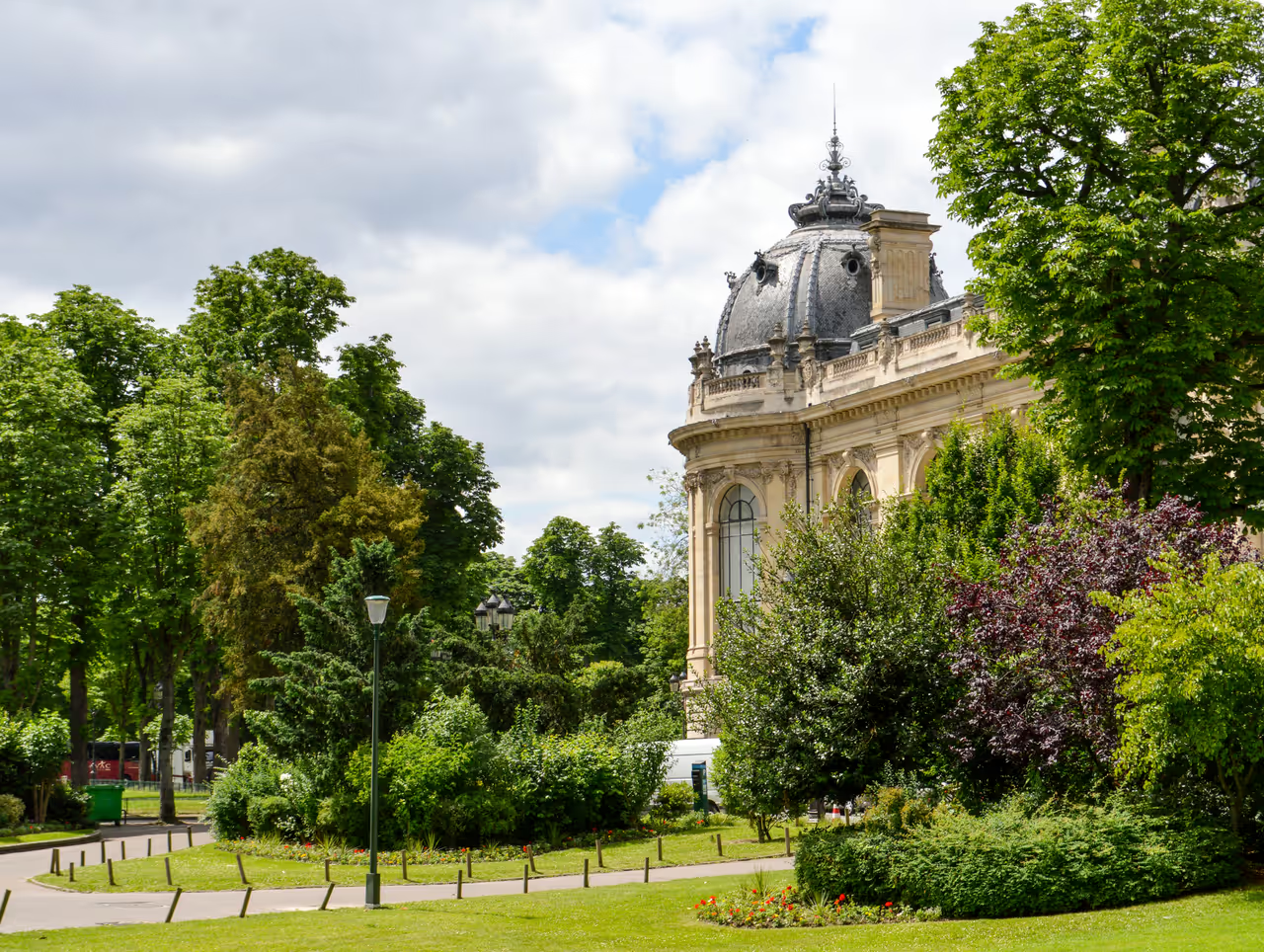 872m
872mVisit the Petit Palais
Often overshadowed by its larger neighbour, this magnificent Beaux-Arts building houses the City of Paris Museum of Fine Arts, offering free access to its permanent collections. The grand galleries display an impressive array of paintings, sculptures, and decorative arts ranging from antiquity to the early twentieth century. The highlight is the breathtaking interior courtyard garden, a tranquil oasis featuring mosaic pools and exotic plants. It provides a highly luxurious, uncrowded cultural experience completely free of charge.
free thing to do view
Explore Similar Places in This Collection
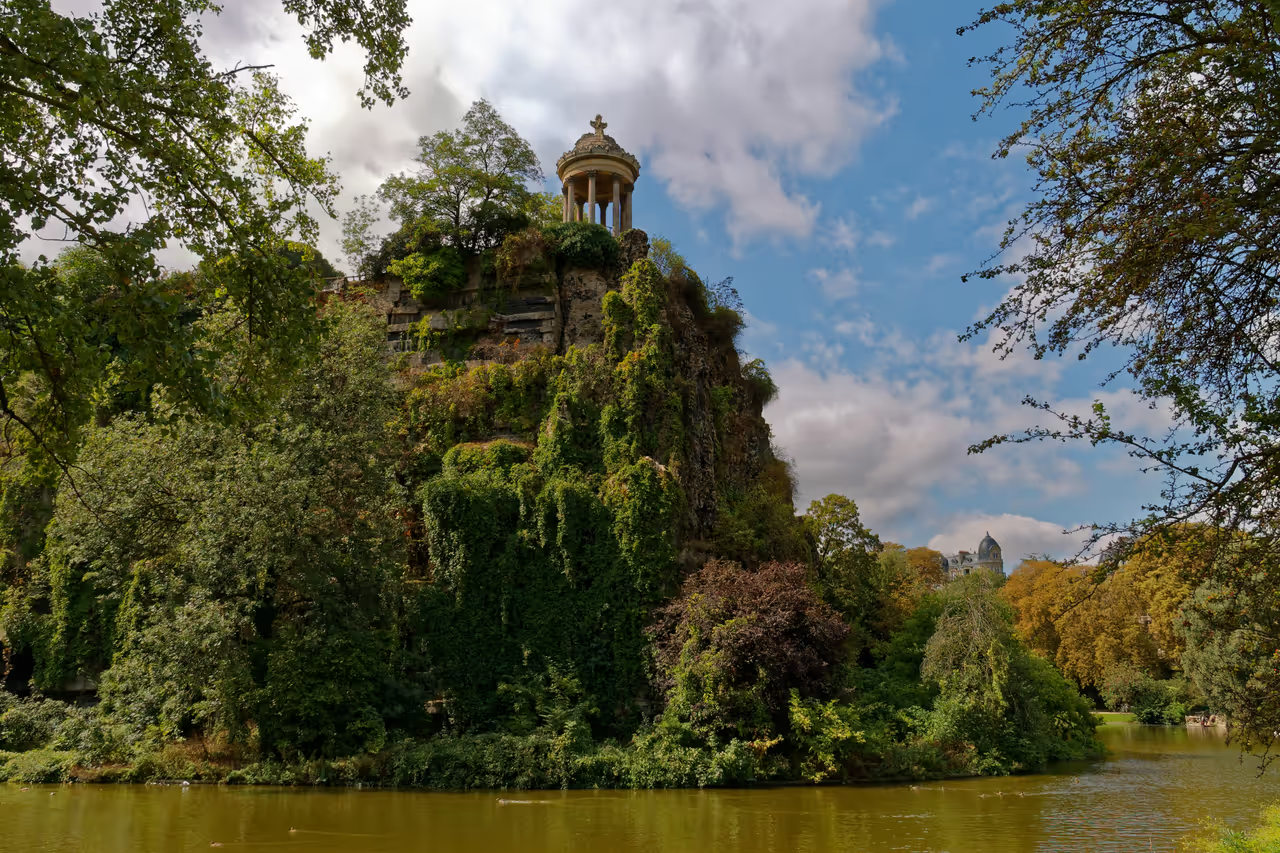
See all nature & parks in Paris
Bois de Vincennes, Jardin des Plantes, Luxembourg Gardens, Bois de Boulogne, Parc de la Villette, Parc des Buttes-Chaumont...