Basilica of Notre-Dame de la Garde
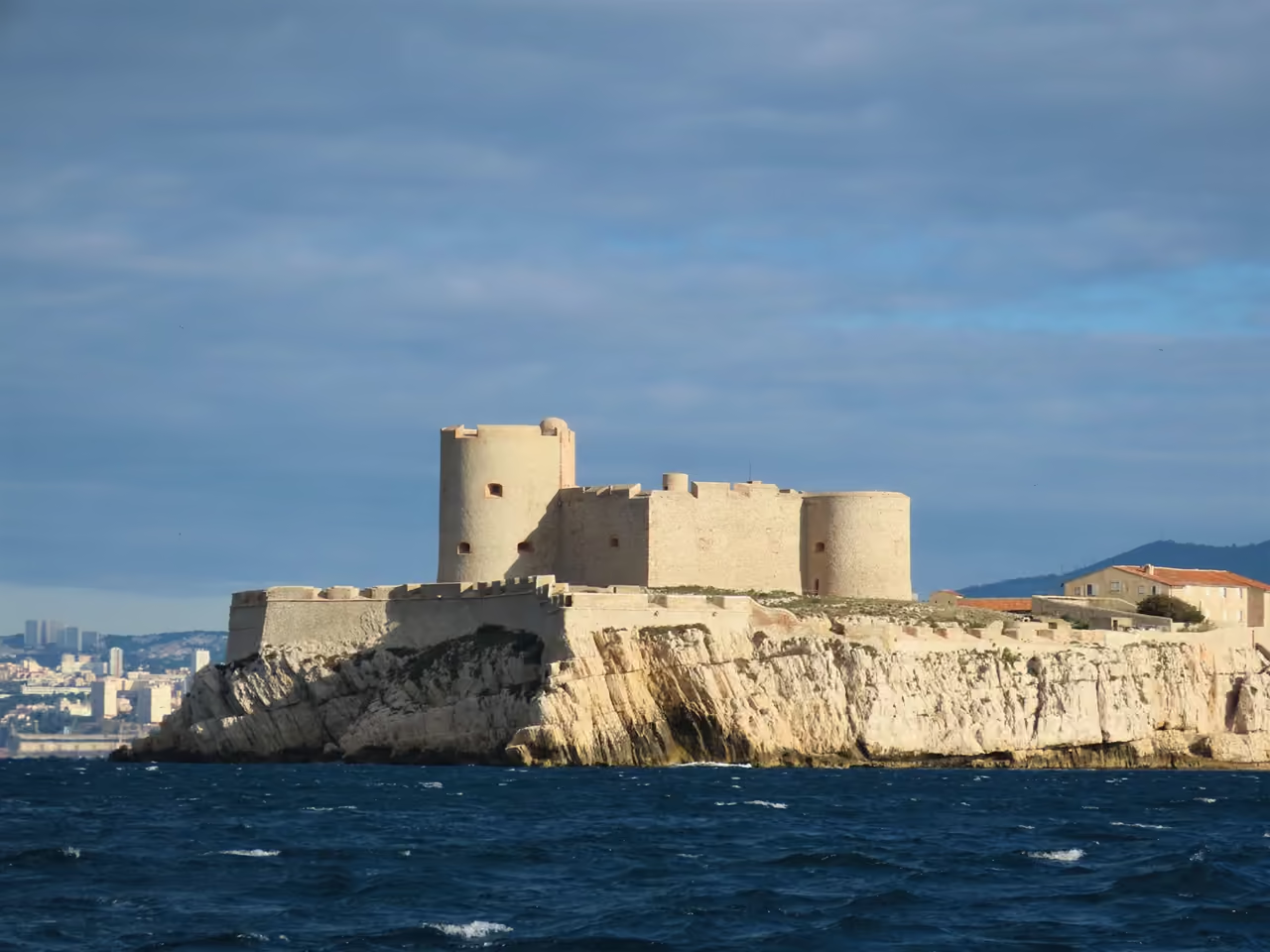
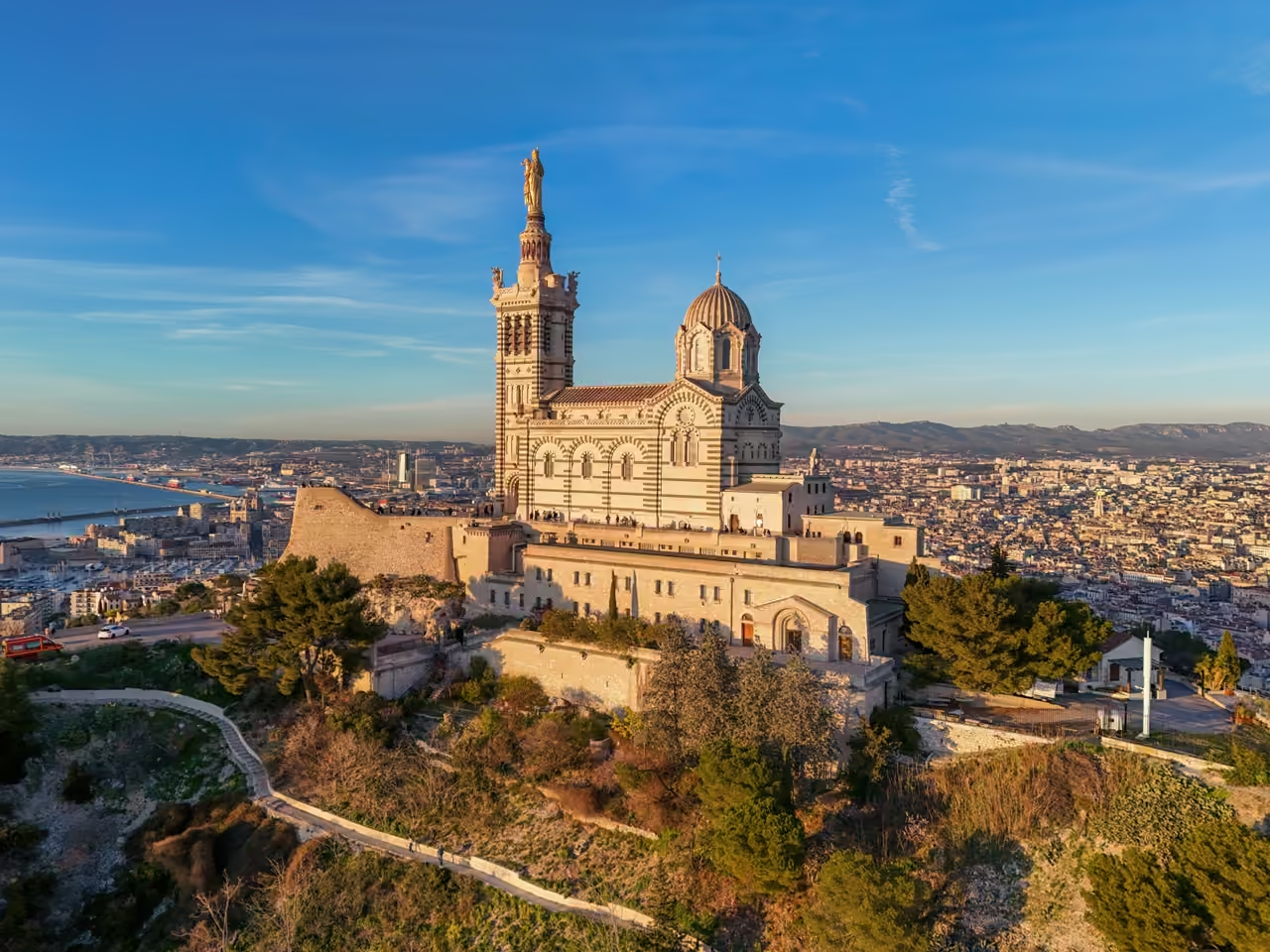
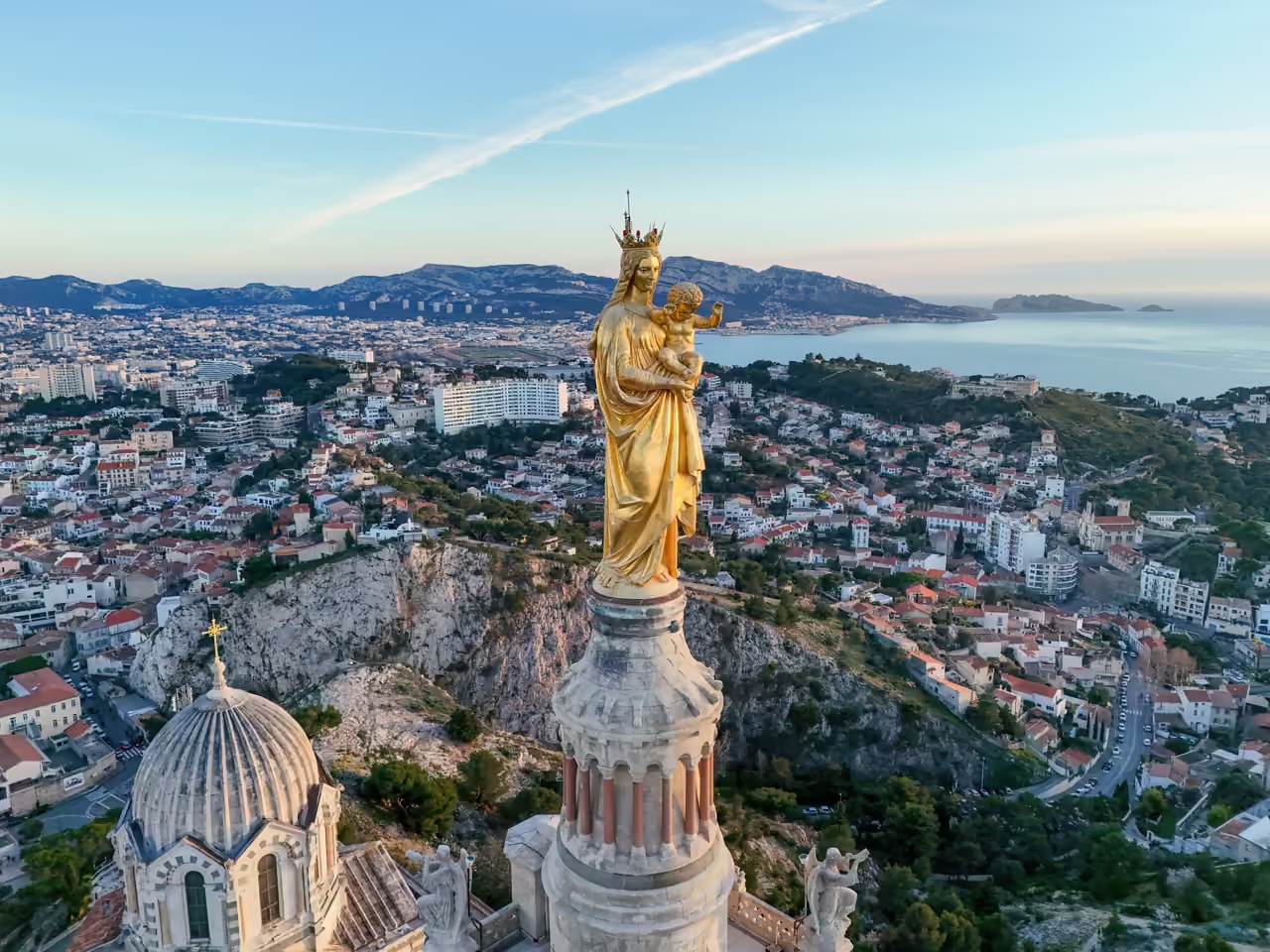
High on a white limestone ridge 162 metres above the Mediterranean, the Basilica of Notre-Dame de la Garde keeps watch over every corner of Marseille. Locals simply call her la Bonne Mère. Getting up there can mean puffing past the steep bends of Rue Fort-du-Sanctuaire or squeezing onto the busy number 60 bus from Cours Jean Ballard, yet crossing the 16th century fortress drawbridge spreads the Château d'If, the Frioul Islands, and the pale peaks of the Sainte-Baume cleanly beneath you. Inside, the sanctuary splits into two sharp architectural moods: a quiet Romanesque crypt carved straight into solid bedrock beneath an upper church glowing with striped Carrara marble, green Florentine stone, and millions of Venetian mosaic tiles. Tilt your head back to spot tiny wooden vessels, painted rescues at sea, and even Olympique de Marseille pennants hanging beneath the vaults in gratitude for mercies large and small. Finish in the hillside museum with eight centuries of votive art, or linger on the western terrace until dusk softens the mistral and lamps flicker awake across the Vieux Port.
Videos
History of Basilica of Notre-Dame de la Garde
Mediterranean mariners steered by this bright limestone crest for centuries as a coastal watchpoint and navigation marker. In 1214, a Marseillais hermit known as Master Pierre secured permission from the Abbey of Saint-Victor, which held title to the ridge, to cultivate a vineyard, dig a garden, and raise a modest stone chapel honouring the Virgin Mary. Pope Honorius III officially entered the hilltop church onto the abbey's rolls four years later, and after Pierre died in 1256 the site grew into a formal priory. Slowly, seafarers surviving treacherous crossings stopped leaving their gratitude plaques at the inland church of Notre-Dame du Mont and carried them up this steeper slope instead, outgrowing the original sanctuary until builders replaced it in the early 1400s. Everything about the hillside changed when royal eyes spotted its tactical value. After his mother, Louise of Savoy, and Queen Claude climbed the path in January 1516, France's young King Francis I rode up days later and saw just how defenceless Marseille's port looked from above. That vulnerability hit home during an imperial siege in 1524, convincing the crown to build two strongholds at once: the island fortress of Château d'If offshore and a triangular fort wrapping directly around the pilgrimage chapel. Finished in 1536 out of pink Cap Couronne stone and recycled masonry stripped from suburban convents outside the city walls, the garrison forged an unusual pact where sentries and worshippers shared one fortified compound. Faith repeatedly anchored civic life during crises here, most memorably in 1720 and 1721 when Bishop Henri de Belsunce walked up the rocky slope three times to bless a city stricken by plague. That fragile harmony cracked during the French Revolution. Armed patriots bluffed their way past the fortress gate in 1790 under the guise of attending Mass, and by November 1793 municipal authorities shuttered the church, dispersed its accumulated treasures, and turned the ridge over to state custody. Worship did not resume until April 1807, yet once the doors reopened, pilgrims returned in numbers that swiftly overwhelmed the small medieval nave. A second aisle doubled its floor space in 1833, royal visitors braved fierce mistral winds just to stand on the terrace, and in 1837 a hammered silver statue designed by sculptor Jean-Pierre Cortot and crafted by local goldsmith Jean-Baptiste Chanuel took its place of honour. Eventually, growing spiritual traffic pushed military planners aside: in February 1852 the War Ministry downgraded the fort and cleared the summit for a far grander monument. Carving that new vision into stubborn bedrock tested Marseille's patience for more than forty years. Bishop Eugène de Mazenod and Mayor Bonaventure de Chantérac laid the foundation stone in September 1853, only for excavation costs and an ambitious decision to extend a lower crypt beneath the entire building to drain funds so severely that construction stalled between 1859 and 1861. A state lottery fell short, and progress resumed only when incoming Bishop Patrice Cruice rallied fresh subscriptions across every layer of society, from Emperor Napoleon III and Empress Eugénie to working families tossing small coins into the collection. Vatican emissary Cardinal Villecourt consecrated the church in June 1864 alongside 43 fellow bishops, Pope Leo XIII elevated it to a minor basilica in 1879, and after an altar fire in 1884 damaged the choir, architect Henri Antoine Révoil spent the final years of the century finishing the bronze portal doors and intricate decorative schemes inside. Modern Marseille's deepest emotional bond with the hilltop was sealed during the city's Liberation in August 1944. Determined to spare the cherished landmark from ruin, French commander General Joseph de Goislard de Monsabert strictly forbade aerial bombing or heavy artillery barrages, instructing infantry and tank crews to take the fortified slope on foot. Early on 25 August, Algerian tirailleurs and French armoured units picked their way upward through steep alleys and a secret passageway inside an ordinary apartment building at 26A Rue Cherchel shown to them by Resistance guide Pierre Chaix-Bryan. By half past three that afternoon, the French tricolour rose above the belfry while an immense cheer rolled up from streets across the harbour, though parting Axis shellfire chipped pale marks into the facade that remain visible today. Over the past two decades, Marseille has repeatedly renewed the hilltop site, completing major conservation work in 2008, halting heavy tourist coach traffic up the narrow road in 2022, and reopening an updated museum in early 2023 just months before Pope Francis addressed crowds on the esplanade that September. By early 2025, fresh scaffolding wrapped the upper belfry to repair weathered masonry and apply new gold leaf, even as France's Culture Ministry launched a push to place the basilica on the national heritage register.
17 events spanning 811 years
Fun Facts
15- 01
Acid air and historic coal smoke corroded the basilica's signature green Florentine stone up to five centimetres deep, forcing restorers between 2001 and 2008 to quarry 150 cubic metres of replacement rock from beneath a vineyard near Chianti after the original Italian quarry had closed, while Venice's historic Orsoni workshop furnished fresh gold tesserae for Marseille mosaicist Michel Patrizio to erase candle soot and wartime shrapnel scars.
- 02
After revolutionaries sent the sanctuary's 1661 silver Virgin to the Rue Tapis-Vert mint for melting in 1794, royalist former sea captain Joseph-Élie Escaramagne leased the nationalised chapel and bought an older wooden statue from a demolished local convent at auction on the eve of reopening in April 1807, swapping its missing sceptre for flowers so it earned the enduring nickname Virgin of the Bouquet.
- 03
At the height of France's Wars of Religion in 1594, Marseille's first consul Charles de Casaulx seized the strategic summit garrison by dispatching two priests, Trabuc and Cabot, up the hill to celebrate Mass; Trabuc wore metal armour hidden beneath his cassock and overpowered the fort's captain once the service ended, allowing Casaulx to take command and install his son Fabio as governor until the garrison's own soldiers drove Fabio out two years later.
- 04
Between 1905 and 1946, commercial quarrying led by a businessman named Honoré cut roughly 800,000 cubic metres of limestone from the hill's southern flank, opening the dramatic artificial cliff where Rue du Bois-Sacré now sits and prompting French authorities to designate 15 hectares of the ridge a protected natural site in 1917 before excavation could undermine the sanctuary.
- 05
Cast in Lyon in 1845 by foundryman Gédéon Morel and baptised Marie Joséphine after its godparents, Marseille's mayor and a local shipowner's wife, the bourdon bell weighing 8,234 kilograms rolled along La Canebière pulled by 16 horses before adding 10 more horses and capstan winches for an ascent up the hill lasting three days.
- 06
Concealed inside the hollow copper Virgin, which rises 11.2 metres atop the belfry, is a central iron spire housing a tight spiral staircase that reaches all the way into the statue's head for structural inspections, though visitors are strictly barred from climbing inside.
- 07
During the revolutionary Marseille Commune in spring 1871, General Espivent de la Villesboisnet mounted artillery batteries beside the basilica and at Fort Saint-Nicolas to bombard insurgents barricaded inside the prefecture below, prompting bitter residents to temporarily nickname the hilltop shrine Notre-Dame de la Bombarde after their surrender on 4 April.
- 08
Every 30 years or so, specialists strip sea salt grime from the rooftop Virgin and regild her in 30,000 to 40,000 delicate sheets of gold leaf weighing scarcely 500 grams altogether, an operation relaunched in 2025 alongside a bioconsolidation treatment that sprays living bacteria onto weathered belfry limestone so they naturally precipitate fresh calcite crystals.
- 09
French writer Georges de Scudéry accepted appointment as the fort's military governor in 1644 alongside his literary sister Madeleine, whose letters left vivid portraits of barefoot penitents parading beneath flags and chiming bells, yet Georges refused to live on the windy rock, rented a home on fashionable Place de Lenche instead, and left a lowly sergeant named Nicolas in charge who took a bribe during the Fronde revolt of 1650 to smuggle in an adversary's partisan.
- 10
From 1892 until September 1967, visitors bypassed the stiff climb aboard an outdoor funicular railway affectionately dubbed the lift running from Rue Dragon up to a walkway beneath the crypt, transporting 20 million riders over 75 years before closing as unprofitable, while a modern cable car plan floated in late 2016 to link the Vieux Port and MuCEM with the summit remains unbuilt.
- 11
In April 1701, King Louis XIV's master fortress builder Sébastien Le Prestre de Vauban drew up an extraordinary plan to unite Fort Saint-Nicolas and Notre-Dame de la Garde inside one sprawling defensive rampart extending across today's Place Jean-Jaurès all the way down to the quays of Arenc, a scheme so colossal it never left the drawing board.
- 12
In April 1793, Revolutionary authorities detained Philippe Égalité (the Duke of Orléans) along with his two young sons, his sister Bathilde, Duchess of Bourbon, and the Prince of Conti inside the fort's stark former governor's quarters for several weeks before transferring them to Fort Saint-Jean; the Duchess spent two hours daily on the terrace after Mass and left behind a fine pencil drawing of Marseille's harbour.
- 13
Marseille's greatest Catholic shrine was designed by Henri-Jacques Espérandieu, a Protestant architect aged only 23 whose Romano-Byzantine blueprint initially deadlocked five votes to five against Gothic Revival rivals in December 1852 and prevailed only because the vicar held a casting vote.
- 14
Modernist painters Paul Signac, Raoul Dufy, Albert Marquet, Charles Camoin, and Louis-Mathieu Verdilhan repeatedly set up easels around Marseille's docks to capture the hilltop silhouette in canvases now dispersed from New York's Metropolitan Museum of Art to Paris and Gelsenkirchen, even as Marseille writer André Suarès likened the basilica to a ship's mast topped by a golden crest while dismissing its design as neither truly Romanesque nor truly Byzantine.
- 15
Rather than hammering copper plates by hand for the monumental summit statue, Paris workshops under Charles Christofle pioneered electroforming in 1869, submerging reinforced gutta-percha moulds weighing 1,500 kilograms inside vats holding 90,000 litres of copper sulphate solution to cast four sections despite architectural restorer Eugène Viollet-le-Duc predicting that salty sea air would rapidly corrode electroplated copper.
FULL PLACE DETAILS
Updated
FULL PLACE DETAILS
UpdatedOVERVIEW & STATS
- Established
- In 1853, making it 173 years old
ARCHITECTURE & HERITAGE
- Heritage Status
- Monument Historique Inscrit
- Architectural Styles
- Byzantine Revival
- Architects
- Henri RévoilHenri-jacques Espérandieu
Basilica of Notre-Dame de la Garde Map & Neighborhood Explorer
This interactive map is centered on Basilica of Notre-Dame de la Garde. Zoom in and move the map around to automatically discover Wikipedia photos and summaries of other nearby sights, monuments, and historical points of interest and stories in real-time!
Basilica of Notre-Dame de la Garde FAQ
Catch RTM bus number 60 straight from Cours Jean Ballard beside the Vieux Port, which winds up the hillside streets directly to the foot of the entrance steps. On foot, two classic routes climb the limestone ridge: from the north along Boulevard André-Aune and Rue Cherchel, or from the south up the steep footpath winding from Rue du Bois-Sacré. Large tourist coaches have been banned from ascending the hill since 2022 to curb congestion.
No, both the octagonal stairwell against the belfry's south facade and the narrow spiral steps inside the cylindrical campanile and the 11.2 metre statue are strictly off limits to the public. Every other part of the complex welcomes visitors, including the panoramic outdoor terraces, the lower Romanesque crypt carved into bedrock, and the upper church gleaming with mosaics.
No, the outdoor funicular railway known locally as the lift closed permanently in September 1967 after carrying 20 million passengers up from Rue Dragon over 75 years. Although metropolitan authorities floated plans in late 2016 for an urban cable car starting near the Vieux Port and MuCEM, that project remains unbuilt, leaving bus 60, taxis, private cars via Boulevard Vauban and Rue Fort-du-Sanctuaire, or walking as the routes up.
Long before the current basilica rose in the 1860s, Mediterranean sailors and fishermen climbed the hill with painted storm scenes, marble plaques, and wooden ship models to give thanks for surviving shipwrecks or pirates. That living votive custom kept evolving across generations to include hospital recoveries, rescues from fires and railway accidents, sketches from May 1968, and Olympique de Marseille pennants brought up after major victories.
Yes, the hilltop museum reopened in January 2023 after undergoing an extensive renovation that began in May 2019. Its galleries trace 800 years of history through suspended model ships, painted votive panels, historic engravings, a glazed terracotta Annunciation from the Florentine workshop of the Della Robbia family, and a Mater Dolorosa bust sculpted by Jean-Baptiste Carpeaux.
A welcome centre and bookshop staffed by the Sisters of Notre-Dame de la Salette sits behind the reset entrance gate from Francis I's Renaissance fort, near the hilltop restaurant L'Eau Vive, which lay missionary workers have run since 1993. Bring a light windproof jacket even in bright summer weather because the exposed crest catches fierce mistral gusts, and wear modest attire suitable for an active Catholic basilica.
A typical visit takes about 2 hours. We recommend planning your schedule accordingly to make the most of your time there.
The closest place to visit near Basilica of Notre-Dame de la Garde is Abbey of Saint-Victor, around 819 m away. Other things to do near Basilica of Notre-Dame de la Garde include Fort Saint-Nicolas Citadel Ramparts (951 m), Quai de Rive Neuve & Cours d'Estienne d'Orves (1 km) and Traditional Savon de Marseille Soap Workshops (1 km). All of these are within roughly 1 km of Basilica of Notre-Dame de la Garde.
Basilica of Notre-Dame de la Garde holds the following heritage designation: Monument Historique Inscrit.
It dates back to 1853, making it 173 years old.
Basilica of Notre-Dame de la Garde was designed by Henri Révoil and Henri-Jacques Espérandieu in the Byzantine Revival style.
While we strive to keep this information accurate and up to date, we recommend verifying any details independently before making decisions based on them.
Places near Basilica of Notre-Dame de la Garde
Make the most of your trip. Check out these top-rated spots located nearby.
 819m
Abbey of Saint-Victor
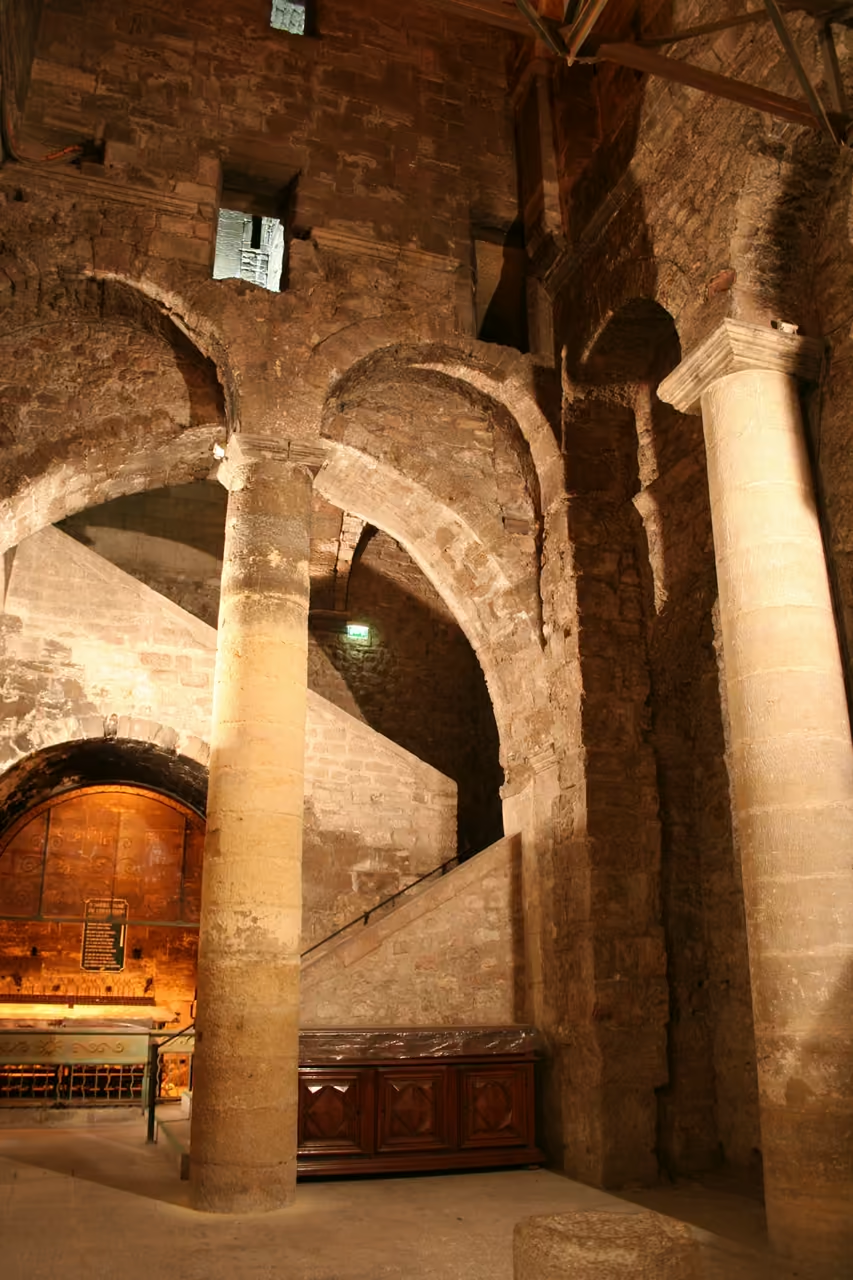
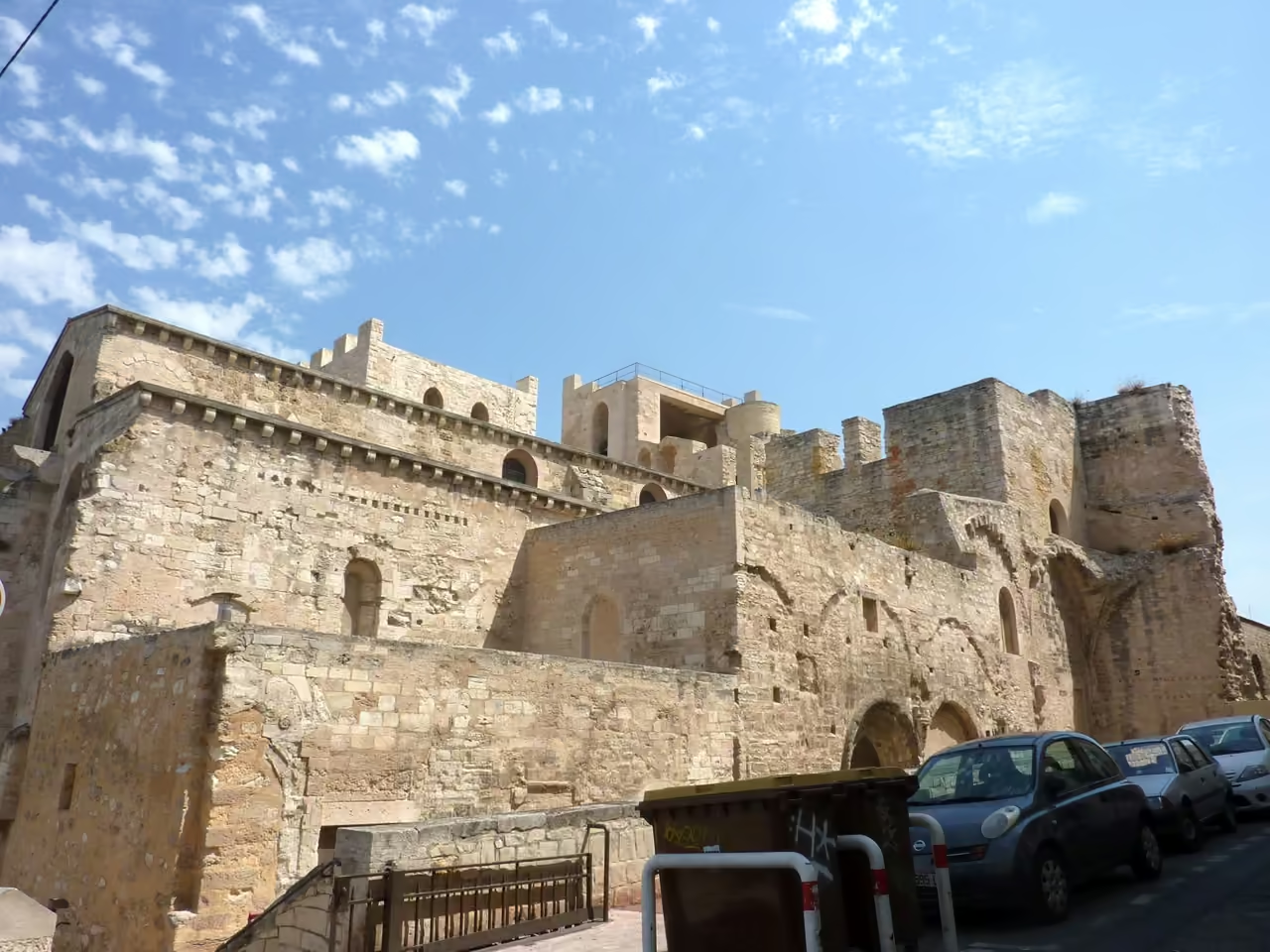
Perched above the Old Port's southern quay, the Abbey of Saint-Victor looks far more like a coastal fortress than a parish church. Crenellated buttresses and masonry walls over three metres thick still brace its flank along Rue Saint-Victor. Step inside beneath Isarn's tower, though, and the military severity gives way to pale stone arches and a towering tribune organ. The real draw waits down a narrow flight of stairs. Beneath the church floor, a dimly lit labyrinth of underground chapels holds carved fourth and fifth century sarcophagi, a floral mosaic, and a medieval walnut Black Virgin. Give your eyes a few seconds to adjust to the crypt glow after stepping out of the sharp Marseille sun. Come 2 February for Candlemas, locals pack the nave with green beeswax candles before heading up Rue Sainte for warm orange blossom navettes at Four des Navettes.
attraction view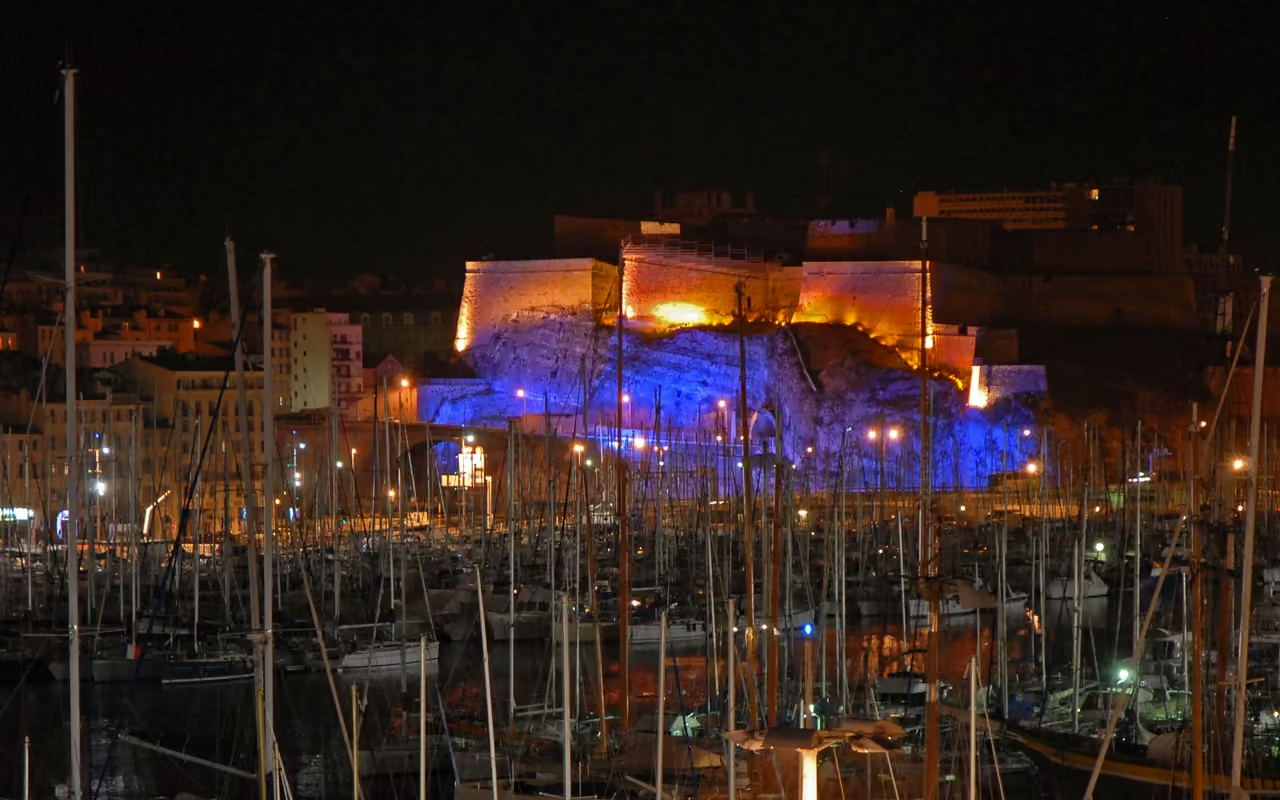 951m
Fort Saint-Nicolas Citadel Ramparts
Guarding the southern entrance of the harbour since 1660, the dramatic star-shaped bastions of Fort Saint-Nicolas glow warm ochre above the water. Stand along Boulevard Charles Livon to capture sharp stone bastions stepping down into dark Mediterranean chop.
photo spot view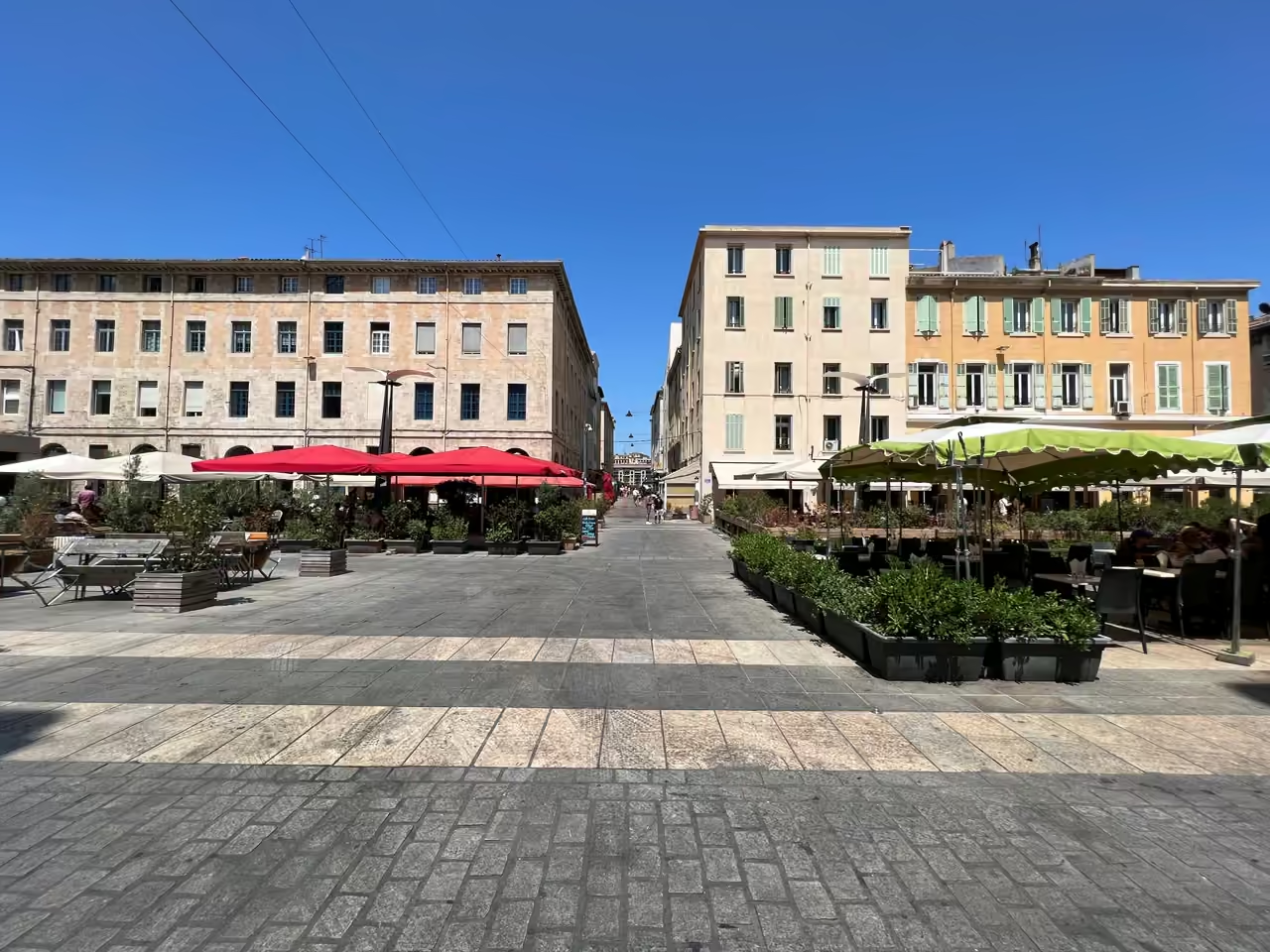 1003m
Quai de Rive Neuve & Cours d'Estienne d'Orves
Once dusk hits the masts of the Vieux-Port, its southern bank comes alive around pedestrianised Cours Honoré d'Estienne d'Orves and Quai de Rive Neuve. Historic dockside vaults house late-night cellar clubs beside British and Irish pubs, rum bars, and candlelit brasseries. Drop by for a sunset pastis overlooking the boats before following music into the night.
nightlife view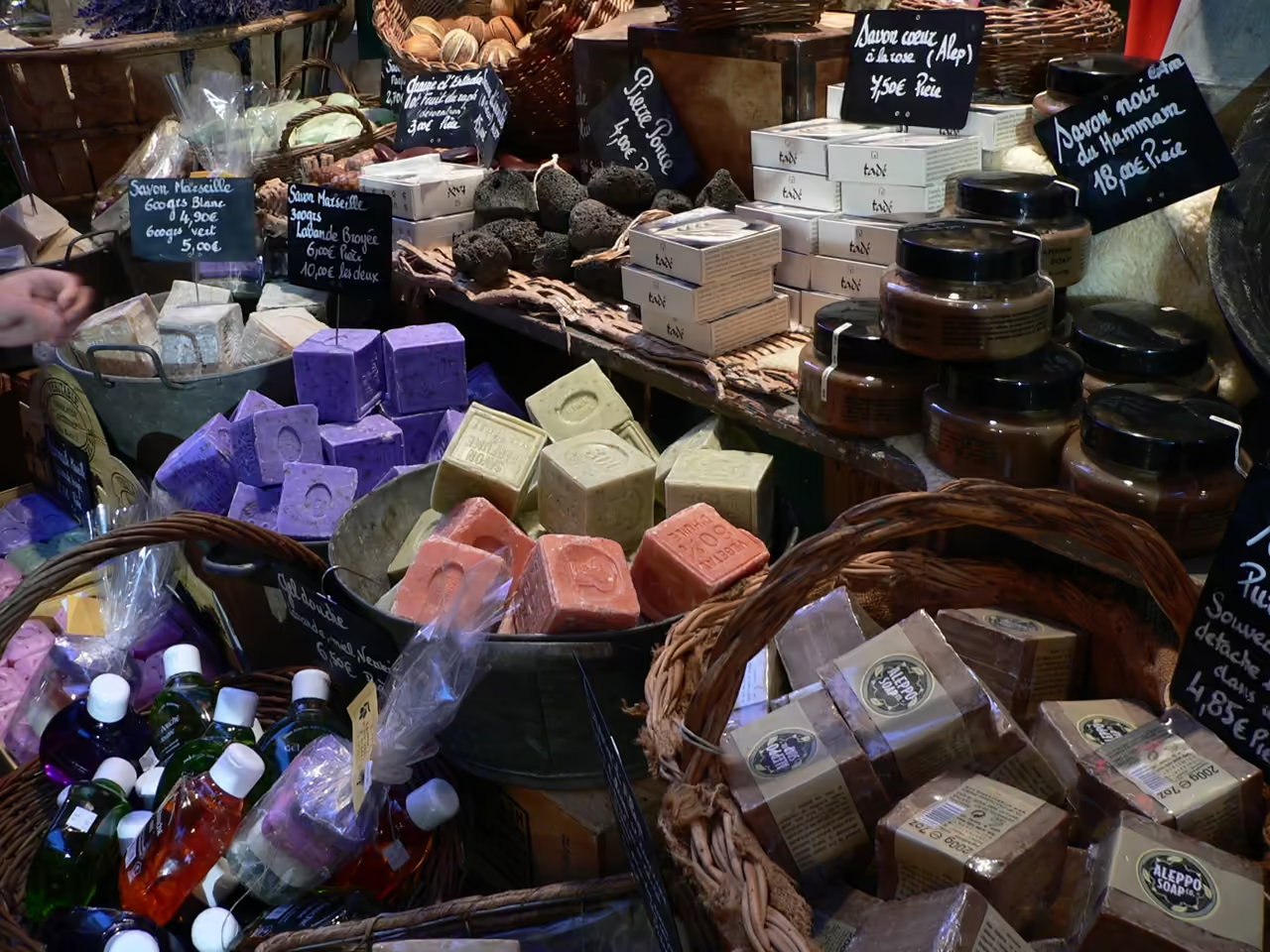 1003m
Traditional Savon de Marseille Soap Workshops
Marseille's centuries-old olive-oil soapmaking heritage endures inside a handful of working northern factories and waterfront ateliers along Quai du Port. Authentic unbleached green or beige cubes carry a '72% d'huile' stamp certifying pure vegetable-oil cooking in giant cauldrons without synthetic perfumes. Step into La Licorne soap museum or harbourfront workshops to watch hot paste stamped by hand.
highlight view
Explore Similar Places in This Collection
Featured on These Itineraries and Routes
1 Day in Marseille: Essential Loop
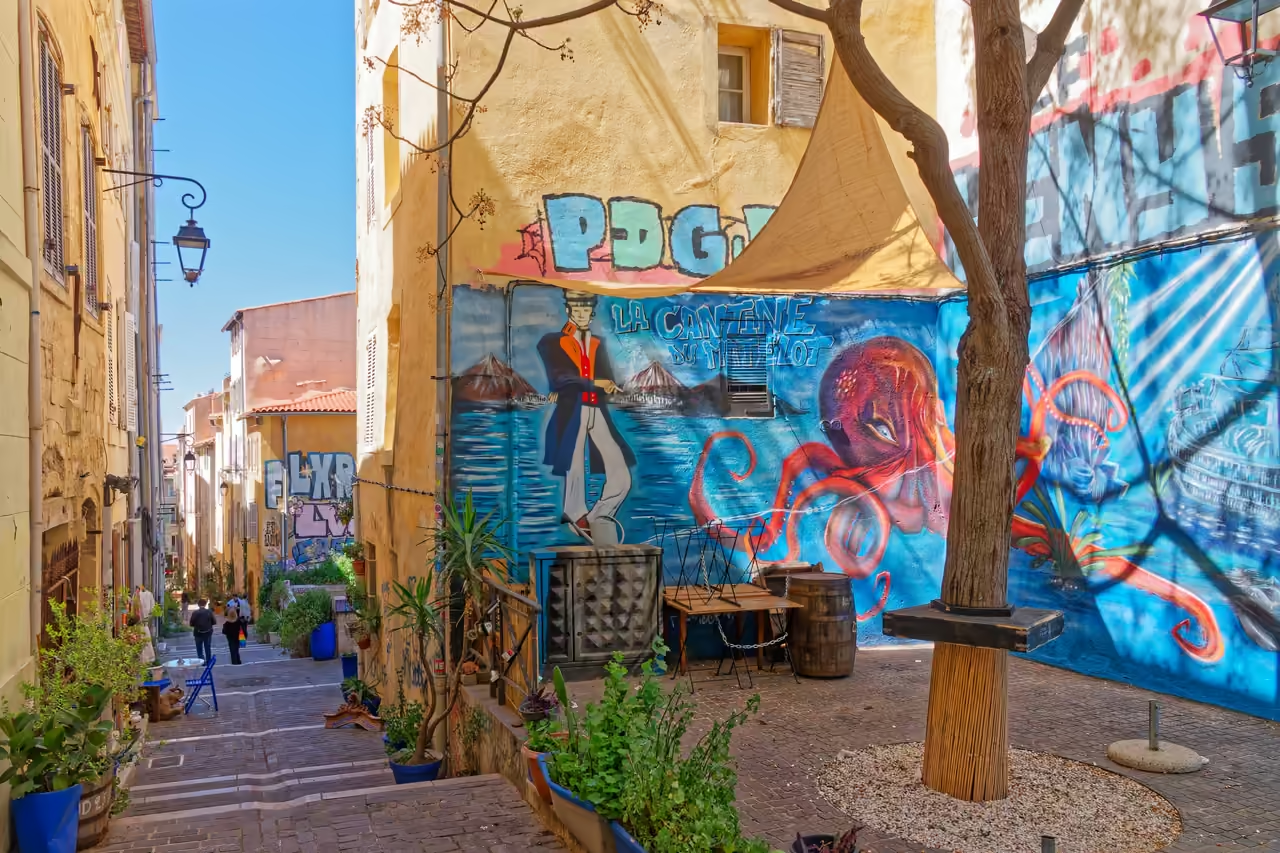
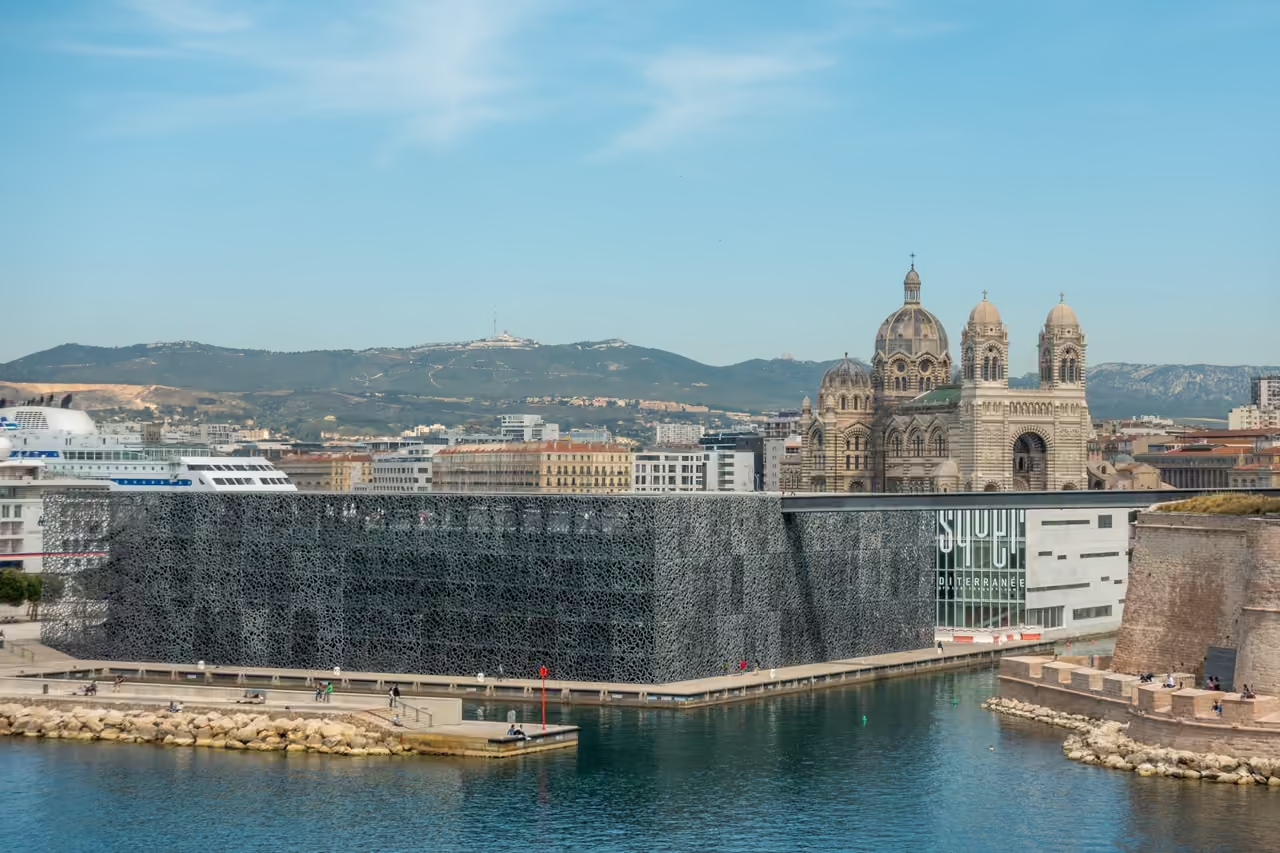
Experience Marseille's heartbeat in one crisp, walkable coastal arc linking morning fish auctions, medieval hilltop lanes, waterfront architecture, panoramic basilica heights, and lively harbour terraces.
view itinerary
3 Days in Marseille: Sea, Culture & Calanques Break
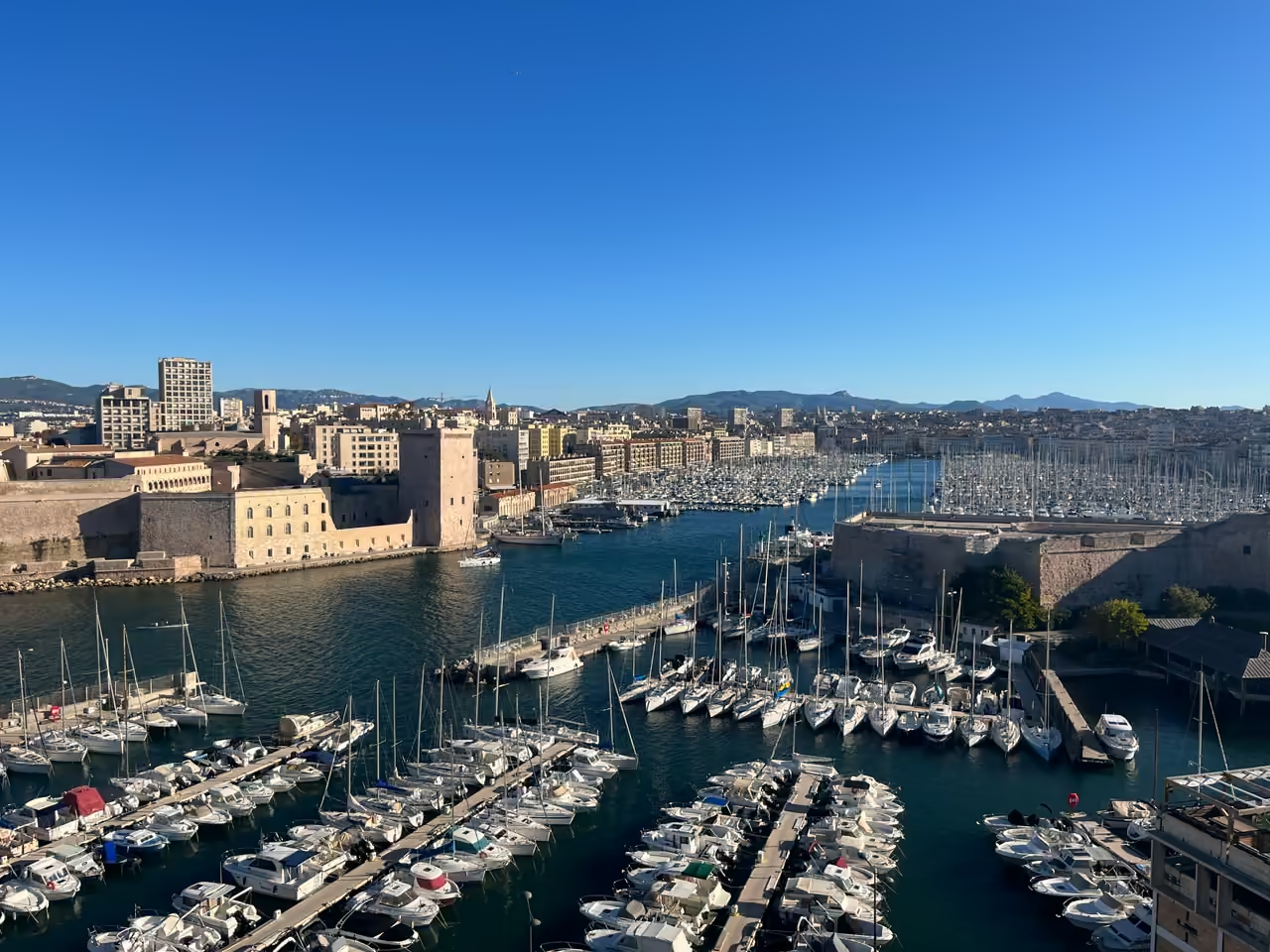
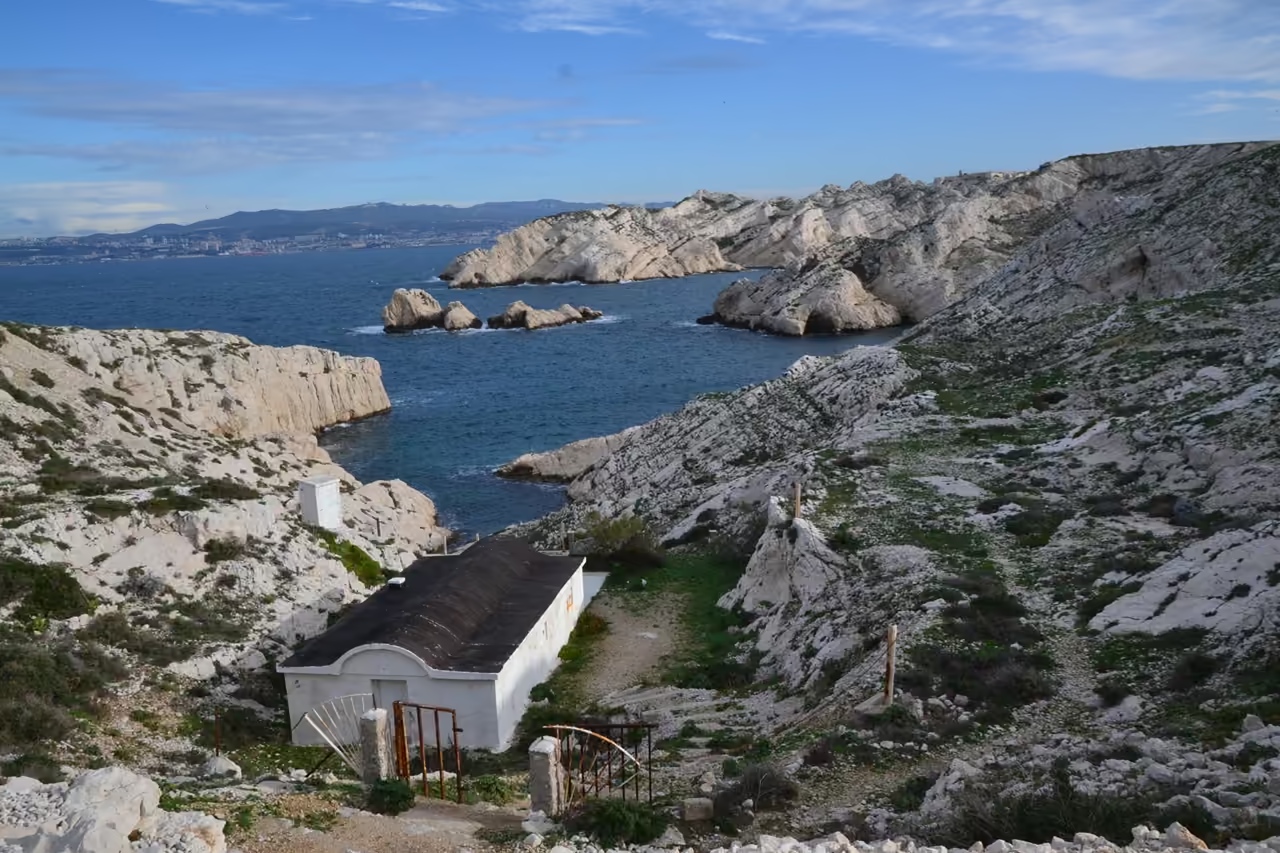
Pair Marseille's harbour museums and island fortresses with a full coastal exploration of the Calanques National Park, Parc Borély, and bohemian street-art squares.
view itinerary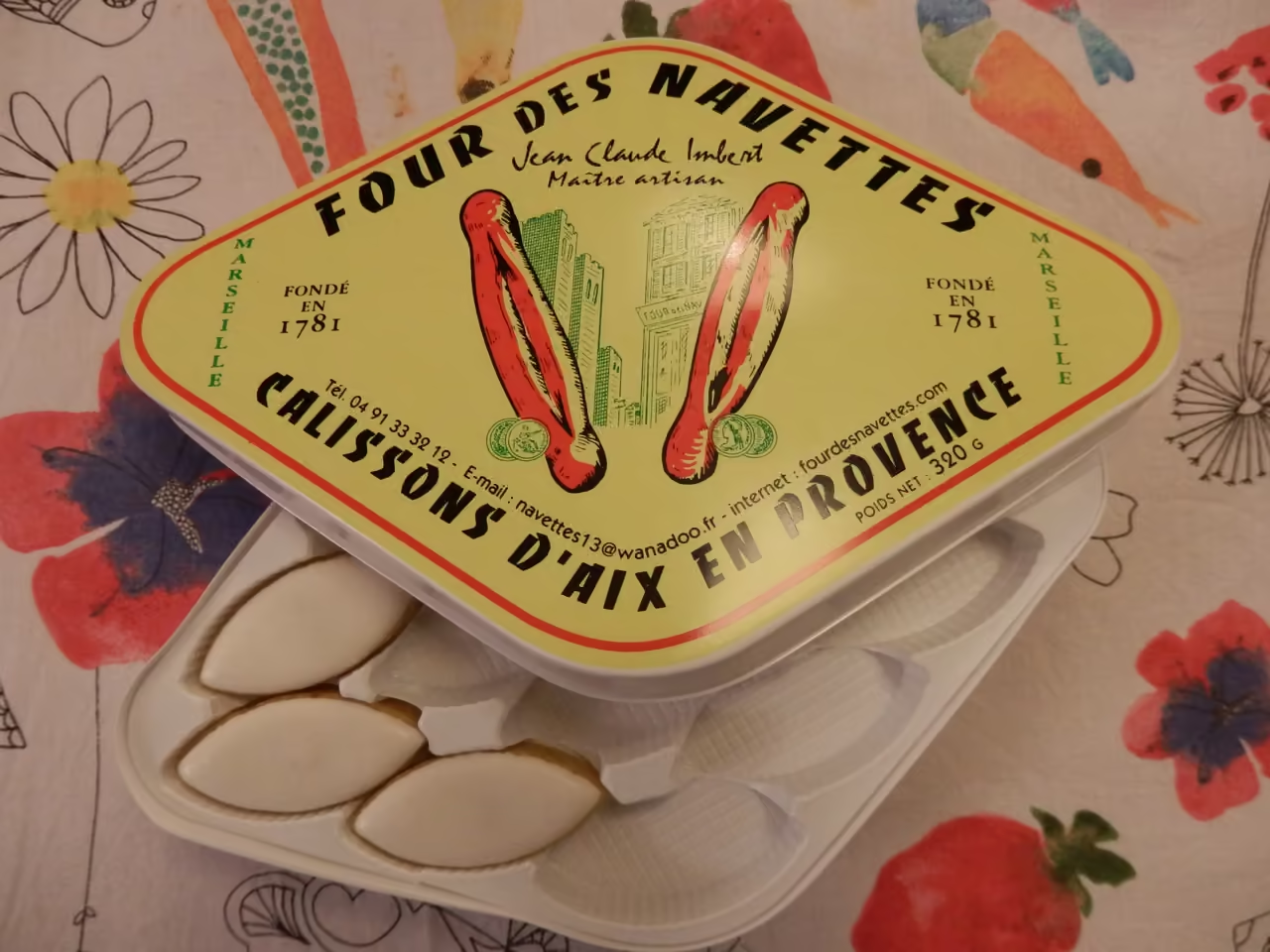
Old Port to Notre-Dame-de-la-Garde Hilltop Walk
Ascend gently from Marseille's southern harbour quays past ancient catacombs, warm biscuit ovens, and quiet hillside gardens straight to the city's golden basilica summit.
view walking route
See all attractions in Marseille
Including Château d'If, Fort Saint-Jean, Frioul Islands, and more