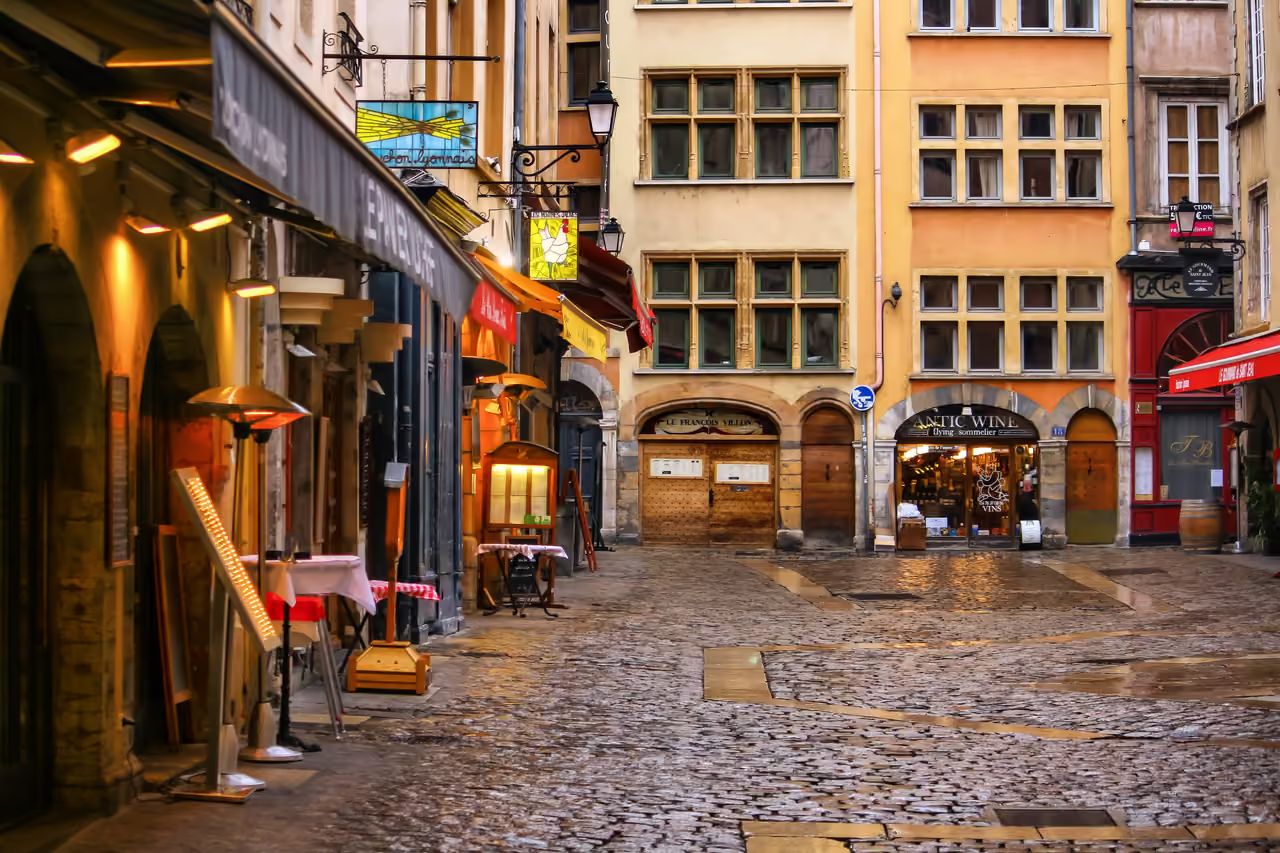
Historic Site of Lyon
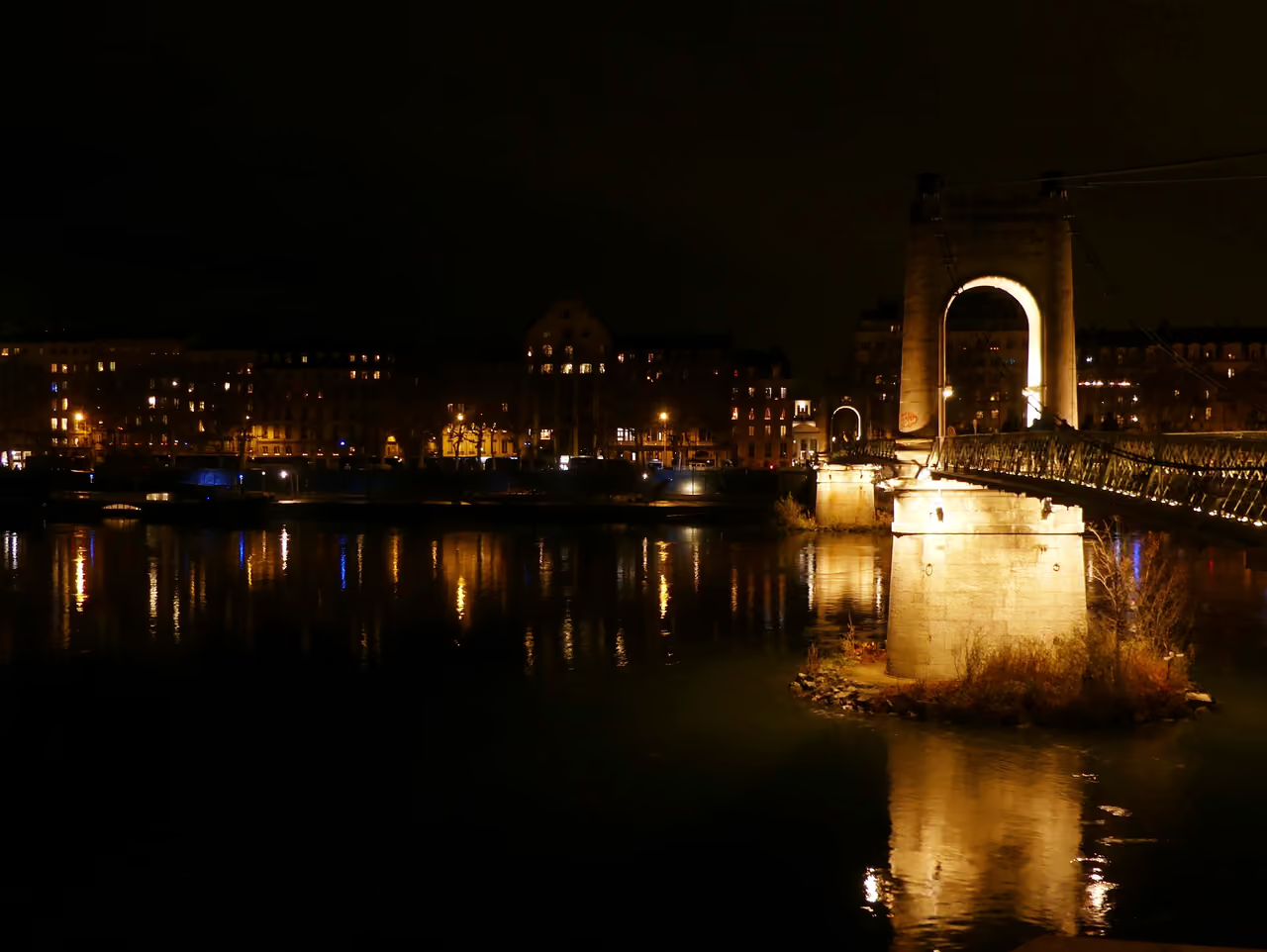
Begin on the Saône quay in Vieux Lyon, where pastel façades lean towards the water and the logic of the place starts to make sense. From there a single day can carry you up to Roman theatres carved into the Fourvière hillside, through courtyards linked by covered passages the locals call traboules, across the huge gravel expanse of Place Bellecour and up the steep Croix-Rousse slopes where silk weavers once worked. UNESCO protects 427 hectares of it, and the appeal is how little the layers get in each other's way: Roman stone, a Romanesque and Gothic cathedral, Renaissance staircases and nineteenth century workshop blocks all sit within a short walk. The little funiculars nicknamed les ficelles haul passengers up to Fourvière in minutes, though the queue on a sunny Saturday is real. Lunch belongs in a bouchon, ideally over pike quenelles or a pot of cervelle de canut, the herbed fresh cheese that only sounds alarming. Finish on the terrace by the basilica, where on a clear day the Alps hang on the horizon over the red tile roofs.
Videos
History of Historic Site of Lyon
Lyon began as a rescue plan. In 43 BC a group of Roman settlers who had been driven out of the Gallic town of Vienne asked the Senate for somewhere new to live, and the general Lucius Munatius Plancus marked out a colony on the hill of Fourvière, above the meeting point of the Rhône and the Saône. Rome had bigger ambitions for the spot than a refuge. The new city of Lugdunum sat where the great routes of Gaul converged, and the statesman Agrippa laid out roads fanning from it towards the Rhine, the Channel, the Atlantic coast and the Mediterranean. By 12 BC the city was hosting an annual gathering at which delegates from some sixty Gallic peoples came to honour Rome and Augustus at an altar on the slopes of the Croix-Rousse, which made Lugdunum the capital of the Three Gauls. Emperor Claudius was born here, and in 48 AD he stood before the Senate in Rome and argued that Gallic nobles deserved a seat among them. Disaster struck in 64 AD, when fire swept through the city. The philosopher Seneca remarked that a single night had separated a great city from nothing at all, and Emperor Nero is said to have sent four million sesterces to help rebuild, repaying a gift Lyon had sent to Rome after its own fire. Lyon recovered, and was still important enough in 197 AD for two rivals for the imperial throne, Septimius Severus and Clodius Albinus, to settle the matter in a battle on the plain just outside it. As Roman power faded, the population drifted downhill, probably because the aqueducts that fed the hilltop town fell out of use, and settled along the Saône instead. That riverbank became the core of medieval Lyon, governed by archbishops who held their authority from the Holy Roman Emperor. The city passed to the French crown in 1312. The Church put it on the European map: in 1245 Pope Innocent IV, who had taken refuge in Lyon, used a general council held at Saint-Jean cathedral to declare the Emperor Frederick II deposed, and a second council in 1274 attempted to reunite the Latin and Greek churches. The city's real golden age was a commercial one. In 1463 Louis XI granted Lyon fairs that drew merchants from across Europe, and Italian bankers, many of them from Florence, moved in. They built tall townhouses in Vieux Lyon with spiral staircases and shaded courtyards, and the traboules, passages that tunnelled through blocks so goods could travel from the Saône quays to the streets without leaving shelter. Printing arrived in 1473, and Lyon became one of Europe's great publishing centres. François Rabelais worked as a doctor at the Hôtel-Dieu and published Pantagruel here, and in 1600 Henri IV married the Florentine Marie de' Medici in Saint-Jean cathedral. Silk turned a trading city into a workshop. Weaving was authorised in 1536, and in time thousands of looms filled the slopes of the Croix-Rousse, where weavers known as canuts lived in tall apartment blocks built around the machines. A weaver's son from Lyon, Joseph Marie Jacquard, perfected a loom in 1804 that was controlled by punched cards, a system often cited as an ancestor of computer programming. The work itself was precarious. When employers drove prices down, the canuts rose in 1831 under a black banner promising to live by working or die fighting, held the city for several days, and were put down by troops. A second revolt in 1834 ended the same way. The Revolution was harder still on Lyon. In 1793 the city rebelled against the government in Paris, endured a siege of about two months, and was punished afterwards with the loss of its name: for a time it was officially Commune-Affranchie, the Freed Commune. Recovery came with the nineteenth century, and so did rebuilding. In the 1850s and 1860s the prefect Claude-Marius Vaïsse cut broad new streets through the Presqu'île in the spirit of Haussmann's Paris, among them the one now called rue de la République. On Fourvière, a white basilica rose between 1872 and 1884, built on a promise the city's people made in 1870 to raise a church if Lyon was spared during the war with Prussia. The twentieth century brought invention and harder years. The Lumière brothers developed the Cinématographe at their family's photographic plate works in Lyon and patented it in 1895. During the Second World War the city became a centre of the French Resistance, and the traboules gave fighters ways to slip across the city out of sight. After the war the crumbling Vieux Lyon was in real danger of being lost to redevelopment until campaigners and the new Malraux law rescued it, and in 1964 it became one of the first protected heritage districts in France. UNESCO inscribed the Historic Site of Lyon on 5 December 1998. What persuaded the inspectors was continuity. Lyon grew steadily eastwards across the Presqu'île and over the Rhône rather than flattening its centre to start again, so every era stayed where it was built: the Roman hillside, the medieval riverbank, the Renaissance courtyards, the silk workers' blocks. The same stubborn habit of keeping things shows up in the city's festivals. A flood on the Saône delayed the inauguration of a statue of the Virgin Mary on Fourvière until 8 December 1852, and when the evening came, residents put candles in their windows to mark it. Every 8 December since, small glass candle holders still appear on windowsills across Vieux Lyon and the slopes of the Croix-Rousse.
25 events spanning 2041 years
Fun Facts
- • Antoine de Saint-Exupéry, author of The Little Prince, was born in Lyon in 1900 a few streets from Place Bellecour. The square carries a monument to him and his most famous character.
- • Canut apartments on the Croix-Rousse slopes have ceilings around four metres high, built to fit the tall Jacquard looms. The Cour des Voraces, named after a group of 1840s silk workers, has a monumental open staircase that rises up through the building.
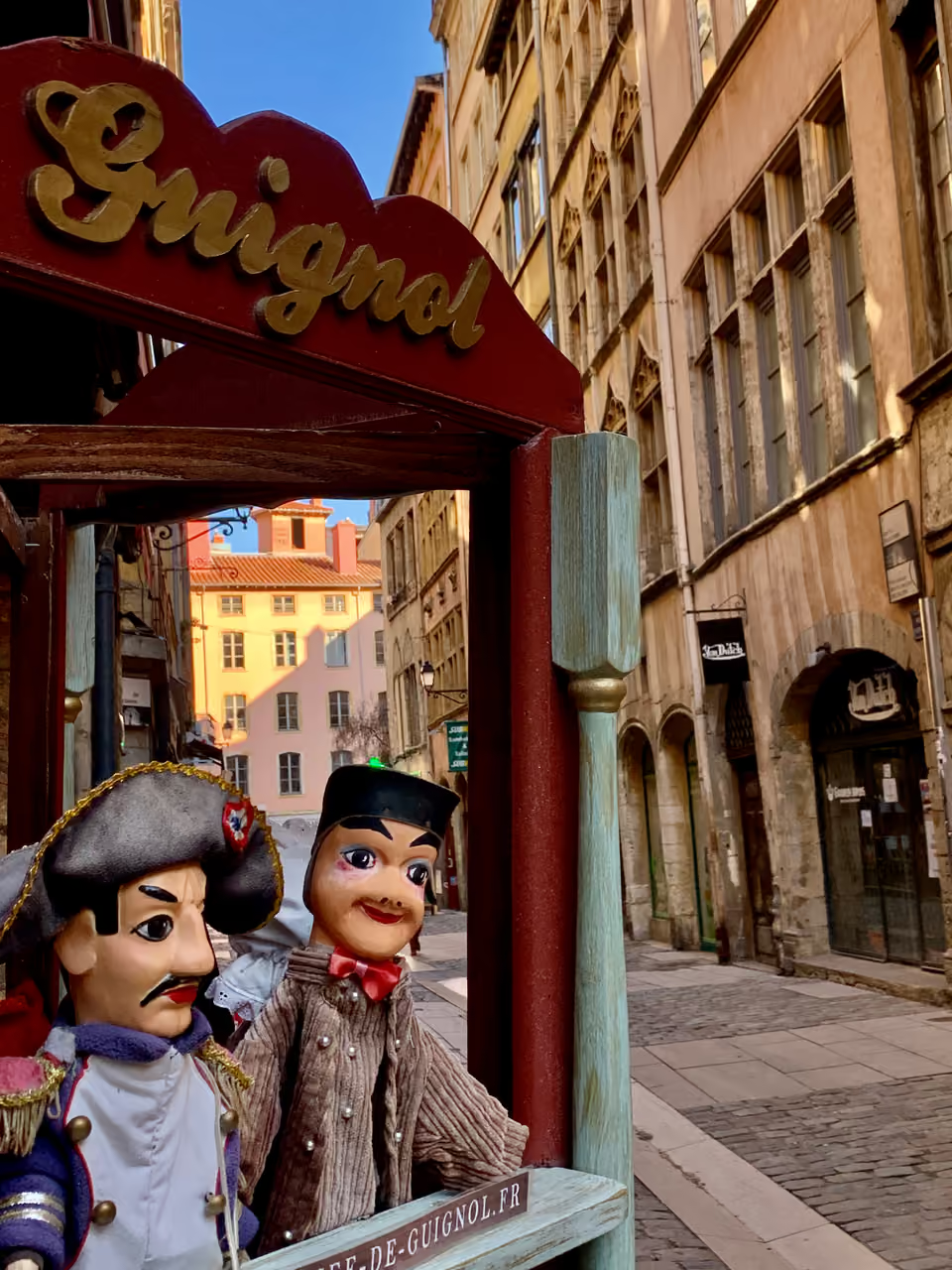
- • Guignol, the famous French glove puppet, was created in Lyon in the early nineteenth century by Laurent Mourguet, a former silk worker. The character is himself a canut, and his friend Gnafron is a cobbler with a famous thirst.
- • In 1528, workers digging on the Croix-Rousse hill uncovered a bronze tablet engraved with Emperor Claudius's speech to the Senate. Known as the Table claudienne, it is now displayed in the Lugdunum museum at Fourvière.
- • Line C of the Lyon metro climbs the Croix-Rousse hill on a rack railway, a rarity among metro lines. It replaced an old funicular nicknamed la ficelle, which had run up the slope since 1862.
- • Lyon's bouchon tradition grew partly out of the mères lyonnaises, women who cooked for wealthy families before opening their own restaurants. In 1933 Eugénie Brazier earned six Michelin stars, three for each of her two restaurants, and her original restaurant still serves on rue Royale.
- • Place Bellecour is one of the largest open squares in Europe, and it is famously treeless and covered in pale red gravel. Its statue of Louis XIV on horseback is the second on the spot, because the first was destroyed during the Revolution.
- • Roman writers called the district at the rivers' meeting point Condate, a Celtic word meaning confluence. The name Lugdunum is also Celtic and is usually linked to the god Lugus.
- • The Fresque des Lyonnais, a giant trompe l'oeil mural, shows around thirty famous people from the city including the Lumière brothers, Saint-Exupéry, Paul Bocuse and Guignol. It was painted in the 1990s on a building at the foot of the Croix-Rousse slopes.
- • The Roman theatre on Fourvière could seat around ten thousand spectators and is often described as the oldest in France. Since 1946 its stone tiers have hosted the summer festival Nuits de Fourvière.
- • The astronomical clock in Saint-Jean cathedral was rebuilt in the late 1590s by the Basel clockmaker Nicolas Lippius. Its mechanical figures still perform at set times through the afternoon.
- • The fountain on Place des Terreaux was designed by Frédéric Auguste Bartholdi, the sculptor behind the Statue of Liberty. It was originally made for Bordeaux, which turned it down over cost, and Lyon bought it instead.
- • The word traboule comes from the Latin transambulare, meaning to pass through. Several hundred of these passages thread through the buildings of Vieux Lyon and the Croix-Rousse, and one famous route runs from 54 rue Saint-Jean through to 27 rue du Boeuf.
RESOURCES
Heritage UNESCO SiteHistoric Site of Lyon FAQ
While we strive to keep this information accurate and up to date, we recommend verifying any details independently before making decisions based on them.
Historic Site of Lyon Map & Neighborhood Explorer
This interactive map is centered on Historic Site of Lyon. Zoom in and move the map around to automatically discover Wikipedia photos and summaries of other nearby sights, monuments, and historical points of interest and stories in real-time!
Places near Historic Site of Lyon
Make the most of your trip. Check out these top-rated spots located nearby.
 66m
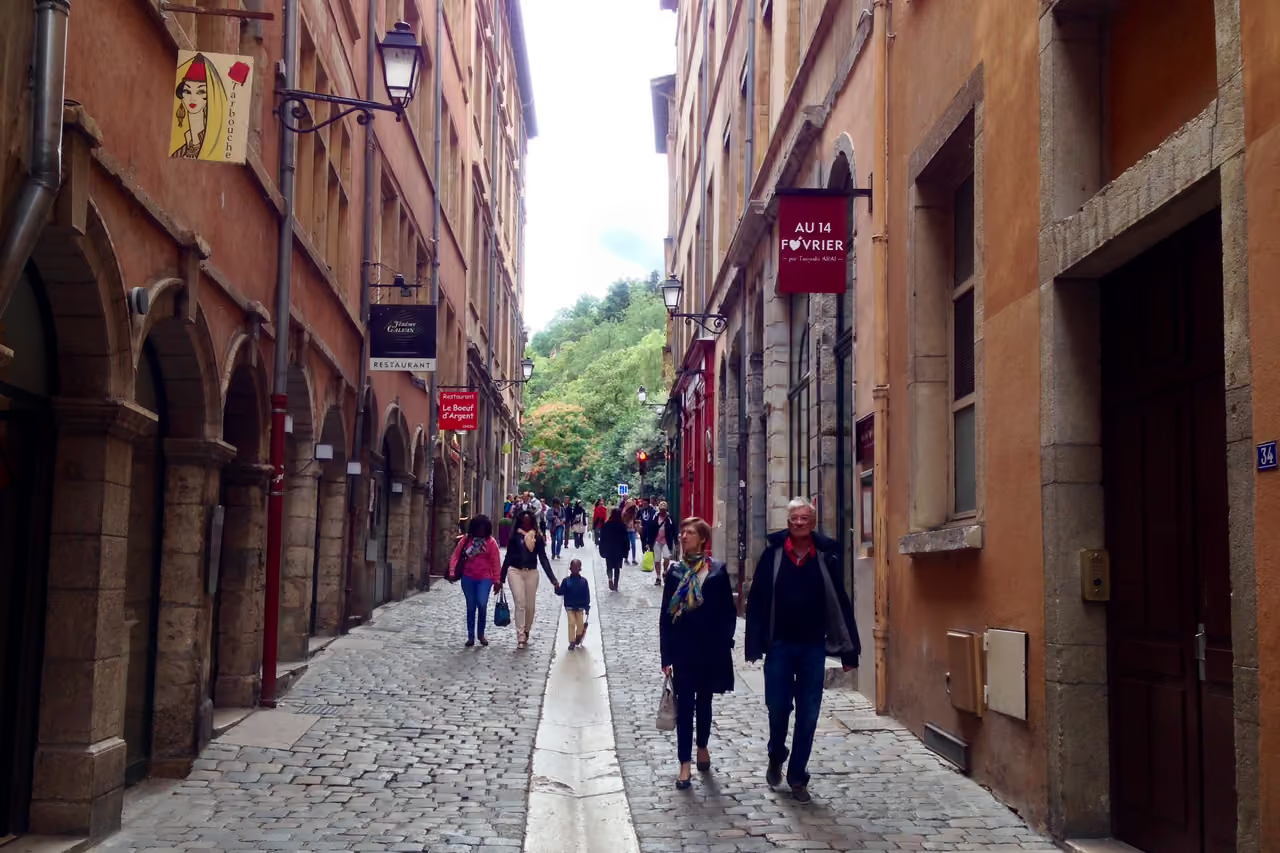
66mBeef Street
The gentle curve of this narrow, cobblestone street creates a classic, compressed perspective of the Renaissance old town. Tall, pastel-coloured facades lean in slightly, blocking the harsh midday sun and creating soft, even lighting. Traditional wrought-iron signs hang above heavy wooden doors, adding historic texture to the composition. It lacks the overwhelming tourist crowds of the parallel main street, allowing for clean, uncluttered shots. Photographers often wait near the Michelin-starred restaurants for chefs to step outside in their white jackets.
photo spot view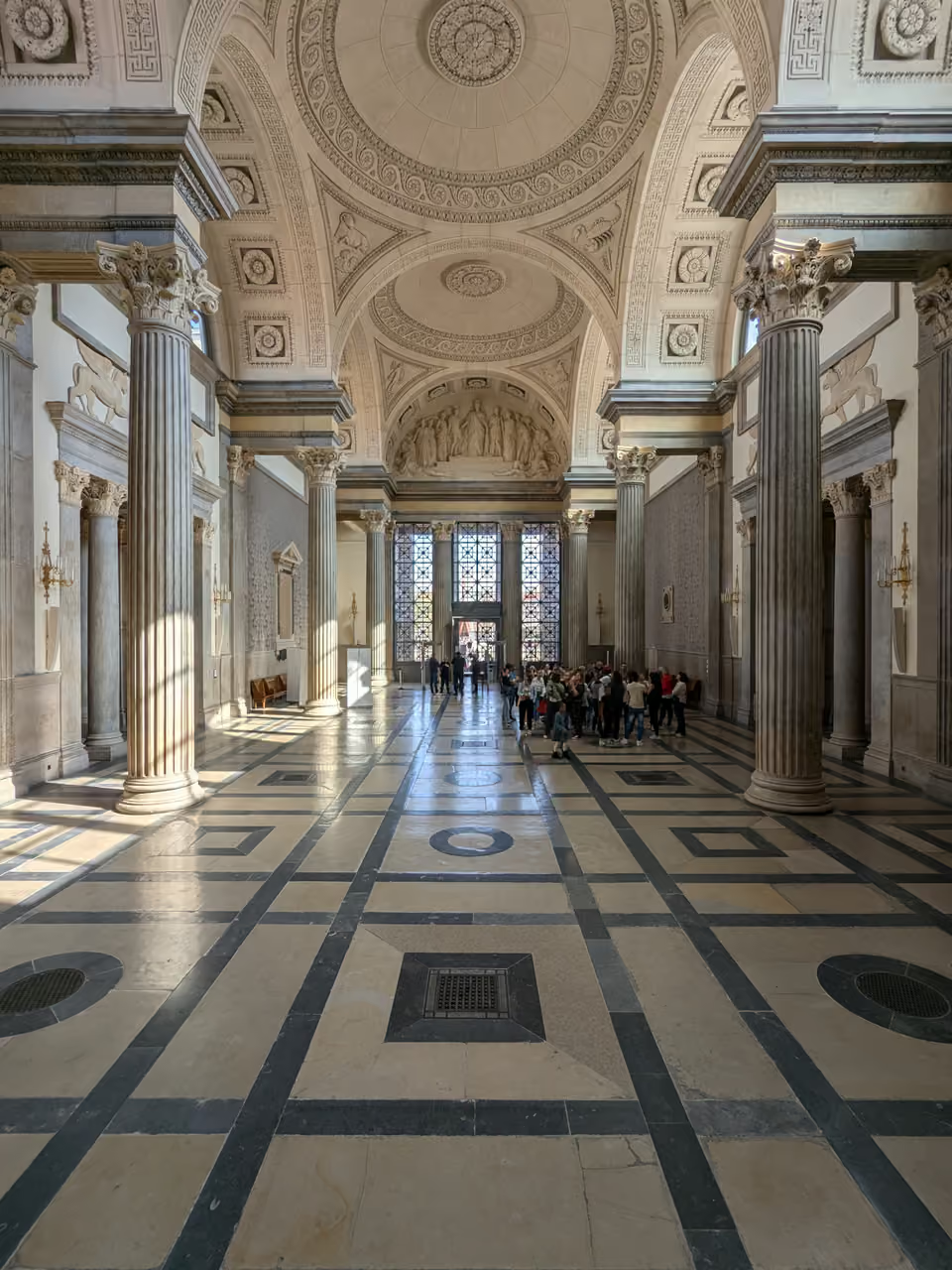 93m
93mPalace of the 24 Columns
A row of twenty-four Corinthian columns stands along the Saône quay like a Greek temple dropped into Vieux Lyon. Louis-Pierre Baltard designed the building in the 1830s, and the façade gives the court its nickname. The courtroom hosted the trial of Klaus Barbie in 1987, a landmark in French legal history.
architecture view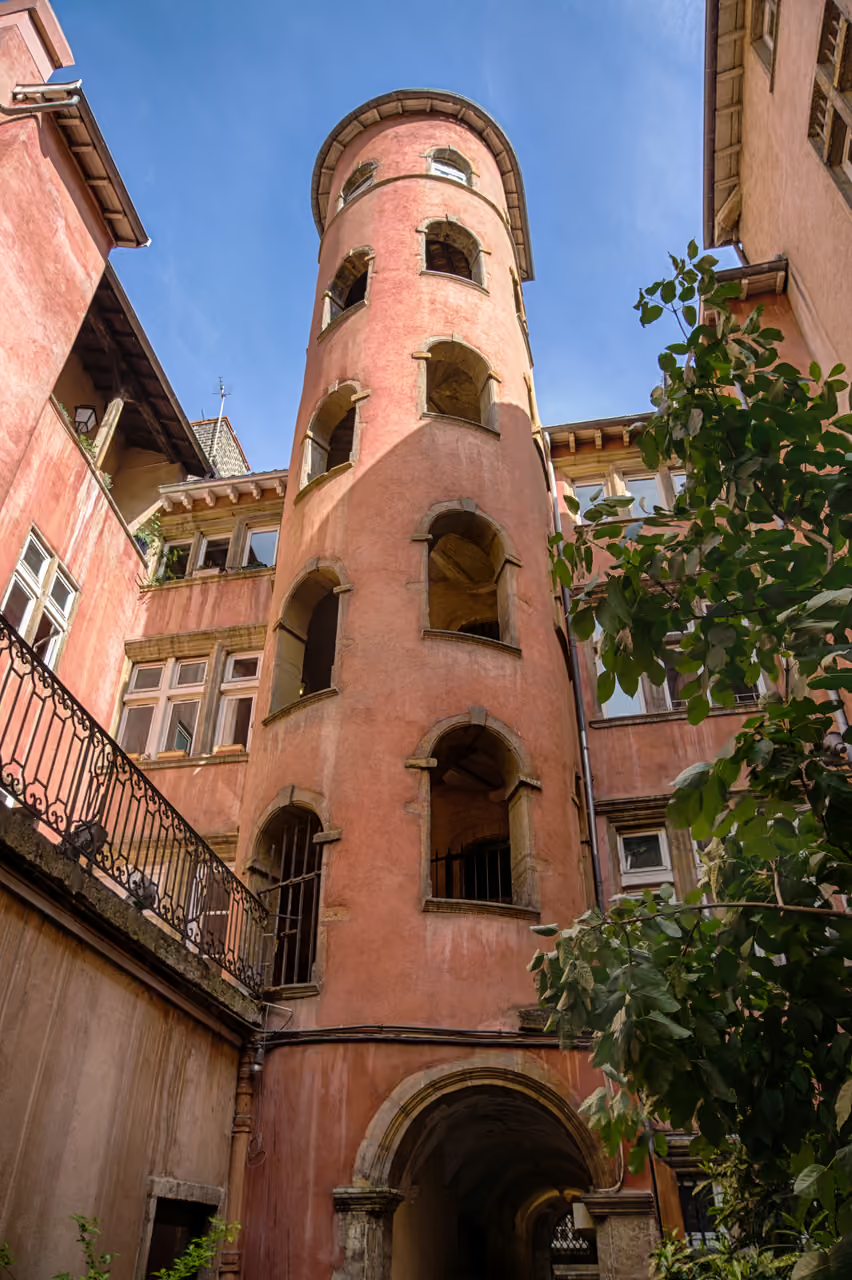 106m
106mPink Tower
You push open a heavy wooden door on a busy, tourist-filled street and step into a sudden, quiet Renaissance courtyard. A stunning, cylindrical terracotta-coloured tower dominates the space, featuring a spiralling external staircase and intricate arched windows. It looks as though a piece of Florence was dropped directly into the French city. The structure vividly demonstrates the immense wealth of the Italian tax collectors who built it in the sixteenth century. It is the most photogenic and architecturally significant hidden courtyard in the old town.
hidden gem view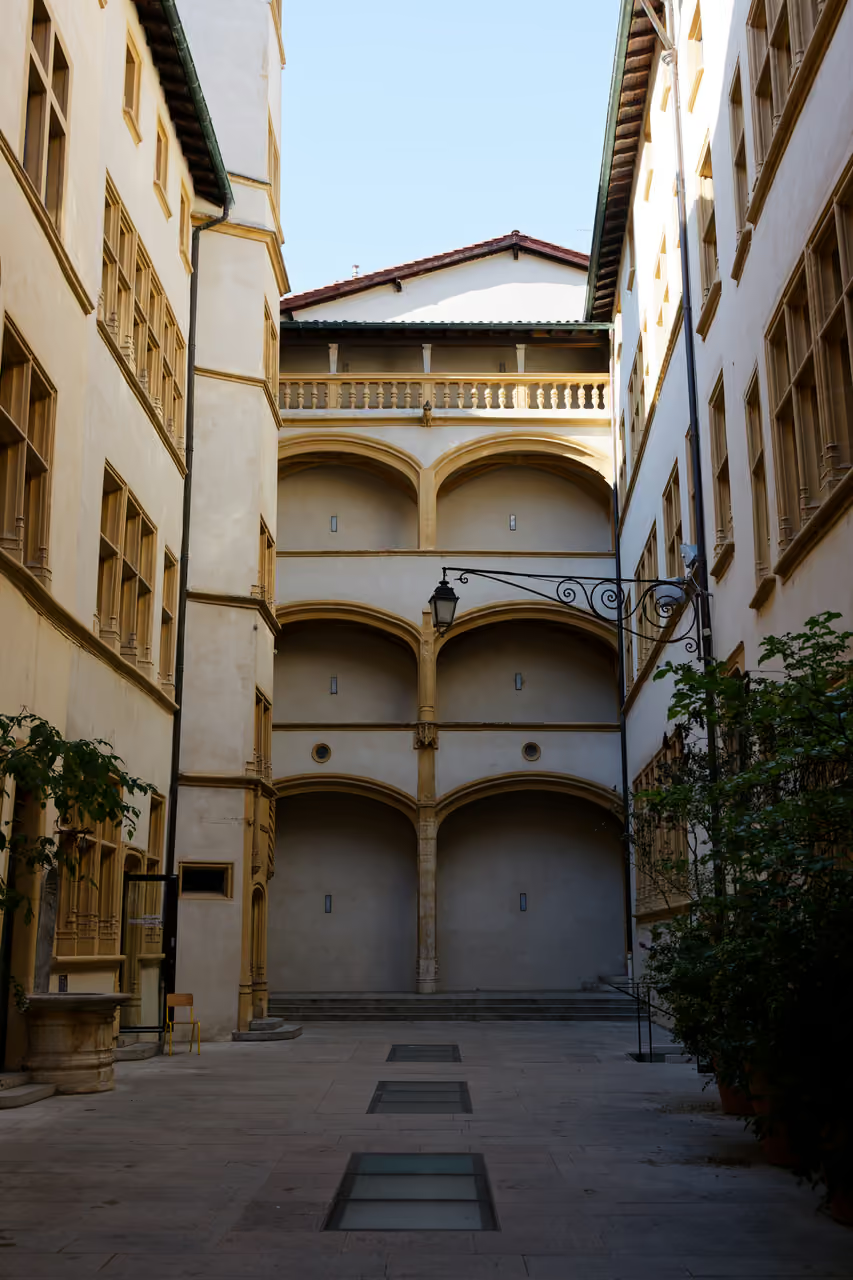 137m
137mGadagne Museums
The Gadagne Museums in Lyon's historic Vieux Lyon district offer a captivating journey through the city's rich past and the whimsical world of puppetry. Housed within the magnificent Hôtel de Gadagne, a former mansion from the 16th century, this complex provides a unique window into Lyonnaise life. Visitors can wander through the grand courtyard, admire Renaissance architecture, and then dive into the Musée d'Histoire de Lyon to trace centuries of urban evolution. Just upstairs, the Musée des Arts de la Marionnette, home to the iconic Guignol, delights with its charming collection and interactive displays. Don't miss the tranquil suspended garden, a serene escape offering splendid views over the old town. It's an experience that truly connects you to Lyon's soul, blending history, art, and a touch of local magic.
attraction view