Gadagne Museums
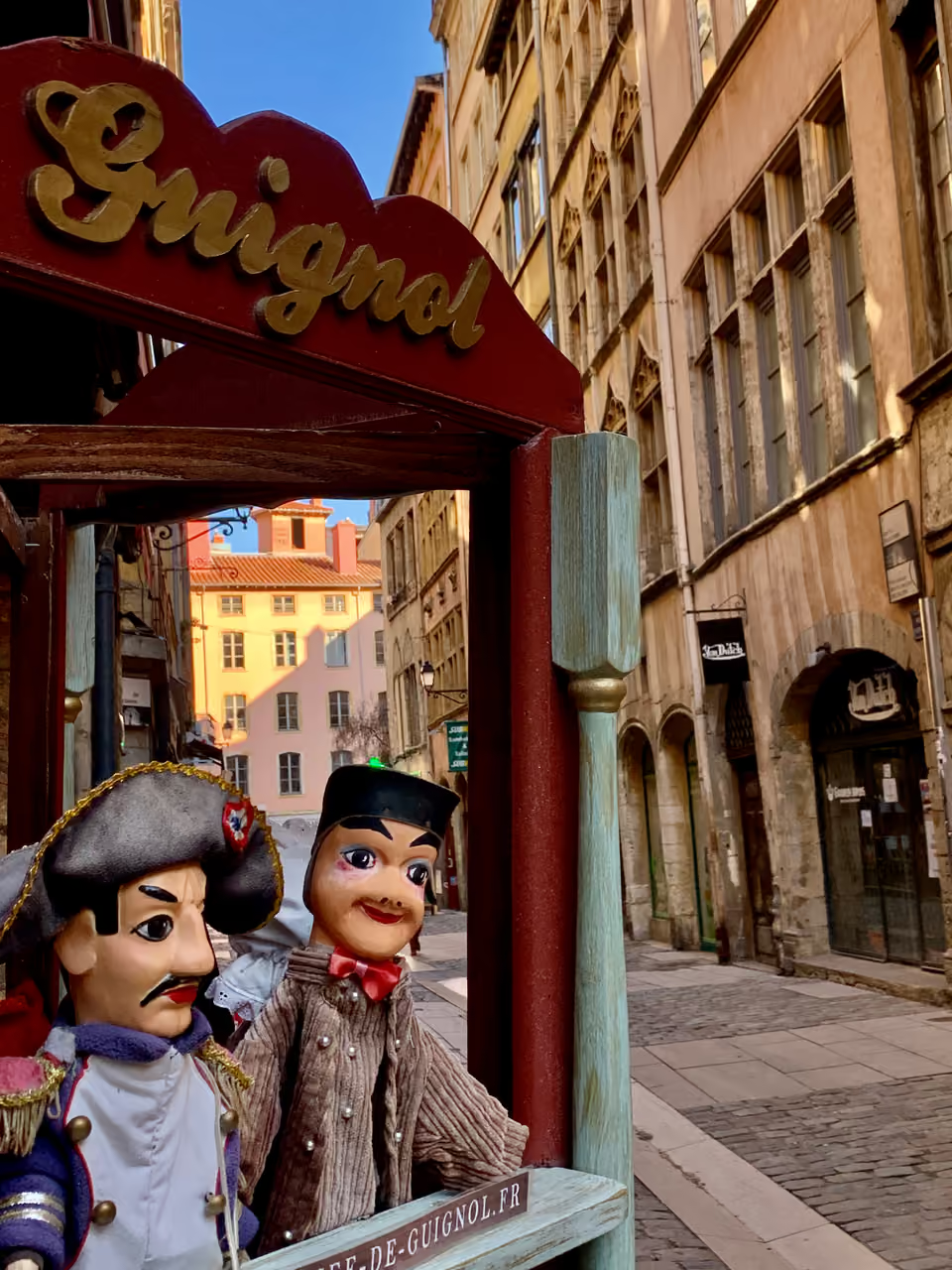
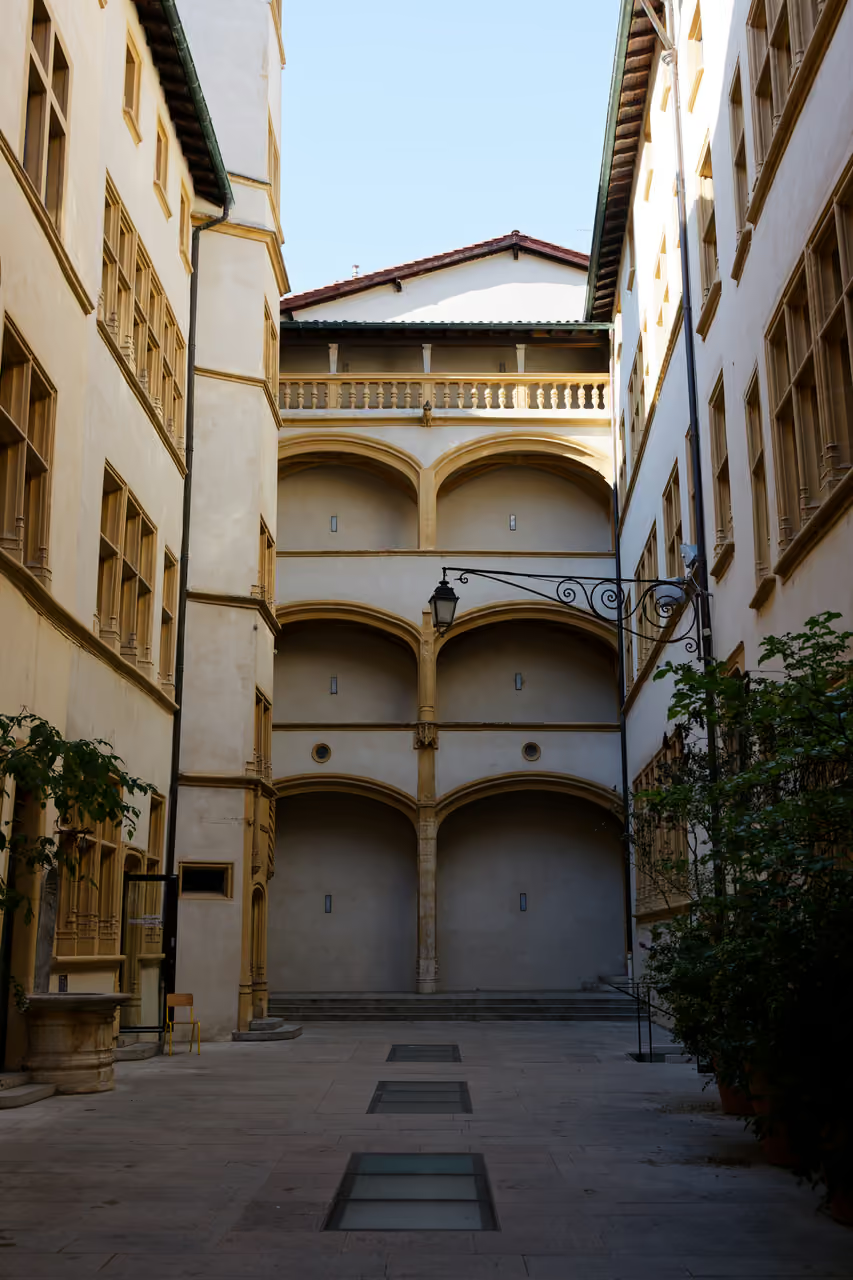
The Gadagne Museums in Lyon's historic Vieux Lyon district offer a captivating journey through the city's rich past and the whimsical world of puppetry. Housed within the magnificent Hôtel de Gadagne, a former mansion from the 16th century, this complex provides a unique window into Lyonnaise life. Visitors can wander through the grand courtyard, admire Renaissance architecture, and then dive into the Musée d'Histoire de Lyon to trace centuries of urban evolution. Just upstairs, the Musée des Arts de la Marionnette, home to the iconic Guignol, delights with its charming collection and interactive displays. Don't miss the tranquil suspended garden, a serene escape offering splendid views over the old town. It's an experience that truly connects you to Lyon's soul, blending history, art, and a touch of local magic.
Videos
History of Gadagne Museums
The story of Gadagne begins long before it became a museum, rooted in the very fabric of Vieux Lyon. The site, strategically located on a terrace, saw intermittent occupation from the 5th to the 13th centuries. By the 14th century, a significant building emerged, evolving from a luxurious residence with glazed tiles and stained-glass windows, indicating its status as a high-end dwelling. Over time, the property changed hands, undergoing various modifications. A pivotal transformation occurred at the turn of the 16th century when Jean de Vareys sold it to the Pierrevive brothers. They embarked on an ambitious reconstruction, demolishing older structures and reshaping the parcel. The property was subsequently leased by the immensely wealthy Florentine merchant-banker, Thomas II de Gadagne, in 1538. His sons, Guillaume and Thomas III, later purchased the mansion in 1545. Despite their legendary wealth—inspiring the Lyonnaise saying "rich as Gadagne"—the brothers were known for their frequent disputes, each occupying a main wing of the hôtel while still hosting lavish celebrations. Their family's fortune was so vast that Thomas I de Gadagne, their great-uncle, even contributed to the ransom for King François I. By the 18th century, the grand Hôtel de Gadagne had been subdivided into smaller lodgings, losing some of its former glory. Its salvation came in stages, beginning with its partial acquisition by the city of Lyon in 1902. This marked the beginning of its rebirth as a public institution. The idea of a museum dedicated to Lyon's history had been circulating since 1874, aiming to consolidate scattered collections into one comprehensive location. The architectural merit and historical significance of the Hôtel de Gadagne made it the perfect choice. In 1921, Mayor Edouard Herriot officially opened the first rooms of the new "Musée de Gadagne." Over the decades, its collections grew, encompassing graphic and decorative arts, as well as significant personal archives. The museum underwent a major renovation and expansion from 1998 to 2009, modernizing the facilities while preserving its historical essence. This redeveloped complex brought the Musée d'Histoire de Lyon fully to life and established the Musée des Arts de la Marionnette as a distinct, autonomous entity, celebrating Lyon's deep connection to puppetry, particularly the beloved Guignol. Today, Gadagne stands as a vibrant cultural hub, continually evolving its exhibits to tell the engaging story of Lyon to new generations.
11 events spanning 722 years
Fun Facts
- • Before becoming a museum, the hôtel was subdivided into many small apartments, a common fate for grand Renaissance residences when family fortunes shifted or times changed.
- • Despite owning the grand Hôtel de Gadagne, brothers Guillaume and Thomas III were known for their constant squabbling, leading them to each occupy a different main body of the same mansion.
- • The Gadagne family, Florentine bankers, were so wealthy they inspired the Lyonnaise saying, "rich as Gadagne," and even helped finance the ransom of King François I of France in 1525.
- • The Hôtel de Gadagne was originally built on a strategic terrace overlooking Lyon, with archaeological findings indicating occupation from as early as the 5th century.
- • The Musée des Arts de la Marionnette houses the original Guignol puppet, a beloved and iconic character deeply rooted in Lyonnaise culture and its theatrical tradition.
- • The idea for a dedicated museum of Lyon's history was first proposed in 1874 by Léopold Niepce, nearly half a century before it actually opened at Gadagne.
- • The museum complex now boasts a unique suspended garden, offering visitors a peaceful retreat and panoramic views over the historic Vieux Lyon district and beyond.
- • The museum underwent a massive, decade-long renovation from 1998 to 2009, which doubled its useful surface area from 3,500 to 6,300 square metres, incorporating modern facilities like an auditorium and a café.
- • The recent renovation of the Musée d'Histoire de Lyon's permanent exhibition has sparked public debate, with some critics calling it "ultra-politicised," while the museum defends its "decalée" (offbeat) approach to engage a broader audience.
- • The restoration process meticulously blended traditional materials and savoir-faire with contemporary architectural elements like concrete, steel, and glass for new additions, creating a clear dialogue between past and present.
- • Visitors to the puppet museum can try their hand at manipulating different types of puppets, with tutorials provided by professional puppeteers, offering an interactive, hands-on experience.
Gadagne Museums FAQ
While we strive to keep this information accurate and up to date, we recommend verifying any details independently before making decisions based on them.
Gadagne Museums Map & Neighborhood Explorer
This interactive map is centered on Gadagne Museums. Zoom in and move the map around to automatically discover Wikipedia photos and summaries of other nearby sights, monuments, and historical points of interest and stories in real-time!
Places near Gadagne Museums
Make the most of your trip. Check out these top-rated spots located nearby.
 137m
137mHistoric Site of Lyon
Begin on the Saône quay in Vieux Lyon, where pastel façades lean towards the water and the logic of the place starts to make sense. From there a single day can carry you up to Roman theatres carved into the Fourvière hillside, through courtyards linked by covered passages the locals call traboules, across the huge gravel expanse of Place Bellecour and up the steep Croix-Rousse slopes where silk weavers once worked. UNESCO protects 427 hectares of it, and the appeal is how little the layers get in each other's way: Roman stone, a Romanesque and Gothic cathedral, Renaissance staircases and nineteenth century workshop blocks all sit within a short walk. The little funiculars nicknamed les ficelles haul passengers up to Fourvière in minutes, though the queue on a sunny Saturday is real. Lunch belongs in a bouchon, ideally over pike quenelles or a pot of cervelle de canut, the herbed fresh cheese that only sounds alarming. Finish on the terrace by the basilica, where on a clear day the Alps hang on the horizon over the red tile roofs.
unesco heritage site view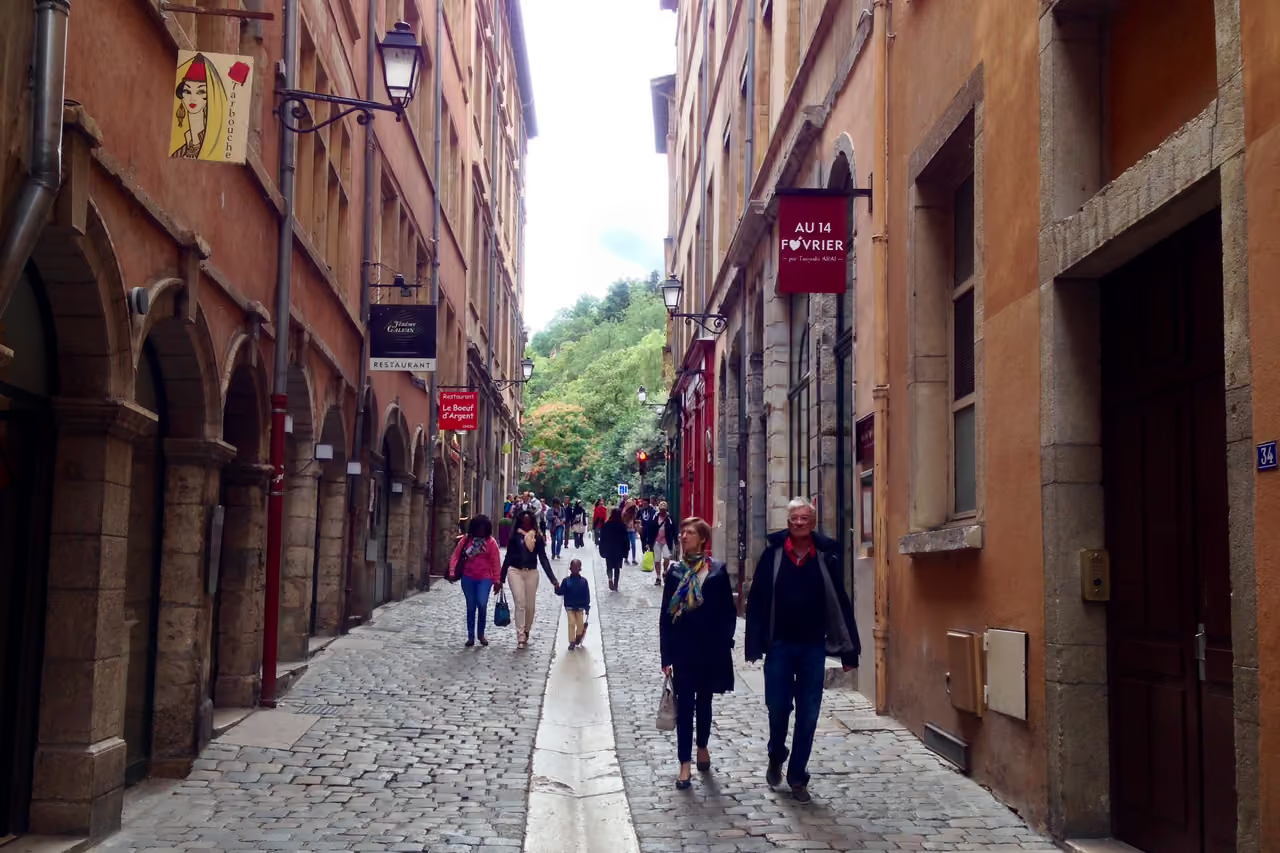 159m
159mBeef Street
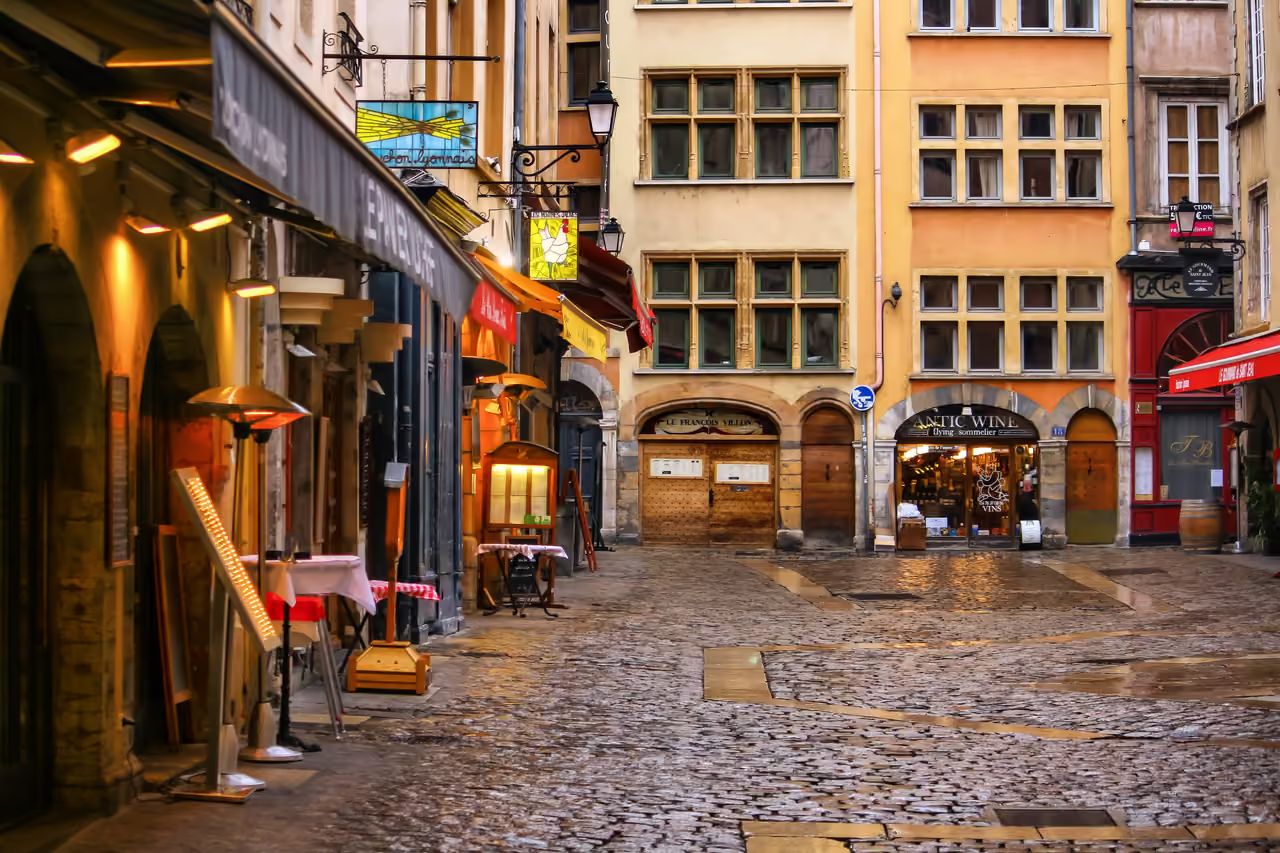
The gentle curve of this narrow, cobblestone street creates a classic, compressed perspective of the Renaissance old town. Tall, pastel-coloured facades lean in slightly, blocking the harsh midday sun and creating soft, even lighting. Traditional wrought-iron signs hang above heavy wooden doors, adding historic texture to the composition. It lacks the overwhelming tourist crowds of the parallel main street, allowing for clean, uncluttered shots. Photographers often wait near the Michelin-starred restaurants for chefs to step outside in their white jackets.
photo spot view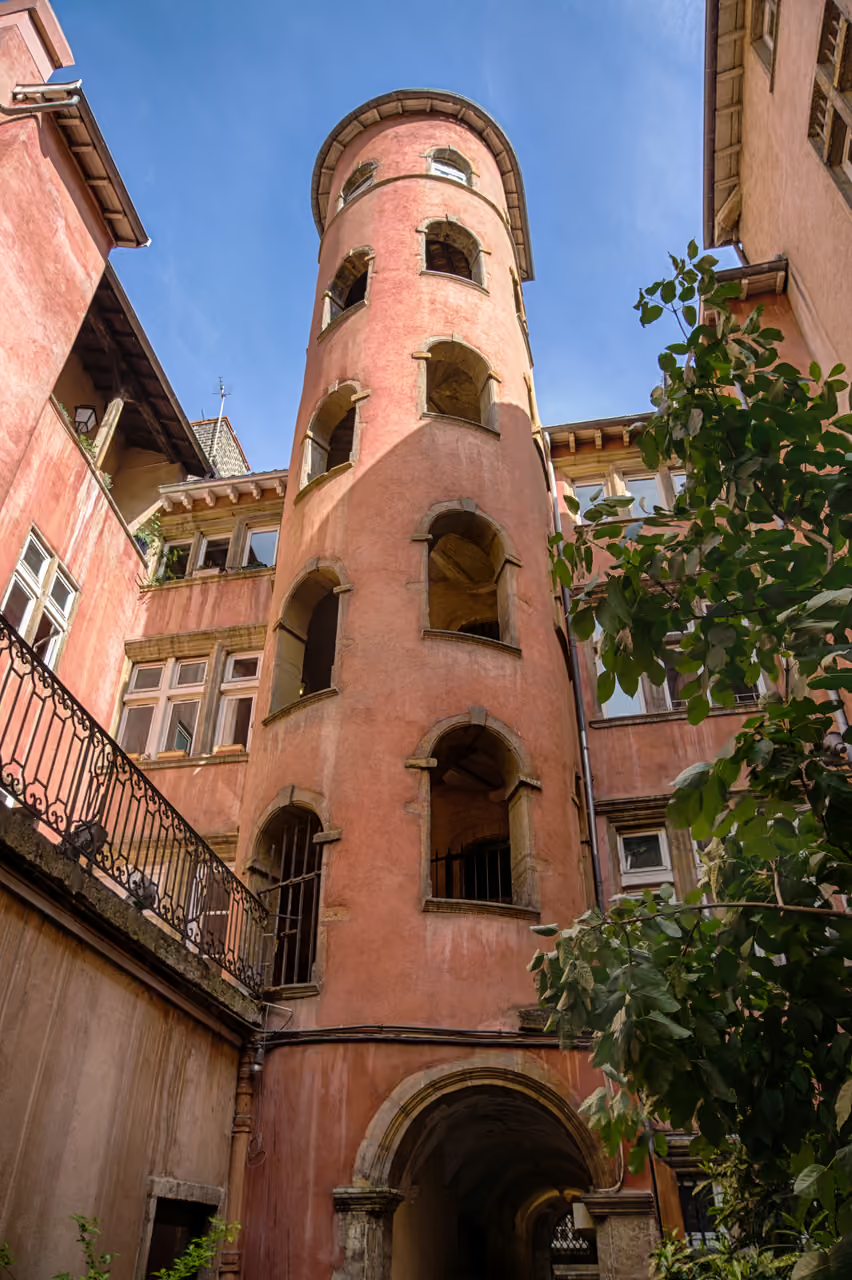 197m
197mPink Tower
You push open a heavy wooden door on a busy, tourist-filled street and step into a sudden, quiet Renaissance courtyard. A stunning, cylindrical terracotta-coloured tower dominates the space, featuring a spiralling external staircase and intricate arched windows. It looks as though a piece of Florence was dropped directly into the French city. The structure vividly demonstrates the immense wealth of the Italian tax collectors who built it in the sixteenth century. It is the most photogenic and architecturally significant hidden courtyard in the old town.
hidden gem view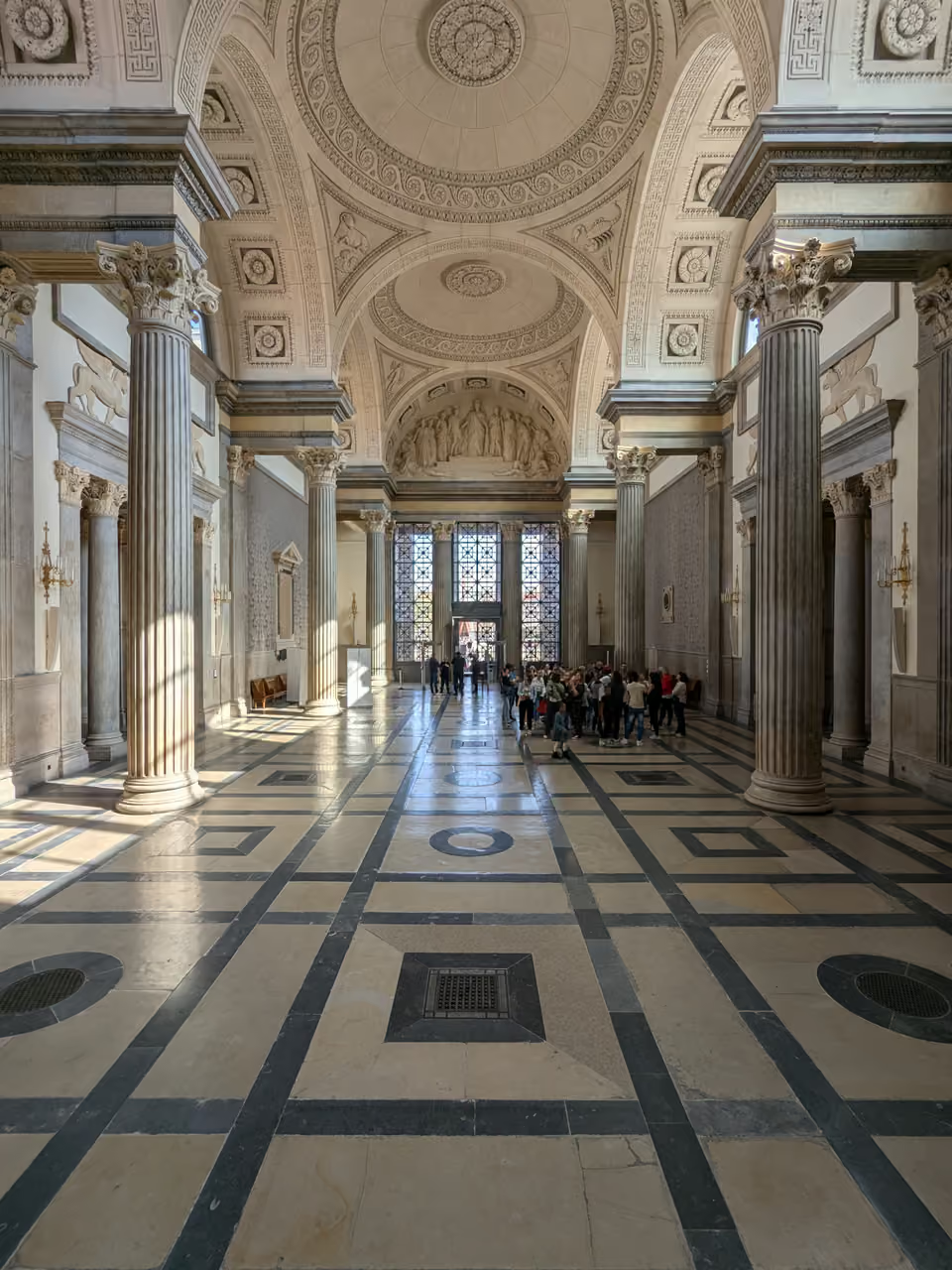 230m
230mPalace of the 24 Columns
A row of twenty-four Corinthian columns stands along the Saône quay like a Greek temple dropped into Vieux Lyon. Louis-Pierre Baltard designed the building in the 1830s, and the façade gives the court its nickname. The courtroom hosted the trial of Klaus Barbie in 1987, a landmark in French legal history.
architecture view
Explore Similar Places in This Collection
See all attractions in Lyon
Including Basilica of Notre-Dame de Fourvière, Confluences Museum, Grand Hôtel-Dieu, and more