Imhotep Museum
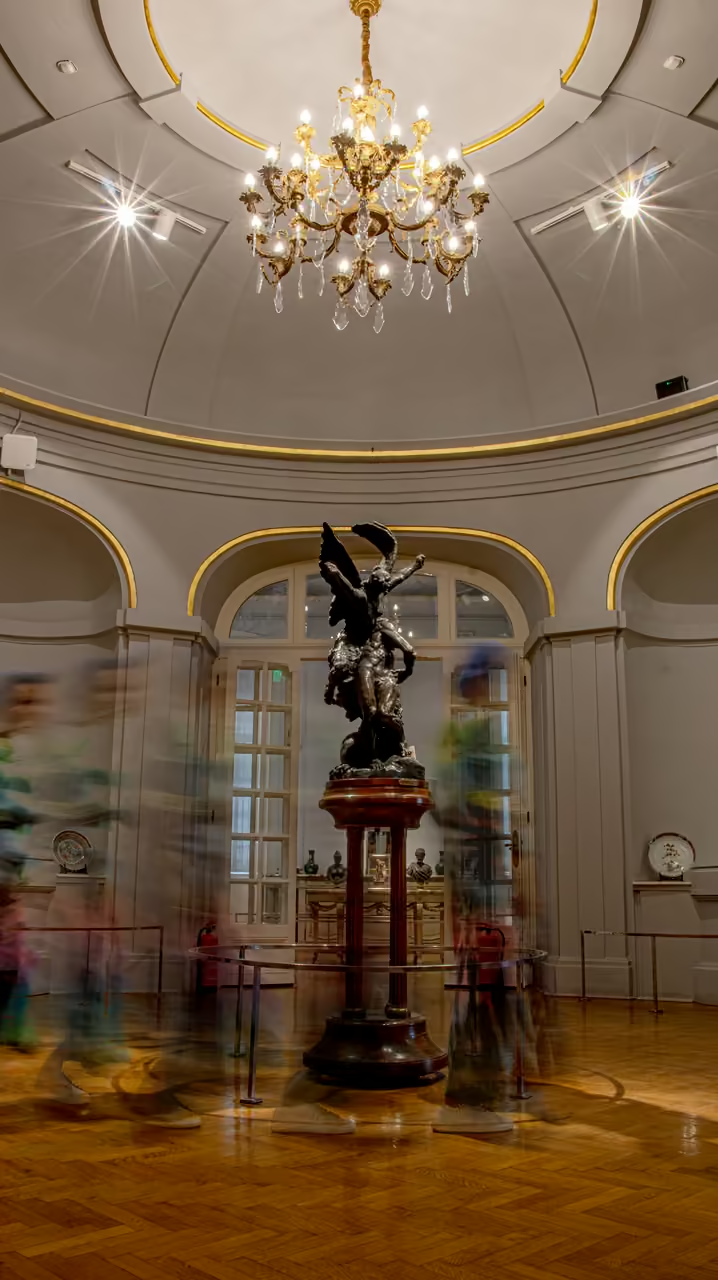
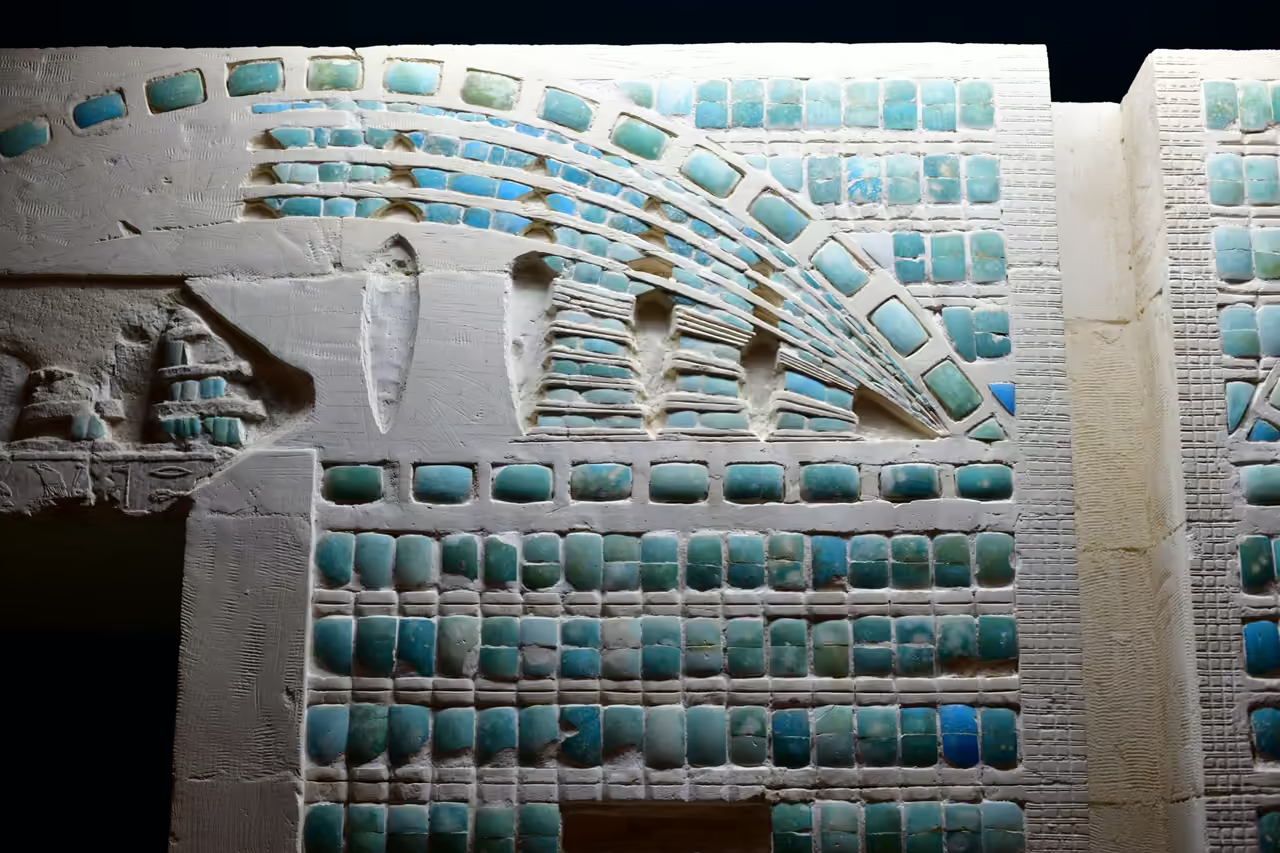
Walking off the blinding limestone sand of the Saqqara plateau into these chilled, dimly lit rooms brings instant relief. The Imhotep Museum sits tucked into the cliff base along the approach road, keeping major finds beside the necropolis that yielded them rather than losing everything to central Cairo. Drivers often miss its low stone facade entirely as they head uphill toward the Step Pyramid. Stop anyway. Inside wait glazed turquoise and green faience tiles salvaged from chambers beneath Pharaoh Djoser's pyramid, alongside the finely carved double statue of 19th Dynasty High Priest Amenemopet and his wife from the Unas causeway. Across the halls, a seated 5th Dynasty limestone scribe shares gallery space with a Ptolemaic mummy unearthed near the Pyramid of Teti. Before heading back out into the heat, linger beside the recreated study of French architect Jean-Philippe Lauer, where monochrome field photographs, personal keepsakes, and shelves of worn books capture 75 years spent piecing Saqqara back together.
Videos
History of Imhotep Museum
For decades, archaeologists at Saqqara faced an exasperating ritual. Teams would wrestle exquisite carvings and fragile burial goods out of the desert sand only to lock them away inside sweltering site magazines, where fluctuating temperatures and thin security placed ancient wood and limestone in constant danger. Whatever escaped those cramped storerooms was hauled north to Cairo, leaving one of Egypt's most prolific excavation fields stripped of its finest objects. In 1990, the Supreme Council of Antiquities resolved to break that cycle by conceiving a secure museum with regulated temperature and humidity directly on the necropolis grounds. Turning that blueprint into stone took seven years of hesitation. Planners refused to drop a jarring modern box onto the plateau where it would mar the jagged horizon of ancient tombs and Pharaoh Djoser's Step Pyramid. Only in 1997 did authorities settle on a sheltered pocket at the base of the cliffs and finally break ground. Workers finished the low, muted building in 2003, giving conservators proper laboratories and shielded storage vaults within sight of the monuments they protected. Its doors opened on 26 April 2006. Egyptian First Lady Suzanne Mubarak and French First Lady Bernadette Chirac cut the ribbon together, honouring decades of Egyptian and French cooperation on the plateau. That partnership ran straight through the life of architect Jean-Philippe Lauer, who arrived in the 1920s and spent roughly 75 years reassembling Djoser's ruined precinct before his death in 2001. During those opening months, Cairo's Egyptian Museum also lent a prized fragment from a Djoser statue base carved with the name and titles of Imhotep himself, granting the 3rd Dynasty master builder a brief symbolic homecoming beneath his own pyramid. The museum soon diverged from the dusty permanence of older city institutions. Curators dedicated an entire gallery to rotating finds pulled fresh from ongoing digs across the Saqqara plateau, letting newly unearthed pieces move swiftly from sand to glass showcase. That commitment to modern conservation deepened in 2022 when the complex closed for comprehensive upgrades to its lighting, display cases, and climate engineering. Reopened in 2023, the Imhotep Museum continues to receive freshly excavated carvings and burial wares directly from active excavation trenches up on the limestone ridge.
8 events spanning 33 years
Fun Facts
11- 01
Although the museum's turquoise and green faience tiles glow under gallery lights today, ancient craftsmen originally mounted them inside dark underground corridors beneath the Step Pyramid to replicate the woven reed matting that lined royal mudbrick palaces in nearby Memphis.
- 02
Architectural stone columns in the fourth hall capture the exact historic moment when Egyptian builders moved beyond mudbrick and timber, carving solid limestone with vertical fluting designed to mimic slender bundles of bound plant stalks.
- 03
Carved limestone and painted wooden stelae in the third hall acted as ancient invitations to the living, bearing formulas that urged passing visitors to speak the deceased's name aloud so their spirit would stay nourished.
- 04
Despite naming the museum after him and placing it in the shadow of the Step Pyramid he designed, archaeologists have never found Imhotep's own tomb anywhere at Saqqara, leaving the resting place of antiquity's most celebrated mind an unsolved mystery.
- 05
For generations scholars debated whether Imhotep was purely legendary until excavators at Saqqara uncovered a broken limestone statue base of Pharaoh Djoser inscribed with Imhotep's titles as Chancellor and Chief Sculptor, securing his status as the earliest known named architect in recorded history.
- 06
French architect Jean-Philippe Lauer arrived on the plateau in 1926 expecting only a short stint assisting British archaeologist Cecil Firth, yet became so absorbed in reconstructing Pharaoh Djoser's collapsed courtyards that he stayed for roughly 75 years and worked into his nineties.
- 07
Inside the Egyptian art gallery, blunt wooden mallets, stone pounders, and copper chisels sit beside finished sculptures, showing how Old Kingdom crews dressed hard stone blocks centuries before iron metallurgy reached the Nile Valley.
- 08
Photographs in the memorial gallery document Lauer's lifelong commitment to anastylosis, a painstaking restoration technique in which he rebuilt fallen Step Pyramid colonnades using original carved blocks held together with neutral modern masonry only where structural stability demanded it.
- 09
Roughly two millennia after his death, Egyptians worshipped Imhotep as a god of medicine and wisdom, casting small bronze statuettes like the one in the architectural hall that show him seated with an unrolled papyrus scroll across his knees, while visiting Greeks equated him with their healing deity Asclepius.
- 10
The 5th Dynasty limestone scribe statue embodies rare authority in Old Kingdom society, where only a tiny fraction of Egyptians could read or write hieroglyphs and skilled record keepers stood close to the levers of state power.
- 11
The Ptolemaic mummy discovered by Zahi Hawass reveals how tenaciously ancient families clung to Saqqara's prestige, as it was laid to rest beside the Pyramid of Teti more than two millennia after that Old Kingdom king was buried.
FULL PLACE DETAILS
Updated
FULL PLACE DETAILS
UpdatedOVERVIEW & STATS
- Established
- In 1990, making it 36 years old
WEB & AMENITIES
Imhotep Museum Map & Neighborhood Explorer
This interactive map is centered on Imhotep Museum. Zoom in and move the map around to automatically discover Wikipedia photos and summaries of other nearby sights, monuments, and historical points of interest and stories in real-time!
Imhotep Museum FAQ
The museum sits at the foot of the Saqqara plateau escarpment along the main approach road near the archaeological site entrance, roughly 30 kilometres south of central Cairo and a short drive from ancient Memphis. Because it is built low against the cliff base, visitors usually stop there just before ascending onto the plateau or on their way back down.
Stopping in beforehand gives helpful visual context, especially seeing the turquoise faience wall tiles, fluted columns, and restoration photographs before walking around the open ruins. On hot afternoons, however, saving the museum for last provides welcome shade and air conditioning after hours in the desert sun.
Entry to the Imhotep Museum is typically covered by the general Saqqara archaeological site ticket rather than requiring a separate museum pass, though individual tombs and underground galleries on the plateau carry varying entry rules. Confirming coverage at the main Saqqara ticket booth upon arrival ensures you have the right pass for your route.
Imhotep served as vizier and master builder to Pharaoh Djoser during the 3rd Dynasty around 2650 BC and designed the Step Pyramid directly uphill from the museum, Egypt's earliest monumental stone building. Worshipped centuries later as a god of wisdom and healing, he inspired the museum's name right beside his greatest architectural achievement.
Jean-Philippe Lauer was a French architect and Egyptologist who arrived at Saqqara in 1926 and spent roughly 75 years reconstructing the scattered stones of Djoser's Step Pyramid complex. His tribute gallery recreates his study and library, displaying field photographs, books, and personal items from his decades on the plateau.
A typical visit takes about 1 hour. We recommend planning your schedule accordingly to make the most of your time there.
The closest place to visit near Imhotep Museum is Day Trip to Saqqara and the Step Pyramid, around 799 m away. Other things to do near Imhotep Museum include Memphis Colossus of Ramesses II (3.4 km), Southern Desert Horizon Ridge (3.7 km) and Abusir Pyramids (4.3 km). All of these are within roughly 4.3 km of Imhotep Museum.
It dates back to 1990, making it 36 years old.
While we strive to keep this information accurate and up to date, we recommend verifying any details independently before making decisions based on them.
Places near Imhotep Museum
Make the most of your trip. Check out these top-rated spots located nearby.
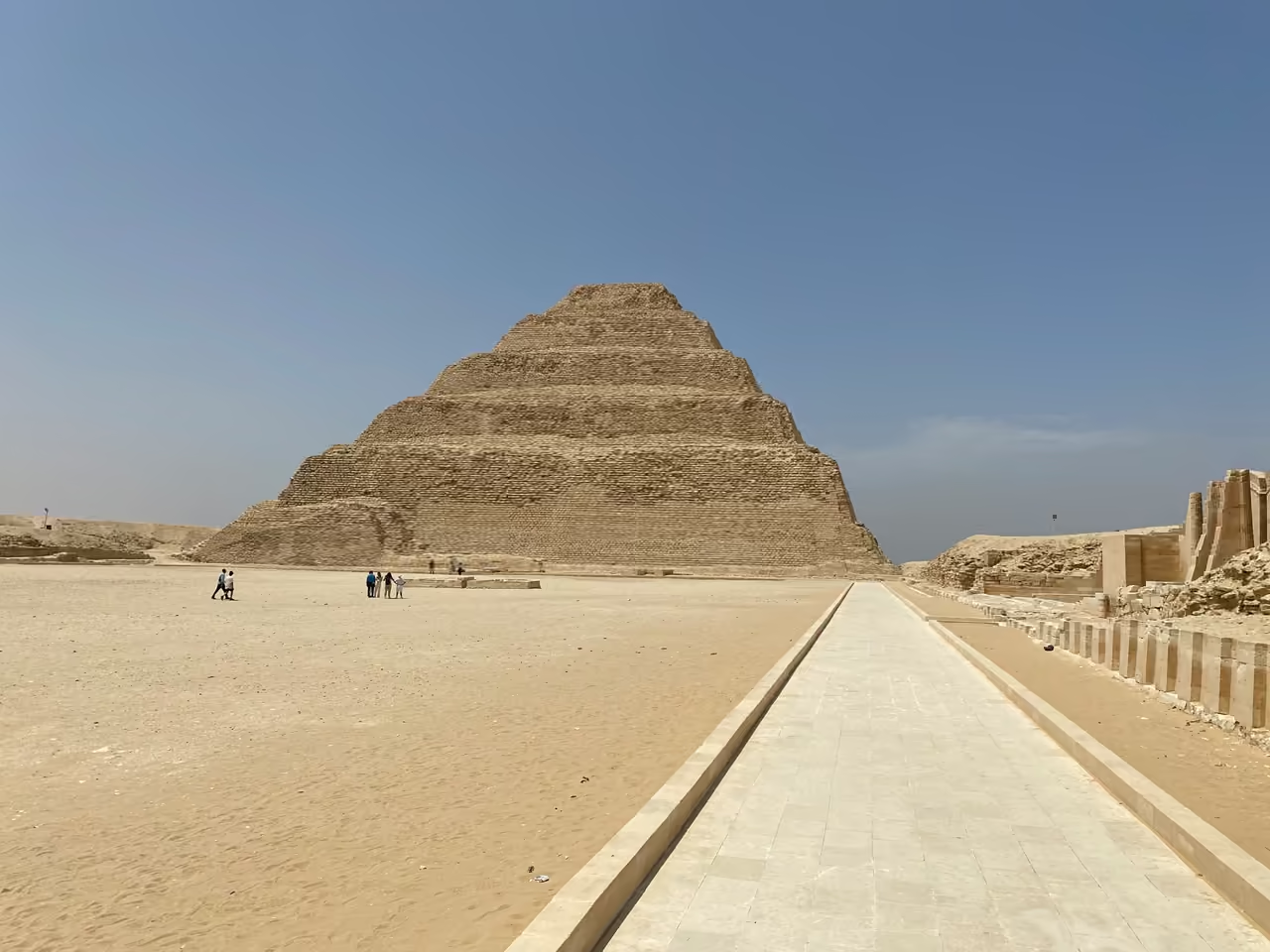 799m
Day Trip to Saqqara and the Step Pyramid
Roughly thirty minutes south of Giza across palm-lined fields, Saqqara preserves King Djoser's 4,700-year-old Step Pyramid, the world's oldest monumental cut-stone building designed by royal architect Imhotep. Surrounding ceremonial courts, fluted stone columns, and finely painted nobles' tombs offer deep relief from Giza's heavier tour-bus crowds. Pair the open necropolis walk with the adjacent Imhotep Museum for a rewarding half-day excursion.
highlight view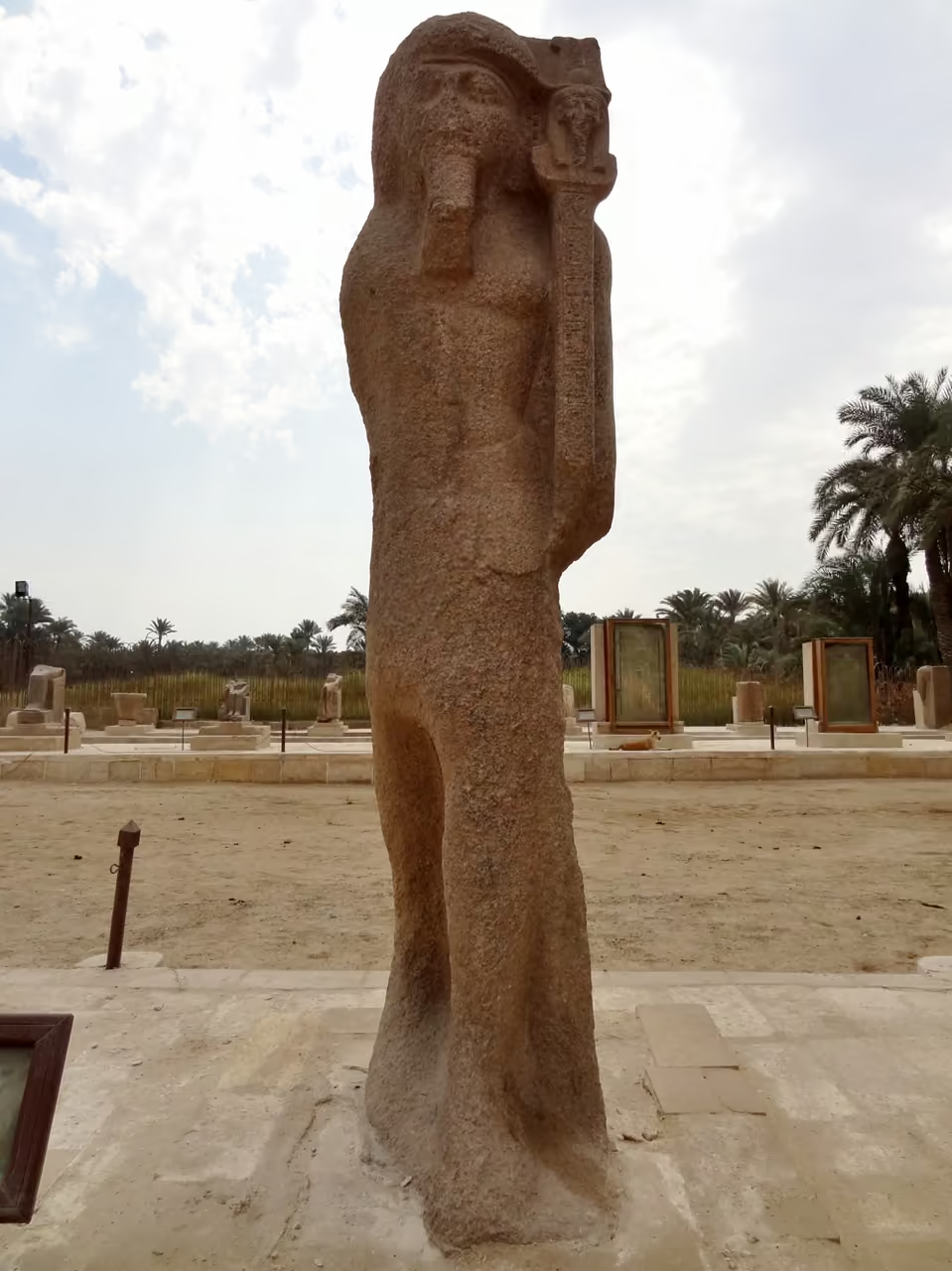 3397m
Memphis Colossus of Ramesses II
Inside the open-air museum garden at Mit Rahina less than thirty kilometres south of Giza, a ten-metre fallen limestone colossus of Ramesses II lies framed beneath a second-storey timber viewing gallery. Stepping up onto the wooden balcony lets photographers shoot crisp overhead portraits of the pharaoh's finely carved crown and serene expression before strolling outside to frame the nearby alabaster sphinx under tall palms.
photo spot view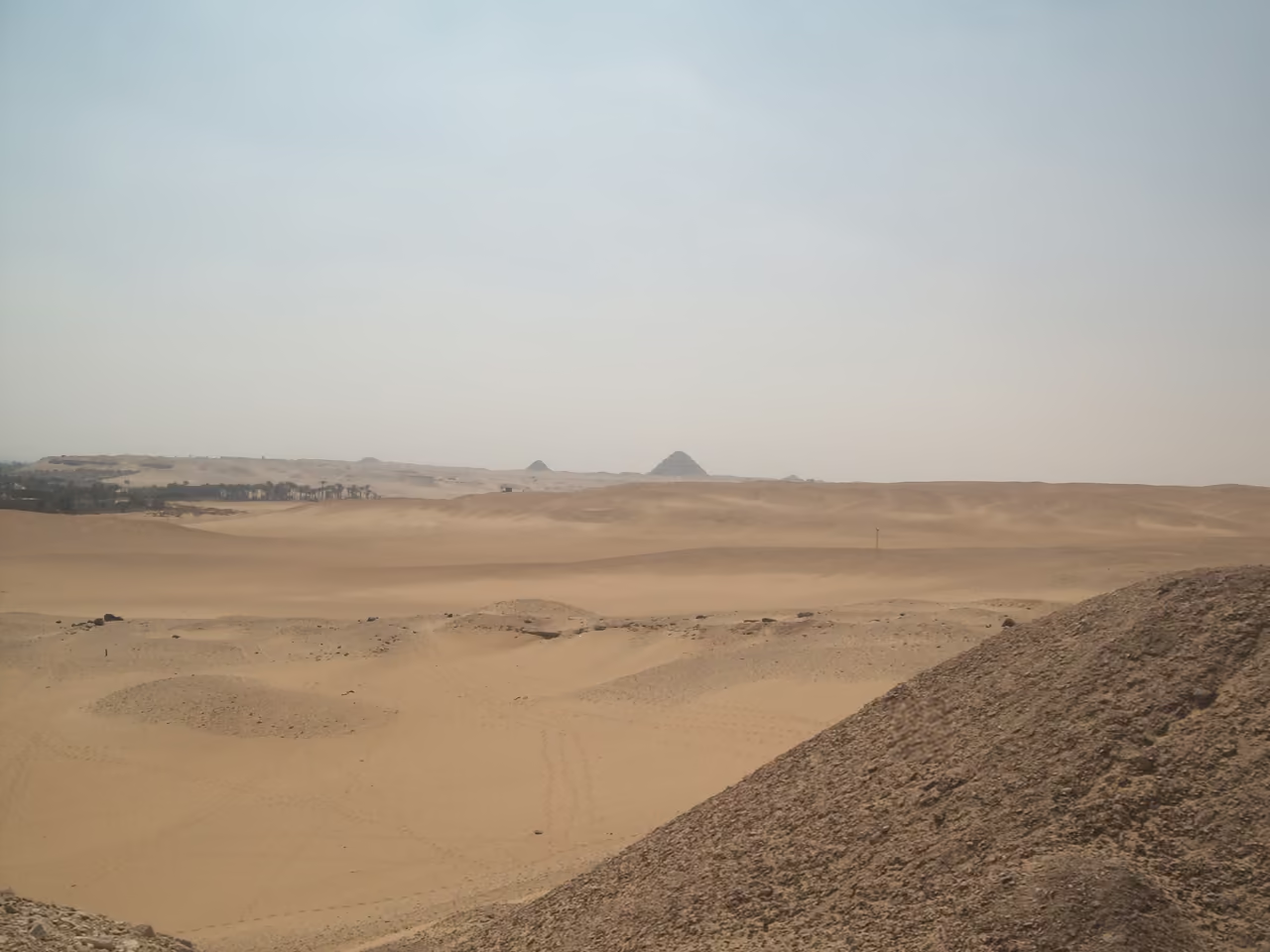 3700m
Southern Desert Horizon Ridge
Extending across open Sahara sand ridges outside the plateau fence toward Abu Sir, these natural dunes deliver pure desert-framed views of the pyramids free of modern suburbs. Reaching the rise on foot or horseback costs zero entry fees while placing miles of wind-rippled sand between you and city rooftops. Sunset light paints the stone warm ochre before turning the desert deep indigo.
viewpoint view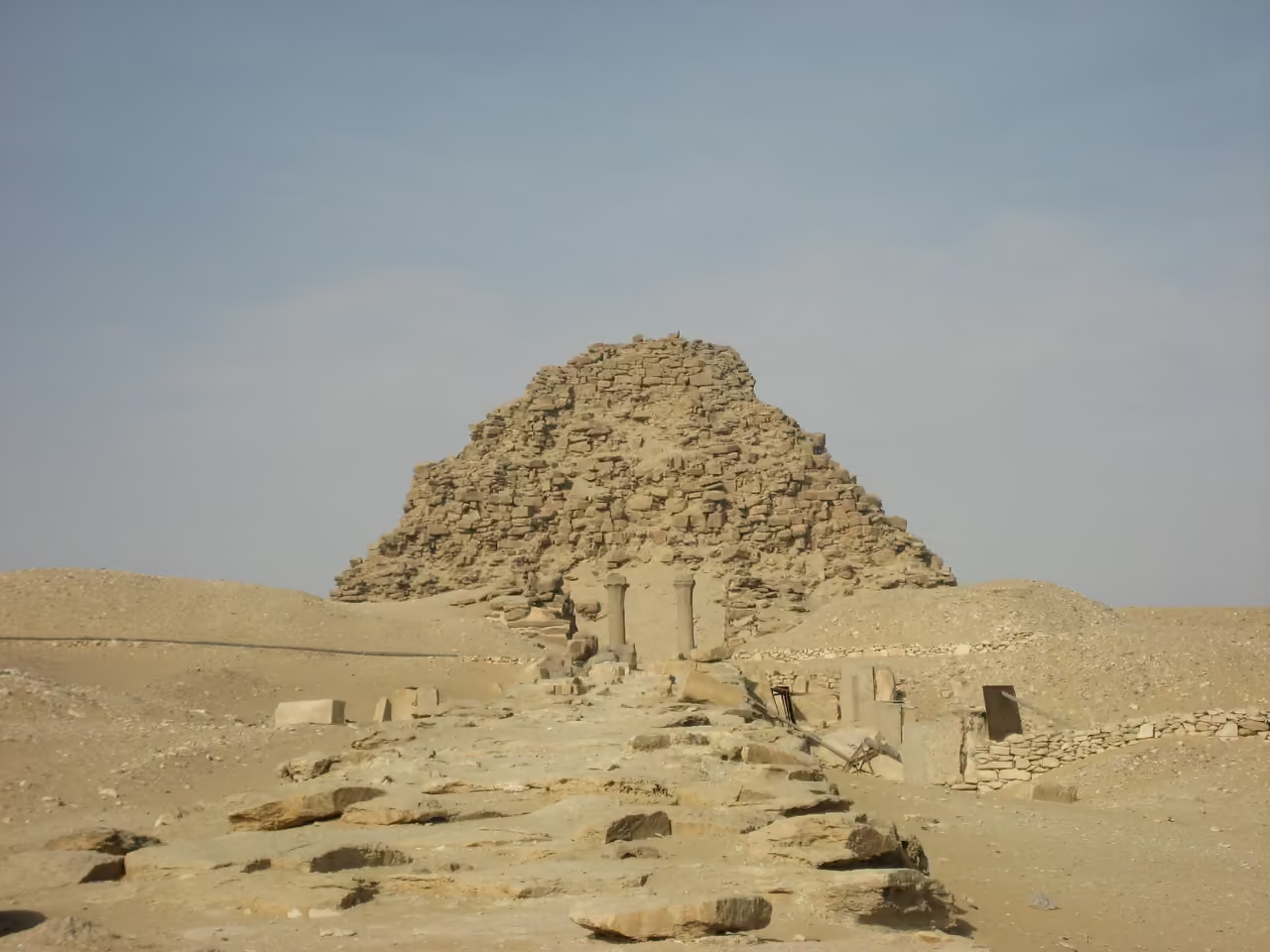 4306m
Abusir Pyramids
Shimmering across desert sand just north of Saqqara, Abusir gathers Fifth Dynasty pyramids, sun temples, and royal causeways far from coach parks. Though time weathered their smaller limestone cores more heavily than Giza's colossi, visitors walking between Sahure and Niuserre's ruins often enjoy the sand dunes almost completely alone. Desert rides from Giza stables frequently cross straight down to these quiet ridges.
hidden gem view
Explore Similar Places in This Collection
Featured on This Itinerary
See all attractions in Giza
Including Grand Egyptian Museum, Great Pyramid of Giza, Great Sphinx of Giza, and more